




Abstract
The main purpose of this work is to investigate the penetration properties of knitted fabrics coated with silica nanoparticles to make protective gloves. Silica nanoparticles are well-known and useful for several applications. Hence, in the environment where glove material is exposed to harmful chemicals, hazards related to faster penetration of dangerous substances into the glove interior may cause needle-stick injuries and micro damage. One of the solutions to overcome this problem is to use knitted fabrics coated with acrylic pastes containing silica nanoparticles (average size 20 nm in diameter). To study the effectiveness of developed gloves for protection against needle-stick injuries, overall knitted fabrics with a similar structure (interlock) and differentiated raw material composition were selected: polyamide 6-6/elastane and polyester. Evaluation of the needle-stick injuries process of the coated plated knits based on silica nanoparticles was performed. For this purpose, the assessment of the surface morphology of materials has been examined before and after the dexterity and penetration process. The studied composite samples showed an increased resistance to hypodermic needle penetration as the nano-silica particles content and the coating layers increase. Coated knitted fabrics allowed us to obtain promising results in terms of fabric stiffness. However, the manual coating application explained the observed imperfections.
Introduction
Textile personal protective equipment such as bulletproof vests, gloves, etc. are used in order to provide a certain degree of protection against various stresses in the workplace. Among the clothing for technical use, the gloves can be cited which will represent 25% of the personal protective equipment in the world market in the forecasts of 2023 [1]. Needle- stick injuries are known to occur frequently in healthcare settings and can be serious. The need for a puncture and cut resistant surgical glove became apparent with the beginning of the AIDS/HIV era. Prior to that, the occasional accidental needle- stick injury to the surgeon was of little concern. Subsequently, it became a potentially fatal wound [2]. Per one study published in the Netherlands in 2018, the needle-stick rate was 2.2 per 100 health care workers [3]. The medical staff as well as farmers can be subject to dangerous infections from needle stick on a daily basis, cuts, injuries, skin hardness and abrasions, maintenance and public cleaners of garbage are also sometimes injured by a discarded needle which can transmit fatal diseases caused by dangerous substances into the glove [4,5]. Besides, most blood-borne pathogen transmissions in the healthcare industry are caused by needle-stick injuries, and protection from sharp invasive instruments is of great concern [6]. While the protection against needle penetration, proposed by Leslie et al. [7], in the Life LinerTM and the FingGuardTM represents an exciting advance in surgery, surgical glove performances remained insufficient to protect successfully against needles sticks [6–10]. The latex glove with 0.83 mm thickness successfully resisted routine impact forces and at the same time provided dexterity and tactility comparable to the bare hand [4]. Cunningham et al. [2] deposed a patent that relates to a cut and a puncture resistant surgical glove to prevent the accidental transmission of disease to a surgeon by needle- stick injury. As well as maintaining an acceptable level of user comfort and dexterity that allows the job to be done properly. Indeed, these gloves must protect the consumers to a well-defined level and at the same time ensure easy and rapid perspiration of the hands when wearing. Based on the Irzmańska et al.’ studies [11–13], protective gloves can be one of the solutions to overcome the use of the self-healing polymeric materials that can minimize economic loss and accidents in the workplace.
Penetration and puncture cutting by sharp-tipped objects and needles are considered as the most common failure modes of protective gloves made of micro-coated fabrics [14–17]. For example, coating applications are often used to exhibit a unique potential for use in a widespread range of applications from mechanical platforms and smart structures to effective protective fabrics. Previous studies have shown that impregnating coating fluids (STF) composed of hard, silica particles into woven, nonwoven and composite fabrics provide protection for users was effectively improved by coating with 20 wt.% SiC particles exhibiting the best stab resistance against knife cut [18–20]. However, proposed examples of colloidal solutions based on suspension of silica have been applied to fabrics as shear thickening fluids [4,11,21]. Indeed, they are made by suspension of nanoparticles in polymer or submicron silica particles into fabrics [22,23]. Besides, these fluids can also be silica nanoparticles and polyethylene glycol mixture or made from a mono dispersion of PMMA particles after synthesizing, purification, and transformation into polyethylene glycol to form an STF [22].
Nowadays, nanostructure-coating materials become a priority for industrialists and manufacturers of protective and functionalized garments including such applications based on industrial coated substrates (polyvinyl chloride and polyurethane), ceramic nanoparticles (silica, alumina, titania, zirconia, silicon nitride, silicon carbide, etc.) with improved properties [6,18,24–27]. The incorporation of silica (SiO2) has gained considerable attention in protective applications to improve the resistance behavior of textile materials against the impacts and penetrations [28–31]. Its influence and carbon black nanoparticles with different weight fractions on the tensile properties, impact strength and fatigue performance of different materials were reported in the literature [5]. Recently, some studies are published dealing with emerging nanotechnological advancements in polymer nanocomposite coatings for enhancement of physico-mechanical performances of studied structures (anti-corrosion, anti-fouling, self-healing, flexibility and quasi-static stab resistance fabric, knife stab and puncture force performance, etc.) by coated thermoplastic polyurethanes (TPU)/Silica/Shear thickening fluid (STF) on the aramid fabric [20,25,32]. However, they reported that a new particle-laden elastomer using colloidal silica and polydimethylsiloxane which when coated onto high-density polyethylene (HDPE) woven fabric shows a remarkable 90% increase in specific penetration resistance force (SPRF) to hypodermic needles compared to the neat fabric. Besides, the resistance to penetration remained dependent on the concentration of the hard silica particles and hypothesizes that a percolation network of connected particles form upon impact that distributes the load and provides high resistance and not the textile structure. In the workspaces where glove material is exposed to harmful chemicals and hazards related to faster penetration of dangerous substances into the glove interior causing micro damage [32], Nguyen et al. proposed to overcome this problem to apply different types of textile reinforcement of the all-rubber gloves [33].
Textile fabrics are often subject to abrasion, starting from exposed parts of garments to a variety of technical textiles. In fact, based on literature, abrasion protection by usual and nano technical coatings seems fruitful [11].
Although knit has remained a good fabric for coating applications as reported by Wustrow [34], there are few published studies dealing with coated knit samples due to their common failure modes in engineering and protective applications especially against the puncture cutting by sharp-tipped [14]. However, studies have pointed out that the protective material based on knitted structure had the features of low weight, better designability, fulfilling wide-area protection, etc. [35]. Xiaolin et al. [36] proclaimed that weft-knitted structure could resist stronger penetration force through the deformation of weft loops and self-locking, anyhow, it was self-evident that knitted fabric had a larger deformation, and a deeper penetration. However, it depends on coatings and construction parameters such as the structure, density of stitches, type of yarns, size of particles, and the coating solution, etc. For example, Flambard and Polo [37] and Lijuan et al. [38] reported that the structure and property of stab-resistant warp-knitted single-face fabric or the multi-layer knitted fabric could absorb penetration energy, and possessed a fairly well shearing resistance, of which stitches locked the knife to stop penetrating before the fabric was destroyed completely. Moreover, the underloop structure peculiar to warp-knitted fabric could stabilize the stitch, and added the yarn’s agglomeration around the knife edge, which had an obvious advantage in penetration force and yarn strength efficiency.
Until now, there have been no studies dealing with evaluation of surface coating strategy using silica nanoparticles of plated knits used as gloves for protection from needle-stick injuries. The purpose of this research is to study the effectiveness of knitted fabric materials, made from commercial polyamide 6-6/elastane and polyester by surface coating technique using silica nanoparticles mixed with acrylic polymer paste to protect human hands against mechanical aggression, such as the penetration of hypodermic needles.
Experimental
Materials and structural properties
Two interlock structures, collected from an industrial manufactory, are produced using a circular weft knitting technology (Figure 1). The knitting process was performed on an E40 gauge circular machine. The first one (black color) is knitted using 44 dtex elastane and 44 dtex polyamide 6-6. The second one (grey color) is made from 22 dtex polyester. The elasticity of Interlock fabrics makes proposed knitted fabrics, particularly, suitable for comfort, tensile and flexural properties, improve extension and recovery properties and therefore its form-fitting properties before and after coating. Different specifications relative to both samples are given in Table 1.
The physical properties of base knitted fabrics.

Both knitted fabrics from synthetic thermoplastic fibers are heat-set to a shape or to dimensions that are retained unless the setting conditions are exceeded during washing and wearing. These interlock structures are heat-sealed fabrics to enhance the interlock pattern structure against penetration after coating. In fact, according to Decker et al. [39], multi layers fabric causes an increase in inter-ply interfaces which in turn can increase the strength of the structure and stop the needle from penetrating. The overall fabric weight in the unit area is 45.89 g/m2 (±1.25).
Preparation of the coating solution
Inclusion of nanoparticles (sizes below 100 nanometers (nm) in at least a single dimension) into organic entities helps enhancement of properties essential for attainment of aesthetics, anti-corrosion, thermal stability, and mechanical strength essential for resisting coating deterioration in harsh environments [32].
An acrylic polymer paste was modified by mixing it with SiO2 nanoparticles (20 nm in diameter, 99.8% Amorphous). A fixed quantity of acrylic polymer paste was weighted, and the SiO2 sol was added into the acrylic polymer paste with different content percentage according to the following equation (1)
Different silica nanoparticles content 7.69%, 10.00% and 13.63% are used. The choice of percentages is random so as to have three viscosity levels. The obtained pastes are stirred mechanically using a laboratory propeller mixer at room temperature. Mechanical dispersion was carried out with a constant stirring speed of 8000 r/min for 10 min. In fact, a possible aggregation among particles took place when silica nanoparticles resuspended in a solution for applications especially for the low viscosity due to the suspended silica particles formed agglomerates, probably due to (interparticle) hydrogen bonding [15]. Besides, in literature, many published works have dealt with the mixture of the silica nanoparticles with many binders, such as acrylic binder and different coated woven, nonwoven and composite fabrics where two different dispersion methodologies, mechanical mixer and ultrasonic, were used [40].
Coating application
A 5 ml of the modified pastes is applied on the front side of the fabric (15 cm × 20 cm) using a syringe. Acrylic polymer pastes contained respectively 7.69%, 10.00% and 13.63% silica nanoparticles. The homogenized coating paste is then spread one, two or three times by a squeegee over the entire fabric stretched over a frame. The treated fabrics were subjected to drying treatment at 60°C for 10 min, then to curing treatment at 150°C for 3 min, by referring to the recommendations of the product data sheet. One general advantage of this coating technique is that fibers are not stressed or distorted during such a process [41]. The characteristics of coated knitted fabrics are given in Table 2.
The characteristics of coated knitted fabrics.

aSi. Na.: means Silica nanoparticles.
bMean value ± standard deviation.
To determine the values of fabrics weight, five samples size 10 cm × 10 cm were tested. The add-on percentage on the knitted fabrics was determined using equation (2)
The thickness of knitted fabrics was tested according to ISO 5048-1996 exerting a pressure of 1 kPa [42].
Testing methods and equipment
Rheological characterization
The rheological characterization was carried out using a shear rate-controlled rotational rheometer (RC 30) fitted with a coaxial cylinder sensor (sample volume 3 ml). The temperature was controlled with an accuracy of 25°C ± 0.1°C by circulating water in the jacket of the outer cylinder arrangement.
The power-law model was used to study the flow behavior of the formulations [40]


Fabric morphology
Scanning electron microscopy (SEM) images were obtained on a scanning electron microscope VHX-6000, operating at (5 kV) and magnification of 50× and 160×.
Needle penetration test
Hypodermic needle penetration tests were performed similarly to a previous study [43] and in accordance with ASTM F2878–10 [44]. Briefly, the fabric sample was held firmly between the supporting fixture and another plate with the same open internal diameter of 20 mm. The fabric target was then punctured by a hypodermic needle (cannula Ø 0.5 mm) at a 90° angle and a speed of 500 mm/min (see Figure 2).
The dynamometer (Lloyd LR5k) presented in Figure 2(b) provides the force required to penetrate through the coated material using a 50N load cell. The registers of the forces involved in the test were saved in the computer for later analysis and interpretation. The test stops after the needle penetrates the fabric at a distance of 0.5 cm from the coated specimen to make sure that the needle has completely passed the thickness of the fabric. The needle is changed with each test so that the measurements are as accurate as possible.
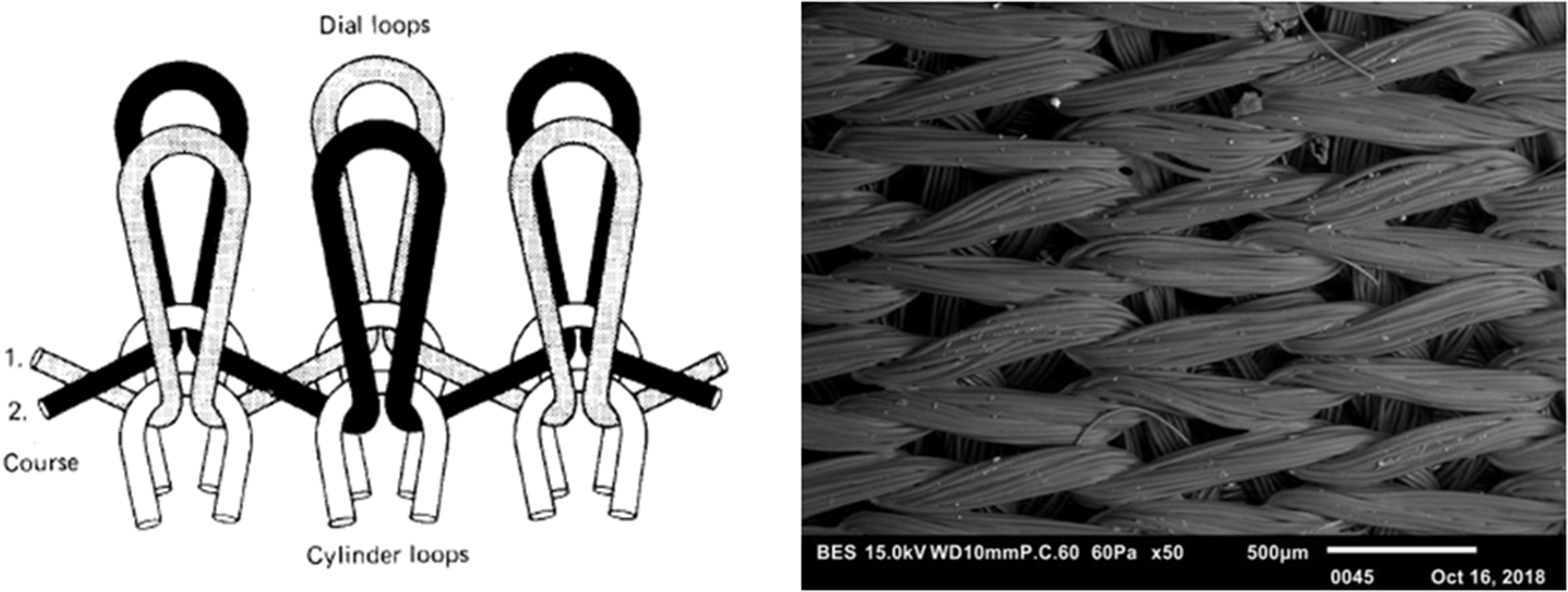
Interlock knitted structure.

Devices used for the needle penetration test. (a) Sample holder (b) Dynamometer.

Hypodermic needle characteristics used. (a) Hypodermic needle and (b) 3-bevel tip.
Bending stiffness measurement
Fabric stiffness tester provides a quick and accurate method of determining the fabric flexibility according to the internationally recognized standard test ASTM D1388-2007 [45].
Employing the principle of cantilever bending, a rectangular specimen (200 mm × 25 mm) is supported on a smooth low-friction horizontal platform. A weighted slide is placed over the specimen and advanced at a constant rate, allowing a narrow strip of fabric to bend under its own weight.
The bending rigidity (in Nm of the sample is deduced from equation (6) [46]
Results and discussion
Rheological properties of coating solutions
The viscosity is denominating the resistance of a fluid against any force tending to cause the flow. It is one of the most important properties in rheological studies for coating, paint and ink. To obtain a good application characterization, coating paste has to be of non-Newtonian liquid behavior, which is shear rate dependent. Rheological characterization is to measure the relationship between shear stress and rate of shear strain variation harmonically with time [48,49].
Figure 4 shows the viscosity variation as a function of shear rate, it is observed that all samples exhibited a typical rheological behavior of non-Newtonian fluid, the viscosity decreased with the increase of the shear rate, this is called pseudoplastic behavior, and this behavior is characteristic of the textural changes in the samples induced by the shear rate. When the amount of silica nanoparticles in the acrylic polymer pastes increases from 7.69% to 10.00%, any differences in curve were observed by the selected dispersion methodology. In this condition: 13.63% of silica nanoparticles in the acrylic polymer paste, probably the number of nanoparticles will determine the curve behavior of viscosity.

The dependency of coating solutions viscosity in shear rate condition.
The shear stress versus shear rate data (see Figure 5) for all blends in the range of 0.01 to 800
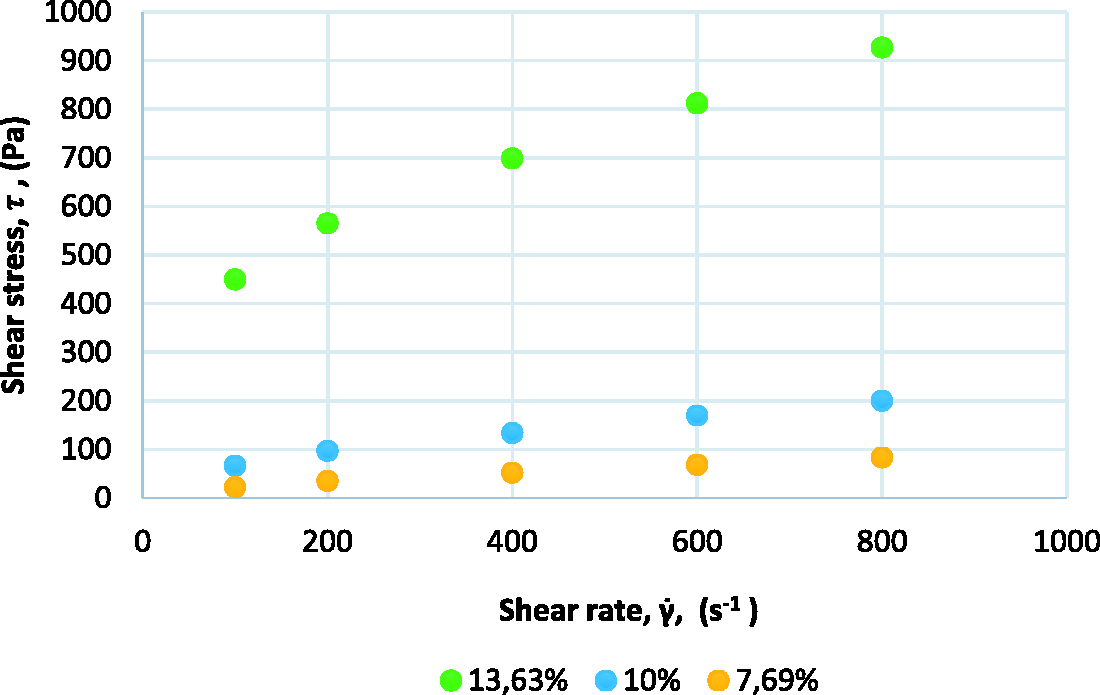
Shear stress versus shear rate at different mass percentage of silica nanoparticles.
Morphological observation of silica nanoparticles coating
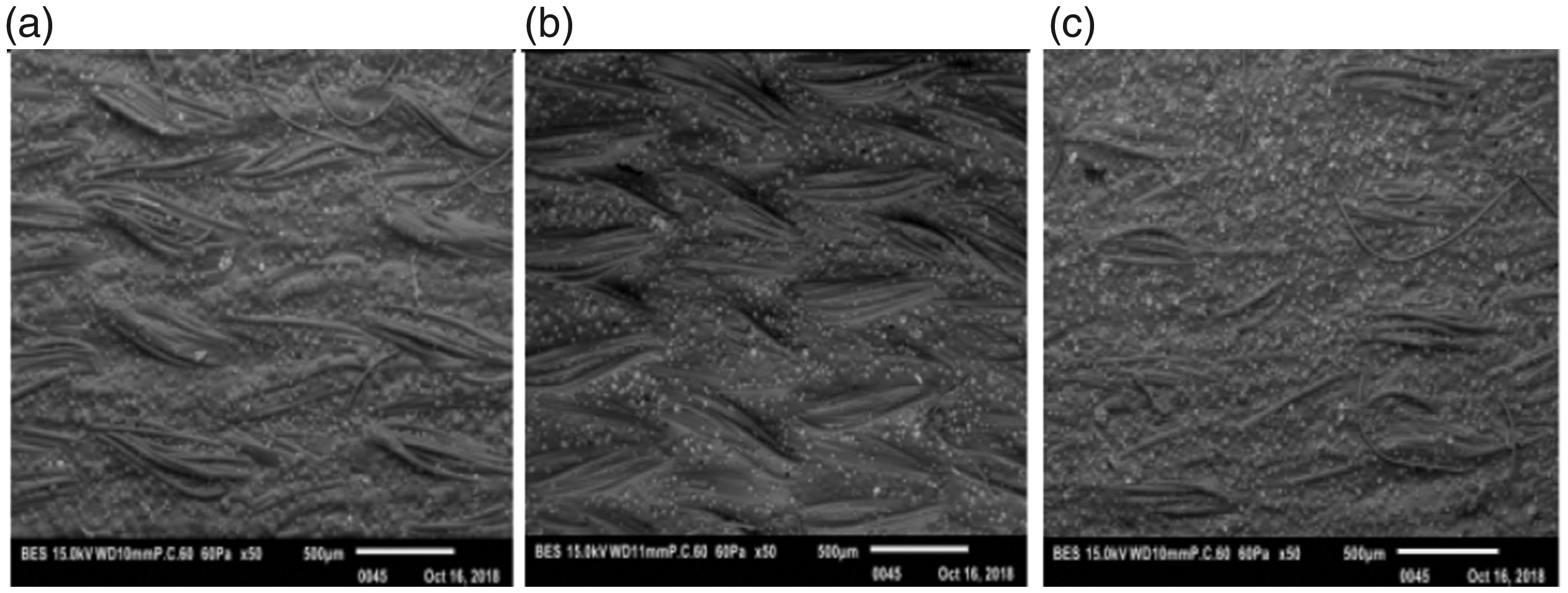
SEM images of the coating are shown in Figures 6 to 8 where the number of coating layers is one, two, and three respectively.
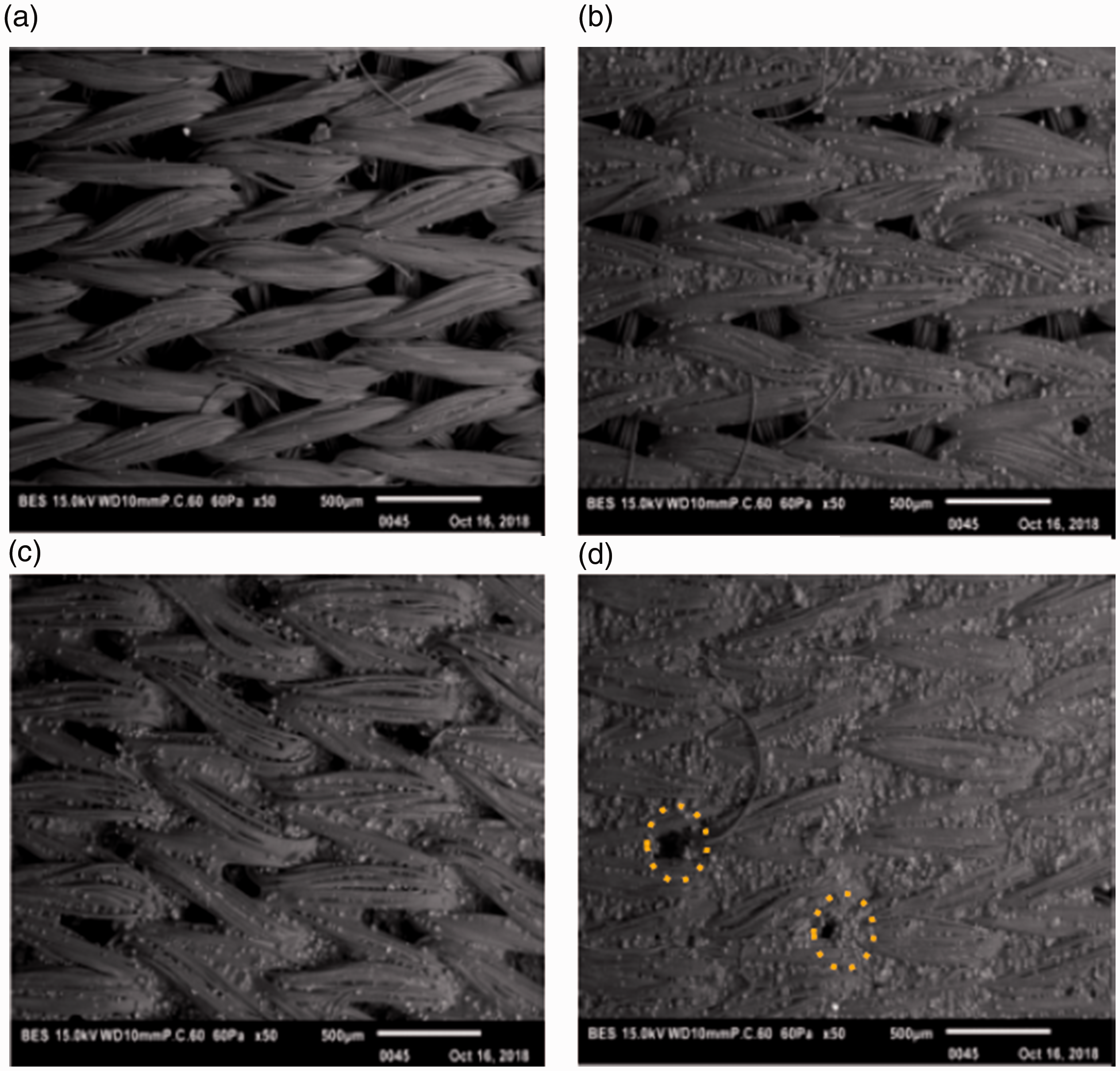
Top view SEM images of coated knitted fabric (one coating layer) at different nanoparticles content. (a)
Top view SEM images of coated knitted fabric (two coating layers) at different nanoparticles content

Top view SEM images of coated knitted fabric (three coating layers) at different
Using one coating passage, the acrylic polymer and nano-silica particles formed an even and compact coating with a micro scale texture from a nanoparticles content of 13.63%, with rare imperfections (see Figure 6(d)). However, the appearance of the meshes remains visible. On the contrary, coatings consisting solely of silica nanoparticles were found to be loosely deposited on the substrate. Thus, all other samples corresponding to nano particles’ mass percentage of 7.69% and 10.00% were not completely covered.
The second layer has filled the apparent voids in the previous views, the voids between the loops are completely covered. Filaments have become less visible (see Figure 7). It may be also concluded by analyzing the images SEM given, accurate solution dispersions are obtained despite the used manual coating method, thanks to the adjusted speed of the mixer. On the other hand, the extent of the dispersion phenomenon of the silica nanoparticles into acrylic pastes can be greatly reduced by either reducing the particle size, thus delaying the onset to higher shear rate, or by using a mixture of particle sizes [28].
Figures 8(a) and (b) show that the surface of the completely covered textile. More surface imperfections or defects were noticed in the case of
Our findings are in a good agreement with those that have been reported by Kim et al. [17]. As shown in the corresponding SEM images presented in this paper, the acrylic polymer with silica nanoparticles provides a compatible and protective surface [51]. Hence, no aggregates of silica nanoparticles seem to be formed. Thus, it could be inferred that there is little aggregation when the acrylic -coated silica nanoparticles are suspended in a buffer solution experiment [15].
Hypodermic needle penetration
The dimensions of the hypodermic needle vary according to the purpose of its use and are generally used to inject or to suction fluids, usually coupled to syringes. The diameter (gauge) of the chosen cannula usually varies with the viscosity of the fluid and the stress that will be exerted at work. The needle length is specified according to the distance to reach. At one end, there is a chamfer called a bevel. This is the tip of the needle and is designed to facilitate tissue perforation (see Figure 3) [52]. Comparative analyses were performed to understand the influence of some coating variables on the penetration effort, such as the silica nanoparticles content in the acrylic polymer pastes and the number of coating layers.
Looking at Figure 9, it is observed that with a non-coated knitted fabric, the force reaches the maximum with a magnitude of 1.167 N, with one coating layer the force reaches the maximum with a magnitude of 1.699 N, with two coating layers the force reaches the maximum with a magnitude of 1.845 N, and finally with three coating layers the force reaches the maximum with a magnitude of 2.66 N. So, the greatest force is observed when coating layers increased.

Influence of the variation of coating layers on the effort of needle penetration, keeping the SiO2 content
Particularly, two distinct force peaks were observed during fabric penetration by the hypodermic needle (see the blue curve corresponding to three coating layers, Figure 9). Each peak represents a significant point in the needle penetration sequence. Probably, the force measured in peak 1 coincided with the needle tip penetration, exposing the tip to the underside of the coated fabric. Peak 2 coincided with the end of the cutting induced by the needle lancet (3-bevel tip). Our findings are in agreement with those of Carvalho et al. [53] and Gotlih [55]. However, Hurren et al. [54] who investigated the process of low-speed penetration of hypodermic needles through a woven aramid fabric developed for protective gloves using motion image capture found that the needle penetration force curve had three characteristic peaks and more than 70% of the needle tip was already exposed at maximum penetration force. The third peak observed represented ejection of the bevel heal from the cut hole. Carvalho et al. [53] found that needle penetration forces are closely related to fabrics constructional parameters, with fabric porosity greatly modified by the coating treatment as shown in our SEM images.
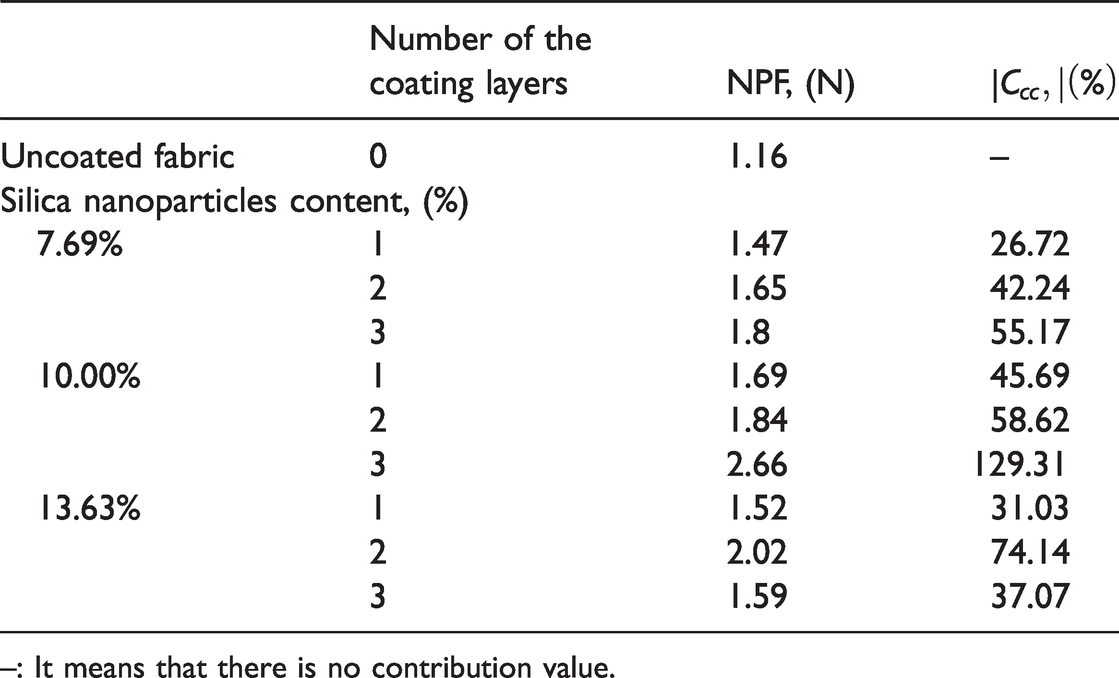
The needle penetration forces of the fabric specimens, assessed by the maximum force peak values are shown in Table 3. Equation (7) presents the coating contribution |
Compared results of needle penetration force relative to prepared coated fabrics.
–: It means that there is no contribution value.
As shown, generally the coating treatment increases the needle penetration force compared to the uncoated fabric. The contribution of silica nanoparticles content and coating layers ranged from 26 to 129%. This finding seems in a good agreement with those reported by Firouzi et al. and Selver [4,56], using colloidal silica and polydimethylsiloxane, which when coated onto high-density polyethylene woven and composite fabrics show a remarkable 90% increase in specific penetration resistance force to hypodermic needles as compared to the neat fabric and exhibiting up to 10% and 12% higher tensile strength the tensile modulus than neat composites. The increase of the number of coating layers from 1 to 3 applied on the surface of knitted fabric, increases the penetrating force widely [57]. Based on our results, the resistance to penetration of the hypodermic needle is also dependent on the silica nanoparticles content ranging from 7.69% to 13.63%. This also seems proved by Ji et al. and Firouzi et al. [4,58] who demonstrated that not only the nanoparticles content can help the resistance increase but also a percolation network of connected particles formed upon impact that distributes the load and provides high resistance. Hence, it encourages the resistance of fabric to penetration when a needle is applied on the surface, as a function of the number of coating layers and the coating conditions. After coating application, the coated fabric structure is reinforced in impact resistance since the coating eliminates the slippage between the threads or fibers that make up the structure. The highest needle penetration force (2.66 N) is observed on treated fabric using
There is no doubt concerning the weakness of stitch density on hypodermic needle penetration into different kinds of textile materials. Stitch density which refers to the total number of loops in a measured area of fabric as well as thickness of knitted fabric are the important factors affecting the penetration resistance. Indeed, knitted fabric density had a similar effect mechanism on the penetration force, despite being in different thickness [60]. Besides, the increase of total number of needle loops in a given area could effectively promote the penetration force and lower the penetration depth [35,38]. Xiaolin et al. [36] proclaimed that weft-knitted structure could resist stronger penetration force through the deformation of weft loops and self-locking, anyhow, it was self-evident that fabric had a larger deformation, and a deeper penetration. In fact, the penetration force went down linearly and then ascended as the thickness increased in the warp-knitted spacer fabric case. Xuhong’s work presented a first-order linear relationship between penetration force and the density [60]. The increase of the stitch density doesn’t make fabric impenetrable especially against sticks of needles. It is explained by their low specific penetration resistance force to hypodermic needles. That is why; coatings enhance the fabric surface widely against needle penetration.
Bending stiffness properties
It is well known that the fabrics become stiffer after coating, because coating material fills the spaces between the yarns and cements the warp and weft threads together [61]. Compared results of bending rigidity of different coated knitted fabrics are shown in Table 4.
Compared results of coated fabrics’ bending rigidity.

–: It means that there is no contribution value.
Regarding the values given in Table 4, it is obvious that bending rigidity of base fabrics increased with coating and bending rigidity of coated fabrics changed with systematically changed coating parameters. The uncoated fabric was taken as control for comparison of coating contribution. The effects of coating parameters (the silica nanoparticles content and the number of coating layers) are significantly enhancing the bending rigidity of coated fabrics. Coating contribution is ranged from 36 to 271%. The increased stiffness influences the handling of the fabric when sewing as well as the dexterity and comfort properties of the glove. Based on the obtained findings, it could be concluded that the successful fabrication of such knitted protective materials may provide ideas for the development of other protective materials with new architecture.
Besides, it is interesting to focus on the abrasion resistance of the proposed coated fabrics despite the known effect of coating treatments on the increment of abrasion resistance [61,62]. The only published work found is that of Katnov et al. [63] who has shown that the resulting nanostructured (with nano silica particles, diameter 23.5 nm, type amorphous) polyacrylate coatings have significantly improved properties, such as hardness and abrasion resistance. Further work follows.
Conclusion
This study aimed at improving the penetration resistance of the knitted fabric hypodermic needle so that the industrialists can produce highly protective gloves that cannot be penetrated by medical needle sticks. Knowing how important these technical textiles for personal protection, a ceramic-based surface treatment was applied and investigated. A manual coating method was adopted for coating. The proposed solution is a dispersion of silica nanoparticles in an acrylic polymer paste. The coating paste is characterized by a rheological study which resulted in a non-Newtonian behavior of the applied coating paste. Compared results are implemented using SEM images and mechanical tests led to the highest performances of the studied coated specimens.
Although our findings reported that the coating treatment shows some flaws, this was normal given the manual method of application. The needle penetration force has been improved by 129% compared to the needle penetration force before surface treatment using 10% of silica nanoparticles in the paste and three coating layers. In addition, an increase in bending rigidity about 271% is saved and this result seems fruitful for industrialists.
Footnotes
Declaration of conflicting interests
The author(s) declared no potential conflicts of interest with respect to the research, authorship, and/or publication of this article.
Funding
The author(s) received no financial support for the research, authorship, and/or publication of this article.
