




Abstract
The use of a new generation chemical fibers with various functional additives offers new possibilities for the development of advanced (multi)functional textile products. Such compounds as phase change materials (PCMs), metals (like cooper, silver), also natural or chemical insect repellents, FIR emitting ceramic particles and etc. incorporated into fibres’ structure are essential for development of knitted fabrics directly contacting to the skin with effective thermoregulation and such protective properties as: antimicrobial, antistatic, repellence against blood sucking insects. The main parts of socks investigated were knitted in plain plated single jersey pattern. The 3-ply twisted yarns of new structures were used in the outer layer of socks. Yarns were made by using single yarns with PCMs, insect repellent permethrin, ceramic and silver additives containing fibres (Cell Solution® Clima, Cell Solution® Protection, Resistex® Silver). The inner layer of socks was made of polyester (PES) 3-ply twisted yarns with different number of filaments resulted in different structures of socks’ fabric. Based on all obtained thermoregulating and protective characteristics of investigated different knitted fabric structures of socks, the optimal knitted socks were selected. The obtained results of investigations are significant for the development of other knitted fabrics worn next to the skin.
Introduction
Socks are an important part of an outfit used in everyday activities. They must have more effective thermoregulatory properties than other garments, because wearing socks in shoes allows less air circulation than in other areas of the body. In order to avoid feet discomfort due to the accumulation of moisture during long-term shoe wear, the design of socks must first and foremost consider aspects of their thermoregulatory effectiveness [1,2].
Depending on the degree of physical activity, the amount of perspiration produced by the human body can reach 2000-45,000 g/day [3]. Therefore, moisture management properties are a critical factor ensuring the functionality of skin contact articles that are designed for high physical activity. The moisture management properties of layered textiles depend on the fibre composition and geometrical properties of fabrics, fibres and yarns, and the type of finishing used [4–17]. Two principles for the production of two-layer knitted fabrics with high moisture management properties can be distinguished [18,19]: 1) the use of conventional or unique hydrophobic synthetic fibres for the inner layer and hydrophilic fibres for the outer layer in the knits; 2) two-layer knits can be formed using only hydrophobic synthetic fibres of different geometric parameters in both fabric layers.
The thermoregulatory properties of textiles, worn next to the skin, can be enhanced by providing interactive functions, where the self-thermoregulation (heating-cooling) effect is created by the fabric's active response to changes in ambient temperature resulting in heat absorption and emission. The properties of the enhanced thermoregulatory effect by maintaining constant body temperature are provided to socks by the embedded phase change materials (PCM) [20–25]. Maintenance of good thermoregulatory properties (thermal comfort) by latent heat storage in textiles is an advanced technique with high energy storage density and ability to accumulate heat during melting latency phase change (latent heat) at constant temperature [20,26–28]. Latent heat accumulators are classified into three groups: inorganic (salts hydrate, salts, metals, alloys), and organic (paraffins, esters, fatty-acids, alcohols, glycols) compounds and liquid melts eutectic mixtures of organic and/or inorganic (mostly hydrated salts) compounds [29,30].
It has been determined in Shim et al. [22] and Ghali et al. [31] that the thermal effect of materials with PCM during the transition from a warm environment to cold lasts for approximately 12.5-15 minutes. As the thermoregulation effect during the PCM heat absorption and emission is created as an interactive response to changes in the thermal ambient temperature, these materials are classified as intelligent (smart). It is stated in Varnaitė-Žuravliova et al. [32], that the amount of heat absorbed/emitted by clothing is sufficient if the enthalpy index is at least 300 J/m2.
Usually moisture (perspiration) emitted by the body is in the form of vapour, so the water vapour permeability (“breath“) is also used to describe thermoregulatory properties of textiles. It depends on the structural characteristics of the fabric, the nature of finishing and environmental conditions [12,33–36]. As the porosity of fabrics increases, the water vapour permeability also increases.
Antimicrobial properties for socks are also important. Microorganisms have a direct effect not only on textiles by reducing their strength and quality, but also on the consumer. Knits with the above properties can be produced using a variety of special fibres (with silver, copper ions; antimicrobial Triclosan or zeolite additives) or fibres with natural antimicrobial properties [37–39].
The electrostatic properties for socks are important due to antistatic characteristics [40]. Static electrification is the process of generating and accumulating static electricity charges [41], resulting in greater lubricity of textiles due to trapped dusts or other pollutants [42]. The higher the electrical conductivity of fibres, greater electric charge dissipation from textiles. Antistatic finishing can be accomplished by treating fabrics with anionic and cationic agents, having a long hydrocarbon chain with ionic groups at the ends. The most important aspect of antistatic effects when operating textiles is its permanence. The antistatic properties of ordinary textiles are achieved by reducing their surface resistivity to 106÷1011 Ω [43]. Homogeneous electrically conductive fibres include metallic, carbon, graphite and some modified ceramic fibres, while heterogeneous fibres include surface coatings and fillers. The specific resistivity of metals is extremely low (at 20°C: 1.6×10⁻⁸ Ω for silver, 12×10−8 Ω for steel), while carbon 40×10−8 Ω. Therefore, the method of imparting electrically conductive properties to textiles by introducing fibres with a certain proportion of metal is very promising. In this case, the antistatic properties of textiles are permanent.
Insect repellent socks are designed to protect the wearer from an insect bite and reduce the risk of insect-borne diseases. Insect repellents may be natural and chemical and contain synthetic or petroleum or plant-derived substances that insects do not like [44,45]. Essential oils of lemongrass, basil and eucalyptus with the substances α-pinene, limonene, citronellol, camphor and thymol are the most commonly mentioned natural insect repellent substances [46,47]. Essential oils of eucalyptus, true lavender, rosemary, anise, basil, laurel and thyme are the most common mosquito (Culex pipiens) repellents [48–51]. Blend of oils, beetroot essential oil and blends of various essential oils protect against ticks Ixodes ricinus [52,53]. One of the main limitations of using natural products is the lack of durability of the insect repellent finishing. In this case, the most reliable method is the use of embedded microencapsulated active natural substances, using modified starch, acacia resins, sodium alginate, etc. [54].
The most effective chemical repellents (N, N-diethyl-meta-toluamide, icaridin, benzoylpiperidine, pyrethroids, etc.) are more potent than natural [55–57]. Pyrethrum is an extract of the most common chrysanthemum plants containing pyrethrin (up to 25%), cinerin and jasmine as active ingredients. Pyrethroids are synthetic analogues of pyrethrin, a substance naturally occurring in plants, with insecticidal and repellant properties [58]. They damage nerve cell membranes, causing insect paralysis and death [59,60].
The abrasion resistance of textiles is primarily influenced by the mechanical properties of the fibres, which depend on the type, thickness and length of the fibres. The use of fibres with high strength, elasticity and tear resistance in the production of fabrics result in good abrasion resistance. For common textile fibres, the best abrasion resistance is considered to be for synthetic fibers and the least abrasion resistant are viscose and acetate fibres [61,62].
The goal of this research is to design, investigate and produce multifunctional socks without the use of additional chemical finishes, but using only the functional fibres, that are active in responding to changes in ambient temperature, and having good moisture management, antibacterial, antistatic, insect repellent and good exploitation properties. The novelty of the research is that performing a scientific data search about intelligent textiles, produced without chemical finishes, any paper about similar smart multifunctional product investigations, especially socks, were not found. The combination of thermoregulatory, protective and exploitation properties in one newly designed intelligent (smart) protective product (socks) requires comprehensive investigation and evaluation of the listed characteristics in order to select the correct ratio of functional fibers and optimal knitted socks.
Materials and methods
Three types of layered socks were manufactured with single-cylinder sock knitting machine mod. Fantasia (Sangiacomo S.p.A., Italy) of gauge 14E (diameter of the cylinder 3.75”, number of needles 168), using new structure three ply twisted yarns. The new structure yarns were manufactured with a ring twisting machine PL-31: twist direction “S”, number of twists 160 m−1. The main parts of socks (see Figure 1) were knitted in plain and plated single jersey pattern. The overall view of this pattern is shown in Figure 2.
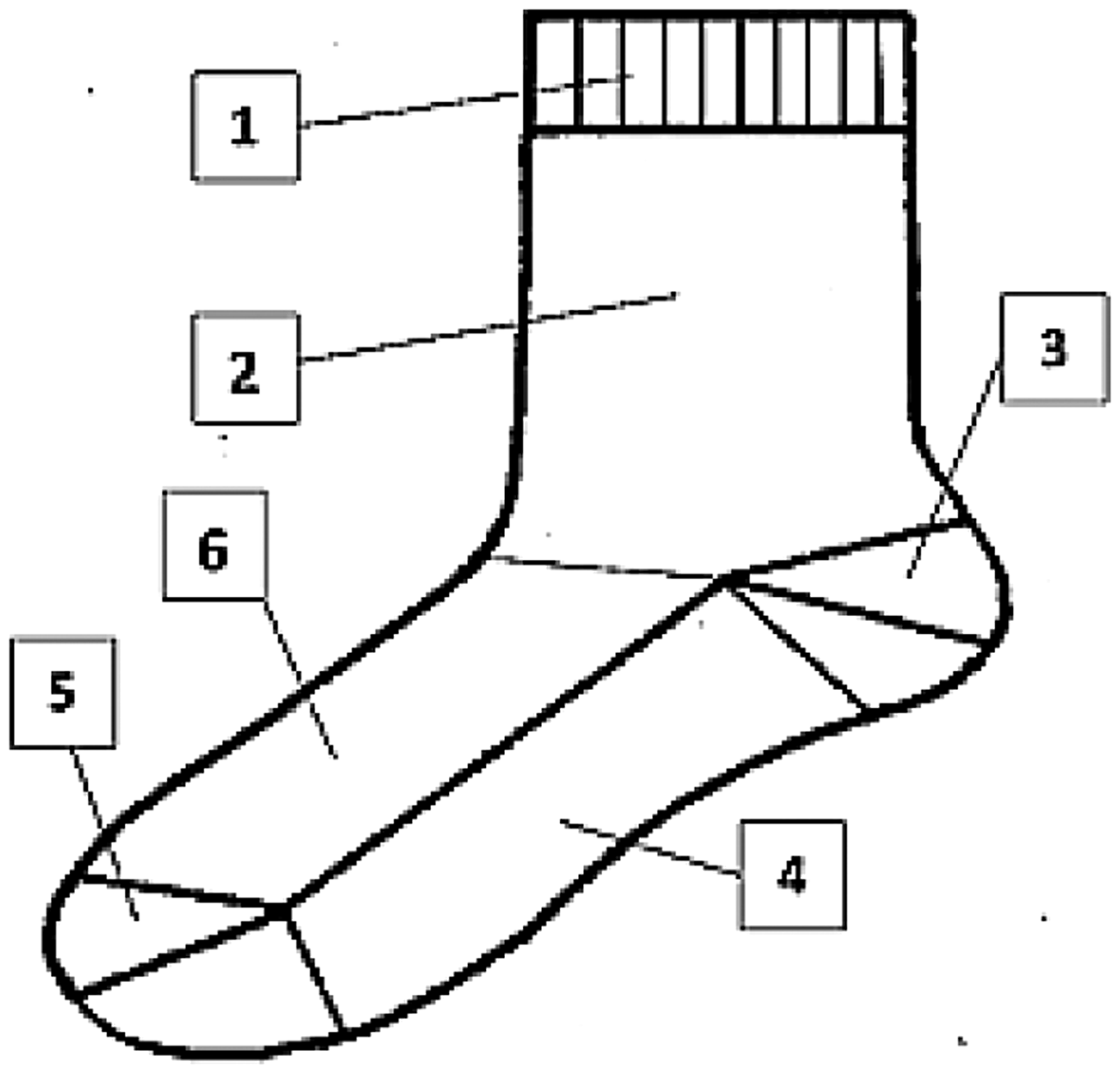
The main parts of socks: (1) - cuff, (2) - leg, (3) - heel, (4) - sole, (5) - toe, (6) - foot.

The spreading scheme of the plain and plated single yarn: 1 – the ground yarn (inner layer); 2 – plated yarn (outer layer).
All fabricated socks (see Table 1) were washed with 2.5 g/l nonionic detergent Felosan RG-N, 2.0 g/l sodium carbonate (Na2CO3), 3.0 g/l water softener Calgon® Power at 60°C for 60 minutes in the washing machine WASCATOR FOM71MP, rinsed with 1 g/l acetic acid water solution in order to remove the alkaline residue, centrifuged and air dried.
Structure characteristics of the main parts (leg, heel, sole, toe, foot) of socks.

Note: Calculated content of functional fibers in outer layer of socks - samples No. 1÷No. 3: Cell Solution® Protection – 7.35%; Cell Solution® Clima – 11.03%; Resistex® Silver – 9.27% (other fibers: cotton – 47.79%; viscose LENZING™ Modal – 7.35%; polyester – 17.21%). The content of the inner layer – 100% polyester.
In general, the basic functional properties important for socks are: thermophysiological comfort, antimicrobial activity, dissipation of electric charge, and insect protection. Socks also have important exploitation properties. The abrasion resistance is most important characterizing wear resistance.
The following thermoregulatory properties of knitted socks with PCM were investigated: moisture management, water vapour permeability (“breathability”) and the heat storage/release ability.
The parameters of moisture management properties were determined according to AATCC Standard 195. All materials were washed (according to EN ISO 6330, washing procedure 4 N (40°C), drying procedure A - line dry) and conditioned for 24 hours prior to testing. The tests were carried out from 5 specimens cut from the sole part of each sock. The mean value out of five was presented as a result. The moisture management properties of textiles were evaluated by placing the sample between two horizontal electrical sensors (the scheme of the device MMT M290 (SDL Atlas, USA), shown in Figure 3). The main parameters used to describe the moisture management properties and their levels are given in Table 2.

General view (a) and principal scheme (b) of a device for determination of moisture management properties [15].
Grading table of main moisture management parameters (AATCC 195).

PCM thermoregulatory efficiency (heat storage/release capacity) and their phase change were investigated according to EN 16806-1 by differential scanning calorimeter (DSC) Q10 (“TA Instruments”, USA) (see Figure 4(a)). Measurements of three specimens cut from each sock was made over a heating temperature range of –20°C to +60°C and a cooling/heating rate of 5°C/min under nitrogen atmosphere. Evaluation of the test data was performed according to the relevant standards EN ISO 11357-1/-3. The test results of the second run were taken and presented. The PCM phase transition temperature (tm, tc), melting (ΔHm), and latent heat of crystallization (ΔHc) of two types of yarns consisting fibers: Cell Solution® Clima and also Cell Solution® Protection, incorporated into newly designed socks were investigated before washing and after 5 washing procedures. Five washing cycles were chosen because for the certification testing of PPE (personal protective equipment), e.g. clothing against incendiary discharge or high visibility clothing, even in the Standard of general requirements for PPE clothing materials EN ISO 13688 five is the smallest quantity of washing cycles after which special protective properties must withstand. As the thermograms of all three specimens for each sock were the same, the values of the second specimen were presented as a result. A typical DSC thermogram is shown in Figure 4(b).
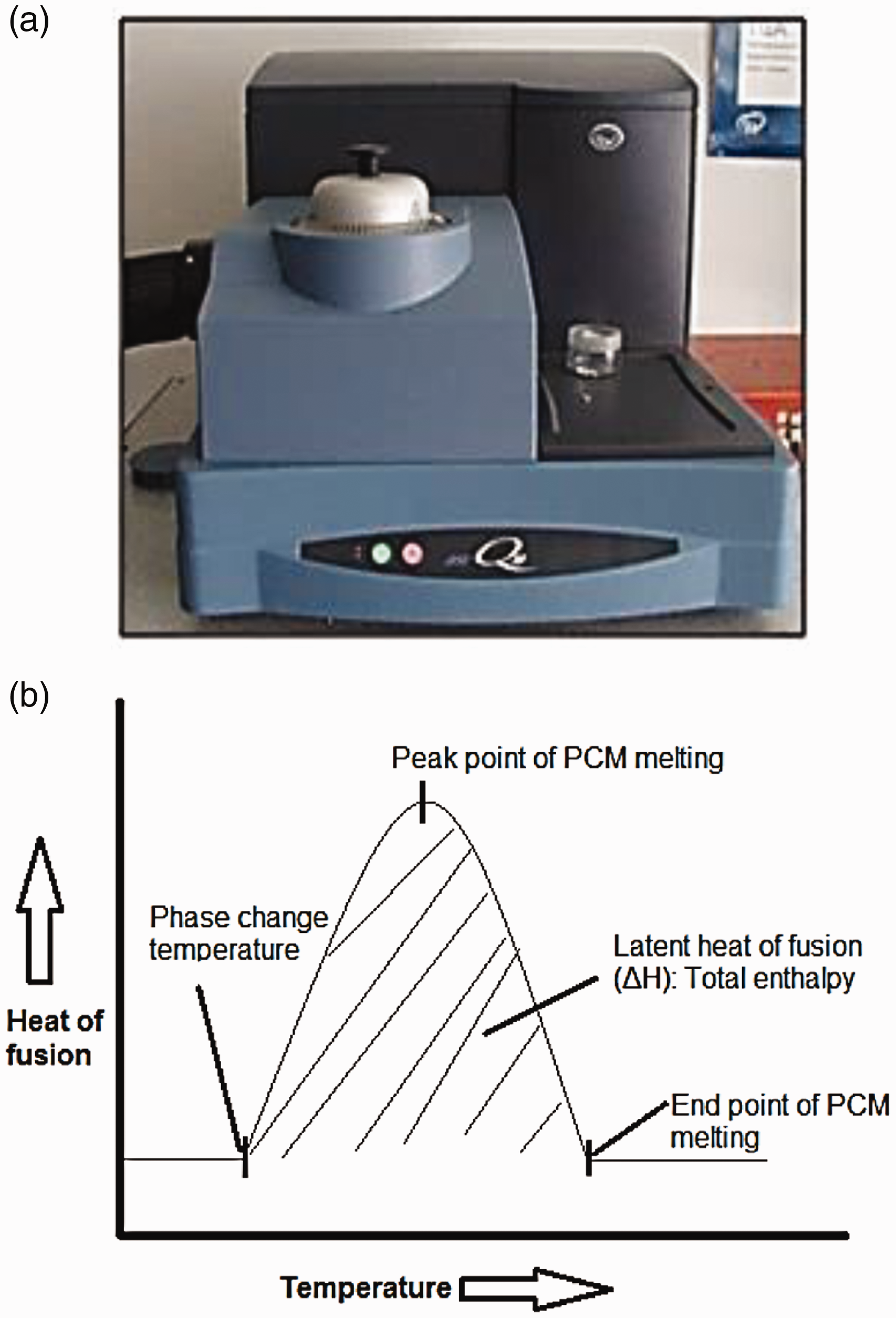
Differential scanning calorimeter Q10 (a) and typical thermogram of PCM on heating (b) [63].
The examinations of PCM effectiveness compared to the control sample also were performed by thermal imaging camera Infra Cam™ (FLIR Systems, Sweden; the spectral range of EM waves 7.5–13 mm, emission factor 0.95) on a human body simulating hot plate. The specimen at room temperature 20 ± 0.5°C is placed on a flat-surface plate with a face side to an intensive source of heat energy. The thermal image of the specimen was captured on the screen every 5 s for 40 s by the thermal camera Infra Cam™. Flir Reporter 9.0 software was used to process the received data. Five measurements were made on the hottest area of each specimen, and average point temperature of the specimen was calculated. The variation coefficients of temperature values did not exceed 5%. The general view of the equipment used is shown in Figure 5.

Schematic view of the PCM efficiency thermographic testing equipment: IR source of heat energy, simulating the human skin temperature (1); sample (2); thermal imaging camera InfraCam™ with special software (3).
The “cup method” [41,64] was developed in order to determine water vapour permeability (“breathing”) of manufactured socks. The measure of this characteristic is an amount of water, evaporated from the covered vessel in 24 hours. A schematic view of the water vapour permeability testing device is presented in Figure 6.
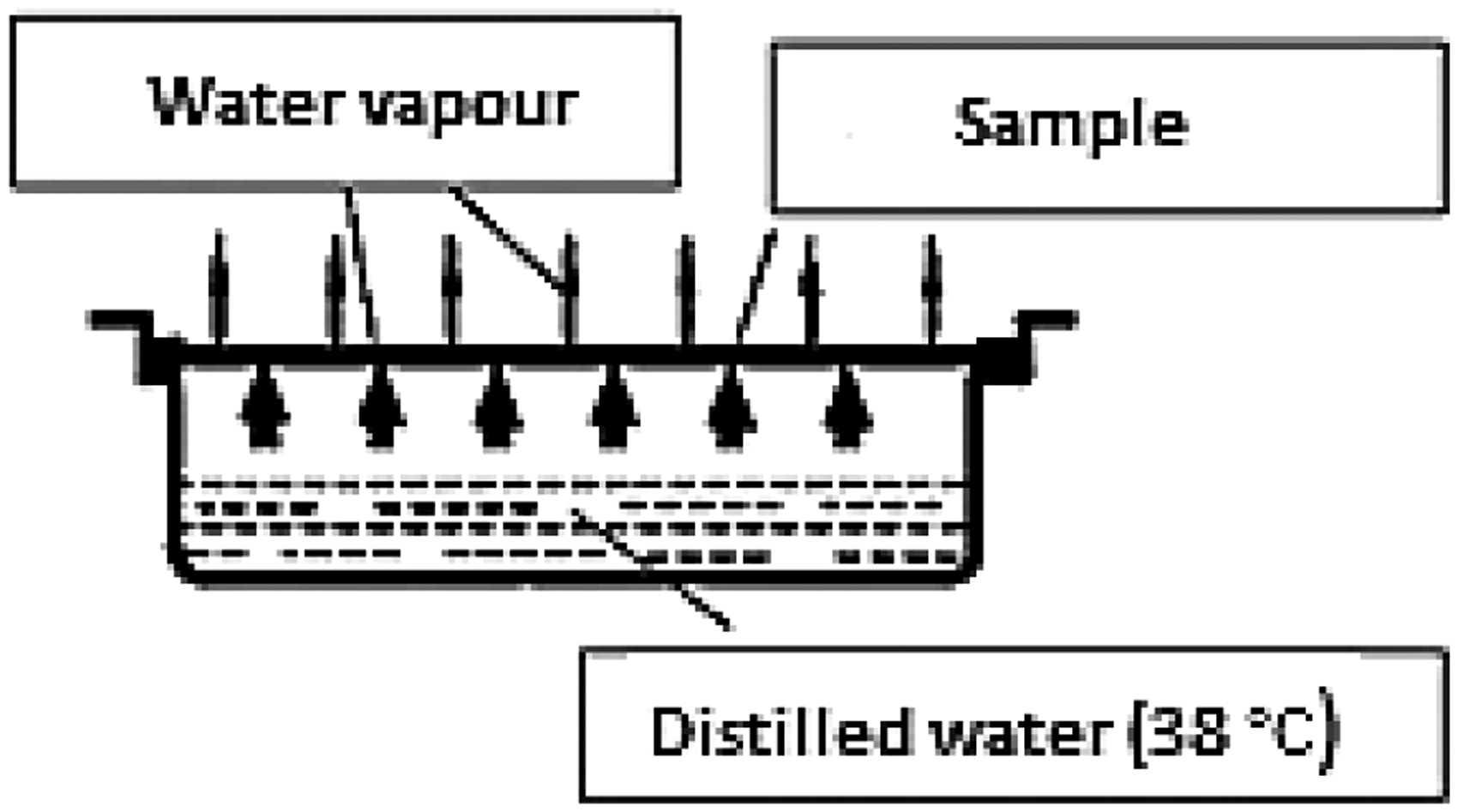
Water vapour permeability test (“cup method”).
The specimens for water vapour permeability test were prepared as follows: 3 specimens of 115 mm diameter were cut from different places of the fabric and weighed, then maintained in a standard climate for 24 hours. A glass container with 500 ml of distilled water was placed in the thermostat. The specimen was sealed over the vessel and the test duration of 6 hours was set. The ambient temperature during the tests was 22°C, temperature of distilled water was 38°C. After 6 hours the specimen was weighted and moisture content in md was calculated:
The quantity of water mv evaporated within 6 hours from the glass container was calculated as follows:
The water vapour permeability WVP (g/m2/24h) was calculated using the formula:
The thermal resistance of knitted socks was determined under a standardized procedure EN ISO 11092, using a Sweating Guarded Hot Plate M259B device (see Figure 7), simulating human skin, which basic part - a porous metal plate, which heats up to 35°C, i.e. the human body temperature. The metal plate is approximately 3 mm thick and has an area of 0.04 m2. The test was carried out from three specimens as it is required according to EN ISO 11092 standard.

Device for determination thermal resistance of fabrics: general view (a), scheme (b), porous plate (c).
The surface resistance of the knitted fabrics was determined according to EN 1149-1 standard using a suitable device Terra-Ohm-Meter 6206 (Eltex-Elektrostatik-GmbH, Germany) with a measuring range of 103÷1014 Ω. The materials were tested in a chamber at 25°C and a relative humidity of 30%. The mean value out of five values for each sock was presented as a result.
Microbiological evaluation of antimicrobial properties was performed according to EN ISO 20645 standard in National public health surveillance laboratory (NPHSL) of Lithuania. The resistance of socks to microorganisms (E. coli, K. pneumonia and S. aureus) was evaluated. The effect of antimicrobial activity was determined by the growth of the microorganism colony and was defined as follows: “good” (no colony growth); “limited” (low colonial growth); “no effect” (colonies growing).
The repellent effect of adult ticks (Ixodes ricinus) was determined in a laboratory “BioGenius” (Germany) according to a WHO-cage test using a tailored sock technique with 5 adult ticks for each of 3 adult volunteers. The cut-off sock was put vertically on the forearm of the volunteer's at a distance of 3 cm from the wrist, and the hand was placed in a test cage through a dedicated opening. The test duration 5 minutes; ambient temperature 24–26°C; relative humidity 50–70%. The rejection efficiency was calculated as the ratio of the arithmetic mean of the number of ticks rejected to the total number of ticks used in the test and expressed as a percentage. Ticks mortality after 24 hours forced contact with insecticide sock was determined using the WHO - tube test method, which was expressed analogously as WHO-cage test.
The abrasion resistance of socks was determined in accordance with EN 13770, Method 1 (at 12 kPa) by means of the Nu-Martindale 404 apparatus, the overall view of which is given in Figure 8. Two specimens from the sole and two specimens from the feet was used for abrasion test for each sample.
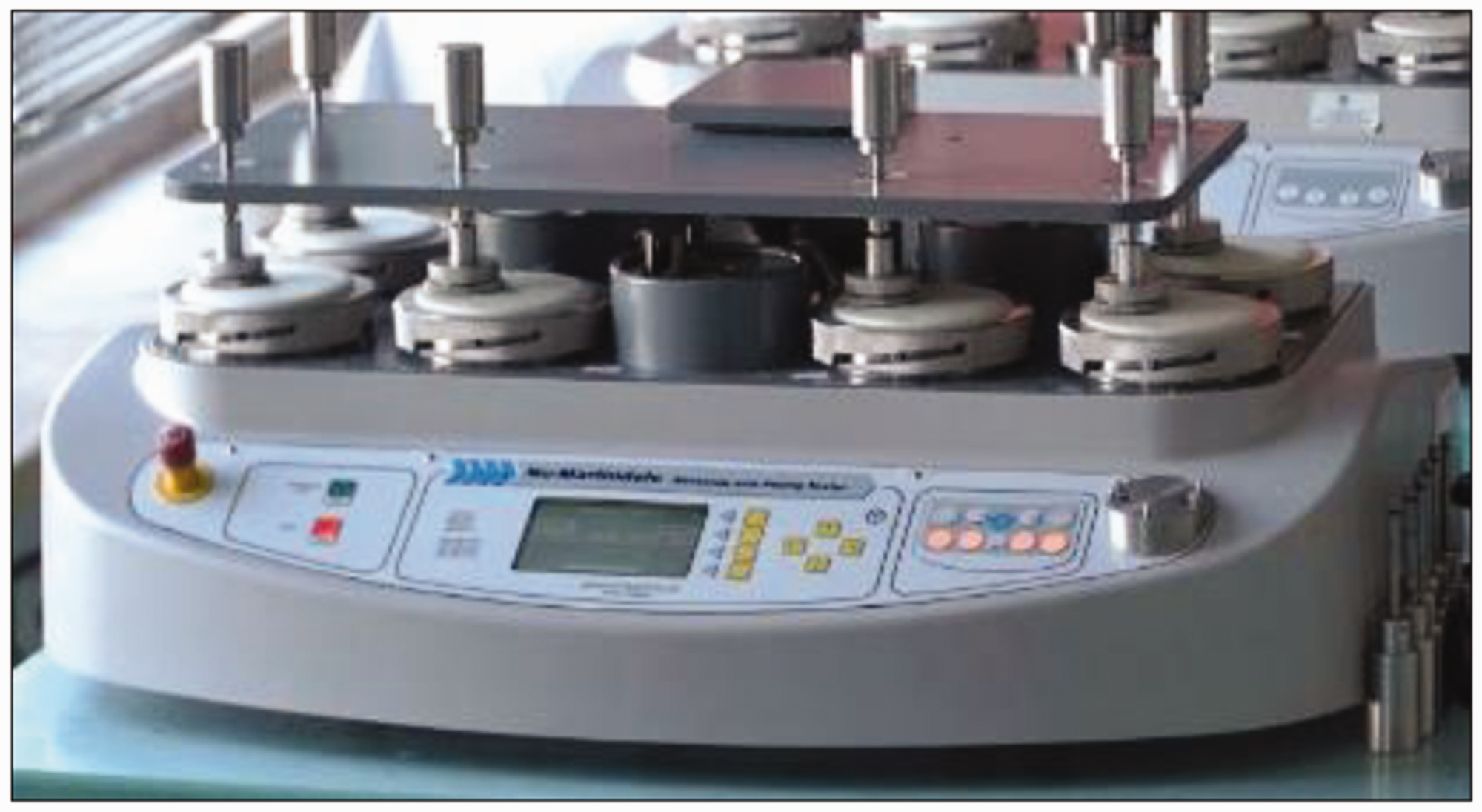
Abrasion resistance device Nu-Martindale 404 (James H. Heal & Co. Ltd, UK).
Results and discussion
The PCM efficiency of the selected yarns was characterized by the amount of absorbed/released heat - by the amount of enthalpy (ΔH) in the heating and cooling phases. Test results of DSC tests are presented in Figure 9, which confirmed the PCM effectiveness of Cell Solution® Clima and also of Cell Solution® Protection fibres.

DSC Thermograms of: cotton/lyocell Cell Solution® Clima with PCM (70%/30%) 11.8 tex
As it is shown in Figure 9(a), the melting enthalpy (ΔHh) and the crystallization enthalpy (ΔHC) of 11.8 tex cotton
The quantity of Cell Solution® Protection fibres in the selected Cotton/Viscose LENZING™ Modal yarns was 20%. In addition, these fibres contained up to 16% of PCM (paraffin) and up to 10% of silicon-containing minerals. Incorporated micro- and nano-particle-sized far-infrared (FIR) accumulating minerals (magnesium, zirconium and iron oxides, silicon carbide and germanium compounds, etc.) exhibit the ability of the human body to accumulate/release heat [65–69]. The most important part of creating a human sense of heat is the far-infrared spectrum of IR radiation, namely electromagnetic waves of 6–15 µm long, because only waves of that length of FIR radiation emitted by heat can be received and delivered to the human body [67,70]. Therefore, this innovative fibre has not only protective functions but also provides an enhanced thermoregulatory effect: it balances temperature fluctuations and provides an enhanced thermal effect [69,71]. The PCM efficiency (ΔH) of the yarns consisting Cell Solution® Protection fibre fibers, determined by DSC analysis: absorbed heat at 3.441 J/g and released heat at 3.242 J/g (see Figure 9(b)). Such results were influenced by the PCM (paraffin) together with silicon-containing minerals. It is seen from Figure 9(a) and (b), that melting and crystallization enthalpies of cotton
The values of PCM efficiency (ΔH) of investigated socks samples No. 1 - No. 3 were almost the same, that is why the thermogram of only one sock (sample No. 2) was selected. A thermogram of DSC analysis of PCM performance of layered knitted sample No. 2 was provided in Figure 10. If compare results from Figures 9(a) and (b) and 10, it can be said, that addition of PES/PA and yarns with silver and PES textured yarns in the structure of sample No. 2 influences DSC results, i.e. values were decreased approximately three times. The melting enthalpy (ΔHh) of socks was 1.637 J/g, the crystallization enthalpy (ΔHC) – 1.517 J/g.

DSC Thermogram of socks (
The thermoregulation properties of knitted socks determined during research are listed in Table 3. The data shows that the values of moisture management parameters of all 3 structures are very good/excellent, with the amount of absorbed and emitted heat energy exceeding 300 J/m2. Such melting and crystallization enthalpy parameters are sufficient to provide additional thermoregulatory properties. The highest PCM efficiencies of 460.00 J/m2 during heating and 426.28 J/m2 during cooling, were achieved in socks of Sample No. 2 (see Table 3). PCM efficiencies (enthalpy), expressed in J/m2, was calculated taking into account the mass per unit area of socks.
Characteristics of thermoregulatory properties of socks.

For comparison of PCM effectiveness, characterised as achieved surface temperature during heating, the control sample of socks was also produced. The outer layer of control socks was made from three ply twisted yarns (2 cotton spun yarns 11.8 tex + 8.5 tex PES/PA-Ag Resistex® Silver (65%/35%) yarns), and inner layer - from 8.3 tex PES textured filament yarns (number of filaments – 72) × 3. The twisting direction of yarns was “S” and the level of twist - 160 m−1. The total calculated linear density was the same as in socks No.1÷No. 3: of plated yarn 32.1 tex and of ground yarn – 24.9 tex. The structure characteristics of the main parts of control socks: number of stitches: PV – 12 cm−1 PH – 9, cm−1; mass per unit area – 285 g/m2. The results of PCM effectiveness by accumulated heat induced by IR stimulation in socks of structure No. 2 compared with manufactured control sample without incorporated PCM are presented in Figures 11 to 13. Results of samples No. 1 and No. 3 were not presented separately, because they were received the same as for sample No. 2. Analysing the curves in Figure 11 it can be seen, that during the hot plate test the warm-up temperature of PCM-containing socks is about 1°C lower compared to the control sample without PCM. This confirms the cooling effect of incorporated PCM by their melting during contact of socks with a surface heated up to 36°C. The thermograms of sample No. 2 is presented in Figure 12, respectively of control sample in Figure 13.

Rate of heat absorption of socks, tested on a hot plate (IR exposure time t = 40 s).

Thermograms with measured temperatures of investigated knitted

Thermograms with measured temperatures of investigated knitted structure of
Data obtained from all thermoregulation characteristics of socks investigated are presented in a summary table (Table 3). Analysing scientific literature sources [12,33–36,72,73] it can be seen that the values of water vapour permeability (1794 ÷ 2062 g/m2×24h) provide a sufficiently good “breathability” function. Higher values of water vapour penetration results in better breathability of fabrics [41,64]. The analysis of the research results shows, that overall moisture management capability (OMMC) depends on the linear density of PES filament of the inner layer of investigated socks. Higher linear densities of filaments resulted higher values of OMMC. The linear dependence of linear densities of PES filament vs OMMC parameters was determined after analysis of received research results. The coefficient of determination (R2) was found 0.9993 (see Figure 14). This dependence shows very strong positive correlation (correlation coefficient 0.9996). Other scientists in [7,74,75] also found dependencies between moisture management properties and linear densities of filaments. Filaments with higher linear densities resulted in higher values of moisture spread in the fabrics and higher OMMC. Also, very strong positive correlation (correlation coefficient 0.9686) between OMMC and water vapour permeability (WVP) was found (see Figure 15). Nevertheless, that OMMC depends on many factors, investigation results have showed, that higher OMMC results in better breathability, i.e. higher water vapour permeability values of fabrics. In other words, fabrics, which transports moisture to the outside from the human body, results in better breathability.

Relationship between linear density of PES filament (calculated from 8.3 tex yarns) and overall moisture management capability.

Relationship between overall moisture management capability and water vapour permeability of samples No. 1, No. 2 and No.3.
Depending on the environmental conditions and the level of physical activity according to the thermoregulatory, CEN/TR 16422 standard classifies substances into 3 levels of performance: A (very good), B (good), C (moderate). The key thermoregulatory properties of these levels, which are regulated for knitwear that come into direct contact with human skin, are OMMC and thermal resistance (Rct). According to this standard, manufactured and tested socks have an OMMC very good (A) classification performance levels and are suitable for cold conditions (see Table 3).
Although the inner layer (next to the skin) of the socks is manufactured of 3 different PES fibers of different thicknesses, this did not significantly affect the thermoregulatory properties. Based on the PCM effectiveness of the manufactured socks, and taking into account their sensory properties (softness/roughness), a socks sample No. 2 was selected as the most suitable variant. The functional and exploitation characteristics of this structure are presented in Table 4.
Functional and exploitation properties of selected socks (sample No. 2).

Because of the 9.27% Resistex® Silver (PA, Ag-coated) fibres introduced into the outer layer of the fabric, all tested socks also exhibit highly efficient electrical charge dissipation. The thermal resistance of socks fell within the range of 0.085 and 0.088 m2K/W showing that all socks would heat a person equally. Such results were mainly affected by the silver presence [76] and small air gaps in the products.
Insect protection studies of all investigated socks showed that fibres with the insecticide permethrin embedded in the socks achieved good (93%) repellent efficiency (i.e. 14 out of 15 ticks were not repressed on the socks). The protective properties of the manufactured and tested socks were also confirmed by tick’s mortality, which was 73% (tubes: 1 – 60%; 2 – 60%; 3 – 100%). However, Ag-coated PA filaments have limited antibacterial activity due to the uneven distribution of the surface of the sock structure.
The abrasion resistance of >120000 ≤ 130000 rubs was reached for socks samples No. 1, No. 2 and No. 3. Such results were influenced by the PA fibers in the outer layer of all socks, which provided good wear resistance [61,62,74].
Conclusions
Three different types of multifunctional smart socks with different number of filaments in the inner layer of plain plated single jersey pattern fabric were designed and manufactured. The inner layer of socks was made of hydrophobic polyester (PES) fiber 3-ply twisted yarns with 3 different geometrical parameters (linear density of filament, tex: 0.058; 0.115 and 0.230). The outer layer of all structures of main part of socks was made by using 3-ply twisted yarns of new structures, consisting single yarns with PCMs, insect repellent permethrin, ceramic and silver additives containing fibres (Cell Solution® Clima, Cell Solution® Protection, Resistex® Silver). Socks with used yarns were active in responding to changes in ambient temperature, and had good moisture management, antibacterial, antistatic, insect repellent and good exploitation properties. The new generation socks with multifunctional capabilities were developed without the use of additional chemical finishes, but using only the functional fibres. All results obtained during the research can be replicated and passed on to the industry and are significant for the development of other knitted fabrics worn next to the skin.
Evaluation of the influence of knitted fabric structure to the thermoregulation properties of socks has shown, that linear density moisture management properties (OMMC) was influenced by the linear density of PES filaments. Higher linear densities resulted in higher OMMC values. The determined values of Overall Moisture Management Capability (OMMC) were 0.6945 ÷ 0.7597, of water vapour permeability – 1794 ÷ 2062 g/m2/24h and of thermal resistance - 0.085 ÷ 0.088 m2K/W. Therefore, socks with the optimal properties were selected on the basis of obtained PCM effectiveness values (melting enthalpy - 402.70 ÷ 460.00 J/m2; crystallization enthalpy - 373.18 ÷ 426.28 J/m2).
As the most suitable variant, a socks sample No. 2, having the highest PCM effectiveness, was selected. The amount of absorbed and emitted heat energy (460.00 J/m2 and 426.28 J/m2, respectively) of this sample of socks was sufficient to ensure good PCM effectiveness and confirmed, that socks have active self-thermoregulatory (smart) properties due to the presence of PCM embedded in the knitted fabric. Also, during the thermographic testing of the PCM efficiency on a human body simulating hot plate it was determined, that the warm-up temperature of PCM-containing socks is about 1°C lower compared to the control sample without PCM. The Overall Moisture Management Capability (OMMC) (0.7144) and OMMC index (= 4) according AATCC 195 standard corresponded to the very good level. The selected socks, in reference to the standard CEN/TR 16422, according to the OMMC index and thermal resistance values corresponds to A (very good) performance level for skin contacting materials.
In addition to effective thermoregulatory properties, socks stand out with protective (protection against harmful insects, antimicrobial, antistatic) properties. The obtained repellent effectiveness against adult ticks (Ixodes ricinus) using an arm-in-cage method (number of ticks repelled/entering the sock) was 93%, mortality level (knock-dead) after 24 h using standard tube-test method – 73%. Such results were obtained due to the embedded into the fibers insecticide permethrin, the amount of which in the outer layer was 7.35%. The testing results of antimicrobial resistance have showed the limited efficiency due to low growth of bacteria Escherichia coli, Klebsiella pneumonide and Staphylococcus aureus. Surface resistance of selected socks due to the presence of silver additives incorporated into the fibers was less than 2×10³ Ω, which confirmed antistatic (static dissipative, and conductive) properties.
Footnotes
Declaration of conflicting interests
The author(s) declared no potential conflicts of interest with respect to the research, authorship, and/or publication of this article.
Funding
The author(s) disclosed receipt of the following financial support for the research, authorship, and/or publication of this article: The research was carried out with state funding from the Ministry of Education, Science and Sport and the Agency of Science, Innovation and Technology (MITA) of the Republic of Lithuania (Project TPP-03-009 “Development and prototyping of smart protective socks and manufacturing of pilot batch”).
