




Abstract
There are more and more waste textiles in modern times while the recycling efficiency is relatively low. In order to increase the recycling of waste textiles, this paper proposes a kind of low-cost, environmental protection, good permeability, tough and anti-aging substrate geotextile which can replace the riparian soil to support normal growth of plants. First of all, the fiber web was formed by waste fibers (polyester 78 wt%, cotton 20 wt%, others 2 wt%) after carding and reinforcing with different needling parameters. The comprehensive properties of designed nonwoven geotextiles were estimated via a series of tests such as tensile, bursting, air permeability, morphology, thermal stability and porosity. Moreover, the ultraviolet-aging tests were also conducted with both an accelerating aging box and natural aging methods to assess the possibility of outdoor-usage as plant blanket. The comprehensive assessment of results has shown that the optimum processing parameter was the needle depth of 12 mm combined with the needling frequency of 700 times/min. The ultraviolet-aging results have revealed that manufactured geotextiles have comparatively good anti-aging performance, which is suitable for long-term exposure outside. This result of this research provides a feasible and convenient application field for recycled textiles.
Keywords
Introduction
With the continuous development of economy and the improvement of people’s living standards, the consumption concepts have great changes with fast upgrading of as well as higher demand of textile products which then leads to a short-cycle of textile products [1,2]. In order to meet needs of people’s actual life, various types of textile mills are also continuously increasing the production and their products, resulting in a large amount of fiber waste every year [3] which causes a large amount of textile waste along with some pollution. Therefore, if these waste textile materials can be recycled, the environmental pollution can be greatly reduced and the corresponding economic value can be created at the same time [4,5]. With the acceleration of urbanization, the continuous reduction of arable area leads to the continuous reduction of green plants, which has caused the city’s ecosystem to be damaged to a certain extent. Meanwhile, people’s production and life have been affected to some extent [6,7]. In order to overcome these problems, it is necessary to design a medium that can effectively fix the roots of plants and meet the normal growth of plants.
As a solution, people use soilless cultivation techniques and other substrates to replace the soil matrix. Nowadays, the universal medium can be basically divided into two types: liquid culture medium and solid culture medium. For example, Claire et al. [8] used pine bark as a soilless cultivation substrate, which can make strawberries grow normally. Lei et al. [9] adopted hydroponic long-grass soilless culture substrate to make rice not reduce yield but reduce the amount of organic substrates in plant growth. Liquid culture medium can provide a good growth environment for plants, but it cannot fix the root system well. In contrast, the solid mediums have advantages in holding the plant root while still having some shortcomings, such as low air and water permeability, weak water retention, which can easily cause plant root rot [10–12]. Moreover, some solid mediums have low strength which results in a weak support during growth of plants with developed roots or a short service life which are prone to aging degradation outdoors.
Compared with general solid medium, fiber is a flexible material with a certain strength which is more suitable for plant growth. In recent years, more and more fibers have been applied to plant medium through textile processing technology [13–15]. For example, Li et al. [16] used polylactic acid, cotton and low-melting polyester fibers to form an artificial roof with a certain strength and water retention by using a separate web and then bonding with an adhesive to grow sedum plants, the medium made by this method has high fiber performance requirements, and the anti-aging performance. To address fiber waste, the use of recycled fibers for manufacturing plant culture medium can not only reduce production costs but also meet the concept of sustainable development [17]. Mengeloglu et al. [18] employed waste high-density polyethylene water pipes as polymer resins to composite with natural cellulose materials and prepared polymer-based composites to a certain extent, which can make plants grow normally and have greater strength, but their breathability and fluffy were poor. Due to their excellent properties, more and more nonwovens with efficient processing technology were used in the field of plant culture media. Spunbond nonwoven fabrics with high strength, good elongation and tear tolerance have been reported to be used as plant medium [19–22] while their structure is too dense and poorly breathable. Another candidate is air-laid, hot air reinforced the nonwoven plant culture medium [22–26]. Under combined action of centrifugal force and air flow, fibers fell off onto the serrations of the card clothing and got condensed on the mesh curtain by the air flow to form a fiber web. The hot-air reinforcement facilitated the low-melting substance to melt and bond to strengthen the culture medium [27–30]. The medium formed by this method has pleasant fluffyness and porosity structure, which is suitable for the growth of plant roots. However, it is difficult to support the more developed root systems through the strengthening of hot air.
This paper adopted carded and acupuncture-reinforced nonwoven material to design a plant media with excellent strength and high air permeability. The needle-punching technology has a relatively low requirement for fibers which give possibility for the effective utilization of recycled fibers. The recycled raw materials employed in this work were mainly polyester fibers, which reflected on the other hand the large usage of polyester fibers because of their excellent usability, high production, good aging resistance, long service life as well as high economic value. The results of present research give a feasible and economic field to improve the recyclability of waste polyester fibers, create additional economic value and reduce environmental pressure.
Experiments
Raw materials
All raw fibers used in present work were collected from recycled random textiles (Zhufu Company, Wuxi, Jiangsu, China, who is focusing on the recycle and reuse of textile wastes) with polyester fiber of 78 wt%, cotton fiber of 20 wt% and others of 2 wt%, deionized water (self-restraint), carding machine (WL-GS-A, Taicang Wanlong Nonwoven Engineering Co., Ltd, China), needle-punching machine (WL-GZ-ATaicang Wanlong Nonwoven Engineering Co., Ltd, China).
Needling reinforcement
First, put collected recycled fibers into the carding machine: open (separate fiber bundles or small fiber bundles into single fibers with a comb pin) → mix (the fibers are further mixed uniformly) → remove impurities (remove small solid impurities in the raw material) → form fibre web. The fibre web was then laminated into four layers and reinforced by a needle punch. The punched needle was characterized with triangular cross section and barbed edges which were fixed on the needle plate as shown in Scheme 1. After needle punching, some fibers on the surface and upper layer passed through the thickness direction of nonwoven fabric with the needle. The component fibers were then getting entangled with each other which formed a stable and polyporous nonwoven structure. The direction of component fibers in the nonwoven structure was randomly distributed. The areal density of the final nonwoven fabrics is 425 ± 43.6 g/m2. Via controlling variable method, the needle density is fixed at 6000 stinger/m, the needle length is 75 mm, 25 groups of samples were prepared with the needling depth of 8, 10, 12, 14, 16 mm and needling frequency of 400, 500, 600, 700 and 800 times/min. The specific experimental parameters are shown in Table 1 below.
The manufacturing parameters in acupuncture reinforcement experiment.

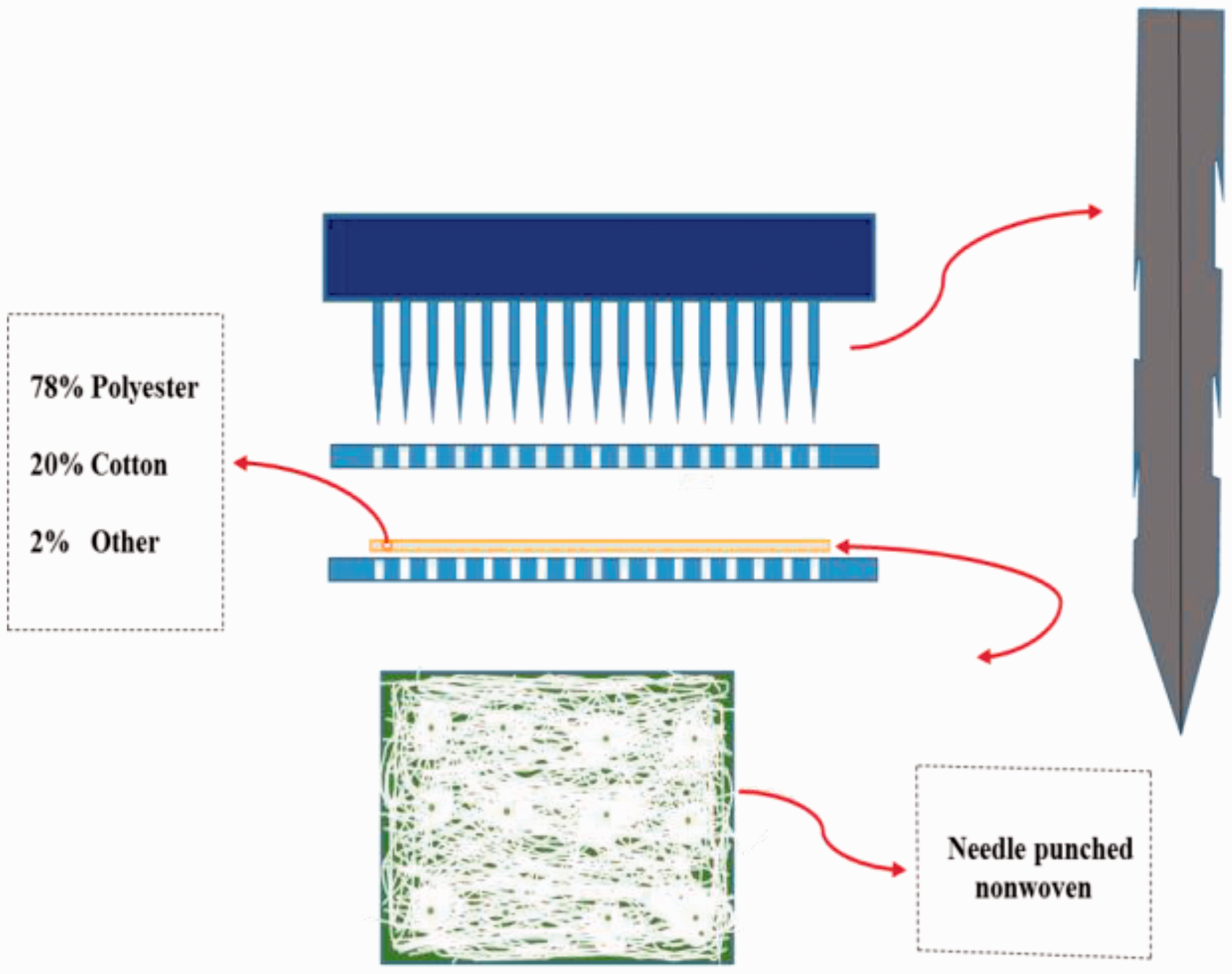
The manufacture process of the needle-punched nonwoven geotextiles.
Tensile property
The tensile properties of fabrics were tested according to ‘GB/T 3923.1-2013’ (Chinese standard) by universal material tester (365, Instron Co., Ltd, USA). The clamping length was 200 mm, the pretension was 2 N and the stretching speed was 100 mm/min. The length of the tensile specimen was 30 cm and the width was 5 cm. Five repeated tests were performed for every samples, the test direction was along the longitudinal direction of the fibers in the nonwoven.
Bursting property
The bursting property of fabric was tested according to ‘GB-T 19976-2005’ (Chinese standard) by electronic fabric strength machine (YG(B)026G, China). The diameter of the marbles was 38 mm and the descending speed was 300 mm/min. The test sample was a round sample with a diameter of 78 mm. Five repeated tests were performed for every samples.
The air permeability
The air permeability of fabric was measured according to ‘GB-T 5453-1997’ (Chinese standard) by automatic air permeability meter (YG461E-III, China). The test area was 20 cm2 with a pressure drop of 200 Pa. If the sample area is larger than 20 cm2, repeat the test for 10 times.
Morphologies and structures
The morphologies and structures of component fibers in the nonwoven geotextile, especially before and after ultraviolet (UV) aging, were characterized by field emission scanning electron microscopy (FESEM, Hitachi S-4800, Japan) at an acceleration voltage of 3 kV.
Thermal performance
The thermal performance of geotextiles was analyzed by thermogravimetry (TGA, Perkin Elmer, USA) in a nitrogen atmosphere with the heating rate of 20 °C/min from room temperature to a final temperature of 650 °C. The tested sample was cut to small pieces with a weight of 5–10 mg and put into a small alumina crucible.
Infrared spectrum
The functional groups in the fabric were measured by infrared spectrometer (Thermo Electron Corporation, Beverly, MA, USA). The sample was cut into powder, dried and scanned with potassium bromide tablet in the range of 500–4000 cm−1 to obtain the infrared absorption spectrum.
The UV aging
The UV aging box (QUV/Spray, Q-LAB Co, Ltd, USA) was used to accelerate the aging process under the following aging conditions: the light intensity was 1 W/m2; the temperature inside the box was 60 °C, which is preset according to light intensity; the irradiation UV wavelength is 340 nm. The irradiated samples were taken out for assessment of mechanical property every 24 h.
Porosity
The material porosity was analyzed via a multiaperture analyzer (CFP-1100AI, PMI Co., Ltd, USA). The sample is square with side length larger than 3∗3 cm.
Moisture regain
The test method for the moisture regain of planting blankets was following Chinese standard of ‘GB/T 6529-2008’. The formula for calculating the regain is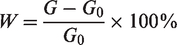
Results and discussions
Tensile property
The tensile properties are closely associated with the needle-puncture parameters. Moreover, the most optimized needle-manufacture parameters will provide a guide for following research. The relationship between tensile breaking stress and acupuncture frequency is demonstrated in Figure 1(a) and tensile breaking stress vs. acupuncture depth is demonstrated in Figure 1(b). The detailed data are summarized in Table 2. It can be seen from the histogram that, at the same frequency, tensile breaking stress increases normally with the acupuncture depth until the needling depth reaches 14 mm. This is due to the increase of acupuncture depth will lead to more surface fibers entering into the deeper part of the fiber web via the inverted hook on the needles and the strengthen the geotextile due to complex entanglement between fibers. When the acupuncture depth is 16 mm, excessive acupuncture depth may result in the increase of injured fibers and consequent lower tensile breaking stress. It can also be observed from Figure 1(b) that with the increase of acupuncture frequency, the general trend of tensile breaking stress is also increasing except the data when the acupuncture depth is 8 mm. When the needling depth is 8 mm and the needling frequency is 800 times/min, there is a small decrease. This exception may be mainly due to stochastic characteristic of experimental data, which was obviously reflected on the error bar. The random distribution and content of component fibers led to a randomness of tensile breaking stress, especially in the case of low acupuncture depth as shown in Figure 1(b).
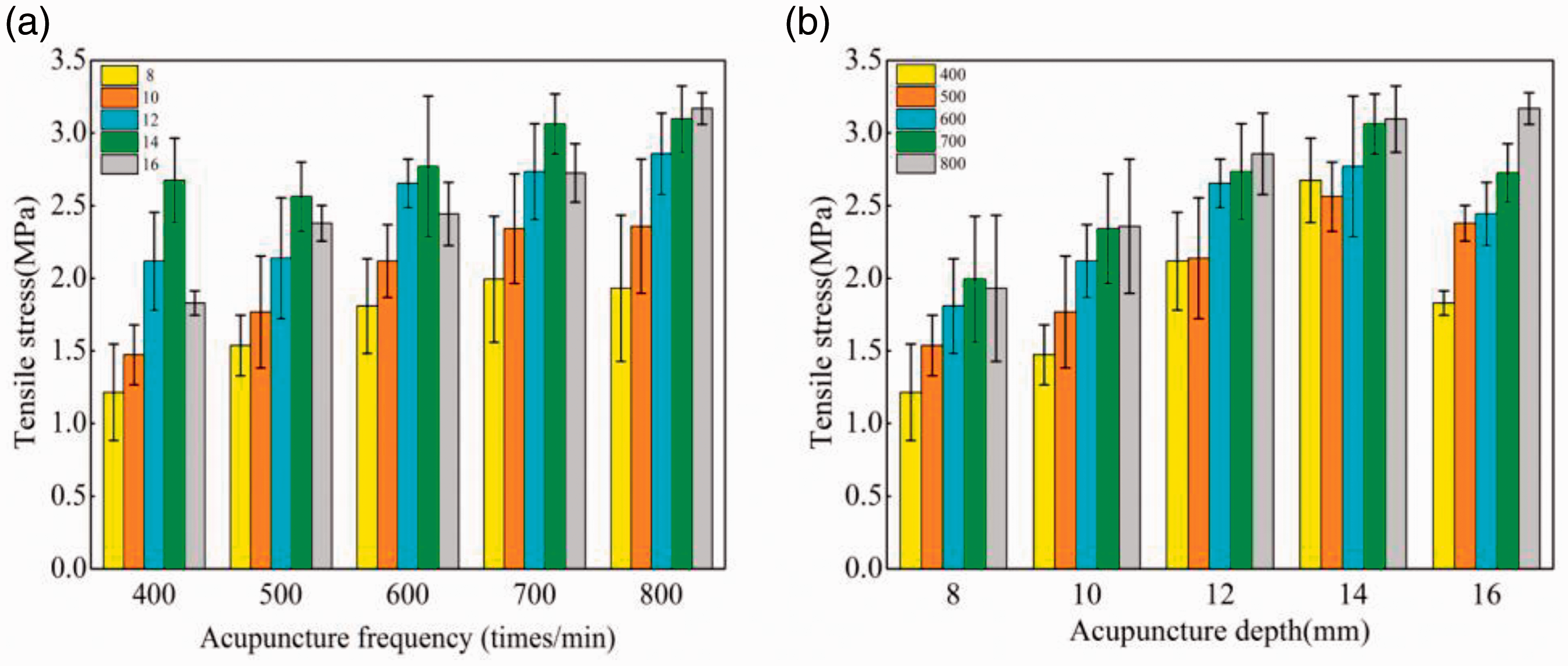
(a) The relationship between tensile breaking stress and acupuncture frequency and (b) the relationship between tensile breaking stress and acupuncture depth.
Bursting performance
The root system located in the fabric will have a certain force on the plant medium, which makes it necessary to study the bursting performance here. As mentioned above, the uniformity of nonwoven geotextiles in present research is poor. Considering the uniformity and the sample size used in the bursting test, this article defines a specific strength here, which is the ratio of the bursting strength to the sample mass. Figure 2(a) illustrates the relationship between the specific strength and acupuncture frequency and Figure 2(b) illustrates the relationship between the specific strength and acupuncture depth. The data are also summarized in Table 3 in detail. Overall, the bursting performance of nonwoven samples is comparatively good. It can also be seen that the bursting performance does not exhibit a specific tendency in terms of no matter acupuncture depth or frequency. This is mainly because of the random and uneven distribution of component fibers.
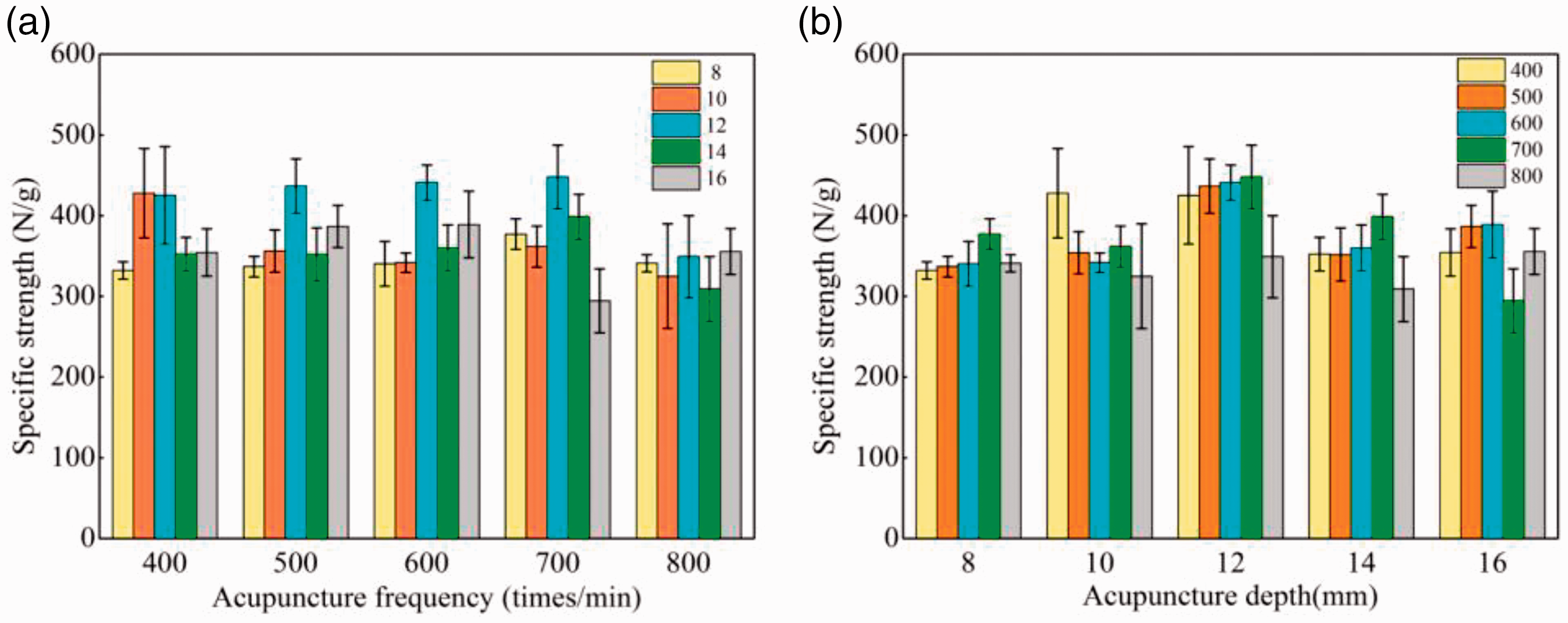
(a) The relationship between specific strength and acupuncture frequency and (b) the relationship between specific strength and acupuncture depth.
The tensile properties of nonwoven materials.

Figure 3 illustrates the elongation at break for geotextiles made with different processing parameters. It can be seen from Figure 3 that the breakage elongation of designed needle-punched nonwoven fabrics exhibits an overall decrease tendency in the range of 80% to 120% with the increase of acupuncture frequency. For acupuncture depth, it has no identical tendency for all samples. This result has shown that the extension and elastic property of prepared geotextile samples are both excellent to fully meet the requirement of transportation, construction as well as plant growth.
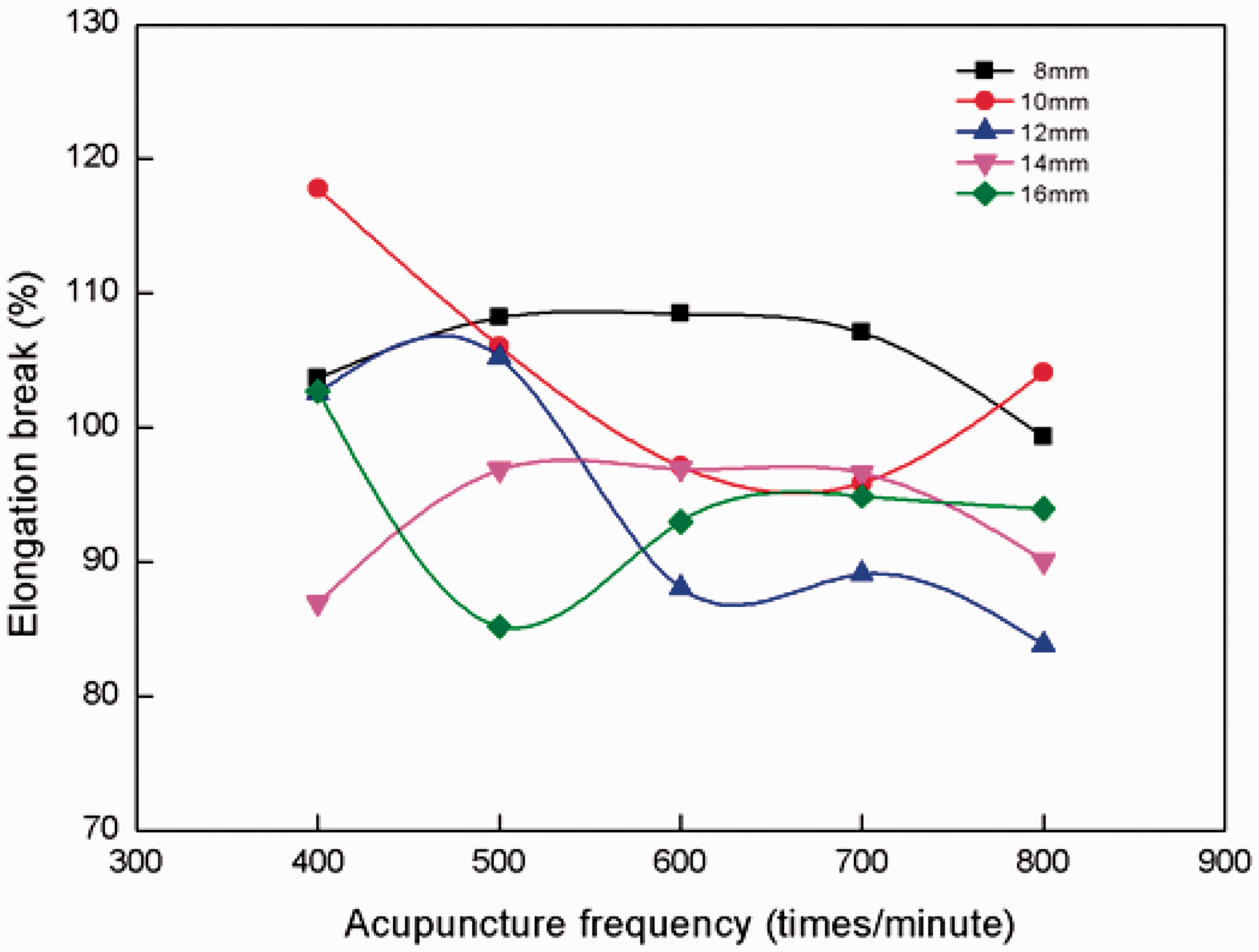
The elongation at break for geotextiles made with different processing parameters.
Air permeability
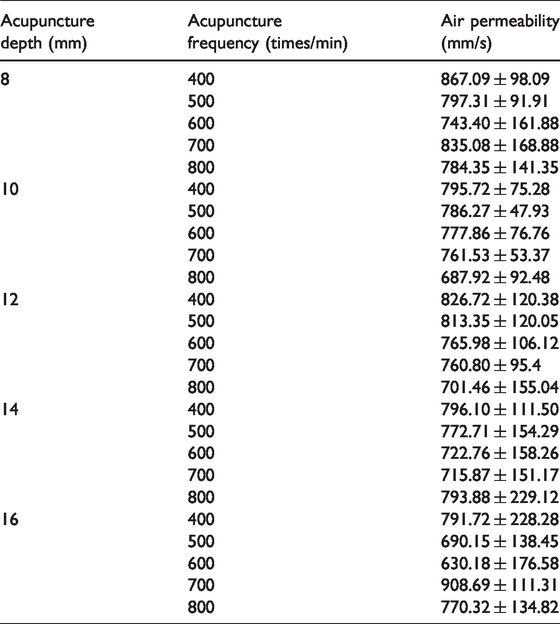
When the ventilation of plant medium is poor, the absorption ability of root to obtain nutrients and water is weakened. At the same time, pathogenic molds are prone to propagate and the disease resistance of the crop is affected. The air permeability of designed samples is shown in Figure 4 as well as in Table 4. As can be seen from Figure 4 and Table 4, the general trend of air permeability exhibits decrease with the increase of acupuncture frequency as well as acupuncture depth. This may be due to the fact that the increase of the needling frequency makes more fibers in the fabric intertwined and entangled tightly. When the airflow passes, the resistance becomes larger, and the air permeability becomes worse (a small amount of non-strict increase or decrease also appears in this, which may be caused by the difference between the selected areas and the random distribution in the nonwoven geotextile). The air permeability data ranges from 500 to 1000 mm/s (the unit ‘mm/s’ means the volume of gas which passes through a unit area of sample per second). Compared with ordinary textiles, needled nonwovens have excellent air permeability which can fully meet the root growth conditions as well as significantly reduce root rot during plant growth.
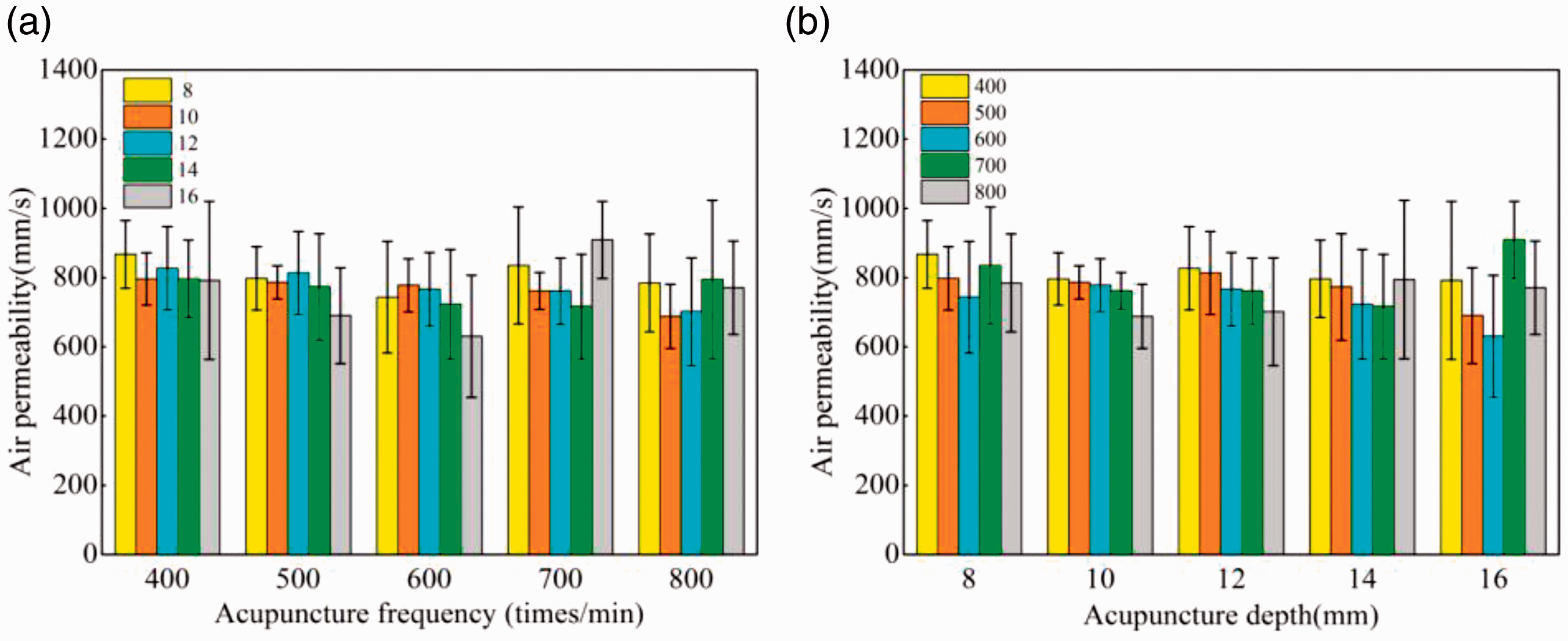
(a) The relationship between air permeability and acupuncture frequency and (b) the relationship between air permeability and acupuncture depth.
The bursting properties of nonwoven materials.

The air permeability of nonwoven materials.
Under comprehensive consideration of tensile property, bursting strength and air permeability of the geotextiles, it can be concluded that the geotextile reaches an optimum overall performance when the acupuncture depth is 12 mm combined with an acupuncture frequency of 700 times/min. Therefore, a needle-punched nonwoven fabric with a needling depth of 12 mm and a needling frequency of 700 times/min was selected as the material for next experiments.
Analysis of pore
The pores of the soil are various pores of varying sizes, curvatures and shapes. The pore diameters of the needle-punched nonwovens are also different in size. The capillary pore is a kind of small pore, which has obvious capillary effect, and its pore diameter is generally less than 100 µm. The more the capillary pores, the greater the capillary force, the stronger the water absorption, and the fiber is a single fiber relative to the soil. It exists in many capillaries. Moreover, the pore diameter and distribution are also characterized and shown in Figure 5. The tested sample in Figure 5 is the geotextile with acupuncture frequency of 700 times/min and acupuncture depth of 12 mm. The average pore diameter is 28.4582 µm among which the minimum pore diameter is 2.95214 µm and the maximum pore diameter is 74.0574 µm. Moreover, the pores are distributed intensively in the interval of 8–42 µm. Consequently, the needled nonwoven geotextile in present research is a porous material with the component fibers winding together to form a small aperture connected with each other, which enables it to have the good air permeability, reach the respiratory conditions needed for the growth of plant roots and fix roots well.

Pore distribution of needled nonwovens.
FTIR analysis before and after UV aging
Figure 6 shows the infrared spectrum of the needled nonwovens after different UV aging time. It can be seen from Figure 6 that the position and type of the absorption peak do not change significantly, but the intensity of some absorption peaks change. It can be seen from the figure that with the UV aging time, with the increase of UV aging time, the relative absorption intensity of ester carbonyl at 1730 cm−1 decreases, especially after 14 days aging. This is mainly due to the poor stability of the double bond. As the UV aging time increases, the double bonds in the ester groups will undergo an oxidation reaction and become carbon–oxygen single bonds. As time goes on, the carbon–oxygen single bonds will be further oxidized to form oligomers such as carbon dioxide. In these chemical reactions, the position and shape of the ester bond absorption peaks in the infrared spectrum will not be significantly illustrated [31–34]. Moreover, with the extension of the irradiation time during which the oxidation reaction progresses, the ester carbonyl groups on the surface are cleaved to form carboxides and the absorption of carbonyl peaks on the surface gradually decreases.
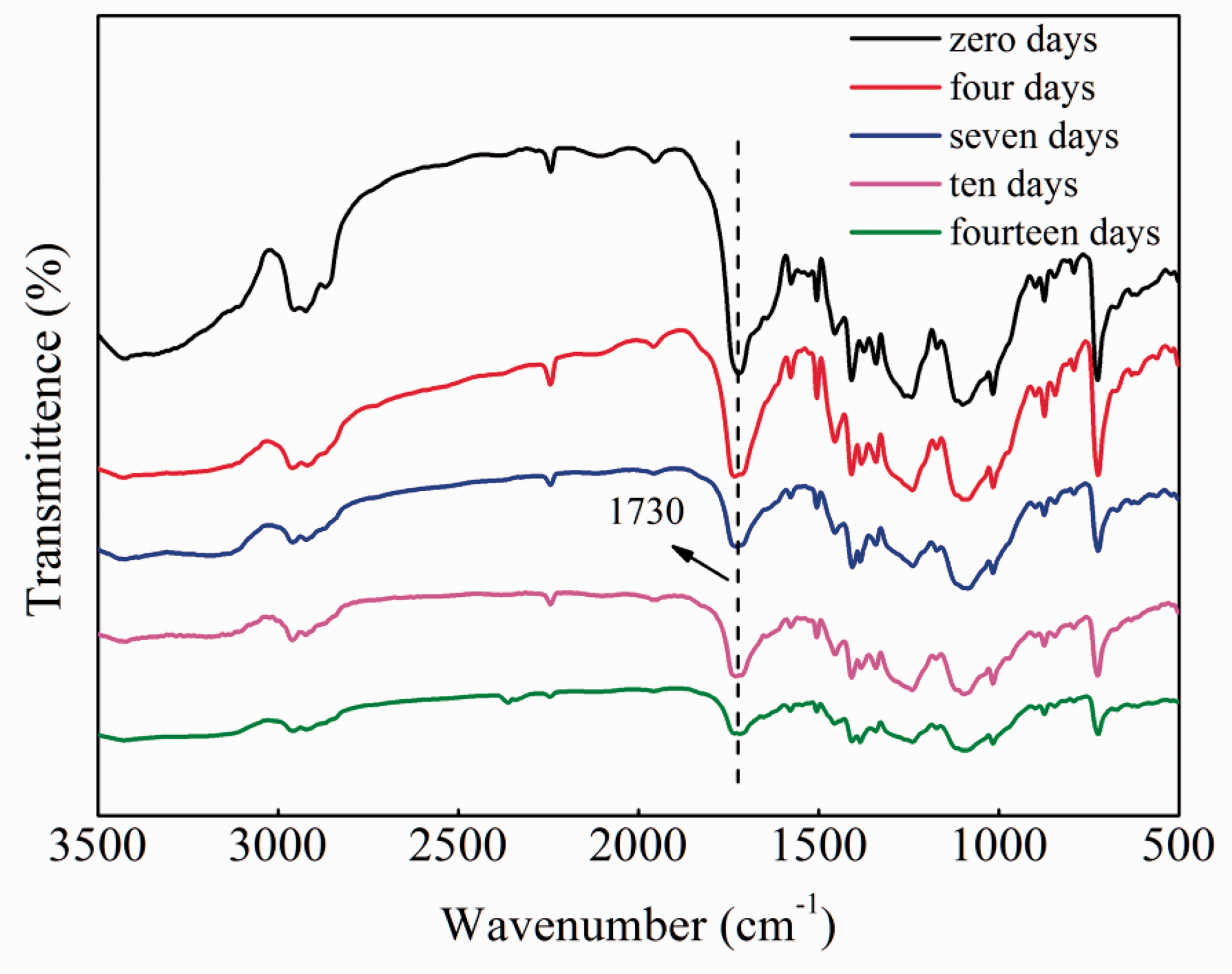
Infrared spectra of nonwoven geotextile before and after different UV irradiation time.
Tensile property before and after UV aging
The UV aging analysis was also conducted in the present research considering the prepared geotextile used outdoors. The toughness and stability during long service life for geotextiles are essential for the material design. Figure 7 shows tensile breaking stress and elongation at break for needled nonwovens under different UV aging time. As well, the data are also summarized in Table 5 in detail. The tested sample was characterized with an acupuncture frequency of 700 times/min and an acupuncture depth of 12 mm as mentioned above. It can be seen from the Figure 7 that tensile breaking stress decreases distinctly with the increase of UV aging time, especially after 5 days aging. Noticeably, tensile breaking stress after 14 days aging has declined to nearly half of the original value. This is mainly because fiber breakage occurs inside the geotextiles as exposed in a UV irradiation environment for enough time, resulting in a decrease in fiber strength [30,31]. As the irradiation time becomes longer and longer, component fibers in nonwovens are more and more broken, which leads to worse tensile resistance ability. However, it should also be noticed that the elongation at break is guaranteed to be more than 60% with the extension of UV irradiation time. It means the geotextiles still have good stretchability and do not impose extra pressure on the roots of the plants, which is beneficial for continuous growth of the plant roots. In addition, Figure 8 and Table 6 show that geotextiles can maintain their tensile mechanical properties well in outdoor (location: Suzhou; Time: march-august) five months of natural aging, which further indicates that the fabric has good anti-aging properties and has high economic value for long-term use.

The tensile property of nonwoven geotextile during UV irradiation aging.
The tensile properties of nonwoven fabric after aging.

UV: ultraviolet.

Tensile properties of nonwoven geotextiles during natural aging.
Tensile properties of nonwovens after natural aging.

Regarding the infrared spectra curves illustrated in Figure 6, it has a reasonable connection between the stress drop and the infrared image. For example, the absorption intensity of ester carbonyl at 1730 cm−1 has a significant decrease after 4 days aging compared with original one, which also leads to an obvious drop in the tensile breaking stress. The tensile breaking stress after 7 days aging is much lower than that after 4 days aging, which is also corresponding with a weakened absorption intensity. The changes in terms of ester carbonyl group to carbon–oxygen single bond may result in this weakened effect on the tensile property. Finally, the gradual damage of some chemical bonds generates a slow decrease in the tensile breaking stress.
Surfaces and morphologies before and after UV aging
Figure 9 shows the scanning electron micromorphology (SEM) images of component fibers in geotextiles after different UV aging time. It can be seen from Figure 9(a) that the fiber presents regular cylindrical shape before aging treatment and the surface was relatively smooth with good gloss. In Figure 9(b), the fiber surface is still relatively smooth and no prominent changes occur, which is relatively consistent with the original morphology after 4 days UV aging. In Figure 9(c), some black marks appear on the surface of the inner fiber of the fabric and in Figure 9(d), the surface of the sample show a lot of black dots and the surface begins to become rough after 10 days UV aging. Finally, it can be seen from Figure 9(e) that cracks finally appear after 14 days UV aging and the surface roughness is further improved.

SEM images of component fibers in nonwoven geotextile before and after different UV aging time. (a) UV aging 0 day; (b) UV aging for 4 days; (c) UV aging for 7 days; (d) UV aging for 10 days; (e) UV aging for 14 days. SEM: scanning electron microscopy; UV: ultraviolet.
Obviously, the damage degree of the fiber surface aggravates with the extension of UV aging time. At the beginning of irradiation, some unstable bonds in the polymer begin to break while the fiber surface does not change much. With the increase of UV aging time, the large molecular chains in fibers break into small molecular chains, which is conducive to reorientation and crystallization, making the fiber surface become rough [32,33]. With further increase of irradiation time, UV irradiation will produce some oligomers coating on its surface and releasing CO2 and other gases when the polymer is decomposed, which will also cause the above destruction phenomenon on the fiber surface.
TGA analysis before and after UV aging
Thermal stability is another important property of outdoor used plant medium, especially for tropical zones since thermal aging is another common kind of aging type. To further study its aging principle, Figure 10 illustrates the thermal stability of samples aged for different times. In Figure 10, all samples have a small amount of decomposition before 100 °C, which is caused by the fact that there is still a small amount of moisture in needled nonwoven fabric that cannot be fully dried or the fabric absorbs moisture in the air. It can be seen from the figure that the decomposition process of all samples starts approximately at 300 °C and tends to be stable when the temperature reaches 500 °C. In the locally enlarged figure in Figure 9, the decomposition amount of needled nonwoven fabrics at the initial stage increases successively with the increase of UV aging time. This can be easily explained according to the infrared spectrum in Figure 6 that with the extension of UV radiation aging time, the rupture of component ester bond occurs more and more, which leads to a much easier thermal decomposition of fiber accompanied with a damage of tensile property as mentioned above. In addition, the decomposition residues of the samples after UV aging are all more than the sample without aging. This is mainly due to the fact that aging is actually a process of oxidation with more and more oxygen and oxygen atoms combing with fabric [35–37]. As the aging time continues to increase, the stability of the existing form of oxygen atoms in the fabric becomes worse, which leads to the reduction of decomposition residue after 14 days UV aging compared with 10 days UV aging.
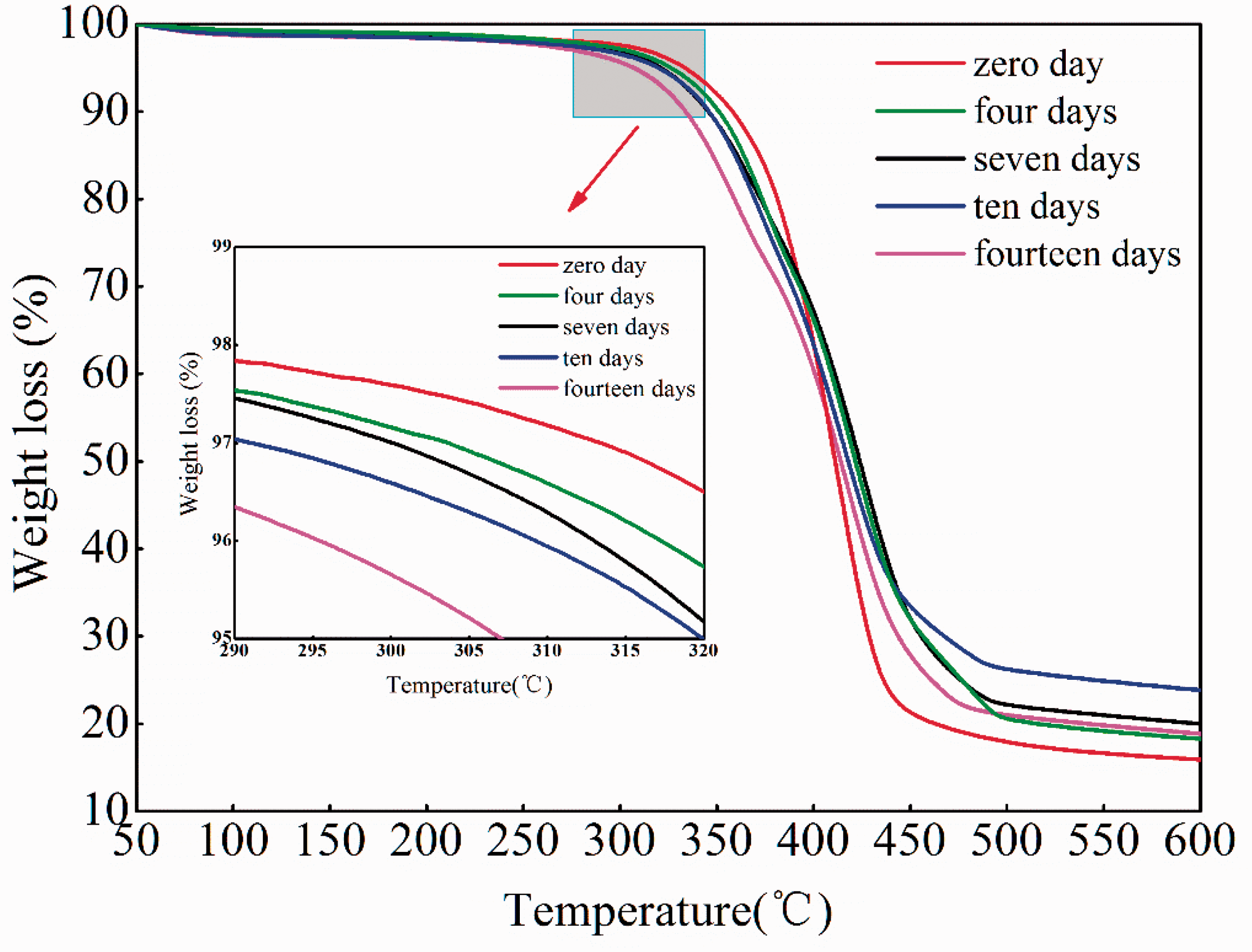
TGA of nonwoven geotextile before and after different UV irradiation time. TGA: thermogravimetry; UV: ultraviolet.
Moisture regain
The moisture regain of both geotextiles and component fibers are listed in Table 7. As can be seen from Table 7, due to the existence of both cotton fiber and polyester fiber in geotextile, the moisture recovery rate of geotextile is relatively moderate and has certain hygroscopic and moisturizing properties to enable better growth of plants. Also, the ultimate moisture regain of geotextile is closely related to the proportion of component fibers. The moisture regain of geotextiles was theoretically equal to 2.012% in terms of 78% polyester and 20% cotton. The small gap between theoretical and experimental result can be attributed to the existence of other fibers.
Moisture regain of several substances.

The growth of plants on geotextiles
The degree of plant growth is shown in Figure 11. It is seen from the picture that the geotextile made by waste fibers can well sprout after 14 days’ growth which is comparable with traditional soil. (use of plant: sijiqing, planting location: Suzhou, planting time: August)

Plant growth on geotextile at different times.
Conclusions
In present research, the recycled fibers were adopted combined with needle-punched technique to manufacture a nonwoven fabric that is suitable for landscape plant medium. Systematical and comprehensive property analyses were conducted including tensile, bursting, air permeability, pore distribution, natural and artificial UV aging, thermostability as well as possibility of plant growth. These properties were important for actual application of plant medium made with recycled fibers. The parametric study has shown that an optimized manufacturing parameter was that the needling depth was 12 mm and the needling frequency was 700 times/min. The results show that the nonwoven geotextiles here have good mechanical properties, air permeability and excellent anti-UV aging properties, which can well support the normal growth of plant roots and prevent plant roots from decaying. The results of this study provide a method for making soilless culture substrates in areas with less land, which is economical, affordable and environmentally friendly using the waste and recycled fibers.
Footnotes
Declaration of conflicting interests
The author(s) declared no potential conflicts of interest with respect to the research, authorship, and/or publication of this article.
Funding
The author(s) disclosed receipt of the following financial support for the research, authorship, and/or publication of this article: The work was supported by National Natural Science Foundation of China (Grant No. 11602156), Natural Science Research Project of Jiangsu Higher Education Institutions (Grant No. 18KJB540003), Foundation project of Jiangsu Advanced Textile Engineering Technology Center (Grant No. XJFZ/2018/03) and the Open Project Program of Key Laboratory of Eco-textiles, Ministry of Education, Jiangnan University (Grant No. KLET1701).
