




Abstract
Sportswear should fit well each individual athlete while preserving its ergonomic and pressure comfort upon sport-specific movements. This study aims to quantify the effect of two rowing postures on selected body measurements and skin–sportswear interface pressure for competitive rowers of age 18–35. The results based on average body measurements of a total number of 74 male and female rowers indicate a considerable influence of the catch and finish posture on both body measurements and interface skin–sportswear pressure, regardless of the gender. Back length and across back width were the most affected by posture, and increased especially from the static to catch position by 12% (6.1 cm) and 16% (6.5 cm) for male rowers, and respectively by 11% (4.9 cm) and 13% (4.7 cm) for female rowers. In general, the posture led to the larger influence on pressure than on anthropometrics of maximum 55% versus 16% for male and up to 82% versus 13% for female rowers, respectively. The maximum interface pressure (e.g. 10 mmHg) was rather low, which suggest there was no pressure discomfort. Prototypes were developed and the fit of garments was investigated in various postures. For the considered fabrics and design, an increase of the garment pattern to accommodate the catch maximum changes led to a poor fit of the prototype MR58-CP, which was generally too large, especially in the static posture. On the contrary, prototype MR58-FP that considered some finish rowing posture-related body changes and design adjustments based on experience with the first prototype and input from the test person had the best fit.
Introduction
Sportswear should ensure great freedom of movement and perfect fit. The current textile markets offer textile products in a number of sizes, which are based on average population body measurements. For target groups with body proportions that deviate from the average, different sizing charts are needed to ensure good fit of casual wear in general and sportswear in particular. Along with other sport disciplines, rowing is a sport that potentially leads to significant body changes upon large training volume. Many studies were conducted in the last two decades (1997–2017) that investigated the anthropometric characteristics of rowers from different countries including Belgium, Croatia, Poland, Spain, Australia, Malesia, Sri Lanka, Japan and linked that to sport performance among others. The size of the anthropometric surveys varied from small studies including 20 elite Malaysian rowers [1], 25 internationally successful Croatian rowers [2], 46 subjects from Sri Lanka [3], 53 Croatian rowing champions [4], 54 Polish competitive rowers [5], 78 subjects from Japan [6] to large studies of up to 115 Spanish rowers [7], 200–300 Belgian subjects [8–10], and more than 500 Australian rowers [11,12]. In all these cases, a large number of 1D anthropometric measurements were taken manually and only few [11] also collected 2D and 3D predictors (i.e. body volume and surface area) by 3D body scanning technology. Several studies characterized and compared anthropometric characteristics of female and male rowers with those of the general population of similar age: i.e. Belgian school boys [8–10] and Polish nonathletes [5]. Moreover, anthropometry of finalists and nonfinalists was compared [8], sweep rowers versus scullers [9], those using short versus long paddles [5], and lightweight versus heavyweight rowers [11]. For instance, one study [8] stated that junior rowers are larger than Belgian school boys age 17.8 +/− 0.7 years rowers are taller (+12 cm), heavier (+17.5 kg), have longer legs (+6.7 cm) and sitting length (+5.4 cm), and have larger biceps (+4.8 cm) and thigh girth (+2.8 cm). As compared with the general population, Australian heavyweight rowers were found to be larger (i.e. especially height, mass, three dimensions), while lightweight rowers were similar or smaller than adult population and their body dimensions were less variable than those of the general population [11]. Finalists seem to be significantly heavier and taller than nonfinalists and they have greater length/ breadth (except bicristal diameter)/girth [8], while sweep rowers have significantly larger length dimensions versus scullers [10]. A recent study [13] investigated anthropometry of 74 male and female elite rowers by 3D body scanning, compared it with the average population, developed body size charts for male elite rowers, and investigated the fit of sport garments. Among others, they found significant differences between the heavyweight male rowers and Belgian males of the same age.
Body measurements are mostly taken in static posture or A-pose (arms and legs slightly spread) in case of 3D body scanning. Posture is particularly important for the development of comfortable sportswear with adequate fit that does not restrict sport movements. Although the influence of posture on anthropometrics is well known, only a limited number of studies recently investigated the posture in relationship with garment fit and recommended adjustments of the patterns of protective garments [14,15], fire-fighters [16], workwear [17–19], and sportswear [20]. Posture-dependent changes were mostly assessed manually, and challenges, limitations, and laborious post-processing were reported by studies [21,22] that used 3D body scanning technology for dynamic postures. The influence of rowing-related posture upon respiratory muscle pressure and flow generating capacity was investigated [23], but body measurement changes were not reported and to the authors knowledge no study has investigated sportswear for rowers with respect to fit and posture.
Elastic fabrics are commonly used in tight-fit clothing to provide desired shape and room for body movement. Ergonomic wear comfort of sportswear can be evaluated by measuring the wearing pressure and other related sensations by both subjective and objective methods. Many studies were conducted to investigate the influence of compression garments (CG) on athletic performance and recovery [24] and various types of interface pressure sensors (i.e. pneumatic, fluid filled, etc.) were used. Air-filled instruments, Kikuhime® and Picopress®, which were characterized as reliable easy-to-use instruments [25,26], were previously used in in vivo studies [27] to assess pressure garments used in treatments and prevention of scars after burn, to assess the durability of the compression garments after repeated use and laundry cycles [28], just to mention a few applications.
It can be concluded that there is a lack of studies dealing with body changes due to sport-specific posture and the link with garment patterning and development of well-fitted sportswear is missing. Rowing is an endurance sport that consists in ample, repetitive movements that involves both upper and lower limbs. It is therefore hypothesized that body measurements and skin–sportswear interface pressure will considerably change depending on the rowing posture and regardless of the gender. Although previous studies reported deviation of rowers anthropometry from average population, they did not link that to garment development and neither investigated the rowing posture in particular. The aim of this study was twofold. Firstly, we quantified the effect of two rowing postures on selected body measurements and skin–clothing interface pressure for male and female competitive rowers of age 18–35 years. Secondly, sportswear prototypes were developed based on the male rowers’ anthropometry and body changes found during rowing posture and their fit was investigated. The rest of the paper is organized as follows. The following section describes the target group and methodology used to assess rowing posture-dependent variations of the considered variables. In the subsequent section, the results are presented and compared with other studies. The same section also deals with validation of garment fit and describes the materials used and the prototypes developed, as well as fit assessment methodology and results. Finally, in the conclusions are summarized in the last section.
Materials and methods
Target groups
Large number of training hours likely lead to large changes in body measurements and shape. Therefore, the target group of this study consists of competitive male (M) and female (F) rowers of age 18–35 years, divided in two categories: (a) lightweight category M (F) of maximum 72.5 (59) kg and (b) heavyweight category M (F) of maximum 90 (75) kg. All participants were healthy adults who practice at least three times per week including regular training sessions on a rowing ergometer. The subjects were mainly recruited during the Belgian Championship BC (Hazewinkel, Belgium, September 2017) and the International Rowing Regatta (Gent, Belgium, May 2018). Upon their arrival, all subjects were informed about the purpose of the study and methodology and written informed consent from all participants was obtained prior to the start of testing sessions. Firstly, the body mass and height of the subjects was registered by an anthropometer KERN MPB-P and the body mass index (BMI, kg/m2) was calculated. Secondly, large number of 2D and 3D body measurements were taken by 3D body scanning technology. Finally, body measurements were assessed in the catch and finish posture, while the subject sat on the rowing ergometer. These were taken manually due to the large size of the ergometer and limited volume of the 3D body scanner Symcad (Telmat) among others. All the measurements were completed on the same (competition) day, before or after completing a rowing race.
Test suit
All the subjects wore a similar test suit to prevent alterations of body measurements during both 3D body scanning and manual assessment (section “Manual assessment of body changes with rowing posture”). Typically, a competition rowing suit is a full body, sleeveless garment with short pants above the knee, but during training, especially in the cold seasons, short or long-sleeved shirts are worn underneath. The test suit developed for the purpose of this study was a polyester-elastane short-sleeve unisuit in white color, provided by a zip in the front panel to facilitate dressing/downing and by a black line, digital-printed on the back panel (Figure 1). Five body measurements were selected namely upper-arm girth (UAG), thigh girth (TG), knee girth (KG), back length (BL), and across back width (BW). All measurements were taken manually according to ISO 8559-1: 2017 except BL and BW. For practical reasons and to assist the operator in taking quick measurements, especially in dynamic positions, BL was measured along the black line (neckline-upper hip level). The absolute value of the measured BL is slightly higher than the real back length of the subject (ISO 8559-1, measured from 7th cervical to waist). This is, however, acceptable for the purpose of this study, which quantifies relative variation of back length upon postures, given that the fabrics of the test suits have the same elasticity and because the tight design of the suit keeps the guidance line in place. For the same reasons, the across BW was measured taking the sleeve seams as guidance (Figure 1(b)). Most of heavyweight male rowers encountered fitting problems with the test suit labeled by the manufacturer from S to XXL. Therefore, the best fitting garment was not selected based on garment size usually worn by the subject, but instead based on his/her comfort sensation and visual assessment by the experienced operator.
Test suit (a) front and (b) back view, with indication of the different body measurement locations.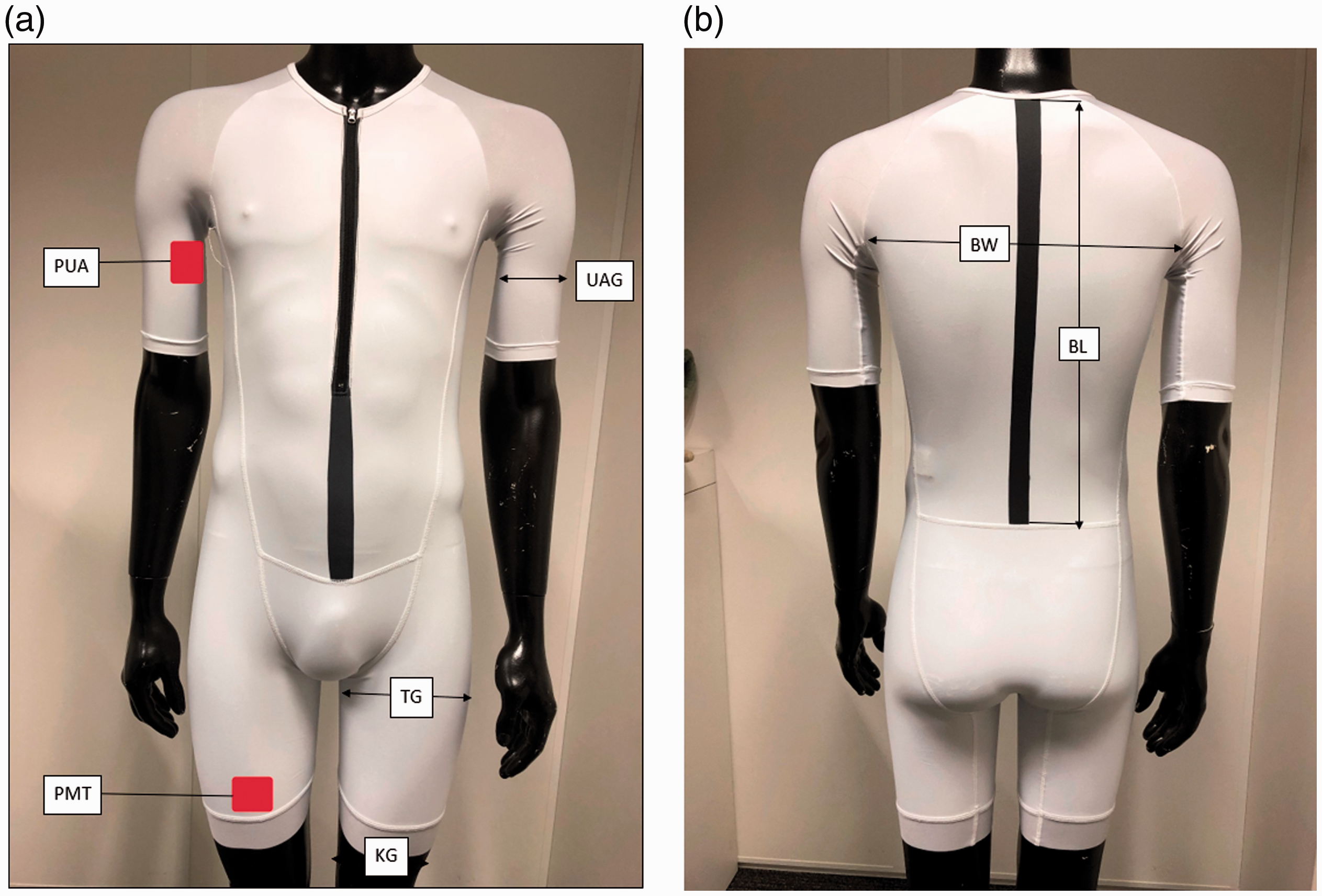
Body measurements and skin–test suit interface pressure assessment
Manual assessment of body changes with rowing posture
During a rowing stroke, four positions can be distinguished among which flexed posture “catch” and extended posture “finish” potentially lead to significant body changes, both in lengths and girths. During the catch (Figure 2(a)), the legs are compressed, the shins are vertical, arms are extended, triceps work to extend the arms, and the flexor muscles of the fingers and thumbs grip the handle. The back muscles are relaxed, and abdominals are flexing the torso forward. At the finish (Figure 2(c)), the abdominals stabilize the body, and the glutes and quads are contracting. The biceps and many of the back muscles are also contracting to help keep the torso in the finish position and to internally rotate the upper arms.
Rowing stroke and muscle involved in (a) catch, (b) drive, (c) finish, (d) recovery (permission from Concept2, Inc. [29]).
Changes of both upper and lower limbs upon posture are relevant for the purpose of garment development in general, and they likely change most upon catch and finish posture. A tape measure was used to assess these body measurements for each subject in catch, finish, and static (A-stand) position. For each subject, markers were placed on his/her body to ensure consistency during the three postures. To reproduce the rowing movements with high fidelity, the subjects executed the two movements while sitting on an ergometer.
Skin–test suit interface pressure assessment
A PicoPress instrument (Microlab, 2019) was used to assess the interface pressure between the sportswear and the skin. PicoPress operates in the range of 1–189 mmHg with steps of 1 mmHg. Picopress contains a manometer connected to a thin wall, flexible, circular plastic bladder with a diameter of 5 cm. Before starting the measurement, the probe is filled with 2 mL of air, which expands the thickness of the probe to less than 3 mm [25]. Two body locations were selected namely upper arm (PUA) and mid-thigh (PMT), as shown in Figure 1. These body locations were selected based on a compromise between assumed largest pressure variation with postures, limited accessibility of the probe sensor to other body zones due to both garment and PicoPress design, as well as privacy reasons of the test person. A t-test was applied to assess statistical significant differences between the body measurements and pressure in static and each dynamic posture.
Results and discussions
Demographics of the target group
Demographic characteristics of male and female rowers.

LW: lightweight; HW: heavyweight.
6 subjects from Belgium, 5 from Ireland, 1 from Cyprus, 1 from Algeria.
26 subjects from Belgium, 6 from UK, 4 from Portugal, 2 from Ireland, 1 from Tunisia, 1 from Algeria, 1 from Cyprus.
4 subjects from Belgium, 2 from Algeria, 1 from Tunisia.
10 from Belgium, 2 from Ireland, 1 from Tunisia.
Male rowers: Variation of selected anthropometrics and skin–sportswear interface pressure with rowing dynamic postures
Male rowers: Mean anthropometrics and skin–sportswear interface pressure in static and two dynamic postures (catch and finish).

UAG: upper-arm girth; TG: thigh girth; KG: knee girth; BL: back length; BW: across back width; PUA: pressure upper-arm; PMT: pressure mid-thigh.
Male rowers: Variation of anthropometrics and pressure with dynamic postures.

Paired t-test, significant differences (p < 0.01); N = 54 subjects for girth upper arms/thigh/knee and back length.
Measured for N = 22 subjects.
Measured for N = 38 subjects.
Measured for N = 37 subjects.
Relative changes (%) of body measurements and interface pressure upon posture are displayed in Figure 3(a) and (b), respectively.
Male rowers: Relative variation (%) static-dynamic posture of (a) selected anthropometrics and (b) pressure on upper-arm and thigh; *paired t-test, significant differences (p < 0.01).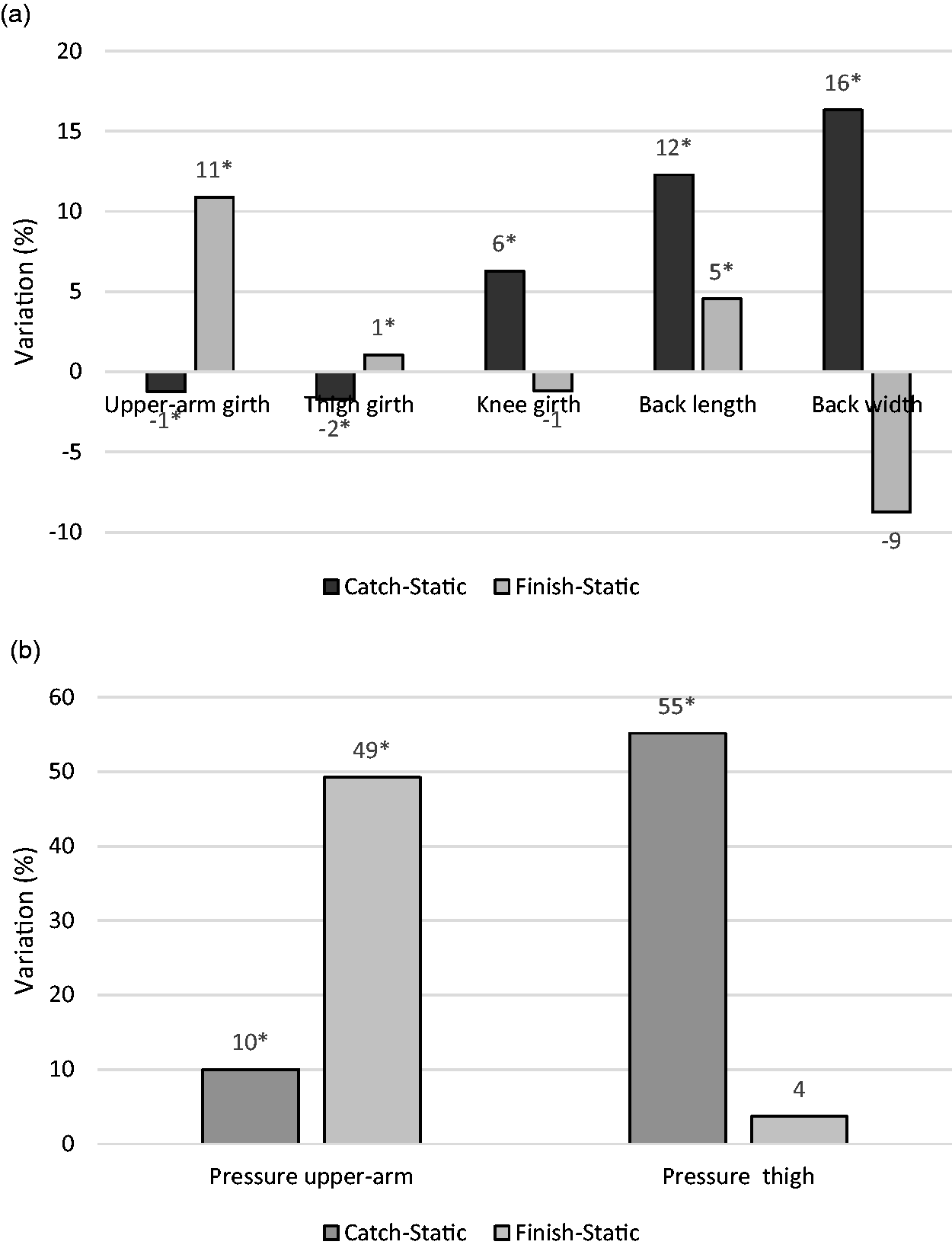
All the changes in the static-catch position were statistically significant (p < 0.01). Across BW had the largest increase (16%) in the catch position followed by BL (12%) and KG (6%). TG and UAG also significantly decrease with 2% in the catch position as compared with the static posture. All body measurements significantly changed upon finish posture except KG. The largest increase was noticed for UAG (11%) followed by BL (5%). On the contrary, across BW significantly decreased in the finish posture (9%). Especially the interface pressure on thigh (PMT) and upper arm (PUA) drastically increased by 55% and 49% in the finish posture and catch posture respectively, meaning an increase of 4 mmHg and 2 mmHg respectively, as shown in Table 3.
Female rowers: Variation of selected anthropometrics and skin–sportswear interface pressure with rowing dynamic postures
Female rowers: Mean anthropometrics and skin–sportswear interface pressure in static and two dynamic postures (catch and finish).

UAG: upper-arm girth; TG: thigh girth; KG: knee girth; BL: back length; BW: across back width; PUA: pressure upper arm; PMT: pressure mid-thigh.
Female rowers: Variation of anthropometrics and skin–sportswear interface pressure with dynamic postures.

Paired t-test, significant differences (p < 0.01); N = 20 for girth upper-arm/thigh/knee and back length.
Measured for N = 6 subjects.
Measured for N = 13 subjects.
Measured on N = 14 subjects.
Relative changes (%) of body measurements and interface pressure upon posture are displayed in Figure 4(a) and (b), respectively. Almost all static-catch body changes were statistically significant (p < 0.01). Across BW had the largest increase (13%) in the catch position followed by BL (11%) and KG (7%) and the values for male and females were comparable. TG significantly decreased in the catch position as compared with the static posture by 2%. All body measurements significantly changed upon finish posture except KG and TG. The largest increase was noticed for UAG (+8%) followed by BL (4%). On the contrary, the across BW decreased in the finish posture (7%) but the difference was not statistically significant. The relative changes of body measurements were comparable for male and female rowers. Especially the interface pressure on the thigh drastically increased by around 80% in the finish posture, meaning an increase of 5 mmHg, as shown in Table 6 and the relative increase was larger than in the case of male rowers (i.e. 55%).
Female rowers: relative variation (%) static-dynamic posture of (a) selected anthropometrics and (b) pressure on upper-arm and thigh; *paired t-test, significant differences (p < 0.01). Physical and comfort-related properties of fabrics used. PES: polyester; PA: polyamide; EA: elastane. ISO 3801:1997. ISO 5084:1996. EN 14704-1:2005. ISO 9237:1995. AATCC-195:2001. ISO 17617:2014.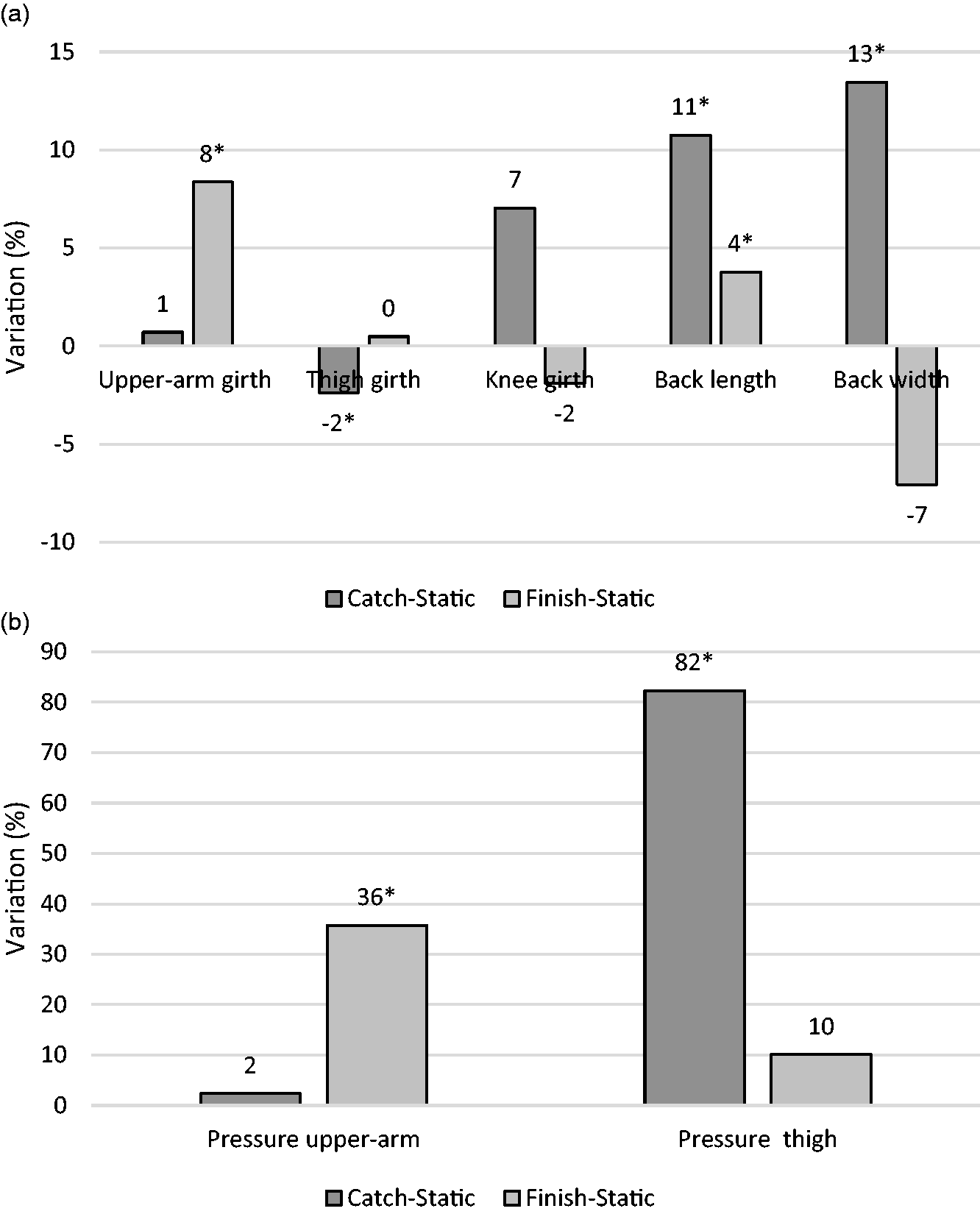

Discussions
BL and BW were most affected by rowing posture, which both increased especially in the catch position for male subjects by 12% (6.1 cm) and 16% (6.5 cm) and by 11% (4.9 cm) and 13% (4.7 cm) respectively for female subjects. As BL was not measured according to ISO 8559 but on the black guiding line, our absolute values must be higher than the real BL, but the relative body measurement changes with the rowing posture are comparable with other studies depending on the posture investigated. Even relatively small posture changes seem to result in considerable body measurements changes for the purpose of garment development. For instance, previous research [30] reported body measurement changes of up to +4 cm only due to posture adopted during 3D body scanning. Furthermore, it seems that BW of a trained subject may increase up to 6.5 cm and arm length by 5 cm when the muscles are strained during exercise [31]. Choi and Ashdown [32] evaluated the differences in body measurements between standing and siting postures and reported an increase of waist girth by 8%, hip girth by 7%, mid-thigh girth by 9.6%, and the knee girth by 17% in the sitting posture. Body measurement changes seem to be larger from standing to sitting posture as compared with changes from standing to rowing posture. For instance, the KG of male rowers increased only by 2.8 cm (6%) in the catch position and by 2.9 cm (7%) for female subjects, respectively. As the short pants of the test suit do not reach the knee, KG was not measured according to ISO 8559 but above the knee, on the same place for all subjects, therefore only relative increase should be compared with other studies. Posture change from stand to catch and finish only moderately affected the TG of male and female subjects of maximum 1 cm increase in the finish posture. Other studies [19] also reported larger variation of back length as opposed to our case of 12.3 cm (21.5%). These were, however, valid for a man with reported garment size 50 during position switch from standing to forward bent position, which is typically larger than the static-dynamic posture changes that we considered.
As illustrated in Figure 1(a), during the catch posture the legs are compressed and the arms are extended, which can explain the increase of knee girth (6%) and the skin–sportswear interface pressure on TG (16%) and slight decrease of UAG (-1%). Moreover, the back muscles are relaxed and abdominals are flexing the torso forward, which may explain the average increase of male BL (12%) and across BW (16%). At the finish posture (Figure 1(c)), the abdominals stabilize the body, and the glutes and quads are contracting. The TG is slightly decreasing (2%), but the mid-thigh pressure is strongly increasing (55%), which is explained by the different girth and pressure measurement locations as shown in Figure 2. The biceps and many of the back muscles are also contracting to help keep the torso in the finish position and to internally rotate the upper arms. That can explain the increase of UAG (11%) and high increase of PUA (49%) while average TG and BL of male has a smaller increase (1%, respectively 5%). Engel and Sperlich [24] summarized the results of around 55 studies dealing with effect of compression sportswear on performance and recovery in endurance athletes. Typical skin–sportswear interface pressure ranged between 6 and 45 mmHg, mostly 10–20 mmHg for tights and above around 20–30 up to 40 mmHg for compression socks. The skin–sportswear interface pressure found in this study increased largely with the posture but the absolute values registered were below 10 mmHg, which remains a relatively low pressure and thus provides adequate garment pressure comfort during sport.
Garment fit in rowing postures
Prototypes development
Rowing suits of the existing competition were analyzed and the final design and fabrics were selected taking into consideration the feedback from the rowers. Three types of fabrics typically used for sportswear exhibiting various composition, elasticity, and moisture management properties were selected for the development of the prototypes, see Table 6 where mean values are given and SD again indicated via ± .
Knitted fabric 1 was used on the front panel, knitted fabric 2 with elevated air permeability, moisture management and shorter drying time on the back side and low elasticity, waterproof woven fabric 3 on the buttocks, respectively. Double-folded fabric 1 was used for the lower part of the pants. Sizing charts for male rowers [13] were used for the development of prototypes. They were constructed based on average body measurements of a dataset of N=52 elite male rowers taken by 3D body scanning in an A-posture. Chest girth was defined as primary dimension according to ISO 8559-2:2017. The subjects were categorized in eight different size groups (44–58) according to the recommended size ranges (EN 13402-3: 2017). A sleeveless prototype called MR58 was developed for a male rower garment size 58. A second prototype MR58-CP was created by augmenting the BL of prototype MR58 by 12%, BW by 16%, and KG by 6% according to maximum body changes upon catch posture.
Garment fit assessment
Fit of the prototypes MR58 and MR58-CP was virtually assessed by 3D Fit software (Lectra) on an avatar corresponding to a rower size 58 (in static posture). Fabrics from the library of the software (having similar properties to fabrics 1–3) were used for fit simulation. An adequate fit of the prototype MR58 can be observed in Figure 5(a), while Figure 5(b) shows a poor fit of the prototype MR58-CP.
Virtual fit assessment of prototype MR58 (a), MR58-CP (b), and MR58-FP (c) on an avatar rower size 58: front, back, and side view.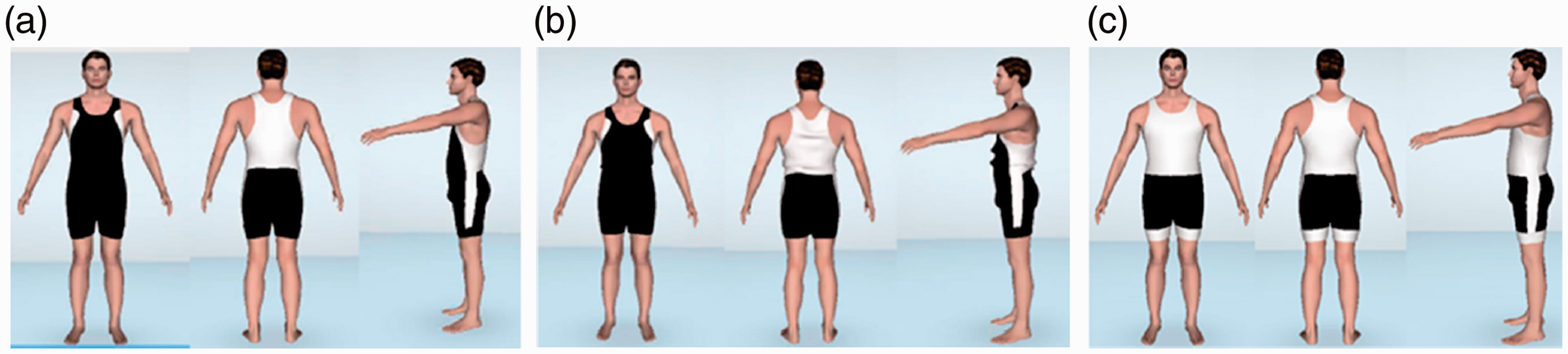
The overall and local fit assessment of prototypes MR58, MR58-CP, and MR58-FP in static (S), catch (C), and finish (F) posture, where 1 – bad fit and 5 – excellent fit.

CG: chest girth; WG: waist girth; HG: hip girth; TG: thigh girth; BL: back length; LL: leg (pants) length.
The scores assigned by the test person indicate that prototype MR58 has generally a very good fit (score 4 or above) in static and dynamic postures, a good fit on hip girth HG (score 3), and less good length of the pants LL (score 2–3). The subject preferred tighter and shorter pants, which should not roll up during movement. Due to the amendments done to the back panel encompassing increases of BW and BL, prototype MR58-CP felt large both at level of chest and waist (low scores of 2.5) in static posture S but scored better in dynamic postures C (score 4 and 3) and F (score 3 and 2.5) respectively. The reason for this was that only the variation of BL and BW due to the rowing postures was assessed and the patterns were modified accordingly. Front length and chest girth proved impracticable to measure accurately in the catch and finish posture while respecting the privacy of the subject. Hence, the front patterns were not altered (shortened), which lead to a loose prototype at the chest and waist levels (i.e. upper garment length accommodated around the body waist) as the front width shortened in these positions.
A third prototype MR58-FP was made based on the experience obtained and input of the test person. For this prototype (Figure 6, green color), the length of BL of MR58 was increased according to the finish posture (i.e. 5%). Across BW and KG were kept similar to MR58-CP. Based on the input of the test person, the front panel (1) was executed into two parts (1.1) and (1.2) with a seam foreseen at the level of the waist and fabric 2 replaced fabric 1 in the front panel, to provide more support and comfort. Double folded strap (4) used at the lower part of the pants MR58 and MR58-CP was replaced by a 5 cm width strip (fabric 4, Table 6), which provides more grip and keeps the pants in place during rowing. Figure 6 shows all amendments applied to prototype MR58-CP (blue color) and MR58-FP (green color). Cover stitch 605 (ISO 4915:1991) was used for assembling the patterns aiming at low stich-body friction.
Patterns comparison of prototype MR58-CP (blue color) and MR58-FP (green color): front panels (1.1 and 1.2), side panels (2), back panels (3.1 and 3.2), pants straps (4), and crotch strap (5).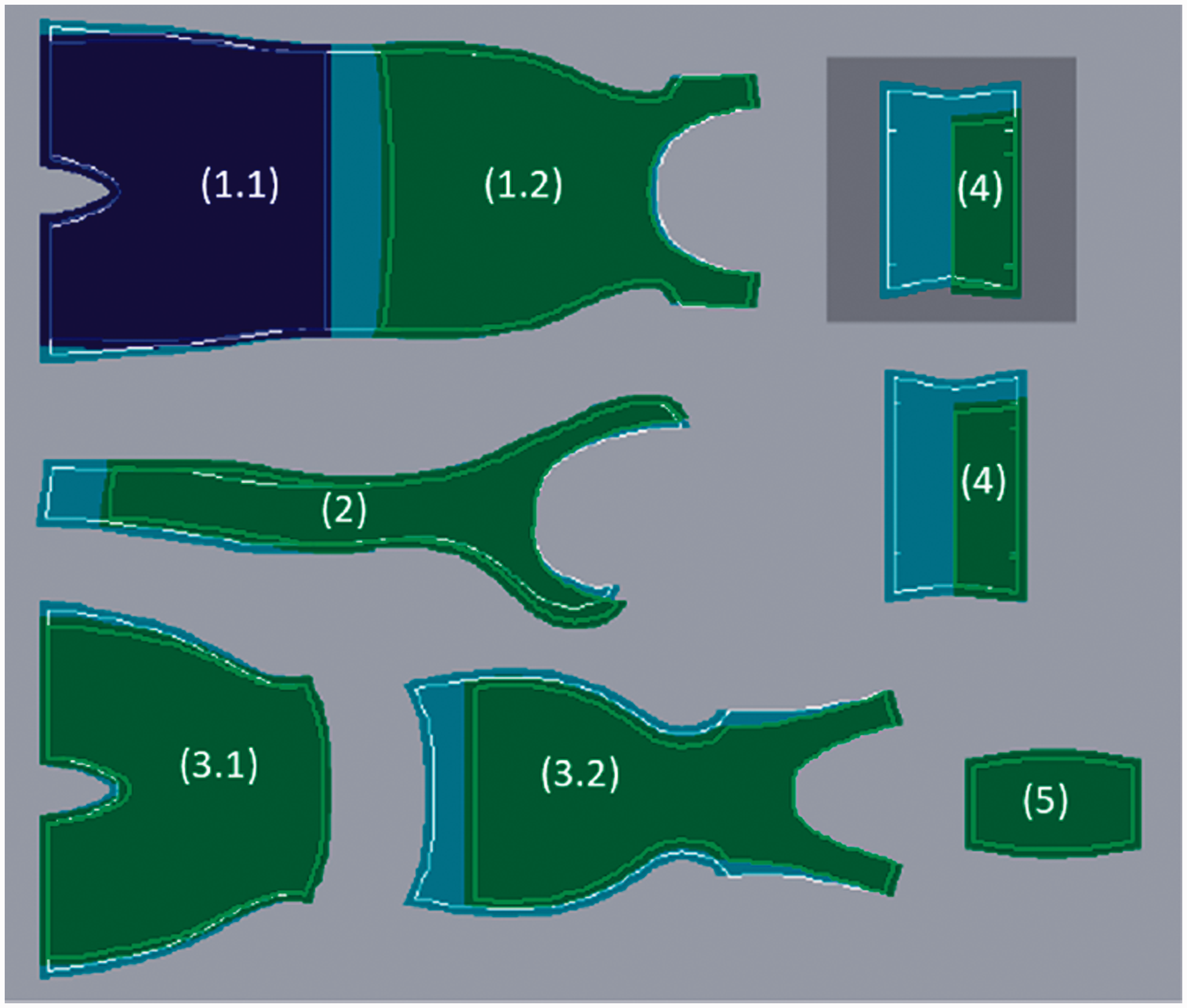
Virtual fit of the prototype MR58-FP can be seen in Figure 5(c). The prototype was assessed few weeks later by the same experienced test person and the scores given are shown in Table 7. Prototype MR58-FP was found best of all, with most of the scores 4.5 or higher. The BL was still slightly long in the static posture (score 3.5) but excellent (score 5) during rowing postures. A slightly deeper armhole was suggested for more comfort during the catch posture.
Conclusions
This study quantified the effect of two sport postures on several body measurements for a large group of competitive male and female rowers. Significant variations were found both for body measurements and skin–sportswear interface pressure depending on the dynamic posture and regardless of the gender. Prototype MR58 developed based on average elite male rowers body dimensions showed an adequate virtual fit and was positively evaluated by the experienced test person. For the considered fabrics and design, an increase of the garment pattern (i.e. back length, back width) by maximum changes found due to the catch posture led to a poor fit of the prototype MR58-CP, which was generally too large, especially in the static posture. On the contrary, prototype MR58-FP, which considered some finish posture-related pattern changes instead, as well as design adjustments based on the experience of the first prototypes and input of the test person, had the best fit.
No size charts could be developed for the limited database of 20 females rowers to validate the garment fit in various postures. Fit evaluation was limited to a male test person and one garment size. Depending on the elasticity of the fabric used, sportswear may accommodate some body changes due to posture and therefore pattern amendments should be carefully considered. Preferably front length, chest girth, and waist girth shall be also documented in rowing postures and considered during garment patterns alteration aiming at a better fit.
This study confirms, however, that collection of body measurements of the target group is essential for a good fit that can be further improved by considering both specific postures and requirements of the end user.
Footnotes
Acknowledgements
The test suits were produced by company Decca based on the requirements of the authors. The authors acknowledge the support of the Flemish rowing federation, Sport Vlaanderen and rowing clubs for recruitment of test persons, company Bioracer for providing the fabrics and suggestions for design of the prototypes, as well as Celien De Bisschop for developing the prototypes and assisting with subjective evaluation.
Declaration of conflicting interests
The author(s) declared no potential conflicts of interest with respect to the research, authorship, and/or publication of this article.
Funding
The author(s) disclosed receipt of the following financial support for the research, authorship, and/or publication of this article: The authors acknowledge the financial support of VLAIO and co-financing of industrial partners in research project SHAPE Adapted Performance Wear (IWT TETRA HBC.2016.0078).