




Abstract
In the structural applications, the composite material employs a significant contribution in various industrial applications. In this paper, the experimental nonlinear viscoelastic behavior, tensile and flexural strength properties are analyzed in aloevera /hemp/flax natural fiber sandwich laminate composites (NSLC) with the addition of barium sulfate filler. The dynamic mechanical properties such as storage modulus (E′), loss modulus (E″) and damping factor (Tan δ) are analyzed using dynamic mechanical analyzer as a function of temperature and frequency. The homogeneity, crosslink between the fiber and the matrix of the natural fiber sandwich laminate composite samples are analyzed by a cole-cole plot and complex modulus models. The improvement in flexural strength is observed in the NSLC4 sample (138.34 N/mm2), but the addition of barium sulfate affects the tensile strength (28.8 N/mm2). From the dynamic mechanical analyzer, it is observed that the storage modulus (E′) at the glassy region in the NSLC2 sample is 19.9% whereas in the NSLC4 sample it is 15.57%. Further, the addition of barium sulfate filler enhances the loss modulus (E″) by 28% in NSLC4 sample. The NSLC4 sample shows the better homogeneity in the cole-cole plot and high crosslink between the fiber and the matrix is observed from the complex modulus.
Introduction
Nowadays, peoples are very cautious about the green environment, which minimizes the usage of synthetic composite, and their attention to find the alternate composite material. The synthetic fibers are having limited applications because it absorbs more water which results in swelling of fibers and low impact strength. Considering this as a lead, the researchers and industries are substituting or reducing the percentage of synthetic fibers. The applications of natural fibers are versatility, and the composite is used in various manufacturing industries due to its low cost, flexibility, biodegradable, renewable, low specific weight, resistance to corrosion and suitable for eco-friendly environment [1–3]. The civilization and the manufacturing industries are profited by using the natural fiber composites [4,5]. The exciting research findings illustrate that the natural fibers [6,7] (Figure 1) have excellent mechanical, rheological, thermal, vibrational, electrical and acoustic properties [8–13].
Classification of natural fibers [14].
The application of natural fiber composites is already discovered to develop automobile (interior and exterior) parts, in packing containers, building doors and window panels, railway seats and in aerospace industries. In another aspect, it reduces the manufacturing, maintenance and recycling costs [4,15,16]. The current literature deals with the mechanical, thermal, magnetic, viscoelastic, vibrational, acoustic and machining property enhancement in the composite material for the proper applications [17–23]. The natural fibers are not used in non-bearing application because of its low strength and low moisture absorption characteristics. In order to overcome this and to increase the use of natural fiber and to reduce the use of synthetic fiber, a combination of both fibers can be made sensibly to take advantage of them [24]. In addition to that, the composite material properties are enriched to produce and tested in the form of beams, composite laminate plates, different channel shapes and boxes. These forms are suggested to replace the wooden frames in the doors, windows, other wooden furnitures, thermal insulation parts and noise arresters [4,25].
Barium sulfate (BaSO4) is white to pale yellow in color and non-flammable, with a melting point of 1580℃. It possesses an unusually high specific gravity of 4.25 to 4.50. The barium atom is large and heavy; it absorbs X-rays quite well. Since the sulfate also possesses no toxicity, BaSO4 is widely used as a radio-opaque agent or X-ray contrast agent to diagnose gastrointestinal medical conditions. It is also used in oil-well drilling fluids and concrete-based radiation shields. It also has applications in root canal fillings, pigments, paints, adhesives, paper coatings, fillers in plastics, linoleum, brake linings, pyrotechnic compositions, textiles, rubber and catalyst supports [26]. The incorporation of the filler particles improves the interfacial connection between the fiber and the matrix, which improves the loss modulus [27].
The automobile manufacturers and suppliers are especially focused and benefited from the natural fiber composites. The automobile industries are paying attention to lightweight vehicles, which leads to reducing the emissions further by utilizing composites to meet the emission regulations. Potential of composite places an agreement to achieve the lightweight mobility by introducing automobile interior and external part like interior door panels, seat back supports, dash panels, hoods and spoilers, etc. [28].
Mechanical properties of different natural fibers [30].

The hemp fibers are used as reinforcement in composite material because of its high strength, high stiffness, low density and aspect ratio (length/diameter) properties [31]. The primary influencing ingredients like cellulose (67–78%), hemicellulose (10.7–22.4%), lignin (2.2–2.5%) and water solubility (1.73%) decide the physical properties of the hemp fiber [31]. The cellulose is the stiffest and strongest organic constituent in the fiber. The variation in the chemical composition, non-uniformity and non-smooth surface of the hemp fiber is affecting the physical and mechanical properties of the composite materials.
The mechanical performance is improved by the alkaline treatment by controlling the non-cellulosic contents in the hemp fiber. The basic technique would result in the extraction of lignin structure (Klason lignin). Moreover, in this technique, the structure of cellulose will change. Apart from the extracted lignin, the extractives and hemicellulose are already removed during the process. The fiber dimension is another influencing parameter of the mechanical properties [32]. Hemp composite shows better tensile strength (52 MPa) and flexural strength (54 MPa) compared to glass fibers [33]. The main constituents of a flax fiber consist of cellulose (64%), hemicellulose (16.7%), wax (1.5%), lignin (2%) and pectin (1.8%), determining the physical properties of the fibers [34]. The mechanical property of the flax fiber is based on the weaving direction of the woven fiber. The tensile properties of flax fibers are highly dependent on the gauge length considered for the measurement. The tensile strength of flax fiber decreases remarkably with an increase in gauge length, from 10 mm to 75 mm. Except for the gauge length effect, the diameters of the fibers also impact the tensile properties [35]. The flax fibers are highly hydrophilic; their tensile moduli are strongly dependent on the relative environmental humidity (RH) [36]. The stress level in the composite is predicted by

The sandwich laminate composite (Figure 2) is an effective method, and it eliminates the drawbacks over single fiber composites. This hybridization technique enhances the application of specific physical and dynamic properties of the composite by selecting the appropriate fibers. Hybrid composite has the highest mechanical properties and vibration characteristics [40]. Past decade the researchers have developed two different cellulosic natural fiber composites. The obtained properties of these composites are not encouraging to achieve the expected milestones. Nevertheless, few studies are conducted with three different combinations cellulosic fiber reinforced polymer composites. These composites possess good competence to meet modern structural applications [14,41,42].
Fiber arrangement of mono and sandwich laminate composite.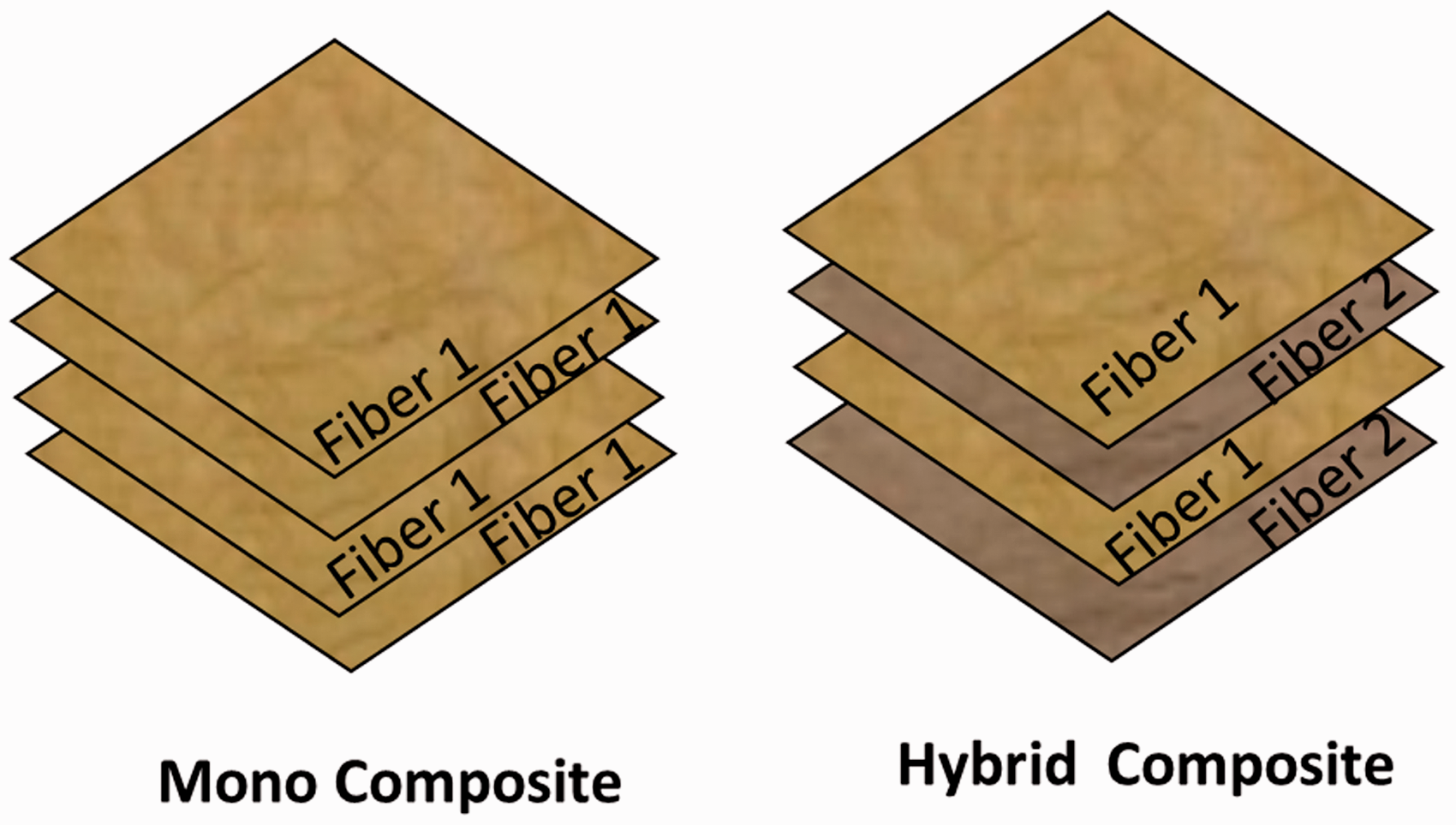
The rigid structures are subjected to different loading and temperature conditions. So, in the dynamic state, the material possesses better energy absorption (Loss Modulus) by high internal molecular mobility between cellulose and hemicellulose [43–45]. The authors are attracted to develop an alternative structural composite for the eco-friendly environment. This study investigates the dynamic viscoelastic behavior of the aleovera /hemp/flax sandwich laminate composites and the effects of BaSO4 filler.
Experimental analysis
Materials and methods
The natural woven aloevera/hemp/flax fibers are procured from Jute Association, India. Initially, the fibers are subjected to alkaline treatment to improve the physical properties of the fiber. The reinforced woven fibers are obtained at a size of 300 × 300 mm. A glass plate (300 mm × 300 mm × 6 mm) is used to develop the mould. The matrix is made by the ratio of 10:1 (LY556 epoxy & HY951 hardener) [46]. The BaSO4 filler is procured from Nice Chemicals (P) Ltd, Kochi, India. The industrial grade is preferred with the specification of 6.5–7.5 PH, and the density of 4.5 g/cm3. A hand lay-up technique is used to formulate the four-layer hybrid fiber composite. The natural sandwich laminate composites (NSLC) are fabricated by placing a plain polythene sheet on the mould and releasing agent (wax) applied on it. The matrix is uniformly applied on the woven aloevera, hemp and flax fibers which is positioned on the glass mould. The layers are arranged alternatively on the mould (Figure 3; alovera, hemp, flax) and the BaSO4 filler is employed based on the weight fraction (Table 2) to prepare the four different composites such as NSLC1 (AF), NSLC2 (AFB), NSLC3 (AHF) and NSLC4 (AHFB). A steel roller is used to remove the excess resin and gas bubbles in between the layers and a vacuum compression molding technique is employed to develop the composite of the required thickness. Finally, the prepared composites are cured for 24 h under room temperature (Figure 4).
Fiber arrangement of NSLC composites. NSLC: natural fiber sandwich laminate composite. Preparation of sandwich laminate composite. Fiber layer and volume percentage. NSLC: natural fiber sandwich laminate composite; BaSo4: barium sulfate.


Tensile and flexural strength analysis
The mechanical properties play a vital role among the essential properties of engineering material. It is also important that engineering material should possess good strength to resist the cyclic loading and to ensure the life of the component. As a result, the authors are interested in examining the tensile and flexural properties of the hybrid sandwich laminate composite (NSLC). The test specimens are prepared according to ASTM standard (Figure 5) for the tensile and flexural test [26,47].
ASTM standard sample dimensions for tensile and flexural test.
The tensile test is a common technique to estimate the ultimate tensile strength of engineering material. Three test samples are prepared as per ASTM D638 standard (Figure 5); the dimensions of the sample are 165 mm × 19 mm × 3.4 ± 0.35 mm [26,47]. The test is performed with the spindle speed of 3 mm min−1 in the Universal testing machine (Fuel Instruments & Engg). The load is applied to the failure of the composite, and the values are recorded for the different NSLC samples.
The flexural test is describing the ability to resist deformation under cyclic loading condition. The flexural strength of the NSLC composites is estimated by the three-point bending test. The test samples are obtained as per ASTM D-790 standards, and the specimen dimensions are 130 mm × 12.7 mm × 3.4 ± 0.25 mm. The test is performed in the Universal testing machine (Fuel Instruments & Engg) [26,47]. Moreover, the deflection or the failure of the NSLC samples are observed when the load is applied in the middle of the composite samples.
Dynamic mechanical analysis
The dynamic mechanical analyzer (DMA) is a method to analyze the modulus of the material (stress/strain) and viscoelastic properties like energy storage modulus (E′), loss modulus (E″) and damping factor behavior of the composite. The DMA Inkarp Japan (DMS 6100) is used to analyze the viscoelastic properties at three different regions (glassy, transition and rubber region) of the NSLC composites [48,49]. The DMA analysis is performed under the varying frequency range of (0.5, 1 and 5 Hz) with varying temperature and time. The three-point bending technique is used to determine the DMA of the NSL composite (Figure 6) with a heating rate of 2℃/min and 0.2 to 5 Hz frequencies [50–52].
The response of storage and loss modulus at a different region of NSLC composite. NSLC: natural fiber sandwich laminate composite.
The dynamic mechanical properties are estimated at the operating temperature range between 25℃ and 150℃. On behalf of the applied load, the samples are allowed to oscillate in a sinusoidal waveform and allow the materials to deform within its viscoelastic limits and subsequently cooled in liquid nitrogen. This technique is allowed to predict the three transitions regions of NSLC samples (Figure 6) over the temperature, frequency and time factors. The basic viscoelastic properties of the composites are assessed by the complex modulus and cole-cole analysis.
Fractography analysis
The microstructural analysis is carried out to know the interfacial properties, internal cracks and internal structure of the fractured surfaces of the aloevera/hemp/flax sandwich laminate composites [53]. All the specimens are coated with a conductive material before observing the surface through scanning electron microscope (SEM). The SEM image reveals the presence of debris, fiber pullout region, fiber fracture and voids in various locations of the composite under different magnifications. The images are captured with an accelerating voltage of 15 kV using SEM (CARL ZEISS; Model: EVO MA15).
Result and discussion
In the automotive applications, the composite material employs a notable contribution in various parts of the vehicle. The investigational assessments of the ultimate tensile strength, flexural strength and nonlinear viscoelastic behaviors are carried out on Aloevera /Hemp/Flax (NSLC) composites with the addition of BaSO4 filler. The dynamic mechanical properties such as storage modulus (E′), loss modulus (E″) and damping factor (Tan δ) are analyzed using the DMA. The homogeneity, crosslink between the fibers and the matrix are analyzed as a function of cole-cole plot and complex modulus.
Tensile and flexural properties
The ASTM test samples are prepared (Figure 7) and the tensile test is performed to estimate the ultimate tensile strength. From the results, it is observed (Table 2) that the addition of BaSO4 reduces the tensile strength in the hybrid laminate sandwich composites. The influence of the BaSO4 in the alternate layer of aloevera/flax fiber composites NSLC2 (25.03 N/mm2) reduces the tensile strength by 8.94% compared to NSLC1 (27.49 N/mm2). The addition of three fibers (aloevera/flax/hemp) enhances the tensile strength of 15.24%, and there is a reduction (9.09%) found with the addition of filler in NSLC4. The maximum tensile strength of 31.68 N/mm2 is observed in NSLC3 composite.
Tensile and flexural test samples. Viscoelastic response of NSLC1 (storage modulus, loss modulus and damping factor). NSLC: natural fiber sandwich laminate composite.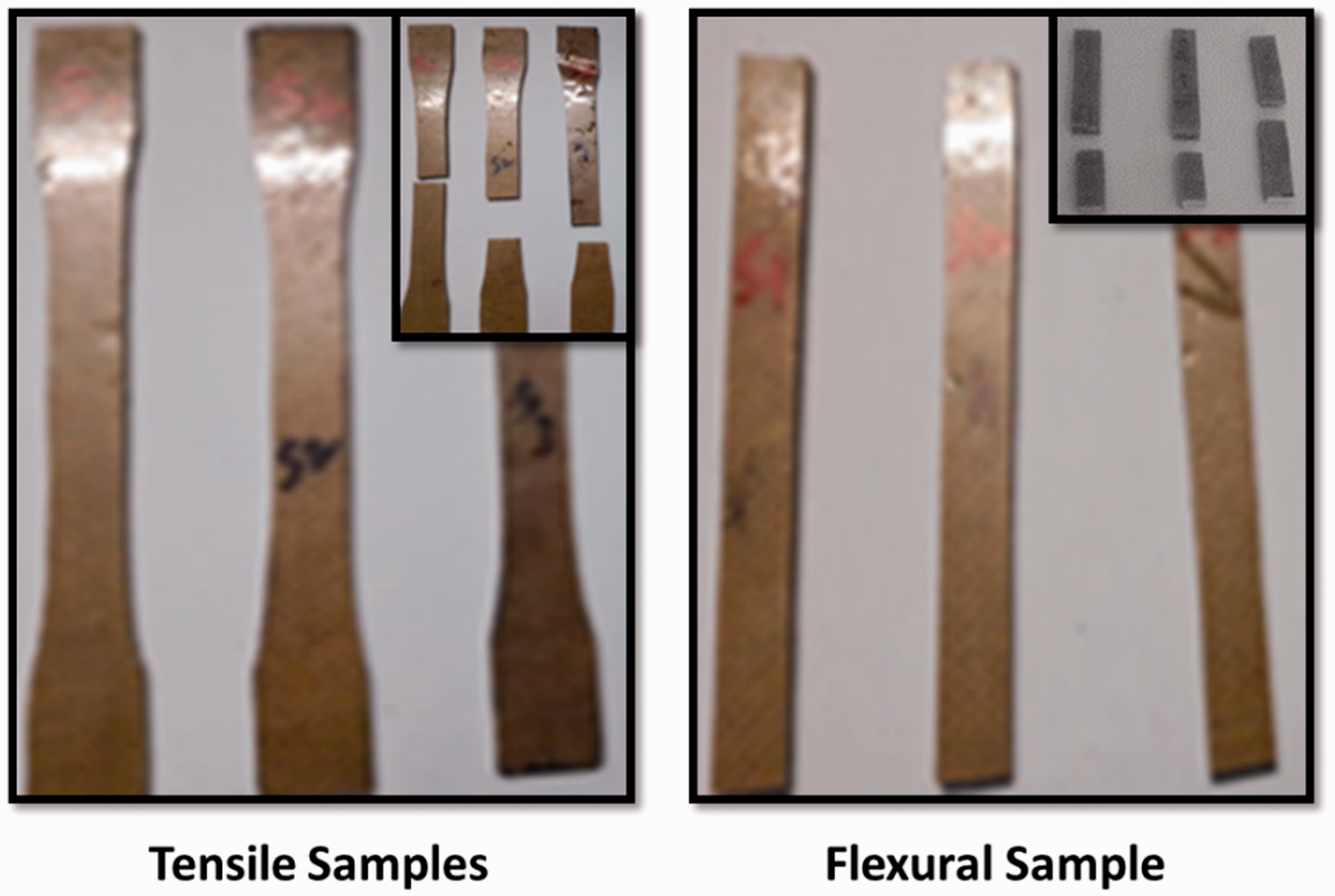

Tensile and flexural strength of NSLC samples.
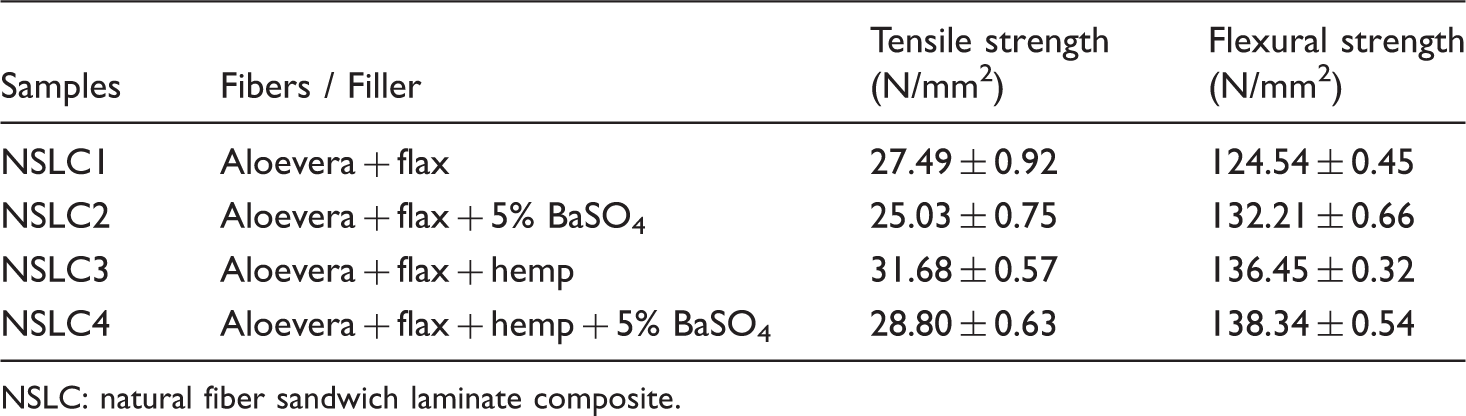
NSLC: natural fiber sandwich laminate composite.
Dynamic mechanical analysis
The DMA is a dynamic technique to acquire the viscoelastic properties such as storage modulus (E′), loss modulus (E″) and damping factor (Tan δ) of the NSLC samples. The viscoelastic property of the NSLC sample is analyzed under difference in frequency amplitude mode (0.5 Hz, 1 Hz and 5 Hz) and temperature mode (25℃–150℃).
DMA-temperature mode analysis
In the temperature mode analysis, the viscoelastic performances are estimated by keeping the sinusoidal applied force as constant with varying temperatures. The elastic and energy dissipation properties are essential to design and manufacture the structural components. Figures 8 to 11 show that viscoelastic response of the storage modulus (E′), loss modulus (E″) and damping factor (tan δ) of the NSLC samples (NSLC1-NSLC4). A transition over a range of temperatures from a glassy state to rubber state ((glass transition temperature (Tg)) of the various NSLC composites is presented in Table 4. The DMA results are obliging to investigate the influence of the BaSO4 on the interfacial bonding between the fiber and matrix.
Viscoelastic response of NSLC2 (storage modulus, loss modulus and damping factor). NSLC: natural fiber sandwich laminate composite. Viscoelastic response of NSLC3 (storage modulus, loss modulus and damping factor). NSLC: natural fiber sandwich laminate composite. The viscoelastic properties of the sandwich laminate composite. NSLC: natural fiber sandwich laminate composite.


Storage modulus (E′)
The storage modulus (E′) is representing the energy absorption (stiffness) characteristics of the NSLC samples. At low temperature, the NSLC samples are in the solid state, and it holds high storage modulus (E′) in the glassy region due to more crosslink between the molecules. The storage modulus (E′) is enhanced with the addition of BaSO4 in the different NSLC samples. At the glassy region, the E′ is maximum in NSLC4 (Figure 11) and minimum in NSLC1 (Figure 8) composite. In the glass region, the NSLC2 and NSLC4 (Figures 9 to 11) produce 19.9% and 15.57% storage modulus improvement than the other composite samples. The sandwich lamination of fiber and filler improve the stiffness of composite, which leads to improving the magnitude of storage modulus. In the transition region after the Tg, a sudden drop in the storage modulus (E′) is observed.
Successively in the transition region, increasing temperature causes a rapid drop in the storage modulus, and it is closely associated with rheology characteristics due to the natural behavior of the polymer composite. Subsequently, the Tg and the magnitude of storage modulus decrease with increases in temperature because of material transition from glass to rubber stage.
In the rubber region, the storage modulus has recorded maximum in NSLC4 and minimum in NSLC1 sample. It is presenting higher molecular mobility in NSLC1 (Figure 8) composite in this region. The storage modulus is directly proportional to the interface bonding result to reduce the stiffness in the NSLC1 [48]. The results shows (Table 4) that three fiber composites (NSLC3 and NSLC4) (Figure 8 and 9) have better interfacial bonding compared to two fiber composite (NSLC1 and NSLC2) (Figure 8 and 9) [54–56]. The metal filler improves 28% the loss modulus in NSLC4 (Figure 11) compared to that in NSLC3 (Figure 10).
Loss modulus (E″)
In the present environment, the engineering materials are exposed to different loading and different operating temperatures. Henceforth, the evaluation of the damping behavior provides the advancement in design and manufacturing sectors. The experimental results substantiate the loss modulus of the composites as a function of temperature. The energy dissipation is indicated by the loss modulus of the composite samples [51]. Combination of natural fiber with epoxy is affected by the damping behavior of the composites [55]. In the glassy region, a small variation was found in the loss modulus. However, in the glassy and transition regions, the filler addition enhances the magnitude of loss modules in the sample NSLC2 (Figure 9) and NSLC4 (Figure 11) compare to other samples. In the transition region, the temperature range between 85℃ and 100℃ (glass transition region) results in the peak energy dissipation performance in all the samples due to the state of the sample material. In the same region, the metal filler improves the damping factor peaks about 2.35% in NSLC2 (Figure 9) and 8.9% in NSLC4 (Figure 11). This is recorded as a considerable increase in Tg due to the influence of the filler. In the rubber region the addition of hemp layer (NSLC4) increases the loss modulus peak.
Damping factor (Tan δ)
The interfacial bonding between the fiber and the matrix are evidently shown in the damping factor curve (Figure 8 to 11) [56]. The inclusive of hemp layer (NSLC4) reduces the damping factor by 10%. This is due to the high ratio of energy storage to heat energy dissipation. It is also reported that by comparing the other composites, the filler addition raises the damping factor peaks of NSLC 2 and NSLC 4 in the transition region. The effect of the additional layer reduces the damping factor and Tg shown in the NSCL4 sample (Table 4) [57]. This effect serves a good load bearing capacity, better interfacial bonding (fiber/matrix) and the reduction in the molecular mobility, which leads to reducing the damping factor. At the rubbery region, the molecular mobility is more in NSLC1, and NSLC2 thus reduces the damping factor. By comparing, NSLC4 shows a rise in the magnitude of the damping factor in the same region.
DMA-frequency mode analysis
The dynamic mechanical and thermal studies are significant to estimate the viscoelastic behavior of the composite [58–60]. In the dynamic state, the frequency response is crucial in real behavior, and this assessment is minimized in the effect of resonance. In this experiment, the temperature is kept constant and the frequencies are varied by 0.5,1 and 5 HZ. The obtained results are presented in the Figures 12 to 14. The experimental results are indicating that increasing the frequency significantly enhances the energy absorption. In the glassy region, the NSLC4 hold maximum storage modulus than the other samples. In the transition and rubber region (Figure 12), there is no much variation observed among the samples with the effect of frequency in the storage modulus.
Viscoelastic response of NSLC4 (storage modulus, loss modulus and damping factor). NSLC: natural fiber sandwich laminate composite. The storage modulus of NSLC samples at (0.5, 1 and 5 Hz). NSLC: natural fiber sandwich laminate composite. Loss modulus of NSLC samples at (0.5, 1 and 5 Hz). NSLC: natural fiber sandwich laminate composite. The damping factor of NSLC samples at (0.5, 1 and 5 Hz). NSLC: natural fiber sandwich laminate composite.


In all the natural sandwich laminate samples subjected to constant loading the storage modulus which is in decreasing trend was found with an increase in temperature after Tg at all frequency range. This result is concern about the maximum molecular mobility which, minimizes the internal stress. At higher frequencies, stress level affects the magnitudes of storage and loss modulus. The effect of frequency influences the damping factor peak from a higher position to a lower position in all the NSLC samples. It is also found that at the frequency the width of the damping curve improves in all the NSLC samples. In the frequency tests, it is found that, the NSLC2 and NSLC4 composites presents higher storage and loss modulus. The ratio of storage and loss modulus magnitude is high in NSLC2, and the effect of filler improves the damping factor. It is found that the Tg of NSLC2 is minimum compared to other samples. Layer increased with hemp reduces the loss modulus further. The overall effect of the hemp affects the damping factor and is identified by their physical composition (cellulose, hemicellulose and lignin) and mechanical properties. In the frequency mode analysis, the authors observed that in the glassy transition region the effect of frequency increases the loss modulus; their damping factor peak is reduced at the frequency 0.5 Hz, 1 Hz and 5 Hz. Overall the viscoelastic property observation of the NSLC4 sample embraces the significant contribution towards the structural application (Figure 15).
Viscoelastic properties relationship of NSLC4 sample at the 1 Hz frequency. NSLC: natural fiber sandwich laminate composite.
Complex modulus
The resultant obtained from the energy absorption to the energy dissipation is known as complex modulus (shear modulus) of the NSLC samples. Relaxation time is an essential parameter in the DMA analysis and its time-dependent reaction. Relaxation of stress is a complex term and equivalent value to the viscoelasticity of the composite. In the dynamic study relaxation time is the composite response to the applied stress [61]. The relaxation time is studied for the complex modulus (E*), and it represents in complex values in Argand graph, which is mathematically presented as

In the transition region maximum non-elastic strain energy in the NSLC 2 offers high damping factor with low elastic limit and minimum non-elastic strain specifies high elasticity. Low damping factor is obtained due to the hemp layer addition, and it shows high crosslink between the fiber and resin in NSLC 3 and 4 (Figure 13).
The low crosslink results in the NSLC1 sample with high molecular mobility (Figure 16). Also, the filler considerably influences the interfacial adhesiveness between the fiber and epoxy resin. The crosslinks between the fiber affect the damping factor. High crosslink between the fiber and resin influences the molecular mobile thus reducing the damping factor in NSLC 3 and 4.
Complex modulus of NSLC samples. NSLC: natural fiber sandwich laminate composite.
Cole-cole
Cole-cole plot is the highest ideal model to investigate the relation between the storage modulus and loss modulus. This curve is in semicircular nature and signifies the homogeneity of materials [46]. Figure 17 shows that the viscoelastic response of the NSLC samples. However, the shapes of the cole-cole curves expose the fiber and matrix bonding in the NSLC samples. In this study, the addition of a fiber layer results in a similar trend in the curve which is observed due to molecular mobility.
Cola-cola plot (relationship between storage modulus and loss modulus).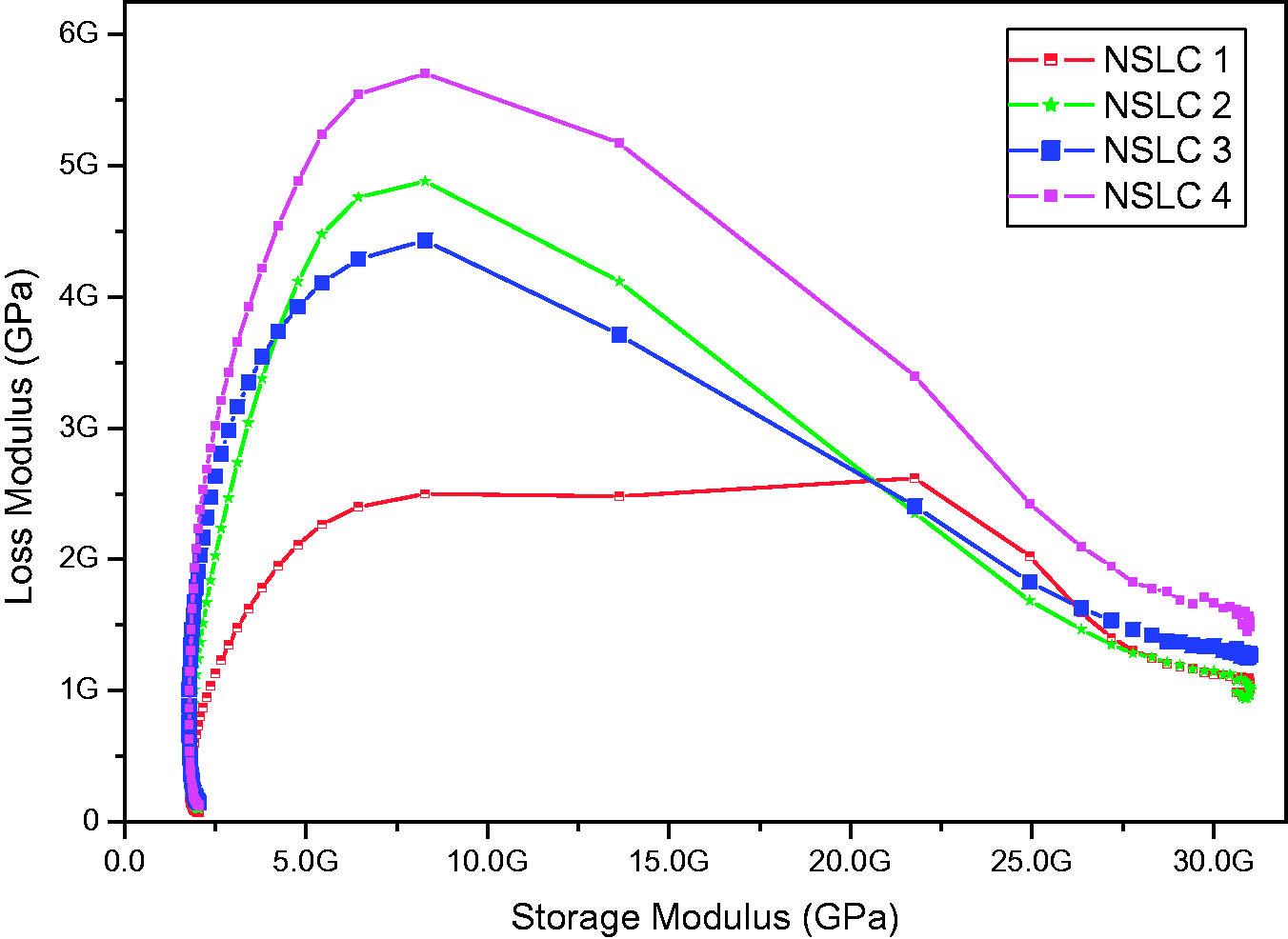
From the plot, it is observed that imperfect semicircle curves are obtained and they show the small heterogeneity of the sandwich laminate composites. The heterogeneity is the nature of the polymer composite due to brittleness, and it may affect by the presence of voids, cracks, fiber breakage and delamination in the samples. Although the addition of filler in the matrix increases the homogeneity, the obtained curve is nearer to the closed semi-circle. All these NSLC samples contributed to heterogeneity and adapted the semi-circular curve obtained in cole-cole plots. Similarly, NSLC2 and NSLC4 sample showed ideal and good adhesion between fiber and matrix in the natural sandwich laminate composites.
Fractography analysis
The fractographical analyses of the sandwich laminate composites are very important because the fiber and the matrix play a significant role to decide the mechanical and viscoelastic properties. Hence, the fracture surface is investigated by SEM to understand the fiber strength, fiber size, fiber fracture and voids under different magnifications (×100, ×200 and ×250). The fractography in Figure 18(a) to (d) reveals the fiber fracture, fiber pullout, debris and voids at various locations.
Fractography images of NSLC composites (a) matrix debris (b) fiber and resin (c) fiber pullout and (d) fiber fracture. NSLC: natural fiber sandwich laminate composite.
Figure 10(a) and (b) indicates the presence of matrix debris and bonding between the fiber and resin. The fractography images in Figure 10(c) and (d) clearly show the fiber pullout region of NSLC2 and NSLC3 composites. The fiber fracture and voids are observed in the fractured surface. It may occur because of the inadequate bonding between the fiber and epoxy resin. The fibers will bridge the crack and for the crack to extend it is necessary to pull the fibers out of the matrix. The fiber pull-out force linearly increased at the beginning, after that the sudden increment in the applied force is observed during the test. This is due to the loss of the friction-adhesive between fiber and the matrix. Thus, the stored elastic strain energy must do work pulling out the fibers against friction or by shearing the matrix parallel to the fibers as well as driving the crack through the matrix.
Conclusions
The aloevera /hemp/flax sandwich laminate composite viscoelastic properties are observed and listed below:
In the glassy region, the magnitude of storage modulus is observed to be maximum in NSLC4 and minimum in NSLC2. The addition of filler improves the storage modulus (E′) and loss of modulus (E″) in NSLC2 and NSLC4 samples. In the rubber region, the combination of three fiber composites (NSLC3 and NSLC4) has better interfacial bonding, which leads to increase in the storage modulus. In comparison to the NSLC2 composite, the inclusion of the hemp layer reduces the damping factor by 10% (NSLC3). The reduction in damping factor serves as a good load bearing capacity due to less molecular mobility in the transition region. The addition of the hemp layer in the NSLC2 composite increases (14.3%) the loss modulus. The application of NSLC4 composite will be used in automobile interior and external part like interior door panels, seat back supports, dash panels, hoods and spoilers because of its enhancement of flexural and DMA properties. The authors are interested in studying the thermal, tribological and vibrational behavior of the NSLC composite in the future.
Footnotes
Declaration of conflicting interests
The author(s) declared no potential conflicts of interest with respect to the research, authorship, and/or publication of this article.
Funding
The author(s) received no financial support for the research, authorship, and/or publication of this article.