




Abstract
Mesh implantation for hernia repair is one of the common surgical techniques. The goal of this review is to highlight the basic requirements of mesh in order to select the most appropriate hernia mesh considering mesh type, physical properties and mechanical properties. Textile warp-knitted synthetic meshes have significantly decreased recurrence rate of hernia. Polypropylene light weight mesh with antimicrobial coating is taking attention of researchers due to its improved compliance, infection resistance, hydrophobicity, inert nature and strong material. Composite meshes have better tissue incorporation, reduced shrinkage and improved mechanical properties. The mesh porosity is an important factor to predict the biocompatibility of all meshes. Usually, large pore size meshes are better than small pore size meshes because of their flexibility, decreased shrinkage, reduced scar bridging and increased tissue ingrowth. All synthetic and composite meshes have higher strength than the human abdominal wall. Mesh type, mesh structure, mechanical properties and mesh implantation techniques are important factors for hernia repair. It is critical to understand the physical structure and mechanical properties of mesh material in relation to human abdominal wall. Moreover, mesh surface functionalization and grafting with plasma is a new development technique to enhance the loading of antimicrobial agent for the prevention of mesh infection.
Introduction
Hernia is a “rupture of an organ” due to the weakness or defect of abdominal surrounding walls. The main reason of this defect is a higher intra-abdominal pressure that results in herniation at the weakest area of the abdominal wall. Hernias can be congenital or they can also develop as a result of surgery or trauma. Hernia patients often complain about pain at Hernia Site, feel discomfort and their quality of life is also affected [1].
During ancient times, Hernia has been repaired by using gold sutures and silver wires in the form of woven structures [2]. Many initial biomaterial devices were useful; however, those devices had the poor mechanical design with lots of complications after surgery [3]. In 1945, Shouldice introduced suture techniques to repair hernia. More than 280,000 hernias had been repaired around the world with suture technique. The patient discomfort and higher recurrence rate were major problems of those techniques [4]. To avoid these problems, textile-manufactured nylon sutures and woven meshes were introduced to decrease recurrence rate of hernia. However, the nylon material had lost strength after implantation because of hydrolytic digestion [2]. In 1958, first marlex mesh (crystalline polypropylene) was used to repair hernia. Later during 1980s, the tension free repair technique was introduced in market by using synthetic warp-knitted mesh which could repair more difficult and larger hernia defects [5,6]. Many procedures and devices for hernia repair were introduced, but finally, the open mesh technique and laparoscopy technique using textile synthetic mesh have been successful [7,8]. However, the overall cost of the laparoscopic technique is greater than the open mesh technique [9].
Currently, the use of knitted mesh for hernia repair is a common implantation method [10–13]. Each year 20 million meshes are being implanted to repair hernia in the world [7,14–17] and synthetic meshes are involved in 80% of hernia surgeries [18]. The most common textile implants are polypropylene, polyester, polytetrafluoroethylene (PTFE) and expanded polytetrafluoroethylene (ePTFE). The polypropylene mesh has been reported as the most successful implant in terms of reduced hernia recurrence [19,20]. The mass, position and shape of mesh can be changed according to the requirement [21]. Recently, new developments such as plasma treatments for mesh polymers to functionalize and incorporate antimicrobial coating are common to reduce the risk of infection after mesh implantation [22].
It is a challenging task for surgeons to select proper textile mesh choice for hernia repair [23,24]. The selection of appropriate mesh type and composition of biomaterials will decide the success of post implantation and avoid complications related to specific surgery [25,26]. Quick recovery and minimal pain are always the longing of hernia patients after mesh implantation [27–30]. Lastly, the main objective is to get more stable, long-lasting and free of side effects repair [31,32].
The ideal textile manufactured mesh for hernia repair should have some important characteristics. For example, it could be modified to adjust the individuals’ defect size, should be non-carcinogenic, have reduced foreign body response, and should be mechanical strain resistant, chemically inert and strong [33]. A deep insight into the physical structures of knitted mesh, particularly its porosity, pore size and mesh orientation is significantly important [34]. The mechanical properties of mesh implants are also a crucial factor particularly after mesh implantation. Moreover, biomechanical properties of meshes such as anisotropy, stiffness, linear, nonlinear, shrinkage and elasticity are very important after mesh implantation [35].
Textile fundamentals
In the manufacturing of a mesh, the structure may be woven, nonwoven and knitted. Woven mesh fabrics are manufactured by interlacement of warp and weft yarn. The yarns that run in the length of fabric are known as warp and the yarns that run in the width of fabric are called weft. Owing to the tightness and packed structure of woven meshes, they have smaller pore size. Therefore, woven meshes have the disadvantage of poor fibrous tissue ingrowth [36]. Nonwoven structures are produced by interlocking or bonding of fibers. Nonwoven mesh structures are better than woven mesh structures because of their micro-porous structure. Therefore, nonwoven mesh structures allow better fibrous tissue ingrowth and reduced adhesion [37]. The main advantage of textile materials is their basic properties such as tensile strength, flexibility, elasticity and porosity which make medical devices more suitable for reinforcement of frail tissues such as hernia [14]. Most of the meshes are warp knitted (mono-filament or multifilament) structures because of their larger pore size and greater elasticity required for hernia repair [38]. However, the mechanical characteristics of knitted fabric and woven fabric are extremely anisotropic [39]. Knitted mesh structure is more flexible, open and porous as compared to woven structure and at the same time knitted mesh structure is also weaker due to decreased filament density [36].
Recent advancement in knitting machinery provides an opportunity for manufacturers to prepare more versatile knit structures for a wide range of technical applications [40]. The knitting structures are mainly dependent on their knitting patterns and designs. The knit structures are produced with the help of knitting needles in order to form a series of continuous stitches by interlooping of the yarn. There are two basic types of knitting such as warp knitting and weft knitting. In warp knitting, loops (wales) are formed in the length of the fabric, while in the case of weft knitting, loops (courses) are formed in the width or cross of the fabric. Most common weft-knitted structures are Jersey, Rib, Plain, and Purl. Wefts-knitted structures are mostly produced from a single yarn and these structures are more stretchable and easily distorted as compared to warp-knitted structures [21].
In warp knitting, each wale requires a separate yarn. Therefore, warp-knitted structures are more stable and less elastic than weft-knitted structures. Most common types of warp knit structure are Raschel, Tricort and Milanese [21]. Jiang et al. reported that Tricort warp knitting machine with a compound type of needles is an ideal machine to knit the hernia mesh [41]. The stitch density of warp-knitted fabric can be calculated by counting the number of wales in length and courses in the width of the fabric as shown in Figure 1. However, filament diameter is also important in the production of warp-knitted mesh. The stitch density is largely affected by the filament diameter because finer filament diameter will produce larger stitch density. Moreover, if the stitch density and loop structure are identical, finer filament knitted fabric will also have higher porosity [18].
Diagram for measurement of stitch density of warp-knitted fabric.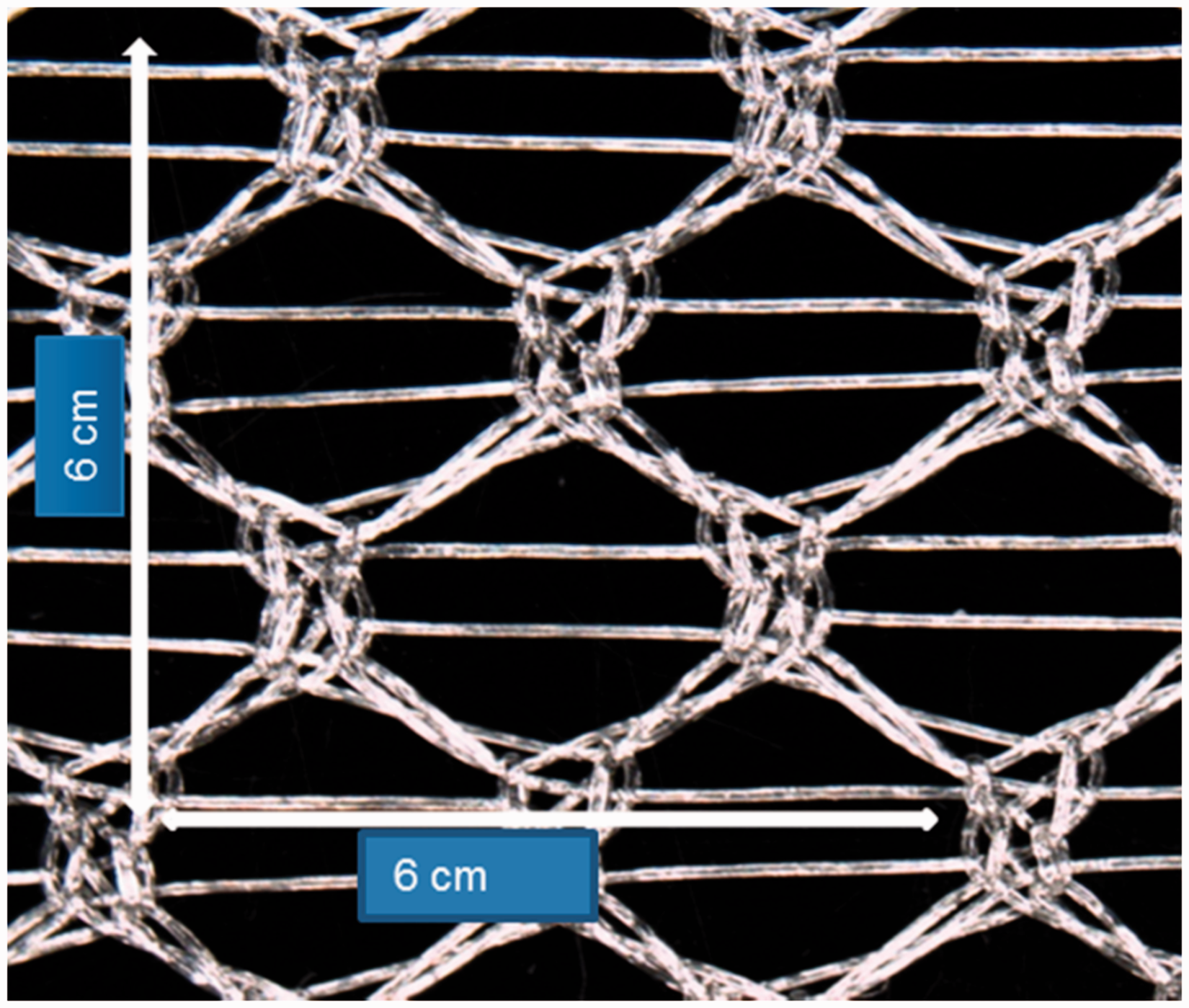
The mechanical properties of mesh fabric are directly associated with the structure of knitted mesh (repeat distance, loop size) and its porosity [42]. Knitted material has the capability of returning to its original size and shape after the release of load [42]. Bending properties of textile structures are one of the most important factors influencing handling properties [43]. However, the knitted fabric handle will be rougher by increasing course density. The warp-knitted mesh must maintain the dimensional stability after implanting it into the human abdominal wall. Moreover, warp-knitted mesh for hernia repair should have properties such as structural stability, easily cut, flexible and easy to mold for the feasibility of hernia operation [41].
Mesh type and composition
Two types of textile implants are currently used for hernia repair, standard or synthetic, and composite implants. Composite mesh shortens the repair duration and complications. These implants may be partially absorbable or completely non-absorbable materials [21,36].
Synthetic mesh
Commonly used synthetic meshes for hernia repair [36].

Polypropylene polymer-based synthetic mesh is the most dominant mesh for hernia repair. It is hydrophobic, strong, flexible, resistant to infections, more compliant [47,48] and has reduced inflammatory response [49]. Polypropylene is very resistant to tissue enzymes and biological degradation. Warp-knitted polypropylene mesh has flexibility, porosity, and good mechanical properties. Commercial polypropylene meshes are available in both light weight and heavy weight mesh [36]. Polypropylene mesh can be degraded if explored to extreme conditions, e.g. higher mechanical stresses and extreme temperature [50]. The use of polypropylene mesh is common for all hernia repairs [51]. In addition to this, light weight polypropylene mesh is suggested for reduced inflammatory response, better compliance [52,53], and for overcoming the patients’ discomforts [54].
PTFE is a fluoro polymer-based material, having strong negative charge, chemically inert and hydrophobic mesh for hernia repair [33]. PTFE mesh material does not integrate into the human tissue because it becomes encapsulated. An infected PTFE mesh must be explanted from human body because of its reduced tissue incorporation and higher hernia recurrence rate. Moreover, PTFE mesh-implanted body cannot remove infection because PTFE is a micro porous material, and it easily permits bacteria passage but macrophage passage is prevented [2].
Expanded PTFE is another type of commonly used mesh for hernia repair with higher strength, more uniform and improved micro porous material than the PTFE mesh [2]. It is based on fluorocarbon polymer with non-absorbable, chemically inert and less adhesive properties. Expanded PTFE has less inflammatory reaction in comparison with polyester and polypropylene material [36].
Polyester is a multifilament carbon-based polymer, and it has several advantages such as minimal adhesion, less shrinkage, decreased stiffness, and better tissue incorporation. Standard polyester is mainly used in the open surgical technique. The different observations proved that the multifilament braided nature of polyester mesh resulted in bowl complications, fistulas and post-operative infections [55]. Therefore, polyester mesh is not recommended to be placed in direct contact with peritoneum unless it is attached with an anti-adhesion layer [36].
PVDF polymer is another choice of hernia mesh with enhanced biological and textile properties. PVDF is more resistant to degradation and hydrolysis in comparison to polyester. PVDF does not demonstrate the stiffness of filaments after in vivo implantation which is an important property of mesh for hernia repair [44].
Most of the plastic meshes have common a disadvantage that these meshes are necessarily removed if infection develops in post implantation of such meshes [65]. From 1998 to 2002, the ventral incisional hernia was observed in 1444 patients after repair, and almost two-thirds of the total cases were repaired again. Removal of meshes was noticed less in polypropylene as compared to PTFE. There were fewer chances of infection in patients repaired with polypropylene mesh, but the operative time increased by such mesh. Furthermore, as compared to polypropylene, expanded PTFE had shown reduced operative time but simultaneously it revealed more risk of infection [27]. The PVDF mesh formed considerably decreased granuloma size as compared to polypropylene mesh. PVDF mesh was more stable in in vivo experiments. Furthermore, apparent cracks in the surface of polypropylene filaments have been noticed after four weeks of mesh implantation. These results suggest that raw material is more important in the selection of proper mesh for hernia repair [38,66].
Composite mesh
Commonly used composite meshes with permanent and temporary layers.

In the temporary (absorbable) type of composite mesh, a barrier coating is applied before its application for hernia repair. The temporary layer of composite meshes reduces the risk of complications related to synthetic meshes in direct contact with the abdominal viscera. Such a degradable coating provides the barrier between synthetic mesh and intraperitoneal contents. These meshes cannot easily be cut or modified to a particular shape after once they are manufactured. Parietex is an example of such composite meshes. It is composed of a collagen barrier on one side and a warp-knitted structure of polyester on the other side in order to facilitate proper tissue ingrowth and comfort in use. These composite meshes have excellent properties in vivo with reduced shrinkage, good integration, and quick fibrous tissues ingrowth [2].
Permanent composite meshes of ePTFE with polypropylene are also available in the form of heavy weight and light weight composite meshes. In this case, double-sided textile polymers such as polypropylene on one side and ePTFE on the other side are used to improve the tissue ingrowth and post implantation mesh properties. Dual composite mesh composed of polypropylene and ePTFE has been used as a durable material in ventral hernia repair [36].
Permanent composite or barrier-coated meshes removed the complications observed in synthetic mesh material [33]. The selection of mesh under a specific situation of the implantation is very important to understand. For example, polypropylene is suitable for low infection but more flexible, whereas PTFE has reduced adhesion properties but greater chance of infection [71].
Physical properties of meshes
Mesh weight
Classification of four different categories of mesh weight.

The results of recurrence for hernia repair are similar for light weight and heavy weight synthetic meshes. There are some factors for which choice of selection is still open [2,50]. No significant change or difference was found in complications of wounds between light weight and heavy weight meshes [73,74]. The heavy weight mesh demonstrated lower compliance after hernia repair [59], whereas light weight mesh demonstrated less inflammatory response and good compliance during in vitro animal experiments [50,75].
The light weight mesh (35–70 g/cm2) is usually more elastic and having a large pore size. These meshes have also less pain and discomfort after implantation [2,76,77]. Several results and observations proved that light weight mesh with large pore size are effective in the implantation of hernia repair [63,77]. Light weigh mesh (made from polypropylene) demonstrated better biocompatibility than mid weight or heavy weight mesh (made from polypropylene or ePTFE ) after post implantation for 14 and 28 days [61]. Light weight polypropylene mesh demonstrated good results for tissue incorporation; this may be because of larger pore size [2]. Furthermore, if the density of polypropylene mesh is reduced and produced as light weight mesh, it will result in better abdominal wall compliance [78].
The light weight meshes based on reduced polypropylene mass have more elasticity and flexibility which is a problem for the surgeons to handle during surgery in hernia repair. A standard stiffness makes mesh easier to hold its shape and placement in the abdominal wall during hernia repair. Sometimes, manufacturers add certain absorbable filaments during warp knitting to improve handling properties of light weight mesh [58].
Mesh pore shape, pore size and porosity
Textile-knitted mesh pore shape can be square, diamond, and hexagonal. Three types of monofilament polypropylene meshes with different shapes are shown in Figure 2. The geometry and size of pores delineate the ability of mesh to permit tissue ingrowth. Mesh pores are classified into five different sizes such as micro porous size less than 0.1 mm, small pore 0.1–0.6 mm, medium 1 mm, large 1–2 mm and very large pore size greater than 2 mm. Mesh pore size can be controlled during mesh manufacturing and design [79]. The pore size, pore shape, and the number of pores are the most important parameters of hernia mesh to reinforce the wounds [80].
(a) Commercial Bard soft mesh (pre-shaped) diamond monofilament polypropylene; (b) Ti MESH commercial light titanized polypropylene monofilament of hexagonal shape and (c) non-commercial polypropylene square shape fabricated in our laboratory. All scale bars are equal to 2 mm.
Numerous studies have demonstrated that tissue inflammatory response around the surgical meshes contains macrophages [81–83]. The pore size of the mesh must be greater than 75 µm in order to permit infiltration by blood vessels, macrophages, collagen and fibroblasts. Meshes with pore size less than 75 µm are supposed to favor infections [84,85]. If the meshes have a smaller pore size less than 800 µm, then there are the chances to form granulomas and the entire mesh results into a reduced flexibility [2]. Granuloma is an inflammation and formation of immune cells around each mesh filament due to the foreign body reaction [12].
An ideal mesh is that which allows muscle tissues generation force without significant formation of granulation [86]. Concerning the small pore size (<1 mm), the filament distance of a mesh may be completely filled out with granuloma as shown in Figure 3(b). Ultimately, with implantation of small pore size (<1 mm) of mesh, the elasticity is reduced which results in wound contraction and mesh shrinkage [87]. Klinge et al. reported that large pore size of meshes greater than 2 mm joined in a loose network while small pore size of meshes form bridges and reduce the ingrowth of local tissues [88]. The inflammatory reaction of body generally depends on pore size [89]. Larger pore size meshes with reduced polypropylene mass proved a decreased inflammatory reaction in human abdominal wall [59]. Furthermore, the wider mesh pore size of 2 mm diminishes the surface area of mesh and allows better tissue ingrowth [90]. Orenstein et al. reported that large pore size (>1.5 mm) meshes increase comfort and patients’ quality of life after mesh implantation [62].
(a) Less chances of granulomas to make bridge and encapsulate the meshes, because of more distance between filaments. (b) In the case of small pore size mesh, formation of granulomas encapsulated entire mesh fabric, because of less distance between filaments.
Bilsel and Abci indicated that pore size is largely affected by use of monofilament and multifilament meshes. Multifilament meshes are mostly based on small pore size normally 10 µm [2].The patients who were implanted small pore size meshes stayed more days at hospital as compared to patients who were implanted large pore size meshes. In open incisional hernia surgery, larger pore size meshes would be a safe and better choice as compared to small pore size meshes [91].
Heavy weight polypropylene monofilament Marlex mesh (95 g/m2) of pore size 0.46 mm and light weight Vypro (55 g/m2) composite mesh (polypropylene and polyglactin multifilament layers) of pore size 2.8 mm were compared in rats in vivo experiments. Marlex mesh of smaller pore size (0.46 mm) demonstrated extreme inflammatory reaction in comparison with large pore size (2.8 mm) Vypro composite mesh [36,88]. During in vivo dog experimental study, the tensile strength of large pore size mesh increased after post implantation of 30 days. Furthermore, large pore size meshes were more flexible and compliant than small pore size meshes after implantation [58]. Large pore size meshes are a very good addition to available commercial meshes and must be included in the designing of mesh for hernia repair in future [92]. These results suggest that polypropylene monofilament light weight mesh of a larger pore size, i.e. 2 mm is a safer choice for hernia repair.
Porosity is the estimated ratio of meshes or voids in the fabric to the entire volume of fabric including meshes [93,94]. Porosity is the key determining factor of tissue reaction after implantation of mesh for hernia repair [24,47]. The relative porosity can be determined by two methods, i.e. calculating the densities of meshes and fibers and scanning electron micrographs. In the first case, fabric density is divided by fiber density and thus relative porosity is obtained. In the second case, the relative porosity is determined by first removing porous areas of micrograph and weights were taken into consideration before and after the elimination of porous area [80]. Miao et al. calculated the porosity of different meshes by weight and area method according to ISO 7198:1998. In the case of weight method, porosity was calculated by volume of void spaces (pores) as percentage of whole fabric volume. Whereas in the case of area method, pictures of different meshes were captured at optical micrographs with 20× magnifications. Furthermore, the total ratio of pores pixel values (porosity) to the total picture pixel values was calculated by Photoshop software. The area method was considered as the most suitable for evaluation of flat sheet mesh fabrics, while the weight method is the most appropriate for 3D structure mesh devices [18].
Klosterhalfen et al. and Muhl et al. reported the experimental and clinical results of commonly used meshes (vypro, vypro II, Mersilene, Gore-tex, Prolene, TiMesh, Dual Mesh and Ultrapro) of different polymer types, pore sizes and shapes. It was determined that the geometric structure of the mesh and its porosity are more important than polymer type in hernia repair in order to predict the host reaction and long-term complications of mesh implantation. The fibrotic and inflammatory extent of body reaction is mainly dependent on the porosity of the post-implanted mesh [62,87]. Gopal and Warrier reported that porous mesh is the best option for hernia repair because of enhanced tissue ingrowth and flexibility [95].
Mesh shrinkage after implantation
The dimensional contraction in width or length of material is called shrinkage [2]. The human body produces higher inflammatory reaction to the implanted mesh which results in scar plate formation, increased human abdominal wall stiffness, and shrinkage of post-implanted mesh [58]. The physical properties of mesh-like greater shrinkage can result in adverse effects which will lead to failure of repaired hernia [96]. It has been proved that human abdominal wall defect areas, length and width are not related to hernia recurrence [97]. Shrinkage occurs in most of the synthetic meshes at a certain level. The knitted materials’ shrinkage is dependent mainly on three factors, moisture content of yarn, machine parameters and knitted fabric structure [98]. However, shrinkage will be more of that material which possesses extent inflammatory reaction after implantation. It will result in hernia recurrence because of pulling the repaired area surrounded by mesh [2].
During Onlay and Inlay mesh implantation techniques, the mesh is overlapped about 1.5 cm apart with the help of sutures. The chance of mesh shrinkage is greater in overlapping of mesh. Improper overlapping of mesh during implantation is one of the main reasons of hernia recurrence. Mesh shrinkage varies significantly in different types of textile synthetic mesh materials, for example polyester (PET) mesh shrinks from 6.1% to 33.6%, polytetrafluoroethylene (PTFE) from 4% to 51% and polypropylene(PP) from 3.6% to 25.4% as shown in Figure 4 [99].
Minimum and maximum shrinkage of synthetic meshes.
The reason for shrinkage is the “scar tissue contraction” formed near the mesh. Heavy weight mesh based on small pores shrinks more because of greater scar plate formation [71]. Sergent et al. observed shrinkage of three polypropylene monofilaments (heavy weight, coated and light weight) meshes with large pore size after implantation in incisional hernia of rabbit. Of the Total 160 knitted meshes, 115 retracted without any difference in heavy weight and light weight mesh. The weight of mesh did not influence the retraction [60].
Types of meshes implanted in rabbits for three months.

Judge et al. compared shrinkage of composite meshes in the abdominal wall of animals (rabbits). After five months of observation, polypropylene samples demonstrated less shrinkage than polyester mesh samples [100]. Konerding et al. observed the shrinkage of 24% in Gore Dualmesh (ePTFE) and 5% in Parietex (polyester) composite meshes after 12 weeks of implantation in rabbit [101]. Bellon et al. reported similar shrinkages for two composite meshes VYPRO-II (multifilament polypropylene with polyglactin layer) and ULTRAPRO (monofilament polypropylene and polyglactin) [56]. Furthermore, Jerabek et al. compared the shrinkage of three polypropylene meshes. Extra light weight larger pore size mesh of 3 mm demonstrated reduced shrinkage in comparison to light weight pore size of 1 mm and heavy weight mesh pore size of 0.5 mm, but such large pore size of 3 mm is not considered applicable for elasticity enhancement which may create handling problem for surgeons during mesh implantation [84].
Hassan et al. explained three techniques for the placement of mesh during hernia repair, Onlay (over the muscles and under the skin), Sublay (between posterior rectus sheath and rectus muscles) and Inlay (under the peritoneum) [102]. But Garcia-Urena et al. observed the implantation of polypropylene (Trelex) 5 cm × 3.5 cm (length and width) mesh samples by Onlay and Sublay mesh techniques in rabbits. The shrinkage of implanted mesh samples was evaluated with the help of microscopic results. Animals were sacrificed and shrinkage in the meshes measured were 25.92%, 28.67% and 29.02% after 30, 60 and 90 days, respectively, as shown in Figure 5. Moreover, shrinkage was greater in an Onlay mesh technique as compared to sublay mesh technique samples [103].
Shrinkage of PP meshes after post implantation of 30, 60, and 90 days in rabbits.
Novitsky et al. reported the shrinkage of PTFE knitted mesh about 32% which was the maximum shrinkage as compared to polypropylene knitted mesh [104]. Brown and Finch proposed that light weight polypropylene mesh is superior to heavy weight mesh. The main reason is decreased shrinkage in light weight mesh [71]. From the above results, it is clear that light weight polypropylene larger pore size mesh material and Sublay mesh technique have reduced shrinkage after in vivo mesh implantation.
Mechanical properties
The properties of mesh-like pore shape, porosity, weight, tensile strength, elasticity and method of manufacturing can significantly affect mesh implantation in hernia repair [36].
Mesh bursting strength
The maximum uniform pressure exerted at the right angle to the plane of material which will result in ruptures under standardized testing conditions is known as bursting strength [38]. Each mesh has its unique structure, shape, weight, density and mechanical properties. Burst strength is an important mechanical property and should be included when determining the relevance of specific mesh material for certain hernia repair. The post-implanted mesh will undergo different stresses generated by the pressure of abdomen due to many different activities of patients such as coughing, sitting, standing and walking. The deterioration of burst strength properties will lead towards poor post-implantation results and higher rates of hernia recurrence [70].
Deeken et al. evaluated Ball burst testing of seven composite meshes (C-QUR, Bard Sepramesh, PROCEED, Parietex, Bard Composix E/X, Bard composix L/P and DUAL MESH). All composite meshes demonstrated burst strength higher than 32 N/cm [69]. Furthermore, Deeken et al. tested burst strength of nine meshes such as three polypropylene (Prolene, BardMesh, Prolite ultra), one polyester (Parietex flate sheet), one PTFE (Infinit) and four partially absorbable coated mesh filaments (C-QUR Lite with small mesh pore size , Prolite Ultra with coating, C-QUR lite large mesh pore size and Ultrapro). All meshes demonstrated satisfactory bursting strength results greater than 50 N/cm except Ultrapro and Infinit meshes which showed burst strength of 35.50 N/cm and 9.25 N/cm, respectively [96].
Cobb et al. tested the burst strength of polypropylene meshes of different weights, 95 g/m2(Marlex), 45 g/m2 (Prolene Soft) and 28 g/m2 (Ultrapro) implanted in a pig for five months. The burst loads of 95 g/m2, 45 g/m2, and 28 g/m2 meshes before implantation were 1165 N, 558 N, and 812 N, respectively. After post implantation of five months, mean burst load of 95 g/cm2 (1218 N) and 45 g/m2 (590 N) meshes were slightly higher than their pre-loads while the mean burst load of ultrapro weight (28 g/m2) reduced to 576 N [59].
The mechanical properties of biomaterials have always been a question for recurrence of hernia. In fact the available meshes are denser, less compliant and too stronger than the required mesh for hernia repair. The average burst load of abdominal wall fascia was 232 N. The stamp strain type of machine was used to evaluate burst load of pig abdomen wall fascia. The above listed burst strengths of meshes were greater in all respect to the burst load of abdominal wall fascia before and after five months of post implantation. All synthetic knitted meshes have higher burst strength than the human abdominal wall [58]. These findings show that burst strength of most of the synthetic and composite meshes was greater than the burst strength of abdominal wall fascia. Furthermore, these results suggest that burst strength of all meshes before and after mesh implantation was not similar.
Mesh elasticity and strength
Mesh elasticity is the ability of knitted mesh material to recover to its original shape and size when forces are removed. The knitted structures have more elasticity as compared to woven structures. The knitted mesh has the ability to stretch in all directions. Furthermore, the strength of mesh depends on the material and filament type. The hernia recurrence rate increases if the mesh material stretches more or less than the human abdominal wall elasticity [2].
Eliason et al. compared the tensile strength and strain of commercial meshes based on different materials, including: ePTFE (DualMesh) polypropylene (Bard mesh, CR-Bard mesh, prolene and prolite), partially absorbable (Ultrapro), and composite barriers (Proceed), at repetitive loads of 1000 and 10,000 cycles. DualMesh, Prolene mesh and BardMesh demonstrated decreased tensile strength. Prolene, Prolite ultra, Ultrapro and Prolite (atrium Medical) showed greater strain at 1000 cycles [70].
Sergent et al. evaluated four different models of polypropylene implants for elasticity and linear strength. Three prostheses were monofilament polypropylene Parietex Ugytex 38 g/m2 (pore size 1.5 mm × 1.5 mm), Parietene PPL 38 g/m2 (pore size 1.5 mm × 1.5 mm) and Parietene PP 75 g/m2 (pore size 2.0 mm × 1.7 mm). One implant was multifilament polypropylene SPM 85 g/m2 (pore size 0.7 mm × 0.3 mm). These meshes were implanted in 40 female rabbits of same weight and age. The rabbits were killed after 14, 30, 90, and 180 days to observe the change in relation to the implanted days. To obtain linear force curve (N/cm), all meshes were subjected to an elongation rate of 5 mm/min until the mesh ruptured. The multifilament polypropylene (85 g/m2) was regarded as the strongest mesh material with maximum linear force of 60–80 N/cm after post implantation of 180 days followed by heavy weight Parietene PP (75 g/m2) linear force of 35–50 N/cm and parietene PPL (38 g/m2) linear force of 20–40 N/cm. On the other hand, Parietex Ugytex (38 g/m2) linear force of 10–20 N/cm was demonstrated as the weakest material. Concerning the mesh elasticity during different periods of days, no significant difference was observed except multifilament polypropylene that was more flexible after post-implantation of 180 days, but before implantation, it was the most rigid among the all prostheses [60].
Elasticity of human abdominal wall is not similar for all four different directions [105]. Bilsel and Abci compared the tensile strength and elasticity of human abdominal wall with elasticity and tensile strength of textile-knitted mesh devices. The human abdominal wall stretched by 38% at 32 N/cm. However, at tensile strength of 16 N/cm, the elasticity of light weight mesh was in the range of 20–35% and heavy weight mesh stretched up to 4–15% (about half of the light weight mesh). Therefore, selecting heavy weight mesh for hernia repair will result in restriction of human abdominal wall expansion. In contrast, if light weight meshes’ material possesses greater elasticity than the human abdominal wall, it will result in poor functional repair of hernia [2].
During jumping, the highest pressure of abdominal wall observed was 170 mm Hg for a healthy adult [106]. The tensile strength of any prosthetic for hernia repair should be no less than the same tensile strength of human abdominal wall [36]. Textile warp-knitted synthetic meshes have more ability to tolerate pressure up to 180 mm Hg. Normally, all meshes have at least tensile strength of 32 N/cm (180 mm Hg) [2].
Souza and Dumanian reported that reducing recurrence of hernia, it is necessary to diminish compliance (strain) rather than increasing tensile strength of repair area [107]. Bringman et al. proposed warp-knitted monofilament mesh as an ideal implant for inguinal hernia repair with the elasticity of more than 20%, the pore size of 1 mm and weight less than 50 g/m2. Moreover, to meet the elasticity requirements of human abdominal wall, hernia mesh should be elastic in all directions as well as the mesh should have elastic recovery [108].
Anisotropic behavior of mesh
The material that responds differently if stretched in different directions is an anisotropic material [45]. Mesh barrier, mesh type and mesh orientation are important parameters to design any mesh [69]. It is very necessary to understand the mechanical differences of abdominal wall of patient and knitted mesh used for hernia repair. Deeken et al. evaluated 13 different synthetic and composite meshes for their mechanical properties. Ten meshes were polypropylene (PROLITE Ultra™, PROLITE™, PROLENE, Bard™ soft, Bard™, Ventra-light™ ST, PROCEED, PHYSIOMESH, C-QUR™ and ULTRAPRO with an absorbable layer), and there were one PTFE (INFINITE), one PET (Parietex Composite) and one ePTFE (DUALMESH). Few meshes showed linear and nonlinear behavior during testing. The composite meshes PHYSIOMEH, PROCEED; DUALMESH and C-QUR were more isotropic while the synthetic meshes Bard mesh™, Bard™ soft and Ventralight™ ST displayed anisotropic properties [109].
Saberski and Novitsky compared six meshesL four polypropylene (Prolite™, Pareietex™, Ultrapro™ and Trelex), one ePTFE (Dualmesh), and one PTFE knitted (Infinit) for anisotropic behavior. Five meshes showed significant anisotropic properties except the permanent composite Dualmesh (ePTFE) [45]. Hernandez-Gascon et al. evaluated three commercial synthetic meshes (Surgipro, Optilene and Infinite) for their mechanical behavior. Surgipro mesh behaved isotropic while two other meshes Optilene and Infinite meshes demonstrated anisotropic behavior during uniaxial loading [110]. Wolf et al. compared anisotropy properties of polypropylene heavy weight Bard™ mesh coated with hydrogel and implanted it in the abdominal wall of rat against non-coated and light weight ULTRAPRO™ and Bard™ soft mesh. It was observed that the mechanical properties of all meshes (implanted and non-implanted) were similar and all meshes were isotropic [111].
Uniaxial mechanical testing was performed for four (VYPRO, ULTRAPRO, PROLENE, and VYPRO-II) commercial meshes. All meshes were strain hardened and behaved as permanent plastic deformation during application of load [112]. Hernandez-Gascon et al. observed the mechanical properties of polypropylene meshes as light weight (Optilene) and heavy weight (Surgipro) implanted in white rabbits. All three meshes were observed for 14 days, three months, and six months, respectively. After biaxial mechanical tests in perpendicular direction, it was observed that both polypropylene meshes showed similar mechanical behavior. The original properties of implanted meshes changed due to the stiffness in the area of repair [113].
Pott et al. evaluated six commonly used commercial meshes (Surgipro, Parietene, Prolene, Ultrapro, Vicryl and Dynamesh IPOM) on uniaxial tensile testing machine in transverse and longitudinal directions. In the longitudinal direction, ULTRAPRO mesh was considered the strongest material and DYNAMESH was considered the weakest. In transverse directions, DYNAMESH was considered the strongest material and ULTRAPRO as the weakest material [34]. Li et al. performed three mechanical tests such as cyclic, creep, and failure in three different angle directions 90°, 45° and 0° to evaluate the mechanical characteristics of polypropylene (Prolene) mesh. Eight samples for each direction were tested. Synthetic polypropylene mesh samples were found to be stiff and compliant in 90° and 0° directions, respectively. Moreover, the Prolene mesh was observed as a non-linear and anisotropic material [114].
Patel et al. suggested that implanted mesh properties cannot be predicted before implantation. Implanted mesh may demonstrate different biomechanical properties, particularly stiffness [50]. Hernandez-Gascon et al. reported that polypropylene monofilament light weight anisotropic mesh is considered as the best option for long time duration in hernia repair because polypropylene light weight mesh correlates with the structure of regenerated tissues in vivo rabbit experiments [113].
Mesh advancements
New meshes development is still in progress for hernia repair. Light weight polypropylene mesh has been proved as a suitable implant for hernia repair. Novel antimicrobial coatings on meshes are incessantly introduced to reduce the reproduction of bacterial infection after hernia repair [115]. Polypropylene knitted meshes of 1 mm pore size were treated with oxygen plasma to increase wettability and introduce polyethylene glycol (PEG) to load maximum drugs for the prevention of mesh infection. Polypropylene-coated meshes demonstrated three folds of higher ampicillin loading without change of fibroblast properties [22]. Zhang et al. demonstrated the modification of polypropylene mesh with plasma activation and grafting of poly lactic acid (PLLA) while results confirmed with 80% of PLLA grafting on polypropylene implant. Moreover, the PLLA grafted mesh demonstrated better anti-adhesion and decreased inflammation properties in the abdominal wall of rat (in vivo) [116].
Avetta et al. applied a surface treatment method on polypropylene mesh to gain antimicrobial effect. Specially, polypropylene mesh were treated with atmospheric oxygen plasma to deposit a coating of an chitosan and ciprofloxacin. The results favored to avoid the bacterial growth on coated polypropylene mesh surface [117].
Laparoscopic technique was used to compare a parietex composite mesh and titanium-coated polypropylene mesh. The titanium-coated polypropylene mesh demonstrated less pain after operation as compared to the parietex composite mesh [118]. The coating of extra cellular matrix (ECM) on polypropylene mesh demonstrated reduced collagen density and foreign body response [111,119]. Furthermore, Poppas et al. suggested a non-biodegradable polypropylene hydrogel coating which demonstrated decreased foreign body reaction as compared to uncoated polypropylene mesh [120]. The surgical infection can be prevented with degradable coating using clinically applicable ofloxacin and amoxicillin antimicrobials. Moreover, clinical practice may be encouraged in future to check this promising in vivo and in vitro laboratory research [121].
Ulrich et al. reported the tensile strength of three different synthetic warp-knitted meshes, polyamide (PA), a composite of polyamide with gelatin coated and polyetheretherketone in vivo rat model. All materials demonstrated good tissue ingrowth in comparison to polypropylene meshes. Therefore, new warp-knitted materials offer a promising future in mesh development for hernia repair [122].
Plencner et al. introduced electro-spun technique to coat both sides of prolene mesh with PCL (poly-e-caprolactone) nano fibres. The mesh with PCL nano-fiber coating layer can effectively heal the incisional hernia in an abdominal model. Both in vitro and in vivo tests showed satisfactory results [123]. Moreover, Veleirinho et al. compared PET/Chitosan and PET (polyethylene terephthalate) electrospun nano fibre mesh samples with commercial Marlex mesh and multifilament PET samples. Electro spun non-absorbable mate PET and PET/chitosan mesh samples demonstrated promising results during the implantation of incisional hernia. However, PET and PET/chitosan mesh samples showed less granuloma formation in comparison with un-treated control (Marlex and multifilament PET) mesh samples [124].
The new techniques of mesh implantation have been introduced to reduce recurrence of hernia. Open mesh technique and laparoscopic technique demonstrated very similar recurrence rate outcomes. The next work may be to select a particular technique among both (open technique and laparoscopic technique) for specific hernia operation and also to find a cost-effective method. The results favored the outcomes for laparoscopic technique as compared to open mesh surgery in inguinal hernia repair, but the overall cost was higher in laparoscopic technique because of preference, advancement and surgeons’ level of skills [125]. Richards et al. reported that laparoscopic technique has also an advantage of less patient pain and quick recovery [9]. Lal et al. argued that laparoscopic technique does not give rise to testicular flow in the late or early age of patients [126]. LeBlanc et al. indicated that the chances of hernia recurrence are higher in laparoscopic techniques during the overlapping of mesh. Therefore, to overcome this recurrence rate of hernia, the area of mesh overlap should be increased [127]. Furthermore, Celdran et al. proposed a method of human abdominal wall reconstruction of small and midline large incisional hernia using double polypropylene prostheses with reduced recurrence rates [128]. Berrevoet et al. proposed the deployment of mesh with TIPP (Trans-Inguinal Pre Peritoneal) technique by a nitinol-mounted memory frame for repair of inguinal hernia; such a technique demonstrated low recurrence of hernia with satisfactory morbidity [129].
Conclusion
This paper has explored the material, structure, physical and mechanical properties of synthetic and composite meshes for hernia repair. Synthetic knitted meshes are the most common type of implants used for hernia repair. The polypropylene synthetic warp-knitted mesh is hydrophobic, strong, having reduced shrinkage and decreased inflammatory response. Expanded PTFE has higher strength and is more uniform fiber than PTFE. However, it has the disadvantages of more risk of infection and lower tissue ingrowth. Polyester mesh has the advantages of higher strength, minimum adhesion, and less shrinkage but higher recurrence rate and more infection have restricted its application for hernia repair. Nevertheless, composite meshes of absorbable and non-absorbable layers are good replacement of synthetic meshes with reduced mesh shrinkage, enhanced mechanical properties, better tissue ingrowth, and excellent in vivo performance.
Light weight mesh is an elastic, flexible and low inflammatory implant having larger pore size, improved compliance, better tissue incorporation, and decreased discomforts for patient. Large pore size meshes are preferred due to their softness, reduced shrinkage, and enhanced tissue ingrowth. Shrinkage of meshes varies in different synthetic materials. The PTFE mesh has higher shrinkage than the polypropylene mesh. Heavy weight mesh with small pore size shrinks more due to the formation of more scar plate formation. Position of mesh implantation is also an important consideration during repair of hernia. Improper overlapping and Onlay position of mesh implantation increase the chances of mesh shrinkage. Bursting strength of light weight, heavy weight and mid weight commercial meshes is greater than the burst load of abdominal wall after and before implantation.
The reason of hernia recurrence is not usually mesh strength but may be the techniques of mesh implantation. Implantation of mesh material is very important with respect to the selection of the proper direction of mesh within the human abdominal wall because the elasticity of human abdominal wall is not similar for different directions. Moreover, maximum elasticity of light weight and heavy weight mesh is 30% and 15%, respectively. Mesh elasticity ranges from 15% to 30% at 16 N/cm will give favorable mesh post implantation results because the human abdominal wall stretches to a maximum of 38% at 32 N/cm. Polypropylene light weight mesh with larger pore size is a good option for hernia repair.
The mechanical behavior of meshes, especially its anisotropic behavior, elasticity and compliance at low stress is very important. Moreover, the mechanical behavior of meshes should be tested after mesh implantation in vivo experiments to evaluate the authentic and actual mechanical behavior of mesh materials. The prediction of the implanted mesh properties would be meaningful for improving and accelerating the design and development of new meshes, but we should work closely together with the veterinary researchers and doctors.
Application of novel coatings on light weight polypropylene mesh is a new development to prevent mesh adhesion and bacterial infection after surgery. However, these new promising coatings and use of laparoscopic mesh technique can be effective in future to reduce hernia recurrence.
Footnotes
Declaration of Conflicting Interests
The author(s) declared no potential conflicts of interest with respect to the research, authorship, and/or publication of this article.
Funding
The author(s) disclosed receipt of the following financial support for the research, authorship, and/or publication of this article:111 project “Biomedical Textile Materials Science and Technology” (Grant No. B07024). The National Key Research and Development Program of China (Grant No. 2016YFB 0303300-03).