




Abstract
Biobased fabrics are now getting widely used as solar shading for managing solar gain and daylight management and reducing building peak load and annual energy consumption of existing buildings. This work proposes to characterize five spunlaced nonwovens made of 65% of flax and 35% of viscose with different grammage. Radiative properties (transmissivity, reflectivity and absorptivity) are evaluated not only over the sun’s spectrum, but also over UV, visible and IR spectra. In addition, hygrothermal properties, such as thermal resistance, specific heat capacity or water vapor resistance, are also evaluated. Results indicate that these nonwovens present low transmittivity, which is interesting in the view of managing solar gain. Furthermore, it was found that radiative properties are mainly influenced by nonwoven’s thickness and porosity, as well the relative humidity. Lastly, hygrothermal properties (thermal resistance, thermal conductivity and water vapor resistance) are impacted mainly by porosity.
Keywords
Introduction
In bioclimatic design, appropriate orientation of buildings and especially of their openings is of high importance in the view of using solar energy for heating buildings in the winter season and for day lighting all year round. However, solar gain will generally increase peak cooling load and cooling energy consumption in the summer season, especially for well-insulated buildings. Therefore, managing solar radiation entering through a window is highly relevant in the context of energy efficiency in buildings.
In this view, shading devices (venetian blinds, vertical blinds, fabric roller shades, drapes/curtains, etc.) are often attached to windows to further control heat, light and glare [1]. Indeed, it has been indeed estimated in numerous numerical studies that there can be a significant reduction in annual cooling and lighting loads, depending on the climatic conditions, shading type and orientation [2–8].
Among the different shading devices, cloths and fabrics have always being used as solar protection due to their easy operation and relatively low price. Fabrics present a wide variety of materials. The most common fabric is based on the combination of high tensile strength woven fibers, such as polyester or fiberglass, with synthetic coatings such as PVC, PTFE, PVDF or silicone [9]. Recently, biobased composites made of fibers of a natural origin (flax, hemp, jute, ramie, bamboo, etc.) were developed [10–12].
Whatever the fabrics, the optical (transmissivity τ, absorptivity α, reflectivity ρ, visual transmission, etc.) and the thermal properties of the final material are relevant performance characteristics [13,14]. They depend on fabric composition (natural, artificial or synthetic fibers), fabric construction (porosity, weight and thickness) and dyeing (natural or synthetic dyes, dye concentration, UV-absorbing properties, etc.) [15,16]. While the common fabrics are well characterized, there is less information on fabrics made of natural fibers. To our knowledge, previous studies only focused on UV protection properties and evaluate the influence of the fiber type or of dyeing [17–21].
The objective of this work is to characterize fabrics made of natural fibers, e.g. flax nonwovens. Particularly, we aim to evaluate the optical properties of this material over a broad spectrum, including UV, visible and near IR. Furthermore, the hygrothermal properties will also be evaluated, since they are of great interest to both building’s designers and users as interior finishing [22,23].
Materials and methods
Materials and manufacturing method
Nonwoven fabrics made of 65% of flax and 35% of viscose were provided by the industrial partner. Flax fibers are mainly grown along the littoral zone of the north of France and prepared in a scutching line [24,25]. After the scutching process, flax fibers have a mean length of (38 ± 8) mm and a mean diameter of (36 ± 30) µm. Nonwovens are manufactured by a spunlacing technique [12,26]. This technique is interesting since there is no need to convert the chosen material into yarn, nor is it woven or knitted to form a binding structure. In this work, the industrial partner prepared five nonwovens (numbered from 1 to 5) exhibiting grammages from 60 g· m−2 to 400 g · m−2.
Experimental procedure
Structural properties
The samples were examined with a Jeol JSM 6460LV scanning electron microscope. They are placed on holders allowing observation of both side and face views. The fabric thickness e was measured with a micrometer by applying a constant pressure in order to satisfy the recommendation of the standard ISO 9073-2, whereas the grammage d was evaluated according to the standard ISO 9073-1. Both measurements are used to evaluate the apparent density ρ = d/e. Lastly, an ethanol pycnometry measurement was performed to assess the intrinsic density

Radiative properties
An integrating sphere coupled with a spectroradiometer (Shimadzu UV3600) was used to measure the spectral hemispherical radiative reflectivity ρλ and transmissivity τλ over the energetical spectral range of the sun, e.g. between 0.24 µm and 2.40 µm. The spectral hemispherical absorptivity αλ can be deduced from the Kirchhoff law [27]. By integrating the spectral parameter gλ (ρλ, τλ and αλ) over a given spectrum [λi − λj], the total hemispherical radiative properties g (ρ, τ and α) can be calculated as follow

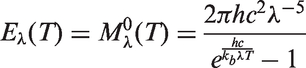
The total hemispherical radiative properties have been calculated in the energetical (0.24–2.40 µm), visible (0.38–0.78 µm) and near infrared (0.78–2.40 µm) ranges according to the EN 14500, EN 14501, EN 410 standards and in the UV range (0.24–0.38 µm) according to the EN14255 standard. Furthermore, the blackbody temperature is set to the sun surface temperature (T = 5780 K).
Hygrothermal properties
The thermal conductivity k and the thermal resistance rth were measured with a guarded hot plate apparatus according to ISO 5085-1. Cold and hot temperatures are imposed, respectively, to θc = 15℃ and θh = 25℃ (see Figure 1). The heat transfer is assumed monodimensionnal and the contact resistances are negligible. The thermal resistance rth and the thermal conductivity k are calculated (4) once steady state is reached, that is to say when the flux density ϕ delivered by the heating element and both the hot and cold temperatures are constant.
Guarded hot-plate apparatus.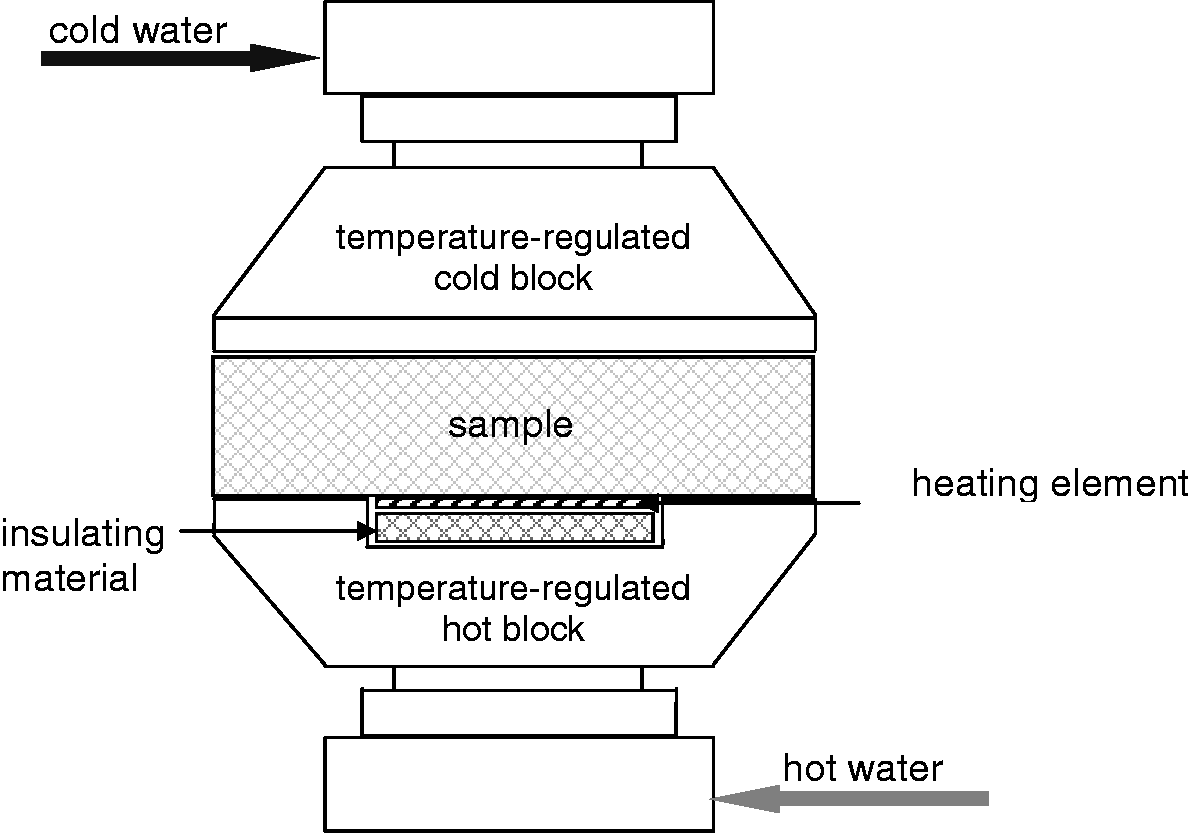

Water vapor transmission rate (WVTR) is determined by dry and wet cup tests under steady state according to the ISO 12572 standard. By accounting for the resistances Ri and Re provided by the air layer on either side of the sample, water vapor resistance μ is calculated as follow

Regardless of the property investigated (radiative or hygrothermal), the samples are conditioned successively in dry state with desiccants and at (65 ± 4)% relative humidity with saturated salt solutions according to the ISO 139 standard. All measurements are performed at room temperature θ = (20 ± 2)℃. All properties were measured at least three times and the results are expressed by an average value and a standard deviation (
Results and discussion
Structural properties
Figure 2 presents two front and side views for samples 1 and 5, measured by SEM. Since manufacturing high grammage sample requires high pressure, fibers seem to be more split in sample 5 than in sample 1, but the thickness is more heterogeneous.
SEM side and front observations of (a) low grammage fabrics (sample 1: d = 60 g·m−2) and (b) high grammage fabrics (sample 5: d = 400 g·m−2).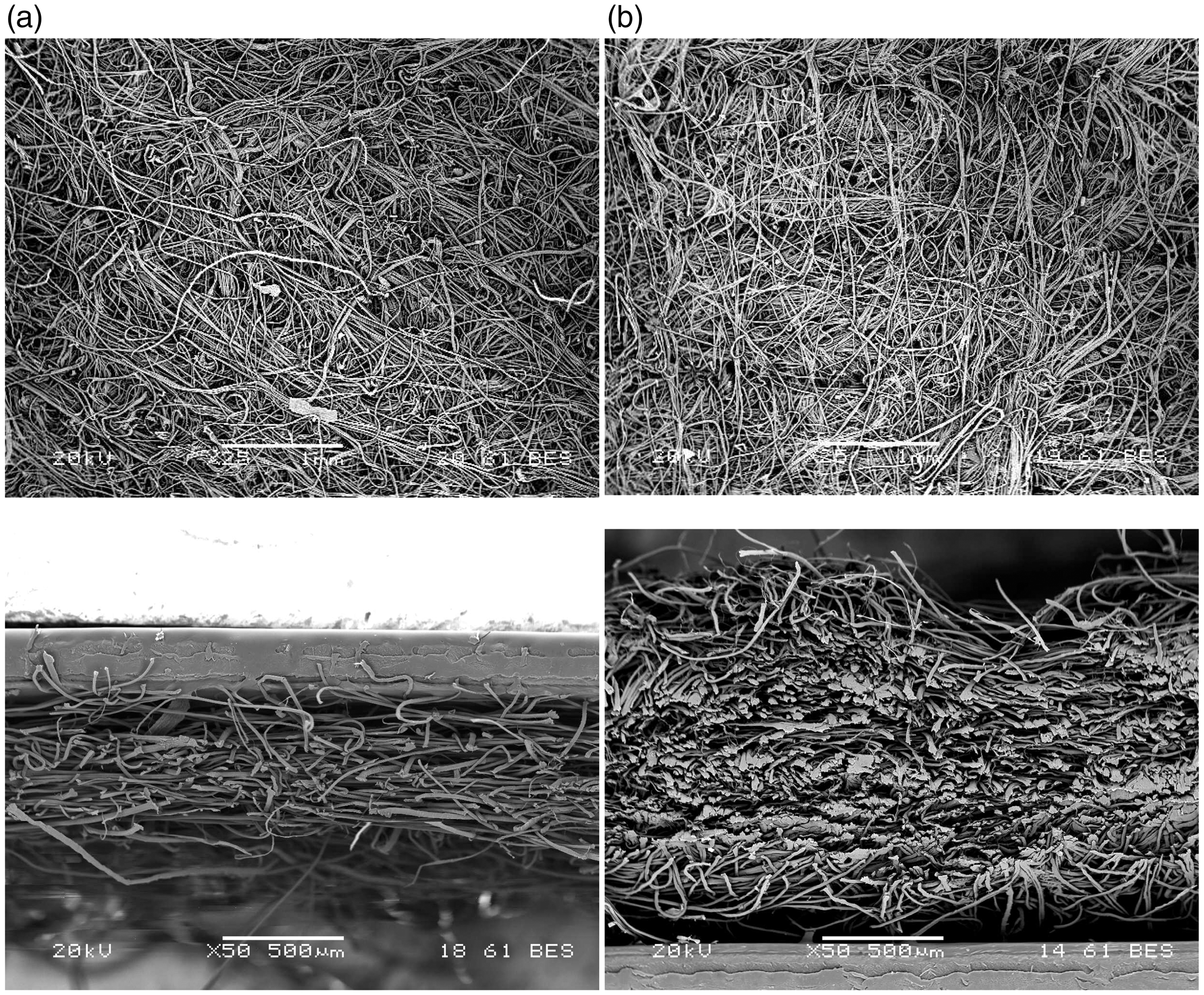
Structural properties of the fabrics.

Radiative properties
Total radiative properties of the fabrics.
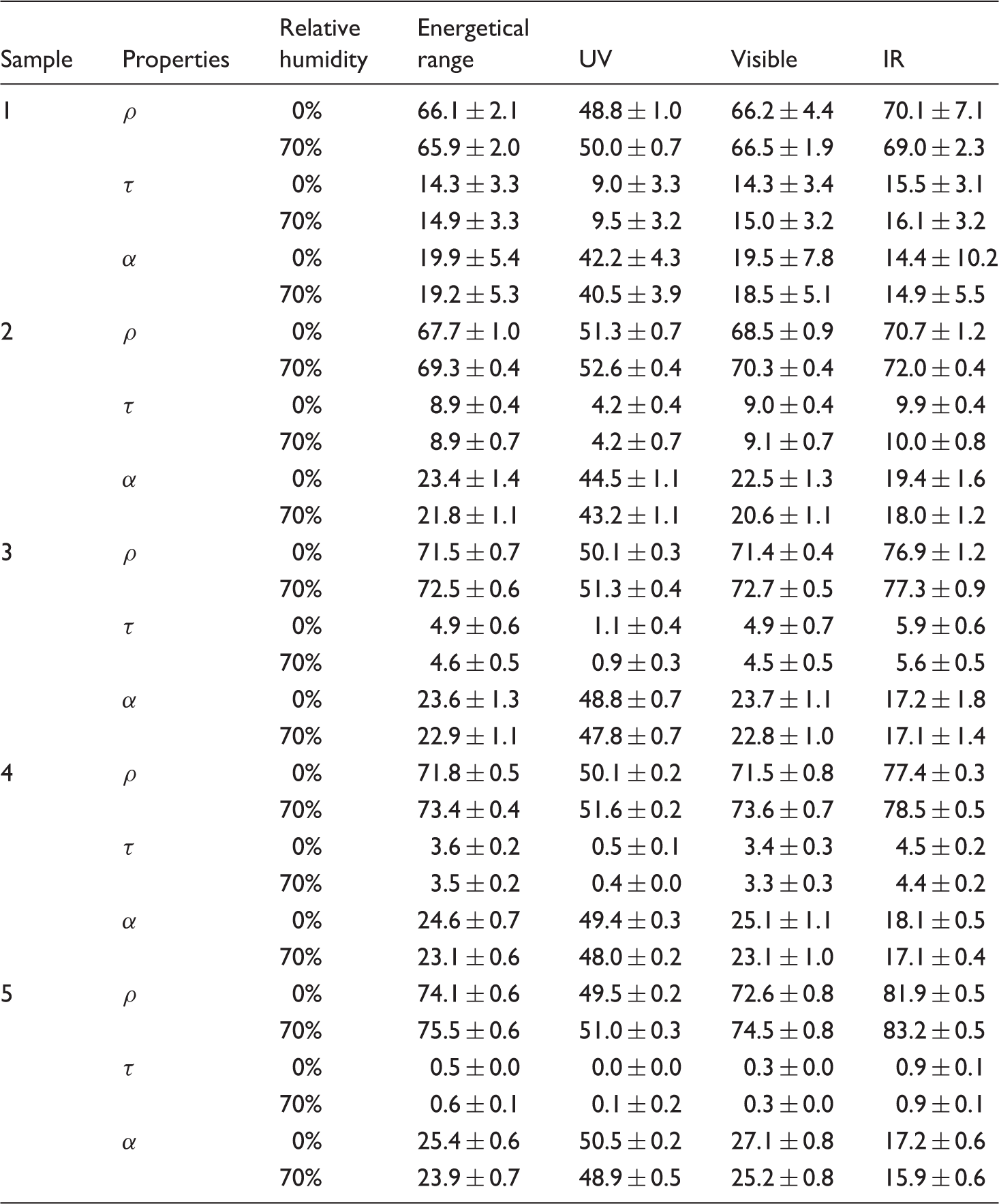
Spectral and integrated hemispherical reflectance and transmittance of sample 3 (d = 130 g·m−2) in dry state are shown in Figures 3 and 4, respectively. The spectral data showed that fabrics seem to be spectrally selective: spectral reflectivity and transmissivity are low in the UV range and increase with the wavelength until λ ≈ 1.9 µm and then decrease. These variations are similar to those observed by Papini [29,30]. For all fabrics, integrated hemispherical reflectivity and transmissivity are similar in the visible range and the energetical range, whereas they are slightly higher in the NIR range and lower in the UV range. Specifically, the total hemispherical transmissivity in the UV range is less than 10% and has the same order of magnitude as other fabrics [31,32]. As reviewed by Das [32], UV – the protective factor of fabrics – depends on the physico-chemical nature of the fiber, on dyeing and finishing and on the presence of additives. In this study, these parameters are unknown but assumed to be the same for every nonwovens, since they are made from the same raw material. Additionally, the structure of fabrics and moisture are the two major parameters influencing the UV protective factor [32], and more generally the radiative properties. In this sense, Figure 5 shows the total hemispherical reflectivity ρ, transmissivity τ and absorptivity α measured over the energy range of the five fabrics in dry and wet state. As fabric grammage increases, reflectivity increases whereas transmissivity decreases rapidly and approaches zero for the heavier fabrics. As a result, absorptivity slightly increases; however, a threshold (α ≈ 24%) is reached where further increase in fabric grammage has little effect. Similar results were found by Ganem and Coch [33]: a light fabric – in thickness and in colour – will allow a significant amount of incident radiation and will reflect a part of it, absorbing little. A thick, dark canvas will have a low transmission but also a low reflection, and therefore it will have an important absorption and will radiate heat. These results confirm that reflectance and transmittance are influenced by porosity [20]: small openings in the sample enable transmission of light through the sample while the apparent reflectance depends on the ratio of the area covered by gaps to the remaining area of the sample.
Spectral hemispherical radiative properties of sample 3 (d = 130 g · m−2) in dry state. Influence of the spectral ranges on the total hemispherical radiative properties of sample 3 (d = 130 g · m−2) in dry state. Evolution of total hemispherical radiative properties evaluated in the energetical spectral range [0.24–2.40 µm] of the five fabrics in dry and wet state.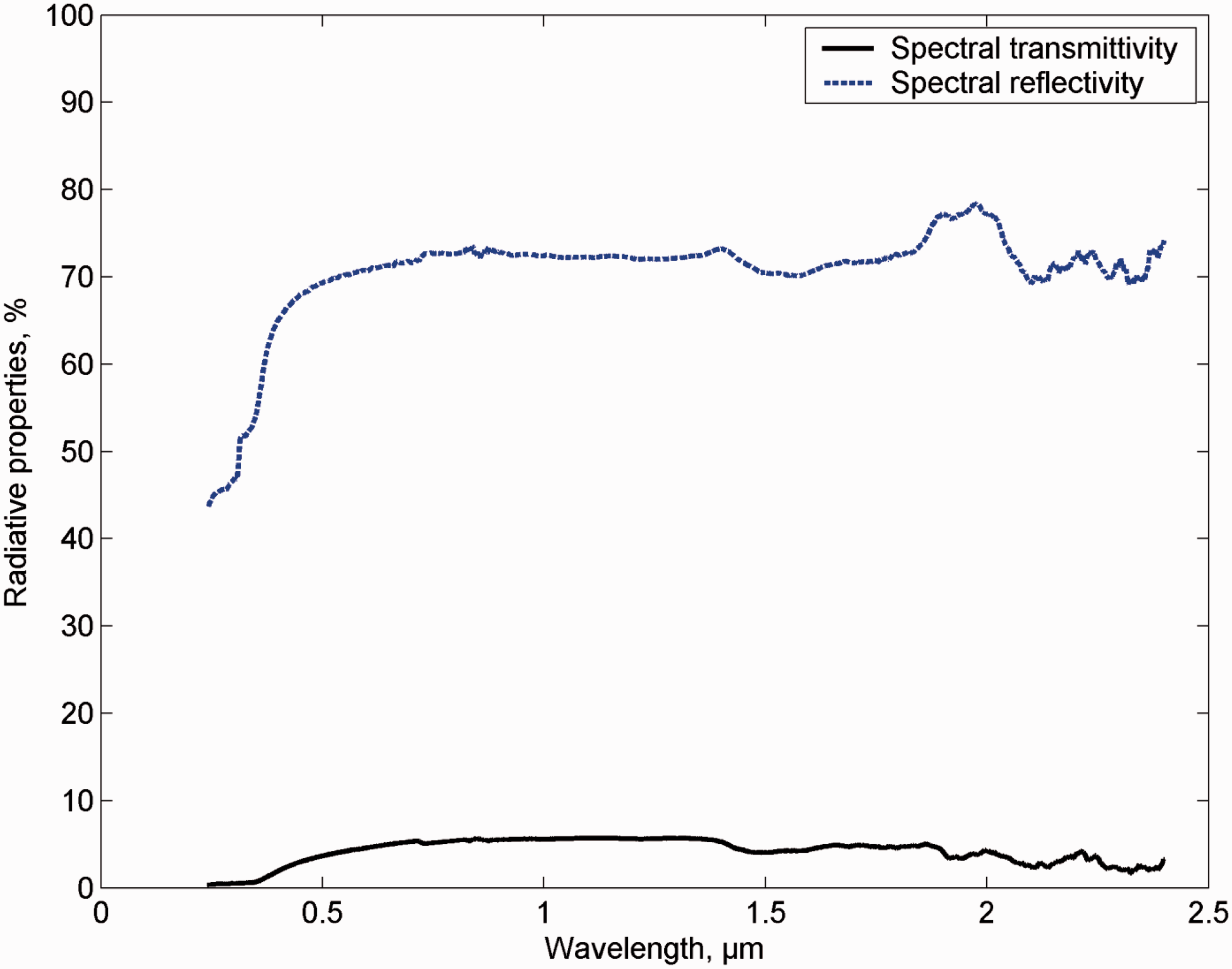

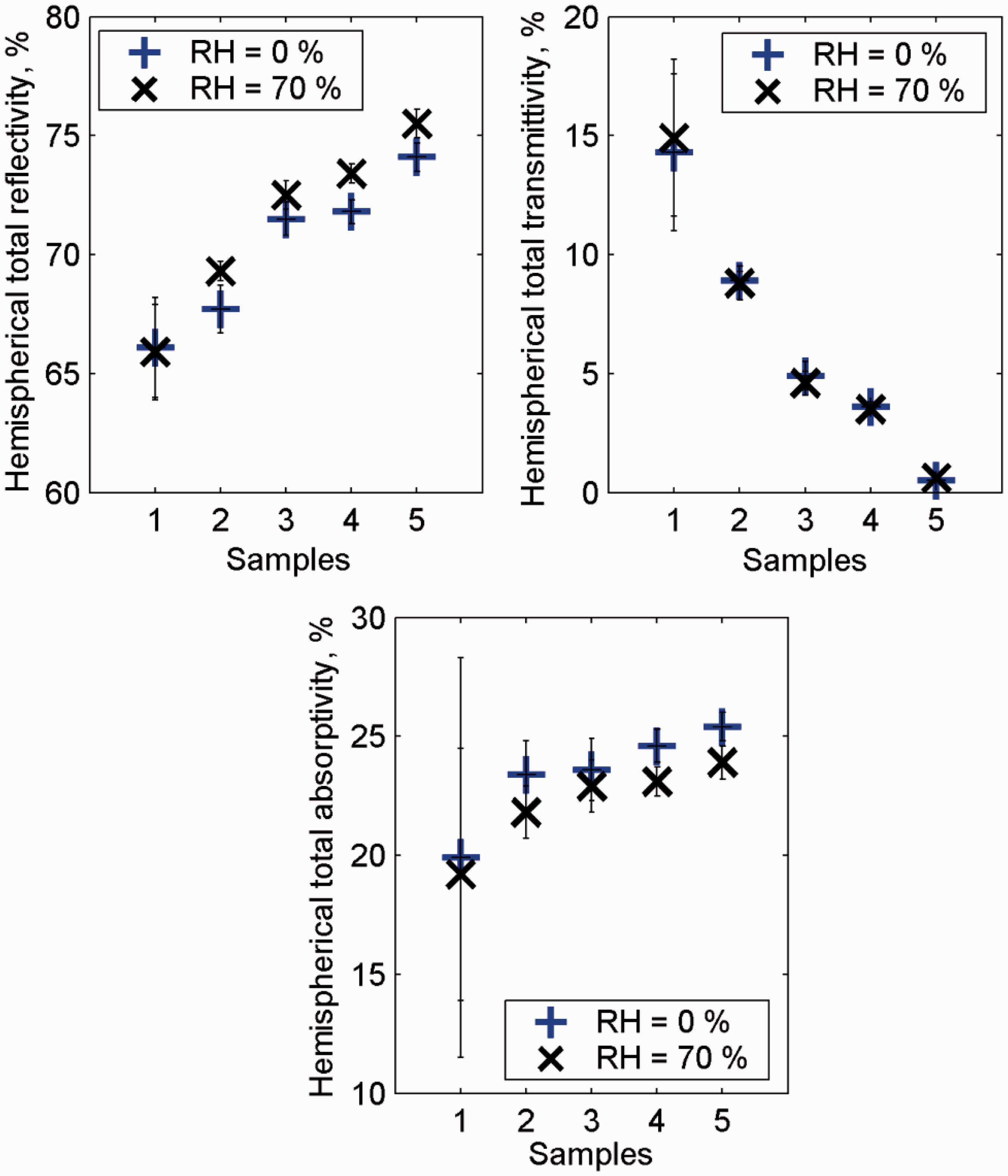
When focusing on the influence of relative humidity on the total hemispherical radiative properties across all spectrum ranges (see Figure 5 and Table 2), it is observed that the transmissivity is unchanged, whereas the reflectivity and the absorptivity tend to increase (1.6%) and to decrease (5.1%), respectively, with a relative increase in humidity. To our knowledge, the influence of the relative humidity on radiative properties has been rather scarcely investigated in the literature and no consensus has yet been reached [32,34–36]. For instance, McFarland et al. [35] found that moisture does not diminish transmissivity in the NIR range (like in this work), whereas absorptivities increases and reflectivities decrease (contrary to this work). On the other hand, Das [32] summed up that moisture lowers significantly UV transmissivity of fabrics in two ways: it reduces the scattering effect and also induces the swelling of fibres, which reduces the porosity. The assumption of the work is that moisture influences the radiative properties of nonwovens as follows: the radiative properties of water show that it is higher than 90% transparent between 0.24 µm and 2.4 µm [27,37], which explains the imperceptible effects of moisture on transmittivity considering the confidence interval of the experimental results. Moreover, water has a 2% surface reflectivity across the whole spectral range [27,37], which tends to explain that reflectivity increases with moisture and consequently the decrease of absorptivity.
Finally, the radiative properties measured in this work are the same as those found in the literature for natural fiber fabrics [29,30]. The materials studied here offer good UV protection level and it is confirmed that thickness is the most useful variable to understand differences in UV protection between fabrics [31]. The high and low reflectivities are interesting properties in terms of improving building energy performance.
Hygrothermal properties
Hygrothermal properties of the fabrics.

As observed in Figure 6 and Table 3, thermal conductivity increases (consequently the thermal resistance decreases) with a decrease in density ρ and with an increase in relative humidity: for example, thermal resistance increases by 184% between sample 1 and sample 5 while the thickness increases by 325%. Consequently, thermal conductivity k increases with the density ρ. This result was expected since porosity decreases and the fiber thermal conductivity is greater than the thermal conductivity of air [26]. These experimental values are similar to those found in the literature for fabrics made of biosourced materials [28, 38–40]. Nevertheless, attention must be brought to the thermal properties: since the fabrics are made of flax, viscose, air and water if they are not dry, the estimated thermal properties are considered as the effective properties of whole material. Furthermore, during the guarded hot-plate experiment, heat transfer is not only due to conduction, but also to convection, radiation, evaporation and condensation within the thickness of the material. However, the convective and radiative contributions decrease when the density of the material increases.
Thermal resistance rth of the five fabrics in dry and wet state. Water vapor resistance μ of the five fabrics in dry and wet state.
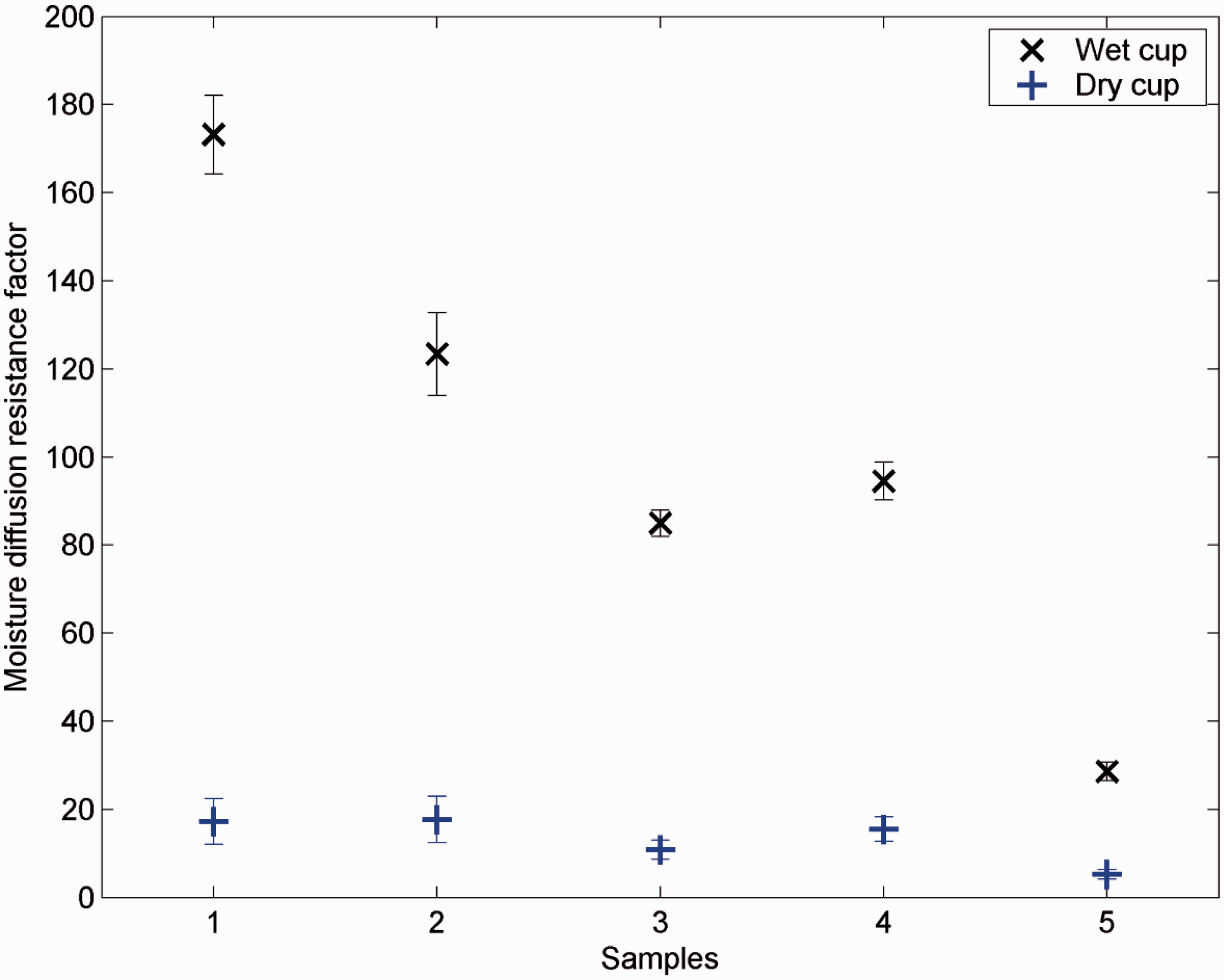
For dry and wet cup experiment, water vapor transmission rate (WVTR) slightly decreases with an increase in grammage (Figure 7). Similarly, water vapor resistance μ decreases with an increase in grammage, particularly for dry cup experiment. Nevertheless, a significant difference is found on the results from both experiments. In the dry cup experiment, moisture is predominantly transferred by diffusion in vapor state. However, diffusion primarily depends on the diffusion pathway (tortuosity and porosity) explaining the decrease in water vapor resistance μ. In the wet cup experiment, moisture can be found in liquid state: in addition to diffusion, moisture can be transferred by evaporation–condensation. This phenomenon enhances the moisture transfer through the fabrics, thus explaining the higher value for water vapor transmission rate. The experimental values and trends are similar to those found in the literature [41] on paper or textile wallpapers.
Conclusion
Nonwoven flax fabrics of same composition (65% of flax and 35% of viscose) but with different grammage (ranging from 60 g·m−2 to 400 g·m−2) were characterized. First, the manufacturing process influences the fabric’s thickness and porosity. Both parameters affect radiative properties: it was found that transmittivity deacreases rapidly with an increase in grammage and approaches zero for the thicker fabrics, whereas reflectivity and absorptivity increase. In particular, nonwoven flax fabrics seem to be spectrally selective and show significant UV protection. Finally, it was observed that moisture influences the radiative properties. Nevertheless, no clear conclusions could be drawn in comparison to literature data. Lastly, hygrothermal properties (thermal resistance, thermal conductivity and water vapor resistance) are impacted mainly by porosity.
Footnotes
Declaration of Conflicting Interests
The author(s) declared no potential conflicts of interest with respect to the research, authorship, and/or publication of this article.
Funding
The author(s) received no financial support for the research, authorship, and/or publication of this article.