




Abstract
In this study, stone powder as a waste material was used to fabricate cementitious composite samples. Neat (non-modified) cementitious samples were composed of gravel, cement, sand, water, and waste stone powder. Flexural and compressive strength tests showed that flexural and compressive strength could be improved by increasing waste stone powder weight percentage. In addition, the experimental results illustrated that samples containing waste stone powder present more flexural and compressive strength in comparison with those fabricated without waste stone powder at constant cement weight percentage. In the next step, polypropylene and glass fibers were used in specimens containing waste stone powder. Consequently, flexural strength of fiber-reinforced composites was modeled by modifying “Equal Cross-Section Theory.” The results show that fibers increase flexural strength of specimens; meanwhile, waste stone powder does not have a significant effect on compressive strength. In another step, it was tried to make cementitious composite samples containing perlite as a light aggregate. Cementitious composites containing waste stone powder and perlite presented more flexural and compressive strength compared to samples without waste stone powder.
Introduction
Today, the primary material and fundamental product for building construction in many countries is Portland cement. Concrete is one of the cement products used in many parts of building. The problem is the weight of the concrete. Therefore, lightweight aggregates (LWAs) can be used to solve this problem. Nowadays, using LWA in concrete includes several advantages such as reduction of dead load, production of lighter and smaller per-cast elements, reductions in size of columns and beam dimensions, higher thermal insulation, and better fire resistance [1]. Consequently, lightweight concrete made with natural and/or artificial LWA can be applied in a wide range of unit weights and strengths suitable for various applications including internal and external walls, inner leaves of roof decks and floors [2,3]. LWA concrete includes low density of 300–1200 kg/m3 for block production and medium density of 1000–2000 kg/m3 for structural concrete [2]. In this way, perlite is a common LWA. Perlite is a hydrated volcanic stone that increases in volume by heat [4]. High volume and low density besides insulation property of perlite has been led to using this material in building industry such as brick walls, plaster walls, panels, and floors. Using perlite in concrete reduces strength. Therefore, more cement should be used to fabricate the concrete for achieving expected strength [5].
On the other hand, Portland cement factories release a large amount of carbon dioxide to atmosphere – up to 13,500 tons per year, which is 7% of greenhouse gas produced annually [6]. Therefore, many researchers have recently focused to produce concrete by waste materials. A study by Tuan et al. used waste construction materials and waste glass powder in concrete. The concrete showed a reduction in water absorption and an increase in break point [7]. In another study, Posi et al. [8] conducted a feasibility study to making lightweight concrete by using waste block aggregates.
In addition, using fibers in concrete is common to improve flexural and tensile strength. Initial bonding between fibers and concrete can be assigned by physical adhesion and also static friction generated by surface finish of fibers. Chemical bonding between fibers and matrix is not strong in comparison with friction resistance. Fundamentally, increasing fiber length causes an increase in the friction resistance between fibers and matrix. This is because the specific surface of fibers will be increased in this case. Researches on fiber-reinforced concrete manifest that fibers control crack propagation during the initial loading of the structure [9,10].
Polypropylene (PP) and glass fibers are generally used to produce fiber-reinforced concrete. PP fibers can be produced as monofilament and/or as collated fibrillated fiber bundles. Their properties are related to the crystalline ratio and orientation [11]. PP reinforced concrete (at relatively low volume fractions <0.3%) are used for secondary temperature shrinkage reinforcement, overlays and pavement, slabs, flooring systems, shotcrete tunnel lining, canals, and reservoirs [12,13].
Glass fibers that are used in concrete, especially in lightweight concrete, improve tensile and flexural strength because of their high modulus. In addition, glass fibers can control shrinkage and resistance in alkaline environment [14]. Sivakumar et al. [15] studied on the plastic shrinkage cracking in high-strength hybrid fiber (such as polyester, PP, and glass) reinforced concrete. Results showed that hybrid fibers were most effective in reducing shrinkage cracks compared to steel fibers.
The main goal of this study is therefore to investigate the effects of waste stone powder (WSP) on compressive and flexural strength of cementitious composite structures. PP and glass fibers have been used to reinforce concrete samples filled with WSP. In addition, the performance of fibers within reinforced cementitious composites under flexural loading of cementitious composite has been modeled by using “Equal Cross-Section Theory.”
Materials and methods
Physical and mechanical properties of fibers used in this study.

PP: polypropylene.
Chemical composition of Portland cement used in this study.

Chemical composition of waste stone powder used in this study.

In addition, some samples were fabricated with perlite as a light aggregate to reduce the final density of the composite sample. Figure 1 shows the schematic of the experimental program.
The schematic of the experimental program.
Mix proportion of specimens without waste stone powder (weight percentage).

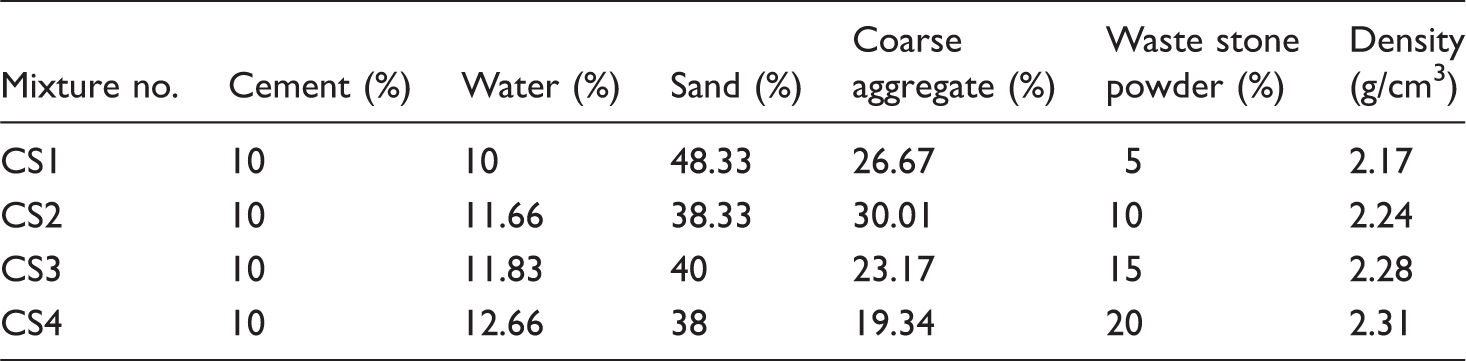
Consequently, WSP with different weight percentages was added to make specimens according to Table 5. The gradation curve for WSP is shown in Figure 2.
Gradation curve for waste stone powder. Mix proportion of specimens containing waste stone powder (weight percentage).
Mix proportion of specimens containing perlite (weight percentage).

Chemical composition of perlite (weight percentage).

Results and discussions
Figures 3 and 4 show the flexural and compressive strength results of neat samples, i.e. fabricated without reinforcing fibers (see Tables 4 and 5).
Flexural strength of specimens fabricated with and without WSP. Compressive strength of specimens fabricated with and without WSP.
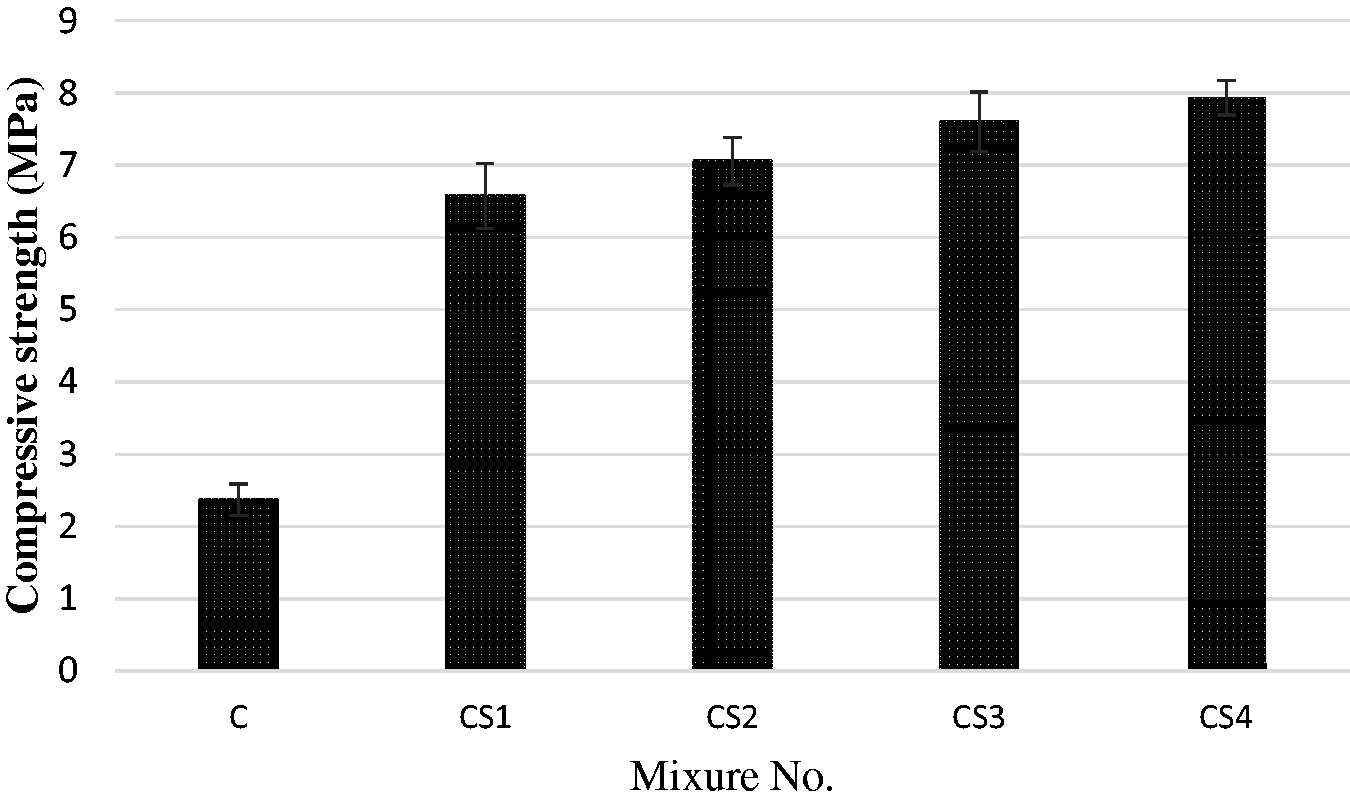
According to Figures 3 and 4, using WSP in cementitious samples causes an improvement in flexural and compressive strength compared to those fabricated without WSP. It seems that WSP performs as a filler within the mixture. Consequently, the void content of the sample will be decreased as WSP is added to the mixture. Figures 5 and 6 show the broken cross-sections of C and CS4 samples. As can be seen, the void content of CS4 sample is more than that of C sample.
The broken cross-section of C sample. The broken cross-section of CS4 sample.

Flexural strength modeling of fiber-reinforced cementitious composite
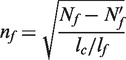
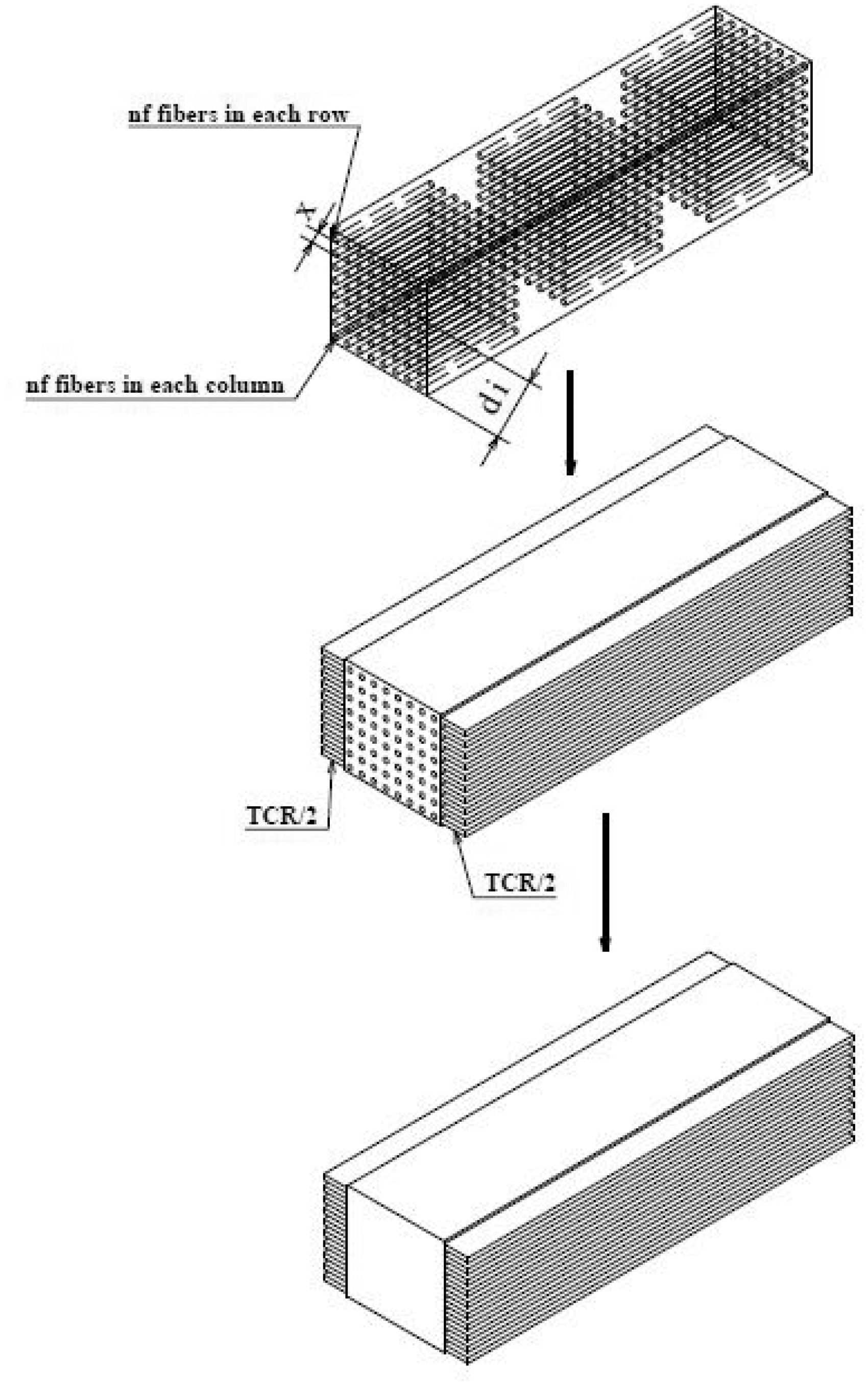
A famous theory about analysis of steel-reinforced concrete is “Equal Cross-Section and/or Transformed Area.” In this way, cross-section occupied by fibers is replaced with matrix, like the steel bars which are replaced by concrete [19]. Figure 7 shows this phenomenon in accordance with equal cross-section theory. This equal area Equal cross-section theory applied to fiber reinforced cementitious composite.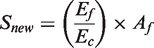


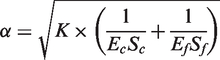
On the other hand, according to the mechanics of materials it is clear that flexural strength of a mass under flexural loading is as follows


According to Figure 8, all components below the neutral axis are under tension. Therefore, these fibers should be only considered in equation (7), i.e. fibers above the neutral axis are not efficient under compressive loading. That is why A beam under flexural loading.


The results of flexural parameters calculated for glass and PP fibers at different weight percentages.

PP: polypropylene.
Figures 9 and 10 the show flexural and compressive test results of CS4 specimen containing PP and glass fibers.
Flexural strength of CS4 specimen containing PP and glass fibers. Compressive strength of CS4 specimen containing PP and glass fibers.

In addition, Figures 11 and 12 show flexural and compressive strength test results of CP and CSP containing PP and glass fibers.
Flexural strength of CP and CSP specimens containing glass and PP fibers. Compressive strength of CP and CSP specimens containing glass and PP fibers.

According to Figures 11 and 12, in samples fabricated with perlite, flexural and compressive strengths have been increased by using WSP compared to samples prepared without WSP.
It is clear from Figures 9 to 12 that glass and PP fibers reinforce the cement composite structure to resist during flexural loading. Furthermore, fibers prevent crack propagation in specimen during flexural loading and shrinkage. According to Figure 9, increase of weight percentage of fibers results in improving flexural strength. This result shows a complete consistency with the proposed model. According to equation (4), an increase in fiber content means an increase in total number of reinforcing fibers Nf which increase the transformed area TCR to be greater. In addition, glass fibers increase the flexural strength of cementitious composites more than PP fibers. This is due to the reason that glass fibers have higher modulus of elasticity Ef compared to PP fibers (see equation (4)). According to Figure 10, fibers do not have a significant effect on compressive strength.
On the other hand, perlite existence in cementitious composite specimens decreases flexural and compressive strength. Since perlite surface is morphologically smooth in comparison with other components such as sand, it would be possible to decrease cohesion between matrix components, which leads to make porosity in cementitious phase. Using glass and PP fibers within samples containing perlite and WSP improves flexural strength more than samples just containing perlite. It seems that in specimen containing WSP, the friction between fibers and WSP increases the resistance against flexural loading compared to samples fabricated with perlite which has smooth surface.
ANOVA statistical analysis results for samples containing waste stone powder.

ANOVA statistical analysis results for samples containing fibers.

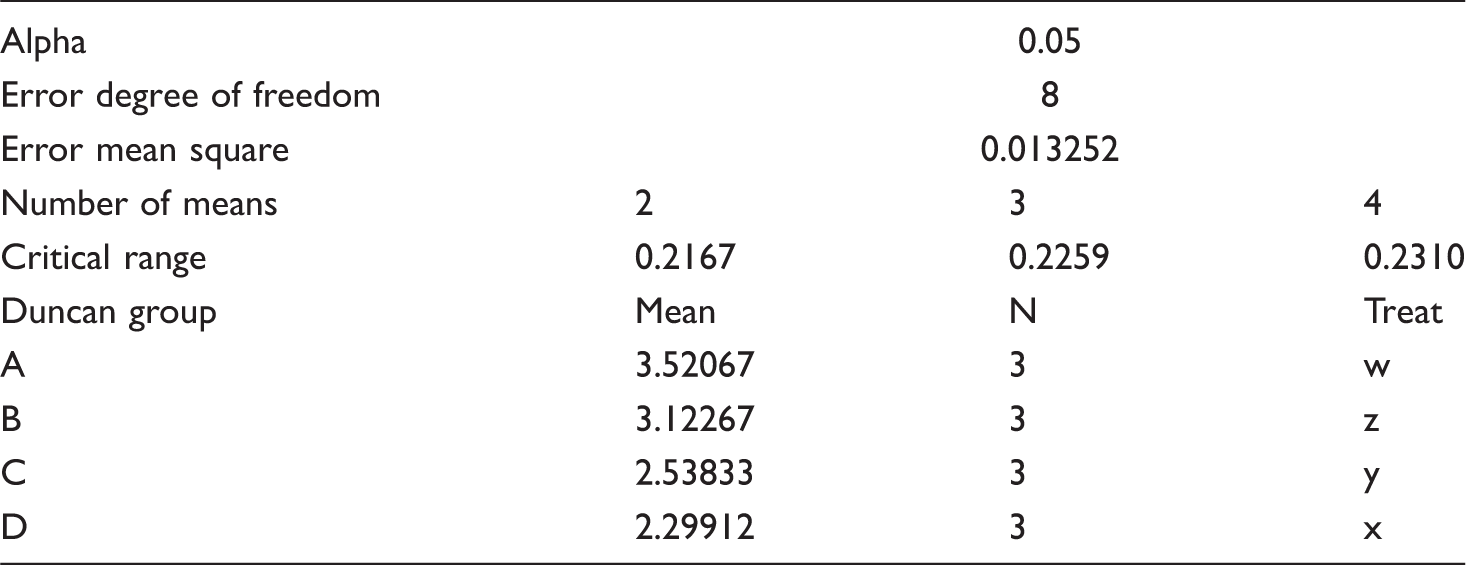
Duncan statistical analysis results for samples containing waste stone powder.
Duncan statistical analysis results for samples containing fibers.

According to Tables 11 and 12, Duncan test results show that each group of samples has different mean values, and adding WSP and fibers are effective on compressive strength.
Conclusion
Based on the results of experiments carried out in this study, the following conclusions can be obtained. Cementitious composite samples containing WSP have flexural and compressive strength more than samples without WSP at the same cement content. With increasing WSP weight percentage in cementitious composite samples, flexural and compressive strength increases too. WSP performs as a filler within the matrix to reduce the porosity and to bring more cohesive matrix. Using glass and PP fibers increases flexural strength of cementitious composite samples. The more the fiber content, the more flexural strength can be obtained. This result fits with the “modified equal cross-section theory” developed in this study. Fibers do not have a significant effect on compressive strength. Low-density cementitious composite was obtained by using perlite. Perlite decreases flexural and compressive strength of the composite. Using WSP with perlite increases flexural and compressive strength in comparison with specimens without WSP. Using glass and PP fibers within the cement matrix containing perlite and WSP increases flexural strength and does not have a significant effect on compressive strength.
To conclude, it is emphasized that WSP is an environmental problem. This paper suggests the use of WSP within the cement matrixes reinforced with glass and/or PP fibers, meanwhile fabricated with LWAs such as perlite. Using chemical water-proof resins such as polyvinyl alcohol to prevent swelling of cement-WSP based samples is an interesting research field in future works.
Footnotes
Funding
This research received no specific grant from any funding agency in the public, commercial, or not-for-profit sectors.