




Abstract
In this research, a hollow spindle spinning machine was used to manufacture the multifunctional metal hybrid yarns with stainless steel wire (SSW) as core material, antibacterial nylon (AN) filaments and bamboo charcoal polyester filaments (BC-PETs) as inner and outer wrapped yarn, respectively. The wrapping numbers of produced metal hybrid yarns varied from 8.0 to 15.5 turns/cm. Furthermore, metal composite woven fabrics were fabricated with the metal hybrid yarns as weft yarns and PET filaments as warp yarns on a loom. These woven fabrics were evaluated in terms of far infrared (FIR) emissivity, anion density, electromagnetic shielding effectiveness (EMSE) and surface resistance. The antibacterial activity of the woven fabrics was assessed against both Staphylococcus aureus and Escherichia coli according two test methods AATCC100-2004 and 90-2011, respectively. The wrapping numbers showed a significant influence on the FIR emissivity and anion density of the produced woven fabrics. The presence of SSW in the hybrid yarns decreased the surface resistance and improved the EMSE of the woven fabrics. EMSE measurement showed that FH-15.5 woven fabrics with 0°/90°/0°/90° lamination angles displayed a better electromagnetic shielding behavior than with 0°
Keywords
Introduction
The growth of electronic industry and the widespread use of electronic equipment in computations, communication, microwave oven, and other purposes have led to many electromagnetic interference (EMI) and radiation problems in electronic industry or daily life. To prevent EMI and electrostatic discharge, many researchers have developed metal composite fabrics with high conductivity and permeability as effective electromagnetic (EM) shielding and antistatic materials [1,2]. These metal composite fabrics have desirable properties such as flexibility, thermal expansion matching, EMI protection, and lightweight, etc. Lin and Low [3] fabricated conductive woven fabrics with stainless steel wire (SSW) based composite yarns which have core of polypropylene nonwoven selvedge (PPNS) and kevlar filament and sheath of SSW. Roh et al. [4] further developed conductive woven fabric from PET/Cu/PET or PET/SSW/PET covered yarns to arrest EM waves. Although these EM shielding textiles can protect humans from undesirable EM radiation, the functionality of such textiles is limited and difficult to meet other requirements such as healthcare, antibacterial, stable strength, durability wash and wear comfortable properties.
Bamboo charcoal polyester filaments (BC-PETs) have been widely applied in functional clothing because of their good far infrared (FIR) emissivity, anion release, and EM wave absorbance properties [5]. FIR rays, one type of infrared rays which have a wavelengths ranging from 4 to 14 µm and all living creatures on earth depend on them to live and grow. When FIR enters deep into the human dermis, molecular vibration is generated, thus heightening internal temperature. FIR can also accelerate cell metabolism and nutrient consumption. In addition, the BC-PET released anion can act on the parasympathetic nervous system to relax the nerves [6–8]. Therefore, BC-PET has a good healthcare function for the human body.
EM shielding fabrics are excellent media for microorganism growth, particularly when used in hospitals or working environments with unhealthy indoor air quality [9]. Research on the antibacterial properties of metal composite fabrics is limited, and most studies refer only to the EM shielding characteristic. Hence, the primary objective of this study is to develop a multifunctional metal composite woven fabric that displays the desired electromagnetic shielding effectiveness (EMSE), FIR emissivity, and antibacterial activity. For the purpose of this study, bamboo charcoal/antibacterial/stainless steel metal hybrid yarns were produced with SSW as the core yarn, the antibacterial nylon (AN) yarn as the inner wrapped yarn, and BC-PET as outer wrapped yarn. The metal hybrid yarns were fabricated by using a hollow spindle spinning machine, and the wrapping amount varied from 8.0 to 15.5 turns/cm. SSW was selected mainly because of its high absorption and low reflection of EM waves compared to copper wire [10,11]. The metal hybrid yarns were then woven into fabrics as weft yarns on a loom with PET filaments acting as warp yarns. After the paper research, this study on the surface resistivity, FIR emission, anion release, EMSE, and the antibacterial properties for a multifunctional EMI shielding woven fabric is novel and has not been addressed in any other research papers.
Experimental
Materials
Specifications of the yarns used to produce metal hybrid yarns.
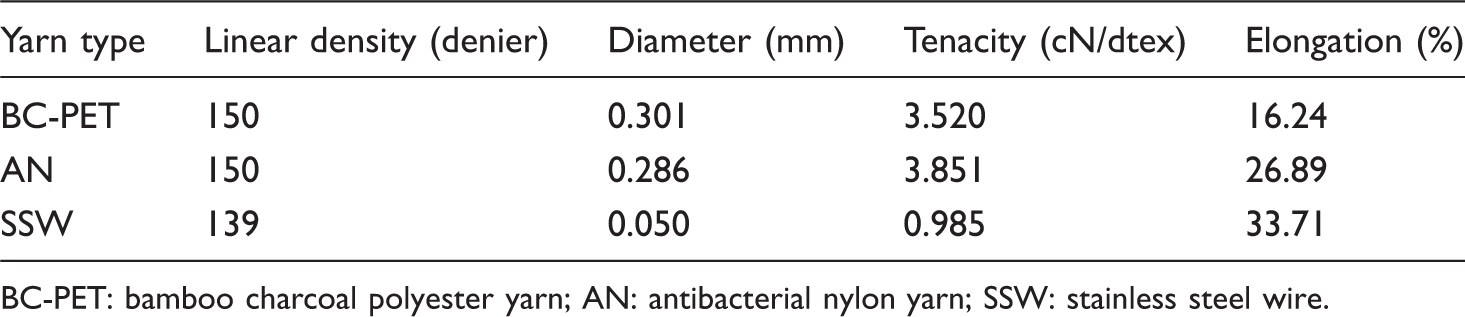
BC-PET: bamboo charcoal polyester yarn; AN: antibacterial nylon yarn; SSW: stainless steel wire.
Fabrication of metal hybrid yarns
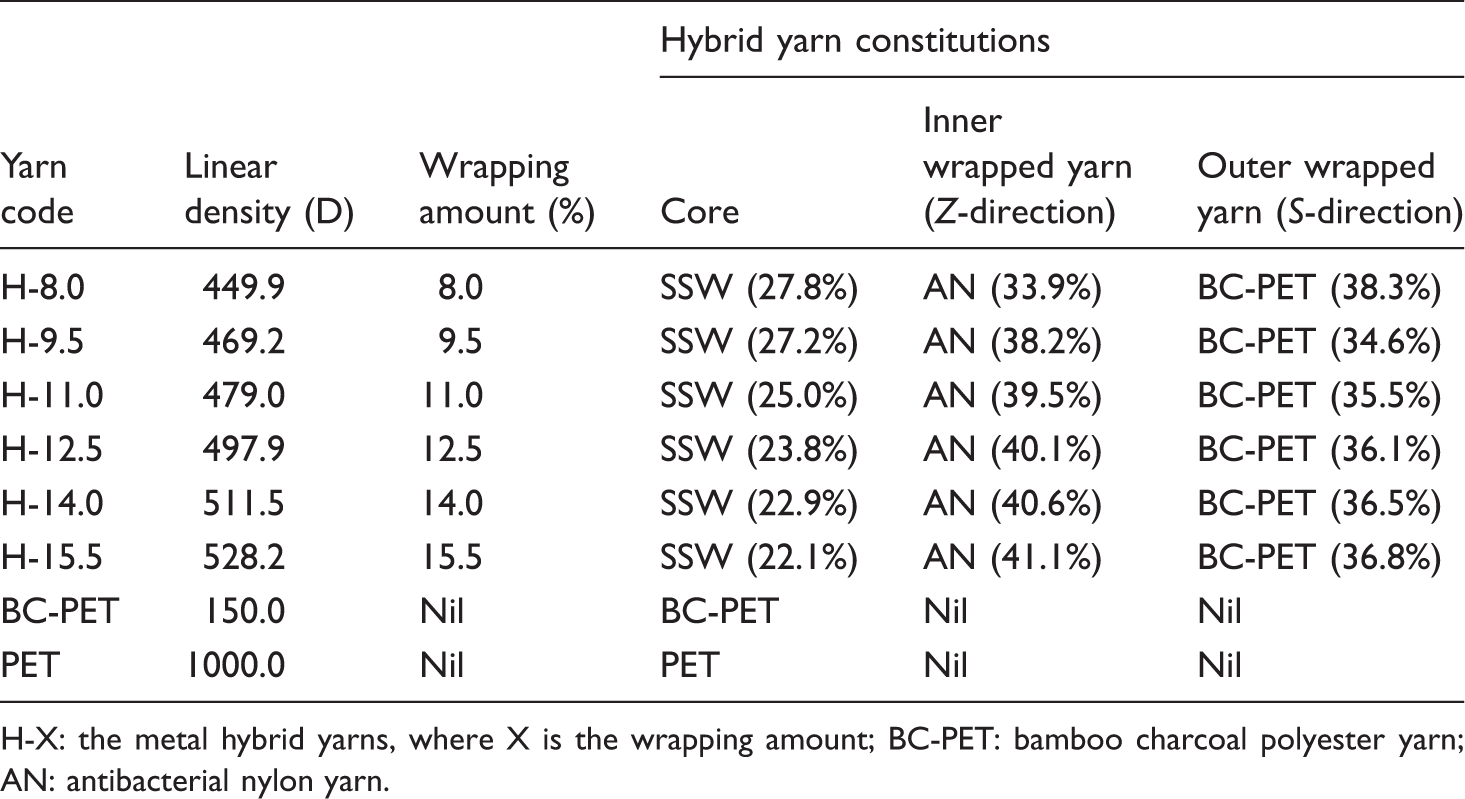
Metal hybrid yarns were produced on a hollow spindle spinning machine. With a SSW as core material, the AN covered the SSW in the Z-direction (as inner wrapped yarn), and another BC-PET yarn covered the previous AN covered SSW in the S-direction (as outer wrapped yarn). Both the inner and outer wrapped yarns had the same wrapping amount at 8.0, 9.5, 11.0, 12.5, 14.0, and 15.5 turns/cm. Figure 1 shows the schematics of the metal hybrid yarn and product.
Schematic of the metal hybrid yarns (a) and product (b).
Figure 2 displays the configuration and working principle of the hollow spindle spinning machine. AN and BC-PET yarns were preset on double-flanged packages C and F, respectively, and then placed over hollow spindles E and D, respectively. The hollow spindles were driven by a tangential belt from the motor. Furthermore, SSW was fed by input device A and dragged by winding roller K. When the hollow spindles rotated, the SSW was covered with AN and BC-PET yarns in the Z- and S-directions, respectively. After twisting, the multifunctional metal hybrid yarns were placed on winding roller K. The speeds of the two hollow spindles were both maintained at 8000 r/min and that of the winding roller was varied to control the wrapping amount of metal hybrid yarns. The characteristics of the produced metal hybrid yarns are presented in Table 2.
Configuration of the hollow spindle spinning machine. Characteristics of the metal hybrid yarns. H-X: the metal hybrid yarns, where X is the wrapping amount; BC-PET: bamboo charcoal polyester yarn; AN: antibacterial nylon yarn.
Fabrication of metal composite woven fabrics
Metal composite fabrics were constructed in a plain weave on an automatic loom (SL7900, Taiwan). For the metal composite woven fabrics, the metal hybrid yarns and PET yarns (1000 D) were incorporated as weft and warp yarns, respectively. Figure 3 illustrates a 1/1 plain construction of metal composite woven fabric. Additional information on various woven fabrics is listed in Table 3.
The illustration of metal composite fabric (wrapping amount of the weft yarn was 8 turns/cm). Characteristics of metal composite fabrics. FH-X: the metal composite woven fabrics composed of weft yarns generated from H-X; FBC-PET and FPET correspond to the woven fabrics composed of BC-PET and PET weft yarns, respectively.

Testing methods
Before the measurements and tests, all fabric samples were conditioned in standard atmospheric conditions (20 ± 2℃, 65 ± 5% relative humidity) for 48 h. All tests were performed under standard ambient conditions.
EMSE measurement
Three methods are generally used to measure the plane wave SE of materials: the coaxial transmission line, shielding box, and free space transmission methods. In this study, the coaxial transmission line method was used to determine the EMSE of the conductive woven fabrics according to the ASTM D4935 standard [12]. In this research, the scan frequency varied from 300 kHz to 3 GHz and the EM field was a far-field plane wave. Figure 4 displays the configuration of the test set up used for assessing the EM shielding behavior of conductive fabrics. The EMSE of the test material was calculated by using the following equation [13,14]:
Typical coaxial transmitter and sample holder (a); reference and load specimens (b) for the EMSE test. EMSE: electromagnetic shielding effectiveness, all dimensions above are in millimeters (mm).

Surface resistivity
Surface resistivity was measured according to JIS L1094. A specimen was placed on an electric insulating Teflon plate, and a 2.268 kg weight was laid on the tester to ensure that the probes had good contact with the surface of the specimen. Figure 5 displays the schematic of the RT-100 surface resistivity tester used in this study.
Schematic of the surface resistivity tester.
FIR emissivity
A TSS-5X tester was used to measure the FIR emissivity as specified in FTTS-FA-010. The schematic of the FIR tester is presented in Figure 6. The FIR emissivity of each sample was tested 20 times in different positions to obtain the mean values.
Configuration of the FIR tester. FIR: far infrared. Culture flasks used for the AATCC 100-2004 test method.

Anion density emissivity
The anion tester ITC-201 A was provided by Andes Technology Corporation (Japan). The specimen was cut into a 300 mm × 200 mm rectangle and then placed into a testing box to determine the anion density. The dimension of the testing box was 300 mm × 200 mm × 200 mm.
Assessment of antibacterial activity
Qualitative antibacterial test
A qualitative test of two test strains, namely, Staphylococcus aureus (S. aureus) and Escherichia coli (E. coli) was conducted in this study according to AATCC90-2011. All plates were examined for the inhibition zones after 24 h of incubation.
Quantitative bacterial reduction test
Antibacterial activity of the metal composite fabric was quantitatively evaluated based on AATCC 100-2004. Given the same strains (E. coli: 1.5 × 10⁵ cfu/mL and S. aureus: 1.5 × 10⁵ cfu/mL), the culture flasks were incubated for 24 h (Figure 7) followed by enumeration. Four swatches per jar were used to absorb the 1 ± 0.1 mL of inoculums according to AATCC 100-2004 test standard. The reduction of bacteria was calculated according to the following equation:

Tensile strength and elongation at break
The tensile strength and elongation at break tests were performed according to ASTM D5034-5. The size of the samples was 10 cm × 15 cm, and the samples were measured at a speed of 30 cm/min.
Results and discussions
Physical properties of metal composite fabrics.

FH-X: the metal composite woven fabrics composed of weft yarns generated from H-X; FBC-PET and FPET correspond to the woven fabrics composed of BC-PET and PET weft yarns, respectively.
To determine the relationship of the tensile strength of woven fabric and the wrapping amount of hybrid yarns in the weft direction, a relation curve is shown in Figure 8. The tensile strength decreased with wrapping amount of the hybrid yarns in the weft direction, as expressed by the following equation:
Relationship between the tensile strength of the woven fabric and the wrapping amount of the hybrid yarns in the weft direction.

The correlation coefficient of the fitting line (R2) was 0.921, which indicates good quality of fit. The high values of the correlation index shows that the influence of wrapping amount of the metal hybrid yarns on the strength of the woven fabrics is large and have good statistically significant effects on the tensile strength.
FIR emissivity of the metal composite fabrics
FIR emissivity of FPET, FBC-PET, and FH-X series.

FH-X: the metal composite woven fabrics composed of weft yarns generated from H-X; FBC-PET and FPET correspond to the woven fabrics composed of BC-PET and PET weft yarns, respectively. The unit of anion density is ions/cm3.
The FIR emissivity of the FH-X series was higher than the FIR emissivity of F-PET and FBC-K; moreover, the FIR emissivity of the FH-X series increases with the wrapping amount of hybrid yarns. These results were attributed to the high wrapping amount, which indicates the high quantity of BC-PET yarns in the woven fabrics. It was found that when the wrapping amount of the hybrid yarns was 15.5 turns/cm with two layers of lamination, the FH-15.5 fabric exhibited the highest FIR emissivity among the tested woven fabrics.
Anion density of the metal composite fabrics
Anion density of the FBC-PET and FH-X series.

FH-X: the metal composite woven fabrics composed of weft yarns generated from H-X; FBC-PET: the woven fabrics composed of BC-PET weft yarns.
EMSE of the metal composite fabrics
Figure 9 shows the variation in the EMSE of metal composite woven fabrics in the frequency range of 300 kHz to 3 GHz. From Figure 9, it was found that the EMSE of the FH-X series was higher than that of the FBC-PET woven fabrics. This result was attributed to the presence of SSW in the hybrid yarns. The overall evaluation of the EMSE of the FBC-PET fabric was almost zero in this frequency range mainly because most polymer composites were electrically insulated and transparent to the EM radiation. The FH-X series displayed a similar EMSE level to that of the fabric fabricated with metal composites, which possesses similar weft density and almost identical metal content (Table 2). The maximum EM shielding of 99.9% (−30 dB mark) was obtained at 470 MHz. However, the EMSE of the fabrics in the FH-X series was almost all less than −10 dB at high incident frequency. This finding is attributed to the ease of the high-frequency wave in penetrating the pores of the woven fabrics because of its short wavelength and high energy [17].
EMSE of FBC-PET and FH-X series. EMSE: electromagnetic shielding effectiveness; FBC-PET: the woven fabrics composed of bamboo charcoal polyester yarn weft yarns.
To address many of the practical EMI problems as protective clothing, the conductive fabrics should provide at least −20 dB reduction across a wide range of frequencies [1]. When the weft yarn is composed of SSW only, the metal hybrid yarns cannot form a conductive grid with PET filament (warp yarn); thus, conductivity is unstable. As a result, high-frequency EM waves easily penetrate the produced single-layer woven fabric.
Effect of lamination angles and amounts on EMSE
To enhance the EMSE of the woven fabric further, the lamination method described by Chen et al. [18] was used. Figure 10 displays a schematic of the lamination method at 0°/45°/90° lamination angles. To investigate the effect of lamination angles and amounts on EMSE levels, lamination processing was performed using fabric FH-15.5 as a representative.
Schematic of three-layer woven fabrics at 0°/45°/90° lamination angles.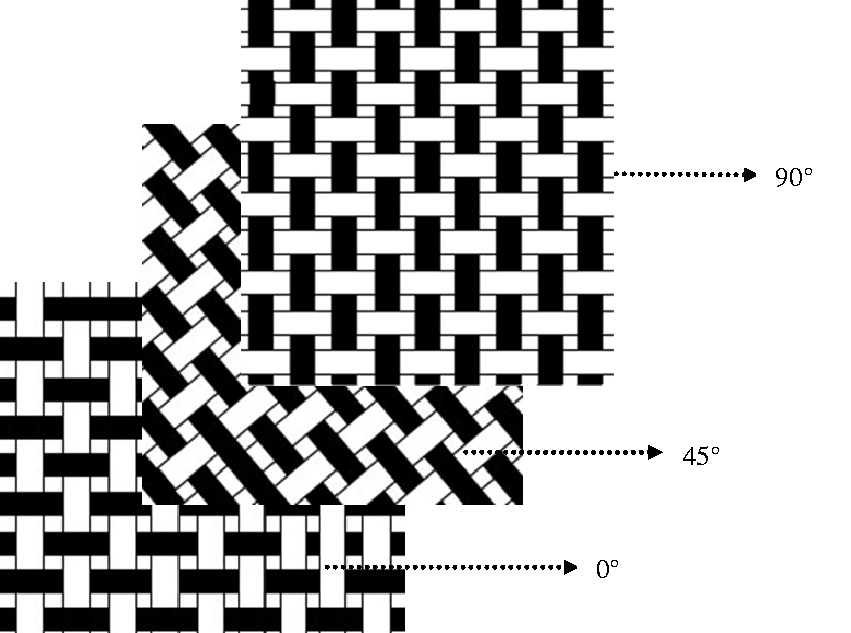
Figure 11 presents the EMSE levels of FH-15.5 woven fabrics with different lamination amounts and angles. Metal composite fabrics with 90° lamination angles had the optimal EMSE, whereas fabrics with 0° lamination angles showed the worst performance. This phenomenon was attributed to only when the conductive metal wire formed grid inside the fabric or lamination fabrics, the fabrics would display the best EM shielding behavior, especially for the high-frequency EM waves. According to the study by Roh et al. [4], it also confirmed the metal grid was the most effective method to block EM waves. In this study, the SE would reach up to −30 dB when the lamination angles were kept with 90° interval, and the lamination amount were only two layers within a wide frequency range of 1.3–3 GHz. In this research, the EMSE of −30 dB was obtained within the high-frequency range of 1.3–3 GHz when four-layer metal composite fabric FH-15.5 at 0°/90°/0°/90° lamination angles. Therefore, varying the lamination angles is an effective method to improve EM shielding behavior of the metal composite fabrics.
EMSE of the FH-15.5 series. The lamination amount varies from one to four layers, and the lamination angles are (a) 0°/0°/0°/0°, (b) 0°/45°/90°/−45°, and (c) 0°/90°/0°/90°. EMSE: electromagnetic shielding effectiveness. Surface resistivity of FH-X series.

Effect of the wrapping amount of hybrid yarns on surface resistivity levels
The surface resistivity of the FH-X series was significantly lower in the weft direction than in the warp direction (Figure 12). This result was ascribed to the use of the metal hybrid yarns as weft yarns, which contains the electrical conductor SSW. Surface resistance was also related to the wrapping amount of the metal hybrid yarns. High wrapping amount resulted in high surface resistance levels because additional wraps in outer wrapped yarns reduced the probability of SSW exposure on the surface of the hybrids yarns. Therefore, making contact with the SSW was difficult for the probe of the surface resistivity tester. The surface resistivity of conductive fabrics can be classified as follows based on AATCC-76-82: (1) conductive materials (<105 ohms/square); (2) antistatic materials (ranging from 105 ohms/square to 1012 ohms/square); (3) insulating materials (>1012 ohms/square). In summary, these conductive woven fabrics displayed satisfactory antistatic property, particularly in the weft direction.
Antibacterial activity evaluation
Qualitative assessment of the metal composite fabrics
The inhibition zones of the FH-15.5 fabric were determined on the plates after 24 h of incubation with two test strains, namely, E. coli and S. aureus, according to AATCC-90-2011 (Figure 13). The inhibition zone of S. aureus is larger than the inhibition zone of the E. coli bacteria. On the basis of the inhibition zones, we concluded that the antibacterial agent composed of quaternary ammonium salt showed a satisfactory migration property and antibacterial activity.
Inhibition zones of the FH-15.5 fabric (a) E. coli and (b) S. aureus.
Quantitative evaluation of the metal composite fabrics
The antibacterial activity of the FH-15.5 fabric was quantitatively evaluated according to AATCC 100-2004. The results showed that E. coli and S. aureus were reduced by 80% and 85%, respectively. Although the PET warp yarns of the woven fabric did not exhibit antibacterial activity, the reduction percentages of E. coli and S. aureus were more than 80%.This finding could be attributed to the high antibacterial activity of quaternary ammonium salt. These antibacterial agents act against microorganisms by interacting with the cell membrane, thus deactivating proteins. These agents also affect the DNA molecules of the bacteria and reduce their capabilities to replicate and transfer, thus causing bacterial death [19,20].
Conclusions
In this research, we fabricated metal hybrid yarns by using the hollow spindle-spinning system. These hybrid yarns were then woven into fabrics as weft yarns on a loom. With the increasing wrapping amount of the hybrid yarns, the woven fabrics displayed improved FIR emissivity and anion release capability; however, the tensile strength of the woven fabric linearly decreased in relation to the wrapping amount of the hybrid yarns in the weft direction. FIR emissivity increased as the lamination amount in the FH-X woven fabrics increased from one layer to two layers. Nevertheless this emissivity decreased when the lamination amount of woven fabrics exceeded two layers.
The EMSE of the FH-15.5 woven fabric with four lamination layers and 0°/90°/0°/90° angles was better than those of the fabrics with 0°/45°/90°/−45° and 0°/0°/0°/0° lamination angles. The EMSE would reach to −30 dB within the wide frequency range of 1.3–3 GHz.
Fabric FH-15.5 displayed satisfactory antibacterial activity against both E. coli and S. aureus because of the presence of AN yarns. These metal composite woven fabrics with conductive properties may be used in protective clothing in hospitals or in working environments with unhealthy indoor air quality to protect humans from EM radiation and bacterial cross-infection. Moreover, these produced woven fabrics also can be used as EMI shielding case, protecting wall material, and packing materials in terms of industrial applications. Further studies will be carried out to investigate the comfort related properties such as drying capability, wicking behavior, and air permeability properties.
Footnotes
Acknowledgments
The authors are also grateful to the Laboratory of Fiber Application and Manufacturing, Feng Chia University, for providing research materials and laboratory equipment.
Declaration of Conflicting Interests
The author(s) declared no potential conflicts of interest with respect to the research, authorship, and/or publication of this article.
Funding
The author(s) disclosed receipt of the following financial support for the research, authorship, and/or publication of this article: This work was supported by the Chinese Nature Science Foundation (No. 51343002), Key Discipline Project of Liaoning Province Universities (No. 2012310), and Project of Functional Textile Materials Laboratory of Eastern Liaoning University and National Science Council of the Taiwan, for financially supporting this research under Contract NSC-103-2221-E-035-028.