




Abstract
The plasma treating process used to adjust the functional groups and modifying surface properties and mechanical behavior is a very important treatment method. Many researches have shown the results, especially in the versatility of polymer material fields. In this study, a pen-type radio frequency plasma system was used to modify the surface of various organic materials, such as polyester, polypropylene, and polyamide 6. Because of the short distance between two stainless steel electrodes, argon has been selected to trigger the plasma. The Taguchi method was used to decide the optimal combinations of the experimental parameters such as argon gas flow amount, plasma irradiation power and time, and the distance between the plasma torch and the organic fabric samples. The L9 orthogonal arrays were also used to analyze the nine combinations of samples and achieve the optimal results for improving the hydrophilic ability of polyester, polypropylene, and polyamide 6. Then, the analysis of three different types of conductive resin coating on the matrix and surface resistance of the polyester, the 50d fabric type, exhibited much higher conductive ability. After washing, the fabric treated with poly-3,4-ethylenedioxythiophene showed higher decent resistance. The experimental results found that the surface resistivity of the polyester fabric would improve by three orders and the contact angle, until reaching 180°.
Keywords
Introduction
The retention of chemical structure and functional groups during pulsed-plasma polymerization was used for producing adhesion-promoting plasma polymer layers with high concentrations of exclusively one sort of functional groups such as OH, NH2, or COOH [1]. Some of the possible effects are improved hydrophilic properties, an increased chemical reactivity of the fiber surface, an improved adhesion to coatings and to polymer matrices, plasma-induced hydrophobic properties, fiber surface cleaning, etc. [2]. Cold argon plasma treatment also can be used to modify the structure of cellulosic fibers for a variety of applications [3]. The surface oxygen and nitrogen content of the polypropylene fabric increases significantly after treatment in both He and He-O2 plasmas. There is a slight decrease in nylon fabric tensile strength after treatment in helium plasma [4]. Surface modification in both types of plasma systems results in the surface oxidation, improves polymer wettability and allows the grafting of poly(acrylamide) to activated surface [5].
Recent research, however, has showed that the amount of inert gas currently used cannot be significantly reduced so that the yield efficiency is at a theoretical limit in terms of the mechanism involved [6,7]. Therefore, we propose a different way of studying to decide if inert gas can be used in the plasma treating method to produce roughness surface or generating the side chain from the polymers as those used in the plasma treating method. Such a change would decrease the demand for inert gas and open the way to increasing the yield efficiency. Therefore, argon inert gas in a pen-like RF plasma device was used to investigate the surface resistivity, morphology, and contact angle of polyester fabrics in this study. Of the various parameters evaluated, the radiation distance, flow volume of the inert gas, radiation time, and power were found to have greater influence factors in the pen-type radio frequency plasma treating method (PTRFPTM). Furthermore, modification of the optimum PTRFPTM by modifying the roughness with the plasma under an argon inert environment increased the yield efficiency. Finally, the use of PTRFPTM has modified the need for argon and provided the desired surface properties of the fabrics in higher yield efficiency than what is theoretically possible by the conventional plasma treating method [8–10].
This treating method, however, suffers from two main problems. First, a high quality rare gas was used for modifying the surface properties of the synthetic fabrics that require the use of large volumes of inert gas or mixture. Second, the yield for the treating method under optimized conditions does not exceed 90% and the uniformity of the surface properties of the fabrics is not satisfied for use in garment and industrial fields. Because of the long history and industrial importance of this treating method, much research has been devoted to modify the treating equipment and mixture formula to use less rare gas and to increase the uniformity of the fabric sample as well as to increase the yield efficiency and energy-saving consideration. Therefore, in this study, the pen-like RF plasma was proposed to treat the surface of woven fabrics for improving the surface properties. The effects of yarn specific surface and plasma parameters on the electrical, chemical properties, discoloration of dye solution, and contact angle of polyester woven fabrics were investigated [11,12]. Various types of conductive resin were used to spread on the fabric, which would significantly modify the uniformity and electrical properties of the woven fabrics.
Experimental
Configuration of pen-type RF plasma equipment
An atmosphere pen-type RF plasma system is shown in Figure 1. The pen-type system consisted of a stainless tube surrounded by a ceramic tube. The stainless tube is 150 mm long with an outer diameter of 6 mm. The ceramic tube is 100 mm long with an inner diameter of 8.5 mm. Iron clamps at the top and bottom of the ceramic tube connected the cathode and anode, respectively. Therefore, the stainless tube and the 13.56-MHz RF power were isolated by the ceramic tube. Argon passed through the stainless tube and excited to become plasma torch by RF power [13]. Because of the short distance between two stainless steel electrodes, the easily charged gas should be selected to trigger the plasma. The characteristics of argon are much more easily charged than the other inert gas for pen-like plasma system.
Atmosphere pen-type RF plasma system.
Hydrophilicity modification experiment design of polyester woven fabric by the Taguchi method
Experimental parameter design of the polyester woven fabric by the orthogonal arrays of the Taguchi method

Note: The specification of the polyester woven fabric (refer Table 5 – Fabric A).
Hydrophilicity modification experiment design of polypropylene knitting fabric type by the Taguchi method
Experimental parameter design of the polypropylene knitting fabric by the orthogonal arrays of the Taguchi method

Note: The specification of the polypropylene knitting fabric (refer Table 5 – Fabric B).
Hydrophilicity modification of polyamide 6 woven fabric experiment design by the Taguchi m ethod
Experimental parameter design of the polyamide 6 woven fabric by the orthogonal arrays of the Taguchi method

Note: The specification of the polyamide 6 woven fabric (refer Table 5 – Fabric C).
Aging analysis experiment design of hydrophilicity modification of polyester, polypropylene, and polyamide 6
Experimental parameter design of the fabrics A, B, and C by the orthogonal arrays of the Taguchi method

Note: The specification of the Fabrics A, B, and C (refer Table 5).
Fabric nomenclature of polyester (Fabric A), polypropylene (Fabric B), and polyamide 6 (Fabric C)

Notes: Fabric A: Polyester shield light fabric with woven fabric structure.
Fabric B: Polypropylene plain knitting fabric.
Fabric C: Polyamide 6 plain woven fabric.
Conductivity modification experiment design of polyester-woven fabric by the Taguchi method
Experimental parameter design of the polyester woven fabric with conductive polymers by the orthogonal arrays of the Taguchi method

Notes: 1. The Specification of the polyester woven fabric (refer Table 5 – Fabric A).
2. Irradiation power was fixed at 200 W.
3. Hydrophilic and hydrophobic resin polymers were polyanilines.
4. PETDOT, poly-3,4-ethylenedioxythiophene.
Experimental equipments
Plasma generator
Type Nos. are Huttinger PFG 300RF (13.56 MHz Plasma Generator) and PFM 1500A (Matching Box). Maximum output power is up to 300 W. This experiment is used to stimulate the plasma on the polyester fabric surface with different specifications for low-temperature plasma treatment.
Contact angle analyzer
Type No. is FTA (First Ten Angstroms)-188(B2EA31). This instrument used ‘drop shape’ analysis to make its measurements. It captures video of liquid droplets and analyzes their shape and size to determine various surface chemistry quantities. Contact angle measurements using the drop shape method in this study are based on Physical Chemistry of Surfaces, Arthur Adamson, ISBN 0-471-61019-4 and Wettability, Berg, ISBN 0-8247-9046-4 [15–17].
Low resistivity meter
Type No. is LPRESTA-EP MCP-HT360 which measures resistivity in a low-resistance range with 4-pin probe meter (measurement range 10−2 to 106 Ω). In this study, it is used to measure the surface resistance of the fabric and modified evaluation.
Scanning electron microscopes
Type No. is JEOL JSM 7000F which is used to evaluate the complete surface analysis, characterization, and quantitative analysis of the fabric surface property in this study.
Results and discussion
Results of polyester woven fabric hydrophilicity modification
Results of polyester woven fabric hydrophilicity modification

Note: 1. The specification of the polyester woven fabric (refer Table 5 – Fabric A).
Figure 2 demonstrates that irradiation distance was critical for effective hydrophilicity modification, especially in the range 3–5 cm. Irradiation distance was then subsequently fixed under 3 cm, while other parameters were being optimized. It is probably because the higher irradiation power and distance make the fabric undergo many more reactions with argon fluid that the contact angle of the fabrics was increased, and the power increases with decrease in the contact angle.
Effect on the S/N ratio of polyester hydrophilicity modification. Note: S/N ratio : fold.
Results of hydrophilicity modification of polypropylene knitted fabric
Results of hydrophilicity modification of polypropylene woven fabric
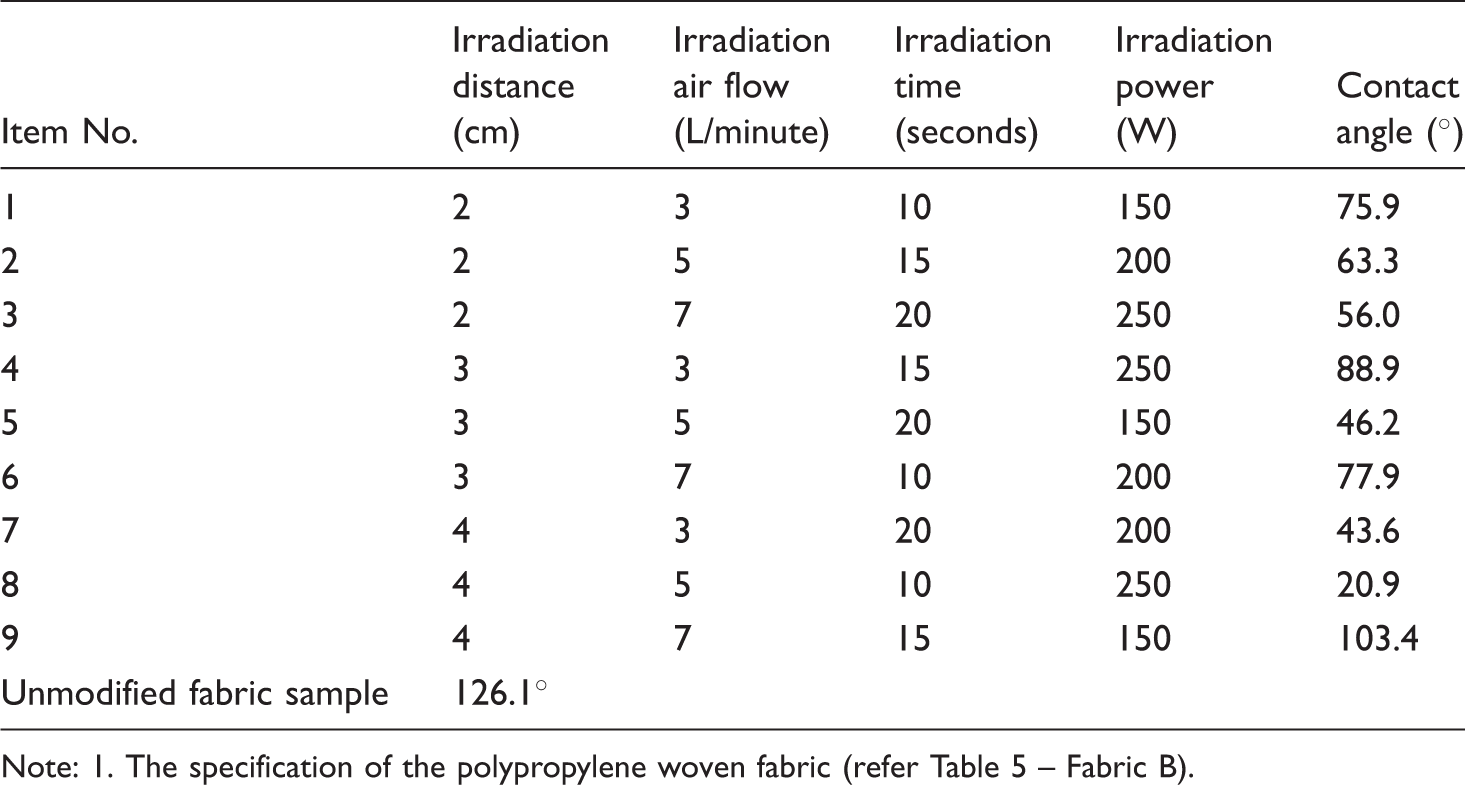
Note: 1. The specification of the polypropylene woven fabric (refer Table 5 – Fabric B).
Table 8 shows that at the 4 cm of irradiation distance, 5 L/minute of irradiation air flow rate, 10 seconds of irradiation time, and 250 W of irradiation power, the contact angle lowered from 126.1° to 20.9°, with a decrease of 105.2°, exceeding the goal of a 50° decrease.
Figure 3 also demonstrates that irradiation distance was critical for effective hydrophilicity modification, and was fixed under 4 cm. The argon flow amount and irradiation time are less than those of polyester-woven fabric. It is probably because the structure of the polypropylene-knitted fabric is less compact than polyester-woven fabric; so, it needs less irradiation energy and treatment time.
S/N ratio effect of the polypropylene hydrophilicity modification. Note: S/N ratio : fold.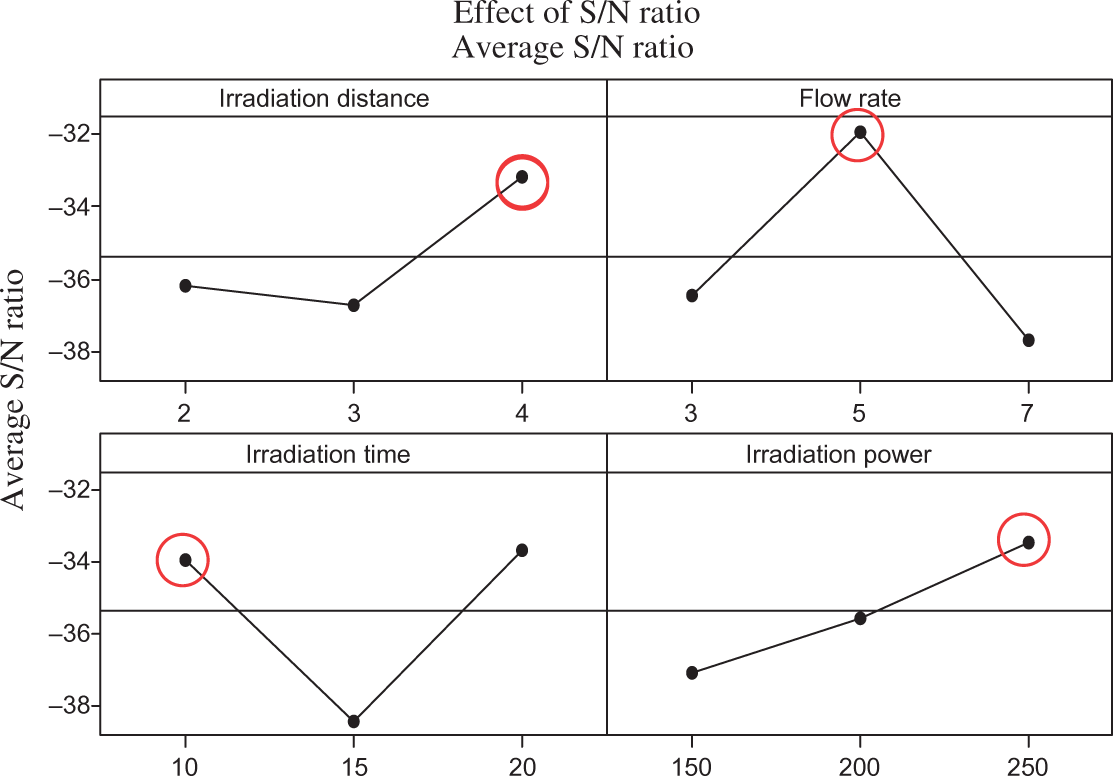
Results of polyamide 6 woven fabric hydrophilicity modification
Results of polyamide 6 woven fabric hydrophilicity modification

Note: 1. The specification of the polyamide 6 woven fabric (refer Table 5 – Fabric C).
Figure 4 shows that at the 3 cm irradiation distance, 3 L/minute of irradiation air flow rate, 15 seconds of irradiation time, and 250 W of irradiation power, the contact angle decreased from 94.5° to 0°, with a decrease of 94.5°, exceeding the goal of a 50° decrease.
The S/N ratio effect of the polyamide 6 hydrophilicity modification. Note: S/N ratio : fold.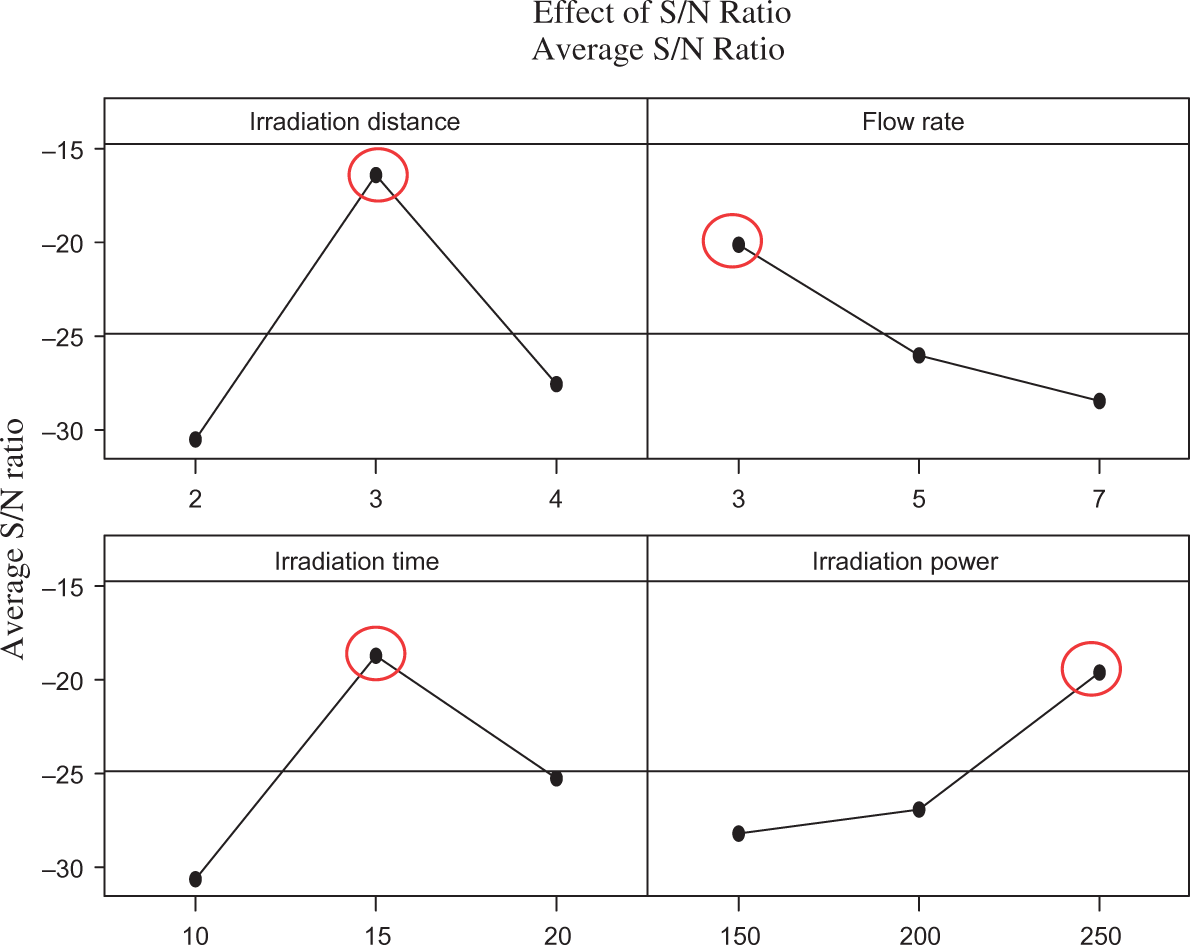
Figure 5 demonstrates that the total hydrophilic treatment effects of the polyamide 6 fiber are more significant than polyester and polypropylene fiber. It is because of the higher fiber moisture contents and the functional group (–(CO NH)–) of the polyamide 6 fiber. For the same reason, the hydrophilic treatment effects of the polyester are generally better than polypropylene. The plasma-treated effect in polypropylene is maintained only for 3–4 hours, which is due to the compact fiber structure; so, the follow-up chemical grafting has to finish within 3–4 hours.
Time point measurement of polyester (PET), polypropylene (PP), and polyamide 6 (PA6) hydrophilicity modification. Notes: The contact angle of original fabric Polyester is 117° The contact angle of original fabric Polypropylene is 110° The contact angle of original fabric Polyamide is 96°.
Time point measurement of polyester, polypropylene, and polyamide 6 hydrophilicity modifications
The major control factors of experimental design included plasma irradiation distance power, time, and argon gas flow amount which would affect the surface and electrical properties of different fabrics. This study tried to modify the surface and electrical properties using plasma treatment, especially the Wettability in that plasma irradiation to influence the ability of the fluid to cover fabric surface, and its degree of order, which also vary with differences in the surface functional groups.
Aging analysis of polyamide 6 woven fabric hydrophilicity modification

Note: 1. The specification of the polyamide 6 woven fabric (refer Table 5 – Fabric C).
Figure 6 demonstrates that the significant treatment occurred in Item No. 4. The effects after plasma modification lasted 2–5 days for polyamide 6 fiber.
Aging analysis measurement of polyamide 6 (PA6) woven fabric hydrophilicity modification.
Results of polyester woven fabric conductivity modification
Results of polyester woven fabric’s conductivity modification
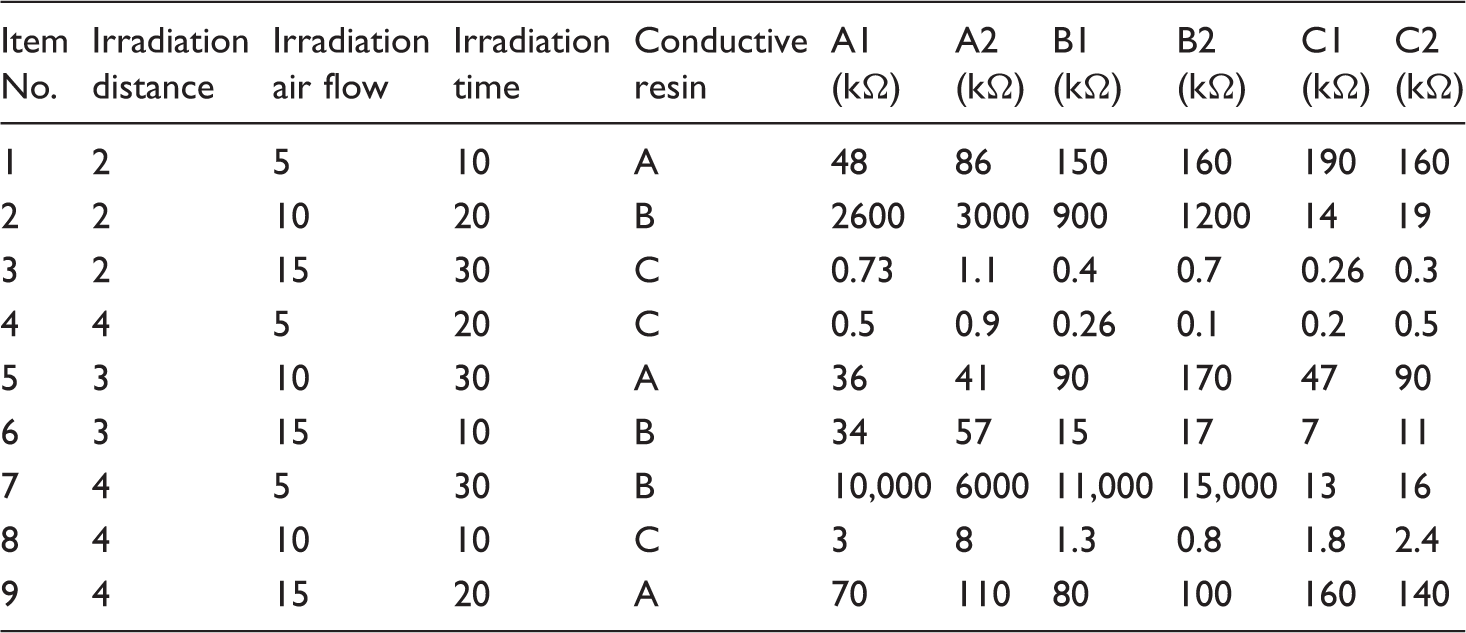
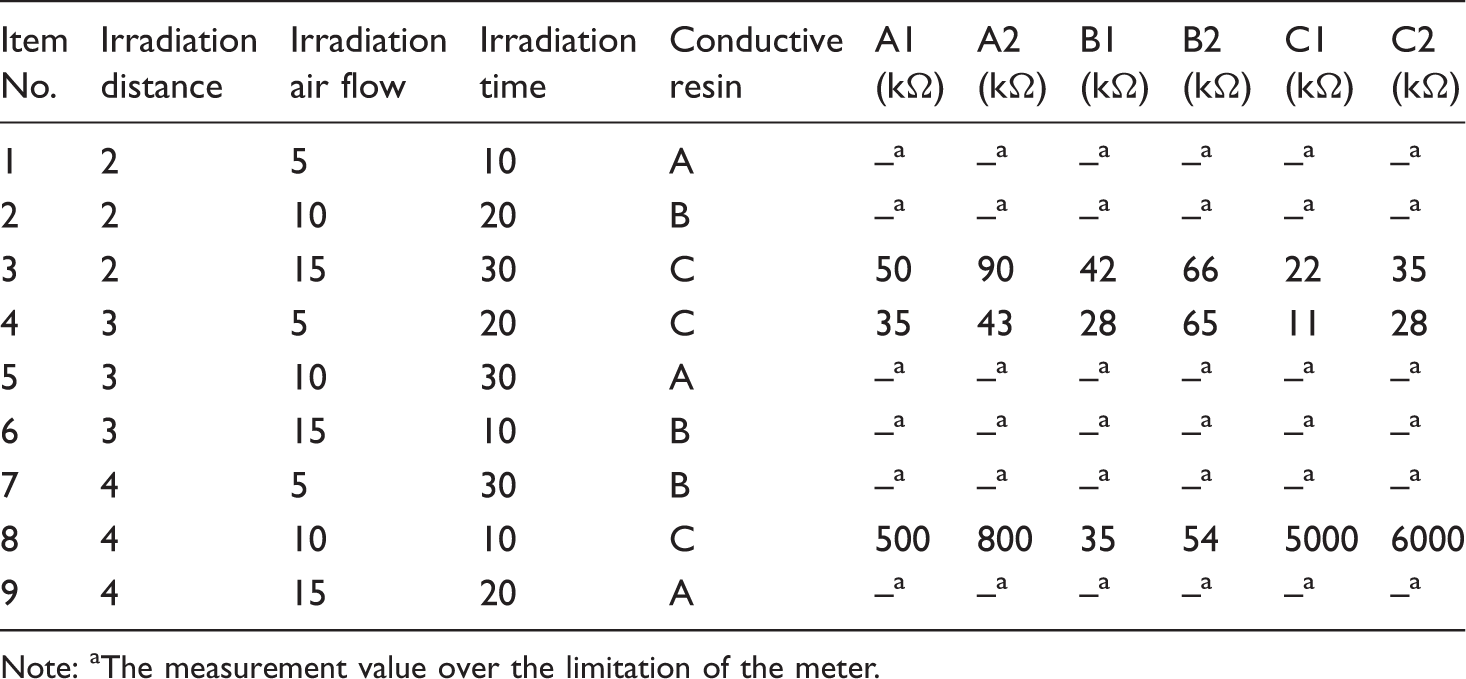
Resistance after washing once in conductivity modified polyester woven fabrics
Note: aThe measurement value over the limitation of the meter.
Figure 7 shows that the type of conductive resin is critical for the conductivity modification with poly-3,4-ethylenedioxythiophene (PEDOT) being the most effective one. The optimal condition reached at 2 cm of irradiation distance, 15 L/minute of irradiation air flow rate, and 10 seconds of irradiation time with PEDOT. The average responses from each fabric type showed that the fabric type with thinner threads experienced higher modification. In this study, C fabric type (50d Polyester) exhibited much higher conductivity than B and C, regardless of the treatment conditions. The phenomenon could be due to the higher contact surface. After washing once, only fabrics treated with PEDOT still showed decent resistance, whereas PAN-treated fabrics after washing were found to be without any grafted polymers and with an average resistance of >106 Ω, suggesting that no conductivity remained [18,19].
S/N ratio responses of fabrics A, B, and C. Notes: Unit: Irradiation Distance in cm; Irradiation Rate in Lite/min; Irradiation Time in Second; Resistance in K Ω Conductive Resin A: Hydrophilic PAN; B: Hydrophobic Polyacrylonitrile; C: Poly-3,4-Ethylenedioxythiophene A1 and A2: 75d/72f Polyester Fabric with One Time Calendering B1 and B2: 75d/72f Polyester Fabric with One Time Calendering and Spray Rating C1 and C2: 50d/48f Polyester Fabric with One Time Calendering and Spray Rating.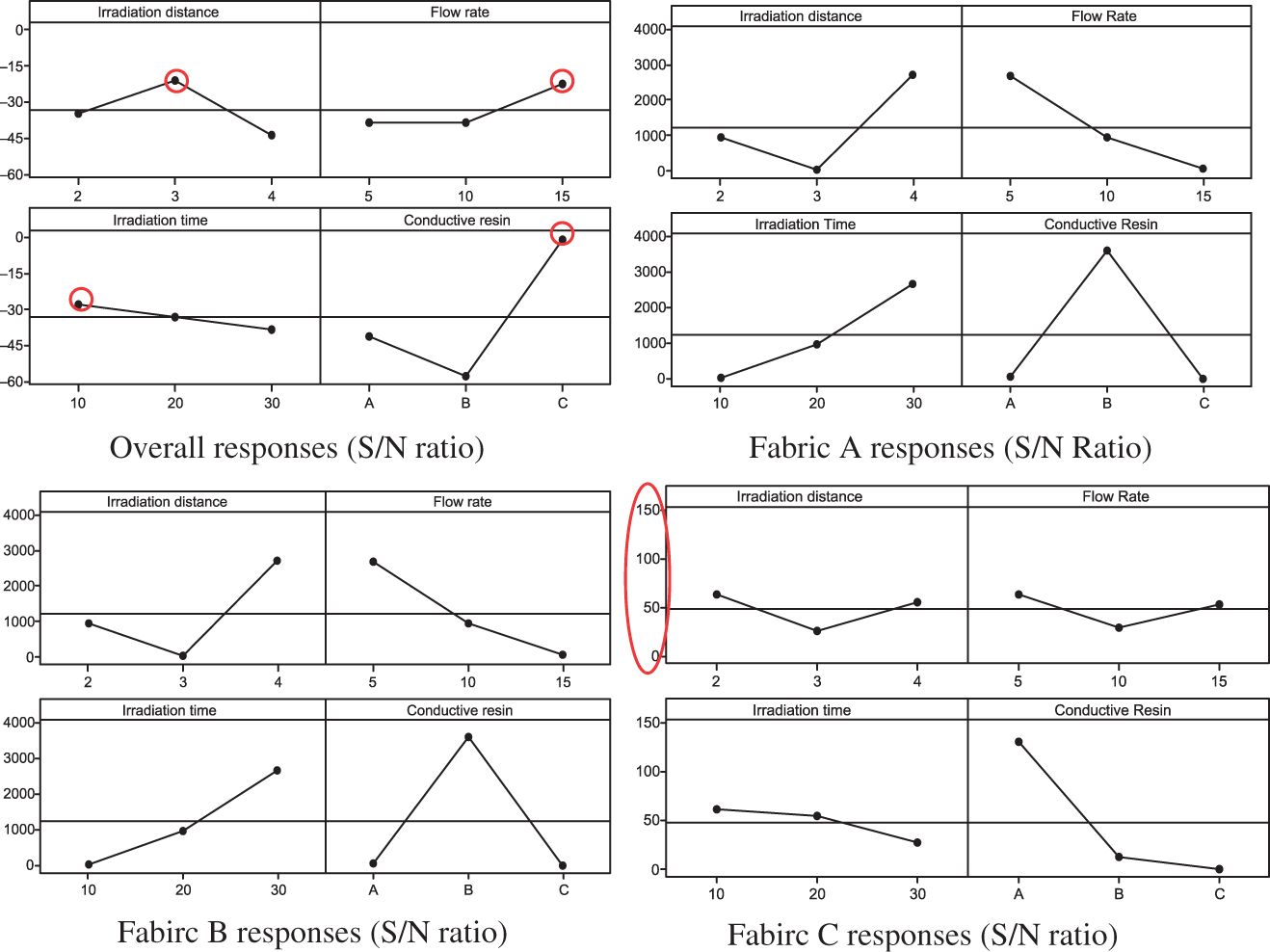
SEM image analysis of pen-shaped RF plasma conductivity modification
SEM shows that the surface-modified fabrics became less smooth. More conductive polymers could be adhered to the surface of the modified fabrics. The observation agreed with the result that modified fabrics rendered higher resistance [20].
SEM image comparison before and after modification in different fabric types

Notes: Fabric B1: 75d/72f Polyester; Fabric C1: 50d/48f Polyester;
Post processing a: White Fabrics with one-time burnishing and spray;
Post processing b: Green Fabrics with one-time burnishing and spray;
Conductive resin 1: Poly-3,4-Ethylenedioxythiophene;
Conductive resin 2: Hydrophilic Polyacrylonitrile; and
Conductive resin 3: Hydrophobic Polyacrylonitrile.
Conclusions
The polyester hydrophilicity modification experiment showed (Figure 2) that the irradiation distance was critical for effective hydrophilicity modification; especially in the range 3–5 cm. Irradiation distance should be subsequently fixed under 3 cm, while other parameters are being optimized in terms of cost. The polypropylene hydrophilicity modification experiment showed (Figure 3) that irradiation power is critical to the optimization, especially in the range 150–200 W. Irradiation power was then subsequently fixed under 200 W, while the irradiation air flow was adjusted to 3 L/m to reach the optimal outcome. The polyamide 6 hydrophilicity modification experiment showed (Figures 4 and 5) that at 3 cm of irradiation distance, 3 L/m of irradiation air flow rate, 15 seconds of irradiation time, and 250 W of irradiation power, the contact angle lowered from 94.5° to 0°, with a decrease of 94.5°, exceeding the goal of a 50° decrease. It also demonstrated that the contact angle on day 1 after modification increased rapidly and became stabilized on day 2. The polyester, polypropylene, and polyamide 6 hydrophilicity modification experiments showed (Figure 6) that polyester and polypropylene fabrics experienced rapid changes in hydrophilicity within 1 hour after the modification (short activated period), whereas the change of polyamide 6 occurred 1 hour after the modification (long activated period). The results of polyester-woven fabric conductivity modification experiment, where parameters were determined by the Taguchi method, showed that C fabric type (50d/48f polyester) exhibited 0.0011–0.0026 MΩ, a much higher conductivity than B and C, regardless of the treatment conditions. The phenomenon could be due to the higher contact surface. After washing once, only fabrics treated with PEDOT still showed decent resistance is 0.011–0.065 MΩ, whereas PAN-treated fabrics after washing were found to be without any grafted polymers, the finding is good as Ref. [21] and the resistivities are 0.139 MΩ (single-warp yarn) and 0.0056 MΩ (double-warp yarn).