



Abstract
Aims
To determine what extent are workplace empowerment, New Graduate Nurses’ (NGN) perceptions of nurse leaders, trust in management, and areas of worklife predict coworker incivility experiences?
Background
NGNs’ perceptions of nursing leaderships’ control over workload contribute to coworker incivility experiences were tested. The relationship between workplace empowerment, authentic leadership, and areas of work life (workload control and fair resource allocation) to coworker incivility experiences were examined.
Design
Secondary analysis of Starting Out, national survey, Time 1 dataset. Select factors of workplace empowerment, authentic leadership, areas of worklife, trust in management and NGNs’ co- worker incivility experiences were situated within an ecological approach. Multiple linear regression was used to test whether a negative relationship of workplace empowerment, areas of worklife and authentic leadership to NGNs co-worker incivility experiences and important new findings were discovered.
Results
First, NGNs’ perceptions of workplace empowerment predict coworker incivility experiences when controlling for authentic leadership and trust in management. Second, NGNs’ perceptions of areas of worklife predict coworker incivility experiences when controlling for authentic leadership, trust in management, and workplace empowerment. Third, NGNs’ perceptions of authentic leadership do not predict coworker incivility experiences when controlling for workplace empowerment and trust in management. Finally, NGNs’ perceptions of authentic leadership do predict coworker incivility experiences when trust in management and workplace empowerment are not controlled.
Conclusions
NGNs’ perceptions of authentic leadership would benefit from workplace empowerment of the nurse leader in workplace environments to mitigate coworker incivility experiences.
Keywords
Background
Incivility is witnessed or experienced by 77.6% (n = 612) of new Canadian graduate nurses surveyed (D’Ambra & Andrews, 2014). As incivility among registered nurses (RNs) is noted to be the most difficult form of violence for victims to deal with, this prevalence rate is significant (Farrell, 1999). Many incidences of incivility remain under reported (Becher & Visovsky, 2012; Vessey et al., 2010). Such experience of incivility can influence a decision to leave the job, and/or the nursing profession (Chachula et al., 2015; Lim et al., 2008; Schilpzand et al., 2016). When new graduate nurses leave the nursing profession, new graduates are not replacing an aging workforce (Chachula et al., 2015; Lim et al., 2008; Schilpzand et al., 2016).
Incivility in nursing schools persists despite attempts to mitigate its occurrence through educational interventions (Gaffney et al., 2012), graduate transition programs (D’Ambra & Andrews, 2014; Evans et al., 2008), leadership (Laschinger & Fida, 2014), and anti-incivility policies (Blackstock et al., 2015; Blackstock et al., 2018). The Canadian Nurses Association (CNA) and the Canadian Federation of Nurses Unions (CFNU) outline the roles and responsibilities of several levels of stakeholders (health care organizations, nurses, educators) in the prevention/mitigation of negative workplace behaviors (2015). Canadian national workplace legislation (Canada Occupational Health and Safety Regulations, 2014), labor laws (Canada Labor Code, 1985), professional ethical codes of conduct (CNA, 2009), and provincial nursing professional bodies (CRNBC, 2008) target incivility through educational interventions and new graduate transition programs. In Canada, organizations have a legal obligation through the Canadian Occupational Health and Safety Regulations (COH&SR, Section 20.3) to develop a workplace violence prevention policy. This policy includes the obligation of the employer to dedicate sufficient attention, resources, and time to address and put a stop to workplace violence such as bullying, teasing, verbal abuse, and other aggressive behaviors (2020, SOR/86-304).
A step forward to addressing incivility is to deactivate the organizational hierarchical management that oppresses nurses and replace it with management in which nurses feel empowered (Blackstock et al., 2018; Wilson, 2016). In the interest of the continuing nurse shortages, health care organizations would do well to address incivility and to mitigate bullying and violence in the workplace (Hoel et al., 2011).
Incivility, Bullying, and Horizontal Violence
A ten-point scale of organizational disruption includes uncivil behavior, disrespect for others, and ambiguous intent to harm (Andersson & Pearson, 1999; Namie, 2003; Pearson et al., 2001). Scores for incivility range from one to three; workplace bullying ranges from four to nine; and violence, battery, and homicide are rated at ten (Namie, 2003). In the nursing profession, horizontal violence includes mistreatment, harassment, bullying, and psychological violence among RNs in equal positions of authority. Horizontal violence here does not include physical or sexual forms of violence.
Organizational Antecedents, Policy, Politics, and Incivility
Organizational context provides a foundation to understand how NGNs perceive the effectiveness of nursing leadership to find resources and make changes because of structural hierarchies. Blackstock et al., 2018, explored organizational antecedent factors related to horizontal violence among Canadian registered nurses in an integrative review which prompted a subsequent literature review of seminal and current theoretical frameworks and definitions of incivility reflecting NGNs’ experiences and the role of their authentic leader (Blackstock et al., 2022). A significant finding in the literature review (Blackstock et al., 2022) are the relationships between reporting structures and how the position of nurses within the organization informs the anti-HV policy. As new graduate nurses’ incivility experiences have been measured through instruments that are geared to RNs, more work is needed to correctly specify incivility experiences that are unique to nurses who have recently graduated. The relationship between reporting structures and the position of nurses within the organization informs anti-incivility policy. The hierarchical and horizontal axes of reporting and management structures need to be articulated within anti-horizontal violence policies; most of the included studies do not indicate the nature of the anti-horizontal violence policies and the reporting structures. A political analysis of horizontal violence can offer insights into the problem by examining organizational antecedents in relation to promotion/career advancement and the interplay within health care administrative structures. Politics has special meaning from a meta perspective as well as within groups and social networks; the interplay of relationships, influence, co-operation, and loyalty combine as powerful forces, shaping and molding the behaviors of individuals within the group (Stone, 2011). It has been argued that horizontal violence is rationalized by perpetrators to serve their self-interest (Katrinli et al. 2010). However, researchers have found several potential political reasons: the influence of promotion, assignments, recruitment, and dismissal; allocation of equipment; and decisions regarding organizational structure; all of which can be related to a rationalization of horizontal violence by nurse perpetrators (Katrinli et al. 2010). Some studies included in the integrative review did not mention politics explicitly, however, measures and themes that examined the impact of social networks on promotion, allocation, and organization of registered nurses’ work, were considered in the research.
Theoretical Approach
The measurement of incivility among new graduate nurses in Canadian health care organizations was informed by an ecological conceptual model (Blackstock et al., 2022) of coworker incivility experiences of new graduate nurses. This study was informed by the role of organizational hierarchies in sustaining oppressive nursing practice environments (Croft & Cash, 2012; Kelly & Ahern, 2009). The constructs were situated in Laschinger et al.'s (2016) adaptation of Scott et al.'s (2008) New Graduate Successful Transition Retention (NGSTR) model. This enabled us to expand concepts in the literature regarding incivility experiences of new graduate nurses using Bronfenbrenner's Systems Theory (1979). Ecological theory on its own does not explain the factors (e.g., workplace empowerment) that mediate new graduate nurses’ perceptions of leadership that are accounted for in Laschinger et al.'s (2016) NGSTR model.
Figure 1 is adapted from Bronfenbrenner (1979) and consists of four concepts: (a) microsystem work experiences (new graduate nurses’ experiences of coworker incivility); (b) mesosystem behaviors of nurse leaders (trust, authentic leadership, and areas of worklife); (c) exosystem (workplace empowerment); and (d) macrosystem (cultural norms of incivility in nursing and incivility theory). In this study, only the microsystem, mesosystem, and exosystem were explored, as there is little research in these areas. This is a limitation of the study and future work could consider the macrosystem. The microsystem, mesosystem, and exosystem are based on Blackstock et al., 2018.
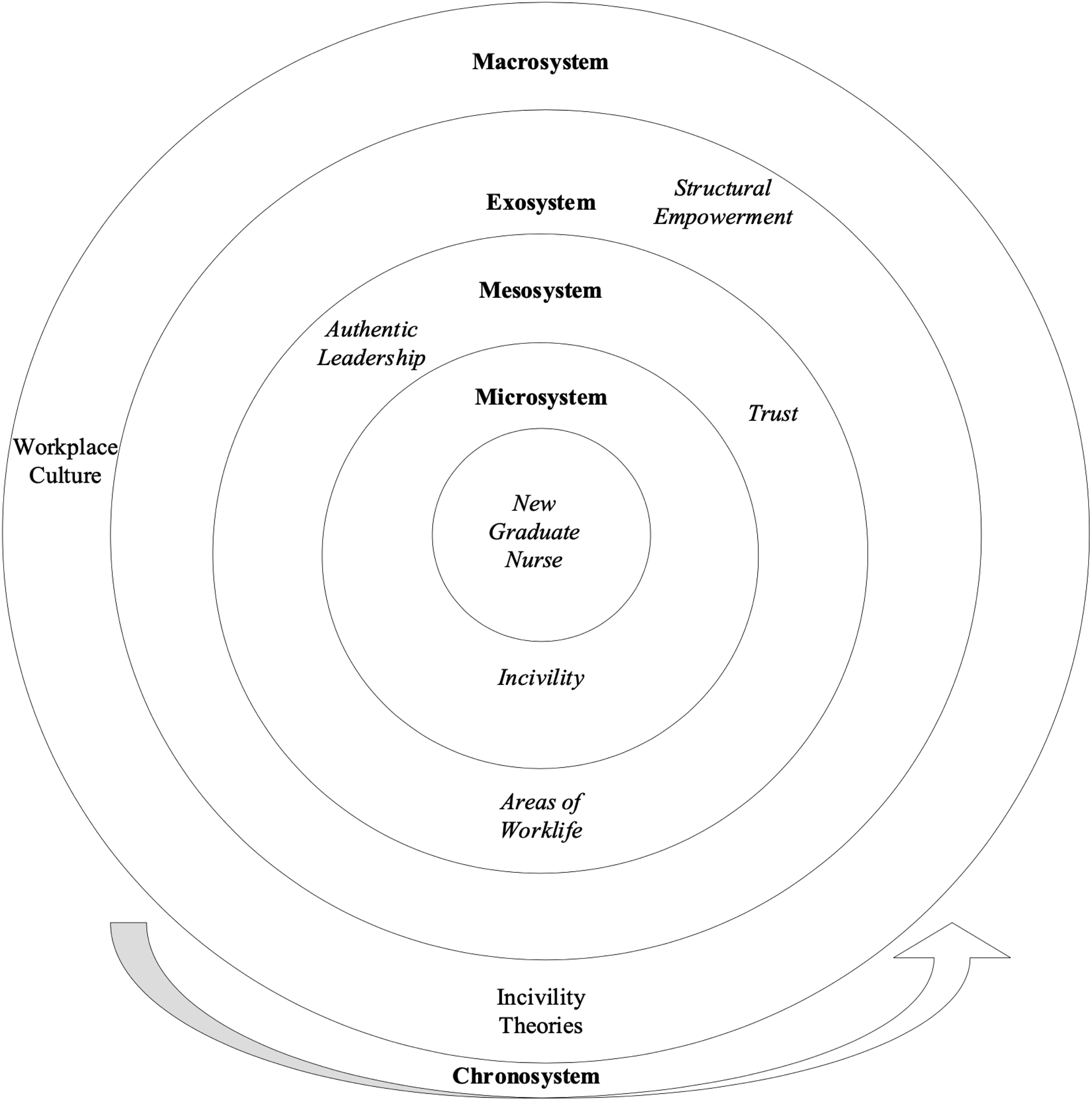
Ecological model approach to new graduate nurse’s incivility.
This study tested the assumption that new graduate nurses’ perceptions of nursing leaderships’ control over workload contribute to coworker incivility experiences. In particular, the relationships between coworker incivility experiences and workplace empowerment, authentic leadership, and areas of work life (workload control and fair allocation of resources) were examined. The research question guiding our analysis was: To what extent are workplace empowerment, new graduate nurses’ perceptions of nurse leaders, trust in management, and areas of worklife related to coworker incivility experiences? The hypotheses are based on the findings in Blackstock et al., 2018, on a literature review of incivility and new graduate nurses (Alilyyani, et al., 2018; Croft & Cash, 2012; Kim et al., 2016; Laschinger & Read, 2016; Smith et al., 2017), and on the first author's experiences in leadership and teaching roles in nursing.
Hypotheses
This study explores the following three hypotheses:
Hypothesis 1 (H1): There will be a significant negative linear relationship between perceptions of workplace empowerment and the perceptions of new graduate nurses (NGNs)’ coworker incivility; therefore, the slope will not equal zero. H1: B1 < 0. Null Hypothesis H0: B1 = 0.
Hypothesis 2 (H2): There will be a significant negative linear relationship between areas of worklife and NGNs’ perceptions of coworker incivility; therefore, the slope will not equal zero. H2: B2 < 0. Null Hypothesis H0: B2 = 0.
Hypothesis 3 (H3): There will be a significant negative linear relationship between authentic leadership and NGNs’ perceptions of coworker incivility; therefore, the slope will not equal zero. H3: B3 < 0. Null Hypothesis H0: B3 = 0.
Secondary Analysis
A secondary analysis of the Time 1 dataset (Laschinger et al., 2012–2014) in Starting Out: A National Two Wave Study of Canadian New Graduate Nurses Study was conducted. The present study differs from Laschinger et al.'s (2016) study in three ways: (1) Bronfenbrenner's Ecological Theory (1978, 1979) informed the conceptualization of an ecological approach to new graduate nurses’ co-worker incivility experiences; (2) select factors of workplace empowerment, authentic leadership, areas of worklife, trust in management, and new graduate nurses’ co-worker incivility experiences were situated within the ecological approach; (3) multiple linear regression was used to test whether there was a negative relationship between workplace empowerment and new graduate nurses’ co-worker incivility experiences. The present study reports important new findings.
Study Description
This study is based on a secondary analysis of data collected from 3,743 nurses located across Canada (Laschinger et al., 2016) (see Table A1 in the Appendix). The factors influencing new graduate nurses’ transition to practice and determines predictors of job and career satisfaction and turnover intentions. The study was initiated to better understand why nurses are leaving the profession.
Sampling Procedures
Data collection procedures for Starting Out: A time-lagged study of new graduate nurses transition to practice (Laschinger et al., 2016) conformed to those specified by Dillman et al. (2004). A list of RNs with less than three years of work experience was obtained in provincial registries. The study was conducted using a disproportionate stratified sampling method to ensure that nurses from each province in Canada were adequately represented in the sample. The researchers requested a sample from each of the provincial registries, targeting 400 new graduate nurses from each province, with a targeted 50% response rate (see Table A2 in the Appendix). The researchers stratified regions in Canada based on ten provincial regulatory nursing geographical boundaries. Of note—territorial regions were not specified in this study (e.g., Northwest Territories and Nunavut); nor were their associated regulatory nursing bodies. A random sample of 3,906 RNs from the provincial registry databases across Canada was obtained. The survey instrument for Laschinger et al. (2012–2014) was not pilot tested prior to use in the main study. Data were collected using a 213-item data collection instrument (Laschinger et al., 2012–2014). The self-report survey instrument used standardized questions with acceptable psychometric properties to obtain information about new graduate nurses’ professional practice, conditions of work, workplace experiences (e.g., bullying, incivility, civility), health, and work outcomes.
Laschinger et al. (2016) used a variety of Likert scale measures from the November 2012-March 2013 study. The following measures were relevant to the study:
Authentic Leadership Questionnaire (Walumbwa et al., 2008), a 4-point Likert scale (0 = not at all to 4 = frequently if not always); Conditions for Work Effectiveness Questionnaire-II (Laschinger et al., 2001), a 5-point Likert scale (1 = None to 5 = A lot), with the total score being a sum of four subscales (range: 4–20);Straightforward Workplace Incivility Scale (Leiter & Day, 2013), a 5-point Likert scale (0 = Never to 6 = Daily).The data were subjected to descriptive statistics, correlations, and hierarchical linear regression analyses (Laschinger et al., 2016).
Ethical Considerations
The University of Alberta received approval from the University of Western Ontario Ethics Board to house The Starting Out: A National Two Wave Study of Canadian New Graduate Nurses (Laschinger et al., 2012–2014), dataset in their Health Research Data Repository (HRDR). The secondary analysis conducted in this study received ethics approval from the University of Alberta Research Ethics Board, (Incivility in Nursing, No. PRO0008774).
Selection and Description of Predictor Variables
Consistent with an ecological model and the hypotheses, workplace empowerment factors are the focus of my secondary analysis because the literature suggests that authentic leadership, trust in management, and areas of worklife are related to incivility experiences. Descriptions of the theoretical basis for each predictor and outcome variables contained in this study are summarized in Table A3 (see Appendix). The direction of relationships between variables and their respective theoretical basis informed the direction of the hypotheses in my study.
Variable Measures Used in the Analysis
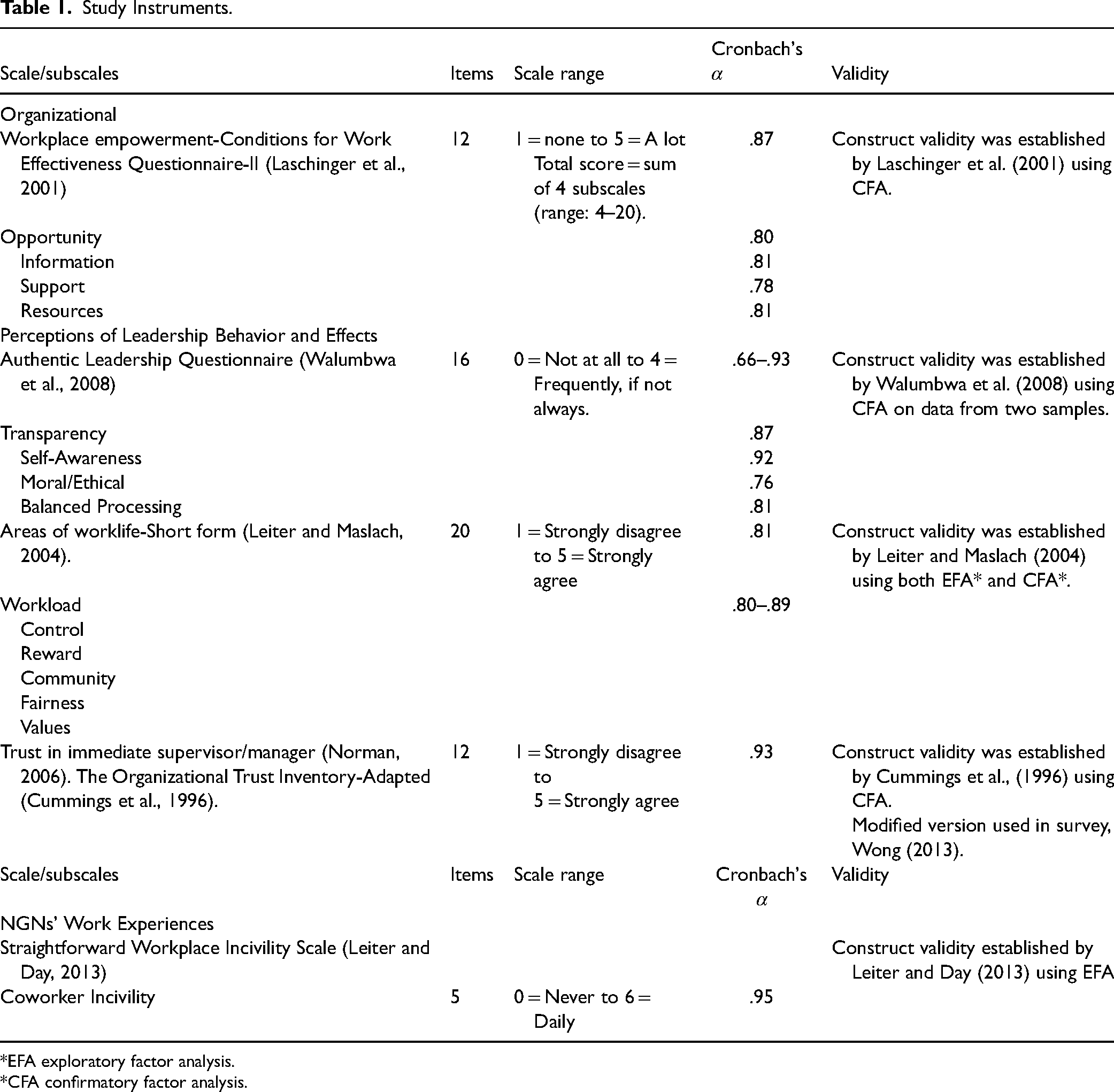
Laschinger et al., 2012–2014, represents a demographic survey. Five standardized self-report instruments were used to measure the four variables of interest: workplace empowerment, authentic leadership, trust in managers, areas of work life, and coworker incivility experiences of new graduate nurses (see Table 1).
Study Instruments.
*EFA exploratory factor analysis.
*CFA confirmatory factor analysis.
The theoretical definition of each variable is reviewed before moving on to explain the operational definition (measure) for each variable used in my study. The measures reflect new graduate nurses’ perceptions of workplace empowerment, authentic leadership (their immediate supervisor), trust in management (immediate supervisor/manager), area of worklife, and experiences of coworker incivility.
A shortened version of the areas of worklife scale (Leiter & Maslach, 2004, 2009) was used to measure nurses’ person-job match in the six areas of worklife. The worklife measure is a 5-item Likert scale (1 = strongly disagree to 5 = strongly agree). Item scores are averaged to an overall score (1–5), and subscale items are averaged for each subscale score. Person-job match is reflected in a score of ≥ 3.0; a low score of < 3.0 indicates a mismatch (Leiter & Maslach, 2004). The Cronbach's alpha = .80–.89 for the areas of the worklife scale (Leiter & Maslach, 2009).
Data Management Procedures
The Time 1 dataset (Laschinger et al., 2012–2014) was contained within the HRDR. The dataset was cleaned, coded, and added to a Statistical Package for Social Sciences (SPSS) file at the University of Western Ontario Ethics Board by the researchers of the Laschinger et al., 2012‒2014 study. Upon transfer to the HRDR at the University of Alberta, a code book and a technical report were provided to the supervisor and to the primary researcher of the present study.
Analytic Strategy
The dataset in Laschinger et al., 2012–2014, included data regarding new graduate nurses’ experiences of coworker incivility and important predictor variables of this behavior. The present study needed to address how the independent variables (IV) (structural empowerment, authentic leadership, trust in management, person-job fit), interacted with one another and with the dependent variable (DV) (coworker incivility). Regression analysis was used to test the assumption that coworker incivility was predicted by structural empowerment, areas of worklife, and authentic leadership, while controlling for important variables (trust in management). Multiple linear regression was chosen because its iterative and simultaneous examination of multiple variables can assess their interactive effects on the outcome variable (coworker incivility) (Frost, 2019).
Multiple linear regression provided an estimate of each variable's relationship to coworker incivility experiences, and to the effects of workplace empowerment. Centered variables were used in the regression models to reduce structural multicollinearity in IV. Centering the variables involved calculating the mean for each independent variable and subtracting the mean from all the observed values of that variable (Frost, 2019).
Statistical Analyses
Data analyses were conducted using the Statistical Package for Social Sciences (SPSS), version 25 (SPSS Inc. 2018). Bivariate analysis was conducted to determine the relationships between each outcome variable and its theoretically relevant predictor variable. For continuous variables, independent sample t-tests were performed. Pearson's correlations were conducted for predictor variables and outcome variables.
Power Analysis
A power analysis using the G* Power (Erdfelder et al., 1996) software program was conducted with the following parameters: F tests; statistical test, linear multiple regression: fixed model, R2 increase; type of power analysis, a priori: compute required sample size-given, power, and effect size, and the following input parameters: alpha = 0.01, four predictors, power level = .95. Cohen's f2 values for regression effect were: 0.02, small, 0.15, medium, 0.35, large (Aron et al., 2009). We used the effect drawer to input partial R 2 values to determine effect size f 2 and calculated the sample size for small (1,224), medium (169), and large (77) effects. A sample size of 1,015 participants was sufficient for the current study, but it resulted in an overpowering medium effect. To address overpowering, we did a Bonferroni correction (1936) resulting in a conservative significance level and used a two-tailed level of significance.
Missing Data
There are no best practice guidelines to deal with missing data for multivariate analyses (Frost, 2019). Missing data (less than 5%) were managed using pairwise deletion, resulting in a sample size of 1,005. To reduce bias, a pairwise deletion (resulting in 10 missing cases) allowed for the most usable values to be included in the bivariate or the multivariate analysis. To test the assumption for using pairwise deletion for data missing completely at random (MCAR), missing values were computed for each variable of interest. The missing values for each variable were: authentic leadership ‒ 7; structural empowerment ‒ 5; coworker incivility ‒ 5; trust in management ‒ 3; area of worklife ‒ 4. It was determined that the missing values were MCAR.
Bivariate Analyses
Bivariate analyses were conducted to determine the relationship between the outcome variable and each theoretically relevant predictor variable. Scatterplots were used to check for linearity, whether there were positive or negative relationships, and the strength of the relationship between pairs of variables by visualizing how data points fall to the line that defines the relationships (Frost, 2019). Each bivariate analysis served as a foundation for interpreting the multivariate analysis that followed it.
For categorical variables, Pearson chi-squares were calculated. The chi-square test and Fisher's test of independence determine whether there is a statistically significant relationship between categorical variables. The T-test, the chi-square test, and the Fisher's test were used to review descriptive data to identify patterns and trends.
For continuous variables, independent sample t-tests were performed. Differences in scores between genders of key variables (e.g., coworker incivility) were tested using two sample t-tests. The scores of men and women are independent of each other, so the t-test for independent means focuses on the difference between the means in the scores of the two groups. As Kalisch et al. (2010) found relationships among education, gender, age, and job satisfaction, we wondered if similar relationships would be found among education, gender, and coworker incivility experiences. To minimize multicollinearity, IV were examined to ensure they were measuring different constructs. The correlation coefficients were reviewed to ensure they accurately reflected the strength of the relationships between pairs of variables, as studies of human behavioural relationships tend to have correlations weaker than ± 0.6 (Frost, 2019). In addition, correlations were reviewed for values of IV that might indicate too much overlap in what the variables are measuring, as that would lead to multicollinearity (Tabachnick & Fidell, 2019). Correlation tables were reviewed for correlation values between important IV to find correlations (r > 0.70) that could contribute to multicollinearity (Frost, 2019). Correlations of (r > .0.30) were considered optimal for inclusion in the regression analysis (Frost, 2019). Each bivariate analysis served as a foundation for interpreting the multivariate analysis that followed it.
Tests for Normality
After retesting for assumptions, transformation of the coworker incivility variable was performed to reduce skewness, reduce the number of outliers, and improve the normality, linearity, and homoscedasticity of the residuals. Scatterplots were used to determine whether relationships between variables were positive or negative and if they were linear or curvilinear. Apart from the coworker incivility measure (a kurtosis Z value of 23.96) the variable data were normally distributed to verify that linear relationships existed between the variables. A square root transformation was performed per Tabachnick and Fiddel (2019) recommendations that resulted in a kurtosis of coworker incivility measure −3.72 closer to the Z value span of −1.96 to + 1.96. Cronbach's alpha reliability estimates were calculated for each scale and subscale.
Bonferroni Correction
Multiple testing increases the likelihood that significance levels will result from chance; the probability of making a type I error (a false positive) increases as the number of tests increases (Maxwell & Delaney, 1990). The simplest corrective procedure is the Bonferroni correction (1936) using a conservative < .01 alpha level to identify a significant effect between coworker incivility and the independent variable(s). We kept the alpha at a < .01, and a two-tailed significance level that results in reduced power (Aron et al., 2009).
Regression Analysis
The effects of workplace empowerment, trust in immediate supervisor to authentic leadership, areas of worklife, and experience of coworker incivility were evaluated initially using the total scores of these measures according to each hypothesis. Based on my findings, we were curious about the IV and the contribution of respective individual items to the variability of the DV; therefore, we conducted further analyses. Then, we used these centered variables in each regression model. Initial regression analysis results were reviewed for significance of the effects of the centered variable(s). Since the Bonferroni correction (1936) had been applied, all the variables of interest were retained in the model even if they were not significant (< .01), as multiple hypotheses were being tested using multiple regression.
Assumptions of model testing were verified in the following categories: normality of errors, homoscedasticity of errors, absence of outlying or influential observations (Denis, 2020). Normality of errors was assessed by reviewing the residuals from each model and by verifying that the residual was approximately normally distributed using a Q-Q plot and histograms. The homoscedasticity of errors specifies that the distribution of errors should be approximately the same for each conditional distribution of the predictors when plots of residuals against predicted or fitted values from the regression are used. If the assumption is satisfied, then residuals should be distributed relatively evenly across the plot. An absence of outlying or influential conditions was assessed by reviewing each model's scatter plots and Cook's distance. Cook's distance was used to assess whether there were influential observations; a value of less than 1.0 is optimal. A value that exceeds 1 is an influential outlier. The associated case is then removed from the analysis and the analysis is run again without the case. In this study, the largest Cook's distance for cases and all the variables of interest was 0.03 and was found in a single case.
The variance inflation factor (VIF) was measured to determine which variables were affected by multicollinearity and the strength of the correlation. The VIF is computed for each predictor; relatively large values of VIF indicate that the predictor might be collinear with other predictors in the model (Denis, 2020).
Control of Independent Variables
Consistent with the literature and the hypotheses, structural empowerment and trust in the immediate supervisor were included in the regression analysis as control variables. The control variables are entered at the same time as the IV (Tabachnick & Fidell, 2019; Frost, 2019). In a regression analysis, including IV as controls in the analysis enables an estimation of the effect that one independent variable has on the DV when all the other IV are constant (Frost, 2019). This allows for each independent variable to be assessed by accounting for the effects of other variables in the model (Frost, 2019).
Results
Descriptive Results
Coworker Incivility and Civility Norms
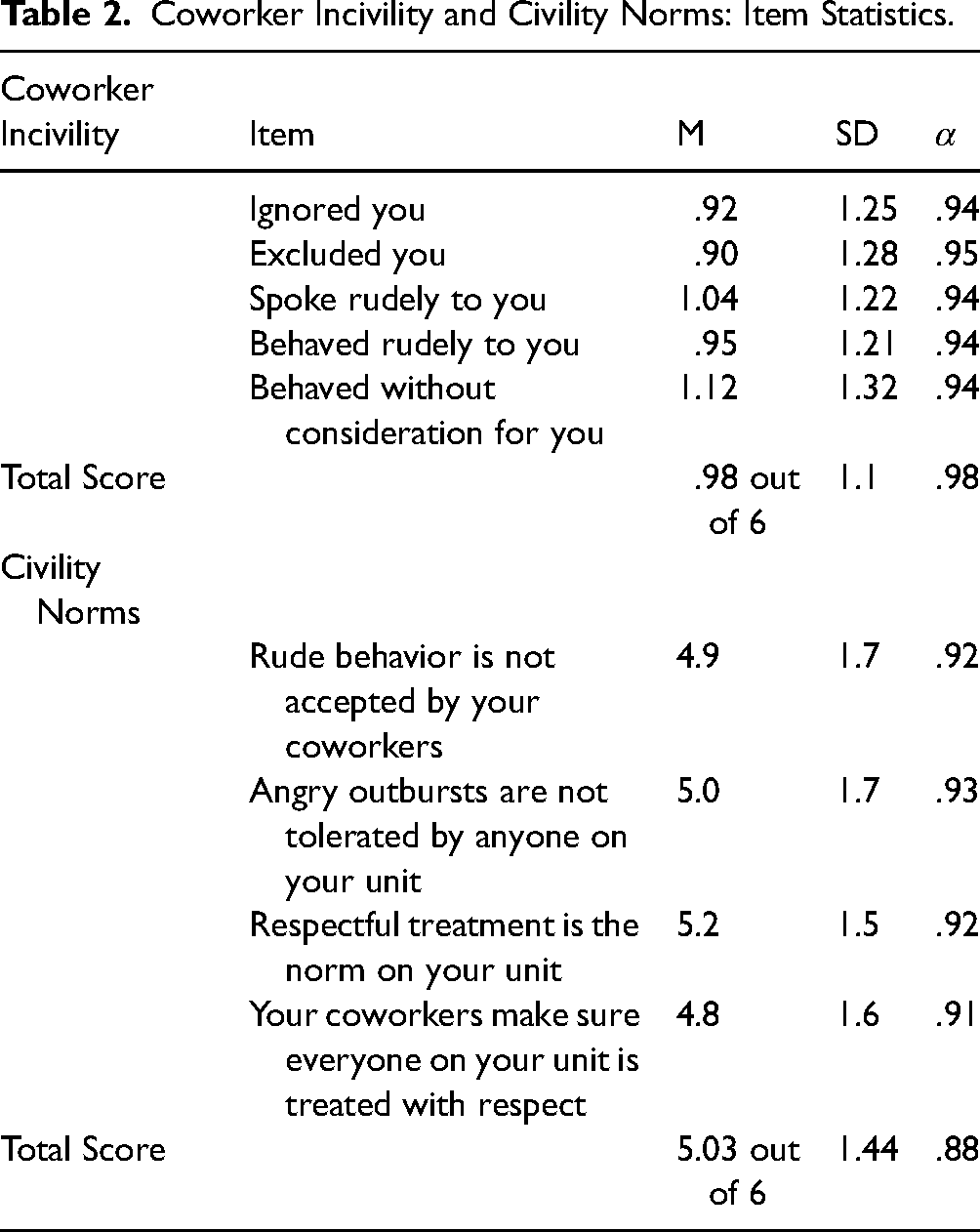
Respondents (n = 1015, 6 missing) reported the following experience ratings of coworker incivility total scale (α = .90, M = .98 out of 6, SD = 1.11) compared to civility norms (n = 1018, 2 missing) total scale, (α = .89, M = 5.03 out of 7, SD = 1.44). Of note, item scores are summed and averaged to form one overall core (Cronbach's alpha: .78 - .87) for the Civility Norms Questionnaire-Brief (Walsh et al., 2012).
Variable Statistics of the Study
The coworker incivility and civility norms statistics are shown in Table 2. The means, standard deviations, and Cronbach's alphas for the independent study variables are depicted in Table 3. The Cronbach's alphas ranged from .56 - .78. Means, standard deviations, and independent one sample t-test results were conducted comparing female and male new graduate nurses’ perceptions of authentic leadership, structural empowerment, trust in management, person-job fit-areas of worklife, and coworker incivility.
Coworker Incivility and Civility Norms: Item Statistics.
Study Independent Variable Statistics (N = 1005).
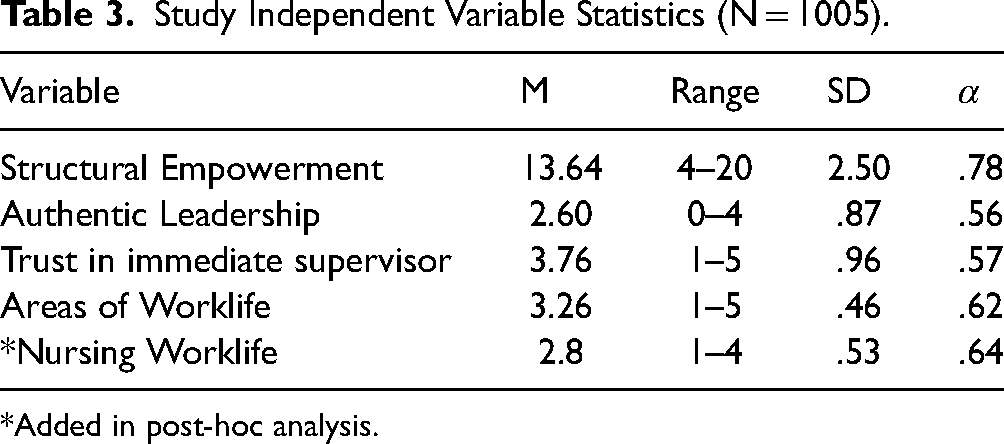
*Added in post-hoc analysis.
Two sample t-test analyses were used to determine whether female and male new graduate nurses had statistically significantly different perceptions of authentic leadership, structural empowerment, trust in management, and coworker incivility experiences. A review of the t-test results indicated no significant differences in male and female perceptions of structural empowerment, trust in management, authentic leadership, areas of worklife, and coworker incivility based on a two-tailed level of significance.
Pearson chi-square tests were conducted to determine whether there was a significant difference in education level between the sexes using Fisher's Exact Test value of 18.56, and a 2-sided p = .000. College level training characterized 11.8% (n = 9) of the males and 6.6% (n = 62) of the females. A chi-square test was conducted to determine whether there was an association between sex and coworker incivility experiences. Coworker incivility experiences were recoded (incivility = 0; incivility > 0). Coworker incivility experiences were reported by 76.3% (n = 328) of the females and 5.9% (n = 25) of the males. There was a nonsignificant association between sex and incivility rates (X2 Likelihood Ratio = .98, 2 df, and a 2-sided p = .614 which exceeds the significance level of 0.01). Bivariate analyses were conducted between variables to determine which variables could partially explain the relationships between independent and dependent variables before they were used in multiple regression models. Tabachnick and Fidell (2019) caution researchers that in all types of regression models (multiple, sequential, statistical) the researcher must compare the total relationship of the independent variable (IV) with the DV (correlation), the unique relationship of the IV with the DV, and the correlation of the IV with all other IVs (correlation matrix) to get a complete picture of the function of an IV in regression.
Correlates of Variables
The correlations between IV (structural empowerment, authentic leadership, trust in management, areas of worklife, coworker incivility, nursing worklife), and the DV of coworker incivility experiences were significant (p < .01, 2-tailed) as shown in Table 4. The correlation between authentic leadership and trust in management (r = .735), were significant at a two-tailed level.
Correlations of Study Variables.
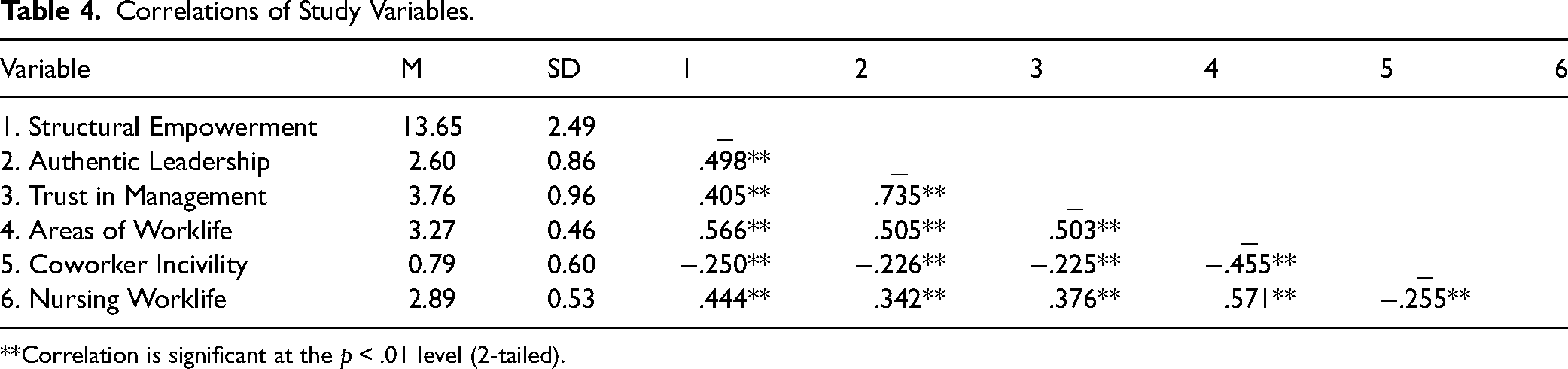
**Correlation is significant at the p < .01 level (2-tailed).
Regression Results
The analysis shows that 8% (p = .00) of the variability in new graduate nurses’ coworker incivility is explained by structural empowerment, when controlling for authentic leadership and trust in management (see Table 5). For each one unit increase in structural empowerment, coworker incivility decreases by .04 (B = −.04, p = .00), with a significance value of .00, CI [−.06, −.02]. For every one unit increase in the perception of trust in management, coworker incivility decreased by .07 (B = −.07, p = .01) and is significant at the 0.01 level, CI [−.12, −.01] when authentic leadership and structural empowerment are held constant. Cook's distance was M = .001, SD = .004. The variance inflation factor (VIF) was between 1 and 5, indicating a moderate correlation between IVs. Hypothesis 1 is accepted, and the null hypothesis is rejected. To determine what “a one unit increase in structural empowerment” means we ran the regression model again using each of the four subscales (opportunity, information, support, resources) to determine the respective contribution of each to the variability in coworker incivility. We removed the centered variables as they were not significant; however, variables of authentic leadership were left in the control and each subscale item for trust in management was given the significance level noted in the prior analysis (B = −.073, p = .01).
Regression Coefficients a and Model Summary H1.
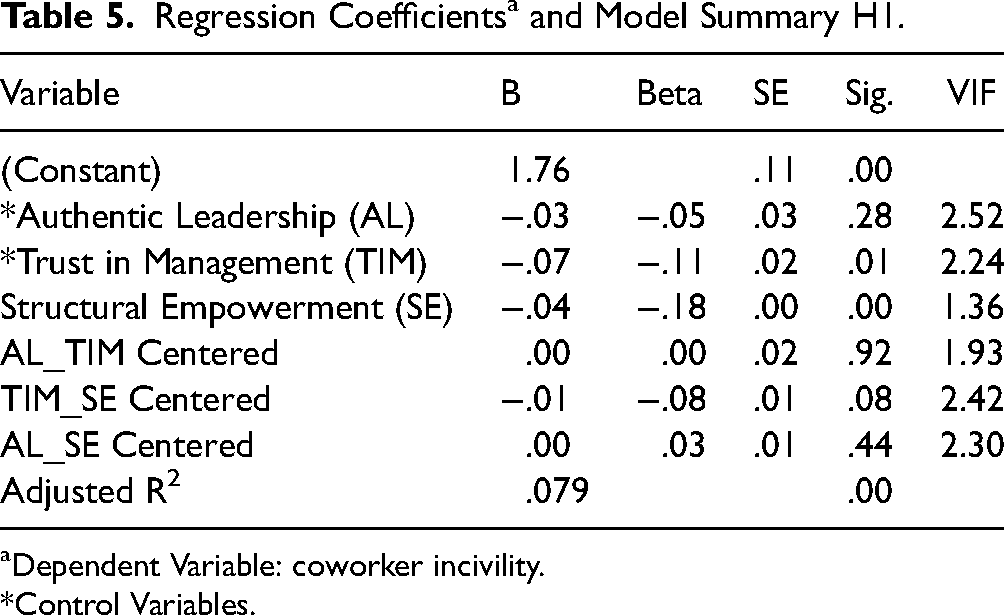
Dependent Variable: coworker incivility.
*Control Variables.
We wanted to see which items contributed to the variability in coworker incivility (see Table 6). In the structural empowerment subscale of support, the item “please rate the extent to which the following is present in your current job: specific information on the things you do well” (B = −.074, p = .00) was significant (alpha < .01).
Regression Coefficients a and Model Summary H1 Subscales and Items of IV included.
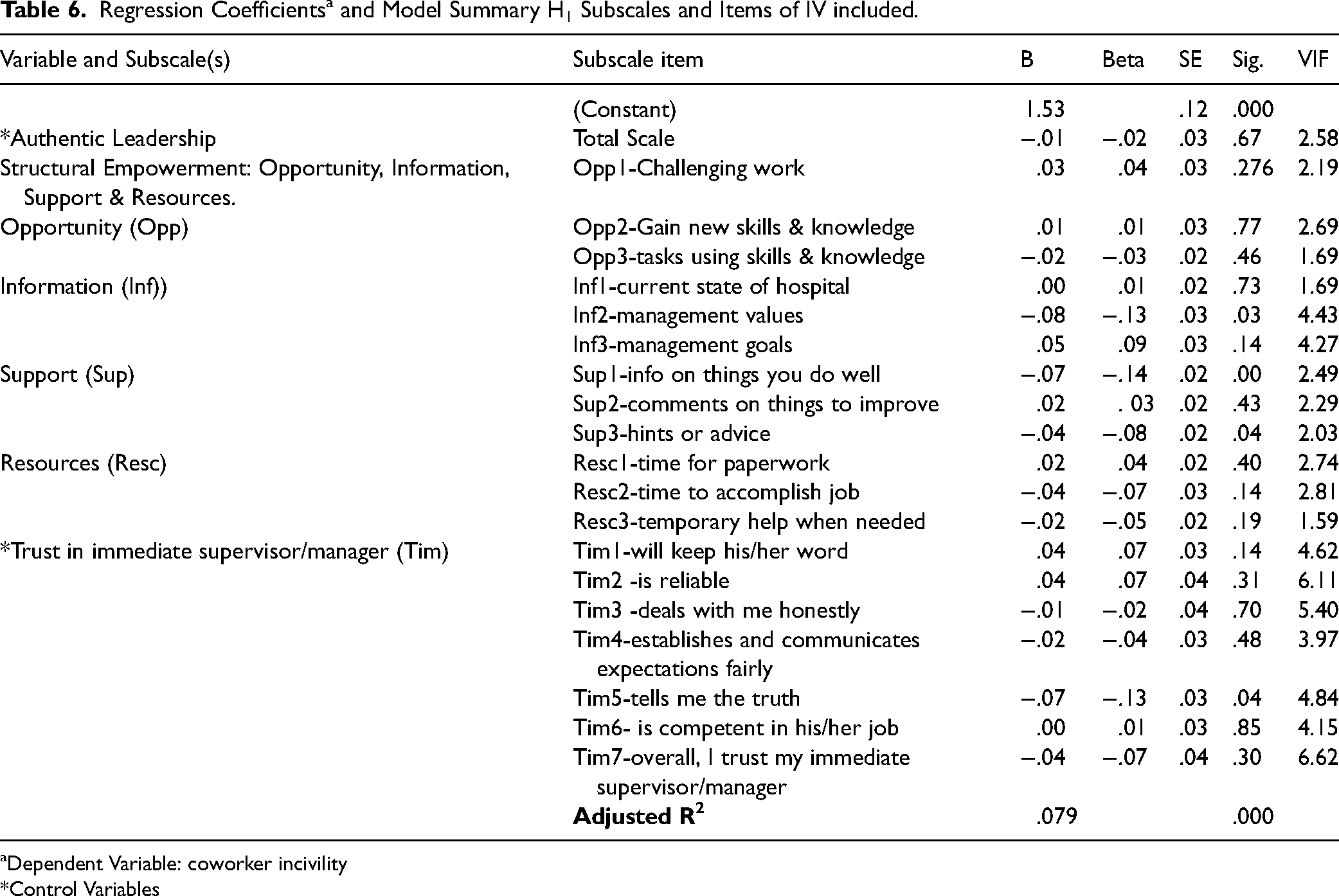
Dependent Variable: coworker incivility
*Control Variables
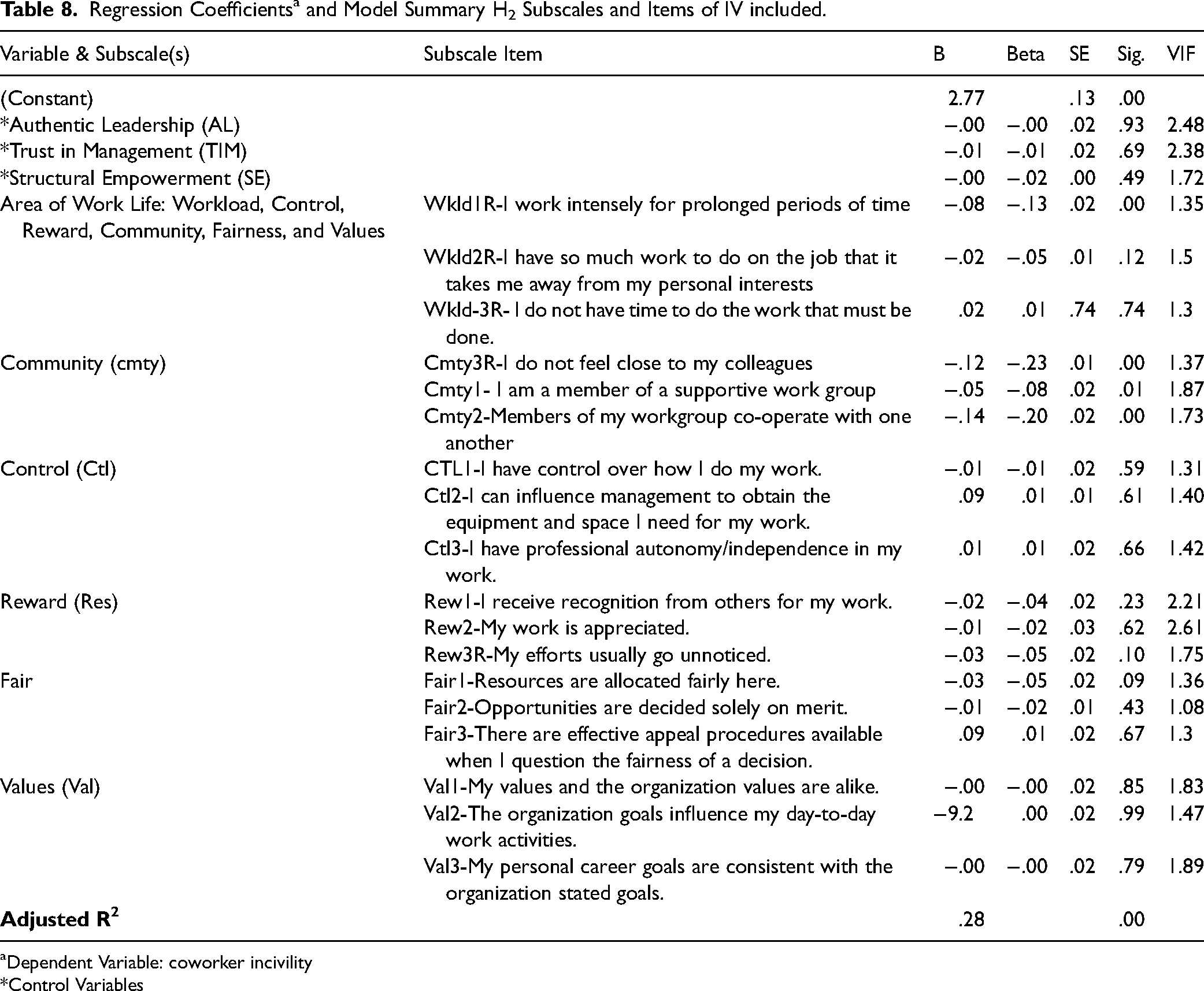
The results revealed that 30% (p = .00) of the variability in new graduate nurses’ coworker incivility experiences is accounted by perceptions of areas of worklife, when controlling for authentic leadership trust in management, and structural empowerment (see Table 7). In the initial analysis I used centered variables for each independent variable; however, none of them had a significance level of < .01. For each one unit increase in the perception of areas of worklife, coworker incivility decreased by .60 (B = −.60, p = .00) with a significance value of .00, CI [−.69, −.50] when authentic leadership, trust in management, and structure empowerment are held constant. Cook's distance was M = .001, SD = .003. Variance inflation factor values were between 1 and 5, indicating a moderate correlation of significant IVs; some IVs were between 5 and 10, indicating multicollinearity between IVs. Hypothesis 2 is accepted, and the null hypothesis is rejected.
Regression Coefficients a and Model Summary H2.
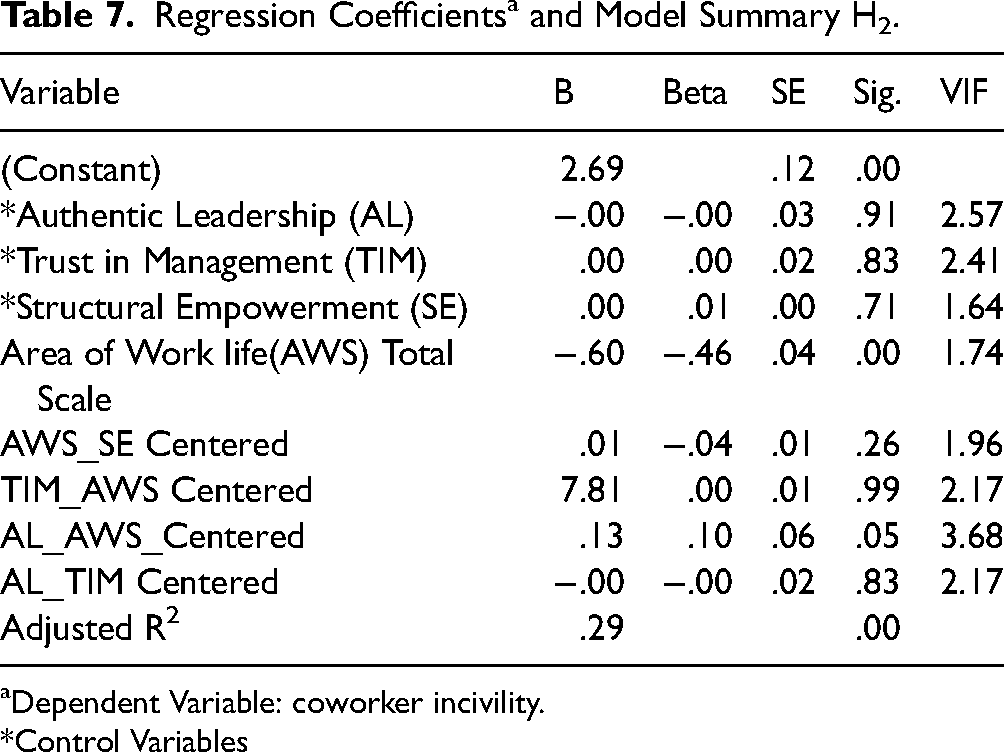
Dependent Variable: coworker incivility.
*Control Variables
We ran a second analysis to determine which areas of worklife subscale(s) (workload, control, reward, community, fairness, values) and which items contributed significantly to the variability of the decrease in coworker incivility (see Table 8). In the areas of worklife, the subscale item concerning workload: “[p]lease rate the extent to which you agree with”: the response “I work intensely for prolonged periods of time” causes coworker incivility to decrease (B = −.08, p = .00); (community). In the item “I do not feel close to my colleagues,” coworker incivility decreased (B = −.12, p = .00). In the (community) item “members of my work group co-operate with one another,” coworker incivility decreased (B = −.14, p = .00). These items were followed by items that were the close to a significant alpha level of < .01, for example, “I am a member of a supportive work group” (B = −.05, p = .01). For some respondents, working intensely for long periods of time might be a positive experience; the responses did not capture the construct of feeling overworked and/or stretched. We looked for a measure that would come closer to reflecting a sense of a lack of control over workload and a lack of nursing resources for new graduate nurses to do their jobs.
Regression Coefficients a and Model Summary H2 Subscales and Items of IV included.
Dependent Variable: coworker incivility
*Control Variables
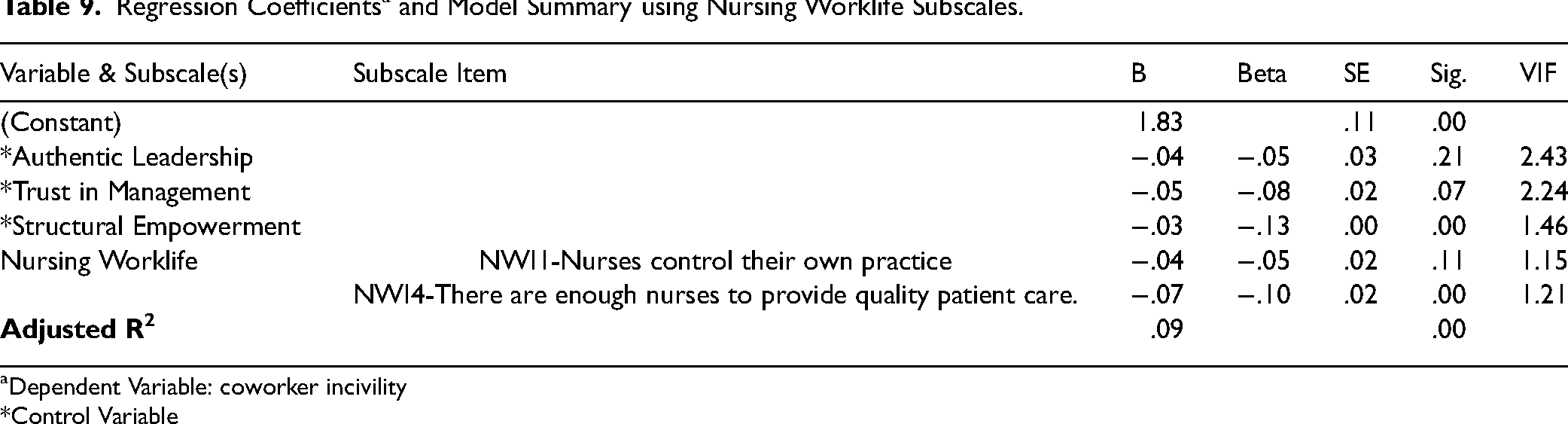
An alternative measure to capture the concept of job control and human resources was found in The Nursing Worklife Index (Lake, 2002). The Nursing Worklife Index subscale item of supportive professional practice (Lake, 2002) included “[o]n my unit:” “nurses control their own practice” and “there are enough nurses to provide quality patient care.” In the regression model, these items were used as IV with the centered variables: authentic leadership, trust in management, and structural empowerment to determine if the items contributed significantly to the variability in new graduate nurses’ coworker incivility. The centered variables were nonsignificant and therefore removed from the analysis. The Nursing Worklife Index subscale (Lake, 2002) was normally distributed. We ran the regression model using the subscale items and controls of structural empowerment, trust in management, and structural empowerment (see Table 9).
Regression Coefficients a and Model Summary using Nursing Worklife Subscales.
Dependent Variable: coworker incivility
*Control Variable
When controlling for authentic leadership, trust in management, and structural empowerment, 9% (p = .00), CI [1.6, 2.0], of the variability in new graduate nurses’ coworker incivility experiences was accounted for in nursing worklife. For every one unit increase in “there are enough nurses to provide quality patient care” (B = −.07, p = .00), coworker incivility decreased by .07. For each unit increase in structural empowerment (B = −.03, p = .00), coworker incivility decreased by .03, and had a significant variability (p = .00). Cook's distance was M = .001, SD = .002. When trust in management and structural empowerment are removed as controls, 8% (p = .00), CI [1.31, 1.71] of the variability in new graduate nurses’ coworker incivility experiences is accounted for by the nursing worklife items when controlling for authentic leadership. In the Nursing Worklife Index, the subscale item of supportive professional practice (Lake, 2002) “there are enough nurses to provide quality patient care,” (B = −.09, p = .00) and authentic leadership (B = −.11, p = .00) were both significant. It could be that the item “nurses control their own practice” does not capture the effects of control over the change of patient assignments, the acuity of patients, and whether requests for additional resources to control the nursing workload are being met.
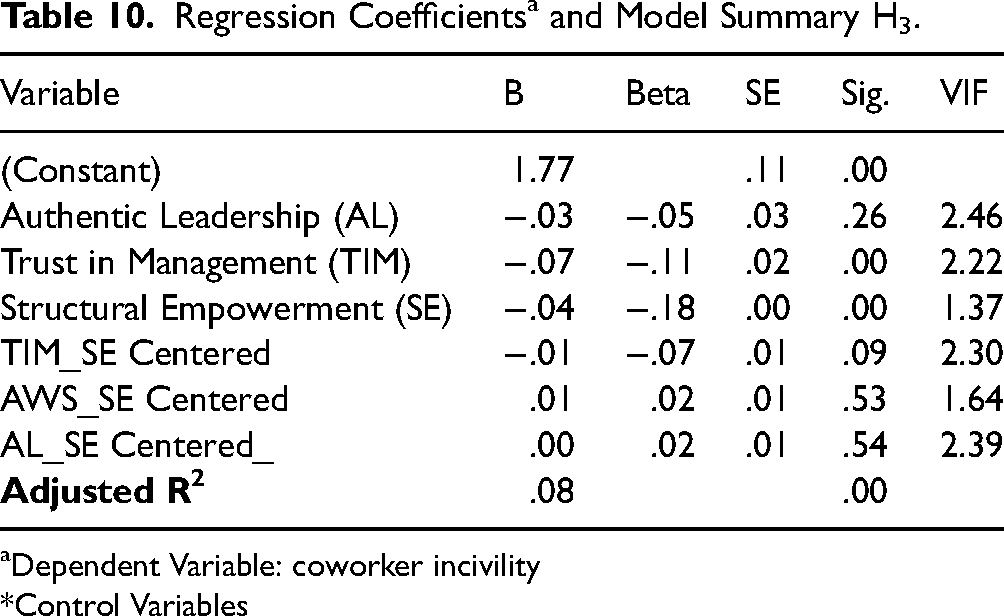
The results revealed that 8% (p = .00) of the variability in new graduate nurses (NGN)s’ coworker incivility experiences are accounted for by a lack of authentic leadership, when controlling for trust in management and structural empowerment (see Table 10). For each one unit increase in authentic leadership, coworker incivility decreases by .03 (B = −.03, p = .265) with a significance level > 0.01, CI [−.10, .02] when trust in management and structural empowerment are held constant. Cook's distance is M = .001, SD = .005. The variance inflation factor (VIF) was between 1 and 5, indicating a moderate correlation of IVs. Hypothesis 3 is rejected, and the null hypothesis is accepted.
Regression Coefficients a and Model Summary H3.
Dependent Variable: coworker incivility
*Control Variables
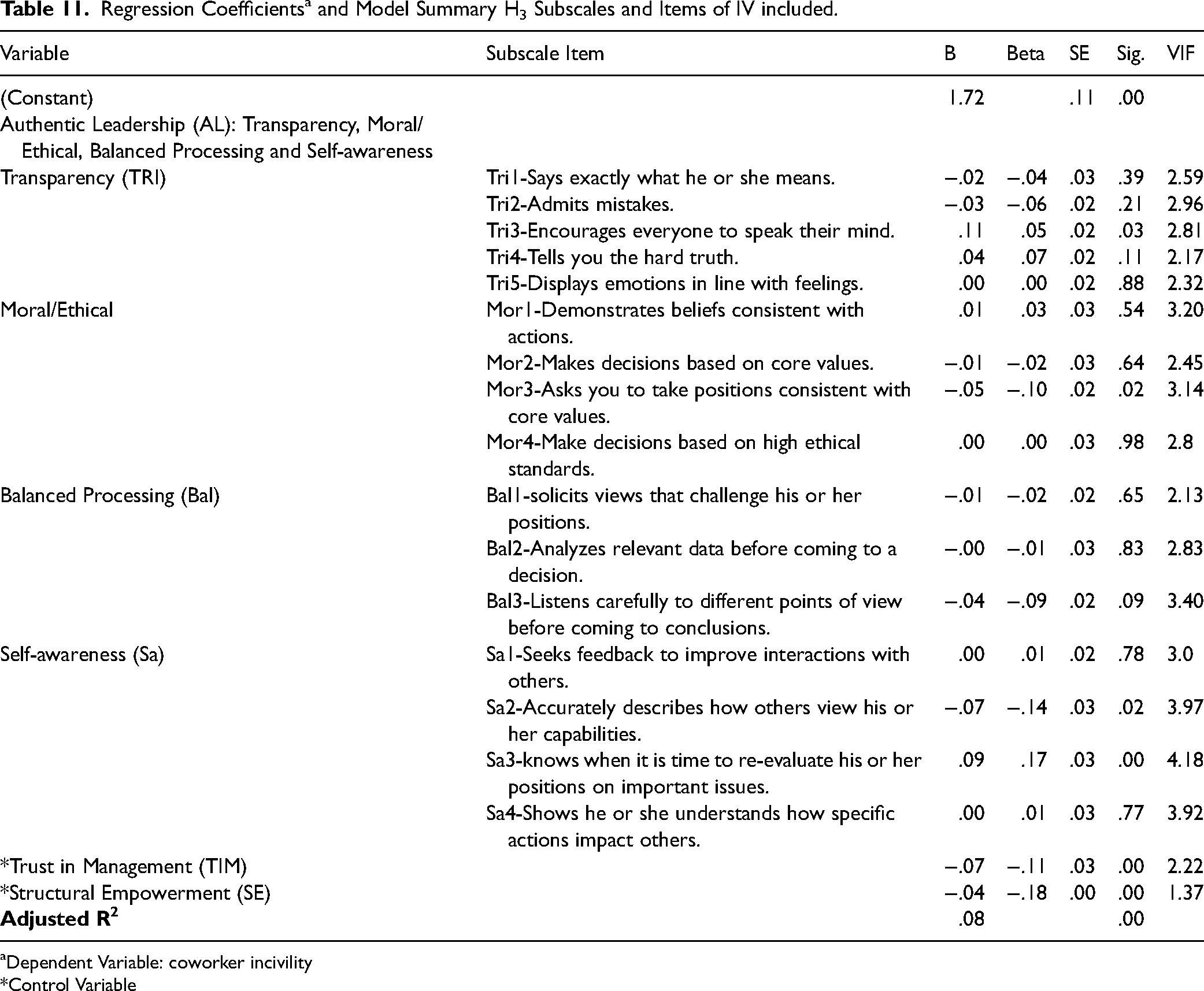
An insignificant finding in a research study could be a result of having a high power on the first review, but it is also a fairly strong argument against the research hypothesis (Aron et al., 2009). In the first regression analysis I used the four subscales of authentic leadership. Although the VIF indicated moderate collinearity (1–5), we ran a second analysis using individual items of authentic leadership from each of the subscales of transparency, moral/ethical, balance processing, and self-awareness (see Table 11).
Regression Coefficients a and Model Summary H3 Subscales and Items of IV included.
Dependent Variable: coworker incivility
*Control Variable
The authentic leadership subscale self-awareness item “please rate the extent to which your leader (immediate supervisor) knows when it is time to re-evaluate his or her positions on important issues” (B = .09, p = .00) was the only significant item in the subscale that contributed to the variability in coworker incivility when controlling for structural empowerment and trust in management. However, it is possible that the actual effect is lower than the predicted effect for the population (Aron et al., 2009).
Given the literature review findings indicating that age, orientation length, and the number of years respondents had worked as RNs in their organizations were significant factors, we ran an analysis using the demographic variables and included structural empowerment, authentic leadership, trust in management, and new graduate nurses’ experiences of coworker incivility. To review the analysis, we ran a model with all the variables of interest and included additional controls (gender) to see if it would provide more insight into the relationships of the IVs to coworker incivility experiences (Table 12).
Regression Coefficients a and Model Summary of all IV and Demographics.
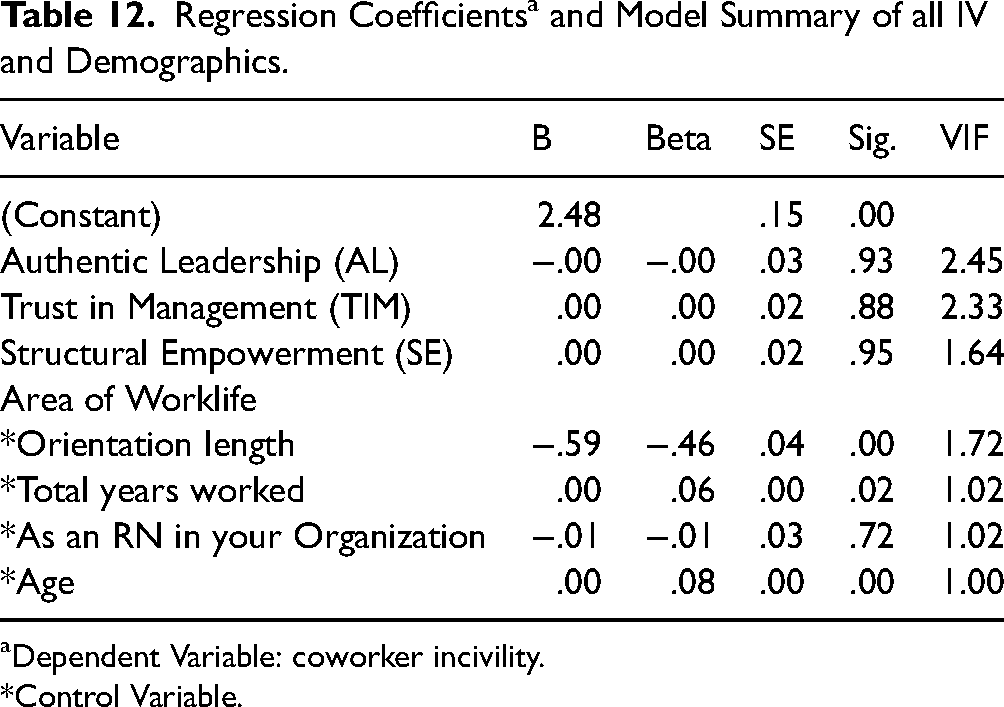
Dependent Variable: coworker incivility.
*Control Variable.
The results revealed that 22% of the variability in coworker incivility was accounted for by authentic leadership, trust in management, structural empowerment, and areas of worklife, when controlling for orientation length, total years RNs had worked in their organizations, and age. Age was a significant finding; for every year increase in age, coworker incivility increased by .008 (B = .008, p = .00). Variance inflation factors (VIFs) were between 1 and 5, indicating a moderate correlation of IVs. A significant finding was in the area of worklife; for each unit increase in area of worklife, coworker incivility decreased by .59 (B = −.59, p = .00) with a significance level of < .01, CI [−.692, −.498]. Cook's distance was M = .00, SD = .00. The finding that organizational tenure was nonsignificant (B = .01, p = .72) could offer some insights into whether seniority of NGNs and RNs within an organization or nursing practice plays a role in mitigating NGN coworker incivility and the mentoring of NGNs to support a work environment wherein coworker incivility is not the norm.
Discussion
The four main findings of this research are: (1) new graduate nurses’ perceptions of workplace empowerment predict coworker incivility experiences when authentic leadership and trust in management variables are controlled; (2) new graduate nurses’ perceptions of areas of worklife predict coworker incivility experiences when authentic leadership, trust in management, and workplace empowerment variables are controlled; (3) new graduate nurses’ perceptions of authentic leadership do not predict coworker incivility experiences when workplace empowerment and trust in management variables are controlled; (4) new graduate nurses’ perceptions of authentic leadership predict coworker incivility experiences when trust in management and workplace empowerment variables are not controlled.
The results support hypotheses H1 and H2; however, hypothesis H3 was not supported.
Implications for Nursing Practice, Healthcare Research, and Healthcare Policy
The research results have implications for administration, nursing leaders, nursing education, and for workplace policy and workplace practice in health care settings. Health care administrators can advance their understanding of the role of workplace empowerment by supporting authentic to nurse leaders in their job role leaders through delegation of formal authority to nurse leaders to mitigate work stressors in nursing environments. The results imply that assigning a nurse leader needs formal authority for formal decision-making to mitigate new graduate nurses’ experiences of incivility. Nurse leaders have the ability to improve new graduate nurses’ job control and their access to human resources; they just require formal authority in their job roles. New graduate nurses’ trust in authentic leaders and competent nurse managers can mitigate stressors that lead to work not being completed and coworker incivility. When new graduate nurses’ coworker incivility experiences are subsumed within our ecological approach, it can assist researchers, policy analysts, and nursing leaders to deepen the understanding of the problem of incivility. This process will also assist in expanding the understanding of the problem of coworker incivility to craft a relevant policy to mitigate the problem and assist in policy analysis evaluating the effectiveness of an anti-incivility policy. Second, the role of workplace empowerment in supporting authentic nursing leaders within their job roles through provision of formal authority will provide an opportunity for nurse leaders to improve new graduate nurses’ job control and access to resources. Third, this research contributes new understanding of the interrelatedness of roles and decision-making authority, or lack thereof, that constitute nursing practice. The purposes of the study were to clarify the roles of nursing leaders and to arm nursing students with the knowledge to advocate for systemic change and understand the role of empowerment and the lack of formal authority of their nurse leader to control workplace factors such as being overloaded with high acuity patients and chronically understaffed. Nurse educators can use the information herein to teach nursing students what to expect when they enter the workforce. Hopefully, enlightened nurse educators will include suggestions for mitigating such workforce impediments so that new nursing graduates can thrive in nursing practice environments.
Limitations
Secondary data analysis is a limitation of this study. The data are: (a) self-reported; (b) not independently verified; (c) not triangulated; and, (d) the variables exist in the dataset so could not be defined and constructed in the manner we would have preferred; and (e) post-hoc analysis and associated errors; therefore, when statistical regression is used as an exploratory tool, inferential procedures can be inappropriate and might contribute to a Type I error rate (Tabachnick & Fidell, 2019).
Conclusion
The results of the current study provide a perspective on predictive variables of authentic leadership, workplace empowerment, and perceptions of whether new graduate nurses perceive a congruence between their work needs and the characteristics of their workplace (i.e., areas of work life) to new graduate nurses’ coworker incivility experiences. Overall, new graduate nurses’ experience persistent understaffing and an overload of high acuity patients with a nursing leader that lacks the formal authority in their role to effectively deal with high acuity patients to chronically understaffed nursing ratios. This situation reduces their trust in management and makes them question the degree of workplace empowerment they hold in their workplace. The results of this study provide evidence that can assist health care administrators to create supportive environments in their workplaces. To empower authentic leadership in the workplace, a congruence between the reality of new graduate nurses’ practice areas such as work needs and workplace characteristics (i.e., areas of work life) must occur address coworker incivility experiences.
Footnotes
Acknowledgements
No sources of funding were used for this work.
Declaration of Conflicting Interests
The author(s) declared no potential conflicts of interest with respect to the research, authorship, and/or publication of this article.
Funding
The author(s) received no financial support for the research, authorship, and/or publication of this article.
