



Abstract
This study investigates match-fixing employing a 2-player contest in an experimental setting. Subjects compete in a real-effort task and are bribed onetime to self-sabotage. Based on Becker’s deterrence hypothesis, the effectiveness of deterrent factors is analyzed via different treatments applying an expected utility framework. Results show that the majority of participants do not maximize their monetary payoff, that increasing detection probability has a higher deterring effect on bribe acceptance compared to severity of monetary punishment, and that participants with lower performance levels were more likely to accept bribes. Implications are derived for sport governing bodies to operate against match-fixing.
Introduction
In the history of sport, numerous cases of match-fixing have been unveiled, involving a wide range of actors across different sports, levels of competition, and countries. In general, match-fixing describes participants of sporting competitions willingly reducing their effort to affect the outcome of a match if the rewards are outweighing the costs (Preston & Szymanski, 2003). Two types of match-fixing can be differentiated. First, one party of the contest bribes either (a) the opponent party to underperform or (b) the referee to make biased decisions in its favor. Both actions aim at securing the bribing party's victory (“cheating to win”). Second, one party of the contest attempts to generate financial gain from gambling on a specific match outcome by underperforming itself (“cheating to lose”). Either way, some party involved in the contest self-sabotages not making every effort and thus violates the core principles of integrity and sportsmanship. Both forms of match-fixing are against the rules of sport and undermine its credibility (Preston & Szymanski, 2003).
Particularly due to the evolving betting market, match-fixing has increasingly become a serious threat to the integrity of sports, representing one of the biggest challenges in the twenty-first century and already the most widespread form of corruption in sport these days (Andreff, 2018; Carpenter, 2012; Forrest, 2018). As a consequence, investments in prevention and detection instruments are necessary (Forrest, 2018). Therefore, sport governing bodies need an understanding of the determinants of match-fixing behavior and knowledge of effective mechanisms to prevent it (Forrest & Simmons, 2003).
Aside from its specific form of match-fixing, the importance of recognizing corruption as such as a detrimental factor to various dimensions of today's society has become widely accepted. Accordingly, there has been growing interest in the empirical analysis of this phenomenon. Due to its economic consequences, economists have started to study the underlying individual behavior in this context. However, because of the clandestine nature of corruption, available data is often limited, which makes it difficult to draw conclusions on the mechanisms underlying corruption. As a consequence, a substantial body of economic research has emerged analyzing corruptive behavior by conducting laboratory experiments (e.g., Abbink et al., 2002; Abbink & Hennig-Schmidt, 2006; Banerjee, 2016; Bobkova & Egbert, 2012; Lambsdorff & Frank, 2010; Rivas, 2013; Van Veldhuizen, 2013).
Thereby, corruption is usually described as a particular form of the principal-agent model where the agent has an incentive to favor a third party and, within this process, disobeys the rules set by the principal (Lambsdorff, 2002). With the agent maximizing his/her utility, the incentive is often considered a private benefit (i.e., a bribe) in return for a favorable action or decision to a third party. Previous research has examined different determinants of such bribing behavior, as for instance the role of gender, culture, income, and the effectiveness of anti-corruption instruments (Abbink, 2004; Barr & Serra, 2010; Lambsdorff & Frank, 2010; Rivas, 2013; Van Veldhuizen, 2013).
The majority of studies have focused on the agent as a public official making a favorable decision to a third party (e.g., company). However, one dimension of corruption that has not received much attention in previous research is the relationship between bribing behavior and self-sabotage. In contrast to the earlier described corruption scenario, here, the agent has to self-sabotage his/her performance (i.e., deliberately underperform) to alter an outcome that benefits a third party. Such a phenomenon occurs in the context of monitoring (e.g., when a governmental inspector discovers noncompliance in an organization but shirks in monitoring or reporting it due to a bribe acceptance; Hong & Teh, 2019) and most prominently in contests, specifically in sports and known as match-fixing.
To address that research gap, this study deals with the relationship between bribing behavior and self-sabotage using the example of match-fixing. From a theoretical perspective, such corruptive behavior in a contest is specifically interesting as participating in a contest often goes in hand with specific competitive preferences and social and moral norms. While previous research has demonstrated the crucial role of social norms in the context of corruptive behavior (Banerjee, 2016; Barr & Serra, 2010), the role of competition-related norms and preferences is rather unknown. Moreover, although Becker's (1968) deterrence hypothesis, stating that criminal behavior decreases with the power of deterrent incentives, has been confirmed by research for various kinds of criminal behavior, such as stealing (Schildberg-Hörisch & Strassmair, 2012), cheating (Nagin & Pogarsky, 2003), or general corruption (Abbink et al., 2002; Armantier & Boly, 2011; Schulze & Frank, 2003), further knowledge about the effect of corruption deterrents in this specific context is needed. This is particularly the case when assuming that the unique situation of competing in a contest and being bribed to self-sabotage will affect corruption behavior due to competitive preferences and specific social norms.
Against this backdrop, this study's research purpose is to (1) investigate the specific form of corruption related to the behavior of self-sabotage in contests and (2) examine the role of the deterrence factors of detection probability and severity of monetary punishment based on Becker's (1968) deterrence hypothesis, both in the context of sporting competitions using the example of match-fixing. Thereby, in a unilateral experiment setting, this study's focus lies on bribe-taking behavior.
The remaining paper is structured as follows. “Theoretical Model and Related Literature” introduces the underlying theoretical model and gives an overview of previous literature. “Hypotheses” presents the formulated hypotheses. In “Experiment”, the experimental design is outlined, including a detailed description of the procedure and the three treatments. “Results and Discussion” offers a discussion of the results with first focusing on descriptive statistics and then on the econometric model. “Conclusion” concludes by outlining implications and avenues for future research.
Theoretical Model and Related Literature
The decision to engage in the specific corruption form of match-fixing and self-sabotage in a contest can be explained by a microeconomic model, which is based on the seminal article of Becker (1968) on a general economic model of criminal behavior considering offenses as a function of (1) the probability of conviction, (2) the punishment if convicted and (3) other influencing variables. This study's underlying microeconomic model has been conceptualized in the Journal of Sports Economics by Maennig (2002) in the context of corruption in sports and individuals’ misbehavior using the example of doping. Analyzing relationships between gambling and sport, Forrest and Simmons (2003) discuss a similar model to explain athletes’ match-fixing behavior as a consequence of betting corruption.
This microeconomic model (Forrest & Simmons, 2003; Maennig, 2002) describes corruptive behavior, as for instance match-fixing, as rational decision-making where the utility of illicit behavior in case of nonconviction and its (dis)utility in case of conviction are compared and embedded in social and moral norms. Agents in this context (e.g., athletes as sporting competitors) will engage in match-fixing and self-sabotage if the individual's expected net utility of a match-fixing behavior is positive

The expected (dis)utility of a detected match-fixing behavior, represented by the second part of Equation (1), includes four components within the individual's utility function
The expected utility framework is supposed to provide the opportunity to discuss specific anti-corruption policies and thereby to reveal which regulations sport governing bodies can establish to operate against match-fixing behavior (Forrest & Simmons, 2003). It has been adjusted to this study's context of modeling individual's expected net utility of match-fixing and self-sabotage, with a few factors excluded from the original model: As demonstrated by Equation (1), no direct costs of preparing and realizing the fix
In accordance with the deterrence hypothesis from Becker (1968), the following implications can be drawn from the model, all resulting from reducing the individual's expected net utility of match-fixing. The model predicts that (1) with a higher probability of detection, the number of athletes engaging in match-fixing and self-sabotage reduces, and (2) with a higher severity of monetary punishment, fewer athletes are willing to engage in match-fixing and self-sabotage. A third assumption that is specifically relevant in this corruption context is that (3) a lower probability of successful match-fixing leads to fewer self-sabotaging attempts.
In the context of general corruption, previous research has confirmed the deterring hypothesis from Becker (1968) for both increases in detection probability and severity of monetary punishment in the laboratory and the field (Abbink et al., 2002; Armantier & Boly, 2011; Schulze & Frank, 2003). However, most of the studies only focused on one deterrent factor without considering the interplay between detection probability and the severity of monetary punishment. Further, the deterrent factors have not been analyzed thus far in this specific form of corruption when bribing a competitor to self-sabotage one's own performance, such as in sporting competitions in the case of match-fixing. In this context, the detection probability is reflected by the detection rate of actual fixes and the severity of monetary punishment is indicated by the financial penalty on the one hand and the duration of the suspension from the sporting activity leading to loss of earnings on the other hand.
When comparing the two deterrence instruments, the model predicts (4) a certainty effect indicating that individuals are more deterred by an increase in the probability of detection than by an increase in the severity of monetary punishment. According to Becker (1968), this can be explained by the fact that primarily risk-seeking individuals commit crimes, and an increase in the detection probability leads to a lower variability of detection. Besides, previous studies have proposed two other explanations (Engel & Nagin, 2015). First, social and reputation costs occur independently from the severity of monetary punishment, and second, a present orientation leads to individuals responding less to delayed punishments and more to an increase in detection probability.
Empirical evidence regarding the certainty effect is mixed. While the empirical crime literature using field data was able to confirm a certainty effect (e.g., Maxwell & Gray, 2000; Pogarsky, 2002), laboratory experimental literature has produced inconclusive results. In the context of cheating, Nagin and Pogarsky (2003) found evidence of a clear certainty effect. When investigating stealing, Harbaugh et al. (2013) found a certainty and severity effect of similar sizes, while Engel and Nagin (2015) were not able to identify a certainty effect for risk-seeking individuals. Friesen (2012) found a clear indication of a severity effect when looking at general compliance of laws. Only a study by Banerjee and Mitra (2018) compared the two deterring factors concerning corruption. They conducted a harassment bribery game and looked specifically at bribe demand behavior of presumably risk-averse individuals. The results indicated only a reduction in bribe demand for the high punishment-low detection probability treatment (in contrast to high detection probability-low punishment), which was in line with the prediction from Becker (1968) for risk-averse individuals.
Considering the inconclusive findings relating to certainty and severity effects in previous literature, investigating the effects of a higher risk of detection and a higher severity of monetary punishment in this specific corruption form could represent a valuable addition to the existing body of research. The findings could also benefit sport governing bodies or other stakeholders in sports revealing information about the effectiveness of the deterrent factors in this specific context and thus provide them with initial approaches how to better oppose match-fixing in sporting competitions. Further, match-fixing contradicts fundamental sporting principles (e.g., integrity, sportsmanship). It is interesting to investigate bribe acceptance behavior of contestants and to identify if competitive preferences and social and moral norms of these contestants are relevant enough to resist match-fixing behavior and not focus on maximizing monetary payoffs. Hence, this study analyzes corruption behavior and deterrence factors in the specific context of match-fixing including behavior of self-sabotage.
Hypotheses
The size of the bribe offer
Based on the deterrence hypothesis from Becker (1968), it is assumed that an increase in the probability of detection and the severity of monetary punishment should both cause a significant reduction in participants accepting the bribe offer with:


Further, Becker (1968) states that while keeping the expected penalty constant, an increase in the detection probability compared to an equivalent change in the monetary punishment should have a higher deterring effect if the individuals who show corruptive behavior exhibit characteristics of risk-seeking. In other words, the elasticity of the change

The specific match-fixing context of subjects competing in a contest allows deriving another hypothesis. As already mentioned before, the individual's expected net utility model suggests that subjects with a smaller (expected) probability of winning a contest are more likely to engage in corruptive behavior due to a relatively higher expected net utility of match-fixing indicated by the following payoff function for each participant in each round:


Experiment
Design
To investigate the formulated hypotheses in the context of the specific corruption behavior of match-fixing and self-sabotage, the experiment orientated at general corruption research and was designed as a 2-player contest, where participants compete against each other in a real-effort task over ten rounds for real money prizes. Within these ten rounds, subjects are bribed once to lose one of the rounds deliberately. Real-effort tasks have been previously used by researchers as a proxy for productivity (e.g., Georganas et al., 2015), appropriately reflecting individuals’ performance in sporting competitions. Each round of the contest is designed as an all-pay auction in which the subject with the highest effort wins the prize money. The probability of a subject winning one round of the contest is dependent on the effort of the participant and the effort of the opponent with the winning probability
The slider task was chosen to measure real-effort (Gill & Prowse, 2012, 2019). In addition to the advantages of independence of prior expertise and identity across repetitions, reducing potential noise within the effort measure, the required level of concentration and physical activity make the task in particular suitable to test individual behavior in contests representing sporting competition. Accordingly, previous research used the slider task to study specific phenomena related to sports such as trash-talking (Yip et al., 2018) or dynamics in competitions (Gill & Prowse, 2014). Both these studies explicitly referred to sports as a relevant competition scenario for their research, just as Gill and Prowse (2012) have done when introducing the slider task.
Within the computerized task, subjects are asked to position a slider at the position of 50 on a scale from 0 to 100. Subjects can move the slider with their mouse at any integer location. Once the slider is placed, its current position is shown on the right side of the slider bar. Subjects can readjust the slider an unlimited amount of times. The starting position of each slider is 0. Figure 1 shows a screen as seen by the subjects. Overall, 48 sliders are presented. The performance measure is the number of correctly positioned sliders in 120s. Similar to previous research, the subjects had two training rounds before the ten paying round began, and earlier studies showed that, on average, individuals can correctly position approximately 22 sliders in the first round and slightly above 26 sliders in the tenth round (Gill & Prowse, 2012, 2013).
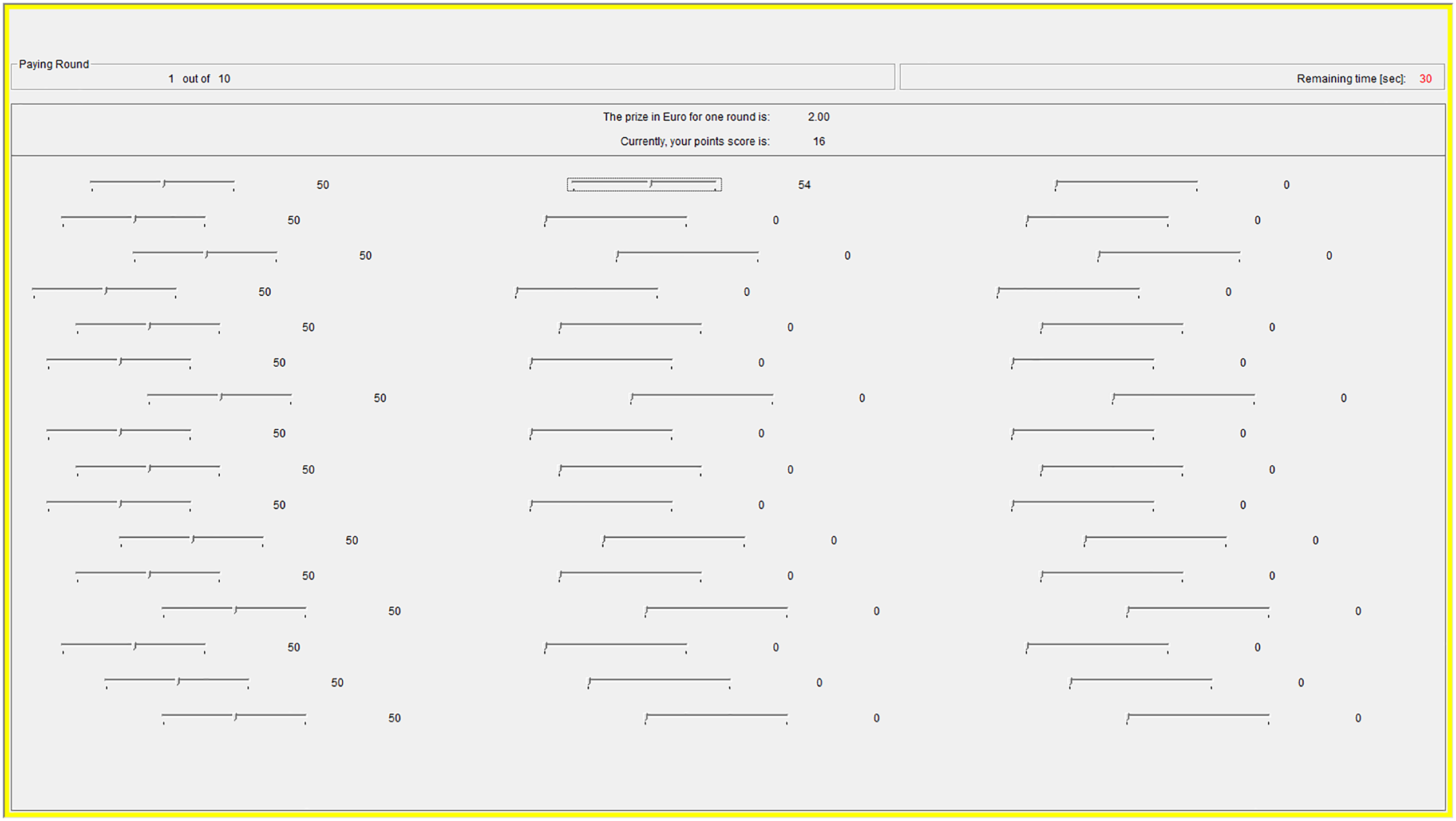
Overview of the slider task.
Procedure
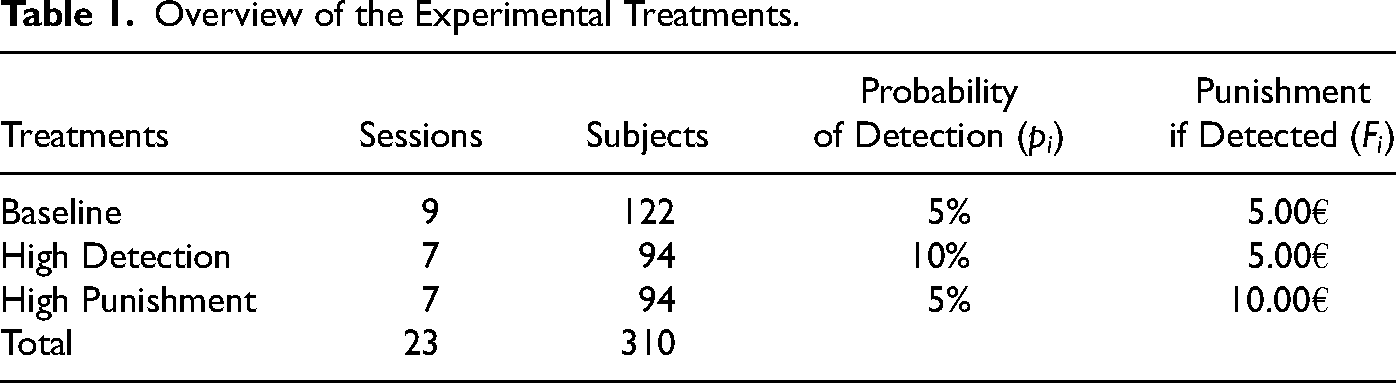
The experiment took place from the 13th of November 2019 to the 30th of January 2020 in a computer laboratory at the authors’ university. It was programed using the software z-Tree (Fischbacher, 2007). The number of subjects by session varied between 10 and 18, with predominantly 12 or 14 subjects participating in one session. Overall, 23 experimental sessions were conducted with a final sample size of n = 310 participants (see Table 1). The participants were under- and postgraduate sport science students and each one could only participate once (i.e., in one session). The recruitment took place under the pretext of experiments investigating performance under time pressure and participants had no prior information on the corruption context of the study.
Overview of the Experimental Treatments.
Every subject was sitting in a privacy booth where the performance in the experiment could not be observed by someone else. Each round, they were randomly matched with another subject. Within the contest, the winner was determined by the number of correctly positioned sliders. The subjects received a payment of
After every round, during an 85s break, the subjects were informed about the result of the previous round's contest and their total winnings in the experiment. Additionally, a rank table occurred where the performance of every subject in the last round was displayed anonymously, which means that performances were indicated based on player numbers, while subjects only knew their player number and could not match other subjects with any player number. Similar to sporting competitions, the rank table simulates a scenario where the performance is not unobserved but compared with each other and previous research has shown that rank feedback affects an individual's competitive preferences and increases motivation to make an effort (Gill et al., 2019). Thus, although the slider task neither requires nor tests very sport-specific motor abilities or skills, it succeeds in creating a competitive situation comparable to sports, as participants require concentration and a certain level of physical activity to compete against each other for prizes in rather balanced competitions being identical across repetitions, in which individuals’ behavior can be well analyzed. The entire experimental instructions presented to the subjects prior to the experiment can be examined in the supplemental material online.
Treatments
The match-fixing experiment consisted of three different treatments and was based on a between-subject design. In the Baseline treatment, each subject received one unexpected bribe offer, which occurred randomly once in the break prior to rounds 4, 5, 6, or 7.
4
In the offer, the subject was asked to lose the following match on purpose to receive a bribe of
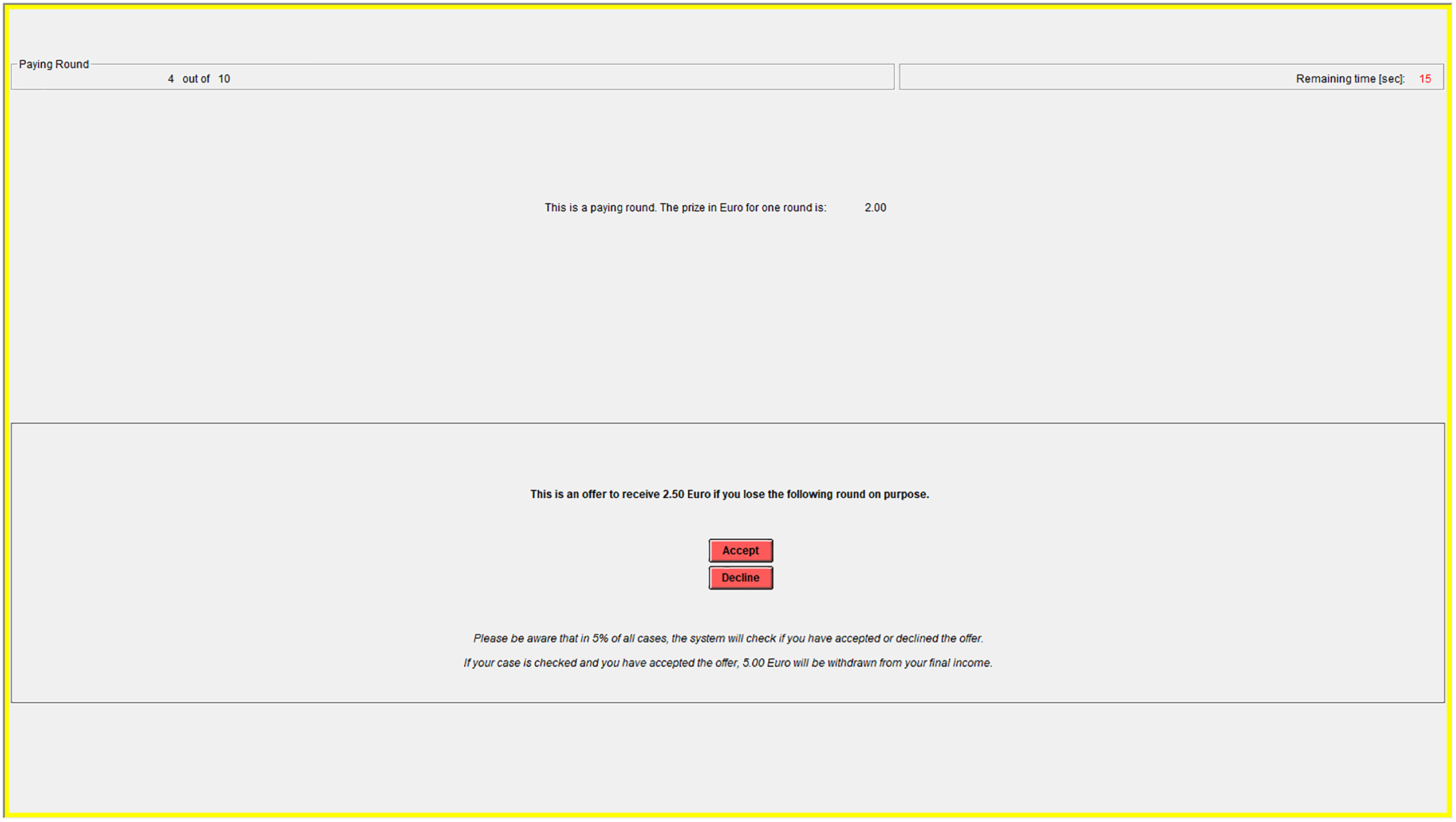
Bribe offer as shown to the subjects.
The first variation of the Baseline treatment was the High Detection treatment, where the communicated detection probability to the subject was doubled to
Questionnaire, Risk Preference, and Controls
After the last round, the subjects were informed about their final payout and asked to complete the concluding brief questionnaire. Within the questionnaire, the socio-demographic information of age, gender, nationality, and income were assessed. In order to determine the attraction of the subjects to ethical behavior in contests, competitive preferences and the perception of social and moral norms, items originally stemming from the context of youth sports (Attitudes to Moral Decision-making in Youth Sport Questionnaire [AMDYSQ]; Lee et al., 2007) were utilized. The items differentiate between the dimensions of “acceptance of cheating” (7 items), “keeping winning in proportion” (6 items), and “acceptance of gamesmanship” (7 items). Every item of the three AMDYSQ scales was measured on a Likert scale ranging from 1 = strongly disagree to 5 = strongly agree, and an additive index for every dimension was created. Moreover, participants’ sporting background was enquired. Subjects were asked to indicate if they have been or currently are active as an athlete, a coach, or a referee in sports, as previous research demonstrated differences among those groups and their desired outcomes within a sporting competition (Webb et al., 2020). It is not differentiated between the level of competition within these roles.
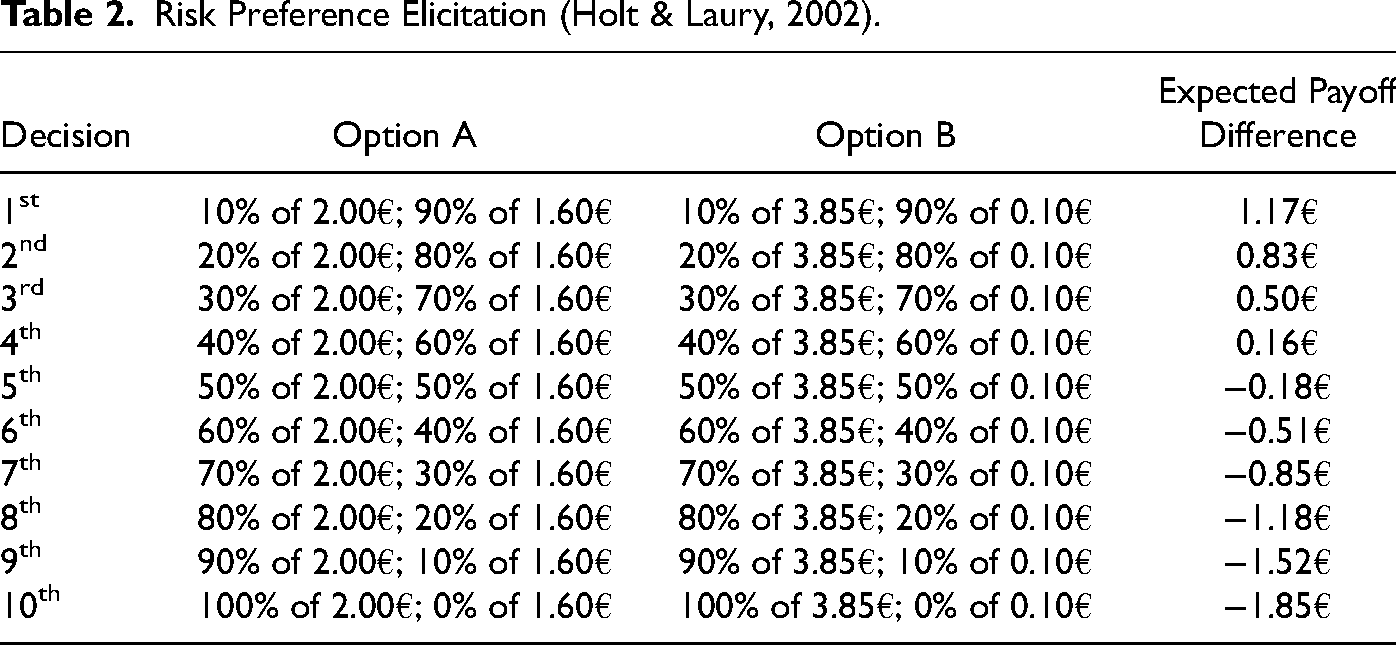
In order to measure an individual's risk preference, the lottery choice experiment by Holt and Laury (2002) was conducted. Every subject was presented with ten choices between a safe option A (high payoff: 2.00€, low payoff: 1.60€) and a risky option B (high payoff: 3.85€, low payoff: 0.10€; see Table 2). With every choice, the probability of the higher payoff increases for both options. The number of safe choices until the subject switches from A to B indicates the level of risk preference. Risk neutral subjects would make four safe choices until they switch to B. Risk seekers would make less than four, and risk-averse subjects would make more than four. In the end, one round was randomly selected, and the individuals received the payoff of the respective round (see Table 2).
Risk Preference Elicitation (Holt & Laury, 2002).
In addition, based on the experimental data, a number of variables controlling for the performance of the individuals in the experiment were calculated. The variable Bribe_winner_sum comprises the individual's number of rounds won. Also, the individual's average performance (Effort_Mean) and the average performance of the session (EffortSession_Mean) are considered. The variable Bribe_TotalAccepted_sum reflects the number of accepted bribes in the session and was included as the self-sabotage of subjects could have been noted in the rank table by other subjects. All variables are measured for the rounds until the bribe is offered to the subject (see supplemental material online for overview of variables).
Results and Discussion
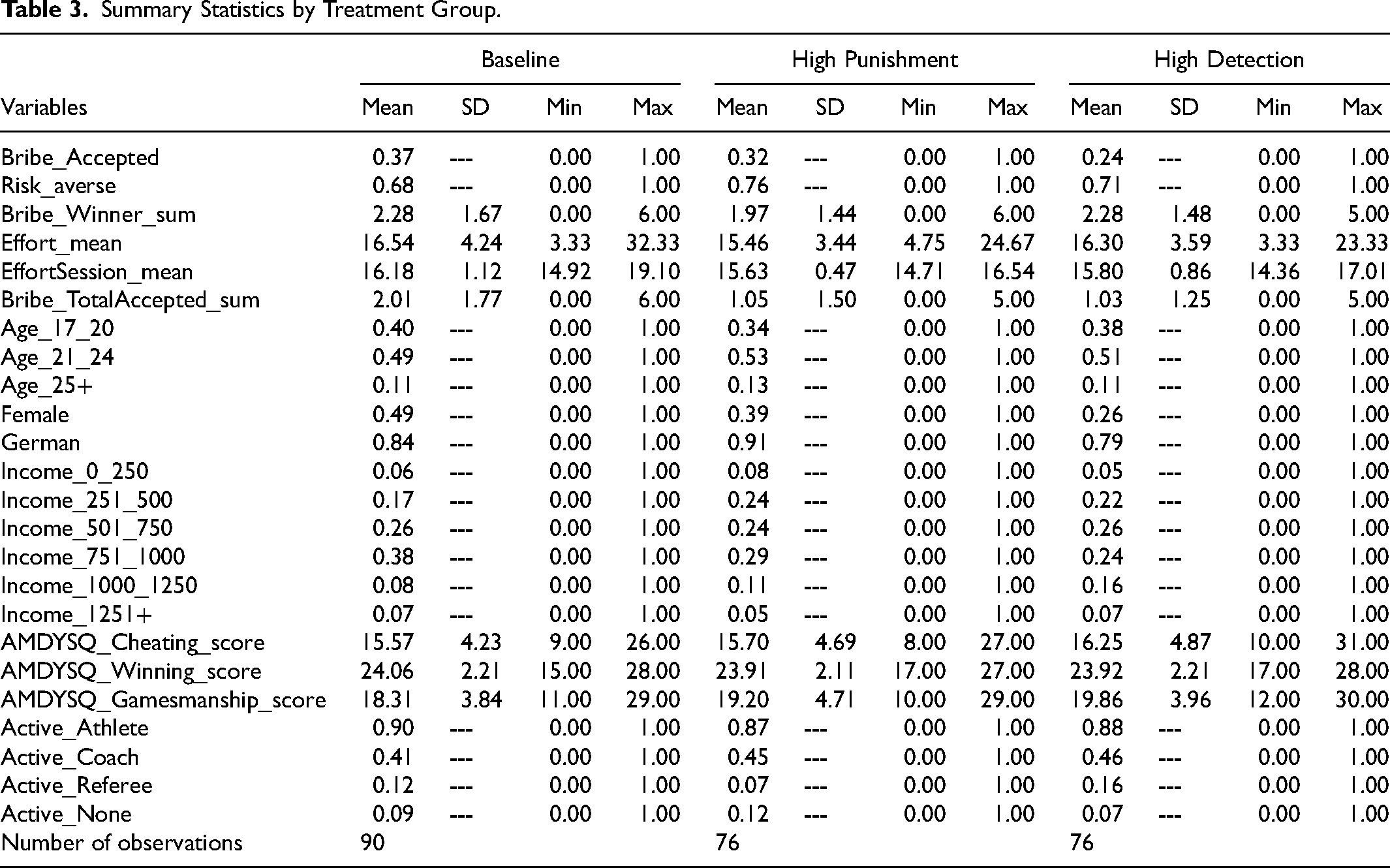
Table 3 shows the descriptive results of the subjects’ performance in the slider task, their risk preference and other controls, as for instance their socio-demographic characteristics and their sporting background, differentiated between the three treatments Baseline, High Punishment, and High Detection. From the 310 subjects who participated in the experiment and earned, on average, almost 21€ for their participation (M = 20.67, MDN = 20.50, SD = 5.10, MIN = 10.00, MAX = 30.50), 261 subjects completed the questionnaire and the risk preference measure from Holt and Laury (2002). The results were checked for plausibility and consistency in terms of their performance in the effort task, their survey responses, and the risk elicitation task leading to 19 individuals being eliminated and a final sample size of n = 242.
Summary Statistics by Treatment Group.
Bribe Acceptance
According to Hypothesis 1, it was expected that, although accepting the match-fixing bribe would have been economically beneficial, a proportion of subjects in the experiment would reject the bribe. The results confirm this assumption indicating that most participants do not maximize their monetary payoff. In total, only 75 out of 242 subjects (31.0%) accepted the bribe, which was different from a distribution where all subjects maximize their monetary payoff (Fisher's exact test: p < 0.001). When referring back to the individual's expected net utility framework, the results indicate that for the majority of subjects the costs of violating competitive preferences and social and moral norms in a contest outweigh the individual's expected net utility of engaging in match-fixing and self-sabotage.
Figure 3 describes the bribe acceptance by treatment. In the Baseline treatment, 36.7% of the subjects accepted the bribe. In the High Punishment treatment, 31.6% of the subjects accepted it, and in the High Detection treatment, only 23.7% of the subjects accepted the bribe offer. A Wilcoxon test rejected the null hypotheses that the proportion of subjects accepting the bribe was equal across treatments when comparing the Baseline with the High Detection treatment (p = 0.072). The difference between the Baseline and High Punishment (p = 0.493) treatment and between the High Punishment and High Detection (p = 0.278) treatment were both not significant.
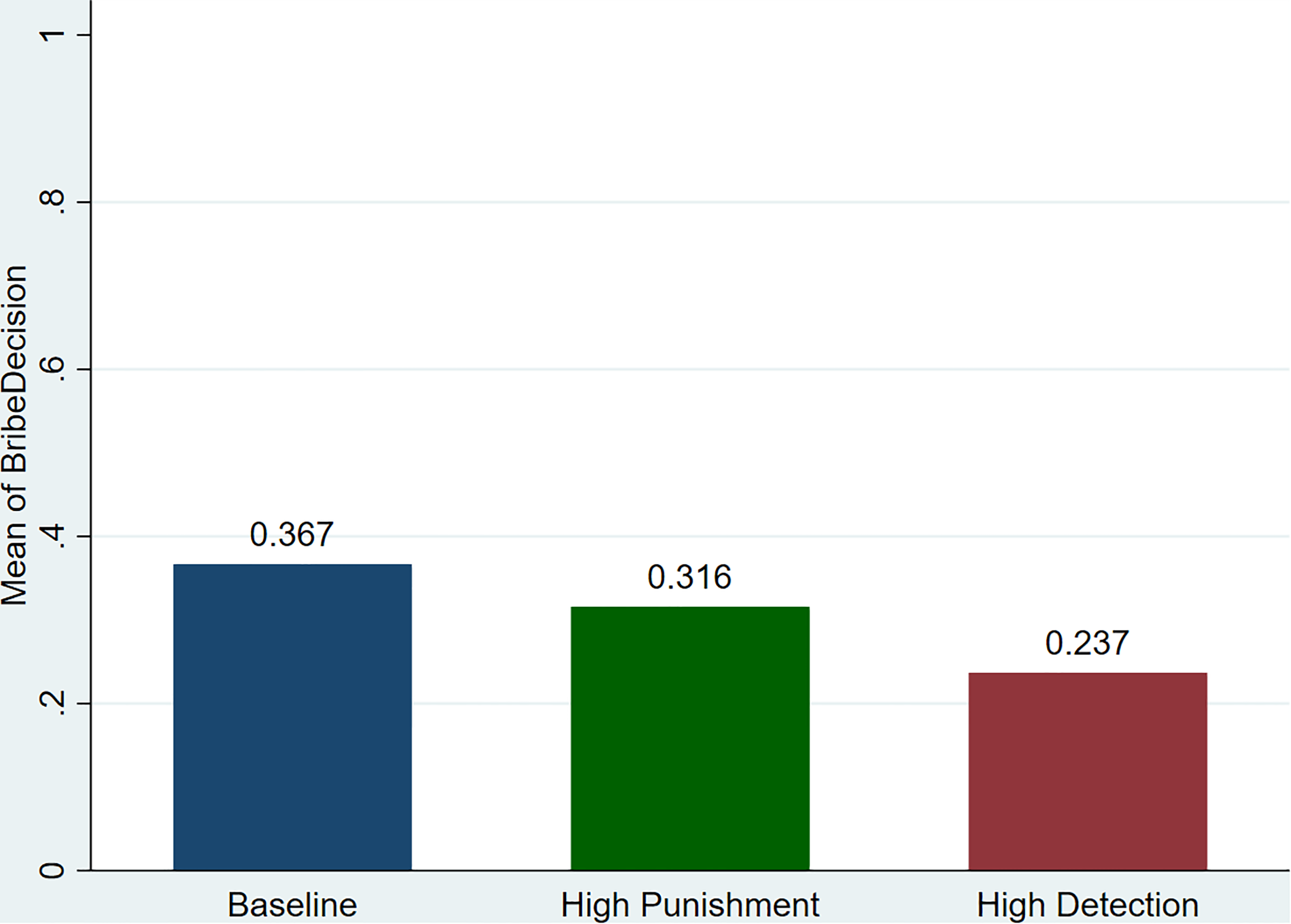
Mean decision to accept the bribe by treatment.
Figure 4 illustrates how match-fixing behavior differs between individuals’ risk profiles. Across all three treatments, the subjects who have demonstrated risk-averse behavior 6 in the test from Holt and Laury (2002) were less likely to accept the bribe. However, a Wilcoxon test revealed that the differences were not significant (Baseline: p = 0.865; High Punishment: p = 0.856; High Detection: p = 0.641) which is in line with findings from Berninghaus et al. (2013), who identified that risk preference is not a significant predictor of corruptive behavior in a laboratory context. Consequently, Becker's (1968) proposition that offenders are more likely to be risk-seeking cannot be confirmed in this context.
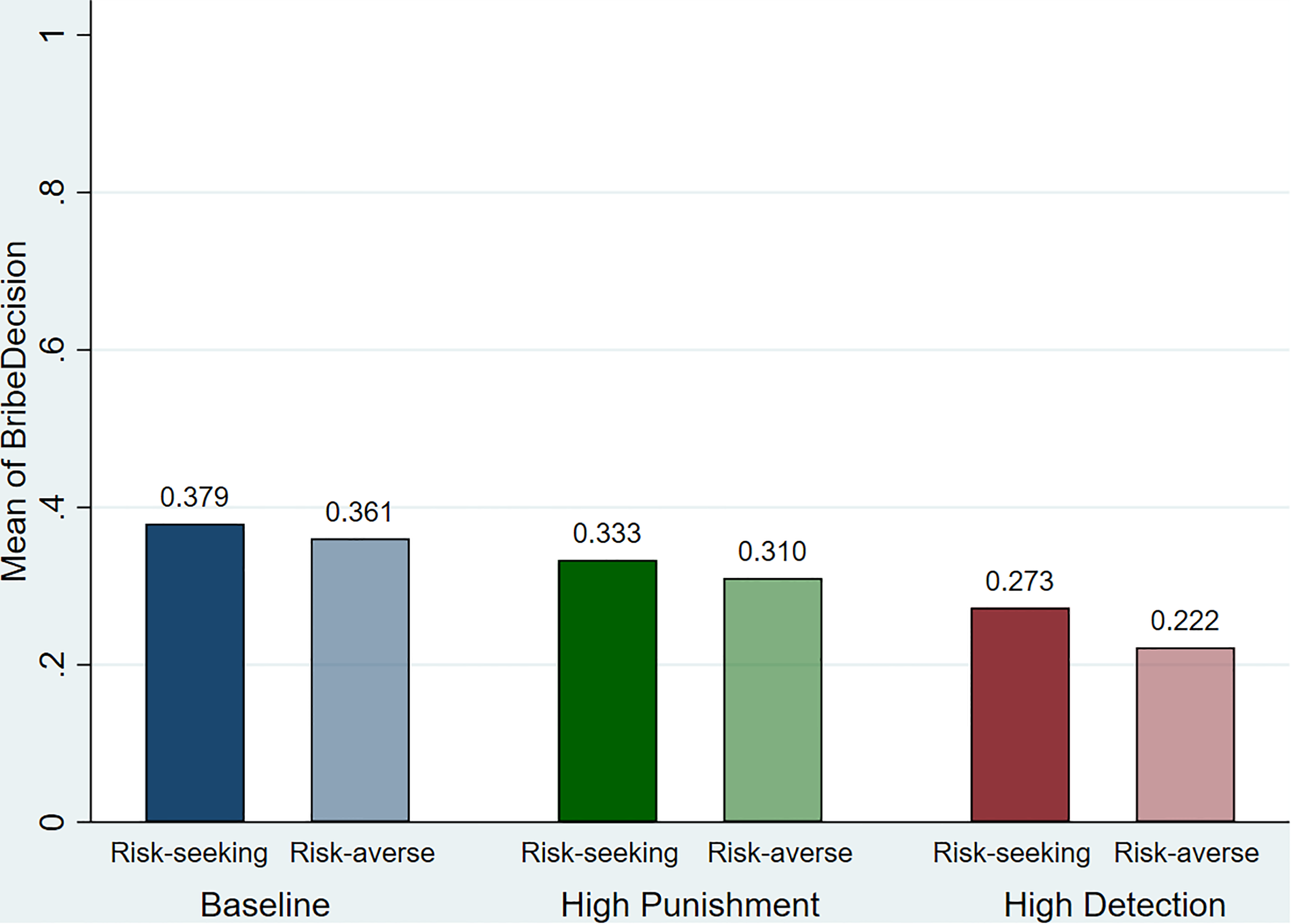
Mean decision to accept the bribe by treatment and risk preference.
Deterrence Factors
Table 4 outlines the probit regression results estimating the effect of the treatments on the subject's decision to accept the bribe while controlling for other factors. With the Baseline treatment as the reference, the results show a significant deterring (i.e., negative) effect of the High Detection treatment on the decision to accept the bribe, even though individuals usually tend to systemically underestimate the probability of being detected (e.g., Abbink et al., 2002; Kirchgässner, 1997). This effect is robust when including risk preferences, contest performance information, socio-demographic controls, competitive preferences, sporting background, and session and round fixed effects. The coefficient in model (5) of β = −0.633 (p = 0.024) translates to a reduction in the probability of accepting the bribe by 21.3%. The High Punishment treatment has a consistently negative effect as well. However, the effect is not significant (e.g., in model (5): p = 0.158).
Results of the Probit Regression (Bribe Decision).
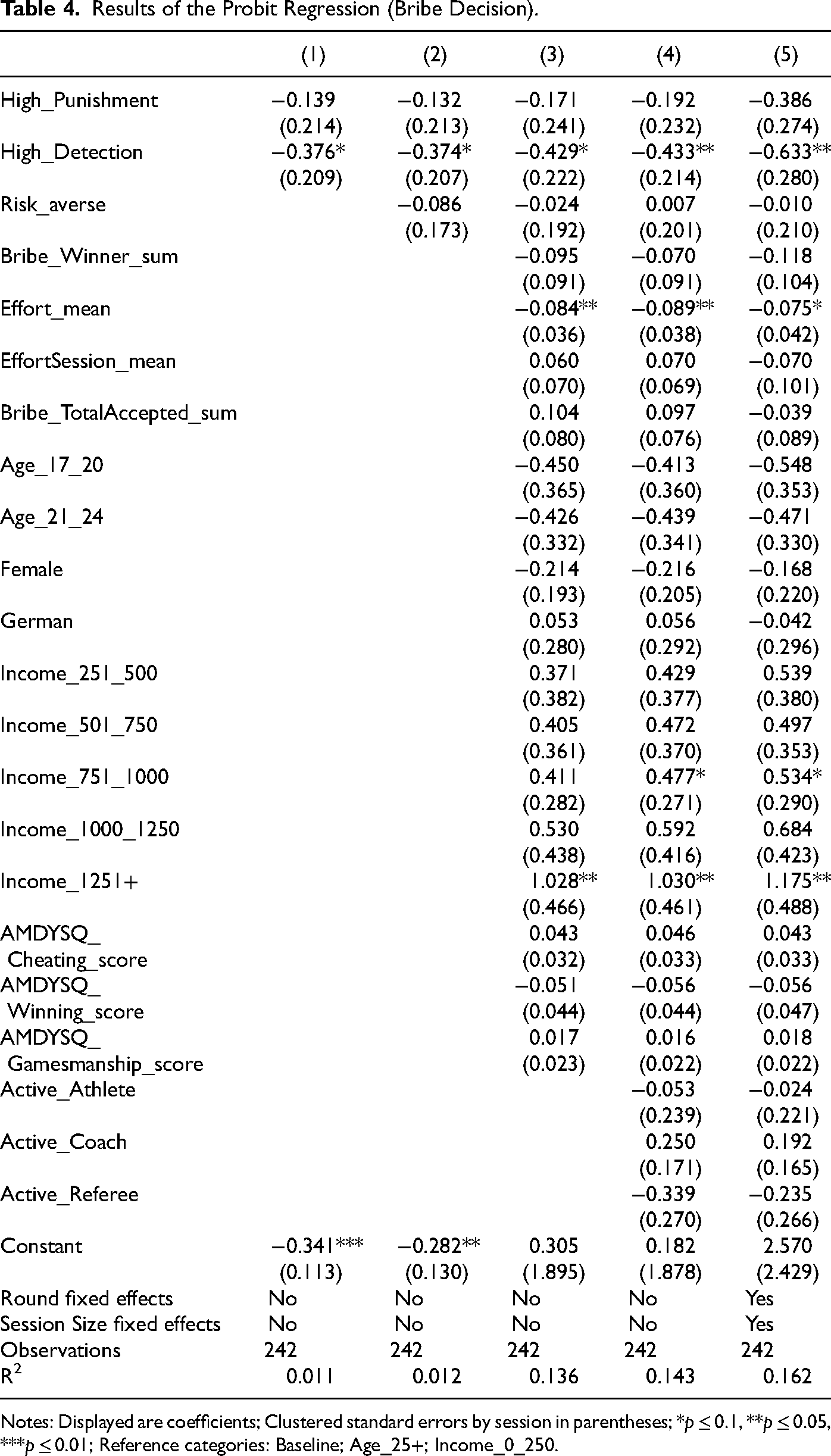
Notes: Displayed are coefficients; Clustered standard errors by session in parentheses; *p ≤ 0.1, **p ≤ 0.05, ***p ≤ 0.01; Reference categories: Baseline; Age_25+; Income_0_250.
Accordingly, only Hypothesis 2a can be confirmed, whereas Hypothesis 2b has to be rejected which is contrary to the deterrence hypothesis of Becker (1968). It should be noted that previous research, which has confirmed Becker's hypothesis in the context of corruption, has primarily relied on data from field experiments (e.g., Armantier & Boly, 2011; Schulze & Frank, 2003) with often only one deterrent factor being manipulated.
Moreover, those results also confirm Hypothesis 3 revealing that a higher deterring effect on accepting the bribe can be observed for an increase in detection probability in comparison to an equivalent increase in the severity of monetary punishment. Although our results indicate that risk-seeking individuals were more likely to accept the bribe, the difference between risk-seeking and risk-averse individuals was not significant and hence Becker's (1968) proposition that offenders are more likely to be risk-seeking cannot be confirmed. As a consequence, the differing risk preferences cannot be considered an important driver of the observed certainty effect. Instead, one potential explanation could be underlying social and moral norms and competitive preferences, as they should occur in contests independently from the severity of monetary punishment, but might be affected by the detection probability. That implies that irrespective of the severity of monetary punishment, a detected match-fixing behavior might cause more harm than the punishment such as social and reputation costs exposing the individual's violation of core sporting principles (e.g., integrity, sportsmanship) potentially leading to negative implications along the future sporting career (e.g., stigmatization, trust loss). The findings support the assumption that detection probability is the more influential deterrence factor to contestants.
Role of Performance and Other Control Variables
The results demonstrate that the previous performance measured by the subject's mean score in the slider task has a significant negative effect on the decision to accept the match-fixing offer. With previous performance representing a proxy for the winning probability of the subject, Hypothesis 4 can be confirmed
Interestingly, the previous number of rounds won also affected the decision to accept the bribe negatively, but this effect was not found to be significant. Consequently, individuals’ previous performance seems to matter more for potential match-fixing behavior than the actual outcome of that performance in the previous competition rounds. One explanation might be that due to the rank table individuals were able to assess their performance in the overall competition context and potentially classified their performance as rather weak even though they might have won some round prior to the bribe offer.
Accordingly, the probability of match-fixing behavior seems to be more prevalent among rather inferior contestants (e.g., athletes or teams) with weaker performance capabilities. As those contestants have smaller chances of winning through an honest competition and thereby have to forego prize money (e.g., win bonus) on the one hand and sporting honors (e.g., points or titles) on the other hand, they might be more receptive to corrupt behavior. Thereby, they might still forego sporting honors, but with successful match-fixing, they might financially compensate at least for the barely achievable prize money of the competition. Hence, organizers of competitions should be aware of this situation and ideally provide enough contest incentives and/or establish effective deterring factors for weaker contestants to reject match-fixing and compete in the spirit of sport.
Besides, out of the socio-demographic control variables higher income was identified to significantly affect the match-fixing decision. Each compared to the lowest income category as a reference, subjects with an income from 751€ to 1000€ have a 18.0% higher probability of bribe acceptance (in model (5): β = 0.534, p = 0.066) and subjects with an income above 1250€ indicate a 39.6% higher probability of deciding to fix (in model (5): β = 1.175, p = 0.016). Potentially, higher income among subjects implies that monetary assets are of bigger relevance and that consequently those individuals rather tend to accept the economically beneficial bribe. Particularly as this experiment's participants are comprised of students, this might be an explanation for this effect. Finally, subjects’ sporting background had no influence on the acceptance of match-fixing behavior. While on the one hand those subjects who have been or currently are athletes or referees are less likely to accept the bribe than those who have never been in these roles and on the other hand coaches are more likely to accept the bribe than non-coaches, all those effects are non-significant (e.g., in model (5): p = 0.914 for athletes, p = 0.376 for referees, and p = 0.244 for coaches) and therefore do not represent a systematic difference.
Level of Self-Sabotage
Even though the study generally focuses on the decision to engage in match-fixing and the subsequent performance was not central in the context of the experiment, it is worthwhile addressing the participants’ effort in rounds of self-sabotage. All subjects accepting the bribe offer self-sabotaged as their performance in the respective round was lower than their average performance of the previous rounds. Despite recent studies (e.g., Araujo et al., 2016; Erkal et al., 2018) finding that subjects exert high effort in real-effort tasks such as the slider task irrespective of monetary incentives, the weaker performance following the bribe acceptance demonstrates that subjects fully understood the match-fixing scenario and how they needed to behave to receive the bribe.
Figure 5 shows the distribution of the level of self-sabotage. Overall, 30 subjects (40.0%) did not position any slider correctly, thereby maximizing their probability of losing and thus receiving the bribe for match-fixing behavior. However, the other 60.0% of the sample who have accepted the bribe offer interestingly chose a level of self-sabotage between 1 and 15 correctly positioned sliders. One explanation could be that these subjects bore in mind that their performance is not completely unobservable due to the ensuing rank table, in which all performances of the preceding round – although on an anonymous level – are presented. In line with previous literature (Gill et al., 2019), it might be that rank feedback affected their competitive preferences and social and moral norms with the result that they did not want to make their attempt of losing (too) obvious. However, as the performance following the decision to accept the bribe was not the focal point of this study, it is definitely interesting to observe that all those subjects who accepted the match-fixing offer understood the scenario performing worse than in previous rounds, but nevertheless, three out of five subjects decided to show at least some effort in the round potentially to make the illicit behavior not (too) suspicious. However, the specific reasons for this remarkable behavior cannot be disclosed by this study.
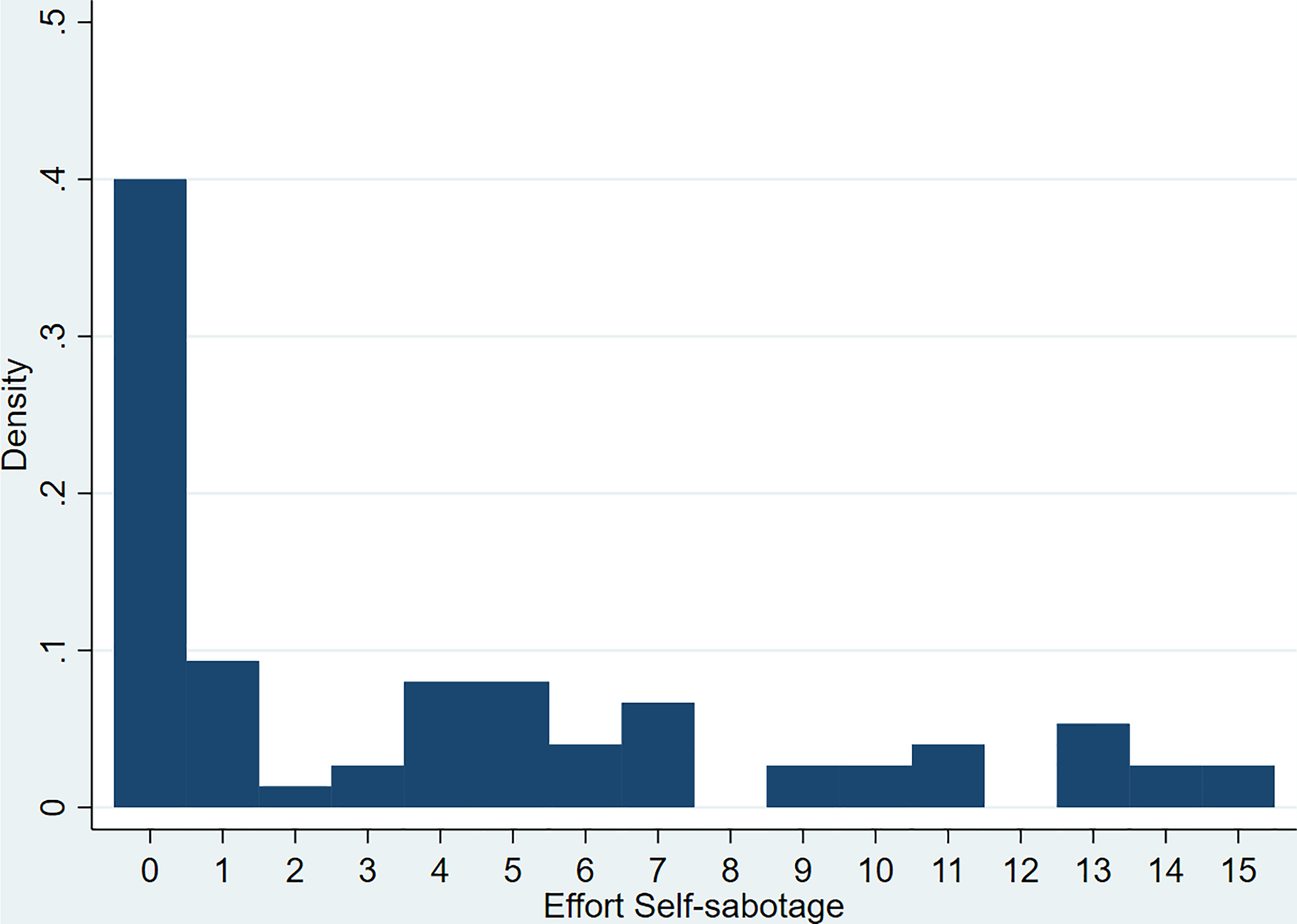
Effort distribution if the bribe was accepted.
Subsequently, in order to further analyze determinants of the level of self-sabotage with a particular focus on the treatments’ effects, a random-effects regression model for the dependent variable of the effort score for each round has been estimated with clustered standard errors by session (see Table 5). Its results reveal that in the round where a bribe offer was accepted, respective subjects engaged in match-fixing reducing their performance significantly across all three treatments. In the Baseline treatment, subjects correctly positioned, on average, 12.88 sliders less than in normal rounds. In the High Punishment treatment, a reduction in performance of 13.00 sliders can be observed. In the High Detection treatment, the underperformance was lower with −11.47 sliders representing the smallest performance reduction. However, a Chi-square test of the equality of coefficients revealed no significant differences among treatments (Baseline-High Punishment: p = 0.959; Baseline-High Detection: p = 0.492; High Punishment-High Detection: p = 0.454), indicating that the subsequent level of self-sabotage did not correspond to changes in the expected penalty of the prior decision to accept the bribe.
Results of the Random-Effects Regression (Effort).
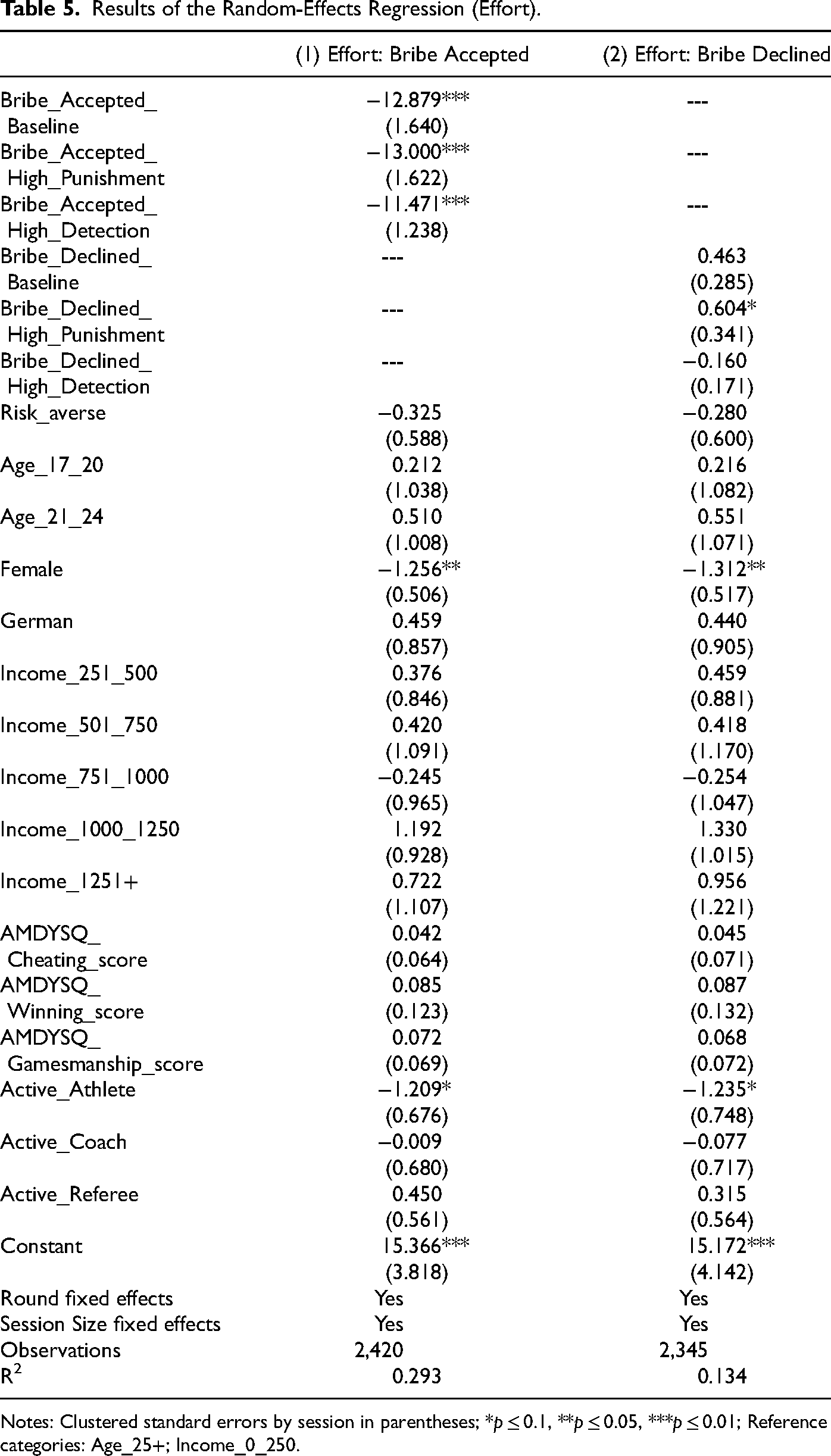
Notes: Clustered standard errors by session in parentheses; *p ≤ 0.1, **p ≤ 0.05, ***p ≤ 0.01; Reference categories: Age_25+; Income_0_250.
If the subject declined the bribe, no significant effect on the Baseline treatment and the High Detection treatment was observed. For the High Punishment treatment, the results reveal a small significant increase in performance. At last, the models highlight that males and subjects who have not been active as athletes in sports performed better in the real-effort task than females respectively subjects who have been or currently are athletes. The latter finding supports the assumption of the slider task to measure real-effort independent of prior expertise so that previous or current athletes are not at an advantage compared to non-athletes.
Conclusion
Match-fixing poses a major challenge to sport threatening its integrity and representing its most prominent corruption type nowadays. The present study adds to corruption research by investigating the specific form of corruption in contests where individuals have to self-sabotage in exchange for a bribe. Match-fixing in sporting competitions is a popular and evolving example for this corruption behavior. Due to its clandestine nature, studying corruptive behavior is challenging, as reliable data is often not available. As a consequence, a considerable body of economic research investigating the phenomenon of corruption and its underlying individual behavior in a laboratory setting has emerged. Likewise, a multi-round 2-player experimental contest based on a real-effort task was designed within this research to analyze match-fixing behavior. In order to test which deterrence factors influence the decision to accept a bribe and engage in match-fixing, a microeconomic perspective based on the model from Becker (1968) was chosen to investigate the effectiveness of the instruments detection probability and severity of monetary punishment via different treatments applying an expected utility framework.
The results reveal that more than two-thirds of the subjects participating in the experiment were not maximizing their monetary payoff by rejecting the match-fixing offer and by instead competing honestly. This finding serves as an indication that for those subjects, the costs of violating competitive preferences and social and moral norms exceeded the expected utility individuals derive from engaging in corruption. Hence, from this study, implications might be derived for sport governing bodies (i.e., the principal in this context) to lower corruption in sporting competitions. To prevent match-fixing and self-sabotage in sporting competitions, actively promoting the associated social and moral norms of a contest such as sportsmanship and emphasizing the importance of contestants’ competitive preferences or even increasing them could represent an effective mechanism.
The findings regarding the effect of the deterrence factors demonstrate that increasing the detection probability represents a more effective instrument compared to increasing the severity of monetary punishment when holding the expected penalty constant. This indicates a certainty effect but not a severity effect. However, as subjects were predominantly risk averse, this finding is not consistent with Becker's theory on general criminal behavior (1968). Risk preferences could not be identified as a determining factor of this certainty effect. After previous research already requested investments in prevention and detection programs to reduce the risk of match-fixing behavior (Forrest, 2018), the results of this study suggest that sport governing bodies should pursue policies to increase the detection probability when allocating resources to the fight against this specific corruption form. This could be implemented by increasing the detection rate of actual fixes through, for example, improving transparency and surveillance or enabling whistleblowing. However, the optimum scale of such investments in anti-corruption policies should depend on the contest's economic size and relevance.
Finally, the study indicates that individuals with a lower level of performance are more likely to accept bribes and self-sabotage in contests. One way to reduce the appeal to engage in corruptive behavior and self-sabotage in contests may be the introduction of specific relative performance incentives lowering the variance in effort (Dutcher et al., 2015).
The study has certain limitations that represent avenues for future research. First, the artificial environment of the experiment raises concerns about the extent of external validity. Although previous research has proven that laboratory experiments can analyze individual corruptive behavior accurately compared to the field (Armantier & Boly, 2013; Banerjee, 2016), it remains unknown if that holds for the particular context of this study. Second, the fact that the same institution, namely the experimenters, is responsible for rewarding, bribing, and auditing could potentially bias the result. Although this is a common problem when studying corruption in an experimental setting (e.g., Friesen, 2012), it certainly limits the findings’ generalizability. It should also be noted that individuals only had a certain amount of time to make their decision regarding the bribe offer. Even though the time slot was already extended in our experiment compared to the usual execution of the slider task, in reality they might take more time to reflect on such an offer. Moreover, the exact mechanisms driving the high proportion of subjects not maximizing their monetary payoff cannot be determined by the study at hand. More information on competitive and risk preferences and perceived social and moral norms are required.
In addition, (semi-)professional athletes theoretically should refrain from match-fixing even more than this study's subjects, due to the necessity of managing their careers in the long term. Reputation effects have been neglected in this experiment, but athletes need to protect their credibility which would suffer heavily from the detection of having been involved in match-fixing before (e.g., putting at risk future salary from clubs and/or sponsors). Hence, although subjects of this study have a sports background and a familiarity with participating in sporting contests, future research might approach (semi-)professional athletes to investigate their concrete corruption behavior comparing it with our findings and it also should consider reputation effects. Finally, more evidence for effective anti-corruption policies to reduce corruption in contests is needed. Similar to the study from Wu et al. (2020), who focused on doping behavior, future studies should aim to identify effective instruments and how detection probability and severity of monetary punishment can be combined optimally.
A very last avenue for future research might be the level of self-sabotage. Although not central to this study, the aspect has been raised, as the subjects’ adjusted performance levels after their decision to accept the match-fixing offer suggest a promising research field.
Supplemental Material
sj-docx-1-jse-10.1177_15270025221134239 - Supplemental material for Corruption and Self-Sabotage in Sporting Competitions – An Experimental Approach to Match-Fixing Behavior and the Influence of Deterrence Factors
Supplemental material, sj-docx-1-jse-10.1177_15270025221134239 for Corruption and Self-Sabotage in Sporting Competitions – An Experimental Approach to Match-Fixing Behavior and the Influence of Deterrence Factors by Thomas Giel, Sören Dallmeyer, Daniel Memmert and Christoph Breuer in Journal of Sports Economics
Footnotes
Declaration of Conflicting Interests
The author(s) declared no potential conflicts of interest with respect to the research, authorship, and/or publication of this article.
Funding
The author(s) disclosed receipt of the following financial support for the research, authorship, and/or publication of this article: This work was supported by the Federal Institute of Sports Science (BISp), Germany under Grant Number [2517BI1805].

Supplemental Material
Supplemental material for this article is available online.
Notes
Author Biographies
References
Supplementary Material
Please find the following supplemental material available below.
For Open Access articles published under a Creative Commons License, all supplemental material carries the same license as the article it is associated with.
For non-Open Access articles published, all supplemental material carries a non-exclusive license, and permission requests for re-use of supplemental material or any part of supplemental material shall be sent directly to the copyright owner as specified in the copyright notice associated with the article.
