



Abstract
This case report describes a decoding intervention that was developed for and implemented with a 15-year-old female with significant word-level reading challenges. The intervention integrated multiple evidence-based approaches to improve decoding, including instruction in (a) phonemes-graphemes (sounds-symbols) that the participant did not know at pre-test, (b) high-frequency morphemes, and (c) flexible syllabication. In addition to this, midway through the nine-session intervention, reading fluency opportunities were introduced through non-repetitive reading fluency practice with researcher feedback. Post-test assessments revealed improvements across all measures compared with pre-test scores including on oral and written language, decoding, spelling, sound-symbol knowledge, reading level, self-concept as a reader, and self-efficacy in reading. Particularly noteworthy was her growth of 1.5 standard deviations on a standardized decoding measure, two standard deviations on sound-symbol knowledge, and five grade-levels of her reading level. This intervention demonstrates promise as an efficacious and efficient way to treat adolescents’ decoding skills.
Speech-language pathologists (SLPs) have a direct role and responsibility in addressing literacy, including preventing literacy problems, identifying children at risk for literacy problems, and assessing and treating literacy (American Speech-Language-Hearing Association [ASHA], 2001). Given SLPs’ role in addressing literacy and the importance of literacy for life outcomes, it is imperative that SLPs address literacy. Supporting adolescents’ literacy skills is critical given that literacy is related to positive life outcomes such as employment, health, and education (DeWalt et al., 2004; Morrisroe, 2014; Park & Kyei, 2011; Schwerdt et al., 2020). Conversely, low literacy skills are related to negative outcomes including incarceration and school delinquency (Hopkins & Clegg, 2022; Purvis et al., 2014). For these reasons, it is imperative that adolescents who have word reading challenges, many of whom may have language disorders given the language basis of these skills (Law & Ghesquière, 2017; Nagy et al., 2006; Swank & Catts, 1994), receive the specialized instruction needed to improve their decoding skills. It is especially important that they receive this support before transitioning out of high school when they will no longer have access to a free appropriate public education (Section 504, Rehabilitation Act of 1973).
Presently, further research is needed for interventions aimed at specifically improving adolescents’ word-level reading or decoding skills, which is a critical component of literacy (Hoover & Gough, 1990). Meta-analytic reviews reveal a scarcity of studies focused on decoding interventions for adolescents compared with other literacy components, such as reading comprehension and vocabulary (Calvi et al., 2023; Scammacca et al., 2007).
Evidence-Based Approaches for Decoding Intervention
Adolescents who struggle to decode are often reading multiple years below their grade level and require individualized and intense interventions for these skills to be remediated (Biancarosa & Snow, 2006). The extant literature points to various practices that have been found to be effective for improving adolescents’ decoding skills, including explicit instruction in (a) phonemes and graphemes, (b) morphology, and (c) flexible syllabication. Each of these approaches are described below.
Phoneme-grapheme instruction involves teaching the mapping of speech sounds (phonemes) to letters (graphemes), such as teaching that the phoneme /θ/ is represented by the grapheme “th” in written language. Phoneme-grapheme instruction provided to adolescents who have decoding challenges has been found to result in significantly improved decoding skills (e.g., Warnick & Caldarella, 2016).
Morphological awareness has been found to be a particularly important indicator of literacy skills for adolescents (Kuo & Anderson, 2006; Nagy et al., 2013). Instruction in morphological awareness involves the study of morphemes in words and often focuses on teaching high-frequency root words (e.g., aqua: water, scrib/scribe: to write), prefixes (e.g., re-: again, un-: not), and suffixes (e.g., -ed: past tense verb, -less: without; see Apel, 2014) and their meanings. Teaching morphology improves not only the decoding of multisyllabic words, but because of its inclusion of meaning, it can influence other important literacy skills such as reading comprehension and vocabulary (Bowers et al., 2010; Goodwin & Ahn, 2013). For example, increasing morphological awareness might help a reader segment the word undeveloped to these morphemes: un, develop, and ed. This would aid them in both decoding the word and understanding the meaning of the word. If they know that the morpheme un means “not” and -ed as changing the word to a past tense, they might understand that undeveloped is the past tense form of not develop.
Flexible syllabication is a more flexible approach and an alternative to traditional rules-based syllabication. Traditional syllabication typically focuses on teaching the syllable types (e.g., closed syllable, open syllable, and vowel team syllable) and the corresponding rules, and steps for segmenting multisyllabic words into syllables (e.g., Diliberto et al., 2008). One example of a traditional syllabication rule is to divide a VCCV word (e.g., after) by dividing the word between the two consonants (e.g., af-ter). The flexible syllabication approach is different from the more traditional syllabication approaches in that the only “rule” that is taught is that each syllable contains a vowel sound (e.g., “a,” “oo”), and students are guided to flexibly segment a multisyllabic word by identifying graphosyllabic word parts, greatly simplifying the syllabication process (Bhattacharya, 2020). For example, the word after would be divided as af-ter under the traditional syllabication approach, but the flexible syllabication approach would consider aft-er as another acceptable way to segment the word into its syllables. Flexible syllabication intervention has been found to be effective in significantly improving adolescents’ decoding skills of multisyllabic words in a short amount of time (Bhattacharya & Ehri, 2004).
In addition to these evidence-based practices for decoding, there is evidence for the benefits of practicing decoding with: (a) encoding (i.e., spelling) and (b) reading connected sentences to promote reading fluency. The impact of spelling on decoding was evidenced in a meta-analysis by Graham and Santangelo (2014), which revealed spelling intervention to have positive, statistically significant effects on students’ word reading skills with an effect size of 0.40. Regarding reading fluency, a meta-analysis by Zimmermann and colleagues (2021) revealed that non-repetitive reading fluency interventions with an adult listening and providing feedback or prompts as necessary were found to be positive and statistically significant. This seems to be an appropriate method in the context of speech-language therapy that may occur in individual or small group settings.
Adolescents and Literacy
There are unique factors to consider in working with adolescents with decoding challenges. First, there may be environmental or socioeconomic factors that may have resulted in a disruption in their early learning years when they would otherwise have received decoding instruction. The disruption in schooling may be due to various reasons, such as school truancy or extended hospitalization. In circumstances in which students may not have had an environmental disruption to their learning, decoding instruction in their early elementary years may not have been based on evidence-based methods of teaching decoding that are systematic and explicit (National Institute of Child Health and Human Development, National Institutes of Health [NIH], U.S. Department of Health and Human Services [DHHS], 2000). Second, due to the cumulative effects of decoding challenges over multiple years, they may have decreased reading motivation or self-efficacy compared with those without reading disabilities (Taboada et al., 2009; Yahyazadeh et al., 2016). Third, adolescents who have literacy challenges have heterogeneous reading profiles (Dennis, 2013; Yi, 2023) requiring targeted and individualized interventions (Nippold, 2016; Biancarosa & Snow, 2006). These unique considerations necessitate increased understandings of effective language and literacy interventions that can address the diverse and nuanced needs of adolescents.
The need for increased research and understanding of effective interventions for adolescents with decoding needs are substantiated by current indications that a substantial subgroup of adolescents require support in this area (Shapiro et al., 2024). In addition, there is evidence of very limited training in addressing the spoken and written language needs of adolescents in speech-language programs (Nellenbach et al., 2024), necessitating increased clinical guidance for SLPs who work with adolescents. A recent survey found that a majority of SLPs (68%) reported wanting more training in decoding interventions (Yi & Erickson, 2024), suggesting a need for clinical understandings of decoding interventions in speech-language therapeutic contexts.
The Present Case Study
The purpose of this study was to investigate the impact of a reading intervention, which was developed to address an adolescent’s significant word-level reading challenges. The impact was measured by the participant’s growth on literacy measures from pre-intervention to post-intervention. The intervention integrated multiple evidence-based approaches to teaching decoding, including explicit instruction in sound-symbol knowledge, morphological awareness instruction, and flexible syllabication with opportunities to read and spell words and to practice non-repetitive reading fluency. The outcomes of this intervention may offer practical insights for SLPs engaged in the assessment and treatment of foundational reading skills amongst adolescents.
Method
Pre-Intervention
Participant Case History
The participant, referred to as “Cam” (a pseudonym), is a 15-year-old female who expressed to her mother the need for literacy support due to ongoing literacy challenges. Given this, the mother then connected with the researcher. The study was approved by the Office of Human Research Ethics at the university where the researcher is employed. Cam and the parent provided informed consent and assent, respectively, for participation in the study. The researcher, a postdoctoral researcher (PhD, CCC-SLP) with 15 years of clinical experience in supporting the language and literacy needs of school-age students, was involved in all aspects of the study, including the interview, assessment, and intervention.
Based on an interview with the mother, it was revealed that Cam was adopted 2 years ago and had lived in various foster homes from kindergarten until her adoption. She had experienced traumatic events, such as being removed from her biological home and placed into foster care in kindergarten, having multiple extended hospitalizations in her childhood due to a chronic condition, and being separated from her biological brothers.
Since being adopted, Cam had communicated to her adoptive parents about her persistent struggles with literacy and had requested support. According to her mother, Cam had never received academic support, and there was no documented history of language or learning challenges or diagnoses. In eighth grade, Cam received nearly failing grades in English, Social Studies, and Spanish. Her parents requested a school evaluation, but the school deemed that she did not qualify for services. She started attending a private high school with the hopes of having more literacy support, but none was provided in the high school.
In an interview with Cam, she reported struggling with reading and writing and described English language arts and history as the most challenging subjects. She mentioned having “trouble saying big words” and described herself as a “slow reader” who “stutters a lot” when reading. She stated that she had been aware of these challenges for some time, but no teachers had offered her assistance.
Assessments and Pre-Intervention Scores
Assessments were selected to measure Cam’s literacy skills, as this was an area of concern reported by both Cam and her mother. Oral language was also assessed to determine whether her decoding challenges may be rooted in a language disorder (Adlof & Hogan, 2018). The assessments included the Test of Integrated Language & Literacy Skills (TILLS; Nelson et al., 2016), the TILLS Student Language Scale (Nelson et al., 2016), the Word Identification and Spelling Test (WIST; Wilson & Felton, 2004), the Qualitative Reading Inventory (QRI) 3 (Leslie & Caldwell, 2001), the Reading Self-Efficacy Questionnaire (Carroll & Fox, 2017), and the Motivation to Read—Revised questionnaire (Malloy et al., 2013). Descriptions of each of the assessments and Cam’s pre-intervention performance on these assessments are described below.
TILLS and Student Language Scale
Description
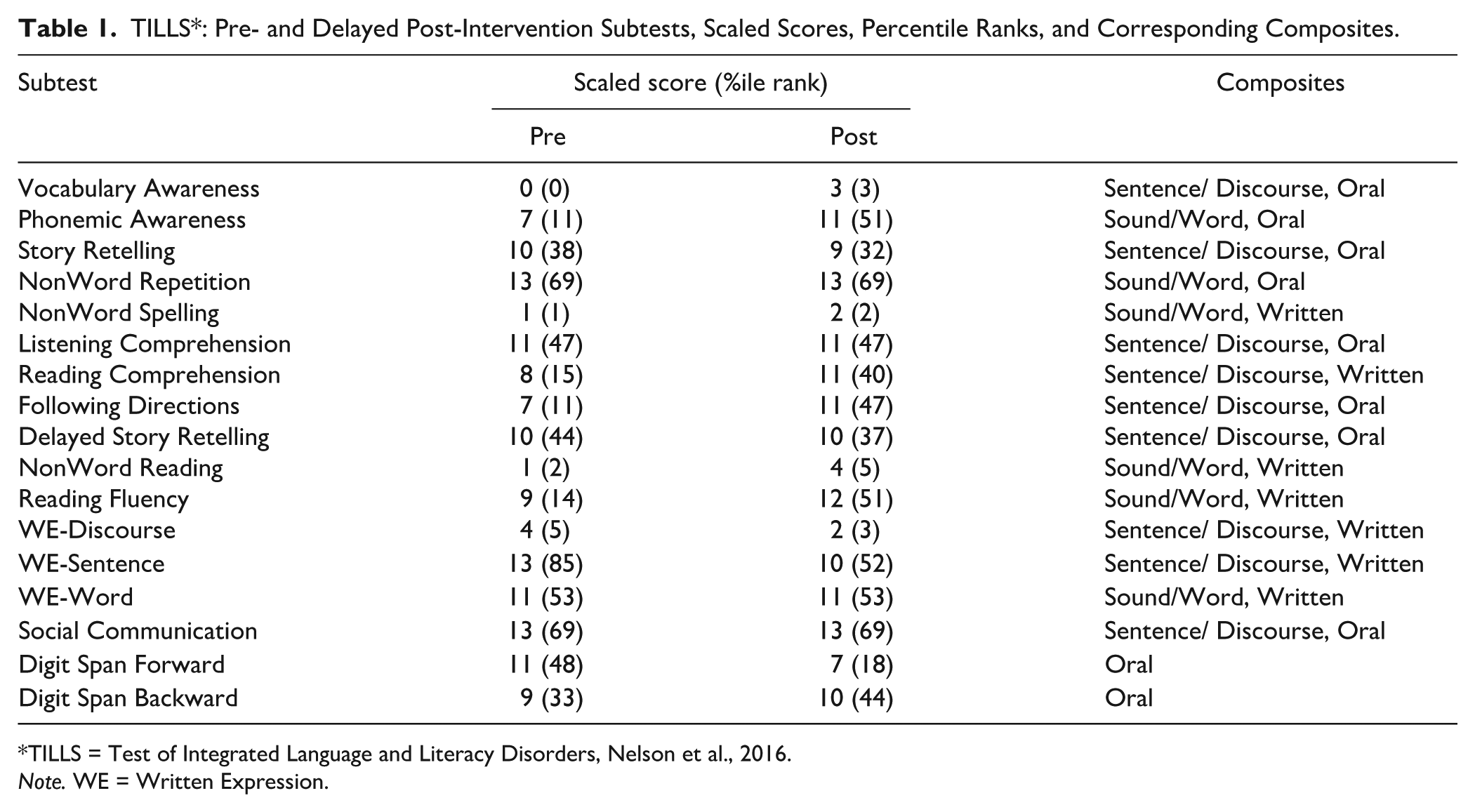
The TILLS is a norm-referenced test that assesses the spoken and written language skills of school-age children, ages 6 to 18 (Nelson et al., 2016). This test was chosen for its comprehensive assessment of oral and written language skills at the sound/word level and sentence/discourse level, resulting in four composites: Oral Composite, Written Composite, Sound/Word Composite, and Sentence/Discourse Composite. There are 15 subtests as listed in Table 1. It also has adequate sensitivity and specificity rate (87% for 14- to 18-year-olds). The mean standard score is 100 with a standard deviation of 15. The TILLS Student Language Scale is a questionnaire completed by the student and an adult about the student’s spoken and written language skills, strengths, areas of need, and interests. Cam and her mother completed this questionnaire separately.
TILLS*: Pre- and Delayed Post-Intervention Subtests, Scaled Scores, Percentile Ranks, and Corresponding Composites.
TILLS = Test of Integrated Language and Literacy Disorders, Nelson et al., 2016.
Note. WE = Written Expression.
Pre-Intervention Scores
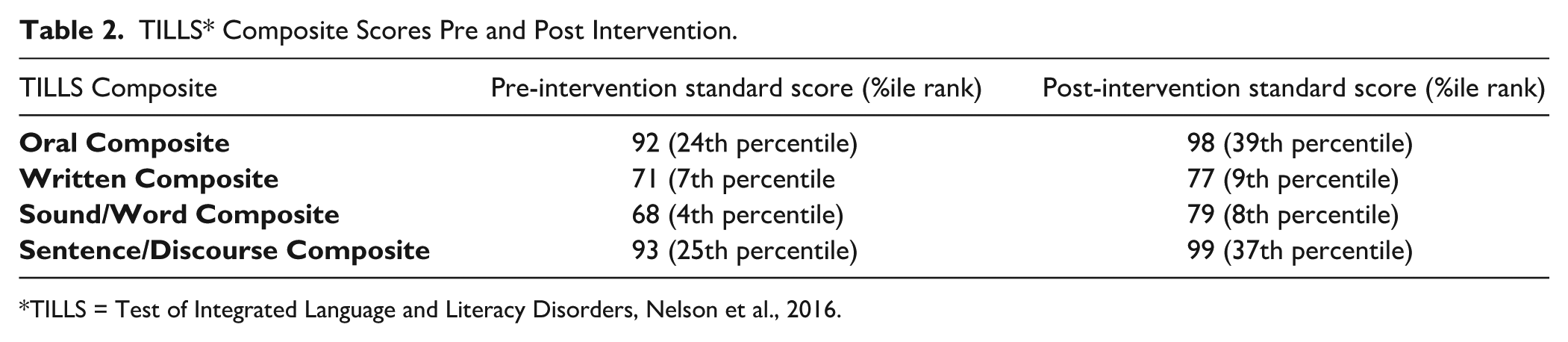
Cam’s scaled scores of the TILLS subtests are displayed in Table 1 and the standard scores and percentile ranks of the TILLS composite scores are displayed in Table 2. Cam’s Sentence/Discourse Composite and Oral Composite were both within the average range. However, her Written Composite standard score was 71 and her Sound/Word Composite was 68, both of which were below average. This pattern was consistent with interviews with the parent and participant in which written language was reported as an area of concern, but oral language was not. It was noted that although Cam’s scaled score was 0 on the Vocabulary Awareness subtest, she stated that she was not familiar with a few of the words (e.g., cardinal, sphinx, hatchet, and canary), which was likely due to a lack of prior knowledge or exposure to those words.
TILLS* Composite Scores Pre and Post Intervention.
TILLS = Test of Integrated Language and Literacy Disorders, Nelson et al., 2016.
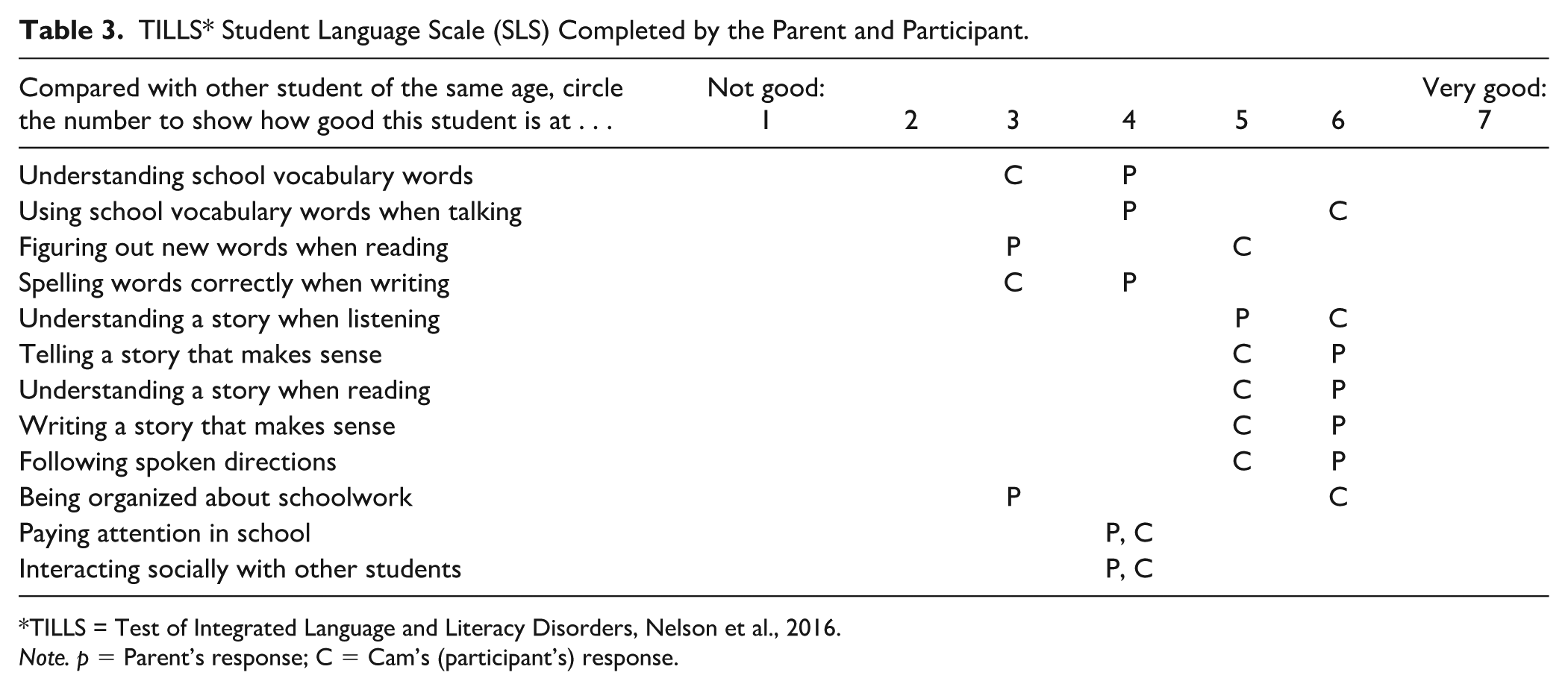
On the TILLS Student Language Scale, both Cam and her parent reported relative strengths in Cam’s understanding and telling a story in both spoken and written language forms and in following spoken directions. They both reported relative weaknesses in Cam’s understanding of school vocabulary words, spelling words correctly when writing, paying attention in school, and interacting socially with other students. However, Cam rated her skills in these areas as much higher than her parent’s scores with differences by at least two on a scale of one to seven: (a) using school vocabulary words when talking, (b) figuring out new words when reading, and (c) being organized about schoolwork. The full results are displayed in Table 3.
TILLS* Student Language Scale (SLS) Completed by the Parent and Participant.
TILLS = Test of Integrated Language and Literacy Disorders, Nelson et al., 2016.
Note. p = Parent’s response; C = Cam’s (participant’s) response.
Word Identification and Spelling Test
Description
The WIST is a nationally standardized diagnostic measure for assessing a student’s word reading and spelling skills, normed for ages 7;0 to 18;11 (Wilson & Felton, 2004). This test was chosen to assess Cam’s reading and spelling of regular and irregular words on the Read Regular Words, Read Irregular Words, Spell Regular Words, and Spell Irregular Words item sets, and her sound-symbol knowledge on the Pseudo Words and Letter Sounds item sets. The WIST describes regular words as printed words “whose letters correspond in regular patterns to the sounds of these words when they are spoken” (e.g., drive, belong, providing) and irregular words as printed words “that deviate from these regularly recurring grapho-phonemic patterns” (e.g., does, once, island; Wilson & Felton, 2004, p. 2).
Information from the Letter Sounds set of the Sound-Symbol Knowledge subtest was used to diagnose and prescribe the intervention plan as “the diagnostic information can be used in phonetically based reading programs to guide and assess instruction” (Wilson & Felton, 2004, p. 2). In this set, students are shown the letters in print, and they are instructed to say the sound(s) represented by each item. These items include all the consonants (e.g., b, c, d), all the vowel sounds (e.g., a, e, er, oy, ie), additional sound patterns (e.g., -tion, -ink, -cious), and diagraphs/triagraphs (e.g., sh, wh, -dge). The mean standard score is 100 with a standard deviation of 15.
Pre-Intervention Scores
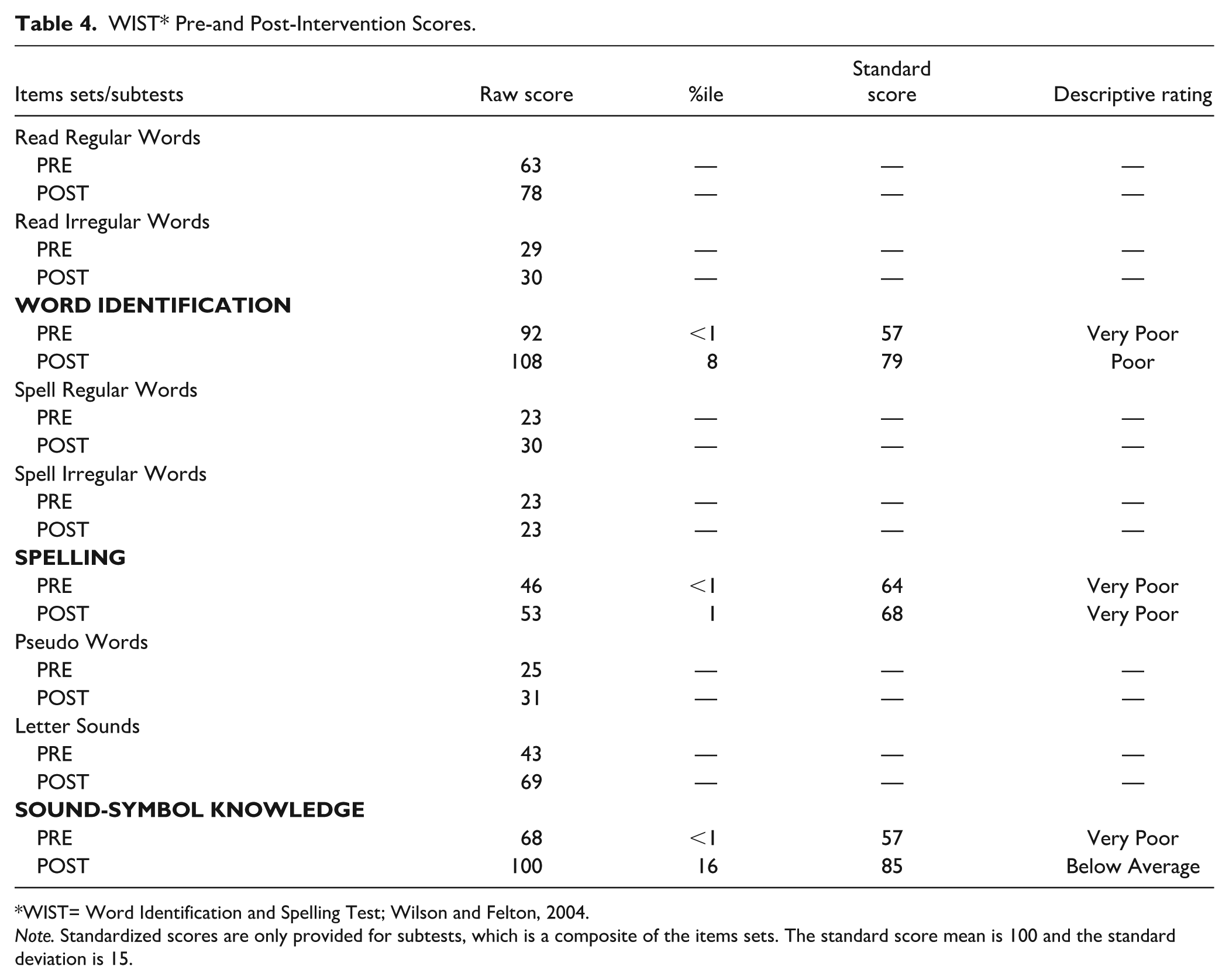
As displayed in Table 4, Cam scored very poorly across all subtests and item sets on the WIST with percentile scores of less than one. Her Word Identification subtest score was 57 (very poor), which was nearly three standard deviations (SD) below the mean of 100. Her Spelling subtest score was 64 (very poor), and her Sound-Symbol Knowledge subtest was 57 (very poor), which was also nearly three SD below the mean. In addition, it was observed that Cam’s reading and spelling of irregular words, which were high-frequency words with no more than two syllables, was much stronger than her reading and spelling of regular words. She accurately read almost all the irregular words (raw score: 29/30) and accurately spelled the majority of irregular words (raw score: 23/30). In contrast, her reading and spelling of regular words were lower, with accurate reading of only 63/100 (raw score) and accurate spelling of only 23/100 words (raw score). This, and her very low scores on the Sound-Symbol Knowledge subtest, indicated that her reading challenges were likely due to a very limited knowledge of the sounds of letters (i.e., symbols), affecting her ability to decode unfamiliar words.
WIST* Pre-and Post-Intervention Scores.
WIST= Word Identification and Spelling Test; Wilson and Felton, 2004.
Note. Standardized scores are only provided for subtests, which is a composite of the items sets. The standard score mean is 100 and the standard deviation is 15.
Qualitative Reading Inventory
Description
The QRI 3 is an individually administered informal reading inventory that measures students’ word identification and reading comprehension of grade-level words and passages (Leslie & Caldwell, 2001). This was used to measure Cam’s reading fluency and reading comprehension of texts at different grade levels to determine her reading grade level. These reading levels are a measure of decoding, reading fluency, and reading comprehension. The grade-leveling of passages on the QRI are based on readability formulas that account for word difficulty and sentence complexity.
Pre-Intervention Scores
Based on the results of the QRI, Cam’s independent reading level was in the third grade. Her instructional reading level was in the fourth grade. Given that Cam was in the ninth grade at the time of these assessments, her independent reading level was estimated to be 6 years below her current grade level, and her instructional reading level was estimated to be 5 years below her current grade level.
Questionnaires
Descriptions
Two questionnaires were administered to measure Cam’s reading self-efficacy and her motivation to read: the Reading Self-Efficacy Questionnaire and the Motivation to Read—Revised questionnaire. The Reading Self-Efficacy Questionnaire is a self-administered questionnaire designed to measure students’ self-efficacy in reading (Carroll & Fox, 2017). The scale ranges from 1 (very certain I cannot do) to 7 (very certain I can do). The Motivation to Read—Revised questionnaire is a self-administered questionnaire intended to measure students’ self-concept as readers and their value of reading. It includes a reading survey and conversational interview (Malloy et al., 2013). This questionnaire was selected to compare Cam’s self-concept as a reader and her overall value for reading.
The same assessments were also administered post-intervention to compare pre- and post-intervention scores. However, the Sound-Symbol Knowledge subtest of the WIST, the Motivation to Read Profile–Revised conversational interview portion, and the TILLS Student Language Scale were only administered pre-intervention. These were used to establish baseline information about Cam’s sound-symbol knowledge which was used to inform the intervention plan, reading motivation, and language skills as perceived by Cam and her parent. The WIST’s Read Regular Words, Read Irregular Words, Spell Regular Words, and Spell Irregular Words item sets, the QRI, the Reading Self-Efficacy Questionnaire, and the Motivation to Read—Revised questionnaire were administered immediately post-intervention to compare pre- and post-intervention scores. In addition, the TILLS was administered 6 months after the first administration (i.e., pre-test) as the delayed test, following the TILLS manual guidelines of a minimum of 6 months between the initial test and re-test. The pre-intervention outcomes of each of the measures are described below.
Pre-Intervention Scores
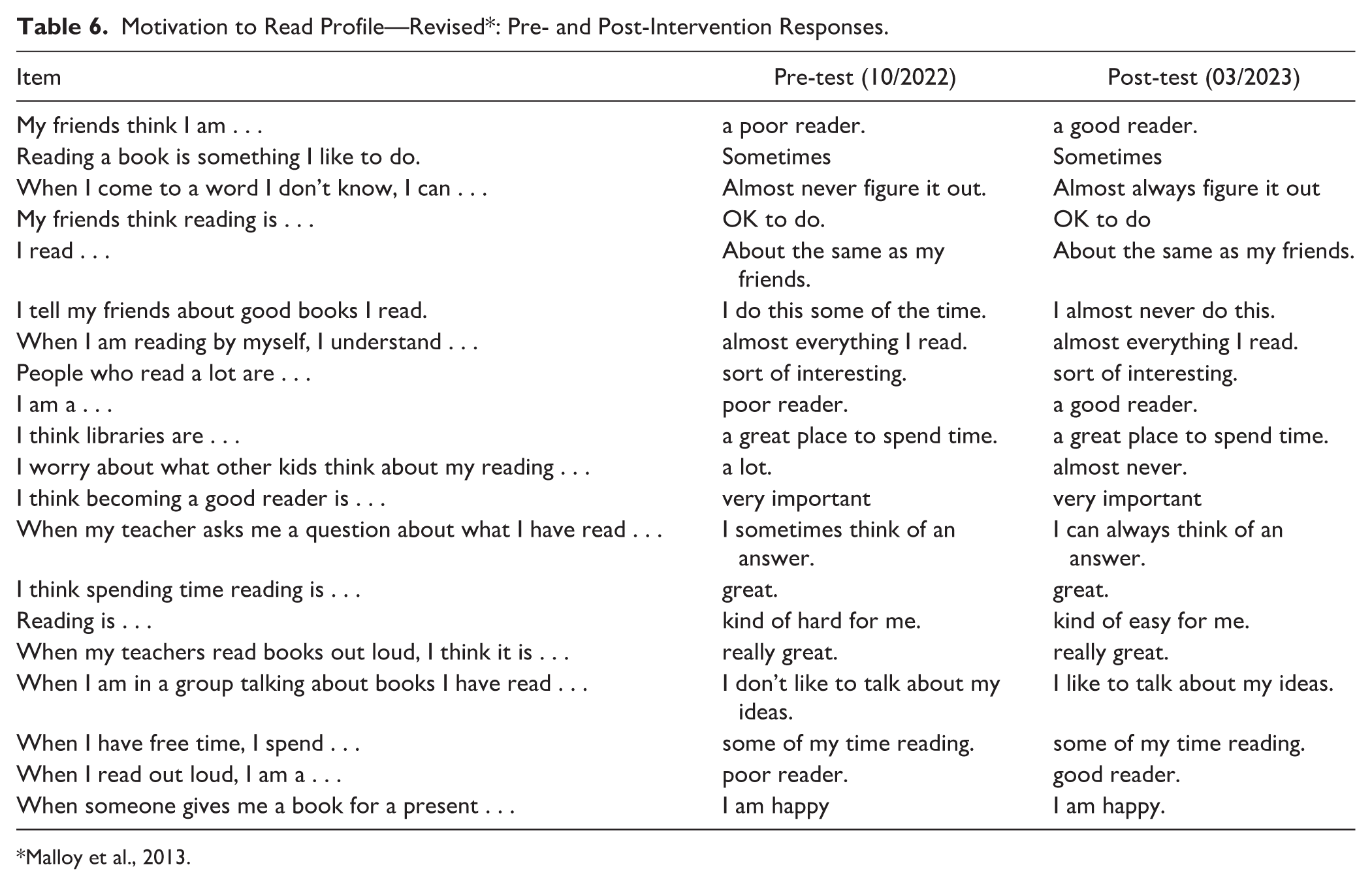
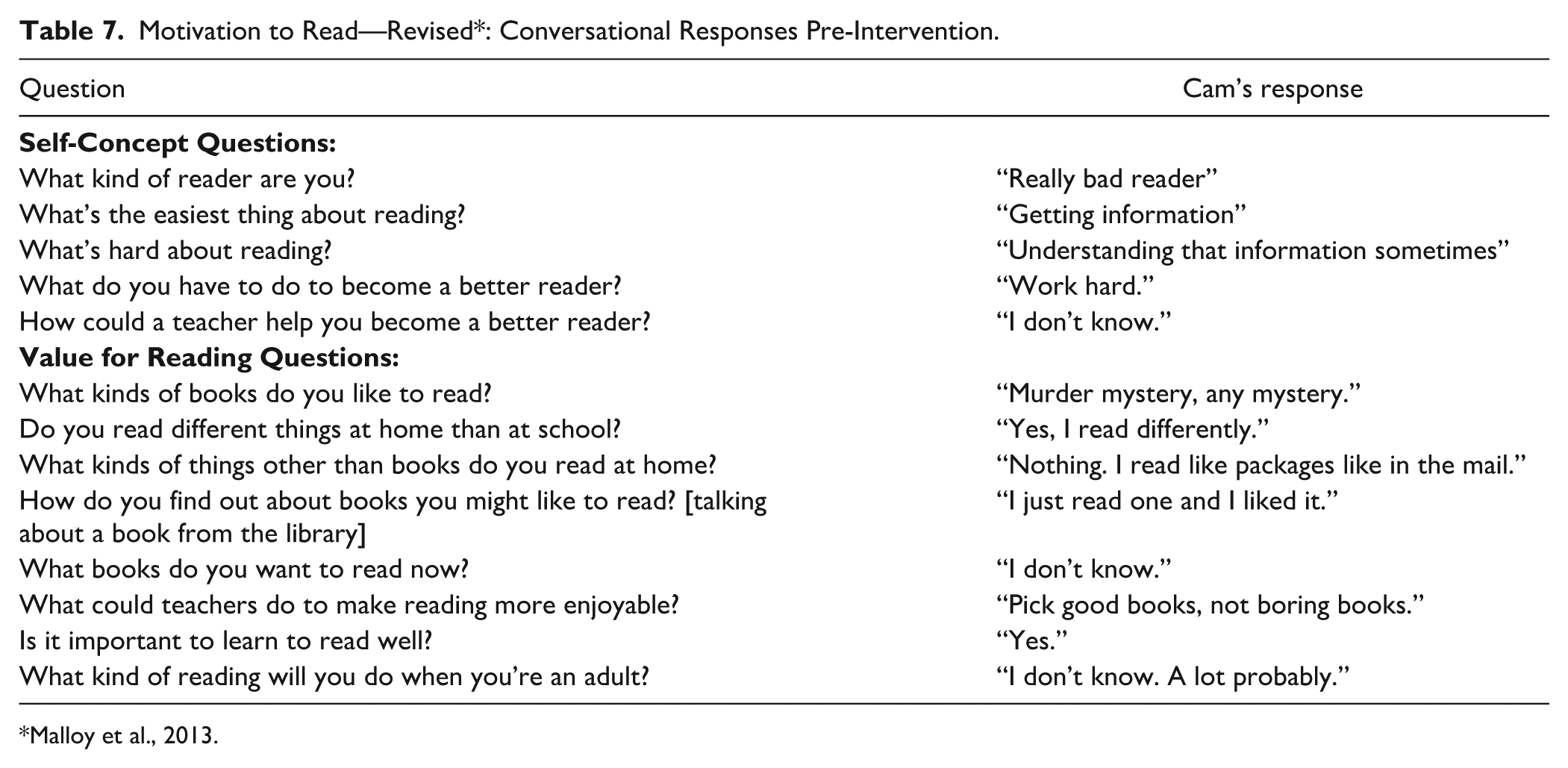
As displayed in Table 5, Cam’s mean score on the Reading Self-Efficacy Questionnaire was 3.22 of 7. As shown in Table 6, on the pre-test of the Motivation to Read—Revised questionnaire, Cam scored 45% (18 out of 40) on the Self-Concept subscale and 77.5% (31 out of 40) on the Value subscale, indicating that she had a low self-concept of herself as a reader relative to her value for reading, which was higher. Cam’s responses to the conversational interview questions about her self-concept as a reader on the Motivation to Read—Revised questionnaire at pre-intervention are in Table 7. Cam’s overall responses on this questionnaire corroborated the relatively low ratings on the Reading Self-Efficacy Questionnaire and Motivation to Read’s Self-Concept subscale.
Reading Self-Efficacy Questionnaire*.
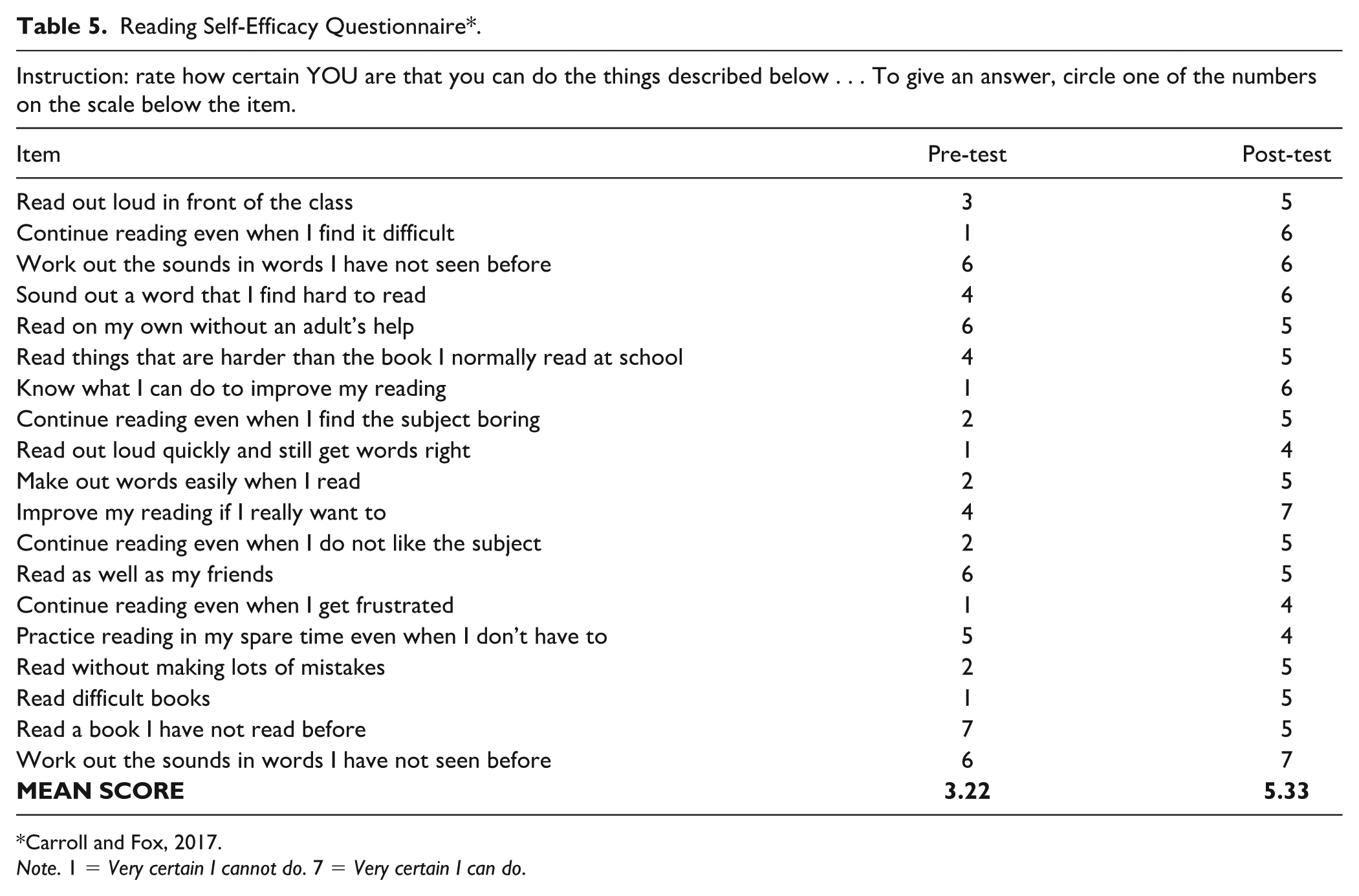
Note. 1 = Very certain I cannot do. 7 = Very certain I can do.
Motivation to Read Profile—Revised*: Pre- and Post-Intervention Responses.
Motivation to Read—Revised*: Conversational Responses Pre-Intervention.
Based on all the pre-intervention measure outcomes, Cam appeared to have a profile of dyslexia, as evidenced by weak word recognition and strong language comprehension. However, this appeared to stem from a lack of sound-symbol knowledge rather than poor phonemic awareness, which is typically an underlying cause of decoding challenges related to dyslexia (International Dyslexia Association, 2020).
Intervention
After the administration of the pre-tests, the researcher created an intervention plan based on the results of the pre-tests. After explaining the results of the pre-intervention assessments and the proposed intervention plan to Cam and her parent, the researcher requested feedback or suggestions for the intervention plan. They both approved of the plan with no suggestions for modifications to the intervention plan.
The researcher then provided individual, 1-hr intervention sessions over a span of 3 months, totaling nine sessions. The frequency was originally set to once a week, but due to scheduling conflicts (e.g., holidays, participant’s extracurricular events), the nine sessions were provided over a span of 3 months. The dosage and frequency were partially determined by the participant, her family’s, and the researcher’s availability.
Grapheme-Phonemes, Prefixes, and Suffixes
The intervention focused on systematic, targeted, and explicit instruction of graphemes-phonemes that Cam did not correctly identify in the Sound-Symbol Knowledge subtest of the WIST and high-frequency prefixes and suffixes (Lane et al., 2019; Manyak et al., 2018). These were the graphemes for which she provided an incorrect or no phoneme. The graphemes and morphemes taught, along with corresponding practice words for reading and spelling in each intervention session, are listed in Table 8. The practice words were selected to include target graphemes/phonemes and morphemes in addition to previously learned morphemes and graphemes/phonemes when possible. These words were located by searching online.
Graphemes, Prefixes, and Suffixes Taught and Practiced in Each Intervention Session.
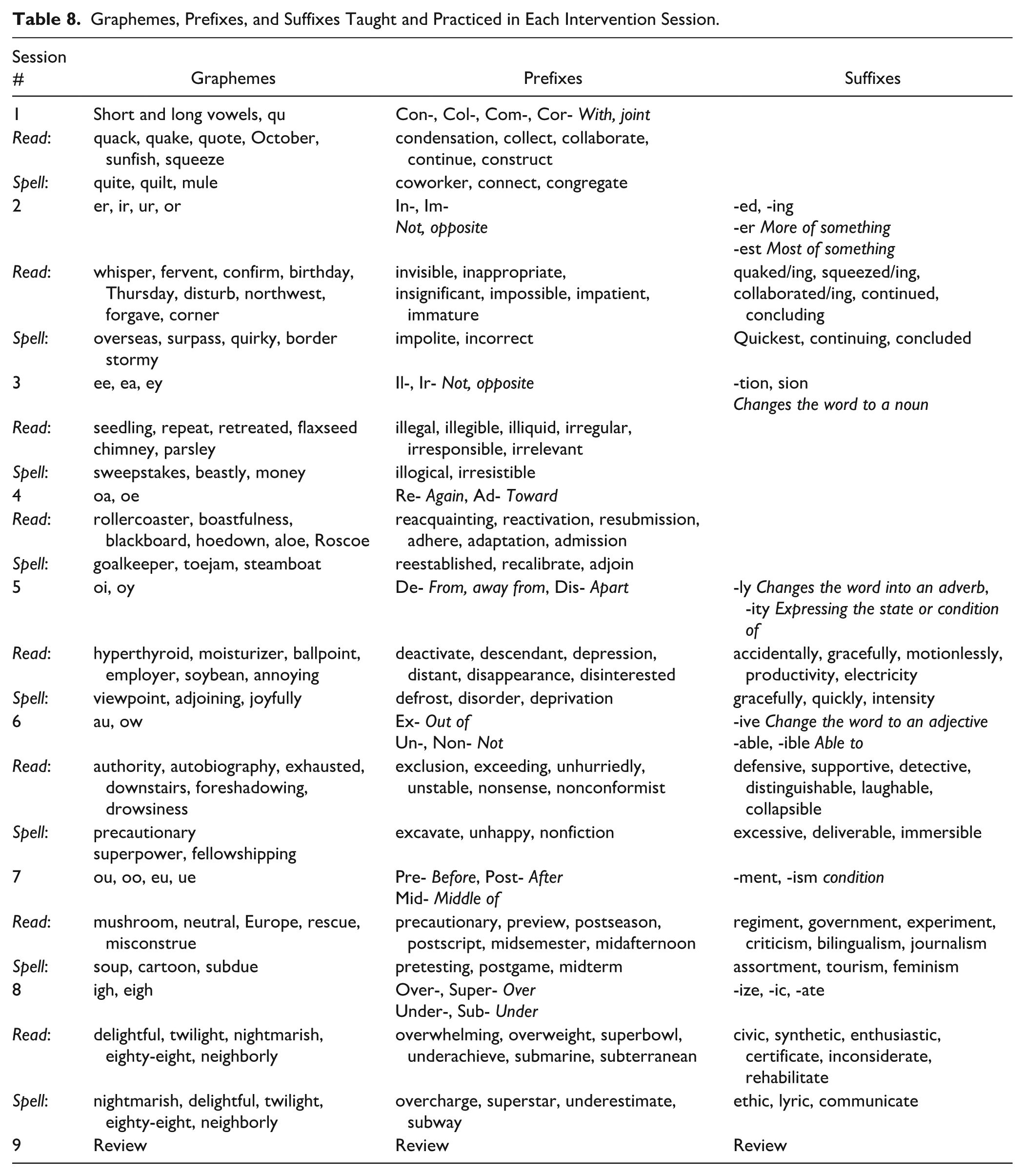
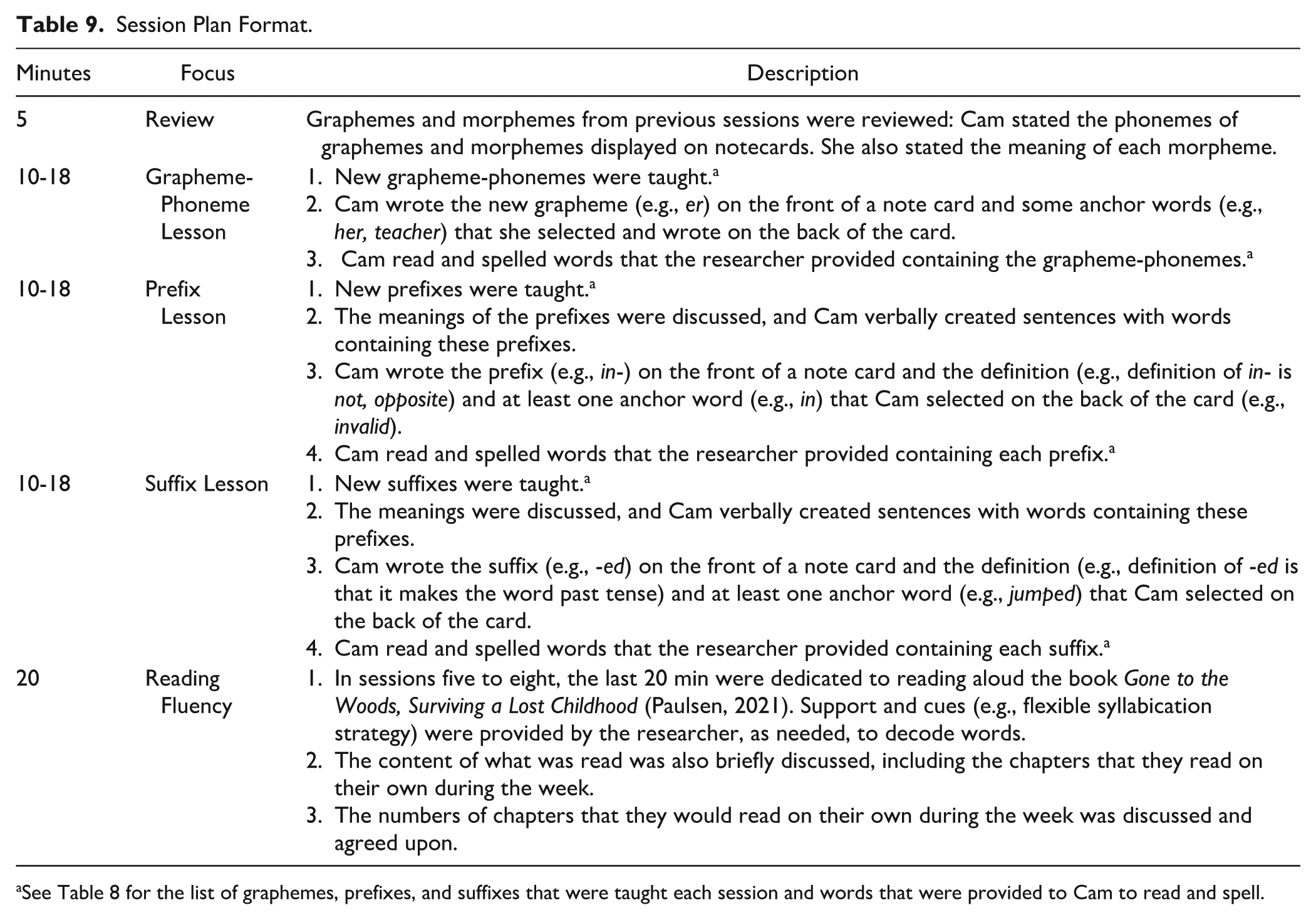
As outlined in Table 9, each session began with a review of the sounds and/or meanings of previously taught graphemes, prefixes, and suffixes. This was followed by a lesson on new graphemes, prefixes, and suffixes. Each of the graphemes, prefixes, and suffixes were written on the front of color-coded index cards for review during the week and subsequent weeks. On the back of each card, Cam thought of and wrote one to two anchor words, and she wrote the meaning of each prefix and suffix. She also read and spelled words that contained each grapheme, prefix, and suffix (see Table 8 for list of target words). The meanings of words with prefixes and suffixes were discussed.
Session Plan Format.
See Table 8 for the list of graphemes, prefixes, and suffixes that were taught each session and words that were provided to Cam to read and spell.
The first four sessions were solely focused on these elements. Nearly 20 min were focused on graphemes/phonemes, followed by 20 min on prefixes, and the final 20 min focused on suffixes. In Sessions 5 to 8, practice with reading fluency was added. The first 40 min were focused on word-level reading and spelling (i.e., graphemes/phonemes, prefixes, and suffixes) followed by 20 min of reading fluency practice and brief discussions about the content that was read.
Reading Fluency
From the fifth session on, after Cam demonstrated a consistent ability to decode and encode multisyllabic words in the lesson and apply knowledge of phonemes/graphemes and morphemes taught during the session, reading fluency practice was introduced. The fifth session took place at the library. After a review of previously taught graphemes, prefixes, and suffixes, and instruction on new graphemes, prefixes, and suffixes, Cam was encouraged to choose a couple of books in the teen section of the library. She independently selected a book titled “Gone to the Woods: Surviving a Lost Childhood” (Paulsen, 2021).
As a strategy to segment unfamiliar multisyllabic words that Cam came across during her reading, flexible syllabication of segmenting multi-syllabic words was taught by prompting Cam to look for recognizable parts within words (Bhattacharya, 2020). For example, when she encountered unfamiliar, multisyllabic words that she struggled to decode independently, prompts such as “What word parts do you see?” “What is the root word?” and “I see this root word.” were provided by the researcher. With one prompt, she was able to segment and decode the word in most instances and then continued reading.
During the fifth session, the book was read aloud together by alternating reading one page aloud between the participant and the researcher. At the end of the session, the participant and researcher agreed to read on their own, during the week up to a certain chapter (sustained silent independent reading; see Zimmermann et al., 2021). The following week, the participant and researcher began the session by reading the next chapter aloud, one page each in an alternating manner. However, when it was Cam’s turn to read, she read more than five pages consecutively. A noticeable improvement was observed in her reading fluency, her ability to decode unfamiliar words with fewer prompts, and a significant increase in her reading confidence. The subsequent sessions followed this format, with Cam reading the next chapter(s) aloud during the last 20 min, receiving support from the researcher as needed. The participant and researcher then agreed on a certain number of chapters that they would read on their own during the week. By the ninth session, they had finished the book. The ninth session focused on reviewing the phonemes/graphemes, prefixes, and suffixes taught during the course of the intervention.
Results
Post- Intervention
Test of Integrated Language & Literacy Skills
Cam’s standard scores improved across all subtests and composites (see Tables 1 and 2). Her Sentence/Discourse Composite and Oral Composite continued to be within the average range. Her Written Composite standard score improved from 71 to 77, and her Sound/Word Composite improved from 68 to 79. Notably, although Cam scored 0 on the Vocabulary Awareness subtest, her score improved to 3 despite these words not being taught during the intervention. This indicated that her vocabulary and understanding of concepts may continue to progress with reading and subsequent exposure to different vocabulary and concepts (Duff et al., 2015; Stanovich, 1986).
WIST
As displayed in Table 4, Cam’s performance on the word identification composite improved from 57 (very poor) to 79 (poor), which was an improvement of 1.5 SD . Her standard scores on the Spelling increased slightly from 64 (very poor) to 68 (very poor) with some growth in her spelling of regular words (raw scores of 23/100 on the pre-test to 30/100 on the post-test) and no growth in her spelling of irregular words (raw score on 23/30 on both the pre-test and post-test). Her Sound-Symbol Knowledge improved from 57 (very poor) to 85 (below average), which indicates a growth of almost two SDs.
Qualitative Reading Inventory
The post-intervention administration placed Cam’s independent reading level in upper middle school and her instructional level in high school. This was an improvement from third- and fourth-grade reading levels to approximately current grade-level.
Questionnaires
Cam’s mean score on the post-test of the Reading Self-Efficacy Questionnaire increased from 3.22 out of 7 on the pre-test to 5.33 out of 7 on the post-test. On the Motivation to Read—Revised questionnaire, Cam’s Self-Concept subscale improved from 45% (18 of 40) to 82.5% (33 of 40), and the Value subscale was maintained at 75% (30 of 40).
Report From Parent
After the intervention, Cam’s post-intervention scores and overall growth were reported to the parent. The parent shared that she noticed that Cam’s reading skills improved significantly and recalled specific instances in which Cam proudly and independently displayed her reading skills. Notably, she reported that Cam’s overall confidence had improved greatly. It was also explained to the parent that although Cam’s reading fluency, reading comprehension, and overall decoding abilities have improved, her limited growth with her spelling demonstrates that she needs to continue to read to increase her exposure to reading and spelling words and orthographic patterns.
Discussion
Cam, a 15-year-old female, had low to very low decoding and encoding skills, sound-symbol knowledge, reading fluency, reading comprehension, and self-efficacy in reading at pre-intervention. There was also a gap between her self-concept as a reader and her value for reading as demonstrated on the Motivation to Read—Revised questionnaire, which was a similar pattern to the findings by Wolters and colleagues (2014) of adolescents with low reading skills who valued reading but had low self-efficacy in their reading. Based on the results of her pre-tests, the primary intervention strategies focused on improving Cam’s significant word-level reading challenges by integrating instruction and practice in grapheme-phonemes, morphology, flexible syllabication, spelling, and reading fluency.
After the intervention of nine sessions, Cam demonstrated substantial improvements in her sound-symbol knowledge, decoding, reading fluency, reading comprehension, and self-efficacy in reading. Notably, her independent and instructional reading levels, which are a measure of her reading fluency and reading comprehension, improved from a third-/fourth-grade level at pre-test to upper middle school/high school level at post-test. This was corroborated by her ability to independently read (nearly no cues needed in the last couple sessions) and comprehend “Gone to the Woods: Surviving a Lost Childhood” (Paulsen, 2021), a middle school-level book, during the final few intervention sessions. Significant improvements were observed in her decoding and sound-symbol knowledge, as evidenced by a growth of 1.5 SD on the WIST’s word identification composite and nearly two SD on the WIST’s sound-symbol knowledge composite. Remarkably, this substantial progress occurred after only nine intervention sessions. The observed growth also positively influenced her overall self-efficacy and self-concept as a reader, as indicated by the gains reflected in the Reading Self-Efficacy Questionnaire and the Motivation to Read–Revised Profile.
Given that she initially scored nearly three SD below the mean (standard score of 57) on the WIST’s sound-symbol knowledge composite and that an improvement in this area post-intervention was accompanied by a substantial improvement on the Word Identification Composite, it is likely that her significant decoding challenges were due to limited sound-symbol knowledge rather than other skills related to decoding, such as a weakness in phonemic awareness. This limited knowledge of sounds-symbols may have been due to the fact that she experienced significant trauma in the early elementary years when she was hospitalized, removed from her biological mother, separated from her brothers, and placed into foster care. These events may have affected her attendance and her ability to learn during the years when sound-symbol instruction often occurs in the classroom. The subsequent trauma from these disruptive events also likely affected her capacity to learn (e.g., Carrion & Wong, 2012). In addition, her growth in a short period of time also corroborated that these challenges may not have stemmed from a language-based learning disability. Language disorder is characterized by significant difficulty in learning, using, or understanding language (McGregor, 2020). The fact that Cam demonstrated substantial growth after only nine sessions demonstrates no obvious challenges in learning language in the phonology and morphology domains. Perhaps her growth could be attributed to relatively strong spoken language skills, as indicated on the TILLS spoken language composite.
Although Cam made progress in these areas of reading fluency, decoding, and self-efficacy in reading, her TILLS written language composite and WIST scores remained below average. Furthermore, she showed little growth in subtests that involved spelling despite spelling practice being incorporated into the intervention. This was likely due to limited orthographic mapping since orthographic mapping results from reading opportunities and repeated exposure to words. As explained by Seidenberg (2017),
Readers become orthographic experts by absorbing a lot of data . . . The path to orthographic expertise begins with practice practice practice but leads to more more more. Only a limited amount of spelling can be taught . . . we gain orthographic expertise by reading. (p. 92)
In addition, to enable orthographic mapping, students first need: (a) phonemic awareness, which was adequate (Cam’s Phonemic Awareness subtest standard score post-intervention: 11); (b) knowledge of major grapheme-phoneme correspondences and grapho-syllabic spelling-sound patterns, which was an area that was explicitly targeted during the intervention; and (c) the ability to read unfamiliar words applying decoding strategies, which she demonstrated even in connected text (Ehri, 2014). Therefore, since Cam has all these prerequisites and given that the major gap of sound-symbol knowledge is filled, it is speculated that with continued exposure through reading and spelling practice, her spelling and vocabulary will improve (Cunningham & Stanovich, 1990).
An area that was concerning was the fact that she did not receive the support that she needed in the schools. Partially because of this, her parents had moved her from a public middle school to a private high school. However, both Cam and her parent described how literacy support was not being provided in this high school either. Thus, the only literacy intervention Cam was receiving was with the researcher, and it can be concluded with some confidence that her growth was due to this intervention.
If Cam had received services or supports in the schools, it would have been ideal for her to have received Tier-2 or Tier-3 literacy intervention focused on decoding and encoding at the word level, through the school’s Multi-Tiered Systems of Support or Response to Intervention rather than through an individualized education plan. The reason for this is that Cam’s challenges in reading and spelling did not appear to be rooted in a language disability. Nevertheless, she required short-term, targeted support in these areas. Unfortunately, though Cam had severe challenges with her reading and spelling, and although she required intervention that included the systematic and explicit instruction of phonics, these issues were not identified or treated in the schools, and she slipped through the cracks. This points to a need for students with various literacy needs to receive the targeted support that they need in middle and high schools either through special education or the school’s Multi-Tiered Systems of Support or Response to Intervention, which are all areas where SLPs have a role and responsibility (ASHA, 2001, 2010). This also highlights a gap that speech-language clinics (e.g., private practices, university clinics) can fill by providing interventions in these foundational literacy skills for these adolescents.
In summary, this intervention shows promise for adolescents who struggle with word-level reading. It is likely that a comprehensive approach integrating multiple evidence-based approaches to improve decoding skills—the instruction of phonemes-graphemes, morphology, flexible syllabication, spelling, and reading fluency—resulted in Cam’s substantial growth after only nine sessions. It is also likely that the individualization to her decoding needs also resulted in the amount of growth.
Speech-language pathologists can implement this integration of multiple evidence-based approaches in their work with adolescents with decoding needs. As outlined in Table 9, this can be done by systematically introducing and teaching graphemes-phonemes and morphemes and providing opportunities for the student to read and spell words with these targets. This case study also indicates the benefits of teaching and practicing flexible syllabication and introducing opportunities for reading fluency as quickly as possible to help students generalize their decoding skills and strategies (e.g., flexible syllabication) in connected text.
Limitations and Future Directions
A major limitation of this study is that it was a case study of an intervention implemented with only one participant, so the results of this intervention cannot be generalized to all adolescents. If Cam had oral language challenges, particularly at the sentence or discourse level, the level or pattern of growth may have been different. Future studies should carry out the intervention in a single group or multiple groups to examine the efficacy of this with other participants.
Footnotes
Acknowledgements
The author would like to thank Dr. Karen Erickson of the Center for Literacy and Disability Studies at the North Carolina of Chapel Hill for lending some of the assessments used in this study.
Declaration of Conflicting Interests
The author(s) declared no potential conflicts of interest with respect to the research, authorship, and/or publication of this article.
Funding
The author(s) received no financial support for the research, authorship, and/or publication of this article.
