



Abstract
Collaborative teams are vital in the service provision for students with complex communication needs. Professional competencies in augmentative and alternative communication (AAC) practices are an essential consideration in the distribution of roles and responsibilities each team member will hold within teams. However, it is unclear to what extent special education teachers consider themselves having a key role within teams that provide AAC services. To better understand their perspectives, an anonymous, web-based survey was disseminated across the United States to gather special education teachers’ views on AAC collaborative teams. A total of 888 special education teachers shared their views on their practices, roles, and responsibilities within AAC teams. Findings indicated that special education teachers agreed they should be part of the AAC team and have specific roles and responsibilities within the team. Practical implications, recommendations, and future research directions are discussed.
According to the National Center for Education Statistics, there are approximately 1.5 million students with low-incidence disabilities receiving special education services in the United States (National Center for Educational Statistics, 2023). Within this student population, there is a subset of students with complex communication needs who often experience a range of physical, sensory, and environmental needs that limit their ability to independently participate and communicate their wants and needs across communication partners (Beukelman & Light, 2020; Binger et al., 2012). To support these students, the Individuals with Disabilities Education Improvement Act of 2004 requires that schools provide assistive technology services, specifically through augmentative and alternative communication (AAC) systems (IDEA, 2004, §1400).
To identify the most appropriate AAC system and implement effective strategies to support a student’s AAC use, evidence-based practices emphasize the importance of taking an interdisciplinary team approach (Beukelman & Light, 2020; Da Fonte & Boesch, 2019; McNaughton et al., 2019). The team is typically comprised of school-based professionals such as special education teachers, speech-language pathologists, physical therapists, and occupational therapists, among other relevant individuals (IDEA, 2004, §300.34). Families are also key members within the AAC team as they help facilitate the student’s use of the AAC system across various environments outside of the school setting (Bailey et al., 2006; Uthoff et al., 2021). To support students and their families, teams must maintain open lines of communication to allow multiple perspectives and increase intervention effectiveness (Finke et al., 2009; Weiss et al., 2020).
A successful team approach requires all members to contribute meaningfully and work collaboratively during the decision-making process (Uthoff et al., 2021). A team approach not only allows for successful AAC system identification and implementation, but it positively affects the students’ academic skills, social interactions, and engagement in classroom activities (Hunt et al., 2002; Snodgrass & Meadan, 2018). Because each team member contributes a specific and unique set of expertise and experiences, collaboration is paramount to fill in any knowledge gaps (Baron et al, 2023; Binger et al., 2012; Da Fonte & Boesch, 2019).
The logistical aspects of collaboration, such as scheduling and time constraints, differences in attitudes toward the intervention, and lack of administrative support, are common barriers preventing effective collaboration within a team (Bailey et al., 2006; Moorcroft et al., 2020; Pfeiffer et al., 2019). To facilitate collaboration for AAC service provision, team members should establish clear lines of communication and consistent meeting times (Chung & Stoner, 2016). However, a more noteworthy barrier is the lack of AAC knowledge and skills across school-based professionals (Andzik et al., 2019; Costigan & Light, 2010; Da Fonte et al., 2022; Hetzroni & Ne’eman, 2023). Specifically, longstanding evidence suggests that team members lack sufficient knowledge on AAC assessment strategies, AAC system identification (Alant et al., 2013), and the implementation of AAC practices to successfully support these students in various settings (Da Fonte & Boesch, 2016; Finke et al., 2009; Soto et al., 2001). The lack of preparedness to serve students with complex communication needs is troublesome as it has a direct impact on students’ outcomes (Hunt et al., 2002; Singh & Loo, 2023).
To decrease potential barriers and enhance effective teaming, the literature outlines recommendations to increase collaborative practices. For example, Hamilton-Jones and Vail (2013) emphasize the importance of professionals sharing responsibilities. These responsibilities include working together to support students, presenting information during students’ meetings, and respecting the unique roles of each team member (Locke & Mirenda, 1992). Moreover, Chung and Stoner (2016) suggest that these practices can clarify how each team member will contribute to the assessment, AAC system selection, and implementation. Along with these efforts, Binger and colleagues (2012) outlined a framework of AAC team practices. This framework suggests the need for nine key team members, including (a) the AAC finder or the person who refers the student for an evaluation; (b) a speech-language pathologist; (c) an AAC specialist or the person who will lead the AAC evaluation and system identification; (d) the AAC facilitator of the person who advocates for the student and is their primary communication partner; (e) any collaborating professional; (f) AAC policy specialist or the person who develops evidence and frameworks to support the AAC intervention and assessment; (g) AAC manufacturer or the person who interacts with funding agencies; (h) AAC funding agency personnel or the person who determines what benefits the student will receive; and (i) AAC technological agency or the person who loans equipment for evaluation trials, facilitates and supports the AAC evaluations, and provides AAC training and technical support.
Interestingly, across these AAC collaboration models, frameworks, and practices, the role of a special education teacher is not consistently specified. In addition, there is limited literature on what special education teachers perceive their roles should be in AAC teams. As such, to expand the currently available literature, the aim of this study was to determine the views of special education teachers as it relates to their roles and responsibilities within AAC teams. The research questions to be answered were: (a) to what extent do special education teachers perceive having strong collaboration skills? (b) to what extent do special education teachers perceive being trained to serve on various AAC team models? (c) to what extent do special education teachers perceive having a role on an AAC team? and (d) to what extent do special education teachers perceive having responsibilities within an AAC team (i.e., liaison and facilitator)?
Method
Research Design
A cross-sectional descriptive survey was conducted to analyze quantitative data (Creswell & Creswell, 2021). The aim was to determine the prevalence and dimensions of self-reported roles or responsibilities of special education teachers’ on AAC teams. Self-report data were collected as it allowed participants to self-evaluate their views on a given topic (Baldwin, 2000).
Participants
Participants were recruited from across the United States. An inclusion criterion was set to target only those who were employed as a special education teacher. School professionals such as school administrators or related service providers, such as speech-language pathologists, physical therapists, or occupational therapists, were excluded. Beyond the inclusion criterion, only participants who fully completed all demographic information and responded to all the questions under the collaboration section were included for analysis.
To recruit participants an email list of school administrators (i.e., special education directors, school district superintendents, and principals) from across the United States was generated. School administrators were selected as the initial contact person, because the emails of special education teachers were not publicly available. Emails were obtained by searching the State Department of Education websites of each state (see Da Fonte et al., 2022, for more details on the recruitment procedures). A total of 63,153 emails were obtained (99.05% of the email list). In addition, emails from special education graduates from the authors’ respective universities were added to the recruitment email list (n = 608 emails; 0.95% of the email list), yielding a grand total of 63,761 email addresses. Email addresses were removed from the contact list at the request of the individual, and contact information was updated upon request.
Approval from the Institutional Review Board from both collaborating universities was obtained prior to recruitment. The research team used snowball sampling to recruit participants (Emerson, 2015). This method was employed as it allowed the authors to reach the target participants indirectly through their school administrators, given that the authors did not have direct emails for special education teachers. Thus, the response rate could not be calculated as the number of special education teachers who had access to the survey link could not be determined. Recruitment emails were sent every 2 to 3 weeks for 6 months using REDCap. These procedures yielded a total of 888 participants.
Survey Instrument
The Research Electronic Data Capture (REDCap) platform was used to build and manage the online survey (Harris et al., 2009). There were three psychometric considerations during the creation of the survey, including reliability (Pearson’s Product correlation and Cronbach alpha), validity (factor analysis), and usability. These were evaluated through the validation, editing, and revision of the survey based on expert opinion (Rea & Parker, 2014). To validate the survey, the initial version was sent to seven reviewers who were tasked with providing feedback, authenticating, and piloting the survey (Robinson & Leonard, 2019). Reviewers were special education teachers, all with master’s degrees and 10 to 30+ years of teaching experience (n = 4), as well as university faculty members with doctoral degrees and expertise in survey research (n = 3). Reviewers provided feedback on the language of the survey, the format of the questions, and the types of responses. Post-revisions, the team estimated the completion time to be 25 min. Team data was not included in the data analysis.
The final version of the survey consisted of nine sections with a total of 167 questions. Participant consent was obtained on the main page of the survey. The consent section indicated that participation was voluntary, and participants could terminate the survey at any point by closing the browser. The survey was designed to present all questions in the same order and to recognize the Internet Protocol address so participants could only submit the survey once. To allow participants to finalize the survey later, participants had the option to “save and return” and were given a return code so they could submit the survey.
For this study, only data from participants’ demographic characteristics (n = 18) and AAC professional roles and responsibilities (n = 9) were analyzed. Demographic questions provided participants the opportunity to select the option that best described their educational and employment characteristics (see Supplemental Materials; Section a). In situations where the options were not included, participants were allowed to provide a freeform response. The AAC professional roles and responsibilities questions (see Supplemental Materials; Section d) were closed-ended questions that provided both exhaustive and mutually exclusive response options (Robinson & Leonard, 2019) using a 4-point Likert-type scale with unipolar labels of “highly disagree,” “somewhat disagree,” “somewhat agree,” and “highly agree” (Steinberg & Rogers, 2020). However, data were analyzed based on if participants “agreed” or “disagreed” to the statements to determine patterns within participants’ responses. For this study, roles were defined as the collection of functions each team member conducts (Cameron & Tveit, 2017), and responsibilities were defined as the tasks or activities each team member is accountable for conducting (Hamilton-Jones & Vail, 2013). All questions from the demographic characteristics were used to determine influencing factors among participants’ responses.
Data Analysis
Only fully completed surveys were included and used for analysis purposes. All incomplete surveys were purged from the data set. Participants’ responses were exported from REDCap into Statistical Package for the Social Sciences (SPSS; version 27) for analysis. Descriptive statistics and correlates were used to determine whether influencing factors existed to participant responses.
Descriptive Statistics
Analyses included descriptive statistics (frequency and percentages) and correlates of the skills (n = 1), training (n = 2), and roles and responsibilities within an AAC team (n = 6). Roles and responsibilities questions were analyzed with a factor analysis and Cronbach’s alpha to determine whether groupings existed. Factor analysis indicated three categories of questions, explaining 81.77% of the variance, with factor loadings for items ranging from 0.95 to 0.74. The three factors aligned with the research questions of special education teachers: (a) “membership” on the AAC team; (b) “liaison” within the AAC team; and (c) “facilitator” or supervisor of the AAC team. Cronbach’s alpha was analyzed across all 10 questions and within each factor. Across all 10 questions, Cronbach’s alpha indicated excellent agreement (α = .915). In the “membership” and “facilitator” question categories, Cronbach’s alpha showed “excellent agreement” (α = .967 and α = .909, respectively), and with the “liaison” questions “good agreement” (α = .894). The findings yielded the following question grouping: (a) membership (n = 1 questions), with summed scores ranging from 0 to 1; (b) liaison (n = 2 questions), with summed scores ranging from 0 to 2; and (c) facilitator (n = 3 questions), with summed scores ranging from 0 to 3. Correlates were also calculated for self-reported perceived ability to collaborate (n = 1 question), with scores ranging from 0 to 1, and their training in collaborative practices (n = 2 questions), with summed scores ranging from 0 to 2.
Correlates of Perceived Roles and Responsibilities
For independent variables with 2+ levels, such as highest special education degree, licensure, classroom type, location, grade level, and year received degree, one-way analyses of variance (ANOVAs) were calculated to evaluate the relationship between participants’ demographics and their self-reported roles and responsibilities on AAC teams. For significant p values, eta-squared (η2) was used to calculate effect sizes, with effect sizes of 0.01 = small effect; 0.06 = medium effect; and 0.14 = large effect. For values of p < .001, post hoc analyses were conducted.
Operational Definitions
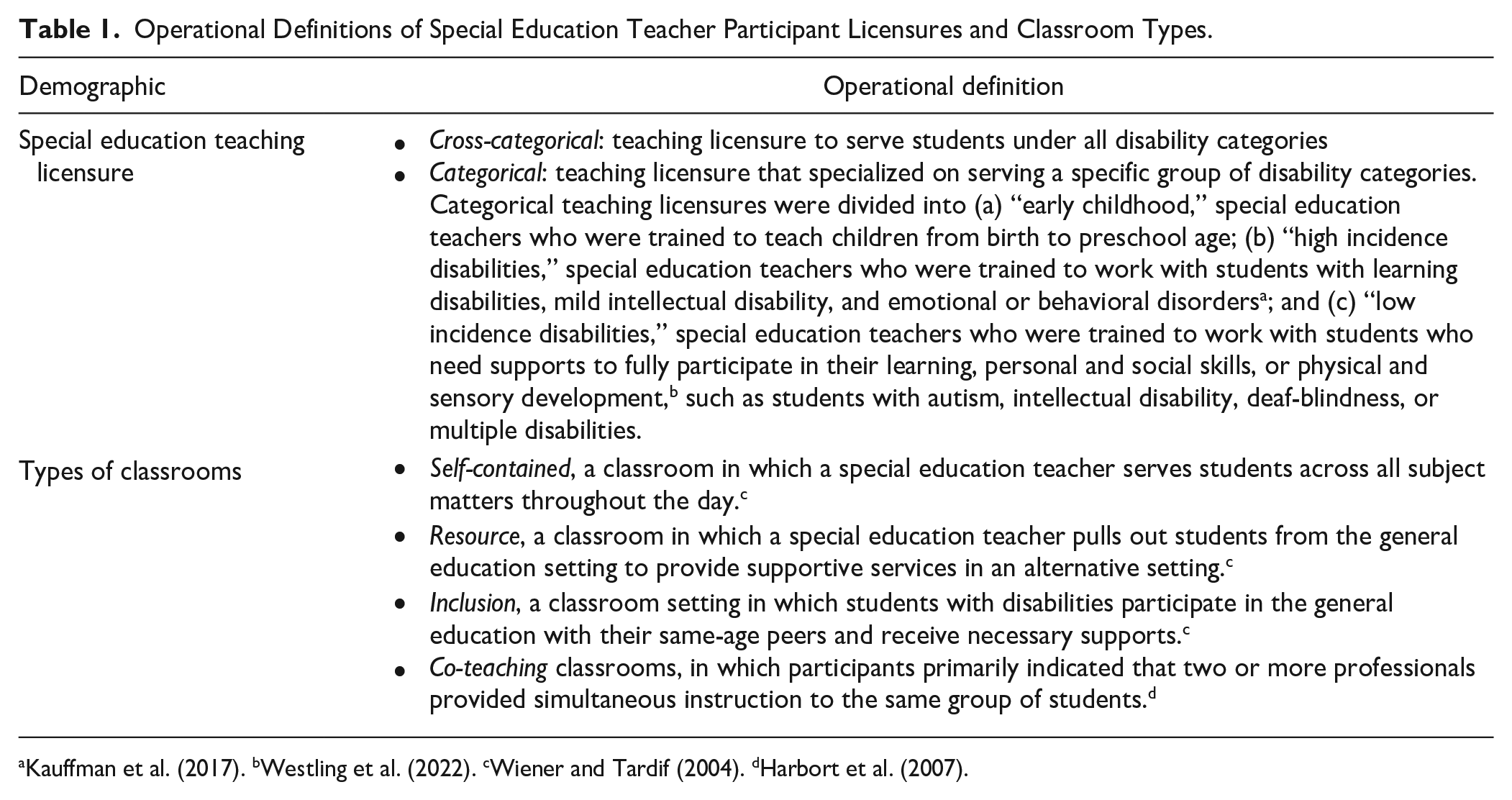
For data analyses purposes, operational definitions were created to outline participants’ demographics and their work setting. Participants’ special education teaching licensure were divided into two categories, cross-categorical and categorical. Grade levels where participants taught were divided as (a) elementary, K–5th grade; (b) middle school, sixth to eighth grade; and (c) high school or transition, 9th to 12th grade (up to the age of 22). The groupings of the collaboration questions were also operationally defined to ensure differentiation across the questions. Specifically, (a) “membership,” included questions related to participants’ perceptions on whether they should be considered a member of the AAC team; (b) “liaison,” related to questions about participants leading the collaboration efforts across the AAC team; and (c) “facilitator,” which consisted of questions related to the supervision, training, and monitoring of the interactions across communication partners. See Table 1 for a complete list of operational definitions.
Operational Definitions of Special Education Teacher Participant Licensures and Classroom Types.
Results
Participants
A total of 888 special education teachers from across the United States were included in this study. Participants were part of a larger study conducted by Da Fonte and colleagues (2022). Only participants who completed all demographic information and the questions related to AAC teams were included in this study. All partially completed surveys were excluded. The 2022 United States Census was used to determine whether participants were a representation of special education teachers employed across the country. Results indicated that 42 states were represented in the sample. Two states, Illinois (n = 4; 5.01%) and Texas (n = 17; 6.23%), were underrepresented, and four states, Alabama (n = 82; 10.09%), Arkansas (n = 50; 5.46%), California (n = 130; 7.35%), and Oklahoma (n = 106; 12.58%), were overrepresented. Thus, there were seven states that were not represented. Based on the census, most of these states had under 1% of special education teachers employed in their respective states, including Wyoming (0.26%), Nevada (0.52%), Utah (0.69%), Hawaii (0.15%), West Virginia (0.83%), Connecticut (1.33%), Rhode Island (0.43%), and Vermont (0.40%).
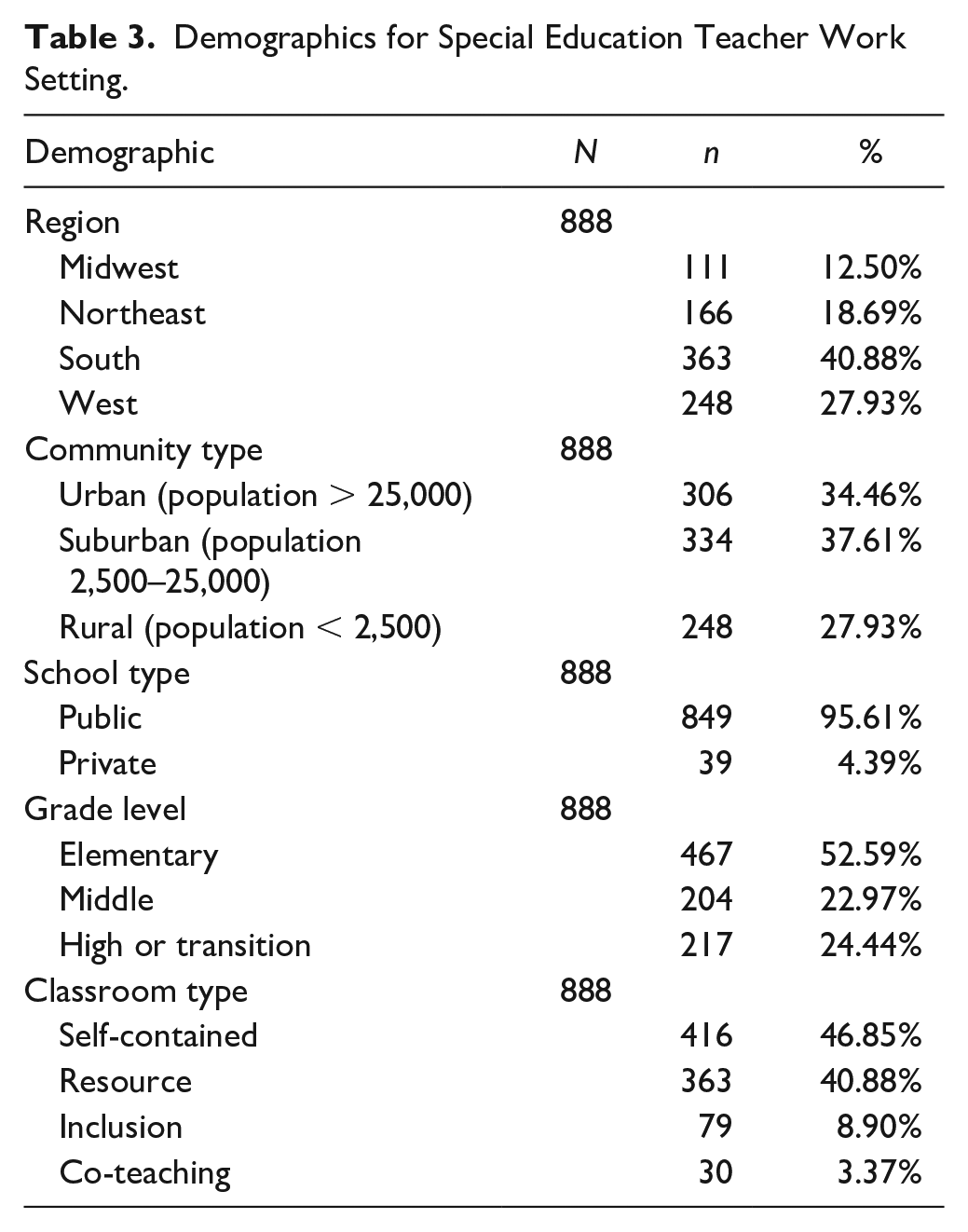
As represented in Table 2, 80.29% of the participants completed a special education degree and held a special education teaching licensure, and the majority held a cross-categorical teaching licensure (57.08%). The remaining 19.71% of the participants completed their degree in another area (non-special education). Although the majority of the participants held a special education teaching licensure (91.33%), there were 8.67% who were teaching without a respective special education teaching licensure. Most of the participants earned a master’s degree (60.25%) and had 6+ years of teaching experience (76.92%). Interestingly, the findings pertaining to years of experience serving students with complex communication needs were vastly different. The majority (56.19%) had <5 years of experience. Almost all the participants worked in public schools (95.60%), most worked in elementary schools (52.59%), and predominantly in self-contained (46.85%) or resource classrooms (40.88%). The location of the work setting was relatively evenly distributed with most working in suburban (37.61%) and urban school districts (34.46%), with fewer working in rural settings (27.93%; see Table 3).
Background Demographics for Special Education Teacher Respondents.
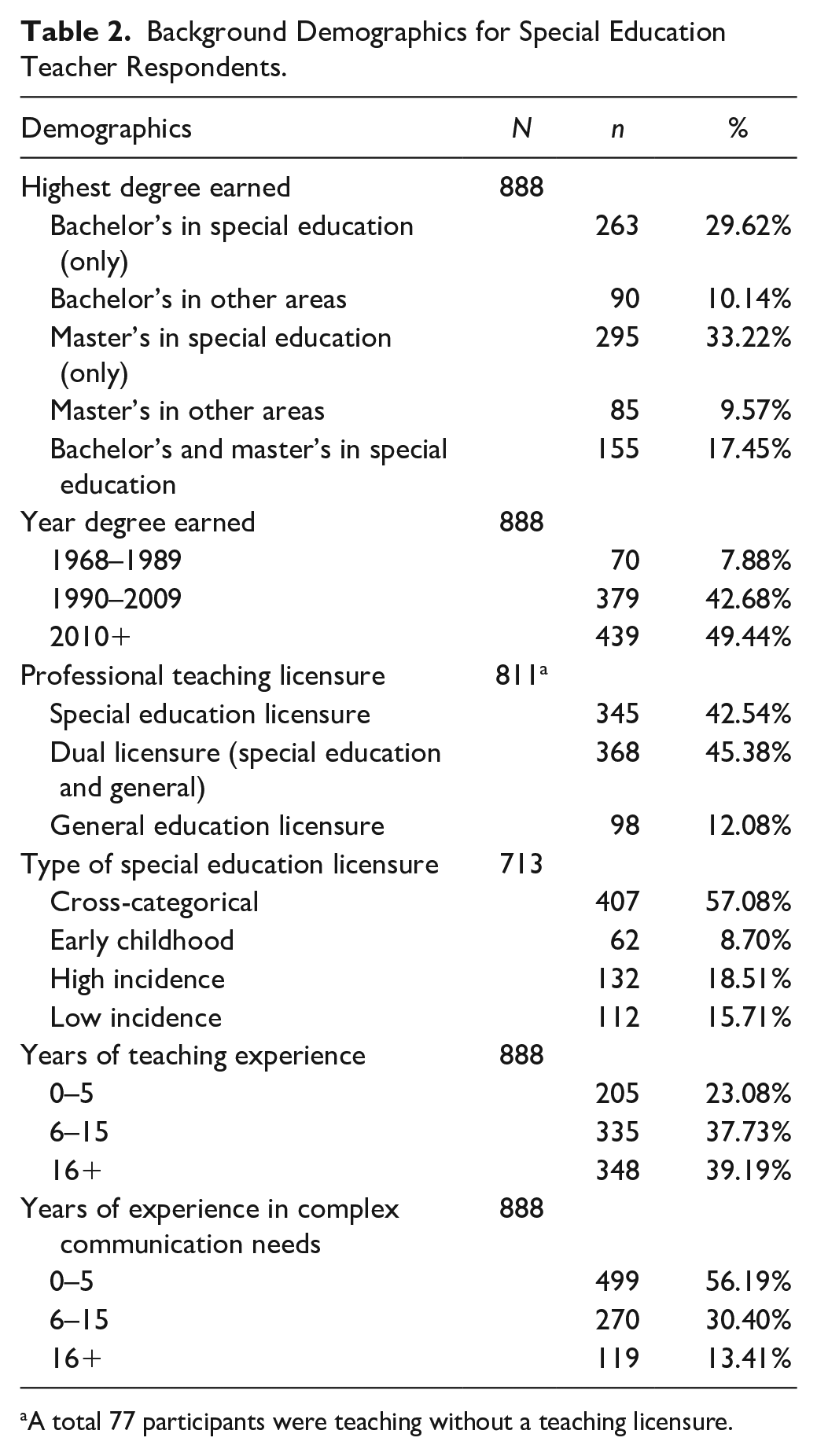
A total 77 participants were teaching without a teaching licensure.
Demographics for Special Education Teacher Work Setting.
Perspectives on Collaboration Skills
Findings suggest that most special education teachers (n = 836; 94.10%) “agreed” that they had strong collaboration skills. When analyzing participants’ perspectives on their ability to collaborate within an AAC team, participants’ years of experience was an influencing factor. Specifically, those with ≥6 years of teaching experience were more likely to indicate that they “agreed” that they had strong collaboration skills than those with ≤5 less years of experience, F(2, 885) = 3.37, p = .035, η2 = .008 (small effect; see Table 4).
Comparison of Participants’ Demographic Characteristics and Perspectives on Their Roles and Responsibilities in AAC Teams.
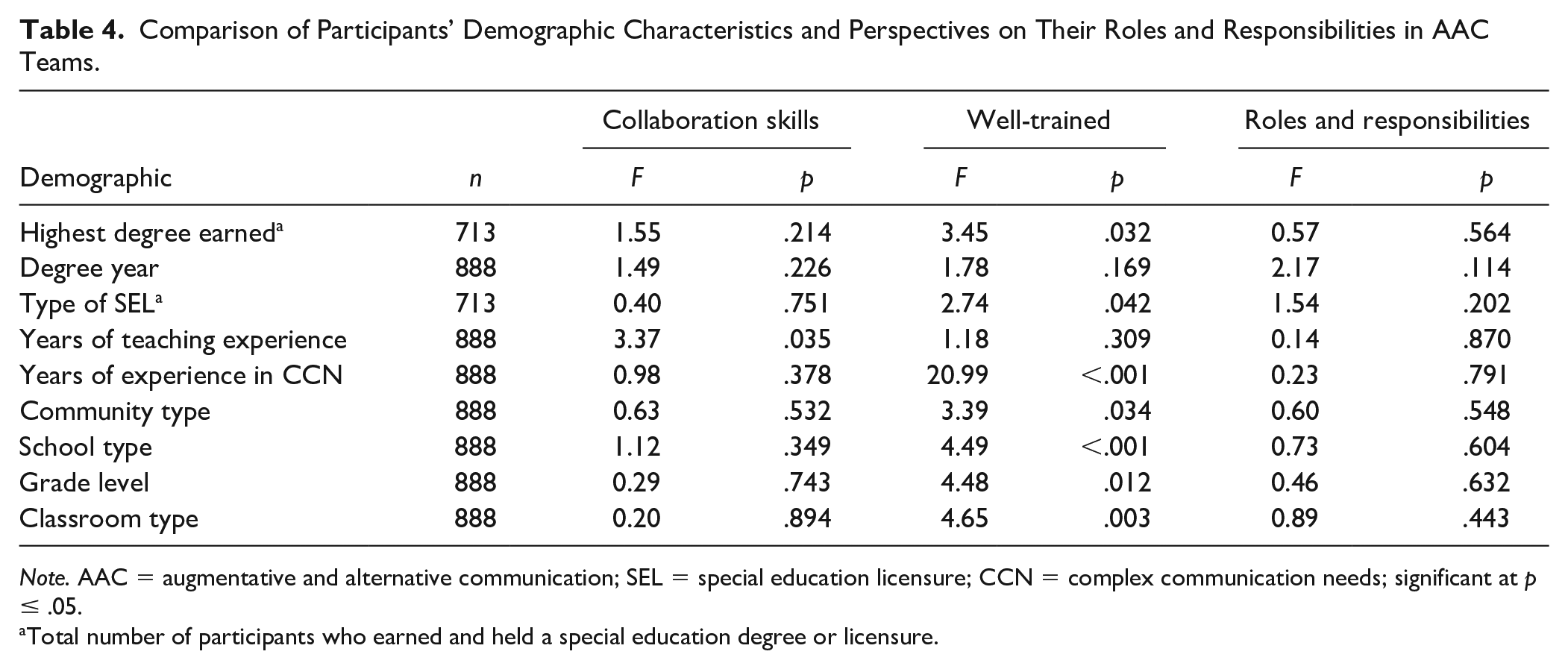
Note. AAC = augmentative and alternative communication; SEL = special education licensure; CCN = complex communication needs; significant at p ≤ .05.
Total number of participants who earned and held a special education degree or licensure.
Only half of the participants (n = 483; 54.40%) “agreed” they were well trained to work within various team models. The data revealed several influencing factors such as degree earned, type of teaching licensure, and various work setting demographics. Specifically, participants with both bachelor’s and master’s degrees in special education were more likely to “agree” (n = 95; 61.3%) that they were well trained to work within various team models than those with only one degree in special education, F(2, 710) = 3.45, p = .032, η2 = .010 (small effect). Similarly, participants with a special education teaching licensure in low-incidence disabilities were more likely to indicate that they “agreed” (n = 75; 67%) that they were well trained than participants with other types of special education teacher licensure, F(3, 709) = 2.74, p = .042, η2 = .011 (small effect).
When evaluating participants’ work setting, those working in “self-contained” or “co-teaching” classrooms were most likely to “agree” (n = 268; 60.09%) that they were well trained to work within various team models, more so than those working in resource or inclusion settings, F(3, 884) = 4.645, p = .003, η2 = .016 (small effect). A noteworthy finding was that participants teaching in “resource” classrooms were the least likely to indicate (n = 171; 47.1%) being well trained when compared with all other classroom settings. Comparably, those who taught in urban communities were more likely to express that they “agreed” (n = 184; 60.1%) to being well trained than participants who taught in suburban and rural areas, F(2, 885) = 3.39, p = .034, η2 = .008 (small effect). When analyzing the type of school, those who worked in private schools were more likely to agree (n = 7; 87.5) that they were well trained more so than special education teachers who worked in institution and residential schools, F(5, 885) = 4.485, p < .001, η2 = .25 (large effect). In addition, participants who taught in elementary school settings were more likely to “agree” (n = 275; 58.9%) they were well trained to work within various team models than special education teachers working in middle schools, F(2, 885) = 4.48, p = .012, η2 = .010 (small effect). Years of experience was also an influencing factor, with participants who had ≥6 years of experience serving students with complex communication needs “agreeing” they were well trained to work within various team models more than participants with only 0 to 5 years of experience, F(2, 885) = 20.99, p < .001, η2 = .045 (small effect). Results also indicated most special education teachers (87.6%) “agreed” they should have roles and responsibilities on the AAC team. Further analysis revealed there were no significant influencing factors.
Perspectives on Roles and Responsibilities in AAC Teams
Participants’ self-reported perspectives were analyzed based on their participation within the AAC team (membership), lead role on the AAC team (liaison), and their oversight of interactions across communication partners (facilitator). Most special education teachers (n = 778; 87.6%) “agreed” they should have specific roles and responsibilities on the AAC team. Findings suggest that almost all the special education teachers (n = 826; 93.00%) “agreed” they should be a “member” of an AAC team. Specifically, those with ≥6 years of experience serving students with complex communication needs were most likely to “agree” that they should be a member of AAC teams, F(2, 885) = 3.18, p = .042, η2 = .007 (small effect). Although many of the participants (n = 648; 73.00%) “agreed” that they should be the “liaison” across team members, there were no significant influencing factors.
A surprising finding was that most participants (n = 651; 73.30%) “agreed” they should be the “facilitator” on the AAC team. That is, they should be the ones who supervise, train, and monitor the interactions across communication partners. The type of classroom where participants taught was found to be an influencing factor, F(3, 884) = 3.79, p = .010, η2 = .013 (small effect). Specifically, those who taught in “co-teaching” classrooms were more likely to “agree” (n = 26; 86.7%) that they should be the facilitator than participants who taught in “resource” classrooms. Moreover, participants who earned their degree after 1990 were most likely to “agree” (n = 607; 74.2%) that they should be the facilitator than those who received their degree prior to 2010, F(2, 885) = 3.21, p = .041, η2 = .007 (small effect). Participants with ≥6 years of experience serving students with complex communication needs were also more likely to “agree” they should be the “facilitator” than those with <6 years of experience (see Table 5).
Comparison of Demographic Characteristics and Participant Perspectives on AAC Team Participation (Membership), Lead Role (Liaison), and Oversight of Interactions Across Communication Partners (Facilitator).
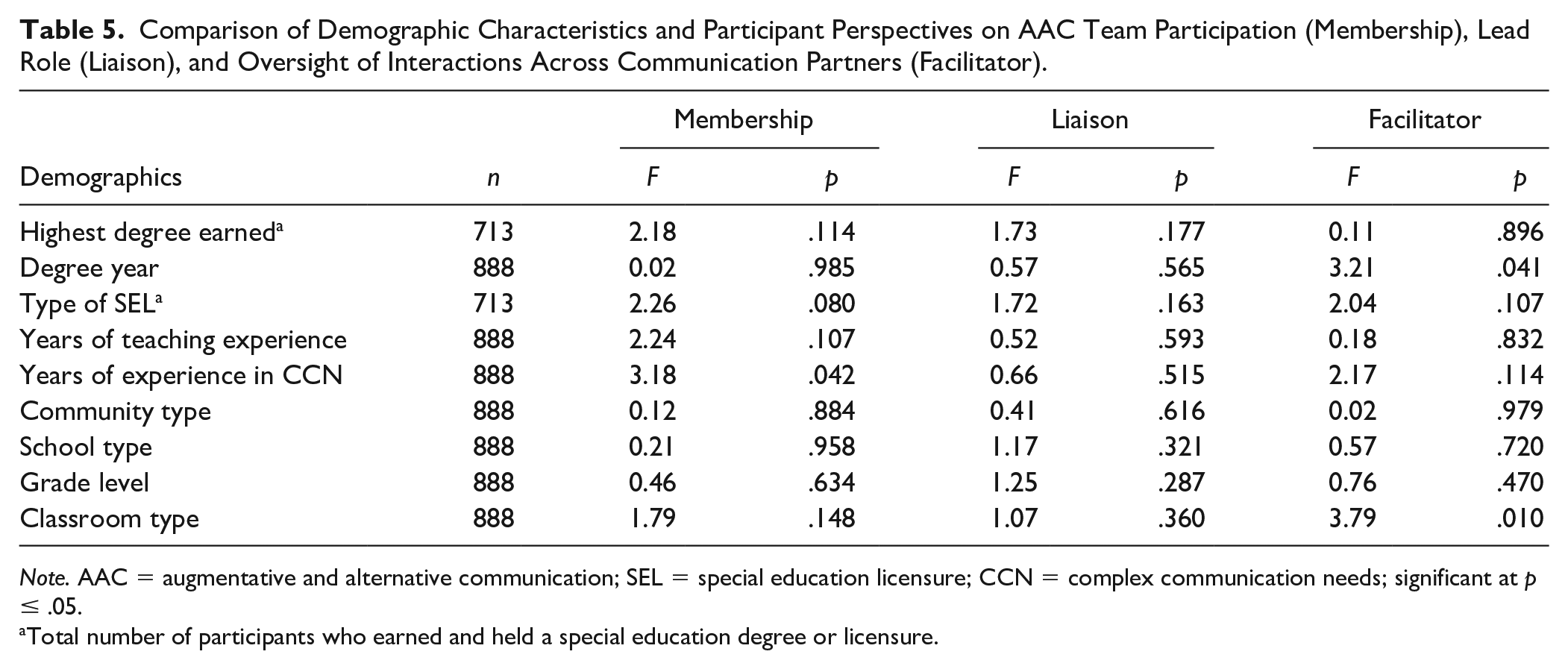
Note. AAC = augmentative and alternative communication; SEL = special education licensure; CCN = complex communication needs; significant at p ≤ .05.
Total number of participants who earned and held a special education degree or licensure.
Discussion
The aim of this study was to evaluate the self-reported perspectives of special education teachers on their roles and responsibilities on AAC teams. Overall, findings suggest that special education teachers agreed that they should have some role on their students’ AAC team. However, a noteworthy finding was that only half of the participants agreed they were well trained to work effectively in various team models. The most common factors that influenced participants’ responses were their type of teaching licensure and their years of experience serving students with complex communication needs.
Perspectives on Collaboration Skills
The majority of special education teachers in this study agreed that they had strong collaboration skills. These findings are plausible considering that the Council for Exceptional Children (CEC) strongly emphasizes collaboration skills in the Initial Practice-Based Professional Preparation Standards, and Code of Ethics for special education teachers. These collaboration standards state that special education teacher candidates need to be trained to demonstrate knowledge and skills in collaboration, by working with team members, school personnel, related service providers, students, and their families (CEC, 2023). Specifically, around 21.43% of these CEC standards (n = 140) pertain to collaboration with 86.66% of these collaboration standards stemming from the preparation standards and 13.34% from the Code of Ethics (Boesch, Da Fonte, Neff, et al., 2024; CEC, 2023). Given that CEC stresses the importance of collaboration, it is understandable that special education teachers agreed they had strong collaboration skills as they are responsible for leading their students’ instructional team (Bagley & Tang, 2018). Findings from the current study are encouraging considering special education teachers shared their view on the importance of collaboration, which has been addressed in the literature as crucial for effective AAC teaming and service provision (Andzik et al., 2019; Binger et al., 2012; Leatherman & Wegner, 2022).
Despite indicating having strong collaboration skills, only half of the participants agreed they were well trained to serve on AAC teams. These findings are concerning, although not surprising, bearing in mind the abundance of research suggesting that special education teachers receive little to no training in AAC (Andzik et al., 2019; Costigan & Light, 2010; Da Fonte et al., 2022). According to several studies, many pre-service training programs do not require special education teachers to complete coursework or field experiences related to AAC (Boesch, Da Fonte, Neff, et al., 2024; Costigan & Light, 2010; Judge & Simms, 2009). In addition, there is a lack of accessible professional development opportunities related to AAC (Andzik et al., 2019; Boesch, Da Fonte, Shiheiber, et al., 2024). The lack of AAC training continues even though CEC standards not only emphasize the need for training in collaborative practices but also in serving students with complex communication needs (CEC, 2023; Da Fonte & Boesch, 2016).
Interestingly, approximately 67% of the participants with a low-incidence teaching licensure “agreed” to the statement of being well trained to serve on the AAC team. These findings may be plausible considering special education teachers with low-incidence teacher licensures are more likely to serve students with a comorbidity of complex communication needs (Leatherman & Wegner, 2022; Wodka et al., 2013). As such, special education teachers with low-incidence teacher licensures may be more likely to be familiar with AAC practices (Andzik, Schaefer, Nichols, Cannella-Malone, 2018) due to primarily working with students who likely have effective communication skills and benefit from AAC as well as students who have autism or intellectual disabilities. Moreover, participants who worked in elementary schools agreed they were “well trained” to work on AAC teams more so than teachers working in secondary education settings. This could be attributed to a greater emphasis being placed on the development of communication skills, the AAC assessment process, and service provision during the earlier years of a student’s school journey (Andzik, Schaefer, Nichols, & Chung, 2018). In addition, this finding may be due to the greater number of speech-language pathologists working in elementary schools than high schools. According to a survey conducted by American Speech-Language-Hearing Association [ASHA] (2022), 59.3% of speech-language pathologists practice in elementary settings and 71.2% regularly serve students who use AAC. Thus, it seems plausible that elementary special education teachers are more likely to collaborate with speech-language pathologists, leading to their increased familiarity with AAC systems.
Perspectives on Roles and Responsibilities in AAC Teams
Many special education teachers (87.6%) agreed they should have some role or responsibility on an AAC team. These roles and responsibilities were divided into three overarching categories: (a) participating in the AAC team (membership); (b) holding the lead role across all members on the AAC team (liaison); and (c) supervising, training, and monitoring interactions across communication partners (facilitator).
Findings suggest that special education teachers believe they should be a member of the AAC team (93.00%). These findings support previous research asserting that special education teachers are essential members of AAC service delivery teams (Andzik et al., 2019; Binger et al., 2012). Interestingly, participants with 16+ years of experience serving students with complex communication needs felt the strongest about being a member on the AAC team. It is probable that special education teachers’ views may have been influenced by their extensive experience interacting with these students and collaborating with other service providers. Therefore, special education teachers may have a stronger sense of duty to serve on the AAC team, and in turn, to better advocate for their students. The need to advocate for students with complex communication needs has been supported in the literature (Buke et al., 2018; Puig & Recchia, 2012; Young et al., 2023). In fact, special education teachers should negotiate with colleagues on behalf of their students to ensure students are placed in the least-restrictive environment. As described by participants in Puig and Recchia’s (2012) study, advocacy requires taking action and thinking “outside of the box” in order to meet the diverse needs of students in the classroom.
Interestingly, most of the participants (73.00%) agreed they should be the liaison of the AAC team. This is surprising considering that speech-language pathologists are typically responsible for the planning and implementation of AAC interventions (Binger et al., 2012; Leatherman & Wegner, 2022), especially since more than 70% have students who use AAC on their caseloads (ASHA, 2022). Nonetheless, this finding is encouraging given the call for special education teachers to lead AAC teams in making data-based decisions (Andzik et al., 2019). Another possible explanation is that special education teachers are assuming the lead role out of necessity due to a lack of school-based professionals willing to take on this role on the AAC team. According to Leatherman and Wegner (2022), many participants in their study reported receiving minimal support from their school’s speech-language pathologist. A study by Andzik and colleagues (2019) showed that half of the participants reported their schools did not have a speech-language pathologist or their speech-language pathologist was not knowledgeable in AAC systems. Collectively, these studies reported that participants felt a need to bypass their speech-language pathologist in order to initiate the AAC assessment process so their students would benefit from AAC. While these explanations are speculative, it is not out of the realm of possibilities to attribute these barriers to collaboration to the speech-language pathologists’ high caseloads or a lack of training in AAC (ASHA, 2022; Leatherman & Wegner, 2022). Regardless of the reasoning, it is essential to acknowledge the importance of the liaison’s role who is supposed to be the primary communicator and coordinator among members of the AAC team, including related service providers and the student’s family.
Similarly, findings also showed most participants (73.00%) perceived that they should be the facilitator of paraeducators, families, peers, and other allies in their interactions with students with complex communication needs. One possible explanation for this is that special education teachers spend a substantial amount of time with their students; therefore, they may have more insight regarding their student’s communication skills than other AAC team members (Leatherman & Wegner, 2022). Thus, they are likely better suited to facilitate the interactions between their students and their communication partners. In fact, many special education teachers in Leatherman and Wegner’s (2022) study reported their responsibility for training other team members, primarily paraprofessionals, was to support students who use AAC. In addition, participants in their study reported making efforts to increase family collaboration through training sessions and newsletters. This dissemination of information and skills across allies is essential to an effective AAC team.
Implications for Practice
Given the findings, there are several implications for future practices. First, due to the need to provide comprehensive and effective AAC services, special education teachers and related services providers need to collaborate to outline and implement the intervention program. While training, coaching, and activities in collaborative practices are vital, not all professionals who serve students with AAC needs receive this level of training during their preparation programs (Boesch, Da Fonte, Neff, et al., 2024; Ergül et al., 2013; Van der Steen et al., 2020). As such, all key professionals should receive training on collaboration at the pre- and in-service levels to create strong collaborative team members. Second, based on the available literature and current findings, AAC professional development training is essential for all school-based professionals to gain the knowledge and skills needed to provide AAC services. This is particularly crucial given that there is evidence to suggest these professionals are not receiving the training needed during their preparation programs (Andzik, Schaefer, Nichols, Cannella-Malone, 2018; Costigan & Light, 2010; Da Fonte et al., 2022), nor through professional development training (Boesch, Da Fonte, Shiheiber, et al., 2024). To identify the resources necessary in training professionals in implementing evidence-based AAC practices, school districts support is important. Third, in addition to AAC training at the pre- and in-service levels, an essential component should be to focus on coaching professionals on how to best execute interdisciplinary practices, as these are critical for successful AAC implementation (Cameron & Tveit, 2017).
Limitations and Future Research Directions
Despite the promising results, the findings should be viewed with caution as there are some limitations to this study. Foremost, the research team used snowball sampling procedures to recruit participants. Thus, a response rate could not be calculated due to the team’s inability to determine how many participants had access to the survey link. Future researchers wishing to replicate this study may explore other recruitment strategies. Another limitation was that the survey only considered the special education teachers’ perspectives. To extend this study, researchers could also consider recruiting related service providers, school administrators, and caregivers to assess potential differences between and across groups of allies. This would help inform the field about the views of all AAC team members. Findings from all key allies would help determine key influencing factors for effective collaboration, enhanced teamwork, and better outcomes for students with complex communication needs. As with any other study, replications are also warranted to further substantiate the current findings.
Conclusion
Based on the self-reported perspectives of special education teachers, there was an overall agreement that these professionals should be part of the AAC team and should have specific roles and responsibilities within the team. Although most of the participants agreed they should be a member on an AAC team, few of them felt they were well trained to work on various team models, some of which are essential for effective AAC implementation. Yet, many of the participants indicated they agreed they should carry an essential role within the team, such as the trainer and liaison. Given that AAC teams involve multiple allies, it is important for all team members to have clear roles and responsibilities within the team. Augmentative and alternative communication services be provided as intended to enhance the students’ outcomes with clear role distributions in the AAC team.
Supplemental Material
sj-docx-1-cdq-10.1177_15257401241273877 – Supplemental material for Together We Can Do Great Things! AAC Teams From the Perspective of Special Education Teachers
Supplemental material, sj-docx-1-cdq-10.1177_15257401241273877 for Together We Can Do Great Things! AAC Teams From the Perspective of Special Education Teachers by Melissa J. Cavagnini, M. Alexandra Da Fonte, Miriam C. Boesch, Gillian C. Neff, Mary C Bounds and Kimberly N. Bowers in Communication Disorders Quarterly
Footnotes
Acknowledgements
We would like to give a special thanks to Robert M. Hodapp, for all his help and guidance with the data analysis, and to David Golann for his guidance throughout the search process. We would also like to thank Sarah Hammonds for her contributions during the early editing stages of this project.
Declaration of Conflicting Interests
The author(s) declared no potential conflicts of interest with respect to the research, authorship, and/or publication of this article.
Funding
The author(s) received no financial support for the research, authorship, and/or publication of this article.

References
Supplementary Material
Please find the following supplemental material available below.
For Open Access articles published under a Creative Commons License, all supplemental material carries the same license as the article it is associated with.
For non-Open Access articles published, all supplemental material carries a non-exclusive license, and permission requests for re-use of supplemental material or any part of supplemental material shall be sent directly to the copyright owner as specified in the copyright notice associated with the article.
