



Abstract
Mental health issues are prevalent among young people. An estimated 10% of children and adolescents worldwide experience a mental disorder, yet most do not seek or receive care. Media mental health awareness campaigns, defined as marketing efforts to raise awareness of mental health issues through mass media, are an effort to address this concern. While previous research has evaluated the outcomes of specific media mental health awareness campaigns, there is limited data synthesizing their overall effects. This study addresses the knowledge gap by reviewing the existing literature on the impact of media mental health awareness campaigns on young people. A search was conducted on MEDLINE, EMBASE, PsychINFO, Web of Science, and Google Scholar for studies published between 2004 and 2022 with results specific to people aged 10 to 24. Out of 20,902 total studies identified and screened, 18 studies were included in the review. The following data were extracted from each study: characteristics and descriptions of the campaign, evaluation design and sampling, and summary of impact. The review identified evaluations of 15 campaigns from eight different countries. Outcome evaluation methods commonly comprised of surveys and quantitative data. The campaigns were generally associated with positive changes in the attitudes, beliefs, and intentions of young people (e.g., reduced stigma) and positive changes in behaviors (e.g., increased help-seeking behaviors). The inclusion of few studies in the review indicates a need for ongoing evaluations of media mental health awareness campaigns for young people to inform good practices in their development and distribution.
Keywords
Depression, anxiety, and suicide are among the leading mental health issues affecting young people. The World Health Organization (WHO, 2021) has reported that while 10% of children and adolescents worldwide experience a mental disorder, a majority of them do not seek help or receive care. Suicide is also the fourth leading cause of death among 15- to 19-year-olds (WHO, 2021). Ensuring proper health education and access to mental health care is important to support well-being during adolescence and young adulthood.
Media has been used to raise awareness about the prevalence of mental health issues in young people and to promote mental health literacy. The goal of these efforts is ultimately to improve the quality of life of those either at risk or currently experiencing mental health concerns. Educational websites, educative messages, and stories shared from those with lived experiences have been found to reduce stigma and promote help-seeking behaviors (Niederkrotenthaler & Till, 2020). Known as the Papageno effect or “preventive effect,” Niederkrotenthaler et al. (2010) found that media portrayals of coping mechanisms to suicidal crises and other positive media messages have potential protective effects on mental health and can decrease suicidal ideation among the audience.
Media campaigns have also been recognized as a tool to influence the public about their personal health and well-being. The rise of social media use among young people presents an opportunity to harness these outlets to communicate important mental health information and engage young people in mental health education. The benefits of using social media platforms for health promotion include reach, acceptability, and cost-effectiveness (Robinson et al., 2017). In terms of mental health, media campaigns have been found to impact proximal changes such as increase in awareness, understanding of mental health issues and resources, and changes in attitudes (Halsall et al., 2019).
Several program or intervention evaluations have been conducted by researchers to measure the impact of media campaigns focused on mental health and suicide; however, few reviews exist to synthesize the data to identify the overall effects that they have on young people and to point to knowledge gaps in terms of effectiveness and impact. Previous systematic reviews have mainly focused on mass media campaigns for suicide prevention and examining whether they were effective in reducing suicide behaviors (Pirkis et al., 2019; Torok et al., 2017). Reviews related to online mental health activities have been more focused on mental health promotion and prevention interventions rather than media campaigns (Clarke et al., 2015). To address this gap, the purpose of this systematic review is to explore the impacts of existing media mental health awareness campaigns directed toward young people.
Methods
This systematic review has been preregistered in the PROSPERO database (CRD42021220186).
Eligibility Criteria
We considered global peer-reviewed journal articles dated from 2004 to 2022. The timeframe was grounded based on the introduction of Facebook, one of the most popular social media platforms. To be included, we required that studies evaluated an existing media mental health campaign and included results specific to young people aged 10-24 years. For studies that had a wider range of age groups, we included those that had results with more than 75% of the sample aged 10-24 years. Campaigns had to focus on mental health issues surrounding emotional disorders such as depression and anxiety, as these are reported by the WHO to commonly impact young people, as well as suicide and self-harm, as it is the fourth leading cause of death among older adolescents (aged 15–19 years). Campaign types included online campaigns, social media campaigns, social marketing campaigns, health promotion campaigns, and public health campaigns.
Our working definition of a mental health awareness media campaign (hereon “mental health campaign”) is a marketing effort to raise public awareness of mental health issues using an organized set of communication tactics through media platforms including the internet, broadcasting, and print media, and intending to reach a large number of people in the public and generate specific outcomes. Guided by the American Psychological Association (2018), we define mental health as “a state of mind characterized by emotional well-being, good behavioral adjustment, relative freedom from anxiety and disabling symptoms, and a capacity to establish constructive relationships and cope with the ordinary demands and stresses of life.”
Literature Search
A search was conducted originally on August 2020 and updated in November 2022 using the following electronic databases: MEDLINE®, EMBASE, PsycINFO, Web of Science, and Google Scholar. The search strategy was developed in consultation with a health research librarian. Exact search terms varied slightly across databases following a pilot period to optimize relevance, and included: (communications media) or (social media) or (internet), AND (health promotion) or (health literacy) or (health education), AND (mental health) or (mental disorders) or (psychological distress) or (anxiety) or (anxiety disorders) or (depression) or (depressive disorder) or (major depressive disorder) or (suicide) or (self-injurious behavior), AND (young adult) or (adolescent) or (students) or (universities). For the full search string as used in the databases, see Supplementary Table 1.
Data Collection
The following data were extracted from each paper that met inclusion and exclusion criteria: characteristics of the mental health campaign (campaign name, country of origin, mental health focus, scope, intended audience), campaign descriptions (campaign goals, duration, channels, media reach), description of evaluation design and sampling (formative or process evaluation, outcome evaluation design, sampling strategy, recruitment method, sample size description), and summary of impact (proximal impact, intermediate impact, and distal impact).
A quality assessment instrument was derived from a custom scale developed as part of a systematic review evaluating branded health campaigns (Evans et al., 2015). Some items were altered to be specific to our questions of interest. Studies were given a quality score of either 0 or 1 for each criterion. Any disagreements between review team members (M.T.T., J.M.W., C.C.Z.) were resolved via discussion and consensus.
Results
Search Outcomes
A total of 20,902 studies were retrieved and managed using an online software program, Covidence (Figure 1). Duplicates were removed and an abstract screening was conducted by M.T.T. and J.M.W. for the original search in August 2020 and by M.T.T. and C.C.Z. for the updated search in November 2022. The authors independently reviewed selected full-text studies according to the inclusion and exclusion criteria. After disagreements were resolved through discussion at each stage, a total of 18 eligible studies were identified and subjected to quality assessment and data extraction. Figure 2 shows the years in which the identified evaluation papers were published.
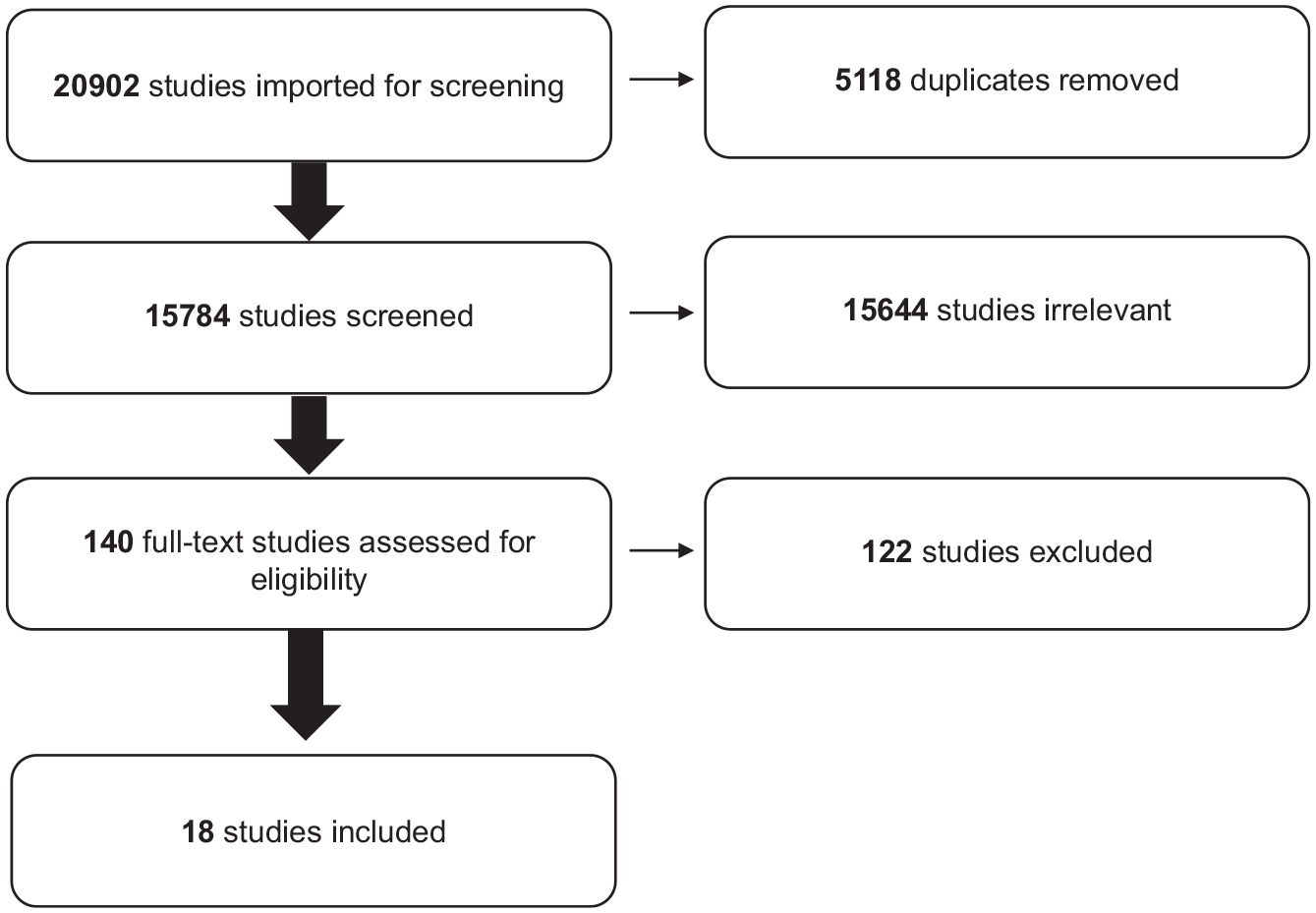
Preferred Reporting Items for Systematic Reviews and Meta-Analyses (PRISMA) Flow Diagram of Systematic Search Process
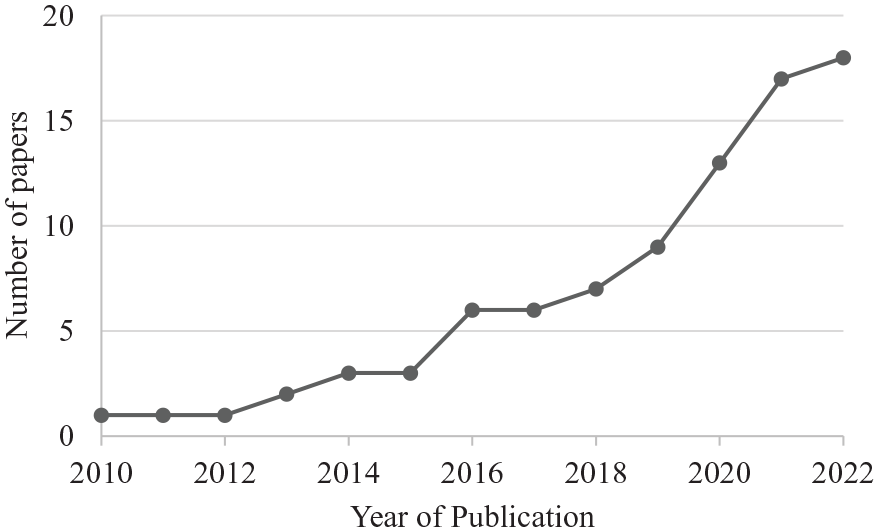
Years of Publication of Evaluation Papers Included in the Review
Quality Assessment of Studies in the Sample
Studies included in the review varied in terms of quality assessment score based on the criteria used. All studies reported on their research question and the response or completion rate (rate of exposure) of the campaign. Nearly all studies reported on the key elements of the campaigns (N = 17/18 studies), campaign media channels (N = 17/18 studies), outcome measures (N = 17/18 studies), sample characteristics (N = 16/18 studies), and the role of formative research (the justification of research in evaluating a campaign) (N = 15/18). However, there was greater variability in reporting the marketing techniques used to disseminate the campaigns (N = 8/18) and the theory of change used in the campaign (N = 6/18 studies). Very few of the included studies clearly stated a hypothesis (N = 3/18). Only one study by Booth et al. (2018) scored the maximum quality assessment score. Figure 3 reports on the assessed quality of each included paper based on the quality assessment criteria.
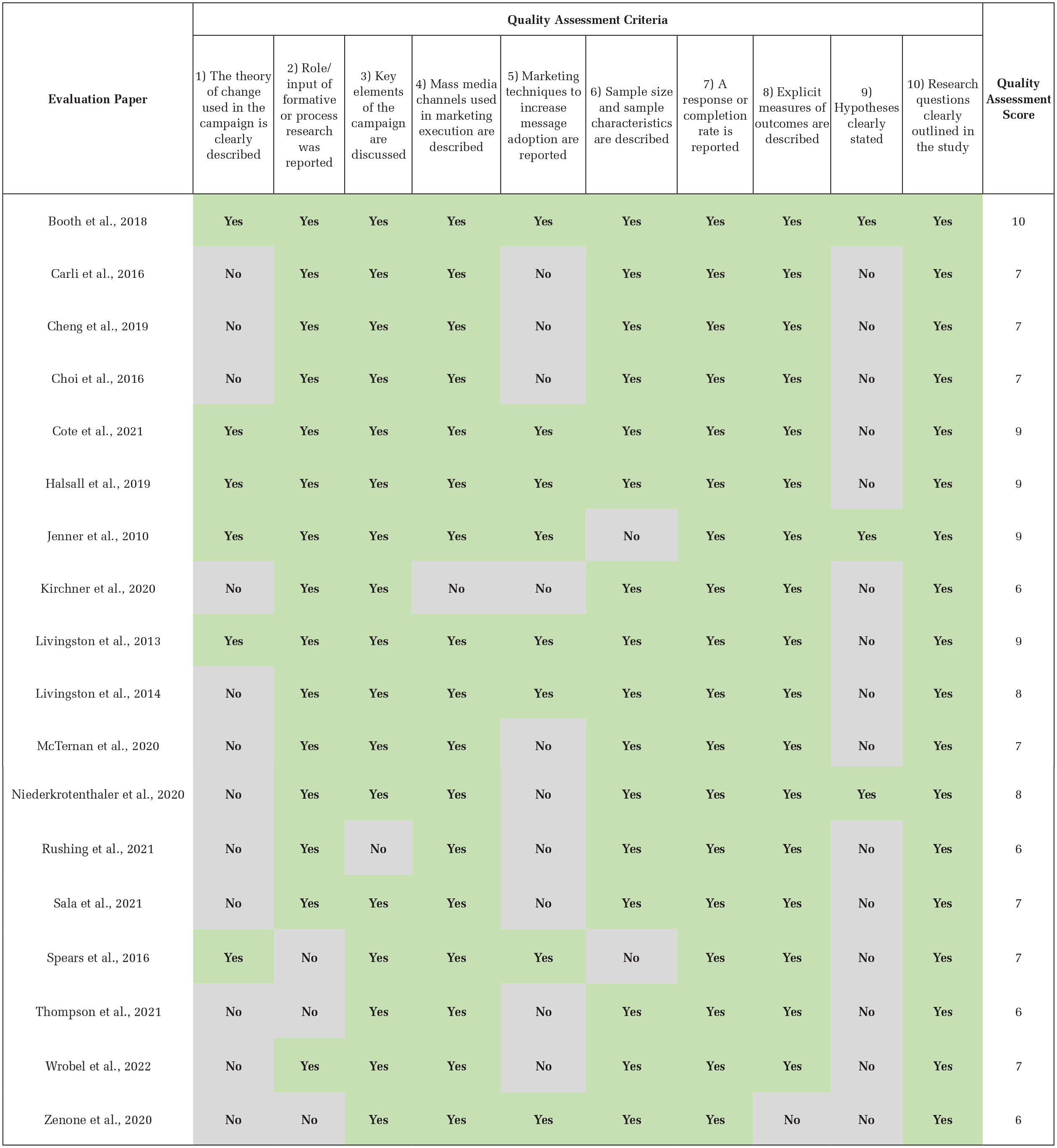
Quality Assessment of Evaluation Papers Included in the Review
Campaign Characteristics
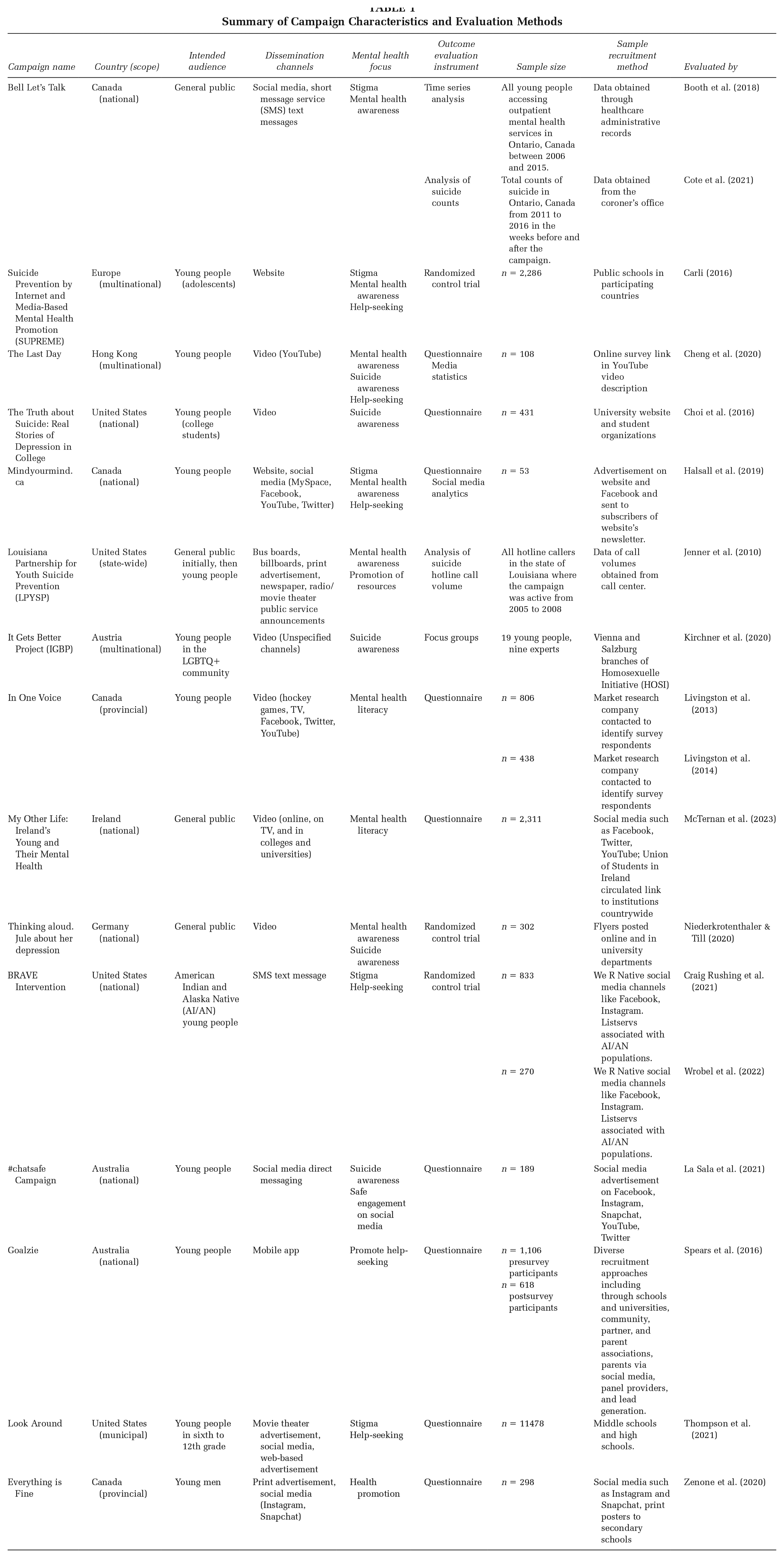
A total of 15 mental health campaigns were evaluated from eight different countries: Canada, United States, Ireland, Germany, Sweden, Australia, Hong Kong, and Austria. Four campaigns were directed to the general public and eleven were aimed at young people. A variety of concerns related to mental health and well-being were the focus of these campaigns including suicide awareness and prevention (n = 10), encouraging help-seeking behaviors (n = 5), reducing stigma around mental health and suicide (n = 4), mental health literacy and health promotion (n = 3), alcohol misuse and intimate partner violence (n = 1), and safe engagement around suicide on social media (n = 1). Media messages and videos were broadcasted through different media outlets such as social media platforms (Twitter, Facebook, Snapchat, Instagram, YouTube, MySpace), web pages, television, billboards, print ads in newspapers, and a mobile app. A full list of campaigns, their characteristics, and their evaluation methods is included in Table 1.
Summary of Campaign Characteristics and Evaluation Methods
Outcome Evaluation Methods
Quantitative methods were the most common form of evaluation to measure awareness of campaigns and changes in attitudes and beliefs (Carli, 2016; Choi et al., 2016; Halsall et al., 2019; Jenner et al., 2010; Livingston et al., 2013, 2014; McTernan et al., 2023; Niederkrotenthaler & Till, 2020; Spears et al., 2016; Zenone et al., 2020). Most studies used questionnaires to measure self-reported changes in mental health outcomes, attitudes, and behaviors (Cheng et al., 2020; Choi et al., 2016; Halsall et al., 2019; Jenner et al., 2010; La Sala et al., 2021; Livingston et al., 2014, 2013; McTernan et al., 2023; Spears et al., 2016; Thompson et al., 2021; Zenone et al., 2020). Several randomized control trials were also used to assess the impact of campaigns by comparing outcomes of the intervention group to the control group (Carli, 2016; Craig Rushing et al., 2021; Niederkrotenthaler et al., 2010; Wrobel et al., 2022). Other evaluation methods include provincial suicide counts before and after campaign period (Côté et al., 2021), focus groups with young people discussing perceptions of campaign content (Kirchner et al., 2020), and a time-series analysis to identify the number of individuals who accessed mental health services during the campaign period (Booth et al., 2018).
Impact of Campaigns
The definitions for proximal and intermediate impacts were adapted from Booker et al. (2014). Proximal impacts were defined as “changes in knowledge, attitudes, beliefs, or intentions” and intermediate impacts were defined as “changes in engagement in tangible behaviours or practices” (Booker et al., 2014).
Proximal Impacts
Following campaign exposure, participants reported an awareness of the campaign of interest as well as an increased awareness of the mental health resource promoted and there was increased traffic on online mental health resources (Livingston et al., 2013; Zenone et al., 2020). There were reports of more positive attitudes toward mental health and reduced stigma toward others and themselves (Livingston et al., 2013, 2014; McTernan et al., 2023). With regards to help-seeking, evaluations reported an increase in individuals’ ability and intent to help others dealing with mental health issues and suicidal thoughts (La Sala et al., 2021; Livingston et al., 2014). Also reported were significant improvements in help-seeking skills, willingness to accept help, and attitudes around help-seeking, though one study found significant less changes in help-seeking attitudes among African American students compared to students of all other racial groups (Cheng et al., 2020; Craig Rushing et al., 2021; Thompson et al., 2021). Participants also reported better coping strategies following campaign exposure and increased confidence when talking about suicide online (Craig Rushing et al., 2021; La Sala et al., 2021). One campaign tailored toward LGBTQ+ young people was not recognized as a suicide prevention campaign but showed potential to raise awareness of suicidal ideation among LGBTQ+ young people (Kirchner et al., 2020). Two studies did not find any significant impacts due to the cultural irrelevance of the campaign (Choi et al., 2016) and the current mental health status of the participants (Halsall et al., 2019). Videos portraying individuals’ experiences with mental health and suicide appeared to be the most impactful given the statistical significance resulting from their evaluations (Livingston et al., 2013, 2014; McTernan et al., 2023).
Intermediate Impacts
Two studies that utilized a randomized approach to measure the impact of a mental health campaign found direct effects on individuals in the intervention groups in terms of decline in mental health-related outcomes such as depressive moods, anxiety, stress and suicidal thoughts (Carli, 2016; Niederkrotenthaler & Till, 2020). Increased help-seeking behaviors were reported including increased primary health and mental health care visits (Booth et al., 2018), reaching out to others (Halsall et al., 2019), and increased hotline calls (Jenner et al., 2010). Increase in intervening online with a person at risk of suicide was also reported (La Sala et al., 2021). Individuals also reported taking initiative to talk about mental health issues, share campaign content with friends and family, and learn more about the signs and symptoms of mental health issues (Craig Rushing et al., 2021; Livingston et al., 2013). In terms of online activity, one campaign was associated with increased Tweets focused on raising awareness about the problem of suicide (Côté et al., 2021) while another was associated with decreased sharing of suicide-related content and increased self-monitoring for harmful posts (La Sala et al., 2021). A study examining suicide counts in a region found no significant change in suicide counts before and after the mental health campaign (Côté et al., 2021).
Discussion
This systematic review explored the characteristics and impacts of media mental health campaigns directed toward young people. We found that the goal of these campaigns focused primarily on raising awareness about suicide, encouraging help-seeking behaviors, promoting mental health literacy, and reducing stigma. The most popular method of evaluating the effects of media mental health campaigns for youth were self-reported measures of attitudes, beliefs, and behaviors followed by randomized control trials. These campaign evaluations show that exposure to campaigns has largely positive effects on proximal and intermediate outcomes. Proximal impacts included increased positive attitudes toward people experiencing mental health issues, reduced stigma toward oneself and others, awareness, and traffic of promoted resources, and increased intention and ability to seek help for oneself and others. Intermediate impacts included decreased mental health related outcomes such as depressive mood, increased health-seeking behaviors, and increased discussions about mental health. With only two studies reporting null results, existing media campaigns about mental health demonstrated a largely positive impact on their audience.
None of the campaign evaluations found negative impacts or harms. This finding contrasts with previous research on suicide prevention campaigns, where potential negative impacts were identified (Pirkis et al., 2019; Torok et al., 2017). Harmful campaign impacts may occur if contents of the campaign are triggering for individuals struggling with mental illness. For instance, growing evidence suggests a positive association between media coverage of suicidal behaviors and subsequent suicide rates (termed the “Werther” effect), especially when suicide reports are large-scale and sensationalized (Domaradzki, 2021). However, content related to suicide that emphasize its negative characteristics (e.g., as a wrong and painful act) or portray individuals who contemplated suicide but later coped through their difficulties can have a preventive effect, called the “Papageno effect” (Domaradzki, 2021). Thus, it is important that campaign content related to suicide are strategically designed to avoid elements associated with the Werther effect and emphasize elements associated with the Papageno effect.
This review found evaluations of campaigns disseminated primarily in Western countries. This may be partly due to our inclusion criteria of English papers only but may also reflect cultural differences in beliefs and attitudes toward mental health. A significant body of research demonstrates cross-cultural differences in beliefs about the cause of mental illness. Nakane et al. (2005) have shown that Japanese people are more likely to endorse “weakness of character” while Australians are more likely to endorse biological factors as a cause for depression and schizophrenia. Beliefs about mental illness as a weakness or character flaw are also prominent in Taiwan (Kurumatani et al., 2004) and Turkey (Taskin et al., 2003), and less common in Australia (Nakane et al., 2005) and the United States (Link et al., 1999) by comparison. Associating mental illness with character flaws implies moral judgment of mental illness, which promotes stigma around help-seeking and creates barriers to public discussions of these topics. With this in mind, it would not be unexpected to observe fewer media mental health campaigns in non-Western countries that hold more stigmatizing beliefs in comparison to Western countries. After a rigorous and systematic search of the literature, the inclusion of only 18 studies indicates the need for further evaluations specific in this area. In alignment with this sample size, the search found increasing numbers of published evaluations through the years, notably after 2019, indicating a recent upward trend in efforts to systematically evaluate the impacts of media mental health campaigns on young people.
We identified a lack of harmonization in the instruments and measures used for evaluation. Most evaluations measured campaign impacts using questionnaires, with some employing validated scales such as the General Help-Seeking Questionnaire (McTernan et al., 2023; Wilson et al., 2005)—however, there is a general lack of consensus on whether the contents of these questionnaires are designed to yield insights in the context of mass campaigns. Thus, there is a pressing need for a standardized tool to measure the impact of mental health campaigns that would allow for the comparison of campaigns across platforms.
Evaluations to inform best practices in the development and distribution of campaigns are essential to their successful dissemination and to maximize their impact. Evaluations can determine which methods of dissemination are most engaging for the population of interest, how the campaign affects them, and effective approaches of assessing the outcomes. An evaluation exploring the feasibility of a short-term anti-stigma campaign found that outcomes related to knowledge were easier to influence in comparison to those related to attitudes or behavior (Evans-Lacko et al., 2010). An evaluation of a student-led mental health awareness campaign discussed the need for further research in survey administration as a method of evaluation and recommendations for incentives depending on the intended audience (Giroux & Geiss, 2019). This systematic review assessed the outcomes of media mental health campaigns for young people that varied in their scope, mental health focus, evaluation designs, and outcomes measured. Conducting ongoing evaluations with rigorous methodologies assessing both short- and long-term effects of mental health campaigns will provide valuable insights not only on the existing campaigns, but also for future campaign development and dissemination.
We acknowledge the limitations of the present review. Only English articles were included in the study, which may have led to the exclusion of important evaluations of media mental health campaigns for youth in other languages and cultures. Given that most of the included evaluations relied on quantitative data, this review does not include rich data on the experiences and subjective appraisals of young people who are exposed to media mental health campaigns.
Implications for Practice, Policy, and Research
The present review reports positive effects of mass media campaigns on individuals’ awareness, beliefs, and behaviors around mental health. These findings support the benefits of using mass media to disseminate mental health messages to reach specific groups that are otherwise difficult to engage such as the youth population. This strategy should be utilized to reach other groups such as those from various cultural backgrounds where mental health stigma may be experienced. Given cross-cultural variations in historical attitudes, beliefs, and treatments of mental illness, mental health campaigns that are effective in Western countries may not have the same effect in other regions of the world. Different factors play a role in the way mental health is characterized and managed. In many Eastern countries, mental health disorders are considered a taboo, where it is shameful to discuss the topic with others, and there is a lack of resources (Madina & Ahmad, 2023). In Western countries, media representation of mental health disorders and the presence of advocacy initiatives are more common and have raised awareness around the issue (Madina & Ahmad, 2023). This highlights a pressing need for cultural competency in the design and implementation of mental health campaigns, such that they are aligned with the cultural needs and values of the intended audience. Studies included in this review also emphasize the importance of involving intended audiences in the design and implementation of mental health campaigns. A participatory design approach allows individuals to be an integral part of the design process and to contribute their perspectives and ideas toward the final product. Through design approaches that engage members of target communities, campaign messages become more relatable, can increase reach and engagement, and create a larger impact. A campaign included in the review focused on connecting boys and young men to mental health supports consulted various young people about the concepts used to share this message (Zenone et al., 2020). The authors emphasized the importance of speaking with the populations that campaigns are intended to reach, as relying on literature and statistics limits the ability to engage those of interest (Zenone et al., 2020). In addition, consulting specific audiences during the developmental stages of campaigns can mitigate harmful effects of sharing sensitive content related to mental health and suicide. A study engaging young people in the development of suicide prevention messages on social media found that it was feasible to safely involve them during the design process and as a result increase traction of the final campaign in a meaningful way (Robinson et al., 2017). Future media mental health campaigns should identify and focus on groups where mental health stigma is most prevalent and involve these individuals in the design and implementation processes to foster more authentic and impactful mental health promotion strategies. The involvement of audience members ensures that their specific needs are addressed and appropriate language is used so that the messages can resonate and influence change.
Channels and methods for disseminating mental health information are ever-changing. Earlier evaluations in this review focused on campaigns disseminated through channels such as radio and Facebook advertisement, while more recent evaluations focus on newer platforms such as Twitter, Instagram, and Snapchat. This presents a challenge to effective campaigns and evaluation research, as they must keep pace with the emergence of new social media platforms. Future campaign evaluations may benefit from comparing the effectiveness of previous efforts across media types (e.g., television, print advertisements, and online social media) to identify which platforms might generate a greater effect. In addition, further research in this area should consider identifying specific features of the platform that are most effective for dissemination (e.g., dissemination through direct message versus posting on a feed), thereby making evaluations more generalizable across platforms, and providing helpful information for mental health campaigns to keep up with the continuous advancement of the digital landscape. Gaining a more in-depth understanding of which messaging formats attract engagement can help realize the full potential of the platforms in reaching and engaging with target audiences effectively. Findings from these lines of research, combined with analyses such as the one presented here, can inform the development of specific guidelines or frameworks for the design and implementation of campaigns that are not only effective, but also uphold ethical and cultural considerations. These guidelines can include the language used in messages that are most effective on specific platforms, the format of messages that invite increased engagement and retention, and optimal strategies to influence proximal or intermediate changes. Harnessing the strengths of each platform feature can be advantageous in engaging the target population.
This review included media campaigns directed toward young people focusing on emotional disorders such as depression and anxiety, self-harm, and/or suicide and presented favorable impacts on their attitudes, beliefs, and behaviors. The WHO also identifies behavioral disorders as common in young adolescents, along with risk-taking behaviors starting during adolescence and psychosis commonly emerging in late adolescence. Future research should expand on the present work and assess media campaigns dedicated to these different issues to complete the evaluation landscape. Currently in the literature are evaluations of online advertisements to promote help-seeking for youth with early-stage psychotic disorders (Arigo et al., 2018) and of online resources available to information-seeking youth with psychotic symptoms (Birnbaum et al., 2016), as well as evaluations of existing campaigns to raise awareness and support for young people with attention deficit hyperactivity disorder (ADHD) (Craven et al., 2015). Additional systematic reviews of the impacts of campaigns pertaining to these issues would help aggregate results to improve future initiatives.
Conclusion
This systematic review presents the impacts of media mental health campaigns, more specifically around anxiety, depression, self-harm, and suicide, on young people. Mental health campaigns were found on various media outlets such as television, web pages, billboards, print ads, and social media platforms such as Twitter, Facebook, and YouTube. Quantitative methods were the most common form of evaluation to measure campaign impacts. Proximal and intermediate changes were reported by studies evaluating the media mental health campaigns focusing on depression, anxiety, self-harm, and/or suicide. Increase in positive attitudes and awareness and decrease in stigma around mental health are among some of the reported proximal impacts. Intermediate impacts included increase in help-seeking behaviors. The results demonstrate the potential of utilizing media campaigns as a tool for mental health promotion, particularly for a youth demographic group, but also underscore the importance of ongoing, rigorous evaluations of these campaigns to clearly characterize their short- and long-term effects. Engaging in thorough and ongoing evaluation processes ensures that campaign strategies can be optimized and adapted to meet the needs of the target audience. Future directions in this field should focus on developing a standardized evaluation tool that would allow for impact measurement and comparison, evaluate campaigns focused on other important mental health related issues, explore qualitative evaluation methods, and conduct longitudinal evaluations to measure long-term effects.
Supplemental Material
sj-docx-1-hpp-10.1177_15248399241232646 – Supplemental material for A Systematic Review of the Impacts of Media Mental Health Awareness Campaigns on Young People
Supplemental material, sj-docx-1-hpp-10.1177_15248399241232646 for A Systematic Review of the Impacts of Media Mental Health Awareness Campaigns on Young People by Mallorie T. Tam, Julia M. Wu, Cindy C. Zhang, Colleen Pawliuk and Julie M. Robillard in Health Promotion Practice
Footnotes

References
Supplementary Material
Please find the following supplemental material available below.
For Open Access articles published under a Creative Commons License, all supplemental material carries the same license as the article it is associated with.
For non-Open Access articles published, all supplemental material carries a non-exclusive license, and permission requests for re-use of supplemental material or any part of supplemental material shall be sent directly to the copyright owner as specified in the copyright notice associated with the article.
