



Abstract
Child and Adolescent to Parent Violence and Abuse (CAPVA) is a significant social issue, but to date, there is limited understanding of how it is conceptualized by different stakeholders. This scoping review and qualitative synthesis aimed to: (a) Map the concepts used by stakeholders to describe CAPVA and (b) Generate a theoretical model to explain how stakeholders conceptualize CAPVA in terms of context, conditions, mechanisms, and outcomes. Searches were conducted in eleven bibliographic databases in June 2023 and updated in December 2024. Supplementary searches were conducted, including forward citation tracking and grey literature searching. All eligible reports were included in the scoping review and then theoretically sampled for inclusion in the qualitative synthesis. Quality appraisal was conducted with studies included in the synthesis. Sixty reports, linked to 45 studies, were eligible for the scoping review, while 39 reports were included in the synthesis. Common concepts describing the presentation of CAPVA included a range of violent and abusive behaviors. Different contributory factors and causes were identified across different socio-ecological system levels, highlighting heterogeneity. These included societal norms and expectations (n = 16), school struggles (n = 31), parenting (n = 32) and emotional regulation (n = 37). In the study samples included in the review, professionals and biological parents were represented more than children and young people and other parental figures. The synthesis developed four conceptual models utilized by stakeholders to explain CAPVA: patriarchy; family and parenting; symptom of wider conditions; and symptom of trauma. These models can support the development of interventions that respond to different stakeholders’ conceptualizations.
Introduction
Child and Adolescent to Parent Violence and Abuse (CAPVA), involving harmful behaviors by children and adolescents towards parents, is a prevalent global issue, with physical abuse estimated between 5% and 21%, and verbal, emotional, and psychological abuse between 33% and 93% (Simmons et al., 2018). It has significant short-and long-term impacts for both parents and children and young people, including physical injury, psychological and emotional turmoil, and financial and legal consequences (Baker & Bonnick, 2021). Parents can experience high levels of shame due to feelings of parental failure (Holt, 2016). Children and young people can also experience shame after CAPVA, influenced by their age, developmental stage, and understanding of social norms and expectations (Baker, 2021; Simmons et al., 2018).
A range of different terms has been applied to the phenomenon. Initially coined “battered parent syndrome” (Harbin & Madden, 1979), terms like “child to parent violence (Miles & Condry, 2015),”adolescent to parent violence (Home Office, 2015) and “child and adolescent to parent violence and abuse” (Baker & Bonnick, 2021) have all been used interchangeably. For clarity, “CAPVA” has been adopted throughout, reflecting recent peer-reviewed research that increasingly utilizes this terminology (e.g., Rogers & Ashworth, 2024). Including both terms “child and adolescent” reflects the full developmental age range of young people up to the age of 19 years involved in such dynamics, while the use of “violence and abuse” captures a spectrum of harmful behaviors beyond physical violence, encompassing psychological, emotional, financial, and in some cases sexual forms of abuse (Holt, 2013). Throughout this paper, the term “children and young people” is used to collectively refer to both children and adolescents for clarity and to maintain consistency with the inclusive scope implied by the term CAPVA.
While in this paper we have chosen to use the term CAPVA, the lack of agreed terminology has resulted in significant definitional debates, limiting understanding and conceptual clarity. Definitions vary in scope and emphasis; with some restricting CAPVA to physical violence, while others include a range of non-physical forms of abuse; some emphasize repeated incidents, while others focus on single acts; and some present CAPVA in terms of intent for power and control over parents, while others focus on impact on parents, recognizing harm regardless of children and young people’s intent (Baker & Bonnick, 2021; Miles & Condry, 2015). This distinction raises important debates about capacity around “intent” and “choice,” particularly for neurodivergent children and young people and those with experiences of trauma. These definitional debates are reflected in policy frameworks. For example, in the United Kingdom, CAPVA is currently subsumed under the legal definition of domestic violence and abuse, which restricts CAPVA to children and young people older than the age of 16 years (Domestic Abuse Act; 2021) and emphasizes intent for power and control (Holt, 2013). However, this framing overlooks CAPVA’s distinct complexities (Miles & Condry, 2015) and often fails to reflect families complicated and even conflicting experiences of CAPVA (Thorley & Coates, 2018), thus overlooking the developmental, family, and social contexts in which these dynamics occur (Holt, 2022). Additionally, the criminal justice responses shaped by this framework are often punitive and risk over-criminalizing children and young people (Miles & Condry, 2015). Such approaches, imported from adult family violence frameworks, can result in labeling children and young people as “perpetrators”—a term that risks reinforcing stigma and limits access to therapeutic support that acknowledges their needs (Holt & Lewis, 2021; Miles & Condry, 2015).
In an attempt to address definitional and conceptual uncertainties, emerging research constructs CAPVA as an umbrella term (Rutter, 2022), encompassing different forms of CAPVA which vary in typology, function, and expression (Harries et al., 2022, 2024; Ibabe, 2020). However, this understanding is still underdeveloped, lacking conceptual nuance and cohesive theoretical development (Harries et al., 2024). Current interventions often make assumptions about CAPVA and fail to acknowledge the conceptual complexity needed to effectively respond to and address its varying functions and expressions (Toole-Anstey et al., 2021). Additionally, these interventions must consider the diverse needs of families at different stages of the CAPVA trajectory (Peck et al., 2021).
There are some existing scoping and systematic reviews of CAPVA considering its conceptualization and theorization. However, these primarily focus on how researchers apply concepts and definitions differently in the academic literature (e.g., Ibabe et al., 2021; Rutter, 2022), and how these are underpinned by different theoretical frameworks, epistemological positionings, and disciplines (Arias-Rivera & García, 2020; Rutter, 2022; Warren et al., 2023). No reviews have mapped the concepts used by different stakeholders to describe CAPVA. These stakeholders include professionals, parents and children and young people. Mapping concepts used by these stakeholders will provide an inclusive understanding of the different concepts’ stakeholders use and which stakeholders are represented, while also identifying gaps in current knowledge or stakeholder contributions. With this more inclusive knowledge base, the present synthesis will aim to build a nuanced theoretical model of stakeholders’ understanding of CAPVA, which can support the development of participant-led intervention responses. This will be built by focusing on context, conditions, mechanisms and outcomes.
Scoping Review and Synthesis Aims and Research Questions
The aim of the present review is to understand how stakeholders conceptualize CAPVA. This review focuses solely on qualitative studies to permit deeper exploration of conceptualization. The SPIDER framework was used to develop scoping review research questions and methods, ensuring they aligned with qualitative methods. The review considers the following two research questions:
What concepts do stakeholders draw upon to describe CAPVA?
How do stakeholders conceptualize CAPVA in terms of contexts, conditions, mechanisms and outcomes?
Research question 1 is answered through a scoping review of qualitative evidence that maps the concepts used by stakeholders to describe CAPVA. Research question 2 is addressed through a qualitative synthesis of a subset of studies from the scoping review repository to generate a theoretical model of stakeholder conceptualizations of CAPVA in terms of context, conditions, mechanisms, and outcomes. For the purposes of the review, constructs are defined as follows: Context is the pre-existing social structures giving rise to family circumstances. Conditions are the observable family circumstances that shape and facilitate the underlying processes of CAPVA. Mechanisms are the underlying processes of CAPVA, specifically the reasons and motivations for CAPVA. Outcomes are the subsequent interventions and responses. Both the scoping review and qualitative synthesis compare variations in the involvement of different stakeholders (e.g., professionals, parents and children, and young people) to understand which voices might be absent in current definitional and conceptual work.
Methods
The methods section describes the scoping review and qualitative synthesis sequentially, aligned with best practices in the conduct of scoping reviews (Arksey & O’Malley, 2005; Levac et al., 2010; Peters et al., 2020). The qualitative synthesis was generated as a result of the scoping review, in order to deepen understanding of the concepts mapped during the scoping phase, and so the methodology is mainly presented according to the structure of a scoping review. We report the review in accordance with the Preferred Reporting Items for Systematic Reviews and Meta-Analysis Extension for Scoping Reviews (PRISMA-Scr) (Tricco et al., 2018).
Knowledge User Consultation
A range of professionals encountering CAPVA, including those representing the legal sector, CAPVA, domestic violence or family violence services, Child Protection, Mental Health, Education, Substance Use, Policy, Parenting, Child, Youth or Family Sectors and parental figures experiencing CAPVA (e.g., adoptive parents, foster carers, kinship carers, stepparents, and biological parents) were identified through networks and relevant organizations and consulted prior to the review. First, they helped shape the scope and focus of the review, identifying important stakeholders and parameters for inclusion. Second, they gave feedback on the synthesis to validate the theoretical model and explore its application in practice (Pollock et al., 2022).
Scoping Review Method
Protocol and Registration
The protocol is registered with the Open Science Framework (https://osf.io/x3rtb/overview, May 9th, 2023).
Eligibility Criteria
The eligibility criteria for the review were developed in accordance with the Sample, Phenomenon of Interest, Design, Evaluation, Research type (SPIDER) framework (Cooke et al., 2012). Pilot screening was conducted on the first 50 reports by the lead author and the seventh author independently, before the eligibility criteria were finalized. No restrictions were placed on geographical location or publication date. Thus, studies from any year or setting were eligible for inclusion. Studies were restricted to the English language. Study quality was not a criterion for eligibility.
Sample
Families experiencing CAPVA by children and young people aged up to 19, with no lower age limit (World Health Organization, 2024). Participants refer to the samples within the studies analyzed, referred to as stakeholders. These comprised children and young people instigating CAPVA, any parental figure experiencing CAPVA, siblings experiencing CAPVA, and professionals encountering CAPVA. Studies where CAPVA did not clearly fall within the inclusion age range were excluded.
Phenomenon of Interest
CAPVA encompasses all forms of violence and abuse, including psychological, emotional, economic, sexual, coercive, and controlling behaviors (Holt, 2013). Adoption breakdown and parricide were included due to their clear links with CAPVA (Rogers & Ashworth 2024; Selwyn & Meakings 2016). Violence, abuse, or challenging behavior with no mention of parent-directed harm was excluded.
Design and Research Type
Only qualitative research was included to allow deeper exploration of how stakeholders conceptualize CAPVA. This comprised qualitative research, mixed methods, and case studies discussing more than one case. Studies exploring interventions were included where primary research was conducted. Research articles, reports, book chapters, and theses were eligible. Systematic reviews, scoping reviews, commentary, and discussion pieces were excluded, as were studies with no description of research design or methodology. Research design was combined with research type in the search, as quality checking showed separating these excluded relevant studies.
Evaluation
The review considered any view, perspective, or experience relevant to the research questions, as reported by stakeholders in the samples of studies analyzed.
Information Sources
Eleven electronic bibliographic databases were searched: MEDLINE, PSYCINFO, HMIC, CINAHL, Social Policy and Practice (covering SCIE), SCOPUS, ProQuest ASSIA, Sociology Collection, Criminology Collection, Dissertations and Theses, and Web of Science. Supplementary searching was conducted using the snowballing method, specifically through forward citation of included reports. Grey literature was identified by searching the Holes in the Wall Website, Home Office, Violence Prevention Units, and third sector organizations working in CAPVA.
Search Strategy
The search strategy was developed using the SPIDER framework and then refined with knowledge users, who suggested further search terms relating to professional roles, parental figures and CAPVA (Supplemental Material 1). Searches were conducted in June 2023 and updated December 2024.
Selection of Sources of Evidence
Retrieved citations were imported into EndNote for de-duplication and then uploaded to Rayaan for screening. Two reviewers followed the PRISMA method and independently screened the titles and abstracts and then full-text reports against the eligibility criteria, with conflicts resolved through discussion or referral to a third reviewer. Reports not accessible or not available in English were excluded, unless authors could provide full text or translated versions. In some incidences authors were contacted to clarify eligibility. The same process occurred for grey literature.
Data Charting
A data extraction table was developed in Microsoft Excel to capture study characteristics. A separate Excel form was developed to identify and chart concepts used by stakeholders to describe CAPVA. Both forms were tested by the lead author before use. Data extraction was conducted by the lead author.
Data Items
Key data items were extracted: author, publication year, country, sample characteristics, methods, and concepts relating to defining characteristics of CAPVA. Full extraction of all studies was not always possible due to incomplete reporting of sample characteristics.
Quality Appraisal
Quality appraisal of scoping review studies was not conducted, as the aim was to map the evidence, not assess its methodological strength (Arksey & O’Malley 2005).
Synthesis of Results
Study characteristics were summarized numerically and represented as graphs. Concept frequencies identified by the lead author from stakeholders within the study samples were tabulated and used to develop two visual diagrams. A narrative summary was then developed to describe the clustering of specific concepts in these visual diagrams.
Qualitative Synthesis Method
Theoretical Sampling and Quality Appraisal
We theoretically sampled studies from the scoping review for inclusion in the qualitative synthesis. The sampling process was adapted from criteria used in prior qualitative systematic reviews and included intensity sampling, maximum variation sampling, and disconfirming cases (Supplemental Material 2—Benoot et al., 2016; Evans et al., 2023; Melendez-Torres & Bonell, 2017). Theoretical sampling was conducted by two reviewers independently and in duplicate. Individual reports, even when linked to the same study, were assessed independently while checking for inconsistencies, contradictions, and variations between them. For multiple reports relating to one study, if one report was included via theoretical sampling, all study reports were included in the synthesis.
Quality appraisal was undertaken on reports included after theoretical sampling. An appraisal tool was adapted from Melendez-Torres and Bonell (2017) and conducted by two reviewers independently and in duplicate. Criteria included sampling, data collection, analysis, reflexivity, and ethics. Studies were rated low (−), medium (+), or high (++) on each criterion, and an overall reliability and trustworthiness assessment was provided (Supplemental Material 2).
Synthesis Approach and Analysis
Dimensional Analysis, a variation of Grounded Theory (Schatzman, 1991), supported the synthesis process (Bowers & Schatzman, 2009; Kools et al., 1996). Synthesis began with highly rated reports, with reference to other reports for additional content and context. Therefore, low-rated reports did not feature as prominently, but learning was drawn from them. Analysis was led by the first author, who began by identifying and naming concepts, as well as utilizing key concepts identified in the scoping review, exploring their properties and meanings. These concepts and their properties are referred to as dimensions. By asking “what’s going on here?” the dimensions were expanded to reveal conceptual possibilities which helped to clarify underlying explanations of CAPVA and ensure no key elements were overlooked (Kools et al., 1996). Dimensions were then differentiated, organized, and refined according to context, conditions, underlying processes (i.e., mechanisms), and consequences (i.e., outcomes), thereby resulting in conceptual models for CAPVA. Throughout the process, theoretical memos were written to track ideas, and meetings with co-authors were held to refine and validate the conceptual models.
Results
Scoping Review Results
Study Characteristics
Figure 1 shows 10,170 reports were identified, 4,016 duplicates removed, and 6,107 screened at the title and abstract level. Of these, 5,921 reports were then excluded, leaving 233 full texts for retrieval. Twenty-one reports could not be retrieved, leaving 212 reports assessed. Sixty reports, across 45 studies, were included. The main reasons for exclusion at full text were the wrong population, study design, or focusing on a topic area other than CAPVA. Inter-rater scoring was not formally calculated; however, disagreements were rare and resolved either through discussion or referral to a third adjudicator.
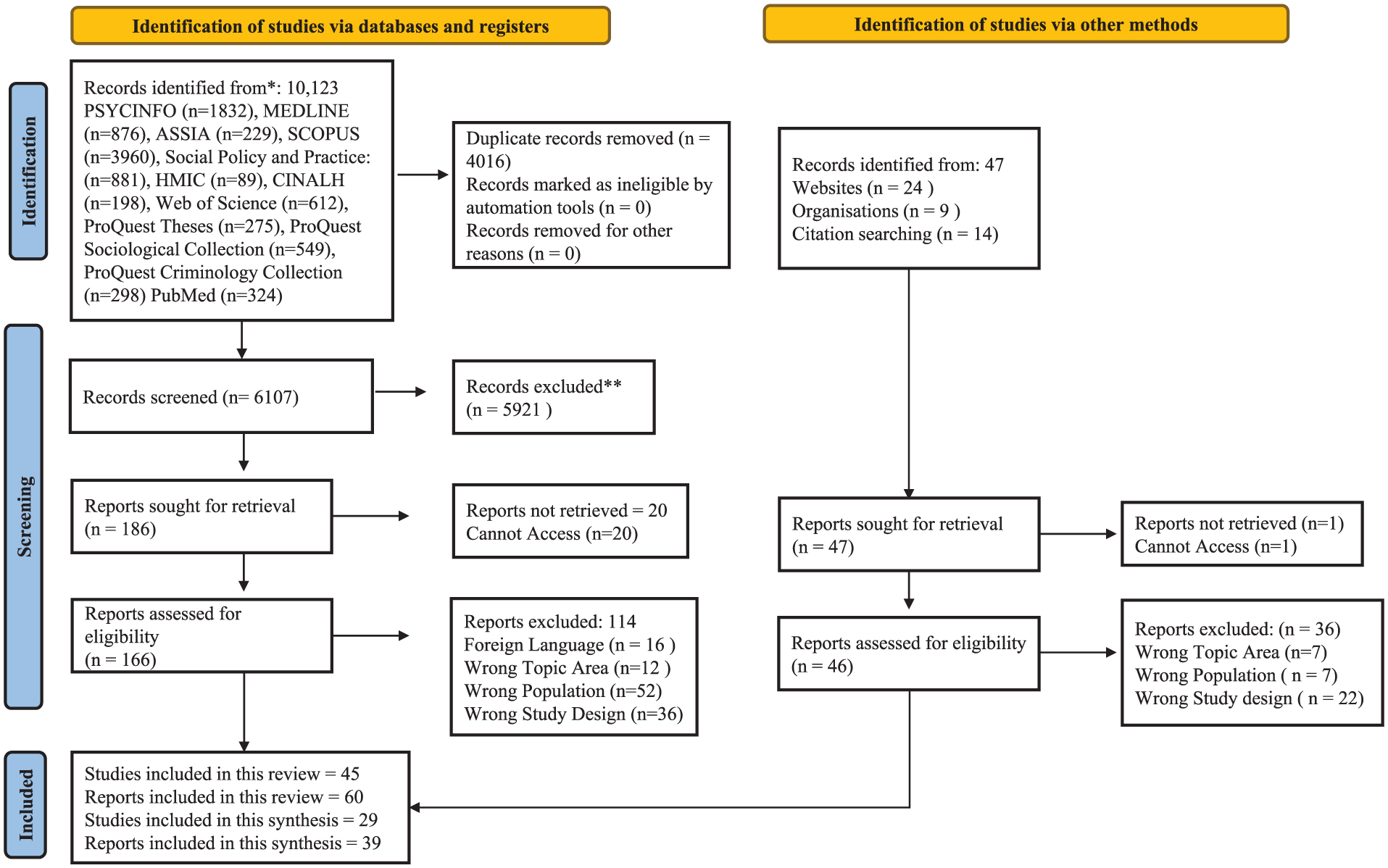
PRISMA.
The reports were published between 1997 and 2024, across nine countries. Most studies were conducted in the United Kingdom and Ireland (n = 20). Australia had the second highest numbers (n = 8). Representation from countries beyond Western Europe, North America, and Australia was lacking (n = 2). Thirty-four reports were peer-reviewed articles, 13 were theses, three were book chapters and 10 were study reports. Ten reports were related to interventions; five of these were intervention evaluations. For overall stakeholder representation, there are discrepancies in reported numbers, as many studies included a combination of different stakeholders. However, 43 reports included parents’, 17 included children and young people, two included siblings, one included grandparents, and 29 reports captured professional voices. No studies represented public views (see Supplemental Material 3).
Biological parent voices were represented in 26 reports: more than any other parental figure. Adoptive parents (n = 15), stepparents (n = 11), kinship carers (n = 2) and foster carers (n = 4) were often sub-samples in studies. The type of parental figure was not reported or unclear in 13 reports (Figure 2). Parent gender was not reported or unclear in nine studies. While most studies attempted to recruit both mothers and fathers, mothers represented a higher proportion of the sample when reported (n = 510 mothers, n = 65 fathers across 25 studies). Seventeen reports included children and young people voices, but four were intervention evaluations and only three focused specifically on children and young people. Reporting of family diversity, including ethnicity, socio-economic status, religion, sexual orientation, and disability, was inconsistent or lacking across studies, although this may reflect challenges in collecting this data in studies. Professionals from criminal justice (n = 16) or violence and abuse (n = 11) sectors were most represented, but insight from important sectors like health and education was limited (Figure 2). Thus, there were significant gaps, with some stakeholder voices underrepresented or missing.
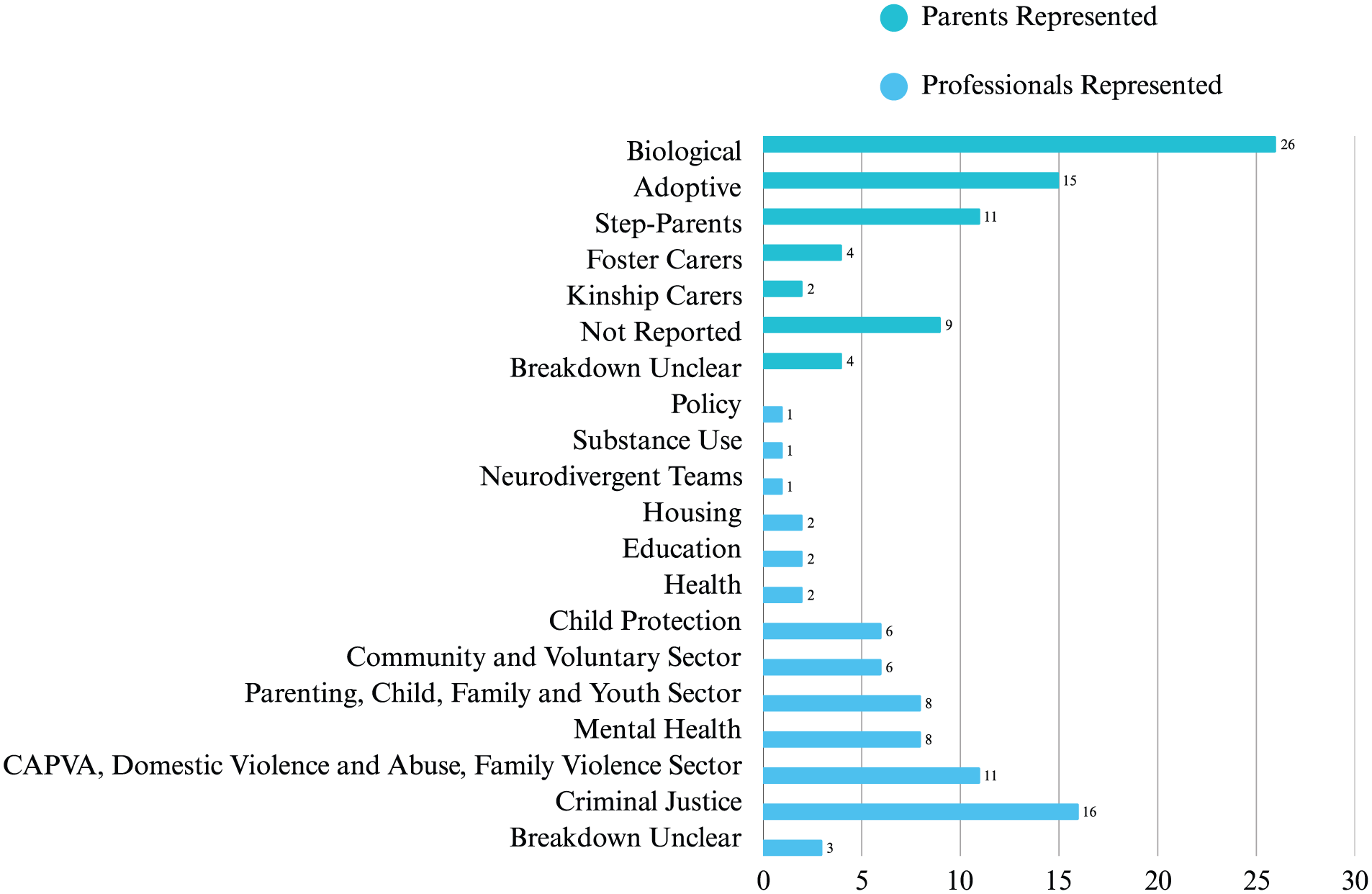
Parental figures and professional roles are represented.
Concept Maps
Figure 3 presents a map of concepts identified by stakeholders in Figure 2, describing the presentation of CAPVA. Stakeholders identified different forms of CAPVA. Physical violence and abuse, power, control, and resistance, and destroying property were prevalent. However, there were variations in how power, control, and resistance were operationalized by stakeholders. Accountability and responsibility, and intent were considered in relation to developmental constructs: age, capacity, competence, size, and strength. A higher proportion of mothers in samples led authors to regard gender as an implicit feature of CAPVA (e.g., Daly & Nancarrow, 2009; Messiah et al., 2017; Miles & Condry, 2015; Wilcox & Pooley, 2015), despite the fact gender of the parent or children and young people was operationalized by participants in relatively few studies. However, most of these authors did caution that this gender bias in sample composition was likely a consequence of caregiving roles and help-seeking behaviors.
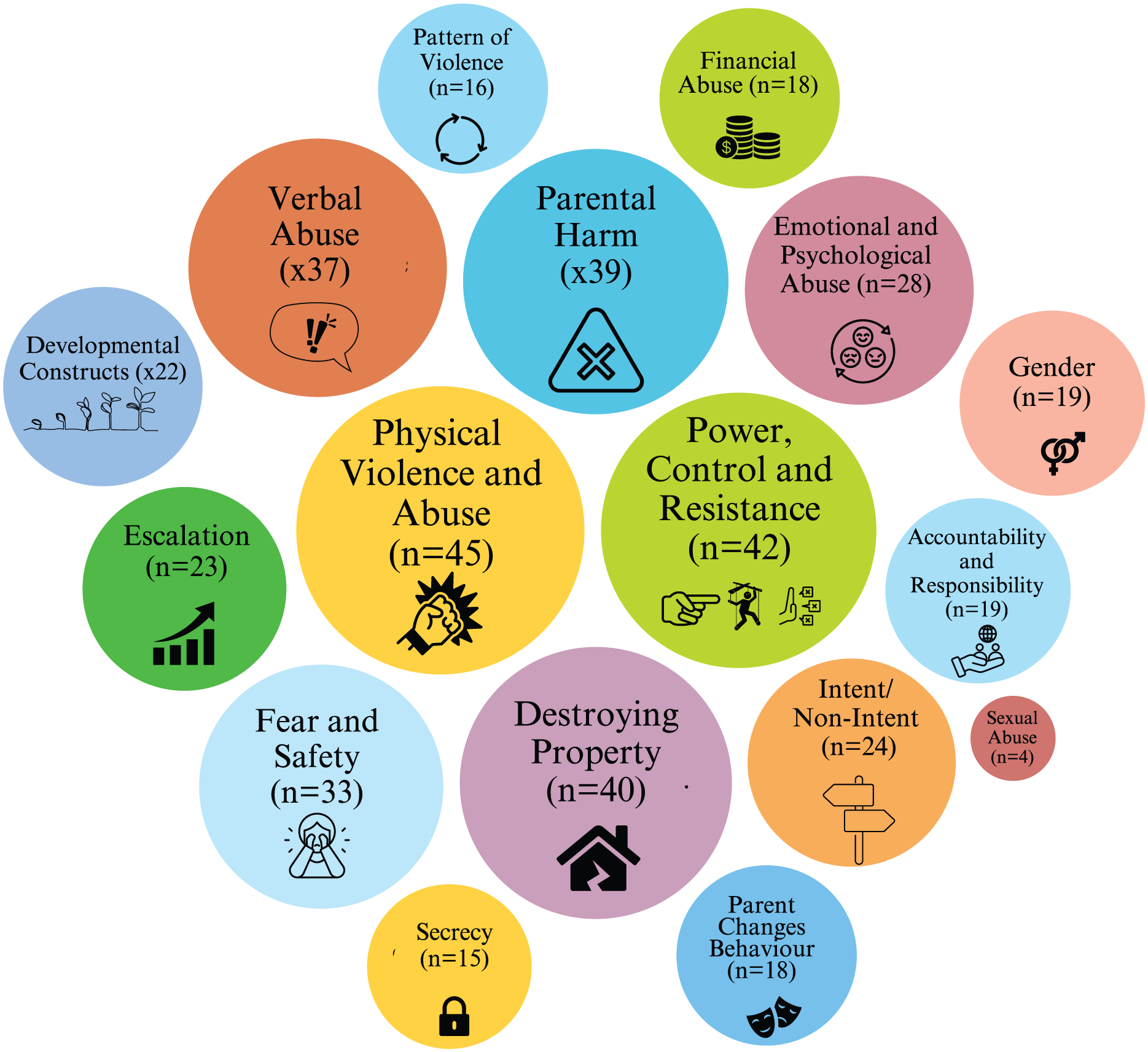
Concepts describing presentation of CAPVA.
Figure 4 shows the concepts identified as contributory factors of CAPVA, organized by socio-ecological system levels (Bronfenbrenner, 1977), as context, conditions, and mechanisms were often unclear. However, frequencies below each concept show stakeholders’ use of multiple interacting concepts across domains. Societal norms and expectations referring to parenting, childhood, and parent-child relationship norms were most frequent in the society domain (n = 16). In the community domain, school-related issues were significant (n = 31), including challenges relating to learning, attainment and bullying, as well as disruption, truancy, and school exclusion. Parenting concepts were prominent, with parenting styles and discipline identified in 32 studies and parenting roles and responsibility in 31 studies. Family history of violence and abuse in the form of domestic violence and abuse (n = 29) and child maltreatment (including physical and emotional abuse, emotional deprivation, and neglect) (n = 19) were also significant. Individual concepts of emotional regulation (n = 37), mental health (n = 34), and neurodivergence (n = 31) were frequently described. These concepts were taken forward as key concepts in the synthesis, with a focus on expanding and exploring their properties and meanings to help generate the theoretical model.
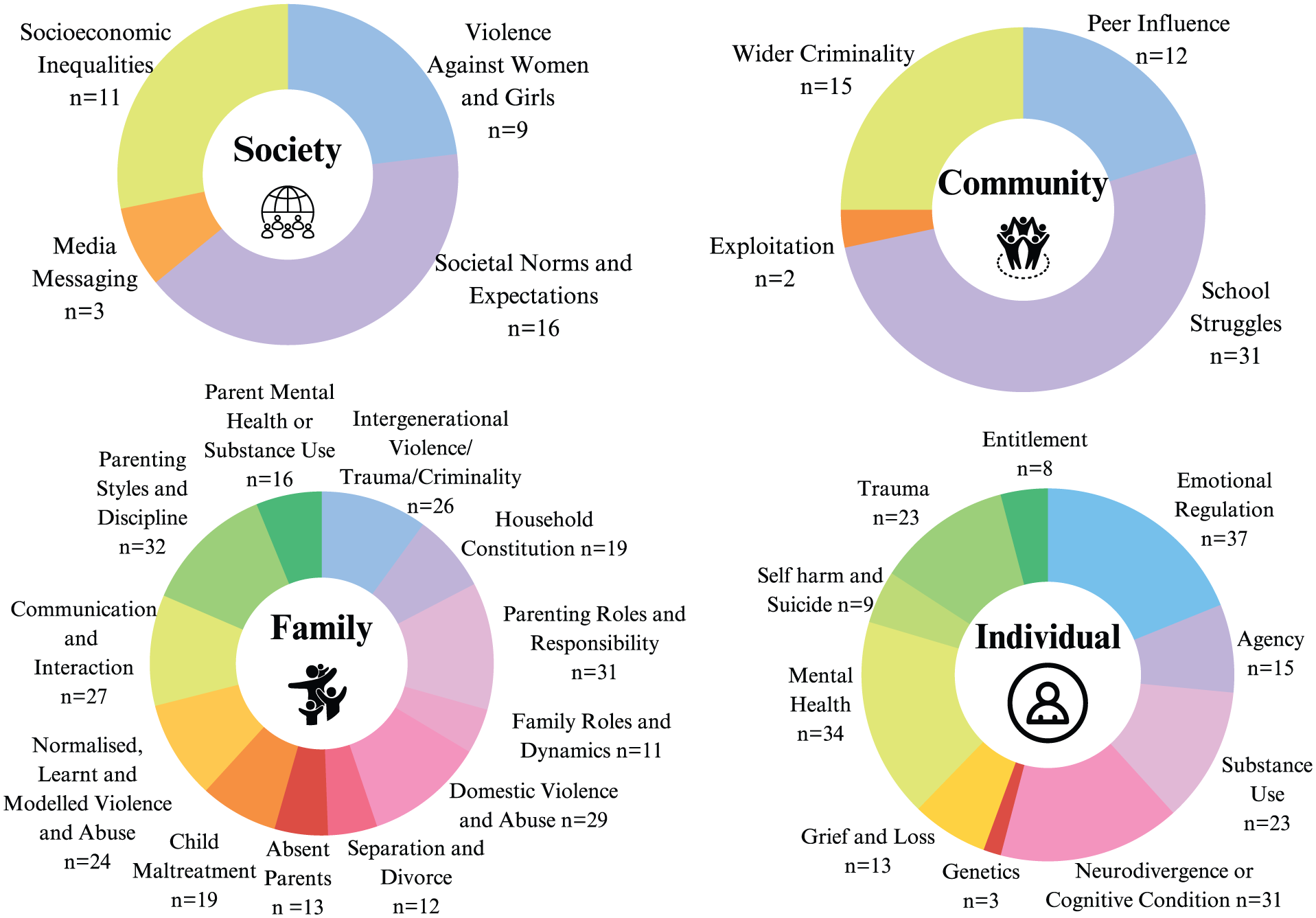
Concepts describing contributory factors of CAPVA.
Qualitative Synthesis Results: Theoretical Model of CAPVA
A total of 39 reports across 29 studies were included in the qualitative synthesis to develop a theoretical model of CAPVA. The developed theoretical model presents four understandings of CAPVA in terms of the context, conditions, mechanisms, and outcomes (Figure 5). The context in the model refers to the pre-existing social structures giving rise to the family circumstances of CAPVA. The conditions are the observable family circumstances that both shape and facilitate the underlying processes of CAPVA. The mechanisms are children and young people’s reasonings and motivations for CAPVA, thereby forming underlying processes of CAPVA. The outcomes in each model are different intervention responses. Developmental constructs in the model include children and young people’s age, as well as their perceived cognitive development, capacity, competence, accountability and responsibility, and their size and strength.
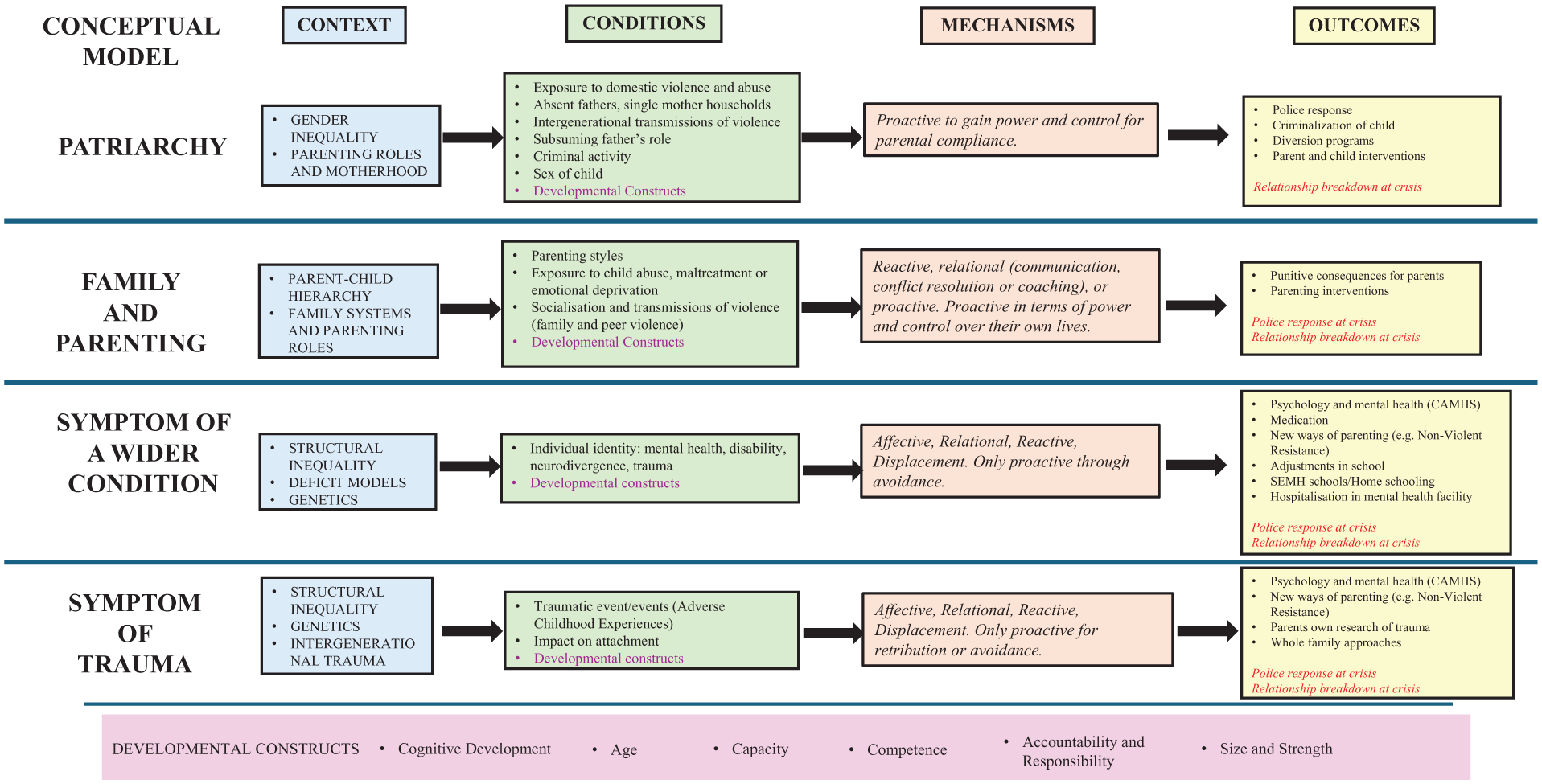
Theoretical model of CAPVA.
These models are not mutually exclusive and contain overlapping common features. For example, while “traumatic experiences” is identified as a condition in three models, they are operationalized by stakeholders in different ways that emphasize distinct underlying mechanisms. They are also not static; in practice, stakeholders may shift to a different model as CAPVA escalates, children and young people develop in age and stage, underlying mechanisms evolve, or more information emerges. Thus, one conceptual model is considered to have the most explanatory power at any one moment. Insights in this model draw on accounts from children and young people, parents, and professionals. Where perspectives overlap, findings are synthesized, but specific stakeholder interpretations are highlighted where available. A table indicating the reports linked to each model can be found in Supplemental Material 4.
Patriarchal Model
This model was generated based on professionals in criminal justice and CAPVA, domestic violence and abuse, and family violence sectors, as well as biological mothers reflecting on mother-son dyads. No children and young people’s voices or other parental figures contributed to this model. The patriarchal model views CAPVA as domestic violence and abuse and gender-based abuse, driven by male privilege, dominance, and control. Gender inequality shapes this view, with male power over women rooted in ideologies of male privilege. This also influences the role of motherhood, where mothers, seen as primary caregivers, are often viewed as primary targets of CAPVA.
The patriarchal model focuses on exposure to domestic violence and abuse, and the absence of fathers due to criminal justice responses or separation. It highlights intergenerational violence, with learnt and modelled behaviors to gain power over women. Gender is emphasized, where stakeholders perceive that male children assume the father’s role as household patriarch and may focus on wider criminal or antisocial behavior. This is often only applied to older children and young people deemed to be more accountable and responsible for their actions than younger children and young people.
The mechanism is “proactive,” aiming to gain power and control for parental compliance, like intent in domestic violence and abuse. Parents may express feelings like a victim of domestic violence and abuse, compare children and young people to their father, or describe children and young people seeing themselves as the dominant figure in the household. Proactive CAPVA may also uphold what children and young people consider a masculine identity in line with stereotypes.
The outcome often mirrors responses to domestic violence and abuse, potentially leading to the criminalization of children and young people, who may be referred to youth offending services. If children and young people are involved in wider criminal activity, they may already be involved in the justice system when CAPVA becomes known. However, most stakeholders contributing to the model agree that criminalizing children for CAPVA is inappropriate, and police may hesitate to apprehend children and young people unless necessary for household safety, particularly if younger siblings are present and a child and young people’s size or strength threatens their safety. This may prompt police intervention regardless of the four conceptual models that stakeholders may adopt. To avoid criminalization, children and young people may be placed in parent-child diversion programs or restorative justice.
Stakeholders recommend that police intervention should not result in punitive consequences. Rather, it should consider the complexity of CAPVA and respond to the safety, needs, and desires of families, helping to initiate coordinated interventions from other agencies, leading to effective responses to address the situation more holistically. Professionals and parents highlight that while a separation response may be necessary due to safety, suitable and safe placements should be provided, while seeking intervention options for restoration.
Family and Parenting Model
This model is inclusive of the most diverse range of stakeholder voices, including a range of professionals from criminal justice; CAPVA, domestic violence and abuse and family violence, child protection, mental health, parenting, child, youth and family and community and voluntary sectors. It includes biological mothers and fathers, step-parents and some adoptive parent voices, male and female children and young people aged 12 to 19 and sibling voices.
It focuses on family systems; parenting roles and responsibility, parent-child hierarchies, and socialization and transmissions of violence. Parent-child hierarchy refers to the relationship dynamics, which vary by cultural context. In traditional family structures, parents may hold a higher position, with children seen as passive. In contrast, some parents in cultural and legal contexts where children and young people’s rights have been embedded in legislation and policy perceive these shifts as engendering a more equitable dynamic between children and young people and parents. These parents feel their disciplinary rights are limited, creating challenges in their parenting practices. However, parents of children and young people under 18 still retain responsibility, maintaining a higher position in the hierarchy in the eyes of professionals and legislation, regardless of how this is perceived in the family system and dynamic.
Family systems and parenting roles reflect the family constitution (e.g., blended, adoptive, or separated families) and the children and young people’s position within the family, including sibling and stepparent dynamics. Parenting roles often involve mothers as primary attachment figures and fathers as more passive in parenting and discipline. This reflects who implements rules and boundaries and perceived inconsistencies or undermining between parents. This perspective includes fathers experiencing CAPVA, making it distinct from the patriarchal perspective.
The socialization of violence refers to learnt or modelled violence both within the family and wider community. Children and young people may have witnessed violence between parents, or experienced maltreatment from parents or other family members. Negative peer influences and peer violence, such as bullying, may also contribute to learnt behaviors. Parenting styles, particularly authoritarian and permissive, are key conditions. Authoritarian parents enforce strict rules and boundaries, may use corporal punishment, and lack emotional warmth, leading children and young people to feel their emotional needs are not being met. Parents may have high, unrealistic expectations, especially regarding education in different cultures. Permissive parents lack consistent rules, boundaries or consequences. This may be true for parents with experiences of trauma, parenting to the best of their capacity and capability in relation to their experiences. They may avoid discipline to compensate for children and young people witnessing or experiencing trauma or have children and young people take on caregiving roles. Inconsistent parenting may also stem from parental conflict or parents undermining each other’s approaches.
This model is more often applied to female than male children and young people. The model will apply to younger children and young people if parenting styles are perceived to contribute to CAPVA, or to older children and young people if focused on their desire for increased agency and independence. Stakeholders may apply this model if CAPVA becomes entrenched, and parents adjust their behavior, parenting styles and practices to accommodate CAPVA, highlighting how stakeholders can move between models in practice.
Stakeholder perceptions of accountability and responsibility may vary and is reflected in “relational” mechanisms, where CAPVA is a learnt and accepted form of conflict resolution or relational power struggle. Children and young people felt communication and interaction issues arise when they feel rejected or see siblings treated differently, with CAPVA seen as a maladaptive way to seek attention, affection or connection from parents. Parents and professionals suggest children and young people may have been coached into CAPVA by an abusive parent. Mechanisms can also be “reactive,” such as using CAPVA as a form of self-defense against an abusive parent. Children and young people may also be “reactive” to changes in the family system and dynamic, such as the addition of stepparents or new siblings. Children and young people provided direct insight into motivations of seeking connection, protecting themselves from abuse and responding to unwanted changes in the family system, which was complemented by professional perspectives.
“Proactive” mechanisms appear as power and control but are operationalized differently, where children and young people desire control over their own lives, not their parents. This is apparent during adolescence when parents may enforce strict boundaries and children and young people seek independence and agency. It may also reflect entitlement where children and young people describe feeling their rights are infringed upon, or to get what they want. The “proactive” mechanism may also stem from retribution, especially if children and young people feel failed by a parent after experiences of maltreatment or trauma, or as retaliation where increased size and strength enables children and young people to “hit back” due to perceived oppression or threat and safety. Mothers are often perceived as more available or safer targets by parents, professionals and children and young people.
This model often tracks the course of parental blame and self-blame, due to focusing on parenting and family history. This is evident in the outcome, where CAPVA is framed as a result of poor parenting, leading to punitive measures for parents or referrals to parenting interventions. Professionals, parents and siblings recommend focusing on the family more holistically, with more coordinated and joined-up approaches to intervention. In situations where parenting interventions may be appropriate, both parents and professionals emphasize the need to be sensitive and non-judgmental.
Symptom of a Wider Condition Model
The model views CAPVA as a symptom of wider conditions, including neurodivergence, mental health, and cognitive conditions. Stakeholder voices featured in this model include biological, adoptive, and foster parents of children and young people with neurodivergent conditions and mental health difficulties, male and female children and young people, and a small number of professionals. Contextual factors highlight structural inequality, where societal norms create unrealistic expectations for parents and children, and young people. This forms an idealized family model, leading to a deficit view of those who cannot conform. These families face limited opportunities to participate in traditional society and must adapt to a model that looks different. Some parents may attribute conditions or mental health issues to inherited intergenerational transmissions or genetics.
The conditions involve individual identity (i.e., mental health, neurodivergence, or cognitive condition), diagnosed or undiagnosed. Stakeholders are more likely to apply this model if children and young people are younger or have reduced cognitive development, affecting accountability and responsibility for CAPVA. While accountability and responsibility are not removed completely, the children and young people’s condition is considered when assessing capacity and intent. Similarly, CAPVA may result from psychosis (with or without substance use). CAPVA may be seen as distinct and separate from children and young people.
This model includes an “affective” mechanism, referring to emotional regulation. For neurodivergent children and young people, they, along with professionals and parents, suggested it may involve sensory overload or emotional release, especially after masking feelings. For those with mental health conditions, it may result from psychosis or dissociation, where children and young people lack control over their actions. CAPVA may also occur in response to parents trying to stop self-harm or suicide attempts. The “relational” mechanism involves CAPVA as a means of maladaptive communication or seeking affection or connection. The “reactive” mechanism may involve avoiding perceived unpleasant situations or reacting to interrupted pleasurable activities. The “proactive” mechanism may focus on children and young people controlling the environment to manage their feelings of safety. These can be seen as children and young people’s attempts to meet needs.
In this model, parents often seek help from Child and Adolescent Mental Health Services (CAMHS) or psychological services for diagnosis, medication, and support. However, families often face a lack of sufficient support for diagnoses beyond medication. Parents may adopt parenting styles that differ from societal norms and expectations, accepting their family as “different,” although this can be challenging. They may also seek support from schools to make important adjustments and adaptations in provision or choose alternatives to mainstream education. In severe cases, the child may be hospitalized or placed in residential care for their own and their family’s safety. Stakeholders recommend a better understanding of, and adaptation to, children and young people’s needs relating to these conditions in schools. Parents emphasize the need for suitable respite and better availability and accessibility of timely psychological intervention.
Symptom of Trauma Model
Trauma is a central focus in studies prioritizing adoptive parents and children and young people’s voices. These were more prevalent in the development of this model, along with a smaller number of professional voices. The symptom of trauma model is shaped by structural inequality, referring to deprivation and wider societal issues such as gender inequality, leading to social injustice and trauma. Intergenerational trauma features too, suggesting trauma in parents can affect children and young people. The conditions are traumatic events but are operationalized differently by stakeholders in this model compared with other models featuring traumatic experiences, due to a particular emphasis on the impact of trauma on children and young people’s attachment and emotional regulation. Developmental constructs are significant due to trauma’s impact on developmental growth. Parents and professionals tend to apply this model if children and young people are younger, reflecting reduced capacity.
The mechanisms resemble those in the “symptom of a wider condition” model. The “affective” mechanism involves emotional regulation issues caused by trauma, leading to maladaptive coping strategies to release anger. It can also include dissociation as a trauma response, as well as self-harm and suicidal ideation. The “relational” function highlights trauma’s impact on attachment, disrupting the neural connections necessary for forming healthy relationships. CAPVA may be used to seek connection and attachment, or as displacement, where children direct hurt or resentment toward a non-abusive parent. “Flashbacks” may result in the “reactive” mechanism that may have been necessary for survival, especially after severe trauma. The “proactive” mechanism can be driven by retribution or retaliation, or as a means of communicating abusive experiences. Children and young people specifically described using CAPVA in these ways, shaped by trauma, which were supported by adoptive parents’ accounts. The outcome aligns with a symptom of a wider condition but focuses on trauma-informed responses. Psychological services, therapy, and counselling are explored to help children and young people process trauma. Parents may adopt new parenting strategies or gain knowledge about trauma to better cope with CAPVA. Whole family approaches may be explored to address wider family trauma but are limited. Stakeholders recommend more available and accessible trauma-focused interventions and the need for holistic family interventions to meet the needs of children and young people who have experienced trauma. Access to suitable parental respite is also recommended in this model.
Discussion
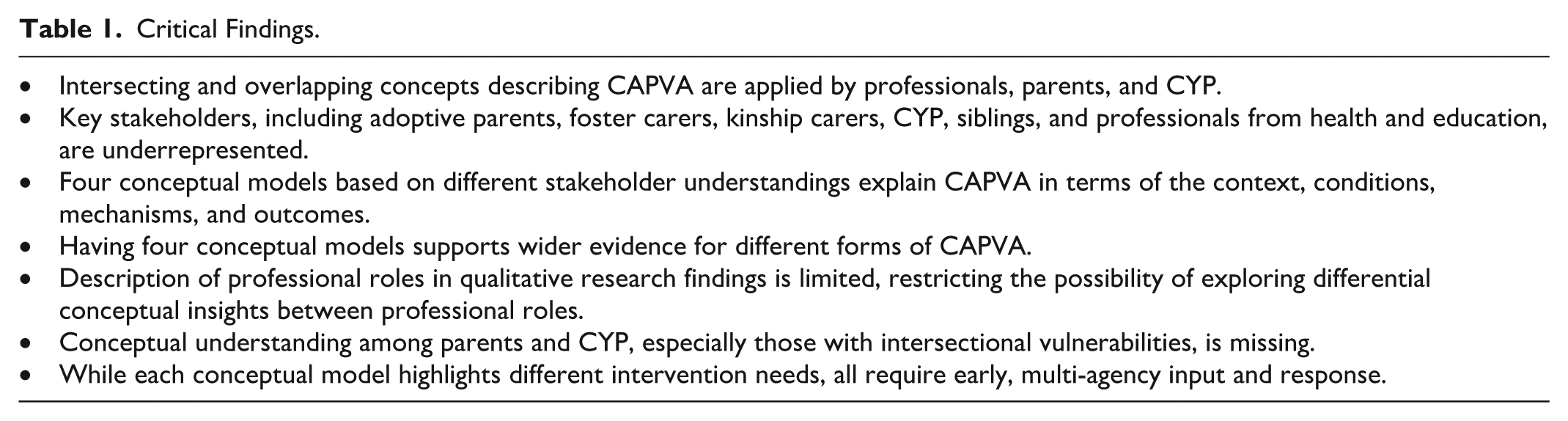
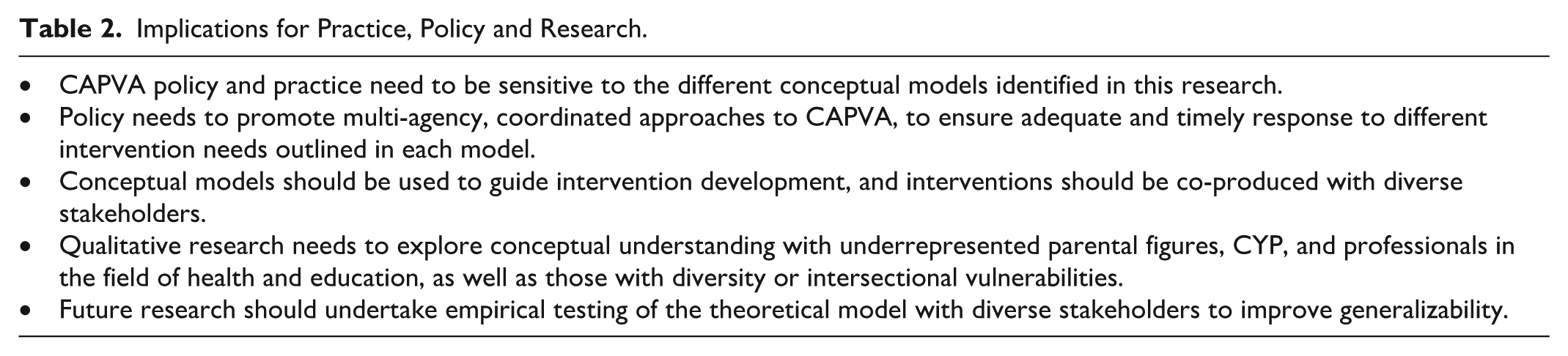
This review and synthesis aimed to make a much-needed contribution to the conceptual and theoretical development of CAPVA grounded in different stakeholders’ understandings. The scoping review developed an inclusive understanding of stakeholders represented in CAPVA qualitative research and the varying concepts used to describe CAPVA. The synthesis then drew on this knowledge base, using the concept maps as a basis for analysis to generate a theoretical model explaining how stakeholders conceptualize CAPVA in relation to context, conditions, mechanisms, and outcomes. Tables 1 and 2 include a summary of critical findings and implications for practice, policy, and research from both the scoping review and synthesis.
Critical Findings.
Implications for Practice, Policy and Research.
The scoping review resulted in 60 reports, linked to 45 studies conducted across nine countries, with most studies from the UK and limited representation from non-Western cultures and lower-income countries. The review revealed gaps in stakeholder representation. Biological parent voices were most frequently represented, while other parental figures were underrepresented. This overlooks how families with different parental figures may shape the type of CAPVA experienced, their conceptual understandings of these experiences and the support available (Holt & Birchall, 2021). A range of professionals were also included, but key sectors such as health and education were limited, despite their central role in help-seeking (Rutter, 2023; Toole-Anstey et al., 2023). Children and young people’s voices were often absent, hindering insight into their own conceptual understandings of CAPVA. Diversity data for parents and children and young people (e.g., ethnicity, socio-economic status, sexuality) was inconsistently reported. Gender was frequently reported but only in binary categories, limiting recognition of how CAPVA can be understood by those with diverse gender identities. Within this binary framing, mothers and male children were disproportionately represented, and some authors reflected how these gendered distributions shaped understandings of CAPVA. Age of children and young people was also commonly reported, yet studies with younger children and young people were rare. The few studies that did include younger participants suggested variations in making sense of CAPVA compared to older children and young people, indicating how age may shape CAPVA conceptualizations. However, ethnicity, disability, and sexuality may also influence how CAPVA is conceptualized, and the absence of this data risks overlooking how these intersecting vulnerabilities may shape experiences of CAPVA within families and their pathways to support and intervention. Therefore, future research should engage with these stakeholders to enrich conceptual understandings of CAPVA.
The concepts stakeholders used to describe the presentation of CAPVA (Figure 3) supported the diverse forms of violence and abuse often considered to constitute CAPVA (Holt, 2016). However, some concepts such as “intent” and “power, control and resistance” were operationalized in different ways by stakeholders (Baker & Bonnick, 2021; Ibabe et al., 2021), suggesting current CAPVA definitions utilizing these concepts may not fully capture all stakeholders’ perspectives (e.g., Cottrell, 2001; Holt, 2016). The review’s socio-ecological concept diagrams (Figure 4) showed multiple intersecting and overlapping concepts from the stakeholders represented, revealing the heterogeneity and complexity of CAPVA emphasized in wider research (Arias-Rivera et al., 2021; Del Hoyo et al., 2020) and underscoring the need for a comprehensive theoretical understanding of CAPVA (Simmons et al., 2018).
The subsequent synthesis utilized the key concepts identified from the mapping phase to generate a theoretical model. This resulted in four conceptual models of CAPVA, all of which comprised contextual factors (pre-existing societal structures), conditions (observable family circumstances), underlying mechanisms (children and young people’s reasons or motivations for CAPVA), and outcomes (intervention). Having four conceptual models supports evidence for different forms, expressions, and underlying mechanisms of CAPVA (Harries et al., 2024; Ibabe et al., 2021). The different models highlight how varying contexts and conditions were perceived to influence CAPVA in diverse ways and reveal divergent conceptualizations based on different stakeholders’ perspectives. These fundamental differences may explain the challenges to date in reaching a shared theoretical understanding of the problem. The emergence of different conceptual models indicates the need for tailored interventions that are sensitive to the underlying mechanisms of CAPVA and involve multi-agency collaboration.
The outcomes showed different interventions were used to address CAPVA across each model, supporting wider evidence that a tailored approach is necessary rather than a “one size fits all” solution (Toole-Anstey et al., 2023; Harries et al., 2024). Thus, these models could be used in practice by professionals to select suitable interventions that are sensitive to the different underlying mechanisms of CAPVA. However, stakeholders identified several limitations of current interventions, with some being contested by stakeholders, and none fully addressing CAPVA. These limitations, along with stakeholder recommendations for improving interventions, underscore the importance of developing or adapting interventions that are theoretically informed and responsive to the complexity of CAPVA.
The Medical Research Council has produced robust frameworks for intervention development that emphasize context, conditions, mechanisms, and outcomes, enhancing relevance, implementation, and effectiveness of interventions (Skivington et al., 2021). Thus, the synthesized model could support intervention development, helping to develop interventions, or adapt existing ones, that are sensitive to different models while also ensuring they are restorative and non-stigmatizing (Morgan & Janes, 2024). Co-producing interventions with diverse stakeholders, including parents and children and young people with intersectional vulnerabilities, would improve the acceptability and feasibility of developed or adapted interventions and their implementation (Moore et al., 2019).
All models require the involvement of different agencies and sectors. Thus, no single agency could take sole responsibility for leading CAPVA intervention and response, underscoring the need for coordinated multi-agency approaches (Baker & Bonnick, 2021; Rutter, 2023). The models also highlight the presence of CAPVA in younger children and young people (Rutter, 2023) and its progressive nature (Nguyen-Phan, 2021), reinforcing the need for earlier intervention throughout the developmental trajectory (Harries et al., 2024). This highlights the importance of cohesive policy that supports and enacts integrated, multi-agency collaboration aligned with the four different models, to ensure suitable interventions are delivered to the right family at the right time.
Limitations
This research was subject to several limitations. The lack of agreed terminology and definition for CAPVA meant behaviors were described under a range of framings such as “child to parent violence,” “adolescent family violence,” and related terms. This variation required the review to adopt broad search terms to capture diverse conceptualizations in the field, which presents challenges for consistency and comparison across studies. However, it can also be viewed as a strength, as it enabled the synthesis to reflect the breadth of perspectives across the literature. While the review includes a wide range of search terms, some studies may have been overlooked due to the various and inconsistent terminology applied to CAPVA. Additionally, the eligible age range of up to 19 years-old in this review meant there were potentially relevant studies excluded where the age of children and young people being discussed was not clear or older than 19 years-old.
Despite the insights gained from various stakeholders in the models, several limitations impacted the depth of exploration. Many reports, although representing a diverse range of professionals, lacked detailed descriptions of professional roles due to anonymity, making it difficult to differentiate contributions across disciplines. Additionally, key stakeholders were underrepresented or missing, especially those with intersectional vulnerabilities, limiting understanding of how these factors influenced conceptual understandings and intervention needs (Rogers & Ashworth, 2024). Thus, further empirical testing and validation of the model is required with different stakeholders, to help explore the model’s robustness under different conditions and offer insights into how the model operates in practice. This will help adapt, develop, extend, and thus refine the model for wider applicability. Additionally, this review only included English language studies, further limiting the model’s applicability in contexts beyond Western Europe, North America, and Australia. Thus, findings cannot be generalized to non-Western family, cultural, and policy settings, highlighting the need for cross-cultural testing and validation.
Conclusion
This is the first scoping review and synthesis to our knowledge, theorizing stakeholder understandings of CAPVA in children and young people aged 19 years or younger. Articulating and differentiating various conceptual models for CAPVA based on context, conditions, and mechanisms provides a useful step in understanding the nuances between them, and how this can shape different outcomes. CAPVA policy and practice should develop multi-agency, coordinated approaches to CAPVA that acknowledge diverse conceptualizations and ensure timely and appropriate responses aligned with the model. Future research should develop the model based on a broader spectrum of stakeholder voices and undertake empirical testing and validation of the model. This theoretically informed model of CAPVA may be utilized as a reference point to inform the development or adaptation of CAPVA interventions.
Supplemental Material
sj-docx-1-tva-10.1177_15248380261429508 – Supplemental material for A Scoping Review and Synthesis of Qualitative Evidence Reporting Stakeholders’ Conceptualization of Child to Parent Violence and Abuse
Supplemental material, sj-docx-1-tva-10.1177_15248380261429508 for A Scoping Review and Synthesis of Qualitative Evidence Reporting Stakeholders’ Conceptualization of Child to Parent Violence and Abuse by Bethan Pell, Kelly Buckley, Honor Young, Yulia Shenderovich, Sophie Borgia, Isabel Lang, Alice McHale, G.J. Melendez-Torres, Shannon Murray, Abbey Rowe and Rhiannon Evans in Trauma, Violence, & Abuse
Supplemental Material
sj-docx-2-tva-10.1177_15248380261429508 – Supplemental material for A Scoping Review and Synthesis of Qualitative Evidence Reporting Stakeholders’ Conceptualization of Child to Parent Violence and Abuse
Supplemental material, sj-docx-2-tva-10.1177_15248380261429508 for A Scoping Review and Synthesis of Qualitative Evidence Reporting Stakeholders’ Conceptualization of Child to Parent Violence and Abuse by Bethan Pell, Kelly Buckley, Honor Young, Yulia Shenderovich, Sophie Borgia, Isabel Lang, Alice McHale, G.J. Melendez-Torres, Shannon Murray, Abbey Rowe and Rhiannon Evans in Trauma, Violence, & Abuse
Supplemental Material
sj-docx-3-tva-10.1177_15248380261429508 – Supplemental material for A Scoping Review and Synthesis of Qualitative Evidence Reporting Stakeholders’ Conceptualization of Child to Parent Violence and Abuse
Supplemental material, sj-docx-3-tva-10.1177_15248380261429508 for A Scoping Review and Synthesis of Qualitative Evidence Reporting Stakeholders’ Conceptualization of Child to Parent Violence and Abuse by Bethan Pell, Kelly Buckley, Honor Young, Yulia Shenderovich, Sophie Borgia, Isabel Lang, Alice McHale, G.J. Melendez-Torres, Shannon Murray, Abbey Rowe and Rhiannon Evans in Trauma, Violence, & Abuse
Supplemental Material
sj-docx-4-tva-10.1177_15248380261429508 – Supplemental material for A Scoping Review and Synthesis of Qualitative Evidence Reporting Stakeholders’ Conceptualization of Child to Parent Violence and Abuse
Supplemental material, sj-docx-4-tva-10.1177_15248380261429508 for A Scoping Review and Synthesis of Qualitative Evidence Reporting Stakeholders’ Conceptualization of Child to Parent Violence and Abuse by Bethan Pell, Kelly Buckley, Honor Young, Yulia Shenderovich, Sophie Borgia, Isabel Lang, Alice McHale, G.J. Melendez-Torres, Shannon Murray, Abbey Rowe and Rhiannon Evans in Trauma, Violence, & Abuse
Footnotes
Acknowledgements
The authors would like to thank the knowledge users who gave their time to help shape the scope and focus of the review and provide feedback on the synthesized model.
ORCID iDs

Ethical Considerations
There are no human participants in this article and informed consent is not required.
Funding
The authors disclosed receipt of the following financial support for the research, authorship, and/or publication of this article: This review is funded through an ESRC Wales Doctoral Training Centre Studentship for BP. Other authors’ work was undertaken with the support of The Centre for the Development and Evaluation of Complex Interventions for Public Health Improvement (DECIPHer).
Declaration of Conflicting Interests
The authors declared no potential conflicts of interest with respect to the research, authorship, and/or publication of this article.
Supplemental Material
Supplemental material for this article is available online.
Author Biographies
References
Supplementary Material
Please find the following supplemental material available below.
For Open Access articles published under a Creative Commons License, all supplemental material carries the same license as the article it is associated with.
For non-Open Access articles published, all supplemental material carries a non-exclusive license, and permission requests for re-use of supplemental material or any part of supplemental material shall be sent directly to the copyright owner as specified in the copyright notice associated with the article.
