



Abstract
Sexual violence (SV) is a significant concern in higher education. Regarding varsity athletes, between 29% and 45% have experienced SV, while nearly half report consequences that negatively impact their functioning, yet less than 10% formally report these incidents. This literature review aimed to identify risk factors and prevention recommendations for SV among varsity athletes. A literature review was conducted between May 2023 and July 2024 using keyword searches in academic databases (Ebsco, ProQuest, Érudit) and Google. Inclusion criteria included publications from 2012 onwards (reflecting post-#MeToo impact), English or French language, and a specific focus on varsity athletes. This literature review yielded 31 initial references (27 scientific, 4 grey literature), with an additional 20 articles later incorporated from key scientific references of this review. Results revealed risk factors across a four-level social-ecological model: individual (gender, sexual orientation, age), relational (social drinking situations, relationship dynamics), organizational (athletic subcultures), and societal (culture of silence, traditional masculine values). Prevention findings highlight the effectiveness of long-term interventions that incorporate peer/coach education, deconstructing myths, and bystander programmes, while avoiding single-session or online-only formats. Nine specific prevention programmes were examined and described, showing some promising results despite limited evaluation in higher education sports contexts. This review highlighted significant knowledge gaps, including limited research outside the United States, on diverse varsity athlete populations and regarding organizational risk factors.
Introduction
In recent years, there has been an increased focus on understanding and preventing sexual violence (SV) in higher education (i.e., colleges and universities). Several studies have shown that varsity athletes are at risk of experiencing SV in sports contexts such as training, competitions, travel, locker rooms, hotels, and sports initiations (Cense & Brackenridge, 2001; Fogel & Quinlan, 2021; Johansson & Lundqvist, 2017; Kirby et al., 2001; Mountjoy et al., 2016; Parent et al., 2022). They are also at risk of experiencing SV in contexts outside of sport, including studying, partying, working, and the online environment (Desrochers-Laflamme & Bergeron, 2024; Ohlert et al., 2020; Parent et al., 2022). In this study, varsity athletes are defined as individuals enrolled in a higher education institution, that is, college and university, who participate in that institution’s athletic programme as members of its official teams (Labossière, 2024).
SV can take many forms, and there has yet to be a consensus on its definition in scientific literature. In this article, the term “SV” refers broadly to any “sexual act that is committed or attempted by another person without freely given consent of the victim or against someone unable to consent or refuse” (Centers for Disease Control and Prevention [CDC], 2014, p. 11). More specifically, SV behaviours include, but are not limited to, sexual harassment, unwanted sexual attention (i.e., unwanted touching, sexual abuse or rape), and sexual coercion (Parent & Fortier, 2017).
In the varsity athlete population, the prevalence of SV victimization ranges from 29% to 45% (Adhia et al., 2023; Bergeron et al., 2016; Desrochers-Laflamme & Bergeron, 2024; Parent et al., 2022). Among those who had experienced SV, more than 90% never reported the events to a support resource or college authorities and 89.5% of perpetrators were identified as equally being students (Desrochers-Laflamme & Bergeron, 2024). Therefore, varsity athletes are at risk not only of experiencing SV but also of perpetrating and witnessing these acts of violence (Bonar et al., 2022; Tredinnick, 2022a). Half of university and college students who experienced SV (including varsity athletes) report at least one functional consequence (Bergeron et al., 2016, 2020). These consequences include post-traumatic stress disorder, lifestyle changes (e.g., sleep difficulties, diet changes), and difficulties pursuing their academic activities (e.g., school, sport, work; Bergeron et al., 2016, 2020).
Considering the extent of the problem, the lack of disclosure and the serious consequences resulting from SV, the present review aimed to gain a better understanding of: (a) the risk factors for victimization, perpetration and witnessing of SV for varsity athletes in higher education settings; and (b) recommendations for interventions to prevent or reduce SV, particularly within sports teams and among varsity athletes.
Theoretical Framework
To effectively prevent SV in higher education sports settings, it is essential to know the risk and protective factors specific to this context (Orchowski et al., 2020). Moreover, it is important to broaden the vision of these factors to the different levels of a socio-ecological model (Milroy et al., 2022), which also enables the analysis of their interactions (Bonar et al., 2022). For this review, the four-level socio-ecological model of the CDC, 2022 will be used to present the factors associated with SV. The factors that are associated with varsity athletes’ likelihood of experiencing, committing, or acting as a bystander for SV include (a) individual factors (i.e., biological, personal, and socio-demographic), (b) relational factors (i.e., individual’s close interpersonal relationships), (c) organizational and community factors (i.e., characteristics of the environments in which social relationships take place); and (d) societal and cultural factors (i.e., justice systems, policies, social and cultural norms; CDC, 2022). These four levels can interact and interinfluence.
Method
Search Strategy
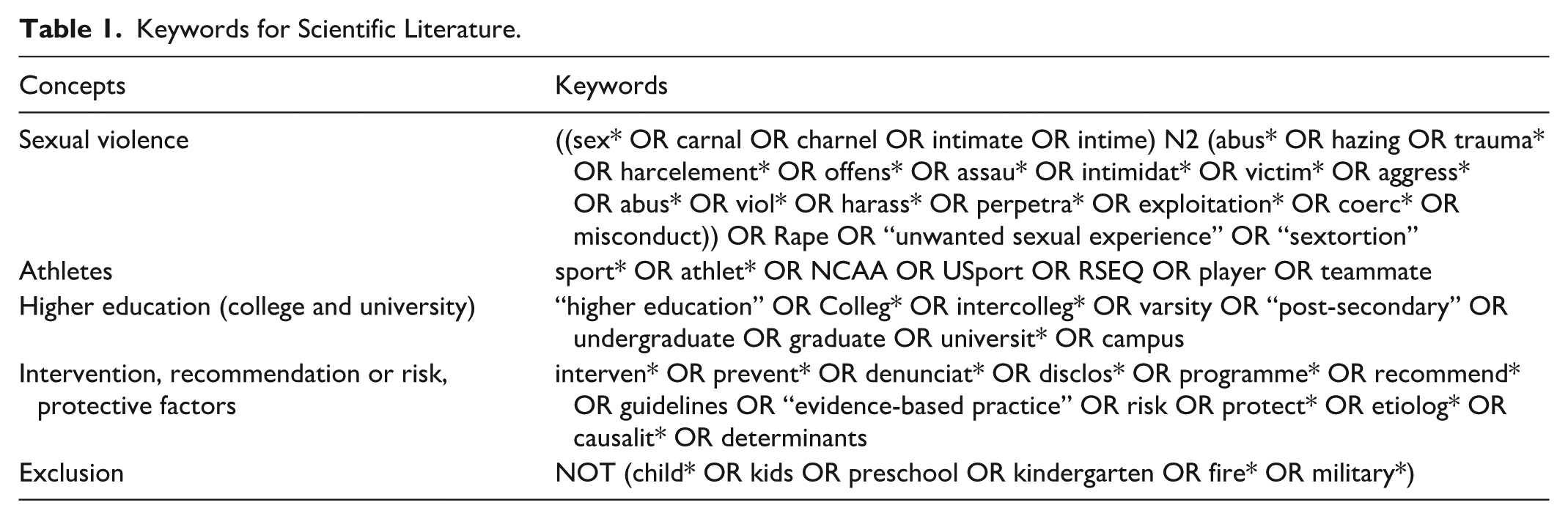
A literature review was conducted on the topic of SV in varsity sports settings and of prevention efforts addressing this issue. The search strategy was carried out by searching on Ebsco (Academic Search Complete; APA PsycINFO; Cinahl Plus; Education Source; ERIC; Medline; SocIndex; SPORTDiscus), Proquest (Sports Medicine and Education Index), and Érudit using the keywords presented in Table 1. In addition, a grey literature review was conducted once in French and a second time in English. Google was the search engine used when searching for the following keywords: (sex* violence, sport, athlete*, college, university) AND (prevention, recommendations). The results were consulted for the first ten pages of English and French searches. A librarian assisted in refining the search strategy. In both the scientific and grey literature reviews, the research was conducted between May 2023 and September 2023, although some articles were added iteratively throughout the research process, until July 2024, drawing on key references from the included articles and newly published materials after the initial search. The principal inclusion criterion was the target population. In other words, only articles addressing both higher education and varsity athletes were included, rather than focusing exclusively on one or the other. Exclusion criteria included year of publication and language. Articles published from 2012 onwards were considered, including reviews that reference older studies. This choice reflects the significant impact of the #MeToo movement on the understanding of SV, while also acknowledging the culture surrounding SV in sports (McCray & Taylor, 2021). Only articles in English and French were added to this review, aligned with the research team’s linguistic capabilities. The initial search for scientific references identified 432 studies, after 37 duplicates were removed by Covidence.
Keywords for Scientific Literature.
Study Screening and Selection
For the scientific literature, the first author (JT) identified the relevance of the initial 432 included articles according to the inclusion and exclusion criteria mentioned above, by screening titles and abstracts using the platform Covidence. After this first step, 85 full-text studies were then assessed for eligibility by reading the full texts, resulting in the inclusion of 37 scientific articles in the literature review, based on inclusion and exclusion criteria and focus of this review. The third author (SL) supervised the work and the screening process to ensure a comprehensive and accurate selection of articles for this study. This supervision led to the exclusion of ten articles that did not meet the inclusion criteria.
The grey literature review was also carried out by the first author (JT) with the support of the third author (SL). The process was very similar to the scientific literature review. Twenty news articles, policy documents, institutional websites, as well as any other relevant information webpages were included in the study, based on the nature of the webpage and the subject matter. Of those, six were found as relevant by screening the title. After reading the full pages or documents, four were identified as corresponding to the inclusion criteria. In summary, 31 references were identified through scientific (27) and grey (4) literature reviews. Additionally, 20 articles were added iteratively, primarily consisting of key references cited in the scientific literature, bringing the total number of articles included in this review to 51.
Results
From the initial 27 scientific articles identified for this review, publication dates spanned from 2012 to 2023, with 23 articles published between 2019 and 2023. From the 20 papers added iteratively, publication dates varied from 1993 to 2023. The older articles (i.e., 1993–2012) were typically added through iterative reference checks of the initially selected research articles (i.e., primary sources). The four grey literature articles were all published in 2023. In total, the sources comprised 44 research articles, 1 master’s dissertation, 2 book chapters, 2 public documents (i.e., toolkits), 1 news article, and 1 brief. When considering only the research articles (n = 44), most studies were conducted in the United States (n = 26), with 2 in Canada, 2 in the UK, and 1 in Norway. The remaining research articles (n = 13) were literature reviews referencing studies from various countries. The research design of the 44 research articles was diverse, with 24 quantitative studies, 9 literature reviews, 4 commentaries, 3 qualitative studies, 3 mixed methods studies, and 1 meta-analysis. As for content, this literature review identified (a) 21 articles from scientific literature on risk factors for victimization and perpetration of varsity athletes and (b) 31 scientific literature articles and 4 grey literature articles on bystander action/inaction and prevention efforts for SV in a higher education sports setting. Six articles addressed both risk factors and prevention.
Risk Factors for SV in a Higher Education Sports Setting
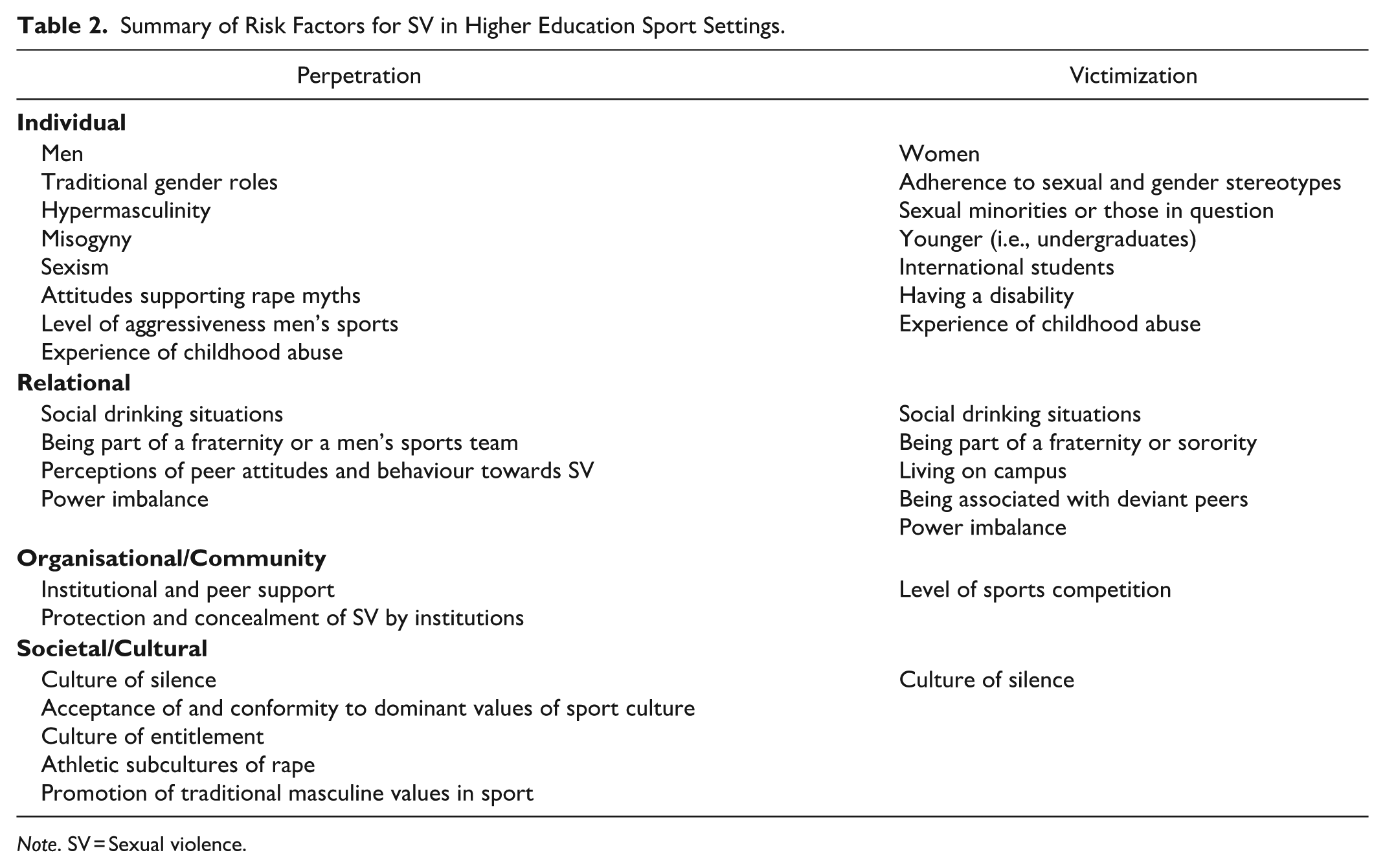
In the following paragraphs, the specific factors for varsity athletes that increase the risk of SV victimization or perpetration will be discussed according to the theoretical framework presented above. A summary can be found in Table 2.
Summary of Risk Factors for SV in Higher Education Sport Settings.
Note. SV = Sexual violence.
Individual Factors
Most studies report a higher risk of perpetration among men and a higher risk of victimization among women (e.g., Bonar et al., 2022; McCray, 2015; Parent et al., 2022). Specifically, studies indicate that traditional gender roles, hypermasculinity, misogyny, sexism, attitudes supporting rape myths, and the level of aggressiveness in certain men’s sports may impact the likelihood of committing SV in varsity athletes (James, 2012; Kimble et al., 2010; Murnen & Kohlman, 2007; Young et al., 2017). However, a study found that male varsity athletes do not exhibit higher levels of attitudes supporting rape myths than their female counterparts (Navarro & Tewksbury, 2019).
In this review, ethnicity was not found to have a significant effect on SV victimization among varsity athlete populations (Parent et al., 2022). Indeed, in Parent et al.’s (2022) study, being a visible minority or having Aboriginal status were not significant variables for experiencing SV.
A few studies have found differences in SV victimization between sexual and gender minority athletes and heteronormative cisgender athletes (McCray et al., 2023; Parent et al., 2022). Varsity athletes who identify as sexual or gender minorities were more likely to experience SV in higher education settings than heteronormative cisgender varsity athletes (Adhia et al., 2023; Parent et al., 2022).
One study found that younger varsity athletes were more likely to be victims of SV than older varsity athletes (i.e., undergraduate vs. graduate students; Parent et al., 2022). Three other personal characteristics have also been identified through this review as risk factors for experiencing SV in varsity athletes, including child sexual abuse, international student status, and having a disability (Parent et al., 2022).
Relational Factors
In terms of relational risk factors for SV, social drinking situations, such as sports events and celebrations following team victories, pose a significant risk of SV perpetration and victimization among varsity athletes (Beaver, 2019; Lindo et al., 2018; Navarro & Tewksbury, 2019; Parent et al., 2022). In varsity athletic populations, over half of reported cases of SV occurred while one or both parties were intoxicated (Carey et al., 2022; McCray, 2019).
Peers and groups to which varsity athletes belong can affect their propensity to commit or experience SV. Some studies suggested that belonging to a male fraternity or male sports team may increase the risk of committing SV (Bonar et al., 2022; Koss & Gaines, 1993; McCray, 2015; Tharp et al., 2013). It is suggested that these male peer groups may impact SV perpetration by providing social support for certain attitudes and beliefs (e.g., hypermasculinity, misogyny, and sexism), as well as contexts conducive to excessive alcohol drinking (Murnen & Kohlman, 2007; Tharp et al., 2013). Furthermore, being involved in a fraternity or sorority, living on campus, and being associated with deviant peers are also risk factors for experiencing SV for both varsity athletes and non-athletes (McCray, 2019). Contrastingly, Parent et al.’s (2022) study found that varsity athlete status is not a predictor of victimization but did not examine the link between varsity athlete status and SV perpetration. Research also indicates that perpetrators are often acquaintances or relatives of victims (McCray, 2019). Among varsity athletes, aggressors were most often other students (85.9% to 89%) rather than staff members (teachers, sports coaches; Desrochers-Laflamme & Bergeron, 2024; Parent et al., 2022).
Additionally, power imbalances and the hierarchical nature of relationships in sport can lead to varsity athletes experiencing SV. For example, studies on SV towards varsity athletes in Quebec reported that in the case of 10.1% of college (Desrochers-Laflamme & Bergeron, 2024) and 27% of university (Parent et al., 2022) SV victims, the perpetrator was in a position of power.
Organizational and Community Factors
Certain characteristics of sports and academic organizations can foster athletic subcultures that tolerate SV (Abrams & Bartlett, 2019; Crosset, 2016). Specifically, sports teams or academic environments where (a) perpetrators receive peer support for violent acts towards women, (b) interpersonal violence outside of athletic fields is normalized, (c) there is institutional support for male privileges, and (d) athletes are not held accountable for their criminal behaviour, can create a context conducive to SV perpetration by varsity athletes (Crosset, 2016). In addition, when the perpetrator of such acts is a varsity athlete, some institutions may be reluctant to take action because they fear damaging their reputation/image, losing financial resources invested in the individual’s athletic career, or jeopardizing the team’s chances of winning (Abrams & Bartlett, 2019). Varsity athletes involved may also be expelled from the institution and could then perpetrate SV in another setting (Abrams & Bartlett, 2019).
Regarding the level of sports competition, in the U.S., a study has shown that the National Collegiate Athletic Association (NCAA) Division I (the highest level of athletic competition) in higher education institutions has the highest ratios of interpersonal violence (including SV), compared to Division II and III institutions and institutions without varsity sports. This suggests differences based on the level of athletic competition (Wiersma-Mosley & Jozkowski, 2019). Another study found that, in a higher education setting, recreational athletes had a higher probability of both experiencing and perpetrating SV compared to non-athletes, whereas varsity athletes had higher rates only for perpetration of SV (McCray et al., 2023).
Societal and Cultural Factors
The culture of silence present in higher education sports environments represents a risk factor for perpetration and victimization. It leads to a low level of victim reporting (Ellyson et al., 2023). Factors contributing to this culture of silence include (a) societal systems of oppression (discrimination, stigma, and stereotypes); (b) institutional priorities focused on performance; (c) fear of negative perceptions from coaches or teams, and loss of status; (d) fears of affecting team dynamics; and (e) concerns about rumours circulating within the team (Adhia et al., 2023). In cases where disclosures are made, varsity athletes may fear being perceived as weak or less psychologically strong due to the violence they have experienced (Carey et al., 2022), or worry that authorities (e.g., faculty, staff, and administrators) and their peers won’t believe them (Wiersma-Mosley & Jozkowski, 2019).
Acceptance of and unquestioning conformity to the dominant values of sports culture can lead some varsity athletes to commit SV. The culture of entitlement based on athletes’ status encourages such behaviours, since athletes know that their organizations will protect them to avoid losing their financial investments and that they will therefore face few consequences (Beaver, 2019). Furthermore, varsity settings can contribute to the development of a rape-prone culture in sports, which may have an impact on the perpetration of SV or the tendency to ignore inappropriate behaviour of others (Beaver, 2019). However, this culture does not necessarily exist from the outset (Crosset, 2016). In addition, the promotion of traditional masculine values in sport could lead to an increase in SV. Results from Young et al.’s (2017) study indicated that male varsity athletes have more traditional views of gender roles than non-athletes, as well as higher levels of attitudes supporting rape myths. This, in turn, was associated with increased rates of sexual coercion. Beaver (2019) suggested that some traditionally male sports, like American football or ice hockey, can promote aggressive and violent behaviour on the playing field, which could contribute to SV. Thus, it would not be the inherent participation in sports that increases the propensity to commit SV, but rather the sports culture that encourages athletes to develop a strong traditional masculine identity (i.e., hypermasculinity), which, in turn, could increase SV (McCray, 2019). The refusal to be vulnerable and the importance of maintaining the team’s balance could contribute to reducing varsity athletes’ likelihood to report and intervene when they witness SV (Tredinnick, 2022b).
Prevention of SV in a Higher Education Sports Setting
In recent years, higher education institutions have increasingly addressed SV through policies such as Title IX in the United States and Loi P-22.1 in Quebec, Canada (Kettrey et al., 2019; Loi visant à prévenir et à combattre les violences à caractère sexuel dans les établissements d’enseignement supérieur. RLRQ. P-22.1). Sports contexts can also serve as platforms for the prevention of SV and to encourage bystander actions by varsity athletes (Milroy et al., 2022). The following paragraphs will discuss factors contributing to bystander action and inaction in varsity athletes, as well as recommendations regarding intervention methods for prevention of SV, suggested content for programmes, and evaluated prevention programmes.
Bystander Action for SV Prevention
One way to prevent SV is to encourage bystander action (Bonar et al., 2022). To better promote bystander action and reduce inaction among varsity athletes, it is important to first understand the factors that contribute to it (Orchowski et al., 2020).
First, different characteristics and identities of varsity athletes were associated with bystander action efficacy. Female varsity athletes reported not only a greater sense of efficacy but also a stronger tendency to intervene when witnessing SV than male varsity athletes (Evans et al., 2022; Kroshus, 2019; Tredinnick, 2022b). Multiracial and Black/African American varsity athletes also reported higher perceptions of their efficacy as SV bystanders (Evans et al., 2022). Similarly, identifying as bisexual, gay, queer, or questioning was associated with an increased perception of bystander effectiveness. In contrast, identifying as transgender, asexual, or having a non-cisgender identity was associated with lower perceptions of one’s ability to intervene effectively (Evans et al., 2022). In addition, being older was associated with a higher perception of efficacy as an SV bystander in varsity athletes (Evans et al., 2022). Research also suggests that being a varsity athlete may serve as a protective factor against bystander inaction, as this status has been associated with greater bystander efficacy (Evans et al., 2022; Tredinnick, 2022b). However, according to Navarro and Tewksbury (2019), membership in fraternities or sororities, particularly among varsity athletes, was associated with lower levels of bystander action. Furthermore, two studies (Evans et al., 2022; Kroshus, 2019) found that varsity athletes perceived they had a greater propensity to intervene as a witness and emit behaviours that prevent SV in their own intimate relationships, such as asking for verbal consent and avoiding sex with an intoxicated person (i.e., personal attitudes) compared to what they would expect from their teammates in the same situations (i.e., perceived social norms). This suggests that SV prevention norms in sports settings are perceived as low by varsity athletes. However, these perceptions of personal attitudes and social norms may vary according to personal characteristics, including gender, sexual orientation, age, and ethnicity (Evans et al., 2022). Perceived social norms for bystander action and SV perpetration (i.e., how I think my teammates would act) predicted the likelihood of intervening as a witness to SV (Kroshus, 2019).
Second, some barriers to bystander action were identified in the literature. For example, male varsity athletes mentioned that fear of others’ opinions, level of relationship with the people involved, and potential power dynamics between athletes could be some barriers to bystander action (Exner-Cortens & Cummings, 2021). Varsity athletes may also hesitate to report incidents of SV due to loyalty to their teams and fear of repercussions (Carey et al., 2022). Concerns about peer perception and low team status can also reduce their likelihood of intervening as bystanders (Katz et al., 2017; Labhardt et al., 2017; Leone & Parrott, 2019). Also, the refusal to be vulnerable and the importance of maintaining the team’s balance could contribute to reducing varsity athletes’ likelihood of bystander action when witnessing SV (Tredinnick, 2022b). Furthermore, varsity settings can contribute to the development of a rape-prone culture in sports, which may have an impact on the tendency to ignore inappropriate behaviour of others (Beaver, 2019), leading to inaction as bystanders.
Recommendations for SV prevention
Intervention Methods
Regarding recommended intervention methods in the literature, some authors suggest setting up awareness and intervention mechanisms directly on campus. For example, it has been suggested that awareness posters be put up in frequented areas (e.g., gymnasiums, locker rooms, sports centres) and that SV awareness booths be set up at sporting events (Desrochers-Laflamme & Bergeron, 2024). Other authors recommended dealing with disclosures externally to prevent them from being ignored and the behaviours from recurring, as well as avoiding recruiting athletes who had been convicted of such violent acts (Beaver, 2019).
Peer education is a recommendation that has been put forward by some researchers. Indeed, when surveyed, varsity athletes emphasized that a peer mentoring system, especially with a team captain, could effectively help and support them through education and awareness on SV (Carey et al., 2022). The involvement of coaches also seems important in prevention initiatives. In fact, Tredinnick and McMahon (2021) observed in their study that when coaches talked to their athletes about SV, the athletes were more likely to participate in prevention activities on their campuses and were more aware of campus resources for victims.
Bystander prevention programmes are also recommended by many researchers for both varsity athletes and sports personnel (e.g., Desrochers-Laflamme & Bergeron, 2024; McMahon & Banyard, 2012; Orchowski et al., 2020; Tredinnick, 2022a). Indeed, bystanders can play a major role in preventing SV and helping victims by acting proactively or reactively (McMahon & Banyard, 2012). Some have recommended combining programmes promoting bystander action with (a) programmes targeting groups of students more at risk of committing SV by revisiting norms related to toxic masculinity and sexual assault, and (b) programmes that equip students to defend themselves, to achieve an impact reducing SV rates (Bonar et al., 2022; Orchowski et al., 2020).
Some authors argue that single-session prevention programmes are ineffective, since culture changes require long, ongoing interventions (Abrams & Bartlett, 2019; Orchowski et al., 2020). Additionally, the NCAA (2023) recommends that education programmes be evidence-based and tailored to varsity athletes. It is crucial that interventions consider campus culture and norms, which can vary significantly between or within the institution (McMahon & Banyard, 2012).
Finally, some studies have highlighted shortcomings in the intervention methods of existing programmes in higher education settings. First, varsity athletes identified their prevention programmes available in their institution as “boring, not reflective of their campus culture [and] unengaging” (Lavigne, 2023). Secondly, varsity athletes found online programmes ineffective and inadequate because they could easily skim through the content without paying attention, viewing them as an extra task in their already busy week (Carey et al., 2022; Zenteno et al., 2023). Many also said that training in the form of comprehension quizzes was less conducive to the development of understanding, compassion, and empathy towards victims (Carey et al., 2022). Finally, some varsity athletes felt that their athletic department was not genuinely concerned about SV, but rather was forced to adhere to the programme to meet regulations or policies to avoid consequences (Carey et al., 2022).
Suggested Content
Considering sports settings can be complex and a particular social phenomenon (Marie et al., 2022), it was recommended that prevention interventions for sports teams be implemented with an emphasis on scenarios that could take place during off-campus competitions (i.e., considering the reality of the higher education sports context; Desrochers-Laflamme & Bergeron, 2024). In addition, some researchers stressed the importance of focusing on behaviours to adopt rather than those to avoid, how to do it, disclosure procedures, and support resources (Lavigne, 2023; Spitalniak, 2023). While prevention efforts are not always integrated with initiatives to promote disclosure, it has been recommended to provide varsity athletes with campus resources, clear procedures, and policies for disclosing SV, as well as equipping athletic staff and coaches to respond and support varsity athletes who have experienced SV (Adhia et al., 2023).
A group of researchers who have developed and evaluated SV prevention interventions propose an integrated approach rooted in the strengths of programmes targeting women, men, and inactive bystanders (Orchowski et al., 2020). Several changes are targeted in their integrated prevention approach: increasing awareness, recognizing barriers to change, and taking action against SV through skills practice. Other researchers propose that to change sports culture through SV prevention programmes, it is essential to deconstruct myths about false reporting and the typical victim (Abrams & Bartlett, 2019), by highlighting that SV can affect people close to them, such as their mother, sister, or girlfriend. programmes should also address the legal aspects of consent, educate about the repercussions of drugs and alcohol, and discuss the consequences of male athlete culture and SV for both the victims and the perpetrators (Abrams & Bartlett, 2019).
As part of bystander action prevention programmes, it is recommended to (a) consider bystander action opportunities on campus to know when to intervene, (b) describe the types of situations possible (reactive and proactive situations) related to the level of urgency to act, (c) help students identify the characteristics of high-risk (e.g., alcohol consumption) and lower-risk (e.g., microaggressions) situations where SV may occur (McMahon & Banyard, 2012). Overall, bystander programmes are known to successfully help prevent SV by changing bystander attitudes and behaviours (Mujal et al., 2021).
Prevention Programmes
In line with many of these recommendations, certain programmes have been implemented and evaluated with varsity athletes. The following paragraphs describe the results of their evaluation. See Supplemental Table 1 for a description of each programme.
Bringing in the Bystander
At the end of the programme, compared with the control group, participants showed more knowledge and positive attitudes towards bystander action, and fewer attitudes supporting rape myths (Banyard et al., 2007). The programme also resulted in a significant increase in bystander prosocial attitudes, bystander efficacy, bystander SV prevention behaviours (Banyard et al., 2007), and bystander intention to act (Moynihan et al., 2010).
Fair Play
Among varsity athletes who took part in the programme, no significant differences in attitudes towards women were observed between pre- and post-test, but there were significant differences in attitudes supporting rape myths, which decreased following the programme (McCray & Taylor, 2021). While men had higher attitudes supporting rape myths than women before the intervention, no gender differences were observed after, indicating that the programme was particularly effective for men. In qualitative interviews, varsity athletes reported increased awareness of SV, appropriately defined SV and consent, and rejected rape myths (McCray & Taylor, 2021).
Mentors in Violence Prevention
The Mentors in Violence Prevention (MVP) programme has been implemented in colleges, universities, several high schools, and in professional sports in the U.S., Sweden, and England, demonstrating promising, although mixed, effects among high school youth (Butler et al., 2023; Katz, 2018; Pagani et al., 2023). However, no evaluative studies have been conducted with athletes in university settings. A version of the MVP adapted for female athletes has also been designed, inviting them to act as active bystanders during SV situations (Katz, 1995, 2018). No evaluation of the version adapted for women has been identified in the literature.
Social Responsibility Education Interventions
Qualitative interviews found that the programme led to improvements in self-esteem, self-respect, self-awareness, and mature decision-making (Malnati et al., 2016). It also enhanced the quality and frequency of communication with other sports members, fostered the creation of friendships, and instilled a desire to positively influence fellow varsity athletes while reducing negative judgements of others. They reported initial resistance to participating in the programme due to perceived time constraints from other responsibilities and an initial view of the programme as overly simplistic or “cheesy”.However, they acknowledged that it conveyed important messages (Malnati et al., 2016).
Preventing and Responding to Sexual Misconduct (PRSM)
Results from the preliminary evaluation of the programme’s effectiveness show that the 205 female and male varsity athletes had an increased recognition that SV is a problem on campus (Morean et al., 2021). Participants also had greater knowledge of available resources for victims or witnesses, a better understanding of the procedures in place in the university, and greater confidence in the fairness of the university’s SV policies. Participation also increased their confidence in their ability to intervene as an active witness and decreased their attitudes supporting rape myths (Morean et al., 2021).
Step Up!
This programme was offered to 731 individuals, including students (athletes and non-athletes), head coaches, faculty members, and university administrators. Among varsity athletes, results showed that participation in this intervention improved factors associated with bystander action (Orsini et al., 2020). The programme improved athletes’ social norms, as they came to strongly believe that most students at their university feel it is their responsibility to intervene when they notice a problematic situation. After the intervention, varsity athletes believed it was their responsibility to intervene, felt they had the skills to do so effectively, and were confident in their ability to take action.
Wingman 101
The authors evaluated its effectiveness with 33 male varsity athletes receiving the programme and 47 not receiving it (control group). In the end, participants reported a greater willingness to “think before acting” and to look for opportunities to act. However, following participation in the programme, only a significant increase in intentions to act when a friend was involved (as victim or perpetrator) in the SV situation was noted (Exner-Cortens & Cummings, 2021). One week after programme administration, varsity athletes reported significantly fewer benefits from the intervention, compared with the control group, possibly because they were more aware of potential barriers to intervention. Two months after the end of the programme, this difference was no longer present. Finally, the programme did not reduce attitudes supporting rape myths, the willingness to help, the perception of their personal bystander efficacy, or active bystander behaviours towards acquaintances or strangers.
Supporting Prevention in Relationships for Teams
An initial study was conducted to assess the feasibility and acceptability of this programme (Jaffe et al., 2023). It aims to promote healthy dating relationships and bystander behaviour while reducing dating violence, risky sexual behaviour, and alcohol use among NCAA Division III varsity athletes. A total of 30 varsity athletes participated, then completed a questionnaire and took part in a focus group to provide feedback on the programme. The results of the quantitative and qualitative analyses suggest that the programme had good acceptability and feasibility in terms of content and delivery (Jaffe et al., 2023). The effectiveness of this programme remains to be evaluated.
Discussion
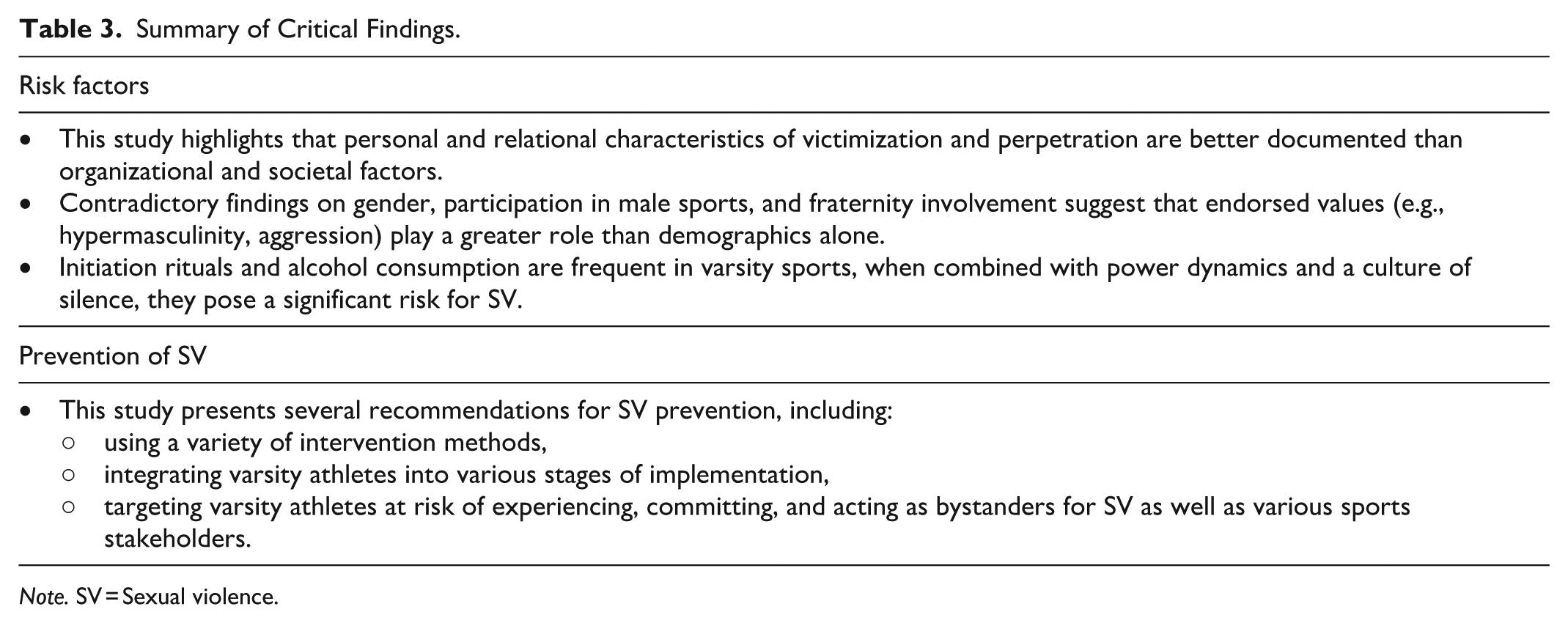
The purpose of the present paper was to comprehensively examine SV in varsity sports settings. Therefore, this literature review had two primary objectives: (a) exploring risk factors for SV victimization and perpetration in varsity athletes and (b) identifying recommendations for SV prevention as well as prevention programmes that currently exist in higher education sports institutions. Utilizing the CDC’s (2022) socio-ecological model, the review examined and presented risk factors across four levels: individual, relational, organizational, and societal. This literature review on SV prevention allowed the presentation of critical findings, presented in Table 3, on bystander action/inaction, intervention methods, suggested content, and currently implemented programmes for varsity athletes on SV.
Summary of Critical Findings.
Note. SV = Sexual violence.
Risk Factors
This literature review highlighted significant limitations in the current state of knowledge about factors predisposing to SV among varsity athletes. While more is known about the personal (e.g., age, gender, sexual orientation) and relational characteristics (e.g., alcohol, peer pressure) that contribute to perpetration and victimization of SV, little is known about the organizational and societal risk factors. For example, sports level, academic level, and type of sport (e.g., team/individual, season, team composition, etc.) are not well documented in higher education varsity athlete populations.
Of the personal characteristics identified in the literature review, the majority were socio-demographic, and, therefore, few modifiable personal risk factors were identified. In addition, some contradictory results, particularly regarding gender and participation in a male sports team or fraternity, suggest that more studies are needed to better understand these risk factors. It also suggests that these risk factors could be better explained by particular characteristics and endorsed values (e.g., alcohol, attitudes supporting rape myths, aggression, hypermasculinity, loyalty, etc.) in these types of groups, which in turn puts varsity athletes at greater risk of committing SV. Thus, the values and attitudes conveyed in some of these groups could be key targets for interventions preventing SV. Contrary to some studies with higher education non-athlete students (e.g., Bonar et al., 2022; Campbell et al., 2017), ethnicity was not found to have a significant effect on SV victimization among varsity athletes (Parent et al., 2022). These contradictory results highlight the need for more research on diverse populations as a varsity athlete subgroup. For sexual and/or gender identity diversity varsity athletes, given the increased risk of victimization, it is crucial to consider them further in prevention programmes and to adapt existing programmes to their needs and realities.
Alcohol consumption appears as an important relational risk factor for SV. Various factors may explain how social situations involving alcohol consumption are associated with perpetration and victimization. First, alcohol consumption has an impact on cognitive faculties that limits individuals’ ability to recognize risk situations, increases disinhibition, and creates difficulty in being able to give or understand consent (Mouilso & Wilson, 2019; Yucel et al., 2019). Also, alcohol can be used by SV victims as a coping strategy, thereby increasing the risk of revictimization (Mouilso & Wilson, 2019; Yucel et al., 2019). Finally, the risk factor associated with being involved in a fraternity or sorority could be explained by the fact that sorority members are frequently in contact with fraternity members within contexts involving alcohol consumption (Mouilso & Wilson, 2019; Yucel et al., 2019). Thus, it seems crucial to act on social drinking situations to prevent SV, particularly among varsity athletes, who are more at risk of heavy drinking (Martens et al., 2006).
Although sports initiations or hazing rituals were not identified as risk factors in the literature of this review, other studies have shown that they can lead to situations where SV occurs (Jeckell et al., 2018; Kirby & Wintrup, 2002). In varsity athlete populations, the prevalence of hazing varies between 42% and 92% (Allan et al., 2019; Allan & Madden, 2008, 2012; Hamilton, 2013; Johnson et al., 2018). These activities are often accompanied by alcohol consumption (Waldron, 2015). Also, the position of power held by veteran athletes and the desire of novice athletes to be part of the team represent a context conducive to SV (Roberts et al., 2019). SV experienced during initiations is rarely reported because of the culture of silence, whereas athletes do not report incidents of SV for fear they could compromise their integration into the team (Kirby & Wintrup, 2002).
For their part, very few studies have examined organizational factors. Only two studies were found regarding SV and sports levels. One suggested that varsity athletes competing at higher levels were more at risk of SV (Wiersma-Mosley & Jozkowski, 2019), while the other found that varsity athletes were more likely to perpetrate SV compared to non-athletes (McCray et al., 2023). In contrast, recreational athletes had higher rates of both experiencing and perpetrating SV (McCray et al., 2023). Although this first result is in line with other studies in general sports contexts (e.g., Hartill et al., 2021; Vertommen et al., 2016; Willson et al., 2022), Parent and Vaillancourt-Morel (2021) found, in their study with adolescent athletes, that local/regional sports level, in addition to the international level, was associated with a higher risk of experiencing SV, seeming to indicate no difference in level of sports participation and risk for SV. Regarding associations between sports level or type of sport and the propensity to commit SV, no studies were identified in the present literature review. Therefore, more studies are needed in higher education settings.
Regarding cultural and societal factors, the athletic culture of silence, coupled with tolerance and concealment, may result in SV going unreported and SV perpetrators not being arrested, increasing the risk of other varsity athletes experiencing SV (Abrams & Bartlett, 2019; Parent, 2011; Roberts et al., 2019). This can encourage the perpetration of SV, since abusers do not fear that their actions will be denounced by the victim or a witness (Gutierrez & McLaren, 2012; Kirby et al., 2001). This discourages witness reporting despite suspicions or knowledge of SV on the part of coaches or other athletes (Parent, 2011; Roberts et al., 2019), as the people reported have, most of the time, no consequences. In short, the low rate of reporting could be a key element in the maintenance of SV in varsity sports, creating a vicious circle in sports culture. These findings also suggest the importance of focusing not only on individual factors but also on organizational and relational factors to encourage varsity athletes to report (Adhia et al., 2024). Thus, reporting could be an effective tool for reducing SV.
Prevention of SV
Factors such as self-efficacy, social norms, attitudes, values, and beliefs have been identified as important influences on whether varsity athletes intervene or remain inactive as bystanders (Evans et al., 2022; Kroshus, 2019). These factors may therefore represent key targets for prevention interventions in varsity athletes. In addition, several personal characteristics and identity-related factors were associated with bystander action (Evans et al., 2022; Kroshus, 2019; Tredinnick, 2022b). Varsity athlete status itself appeared to function as a protective factor in some contexts but was linked to lower levels of bystander action in others (Navarro & Tewksbury, 2019; Evans et al., 2022; Tredinnick, 2022b). This highlights the need for further research on varsity athletes as bystanders, particularly given their potential as an important subgroup to target in bystander prevention programmes. Such programmes should also consider that prevention is most effective when it addresses multiple targets simultaneously (Orchowski et al., 2020). Finally, numerous barriers to bystander action were identified (Carey et al., 2022; Exner-Cortens & Cummings, 2021), many of which seem connected to the unique pressures and commitments associated with being a varsity athlete (Chartier, 2018). Prevention programmes should therefore not only address these barriers but also facilitate disclosure of SV incidents. Doing so could help reduce the culture of silence that persists within varsity sports.
The recommendations identified in the literature suggest that, to prevent SV, it would be relevant to use a variety of intervention methods, paying particular attention to integrating varsity athletes into the various stages of implementation (e.g., Carey et al., 2022; Tredinnick & McMahon, 2021). It also seems crucial to train not only varsity athletes, but also coaches and other sports personnel. Training programmes should also target both those at risk of committing SV and those at risk of experiencing or witnessing it. A wide range of themes could be addressed, including the myths surrounding SV, the resources available, and the behaviours to adopt as a witness (e.g., Abrams & Bartlett, 2019; Adhia et al., 2023; Orchowski et al., 2020). Finally, most recommendations were based on experts’ opinions rather than on those of the higher education sports population, such as athletes, coaches, and stakeholders. Further studies on their perspectives would help inform effective SV prevention.
A few SV prevention programmes for varsity athletes look promising. Several animation methods (e.g., discussions, videos, scenarios, peer animation) were used to deliver the information. Although a few programmes existed to prevent SV in higher education sports, only one targeted the various sports stakeholders (i.e., athletes, coaches, administrators; Orsini et al., 2020). A multiparticipant prevention practice would address, simultaneously, many of the risk factors related to SV previously identified, such as personal attitudes and organizational culture (Abrams & Bartlett, 2019; Ridpath, 2016). These findings are in line with the recommendations of Milroy et al. (2022), suggesting that to be effective, prevention programmes should simultaneously involve several levels of intervention, including the intrapersonal, interpersonal, organizational, community, and political levels. However, these authors note that, of the SV prevention practices identified in the grey literature, 71% were related to the intrapersonal level and only 17% targeted the interpersonal level, 26% the organizational level, 9% the community, and 6% the political level (Milroy et al., 2022). It therefore seems crucial to create and evaluate programmes that will include different stakeholders in higher education sports. Finally, many of the programmes evaluated were only at a preliminary stage, with small samples. Some evaluation studies had mixed results, suggesting that more studies are needed to understand effectiveness in specific higher education sports contexts.
Implications for Research, Policy, and Practice
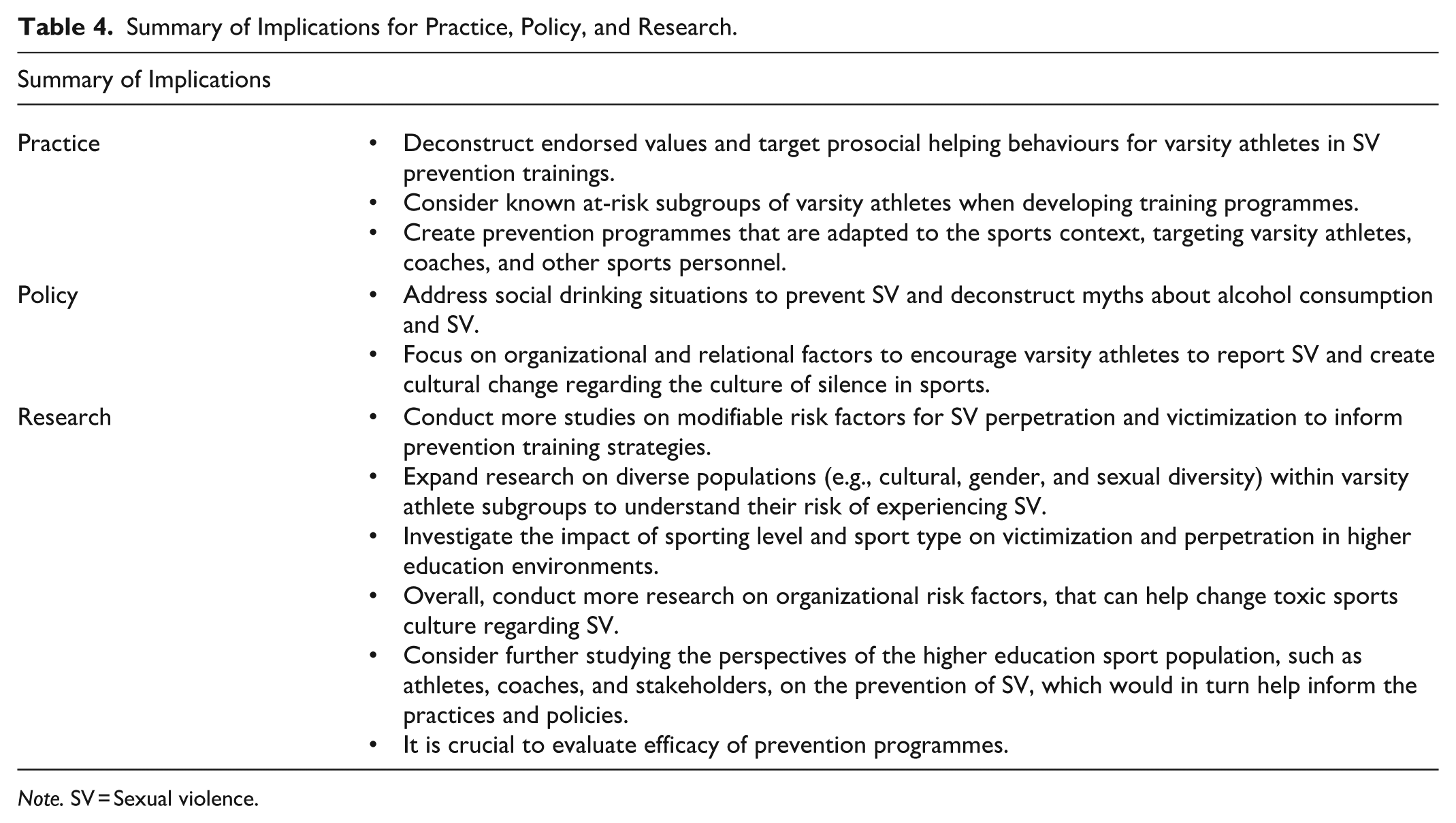
This review has several key implications for research, policy, and practice, summarized in Table 4. First, there is great importance in deconstructing myths and negative values regarding SV. This is needed in practice with varsity athletes and other stakeholders (i.e., coaches, sports personnel), including at-risk subgroups, and in policies within certain regulations, such as those concerning alcohol consumption. Second, research, policy, and practice must consider both the perceptions and realities of diverse varsity athlete populations (e.g., cultural, gender, and sexual diversity) as well as other sports actors like coaches, managers, and support staff. Finally, to work towards cultural change in sports, research needs to focus on organizational, relational, and modifiable risk factors for SV perpetration, victimization, and bystander action to inform policy changes.
Summary of Implications for Practice, Policy, and Research.
Note. SV = Sexual violence.
Limitations and Future Research
When addressing the limitations of this review, it is important to acknowledge that, despite following the principles of a systematic review in study screening and data extraction (Fortin & Gagnon, 2022), it constitutes a non-systematic literature review. This is due to its duration exceeding 12 months, being conducted by a single researcher, and the inclusion of articles throughout the research process. While this review aimed to identify all the factors predisposing to perpetration and victimization of SV among varsity athletes, keywords included only varsity athletes as the population. Hence, few factors related to other actors, such as coaches and managers, who might also commit SV towards athletes or participate in maintaining the norms and values favouring SV in the athletic culture, were presented. Considering the extent of the phenomenon and the magnitude of its repercussions (Adhia et al., 2023; Desrochers-Laflamme & Bergeron, 2024), it seems essential to quickly address this issue. Although this review aimed to identify both risk and protective factors related to SV, no protective factors were found. This highlights the need for further research into factors that protect and maintain SV victimization, perpetration, and bystander inaction. Additionally, the decision to include only articles published from 2012 onwards may have led to the omission of earlier prevention programmes, recommendations, and risk factors. However, references cited in the included articles were reviewed and, when they provided significant insights, were incorporated into the analysis.
Including studies from a variety of countries and cultural contexts was an essential objective of this study to gain a more comprehensive and globally relevant understanding of SV among varsity athletes. Notably, athletic systems and cultural attitudes toward SV in sport and safeguarding differ across countries. However, in the context of this review, the majority of the research articles were conducted in the United States (approx. 60%), which limits the generalizability of the findings and highlights the need for a better understanding of the experiences of varsity athletes globally. Furthermore, considering the specific context of varsity sports in the United States, it would be valuable for future research to compare environments such as the NCAA with athletic programmes in other countries regarding SV.
Moreover, several researchers have recommended that interventions be adapted to the norms and practices of the environments in which they will be implemented (Abrams & Bartlett, 2019; Bonar et al., 2022; McMahon & Banyard, 2012; Orchowski et al., 2020). There is therefore a need for more studies on the particular sports context in which the prevention of SV is wanted in order to build training programmes on a solid basis of knowledge. Indeed, as highlighted by a recent recommendation from the International Olympic Committee’s Consensus Statement on Safeguarding and Interpersonal Violence in Sport (Tuakli-Wosornu et al., 2024), it is crucial to evaluate existing and develop new athlete-specific safeguarding strategies through research to determine their effectiveness across different sporting contexts.
Conclusion
In conclusion, this literature review highlights various risk factors for committing, experiencing, and bystander inaction to SV among varsity athletes. Several non-modifiable personal characteristics of varsity athletes are identified, including gender, age, and sexual and gender identity. However, only a few attitudes and beliefs (e.g., attitudes supporting rape myths, hypermasculinity), relational contexts (e.g., social drinking situations) and organizational and cultural factors (e.g., concealment, rape subculture, low reporting) are identified, which suggests that more studies are needed to understand specific SV risk factors in the varsity sports context. Furthermore, this literature review emphasized that more systemic interventions with all members of the sports community, not just varsity athletes, are needed to prevent and reduce SV. Finally, interventions should be tailored to varsity athlete populations, bearing in mind that there are heterogeneous subcultures within sports, and should be evaluated to ensure effectiveness over time.
Supplemental Material
sj-docx-1-tva-10.1177_15248380251401928 – Supplemental material for Sexual Violence Among Varsity Athletes: A Literature Review of Risk Factors and Prevention Efforts
Supplemental material, sj-docx-1-tva-10.1177_15248380251401928 for Sexual Violence Among Varsity Athletes: A Literature Review of Risk Factors and Prevention Efforts by Julia Topart, Emilie Lemelin, Sophie Labossière and Sylvie Parent in Trauma, Violence, & Abuse
Footnotes

Funding
The authors disclosed receipt of the following financial support for the research, authorship, and/or publication of this article: This work was supported through a research grant for the project Hors-Jeu led by the research Chair SIMS with funding from the Ministère de l’Éducation et de l’enseignement supérieur. Reference number Université Laval: 03501-GQ137730 (Other reference no: BC 670003206)
Declaration of Conflicting Interests
The authors declared no potential conflicts of interest with respect to the research, authorship, and/or publication of this article.
Supplemental Material
Supplemental material for this article is available online.
Author Biographies
References
Supplementary Material
Please find the following supplemental material available below.
For Open Access articles published under a Creative Commons License, all supplemental material carries the same license as the article it is associated with.
For non-Open Access articles published, all supplemental material carries a non-exclusive license, and permission requests for re-use of supplemental material or any part of supplemental material shall be sent directly to the copyright owner as specified in the copyright notice associated with the article.
