




Abstract
Although numerous predictors of sexual violence (SV) have been identified, there is a need to further explore protective factors and examine the nature and strength of associations between predictors and SV outcomes using a hierarchical predictive model. Cross-sectional data from the My World Survey Post-Second Level (2019) in Ireland were used. The sample contained 8, 288 post-secondary students, 69% female, aged 18 to 25 years (M = 20.25, SD = 1.85). Univariate and multivariate binary logistic regression analyses were conducted to identify correlates of two SV outcomes (i.e., forced/pressured to have sex and being touched in a sexual manner without consent) across societal, community, relationship, and individual levels. Approximately 25% of females and 10% of males reported being forced/pressured to have sex, whereas 55% of females and 23% of males reported being touched in a sexual manner without consent. Key predictors of SV in multivariate analyses included being female and experiencing violence in a romantic relationship, whereas discrimination, living on campus or in rented accommodation (compared with living at home) were also significant predictors of both SV outcomes. Parental conflict, sexual initiation, depressive symptoms, older age, and an avoidant coping style significantly predicted being forced/pressured to have sex, whereas being bullied and engaging in problem drinking were unique predictors of being touched sexually without consent. Findings highlight the importance of considering salient risk and protective factors at the individual, relationship, community and societal level to predict SV and effectively guide the delivery of interventions and support services for post-secondary students affected by SV.
Introduction
Sexual violence (SV) is defined as “any sexual activity where consent is not obtained or freely given and ‘incorporates physically, verbally and/or psychologically coercive acts such as being touched in a sexual manner and/or being forced/pressured to have sex against one’s will’” (Tharp et al., 2013, p. 133). Despite growing awareness around issues of “consent” (i.e., when an individual freely and voluntarily agrees to engage in a sexual act; Department of Justice, Ireland, 2019) and gender equality among university/college campuses, SV remains a serious issue among post-secondary students (Adams-Curtis & Forbes, 2004; Anyadike-Danes et al., 2022). Studies have shown that one in three women and one in eight men report rape victimization at American universities (Koss et al., 2022). Similarly, in a national survey of 7,900 post-secondary students in Ireland, over one-third of female students (approx., 1,100 students) reported non-consensual vaginal penetration through coercion, incapacitation, force or threat of force, whereas 20% of males reported non-consensual touching and 8% reported being pressured to perform a sexual act (MacNeela et al., 2022).
SV can result in a host of adverse chronic physical, reproductive and psychological consequences for victims, both directly from assaults and indirectly via health problems and/or associated risky health behaviors (Jina & Thomas, 2013; Tharp et al., 2013). It is also associated with considerable psychological distress (Carey et al., 2014), poorer academic performance (Banyard et al., 2020; Jordan et al., 2014), and increased risk of dropout from post-secondary courses (Mengo & Black, 2016). Therefore, it is important that relevant risk factors, (i.e., factors that increase an individual’s vulnerability to experiencing SV), as well as protective factors (i.e., factors that can reduce the risk of experiencing SV) among post-secondary students are identified so as to reduce risk of SV and to inform prevention efforts and service provision (Ullman & Najdowski, 2010).
The socioecological model (Bronfenbrenner, 1979), which considers the complex interplay between individual, relationship, community, and societal factors can provide a holistic understanding of a range of risk/protective factors for SV. At an individual level, demographic risk factors for SV include being female, non-White, non-heterosexual, older in age or college year, and having low socioeconomic status (SES) or disability (Coulter et al., 2017; Eisenberg et al., 2016; MacNeela et al., 2022; Mellins et al., 2017). Alcohol use (binge drinking), drug use, and marijuana use tend to be strongly implicated in the risk for SV (Ellickson et al., 2004; Gidycz et al., 2007; Roudsari et al., 2009). Many studies also reveal associations between SV risk and engagement in risky sexual behaviors such as engaging in casual sex or the “hook up culture” (Bhochhibhoya et al., 2021; Siegel & Williams, 2003). Furthermore, increased time on the internet and engaging in risky online behaviors have been implicated in the risk for SV (Hines et al., 2012). Although less research has focused on psychological factors, the risk of SV is also thought to be elevated among individuals who have mental health difficulties, depression, anxiety, and use maladaptive coping (Aizpurua et al., 2021; Conley et al., 2017).
Peer and family risks include having a parent with a mental health difficulty or addiction, exposure to parental conflict, and/or domestic violence, and having low levels of parental warmth/support and low family support/concern (Bhochhibhoya et al., 2021; Fuller-Thompson & Agbeyaka, 2020; Messman-Moore & Brown, 2004). A previous history of sexual, physical, and/or emotional abuse is a primary predictor of SV in young adult students (Messman-Moore & Brown, 2004; Smith et al., 2003). Relationship conflict, violence, and/or emotional abuse in dating relationships also predicts heightened risk of SV in women (Duval et al., 2020; Testa et al., 2007).
Community factors including level of social disorganization (i.e., level of unemployment or financial inequality; Baron & Straus, 1989), community cohesion, safety and poverty (Yeo et al., 2022), post-secondary institution type (e.g., community colleges with more first-generation, lower income, female students conferring greater risk versus universities; Potter et al., 2020), and accommodation type (lower risk living at home with parents versus off-campus rented accommodation and sorority/fraternity houses; Tyler et al., 2017) are also thought to influence the risk for SV. Experiencing discrimination has been identified as a societal risk factor for SV (Bhochhibhoya et al., 2021; Sabidó et al., 2015).
Although many risk factors have been identified, protective factors, which can reduce an individual’s risk of being sexually assaulted, particularly in the presence of risk, have received less research attention (Ullman & Najdowski, 2010). In terms of individual-level factors, some studies have found that having higher levels of sexual assertiveness (Livingston et al., 2007) and to some extent, engaging in less risky sexual or health behaviors (e.g., lower drug use) can reduce the risk of experiencing some forms of SV (Ullman & Najdowski, 2010). High levels of relationship satisfaction and emotional support from a significant other (i.e., boyfriend/girlfriend/partner) and from parents have been identified as factors that can reduce the risk of SV (Banyard et al., 2009). However, less is known about whether adaptive coping strategies, personal resilience or help seeking intentions can protect against victimization by strengthening social support networks or reducing reliance on less adaptive coping strategies (e.g., alcohol use; Ullman & Najdowski, 2010). Further research on protective factors is required to inform more strengths-informed prevention efforts to reduce risk of SV (Ullman & Najdowski, 2010; Bonar et al., 2022).
Furthermore, few studies have concurrently examined multiple risk and protective factors for SV across several levels of the ecological model (Ullman & Najdowski, 2010). Most of the research has either focused on predictors at an individual level, with less consideration for contextual or ecological factors that contribute to SV risk, or have examined only one level of analysis at a time (Bonar et al., 2022). According to Ullman and Najdowski (2010), multilevel studies of risk and protective factors that account for micro, macro- and meso-level structures are necessary to better inform how individual factors (e.g., SV history) and behaviors (e.g., substance use) translate into risk for SV across various situational and structural contexts. One study by Herres et al. (2021) found that being female, involved in “Greek” societies and prior victimization predicted campus sexual assault in liberal arts students in the United States of America (USA). Bhochhibhoya et al. (2021) also evaluated risk of SV in college students using an ecological model and found that sexual victimization was associated with gender, sexual assertiveness, the frequency of hook-ups, peer deviance, parental involvement, and perceived discrimination. Although these studies did explore a range of risk factors, they did not incorporate many psychological characteristics, protective factors, or other relevant factors like risky online use (Jonsson et al., 2015). Furthermore, some studies have identified factors that combine in different ways to increase risk of SV (e.g., early sexual initiation, multiple sexual partners, and unprotected sex; Armstrong et al., 2016) whereas others have identified how certain protective factors, like empathy, may moderate the relationship between risk factors including peer approval of forced sex (Hudson et al., 2018). A recent systematic meta-review employed an ecological approach to understanding the impact of SV and found that the aftermath of SV involved a complex interplay of risk (e.g., chronosystem- time since the SV, individual level [avoidant coping, self-blame]) and protective factors (e.g., micro/meso system—social network, exosystem supportive reactions from formal support providers) in survivors’ recovery following SV (Stockman et al., 2023).
Additionally, most research on this topic has been conducted in the USA, often within relatively small convenience samples of college students, limiting generalizability to other contexts (Anyadike-Danes et al., 2024). Differences in university cultures and student demographics between the USA and other countries, like Ireland, may lead to varied risk for SV (Reynolds et al., 2023). For example, the American education system is not an open system and fees for attending university in the USA are considerably higher than Ireland, which may influence the profile of students that can attend universities and subsequently the demographic characteristics associated with SV risk in these contexts (Humphreys, 2015).
Additionally, in the USA, a large proportion of students travel far distances to attend university, and often, as a result, live in dormitories, campus accommodation, or shared apartments, whereas in Ireland, many students attend universities located close to where they live, and live in their childhood homes with their parents, which may structurally impact risk for SV across these contexts (Humphreys, 2015). Furthermore, fraternities/sororities are largely non-existent in Ireland, and we may be less likely to observe the “red zone” (the period of time from the beginning of fall semester to Thanksgiving break when sexual assaults on USA college campuses spike) due to the lack of Greek societies (Flack et al., 2008). Alternatively, this risk factor may manifest in the Irish context, as “lad culture” (i.e., excessive displays of macho behavior linked to sexist and homophobic abuse; Phipps & Young, 2013) and/or the large drinking culture among university students (Craig, 2016; Jordan et al., 2022).
Furthermore, according to work by Paul Donovan, students in Ireland are more likely to have lower levels of in-class engagement, school affiliation/connectedness, and less contact with lecturers compared with students the USA (as cited in Humphreys, 2015). This, coupled with Ireland’s history of being a Catholic country which may have stifled correct information on healthy sexual relationships (Sherlock, 2012), may impact protective community factors against SV risk.
In addition, the framework for institutional response to SV varies between the countries (Shannon, 2022a). The USA and Canada has a legalistic national framework for response, which contrasts with other countries, such as Ireland and the UK, where there is an individualized response focused on cultural change (MacNeela et al., 2022; Shannon, 2022b). As an example, in an Irish context, recommendations have been made with regard to implementing a campus climate approach to culture change on consent, SV, and harassment (MacNeela et al., 2022). These include campus wide awareness raising and education initiatives around SV and bystander trainings. Although these initiatives also exist in the USA, universities are neither legally bound to implement them in Ireland nor are they legally obliged to report on incidences of SV. Furthermore, due to “Title IX, the law prohibiting sex discrimination at federally funded institutions,” students in the USA have legal protections (e.g., process rights, rights to live hearings, allowances for students’ advisers to cross-examine parties, and witnesses involved). Although there is a national framework that hosts recommendations to tackle SV and change institutional culture in Ireland, there is no legally binding due process rights for students who report sexual misconduct and for those accused of it (Shannon, 2022b). This limited data on SV in countries outside of the USA, including Ireland and Europe, and reliance on USA data as a base of knowledge, is inappropriate given these differing cultural factors and reporting structures which may potentially influence risk/protective factors across the ecological model (e.g., perceived safety levels in an institution) (Reynolds et al., 2023). Therefore, there is a need for research from countries outside of the USA to allow for greater representation and to identify where potential gaps remain in our understanding, so that we can inform policies and practices in other contexts (e.g., Ireland, UK) who use similar reporting frameworks (Reynolds et al., 2023).
The present study extends the literature by exploring a comprehensive range of risk and protective factors, with a focus on psychological characteristics, in a large sample of post-secondary students in Ireland. Given broad descriptions of acts of SV, this study explored two SV outcomes; being forced/pressured to have sex and being touched against one’s will or without consent. Using an ecological model, this study aimed to identify prevalence of SV in post-secondary students in Ireland and to identify the key risk and protective factors for these SV outcomes in students so as to inform intervention efforts and service provision.
We expect based on predominantly USA-based research that individual-level factors (e.g., female gender, history of violence in a romantic relationship), micro-level factors (e.g., low peer/family support), and macro-level factors (e.g., neighborhood safety) would be associated with a higher likelihood of SV, whereas protective factors at individual levels (adaptive coping) and micro-levels (one supportive adult) might protect against the risk of SV.
Methods
Participants
Data from the My World Survey 2-Post Second Level (MWS2-PSL), a national sample of young adults in Ireland were used. Student data were collected from 12 post-secondary institutions across Ireland, including 5 out of 14 Institutes of Technologies (IoTs) and all seven Universities. Analyses were conducted on 8, 288 students; participants were excluded if they had greater than 70% missing data (n = 190). The sample contained 2, 364 (28.5%) males, and 5,727 (69.1%) females. Less than 2% of the sample identified as a gender minority: n = 77 (0.9%) were identified as non-binary, n = 42 (0.5%) as transgender, n = 78 (0.9%) were not sure/questioning or preferred not state their gender. Participants were aged 18 to 25 years (M = 20.25, SD = 1.85). Most n = 7,401 (91.1%) were undergraduates, and there were n = 723 (8.9%) postgraduates. Participants identified as White Irish (76.6%), White other (11.8%), Asian/Asian Irish (5.7%), mixed background (2.3%), Black/Black Irish (1.4%), other (2.0%), and Irish Traveler (.2%).
Measures
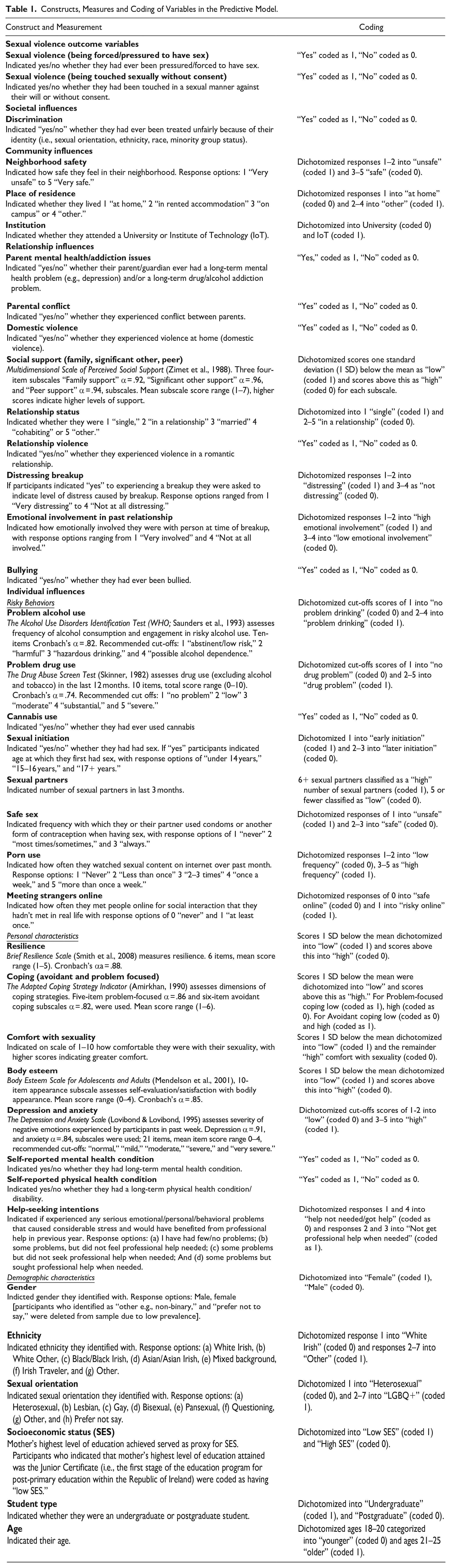
Variables included in analyses are outlined in Figure 1 and described in Table 1.
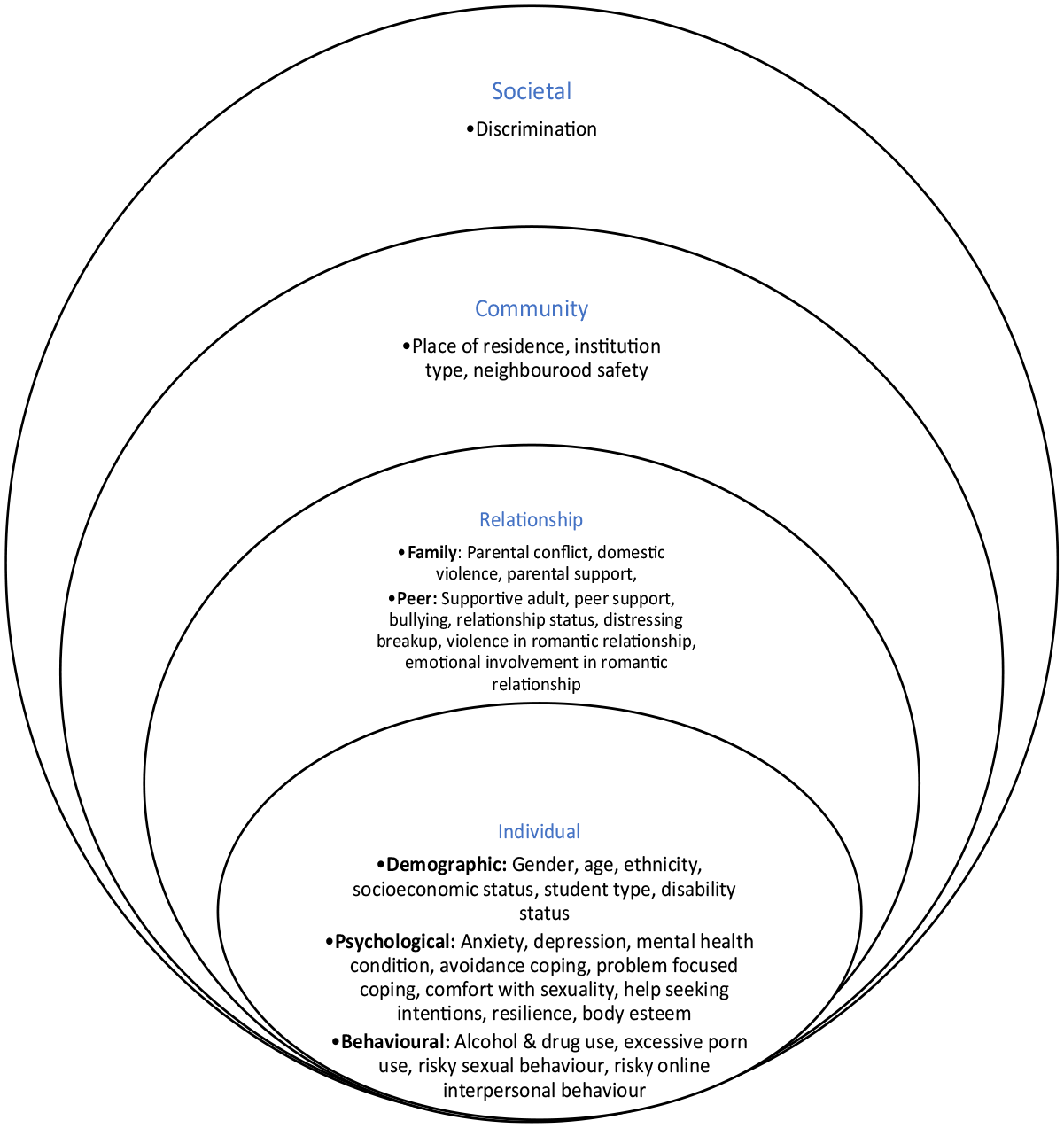
Ecological model of predictors of sexual violence.
Constructs, Measures and Coding of Variables in the Predictive Model.
Procedure
Ethical approval was received from the host institution. Permission to host the study was sought from Registrars (or equivalent) of all post-secondary institutions. All students registered at participating institutions received an email inviting them to partake in a survey about mental health and well-being. Emails contained a weblink to an information sheet, consent form, and survey. Web-based surveys were administered using Qualtrics software and took approximately 25 min to complete. Participants provided informed consent prior to participation and were fully debriefed. Participation was voluntary and financial compensation was not provided.
Statistical Analyses
We calculated the prevalence of both SV outcomes across gender, sexual orientation, and student degree type. Chi-square tests of independence explored potential associations between gender, sexual orientation, and degree type with SV outcomes. Chi values of p < .01 and standardized residuals ±2 were reported as significant (Agresti, 2007). When a standardized residual for a category is greater than ±2, it can be concluded that this is a major contributor to the significant χ² value (Hinkle et al., 2003).
Hierarchical logistic regression analyses were conducted to examine associations between socioecological predictors and SV outcomes. Univariate logistic regressions (with unadjusted odds ratios) examined associations between SV outcomes and each predictor in the model. Multivariate logistic regressions, which included all predictor variables in the model, were also conducted to examine the relationships between risk and protective socioecological predictors and SV outcomes, while controlling for potential confounding variables. Separate models were run for SV outcomes of (a) being touched inappropriately without consent and (b) being forced/pressured to have sex without consent. Analyses were conducted using IMB SPSS Version 21.
Results
As seen in Table 2, approximately one-fifth of the sample reported that they had been forced or pressured to have sex, whereas a little under half of the sample reported that they had been touched in a sexual manner without consent. Females, postgraduates, bisexual, and pansexual individuals reported elevated rates of SV compared with males, undergraduates, and other sexual orientations. Table 3 presents the frequencies of predictor variables.
Prevalence and Chi-square Comparison of Sexual Violence by Gender, Sexual Orientation, and Student Degree Type.
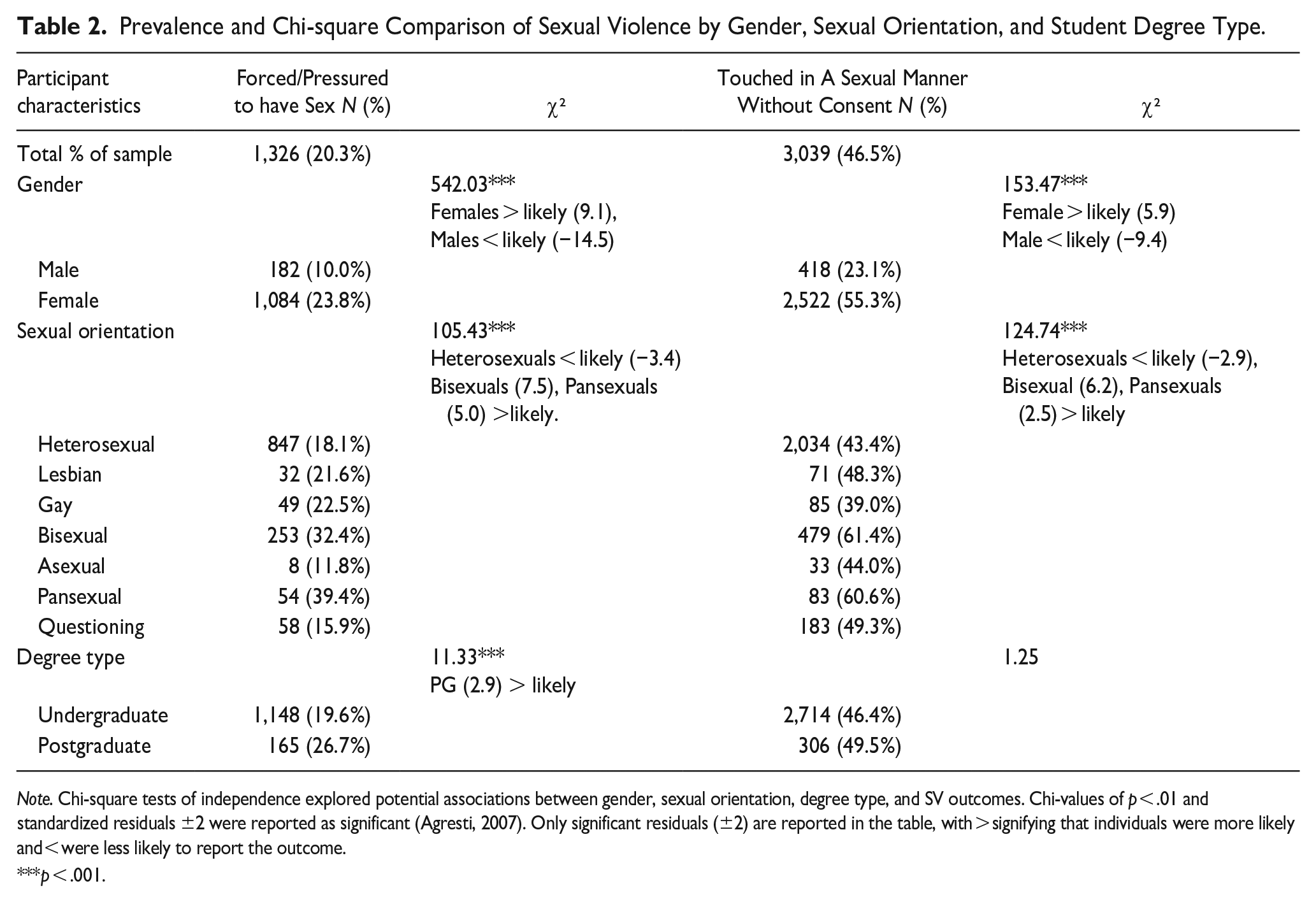
Note. Chi-square tests of independence explored potential associations between gender, sexual orientation, degree type, and SV outcomes. Chi-values of p < .01 and standardized residuals ±2 were reported as significant (Agresti, 2007). Only significant residuals (±2) are reported in the table, with > signifying that individuals were more likely and < were less likely to report the outcome.
p < .001.
Frequency Analysis for Socioecological Predictor Variables.
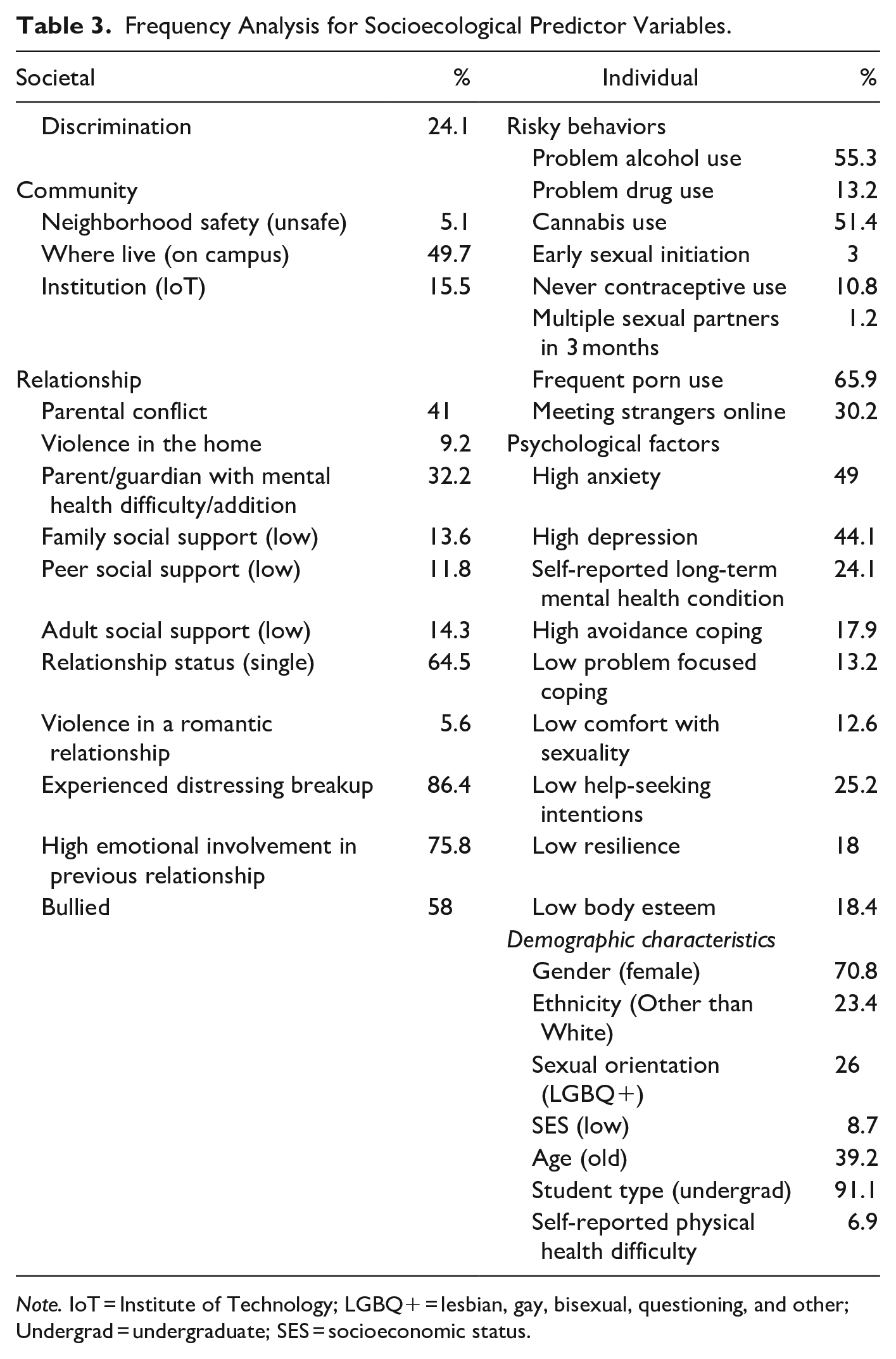
Note. IoT = Institute of Technology; LGBQ+ = lesbian, gay, bisexual, questioning, and other; Undergrad = undergraduate; SES = socioeconomic status.
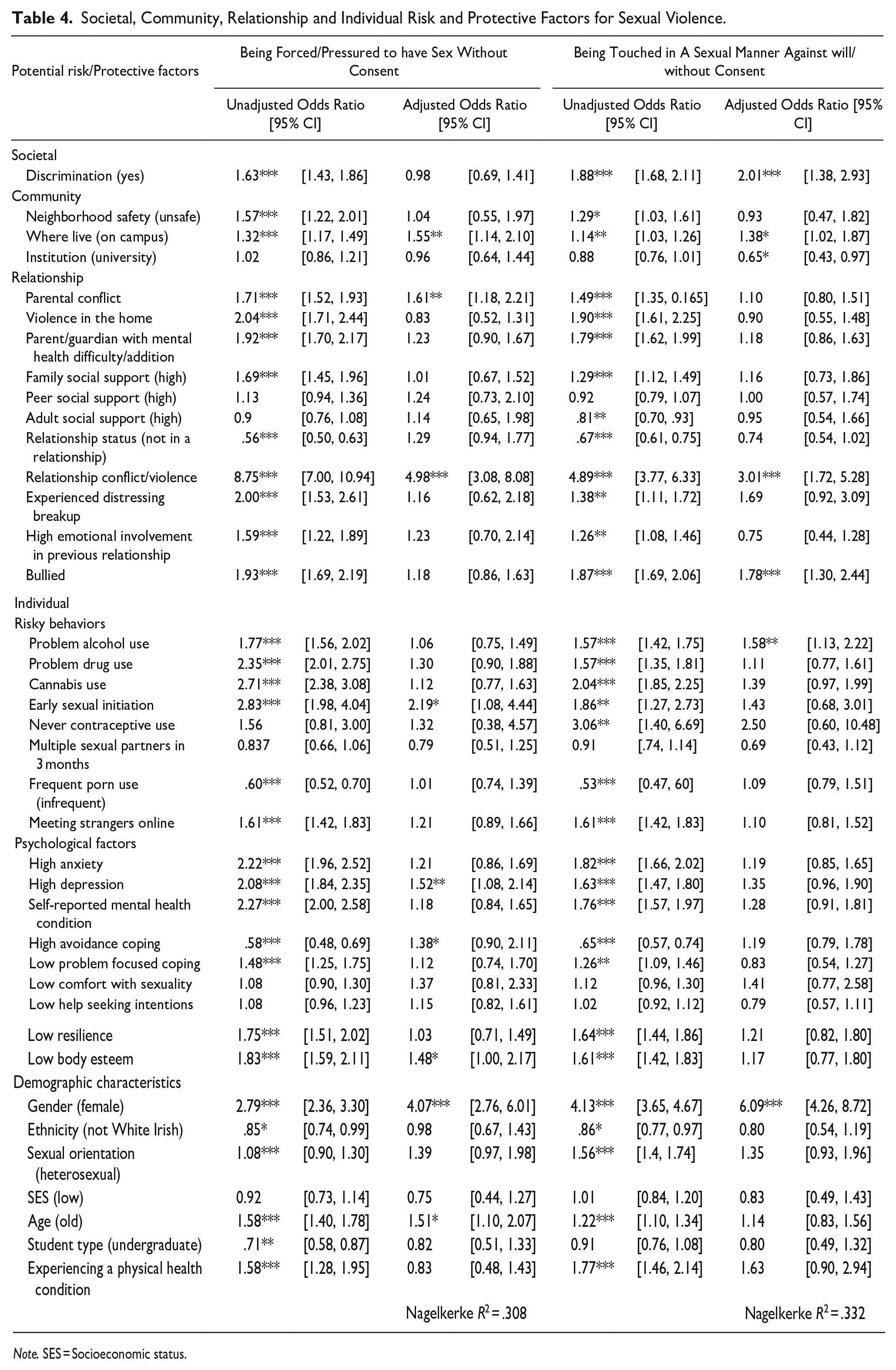
As seen in Table 4, unadjusted odds ratios show that most societal, community, relationship, and individual variables were significant predictors of SV. However, institution type, SES, comfort with sexuality, help seeking intentions, peer support, and having multiple sexual partners did not predict either SV outcome. Never using contraception and family support were not significant predictors of being forced/pressured to have sex, but they were significantly associated with being touched in a sexual manner without consent. Degree type did not significantly predict being touched in a sexual manner without consent.
Societal, Community, Relationship and Individual Risk and Protective Factors for Sexual Violence.
Note. SES = Socioeconomic status.
The full regression model explained approximately 31% and 33% of the variance in SV outcomes. Adjusted odds ratios indicate that living on campus, experiencing parental conflict, violence in a romantic relationship, early sexual initiation, high levels of depressive symptoms, having high avoidant coping, being older in age, and being female were important significant predictors of being forced/pressured to have sex. Adjusted odds ratios also show that significant predictors of being touched in a sexual manner without consent include experiencing discrimination, living on campus/in rented accommodation, attending a university, being bullied, experiencing violence in a romantic relationship, engaging in problematic alcohol use, and being female. Adjusted odds ratios showed that risky online behavior did not remain significant in the model. Being of female gender and experiencing violence in a romantic relationship were the primary predictors of SV. Females were approximately four times more likely to be forced/pressured to have sex and six times more likely to be touched in a sexual manner without consent than males. Individuals who had experienced violence in a romantic relationship were five times more likely to report being forced/pressured to have sex and three times more likely to be touched in a sexual manner without consent.
Discussion
This study aimed to identify prevalence of SV and to examine risk and protective factors simultaneously using an ecological model in a national sample of post-secondary students in Ireland. In relation to the first aim, we found that approximately one-quarter of females and 10% of males reported being forced/pressured to have sex, whereas 55% of females and 23% of males reported being touched in a sexual manner without consent. These rates are similar to international data where one in three women and one in eight men at American universities report rape victimization (Koss et al., 2022) and recent national data in Ireland (MacNeela et al., 2022), where one-third of female students experience non-consensual vaginal penetration, 20% of men reporting non-consensual touching in a sexual manner, and 8% of men reporting being forced/pressured to have sex. This shows that despite recent efforts to raise awareness of consent within post-secondary institutions, SV is still commonly experienced by post-secondary students in Ireland.
Consistent with the literature in the USA, females and sexual minorities (MacNeela et al. 2022; Coulter et al., 2017; Mellins et al., 2017) and bisexual and pansexual individuals were at increased risk of SV (Eisenberg et al., 2016). Pansexuals, who hold attractions to individuals regardless of gender or sexual orientation, have not been extensively studied in relation to SV, therefore this finding, which suggests that pansexual individuals may represent a particularly “at risk” group for SV may be important for guiding and prioritizing supports and service provision toward these individuals (Eisenberg et al., 2016).
Univariate analyses showed that most of the theorized societal, community, relationship, and individual variables were significant predictors of SV, highlighting the importance of applying an ecological model to explore the confluence of risk and protective factors associated with SV risk (Tharp et al., 2013; Ullman & Najdowski, 2010). Consistent with a large body of evidence from literature in the USA, multivariate analyses revealed that being female in gender and experiencing violence in a romantic relationship were the primary predictors of both SV outcomes (Coulter et al., 2017; Duval et al., 2020; MacNeela et al., 2022; Mellins et al., 2017). Females were approximately four times more likely to be forced/pressured to have sex and six times more likely to be touched in a sexual manner without consent than males. Individuals who had experienced violence in a romantic relationship were five times more likely to report being forced/pressured to have sex and three times more likely to be touched in a sexual manner without consent. Interestingly although elevated levels of SV outcomes were reported by sexual minority groups, having a sexual minority identity status did not predict SV outcomes in multivariate analyses. Further contrasting with data from the USA (e.g., Coulter et al., 2017), ethnic minority status (non-white) neither did predict SV outcomes in multivariate analyses, nor did presence of a mental/physical health condition or the proxy we used to assess SES (i.e., mother’s highest level of education) indicating that demographic risk factors for SV may vary across contexts.
Consistent with the USA literature, developmental factors (experiencing parental conflict, early sexual initiation, older age; Bhochhibhoya et al., 2021), psychological factors (high levels of depressive symptoms and avoidant coping; Aizpurua et al., 2021; Conley et al., 2017), and health-risk behaviors (alcohol use; Gidycz et al., 2007; Roudsari et al., 2009) remained significant in multivariate models predicting SV outcomes and represent important risk factors for SV. However, protective factors, including relationship factors (e.g., peer support, relationship satisfaction; Banyard et al., 2009) and psychological factors (e.g., help seeking, comfort with sexuality), were not found to be significantly associated with SV outcomes, indicating a need to further explore protective factors, such as sexual assertiveness (recognizing warning signs of inappropriate sexual advances and having empowerment and skills to say no; Livingston et al., 2007), resistance/self-defense (using forceful resistant strategies as opposed to non-forceful strategies like pleading/begging; Gidycz et al., 2008; Ullman & Najdowski, 2010), school-connectedness, and anti-rape societal and peer attitudes and norms that could mitigate the risk of SV (Ullman & Najdowski, 2010).
Of note, living on campus/in rented accommodation versus living at home was a significant predictor of both sexual outcomes in multivariate analyses (Tyler et al., 2017), Although many students in Ireland travel out of county (state) to attend university and subsequently live on campus or in rental properties, as is common practice in the USA, many other students in Ireland live in their childhood homes with their parents and commute to college. Although MacNeela et al. (2022) found that a majority of students in Ireland felt safe in their accommodation on campus, they also observed that most students, particularly females and sexual minorities, did not feel safe from SV and harassment when socializing on or around campus or at night. These findings indicate the potential need for the development of policies and/or initiatives within post-secondary institutions to address threats of violence and harassment to students when socializing on campus.
Aligning with Bhochhibhoya et al. (2021), discrimination and bullying were significant predictors of SV outcomes. Indeed, high levels of harassment based on sex and sexuality have been reported in post-secondary campuses in Ireland (MacNeela et al., 2022), indicating that greater education and awareness around discrimination linked with sex and sexuality may be required across post-secondary institutions to reduce the risk of SV (Anyadike-Danes et al., 2022). Further research should also investigate how peer attitudes and influences related to “lad culture” potentially feed into narratives of discrimination and bullying in the Irish context, which may inform intervention efforts (Craig, 2016).
Study findings demonstrate how SV risk is influenced by factors operating across several levels of the ecological model (Bronfenbrenner, 1979) and highlight the need for prevention approaches to move beyond focus on individuals affected by SV, and also address the broader systems that may facilitate and maintain SV (Swift & Ryan-Finn, 1995). Indeed, reflecting international trends (Mujal et al., 2021; Muehlenhard et al., 2016), sexual consent and bystander training workshops have been recently introduced as part of college inductions for post-secondary students in several countries including Ireland, but given that empirical research on such programs is largely limited to the USA, these need to be systematically evaluated to ascertain whether they are successful in changing attitudes/perceptions toward SV (Muehlenhard et al., 2016). Additionally, supports and training around consent and SV need to be extended to families, carers, and broader peer and community networks so that there is a basic awareness and understanding of these issues within the wider community (Anyadike-Danes et al., 2022). Furthermore, there is a need to understand how systemic differences in reporting structures (i.e., the legalistic framework in the USA compared with individualistic framework in Ireland and Europe) influence help seeking for, reporting of, and perpetration of SV, and whether these differing frameworks and proxies, such as perceived safety levels in an institution, influence risk, and protective factors for SV across the ecological model.
Limitations
Although this study explored a wide range of risk and protective factors for SV using standardized variables, some relevant variables, such as sexual assertiveness, were not included. Additionally, the cross-sectional nature of the study makes it difficult to distinguish factors that increase the likelihood of experiencing SV versus the result of experiencing SV. Additionally, SV outcomes were measured via two single items, where experiences of pressure and force were combined in one item, and “sex” was not defined; therefore, there may be wide variability in the type of sexual activities participants were reporting on and there may be overlap in responses to the SV items, with participants potentially responding to both items while thinking about the same experience. In addition, independent variables were dichotomized to facilitate analysis and interpretation of this complex logistic model involving 33 variables; however, a level of nuance may have been lost in reducing multicategory variables to binaries. Compared with literature on SV, which typically relies on small convenience samples, this study contained a relatively large sample of post-secondary students; however, the data contained an overrepresentation of females and was a convenience sample of students who self-selected to participate, which may have introduced selection bias. Furthermore, these data reflect a response rate of 11% for University students and 2% for IoTs; therefore, findings might not be generalizable to the entire Irish or international student population. Due to the small sample size, we were precluded from conducting powered analyses on “non-binary” and “gender non-conforming” individuals and from exploring the intersectionality of identities; however, we recognize that gender and sexual orientations are often considered “fluid” constructs (Smalley et al., 2016), it would be beneficial to explore broader constructs of gender and their interactions with sexual orientation in future research. Furthermore, without data on perpetrators, efforts to prevent SV through identification of risk and protective factors among victims of SV may be limited in identifying root causes that inform primary prevention programs (Swift & Ryan-Finn, 1995; Ullman & Najdowski, 2010). MacNeela et al. (2022) observed that male post-secondary students tended to hold more lenient SV attitudes and demonstrated lower levels of bystander interference compared with women, suggesting that there may be a need for greater education and initiatives to highlight issues around consent among students in Ireland.
Future Directions
Further research is required to identify protective factors that could mitigate the risk of SV to inform strengths-focused approaches to reducing the risk of SV. Additionally future studies are required to understand the SV experiences of sexual minorities, including pansexual college students; qualitative studies could provide rich insights into sexual minority students’ lived experience which could inform prevention efforts. Additionally, more longitudinal research is needed to identify temporal relationships between a range of predictors and SV outcomes and how these operate independently or interact with one another to influence SV risk. Cross-cultural comparisons could inform potential gaps in our understanding of how risk and protective factors potentially vary across cultural contexts.
Conclusion
This study extends the literature as it simultaneously explored multiple levels of risk and protective factors for SV using a comprehensive ecological framework in a large sample of post-secondary students. Findings can inform multilevel intervention efforts to address risk factors for SV and the provision of support services to support post-secondary students affected by SV.
Footnotes
Acknowledgements
We would like to thank Dr. Megan Reynolds for their helpful input on this manuscript.
Declaration of Conflicting Interests
The author(s) declared no potential conflicts of interests with respect to the authorship and/or publication of this article.
Funding
The author(s) disclosed receipt of the following financial support for the research, authorship, and/or publication of this article: This study was funded by “Jigsaw, The National Centre for Youth Mental Health”.
