



Abstract
Intimate partner violence and abuse (IPVA) is a global problem. Despite its prevalence, few studies have investigated the employment impact of IPVA, with existing studies spread across multiple disciplines including criminology, economics, and public health. This systematic review provided an overview of the main findings on the topic and identified research gaps and opportunities for future research. We conducted a systematic review and identified studies via Embase, APA PsycInfo, PubMed, Social Sciences Citation Index, and two related reviews. The studies concerned the association between IPVA and absenteeism, time off from work, unemployment, and/or job loss and were peer-reviewed, English-language, quantitative studies. Overall, the 48 identified studies indicated a clear relationship between IPVA and absenteeism/time off work, but evidence was more mixed regarding the association between IPVA and job loss or unemployment. The limitations of current research were discussed, which included that the far majority of studies concerned the United States, investigated only victimization among women, and few used nationally representative data. Male victim-survivors, differences by ethnicity or socioeconomic class, perpetration, and how employment circumstances may help or hinder victim-survivors’ labor market involvement had received limited attention in the literature. Filling these gaps would provide a stronger evidence-base for effective policies, enabling victim-survivors to retain their employment.
Keywords
Introduction
Intimate partner violence and abuse (IPVA) is a global problem with 27% of ever-partnered women aged 15 to 49 having experienced physical and/or sexual violence by an intimate partner (Sardinha et al., 2022). Considerable attention has been paid to mental and physical health, showing the severe consequences of IPVA (Stubbs & Szoeke, 2022; White et al., 2024). Comparatively, the employment consequences of IPVA have been underexplored. However, the employment impacts of IPVA are crucial for understanding the consequences to victim-survivors and wider society. 1 If victim-survivors lose their job due to abuse, they may find themselves trapped in a cycle of economic precarity and abuse, where abuse reduces their income and earnings (Bindler & Ketel, 2022; Cortis & Bullen, 2016), which in turn may increase the risk of abuse in some circumstances (see Blaydes et al., 2025; Vyas & Watts, 2009). Additionally, any job loss or time off work caused by abuse poses a substantial cost for employers and society in general (Arias & Corso, 2005; Peterson et al., 2018).
The limited existing evidence on the employment consequences of IPVA is fragmented across scientific fields, including criminology (Blodgett & Lanigan, 2018), economics (Adams et al., 2024), sociology (Showalter et al., 2023), and public health (Peterson et al., 2018). Here, we conducted a systematic review to collate the evidence base. We answered whether IPVA in adulthood was associated with employment outcomes, specifically job loss and absenteeism. Prior reviews provided a more general overview of the broader literature and often did not consider the causal direction of IPVA and employment (Deen et al., 2022; Kauzlarich & Greenwood, 2025; MacGregor et al., 2021). Other reviews had a narrower scope, focusing on IPVA workplace interventions (Adhia et al., 2019) or U.S. women victim-survivors (Showalter, 2016). Adding to existing reviews, we showed whether job loss and absenteeism was affected by IPVA and whether these consequences differed by the type of abuse, gender, and by employment circumstances. These were crucial to take into account considering different forms of IPVA impact mental health in distinct ways (White et al., 2024), gender differences were rarely explored with most studies focusing on women (Showalter, 2016, also Asencios-Gonzalez et al., 2024; Postmus et al., 2012; Showalter et al., 2023), and employment circumstances were key for understanding and preventing IPVA-related job loss and time off work. Furthermore, we included studies from around the globe and investigated the samples used in various studies, highlighting strengths and weaknesses and indicating a pathway for methodological improvement. All in all, this review identified knowledge gaps, set a research agenda for the future, and provided evidence on the employment costs of IPVA for victim-survivors and the wider economy, allowing for better targeted policies supporting victim-survivors.
Theoretical Background and Mechanisms
Theoretical support for the association between IPVA experiences and employment consequences comes from related perspectives on the conservation of resources and work-home resources models, social cognitive career theory, and economic abuse. While not specific on IPVA, the conservation of resources and work-home resources models have been used to explain how violence in one life domain impacts other domains, including the workplace (Isola et al., 2023; LeBlanc et al., 2014). The conservation of resources model posits that people have, develop, and aim to maintain their personal resources (Hobfoll, 1989), which include physical (e.g., energy, health), psychological (e.g., self-efficacy, focus), affective (e.g. mood, empathy), intellectual (e.g., skills, knowledge), and capital resources (time, money) (ten Brummelhuis & Bakker, 2012). Resources can be depleted by demands from life domains, such as care work, working overtime, or conflicts at home. In turn, depletion of resources due to demands in the home domain can impede on the work domain, such as the quality of work, absenteeism, turnover, and commitment (ten Brummelhuis & Bakker, 2012). Regarding violence, IPVA can deplete victim-survivors’ personal resources, including energy, self-esteem, health, and self-efficacy. Mental health has been a long-standing explanation for why IPVA may lead to absenteeism and job loss (e.g. Crowne et al., 2011; Kimerling et al., 2009). IPVA experiences affect mental health, including increasing the risk of depression, post-traumatic stress disorder, psychological distress, anxiety, and suicidal thoughts and attempts (White et al., 2024). Relatedly, Duvvury et al. (2021) argue that IPVA experiences reduce victim-survivors’ agency. The reduction of resources, including mental health, can lead to more work absences as well as lower productivity at work (presenteeism) (de Oliveira et al., 2023), and poorer mental health is predictive of subsequent unemployment (Gedikli et al., 2023).
Social cognitive career theory is also used to explain the link between IPVA and employment outcomes (Showalter, 2016) and posits that a person’s self-efficacy, their view of their own capabilities, as well as the expected outcomes, affect people’s employment and educational outcomes (Lent et al., 1994). IPVA experiences affect victim-survivors’ view of their capabilities; the isolation, undermining, and breakdown of self-esteem can make victim-survivors believe they are incompetent and less capable (Chronister et al., 2018; Lantrip et al., 2015). Therefore, job performance may decline and opportunities for improvement in their economic conditions or job performance may not be taken or be less successful (Chronister et al., 2018; Lantrip et al., 2015).
A slightly different framework concerns employment sabotage which is a form of economic abuse and includes behaviors where a perpetrator prevents a person from obtaining or maintaining employment (Johnson et al., 2022). This includes not only forbidding or preventing one from going to work, forcing to leave work, interfering and harassment at work but also sabotaging a person’s reputation or relationship with colleagues and employers. This type of abuse often, but not always, occurs alongside other forms of abuse. The difference between employment sabotage and the previous theoretical frameworks is that the perpetrator of employment sabotage is the prime actor and actively undermines the opportunities and ability to maintain employment, whereas the other frameworks focus on victim-survivors and their resources, (mental) health, and self-efficacy.
How the employment impacts of IPVA differ between social groups or by contextual circumstances are relatively underexplored and undertheorized. Behavioral, structural, and political theories indicate how contextual factors such as institutions influence the link between individual factors and poverty (Brady, 2019) and IPVA (Blaydes et al., 2025). For example, welfare states and labor market factors such as decommodification and segmentation affect inequalities in a wide range of factors including labor market attachment, employment protection, and working conditions (Esping-Andersen, 1990; Reich et al., 1973). These perspectives may inform how employment impacts of IPVA differ across contexts or social groups (Marçal et al., 2024; Wathen et al., 2018).
Method
The protocol for the review was designed following the recommendations from Cochrane (Higgins et al., 2024), and the reporting was guided by the standards of the Preferred Reporting Items for Systematic Review and Meta-Analysis guidelines. Considering the range of theories and fields, we searched the PsycINFO, Embase, PubMed, and Social Sciences Citation Index databases which cover a variety of disciplines. Because of the different terms across theories, contexts, and disciplines, the search terms were domestic violence, domestic abuse, domestic aggression, intimate partner violence, intimate partner abuse, intimate partner aggression, dating violence, dating abuse, dating aggression, combined with: employ*, unemploy*, absenteeism, productivity, presenteeism, turnover, job loss, job retention, or time off. Databases were searched from 1997 through 2024, because the vast majority of studies included in prior reviews were from 1997 onward (Deen et al., 2022; Showalter, 2016). We conducted backward citation tracking. Several studies included in earlier broader reviews were not identified in our search (Deen et al., 2022; Showalter, 2016) 2 ; therefore, we also screened all studies in these reviews to ensure a more comprehensive review.
Inclusion and Exclusion Criteria
Quantitative and mixed-method studies that were published in peer-reviewed publications were considered for the review. Articles were excluded if they were not published in English, it was a systematic or similar type review, if estimates where not reported for IPVA, if it concerned witnessing IPVA or secondary victimization, the participants were not (formerly) employed, or when the outcome was not job loss or taking time off work or related aspects such as unemployment or employment stability. In case both job loss and time off were investigated, they needed to be reported separately. In the context of this review, time off work was understood as taking a period away from work, often for annual leave, illness, care, or other commitments/appointments, including absenteeism.
Search Outcomes
A total of 8,220 records were extracted from Embase, PsycINFO, PubMed, and Social Sciences Citation Index (see Figure 1). The studies were imported into EndNote and then Rayyan where 4,114 duplicates were detected and removed. Four thousand one hundred six studies were screened by the authors of this review based on their titles and abstracts, with a 20% overlap. Conflicts were resolved through discussion. Subsequently, 3,947 studies were removed. We full-text screened 159 studies for eligibility, with conflicts and uncertain cases being discussed, resulting in 44 studies being included in the review. Via backward citation tracking of the included studies and the 2 reviews considered to complement the search (Deen et al., 2022; Showalter, 2016), 2,049 records were identified, 854 of which were duplicates or previously found via the database search. After abstract and title screening the 1,195 records, 38 were full-text screened resulting in 6 additional studies being included. This led to a total of 50 studies being assessed for quality.
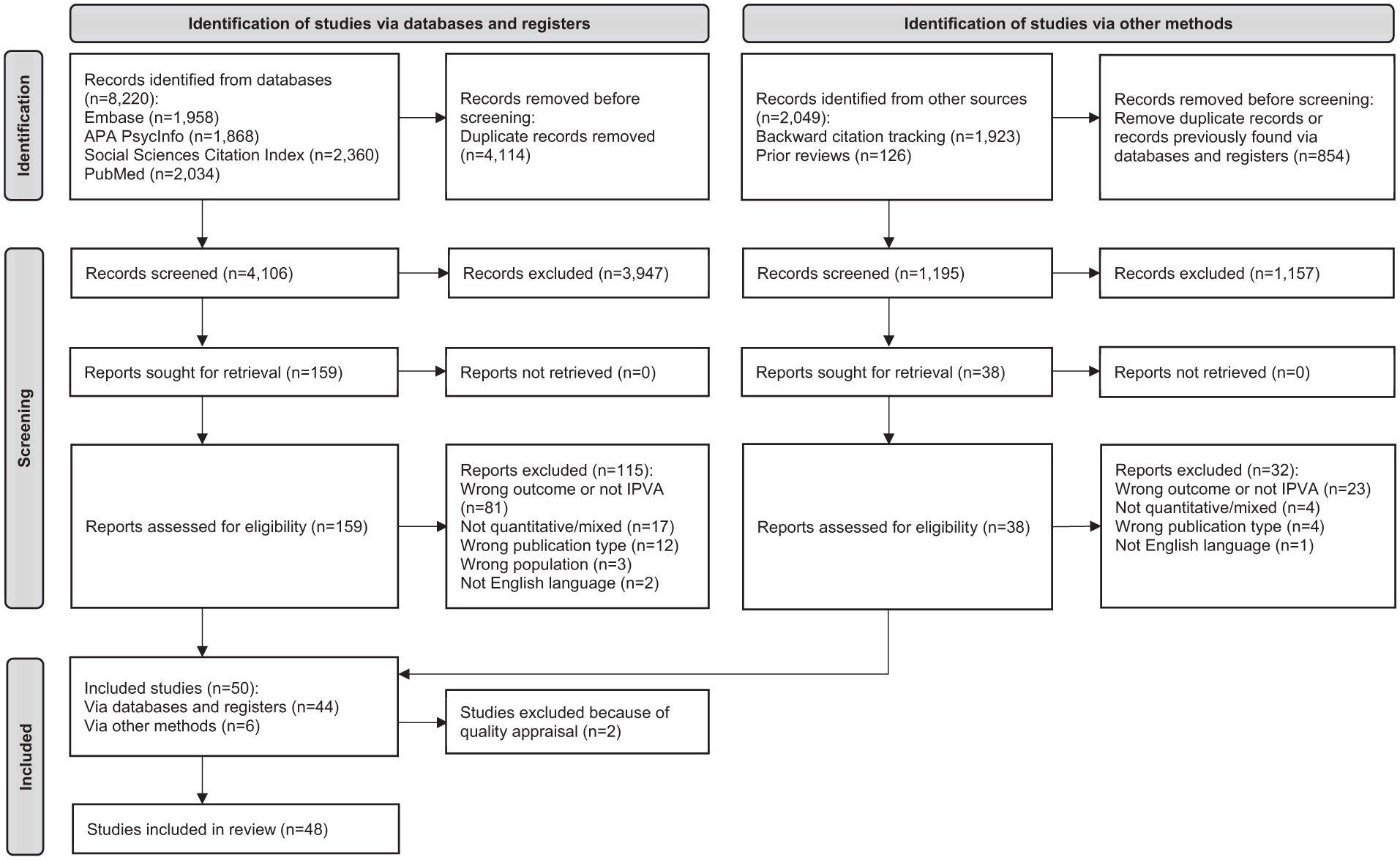
Identification, screening, and inclusion/exclusion of studies.
Quality Appraisal
Included articles were assessed for risk of bias by one author using quality assessment tools for cross-sectional and longitudinal studies (Joanna Briggs Institute, 2017a, 2017b). Each article received a strong, moderate, or weak rating according to the percentage of indicators they scored a yes or no. Additionally, a full analytical sample of under 30 was deemed insufficient to base statistical conclusions on. Based on the quality appraisal, 2 studies were excluded, resulting in 48 studies being included in this review.
Data Extraction and Synthesis
Data were extracted from the articles using a data extraction form that included author name(s), publication year, title, country, study design, sample characteristics, data collection methods, measure of domestic abuse, the labor market outcomes considered, and main conclusions. If an article contained multiple studies or analyses, data were extracted only from the relevant studies or sections (LeBlanc et al., 2014; Logan et al., 2007). Table 1 shows the included studies, their design, demographics, and main findings relevant to this review. We examined the studies across six themes, beginning with the methodology of the studies, followed by the overall conclusions, forms of IPVA investigated, gender and demographic differences, and employment circumstances. Finally, we discussed mediators for the associations between IPVA and job loss and absenteeism. To discuss countries, they were grouped by human development index (HDI) in 2023 by the United Nations.
Setting, Design, Demographics, Type of Violence, Employment Outcome, and Main Findings Relevant to This Review.
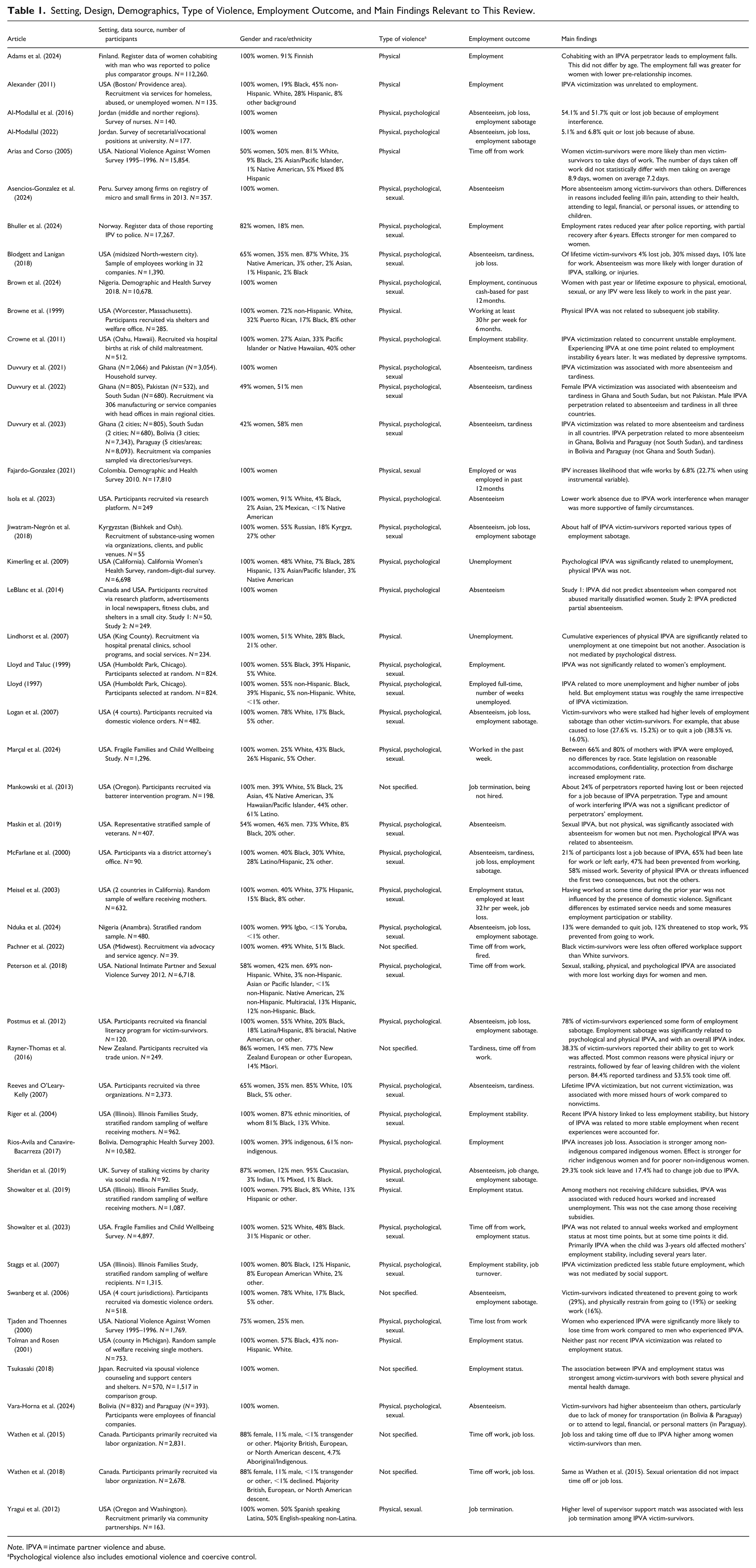
Note. IPVA = intimate partner violence and abuse.
Psychological violence also includes emotional violence and coercive control.
Results
Methodology and Sample
The studies differed significantly in their sample and coverage. Most of the research studied countries with very high HDI (N = 37, 29 in United States, 3 in Canada, and 1 in Finland, Japan, New Zealand, Norway, and the United Kingdom). 3 High-HDI countries were investigated by 10 studies (3 in Bolivia, 2 in Jordan and Paraguay, and 1 in Colombia, Kyrgyzstan, and Peru). Countries with medium and low HDI were the least studied (5 medium HDI: 3 in Ghana and 2 in Nigeria; four low HDI: 2 in Pakistan and South Sudan). Many countries were not studied, especially medium- and low-HDI countries, creating a substantial gap in the literature.
Furthermore, the data was rarely representative of the whole population. Only nine studies used nationally representative data (survey data: Arias & Corso 2005; Brown et al., 2024; Duvvury et al., 2021; Fajardo-Gonzalez, 2021; Peterson et al., 2018; Rios-Avila & Canavire-Bacarreza, 2017; Tjaden & Thoennes, 2000; administrative data: Adams et al., 2024; Bhuller et al., 2024) and another four used representative data from a smaller geography (Kimerling et al., 2009; Lloyd, 1997; Lloyd & Taluc, 1999; Nduka et al., 2024). Nine studies were conducted on a (mostly) representative sample of a subpopulation; based on hospital births (Marçal et al., 2024; Showalter et al., 2023), welfare receipt (Meisel et al., 2003; Riger et al., 2004; Showalter et al., 2019; Staggs et al., 2007; Tolman & Rosen, 2001), union membership (Rayner-Thomas et al., 2016), or among veterans (Maskin et al., 2019). Other studies identified participants through their employers, which were sampled via business registers (Asencios-Gonzalez et al., 2024; Duvvury et al., 2023) or the sampling methods were unclear (Al-Modallal et al., 2016; Al-Modallal, 2022; Blodgett & Lanigan, 2018; Duvvury et al., 2022; Reeves & O’Leary-Kelly, 2007; Vara-Horna et al., 2024). Note that if employees lost their job because of IPVA, they would not be picked up by these data sources, leading to a potential underestimation of IPVA and its employment impact. Research platforms were used by two studies (Isola et al., 2023; LeBlanc et al., 2014). The other 17 studies utilized convenience samples, mainly collected via agencies providing services for communities, victim-survivors, or other vulnerable people, or via hospitals, schools/campuses, the criminal justice system, social media, and/or trade unions. Considering the sampling procedures of the majority of studies, the external validity of these studies may be limited.
Confounding variables were included in the analyses of 25 studies, while 23 studies did not include them. This omission increased risks of inaccurate estimates for the associations between IPVA and employment. Regarding study design, the vast majority of studies employed a cross-sectional study design (N = 38), whereas the rest used longitudinal data (N = 10). Two studies utilized instrumental variables to account for using cross-sectional data and found opposing effects: Rios-Avila and Canavire-Bacarreza (2017) showed that IPVA reduced employment in Bolivia, while Fajardo-Gonzalez (2021) indicated that IPVA increased employment in Colombia.
Of the longitudinal studies, most samples were not representative of the general population, except for Adams et al. (2024) and Bhuller et al. (2024) who used linked data from police and employment registers. The longitudinal studies mostly provided mixed evidence on IPVA and employment; three studies consistently indicated that IPVA reduced employment (Adams et al., 2024; Bhuller et al., 2024; Staggs et al., 2007). Four studies indicated mixed findings, showing that past but not current IPVA had different associations with employment (Riger et al., 2004), that IPVA influenced employment only at certain points in time (Lindhorst et al., 2007; Showalter et al., 2023), and that physical IPVA related to employment but not psychological IPVA (Crowne et al., 2011). No significant associations were found by two longitudinal studies (Browne et al., 1999; Meisel et al., 2003).
Overall Findings: Employment Status and Absenteeism
The studies examined a variety of outcomes, with 35 studying employment status/stability, 27 absenteeism or time off from work, and 8 examining tardiness. Almost all studies focused on victim-survivors. Regarding IPVA perpetration, two studies indicated that IPVA perpetration by men increased absenteeism (Duvvury et al., 2022, 2023). Furthermore, many perpetrators reported being fired or not hired because of their behavior (Mankowski et al., 2013).
People who had experienced or perpetrated IPVA were compared to people without these experiences in 28 studies and 20 studied exclusively victim-survivors or perpetrators. Of the nine studies that compared absenteeism between victim-survivors and others, seven indicated that having experienced IPVA is associated with more absenteeism (Asencios-Gonzalez et al., 2024; Duvvury et al., 2021, 2022, 2023; Isola et al., 2023; LeBlanc et al., 2014; Vara-Horna et al., 2024). Two U.S. studies found mixed evidence; sexual violence, and to a degree psychological violence, were associated with absenteeism, but not physical violence (Maskin et al., 2019) and similarly, lifetime IPVA experiences were associated with more absenteeism, but not current experiences (Reeves & O’Leary-Kelly, 2007).
The findings on unemployment and employment stability were less consistent. Six studies had consistent evidence that IPVA was related to less employment, while seven showed mixed findings, and six reported null or opposing associations. Studies across a variety of context (Bolivia, Finland, Nigeria, Norway, United States), often representative of the population, indicated that experiencing IPVA reduced employment (Adams et al., 2024; Bhuller et al., 2024; Brown et al., 2024; Meisel et al., 2003; Rios-Avila & Canavire-Bacarreza, 2017; Staggs et al., 2007). In contrast, mixed evidence was provided by six U.S. studies and one Japanese study, most of which used panel data among relatively vulnerable or poorer women. Crowne et al. (2011) indicated an association between physical IPVA and employment, but not psychological IPVA, whereas Kimerling et al. (2009) found the opposite. Riger et al. (2004) indicated that recent IPVA experiences reduced employment, but past IPVA improved employment stability when models adjusted for recent experiences. Two studies indicated significant associations between IPVA and employment status but not at all time points (Lindhorst et al., 2007; Showalter et al., 2023). Other studies indicated that there was only an association between IPVA experiences and employment for mothers who experienced IPVA related (mental) health harms (Tsukasaki, 2018) or for mothers who did not receive childcare subsidies (Showalter et al., 2019). Notably, six studies provided null or opposing conclusions. Five U.S. studies did not find any significant association between IPVA and women’s labor force participation (Alexander, 2011; Browne et al., 1999; Lloyd, 1997; Lloyd & Taluc, 1999; Tolman & Rosen, 2001) and Fajardo-Gonzalez (2021) found that IPVA induced employment rates in Colombia. Furthermore, many studies indicated that IPVA may have both short-term and long-lasting effects on employment outcomes (Adams et al., 2024; Bhuller et al, 2024; Crowne et al., 2011; Lindhorst et al., 2007). Overall, there was no clear pattern on whether different contexts (e.g., by HDI) led to different findings.
Studies that focused on victim-survivors mostly asked directly about experiences linking IPVA to employment (N = 19), for instance “Did you ever lose your job due to IPV?” (Wathen et al., 2018, p. 948). These studies showed that a substantial proportion of victim-survivors reported they experienced absenteeism, tardiness, and job loss due to IPVA, across many contexts (Al-Modallal et al., 2016; Al-Modallal, 2022; Arias & Corso, 2005; Blodgett & Lanigan, 2018; Jiwatram-Negrón et al., 2018; Logan et al., 2007; Mankowski et al., 2013; McFarlane et al., 2000; Nduka et al., 2024; Pachner et al., 2022; Peterson et al., 2018; Postmus et al., 2012; Rayner-Thomas et al., 2016; Sheridan et al., 2019; Swanberg et al., 2006; Tjaden & Thoennes, 2000; Wathen et al., 2015, 2018; Yragui et al., 2012).
Types and Measurements of IPVA
Most of the studies focused on IPVA victimization (N = 45), one only on IPVA perpetration, and two considered both. In the measurement of IPVA, 41 studies included physical violence, 32 psychological violence, and 26 sexual violence, with the vast majority covering multiple forms. Seven studies were not clear about the violence they covered, but asked questions similar to “Are you currently experiencing violence from a current or past intimate partner?” (Warthen et al., 2018, p. 948, also Rayner-Thomas et al., 2016; Wathen et al., 2015) or by selecting participants via domestic violence orders (Swanberg et al., 2006), a batterer intervention program (Mankowski et al., 2013) or victim-survivor support services (Pachner et al., 2022; Tsukasaki, 2018). Two studies used police reports to identify IPVA (Adams et al., 2024; Bhuller et al., 2024).
The scales used to measure experiences of IPVA were relatively consistent across studies. The most common measurement was the Conflict Tactics Scale (CTS) or its revised version CTS2 (Straus et al., 1996), or a modified version (N = 23). Many studies complemented the CTS/CTS2 scales with questions from the National Violence Against Women Survey (NVAWS) or other (inter)national surveys or instruments. Other studies used scales developed for the Demographic and Health Surveys, NVAWS, or other surveys/instruments (Brown et al., 2024; Nduka et al., 2024; Reeves & O’Leary-Kelly, 2007; Riger et al., 2004; Rios-Avila & Canavire-Bacarreza, 2017). One study used self-constructed questions (Blodgett & Lanigan, 2018) and for three the source of the questions was unclear (Duvvury et al., 2021; Sheridan et al., 2019; Yragui et al., 2012).
The time frame for abuse assessment differed across studies. Some of them measured IPVA by considering violence in the previous 3 (N = 1), 6 (N = 3), or 12 months (N = 13), lifetime history of IPVA (N = 5), or a combination of lifetime and recent IPVA exposure (N = 12). Eight studies assessed IPVA in the most recent relationship or by relationship duration (Al-Modallal et al., 2016; Al-Modallal, 2022; Logan et al., 2007; Marçal et al., 2024; Nduka et al., 2024; Postmus et al., 2012; Rios-Avila & Canavire-Bacarreza, 2017; Showalter et al., 2023). In four studies, the time frame was not reported (Mankowski et al., 2013; Pachner et al., 2022; Sheridan et al., 2019; Tsukasaki, 2018). The studies using police records could not indicate the time frame of the IPVA due to victim-survivors potentially reporting historic experiences (Adams et al., 2024; Bhuller et al., 2024), which Adams et al. (2024) addressed by investigating employment changes across the entire relationship.
Of the studies that looked at different time frames for IPVA, some indicated that both current and lifetime IPVA experiences were negatively related to employment (Brown et al., 2024), whereas others indicated these had opposing effects (Riger et al., 2004) or that neither had a significant association with employment (Lloyd, 1997; Lloyd & Taluc, 1999; Tolman & Rosen, 2001). Regarding absenteeism, one study indicated that lifetime IPVA, but not current, had an impact on absenteeism (Reeves & O’Leary-Kelly, 2007).
Only a few studies analyzed differences in employment outcomes by the type of abuse. Three studies indicated consistent effects across types of IPVA. Peterson et al. (2018) indicated that all types of IPVA (sexual, stalking, physical, and psychological IPVA) related to more lost working days for women and men. Similarly, LeBlanc et al. (2014) showed both psychological and physical IPVA related to partial absenteeism among women. Investigating employment, Brown et al. (2024) showed physical, sexual, and psychological IPVA related to lower employment rates among women. Investigating stalking specifically, victim-survivors of intimate partner stalking were more likely to have lost, quit, or missed work due to IPVA compared to victim-survivors who were not stalked (Blodgett & Lanigan, 2018; Logan et al., 2007). Other studies indicated differences by types of IPVA and sometimes came to opposing conclusions. These showed that physical violence reduced employment stability, but psychological violence did not (Crowne et al., 2011), while another study found the opposite (Kimerling et al., 2009). Furthermore, physical abuse increased IPVA induced job loss, but threats of violence increased tardiness and partial absenteeism (McFarlane et al., 2000). A significant association for sexual and psychological IPVA and absenteeism was found, but not for physical IPVA (Maskin et al., 2019). No differences in employment outcomes were found between different levels of physical violence (Lloyd, 1997; Meisel et al., 2003). Overall, the literature shows conflicting findings of which forms and time frame of IPVA relate to job loss and absenteeism.
Gender, Race and Ethnicity, Age, and Sexual Orientation
Most studies focused on IPVA victimization among women (n = 34), while a male-only sample was used in a study focusing exclusively on perpetration (Mankowski et al., 2013). Two studies had men and women in the sample, but men were examined as perpetrators and women as victim-survivors of IPVA (Duvvury et al., 2022, 2023). Eleven studies included IPVA victimization of women and men, allowing the investigation of whether there were gender differences in the employment outcomes following intimate partner violence and abuse (Arias & Corso, 2005; Bhuller et al., 2024; Blodgett & Lanigan, 2018; Maskin et al., 2019; Peterson et al., 2018; Rayner-Thomas et al., 2016; Reeves & O’Leary-Kelly, 2007; Sheridan et al., 2019; Tjaden & Thoennes, 2000; Wathen et al., 2015, 2018), although not all explored gender differences regarding the associations of interest here. Most of these studies indicated that women were more likely than men to take time off from work following IPVA (Arias & Corso, 2005; Blodgett & Lanigan, 2018; Peterson et al., 2018; Tjaden & Thoennes, 2000; Wathen et al., 2015, 2018), although one found this to be only the case for sexual IPVA and not physical or psychological IPVA (Maskin et al., 2019), while another indicated no gender differences (Reeves & O’Leary-Kelly, 2007). Regarding employment, two studies using Canadian data indicated that women were more likely to lose their job following IPVA compared to men (Wathen et al., 2015, 2018). The opposite was found using Norwegian administrative records, where employment fell more among men than women following IPVA (Bhuller et al., 2024). Overall, women appear to be more likely to take time off following IPVA, while findings on gender differences in employment are more varied.
While the studies used mostly racially/ethnically diverse samples, limited attention has been paid to whether the relationship between IPVA experiences and employment outcomes differed by race or ethnicity. Two studies indicated no racial differences in the association between IPVA and unemployment in the United States (Lindhorst et al., 2007; Marçal et al., 2024). Rios-Avila and Canavire-Bacarreza (2017) indicated that Bolivian non-indigenous women were more likely to lose their job following IPVA compared to indigenous women. Additionally, they showed household income had a moderating effect: non-indigenous women in lower income households were more likely to lose their job following IPVA compared to their richer counterparts, whereas job loss among indigenous women was concentrated among those with higher household incomes. Pachner et al. (2022), focusing on workplace support in the United States, showed that Black victim-survivors were less supported compared to White victim-survivors. Furthermore, the employment/absenteeism impact of IPVA did not differ by age (Adams et al., 2024; Blodgett & Lanigan, 2018; Marçal et al., 2024). One study investigated sexual orientation and indicated no differences in job loss and time off between non-heterosexual and heterosexual people (Wathen et al., 2018). Intersectional approaches were not employed by the included literature, with the exception of Rios-Avila and Canavire-Bacarreza (2017).
Employment Circumstances
The employment context had received limited attention. Not only aspects such as differences by contract type, wage, occupational status, job protection, and self-employment, but also support from colleagues and managers, were not or rarely studied. One study indicated differences by sector; employees in the administrative support sector reported fewer missed days due to IPVA compared to employees in health/social services and employees in manufacturing, utilities, and retail repair organizations (Blodgett & Lanigan, 2018). Asencios-Gonzalez et al. (2024) was the only study included that focused on the self-employed people and indicated IPVA increased absenteeism among micro-firm entrepreneurs in Peru. The impact of IPVA on absenteeism did not differ by the victim-survivor’s education (Blodgett & Lannigan, 2018), while victim-survivors’ employment fell more for those with high school degrees compared to both women who dropped out of high school and women with college degrees (Adams et al., 2024). Employment outcomes were worse for women with lower incomes (Adams et al., 2024), but with distinct effects for indigenous and non-indigenous women (Rios-Avila & Canavire-Bacarreza, 2017).
Workplace support was important for the employment consequences of IPVA. Victim-survivors who experienced work-interference by their partner had fewer absences when they had managers supportive of family matters (Isola et al., 2023). Similarly, women who experienced IPVA had a lower risk of being terminated from their job when they had more supportive supervisors and when the support matched their needs (Yragui et al., 2012). However, there were racial differences in who was supported, with Black victim-survivors receiving less workplace support compared to White victim-survivors (Pachner et al., 2022). Employment legislation to protect victim-survivors appeared to have positive effects; victim-survivors were more likely to be employed in states that had legislation on reasonable accommodations, confidentiality, and protection from discharge (Marçal et al., 2024).
While not the focus of this review, several of the included studies indicated that the IPVA also took place at work, and that besides victim-survivors, other employees are targeted by the perpetrator as well, which could incur labor productivity losses (Rayner-Thomas et al., 2016; Swanberg et al., 2006; Vara-Horna et al., 2024; Wathen et al., 2015).
Wellbeing, Health, and Support Pathways
Eight studies explored factors that could explain the association between domestic abuse and employment outcomes, such as mental health, physical health, and social support. The studies focusing on mental health provided mixed conclusions. Crowne et al. (2011) showed that depression was an important factor to explain the link between IPVA and employment, while Alexander (2011) found no mediation by depression. Post-traumatic stress disorder and alcohol abuse did not mediate the association between IPVA and (un)employment (Alexander, 2011; Kimerling et al., 2009). Lindhorst et al. (2007) showed that psychological distress did not mediate but instead moderated the effects; psychological distress was positively associated with unemployment only for those with a history of domestic abuse.
Regarding physical health, Alexander (2011) indicated that physical health was not affected by intimate partner violence and was not predictive of employment status. Asencios-Gonzalez et al. (2024) demonstrated that morbidity, including physical harms, sleeping problems, and depression, explained the link between IPVA and absenteeism among female micro-entrepreneurs in Peru. Additionally, Blodgett and Lanigan (2018) indicated that IPVA related injuries increased missed workdays. Tsukasaki (2018) indicated that Japanese victim-survivors with more mental and physical health problems were more likely to be unable to search for employment and less likely to be full-time employed.
One study investigated social support, indicating that while IPVA was related to less social support, which in turn was linked with less stable employment, formal mediation analyses indicated that social support did not explain the association between IPVA and employment stability (Staggs et al., 2007).
Discussion
Intimate partner violence and abuse is a global problem (Sardinha et al., 2022) and here we showed that the consequences of IPVA were not limited to health and wellbeing (Stubbs & Szoeke, 2022; White et al., 2024), but transferred to other life domains, including working life. This systematic review showed that people who experienced IPVA were more likely to be absent from work or to take time off. Evidence regarding unemployment and job loss was mixed with two-thirds of studies finding that IPVA affected employment in at least some circumstances. Additionally, perpetrating IPVA was also related to time away from work (Duvvury et al., 2022, 2023; Mankowski et al., 2013). However, the field was affected by a range of issues surrounding methodology and knowledge gaps. This review indicated seven interrelated gaps and recommendations for researchers, summarized in Table 2.
Summary of Findings and Implications for Research and Policy.
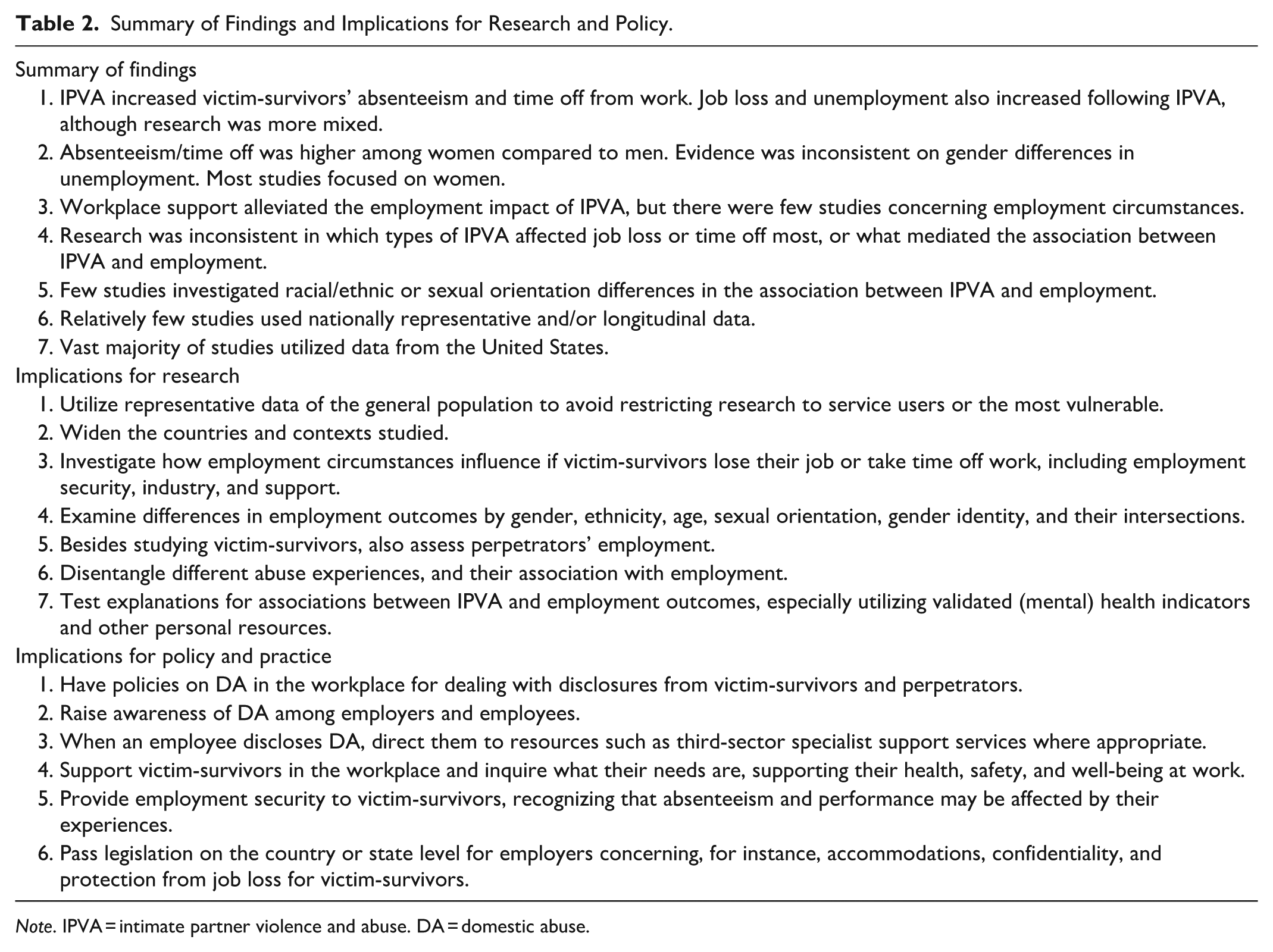
Note. IPVA = intimate partner violence and abuse. DA = domestic abuse.
Recommendation 1: Data Quality and Representativeness
A minority of studies used samples representative of the general population, while this would have allowed for more appropriate comparisons when looking at impacts IPVA had for employment. Not all victim-survivors report or disclose abuse to the police, healthcare professionals, or specialist victim support services, with notable inequities in service seeking behavior. Therefore, research utilizing administrative data or surveys collected via such organizations may not be generalizable to all victim-survivors of IPVA. Collecting surveys via businesses or employers may be better but risks underestimating job loss and absenteeism in cases where employees lost their work as a result of the (employment consequences of) IPVA and therefore are not part of the employee sample. General population surveys have long been considered the most appropriate form to assess the prevalence and impact of violence (United Nations Statistical Office, 2014) and future work would benefit from utilizing high quality survey data on IPVA and its employment consequences. Furthermore, longitudinal investigation of the association between IPVA and employment outcomes, including absenteeism, is needed to assess the long-term costs of IPVA as well as the causal ordering.
Recommendation 2: Contexts and Countries Investigated
The large majority of studies stemmed from the United States, which makes it less evident whether the found associations also apply to other societal contexts. While studies from other countries also indicated that IPVA experiences were associated with job loss and absenteeism, the field would benefit from studies in a wider variety of contexts. It is particularly prudent to investigate contexts with different normative, economic, or labor market conditions, such as varying levels of gender equality, employment protections, informal economies, or economic development. Cross-national or cross-state research could help to explore different contextual factors influence the employments risks following IPVA (Marçal et al., 2024), allowing the investigation of which circumstances can reduce the economic impacts of IPVA.
Recommendation 3: Employment Circumstances
For a topic where employment is the central aspect, there has been remarkably little attention to employment circumstances and employers’ role. Three studies that did put employers’ role at the center, indicated that supportive managers affect the extent to which IPVA is related to absenteeism and job loss (Isola et al., 2023; Pachner et al., 2022; Yragui et al., 2012). Additionally, Marçal et al. (2024) showed the importance of employment legislation. However, aspects such as differences by industry, job roles, contract type, organizational support, informal support by colleagues, government policies, and more have received no or very limited attention. Further research is needed to examine variation across these aspects to understand what enables victim-survivors to retain employment and long-term productivity. This includes research specifically on people with temporary contracts, self-employed workers, and zero-hour workers whose economic vulnerability may pose a distinct barrier to taking leave and a risk for job loss.
Recommendation 4: Men, Race/Ethnicity, Age, Sexual Orientation, and Gender Identity
A minority of the studies included men. While women are the majority of IPVA victim-survivors, a nonnegligible minority of victim-survivors are men (Scott-Storey et al., 2023). Considering the gendered labor market, as well as gendered labor market impacts of family circumstances (Blom & Cooke, 2024; Kowalewska, 2023), further research needs to investigate potential gendered impacts of IPVA on the labor market. Many, but not all, studies here indicated gender differences in employment consequences (Arias & Corso, 2005; Bhuller et al., 2024; Blodgett & Lanigan, 2018; Peterson et al., 2018; Tjaden & Thoennes, 2000; Wathen et al., 2015, 2018). Future work could explore what explains gender differences in the employment impact of IPVA, and when they are more pronounced. Differences by race, ethnicity, sexual orientation, gender identity, and age have received limited attention, warranting further research. An intersectional perspective may be beneficial to understand the experiences of groups who have different experiences regarding the labor market, healthcare, and law enforcement.
Recommendation 5: Perpetrators
Furthermore, there has been extremely limited amount of work on IPVA perpetrators and their employment. The limited research shows that perpetrators also have more absenteeism compared to others (Duvvury et al., 2022, 2023; Mankowski et al., 2013). This indicates societal costs of IPVA via perpetrators’ employment, which needs to be included in costing studies. However, evidence is limited in scope, context, mechanism, and the outcomes studied. For example, IPVA perpetration by women was not investigated by any included study.
Recommendation 6: Differences by Abuse Experiences
Few studies investigated how different experiences of IPVA in frequency, severity, or type of abuse were associated with different employment outcomes. Studies that did look at different IPVA experiences provided inconsistent findings. Therefore, further research can explore how diverse IPVA experiences relate to differing employment outcomes, considering that different forms of IPVA have different associations with mental health (White et al., 2024). Furthermore, few studies included violence and abuse in other spheres of life, including workplace violence, violence by family members, or by others. Considering many victim-survivors experience violence by multiple types of perpetrators, investigating how polyvictimization affects job loss and time off may provide a more holistic perspective on the employment impacts of violence.
Recommendation 7: Testing Explanations
Few studies tested explanations for the association between IPVA and employment, and those that did found limited evidence that mental health mediated this relationship. However, it is well established that IPVA affects mental health (White et al., 2024) and that mental health affects absenteeism and unemployment (Gedikli et al., 2023). Further work with high-quality data, including with better mental health indicators, may be useful to assess mental health as a mediator. High-quality longitudinal data would be especially beneficial considering the causal ordering of health, employment, and IPVA. Furthermore, future research would benefit from testing aspects such as depletion of personal resources in all its varieties following work-home resources model (ten Brummelhuis & Bakker, 2012), to explain the link between IPVA and employment consequences, as these have not been tested by the studies in this review.
Recommendations for Policy and Practice
IPVA has severe health, social, community, and economic impacts (Arias & Corso, 2005; Duvvury et al., 2021; Peterson et al., 2018) and requires appropriate resources for prevention and intervention. Employers can play a vital role in supporting victim-survivors, supporting victim-survivors’ health, safety, and well-being at work, and enable service use (Adhia et al., 2019; Employers’ Initiative on Domestic Abuse [EIDA], 2024; Giesbrecht, 2022; Hearn et al., 2023). This includes raising awareness of IPVA, providing access to information and local support organizations, fostering a culture of asking for support, and having zero-tolerance for perpetration (Adhia et al., 2019; EIDA, 2024; Giesbrecht, 2022; Hearn et al., 2023). It is important to prevent victim-survivors from unemployment and to recognize that absenteeism and performance may be affected (Adhia et al., 2019; EIDA, 2024; Giesbrecht, 2022; Hearn et al., 2023), for instance, due to employment sabotage and workplace interference. Theory-informed interventions can be used to mitigate the employment consequences, for instance social cognitive career theory to improve victim-survivors’ self-efficacy and view of their own capabilities (Chronister et al., 2018; Lantrip et al., 2015). Considering IPVA also happens at the workplace, both physically and digitally (Hearn et al., 2023), a workplace safety plan should be developed (Adhia et al., 2019; EIDA, 2024; Giesbrecht, 2022; Hearn et al., 2023). Additionally, perpetrators should be aided in changing their behavior, potentially by providing or mandating treatment programs (Adhia et al., 2019; EIDA, 2024; Giesbrecht, 2022; Hearn et al., 2023). Furthermore, managers and colleagues should have access to training and assistance in aiding victim-survivors where appropriate, potentially with mandatory training for managers and HR staff (Adhia et al., 2019; EIDA, 2024; Giesbrecht, 2022; Hearn et al., 2023). Regarding country and state actors, victim-survivors would benefit if legislation were passed requiring companies to make accommodations for victim-survivors, to ensure confidentiality, and to protect employees from job loss (Marçal et al., 2024).
Limitations
While this review was extensive, it was not exhaustive. Some studies were not included because they were reports and not published in peer-reviewed journals, and thus outside the scope of the review (Cortis & Bullen, 2016). Similarly, studies on related issues such as earnings and welfare receipt (Bindler & Ketel, 2022), or studies that used qualitative methods, or not English language, fell outside the scope of the review. Additionally, this research did not cover aspects such as presenteeism and job performance, an important area for research to assess the economic costs of IPVA. Lastly, this study focused on IPVA, but there are many other types of perpetrators of violence, including other family members, the general public, colleagues, and managers, which were not covered in the review.
Conclusion
This review showed that violence and abuse by intimate partners was associated with absenteeism and time off from work as well as with unemployment at least in some circumstances. This indicated substantial costs to victim-survivors, employers, and society beyond the severe health and social impacts of IPVA. However, this systematic review identified some quite large knowledge gaps including who was studied in terms of geography, sociodemographic groups, and employment situations, as well as what explained or mitigated the association between IPVA and employment consequences. Alleviating these gaps would allow for a better knowledge base which would help in formulating future policies that break the cycle of violence and abuse and economic precarity.
Footnotes

Ethical Considerations
This research was reviewed and approved by the IMJEE (International Politics, Music, Journalism, Economics, and English) research ethics committee from City, University of London (ETH2122-2023 and ETH2122-0299).
Funding
The authors disclosed receipt of the following financial support for the research, authorship, and/or publication of this article: This research was supported by the UK Prevention Research Partnership (Violence, Health and Society; MR-VO49879/1), which is funded by the British Heart Foundation, Chief Scientist Office of the Scottish Government Health and Social Care Directorates, Engineering and Physical Sciences Research Council, Economic and Social Research Council, Health and Social Care Research and Development Division (Welsh Government), Medical Research Council, National Institute for Health Research, Natural Environment Research Council, Public Health Agency (Northern Ireland), The Health Foundation, and Wellcome. The views expressed in this article are those of the authors and not necessarily those of the UK Prevention Research Partnership. This research was also supported by City University of London Research Pump Priming Scheme. The funders had no role in the study design, data collection, data analysis, data interpretation, or writing of this paper, or in the decision to submit the paper for publication.
Declaration of Conflicting Interests
The authors declared no potential conflicts of interest with respect to the research, authorship, and/or publication of this article.