



Abstract
Economic violence against women includes control and exploitation of economic resources, employment sabotage, and partners’ refusal to contribute to household necessities. This form of intimate partner violence threatens women’s economic welfare, independence, and health. Despite its significance, evidence on effective prevention strategies remains limited. This systematic review and meta-analysis evaluate global experimental evidence on interventions addressing economic violence against women. We systematically searched MEDLINE and Web of Science, supplemented by hand searches, for randomized controlled trials measuring economic violence among partnered women. We identified 49 studies across 31 countries, with a total sample of 106,868 individuals and 397 effect size estimates. Interventions took place in low and middle-income countries and ranged from economic empowerment programs—such as cash transfers and business training—to health initiatives and gender-transformative approaches, with most employing multi-component designs (n = 34). Only 12 studies explicitly defined economic violence as an outcome, while most assessed individual subcomponents only, particularly economic control. Victimization was the primary measure (n = 48), and perpetration was rarely assessed (n = 6). Our meta-analysis found a significant reduction in economic violence (Hedges’ g −0.076, p < .01). Interventions targeting couples and those in South Asia showed the largest effects. While interventions show promise, future programs require greater awareness of economic violence in intervention design and should prioritize couple-based approaches. Future research needs to develop validated, culturally adapted measures to capture all forms of economic violence, address the lack of perpetration data, and expand studies to high-income countries to better understand the broader dynamics of economic violence.
Introduction
Intimate partner violence (IPV) against women is a globally pervasive issue, posing significant threats to women’s physical and mental health with long-term consequences for their well-being (World Health Organization, 2021). IPV encompasses physical, sexual, psychological, and economic violence (CETS 210, 2011; World Health Organization, 2012) and is recognized as a global public health crisis (Devries et al., 2013; García-Moreno et al., 2015). A recent review found that approximately 27% of ever-partnered women globally aged 15 to 49 years have experienced sexual and/or physical IPV (Sardinha et al., 2022). While significant progress has been made in identifying the underlying causes and developing prevention strategies for physical, psychological, and sexual violence, economic violence remains relatively poorly studied and under-addressed (Boateng & Tenkorang, 2023; Postmus et al., 2020).
Economic violence involves controlling behaviors that restrict a partner’s access to and use of financial resources, thereby reinforcing dependency and constraining autonomy (Adams et al., 2008). It can take various forms, such as (a) economic control, where access to economic resources, information, and decision-making is tightly restricted and monitored; (b) economic exploitation, which includes depleting funds, destroying property, or generating economic costs; (c) preventing the acquisition of economic resources, such as income, through sabotaging education or employment; and (d) refusal to contribute financially for necessities or other items, despite having the means to do so (Chowbey, 2017; Postmus et al., 2020; Steinert et al., 2023; Stylianou, 2018).
Survivors of economic violence face detrimental socioeconomic and health consequences. Previous studies have documented higher rates of absenteeism at work (LeBlanc et al., 2014), job loss, and employment instability among women who have faced economic violence (Crowne et al., 2011; Stylianou, 2018). Economic violence also reduces a woman’s financial independence, which can constrain her ability to leave an abusive relationship (Fávero et al., 2024; Stylianou, 2018). Lastly, economic abuse can have detrimental impacts on survivors’ physical and mental health, such as higher HIV-risk behavior, depression, and suicidality (Antai et al., 2014; Gibbs et al., 2019; Hamdan-Mansour et al., 2011; Postmus et al., 2012).
Given the detrimental and potential long-term effects of economic violence, it is crucial to gain a systematic understanding of how economic violence can effectively be alleviated and prevented. Recent systematic reviews on the prevention of different forms of IPV have occasionally included economic violence as an outcome measure. However, they have been limited in scope regarding the type of intervention, geographic focus, or economic context. For example, previous reviews have had a single programmatic focus, such as interventions related to community mobilization or group-based interventions (Leight et al., 2023), economic empowerment interventions (Eggers Del Campo & Steinert, 2022), cash transfers (Buller et al., 2018), or structural interventions aiming to address economic, politico-legal, physical, or social environments (Bourey et al., 2015). Similarly, some studies have explored interventions relevant to specific geographic regions or economic contexts, like Cork et al. (2020), who have explored randomized controlled trials (RCTs) conducted in Sub-Saharan Africa, or Bourey et al. (2015) and Leight et al. (2023), who have focused on interventions in low- and middle-income countries. To the best of our knowledge, no review to date has systematically assessed interventions addressing economic violence on a global scale, considering the broad range of approaches used across different regions and settings.
This study aims to fill this gap by evaluating and synthesizing experimental evidence on interventions that prevent and alleviate economic violence against women. We aim to identify the types of interventions being delivered, assess their effectiveness in reducing economic violence, and explore whether specific intervention and study characteristics may moderate these effects. Findings from this review are crucial for informing the design of effective and scalable interventions and shaping global strategies to address economic violence. Furthermore, this review highlights critical gaps in existing research, offering valuable insights and direction for future studies in this crucial area.
Methods
The protocol for this systematic review and meta-analysis was registered in the International Prospective Register of Systematic Reviews, Prospero (https://www.crd.york.ac.uk/PROSPERO/view/334141).
Search Strategy and Selection Process
We systematically searched the electronic databases MEDLINE and Web of Science on April 3, 2022, with a pre-defined and pilot-tested set of English search terms listed in Table A1 in the Supplemental Appendix. Backward hand searches were performed by screening reference lists of eligible studies and related reviews. When published results or disaggregated effect sizes were unavailable, we contacted authors of eligible study protocols or completed studies to request their (preliminary) evaluation results or further data. On March 5, 2024, the searches in MEDLINE and Web of Science were updated, and we also specifically searched for published papers related to previously included protocols.
Studies were eligible if they sampled women living in partnerships in high-, middle-, or low-income countries. 1 We included programs and policies that targeted women only, men only, or women and men jointly. There were no further constraints on the delivery mode (e.g., delivered digitally or in-person), duration, or curriculum/content of the intervention. Studies were eligible if they reported treatment effects on any form of economic violence experienced by women, reported by either women (in their role as potential survivors) or men (in their role as potential perpetrators). Our review did not focus on the potential victimization of men. Notably, we included all studies that measured one or more component(s) of economic violence, regardless of whether they explicitly defined it as such. Although economic violence is rarely recognized as a distinct IPV category in the intervention literature, many studies assess relevant behaviors such as men’s interference with employment or control over financial resources. These aspects capture broader related constructs, such as women’s financial autonomy or financial decision-making power. Accordingly, studies reporting only one or a few individual items were also included if they aligned closely with items of existing economic abuse scales such as the Economic Coercion Scale (ECS-36) validated in Bangladesh (Yount et al., 2021) or the Scale of Economic Abuse validated in the United States (SEA2; Adams et al., 2020 and SEA12; Postmus et al., 2016). Lastly, eligible study designs were cluster-randomized and individually randomized controlled trials with no restrictions on the control condition. Papers were included irrespective of their language and publication date. Protocols were included in a table of ongoing studies to keep a record of upcoming research (Table A1 in the Supplemental Material).
The study selection process was performed using the open-access screening tool Rayyan. In line with the Cochrane Collaboration Handbook (Deeks et al., 2023), search results were merged, and duplicates were removed. A subset of retrieved titles and abstracts (10%) was double-screened. As inter-rater reliability exceeded 95%, all remaining records were split among the review authors for single-screening. Two authors independently assessed full-text documents for eligibility, and potential disagreements were resolved through discussion and arbitration by a third review author.
Data Extraction and Quality Assessment
A piloted data extraction sheet was used to collect data on the study and participant characteristics, intervention type, outcome measures, and effect estimates for all relevant measures and time points. Information was extracted from available publications of primary studies, supplementary material, and unpublished information we received directly from authors. One review author entered data from the included studies into the data extraction form. A second review author double-checked the extracted data included in quantitative analyses.
Two reviewer authors independently evaluated the risk of bias (RoB) of included studies using the Cochrane Risk of Bias tool 2.0 (Sterne et al., 2019). They assessed (a) bias arising from the randomization process, (b) bias due to deviations from the intended interventions, 2 (c) bias due to missing outcome data, and (d) bias in the selection of the reported results. Potential discrepancies were resolved by discussion, and if necessary, a third review author was consulted.
Data Analysis
All included studies were synthesized narratively and graphically. Studies were included in the meta-analyses if they reported sufficient statistical information (i.e., mean, SD, SE, or CI) on outcomes of economic violence. In some studies, the effect sizes for our target population of partnered women and/or for our outcome of interest were not published. In this case, we contacted the authors to request necessary data, such as sub-sample analysis for partnered women only or raw data (n = 40). In five cases, the authors provided us with the subgroup analyses, and in 11 cases, we could access the raw data through replication files and run the regression analyses ourselves. One study was not included in the quantitative analysis as the available information was insufficient to calculate standardized mean differences.
We calculated Hedges’ g as a standardized effect size for each study included in the meta-analysis. Hedges’ g is defined as the standardized mean difference (SMD) between the treatment and control group for any outcome of interest that is then divided by the pooled standard deviation of the respective outcome variable. We opted for Hedges’ g over Cohen’s d, as the former metric is corrected for a potential bias in estimates that could result from a low sample size or unequal sizes of treatment arms (Lin & Aloe, 2021). If studies reported odds ratios, these were converted to SMDs. We applied robust variance estimation (RVE) techniques to quantitatively summarize effect size estimates across studies in the meta-analysis. RVE allows for correcting within-study correlation stemming from multiple effect size estimates per outcome (Hedges et al., 2010).
We performed meta-regressions and subgroup analyses based on intervention and study characteristics to explore heterogeneity and identify potential effect moderators. These included (a) geographical region, income group, and study setting (community, home, healthcare), (b) delivery mode (individuals, couples, groups), (c) intervention provider (professionals, peers), (d) intervention format and treatment intensity (type and duration), (e) intervention recipients (females, males or both), (f) outcome (types of economic violence), and (g) characteristic of the control condition (treatment as usual, no treatment). Some of these heterogeneity characteristics were pre-defined in the protocol (i.e., income group, intervention characteristics, and target population), while others were added posterior in the analysis stage based on the nature of the included interventions (i.e., region, number of intervention components, duration, respondent, provider, control condition, time to follow-up, outcome measure and publication type). Table A2 in the Supplemental Appendix provides a detailed breakdown of subgroups and their characteristics.
Before conducting the meta-regression, we created a correlation matrix to assess potential overlap among moderators to avoid multicollinearity (Littell et al., 2008). We started by running meta-regressions for each predictor separately (individual regression model). In a final model, we simultaneously examined multiple moderators and their potential contributions to the variability in effect sizes by including all predictors that showed significance in the individual regression models (extended regression model). To examine the robustness of the findings, sensitivity analyses were performed by assessing whether included studies with a high RoB reported significantly larger or smaller effect sizes, including a categorical variable capturing low, some, or high RoB rating as a predictor in the meta-regression. Additionally, to assess whether studies that explicitly defined economic violence as an outcome had significantly different treatment effects compared to studies that included related measures without referring to economic violence, we conducted a meta-regression with a binary predictor indicating whether included outcome measures were explicitly defined as economic violence. We used the recently emerged Doi plot and Luis Furuya-Kanamori (LFK) index to check for publication bias (Furuya-Kanamori et al., 2018). However, as recent literature has raised concerns about the LFK index’s potential limitations, particularly its sensitivity to certain modeling assumptions (Schwarzer et al., 2024), we supplemented our analysis with visual inspection of the funnel plot and Egger’s regression test to ensure robustness. Analyses were conducted in R 4.3.1 using the packages “robusta” for the main analyses and “metaphor” for the assessment of publication bias.
Results
We identified 10,292 records through both rounds of the database search. After removing duplicates (n = 114), 56 records were eligible for full-text reviews, of which 9 were included in the final sample. We identified another 112 records through citation screening (n = 108) and author contact (n = 4) that were eligible for full-text review, of which 48 were included in the review. During the full-text screening, 109 records were excluded in total. The reasons for exclusion are provided in the Supplemental Material: Table A2. Fifty-seven records, totaling 49 studies and a sample size of 106,868 3 people, satisfied all selection criteria (Figure A1 in the Supplemental Material).
Study and Participant Characteristics
Table 1 provides an overview of the study and participant characteristics. Further details on the intervention design (objective, key components, and duration) and study characteristics (number of and time to follow-up(s)) can be found in the Supplemental Material (Table A3).
Overview of Included Studies.
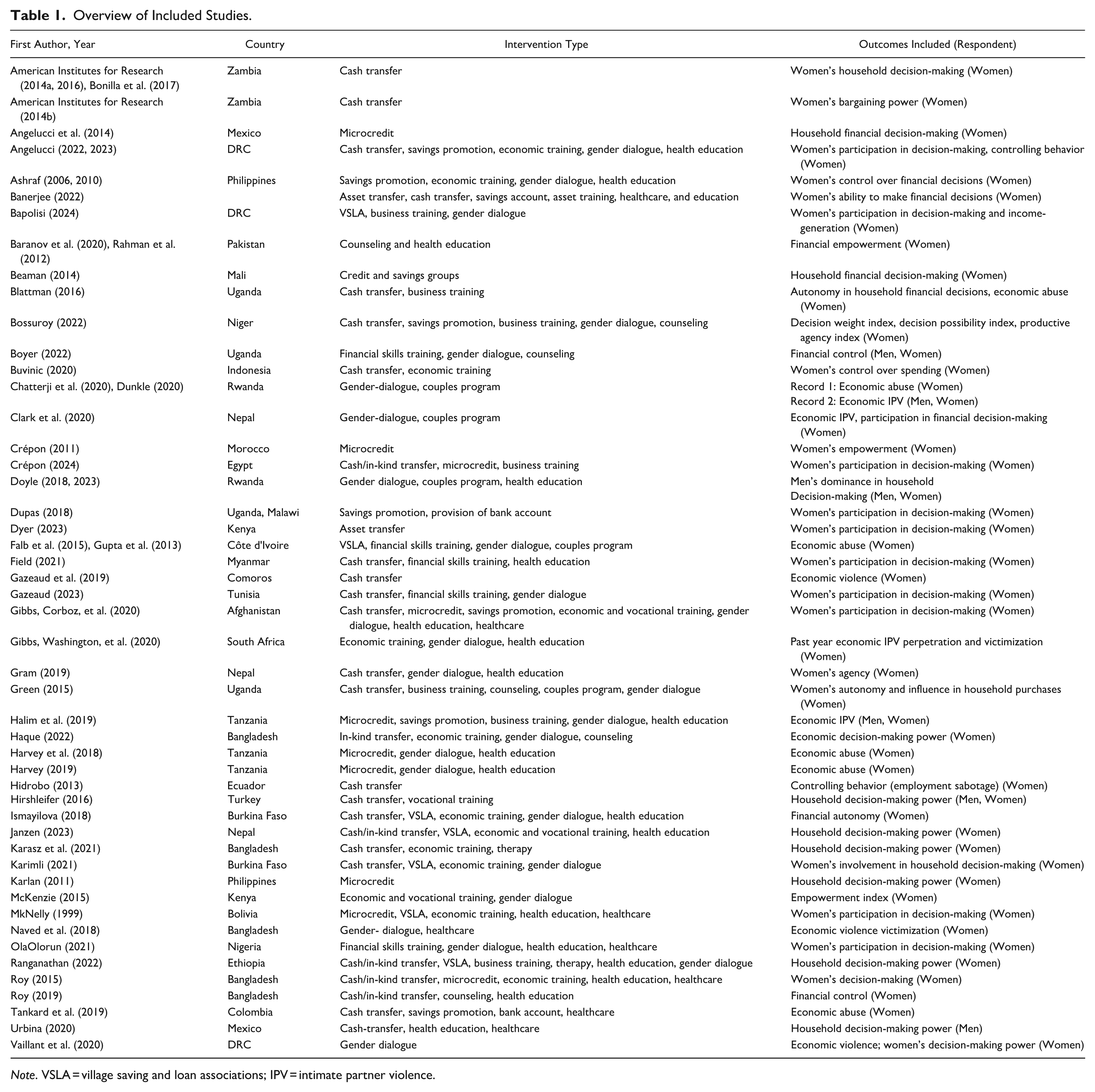
Note. VSLA = village saving and loan associations; IPV = intimate partner violence.
The included studies were published between 1999 and 2024, with most studies appearing in 2020 (n = 9; Figure A1 in the Supplemental Appendix). The vast majority of included records were full studies published in peer-reviewed journals (n = 41), followed by technical reports (n = 7), working papers (n = 7), and protocols (n = 2). Most studies used a cluster randomized design (n = 36), while 13 studies used an individual randomized design. The majority of studies (n = 29) compared only one treatment arm to a control condition, while the remaining study designs consisted of 2 (n = 11), 3 (n = 7), 4 (n = 1), or 5 study arms (n = 1). In 32 studies, the comparison group was a pure control with no treatment. In four studies, control groups were waitlisted. In 14 studies, control groups were provided with alternative treatment, such as access to saving and microfinance groups (n = 4), community activities (n = 2), radio programming (n = 1), health services (n = 1), information sessions (n = 2), existing programs (n = 3), and enhanced routine care (n = 1).
The 49 included studies were conducted in 31 countries, mostly in rural areas (n = 33). The majority of interventions were implemented in Sub-Saharan Africa (n = 25) and South Asia (n = 14), followed by Latin America and the Caribbean (n = 4), East Asia and the Pacific (n = 3), the Middle East and North Africa (n = 4), and Europe and Central Asia (n = 1; Figure A2 in the Supplemental Appendix). According to the World Bank classification (World Bank, n.d.), most studies were conducted in lower-middle-income countries (n = 23), followed by low-income countries (n = 18) and upper-middle-income countries (n = 7).
Most studies targeted women only (n = 28). Couples were included in 15 studies, and 12 interventions targeted unacquainted men and women. The study populations of included studies were recruited based on socio-demographic aspects, economic characteristics, or their health status. For example, the majority of studies included adults (≥18 years) only, while seven studies explicitly included adolescents. A relevant proportion of studies focused on women and men of reproductive age (n = 7), expectant parents (n = 2), or parents (n = 13). Other specific target groups were women and families living in poverty (n = 12) or without employment (n = 2). Women with mental health symptoms, including symptoms or diagnosis of depression, were recruited in three studies. The sample sizes of included studies varied greatly between 48 (Karasz et al., 2021) and 12,196 (Angelucci et al., 2014) reporting on the outcome of interest.
Risk of Bias
In the RoB rating, most records were rated with “some concern” (n = 29), 24 records were rated as “low RoB,” and three records were rated as “high RoB.” Key reasons for the high RoB rating were deviations from the intended interventions (Domain 2). Table A4 in the Supplemental Material provides an overview of the individual RoB rating.
Intervention Characteristics
We initially identified 15 intervention categories in an iterative process, drawing on previously established definitions (Aventin et al., 2023; Jewkes et al., 2021). These categories were defined and refined through repeated discussion and synthesis. For the meta-analysis, the 15 categories were subsequently grouped into five broader intervention types to streamline analysis. Table A3 in the Supplemental Appendix presents the original categories (in italics) and the final five categories used for the analyses. We categorized economic empowerment interventions into cash and in-kind transfers (such as cash grants or asset transfers), savings and credit initiatives (e.g., savings groups or microcredit programs), and capacity building (business or vocational training).
Health services and health education, such as psychotherapy or education on nutrition, were aggregated under the “health and wellbeing” category, while gender-based violence prevention and behavior change communication aiming at the transformation of social norms and gender-related attitudes were grouped into “gender transformation programs.” Most interventions were multifaceted, with each component represented in approximately half of the interventions (Table 1). More details on key intervention components can be found in the Supplemental Material (Table A3).
According to our classification, 26 studies evaluated cash and in-kind transfers. These interventions aimed to reduce extreme poverty, promote women’s empowerment, and reduce IPV. Common components included unconditional and conditional cash transfers and transfers of assets or food. Most of these interventions also included other components, such as financial literacy or business training, vocational training, or healthcare provision. Savings and credit interventions were evaluated by 21 studies. These programs aimed to increase savings and credit opportunities, empower poor households through enhanced access to financial resources, and prevent IPV. Interventions included the development and support of village saving and loan associations (VSLA), microcredits, and savings promotion. Many of these interventions also included training components or gender dialogues. Capacity-building interventions included financial skills building, business training, and vocational training and were evaluated in 24 studies. These interventions aimed at enhancing economic skills and reducing gender-based power differences between spouses. The programs included in this category varied greatly in duration and intensity and were often multi-component. In our classification, 25 studies evaluated health interventions, focusing on improving physical and mental health outcomes, particularly for women and children. Only one program (Baranov et al., 2020; Rahman et al., 2012) focused solely on the provision of healthcare and health education. All other interventions in this category were composed of multiple components, including gender dialogue, economic training, microcredits, or cash transfers. Lastly, 22 studies evaluated interventions targeting social norms, with a strong focus on gender norms. These programs aimed to transform individual and societal attitudes regarding gender roles and gender-based violence, promoting equality and empowerment. Three interventions focused solely on gender dialogues and couples programs. The remaining interventions mostly combined gender transformative approaches with health education or economic empowerment approaches, such as microcredits and cash transfers.
When exploring patterns across intervention and study characteristics, we find that interventions targeting couples were predominantly centered on gender transformation (31%), followed by health (21%) and capacity building (21%). For interventions targeting women, the emphasis shifted toward cash and in-kind transfers and health components (27% and 23%, respectively). Conversely, interventions targeting both men and women prioritized economic empowerment components, with a stronger focus on cash and in-kind transfers (34%) and capacity building (28%). Gender-transformative and health interventions were less common in those programs. In South Asia and lower-middle-income countries, interventions emphasized health components (30%/22%) and cash and in-kind transfers (26%/27%), while in Sub-Saharan Africa and low-income countries, there was an almost equal distribution across all intervention types. In upper-middle-income countries, the focus was primarily on transfers (44%) and capacity building (28%) (Table A5 in the Supplemental Material).
The duration and intensity of included programs ranged from one-time interventions up to 88 intervention sessions delivered over a maximum period of 48 months. Interventions were implemented by NGOs (n = 29), governments (n = 10), the private sector (n = 6), or research institutes (n = 6).
Outcomes of Interest
Notably, only five studies included economic violence as a primary outcome. 4 All other studies included an aggregate measure of economic violence or specific forms of economic violence as a secondary outcome. Fifteen reports explicitly defined their outcome as economic violence. For example, 5.3% of the included effect sizes referred to a composite measure of economic violence, which included varying combinations of control, sabotage, exploitation, or refusal to contribute. Yet, notably, the majority of studies assessed sub-components of economic violence, often without defining the outcome as such (see Table 1). In particular, most effect sizes included in the meta-analysis referred to economic control (83.4%), mainly through measuring women’s economic decision-making power. 5 Other forms of economic violence were economic exploitation (3.8%), employment sabotage (4.8%), and refusal to contribute (1.2%). For the explicit measurement of economic violence, studies used composite measures and primarily adapted the scales used in the World Health Organization’s Multi-Country Study on Women’s Health and Domestic Violence (Chatterji et al., 2020; Doyle et al., 2023; Falb et al., 2015; Gibbs, Corboz, et al., 2020; Gibbs, Washington, et al., 2020; Halim et al., 2019; Harvey et al., 2018; Vaillant et al., 2020) and the UN Multi-Country Study on Men and Violence (Clark et al., 2020; Doyle et al., 2023). Some studies used other scales (Gupta et al., 2013; Naved et al., 2018; Tankard et al., 2019) or did not specify the measurement instrument used (Gazeaud et al., 2019). Of the 397 effect sizes, 381 focused on victimization, comprising 48 studies, while only 6 studies, comprising 21 effect sizes, assessed perpetration based on male reports.
Timing of measurements ranged from midline surveys and immediate post-intervention (conducted right after or during intervention) up to 80 months post-intervention and from 6 months up to 96 months post-baseline. Short-term follow-ups (up to 6 months since intervention ended) were reported in 28 studies, medium follow-up periods (up to 18 months post-intervention) were reported in 16 evaluations, and long-term follow-up periods up to or longer than 36 months in nine and four studies, respectively. In 18 studies, more than one follow-up was reported. Study dropout at follow-up varied between 0% and 38%.
Meta-Analysis
The meta-analysis comprised 397 effect sizes from 48 studies. 6 The number of effect sizes per study varied between 1 and 42, with a mean of 8.3 and a median of five effect sizes per study. The majority of studies indicated a reduction in economic violence. However, the effect sizes and confidence intervals varied significantly across studies (see Figure 1). The overall effect size was Hedges’ g: −0.076, p < .01, indicating a small but significant decrease in economic violence among program participants (see Table 2, Panel A, column 1).
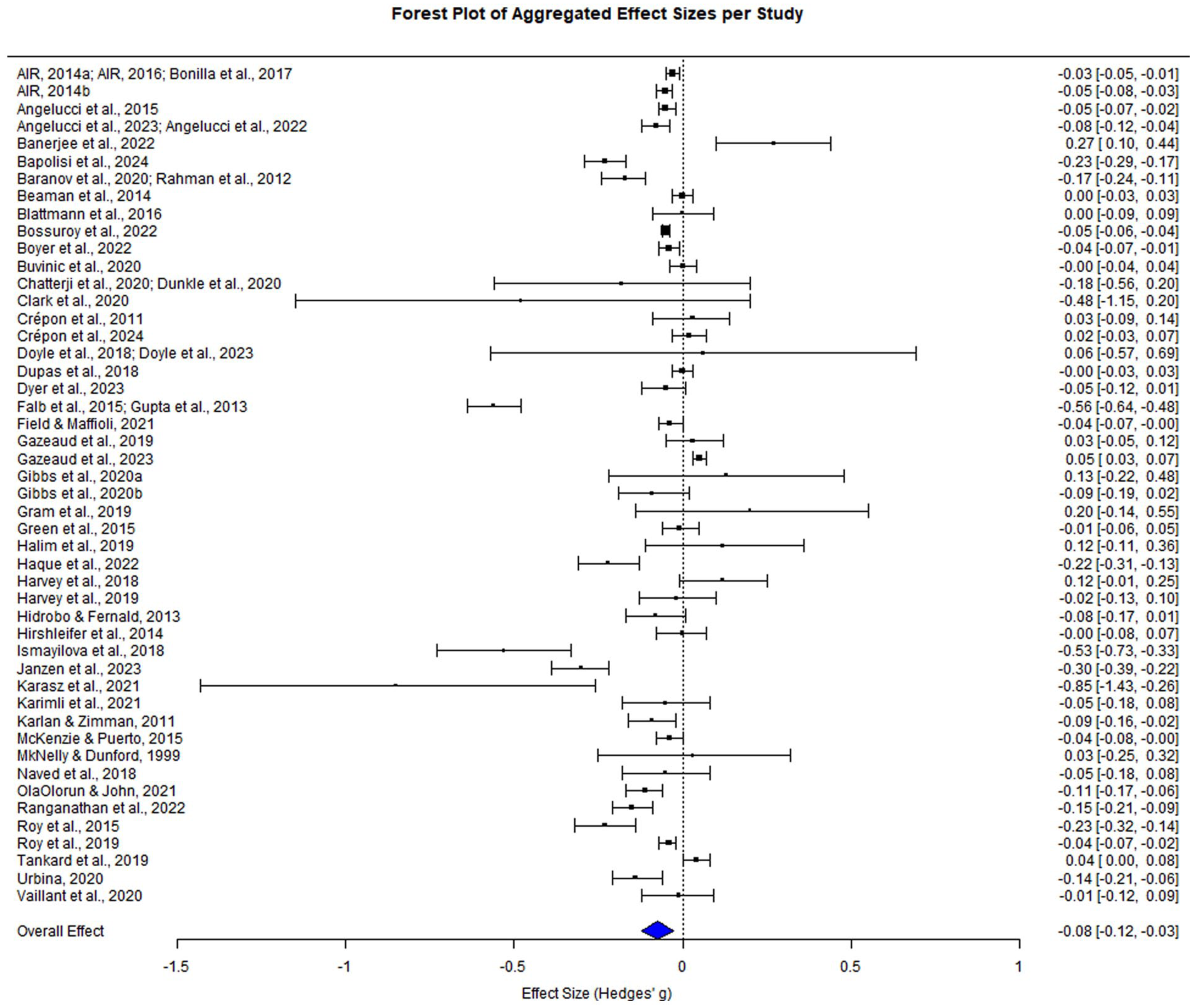
Forest plot (pooled effect sizes per study).
Subgroup Analysis of Intervention Types.
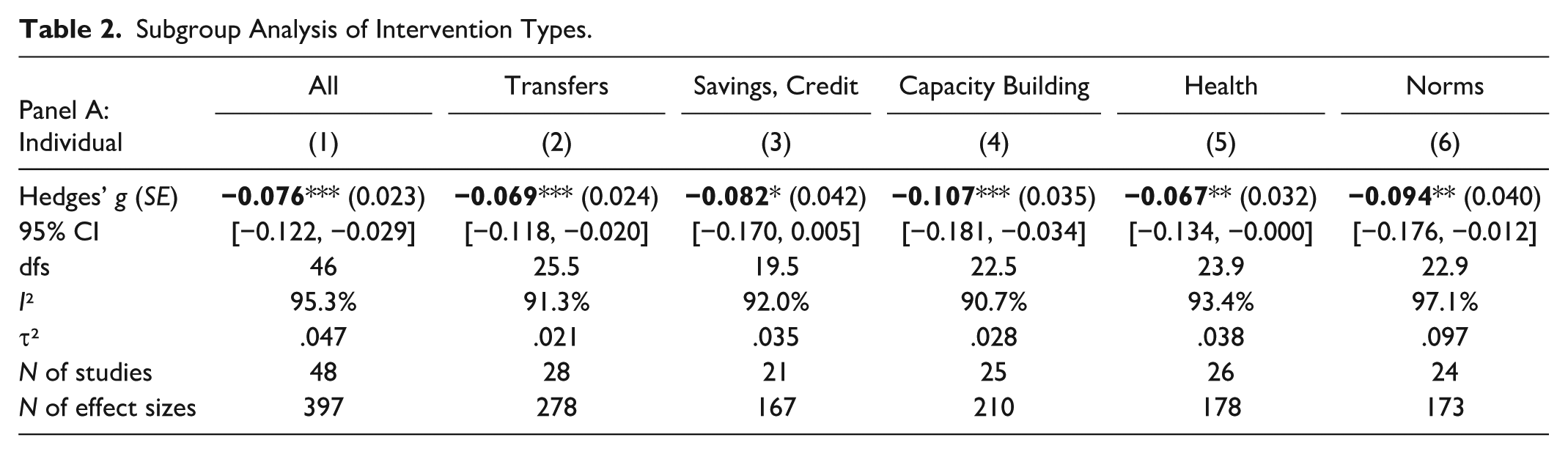
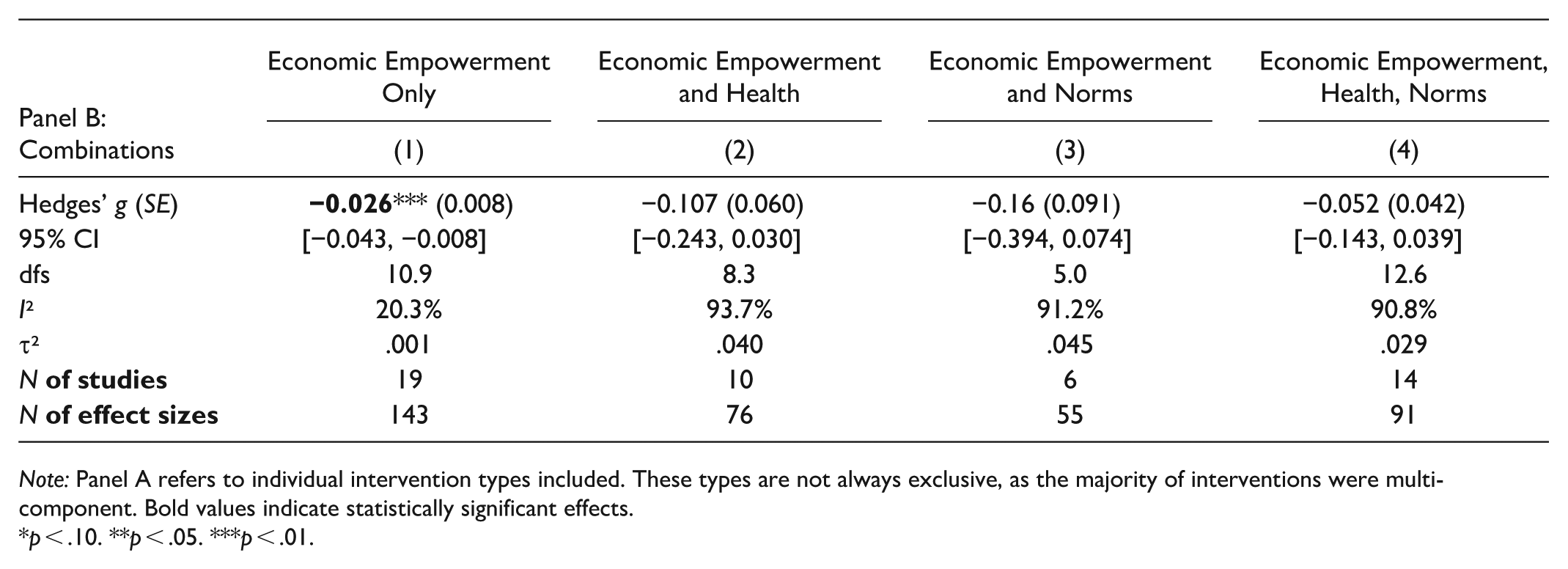
Note: Panel A refers to individual intervention types included. These types are not always exclusive, as the majority of interventions were multi-component. Bold values indicate statistically significant effects.
p < .10. **p < .05. ***p < .01.
We conducted two subgroup analyses to explore potential variations in intervention effects across different intervention characteristics and outcome measures. Interventions that included economic empowerment approaches, such as cash transfers, savings promotion, and capacity-building, or gender-transformative aspects, demonstrated larger effect sizes than interventions including health programs (see Table 2, Panel A). However, considering that most interventions consisted of multiple components, this analysis does not allow us to infer which specific components primarily drive effectiveness. Therefore, we also looked at the effect of economic empowerment interventions (i.e., cash or in-kind transfer, savings or credit, and capacity building) that did not include any health or gender transformative components and compared these to interventions that combined economic empowerment with health programs or gender transformative aspects or both (Table 2, Panel B). While the pooled effect sizes of combined interventions appeared tentatively larger, they failed to reach significance. This may be attributed to the reduced statistical power resulting from the smaller number of studies included for each of these intervention types.
When we explore different effect sizes across different outcome measures, we find that interventions had a significant effect only on outcomes measuring economic control and employment sabotage (Table A6 in the Supplemental Material). However, sample sizes for the subgroups examining economic exploitation and refusal to contribute were small, and there was substantial heterogeneity across studies. In additional subgroup analyses, we disaggregated pooled effect estimates by various forms of economic control, such as control over own income and decision-making regarding personal expenses. In this analysis, only the effects on control over money and decision-making related to a partner’s income were significant (Table A4 in the Supplemental Appendix). Relatively severe forms of economic control, such as not having decision-making power over one’s own income, did not have significantly smaller effects among program participants.
We created a correlation matrix with all variables included in the meta-regression (see Table A6 in the Supplemental Appendix). Notably, we found a correlation between interventions, including a capacity-building component, and multi-component interventions (+.65), and a closer examination revealed that training components were always part of broader, multifaceted programs. Additionally, moderate correlations were observed for interventions in Sub-Saharan Africa and low-income countries (.56) and short interventions (<4 months) with no provider information (.56). To examine the correlation between interventions set in Sub-Saharan Africa and low-income countries, we ran a regression restricted to the Sub-Saharan African sample and added the income group as the independent variable. The results suggest that interventions taking place in low-income Sub-Saharan African countries showed the largest effect (Hedges’ g: −0.197, p < .01), followed by interventions in lower-middle-income countries (Hedges’ g: −0.171, p < .05; see Table A5 in the Supplemental Material). We did not further investigate the correlation between short interventions and missing provider information, as this likely reflects a reporting issue rather than a meaningful conceptual relationship.
We report meta-regression results across study and intervention characteristics (Table 3). On the intervention level, we found significantly larger reductions in economic violence and study settings in South Asia and studies targeting couples or women. On the study level, we see that studies published as peer-reviewed articles showed larger effects. In the extended meta-regression model, including all moderator variables that showed significant effects simultaneously, the geographic region and target group coefficients retained significance (left panel in Table 3). We did not find any significant differences in effect sizes by income group, intervention type, number of intervention components, duration, respondent, provider, outcome measure, time to follow-up, or publication type.
Meta-Regression.
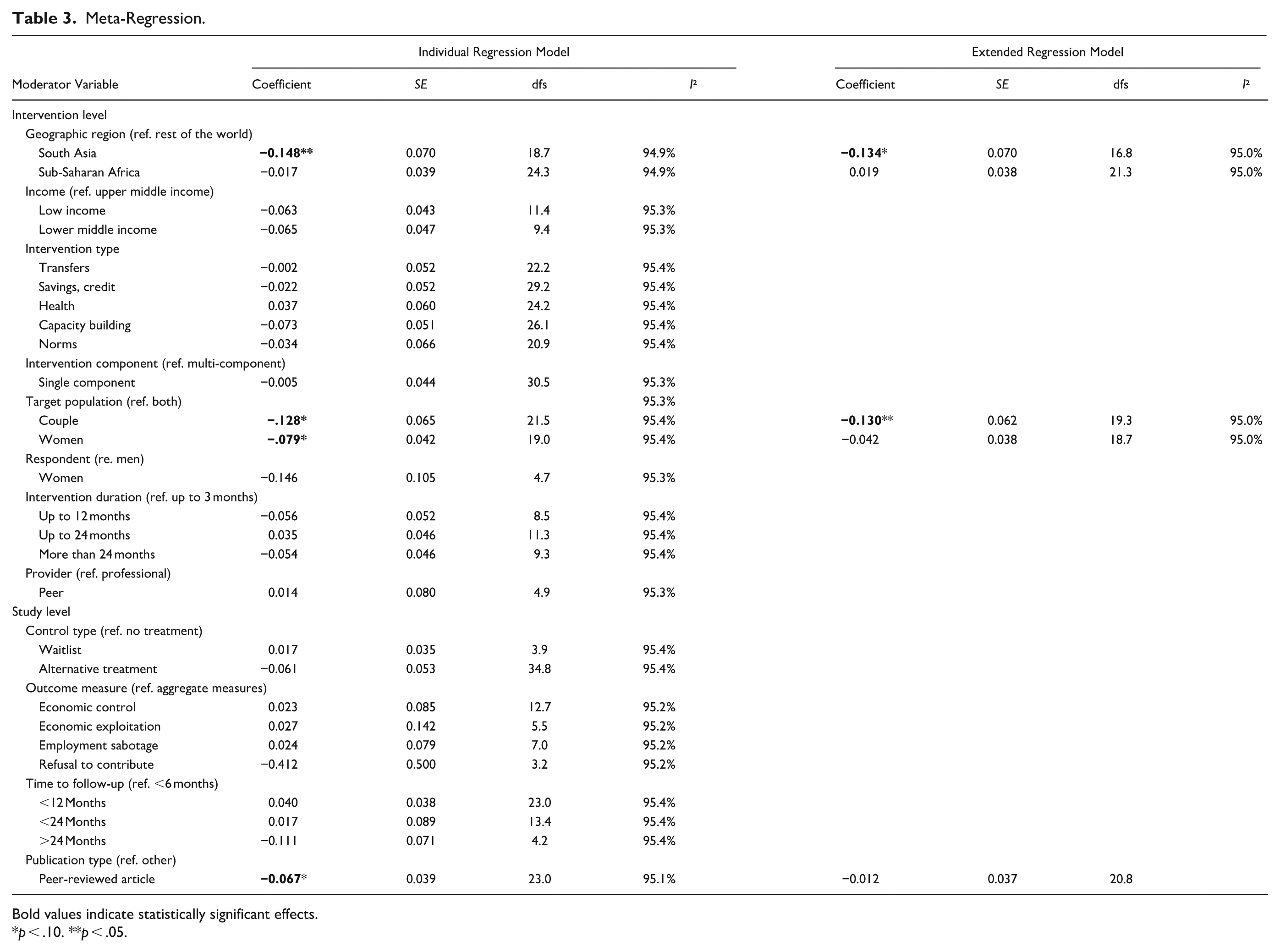
Bold values indicate statistically significant effects.
p < .10. **p < .05.
Sensitivity Analysis
We conducted a sensitivity analysis to assess the robustness of our findings. First, a meta-regression showed no significant differences in effect sizes across studies rated as low, medium, or high RoB (see Table A7 in Supplemental Material). Second, we tested whether explicitly defining economic violence as a study outcome was associated with different effect sizes. The meta-regression showed no significant association between the measurement definition and treatment effects (see Table A8 in Supplemental Material).
Publication Bias
An assessment of the Doi plot suggests visual symmetry, and the value of the LFK index (0.67) is within the acceptable range of −1 to 1, which indicates that the findings are likely not biased by unidentified studies (Figure A3 in the Supplemental Appendix). However, a visual inspection of the funnel plot suggests a significant asymmetry with a p-value of .00008 for Egger’s regression test (Figure A4 in the Supplemental Appendix), thus suggesting that our findings may be subject to some publication bias. Following this, we applied the trim and fill method to address potential publication bias and account for potentially missing studies (Littell et al., 2008). Based on this approach, 121 missing effect sizes were estimated on the left side of the funnel plot, resulting in a pooled effect size that was, in fact, larger in magnitude with a Hedges’ g of −0.139, p < .01 (see Figure A5 in the Supplemental Appendix). Thus, we can conclude that our main analysis likely does not overestimate the effectiveness of interventions in reducing economic violence against women due to publication bias.
Discussion
To our knowledge, this is the first global review and meta-analysis to evaluate whether a diverse set of interventions can effectively reduce economic violence against women. Our pooled estimate spanning treatment effects from 49 interventions across 31 counties suggests that economic empowerment approaches, health programs, and gender transformation programs can effectively reduce the prevalence of economic violence against women. Specifically, the analysis underscores the effectiveness of cash and in-kind transfers, economic training, and gender-transformative approaches (Table 4). These findings align with existing research on the impact of economic empowerment programs in general and cash transfer programs in particular, which have been shown to reduce IPV by alleviating financial stress and empowering women (Buller et al., 2018; Eggers Del Campo & Steinert, 2022).
Summary of Critical Findings.
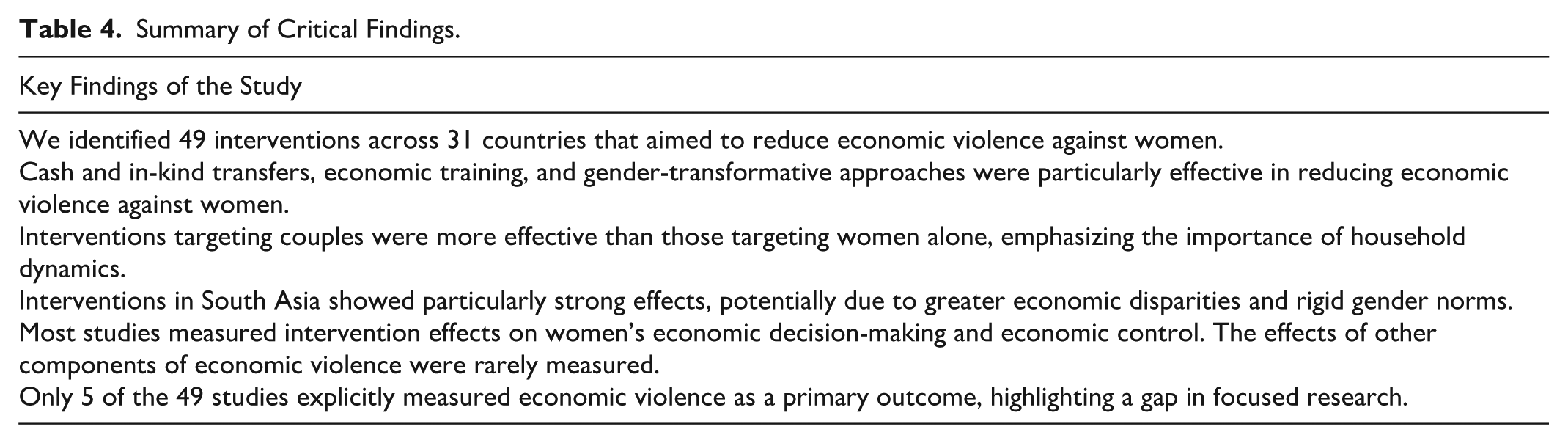
In our additional analyses, we observed that interventions integrating economic empowerment strategies with gender-transformative components may hold promise in reducing economic violence. This finding is consistent with the conclusions of a previous meta-analysis by Eggers Del Campo and Steinert (2022), which found that programs combining economic empowerment with a gender-sensitization component showed greater effectiveness in addressing various forms of IPV. While our results did not achieve statistical significance, they point to the potential value of incorporating gender-transformative elements in economic empowerment interventions. Therefore, our study suggests a need for further investigation to better understand how these components interact and contribute to reducing economic violence.
In our meta-regression, we found that targeting couples significantly increases the effectiveness of interventions, underscoring the importance of considering household dynamics and decision-making patterns in the design of interventions.
Apart from this, there might be a risk that interventions targeting women only lead to unintended male backlash as they aim to shift household power dynamics without integrating and engaging male partners. Moreover, such approaches may inadvertently place the responsibility for change on survivors rather than addressing the behavior of perpetrators. Therefore, targeting women and their male partners in gender-transformative interventions can prevent unintended resistance by household members and partners and ensure long-term sustainability (Pereira et al., 2023; Peterman & Roy, 2022).
Interventions in South Asia were particularly effective. This region’s unique socio-cultural dynamics might have influenced intervention success. Factors such as patriarchal gender norms and significant economic disparities between husbands and wives may have amplified the impact of these interventions, as they created a greater potential for improvement by giving more room for positive change. However, the diversity within South Asia underscores the need for future research to account for factors such as caste, religion, and rural-urban differences that may shape the experiences of economic violence in this region. Surprisingly, we did not find any eligible randomized study from high-income countries, even though economic violence has received increasing attention in high-income settings, such as the United States, United Kingdom, and Australia (Surviving Economic Abuse, 2022). For example, in the multi-country review on economic abuse by Postmus et al. (2020), 37% of the 46 included studies were conducted in the United States. This gap highlights an important limitation in the global research landscape and limits the generalizability of the findings, as high-income settings often have different social structures, legal frameworks, and resources to address economic violence.
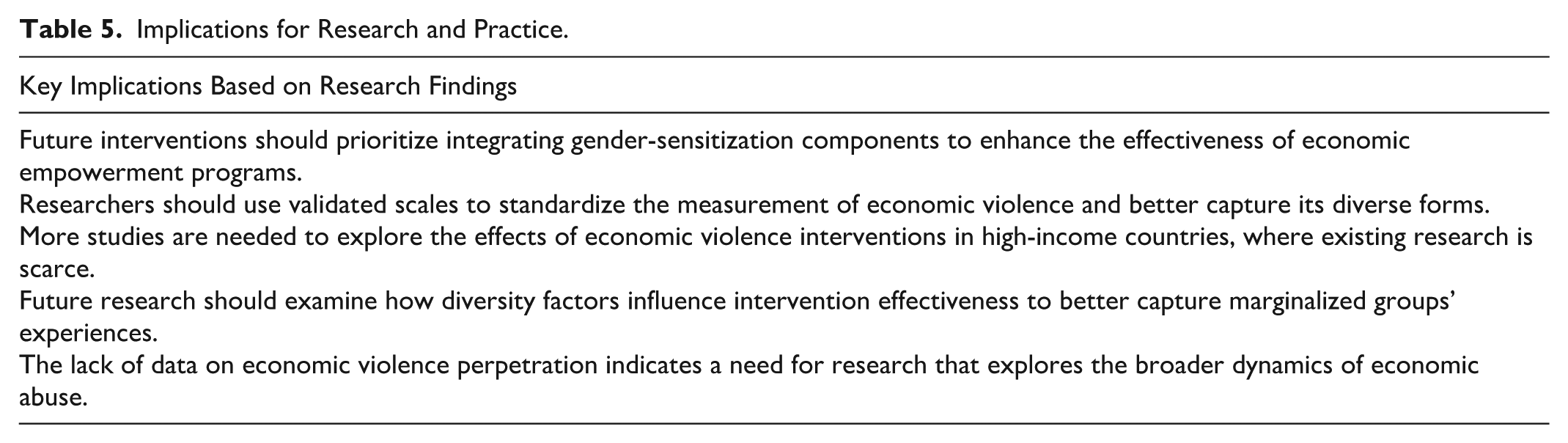
Our review also highlights critical gaps in conceptualizing and measuring economic violence across studies. Only 5 of the 49 included studies treated economic violence as a primary outcome, and more than 75% of the included studies used indicators that fall under a broad definition of economic violence but did not define them as such. This lack of explicit focus and clarity on the forms and manifestations of economic violence is a significant limitation of the current literature. This observation is in alignment with previous literature that highlights the varied and often overlapping conceptualization of economic violence and other forms of abusive behaviors (Cork et al., 2020). To generate a more nuanced understanding of the forms of economic violence that are most dominant and possibly most effectively addressed by an intervention, future research will need to include specific and validated scales to measure economic violence, such as the scale of economic abuse (Adams et al., 2008). Additionally, most included studies focused on victimization rather than perpetration, revealing another critical gap in the literature (Table 5).
Implications for Research and Practice.
Our study has several important limitations. First, using only English search terms and the lack of systematic searches for gray literature may have led to the exclusion of relevant studies from underrepresented regions and contexts. Second, while a broad definition of economic violence was used in this review, many studies employed varying measures of economic violence, which could limit their comparability. 7 While most studies included measures assessing aspects of financial and economic control—often similar in wording to items from established economic violence scales—they may not always reflect actual controlling behavior. In some cases, they may instead capture a deliberate and consensual task distribution among couples within a household. At the same time, if women report active involvement in decision-making, it is still possible that these decisions do not reflect their genuine preferences, as women might make the decisions they think their husbands would favor (Bulte & Lensink, 2019). There is a need for mixed-methods studies to better understand the mechanisms and associations between decision-making and autonomy (Bonilla et al., 2017). The measures used often lacked clarity on whether the partner was the perpetrator of economic violence. Given the design of some questionnaires, it is possible that economic control was perpetrated by other household members, such as parents or parents-in-law, in some instances. In addition, we focus only on financial decision-making, even though decisions around the use of assets or livestock can also have economic implications. A more detailed look into specific areas of decision-making power might help develop a deeper understanding of economic control as a form of economic violence. Furthermore, we only focused on women cohabiting with their partners. However, economic violence can also be perpetrated post-separation. For example, a qualitative study from Finland with IPV survivors highlighted that women experienced economic violence, withholding of resources, financial harassment, and stealing after separating from their respective abusive partner (Kaittila et al., 2024). We did not take other forms of domestic economic violence into account, such as economic violence perpetrated by children (Noh-Moo et al., 2024) or in-laws (Steinert et al., 2023). The information gathered from the included studies did not allow for a more in-depth analysis of how diversity characteristics such as age, race, ethnicity, sexual orientation, non-traditional relationships, and disability may alter treatment effects. Our findings are, therefore, unable to fully capture the experiences of marginalized groups. Lastly, the limited reporting of key details in some studies, such as study and intervention specifics, highlights an opportunity for future research to enhance the quality of evidence.
Despite these shortcomings, this review offers novel insights into the type and effectiveness of interventions addressing economic violence. The meta-analysis underscores the effectiveness of interventions in preventing or reducing economic violence against women, particularly when targeting women and couples. However, to implement effective prevention strategies, there is a need for increased awareness of economic violence in intervention design, along with standardized measures and terminology. Future research must address diverse experiences across different populations and settings, ensuring that interventions are inclusive and culturally relevant.
Supplemental Material
sj-pdf-1-tva-10.1177_15248380251383915 – Supplemental material for What Works in Reducing Economic Violence Against Women: Global Evidence From a Systematic Review and Meta-Analysis
Supplemental material, sj-pdf-1-tva-10.1177_15248380251383915 for What Works in Reducing Economic Violence Against Women: Global Evidence From a Systematic Review and Meta-Analysis by Ines Annika Böhret, Vasanthi Subramonia Pillai and Janina Isabel Steinert in Trauma, Violence, & Abuse
Footnotes
Acknowledgements
We would like to extend our sincere gratitude to Deeksha Suresh, MSc, for her invaluable assistance with the screening process and RoB rating. We would also like to express our gratitude to the authors of the included primary studies, who generously provided additional information, data, and analyses, which greatly contributed to the completion of this work.
Data Availability

Declaration of Conflicting Interests
The authors declared no potential conflicts of interest with respect to the research, authorship, and/or publication of this article.
Funding
The authors disclosed receipt of the following financial support for the research, authorship, and/or publication of this article: The research study received funding through the Technical University of Munich’s SEED funding scheme and an ERC Starting Grant (ECOVI, 101115963) provided by the European Union. Views and opinions expressed are, however, those of the authors only and do not necessarily reflect those of the European Union or the European Research Council. Neither the European Union nor the granting authority can be held responsible for them.
Ethical Approval and Informed Consent
Ethical approval and informed consent were not required for this study, as it is a systematic review and meta-analysis that synthesizes existing research. No primary data were collected.
Supplemental Material
Notes
Author Biographies
References
Supplementary Material
Please find the following supplemental material available below.
For Open Access articles published under a Creative Commons License, all supplemental material carries the same license as the article it is associated with.
For non-Open Access articles published, all supplemental material carries a non-exclusive license, and permission requests for re-use of supplemental material or any part of supplemental material shall be sent directly to the copyright owner as specified in the copyright notice associated with the article.
