




Abstract
Technology-facilitated violence (TFV) refers to a range of malicious behaviors facilitated in part or in whole through information and communication technologies, or digital media, to commit both online and face-to-face harms. Behaviors can include online harassment, stalking and monitoring behaviors, psychological and emotional abuse, sexual violence, and image-based sexual abuse (non-consensually creating, sharing, or threatening to share sexualized imagery). TFV is a growing problem globally, including in the Indo-Pacific region, where there has been an increase in digital technology use overall. This scoping review identified studies on TFV in the Indo-Pacific, examining regional trends and prevalence, impacts, perpetrator tactics, characteristics of victimization and perpetration, and available programs responding to TFV. To identify peer-reviewed literature, three databases were searched: Monash University Library, EBSCO, and ProQuest. Criteria for inclusion included peer-reviewed empirical studies published in English between January 1, 2019 and July 30, 2024 (immediately pre and post the COVID-19 pandemic) which focused on TFV among adults (aged 18+ years) in the Indo-Pacific. We identified 57 studies that explored TFV, with wide-ranging impacts, but there were clear gaps in research, particularly in non-Western settings. This review presents key findings on the trends, impacts, and characteristics of TFV in the Indo-Pacific and discusses implications for policy and programs, as well as suggestions for future research.
Introduction
Technology-facilitated violence (TFV) is a globally significant human rights, legal, public health, and social concern, not only in the developed world, but also in the Global South (Sheikh & Rogers, 2024; Bansal et al., 2023). According to estimates from UN Women (2024), 58% of girls and young women worldwide have experienced some form of online harassment. As digital technologies continue to develop, these figures are likely to grow with increased opportunities for committing new and existing forms of violence.
Increasing academic attention directed toward TFV emerged around 20 years ago, with a particular focus on such violence in Australia, the United States, and the United Kingdom (Flynn et al., 2024; Woodlock et al., 2020). Since then, there has been a proliferation of studies published exploring TFV, its prevalence, harms, and characteristics, largely in Western contexts. Many studies have focused on the increasing trend of using digital technologies to facilitate gender-based violence (GBV) or sexual violence and abuse (SVA). Commonly reported forms of TFV include constant texting or calling, using covert surveillance apps and tracking devices, and sending harassing or abusive communications. More recently, TFV has emerged through the Internet of Things (IoT), which covers abuse undertaken using smart home technologies such as voice assistants (Strengers et al., 2024; Phan, 2019) or children’s toys (Douglas, 2023; Dragiewicz et al., 2022).
Despite the seemingly global prevalence of this issue, there is limited empirical evidence on its prevalence and key forms in the Indo-Pacific region, particularly outside of Australia and New Zealand. Indeed, in their recent scoping review of TFV, Bansal et al. (2023) found that there were no articles available on Central Asia and the Pacific Islands, which led them to shift the focus of their paper. Our scoping review addresses this gap by exploring TFV in the Indo-Pacific region, building upon Bansal et al. (2023) and Sheikh and Rogers’ (2024) studies, both of which focused on low- and middle-income countries. Specifically, our review focused on countries in the Indo-Pacific region, namely, Australia, Fiji, Indonesia, Kiribati, Malaysia, Marshall Islands, Nauru, New Caledonia, New Zealand, Niue, Palau, Papua New Guinea, Samoa, Solomon Islands, Thailand, The Cook Islands, the Federated States of Micronesia, the Philippines, Tonga, Tuvalu, Vanuatu, and Vietnam.
To the best of our knowledge, this scoping review is the first to synthesize the available research on TFV in the Indo-Pacific, including types, impacts, harms, regional trends and prevalence, characteristics of perpetrators and victim-survivors, and the available programs responding to TFV. It is important to note that while our search included the aforementioned Indo-Pacific countries, the vast majority of the studies identified focused on Australia, which differs significantly from its neighboring countries in terms of population size, economy, and social services. The findings of this review will contribute to understandings of TFV in the Indo-Pacific, which can inform education institutions, frontline responders, support organizations, and governments. The review will also guide future research efforts by identifying key gaps and a roadmap to further advance the field.
A Brief Note on Terminology
A multiplicity of terms and definitions are used to describe TFV in the literature, including “technology-facilitated domestic and family violence” (Douglas et al., 2019), “technology-facilitated abuse” (Flynn et al., 2024), “technology-facilitated gender-based violence” (Bansal et al., 2023), and “technology-facilitated sexual violence and abuse” (Bailey et al., 2021). In our paper, we adopted the umbrella term “technology-facilitated violence” or TFV and used this to guide our scoping study to ensure that we captured both the gendered patterns implicated by the term technology-facilitated GBV and the sexual component indicated by technology-facilitated SVA, without being bound by either category. This enabled our review to map the prevalence and patterns of TFV that do not necessarily have an obvious gendered or sexual focus. We also chose to use the term victim-survivor, while recognizing the longstanding and ongoing debates within the field over the use of the terms “victim” and “survivor” (Christie, 1986; O’Shea et al., 2024; van Dijk’s, 2009). We purposefully use victim-survivor as a way of encompassing the complexities, nuances, and dynamism of these labels, rather than victim or survivor, which may reinforce a perceived binary of these terms. We find this term useful as it acknowledges the power of labels, and the nuances attributed to both victim and survivor, without subscribing to one or the other.
Methods
This study draws on the methodological framework outlined by Arksey and O’Malley (2005), and following recommendations made by Levac et al. (2010), was conducted in five stages: (a) identifying research questions, (b) identifying relevant studies, (c) selecting relevant studies, (d) charting the data, and (e) collating, summarizing, and reporting the results. Below, we outline the five stages before discussing the key findings.
Identifying Research Questions
The primary aim of this review was to identify and synthesize studies on TFV involving adults (people aged 18+ years) in the Indo-Pacific region. The four scoping review questions included:
What is the prevalence of TFV in the Indo-Pacific?
What are the documented impacts of TFV in the Indo-Pacific?
What is known about TFV victimization in the Indo-Pacific?
What is known about the perpetration of TFV in the Indo-Pacific?
Identifying Relevant Studies
In July 2024, the search took place in the following databases: Monash University Library, EBSCO, and ProQuest. We defined TFV as any form of violence involving the use of digital technologies, regardless of whether the harm caused was ultimately facilitated in person or in online contexts.
While we acknowledge that the category of the Indo-Pacific is political and therefore subject to change, we sourced the aforementioned list of countries from the Australian Government Department of Foreign Affairs website to inform the study.
To capture additional grey literature that may not emerge in database searches, 10 websites were searched manually for research reports pertinent to the study: United Nations Entity for Gender Equality and the Empowerment of Women (UN Women), United Nations Population Fund, Sexual Violence Research Initiative, Australia’s National Research Organisation for Women’s Safety, Fiji Women’s Rights Movement, Australian Office of the eSafety Commissioner, Center for International Private Enterprise, NORC at the University of Chicago, International Center for Research on Women, and The Women’s Services Network. These websites were selected because they are known to the research team for their work on TFV.
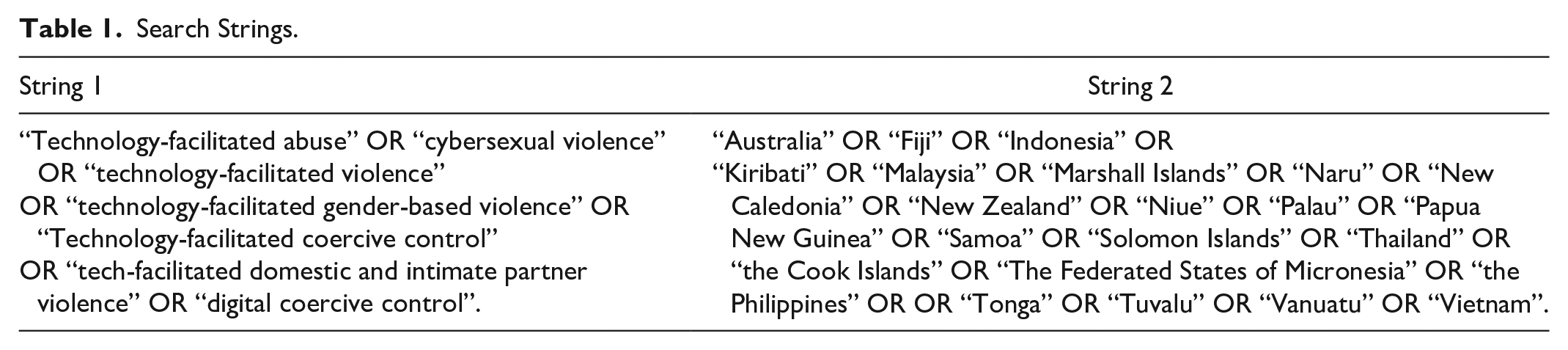
We only included studies written in English, published immediately before and shortly after the COVID-19 pandemic, with dates ranging from January 1, 2019 to July 30, 2024. This decision was made to recognize the emergence of TFV as a growing global challenge, which was exacerbated during the pandemic as a result of social isolation, lockdowns, and forced online communications (see for e.g., Flynn et al., 2024; Powell et al., 2024). Any empirical studies that included respondents below the age of 18 years or did not clearly indicate the respondents’ minimum age were not considered for the review. This is because the trends, characteristics, and challenges in responding to TFV differ when focusing on child victimization as opposed to adult victimization, and the focus for this review was adult experiences of TFV. Details of the inclusion and exclusion criteria are shown in Tables 1 and 2.
Search Strings.
Inclusion Criteria.
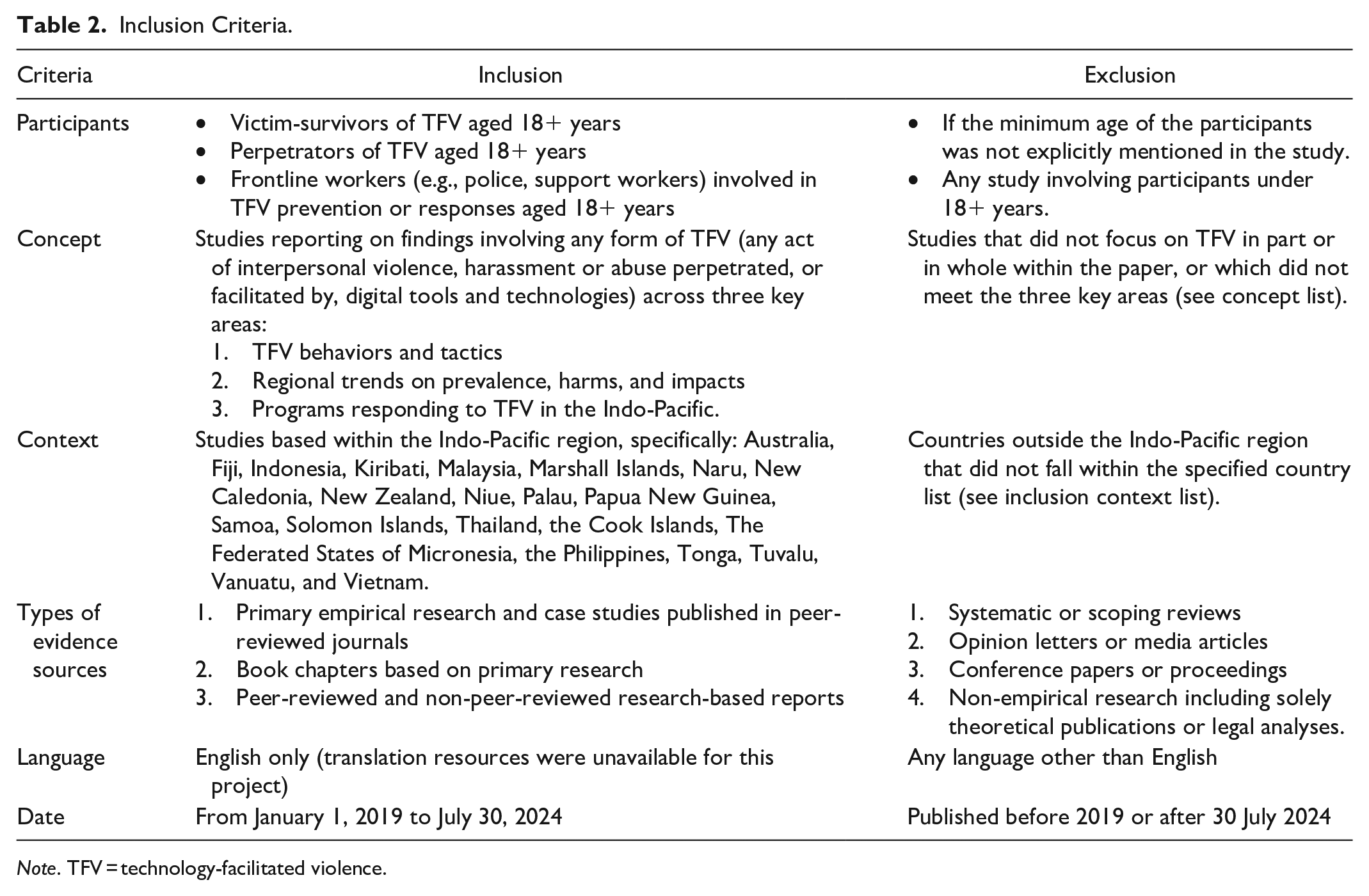
Note. TFV = technology-facilitated violence.
Selecting Relevant Studies
Our initial search identified 8,168 studies from three databases. All of the studies were imported into Covidence (software for managing and streamlining systematic reviews), including 13 research reports from websites searched manually. After removing duplicates, there were 415 papers for screening. All the papers were primarily screened by the first author, with 316 removed based on the title, abstracts, and context (Indo-Pacific) screening.
We imported all 99 remaining studies (see Figure 1) into Covidence, which were then subjected to a full-text reading. Of these, 42 studies were excluded because they were not based on empirical research, and/or they included a focus on people under 18 years, and/or they did not include the three focus areas of the review: TFV behaviors and tactics; regional trends on prevalence, harms, and impacts; and programs responding to TFV in the Indo-Pacific.
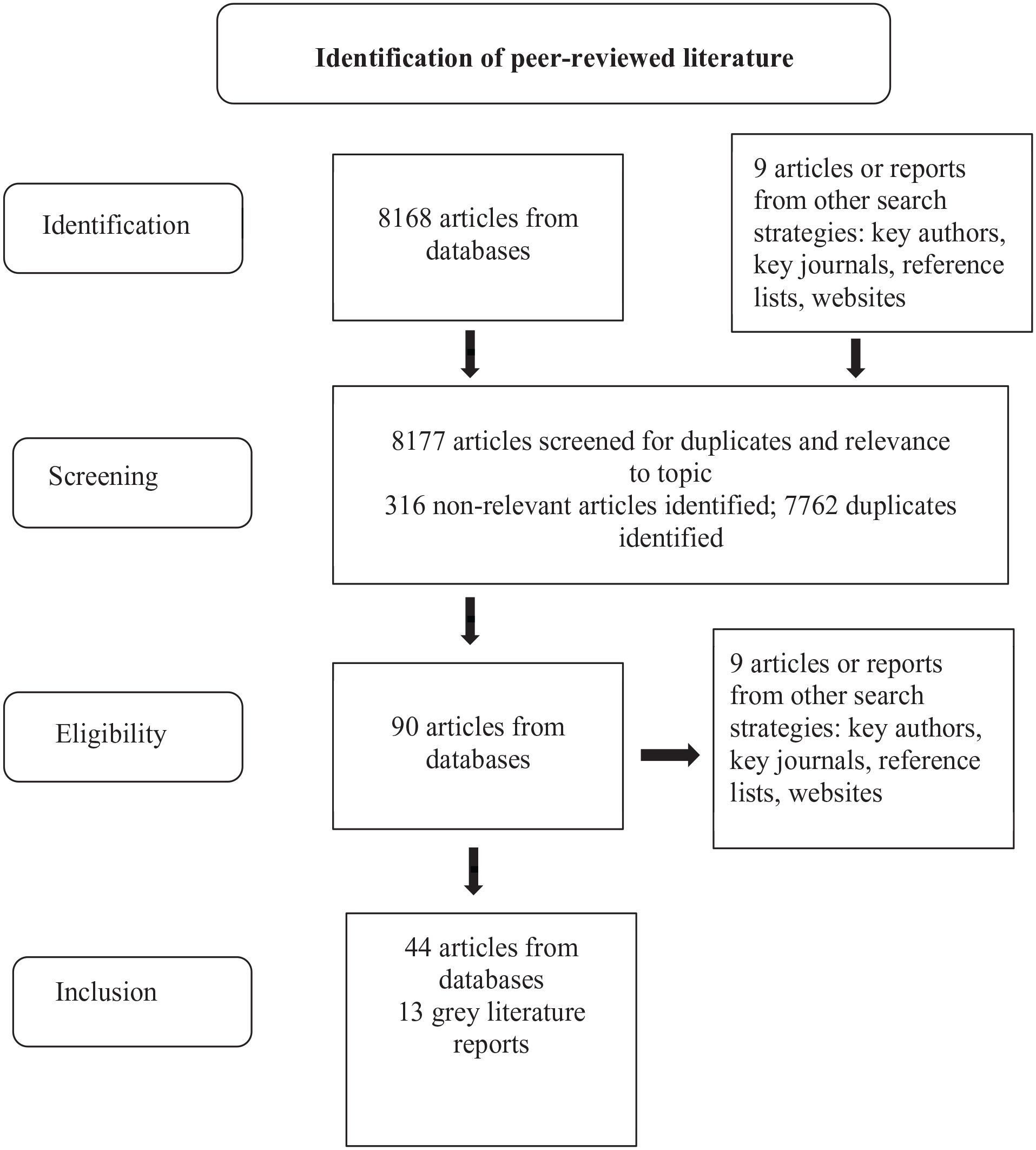
Flowchart of the literature review process.
Charting the Data
Like Bansal et al. (2024), we encountered similar challenges in finding literature specifically focused on countries in the Indo-Pacific outside of Australia and New Zealand. Indeed, the majority of research was focused on Australia and New Zealand, with only four other countries identified in the search: Indonesia, Malaysia, Thailand, and the Philippines. Twenty-four studies used quantitative methods, 16 used qualitative methods, and 17 used mixed-methods.
Study details were collated using Covidence and the following categories: author(s); year of publication; origin/country of origin; aims/purpose; population and sample size within the source of evidence (if applicable); methodology/methods; and key findings relevant to the scoping review questions. The findings were entered into NVIVO (Qualitative data analysis software produced by Lumivero, version 20) for analysis and synthesis. The lead author screened each article based on its title and abstract, and this screening was reviewed by the second author. The full texts of peer-reviewed articles that met inclusion criteria during the title-abstract screening stage were obtained for review, and any conflicts that arose during the full-text screening stage were resolved collectively by the two authors.
Collating, Summarizing, and Reporting the Results
In this final step, we analyzed the included studies to address the four research questions, summarize the key findings, and discuss implications for future research.
Results
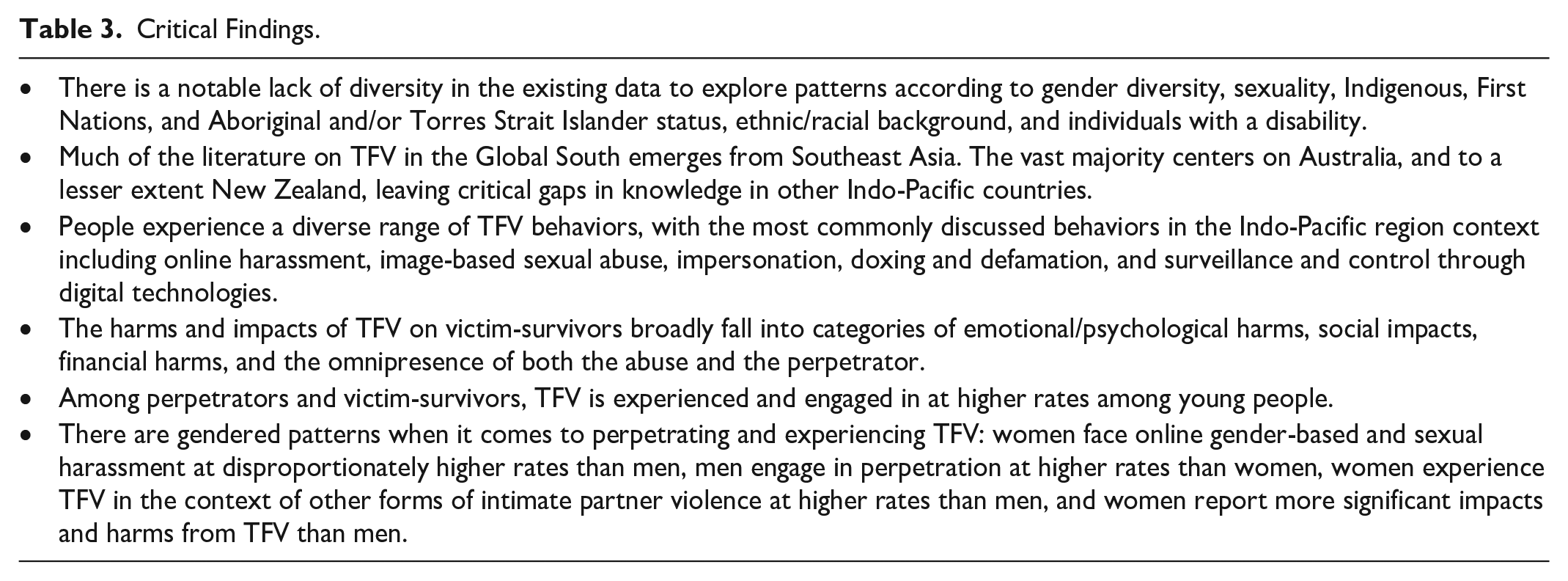
We found a range of patterns and critical knowledge across the studies (see Table 3), which we report over the next sections.
Critical Findings.
Commonly Perpetrated Behaviors and Tactics
TFV across the Indo-Pacific includes a variety of behaviors and tactics perpetrated through digital technologies. The context of TFV also impacts the types of behavior. For example, many studies have found TFV occurring in the context of domestic and family violence including the use of digital technologies to monitor, stalk, and control (Douglas, 2023; Harris & Woodlock, 2023; Irving, 2024), others have found TFV occurring in digital dating contexts, such as the sending of unsolicited sexual or naked imagery, or sexually harassing messages (Harris, 2023; Stardust et al., 2023; Wolbers & Boxall, 2024), and as a form of further social isolation in rural and regional areas, for example by limiting or preventing a person’s access to digital technologies to communicate or connect with others (Harris & Woodlock, 2022a, 2022b; McLachlan & Harris, 2022). Across the studies we reviewed, the most frequently mentioned behaviors were: Online Harassment, Image-Based Sexual Abuse, Impersonation, Doxing, and Defamation, and Surveillance and Control through Digital Technologies.
Online Harassment
In the studies reviewed, online harassment captured a variety of behaviors including: sending insulting messages by text, via phone calls, and in voicemails; persistent and high volumes of text messages and/or phone calls; maintaining unwanted contact (particularly after a relationship ends), including through platforms such as social media, dating apps, and gaming; publicly posting abusive messages on social media (often using pseudonym accounts); using fake profiles to contact victim-survivors; sending abusive gendered and/or sexualized messages (Bellini, 2024; Douglas et al., 2019; Flynn et al., 2021, 2024; Morris et al., 2022; O’Shea et al., 2022).
Image-Based Sexual Abuse
In most of the studies that included image-based sexual abuse (IBSA) as a behavior, IBSA was identified as a commonly perpetrated form of TFV. IBSA involves non-consensually taking, creating, sharing, and/or threatening to share intimate, nude, or sexualized videos or images. Across the studies, this behavior was used to enact emotional abuse, such as humiliation, or control, including through blackmail or sextortion (Brown et al., 2022; Clancy et al., 2023; Douglas et al., 2019; Flynn, Cama, Powell, et al., 2023; Flynn et al., 2024; Flynn, Hindes et al., 2022; Harris & Woodlock, 2021, 2022a, 2022b, 2023; Henry et al., 2019, 2021, 2023; Morris et al., 2022; Powell & Flynn, 2023; Women Leading & Influencing, 2022; Woodlock & Harris, 2022, 2023). IBSA was commonly carried out by intimate partners, former partners, friends, family members, and colleagues (Henry et al., 2023; Powell et al., 2018).
Impersonation, Doxing, and Defamation
Also common across the studies was a pattern of perpetrators using digital technologies to create malicious profiles or fake identities on social media, and using or stealing victim-survivors’ information or photos without permission (Bellini, 2024; Flynn et al., 2024; Harris & Woodlock, 2022a, 2023; Henry et al., 2022; MacDonald et al., 2023; Woodlock et al., 2020). In some studies, this form of abuse was also connected to child custody disputes, whereby perpetrators manipulated the narrative in post-separation parenting apps to “make the victim/survivor look bad, or make themselves look good” (Irving 2024, p. 69). Similar findings were reported by Dragiewicz et al. (2022) who described how “some abusers used technology in a performative type of image management, cultivating a false impression of their involvement in the family and seeking to gather evidence that could be used against mothers in the future” (p. 143).
Surveillance and Control through Digital Technologies
One of the key behaviors detailed in the studies concerned individuals (in most cases, women) being monitored, controlled, and/or having their regular activities tracked or controlled through digital tools and technologies, gaining unauthorized access, or restricting access to a device, digital account, or profile (Flynn, Hindes, et al., 2022; O’Shea et al., 2023; Woodlock et al., 2020b). This behavior was common in both current and former abusive relationships and was also noted in studies focused on women with disabilities, and in domestic and family violence contexts involving children or where the victim-survivor’s immigration or visa status was at risk as a result of separation from an abusive partner (Douglas, 2023; Dragiewicz et al., 2021, 2022; Henry et al., 2022; Woodlock & Harris, 2023).
Regional Trends and Prevalence
Much of the literature on TFV in the Global South emerges from South Asia. For example, there are studies that detail major trends unfolding in India (Sarkar & Rajan, 2023) and Bangladesh (NORC at the University of Chicago and the International Center for Research on Women, 2022). The vast majority of the emerging research specifically on TFV in the Indo-Pacific region identified in our review centered on Australia; the findings discussed below reflect this trend.
The growing prevalence of TFV can be observed in the Indo-Pacific (Harris 2023; Henry et al., 2021; Woodlock et al., 2020b), with regional trends and country contexts influencing how, why, and for whom victimization risk has increased. For example, findings from Australia show that TFV is disproportionately experienced by women (Powell & Flynn 2023; Powell, Flynn, & Hindes, 2022), particularly young women, and gender diverse folk (Flynn et al., 2024; Henry et al., 2021), LGBTQIA+ community members (Powell, Flynn, & Hindes, 2022; Powell et al., 2020), Aboriginal and Torres Strait Islander peoples (Flynn et al., 2024; Powell, Flynn, & Hindes, 2022), people with a disability (Harris & Woodlock, 2021; Wolbers & Boxall, 2024; Woodlock & Harris, 2022, 2023), and immigrants and refugees (Henry et al 2022; Vasil & Segrave, 2024).
Studies also indicate that while TFV is perpetrated by a range of people and genders, the most commonly reported perpetrators of TFV are men (Henry & Umbach 2024; Henry et al., 2019; Powell & Flynn 2023), and current and/or former intimate partners (Flynn et al., 2024; Harris & Woodlock, 2021; McLachlan & Harris, 2022). This reflects a common trend across the region where TFV has been identified as a distinctly gendered social problem (Brown, Flood, & Hegarty, 2022; Flynn, Cama, Powell, & Scott, 2023; Powell & Flynn, 2023). For example, in a nationally representative study of Australian adults, Powell and Flynn (2023) found that “women were more likely than men to experience online sexual coercion, as well as being more likely to experience TFA in the context of a current or former intimate partner relationship, and with the presence of co-occurring abuse from the same perpetrator” (p. 450). Their research also highlights that women victim-survivors are significantly more likely to experience emotional impacts from TFV, compared with male victim-survivors (Powell, Flynn, & Hindes, 2022, p. 29).
The studies revealed some troubling trends in the regulation of TFV. This included a lack of law enforcement training on TFV, which resulted in police not taking victim-survivors seriously, minimizing the harms they experienced, or blaming the victim-survivors for the behavior, and offering ineffective advice for example, telling victim-survivors there are no laws to capture the behavior (Flynn, Cama et al., 2023; Flynn et al., 2023; Woodlock et al., 2020). This issue is compounded by inadequate legal responses to TFV (Douglas, 2023; O’Shea et al., 2022) offering “band-aid solutions” (Flynn et al., 2023, p. 584) that fail to address the root causes of TFV, which can create opportunities for perpetrators to continue their abuse. For instance, there are several legal (and language) barriers that present significant challenges, especially to immigrants and refugees when seeking help to address TFV (Henry et al., 2022; Vasil & Segrave, 2024). These aforementioned issues regarding the regulation of TFV stem from unclear understandings of the issue, and highlight the need for more standardized definitions and approaches for law enforcement, legal officials, and civil society (Bansal et al., 2023).
Harms and Impacts
Most of the studies included some discussion on the harms and impacts of TFV on victim-survivors. Four main themes emerged: Emotional/Psychological Harm, Social Impacts, Financial Harms, and The Omnipresence of the Abuse and the Perpetrator.
Emotional/Psychological Harms
The reported harms and impacts to the psychological and emotional health of victim-survivors included mental health conditions (e.g., depression and general anxiety disorder), reduced confidence and self-esteem, humiliation, and suicidal ideation (Flynn et al., 2021; MacDonald et al., 2023; Woodlock et al., 2020). In Flynn et al.’s (2021) survey of support services stakeholders, participants reported that “significant mental health impacts, including feelings of helplessness, shame, inability to escape and isolation that TFA (technology-facilitated abuse) creates can lead to paranoia, stress, anxiety, depression, PTSD, sleeplessness, and self-harm” (p. 26). While some studies have found similar rates of TFV experienced by men and women, these same studies also report that women were more likely than men to experience harmful emotional impacts associated with their most recent victimization incident (Flynn et al., 2024; Henry et al., 2023; Powell et al., 2018).
Social Impacts
In most studies that reported on the harms of TFV, social impacts were common, including social isolation (both from online and in-person communities), co-occurring abuse impacting children, and safety concerns (Flynn et al., 2024; Harris & Woodlock, 2022b; Harris & Woodlock, 2023; MacDonald et al., 2023; Woodlock, 2020b). For example, in one study of TFV, victim-survivors reported feeling socially isolated, which resulted in restricted access to help-seeking services and feeling pressured to withdraw from public life, and from friends and family (Woodlock, 2020b).
Financial Harms
A key finding in this review was the connection between TFV and financial harms (Flynn et al., 2021; Vasil & Segrave 2024). Impacts included: restricted or denied access to finances, having loans taken out under their name by others (usually partners or ex-partners), and being financially dependent on their partner. In Flynn et al.’s (2021) study, frontline support workers reported that victim-survivors were “financially abused online, with perpetrators controlling finances, hacking into their bank accounts, and taking out loans or using betting companies under their names” (p. 24). In a study conducted with temporary visa holders in Australia, Vasil and Segrave (2024) found that technology is used to control and isolate victim-survivors using financial impacts, such as isolating them “from opportunities to go far from their home or to shop independently, to feed and clothe their children, to access medical care or to be independent of an abusive partner and free from violence” (p.189).
Omnipresence of the Abuse and the Perpetrator
A common finding reported in the studies was the pervasiveness of TFV with victim-survivors, support service workers, and stakeholders each emphasizing the feeling and power of omnipresence created by perpetrators who used technology to enact abuse (Flynn et al., 2021; Harris & Woodlock, 2023; Woodlock et al., 2020). One study described how this sense of omnipresence is created through perpetrators using technology to “invade every aspect of women’s lives: they can use a multitude of channels to breach privacy, monitor, or harass; harm is enacted at any time of day and night and from a distance; perpetrators use technology in a repetitive way” (Woodlock et al., 2020, p. 372). This sense of omnipresence also created a number of psychological impacts, including fear and hypervigilance, with victim-survivors “feeling as though the abuse would never end and they would never be able to escape” (Flynn et al., 2021, p. 23).
Characteristics of Perpetrators and Victim-Survivors
Across the studies, there were a range of common characteristics of perpetrators, behaviors, and victim-survivors that emerged. Among perpetrators and victim-survivors, the research showed that TFV is experienced and engaged in at higher rates among young people. The research also revealed gendered patterns in TFV perpetration and victimization, with most studies showing that while both men and women are impacted by TFV, women face online gender-based and sexual harassment forms of TFV at disproportionately higher rates than men, and men engage in perpetration at higher rates than women. Here, we describe the six main patterns identified across the review: Age, Gender Identity and Sexual Orientation, Aboriginal and/or Torres Strait Islander Peoples, CALD (Culturally and Linguistically Diverse) and Migrant Women, Help-Seeking, and Motivations for Perpetration.
Age
Age-specific differentiation in the experience of TFV was generally higher among young people (Rowse et al., 2020). A national survey of Australian adults found those most likely to have engaged in any lifetime TFV perpetration included two in five young and middle-aged adults (18–44 years) (Powell, Flynn, & Hindes, 2022, p. 9). Similarly, young people were four times more likely to experience any lifetime technology-facilitated abuse (TFA) victimization than older adults (Powell & Flynn, 2023). In a study on TFV perpetration, researchers found that age also impacted on understandings of harm: “for some perpetrators, particularly where they engaged in the abuse when they were younger, they could identify the behavior as wrong now, but not as something they would have recognized as wrong at the time" (Flynn, Hindes, et al., 2022, p. 32).
Gender Identity and Sexual Orientation
The literature indicates certain trends in perpetrator profiles in the Indo-Pacific (focused primarily on Australia and New Zealand). While both men and women are impacted by TFV, women face online gender-based and sexual harassment forms of TFV at disproportionately higher rates compared to men (Clancy et al., 2023; Flynn et al., 2021; Powell, Flynn, & Hindes, 2022; Rowse et al., 2020). Several studies noted that men sometimes disclosed being victim-survivors of TFV (Flynn et al., 2021), but were also less likely to seek help (Flynn et al., 2023). Perpetration was also found to be highly gendered with men more likely than women to engage in TFV behaviors (Harris, 2023; Powell, Flynn, & Hindes, 2022; Woodlock & Harris, 2023). Other studies found that gendered roles and stereotypes supported perpetration, particularly in regional and rural areas (Flynn et al., 2021; Harris & Woodlock, 2022a). For example, in smaller rural, close-knit communities where gendered attitudes permeate around the more traditional roles of women and men, or where there are less supporting views of domestic violence, research has found victim-survivors have more challenges reporting violence and receiving support, and TFV behaviors are more likely to be minimized or brushed off (Harris & Woodlock, 2022b). Further to patterns in prevalence, a study focused on digital dating found that young men tended to misconceive the severity of the impact of TFV, particularly on women (Brown, Flood, & Hegarty, 2022).
Across the scoping review, LGBTQIA+ persons were found to face disproportionately high rates of online harassment in Australia (Flynn et al., 2021; Powell et al., 2020), as well as in Indonesia, Malaysia, Thailand, and the Philippines (Bansal et al., 2023). One study focused on the help-seeking behaviors of those experiencing TFV in Asia found that “the LGBTQIA+ community is subjected to “cyber homophobia,” with ingrained conservative social systems used to justify a lack of social and legal support” (Bansal, Leisure, Rezwan, & Pal, 2023, p. 357). There are varying patterns of victimization within LGBTQIA+ communities, for example, bisexual women are more likely to experience digital abuse than gay/lesbian/straight women, and bisexual men are more likely to experience digital abuse than gay or straight men (Powell et al., 2020). One study found that transgender participants were more likely to experience digital harassment and abuse than female or male participants (Powell et al., 2020, p. 212). Consistently, research across the scoping review found that the LGBTQIA+ communities face greater barriers to accessing social support systems that facilitate help-seeking behavior, and have challenges in accessing police support due to histories of discrimination (Bansal, Leisure, Rezwan, & Pal, 2023; Flynn et al., 2023).
Aboriginal and/or Torres Strait Islander Peoples
Findings suggest that those who identify as Indigenous (in an Australian context), Aboriginal, and/or Torres Strait Islander experience high rates of TFV across multiple forms, including online harassment (Powell, Flynn, & Hindes, 2022), IBSA (Henry et al., 2019), and digital dating abuse (Wolbers & Boxall, 2024). These findings are mirrored in Carlson and Day’s (2021) study of digital dating in an Aboriginal community, in which they describe how “participants reported proactively mitigating sexual racism on dating apps, for instance, some identified themselves as Aboriginal on their profiles using emojis, photos and statements” (p. 191). Another study with practitioners found that “the way that perpetrators used technology affected Aboriginal women in specific ways because of the importance placed on community and connection within Aboriginal culture” (Woodlock et al., 2020, p. 374).
CALD and Migrant Women
Consistent with global trends, the review indicated that CALD and migrant women disproportionately experience TFV (Henry et al., 2022; Vasil & Seagrave, 2024; Woodlock 2020b, p. 3). One study found that CALD women are particularly vulnerable due to immigration visas, with abusive partners likely to have greater control over finances and technology access (Douglas et al., 2019). In addition, CALD and migrant women face greater barriers to accessing support due to language and legal barriers (Henry et al., 2022). For example, when perpetrators use social media campaigns to smear their partners/ex-partners, often the published social media community standards and reporting mechanisms are in English, which can make it difficult for victim-survivors to seek help (Bansal, Leisure, Rezwan, & Pal, 2023).
Help-Seeking
The most commonly reported form of help-seeking support identified across the scoping review was through family and friends (Flynn, Cama, et al. 2023; Harris & Woodlock 2021; Woodlock & Harris, 2023). The second most common was through victim-survivor support services (Flynn et al., 2021; Flynn, Hindes, et al., 2022). When it came to help-seeking via police and the courts, both victim-survivors and practitioners felt that women were often not believed or did not take the threat seriously, which was also reflected in studies where victim-survivors reported seeking help outside of the police and courts (Flynn, Hindes, et al., 2022; Woodlock & Harris, 2023).
Motivations for Perpetration
The studies identified several key motivations for perpetrating TFV, including anger (Flynn, Hindes, et al., 2022), control (Flynn et al., 2021), punishment and humiliation (Henry et al., 2023), sexual gratification (Henry et al., 2023), shame (Flynn, Hindes, et al., 2022), teasing (Clancy et al., 2023), creating fear (Flynn, Hindes, et al., 2022), causing distress (Flynn et al., 2021), and seeking praise (Clancy et al., 2023). These motivations are important to understand in order to develop appropriate prevention and education messaging on the harms of TFV.
Programs Responding to TFV in the Indo-Pacific
A common recommendation offered in the studies was the development and deployment of programs that specifically targeted preventing and recognizing TFV as a distinct form of violence. All of the studies that examined programs responding to TFV were geographically located in Australia. While there are programs currently running that focus on TFV beyond Australia, there is a dearth of rigorous academic evaluations of programs outside the Australian context, and in the broader Indo-Pacific region.
The vast majority of programs evaluated focused on practitioner perspectives and experiences. These studies suggested that while practitioner training does include some TFV-specific information, recommendations for additional training include information “on how to recognize TFA [technology-facilitated abuse], which laws apply to TFA and how to respond to disclosures of TFA” (Flynn, Hindes, et al., 2022, p. 36). One of the key issues surrounding programming was funding. One study noted that the services running these programs are often “overburdened and under-resourced . . . [and] rely on tenuous governmental funding or sporadic contributions from the private sector” (Harris & Woodlock, 2022b, p. 141). In a study exploring the experiences of TFV among women with intellectual disability and/or cognitive disability, the researchers found that often social media guides were inaccessible in their current formats, for example, Facebook did not have clear guidance on how to block people (Harris & Woodlock, 2021).
The majority of the programs evaluated focused on “train the trainer” models, wherein training is provided to those tasked with supporting victim-survivors. Several studies highlighted the need for programs that focus on education that improves the ability of community members such as friends and family (who are often the first point of disclosure for victim-survivors) to be effective first responders to disclosures of TFV (Powell, Flynn, & Hindes, 2022). Another study that focused primarily on IBSA similarly found that education aimed at improving community understanding of the harms of this form of violence may not only assist in helping and supporting victim-survivors, but also discourage perpetration (Henry et al., 2019, p. 14). Another paper called attention to the “need for a whole of community programs including frontline workers, online safety agencies, education, policy, legal and academic experts, law enforcement, and the technology companies” (Henry & Umback, 2024, p. 8).
Discussion
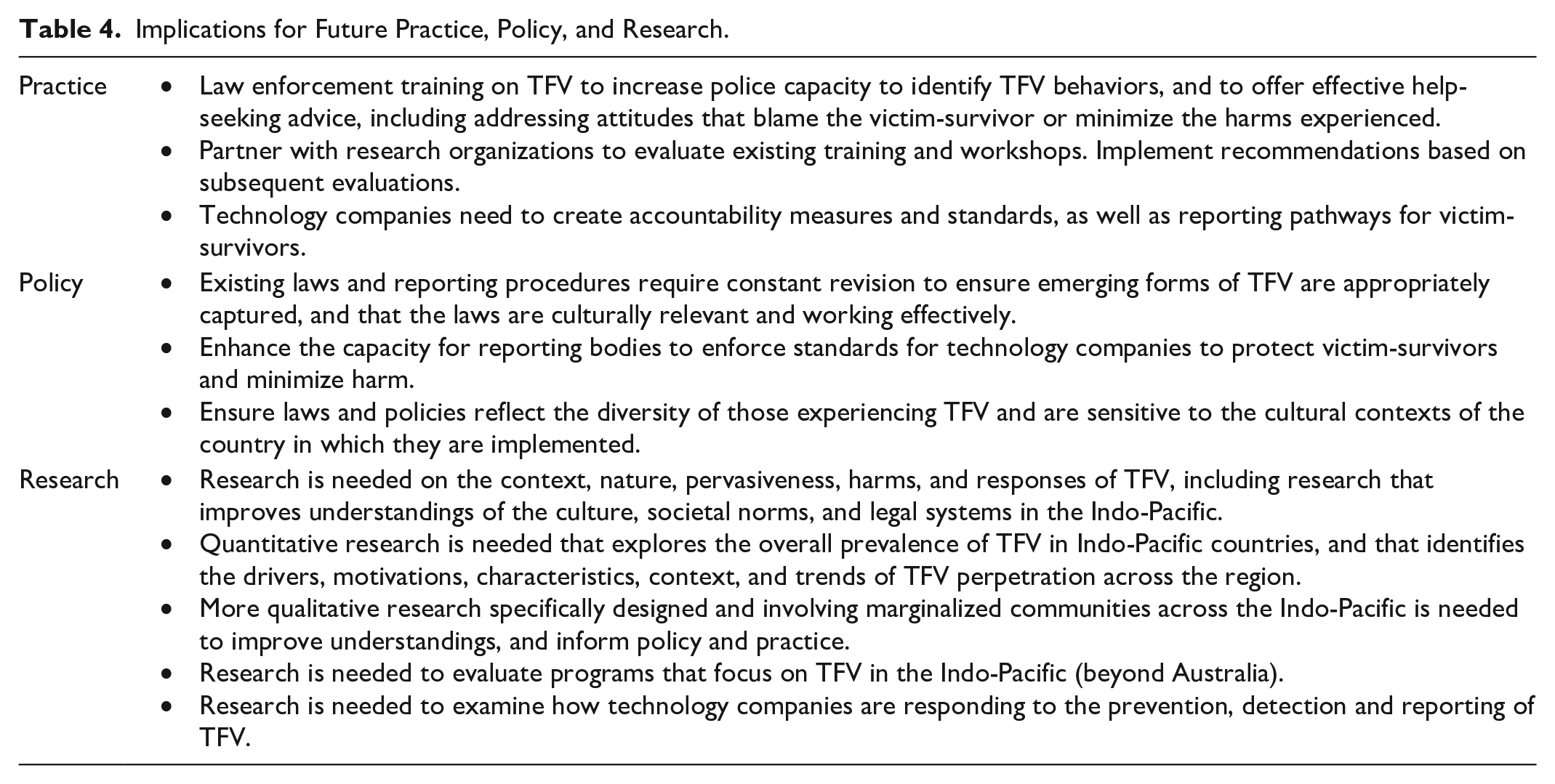
In this review, we have provided a comprehensive overview of the commonly perpetrated behaviors, regional trends, and characteristics of victim-survivors and perpetrators of TFV, from the existing literature in the Indo-Pacific region. To the best of our knowledge, this is the first scoping review that explores this form of violence across the Indo-Pacific. Despite TFV being a global problem, we found that the existing research is concentrated primarily on Australia and New Zealand (to a lesser extent), with little to no literature on the Pacific Islands. Given this dearth of evidence, we recommend that future research in this field prioritizes the broader Indo-Pacific region, including the Pacific Islands that are not receiving necessary scholarly attention (see Table 4 for an overview of implications of the findings for future practice, policy, and research).
Implications for Future Practice, Policy, and Research.
Across our review, we observed a wide range of terminologies and definitions used to describe TFV, including, among others, cyberbullying, online harassment, technology-facilitated intimate partner violence, and digital coercive control. The variety of terminology and concepts used to describe TFV comes primarily from the ever-evolving and rapidly changing nature of technology and the abusive behaviors it enables. This variety in language and definitions of TFV in the Indo-Pacific also mirrors broader global trends in the literature on this issue (Bailey & Burkell, 2021; Bailey et al., 2021). The multiplicity of terms and definitions used to describe this phenomenon in the literature creates some challenges in measuring prevalence, impacts, and creating appropriate policy, as Messing et al. (2020) argue, the field requires a clear framework to better understand and address TFV. Our findings similarly suggest that there is a need for more standardized terminology to address the existing conceptual differences, and enable clearer comparability across studies. Future research also needs to be more specific about defining the different forms of TFV, as these also vary between studies.
Consistent with global trends, we found that women experience higher rates and harms from TFV compared to men. There are also clear intersectional patterns that intersect with and expand from gender. For example, victimization rates for people who identify as LGBTQIA+, Aboriginal and/or Torres Strait Islander peoples, have a disability, or come from a CALD or migrant background are disproportionately higher than people outside of these marginalized groups (Flynn et al., 2024; Powell, Flynn, & Hindes, 2022; Powell et al., 2020; Vasil & Segrave, 2024). These increased rates of violence are indicative of broader socio-political and cultural norms, and the gendered digital divide which often magnifies their vulnerability. For instance, research focused on migrant and refugee women shows how these communities are particularly vulnerable to TFV due to their dependency on their partners, which enables abusers to control the technology that connects the victim-survivor with friends and family abroad (Henry et al., 2022, p. NP12648). We also found that age was a common factor in both perpetration and victimization, with young people more likely to experience, engage in, and hold less harm-minimizing attitudes toward TFV victimization than middle and older aged people (Powell & Flynn, 2023; Powell, Flynn, & Hindes, 2022; Rowse et al., 2020). This finding is not particularly unusual given the higher uptake of digital technologies among younger cohorts, including in the Indo-Pacific region, and patterns in age victimization and perpetration rates are likely to shift as younger generations move further into adulthood, but retain the same patterns of technology use (Flynn et al., 2024).
Another key finding was that the harms and impacts of TFV are significant and long-lasting. The review suggests that the impact is particularly felt by women in more substantive ways than men, including in negative psychological health (e.g., depression, anxiety, and stress), emotional health (e.g., fear, humiliation, and paranoia), and social isolation (e.g., withdrawing from public and from friends and family) (Flynn et al., 2021; MacDonald et al., 2023; Woodlock 2020b). Another finding about the impacts of TFV was its use in child custody and domestic and family violence contexts (Dragiewicz et al., 2022), as well as the increasing use of technology in facilitating financial harms (Flynn et al., 2021; Vasil & Segrave, 2024). A constant sense of fear and omnipresence facilitated through technology was also a key finding, demonstrating the potential long-lasting harms of TFV in the region (Flynn et al., 2021; Harris & Woodlock, 2023; Woodlock et al., 2020).
There is an urgent need to address prevention and responses to TFV, especially in light of the ubiquity of digital devices and the persistent development of new technologies. Our study has revealed a need for prevalence studies capturing both perpetration and victimization in the Indo-Pacific, more in-depth qualitative studies with victim-survivors, perpetrators, and frontline responders, to better understand how TFV is experienced and responded to in the broader Indo-Pacific region (beyond Australia and New Zealand), as well as a need to develop a consensus among key stakeholders around TFV definitions and typologies (including government and legal actors, technology companies, civil societies, academia, and advocacy groups). These steps are necessary to increase the accuracy of reporting TFV, comparing prevalence data and regional trends, and developing culturally safe and gender-sensitive programs and policies to prevent and respond to this specific form of violence.
Limitations
While this review provides insights into TFV in the Indo-Pacific, several limitations must be acknowledged. The peer-reviewed, empirical research on TFV in Indo-Pacific countries outside Australia and New Zealand is small, and this review is subsequently based primarily on research from within these countries, as opposed to the broader Indo-Pacific region. This may compromise the validity of the findings, especially since the review includes grey literature, where the quality has not been reliably peer-assessed. The limited number of peer-reviewed studies highlights the need for more scholarly research in Indo-Pacific countries, including the Pacific Islands, to explore TFV behaviors, experiences, and trends comprehensively. We also limited our review to studies published in English, thereby potentially excluding relevant research in other languages, which may provide more insight into experiences outside the Western-dominant context.
Furthermore, many of the studies failed to capture diverse demographics, including gender-diverse, trans and non-binary folks, LGBTQIA+ communities, Indigenous, First Nations and Aboriginal and/or Torres Strait Islander peoples, and other marginalized groups, which, research globally indicates, are most likely to experience TFV. The absence of these voices in the research may skew the findings of this review, underrepresenting perspectives and experiences. Addressing these limitations in future research will be crucial to developing a more nuanced and comprehensive understanding of TFV across the Indo-Pacific.
Conclusion
This review sought to identify existing empirical research on TFV across the Indo-Pacific. We found that despite a significant global interest in TFV research, particularly over the last 10 years, there is limited research specifically examining TFV experiences, harms, impacts, trends, and responses in the Indo-Pacific region outside Australia and, to a lesser extent, New Zealand. In addition, there was a lack of intersectionality represented in the existing data to explore patterns according to gender diversity, sexuality, Indigenous and First Nations status, ethnic/racial background, and individuals with a disability.
The findings of this review demonstrate that TFV is a global problem and one that is only likely to continue without sufficient responses, research, and education toward its prevention. The findings have the potential to inform future policy, practice, and research. In particular, there is a need to focus future research on the Indo-Pacific region, including exploring gendered and cultural social norms that may impact how this form of violence is experienced and responded to. Educational messaging and interventions are also vital in addressing TFV in the region, but these must be informed by evidence-based research that engages with diverse demographic groups.
Overall, this review demonstrates that there is a pressing need for evidence-based, peer-reviewed, empirical research in the Indo-Pacific that captures the views of non-binary, trans, and gender-diverse folk, Indigenous, First Nations, and Aboriginal and/or Torres Strait Islander peoples, and various religious and ethnic groups (among others), which identifies their support needs. The research should be co-designed with these groups to ensure that it aligns with the lived experiences of TFV and is culturally sensitive and engaged. Finally, with new forms of TFV emerging regularly, such as the proliferation of sexualized deepfake abuse (Flynn, Powell, et al., 2022), there is a need for research that captures the diversity of TFV experiences to assist in the prevention, support, and responses to this global problem.
Footnotes
Acknowledgements
We would like to acknowledge that the research that informs this article is based on a Scoping Study led by Professor Asher Flynn, to inform the work of the Harnessing for VAW Prevention workstream of the Australian Research Council Centre of Excellence for the Elimination of Violence against Women.
Author’s Note
Emma Quilty and Asher Flynn are also affiliated to ARC Centre of Excellence for the Elimination of Violence Against Women, Melbourne, Victoria, Australia.
Data Availability
The datasets generated during and/or analyzed during the current study are available from the corresponding author on reasonable request.
Declaration of Conflicting Interests
The author(s) declared no potential conflicts of interest with respect to the research, authorship, and/or publication of this article.
Funding
The author(s) disclosed receipt of the following financial support for the research, authorship, and/or publication of this article: This research was conducted by the Australian Research Council Centre of Excellence for the Elimination of Violence against Women (Project Number CE230100004) by the Australian Government.
Ethics Approval
This article does not contain any studies with human or animal participants.
