




Abstract
This article presents the first systematic review and meta-analysis of the prevalence and correlates of different forms of intimate partner violence (IPV) among women and men in Mexico. To identify studies, a comprehensive search strategy was developed and executed across 11 databases (Academic Search Complete, APA PsycInfo, CINAHL, Cochrane CENTRAL, Embase, International Bibliography of the Social Sciences, LILACS, MEDLINE, SciELO, Sociological Abstracts, Web of Science). From the 1,746 studies screened, 155 full-text articles were reviewed, and this systematic review included 27 studies involving 249,557 participants to determine the prevalence of physical, psychological, sexual, threats, and other forms of IPV, according to gender and other sociodemographic characteristics. Overall IPV prevalence was 16.4%, with significant differences across pregnant and non-pregnant women. Physical IPV prevalence was 14.7%, revealing higher rates in men (29.5%) compared to women (14.2%). Psychological IPV prevalence was 27.3% and sexual IPV was at 6.6%, with differences across evaluation periods. Threats and other IPV forms showed a prevalence rate of 14.2% and 21.5%. Meta-regression analyses included gender, education, marital status, rural residency, pregnancy, age, and evaluation period. This study demonstrates that IPV is a critical public health concern in Mexico, impacting both women and men. It shows the vulnerability of rural residents, youth, and pregnant women. However, understanding IPV complexities in Mexico requires nuanced considerations of demographic and situational contexts. Urgent initiatives from municipal, state, and federal governments are needed to combat IPV, focusing on prevention and support for affected individuals.
Keywords
Introduction
Intimate partner violence (IPV) is a global public health issue associated with a host of physical and psychological consequences (Stubbs & Szoeke, 2022; White et al., 2023). IPV is defined by behaviors directed at a partner or an ex-partner with the intention of causing physical, sexual, or psychological/emotional harm (World Health Organization [WHO], 2013). A recent meta-analysis reported a global lifetime prevalence rate of 37.5% in women over the age of 16, with psychological violence being the most prevalent form (27%), followed by physical (15.7%) and sexual IPV (10.1%) (White et al., 2023). To date, most studies have focused on IPV perpetrated against women, making it difficult to estimate global prevalence rates of IPV among men. However, the available studies have found that between 2% and 32% of men have experienced IPV in their lifetime (Cénat et al., 2022; Tarzia et al., 2020).
Research on IPV has mostly been conducted in high-income countries, yet studies have shown that Low and Middle-Income Countries, like Mexico, have two to three times higher rates of IPV (White et al., 2023). A recent meta-analysis, conducted with data collected between 1998 and 2016 in 29 countries in the Americas (including Mexico), estimated the prevalence rates of physical and sexual IPV among women to be between 14% and 58%, showing that there is a difference between countries (Bott et al., 2019). This study also estimated a lifetime prevalence rate of 24.6% and 9.5% for IPV experienced in the last year from the current partner. Although this study sheds light on the experience of IPV among Mexican women, it did not estimate other forms of IPV, such as psychological violence and threats. As psychological violence is one of the most frequently reported forms of IPV, with severe repercussions on an individual’s mental health, it is essential to determine a representative prevalence of psychological IPV in Mexico (White et al., 2023). Furthermore, the study neglected to include statistics for men, while it has been shown that men can also be the victims of IPV (Tarzia et al., 2020). The current systematic review and meta-analysis aim to investigate the prevalence of IPV in Mexico.
Mexican Cultural Context
Mexico is a multicultural country with both indigenous and the populations resulting from the colonization context (e.g., White and Black). These influences are reflected in many, although not all, familial and interpersonal relationships. Research has identified four cultural values held by Mexicans and other individuals from Latin America that have been found to be both risk and protective factors for IPV (Avellaneda Rodriguez, 2021). They are familismo, fatalismo, respeto, and machismo/marianismo. Familismo refers to the importance of the family unit. In Mexico, which is a collectivist society, the family unit also includes the extended family (Frías & Agoff, 2015). Family members are expected to support each other and to put the needs of the family before theirs. Studies have found that although this value can be useful in terms of social support, it can also be a barrier to disclosure for women victims of IPV (Frías & Agoff, 2015). Consequently, a woman may have trouble leaving an unhealthy or violent relationship to keep the family whole and avoid potential repercussions from other family members. Fatalismo is the belief in the concepts of fate or destiny, which is closely related to religiosity. While this concept can be associated with higher resilience in the context of adverse events, it can also lead to a lack of action when faced with a challenging situation. In the case of IPV, an individual victim of IPV can decide to stay in the relationship because of destiny, instead of seeking help (Frías & Agoff, 2015). This is supported by an empirical study that found a negative association between fatalism and help-seeking behaviors (Cardenas, 2023). The third value, Respeto, refers to the concept of showing respect to authority figures, including parents and older family members. In the context of traditional gender roles, authority can be represented by a male partner, which can make it harder for women who subscribe to these values to identify violent behaviors (Avellaneda Rodriguez, 2021). Finally, Machismo and Marianismo refer to traditional gender expectations. On the one hand, men are expected to be strong, assertive, and exert control; on the other hand, women are expected to be nurturing, submissive, and sacrifice themselves for the good of the family. Adhering to these gender roles can perpetuate gender inequality and influence both genders’ attitudes and tolerance toward IPV (Mancera et al., 2017; E. Terrazas-Carrillo & Sabina, 2019). While Machismo has often been associated with IPV perpetration, it could also hinder men victims of IPV from disclosure since being a victim could be perceived as a sign of weakness and, consequently not masculine. Although these values are still present in Mexico, it is worth noting that they are evolving, partly because of reforms resulting from the work of feminist movements (Htun & Jensenius, 2022).
IPV in Mexico: A Social-Ecological Theoretical Framework
Estimated rates of IPV in Mexico vary between 4% and 98% (Aguerrebere et al., 2021; Baker et al., 2005; Castro & Ruíz, 2004; Cervantes-Sánchez et al., 2016; Diaz-Olavarrieta et al., 2001; Díaz-Olavarrieta et al., 2007; Doubova Dubova et al., 2007; Esquivel-Santoveña et al., 2020; Frías & Agoff, 2015; Guzmán-Rodríguez et al., 2021; Javier-Juárez et al., 2021; Natera Rey et al., 2021; Ramírez Rodríguez & Patiño Guerra, 1997). This wide range could be due to methodological differences (definition, measures, data collection method) and sample size. However, conducting a rigorous evaluation of study quality will allow a more accurate estimation of IPV in Mexico. While studies have identified risk factors for IPV in Mexico, such as alcohol consumption, pregnancy, being a victim of interpersonal violence during childhood, and level of education, it is necessary to aggregate the results to estimate the strength of these relationships, given some studies have found mixed results for socioeconomic characteristics like education level and employment (Paat et al., 2017). Moreover, the last systematic review that included Mexican data, was conducted before 2019 and only included data on women (Bott et al., 2019). However, with growing evidence that IPV also affects men, it is necessary to assess the prevalence in men (Baker et al., 2005; Esquivel-Santoveña et al., 2020). Furthermore, with the rise of IPV following the COVID-19 pandemic both in Mexico and worldwide (Brink et al., 2021; Rivera Rivera et al., 2023), an updated review is essential.
However, it is important to consider all these factors in an interconnected and interdependent way to provide a better explanation of IPV. Indeed, all these aspects show that IPV is the consequence of multidimensional factors that deserve to be studied in an integrated way. This approach is proposed by the social-ecological theoretical framework of IPV, which provides an understanding of violence through four interconnected factors (individual, relationship, community, and sociocultural) (Hardesty & Ogolsky, 2020; Heise, 1998; Ler et al., 2020; Wood et al., 2023). These different levels make it possible to study IPV by taking into account factors and predictors related to the victimization of both women and men, including individual factors, relationship types, typology of relationships, family, community, societal, and cultural factors surrounding IPV in Mexico. Since 1998, this theoretical framework has been used in various societies to study IPV, including in Mexico (Hardesty & Ogolsky, 2020; Thulin et al., 2022; Willie et al., 2020). In the present study, by assessing both lifetime and last year’s assessment of IPV and victimization among both men and women, the present systematic review and meta-analysis will be able to draw a more accurate picture of prevalence and factors related to IPV, considering the socioecological context of Mexico.
Mexican Sociopolitical Context
Mexico has a complex socioeconomic context, where economic stability and poverty cooccur (United Nations Development Programme [UNDP], 2014). Indeed, access to resources depends on ethnicity, gender, and geographical location. Resource inequality is associated with elevated stress and violent behaviors (Cools & Kotsadam, 2017). For example, a study conducted among indigenous Mexican women found that being involved with an unemployed partner was associated with a two-fold risk of being a victim of severe IPV (Valdez-Santiago et al., 2013). Although, there has been an increase in women’s participation in the economy, a 34% gap remains, with traditional gender roles remaining a major obstacle (International Labor Organization [ILO], 2019). Indeed, studies have reported that Mexican women did more unpaid work, such as domestic labor, than Mexican men (Organization for Economic Co-operation and Development [OECD], 2012). While economic independence is often seen as a protective factor for IPV victimization among women, studies in Mexico have found mixed results (Vyas & Watts, 2009). One study found that having stable employment was associated with an elevated risk of IPV among women living in rural areas, while precarious employment was associated with more IPV among urban women (Canedo & Morse, 2021). This underscores the importance of understanding how geographical location influences the rates of IPV.
In the last three decades, with the increasing pressure of feminist movements, Mexico has undergone a change in legislation regarding women’s rights and IPV. One of the first pivotal legislation was the criminalization of marital rape in 1997 in Mexico City, which allowed women to cite this reason as a ground for divorce (Frías, 2010). Despite these advancements, Mexico saw a rise in femicides, which increased pressure on the government to implement laws and reduce impunity (Htun & Jensenius, 2022). In 2007, the General Law for Women’s Access to a Life Free of Violence was enacted (García-Del Moral, 2020; Htun & Jensenius, 2022). This study found a decreasing trend in positive attitudes toward male control and IPV victimization. Conversely, this study found an increasing rate of formal and informal reports of IPV. This suggests the emergence of a societal shift, which can influence both lifetime and last year’s prevalence of IPV.
Between 2008 and 2016, the Mexican government made significant changes in divorce laws (García-Ramos, 2021). Before this period, divorce required proving fault, making it particularly difficult in cases of psychological IPV. However, the introduction of unilateral divorce laws allowed spouses to request a divorce without the consent of the other. Furthermore, laws were implemented that mandated compensation for individuals who had been responsible for domestic labor and had acquired less wealth. These changes have been associated with significant increase in divorce rates (García-Ramos, 2021; Hoehn-Velasco & Penglase, 2021). Notably, a study conducted among abused women revealed that 65% of the sample-initiated divorce proceedings (García-Ramos, 2021). This suggests that easier access to divorce enables women to leave relationships before the escalation of violence, consequently reducing rates of IPV. On the other hand, post-separation IPV rates may have increased as a result (García-Ramos, 2021). Although research on this topic is limited, one study found no association between the implementation of divorce laws and IPV prevalence, while a longitudinal study discovered a positive association with IPV victimization (García-Ramos, 2021; Hoehn-Velasco & Silverio-Murillo, 2020). Given the potential impact of these laws on IPV occurrences, and considering their varied implementation across Mexico, it is necessary to aggregate the results and investigate familial risk factors associated with IPV prevalence. In addition, many women who divorced are judged at a social level, which leaves them negatively marked for life. The majority of divorced women are left economically helpless, although they do not work because one of their socially designated “gender role” is to take care of their children.
Therefore, conducted among studies carried out in Mexico, this systematic review and meta-analysis aimed to (a) estimate the prevalence of different forms of IPV; (b) estimate the differences in prevalence of different forms of IPV between men and women; (c) explore moderators associated to IPV for both women and men (gender, age, employment status, education, marital status, being pregnant, residence area, period of evaluation).
Methods
Protocol and Registration
This systematic review has been registered with PROSPERO (# CRD42023418121) and no similar reviews found. This review adhered to the 2020 Preferred Reporting Items for Systematic Reviews and Meta-analyses (PRISMA) guidelines to ensure comprehensive reporting of the findings (Page et al., 2021).
Studies Identification
An experienced research librarian drafted, developed, and implemented a search strategy to find pertinent published articles in Academic Search Complete (EBSCOhost), APA PsycInfo (Ovid), CINAHL (EBSCOhost), Cochrane CENTRAL (Ovid), Embase (Ovid), International Bibliography of the Social Sciences (ProQuest), LILACS (via the VHL Regional Portal), MEDLINE (Ovid), SciELO, Sociological Abstracts (ProQuest) and Web of Science (Clarivate). The strategy was informed by other previous reviews on IPV (Hameed et al., 2020; Kalra et al., 2021; Rivas et al., 2016). The research librarian drafted the initial strategy, incorporating subject headings and keywords specific to MEDLINE (Ovid), which was subsequently reviewed and refined with feedback from other co-authors. Following the Peer-Review of Electronic Search Strategy guidelines, another librarian peer-reviewed the strategy (McGowan et al., 2016). The final strategy was executed on September 15, 2022. The search did not use any database limits related to language, date, or other options. The complete search strategy is available in Supplemental Material File 1. Citations found through the database searches were imported into Covidence, an online tool used to manage various steps of a systematic review’s screening phases. Duplicate references were identified and removed once imported into Covidence.
Steps for Selection
The studies underwent a rigorous selection process using Covidence™. All studies were imported into the platform, and careful identification and removal of duplicates were performed. The titles-abstracts and full text of the articles were examined by a pair of authors (OO, RB, DGV, and JMC). All conflicts were resolved by two authors to reach a consensus (WPD and JMC).
Selection Criteria
Articles that met the following inclusion criteria were included in the review: (a) evaluating IPV among Mexican individuals; (b) assessing the risk and protective factors of IPV in Mexican individuals; (c) conducted on Mexican individuals living in Mexico; (d) written in English or Spanish; (e) empirical studies. The papers that did not meet these criteria were excluded from the review.
Quality Assessment
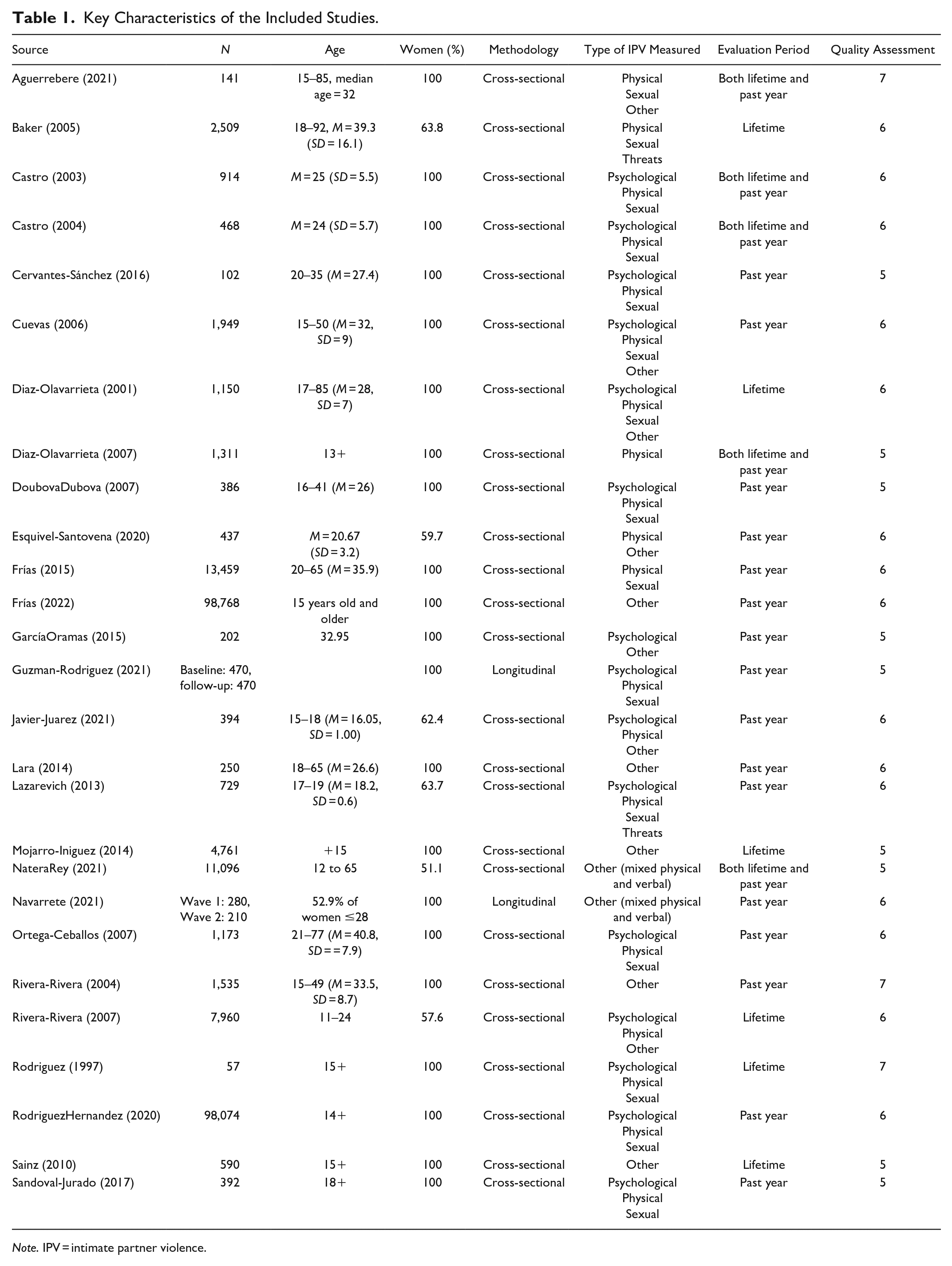
The JBI Critical Appraisal Checklists for Qualitative and Cross-sectional Research were used to evaluate the methodological quality of the quantitative studies, including potential bias, conduct, and analysis (Moola Sandeep et al., 2020). Eight criteria were used for the assessment, including the adequacy of the sample size, the appropriateness of the sample frame, the description of participants and setting, and the recruitment procedure. Each criterion was evaluated using a specific question. For each criterion met, a single point was attributed (Cénat et al., 2022). A score was derived for each article based on the addition of points for each criterion. Inclusion in the review required a minimum of 5 points. The quality assessment was conducted independently by two authors (OO and RB), and validated by a third author (JMC). The results of the quality assessment are presented in Table 1.
Key Characteristics of the Included Studies.
Note. IPV = intimate partner violence.
Data Extraction
The authors worked collaboratively, utilizing Microsoft Office Excel to extract data from the 27 retained articles. A pair of authors independently extracted data and subsequently compared their respective findings to ensure accuracy and consistency. The extracted information was then compiled and presented in a tabular format. The extracted data encompassed the name of authors, year of publication, sample characteristics (age, prevalence of women), methodology, evaluation period (lifetime vs. last year), and type of IPV measured (psychological, physical, sexual, threat, etc.). More information is presented in Table 1.
Statistical Analysis
A random-effects meta-analysis was conducted to estimate the pooled prevalence of the different forms of IPV. The measured outcome variable was the prevalence of IPV including physical, psychological, sexual, threats, and other forms of IPV. The total pooled prevalence of any form of IPVs was also computed. The proportions were transformed using the Freeman-Tukey double arcsine transformation to stabilize the variance (Freeman & Tukey, 1950). The statistical heterogeneity was tested using I2 statistics. The I2 values of 25%, 50%, and 75% are regarded as low, moderate, and high inconsistencies across studies, respectively (Higgins et al., 2003). To explore heterogeneity between studies, a series of subgroup analyses and meta-regressions were conducted. Subgroup analyses were on evaluation period (lifetime vs. past year), gender (women vs. men), and pregnancy status (pregnant vs. non-pregnant). Moderators in the meta-regression included quality assessment, publication year (below 2010, 2010 and above), evaluation period, mean age, demographic composition (proportion of women), level of education (proportions of individuals with no education, primary education, high school education, and undergraduate education), marital status (proportion of married individuals), employment status (proportion of employed individuals), and residential settings (proportion of individuals in rural residency). The groups and moderators were extracted according to the information provided in the studies. All statistical analyses were performed in STATA/SE 16.1.
Results
Study Characteristics
The PRISMA flow diagram of the systematic review search process is presented in Figure 1. In total, 27 studies with a sample size of 249,557 (Min N = 57; Max N = 98,768) participants were included in the meta-analysis. Mean (SD) quality assessment was 5.8 (0.64) with a minimum and maximum of five and seven, respectively. Overall, 19 studies reported the prevalence of physical IPV (Aguerrebere et al., 2021; Baker et al., 2005; Castro & Ruíz, 2004; Castro et al., 2003; Cervantes-Sánchez et al., 2016; Cuevas et al., 2006; Díaz-Olavarrieta et al., 2001, 2007; Doubova Dubova et al., 2007; Esquivel-Santoveña et al., 2020; Frías & Agoff, 2015; Guzmán-Rodríguez, 2021; Javier-Juárez et al., 2021; Lazarevich et al., 2013; Ortega-Ceballos et al., 2007; Ramírez Rodríguez & Patiño Guerra, 1997; Rivera-Rivera et al., 2007; Rodríguez Hernández & Esquivel-Santoveña, 2020; Sandoval-Jurado et al., 2017), 15 studies reported the prevalence of psychological IPV (Castro & Ruíz, 2004; Castro et al., 2003; Cervantes-Sánchez et al., 2016; Cuevas et al., 2006; Díaz-Olavarrieta et al., 2007; Diaz-Olavarrieta et al., 2001; Doubova Dubova et al., 2007; García Oramas & Matud Anzar, 2015; Guzmán-Rodríguez et al., 2021; Javier-Juárez et al., 2021; Lazarevich et al., 2013; Ramírez Rodríguez & Patiño Guerra, 1997; Rivera-Rivera et al., 2004, 2007; Rodríguez Hernández & Esquivel-Santoveña, 2020; Sandoval-Jurado et al., 2017), 16 studies reported the prevalence of sexual IPV (Aguerrebere et al., 2021; Baker et al., 2005; Castro & Ruíz, 2004; Castro et al., 2003; Cervantes-Sánchez et al., 2016; Cuevas et al., 2006; Díaz-Olavarrieta et al., 2001; Doubova Dubova et al., 2007; Frías & Agoff, 2015; Guzmán-Rodríguez, 2021; Lazarevich et al., 2013; Ortega-Ceballos et al., 2007; Ramírez Rodríguez & Patiño Guerra, 1997; Rodríguez Hernández & Esquivel-Santoveña, 2020; Sandoval-Jurado et al., 2017), three studies reported the prevalence of threats (Baker et al., 2005; Frías & Agoff, 2015; Lazarevich et al., 2013), and 14 studies reported other forms of IPV (Aguerrebere et al., 2021; Cuevas et al., 2006; Diaz-Olavarrieta et al., 2001; Esquivel-Santoveña et al., 2020; Frías, 2022; Javier-Juárez et al., 2021; Lara, 2014; Lazarevich et al., 2013; Mojarro-Iñiguez et al., 2014; Natera Rey et al., 2021; Navarrete et al., 2021; Rivera-Rivera et al., 2004; Tiburcio Sainz et al., 2010). Studies characteristics are presented in Table 1.
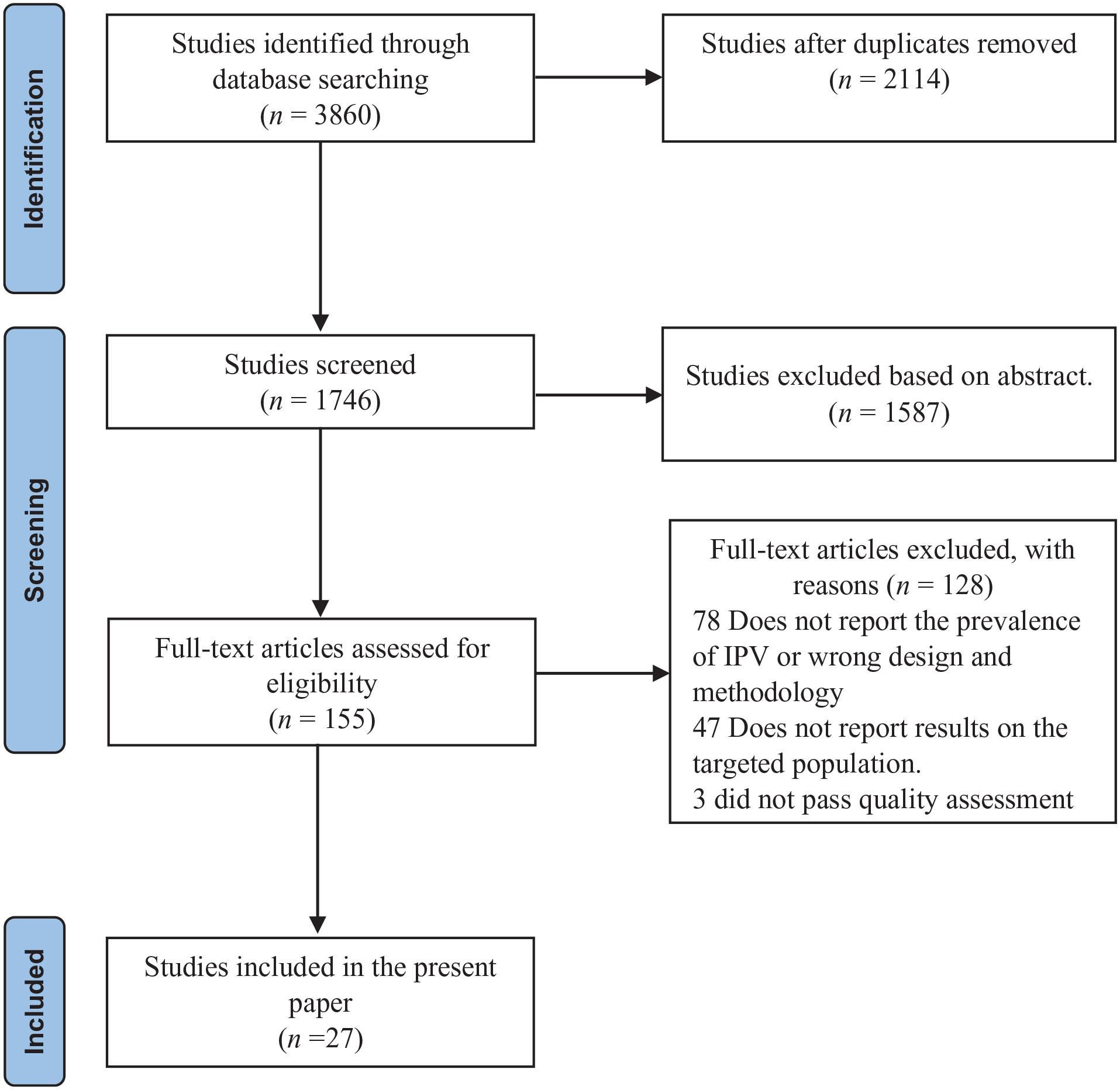
Preferred Reporting Items for Systematic Reviews and Meta-analyses flow diagram of the systematic review search process.
Total Pooled Prevalence of IPV
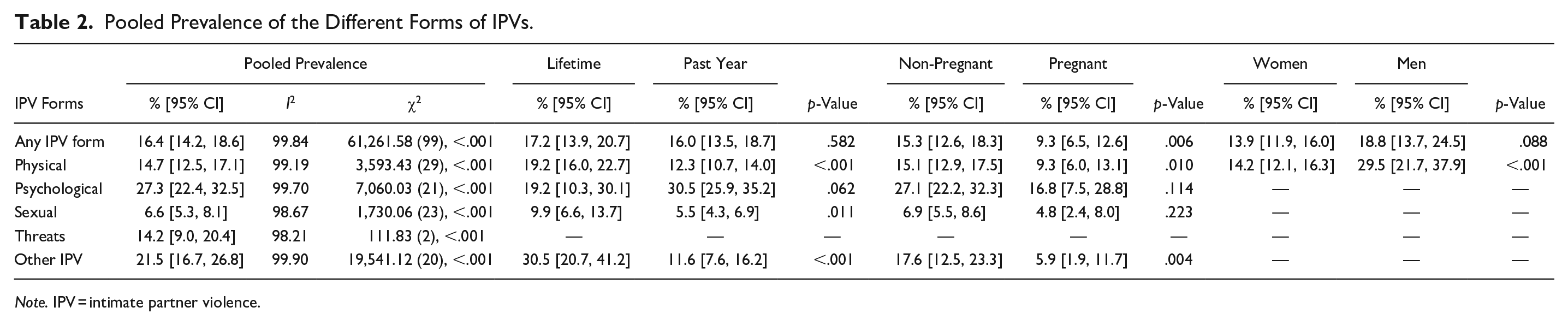
The pooled prevalence of any form of IPV was 16.4% (95% CI [14.2%, 18.6%]; Table 2; Figure 2). A high heterogeneity among studies (I2 = 99.84) was observed. Two studies (Frías, 2022; Rodríguez Hernández & Esquivel-Santoveña, 2020) had the highest sample size compared to other studies. To this reason, we excluded them from the analysis and compared the between-study variance (τ2). Results showed that the between-study variance was smaller in the analysis with all studies (τ2 = .089) compared to the analysis without two studies with larger sample size (τ2 = .094), indicating that the true effects of the analysis with all studies were more similar compared to the analysis without the two studies with larger sample. No statistical differences between evaluation periods (p = .582; Table 2) or gender (p = .088; Table 2) were found. Non-pregnant women (15.3% [12.6%, 18.3%] exhibited higher prevalence than pregnant women (9.3%, 95% CI [6.5, 12.6]; Table 2). Meta-regression results (Table 3) showed that the no education proportion was positively associated with the prevalence estimates (B = 1.85, p = .002) while the high school proportion was negatively associated with the prevalence estimates (B = −0.44, p = .005). The proportion of women in the samples was also negatively associated with the prevalence estimates (B = −0.27, p = .006), suggesting lower prevalence estimates among the studies with a higher proportion of women participants. Results also showed that being married was negatively associated with the prevalence of psychological IPV (B = −0.23, p = .002), indicating that studies with a higher proportion of married participants were associated to lower prevalence estimates. Moreover, the rural proportion was positively associated with the prevalence estimates (B = 0.37, p < .001). Publication year, evaluation period, quality assessment score, age, job status, primary education, and undergraduate education were not significantly associated with the prevalence of any IPV (Table 3).
Pooled Prevalence of the Different Forms of IPVs.
Note. IPV = intimate partner violence.
Meta-Regression Results for Different Characteristics of the Studied Population.
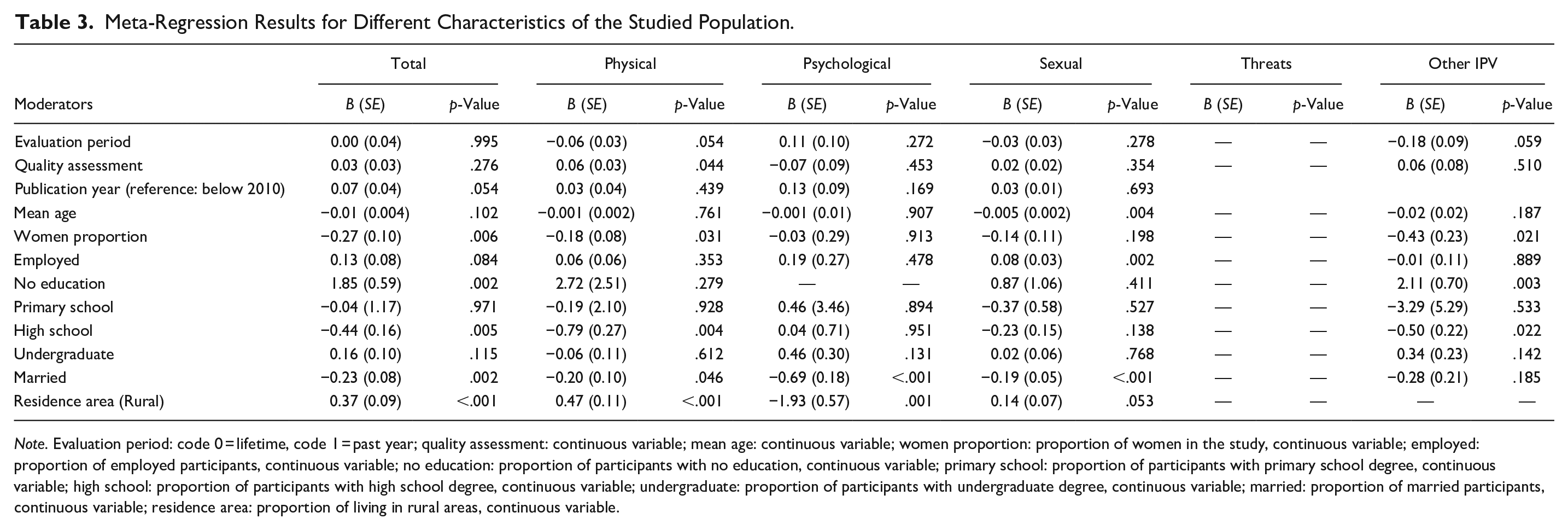
Note. Evaluation period: code 0 = lifetime, code 1 = past year; quality assessment: continuous variable; mean age: continuous variable; women proportion: proportion of women in the study, continuous variable; employed: proportion of employed participants, continuous variable; no education: proportion of participants with no education, continuous variable; primary school: proportion of participants with primary school degree, continuous variable; high school: proportion of participants with high school degree, continuous variable; undergraduate: proportion of participants with undergraduate degree, continuous variable; married: proportion of married participants, continuous variable; residence area: proportion of living in rural areas, continuous variable.
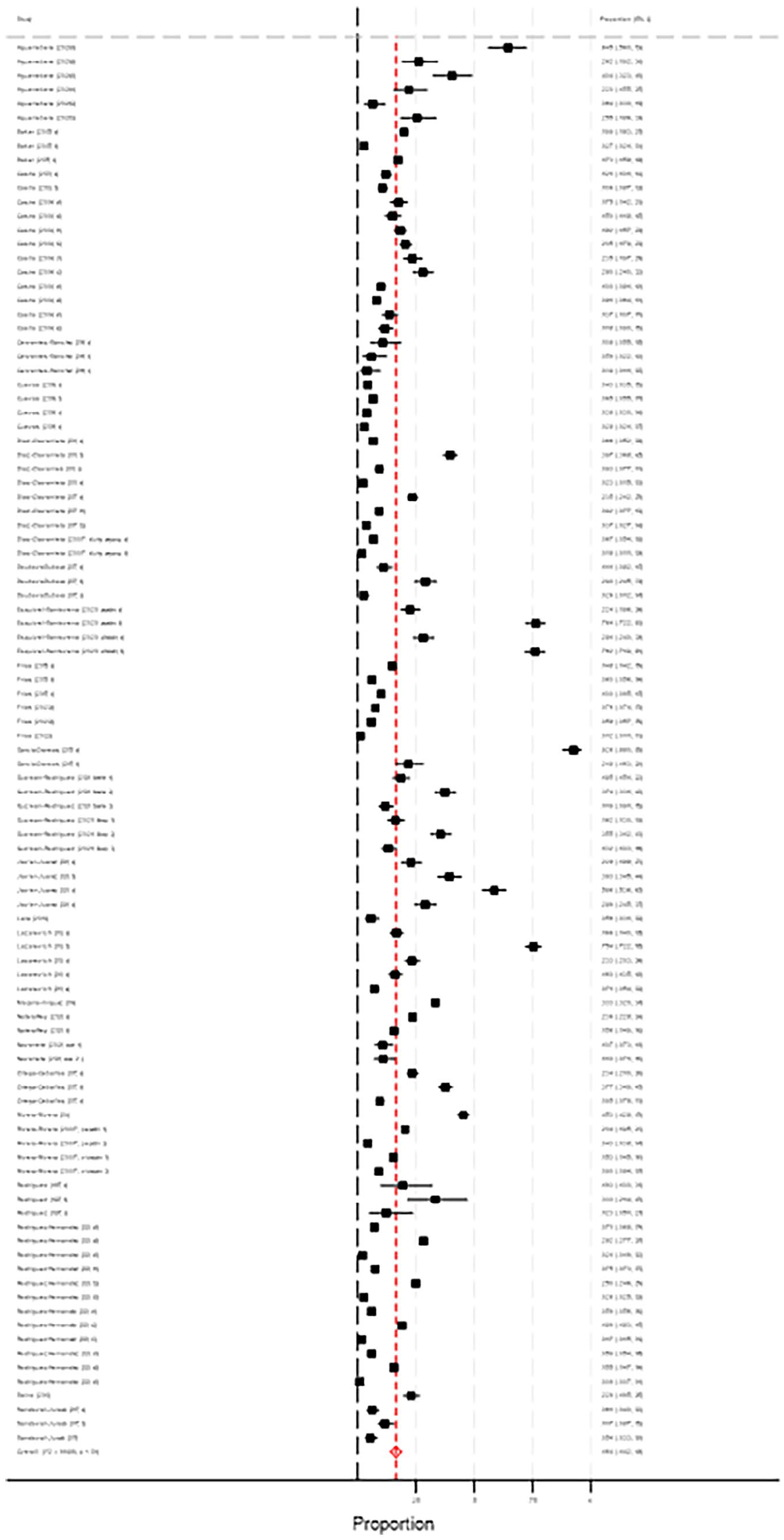
Forest plot of pooled prevalence of any intimate partner violence.
Physical IPV
The pooled prevalence of physical IPV was 14.7% (95% CI [12.5%, 17.1%]; Figure 3). A high heterogeneity among studies (I2 = 99.19) was observed. The results showed that the prevalence estimates were significantly different between the evaluation periods (p < .001), with the lifetime prevalence of physical IPV being higher compared to past year prevalence (Table 2). A significant group difference between men and women was found (p < .001; Table 2); indicating higher prevalence among men (29.5%, 95% CI [21.7%, 37.9%]) compared to women (14.2%, 95% CI [12.1, 16.3]). Due to this significant result and significant result regarding evaluation periods, we conducted a follow-up analysis to test whether gender differences were related to evaluation periods or not. Accordingly, gender differences were tested in studies that reported lifetime and past year, separately. Results showed no significant differences (p = .151) in the lifetime prevalence of physical IPV between men (25.2%, 95% CI [18.9%, 32.0%]) and women (18.7%, 95% CI [13.3%, 24.8%]). Likewise, no significant gender differences (p = .125) were observed in the past year prevalence between men (34.5%, 95% CI [7.8%, 68.2%]) and women (12.4%, 95% CI [10.5%, 14.4%]).
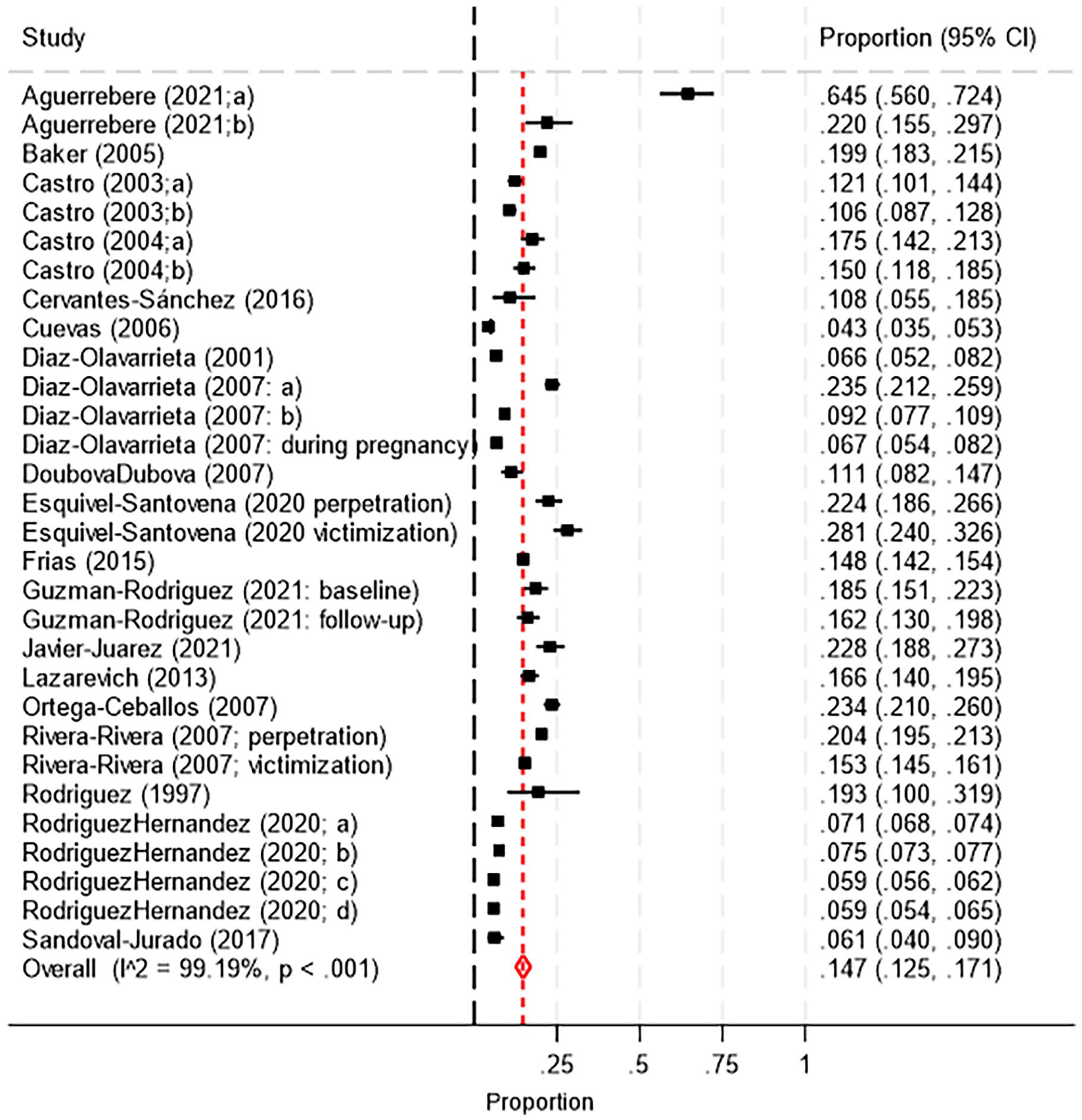
Forest plot of pooled prevalence of physical intimate partner violence.
Moreover, non-pregnant women (15.1% [12.9%, 17.5%]) exhibited higher prevalence than pregnant women (9.3%, 95% CI [6.0, 13.1]; Table 2). Meta-regression results (Table 3) showed that quality assessment was positively associated with the prevalence of physical IPV (B = 0.06, p = .044). The proportion of women in the samples was also negatively associated with the prevalence estimates (B = −0.18, p = .031), suggesting lower prevalence estimates among the studies with a higher proportion of women participants. Moreover, the high school proportion was negatively associated with the prevalence estimates (B = −0.79, p = .004). The proportion of being married was also negatively associated with the prevalence estimates (B = −0.20, p = .046). Also, the rural proportion was positively associated with the prevalence estimates (B = 0.47, p < .001).
Psychological IPV
The pooled prevalence of psychological IPV was 27.3% (95% CI [22.4%, 32.5%]; Figure 4). A high heterogeneity among studies (I2 = 99.70) was observed. Prevalence estimates were not statistically different between the evaluation periods (Table 2) and pregnancy status (Table 2). Meta-regression results (Table 3) showed that being married was negatively associated with the prevalence of psychological IPV (B = −0.69, p < .001), indicating that studies with a greater proportion of married participants exhibited lower prevalence estimates. Moreover, the rural proportion was negatively associated with the prevalence estimates (B = −1.93, p = .001).
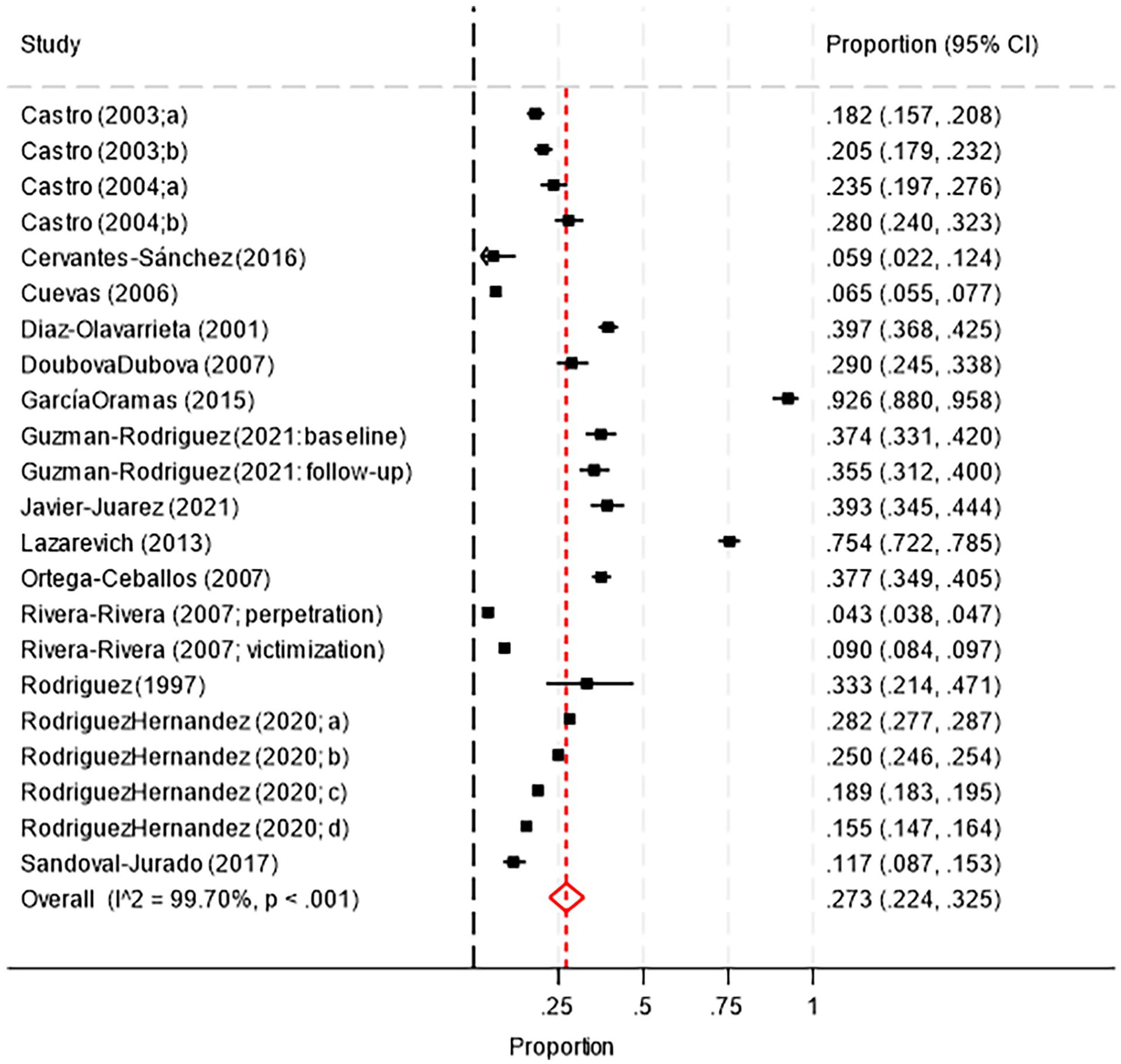
Forest plot of pooled prevalence of psychological intimate partner violence.
Sexual IPV
The pooled prevalence of sexual IPV was 6.6% (95% CI [5.3%, 8.1%]; Figure 5). A high heterogeneity among studies (I2 = 98.67) was observed. Prevalence estimates were significantly different between evaluation periods (p = .011; Table 2), where lifetime prevalence of sexual IPV (9.9%, 95% CI [6.6, 13.7]) was higher compared to past year prevalence (5.5%, 95% CI [4.3, 6.9]). No difference between pregnancy status was found (Table 2). Meta-regression analyses (Table 3) showed that being employed was positively associated with the prevalence of sexual IPV (B = 0.08, p = .002) and mean age (B = −0.005, p = .004) and being married (B = −0.19, p < .001) was negatively associated with the prevalence estimates.
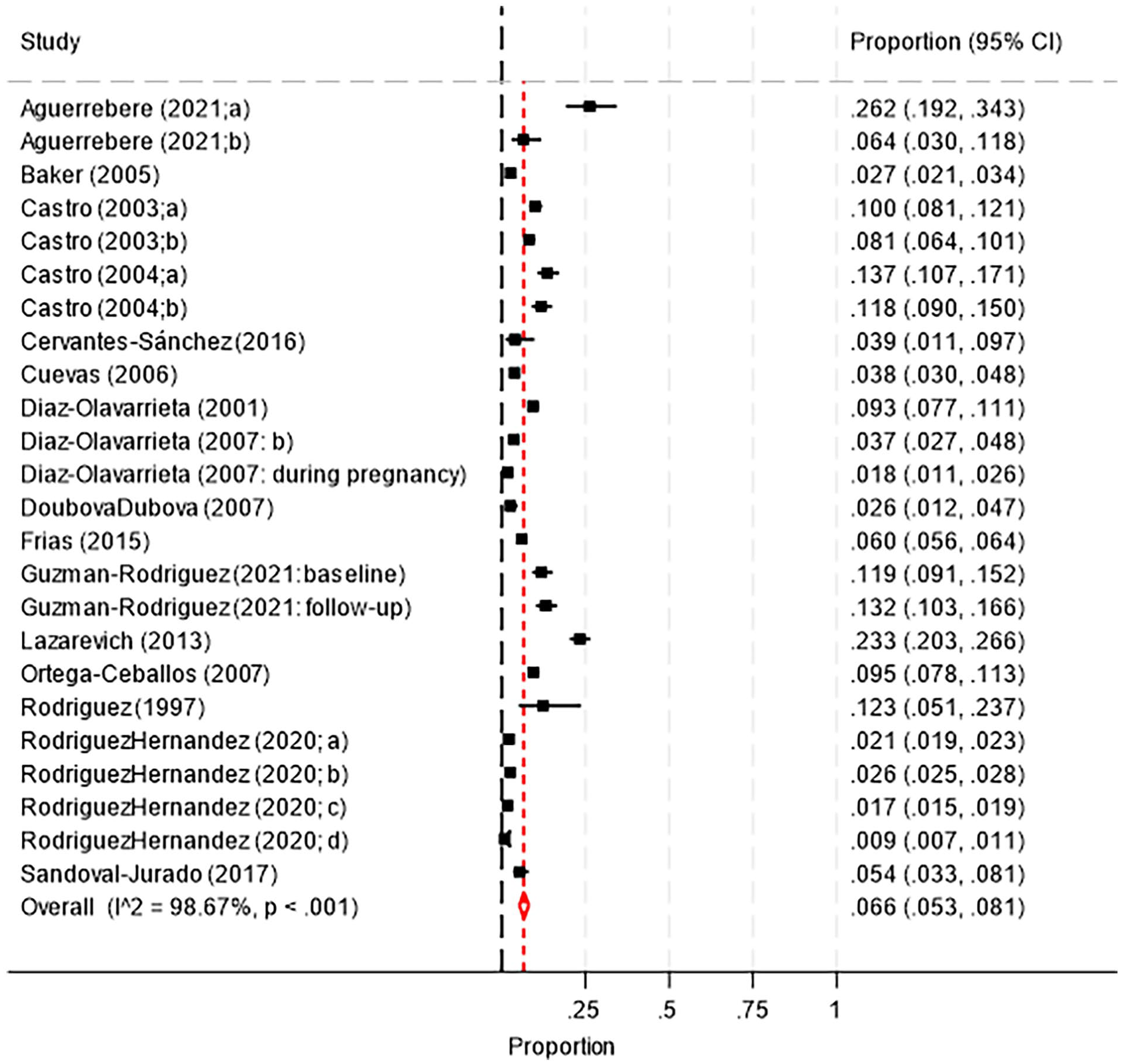
Forest plot of pooled prevalence of sexual intimate partner violence.
Threats IPV
The pooled prevalence of threats was 14.2% (95% CI [9.0%, 20.4%]; Figure 6). A high heterogeneity among studies (I2 = 98.21) was found. Due to having only three studies, no subgroup analysis was performed.
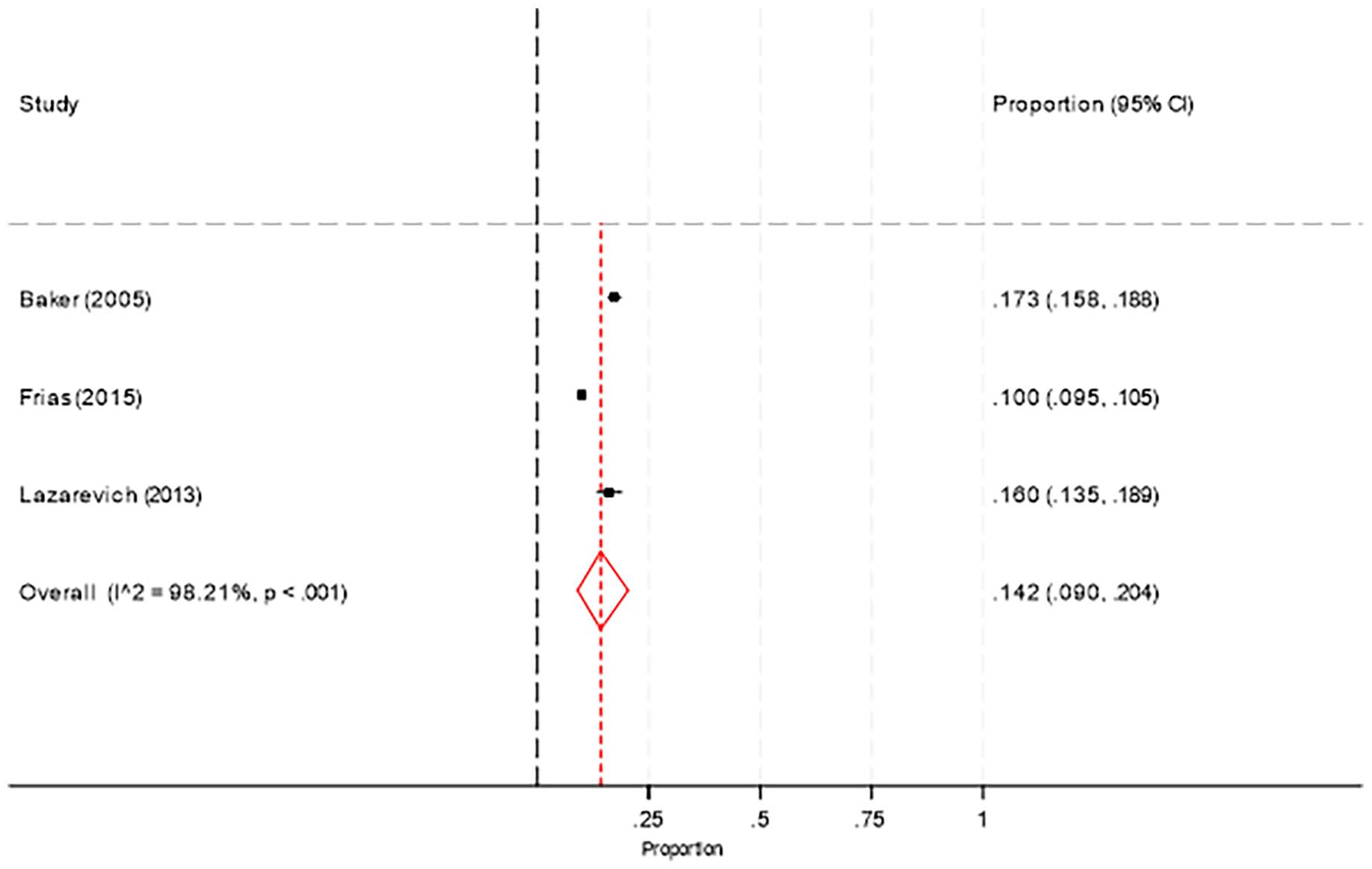
Forest plot of pooled prevalence of threats as intimate partner violence.
Other Forms of IPVs
Other forms of IPVs included controlling behaviors, economic violence, abuse involving weapons (threats or physical), situational couple’s violence, intimate terrorism, and control/surveillance. In addition, some studies have indicated any IPV or reported both verbal and physical or physical and sexual in the same category, so they were considered as “other.” The pooled prevalence of other forms of IPVs was 21.5% (95% CI [16.7%, 26.8%]; Figure 7). A high heterogeneity among studies (I2 = 99.90) was found. Prevalence estimates were significantly different between evaluation periods (lifetime = 30.5%; past year = 11.6%; p < .001; Table 2). Moreover, non-pregnant women (17.6%, 95% CI [12.5%, 23.3%]) reported a higher prevalence of other IPVs compared to pregnant women (5.9%, 95% CI [1.9%, 11.7%]; Table 2). Meta-regression analyses (Table 3) showed that the proportion of women in the samples (B = −0.43, p = .021) was negatively associated with the prevalence estimates. Results also showed that having no education was positively associated with the prevalence estimates (B = 2.11, p = .003) while having high school education was negatively associated with the prevalence estimates (B = −0.50, p = .022).
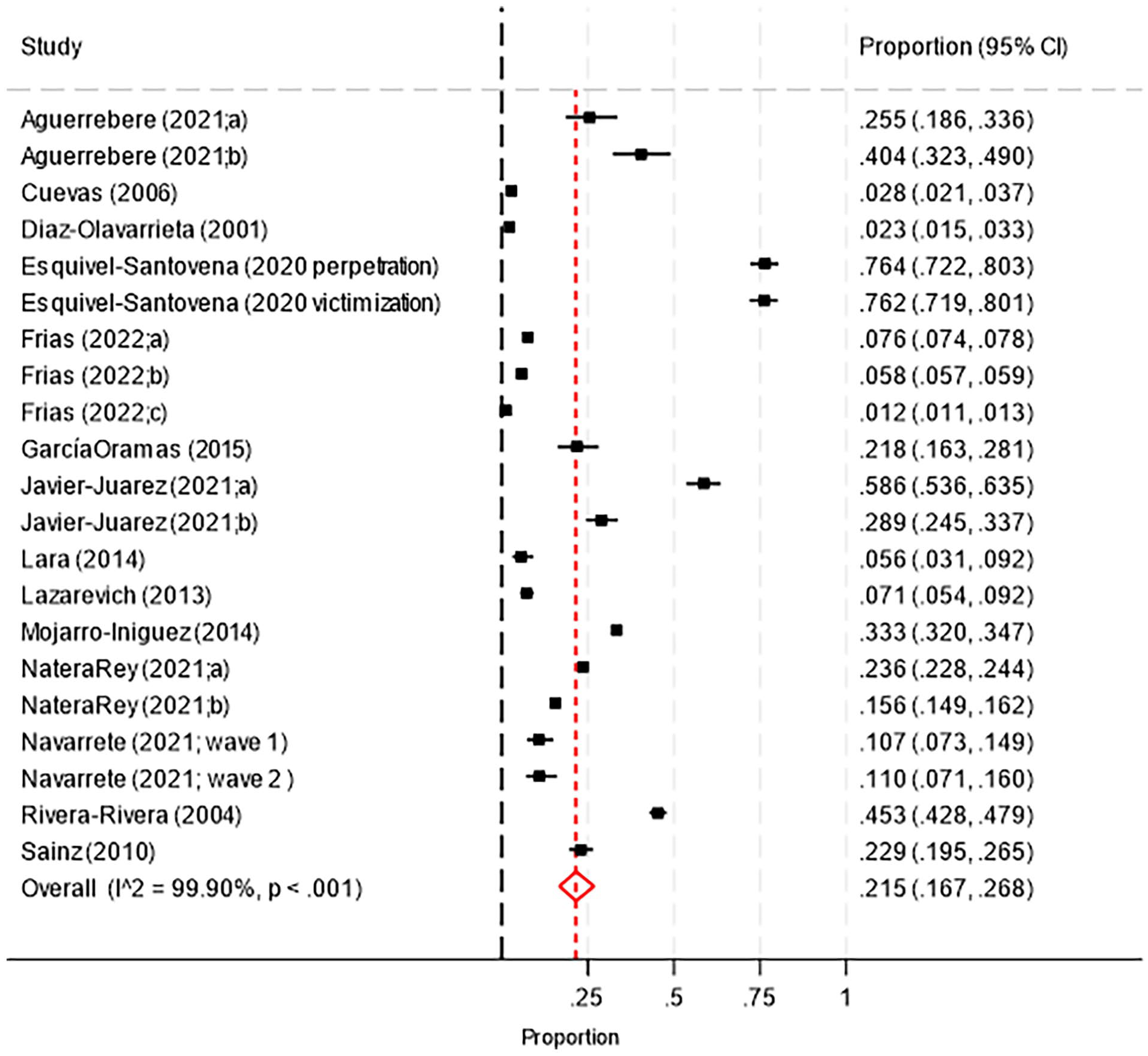
Forest plot of pooled prevalence of other intimate partner violences.
Discussion
Prevalence of Different Forms of IPV
We conducted the first systematic review on factors related to IPV in Mexico using a socioecological theoretical framework allowing to consider its related individual, family, community, societal, and cultural dimensions. The first objective of this study was to estimate the prevalence of different forms of IPV in Mexico. The results show that around one in six individuals (16.4%) report having been victims of any form of IPV. With more than one in four people (27.5%), results showed that psychological violence is the form of IPV most often experienced by Mexicans, while sexual violence is the least experienced (6.7%). The results also showed that more than one in seven individuals was a victim of physical IPV (14.7%), which is the most studied form of IPV. Together, these findings show that IPV affects a significant proportion of people in Mexico. A recent systematic review comparing different countries in the Americas documented sexual and physical IPV (Bott et al., 2019). The results showed a similar prevalence of sexual IPV (7.8% vs. 6.6%) and significantly higher prevalence of physical IPV (23.3% vs. 14.9%). However, this study only considered women, as is the case for virtually all other systematic reviews conducted in other Latin American countries. This makes it difficult to compare the overall results of this study with those of others. However, if we consider the analyses of samples of women, the number of studies only allowed us to perform a pooled prevalence for physical violence. The women in our meta-analysis had a lower prevalence of physical IPV (14.2% vs. 23.3%). The results also showed a lower prevalence of physical IPV among women than men (14.2% vs. 21.2%). This latter result seems particularly surprising, given that numerous studies conducted in Latin America have shown that women are at greater risk of experiencing IPV and other gender-based violence (Bott et al., 2019; Cénat et al., 2020; Cénat, Dalexis et al., 2022; Nakamura et al., 2023). However, there are two aspects to consider here. Firstly, the studies included in this systematic review did not assess the intensity, chronicity, and severity of the violence experienced by women and men, as well as the severity of injuries, hospitalization, and loss of working days. This aspect has become even more important to consider, as studies tend to show that in some groups the prevalence of IPV is higher in men than in women, but that violence is more severe in women, who experience more injuries and the social and health associated consequences (Holmes et al., 2019; Thompson et al., 2006). A study conducted in Mexico showed that girls and young women were at risk of experiencing disability and death following IPV (Romero Mendoza et al., 2021). Secondly, two recent systematic reviews carried out on attitudes to violence against women in Latin America have shown that it is becoming increasingly socially unaccepted, especially in urban areas and for those with access to the Internet, among others (Bucheli & Rossi, 2019; Villagrán et al., 2023). For this reason, future studies should investigate the impacts of social desirability and attitudes toward IPV on men’s ability to report perpetrated IPV incidents, as well as women’s and men’s ability to report IPV incidents they have suffered.
We also examined IPV among pregnant women, given that pregnancy is a period of increased vulnerability for women to become victims of IPV. The results showed that around 1 in 10 women (9.5%) had experienced various forms of violence. A similar rate was found for physical violence (9.3%), while almost 1 in 5 pregnant women (16.8%) had experienced psychological violence and 1 in 20 pregnant women (4.8%) had sexual violence. A recent systematic review of IPV among pregnant women worldwide showed a comparable prevalence of physical violence victimization (9.5% vs. 9.2%) (Román-Gálvez, Martin-Pelaez, Fernandez-Felix et al., 2021). However, the prevalence of psychological violence (16.8% vs. 18.7%) and sexual violence (4.8% vs. 5.5%) was slightly higher in the literature review of pregnant women worldwide. Furthermore, this study showed that the prevalence of physical IPV violence in Mexico was comparable to that observed among pregnant women in North America (9%) and South America (9.8%). However, the prevalence of psychological IPV was higher in both North America (28.6%) and South America (23.4%), while the prevalence of sexual IPV was between those observed in South America (2.7%) and North America (8.9%). Above all, these results show that the prevalence of all forms of IPV remains high among pregnant women. This represents a public health issue for both women and their unborn children (Román-Gálvez, Martín-Peláez, Martínez-Galiano et al., 2021). Indeed, it has been shown in the literature that pregnant women who experience IPV during pregnancy are more likely to have a host of complications including preeclampsia, miscarriages, a preterm delivery, low-birthweight infants, obstetric complications, gestational and chronic high blood pressure, gestational and chronic diabetes, edema, kidney infections or urinary tract infections, fetal or neonatal deaths, among others (Kiely et al., 2010; Silverman et al., 2006; Stubbs & Szoeke, 2022; White et al., 2023).
Analysis of Moderators
To address the wide heterogeneity of prevalence rates observed in the results, we also examined a set of moderators related to the different forms of IPV. The results presented in Table 3 showed that young people were an at-risk group for sexual IPV, while there was no significant difference for other forms of IPV. Similarly, being a woman was associated with lower rates of physical violence and other forms of violence, but there was no significant difference for other forms of IPV. Apart from psychological IPV, living in rural areas was associated with a higher proportion of all other forms of IPV, including physical and sexual IPV. Aside from physical IPV in women, which we’ve explained at length above, these risk factors are well known in the literature (Aguerrebere et al., 2021; Strand & Storey, 2019). Indeed, it is widely recognized in the scientific literature that young people are particularly at risk of experiencing sexual IPV (Niolon et al., 2015; Sanz-Barbero et al., 2019; Sardinha et al., 2022; Smith et al., 2018). Moreover, several studies carried out in Latin America have shown that attitudes to violence are changing, but the sense of ownership of each other’s bodies in a couple remains (Bucheli & Rossi, 2019; Villagrán et al., 2023). Given the strong presence of Christianity in Latin America and Mexico, this feeling may be fueled by adherence to the biblical idea that a spouse’s body does not belong to themself, but to the other spouse. However, younger people may be more inclined to report episodes of violence and not do so only after several years anymore.
Another moderator that is well known, but still important to note, is the fact that people in rural areas were more likely to experience all forms of violence, apart from psychological violence. This is an issue linked to a lack of information, to the level of education, to the status of women and to gender roles, which are important to address (Tran et al., 2016). It is also an issue of inclusion and equity for people living in rural areas, who often have limited access to prevention programs and care. It is a major public health and global health issue that every country should address (Sardinha et al., 2022).
Finally, moderator analysis also showed that being married appears to act as a protective factor for all forms of IPV, except for other forms. Scientific literature has shown that married people have a lower risk of violence because they are less likely to be in contact with several partners (Abramsky et al., 2011; Sardinha et al., 2022). Moreover, IPV decreases with age, and marriage is based on longer-term relationships which are linked to a decrease in impulsive behavior, the acquisition of more effective communication strategies, and emotional stability (Abramsky et al., 2011). Moreover, the social cost of IPV is higher in the case of marriage (e.g., divorce, child custody). Unfortunately, we didn’t have enough data to analyze the data according to different marital statuses, compared by place of residence (rural vs. urban), age, and income, among other factors, and better understand the differences and dynamics at play.
Limitations
Despite the contributions of this study, certain limitations also need to be highlighted. First, a high heterogeneity between studies was observed. Although we carried out a series of subgroup and meta-regression analyses to compensate for this, this observation points to variation in the designs used by the studies. It should prompt us to carry out more targeted analyses of the different groups. However, the number of studies on each variable specifically remains insufficient for more targeted meta-analyses. Secondly, variation in the measures (e.g., shorter scale and behaviorally formulated items) used to assess IPV and study design may be one of the factors explaining the wide variation observed in the results. However, including only studies with good methodological quality was a good measure of mitigation of this limitation. Another limitation is the variety of samples. Indeed, the research is carried out with different cultural groups, genders, and ages. While this could be a strength in the variability of the results, it also suggests the need for studies on specific groups to better understand the dynamics of violence in couples. In addition, although the search strategy was very inclusive and allowed the widest possible coverage, it would have been interesting to integrate the gray literature that may contain reports from big city, state, and federal government bodies. The articles did not report on the severity of IPV, although this is an aspect that should always be considered when looking at violence experienced by women and men. It is not enough to report prevalence, because while it is true that many men will experience violence, women are more likely to experience recurrent, chronic, and severe forms of violence, as well as being more likely to experience co-occurring forms of IPV. In addition, several studies have underscored that IPV experienced by women is more likely to be associated with greater distress, injuries, hospitalizations, and loss of working days (Abramsky et al., 2011; Sardinha et al., 2022; Tran et al., 2016). Moreover, it is important to note that most instruments used in the included studies were designed originally to measure IPV against women and may be inappropriate to measure it against men. There is a global need to create valid measures to assess IPV against men that can take into account all types of violence, including economic, verbal, psychological, physical, and sexual violence. This also takes bidirectional studies among men and women that consider the social desirability that prevents a lot of men to declare having been violent against their female partner. Fifth, the fact that systematic reviews in Latin America have only considered IPV experienced by women (Bucheli & Rossi, 2019; Carney, 2023) did not facilitate discussion of the results of this study. Sixth, we were unable to explore some other forms of IPV, which are important within the power dynamics in a couple such as economic and property violence, because of the lack of data on them in included papers. Most papers analyzed male partner economic/financial coercive and control behaviors, but not the prevalence and factors related to economic IPV itself. For example, many women have been prevented to work by their male partners as a means of controlling them financially, making them financially dependent and unable to withdraw from an abusive relationship (Gupta et al., 2018; E. C. Terrazas-Carrillo & McWhirter, 2015; Villarreal, 2007). The prevalence and factors associated with these behaviors deserve to be assessed, as they play an important role in IPV against women and can explain serious consequences, including femicide. Finally, it would be interesting to explore the differences between prevalence of IPV before and during COVID-19. However, it was difficult since very few studies conducted in 2020 were conducted in the context of the COVID-19 pandemic.
Implications for Research, Prevention, and Intervention
Despite these limitations, this study has important implications for IPV research, prevention, and intervention in Mexico, Latin America, and globally. Firstly, there is a need for studies that report on violence experienced by both men and women. In Mexico, as in the rest of Latin America, literature summaries focus solely on violence experienced by women. However, there is a need to better understand violence experienced by men and develop tools to prevent it and not allow another culture of violence to take root in our societies. Similarly, it is important not just to document the presence of violence, but also the complete experience of violence, including the intensity and severity of physical and sexual violence, and the ensuing impact namely injuries, hospitalization, care and support received, and lost workdays, among other things. However, the presence of violence in couples is only a small part of the overall problem. New studies should take into account all these changes in dynamics and attitudes, and the evolution of social desirability in these societies on the issues of IPV.
Furthermore, studies need to be conducted on the reality of vulnerable groups such as pregnant women. This should be a national and global public health concern, and the subject of awareness-raising, prevention, and intervention programs. These programs should integrate aspects of women's and children’s health, education, justice, and reparation. These results should also reinforce the need to continue efforts to reduce the gender inequalities that place many women in the social conditions that keep them in abusive relationships, even in the process of giving birth. The results also call for a special focus on sexual violence among young couples. As this is a group that is particularly responsive to change, we need to draw from programs that have already produced results elsewhere and adapt them to the social and cultural issues and to the new dynamics linked to changing attitudes, so that they can meet the real and specific needs of young Mexicans. What’s more, the development and implementation of prevention programs among the younger generation are particularly important in view of the evidence suggesting a high rate of revictimization patterns. Finally, our results show the importance of addressing rurality as a global health issue when it comes to IPV. Rurality is not inherently the problem; rather, it falls victim to ignore those who live there and limit access to information, care, and programs aimed at reducing gender-based violence. These findings and those of numerous studies carried out over the last decade (Aguerrebere et al., 2021; Strand & Storey, 2019), demonstrate the need for a comprehensive plan to address IPV in rural areas. This is an endemic problem, both in low- and middle-income countries and in high-income countries. Although local adaptations will be necessary, a global plan is needed to engage all countries and governments in a change of practice aimed at always taking rurality into account in IPV awareness, prevention, and intervention programs.
As this study highlights a significant proportion of the population experienced IPV, it is also important to integrate mental health into the intervention programs. Indeed, studies conducted among people with the experience of IPV showed a higher prevalence of symptoms of post-traumatic stress, anxiety, depression, suicidal ideations, and behaviors (Aguerrebere et al., 2021; Cénat et al., 2024; Lara et al., 2014). It is important to develop mental health prevention programs and intervene promptly among those who experienced IPV. IPV survivors need to be systematically assessed for common mental health problems and traumatic brain injury. In addition, it is also crucial to develop long-term intervention programs as IPV has long-term mental health impacts and necessitates tailored interventions. These programs need to be implemented with an intersectional and culturally sensitive approach that integrates gender, cultural background, and socioeconomic factors and reinforces community-based support systems (Jewkes, 2002). A systematic review and meta-analysis on the mental health consequences of IPV would be important to better understand them and develop prevention and intervention programs accordingly.
Conclusions
This study is the first systematic review of the different forms of IPV among men and women in Mexico specifically. It showed that IPV is a major public health problem affecting both women and men, with particularly at-risk groups such as people living in rural areas, pregnant women, and young people. The results of this study call for the development of programs at all levels of government, including municipal, state, and federal, to reduce and eradicate IPV, considering individual, family, community, societal, and cultural factors, as preconized in the socioecological framework of IPV. Emphasis should be placed on young people, to facilitate the learning of egalitarian, violence-free romantic relationships. Intervention programs must also be developed and implemented to facilitate the healing and resilience of those affected by IPV.
Footnotes
Acknowledgements
We acknowledge the contribution of Alain El Hofi, Research Librarian at the University of Ottawa Library, who peer-reviewed the MEDLINE search strategy using the Peer Review of Electronic Search Strategies (PRESS) guideline for systematic reviews (McGowan et al., 2016).
Author’s Note
Seyed Mohammad Mahdi Moshirian Farahi is now affiliated to University of Ottawa, Ottawa, ON, Canada.
Declaration of Conflicting Interests
The author(s) declared no potential conflicts of interest with respect to the research, authorship, and/or publication of this article.
Funding
The author(s) disclosed receipt of the following financial support for the research, authorship, and/or publication of this article: This study was supported by the Faculty of Social Sciences of the University of Ottawa and Mexican Centre for Research Opportunities through the Monterrey Institute of Technology and Higher Education.
Supplemental Material
Supplemental material for this article is available online.

References
Supplementary Material
Please find the following supplemental material available below.
For Open Access articles published under a Creative Commons License, all supplemental material carries the same license as the article it is associated with.
For non-Open Access articles published, all supplemental material carries a non-exclusive license, and permission requests for re-use of supplemental material or any part of supplemental material shall be sent directly to the copyright owner as specified in the copyright notice associated with the article.
