




Abstract
Males are routinely identified as both the victims and perpetrators of knife-related crime. Explanations have typically fallen into two categories: fear of further victimization (i.e., need for protection) and masculine gender norms (e.g., a display of “toughness”). However, these two works of literature have not yet been brought together to provide us with a fruitful theoretical understanding of why some young men engage in knife-related crime. The purpose of this systematic review is to consolidate and synthesize the available research on fear and masculinity as explanations for knife-related crime. In all, 23 studies were identified as meeting the inclusion criteria. The findings of the studies reviewed highlight the importance of considering the cognitive analysis of risk and perceptions of risk in young males’ decisions to engage in knife-related crime. These perceptions of risk are shaped by previous victimization through a contagion effect and contribute to the development of an aggressive masculinity that justifies the behavior. However, it is not very well understood the role of fear contagion, and victimization in the shaping of masculine ideals within groups of young men involved in knife-related crimes. Additional research is needed to explore these findings and shed light on the complex interplay between these factors to inform viable treatment options for young men engaged in knife-related crime.
Keywords
Since the turn of the millennium, a series of knife-related homicides in the United Kingdom has drawn the attention of researchers and politicians alike, and of particular concern was the lack of detailed information on the factors that predispose individuals to engage in knife crime and knife carrying (Eades et al., 2007). This lack of information could be due to past focus on the use of firearms (Densley & Stevens, 2015; Hales et al., 2006; Matthews, 2002; McLagan, 2006; Pitts, 2007; Squires et al., 2008). Globally, one in every two homicides is committed with a firearm, and one in four with a sharp object such as a knife (World Health Organization, 2014). It appears that the availability of types of weapons determines the prevalence of those crimes. For example, in the United States, 75% of homicides involve firearms, whereas firearm use only accounts for 25% of homicides in Europe. Instead, 37% of homicides in Europe involve sharp objects (World Health Organization, 2014). Therefore, research focused on knife-related crime, including its predictors and consequences, is warranted.
According to the Office of National Statistics (ONS) in the United Kingdom, between April 2021 and March 2022, offenses involving knives or sharp objects rose by 10% (to 48,931 offenses nationwide) compared with the previous year (ONS, 2022). Although hospital admissions in English hospitals in 2020/2021 as a result of assaults by sharp objects were 14% lower than in 2019, this was 12% higher than in 2014/2015 (Allen & Harding, 2021). Malik et al. (2020), in their hospital study of patients aged 16 and over admitted to hospital with knife injuries as a result of interpersonal violence, report that between May 2015 and April 2018, knife injuries constituted 12.9% of the trauma team workload (532 patients). This single-center, observational study was set in an urban Major Trauma Center (MTC) in Birmingham (UK). This MTC receives patients aged 16 years and above living within its locality, across a region encompassing a population of 2.44 million (Malik et al., 2020).
The vast majority of patients admitted to the trauma center for knife-related injuries were male (93%), and 98 patients (18.5%) had previously attended the accident and emergency services with violence-related injuries caused by bladed articles (Malik et al., 2020). In the United Kingdom’s largest city, London, we see nearly 300 fatal stabbings each year with perpetrators being predominantly under the age of 25 in the year ending March 2022 (ONS, 2022).
Young people are disproportionately affected by knife crime (HM Government, 2018), and given that knife use and carrying is strongly associated with injury severity (Brennan et al., 2006), young people are often both victims and perpetrators of knife-related crime (Bailey et al., 2020). Children exposed to violence often exhibit information processing biases that facilitate the rapid identification of anger (Shackman et al., 2007), heightened emotional reactivity to negative cues that could signal the presence of threat (McLaughlin et al., 2015), and generalization of threat responses to a wide range of stimuli (McLaughlin & Sheridan, 2016). So, children who have a history of being exposed to violence may have difficulty distinguishing between threat and safety cues as previous experiences of violent victimization could lead to altered perceptions of risk and presumptions that other young people are armed (Asmussen et al., 2020).
The research currently available on knife-related crime identifies many overlapping factors including carrying a knife with the intention to attack a person, the need for protection, the perception of feeling unsafe, lack of trust in the police, belonging to criminal peer groups, desire for social status, and previous victimization (Brennan, 2018; Dijkstra et al., 2010; Harcourt, 2006; Haylock et al, 2020; McVie, 2010; Palasinski et al., 2012; Traynor, 2016). Palasinski and Riggs (2012), in their qualitative study, highlighted how carrying a knife becomes a symbolic representation of masculine power and protection to young males. Despite some research available indicating fear of further victimization as a risk factor for knife-related crime (Gray et al., 2021) and males being disproportionately affected both as victims and perpetrators (Walsh, 2019), these two works of literature have not yet been brought together to provide us with a theoretical understanding of why some young men engage in knife-related crime.
As such, the first essential step toward the binding of these two works of literature is to consolidate and synthesize the available research on fear and masculinity as explanations for knife-related crime. This systematic review will provide an overview of the current landscape on risk factors for knife-related crime, focusing particularly on the role of fear and masculinity constructs as motivational narratives. There were two research questions guiding this review:
What is the current evidence on fear associated with previous violent victimization as an explanation for knife-related crime?
What is the current evidence on masculinity as an explanation for knife-related crime?
A Note on Terminology
Before we embark on the literature review itself, it is imperative to clarify the use of terms because the literature has not been consistent in the terminology related to this type of offending. “Knife carrying” refers to the carrying of a knife, without lawful purpose, making it a criminal offense. “Knife crime” is a broader term that covers a wide range of offenses associated with a knife (Allen & Harding, 2021). There are many studies examining overall weapon use that capture knife carrying as well as other forms of weapons (e.g., firearms). However, in this review, we have opted for the term knife-related crime as an umbrella term covering all forms of offending that involve carrying and/or using sharp objects (typically knives) to achieve illegal objectives (e.g., to threaten, for protection, to cause physical harm, and/or death). Due to the use of varied terminology throughout the literature (i.e., weapon carrying, knife crime, knife-carrying), we will primarily use the term knife-related crime for consistency unless another term is necessary to the research findings being presented.
Method
Eligibility Criteria
The Preferred Reporting Items for Systematic Reviews and Meta-Analyses guidelines were used. Furthermore, the Population, Intervention, Comparison, and Outcome model (PICO) was used to guide eligibility criteria. Studies were included if they focused on young males aged 10 to 25 who were involved in knife-related crime. We included studies with and without comparison groups and as long as they examined the specific factors of interest, that is, fear, masculinity, trauma, and victimization. We also included studies that employed quantitative and qualitative designs, published in English, and from the year 2000 onwards. We excluded articles that were literature reviews, editorials, or empirical studies with only female participants.
Search Strategy
The following electronic databases were searched in February 2022: PsycINFO, Medline, APA PsycArticles, OpenGrey, PsycArticles, PubMed, Child Development and Adolescent Studies, Criminal Justice Abstracts, and Academic Search Complete. The search terms were based on the concepts derived from the PICO criteria and they represented the core constructs listed in the study’s research questions. The search terms, in various combinations using English and American spellings, were as follows: knife crime, knife carrying, weapons, weapon carrying, youth violence, fear, victimization, trauma, masculinity, male gender norms, and young males. Truncations were used to avoid excluding papers in error and a Boolean search was conducted. Reviews that include only electronic searches may lead to unintentional bias (Petticrew & Roberts, 2008), as such hand searches, which consisted of checking the reference lists of selected papers, were also included to ensure studies that met the inclusion/exclusion criteria were not missed.
Study Selection
The initial search yielded a total of 383 articles. Following the removal of duplicate studies, 300 articles were screened, resulting in 23 papers identified as meeting the inclusion criteria. The articles that satisfied the inclusion criteria included the following: qualitative (n = 8) and quantitative (n = 14) designs, and one study using a mixed methods design. The search process is depicted in Figure 1.
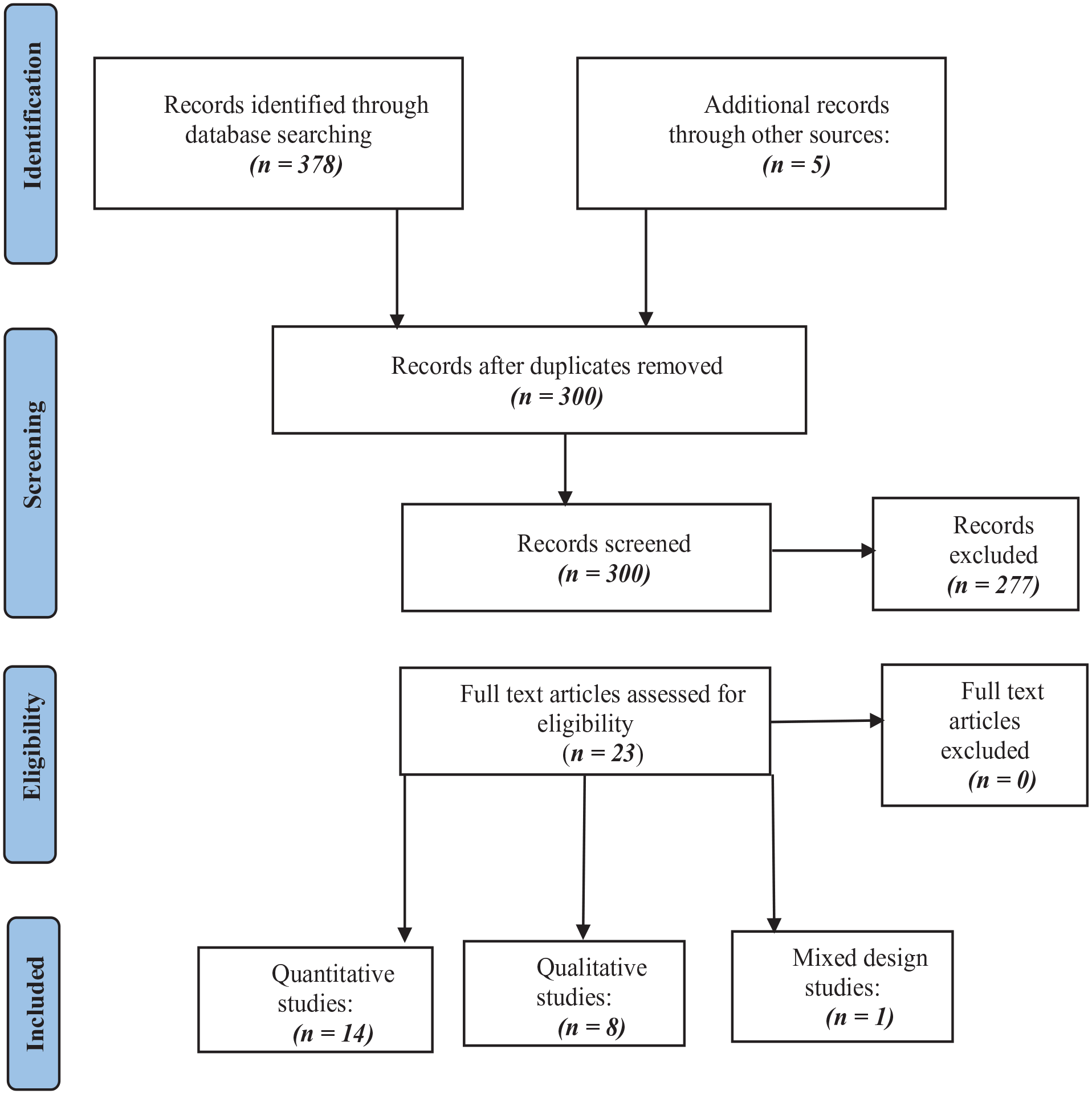
Search process of systematic review adapted from the Preferred Reporting Items for Systematic Reviews and Meta-Analyses (Page et al., 2021).
Assessment of Study Quality
The full texts of studies meeting the inclusion criteria (n = 23) were all reviewed by the first author using the quality criteria developed by Kmet et al. (2004). This is a standardized, empirically grounded set of quality assessment criteria used within systematic reviews to assess the risk of bias in articles, and the chosen set of criteria used to assess the articles included in this review. Our initial plan was to follow the guidance on inter-rater reliability which includes 20% of the total sample to be reviewed and rated independently. However, due to the limited number of studies that met the inclusion criteria (n = 23), two independent raters were asked to review all 23 studies. Once the ratings were completed separately, both raters met to discuss the divergences until there was agreement.
The quality assessment criteria for the quantitative studies consisted of 14 items (see Table 1) and for qualitative studies consisted of 10 items (see Table 2). Each item was scored as follows: condition not met (0), partially met (1), or condition fully met (2). For quantitative studies, the overall quality score was calculated by dividing the total sum by the total possible sum (28 − [number of “N/A” *2]). The overall quality score for the qualitative studies was calculated by dividing the total sum by the total possible sum (20). Scores obtained for both the qualitative and quantitative studies were then converted into percentages, with a minimum threshold of 60% quality score set for inclusion. This is consistent with past systematic reviews (e.g., Chapman et al., 2018) which regard a 60% quality score as a threshold-enabling inclusion of a sufficient proportion of articles, while only reviewing those of good quality. All 23 articles met the threshold of 60%, so were included in the review.
Quality Assessment of All Included Quantitative Studies.
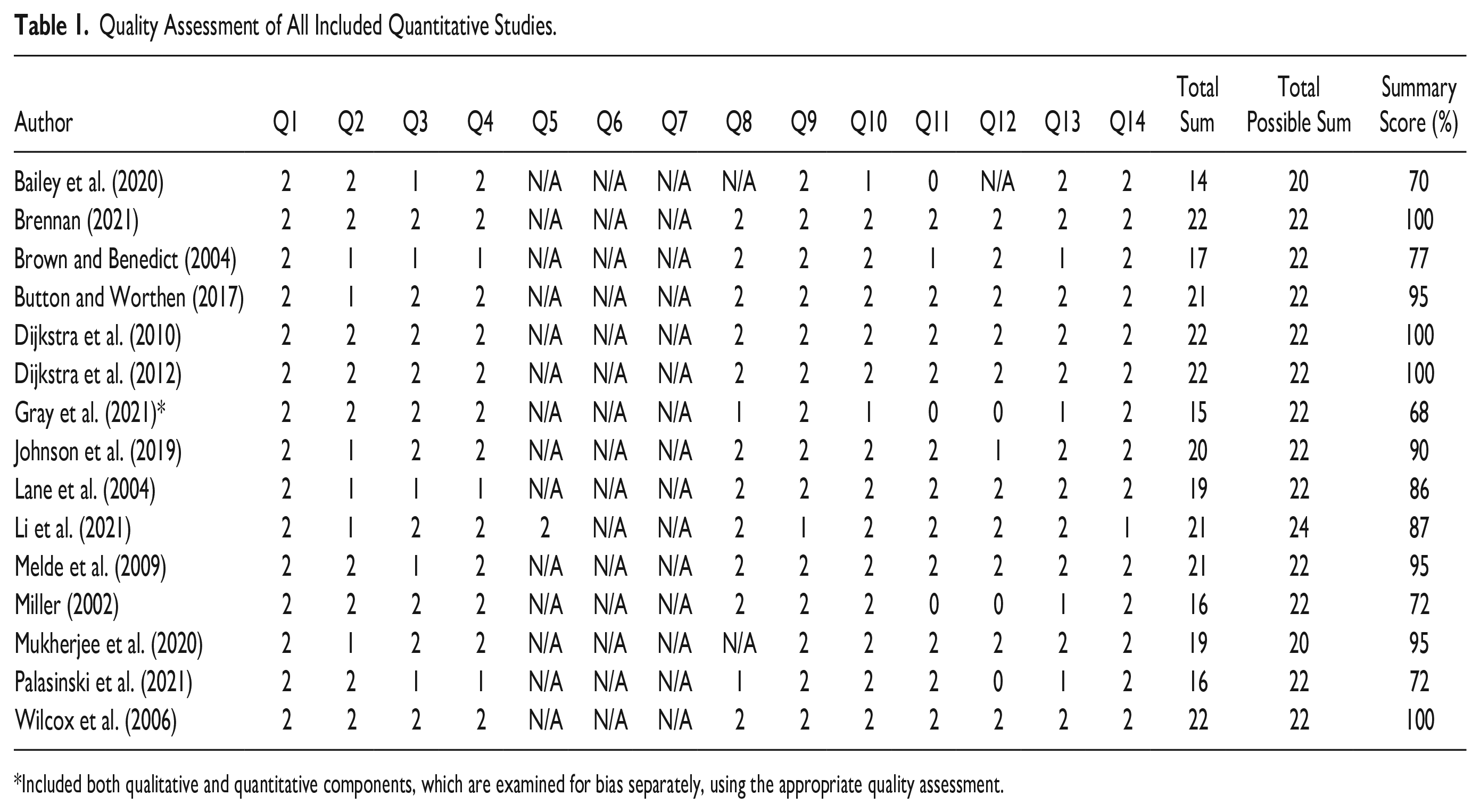
Included both qualitative and quantitative components, which are examined for bias separately, using the appropriate quality assessment.
Quality Assessment of All Included Qualitative Studies.
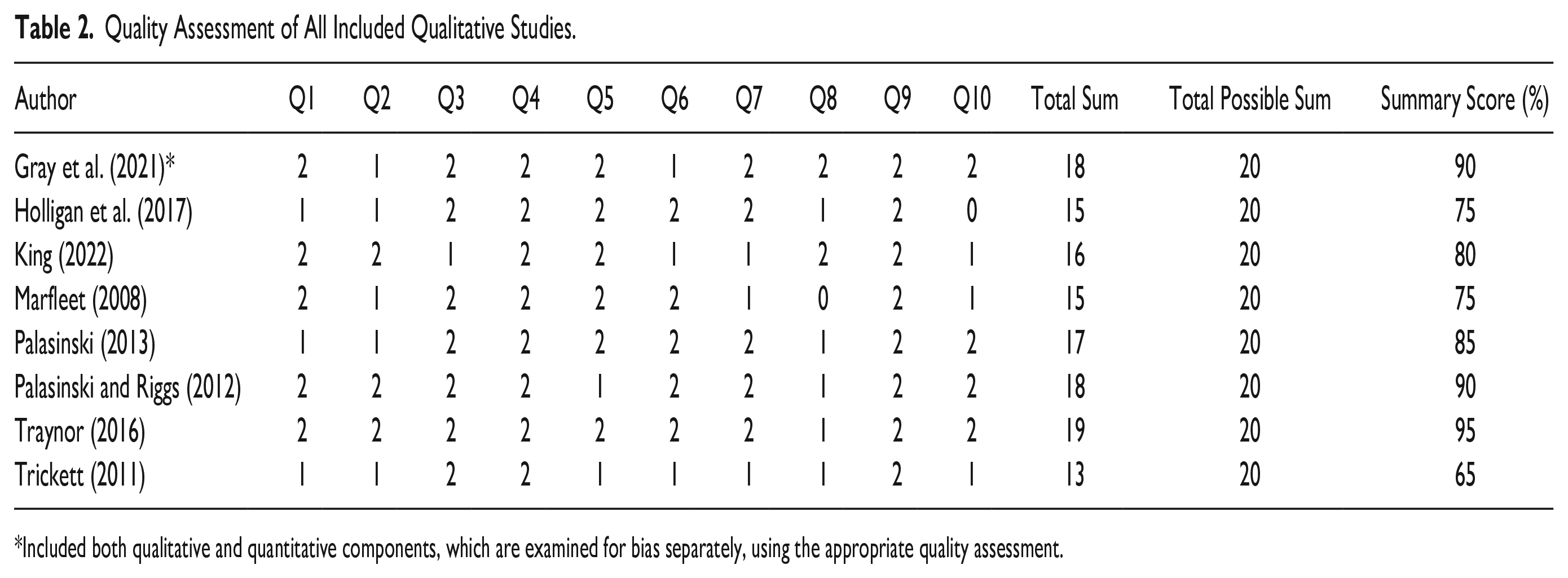
Included both qualitative and quantitative components, which are examined for bias separately, using the appropriate quality assessment.
Results
Study Samples and Design
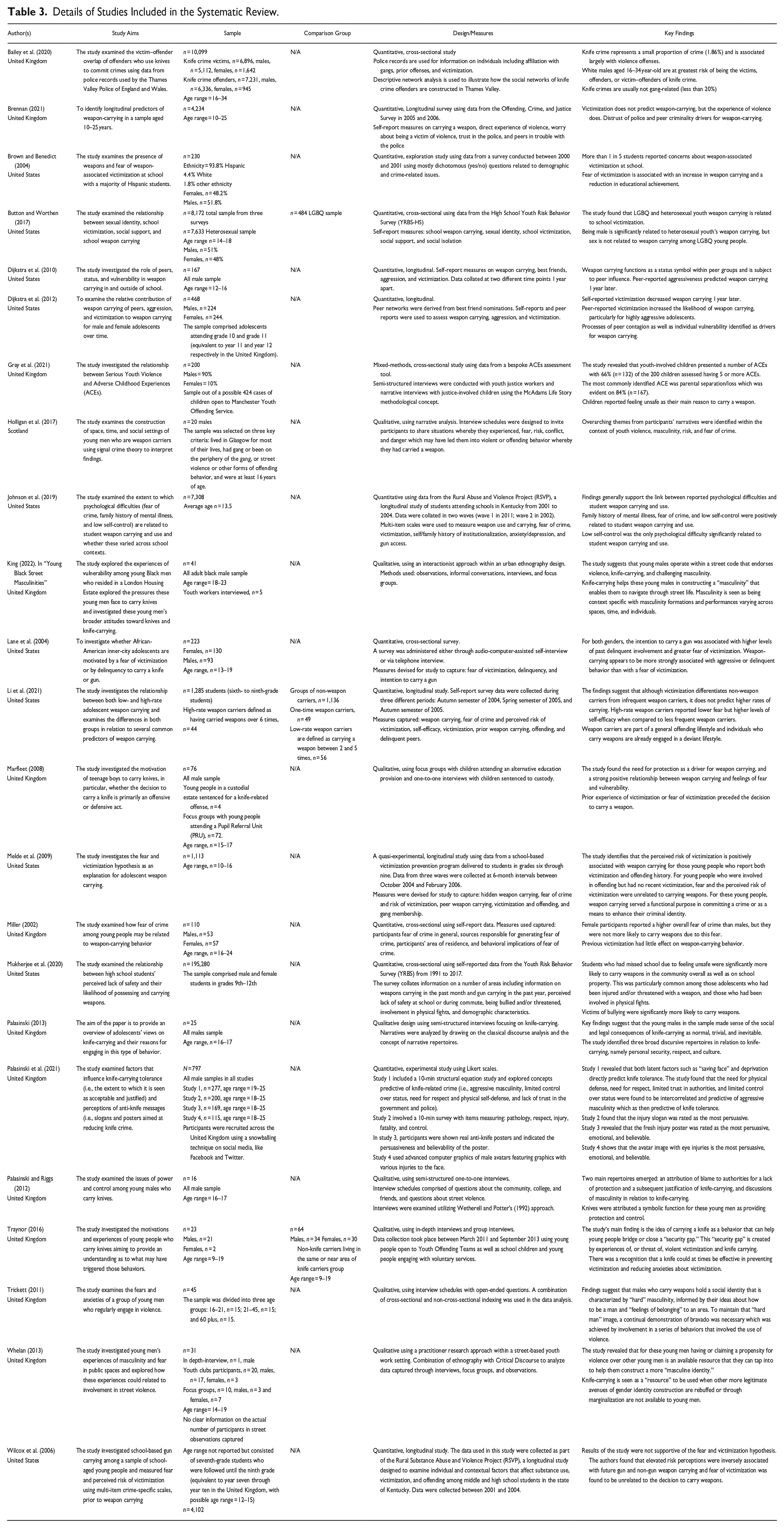
For those studies that met the inclusion criteria, the following information was extracted: author(s), study aims, sample, comparison group(s), design/measures, and key findings. The majority of the quantitative studies selected employed a cross-sectional design (n = 8) with the remaining six adopting a longitudinal design. One article used a mixed methods design (qualitative and quantitative cross-sectional). Two qualitative studies employed an ethnography design whereby participants were recruited following observations in two respective housing associations in inner London. Thirteen studies (56.5%) examined for this review originated from the United Kingdom with the remaining 10 studies (43.5%) focused on research undertaken in the United States. Eleven studies (48%) included in this systematic review used school samples and focused on understanding weapon carrying within school settings. The remaining 52% of studies recruited participants from settings such as youth justice services (community and custody) and local youth clubs, 1 using data gathered from surveys, police records, and snowballing sampling on social media. Table 3 depicts the details of the 23 studies used in this review.
Details of Studies Included in the Systematic Review.
Key Findings
The two research questions guiding this review focused on examining the roles of fear of victimization and perceptions of masculinity in the perpetration of knife-related crime among young males. The majority of the studies included in this review investigated the relationship between past victimization and fear of future victimization and knife-related crime (65%), with 5 studies originating in the United Kingdom and 10 studies in the United States. Seven studies (30%) examined masculinity in relation to knife-related crime, all research undertaken in the United Kingdom. One study did not specifically set out to examine fear or masculinity specifically in relation to knife-related crime. This study examined the relationship between Serious Youth Violence and Adverse Childhood Experiences using a sample of children working with the Youth Justice Service in the United Kingdom (Gray et al., 2021). A decision was made to include this study because some of its key findings were pertinent to the aims set out in this systematic review, particularly in relation to fear of victimization and knife-related crime.
With the two research questions in mind, the key findings of this review are presented in two main sections: fear of victimization, and masculinity and associated gender norms. Each section includes sub-sections guided by the findings of the systematic review.
Fear of Victimization
Upon reviewing the 15 studies examining fear of victimization and knife-related crime, three main themes emerged from the research findings. The themes were as follows: past victimization and fear of future victimization; victimization and knife-related crime relationship moderated by aggression; and the victim-protection paradox.
Past Victimization and Fear of Future Victimization
Some studies found evidence of previous victimization being linked to knife-related crime (Gray et al., 2021; Marfleet, 2008; Mukherjee et al., 2020). This seems to be more evident among adolescents who had been injured and/or threatened with a weapon (Mukherjee et al., 2020). However, it was unclear how adolescents then conceptualized knives to be a viable option to increase safety. Traynor (2016) puts forward the idea of carrying a knife as a behavior that can help young people bridge or close a “security gap.” The author noted that these young people had experienced a sense of physical or psychological insecurity that was not alleviated by the actions or the presence of certain individuals (i.e., parents, professionals such as teachers, or police). Traynor (2016) coins this as a “security gap” that is created by experiences of, or threat of, violent victimization. The study argues that among adolescents who engage in knife-related crime, there was a recognition that a knife could at times be effective in preventing victimization and in reducing anxiety about victimization (Traynor, 2016). Traynor suggested that these distorted beliefs about safety (e.g., carrying a knife prevents future attacks) underpinned young people’s conceptualization of a knife as a viable option to increase safety. However, Brown and Benedict (2004) suggested that knowledge of weapons (in this case all types of weapons including knives) being carried in school has a greater impact on fear of knife-related victimization than abstract beliefs about safety. In their study, they found that students who reported having seen other students carry knives at and to school were significantly more fearful of being stabbed while at school, and students who reported having seen other students carry guns at school were significantly more fearful of being shot at school (Brown & Benedict, 2004).
So, while the above findings suggest that victimization is an antecedent to knife-related crime, some authors have argued that fear of victimization is a consequence of weapon carrying (all types of weapons including knives) rather than an antecedent (Wilcox et al., 2006), with fear of victimization being only predictive of knife-related crime for those young people who report recent victimization and offending (Melde et al., 2009). Indeed, some studies have found that weapon carrying (all types of weapons including knives) is more strongly associated with aggressive or delinquent behavior than fear of victimization (Lane et al., 2004) and that the carrying of weapons emerges over time as a product of engaging in and being victims of crime and violence (Brennan, 2021).
Victimization and Knife-Related Crime Relationship Moderated by Aggression
Some studies found an interaction effect between aggression and victimization in relation to knife-related crime, with the likelihood of knife-related crime increasing when aggression interacts with victimization (Dijkstra et al., 2012). Dijkstra et al. (2012) argue that the act of carrying a weapon (not just knives) is, in effect, a by-product of the offender–victim overlap. This victim–offender overlap has been evidenced in other research (Bailey et al., 2020) whereby an individual can be a victim in one knife-related incident and an offender in another separate knife-related incident or indeed, in the same incident. Bailey and colleagues in their study found that the majority of individuals who were arrested for a knife-related offense were known to the Criminal Justice System for prior offending (74.2%). The victims were also known to the police, with 39.8% having a criminal record and nearly half of those victimized being repeat victims (47.1%).
The Victimization-Protection Paradox
In some studies, fear, perceived risk, and the need for protection were often mentioned as signifying the same. It can be argued that fear is an emotional reaction to the perception of imminent victimization, whereas the perceived risk of victimization is simply the cognitive determination of the probability of victimization and does not necessarily translate into fear (Warr, 2000). Indeed, Li et al.’s (2021) study suggests that self-efficacy may play a role in young people’s decisions to carry a weapon. Feelings of self-efficacy may increase in young people their feelings of self-confidence in their ability to protect themselves with a weapon. From this perspective, fear is determined not by the actual threat in a situation, but by the perception of threat and the person’s belief in his or her capacity to handle the perceived threat. As such, some young people may carry weapons for protection against victimization, which may not be driven by fear. Their decision to carry a weapon is based on their “analysis” of perceived risk and may not necessarily be accompanied by the emotional reaction of fear. While this is an interesting perspective, caution is needed in the generalization of this finding given that the role of self-efficacy in young males’ decisions to engage in knife-related crime is not very well understood.
Miller (2002) conducted a study to understand gender differences in the relationship between fear of crime, victimization experiences, and weapon carrying (again, not just knives) among young people in the United Kingdom between 16 and 24 years old. Findings showed that females reported a higher overall fear of crime than males, but they were not more likely to carry weapons because of this fear (Miller, 2002). Additional analysis of the data suggested that being a victim did not necessarily suggest being more likely to carry a weapon. Individuals who reported having never carried a weapon were slightly more fearful of crime than the weapon carriers. This may be because, for the young people who carry weapons, this activity works as a strategy to reduce fear. Another interesting finding was in relation to knowledge of weapons and the law, with weapon carriers demonstrating a far greater level of knowledge than non-weapon carriers. Although these results need to be interpreted carefully, they suggest that weapon carriers are more concerned with their immediate safety than punishment, with weapons being conceived as an available and cost-effective way to reduce their perceived risk. In relation to the males in this study reporting lower levels of fear compared to females, this may be due to males feeling as if they need to conform to some type of machismo culture, whereby admitting to being fearful may cast doubt on their masculine identity.
Masculinity and Associated Gender Norms Studies
Seven studies investigated the relationship between masculinity and knife-related crime, with five studies employing a qualitative design and the remaining two having quantitative designs. Four of the qualitative studies adopted a practitioner-research approach and discourse analysis was utilized in all to analyze the data captured through interviews, focus groups, and observations. Interview transcripts often revealed themes of bravado, loyalty, retaliation, and a need for a certain type of reputation when participants were recounting their experiences of victimization. It emerged from the literature this idea that young males who engage in knife-related crime do so because of a shared social identity. This social identity is characterized by “hard” masculinity, informed by ideas about how to be a man (Tricket, 2011) and influenced by a street code that endorses violence, knife-carrying, and challenging masculinity (King, 2022). Knife-carrying enables these young males to construct a “masculinity” characterized by being “tough” and “aggressive” which helps them to manage and navigate complex spaces characterized by risk and uncertainties (Holligan et al., 2017). Whelan (2013) suggests that for these males, acts of violence are a resource available for the construction of this aggressive masculine identity. Factors such as the need for physical defense, need for respect, limited trust in authorities, and limited control over status have been found to be inter-related and predictive of this aggressive masculinity which is predictive of knife-related crime (Palasinski et al., 2021).
Two studies discuss the idea of masculinity being context specific and males adopting different “types” of masculinity, with masculinity formations and performances varying across spaces, time, and individuals (Holigan et al., 2017; King, 2022). For some young men carrying a weapon is an important resource in constructing a credible threat of violence and a resource for gender identity construction particularly when more legitimate avenues are rebuffed or because of their marginalization become unavailable to young men (Whelan, 2013). However, this may be different for non-heterosexual males. One study examined the relationship between sexual orientation and weapon carrying (Button & Worthen, 2017) with findings suggesting that within the heterosexual male sample, participants were more likely to carry weapons but the same did not apply to the LGBTQ equivalent. Interestingly, in both groups, previous victimization was related to weapon carrying.
In the masculinity and knife-related crime literature reviewed, there is this underlying finding that displays of weakness or vulnerability undermine these young men’s constructions of masculinity (Holigan et al., 2017; King, 2022). It can be argued that for these males openly talking about fear in relation to knife-related crime can be seen as a weakness and therefore it presents as a dilemma to them.
The Fear and Masculinity Dilemma
Some studies suggest that for males to engage in knife-related crime, they need to look tough and “hard” while presenting as vulnerable to defensibly justify that behavior (Palasinski & Riggs, 2012). There is a need to develop and exhibit a particular form of masculinity that denies vulnerability but at the same time, vulnerability is driving the knife-related crime behavior (Palasinski & Riggs, 2012). Previous victimization for these young males does not seem to trigger the emotional reaction of fear as such but rather triggers the need for these young men to respond and behave in a manner that will keep them physically safe in the eventuality of another experience of victimization (Palasinski & Riggs, 2012). The idea of perceived risk as mentioned earlier could be what drives these young males into deciding to carry a knife. This may be the case for those males who have constructed aggressive masculinity (Palasinski, 2013; Palasinski & Riggs 2012) as discussed above, and who subscribe to masculine norms that emphasize and encourage toughness, risk-taking, and the need to gain respect.
There is an alternative theory within the literature that suggests a contagion/fashion effect driving the perpetration of knife-related crime (Marfleet, 2008). An important consequence of a “culture” of knife-related crime is the perception by an individual that many of their peers are carrying knives (Brennan & Moore, 2009). However, it is not very well understood the role of fear contagion and victimization in the shaping of masculinity ideals within groups of young men involved in knife-related crime.
Discussion
In summary, 23 studies met the inclusion criteria for this systematic review. As indicated by the research questions, these studies were demarcated into two inter-related topic areas: studies investigating the relationships between past victimization, fear, and knife-related crime (15 studies); and studies examining the role of masculinity in the perpetration of knife-related crime (seven studies). One study did not set out to investigate fear or masculinity as such but was decided to be included as the findings were relevant to the systematic review namely in relation to fear of victimization as a motivational narrative for knife-related crime.
The review highlights how there is mixed support for the fear and victimization hypothesis in relation to knife-related crime, observed both within the cross-sectional and longitudinal studies While some studies demonstrate this link (Gray et al., 2021; Marfleet, 2008), others suggest that rather than being driven by an emotive reaction such as fear due to previous victimization, knife-related crime is a result of young people’s cognitive recognition of the need for protection (Melde et al., 2009). As such, for some young people, their decision to engage in knife-related crime is based on their “analysis” of perceived risk and may not necessarily be accompanied by the emotional reaction of fear.
Interestingly, the studies examining masculinity and knife-related crime suggest that males who engage in this type of behavior tend to adopt an aggressive masculine identity. Within this identity, the knife is perceived as a resource available to help them embody a credible violent persona that others would then fear. In this sense, the act of carrying a knife reduces feelings of vulnerability, which is needed for these males to maintain this masculine identity to navigate complex and violent contexts. Consequently, young men engaged in knife-related crime may not express vulnerability because they don’t feel it. So, while fear and masculinity within the context of knife-related crime can appear distinct, they are very much connected and further research is needed to untangle this relationship.
In the studies reviewed, we see the emergence of two explanations in relation to how they connect. On the one hand, it seems that fear due to previous victimization appears to trigger the need to develop an aggressive masculinity (to protect against future victimization). On the other hand, the construction of this aggressive masculinity may be due to these males’ perceived analysis of risk rather than fear itself. With this in mind, we see the emergence of a theoretical explanation for knife-related crime. A knife is regarded as an instrumental tool to achieve a nonviolent goal namely for defensive reasons due to previous violent victimization and not purely as an expression of aggression. It is also an available tool for young men in the building of a masculine identity which will also serve a defensive purpose (i.e., to deter others from harming them physically). Therefore, the factor that appears to knit together past victimization, masculine identity, and knife-related crime is their cognitive analysis of perceived risk.
There are limitations to the generalization of these findings, with the review covering a small number of studies. Nearly half of the studies (48%) included in this systematic review used school samples and focused on understanding knife-related behaviors within school settings. These studies are limited through their reliance on short and superficial assessments of knife-related crime. In addition, knife possessions lead to school exclusions (APPG Group on Knife Crime, 2019) so studies using only school children to investigate knife-related crime are unlikely to include those adolescents who are regularly engaging in knife-related behaviors as they are very likely no longer attending school. This means that findings are limited in terms of psychosocial and demographic characteristics of adolescents who engage in knife-related crime. In addition, 39% of the studies reviewed were conducted in the United States of America, which, as mentioned, raises the issue of generalization of findings. Caution is needed in the interpretation of these findings and their applicability to the United Kingdom population and young people. Particularly in relation to demonstrations of masculinity whereby different cultures and contexts are likely to shape the development of traits accordingly. Two studies included within the review (Holigan et al., 2017; King, 2022), discuss knife-related crime being context specific. The researchers assert within their studies that males involved in knife-related crime adopt different masculinities according to their context. As such, any further research investigating knife-related crime ought to outline how the behavior is to be understood within a context and outline from the outset the need for findings to be interpreted within that context and its limitations in applicability to other contexts depending on how these are defined. Limitations on the research quality of the studies reviewed are also noted due to a lack of control groups as part of their study design which is identified as a significant methodological limitation. Only one study out of the 23 reviewed employed a mixed design/method (Gray et al., 2021). Studies using quantitative methodologies seeking to understand and assess the impact of a range of factors in shaping a behavior have much to offer. However, in relation to knife-related crime adopting a mixed design is more likely to yield more meaningful results in terms of understanding the complex interaction of drivers for knife-related crime through the eyes of those engaging in the behavior that is also supported by quantitative data.
Conclusion
This review found that the literature available on knife-related crime is riddled with varying terms likely due to the fact that the current literature does not distinguish between carrying of knives and using knives within violence. It also found that knife-related crime tends to usually be investigated as part of wider weapon carrying behaviors and rarely seen as a distinct behavior with unique motivations. Future research investigating knife-related crime should aim at exploring whether the use of knives and carrying of knives should be seen as distinct and, as such, influenced by different factors using samples that employ more rigorous sampling methods.
While this review is preoccupied with understanding the research that investigates masculinity and fear as motivational narratives for males who engage in knife-related crime, it is apparent that there is a lack of research into females who engage in this type of behavior. Much of what is understood in relation to females who engage in knife-related crime is anecdotal. A number of areas remain unexplored including females as “holders” of knives, their role within male-dominated group dynamics and in the “mediation” of violence, and whether there are any connections between females who carry or hold knives for males and sexual violence victimization against them.
There is also a need to work toward the development of a theoretical understanding of knife-related crime. With young males being repeatedly identified as both perpetrators and victims of knife crime, further research is needed to support the development of our theoretical understanding of why some males engage in knife-related crime. This review suggests a theory for understanding knife-related crime. Young males’ decisions to engage in knife-related crime are based on their analysis of risk and perceptions of risk. These perceptions of risk through a contagion effect are shaped and further influenced by instances of previous victimization as a result of knife-related crime. This, in turn, contributes to the development of an aggressive masculinity that justifies the behavior. Additional research is needed focusing particularly on understanding this complex interplay. As knife-related crime has become more and more embedded in political agendas, high-quality research will support further government initiatives, particularly in relation to the allocation of funding for the development of interventions to target and address knife-related crime.
Footnotes
Declaration of Conflicting Interests
The author(s) declared no potential conflicts of interest with respect to the research, authorship, and/or publication of this article.
Funding
The author(s) received no financial support for the research, authorship, and/or publication of this article.
