




Abstract
Currently, dating apps are one of the most popular platforms for meeting romantic and sexual partners. However, little is known about the potential for sexual harassment on these platforms. In the current scoping review, we sought to examine what is known about sexual harassment facilitated through smartphone dating apps. We searched for studies that reported on sexual harassment via dating apps through PubMed, Web of Science, PsycInfo, Communication Abstracts, Sociological Abstracts, and IEEE Xplore databases. Twelve studies addressed the risk of sexual harassment on dating apps. We found that sexual harassment when using dating apps is prevalent and ranges between 57 and 88.8%, with two populations being at higher risk: women and individuals who identify as a sexual minority. In terms of forms of harassment, sexual harassment via dating apps can take place online (e.g., being sent unsolicited images, or “dick pics”) or offline (e.g., a face-to-face meeting that was arranged on a dating app). Experiencing sexual harassment on dating apps is associated with higher levels of depression, anxiety, post-traumatic stress disorder, loneliness, early childhood maltreatment, less perceived self-control, and lower self-esteem. Some studies suggest that experiencing sexual harassment on dating apps reflects social structures and appears differently in different groups (e.g., among sexual minorities). More research is needed to capture the prevalence of adult sexual harassment via the use of dating apps, the different forms of harassment, risk and protective factors, and social and cultural structures that facilitate this kind of sexual harassment.
Introduction
Dating applications (apps) are becoming increasingly popular, with almost one out of three Americans reporting ever having used a dating app (Anderson et al., 2020). Although dating apps can provide a faster and easier way to meet or message a potential partner, they are also a relatively new platform that can put people at risk for experiencing sexual harassment and assault. In the current review, we sought to broadly investigate sexual harassment facilitated through the platform of dating apps. The research question was open-ended, the underlying goal being to investigate the types of evidence available on the topic and to explore the various findings and knowledge gaps in the literature. Sexual harassment refers to any unwanted or unwelcome sexual behavior on a dating app that makes a person feel offended, humiliated, or intimidated and that explicitly communicates sexual desires or intentions toward another individual, using either verbal comments or graphic images (Barak, 2005; Henry & Powell, 2018). Sexual harassment facilitated through smartphone dating apps is not limited to online sexual harassment, but also offline sexual harassment, which occurs in the encounter that was arranged on the dating app. We wished to gain an understanding of the types of sexual harassment that occur through dating apps, the prevalence of these types of harassment, and to identify variables that are correlated with experiencing sexual harassment facilitated through smartphone dating apps.
The Rise of Dating Apps
Although dating sites have been present for over a decade, smartphone dating apps are a relatively new platform for online dating. These dating apps have a function that enables people to connect with others by location, becoming an extremely accessible, common way to meet sexual and dating partners. Recent research indicates that there has been a steady increase in the use of smartphone dating apps and that they are currently the most common way to meet romantic and sexual partners (Albury et al., 2019; Duguay, 2017; Zlot et al., 2018). In 2020, approximately 44.2 million people used dating apps in the United States, and it is expected that in 2024 this number will increase to about 53.3 million (Statista, 2022). According to the Pew Research Center (Anderson et al., 2020), 48% of Americans under the age of 30 use dating apps (Anderson et al., 2020). Another study conducted in the United States revealed that 62.61% of participants reported current or past use of dating apps (Echevarria, 2021). Some of the most popular dating apps used in the United States are Tinder, Bumble, plenty of fish (POF), OkCupid, and Grindr (Pooley & Boxall, 2020). As of 2019, Tinder had 7.86 million users, Bumble had 5.02, POF had 4.28, OkCupid had 1.79, and Grindr had 1.64 million users (Dixon, 2022).
Dating apps can be used by anyone over the age of 18 years. That said, they are most popular among young adults aged 18 to 30 years (Anderson et al., 2020). Research on gender and the use of dating apps is still inconsistent, with some studies indicating that men use them more than women do, whereas other studies show no difference (Castro & Barrada, 2020). According to the Pew Research Center (Anderson et al., 2020), dating apps are especially popular among certain groups—particularly younger adults (between the ages of 18 and 29 years) and those who identify as lesbian, gay, bisexual, transgender, and queer or questioning (LGBTQ). Almost half of young adults aged 18 to 29 years and a bit more than half (55%) of LGBTQ adults report ever having used a dating app (Anderson et al., 2020).
Although dating apps have made the process of meeting sexual and romantic partners easier, more accessible, and often free of charge, dating apps can also become a platform for various violent and harassing behaviors (e.g., sexual harassment, stalking, revenge porn, and scams; Phan et al., 2021). Experiencing sexual harassment via dating apps has been found to be associated with more symptoms of depression, anxiety, posttraumatic stress symptoms, greater loneliness, less perceived self-control, and lower self-esteem (Echevarria, 2021; Lauckner et al., 2019). To better understand this emerging risk, in the current review we focused on the empirical data and on what such data have revealed thus far regarding sexual harassment on dating apps.
Dating Apps as Presenting an Emerging Risk For Sexual Harassment
Sexual harassment encompasses acts that range from verbal harassment to forced penetration and an array of coercion types, from social pressure and intimidation to physical force (World Health Organization, 2013). Sexual harassment performed online has been termed “technology-facilitated sexual harassment,” a term that includes many of the same behaviors as offline sexual harassment with one main difference: The victim was found or reached via an online platform (Henry & Powell, 2018). Technology-facilitated sexual harassment includes unwanted sexual advances, sexual harassment, gender/sexuality-based abuse, sexual coercion, and rape experienced by a person due to technology that connected the victim to the perpetrator (Henry & Powell, 2018). Although there is growing research on technology-facilitated sexual harassment (Patel & Roesch, 2022), the research on sexual harassment in the context of dating apps is still in its infancy.
The few studies conducted on this topic point to an emerging risk of sexual harassment via dating app platforms. According to a study conducted among 230 college students in the United States, 88.8% of dating app users reported at least one instance of sexual harassment via dating apps (Echevarria, 2021). In a study conducted among 666 university students in Hong Kong, users of dating apps were more likely to be sexually abused (in person) over the past year than nonusers and were also at higher risk for in-person lifetime sexual abuse (Choi et al., 2018).
Although the risk in using dating apps is evident, it does not manifest equally. In terms of gender, women under the age of 35 years have been found to be at the greatest risk of being sexually harassed on dating apps, with 57% of women reporting being sent a sexually explicit message or image they did not request (Anderson et al., 2020). Such findings were also revealed in another study (n = 5,798) where one in ten Australian women and nearly 12% of women in the United Kingdom reported that they had had an unwanted sexual experience with someone they first met online (Powell & Henry, 2017).
The dating app platform is a unique context for the perpetration of sexual harassment. First, as dating apps have a geolocation integrated in them, their use can become an easy way for sexual predators to find potential victims (Henry & Powell, 2018). In addition, there is no company method or policy determining whether individuals are dangerous or have a criminal history based on their app profile (Scannell, 2019). Second, the process of consent may be different when using dating apps. In other words, when does the process of consent begin on a dating app? Are people’s mere presence on the app a sign that they are interested in sex or in receiving sexual messages and images? Does flirting on the dating app indicate consent to sex when the meeting occurs? Are there emojis that are sent that may reflect consent to having sex or to receiving sexual messages and images? According to a recent study, the process of consenting to have sex on dating apps is unclear and under-explored (Furlo et al., 2021). This unique context was discussed by study participants who said it was very difficult to refuse having sex at any stage after meeting on a dating app (Lauckner et al., 2019).
The Current Review
The literature on dating apps suggests that dating apps may be a platform with increased potential for sexual harassment, thereby warranting more attention in research, risk assessment, and sexual harassment prevention programs. In the current scoping review, we sought to examine the different forms of sexual harassment that emerge when using dating apps, the prevalence of these forms of sexual harassment acts and behaviors, the presence of gender differences, and any correlates of sexual harassment facilitated through smartphone dating apps.
Methods
Searches
The authors collaborated to design a review protocol prior to conducting the search. The full protocol can be viewed in the Open Science Framework link at https://osf.io/dg48n/. The search strategy was designed and conducted by the Health and Human Services Librarian using a combination of relevant keywords and subject headings in several databases including PubMed, Web of Science, PsycInfo, Communication Abstracts, Sociological Abstracts, and IEEE Xplore. The full-search strategy can be viewed in the Open Science Framework link. Although sources of gray literature were not searched, the gray literature retrieved through searching the abovementioned databases and search engines were included for review. We included gray literature search for a more comprehensive overview, as it helps address publication bias and provides diverse materials for inclusive research. Global organizations such as Cochrane, Joanna Briggs, Campbell, and the Institute of Medicine support this approach. All results from database searching and from hand-selection were saved into the Covidence software for de-duplication. After a full-text review of articles was completed, a snowballing search for recent publications and mapped citations was conducted.
Inclusion and Exclusion Criteria
The authors included studies whose research designs were both qualitative and quantitative, with findings based on empirical data that focused on a sample of individuals who reported any type of sexual harassment via dating apps. Inclusion criteria included studies written in English, with qualitative and/or quantitative research designs, and with findings based on empirical data that focused on a sample of individuals 18 years of age or older who reported any sexual harassment when using online dating apps. For sexual harassment, we used the definition provided by Barak (2005) and adapted by Henry and Powell (2018) to conceptualize technology-facilitated sexual violence. According to this definition, sexual harassment refers to any unwanted or unwelcome sexual behavior that makes a person feel offended, humiliated, or intimidated. Such harassment may include either virtual or face-to-face contact on dating apps or contact that was initiated through dating apps; it includes uninvited behaviors that explicitly communicate sexual desires or intentions toward another individual, using either verbal comments or graphic images. No publication date restrictions were applied to the studies, although dating apps are relatively new and we expected the majority of studies to be relatively recent. Exclusion criteria included studies that were not available for a full review, such as conference proceedings, and different studies conducted among the same sample (only the first published paper was reviewed), or studies that included participants younger than 18 years (who could not officially or legally have an active account on dating apps). Also excluded were other online forms of sexual harassment conducted outside dating apps on any other digital or online platforms (such as through email or other social media platforms).
Search Results
A total of 2,740 results from databases and search engines were saved into Covidence. Of those, 209 duplicates were removed, for a total of 2,531 articles remaining for title and abstract screening. Screening was conducted independently by the three authors of this review. One hundred articles were selected for a full-text screening, which was also conducted independently by the three authors. After the full-text review of articles was completed, 89 studies were excluded, leaving 11 remaining articles. A snowballing search for recent publications and mapped citations was conducted. One additional hand-searched record was added. The Preferred Reporting Items for Systematic Reviews and Meta-Analyses flow diagram (Figure 1) illustrates the number of citations selected for inclusion and lists the reasons for exclusion after the full-text screening. The remaining 12 records were included for synthesis. At all stages, discrepancies were resolved by discussion and consensus between the three authors, with the involvement of a third team member to resolve disagreements if necessary.
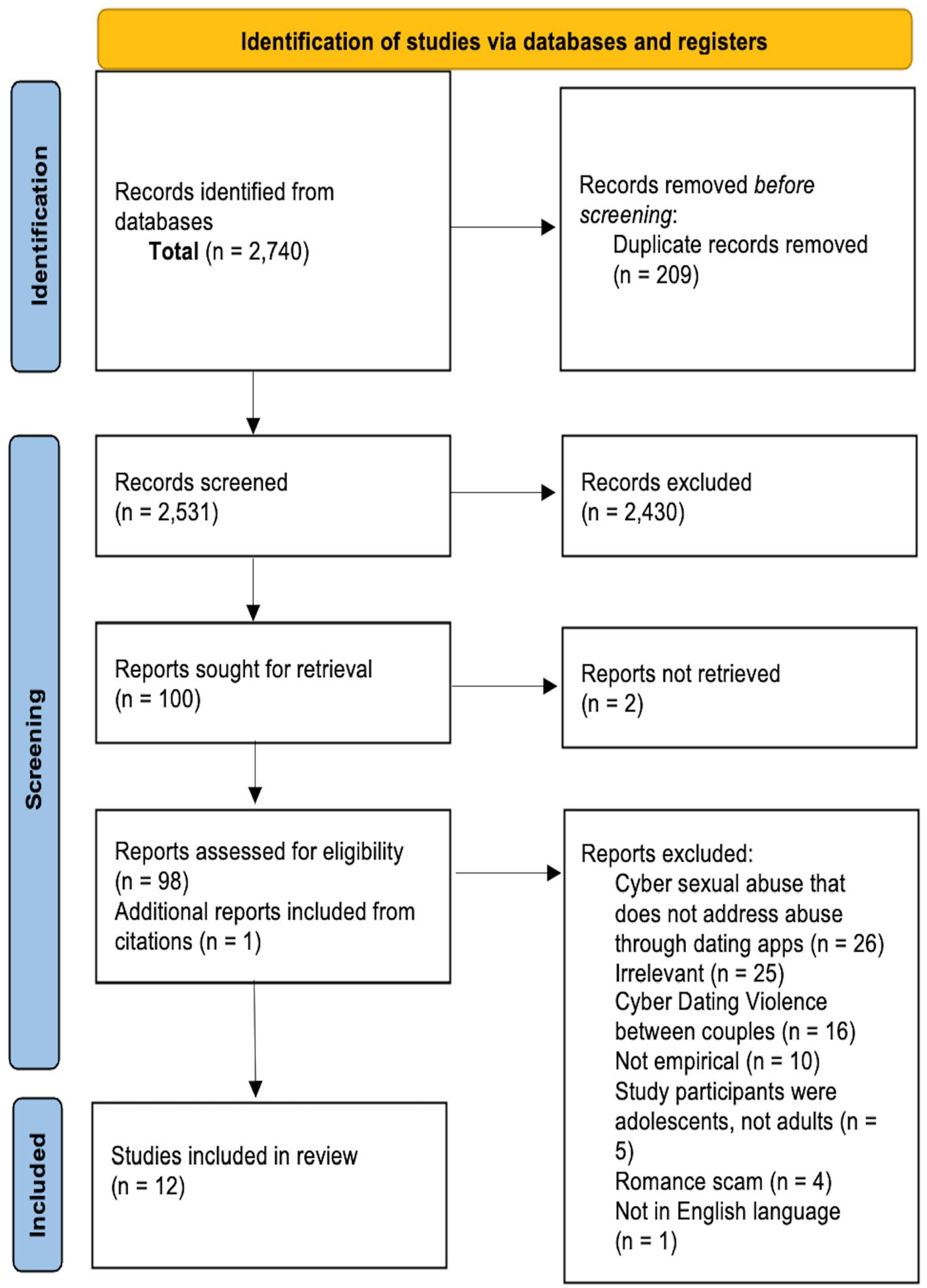
Preferred Reporting Items for Systematic Reviews and Meta-Analyses flow diagram.
Findings
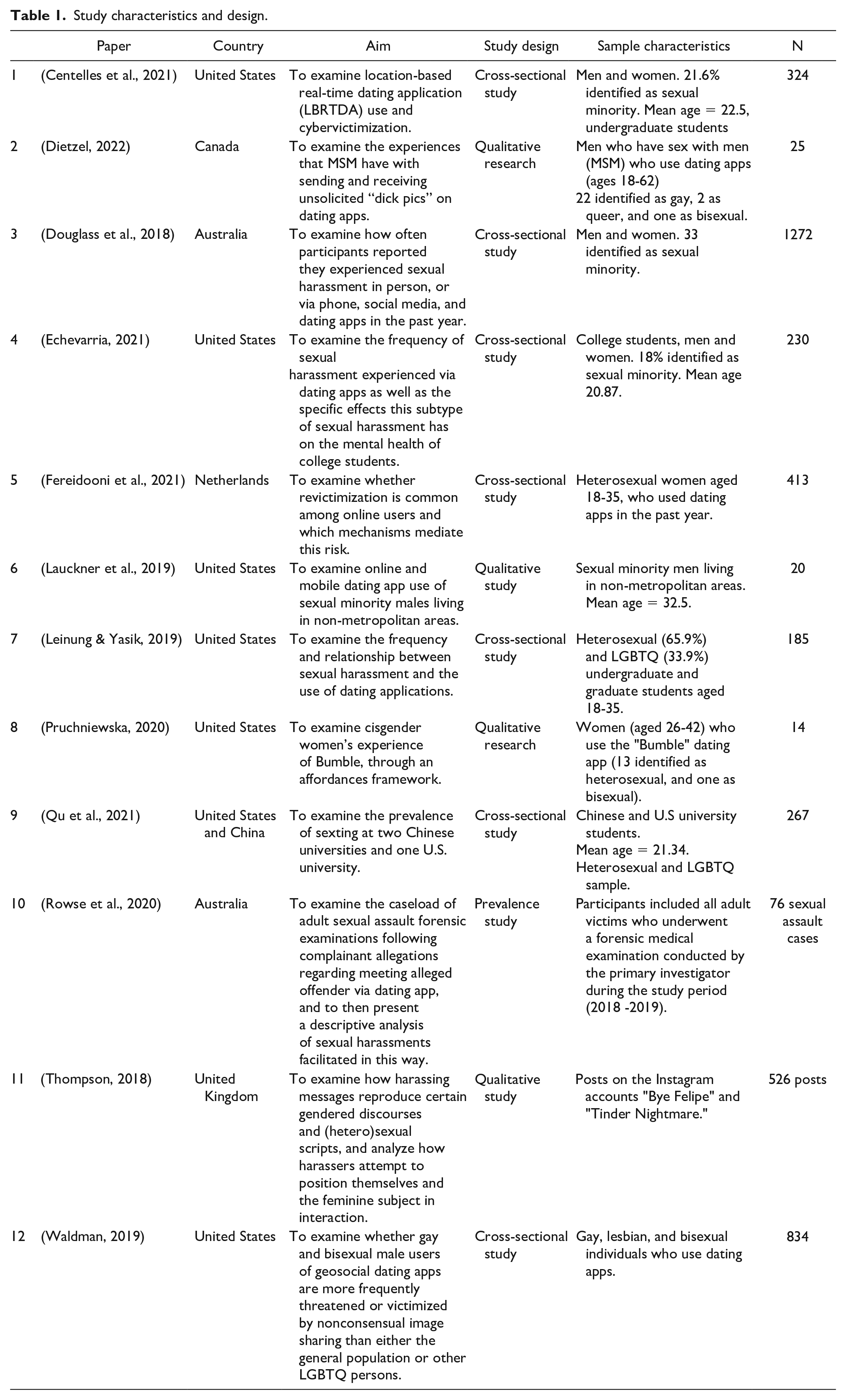
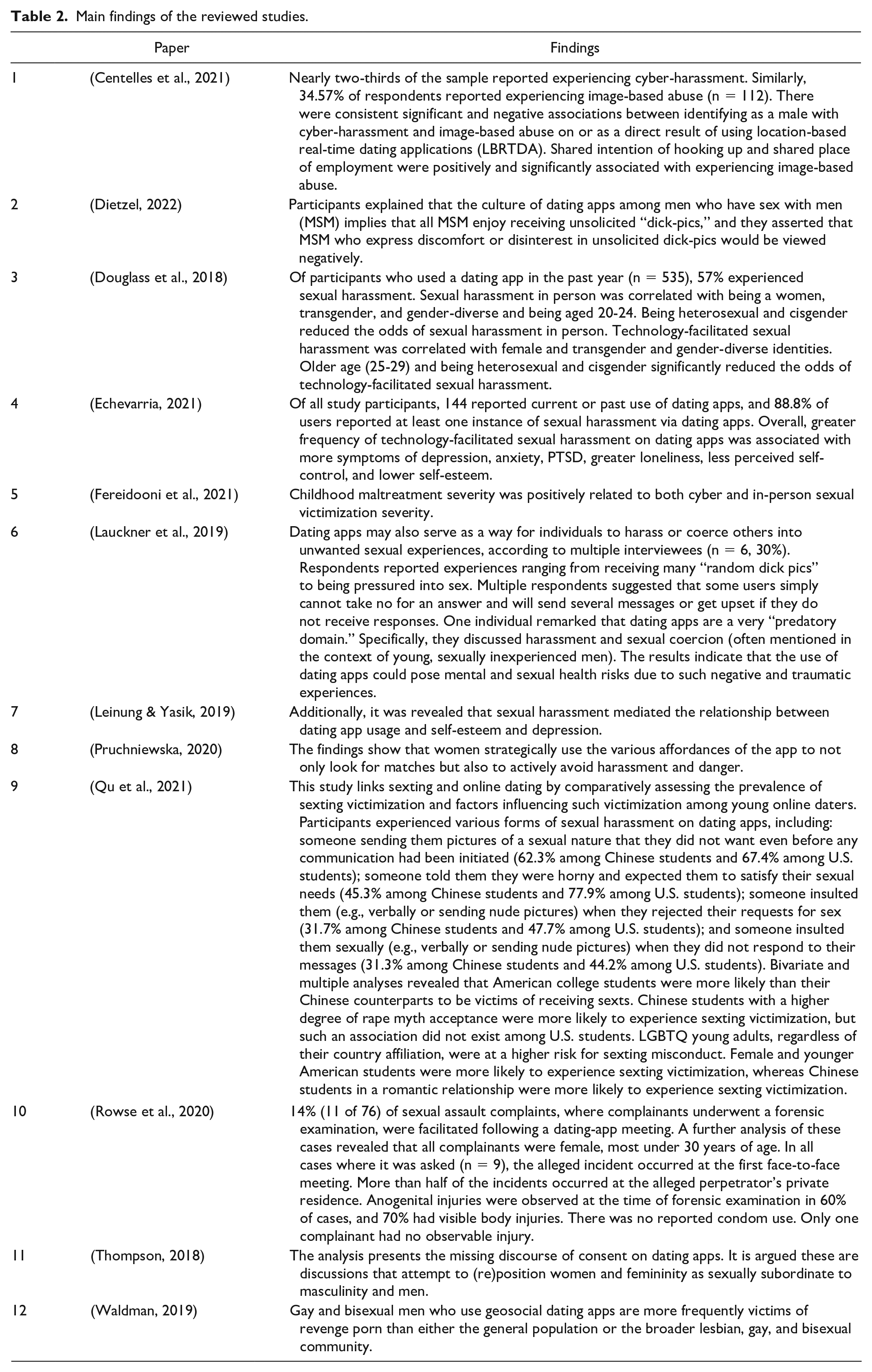
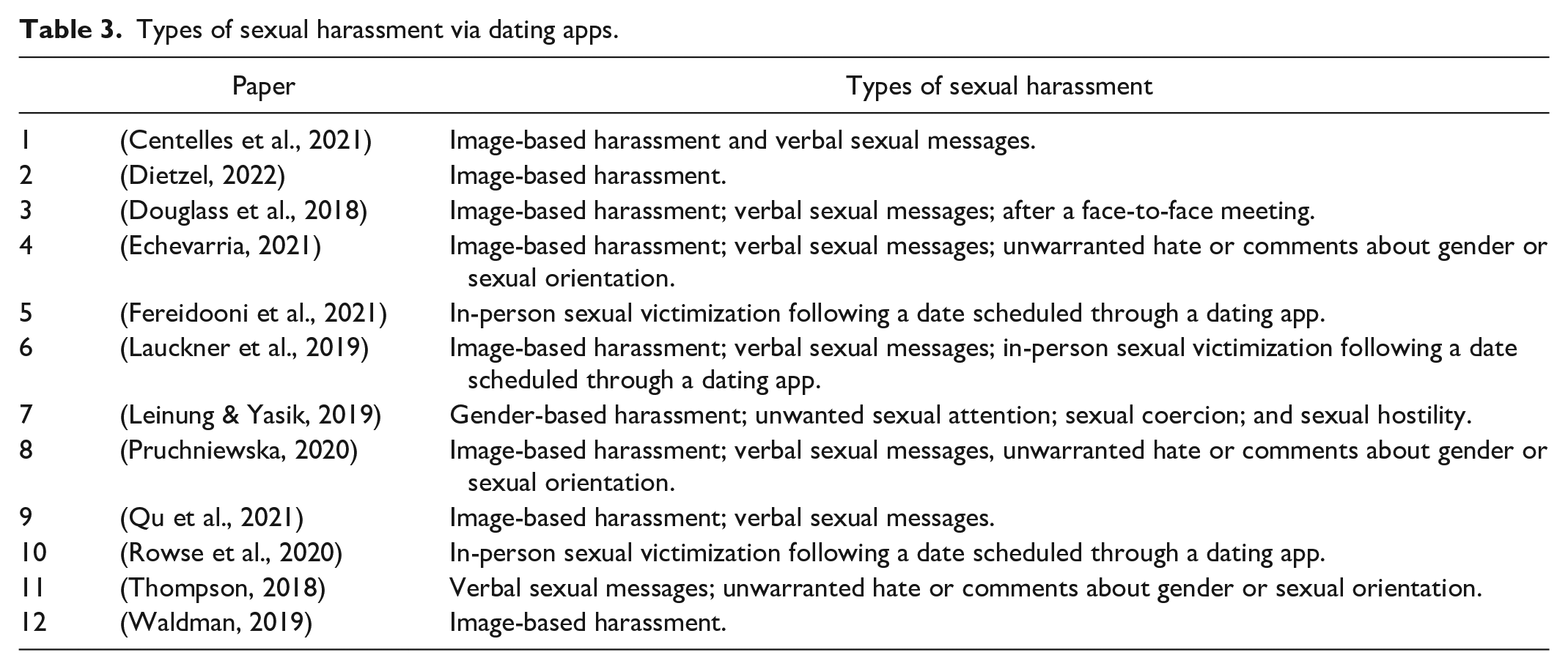
In the present review we investigated the emerging risk of sexual harassment on dating apps and identified four main research dimensions on sexual harassment via dating apps: prevalence of sexual harassment on dating apps, forms of sexual harassment, variables that are correlated with experiencing sexual harassment facilitated through smartphone dating apps, and social and cultural structures. Overall, 12 studies that addressed the risk of sexual harassment on dating apps were identified. These studies varied in their methodology, as can be seen in Table 1. Table 1 shows a summary of the studies included in the review, the country in which the study was conducted, the aim of the study, the study design, the sample size, and the main characteristics of the sample. In Table 2 the main findings from each study are presented. Table 3 details the types of sexual harassment via dating apps that were surveyed in each study.
Study characteristics and design.
Main findings of the reviewed studies.
Types of sexual harassment via dating apps.
Prevalence
The prevalence of experiencing sexual harassment via dating apps was addressed in five studies, and findings indicated that being sexually harassed when using dating apps is fairly common. Studies indicated that at least one in three dating app users experienced image-based harassment and verbal sexual messages when using the dating app (Centelles et al., 2021; Lauckner et al., 2019), with numbers ranging from 57% (Douglass et al., 2018) to 88.8% of users reporting at least one instance of sexual harassment (e.g., image-based harassment, verbal sexual messages, unwarranted hate, comments about gender identity, or sexual orientation) via dating apps (Echevarria, 2021). Qu et al. (2021) compared the prevalence of different types of sexual harassment (e.g., image-based harassment, verbal sexual messages) between the United States and China and found that the prevalence of sexual harassment via dating apps was higher among American students than among Chinese students. Yet participants from both groups (the United States and China) reported a high occurrence of sexual harassment: receiving unwanted sexual pictures before initiating any communication (62.3% among Chinese students and 67.4% among U.S. students), receiving explicit demands to satisfy sexual needs (45.3 and 77.9%, respectively), and being sexually harassed in person (31.7%, 47.7%; Qu et al., 2021). A study examining 76 in-person sexual assault complaints revealed that 14% (11 out of 76) of the assault incidents were occurred after a meeting arranged through a dating app (Rowse et al., 2020). These findings contribute to the understanding that sexual harassment via dating apps is prevalent in Western, industrialized countries.
Types of Harassment
Different types of sexual harassment via dating apps are discussed in the literature. Receiving unwanted images with sexual content appears to be one of the main types of such harassment, where a common form of unsolicited images is “dick pics” (Dietzel, 2022). In a sample of 183 Chinese students and 83 U.S. students, participants (62.3% of Chinese students and 67.4% of U.S. students, cisgender heterosexual, and LGBTQ) reported being sent pictures of a sexual nature that they did not want, even before any communication had been initiated (Qu et al., 2021). Another common type of sexual harassment was the sending of verbal sexual messages (Qu et al., 2021), as illustrated in the analysis of 525 posts on the Instagram accounts “Bye Felipe” and “Tinder Nightmare,” in which women were called different names (e.g., sluts, whores, and bitches; Thompson, 2018).
Whereas the abovementioned examples pertain to “online” types of sexual harassment, another type occurs only after the online meeting, after a face-to-face meeting has been arranged. In a study examining 11 incidents sexual violence, such as rape or assault toward women (out of 76 sexual assault complaints that had undergone forensic examination) that took place following a dating-app meeting, all cases occurred at the first face-to-face meeting, and more than half of the incidents occurred at the perpetrator’s private residence (Rowse et al., 2020). In many encounters, both during in-app and face-to-face meetings following the online introduction, app users were pressured into sex (Dietzel, 2022) either via verbal messages demanding or requesting sexual acts (Qu et al., 2021) or in a meeting after the use of the dating app (Rowse et al., 2020).
Correlates
The studies reviewed point to two main populations that are at higher risk of experiencing sexual harassment on dating apps: young women (between the ages of 18 and 29 years) and individuals who identify as a sexual minority. In a study that examined 11 cases of sexual assault complaints that were filed following a dating-app meeting, all complainants were women, and most were under 30 years of age (Rowse et al., 2020). In a study conducted among 1,272 individuals, sexual harassment in person after meeting on a dating app was correlated with being a woman, transgender, and gender-diverse, and being aged 20 to 24 years (Douglass et al., 2018). Qu et al. (2021) also found a negative correlation between age and sexting misconduct on dating apps for both men and women, and for individuals who identify as heterosexual and LGBTQ. Waldman (2019) found that men who identify as sexual minority used dating apps were more frequently also survivors of revenge porn than either the general population or individuals who identify as sexual minority.
Different factors were found in the reviewed studies to be associated with being sexually harassed on dating apps. The shared intention of hooking up and shared place of employment were positively associated with experiencing sexual harassment on dating apps in the form of image-based harassment (Centelles et al., 2021). Perhaps the shared intention of hooking up and the shared working place are mistakenly understood to be part and parcel of the process of consent. It is important to understand when friendship crosses the line into sexual harassment and to be aware that dating apps may place users at increased risk for sexual harassment even when users have the shared intention to engage in sex.
Depression, anxiety, post-traumatic stress disorder (PTSD), greater loneliness, less perceived self-control, and lower self-esteem have also been found to be associated with experiencing sexual harassment on dating apps (Echevarria, 2021). Lauckner et al. (2019) interviewed 20 men who have sex with men (MSM) who shared their negative and traumatic experiences of sexual harassment via these apps and expressed concern about how these experiences might affect their mental health over time. Leinung and Yasik (2019) found that experiencing sexual harassment on dating apps mediated the relationship between dating app usage and self-esteem and depression. However, it should be noted that these correlations were found in cross-sectional studies and therefore causality cannot be inferred.
It is important to note that mental health difficulties are associated with sexual harassment regardless of the platform the harassment was on (online or in person). However, online sexual harassment may have unique features that carry the potential for elevated stress, such as high exposure if the image is distributed, or fear of exposure, and significant and elevated guilt, humiliation, and shame (Gewirtz-Meydan et al., 2018). For example, it is extremely challenging, if even possible, to completely eliminate explicit photographs or videos once they have been electronically released. Considering the high exposure of sexual images may overlap with undisclosed sexual orientation or gender identity, this aspect can be intensified and the fear of being “outed” can add additional stress to the already given stress of the sexual harassment itself. The aspect of guilt and shame can be exacerbated in dating apps, and especially when the images taken at first were actually voluntarily (such as in revenge porn). In the case of dating apps, victims can feel guilty for registering to the dating app, flirting on the app, and for taking the images, for meeting with someone they met on the app, and fear to report the harassment because they fear being blamed for their actions.
Finally, childhood maltreatment severity was found to be positively related to both cyber and in-person sexual victimization severity on dating apps (Fereidooni et al., 2022). Among the group of Chinese students in Qu et al.’s study, a higher degree of rape myth acceptance (endorsing myths that are prejudicial, stereotyped, and false beliefs about sexual assaults, rapists, and rape victims which often serve to excuse sexual aggression) was more likely to be associated with the experience of sexting victimization, but such an association was not found among the U.S. students (Qu et al., 2021). This finding is not surprising given that Chinese students display almost double the level of rape myth acceptance (12.48) than do American students (7.03; Qu et al., 2021).
Social and Cultural Structures
In some of the reviewed studies, cultural aspects in relation to experiencing sexual harassment on dating apps were discussed. Qu et al. (2021) found that American college students were more likely than their Chinese counterparts to receive unwanted sexts on dating apps, suggesting the presence of cultural differences in the prevalence of this type of harassment. In a study in which 25 MSM who used dating apps were interviewed, participants discussed feeling that the culture of MSM dating apps implied that all MSM enjoyed receiving unsolicited “dick pics,” and they suggested that MSM who expressed discomfort or disinterest in unsolicited “dick pics” would be viewed negatively (Dietzel, 2022). Finally, an analysis of 526 posts in the “Bye Felipe” and “Tinder Nightmare” Instagram accounts revealed how sexual harassment on dating apps reflects and reinforces social structures that attempt to (re)position women and femininity as sexually subordinate to masculinity and men (Thompson, 2018). In a qualitative study conducted among 20 men who identify as sexual minority, multiple respondents suggested that some users will not take “no” for an answer, and one individual remarked that dating apps are unsafe, and that users could find themselves engaging in a first-ever sexual encounter with individuals who are older than themselves by 30 years or more (Lauckner et al., 2019).
Discussion
In the current scoping review, we examined the different forms of sexual harassment that emerge when using dating apps, the prevalence of these forms of sexual harassment acts and behaviors, gender differences, and any potential correlates of sexual harassment facilitated through smartphone dating apps. To date, very little empirical research has captured the prevalence of adult sexual harassment via the use of dating apps. Based on the studies reviewed, we cannot fully determine the prevalence of sexual harassment conducted on dating apps. However, we can cautiously conclude that sexual harassment via dating apps is a common form of sexual harassment that requires further investigation, as the studies reviewed indicate a high prevalence of this type of sexual harassment. However, to determine prevalence rates, more nationally and internationally representative studies are needed. Our conclusion about the prevalence of this type of harassment corresponds with findings from other studies examining technology-based sexual violence. According to the UK National Crime Agency (2016), the number of people who report being raped on their first date with someone they met on a dating app has increased sixfold in just 5 years.
The studies reviewed in the current scoping review had small sample sizes and a lack of ethnic diversity. All of the studies identified in the current review were conducted in Western countries, such as Australia, the United States, the United Kingdom, the Netherlands, and Canada. Only one study included a non-Western country (China), to create a comparison with a Western country (the United States; Qu et al., 2021), and pointed to several differences in the prevalence of sexual harassment on online dating apps (Qu et al., 2021). Thus, more studies are needed, in broader, cross-cultural settings, in order to investigate this crime. Overall, the reviewed studies point to two main groups that are at higher risk of experiencing sexual harassment on dating apps: young women (under the age of 30) and individuals who identify as sexual minority (Douglass et al., 2018; Qu et al., 2021; Rowse et al., 2020).
Findings from previous studies confirm that young women under the age of 30 are at high risk of experiencing technology-based sexual harassment. According to data from the UK National Crime Agency (2016), the majority (85%) of victims of sexual offenses linked to online dating between 2003 and 2015 were women. Such findings are consistent with findings from Powell and Henry’s (2017) study, which revealed that young women (below the age of 30 years) in particular were more likely to report an unwanted sexual experience with someone they first met online. For example, in the UK component of the survey (n = 2,842), they found that young women aged 20 to 24 years were almost twice as likely (21.1%) to have had an unwanted sexual experience with someone they first met online as compared with other adult women generally (11.7%). According to one qualitative study (Thompson, 2018), women’s sexual harassment experiences on dating apps reflect a larger attempt to (re)position women and femininity as sexually subordinate to masculinity and men.
Although individuals who identify as sexual minority are also at risk of experiencing technology-based sexual harassment, we identified only three studies in which sexual harassment on dating apps among sexual minorities was examined (Dietzel, 2022; Lauckner et al., 2019; Waldman, 2019). Our findings do not provide definitive information about the prevalence of sexual harassment on dating apps among sexual minorities but do highlight norms among sexual minority communities that pose specific challenges. For example, some MSM felt that the culture of MSM dating apps implied that all MSM enjoyed receiving unsolicited “dick pics” (Dietzel, 2022) and that MSM who used dating apps felt uncomfortable saying no to sex (Lauckner et al., 2019). Dating apps were also described by some MSM as a platform on which sexually unexperienced sexual-minority individuals sought older and more sexually experienced partners with whom to engage in sex, making this platform, in the words of the participant(s), unsafe (Lauckner et al., 2019). To conclude, more investigation into these two groups—women under the age of 30 years and individuals who identify as belonging to a sexual minority—is needed to better understand their experience and the context that facilitates the harassment.
As for type of abuse, sexual harassment was defined differently in the various reviewed studies. As this topic represents an emerging field of research, it is important to conceptualize the different forms of sexual harassment that can be experienced on dating apps. Overall, based on the limited research that exists on this topic, we identified two main types of sexual harassment on dating apps: digital sexual harassment (such as unwanted sexting, “dick-picks,” revenge porn, messages with sexually-harassing content) and face-to-face harassment (which occurs following the use of dating apps). More research is needed in identifying other types of sexual harassment on dating apps and examining any potential differences between these different forms of sexual harassment. Also, no comparisons were made in the reviewed studies between types of sexual harassment that occur on dating apps and types of sexual harassment that do not occur on dating apps. As we described in this paper’s introduction, dating apps are a unique platform for sexual harassment and need to be addressed separately from other online dating websites. This issue is important not only from an empirical point of view (to better understand this emerging risk and to determine whether sexual harassment on dating apps is a unique type of harassment that requires a different approach for prevention and intervention), but also from a legal point of view. For example, if law enforcement determines that the acquaintance between perpetrator and victim was made through a dating app, the perpetrator could be located and removed from the app.
The studies that were reviewed herein indicated a few variables that are correlated with sexual harassment on dating apps. Three studies revealed that experiencing sexual harassment on dating apps was associated with greater mental health difficulties such as depression, anxiety, and PTSD (Echevarria, 2021; Lauckner et al., 2019; Leinung & Yasik, 2019). As these studies were not longitudinal, it cannot be fully determined whether sexual harassment on dating apps caused these mental health problems. Recent research has suggested that using dating apps is associated with psychological distress (Holtzhausen et al., 2020). Future studies should include a larger set of variables that address people’s experiences with dating apps (e.g., being rejected, other forms of victimization), to understand the association between using dating apps and mental health difficulties.
Two studies pointed to a correlation between experiencing sexual harassment on dating apps and increased loneliness, lower levels of perceived self-control, and low levels of self-esteem (Echevarria, 2021; Leinung & Yasik, 2019). Both directions of effect are possible. Namely, individuals may feel loneliness, low levels of self-control, and low self-esteem because of a rejection or a negative experience on dating apps (such as harassment). Alternatively, individuals with more perceived loneliness and less self-esteem may turn to dating apps in pursuit of external validation, which can result in their greater vulnerability to different forms of harassment. One study demonstrated a link between experiencing sexual harassment on dating apps and a history of childhood maltreatment (Fereidooni et al., 2022). This link aligns with findings from previous studies establishing the notion that online sexual harassment can be a form of revictimization among individuals with a history of early childhood maltreatment (Fereidooni et al., 2022). Finally, a higher degree of rape myth acceptance was also found to be associated with experiencing sexual harassment on dating apps (Qu et al., 2021). This finding might be attributed to the linkage between rape myth acceptance and an inclination toward sexual victimization, as more rape myth acceptance can shape how sexual harassment is understood, labeled, and tolerated (LeMaire et al., 2016). Taken together, it is possible that all these different factors (i.e., mental health difficulties, low self-esteem, a history of childhood maltreatment, rape myth acceptance) may interact and reflect a specific group that is more vulnerable to experiencing sexual harassment on dating apps. That is, individuals who were victimized during childhood, an experience which likely took a toll on their mental health and self-perception, and which may have influenced their acceptance of rape myths, may be particularly vulnerable. Nevertheless, such a correlation has not been established and could only be determined by examining all of these variables together, using latent profile analysis.
To conclude, the research on variables associated with experiencing sexual harassment on dating apps is limited and is based on results from cross-sectional studies. Therefore, no causal conclusions can be drawn. It is important to further examine possible mechanisms that might explain the factors that increase the risk for experiencing sexual harassment on dating apps (e.g., alcohol and drug use, early childhood abuse). Protective factors should also be investigated (e.g., sexual assertiveness, social support) and integrated into prevention and intervention programs.
Five studies were qualitative (Dietzel, 2022; Lauckner et al., 2019; Pruchniewska, 2020; Thompson, 2018), with one based on Instagram posts that were downloaded from the Internet (Thompson, 2018). More qualitative research is needed on this topic to better understand the experiences of the victims, including how they define sexual harassment on dating apps. How did they feel when they experienced such harassment? What do they think makes dating apps such a likely platform for enacting sexual harassment? We encourage the conducting of such studies given the unique context of dating apps described in the reviewed studies. For example, some of the men who identify as sexual minority were not sure how to react to unwanted “dick-pics” that were sent to them and questioned whether they would have to expect such behavior when joining dating apps (Dietzel, 2022). The study in which Instagram posts on the “Bye Felipe” and “Tinder Nightmare” pages were investigated implied that sexual harassment on dating apps might be viewed as “humorous” and would therefore not receive the serious attention warranted. This light and humorous approach might also serve as a cover for the great shame and guilt potentially associated with sexual harassment via dating apps (e.g., Why did I register for this app? Why did I flirt? Why did I go to meet someone I do not know? Why did I imply that we would hook up?).
Limitations
As with any scoping review, it is possible that we missed relevant studies despite our thorough methodology. The focus on papers written in English further limits our ability to understand sexual harassment on dating apps from a cross-cultural perspective. Our findings show that most studies originated in Western societies, thus possibly reflecting a biased perspective. The widely ranging definitions of sexual harassment on dating apps, and how (and whether) sexual harassment on dating apps was specifically defined to the participants in each study, also make it difficult to arrive at an answer to our research question. Further research in this area is needed, including epidemiological studies that might help determine the prevalence of sexual harassment when using dating apps. Future research into sexual harassment on dating apps should include data collection in non-Western countries and should use quantitative measures (e.g., surveys) and longitudinal data to a greater extent. In this way, we might better understand the risk factors and possible outcomes over time, and the mechanisms responsible for any possible effects.
Footnotes
Declaration of Conflicting Interests
The author(s) declared no potential conflicts of interest with respect to the research, authorship, and/or publication of this article.
Funding
The author(s) received no financial support for the research, authorship, and/or publication of this article.
