



Abstract
Despite the growing scholarly interest in sexual harassment in public space over the past decades, there is still no systematic overview of explanations for why perpetrators engage in it. Such an overview would be valuable for improving the effectiveness of prevention strategies. Hence, this review was guided by the following questions: (1) What explanations are provided in the literature for why people engage in sexual harassment in public space, and (2) have these explanations been studied empirically? 12 databases were searched for relevant studies across disciplines. Of the 4,300 studies identified, 29 met the inclusion criteria. A thematic analysis was conducted to categorize the explanations according to the social ecological framework. We identified 10 themes across four levels: (1) individual – personality traits, psychosocial capacities, and behavioral tendencies; (2) relationship – communicative motivations, peer dynamics, and family dynamics; (3) community – socio-spatial environment and structural inequalities; (4) societal – social norms and structural inequalities. We demonstrate that the literature most notably provides empirically substantiated explanations at the first two levels. Community- and societal-level factors, and their interplay with individual- and relationship-level factors, require more thorough empirical scrutiny. Our findings, moreover, suggest that: (a) efforts to reduce sexual harassment in public space should rather focus on peer groups than (potentially) perpetrating individuals; (b) such efforts should focus on addressing group dynamics, perpetrators’ psychosocial capacities, and the social and gender norms that shape their worldviews, besides continuing to raise awareness of what sexual harassment is and how it is experienced by targets.
Introduction
Over 15 years ago, Fairchild and Rudman concluded that “[t]he acknowledgment of stranger harassment, and the need to protect women from it, is virtually ignored in the social science and feminist literature” (Fairchild & Rudman, 2008, p. 339). Since then, there has been growing recognition of both the significance of and the harm caused by street harassment (Fairchild, 2023; Logan, 2015), defined as “unwanted sexual attention that occurs in public spaces (i.e. on the street) between individuals who are strangers” (Fairchild, 2023, p. 1141). In this manuscript, we employ the term sexual harassment in public space to underscore the sexual nature and spatial context of this phenomenon.
Despite increased recognition, research on sexual harassment in public space still lags behind studies on other forms of sexual harassment, such as in the workplace (Liang, 2024), healthcare settings (Liang, 2024), sporting environments (Kim, 2024), the military (Stander & Thomsen, 2016), schools (Klein & Martin, 2021; Zara et al., 2024), and at home (Neal & Edwards, 2017). This relative lack of attention may be due to the normalization and trivialization of sexual harassment in the public arena, where the same behavior is evaluated and treated differently than in private settings (Vera-Gray, 2016).
The perpetration of sexual harassment in public space is more likely to involve strangers than in any other setting. It also tends to be brief, with perpetrators more likely to get away with it due to the anonymity afforded by public environments (DelGreco et al., 2021; Vera-Gray, 2016). Additionally, MacMillan et al. (2000) found that stranger harassment has a greater impact on the fear women experience than harassment perpetrated by someone known to them. Lastly, in the majority of countries, sexual harassment in public space is treated differently from other forms of sexual harassment, both legally and societally (DelGreco et al., 2021; Vera-Gray, 2016), potentially leading to uncertainty among victims about the appropriate body for reporting such incidents.
Most research on sexual harassment in public space in recent decades has focused on the consequences for, and coping mechanisms of, targets and victims (Fairchild, 2023; Fileborn & O’Neill, 2023; Logan, 2015). This work has revealed the great extent of the measures women and other targets of sexual harassment in public space adopt on a daily basis to protect themselves from this behavior (Fairchild & Rudman, 2008; Farmer & Smock Jordan, 2017). These mitigation and coping strategies are, however, unlikely to change the behavior of perpetrators, meaning that sexual harassment in public space continues to be a common practice.
Consequently, the development of effective strategies to prevent this behavior requires further understanding of perpetration in order to better tailor interventions. Researchers have thus called for more thorough and systematic research into why individuals sexually harass others (Fairchild, 2023; Fileborn & O’Neill, 2023). Indeed, as Fileborn and O’Neill recently noted in this journal, “we continue to know very little about perpetrators of street harassment, with this gap remaining largely unchanged since Logan’s (2015) review or since Thompson (1994) made similar observations over 2 decades ago” (Fileborn & O’Neill, 2023, p. 134).
Accordingly, the goal of this systematic scoping review was to achieve an understanding of the behavior of perpetrators of sexual harassment in public space. To this end, we identified studies that have empirically examined this issue, synthesizing the arguments used to explain why people sexually harass in public space, and assessing their empirical merit. Our review was guided by the following research questions: (1) What explanations are provided in the literature for why people engage in sexual harassment in public space, and (2) have these explanations been studied empirically?
Methods
Data Sources and Search Strategy
This systematic scoping review was conducted using the guidelines of the Preferred Reporting Items for Systematic Reviews and Meta-Analyses extension for Scoping Reviews (PRISMA-ScR) (Tricco et al., 2018). The stages we followed are shown in Figure 1, while the PRISMA-ScR checklist is included in the Supplemental Materials (Supplemental Table 1).
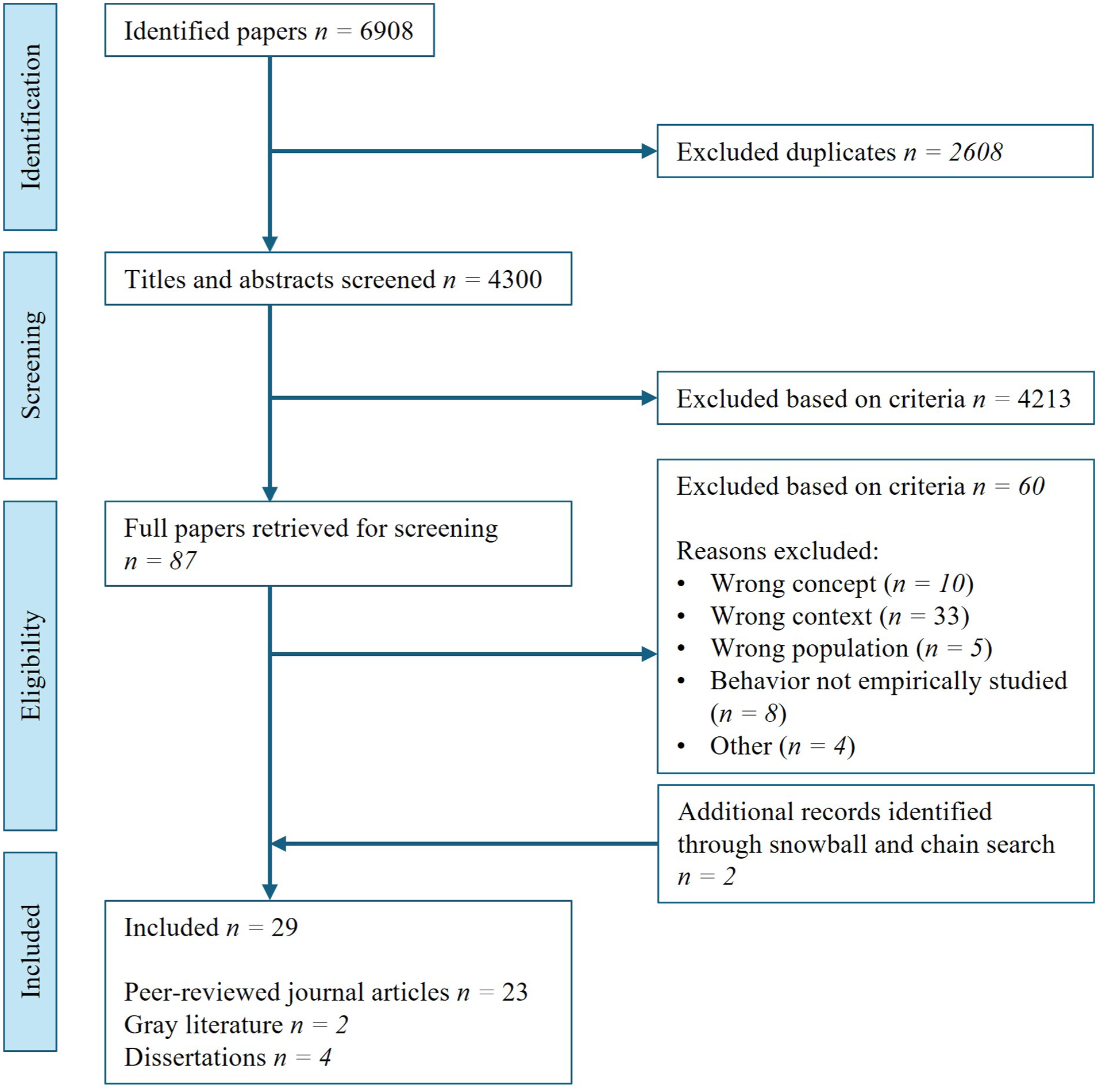
PRISMA-ScR flow diagram.
Systematic scoping reviews aim to map existing evidence, regardless of quality (Peters et al., 2015). Following the PRISMA-ScR guidelines and our objective of identifying explanations provided for why people engage in sexually harassing behavior in public space, we did not assess study quality comprehensively. Nevertheless, we reflect critically on the empirical merit of the explanations, the definitions and operationalizations of sexual harassment in public space used, and the limited diversity in participant demographics, to suggest ways the field could advance.
Twelve electronic databases were searched on January 24, 2024, to identify quantitative, qualitative, and mixed-method studies relevant to this review: Medline, Embase, Web of Science, PsycINFO, Scopus, International Bibliography of Social Sciences, Social Science Database, Applied Social Sciences Index & Abstracts, Social Services Abstracts, Sociological Abstracts, Sociology Database, and Google Scholar. These databases were selected to ensure that we identified a comprehensive range of studies across multiple relevant disciplines, including psychology, sociology, and spatial design. The search terms encompassed variations on the terms “public space,” “sexual harassment,” “perpetrator,” and “motivations.” The full search strings are included in Supplemental Table 2. The studies retrieved included scientific articles and gray literature, such as reports and dissertations, published in English. No date limitations were applied. An updated search was performed on October 22, 2024, 8 months after the initial search.
Screening
The search results were merged and transferred to Rayyan.ai. Duplicates were removed using Rayyan.ai’s deduplication and systematic resolver function. Subsequently, the titles and abstracts of the remaining studies were screened using the tool’s blind function. This feature allows researchers to independently screen studies and compare decisions in a systematic way. After piloting the inclusion criteria on 300 studies, the first and last authors independently screened the titles and abstracts. To be eligible for consideration, studies had to meet the following inclusion criteria: (1) Context: public space, places accessible to the majority of the population, including public transport; (2) Concept: studies addressing street harassment, sexual harassment in public space, or stranger harassment, including, but not limited to, verbal comments (e.g., sexual comments, requests for sexual interactions, unwanted conversations) and non-verbal actions (e.g., staring, ogling, leering, unwanted touching, groping, rubbing, sexual gestures, wolf-whistling/catcalling, honking, kissing noises, indecent exposure, public masturbation, following/stalking strangers, up skirting, frottage); (3) Population: empirical studies that collected data directly from perpetrators of sexual harassment in public space, that is, studies involving self-reported or observed perpetrator behavior; and (4) Literature: both peer-reviewed and gray literature, written in English.
Studies on sexual harassment that did not specify the context, and thus may have focused on public space (criterion 1), were included to maximize the inclusion of potentially relevant evidence in our analysis. Regarding criterion 2 (concept), studies that more broadly addressed sexual violence of harassment were included only if they presented disaggregated data for sexual harassment in public space. Similarly, regarding criterion 3 (population), studies that presented both self-reported data from perpetrators and targets’ or bystanders’ perceptions of perpetrators were included as long as the self-reported data of perpetrators could be extracted separately. Moreover, studies with both adolescent and (emerging) adult samples were included, as we were interested in explanations for why people engage in sexual harassment across developmental phases. The detailed exclusion criteria can be found in Supplemental Table 3.
Any conflicts between the first and last authors’ decisions were discussed and resolved before moving on to full-text screening using a sample of 87 studies. This screening was undertaken by the same two authors and employed the same eligibility criteria. This produced a sample of 30 studies (see Figure 1). Chain and snowball searches of their references and citations led to the identification of two further studies, but three others were removed for ineligibility during the data extraction phase. This resulted in a total of 29 studies.
Data Extraction and Analysis
The first author extracted general data from the studies using a data extraction table. This included the authors, year, location and setting, study population, definition of sexual or street harassment, methods, and main findings. The extracted data were then checked by one of the other authors to ensure that every study was evaluated by at least two authors.
Subsequently, a thematic analysis was performed to identify the explanations provided for why people engage in sexual harassment in public space. Ten studies were selected at random, and all the authors coded the results and discussion sections independently and inductively. For studies that addressed a broader concept (e.g., sexual violence) or population (e.g., both perpetrators and targets or bystanders; see section on “Screening”), only the results on sexual harassment in public space and derived from perpetrators were coded.
Thereafter, we deliberated on any discrepancies in the identification of explanations. Two types of explanations emerged: factors and arguments. Some studies focused on risk or protective factors as predictors of sexual harassment, while others emphasized the arguments concerning why those factors are (allegedly) linked to sexually harassing behavior. To do justice to the interdisciplinary nature of the sexual harassment research field, we decided to include both the factors and arguments as explanations in the review.
The remaining 19 studies were subsequently coded by the first and one of the other authors to identify the explanations proposed and whether they had been studied empirically (Table 1). The first author employed an inductive analysis to make an inventory of and subsequently categorize the identified explanations into initial themes, which were then discussed with the entire team. This process produced 10 themes that were clustered according to the social ecological framework (Figure 2), previously used in studies on violence against women (Heise, 1998). It discerns explanations at different levels of aggregation – individual, relationship, community, and societal – as it is widely assumed that those interact in influencing attitudes and behaviors. The complex interplay between explanations at different levels should therefore be considered when explaining and addressing violent behavior (Dahlberg & Krug, 2002).
Summary of Included Studies.
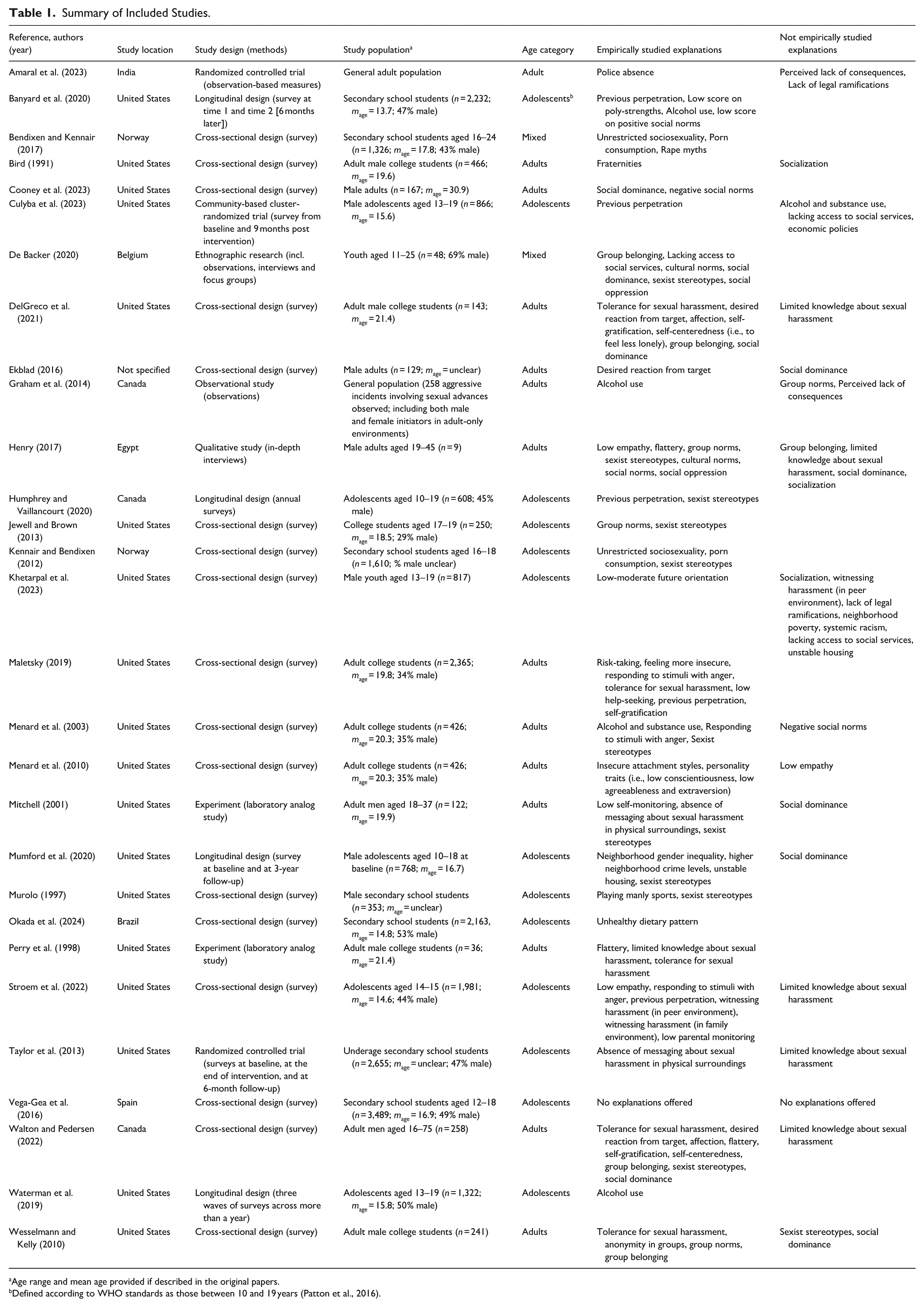
Age range and mean age provided if described in the original papers.
Defined according to WHO standards as those between 10 and 19 years (Patton et al., 2016).
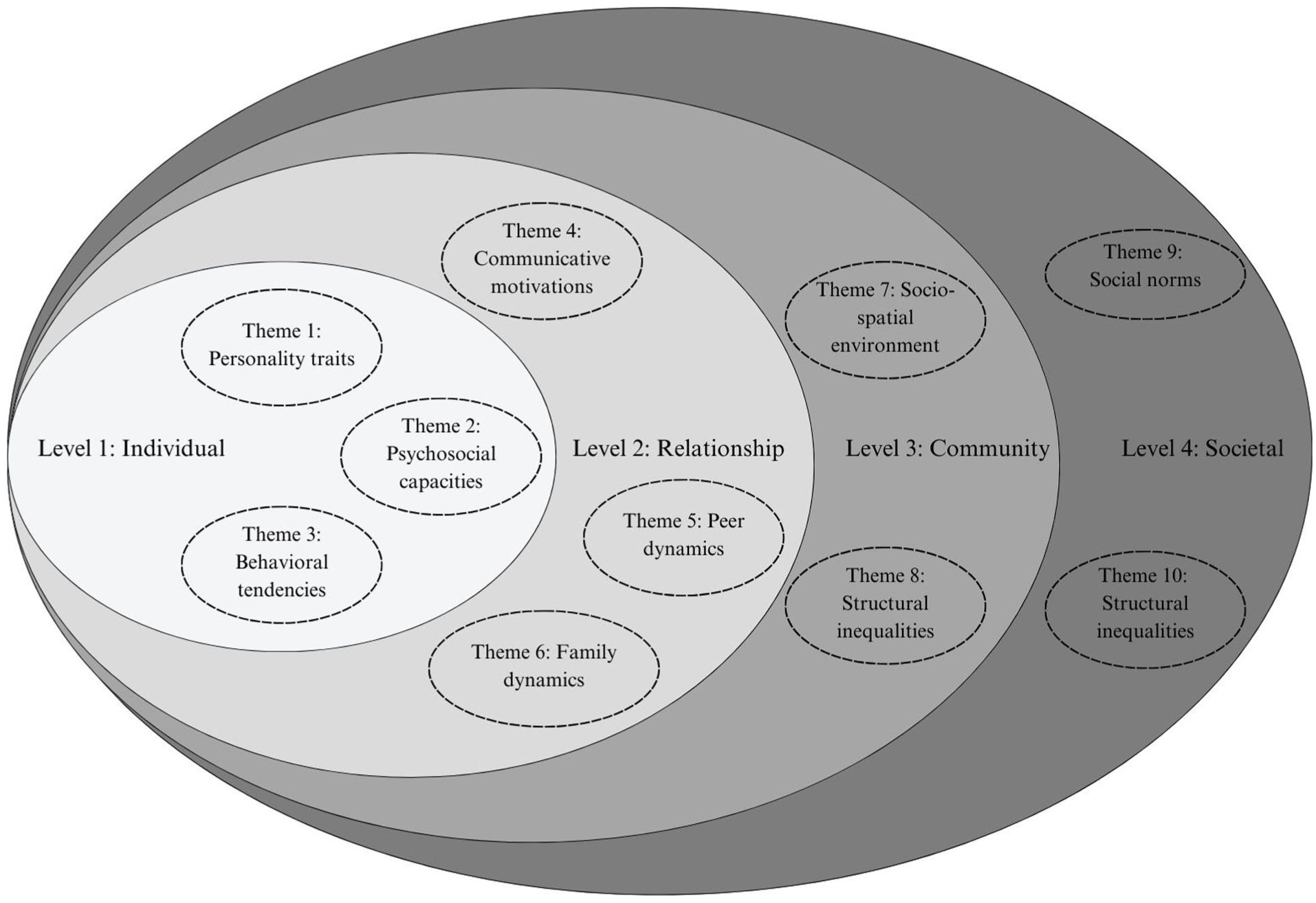
Themes of explanations of why people sexually harass in public space.
Additionally, the empirical scrutiny of the proposed explanations was assessed by determining whether they were empirically modeled (in quantitative studies), or discussed by, or observed among, study participants (in qualitative studies).
Results
Description of the Studies Included in Our Sample
The earliest study in our review was dated 1991, but most were published between 2014 and 2024 (n = 19) and were conducted in the United States (n = 18). Only three studies were performed in low- and middle-income countries, specifically Brazil, Egypt, and India.
13 studies focused exclusively on male perpetrators, while the majority included both boys/men and girls/women as perpetrators (n = 16). Not all studies reported participants’ age range, but 13 focused on adolescents (10–19 years; Patton et al., 2016), 14 on adults, and 2 on mixed samples. Most relied on cross-sectional datasets (n = 16), with only four employing qualitative methods, including in-depth interviews, focus groups, and observations. Further details on samples and methods can be found in Table 1.
Description of the Perpetrators
Many studies described the personal characteristics and/or socio-demographics of the perpetrators (i.e., who they are) in their analysis, including information on gender, sexual orientation, age, ethnicity, neurodiversity, relationship status, and whether they had themselves been a victim of bullying, sexual harassment or abuse. Although these descriptions do not explain why people with particular characteristics perpetrate sexual harassment in public space, they do, nevertheless, provide insights into who (allegedly) is more likely to carry out such behavior.
Overall, men were more likely to be the perpetrators of sexual harassment than women (Banyard et al., 2020; Bendixen & Kennair, 2017; Humphrey & Vaillancourt, 2020; Maletsky, 2019; Menard et al., 2003, 2010; Vega-Gea et al., 2016). While men and women perpetrated the same types of sexually harassing behavior, women did so to a lesser extent (Banyard et al., 2020; Bendixen & Kennair, 2017; Maletsky, 2019; Menard et al., 2003, 2010; Vega-Gea et al., 2016). A few studies found that the following factors were positively associated with perpetrating sexual harassment: (a) having a diverse sexual orientation (Maletsky, 2019), (b) being neurodiverse (Ekblad, 2016), (c) experiencing adult sexual victimization and child sexual abuse in girls/women and boys/men, respectively (Menard et al., 2003; Stroem et al., 2022), and (d) being in a relationship (Cooney et al., 2023; see, however: Walton & Pedersen, 2022). In the first three cases, it is important to note that these groups also experience higher rates of sexual harassment victimization (see e.g., [a] Hindes et al. [2025] concerning people with a diverse sexual orientation, [b] Douglas and Sedgewick [2024] concerning neurodiverse people, and [c] Walker et al. [2019] for people having experienced sexual abuse in earlier life). Clearly, more research is needed to understand how being stigmatized, sexual harassment victimization or abuse, and sexual harassment perpetration interrelate, while remaining sensitive to the risk of adding further stigmatization.
Experiencing victimization may, for instance, heighten awareness of what constitutes sexual harassment, making people more likely to report their own perpetrating behavior (Taylor et al., 2013). However, it is also plausible that those who experience victimization normalize their experiences as a coping mechanism (Farmer & Smock Jordan, 2017), which may lower the likelihood of reporting perpetration. The exact pathways should therefore be examined in future research.
There were mixed results for the link between performing acts of sexual harassment in public space and being of an older age (Cooney et al., 2023; Humphrey & Vaillancourt, 2020; Kennair & Bendixen, 2012; Walton & Pedersen, 2022). Race or ethnicity, meanwhile, were not linked to sexual harassment perpetration in public space (Banyard et al., 2020; Cooney et al., 2023; Kennair & Bendixen, 2012; Maletsky, 2019; Walton & Pedersen, 2022).
Thematic Analysis
The thematic analysis of our sample produced 10 themes, which were categorized according to the social ecological framework across the individual, relationship, community, and societal level (Figure 2).
Level 1: Individual
The individual level refers to a person’s biological, developmental, and experiential factors (Dahlberg & Krug, 2002). According to the social ecological framework, these factors shape how an individual reacts to influences from broader systems. In this review, we identified individual-level explanations for the perpetration of sexual harassment in public space and organized them based on the extent to which they are prone to change and therefore potentially responsive to prevention programs, namely personality traits, psychosocial capacities, and behavioral tendencies.
Theme 1: Personality Traits
Multiple personality traits, which are least likely to change, have been linked to sexual harassment perpetration in public space, including low levels of conscientiousness, low levels of agreeableness, extraversion, higher risk-taking, and greater insecurity in adults; limited empathy in both adolescents and adults; and unrestricted sociosexuality in adolescents.
Menard et al. (2010) found that personality traits mediated the role between insecure attachment styles such as being preoccupied with relationships and viewing relationships as secondary and different types of sexual harassment. Low levels of conscientiousness and agreeableness were significant predictors of not only sexual harassment, but also gender harassment and unwanted sexual attention in adults. The authors argue that this might be due to a higher tendency to break social norms, greater interest in meeting one’s own needs, and being less empathetic (Menard et al., 2010). Indeed, later studies among adolescents and adults found that low empathy and perspective-taking were related to sexually harassing behavior (Henry, 2017; Stroem et al., 2022). Extraversion was also identified as a predictor of such acts among adults (Menard et al., 2010).
A further study found that risk-taking was also a significant predictor: adults who reported regularly taking risks were 1.5 times more likely to perpetrate sexual harassment (Maletsky, 2019). Additionally, adults who felt insecure (i.e., they were worried about their appearance or endorsed a view that they must appear strong or intimidating) were similarly more likely to be perpetrators (Maletsky, 2019).
Lastly, Bendixen and Kennair (2017) studied the influence of sociosexuality, that is, an openness to uncommitted sex and an interest in short-term sexual relationships (see also: Kennair & Bendixen, 2012). They found that both male and female adolescents with “unrestricted sociosexuality” were more likely to sexually harass their peers. The authors suggest that harassment may be attributed to sexual motivations (Kennair & Bendixen, 2012) and that individuals with unrestricted sociosexuality may use harassment as a sexual-solicitation tactic (Bendixen & Kennair, 2017). Readers should note that their operationalization of “unrestricted sociosexuality” risks pathologizing sexual openness and reinforcing sex-negative assumptions about adolescents’ interest in casual sex.
Theme 2: Psychosocial Capacities
The systematic review also revealed various psychosocial capacities that influence the perpetration of sexual harassment in public space. These are considered more dynamic than personality traits, and include responding to stimuli with anger and limited knowledge about sexual harassment in both adolescents and adults, as well as tolerance for sexual harassment, low self-monitoring, low help-seeking in adults, and low-moderate future orientation in adolescents.
The use of anger, aggression, and physical violence in response to stimuli was associated with a higher likelihood of perpetration among both adolescents and adults (Maletsky, 2019; Menard et al., 2003; Stroem et al., 2022). Menard et al. (2003) found that the relationship between aggression and sexual harassment was mediated by the perpetrator’s expectations about how they would behave if intoxicated. Adults who reported a higher tolerance for or acceptance of sexual harassment and/or violence were also more likely to perform such behaviors (DelGreco et al., 2021; Maletsky, 2019; Walton & Pedersen, 2022; Wesselmann & Kelly, 2010). One study found that this association was conditional on the provision of relevant information: among adult men with a high degree of tolerance for harassment, learning more about its nature and consequences reduced the likelihood of perpetrating it (Perry et al., 1998).
Other studies among both adolescents and adults similarly argued that increasing knowledge about the experiences and consequences of sexual harassment in public space would reduce such behavior, though this was not studied empirically (DelGreco et al., 2021; Henry, 2017; Stroem et al., 2022; Taylor et al., 2013; Walton & Pedersen, 2022). One explanation proposed for why this may be the case was that some men are unaware that behavior they regard as affectionate or flirtatious is actually experienced by targets as harassment (DelGreco et al., 2021; Walton & Pedersen, 2022).
Relatedly, it was found that self-monitoring was associated with less sexually offensive joke telling in adults (Mitchell, 2001). Positive attitudes toward help-seeking and help-seeking behaviors have likewise been associated with lower levels of sexual harassment perpetration by adults (Maletsky, 2019). Meanwhile, among adolescents, future orientation, operationalized as having hopes and aspirations for the future, was found to have a curvilinear relationship with perpetration (Banyard et al., 2020; Khetarpal et al., 2023). Specifically, individuals with moderate scores on future orientation were more likely to perpetrate sexual harassment than those with either low or high scores. The authors related this to the complex interplay of disadvantaged neighborhood conditions and structural inequalities (Khetarpal et al., 2023). This resonates with developmental research showing that adolescence is a key period for identity formation and goal-setting, in which aspirations for the future are still unstable and strongly influenced by social and structural contexts (Blakemore & Mills, 2014; Crone & Fuligni, 2020).
Lastly, Banyard et al. (2020) demonstrated that a composite score of strengths and capacities (labeled as “poly-strengths”), including youth voice and influence, community support, healthy coping, future orientation, diversity acceptance, and spirituality and mattering, had a negative relationship with sexually harassing behavior by adolescents in a cross-sectional design, but not in a panel design. They argued that risk factors, for example, alcohol use, might limit the positive effect of poly-strengths over time (Banyard et al., 2020).
Theme 3: Behavioral Tendencies
The most commonly proposed individual-level explanation of why some people sexually harass others was past behavior (Banyard et al., 2020; Culyba et al., 2023; Humphrey & Vaillancourt, 2020; Maletsky, 2019; Stroem et al., 2022). For example, Banyard et al. (2020) found that adolescents who reported sexually harassing others in the past 6 months were 9 times more likely to repeat the behavior. Other forms of past aggression, including physical and sexual violence and bullying, were also associated with future acts of sexual harassment in adolescents and adults (Culyba et al., 2023; Maletsky, 2019; Stroem et al., 2022). As an example, Humphrey and Vaillancourt (2020) demonstrated that bullying at age 10 increased the likelihood of perpetrating sexual harassment and using homophobic taunting at age 19.
Some studies have identified behaviors such as porn consumption, playing “manly” sports, unhealthy diets, alcohol, and substance use as being related to perpetrating sexual harassment in public space. Porn consumption predicted other-sex harassment by adolescent girls and same-sex harassment by adolescent boys, although this effect disappeared when modeled simultaneously with sociosexuality (Bendixen & Kennair, 2017). Meanwhile, although Murolo (1997) hypothesized that participation in “manly” sports would predict sexually harassing behavior by adolescent boys – facilitated via socialization into sexist and dominant norms – this was not empirically substantiated. Conversely, adolescents with unhealthy diets were more likely to engage in sexual harassment (Okada et al., 2024). The authors suggested – but did not study empirically – that this may be due to elevated blood glucose levels, nervousness, irritability, or poorer mental health, all of which could lead to more verbal and physical aggression.
Finally, alcohol use and intoxication levels of both perpetrators and targets have been associated with sexual harassment in both adolescents and adults (Banyard et al., 2020; Culyba et al., 2023; Graham et al., 2014; Menard et al., 2003; Waterman et al., 2019). For example, the intoxication level of the target was linked to more invasive behavior by perpetrators in a bar room setting, possibly due to the perception that intoxicated targets are less able to resist sexual advances (Graham et al., 2014). Alcohol use also increased the likelihood that an individual would perpetrate sexual harassment (Banyard et al., 2020), and alcohol expectancies (i.e., using one’s level of intoxication to justify sexual harassment) increased the odds of both men and women perpetrating the behavior (Menard et al., 2003). However, Waterman et al. (2019) found that while adolescents who more frequently binge drank also reported more sexual harassment perpetration, within-person variation in the levels of binge drinking were not associated with harassment. They suggest that both behaviors arise from underlying characteristics, for example, impulsivity, antisocial personality traits, family violence, and risky peer networks (Waterman et al., 2019), all of which are covered in the other themes in this review (see e.g., personality traits, family and peer dynamics).
Level 2: Relationship
The second level of the social ecological framework refers to “those interactions in which a person directly engages with others as well as the subjective meanings assigned to those interactions” (Heise, 1998, p. 269). This level considers how proximal relationships, such as relationships with peers, intimate partners and family members, increase the risk of perpetrating sexual harassment in public space (Dahlberg & Krug, 2002). At this level, we included both the motivations that perpetrators expressed for interacting in a sexually harassing manner, and the influence of their close social relationships, including family and peers.
Theme 4: Communicative Motivations
Only three studies from our sample asked self-reported adult perpetrators directly why they sexually harass others in public: 87% hoped for an expression of interest (Ekblad, 2016), and 85% (Walton & Pedersen, 2022) or 55% (DelGreco et al., 2021) wanted to make the target smile. Only a small proportion of perpetrators in all three studies aimed to evoke negative reactions, for example, disgust, anger, fear, or shock (ranging from 1% to 12%: DelGreco et al., 2021; Ekblad, 2016; Walton & Pedersen, 2022). These numbers demonstrate that there can be a wide gap between the communicative motivations of perpetrators on the one hand and the perceptions and actual reactions of their targets on the other (DelGreco et al., 2021).
Tellingly in this regard, DelGreco et al. (2021) and Walton and Pedersen (2022) found that showing affection was the most common reason given for street harassment in adults. Similarly, catcalling and other public forms of sexual harassment were employed as a type of flirtation or flattery, intended to signal to the target that they were seen as attractive (Perry et al., 1998; Walton & Pedersen, 2022). Indeed, one of the perpetrators in Henry’s (2017) interviews asked: “What is wrong with saying a compliment to a pretty woman? They should like the attention and care” (Henry, 2017, p. 276). In doing so, they were labeling their harassment as a mere show of interest and affection. This explanation should be placed in a wider context of social and gender norms in society, which will be discussed later.
Alongside these seemingly other-oriented motivations, self-centered motivations also emerged in our analysis – expressing a view that the perpetrator’s needs trump those of the target. For instance, the idea that the perpetrator should “win” (i.e., score; succeed in their pursuit) was associated with a greater likelihood of committing acts of sexual harassment (Maletsky, 2019). Moreover, perpetrators report that they regard being sexually aroused as a valid reason for catcalling (Walton & Pedersen, 2022), along with relieving stress, improving their mood, reducing feelings of loneliness, having nothing better to do, and just wanting to have some fun (DelGreco et al., 2021; Walton & Pedersen, 2022).
Theme 5: Peer Dynamics
Research among adolescents and young adults shows that peer dynamics (i.e., the interactions and processes within peer groups) also influence the perpetration of sexual harassment in public space. For example, young men found it easier to commit such acts when they experienced greater anonymity provided by a group setting, compared to when they were alone (Wesselmann & Kelly, 2010). At the same time, group norms and peer pressure tend to overshadow personal opinions and behavior intentions (Jewell & Brown, 2013; Wesselmann & Kelly, 2010). A study on the influence of gender stereotypes and perceived group norms found that the latter predicted verbal sexual harassment above and beyond the participants’ gender stereotype endorsement. It concluded that having friends who are accepting of sexual harassment is a stronger predictor of such behavior than holding relevant individual attitudes (Jewell & Brown, 2013).
Relatedly, Stroem et al. (2022) found that adolescent boys were more likely to perpetrate sexual harassment if they had seen or heard that a peer had physically abused their partner. Adolescent girls who had witnessed someone being attacked – whether in public or in private – were also more likely to sexually harass others themselves. Associations with delinquent peers further increased the odds of perpetration (Stroem et al., 2022). According to these authors, witnessing sexual assault within one’s peer group could lead to a greater acceptance and tolerance of violence, thereby normalizing sexual harassment perpetration (Stroem et al., 2022). This resonates with the explanations suggested by Khetarpal et al. (2023).
Building on the idea of group reinforcement, some studies found that adolescent boys and adult men regarded sexual harassment in public space as a social activity that strengthens group bonding and furthers a sense of belonging (De Backer, 2020; Walton & Pedersen, 2022; Wesselmann & Kelly, 2010). For instance, in a bar room environment, men in groups encouraged each other to sexually harass women (Graham et al., 2014). Wesselmann and Kelly (2010) also found that being in a group and the proclivity to sexually harass interacted to predict the likelihood of perpetration among adult men attending college (Wesselmann & Kelly, 2010). Nonconformity to group norms could even lead to exclusion or alienation from the group (Henry, 2017), prompting adolescent boys and adult men – who are socialized in these norms – to adopt a more accepting perspective toward sexual harassment and its perpetration (Bird, 1991; Henry, 2017; Khetarpal et al., 2023).
Theme 6: Family Dynamics
As described under peer dynamics, Stroem et al. (2022) found that witnessing sexual harassment or abuse within one’s close social environment increased the likelihood of perpetrating such behavior. This was also observed when harassment or abuse occurred within the family context. For instance, in their adolescent sample, girls were more likely to commit acts of sexual harassment if they had witnessed spousal abuse in their home environment. Stroem et al. (2022) also found that parental monitoring significantly reduced the odds of perpetration. They argue that, in its absence, adolescents seek support from peers, which encourages conformity to group norms and increases vulnerability to peer pressure (Stroem et al., 2022).
Level 3: Community
The third level of the social ecological framework explores the community contexts in which social relationships are embedded, such as schools, workplaces, and neighborhoods (Dahlberg & Krug, 2002). In the case of sexual harassment in public space, the community level refers to neighborhood and street level. At this level, we found multiple explanations that could be clustered into two themes: the socio-spatial environment and structural inequalities.
Theme 7: Socio-Spatial Environment
A few studies have included the physical or built environment in their analysis, demonstrating how a staged sexist condition – in this case, a room in which sexually provocative posters objectifying women were shown as well as having to listen to a stand-up comedian sexually objectifying women – led to increased self-monitoring among adult men and, consequently, less sexual harassment perpetration (Mitchell, 2001). Using posters to increase awareness also reduced the frequency of perpetration in adolescents (Taylor et al., 2013). Additionally, living in fraternities was not associated with higher levels of catcalling among young adults compared to living in co-ed or single-sex residential halls (Bird, 1991).
Moreover, the presence of uniformed officers (compared to undercover officers or the absence of police) led to a reduction in severe cases of sexual harassment in public space, such as forceful touching and intimidation. The authors assumed that this was due to the deterrence effect on potential perpetrators, which would not occur when officers operated undercover (Amaral et al., 2023). Similarly, Graham et al. (2014) argued that simply knowing that “they can get away with it” facilitated sexual harassment in public space.
Theme 8: Structural Inequalities
Structural inequalities at the community level, such as poverty and higher crime rates, have also been proposed to influence the perpetration of sexually harassing behavior among both adolescents and adults (Culyba et al., 2023; De Backer, 2020; Henry, 2017; Khetarpal et al., 2023). In a study among Muslim youths in Brussels, young men explained that they acted out because facilities in public spaces had been taken away. The author states that street harassment in this case was a “tactic against dominant structures of oppression” (De Backer, 2020).
This demonstrates the interconnectedness between structural inequalities, psychosocial capacities (theme 2), and social norms (theme 9) in influencing the perpetration of sexual harassment in public space. Following the same line of thought, Culyba et al. (2023) argue that improving connection and access to schools and other social services would reduce sexual harassment perpetration by adolescent boys through the promotion of prosocial behavior by providing role models and creating positive relationships. Mumford et al. (2020), however, found that adolescent boys from neighborhoods with higher crime rates or greater disadvantage were less likely to engage in sexually harassing behavior. Furthermore, they found no significant association between sexual harassment perpetration by adolescents and neighborhood-level factors such as gender equality, housing stability, crime rates, or other socio-demographic variables (Mumford et al., 2020).
Level 4: Societal
The fourth and final level of the social ecological framework refers to structural conditions, including the broad set of widely held values and beliefs that influence the factors nested in the other three levels of social ecology (Heise, 1998). These include factors that create acceptability for, and accommodate the continuity of, violence (Dahlberg & Krug, 2002). In this review, we found various societal-level explanations, including the influence of social norms, which include gender norms, and structural inequalities, which have been studied among both adolescents and adults.
Theme 9: Social Norms
Next to the lack of legal ramifications that might facilitate sexual harassment perpetration (Amaral et al., 2023; Khetarpal et al., 2023), social norms – unwritten rules and expectations that shape how people behave – also might do so. Social norms differ between cultures, time periods, and places, and are particularly internalized during adolescence, leading to unconscious behavior in adulthood (da Silva Pinho et al., 2021).
Overall, the studies in this review found that positive social norms (e.g., the importance of talking about healthy relationships) reduce the likelihood of sexual harassment perpetration, while negative ones (e.g., a perceived acceptability of different forms of sexual harassment; the inevitability of male dominance in society) increase it (Banyard et al., 2020; Cooney et al., 2023; Menard et al., 2003). A qualitative study involving adult perpetrators of sexual harassment in public space in Cairo, Egypt, is a rich source of information about the impact of social norms on the perspectives of these perpetrators (Henry, 2017). Perpetrators argued that sexual harassment is acceptable if you see it being committed by many people in your immediate surroundings. One perpetrator, for instance, explained: “You grow up seeing your older brothers, uncles, and even your father doing it, so you think it is okay to do it” (Henry, 2017, p. 276). The omnipresence of sexual harassment in society and the media, as well as its performance by family and friends, creates certain expectations that one should also engage in this behavior; not doing so would even be seen as “abnormal” (Henry, 2017, p. 276).
In the specific Egyptian case examined by Henry (2017), he also found that the perpetrators of sexual harassment in public space justified their behavior using their religious beliefs. Muslim participants stressed that the Shariaa (Islamic Law) dictates that women should not walk the streets without a male family member and, therefore, if they do, exposing them to harassment is justified.
Many authors have employed social-dominance orientation, that is, internalized social beliefs about hierarchy and dominance in society, to explain why in particular men and adolescent boys sexually harass women (De Backer, 2020; Ekblad, 2016; Henry, 2017; Mitchell, 2001; Mumford et al., 2020; Wesselmann & Kelly, 2010). Some identified that men with higher scores on measures of social-dominance orientation were more likely to perpetrate this type of behavior (Cooney et al., 2023; Walton & Pedersen, 2022). Cooney et al. (2023) also found that, even though many men recognized that others generally disapprove of sexual harassment, their preference for hierarchical structures was nonetheless linked to the perceived acceptance of such acts, in turn leading to greater perpetration (Cooney et al., 2023).
Gender norms – social norms specifically related to roles broadly considered appropriate for men and women – are also important to consider. The studies in this review show that both adolescents and adults who endorse traditional gender stereotypes are more likely to engage in acts of sexual harassment toward both women (Jewell & Brown, 2013; Menard et al., 2003; Mitchell, 2001; Mumford et al., 2020; Murolo, 1997; Walton & Pedersen, 2022) and men whose appearance is not stereotypically male (Humphrey & Vaillancourt, 2020). Although most studies did not explicitly specify which aspects of gender norms they examined (with the exception of Menard et al. [2003] who explicitly addressed adversarial heterosexual beliefs), their measures and interpretations were clearly grounded in heteronormative and cisnormative assumptions about men’s and women’s roles. From this perspective, women who are regarded as departing from the traditional roles of caring for the family and household, or as “endangering” male dominance, are seen as deserving of harassment. DelGreco et al. (2021) found that men who believed they had less power than women were more likely to harass them in public space. The qualitative studies in our sample provide a clear illustration of how adolescent boys and men express these traditional heteronormative gender roles. Young men in Brussels, for example, labeled girls and women who “hang out” in public as “whores,” because hanging out is seen as a male activity (De Backer, 2020). Similarly, male perpetrators in Egypt claimed that women are intended to serve the family at home. Consequently, if they go out and fail to meet the expectations of their perceived role, they deserve to be harassed (Henry, 2017).
This notion of “deserving” sexual harassment because of one’s behavior or appearance is referred to in the gender literature as “rape myths,” and those who believe in them are more likely to commit such acts against both women and men (Bendixen & Kennair, 2017), possibly because they develop a greater tolerance for sexual harassment (DelGreco et al., 2021; Wesselmann & Kelly, 2010).
Theme 10: Structural Inequalities
It has been argued that structural inequalities, including racism and gender inequality, encourage both adolescents and adults to perpetrate sexual harassment in public space (Culyba et al., 2023; De Backer, 2020; Henry, 2017; Khetarpal et al., 2023). This has, however, rarely been studied empirically. De Backer (2020), for instance, found that young men used street harassment to occupy and monopolize public space, thereby showing other groups, including girls, that it belonged to them and others should stay away (De Backer, 2020). Similarly, Egyptian men perpetrated sexual harassment in public space as a form of rebellion against the feeling of being victims of social oppression (Henry, 2017).
Critical Reflections
Before we discuss the findings of our thematic analysis and their implications, we critically reflect on three issues revealed by our analysis that the field could improve upon in studying why people sexually harass in public space.
Empirical Scrutiny
First, our main research question also focused on whether the explanations suggested were empirically studied. In total, our analysis identified 48 explanations that were suggested for why people (as individuals, not social categories of people) perpetrate sexual harassment in public space. With the exception of the research by Okada et al. (2024) and Vega-Gea et al. (2016), all studies suggested more than one explanation.
More than half of the 48 suggested explanations had been studied empirically. In total, 31 were empirically studied each time they were proposed (Table 2; see Supplemental Table 4 for the frequency counts). Eleven were empirically studied by some authors, while others just suggested them as likely explanations for their empirical findings. Six explanations had not been studied empirically at all: socialization processes, a perceived lack of consequences, lack of legal ramifications, systemic racism, neighborhood poverty, and economic policies.
Explanations for Sexual Harassment in Public Space and Their Empirical Assessment.
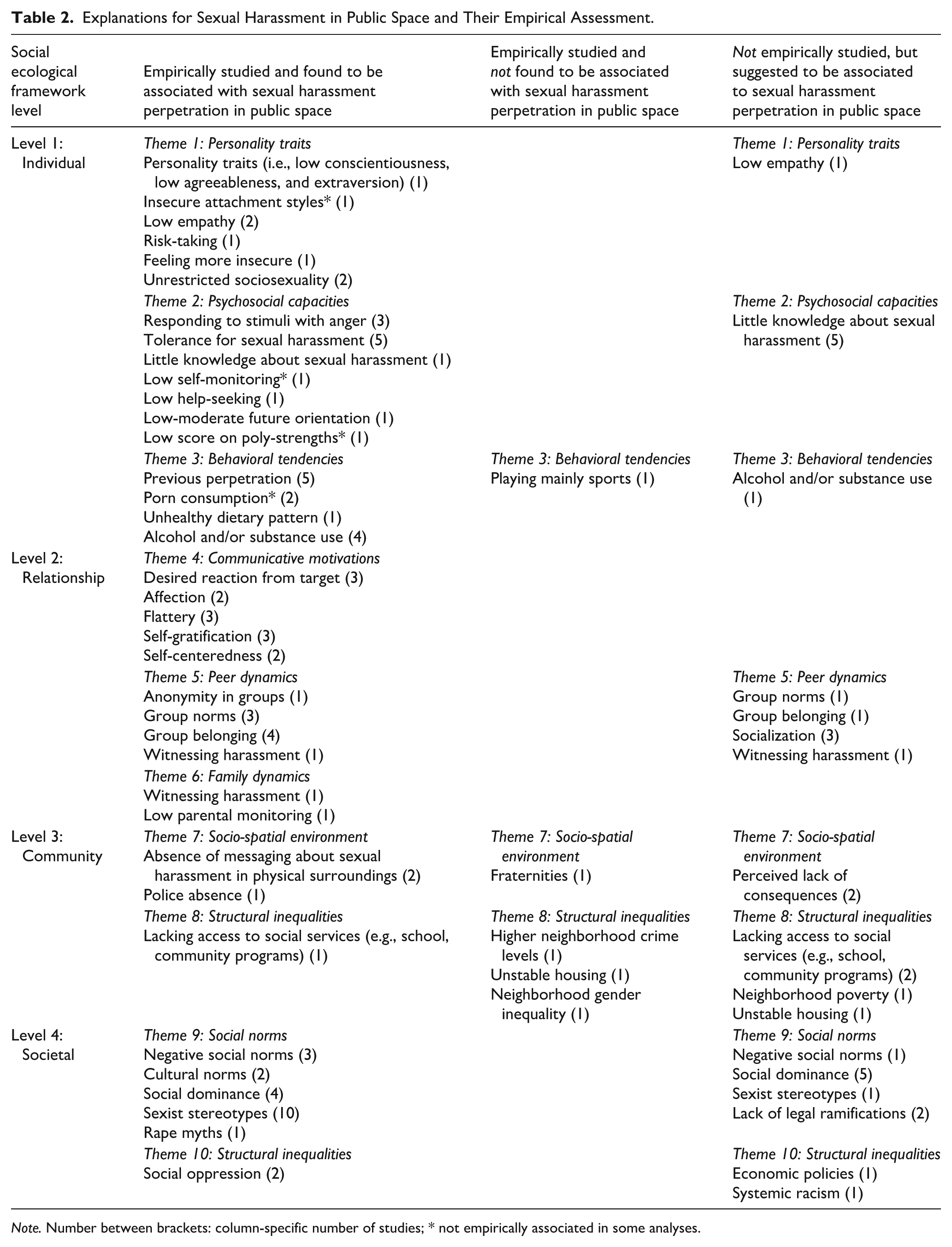
Note. Number between brackets: column-specific number of studies; * not empirically associated in some analyses.
It is important to note that there are more empirically studied explanations at the individual and relationship levels than the community and societal levels. This suggests that societal-level explanations for sexually harassing behavior in public space – often related to gender inequality, structural inequalities, and poverty – require greater empirical scrutiny to understand their role in inspiring public acts of sexual harassment. And the same applies to how community- and societal-level factors interact with individual- and relationship-level factors in inspiring sexually harassing behaviors in public space.
Definition and Operationalization
Second, studies varied widely in how they defined and operationalized sexual harassment in public space. Of the 29 studies reviewed, 10 provided a clear definition of the behavior under consideration, including sexual harassment, stranger harassment, and street harassment. In 17 studies, sexual harassment was defined indirectly through the way it was measured or assessed, without offering an explicit or comprehensive definition. Two studies (Okada et al., 2024; Perry et al., 1998) provided neither a definition nor examples of the behavior studied. This lack of consistency in operationalization poses challenges for comparability across studies and obscures whether researchers are capturing the same phenomenon (cf. Keel et al., 2024). Supplemental Table 5 presents an overview of the definitions and operationalizations used across studies.
A number of studies adapted tools originally developed to measure victims’ experiences of sexual harassment in other contexts than public space, for example, the Sexual Harassment Survey by the American Association of University Women to assess sexual violence in American schools (Bryant, 1993), or the Sexual Experience Questionnaire or Survey, initially created to evaluate sexual harassment in the workplace (Fitzgerald et al., 1995). More recently, the Sexual Experiences Survey – Short Form Perpetration has been criticized for its limited validity for women’s perpetration of harassment (Jeffrey & Senn, 2025; Johnson et al., 2017). Moreover, applying tools developed for other contexts to study sexual harassment in public space might overlook the contextual specificities of the behavior in this setting, such as location, number of perpetrators, presence of bystanders, etc. (cf. Keel et al., 2024).
Other studies, by contrast, developed specific instruments tailored to sexual harassment in public space (Amaral et al., 2023; Ekblad, 2016; Graham et al., 2014; Henry, 2017; Perry et al., 1998; Walton & Pedersen, 2022; Wesselmann & Kelly, 2010). However, these tools are not yet widely used or validated across different contexts. Future research should refine these emerging instruments to ensure they adequately capture the specificities of sexual harassment in public space, covering the role of context, actors, behavior, and motivations (cf. Keel et al. [2024] in this journal).
Diversity
Third, our review indicated limited diversity in the study samples. Slightly more than half (n = 15) of the studies were conducted among student populations, including both secondary schools and universities, and the majority focused on U.S.-based samples (n = 18). Hence, limited attention has been paid to other (potential) perpetrators than U.S. students, and thus also to how perpetration is shaped by broader cultural norms and socio-economic conditions. Only two studies explicitly examined culturally specific norms, despite existing evidence that sexual violence is highly context- and culture-dependent (Abeid et al., 2015; Tummala-Narra et al., 2023).
In addition, the explanations examined in this review have not consistently been studied across age groups, which limits the generalizability of findings across developmental stages. For example, the relation between sexual harassment in public space and factors such as future orientation, witnessing harassment in one’s social environment, neighborhood crime levels, and adherence to rape myths has only been investigated in adolescent samples. By contrast, explanations including personality traits, feelings of insecurity, and direct communicative motivations for sexual harassment in public space have only been studied in adult populations.
Furthermore, while most studies (n = 16) included women or adolescent girls in their samples on perpetration, few explored how risk factors might apply beyond a binary gender framework. Similarly, studies with men or adolescent boys rarely considered sexual diversity (with the exception of Banyard et al. (2020), Cooney et al. (2023), Maletsky (2019), Menard et al. (2003), Stroem et al. (2022), and Waterman et al. (2019)), often underrepresenting or excluding sexual minority populations, or failing to specify participants’ sexual orientation. Furthermore, they were generally unclear about whether they referred specifically to cisgender men, with the exception of Stroem et al. (2022) and Walton and Pedersen (2022).
Together, these gaps mean that current research does not yet fully capture the range of explanations relevant to the perpetration of harassment in public space across different cultural contexts, developmental stages, genders, and sexualities. Future research should therefore aim to include more diverse samples, adopt inclusive gender and sexuality perspectives and measures, account for broader cultural contexts, and consider comparative age-specific or longitudinal approaches to improve both the generalizability and the depth of insights into sexual harassment in public space.
Discussion of the Findings and Their Implications
Understanding the reasons why people sexually harass others in public space is crucial to the development of effective prevention strategies (Dahlberg & Krug, 2002; Fileborn & O’Neill, 2023). We therefore undertook this literature review to identify the explanations proposed for why people sexually harass in public space, and whether these explanations had been studied empirically. After discussing the findings and highlighting knowledge gaps, we consider the limitations of our review and the studies in our sample before closing with some final conclusions and implications. A summary of critical findings and implications for practice, policy, and research can be found in Table 3.
Critical Findings and Implications for Research, Policy, and Practice.
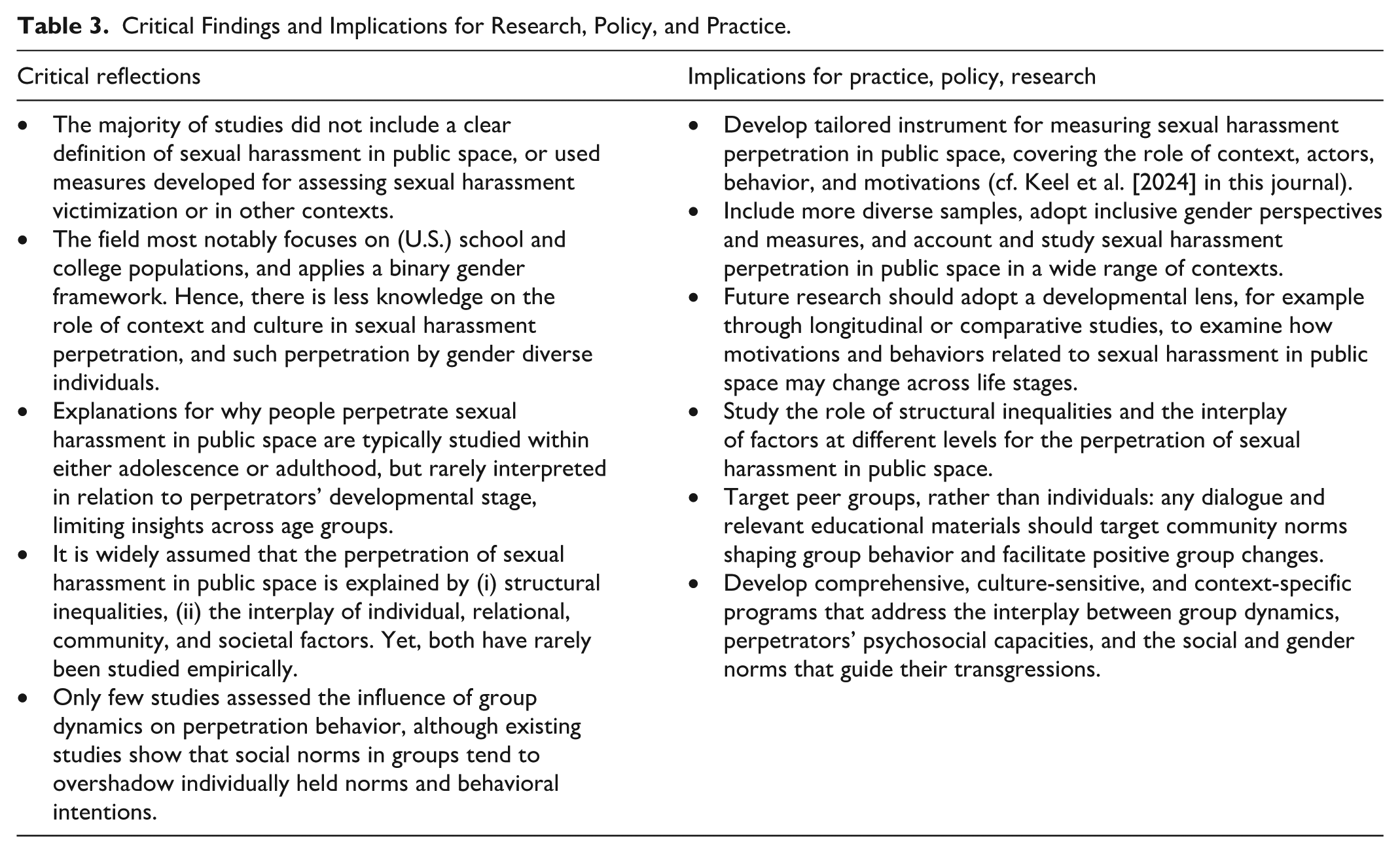
Our review of 29 studies identified 48 suggested explanations. These explanations could be grouped into 10 themes, which were categorized according to a version of the social ecological framework that discerns the individual, relationship, community, and societal level (Figure 2 and Table 2). Most of the studies focused on the individual level, focusing on personality traits, psychosocial capacities, and behavioral tendencies. We found that psychosocial capacities were less convincingly linked to the perpetration of sexual harassment in public space than personality traits. This may be due to the conditionality of the relevance of these capacities to such behavior (Bowman et al., 2018; Monahan et al., 2013). Future research could therefore explore this conditionality, as well as consider additional capacities that have not been studied in relation to sexual harassment in public space.
Eight studies assessed direct communicative motivations for the sexual harassment of others in public settings. These can be dissected in other-centered motivations (i.e., the perpetrator seeks to affect the target’s behavior) and self-centered motivations (i.e., self-gratification). The studies on the role of direct communicative motivations may, however, be prone to recall bias, as self-identified perpetrators were asked to reflect on motivations of past behavior and may at that moment not have been fully aware of it, and the reasons why they displayed it (cf. DelGreco et al., 2021). Additionally, these studies did not account for the contextual factors in which the behavior occurred, potentially making it more difficult for perpetrators to recall their motivations accurately.
Clearly, direct communicative motivations are influenced by broader community and societal circumstances (Heise, 1998; Hindes & Fileborn, 2023), for example, group composition, physical environment, and the responses of targets. These contextual factors were largely overlooked in the reviewed studies, with the exception of Perry et al. (1998). When comparing the self-reported motivations of perpetrators to the motivations as perceived by bystanders or targets of street harassment, we find that the latter often interpret street harassment as an act of control or exertion of power over women (DelGreco et al., 2021; Hindes & Fileborn, 2023). By contrast, our review shows that perpetrators may also perceive their behavior as flattering. This could be linked to the socialization of men as romantic initiators and their (unconscious) sense of entitlement to public spaces and social surroundings (De Backer, 2020; Hindes & Fileborn, 2023; Walton & Pedersen, 2022; Zietz & Das, 2018). Future research should thus further clarify how communicative motivations are shaped by situational and contextual factors, social norms in general and gender norms specifically.
Indeed, the influence of the direct social environment, including peer groups, was found to be crucial. This finding can be related to Grazian’s concept of “girl hunting” – a practice young men engage in to impress other men, gain status, and display masculinity (Grazian, 2007), and can be interpreted as a form of social activity that strengthens the group bonds (Hindes & Fileborn, 2023; Wesselmann & Kelly, 2010). A meta-analysis on the perpetration of sexual violence in higher education institutions (Steele et al., 2022) also identified that peer approval was a decisive predictor of sexual violence committed by individual students. These dynamics appear especially salient during adolescence and emerging adulthood, developmental phases in which identity formation, peer acceptance, and social status are central. In these phases, susceptibility to group norms and social learning processes is heightened (Laursen & Veenstra, 2021), which may help explain why peer dynamics have been studied primarily in adolescent samples. While some overlap can be seen with adult perpetration – especially seeing harassment as a bonding activity, more research is needed to determine whether these mechanisms operate in the same way beyond adolescence.
In relation to the socio-spatial environment, it is important to note that studies on sexual harassment perpetration less often focus on the physical environment than studies on victimization (Gardner et al., 2017; Miranda & van Nes, 2020). Previous research among targets of harassment has shown that the physical environment can give perpetrators a quick escape route or help them to stay unseen (Hindes & Fileborn, 2023; Hutson & Krueger, 2019; Mohamed & Stanek, 2020). Tellingly, when potential perpetrators felt they were being monitored – whether by the police or their parents – they committed fewer public acts of sexual harassment (Amaral et al., 2023; Stroem et al., 2022). At the same time, a sense that one could “get away with it” was seen as a facilitating factor (Graham et al., 2014; Khetarpal et al., 2023). It is therefore likely that the level of anonymity provided by the built environment is relevant to explaining sexual harassment perpetration (Hindes & Fileborn, 2023), which should be evaluated in future research.
At the societal level, explanations included general social norms and, more specifically, gender norms. These reflect the pervasiveness and normalization of sexual harassment in public space and are often used to justify its perpetration and to blame victims. The influence of such norms on the perpetration of sexual harassment has been widely documented in other settings, including academia, sport environments, the military, and domestic violence (Kim, 2024; Neal & Edwards, 2017; Stander & Thomsen, 2016; Zara et al., 2024).
The final set of explanations identified in our review – situated at the community and societal level – relates to structural inequalities such as patriarchy, systemic racism, lack of access to education, and poverty. These factors have rarely been examined empirically in relation to sexual harassment in public space. This stands in contrast to the broader gender-based violence literature, where such structural inequalities and community-level factors are more established determinants of violence perpetration (Heise, 1998; Jewkes et al., 2015). More thorough empirical investigation is needed to understand their role in inspiring public acts of sexual harassment and the mechanisms by which this occurs.
This is also true for research into how societal factors like adverse economic policies and systemic racism shape how the individual-level characteristics of perpetrators discussed above influence harassment behaviors. It is a mainstay of the social ecological framework that complex behaviors like sexual harassment perpetration are explained by the interplay of factors at various levels of aggregation (Dahlberg & Krug, 2002), yet this is hardly researched. Overall, more systematic research is needed to examine the mechanisms and situational conditions that account for sexual harassment perpetration, rather than focusing solely on individual-level risk factors (cf. Bowman et al., 2018; Whitehead et al., 2018).
Contrary to the recent scoping reviews of research on sexual harassment in public space, which found that studies primarily use qualitative methods (Fileborn & O’Neill, 2023; Logan, 2015), most of the studies in our review applied quantitative approaches. There may be two reasons for this, related to our specific focus on perpetrators and acts of perpetration: (a) it is plausible that perpetrators are easier to reach because of the anonymity that survey research provides; and (b) not all perpetrators self-identify as such or realize that their behavior constitutes sexual harassment, making it harder to identify them for the purposes of qualitative research. Nevertheless, being able to do so is crucial to achieving a more in-depth understanding of why people perpetrate sexual harassment, thus making it essential for future studies to actually discuss with (potential) perpetrators why they do the things they do.
Last, while our review involved studies where sexual harassment in public was a stand-alone behavior, our offline and online lives are increasingly intertwined. In the context of dating violence in particular, evidence shows that online and offline harassment often co-occur (Rodríguez-de Arriba et al., 2024; Schokkenbroek et al., 2024). While the relationship between public and online forms of stranger harassment has yet to be assessed, it is plausible that the objectification of women on social media contributes to the normalization of sexual harassment perpetration in public space. Likewise, reports of cases of sexual harassment in public space shared online often lead to victim-blaming and the reinforcement of rape myths (Bailey, 2017; Simões & Silveirinha, 2022). This may in turn lead to further online harassment (Burkell et al., 2014). Future research should therefore investigate the relationship between online and offline sexual harassment between strangers.
Limitations
First, the majority of studies did not include a clear definition or conceptualization of sexual harassment in public space, echoing criticisms made in previous reviews on sexual harassment in public space (Fileborn & O’Neill, 2023; Keel et al., 2024). Relatedly, measures of victims’ experiences of non-public forms of sexual harassment were often adapted to measure sexual harassment perpetration in public space. Such measures potentially ignore relevant aspects of such perpetration, as described earlier. Moreover, not all included studies clearly specified whether the behavior occurred in public space; it might therefore be possible that our sample captured harassment in non-public contexts, such as schools or sports settings.
Second, the studies included in this review especially focused on populations in Europe and North America. Given the context-specific nature of sexual harassment perpetration and its explanations, generalizing the findings beyond these settings should be approached with caution. This limitation is also due to the exclusion of studies not written in English. Third, the studies included in this review included both adolescent (45%), adult (48%), and mixed samples (7%). The inclusion of this broad age range might have obscured developmental differences in explaining factors, thereby indicating the need for comparative studies.
Conclusions and Implications for Research, Policy, and Practice
As Fileborn and O’Neill (2023) have documented in this same journal, although the research field concerning sexual harassment in public space is expanding rapidly, empirical evidence on what explains perpetration remains limited and scattered. Our findings illustrate that the perpetration of sexual harassment in public space is explained by various individual, relationship, community, and societal factors, and that relational ones such as peer dynamics can overshadow the individual ones such as beliefs and behavioral intentions. They also suggest that systematically examining the interplay of these factors, using standardized measures tailored to study sexual harassment in public space, is crucial to advancing the field. Moreover, this could enable the development of more tailored and effective prevention strategies, complementing valuable national-level awareness programs that challenge the gendered norms facilitating sexual harassment in public spaces, to help reduce this widespread practice, which continues to have serious consequences for many.
Supplemental Material
sj-docx-1-tva-10.1177_15248380251397408 – Supplemental material for Why Do People Perpetrate Sexual Harassment in Public Space? A Systematic Scoping Review
Supplemental material, sj-docx-1-tva-10.1177_15248380251397408 for Why Do People Perpetrate Sexual Harassment in Public Space? A Systematic Scoping Review by Charlotte J. W. van Tuijl, Lysanne W. te Brinke, Milene Gonçalves and Jeroen van der Waal in Trauma, Violence, & Abuse
Footnotes
Acknowledgements
The authors wish to thank Dr Wichor Bramer and Dr Maarten Engel from the Erasmus MC Medical Library for their support in the development and update of the search strategy.
Ethical Considerations
Ethical approval was not required for this scoping review, as it synthesizes data from previously published studies and does not involve the collection of identifiable human participant data.
Consent to Participate
Due to the nature of this systematic scoping review, there are no human participants in this article.
Funding
The authors disclosed receipt of the following financial support for the research, authorship, and/or publication of this article: This research is part of a PhD trajectory funded by Convergence | Healthy Start, a program of the Convergence Alliance – Delft University of Technology, Erasmus University Rotterdam, and Erasmus Medical Center – to improve the future of new generations.
Declaration of Conflicting Interests
The authors declared no potential conflicts of interest with respect to the research, authorship, and/or publication of this article.
Data Availability Statement
Any Other Identifying Information Related to the Authors and/or Their Institutions,Funders,Approval Committees,etc.,That Might Compromise Anonymity
Supplemental Material
Supplemental material for this article is available online.
Author Biographies
 .
.
References
Supplementary Material
Please find the following supplemental material available below.
For Open Access articles published under a Creative Commons License, all supplemental material carries the same license as the article it is associated with.
For non-Open Access articles published, all supplemental material carries a non-exclusive license, and permission requests for re-use of supplemental material or any part of supplemental material shall be sent directly to the copyright owner as specified in the copyright notice associated with the article.
