



Abstract
Domestic violence (DV) can persist and escalate post-separation. However, little focus has been given to children exposed to DV during this period. This review aims to consolidate the available evidence on children’s post-separation experiences with DV caused by their fathers. A qualitative systematic review was carried out. Six electronic databases were searched from the inception of each database until July 2022. Qualitative studies of children aged below 24 years, with biological fathers that committed DV, of which each had experienced parental separation were selected. Twenty studies were included in this review after screening according to the Preferred Reporting Items for Systematic Reviews and Meta-Analyses guideline. Using Sandelowski and Barroso’s analysis method, a meta-summary and a meta-synthesis were conducted. Three major themes with eight subthemes were identified: (1) continued abuse post-separation, (2) child’s wavering mind of their fathers, and (3) wrangling between past and present. Overall, the findings highlighted that the experience of DV persisted post-separation through various forms of abuse. Children also struggled with mixed feelings and thoughts toward their fathers. They found it hard to trust their fathers and were cautious about their fathers’ intentions regarding love and interest. Some children had difficulty interacting with their fathers and were exploited by them. Different stakeholders such as healthcare professionals and court officials can play a significant role in supporting and protecting children exposed to DV and schools can play a significant role in empowering children against DV.
Keywords
Introduction
Domestic violence (DV) is currently recognized as a major public health problem by the World Health Organization (2022) with negative repercussions to the health and well-being of those exposed to it (Rakovec-Felser, 2014). DV is defined as intimate or patriarchal terrorism of partners that can involve controlling behaviors or coercive control without resorting to physical violence (Johnson, 2010; Stark, 2007; Walby & Towers, 2018). It involves not only the systematic use of violence but also financial subordination, social isolation, threatening behavior, and other control strategies of partners (Johnson, 1995; Lourenco et al., 2013; Stark, 2007; Walby & Towers, 2018). Although many women worldwide experience DV (Garcia-Moreno et al., 2006), the silent and invisible victims are the children living with them, whose major negative effects of childhood exposure to DV are frequently overlooked. Especially the healthcare professionals engaging in DV screening and interventions often overlook assessing and involving children experiencing direct or indirect DV (Bair-Merritt et al., 2013). A recent study involving an American population revealed that among a sample of 4,549 children and adolescents under the age of 17, 6.6% witnessed some form of physical assault between their parents, and 5.7% were exposed to psychological DV such as verbal threats (Hamby et al., 2016). A review of the prevalence of child abuse showed that direct physical violence toward children is also increasingly seen in families marred by DV (Jouriles et al., 2008).
Exposure to DV children is found to be related to emotional, behavioral, and learning difficulties in children (Howell et al., 2016; Lloyd, 2018; Pingley, 2017). The various developmental stages of children are affected differently, for example, psychosocial development is more problematic in toddlers who are exposed to both DV and physical abuse (Harper et al., 2018; Lloyd, 2018). For young children, physical impacts such as eating problems are evident with emotional impacts manifested as disruption to schools due to sleep disturbance, guilt, depression, and low self-esteem (Calder & Regan, 2008; Lloyd, 2018). Impact on older children as per Children’s Comissioner (2018) includes depression, self-harm, suicidal tendencies, substance abuse, and criminal behaviors (Lloyd, 2018).
While children act as a source of motivation for mothers to leave their abusive partners (Katz, 2015a), separation or divorce is not a DV “vaccine” (Jaffe et al., 2003). Mothers often experience post-separation stalking, harassment, and assault (Francia et al., 2020; Ornstein & Rickne, 2013). However, due to the mother’s belief in the significance of the father’s role, the father’s desire to retain custody or court-mandated orders for father visits or contact, children are typically organized to remain in contact with their fathers (Hardesty & Ganong, 2006; Mackay, 2018; Nixon & Hadfield, 2018). Abusive fathers utilize contact arrangements to continue abusing mothers and children, post-separation; especially children are found to be used as tools to injure, threaten, or regain contact with the child’s mother (Callaghan et al., 2018; Carnevale et al., 2020; Francia et al., 2020; Wright, 2013).
Since child contact is a point of vulnerability for ongoing post-separation DV, there is a greater need to examine children’s experiences during this period. The research has shown that children are at a greater risk of harm as violence against mothers and children can continue to escalate post-separation (Humphreys & Thiara, 2003). As children are the future of our societies, it is important to intervene early and protect them from DV to break the cycle of violence and prevent further negative health and development effects.
Rationale
Systematic reviews on women’s experiences and the prevalence of DV at the hands of their intimate partners have been widely evaluated (Femi-Ajao et al., 2020; Jahanfar et al., 2014; Kalokhe et al., 2017) but limited reviews have focused on children’s perspectives despite children being recognized as victims of DV (Holt et al., 2008; Thornton, 2014; World Health Organization, 2012). The prevalence of DV and the consequences of children witnessing or suffering from DV have been the subject of systematic reviews (Arai et al., 2021; Kourti et al., 2021; Pingley, 2017). The focus, however, is mostly on children still living with both parents leaving a gap in knowledge for the experiences of children during the post-separation period, whereby DV is known to persist and escalate (Humphreys & Thiara, 2003). As such, this review aims to consolidate the available evidence on children’s post-separation experiences with DV caused by their fathers.
Methods
A qualitative systematic review was conducted to meta-summarize and meta-synthesize available evidence around children’s experiences of post-separation DV perpetrated by their fathers. This systematic review was organized according to the Preferred Reporting Items for Systematic Reviews and Meta-Analyses (PRISMA) guideline (Page et al., 2021)
Search Strategy
As per the PRISMA guideline (Page et al., 2021), an initial search in PubMed was performed to identify relevant Medical Subject Headings and keywords related to the topic of interest. This followed a comprehensive search across six electronic databases: PubMed, Embase, CINAHL, PsycINFO, Scopus, and ProQuest Dissertations & Theses Global. The search in ProQuest Dissertation & Theses Global allowed for pertinent unpublished studies to be included. The search strategy combined the terms and keywords “Divorce” and “Domestic Violence,” using Boolean operators and truncation search techniques under the guidance of the Institute’s resource librarian. Databases were searched from the inception of each database till July 2022. Non-English studies were excluded due to the absence of multilingual reviewers. Lastly, a manual search of the reference lists of secondary literature was performed to identify relevant studies not picked up by the search. The comprehensive search strategy can be found in Supplemental Appendix A.
Inclusion and Exclusion Criteria
Qualitative studies and mixed-method studies through which qualitative data can be explicitly extracted, published in English, and met the selection criteria were considered for the review. Prevalence and interventional studies as well as conference abstracts were excluded. The combined definitions of both the United Nations (2022) and the United Nations Children’s Fund (2022) were used to define children as individuals aged below 24 years, with biological fathers that committed DV, of which each had experienced parental separation. Studies that comprised children post-separation (i) living in shelters with their mothers and sharing their accounts with DV and (ii) mothers exclusively extracted observed and shared accounts of witnessing DV against their children were included. Excluded studies involved experiences of fathers committing DV, mothers or women subjected to DV, and children’s experiences of DV when their parents were still together. Data from healthcare practitioners or court officials were also excluded. Other exclusion criteria involved high-conflict divorce unrelated to DV, parental alienation, purely child abuse, or victimization from parents.
Search Outcomes
Figure 1 shows the PRISMA flow diagram, which allowed the rigorous and systematic screening for eligible studies (Page et al., 2021). A total of 21,177 studies were extracted from PubMed, Embase, CINAHL, PsycINFO, Scopus, and ProQuest Dissertations & Theses Global. The author(s), publication year, title, and abstract of each study were imported into EndNote 20 software for screening. A total of 8,357 duplicated studies were identified and removed, leaving 12,820 studies to be screened according to their titles and abstracts. Thereafter, 11,500 studies were removed due to their irrelevance to the review topic based on the wrong population, pre-separation DV, and non-qualitative study designs. The remaining 1,320 full-text studies were screened for eligibility. Only one eligible study was identified by searching the reference list of secondary literature. Ineligible studies were removed for reasons that allowed only 20 studies to be included in this review.
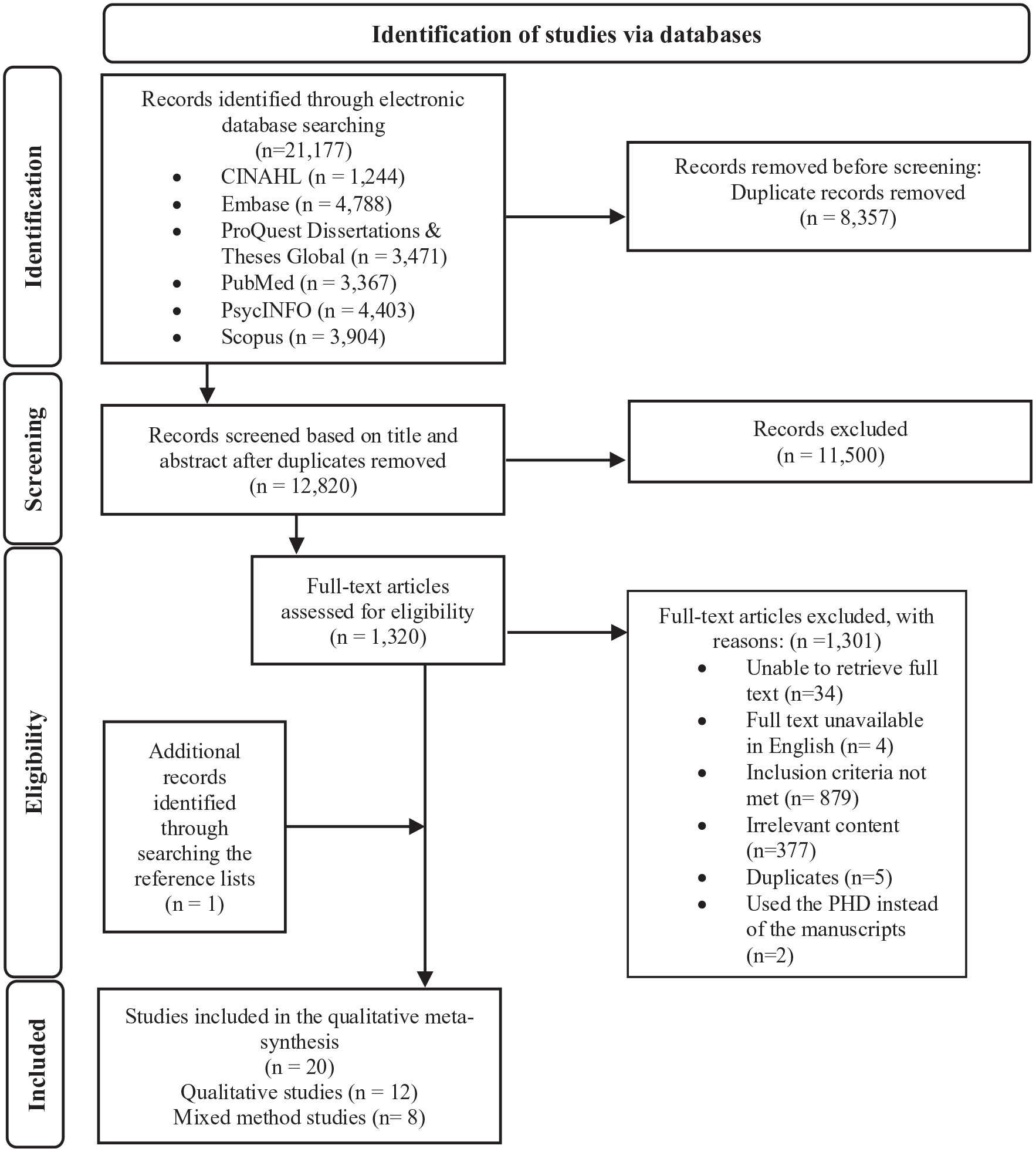
Preferred Reporting Items for Systematic Reviews and Meta-Analyses flow diagram.
Quality Appraisal
The quality of the 20 studies that met the inclusion criteria was critically appraised by two independent reviewers (SS and SB) utilizing the Critical Appraisal Skills Programme (CASP) tool for qualitative studies (Long et al., 2020). Any discrepancies between the two reviewers were discussed until consensus was achieved. The scoring of the studies can be found in Supplemental Appendix B. The CASP tool appraised the included studies through 10 question items that focused on the different methodological aspects of qualitative studies. For each question item on the tool, “Yes” (three points), “Can’t tell” (two points), and “No” (one point) were rated. The scores across the 20 studies ranged from 17 to 29, with an average of 24.6. Regardless of the scores, the reviewers decided to include all studies to enhance the rigor of the meta-synthesis instead of only selecting rigorous studies (Walsh & Downe, 2005).
Data Extraction
Two steps of data extraction were conducted. The first step was performed based on the PRISMA guidelines (Page et al., 2021), whereby the publication information (author name(s) and publication year, title, country, study aim (s), methodology (sample characteristics, study design, and analysis), and results (main theme, themes and/or subthemes) of the included studies were extracted and organized. The second step comprised the extracted verbatim and non-verbatim data on children’s experiences of DV and post-separation fathering (directly told by children or mothers observed and shared accounts of their children). Discrepancies around data extraction were discussed between the two reviewers till a consensus was achieved.
Data Synthesis
Data extracted were subsequently synthesized using the Sandelowski and Barroso (2007) two-step approach. Firstly, the findings from the included studies were meta-summarized into statements by extracting, separating, grouping, and abstracting study findings under several categories with supporting verbatim quotes such as fearful images of the father, handover distress, mediators, child’s experience of father–child contact, types of post-separation abuse, and so on. Subsequently, children’s post-separation experiences of DV caused by fathers were categorized into themes and subthemes by the two reviewers independently utilizing thematic analysis (Vaismoradi et al., 2016). Once consensus of themes and subthemes was achieved, the second step of meta-synthesis was performed allowing for new inductive concepts to be generated across the included studies. The concepts that were generated based on the existing themes deepened the understanding of events in the children’s post-separation experiences with DV caused by their fathers. Triangulation of data persisted consistently in the process of meta-synthesis by comparing the meta-summary findings with each of the 20 included studies.
Results
Characteristics of the Included Studies
A total of 20 studies were included in the meta-synthesis, whereby the characteristics of the included studies were presented in Table 1. The included studies were published between 2004 and 2022, and were conducted in Finland (n = 2), Ireland (n = 3, the author used the same sample for three studies), Israel (n = 1), United States (n = 3), Denmark (n = 1), Scotland (n = 2), United Kingdom (n = 1,), Italy (n = 1), Hungary (n = 1), and Australia (n = 5). Twelve studies used a qualitative design while the rest adopted mixed-method designs. Most of the participants were interviewed using a semi-structured approach either individually, with siblings, or in a focus group. The very young children had action group sessions or visual exercises during the interviews, and some studies conducted it combined with field work (Henze-Pedersen, 2021; Morrison, 2014; Nikupeteri & Laitinen, 2015). One study used qualitative data from trial materials of post-separation stalking cases involving DV, inclusive of pre-trial investigation records, and performed content analysis (Nikupeteri et al., 2021).
Characteristics of the Included Studies.
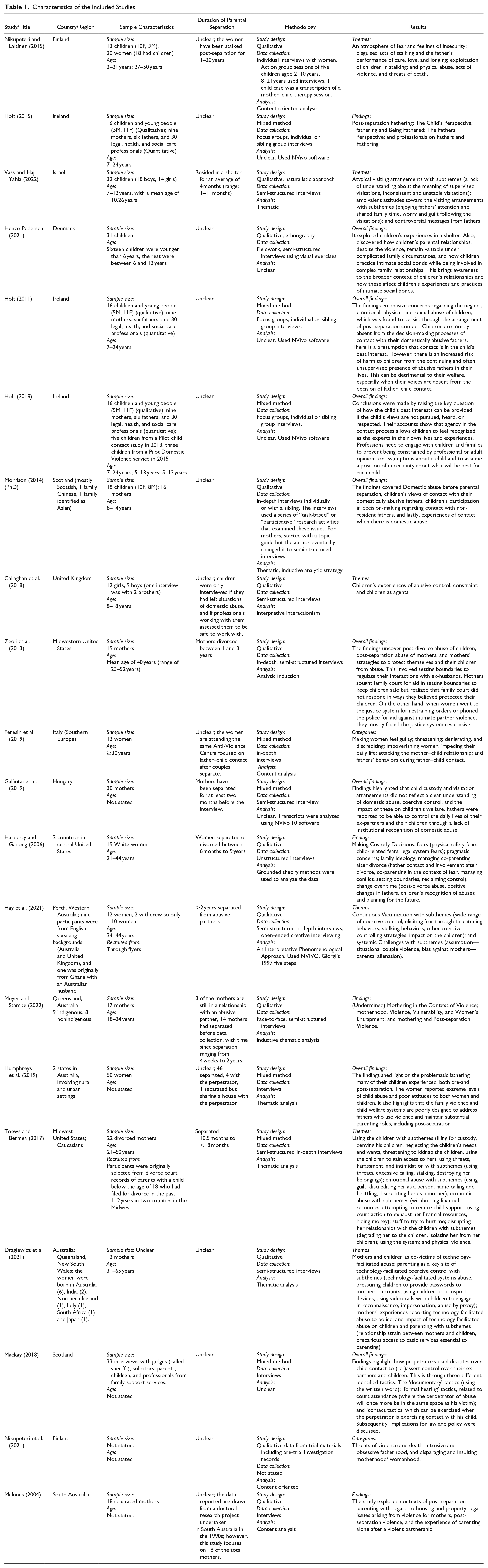
The total number of participants across 20 studies was 139 children and 249 mothers from various backgrounds. Two studies did not specify the exact number of mothers and children participants involved in their study. The age of the children ranged between 2 and 24 years old. Nine studies explored children’s post-separation experiences with DV caused by their fathers through direct accounts from children. The remainder were from the mother’s observation of their children’s experience or from what their children shared with them during the post-separation period. All studies majorly included mothers or children who have separated from their mother’s abusive ex-partners or fathers, respectively, except one study that did not specify whether children’s parents have been separated but had findings that specifically covered post-separation DV of children by fathers (Callaghan et al., 2018). Only some of the included studies reported the clear duration of parental separation (Galántai et al., 2019; Hardesty et al., 2006; Hay et al., 2021; Meyer & Stambe, 2022; Morrison, 2014; Nikupeteri & Laitinen, 2015; Toews & Bermea, 2017; Vass & Haj-Yahia, 2022; Zeoli et al., 2013).
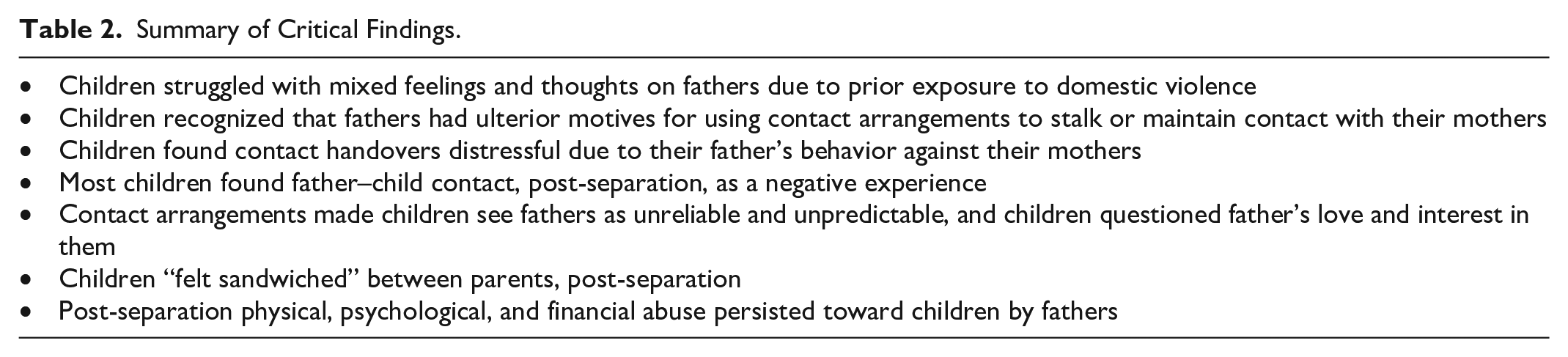
The meta-summary and meta-synthesis from all 20 included studies identified three main themes: (1) continued abuse post-separation, (2) child’s wavering mind of their fathers, and (3) wrangling between past and present (Table 2). A total of eight subthemes were presented under these three themes and shown in Figure 2.
Summary of Critical Findings.
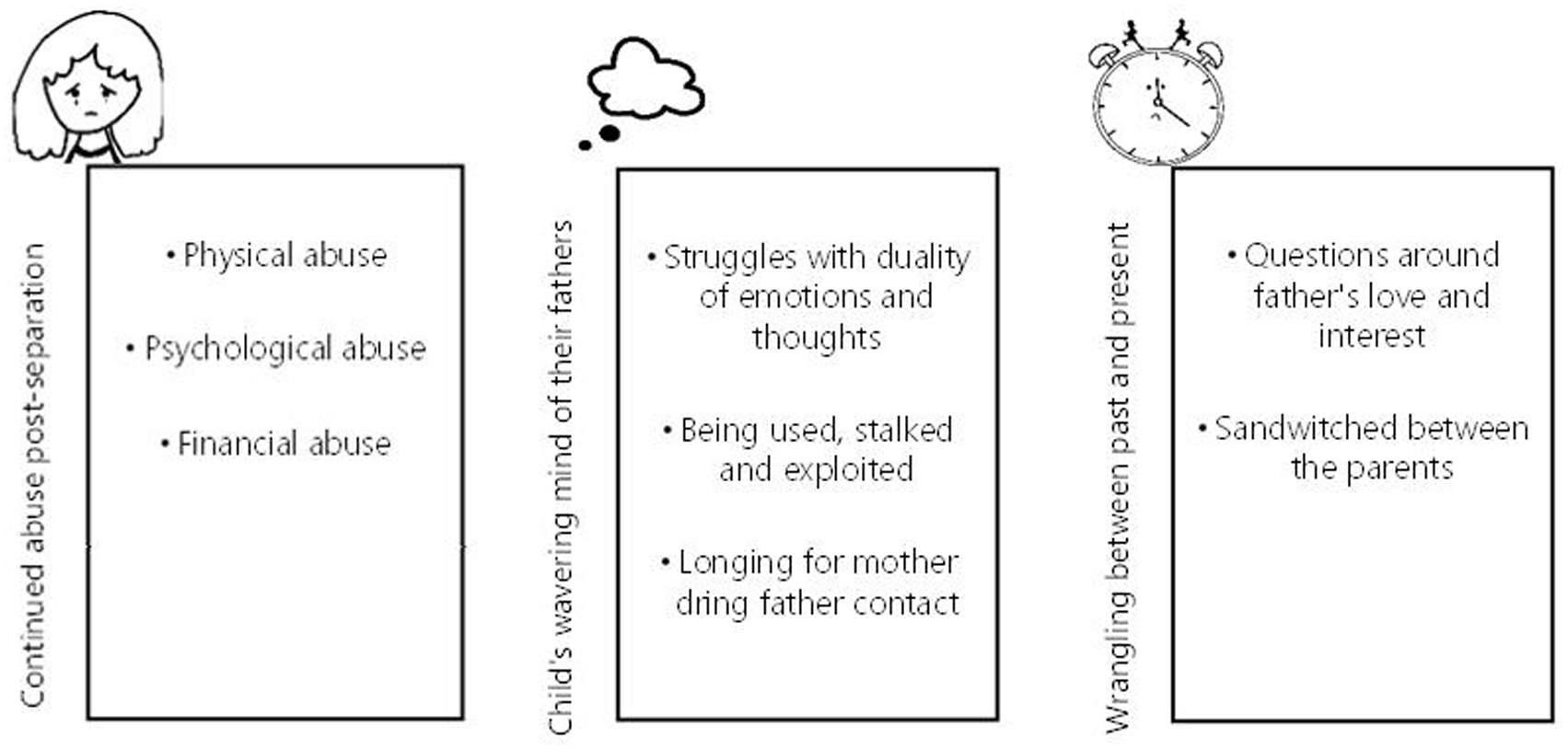
Themes and subthemes.
Theme 1: Continued Abuse Post-Separation
This theme demonstrated that the DV did not end when the children’s parents separated and how children continued to be abused post-separation through three subthemes: (i) physical abuse, (ii) psychological abuse, and (iii) financial abuse.
Physical abuse
Of the 20 included studies, six studies described direct physical abuse of children. Mothers and children both reported that fathers were physically violent during their time with the children. Some children were noted to come home with “bruises everywhere.” Physical violence could be isolated outbursts of aggression or a recurring part of their contact experience (Feresin et al., 2019; Holt, 2011; Humphreys et al., 2019; Mackay, 2018; Zeoli et al., 2013). As Sean (a 7-year-old) said: “He’s just bold . . . he’ll hit ya” (Holt, 2011, p. 336). It was also noted that post-separation, fathers resorted to physically abusing their children to get information on their mothers or as a way of “taking it out” on the child (Nikupeteri & Laitinen, 2015).
Psychological abuse
Psychological abuse was common in 8 of 20 studies. It was reported by children that fathers asked “are you dumb?” which was upsetting and “really bad” as “parents should know that you are not dumb” (Holt, 2018, p. 466). Psychological abuse also occurred as aggressive or threatening technologically-facilitated messages to children, with children seen by mothers to be “emotionally and behaviorally disturbed because of his phone calls and messages” (Nikupeteri et al., 2021, p. 404). Harassment through the repetitive calling of mothers also occurred stressing mothers. Children would then “start feeding off the stress” as well (Dragiewicz et al., 2021, p. 145). Similarly, verbal abuse that could escalate to events of bullying children was described by mothers (Humphreys et al., 2019). Mothers had also reported children witnessing assault or harassment directed at the mother (Feresin et al., 2019; McInnes, 2004). One mother mentioned that her ex-husband emotionally abused her by upsetting their child (Hardesty et al., 2006). Children also lived with the fear that their fathers may eventually “kill” their mothers (Nikupeteri et al., 2021; Nikupeteri & Laitinen, 2015). These were the many ways fathers had psychologically and verbally abused their children.
Financial abuse
Post-separation, it was clear to children that their mothers were noticeably poorer. Children were then involved in financial disputes among parents. For instance, Michelle (a 13-year-old) mentioned that she does not “want to be involved ‘ in’ money aspects” but her mother asked her to tell her “dad to get the money” and her father always said “No” (Morrison, 2014, p. 190). Fathers withheld money and deprived children financially so that their mothers would not benefit (Galántai et al., 2019; Nikupeteri & Laitinen, 2015). Fathers used money as a control tactic in children too. Oliver (a 12-year-old) described how his father breached contact orders, drove, and “put . . . two five pounds” to him (Callaghan et al., 2018, p. 1565). Oliver was frightened knowing gifts came with strings attached illustrating how children in included studies were able to identify fathers’ underlying motives for using money (Callaghan et al., 2018).
Theme 2: Child’s Wavering Minds of Their Fathers
This theme provided an understanding of how and why children had mixed thoughts and feelings toward perceptions of their fathers, post-separation. The children expressed this through three subthemes: (i) struggles with the duality of emotions and thoughts; (ii) being used, stalked, and exploited; and (iii) longing for mother during father contact.
Struggles with the duality of emotions and thoughts
Four of the 20 included studies revealed that children suffered from mixed feelings and thoughts about their fathers. Some children thought it was “important to meet my father” despite witnessing violence while others stated it was “not fair to meet with him after what he has done to mother” (Vass & Haj-Yahia, 2022, p. 541); fathers were perceived as having two sides, both positive and negative (Nikupeteri & Laitinen, 2015). Children also exhibited a range of emotions. They felt both love and hate or satisfaction such as describing father contact as “fun” while feeling shame toward fathers or father contact (Holt, 2015; Morrison, 2014). Some children were “frightened” their fathers may be imprisoned and said “I think it’s because of us he is in jail” (Vass & Haj-Yahia, 2022, p. 540). Children whose access to their fathers was restricted by court order have expressed sadness and longing for their fathers (Morrison, 2014). Similarly, a few children residing in shelters with their mothers expressed a desire for their fathers (Henze-Pedersen, 2021). However, other children seen “missing” their fathers were more about desiring a “proper” father figure (Henze-Pedersen, 2021; Holt, 2015), as Eva (a 16-year-old) described: “I’ve never had it (relationship with father) so I can’t miss it” (Holt, 2011, p. 340).
Some children believed their fathers knew “nothing” about them and their lives and felt “like you have to talk to fill in the gaps” (Holt, 2015, p. 216), and several children across 6 of 20 studies were fearful of their fathers due to prior exposure to DV. Some children could recall memories of destructive behaviors and often reminded their mothers of their fathers’ behaviors as shown in the following quote “remember when Dad smashed your phone?” (Hay et al., 2021, p. 12). The resulting anxieties manifested through physical symptoms or mental illnesses with some mothers who reported that their children were seen to suffer emotionally from trauma, show hostility toward their father, and suffered academically (Galántai et al., 2019; Hardesty & Ganong, 2006; Hay et al., 2021; Meyer & Stambe, 2022; Morrison, 2014; Nikupeteri et al., 2021).
Being used, stalked, and exploited
In 6 of the 20 studies, children realized that their fathers had ulterior motives for contact. Meetings with fathers were described as “performances” by the children (Nikupeteri & Laitinen, 2015). There was a clear absence of reciprocal interest between the father and the child (Holt, 2011; Nikupeteri & Laitinen, 2015). In one of the studies, a child asked “why doesn’t he have any photos of us” as they noticed no photographs of theirs were on the wall when they visited (Nikupeteri & Laitinen, 2015, p. 836), causing children to express frustration and apathy during contact with their fathers (Holt, 2015). Some children also felt that their fathers’ desire for contact was motivated because of their mothers. They felt that the positive ambiguous behavior displayed by their fathers was simply to stalk or maintain contact with their mothers (Morrison, 2014; Nikupeteri & Laitinen, 2015). Children described how some fathers used to contact and court proceedings to “mess” with their mothers (Callaghan et al., 2018). Fathers also appeared at public locations such as children’s schools to search for their mothers which “embarrassed” the children (Callaghan et al., 2018; Morrison, 2014). Moreover, a mother reported how the father gifted an iPad to his daughter and he used it to track their whereabouts, forcing them to relocate to another shelter (Dragiewicz et al., 2021).
Children having continued contact with their fathers expressed distress during the contact handover with most children across 8 of 20 studies describing contact experiences as predominantly negative. Fathers used this period to continue their harmful behavior toward their mothers. Children were asked to convey distressing or abusive messages to their mothers (Holt, 2011; Mackay, 2018; Nikupeteri & Laitinen, 2015; Vass & Haj-Yahia, 2022) and that the “messages would be so bad” they “wouldn’t even say it” (Holt, 2011, p. 336). Children witnessed the assault or heard verbal abuse where fathers “shout” and “call” their mother “really mean names” (Galántai et al., 2019; Holt, 2011; Humphreys et al., 2019; Mackay, 2018; Morrison, 2014; Toews & Bermea, 2017). One boy (a 10-year-old) described how his father “knocked” his mother “to the ground” when she visited (Mackay, 2018) while another child (a 4-year-old) witnessed the father hitting “mom on the head bang!” (Holt, 2018, p. 465) or being directly abused themselves with “marks” seen on their bodies after father contact (Humphreys et al., 2019). According to mothers, some children even went to extreme measures to avoid contact with their fathers resorting to self-harm while others have “tried to commit suicide” after father contact as the child “couldn’t take it” anymore (Zeoli et al., 2013, p. 555). The “harassment” that is “ongoing” did not allow time for children to work on recovery from their traumas (McInnes, 2004).
Longing for mother during father contact
Four of 20 studies found that children longed for and “missed” their mothers when with their fathers. Some fathers limited children from calling their mothers (Callaghan et al., 2018; Holt, 2015; Morrison, 2014). Paul (a 9-year-old) secretly texted his mother as his father forbade it and expressed “I hate my life” to her as he “never got to see” his mother (Callaghan et al., 2018, p. 1570). Children feared their fathers without their mothers, who shielded them from DV (Galántai et al., 2019; Morrison, 2014) and some simply needed their mother’s support but even when they were “really upset” and needed to “talk” to their mothers, their fathers won’t “let” them (Holt, 2015).
Theme 3: Wrangling Between Past and Present
Post-separation of parents, children were pushed to face different relationship dynamics with their fathers compared to the past and with continued difficulty. This theme illustrated the new relationship dynamics through two subthemes: (i) questions around the father’s love and interest and (ii) sandwiched between parents.
Questions around fathers’ love and interest
Children were confused about their father’s love and interest in them (Morrison, 2014). Three of 20 studies expressed that some children felt ambivalent about their father’s love (Holt, 2018; Morrison, 2014; Vass & Haj-Yahia, 2022). In some studies, children felt rejected or “let down” when their fathers did not visit (Holt, 2011; Morrison, 2014; Toews & Bermea, 2017). Children also noticed their father’s inconsistency and unpredictability (Holt, 2011, 2015; Vass & Haj-Yahia, 2022) and they began to anticipate this behavior as they “did not know exactly when he would come” (Vass & Haj-Yahia, 2022, p. 539) as he’d travel abroad, or if they visit, they would change contact plans at last minute (Feresin et al., 2019; Vass & Haj-Yahia, 2022). During the contact, children were frightened when they were not told where they were going and mothers reported how children “don’t like to go with him because they are kept in uncertainty” (Galántai et al., 2019, p. 403). Some fathers returned them late, and others kidnapped them and wouldn’t let them go. Unpredictability was hard for children to bear, leaving them with feelings of mistrust (Galántai et al., 2019; Mackay, 2018; Morrison, 2014), saying they “wouldn’t trust him anymore” (Nikupeteri & Laitinen, 2015, p. 839).
Sandwiched between the parents
Due to the mothers blocking contact with their ex-partners to prevent continuous harassment, children had the brunt of arranging contact with their fathers directly. This posed an opportunity for violence by the fathers. Nicola’s children (both 13-year-olds) received abusive phone calls from their father if they did not meet the demands of visiting him (Morrison, 2014). Another ploy by fathers included them acting as vulnerable victims informing children that the next time they would see him “would be in a coffin” while “putting the blame on the mother for how he was about to do something to himself” (Nikupeteri et al., 2021, p. 402). This burdened children with the moral responsibility of preventing that event from becoming reality (Nikupeteri et al., 2021). Children also found themselves in contested positions with their parents. Children of school age and below (2–12 years) acted as “burdened mediators” trying to balance their relationships between their mothers and fathers (Nikupeteri & Laitinen, 2015, p. 837). This was through playing alone or spending alone time with their fathers as they knew they could not harass their mothers at the same time. This was all to safeguard their mothers and siblings (Nikupeteri & Laitinen, 2015).
Discussion
The review consolidated the available evidence on children’s post-separation experiences with DV caused by their fathers. The meta-summary and meta-synthesis from the 20 included studies revealed that DV persisted for children, post-separation through different types of abuse. Children also struggled with perceptions of their fathers while being placed in a difficult and new relationship experience with them, post-separation. The findings of this review offered deeper insights into the way children processed and lived through DV under their fathers after their parents separated.
As evidenced by the number of recent studies included in this review, the number of studies that amplified the voices of children during post-separation has increased in the last decade. This could be attributed to the United Nations convention on the rights of children being introduced in 1989 causing policy shifts and increased research placing greater emphasis on child participation in the processing of child protection cases (Gallagher et al., 2012; Henaghan, 2017; Vis & Fossum, 2013). The 20 included studies in this review were conducted in 10 countries; however, the majority of the qualitative data was centered in the European, North American, and Oceania regions. This highlights the need for increased future research on post-separation DV of children in other continents such as Asia, South America, and Africa whereby culture, religion, family, and/or patriarchy appear to be inextricably intertwined (Boy & Kulczycki, 2008; Brown, 2014; Flake & Forste, 2006; Semahegn & Mengistie, 2015). Moreover, despite the inclusion of studies conducted in North America, there was a dearth of studies in Central American countries where machismo is prevalent, which could perpetuate DV differently (Pardilla, 2016). These children may have a culturally diverse experience compared to those in the Western world, necessitating increased research in the abovementioned regions.
In this review, DV persisted post-separation for children physically, psychologically, and financially. Elements of coercive control were prevalent among these abuses (Stark, 2007). For instance, the included studies showed how fathers physically abuse children to get information on the mother, upset the child to punish the mom, and withheld money from the child so the mother would not benefit (Galántai et al., 2019; Hardesty et al., 2006; Nikupeteri & Laitinen, 2015). As per Stark (2007), coercive control strategies are not always physically violent but are always detrimental. Depending on the defenselessness of the victims, the severity and frequency of abuse can grow over time (Walby & Towers, 2018) with younger children (2–12 years) being the most vulnerable, as demonstrated by this review. Younger children in this review were unable to resist their fathers’ controlling behaviors (Nikupeteri & Laitinen, 2015). This highlights the crucial need for managing coercive control as a spectrum of interrelated harms caused by the father (Stark & Hester, 2019). Due to a lack of validated tools detecting coercive behavior, fathers who maintain coercive control with little physical violence do not register on existing risk assessment tools (Myhill & Hohl, 2019; Stark, 2013) (Holtzworth-Munroe et al., 2010; Saunders & Faller, 2016; Stark, 2013) requiring the need of validated risk assessment tools to improve overall screening of fathers that engage in DV.
Children experienced conflicting emotions and thoughts about their father and/or father contact (Holt, 2015; Morrison, 2014; Nikupeteri & Laitinen, 2015; Vass & Haj-Yahia, 2022). These findings can be explained by Bowlby (2008) and Ainsworth et al. (1978) three attachment styles: insecure-avoidant, insecure-resistant, and secure. The type of attachment children develop with their parents during childhood affects their future relationships with them (Bowlby, 2008). For example, insecure-avoidant attachment is common in children whose parents were emotionally unavailable, prompting them to be prematurely independent and avoid their parents (Ainsworth et al., 1978; Engelhardt, 2012). This was evident among children in this review that self-harmed to avoid father contact (Zeoli et al., 2013). Insecure-resistant attachment is commonly exhibited among children whose parents were inconsistently available. As the parent is unreliable, these children are often ambivalent toward parental interaction while pursuing and rejecting contact with them (Ainsworth et al., 1978; Engelhardt, 2012). This could explain children’s ambivalence toward father contact in the review (Holt, 2018; Morrison, 2014; Vass & Haj-Yahia, 2022). This further highlights the need for healthcare professionals to explore the early attachment styles that children experienced and develop tailored care plans to support children victims of DV post-separation allowing for better-coping abilities to improve their future intimate relationships (O’Gorman, 2012; Unger & De Luca, 2014).
Children in this review expressed contact handovers to be distressful. Most mothers had gate-opening strategies for father–child contact, whereby they encourage, pursue, or were ambivalent toward children continuing meetings with their fathers, post-separation (Nixon & Hadfield, 2018). This was because mothers placed importance on father–child relationships for their children (Hardesty et al., 2006; Nixon & Hadfield, 2018). Fathers in this review were seen by children to have taken advantage of this contact arrangement to continue engaging in DV. This highlights the need for court officials and other stakeholders to account for the safety of children by ensuring fathers are not allowed to use contact arrangements as a means to continue DV toward mothers and children (Coy et al., 2015).
Stalking was apparent and constantly experienced by the children and their mothers from the included studies in this review. Stalking, in general, causes victims to face debilitating disruptions to their everyday lives. Recently published literature has highlighted that telephone calls, appearing at locations where the victim was likely to be, and gathering information about victims from others, was the top used methods of stalking (Korkodeilou, 2017; McEwan et al., 2021). The children from this review mentioned experiencing these stalking methods, highlighting the need for children to be taught to explore additional safety measures against stalking (Korkodeilou, 2017) and an effective practice against technologically-facilitated stalking must be developed for them (Woodlock, 2017). Stalking, however, is slightly more complex to tackle for children. Children can be primary targets or secondary survivors of the stalking of their mothers (Elklit et al., 2019). Despite more being done in recent years to legislate against stalking, it has been reported that maternal stalking continues to be neglected which can contribute to their revictimization (Løkkegaard et al., 2019). For children, maternal or secondary stalking was noted to cause post-traumatic stress disorder symptomology in the Elklit et al. (2019) study. Therefore, it is crucial for healthcare professionals and other stakeholders to specifically explore children’s support needs around combating stalking post-separation and subsequently develop required interventions (Løkkegaard et al., 2019).
Children in this review expressed how fathers prevented remaining in contact with their mothers during father contact. This could be attributed to the literature that explains that fathers intend to harm the mother–child relationship to maintain control over their ex-partners and children (Semaan et al., 2013). Fathers are aware that their ex-partner’s role as a mother serves as a source of confidence for her and may wish to harm that possible source of strength (Semaan et al., 2013). Thus, their strategies include hurting children’s respect for their mothers, disallowing mothers from delivering a proper, consistent routine for children, and trying to turn the children against their mothers (Katz, 2015b). However, as fathers’ accounts were not considered in this review, future research is needed to explore the exact intentions of fathers refraining their children from contacting their mothers. Moreover, children from the included studies mentioned how they longed for their mother during father contact (Callaghan et al., 2018; Galántai et al., 2019; Morrison, 2014). This is in contrast with children’s interviews regarding their mothers who stayed with their abusive fathers as mentioned in the Buchanan et al. (2015) study. These children held their mothers responsible for the DV. This is because they questioned the reason their mothers did not leave and blamed them for the violence experienced by their fathers (Buchanan et al., 2015). This is an insightful finding as mothers who have left seem to have a more positive relationship with their children, allowing for children to rely on their mothers as agents for recovery (Meyer & Stambe, 2022); however, further research is needed to confirm these claims.
The children from the included studies in this review reported being sandwiched between their separated parents. Children appeared to be sacrificing their age-appropriate roles which can lead to emotional parentification based on the family systems theory (Bosormen-Nagy & Sparks, 1973; Engelhardt, 2012; Hooper, 2007). Emotional parentification involves the parentified child attempting to fill an emotional or psychological emptiness in the family for the parent, often becoming the parent’s only support which is detrimental to the child’s development (Bosormen-Nagy & Sparks, 1973; Engelhardt, 2012; Hooper, 2007). This appeared to occur when children in this review stepped up when fathers acted as vulnerable victims contemplating suicide to prevent the tragedy from occurring or spending alone time with fathers to protect their mothers from physical violence (Martinez, 2018; Nikupeteri et al., 2021; Nikupeteri & Laitinen, 2015). As children lived with the fear that their fathers may eventually kill their mothers (Nikupeteri & Laitinen, 2015), the relational responsibility of protecting their mothers far exceeds what a child can give but the child cannot afford to ignore. The relational responsibility and generated anxiety can be very difficult to bear, especially if the child feels the life of their parents depends on them. As adults, these parentified children will have mental health repercussions such as depressive feelings and decreased self-worth as they are not used to taking care of their own needs, with suicidal ideations (Haxhe, 2016). Future research should specifically explore the concept of parentification among children experiencing DV so that relevant and timely support can be provided.
Future Implications
There is a need for collaborative support from various stakeholders, such as healthcare professionals and court officials, to support the unmet needs and safety of children who have been exposed to DV. Schools, especially, can play a significant role in creating awareness and primary prevention of DV. In addition to media campaigns promoting DV awareness, school-based preventative initiatives could be implemented to empower children. The initiatives could encourage children to assert their rights and actively seek support within the context of child-adult power relations (Farrelly, 2020; Wolfe & Jaffe, 1999). Such primary prevention strategies to lower the incidence of DV in a population before its occurrence requires further research (Wolfe & Jaffe, 1999) (Table 3).
Summary of Implication of Review for Practice, Policy, and Research.
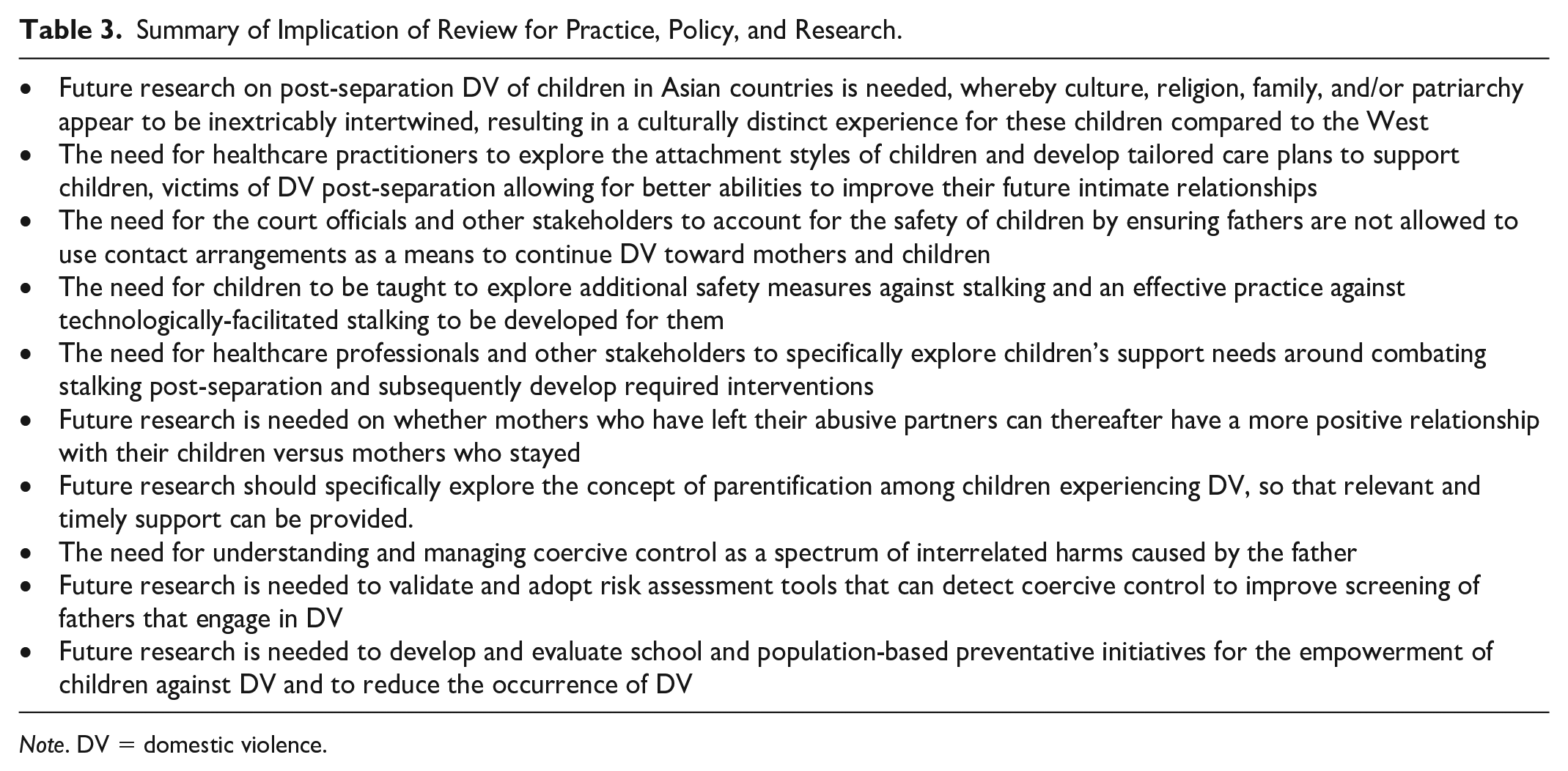
Note. DV = domestic violence.
Strengths and Limitations
This review is the first of its kind to provide in-depth insights and understanding of children’s experience with DV caused by fathers, specifically during the post-separation period. The inclusion of both direct testimonies of children and mothers’ observations of their children provided a holistic understanding of what children experience under their fathers, post-separation. Future research involving fathers’ accounts for data source triangulation is needed to have a complete picture of children experiencing DV post-separation (Carter et al., 2014).
This review was limited by including only studies published in English. Relevant studies may have also been omitted because of unclear titles or abstracts and poor indexing. Children’s views and experiences can change over time and circumstances (Morrison, 2014); however, the included studies contained minimal or no information regarding the duration of parental separation. In addition, a broad age range of children is included in this study, with some studies failing to report the age of the children. This limits the understanding of children’s experiences according to their age. Future longitudinal studies following children across different age groups as well as studies including children at various developmental ages, such as infants and pre-schoolers, school-aged children, adolescents, high school-aged youth, and older youth, are needed to gain a holistic understanding of the phenomenon of interest (Wolfe & Jaffe, 1999). Future research should also focus on children’s experiences depending on the duration of separation, as there is little empirical data on how post-separation DV may vary with time for children (Hardesty et al., 2017; Spearman et al., 2022).
Conclusion
The findings of this review shed light on how children endured DV perpetrated by their fathers, post-separation. Children expressed how post-separation DV remained in several ways including the use of stalking and coercive control through different types of abuse. There is a need for better screening of fathers who perpetuate coercive control with little physical violence on their children. Children also struggled with mixed feelings toward their father due to the violent behaviors he committed. Children were pushed to face different relationship dynamics with their fathers compared to the past and with continued difficulty as fathers had ulterior motives for father–child contact. Future research is needed for school and population-based preventative initiatives to be adopted for the empowerment of children against DV and to reduce the occurrence of DV.
Supplemental Material
sj-docx-1-tva-10.1177_15248380231156197 – Supplemental material for “Does It Really Get Better After Dad Leaves?” Children’s Experiences With Domestic Violence: A Qualitative Systematic Review
Supplemental material, sj-docx-1-tva-10.1177_15248380231156197 for “Does It Really Get Better After Dad Leaves?” Children’s Experiences With Domestic Violence: A Qualitative Systematic Review by Shefaly Shorey and Sara Baladram in Trauma, Violence, & Abuse
Footnotes
Acknowledgements
The authors thank the librarian of the National University of Singapore, Ms. Wong Suei Nee, in assisting with the search strategy of this review.
Declaration of Conflicting Interests
The author(s) declared no potential conflicts of interest with respect to the research, authorship, and/or publication of this article.
Funding
The author(s) received no financial support for the research, authorship, and/or publication of this article.

Supplemental Material
Supplemental material for this article is available online.
Author Biographies
References
Supplementary Material
Please find the following supplemental material available below.
For Open Access articles published under a Creative Commons License, all supplemental material carries the same license as the article it is associated with.
For non-Open Access articles published, all supplemental material carries a non-exclusive license, and permission requests for re-use of supplemental material or any part of supplemental material shall be sent directly to the copyright owner as specified in the copyright notice associated with the article.
