



Abstract
Background
The living conditions and challenges experienced by migrants in transit contribute significantly to their mental health issues. There is a pressing need for preventive measures to address the stress and mitigate the effects of loss and trauma within this vulnerable population.
Focus of the Article
The article centers around utilizing the Social Cognitive Theory as a framework to comprehensively understand the factors influencing the mental health of migrants in transit for a community-based social marketing intervention in shelters.
Research Question
(RQ1) What is the role of personal factors, and immediate environment in the mental health and emotional well-being of migrants in transit through Mexico? (RQ2) What is the role of the wider social context and psychosocial stressors on the mental health of migrants in transit through Mexico? (RQ3) What are the behavioral consequences resulting from the effects of the wider social context, and psychosocial stressors faced by migrants in transit through Mexico?.
Importance to the Social Marketing Field
This article contributes to the advancement of targeted strategies that can improve the mental health outcomes for this vulnerable population by furthering the understanding of the complexities of the mental health challenges faced by migrants in transit and addressing the migrants’ complex mental health needs in shelters.
Methods
By employing qualitative data gathered through in-depth interviews (n = 41) with key informants in both Mexico and the U.S., the study aimed to capture a binational perspective.
Results
According to social cognitive theory, 4 main themes were identified that facilitate the understanding of factors affecting the health and well-being of migrants in transit. These include factors pertaining to social context (i.e., racism, abuse); psychosocial stressors (i.e., trauma, inability to meet basic needs), personal factors (e.g., uncertainty, resilience); and behavioral consequences (e.g., states of being such as insomnia, fatigue, anxiety, persecutory paranoia, depression and suicide). Findings also revealed that migrants prioritize physical health for survival while neglecting their mental health needs. Compounded by the prevalent mental health stigma in this migrant community and limited information about mental health, migrants are deterred from seeking help when needed, underestimating the situation.
Recommendations for Research or Practice
A multifactorial approach is needed in the development of community-based social marketing interventions to address the migrants’ well-being and mental health in shelters. This type of intervention is essential to address the stigma attached to mental health issues by focusing on the immediate environment and engaging shelters as well as family and peers to raise awareness of pre-migration dangers. The intervention would also promote enriched information for survival and foster community building and networking among migrants through shelters across Mexico while providing crucial mental health support.
Limitations
Findings might not be universally applicable, as they may be limited to the specific context of migrants in transit through Mexico. Conditions for migrants in transit in other parts of the world could differ.
Keywords
Introduction
In recent decades, Mexico has transitioned from being primarily a country of emigration to becoming a major transit corridor for thousands of migrants, particularly from Latin America, seeking to reach the U.S. border (Masferrer & Pedroza, 2022). In the first half of 2024 alone, over 712,000 events involving migrants in irregular status were recorded by Mexican authorities, an increase of 193% compared to the same period in 2023, which registered 243,302. Likewise, the number of events in the first half of 2022 (172,949) showed an increase compared to the same period in 2021, which registered only 104,194 events (Unidad de Política Migratoria, International Organization for Migration (OIM), 2024). This shift has created significant challenges not only for migrants, but also for migration policies and national security. Migrants traveling through Mexico face a perilous journey, as their irregular status exposes them to extortion, kidnappings, and violence (Sobrino, 2024). Many travel atop “La Bestia,” a freight train that crosses the country and is notorious for its dangerous conditions, including fatal accidents, amputations, and exposure to criminal organizations (Sobrino, 2024).
Many of these individuals, especially those from the Northern Triangle of Central America, are fleeing widespread violence and severe economic instability, making their migration largely a forced decision (París-Pombo, 2016). As migration policies become increasingly restrictive, many migrants find themselves stranded in Mexico for months or even years, living under precarious conditions and facing constant threats of deportation (Sánchez-Montijano & Zedillo, 2022). As they go through these extreme conditions, migrants are exposed to severe physical and emotional hardships. The stress of an uncertain future, prolonged periods of vulnerability, and repeated exposure to violence have significant repercussions on their mental health (Cohodes et al., 2021).
Historically marginalized migrant communities are at heightened risk of mental disorders. Increased uncertainty, mistrust of authorities, punitive anti-migrant measures, limited social support, economic constraints, and restricted access to mental health services contribute to increased depression and anxiety levels among migrants (Garcini et al., 2020; Stevens et al., 2022). Challenges in accessing mental health services are further compounded by poverty, social isolation, loneliness, and a pervasive stigma within Latino migrant communities (Calo et al., 2020; Villaseñor et al., 2017).
According to the Mexican National Survey of Psychiatric Epidemiology, the most frequent mental disorders in Mexico are anxiety (14.3%), substance abuse (9.2%), and mood disorders (9.1%) (Medina-Mora et al., 2016). In the last 5 years, cases of anxiety disorders have become particularly prevalent in Mexico, with cases growing at an alarming rate (75% increase) (FUNSALUD, 2019). A review of literature shows that without adequate access to preventive programs and treatment, mental disorders can have serious implications, particularly for migrants in transit facing compounded stressors. Severe consequences of untreated mental disorders may include premature death, increased risk of substance use, engagement in risky or violent behaviors, behavioral and emotional problems, isolation, and heightened exposure to trauma (FUNSALUD, 2019; Institute for Health Metrics and Evaluation, 2018; Thibaut, 2017).
Cultural and contextual interventions to effectively address the mental health of migrants in transit are lacking, and information is desperately needed to inform the development, implementation, dissemination, and sustainability of mental health prevention and intervention efforts (Yeh et al., 2017). Likewise, there is a need for easily disseminated preventive mental health campaigns, psychoeducational resources and social media messages (El Hazzouri & Hamilton, 2019; Tomasi, Nuovoa & Hidalgo, 2020).
A change in the General Health Law in Mexico was approved in 2017, which contributed to elevate efforts towards prevention and care of mental disorders as a first level medical care need in the country (previously third level) (Institute for Health Metrics and Evaluation, 2018). As a result, mental health is now identified among the basic services that are considered a priority in Mexico (IHME, 2018). However, only 2% of the federal Mexican budget allocated to the health sector is designated for mental health. In fact, 80% of the health sector budget is directed to general hospitals, creating a larger gap in providing mental health services and resources to historically underserved communities with limited healthcare access (PAHO, 2018; SS, 2020).
Research Gap
While existing literature has addressed the mental health challenges faced by migrant and refugee populations globally, most of this research has focused on individuals who have already settled in host countries. These studies often examine post-migration experiences, such as adjustment, trauma recovery, and access to long-term healthcare services (Masferrer & Pedroza, 2022; París-Pombo, 2016). On the other hand, some recent work has begun to explore the mental health implications of the migration journey itself, particularly among children and youth (Cohodes et al., 2021). However, these contributions remain limited, especially when it comes to in-depth, qualitative documentation of migrants’ psychological and emotional experiences during transit through Mexico.
This study aims to address that gap by documenting personal, psychosocial and the contextual factors, influencing the mental health of migrants in transit through Mexico, under the scope of social cognitive theory (SCT), and based on insights from key informants such as shelter workers, psychologists, and faith-based leaders. The use of a qualitative approach allows for a deeper understanding of the emotional dynamics, coping strategies, and structural barriers that shape mental health in transit, insights that would be difficult to capture through quantitative methods alone.
Moreover, findings are used to propose the development of Community-Based Social Marketing (CBSM) interventions (Ibrahim et al., 2022), with the goal of supporting emotional well-being of this marginalized community. Therefore, this research highlights the potential of CBSM in future migrant shelter interventions, enhancing accessibility and relevance of preventive mental health programs for migrants in transit, fostering improved well-being and support for the complex journey of migration through Mexico.
Research Questions
To address this knowledge gap, according to the pillars of the SCT, this study explored the following questions (RQ): RQ1. What is the role of personal factors, and immediate environment in the mental health and emotional well-being of migrants in transit through Mexico? RQ2. What is the role of psychosocial stressors and the wider social context on the mental health of migrants in transit through Mexico? RQ3. What are the behavioral consequences resulting from psychosocial stressors and the wider social context faced by migrants in transit through Mexico?
Literature Review
Social Cognitive Theory (SCT) as a Theoretical Framework
SCT states that human behavior is reciprocally influenced and determined by personal factors and the immediate environment (cognitive, affective, and biological events, and social support systems such as family, peers, and local community) (RQ1); environmental factors (psychosocial stressors and wider social context) (RQ2); and behavioral factors (decision-making skills that motivate behavior change) (RQ3) (Bandura, 2004; Hastings & Domegan, 2013) (See Figure 1). The wider determinants. Source: Adopted from Macfadyen et al. (1998) cit. by Hastings and Domegan (2013, p.62)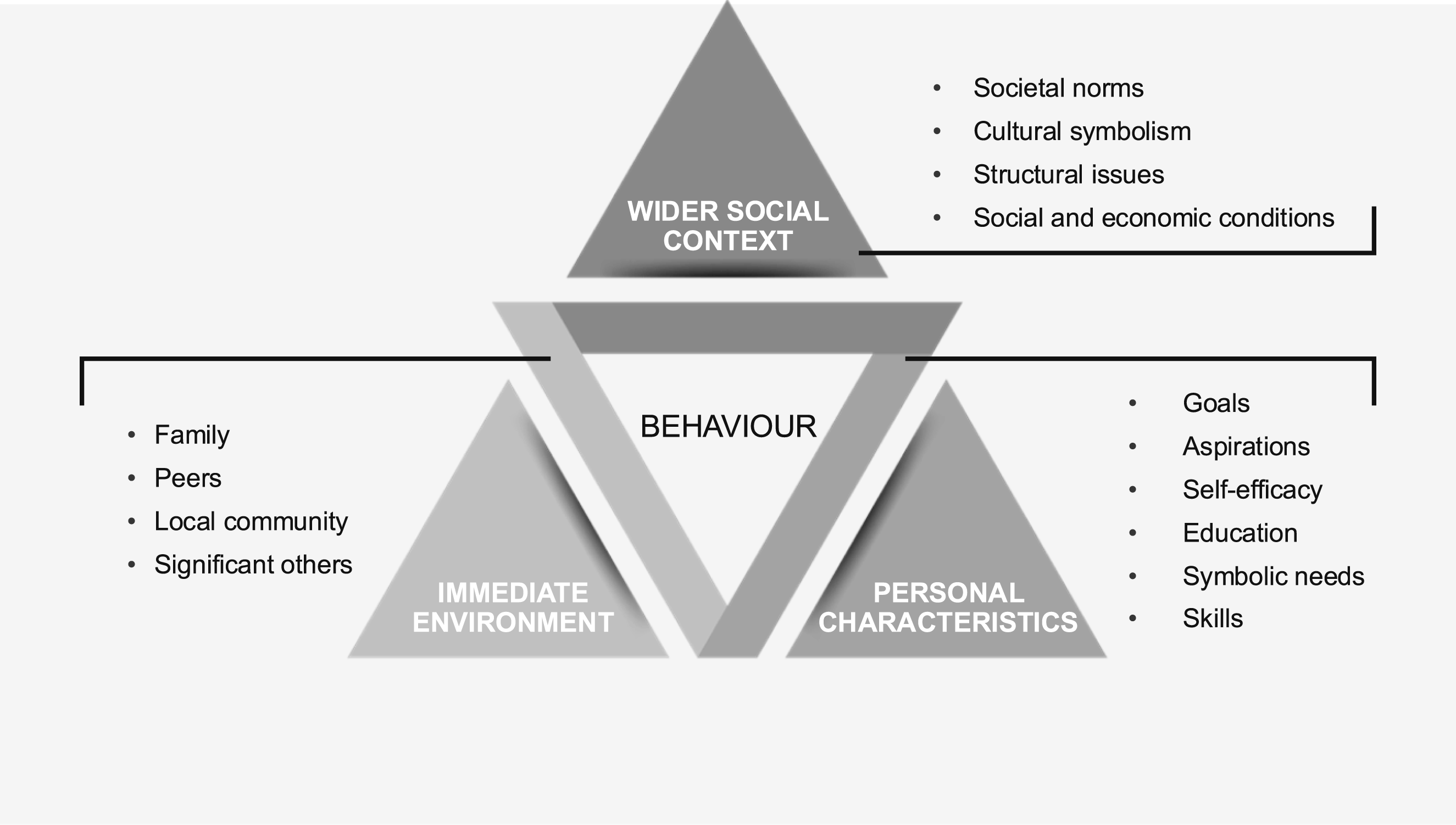
According to SCT, specific constructs need to be considered when aiming to motivate behavior change (Bandura, 2004); these include perceived self-efficacy, expected results, self-regulation, social support (RQ1), and social context (RQ2), as well as behavioral capacity (RQ3) (Bandura, 2004). The mentioned constructs mutually influence cognitive, motivational, emotional, and selection processes in individuals, shaping behavior. Cognitive processes impact motivation, with high self-efficacy enhancing analytical efficiency for decision-making in complex situations, affecting productivity and goal motivation. Personal beliefs about self-efficacy determine motivation levels, with stronger belief leading to increased effort and perseverance. Emotional reactions also influence thoughts; self-doubt may limit one’s ability to handle threatening situations, resulting in heightened distress, anxiety, or depression.
As a result, a person may enter a state of learned helplessness perceiving that they have no control over the situation they are facing Fernandez-Haddad & Lara Gonzalez, (2021). Feelings of helplessness may lead to the development of a belief system that emphasizes defeat (González, 2016), producing dissatisfaction and/or frustration in addition to clouding judgment about the individual’s abilities and perceived self-efficacy (Bandura, 1997). In turn, the individual may avoid future situations that exceed his/her coping abilities, thus impeding the person from attaining his/her goals and development (Bandura et al., 1999).
In the realm of social context and psychosocial stressors, these factors are categorized based on their relationship with the individual: direct or immediate influence, indirect influence, or part of the broader social context. Elements within the social context include friends, family, and community, while psychosocial stressors arise from social customs, economic conditions, and cultural norms (Hastings & Domegan, 2013). Both the social context and associated psychosocial stressors can directly influence an individual’s behavior.
Community-Based Social Marketing (CBSM)
CBSM is a crucial approach in social marketing, involving a behavior change process co-produced and designed in collaboration with community stakeholders. This approach capitalizes on the community’s knowledge of local circumstances, experiences, and needs, ensuring efficient resource utilization. Unlike expert-driven solutions, CBSM empowers the community throughout the change process. The community members actively participate as partners in the development, influencing all stages of dissemination and implementation (McKenzie-Mohr & Smith, 1999; Kennedy, 2010; McKenzie-Mohr, 2011). CBSM’s success lies in its focus on driving action guided by community input and collaboration (Lynes et al., 2014).
In this research, the SCT is employed as a theoretical framework to identify crucial factors for developing CBSM future interventions addressing the mental health needs of migrants in transit through Mexico. This information guides best practices for shelters (non-profit organizations and public institutions) encountering this population. The binational approach aims to provide a broader perspective on migrants’ complex needs, emphasizing the importance of collaborative partnerships in Mexico and the U.S. to advance this area of study.
Methodology
This study conducted exploratory-descriptive research using a qualitative method developed in a single stage over a period of six months, concluding in May 2023. Qualitative data collection (Ozanne & Ozanne, 2021) was used to identify and document factors pertaining to the social context, psychosocial stressors, and individual level factors influencing behaviors and the mental health of migrants in transit through Mexico.
Participants and Procedure
Characteristics of the Participants.
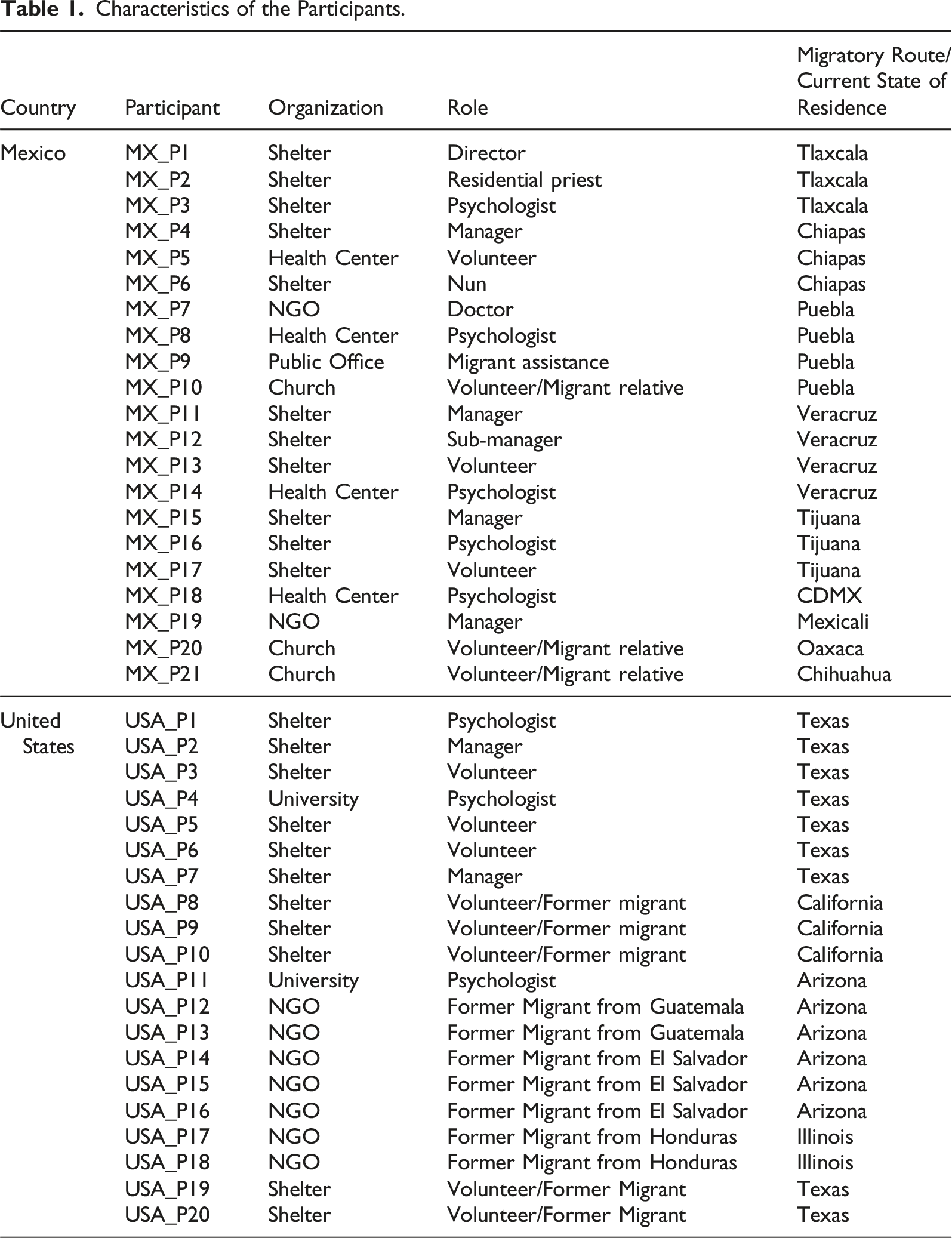
This study used the following recruitment criteria: • Key informants with extensive knowledge of the social and health needs of migrants in transit. • Key informants with frequent contact and communication with migrants in transit through Mexico. • Key informants with relevant and recent knowledge about mental health concerns among migrants in transit, migrant communities in U.S. border states, and deported migrants in transit.
The recruitment process began by using official contact information from migrant shelters, NGO´s, churches, health centers and any other organization in contact with migrants. Emails were sent, and phone calls were made, explaining the study’s objectives and requesting participation. Initial participants were identified through shelter networks, and they facilitated connections with additional shelters and key informants from other organizations. The study employed snowball sampling, allowing informants to refer to other knowledgeable individuals.
Interviews were conducted in Spanish or English, depending on the preference of each key informant. Prior to each interview, participants were informed about the research objectives and ethical considerations, and they provided verbal consent to participate.
To determine the sample size, theoretical sampling was used, which is common in qualitative research (Creswell, 2007). Theoretical sampling guided the addition of participants as data collection progressed, and the sample concluded under the principle of saturation. Saturation in qualitative research indicates that any additional information obtained would not provide further insight (Creswell, 2007).
Data Collection
A semi-structured question guide was used for the collection of information. The guide was designed to align with the study´s research questions and allow flexibility in the interview process. In-depth qualitative interviews lasted between 60 and 90 minutes and were guided by a semi-structured protocol containing 44 questions. These questions explored topics such as migrant mental health, access to healthcare, perceived stressors, support networks, and barriers to well-being. Interviews were conducted via Microsoft Teams, recorded with participants’ consent, and later transcribed verbatim for analysis.
Data Analysis
Atlas.Ti software was used for data codification and analysis, streamlining the encoding of themes and codes, and facilitating the identification of relationships among them (Lewis, 2004). The qualitative analysis followed a structured approach based on primary codes derived from summarizing key informants’ verbalizations. To enhance validity and reliability, textual verbalizations from relevant participants were presented, adding credibility and focus to the interpretations (Hoek & Robertson, 2015).
Ethical Considerations
The Ethics Committee determined that this project did not require IRB approval (Protocol number 20210249NRR). An informed consent form was administered verbally before collecting data. We also informed respondents of their right to anonymous identity, and all audio recordings were permanently deleted after verification of transcripts.
Results
The results are presented in 4 main blocks of relevant themes, to address the research questions in this study: the role of personal factors and immediate environment in the mental health and emotional well-being (RQ1); the role of the wider social context and psychosocial stressors on the mental health of migrants in transit through Mexico (RQ2); and the behavioral consequences resulting from the effects of the wider social context faced by migrants in transit through Mexico (RQ3), which are summarized in Figure 2. Factors involved in mental health of migrants in-transit through Mexico to the US. Source: Own elaboration based on Fernandez Haddad and Lara Gonzalez (2021); Macfadyen et al. (1998) cit. by Hastings and Domegan (2013, p.62).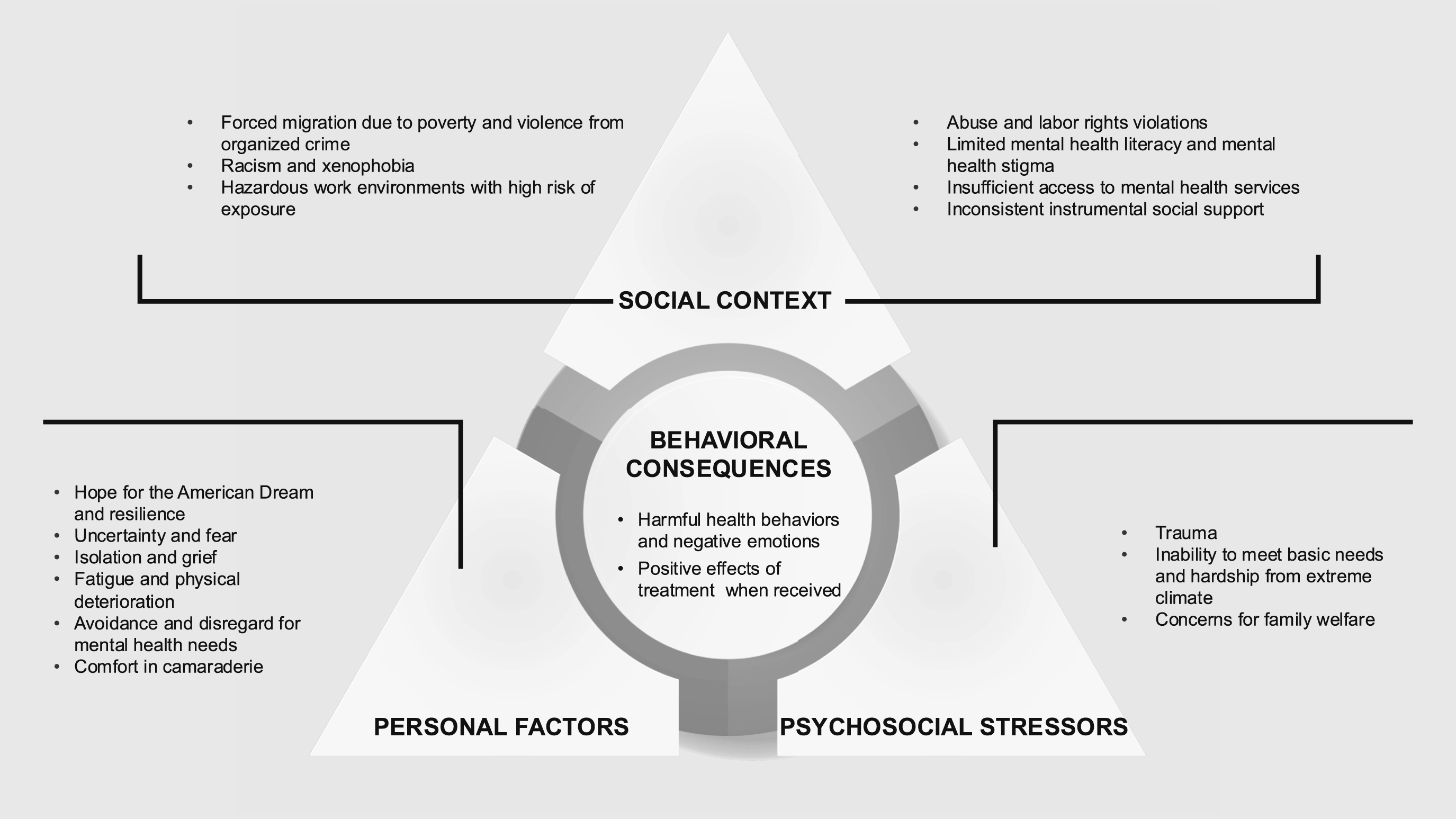
Personal Factors
Regarding personal factors, 6 primary codes were identified such as emotions, cognitions and state of one’s health that influence behavior, in this case help-seeking behaviors.
Hope for the American Dream and Resilience
Despite the immense challenges they face, many migrants remain motivated by the pursuit of a better life in the U.S. Several participants emphasized that for many, migration is not just a choice, but a necessity. A key informant asserted, “the only way [migrants] foresee to get a better life is to emigrate to the U.S. for the so-called American Dream” (Shelter Psychologist, Tlaxcala, Mexico). A shared sentiment among multiple participants was the resilience of the migrant population driven by a pursuit of the American Dream. Many described migrants in transit as optimistic, courageous, and persevering. Emphasizing the desperate quest for a better life for the migrants and their families, participants noted the tenacity and relentless determination many displayed. Despite facing numerous contextual and personal obstacles, they do not give up easily. Indeed, a key informant said, “[I would say that [a migrant] is a brave being who flees from his country” (Shelter Residential Priest, Tlaxcala, Mexico), while another participant emphasized, “[migrants] are very strong psychologically” (Shelter Psychologist, Tijuana, Mexico). In this regard, self-sufficiency was identified as a resilient trait that protects the physical and psychological health of migrants in transit, although at times their self-sufficiency and resilience may interfere with their willingness to seek help when in need, specifically psychological treatment.
Uncertainty and Fear
Constant uncertainty and fear of deportation and persecution, either from Mexico to Central America or from the U.S. to Mexico for those successfully crossing the border, were highlighted as prevalent challenges. Although deportation doesn’t prevent individuals from attempting to re-cross the U.S.-Mexico border, the threat carries significant legal implications, including difficulties in securing future legal immigration status. The uncertainty and fear of legal consequences lead migrants in transit to live in the shadows, avoiding seeking or receiving mental health services. While learning to live with uncertainty and fear serves as a survival mechanism for many migrants, at times, the high cost of services deters them from seeking help. In this regard, a key expert mentioned, “They live in a constant state of fear and anxiety, they feel persecuted” (Health Center, Psychologist, CDMX, Mexico). This chronic stress can contribute to anxiety disorders and prevent migrants from seeking help, fearing that contact with authorities could jeopardize their safety.
Isolation and Grief
Family separation, recognized as a major challenge for migrants in transit, profoundly affects their emotional and mental well-being. It triggers persistent feelings of loneliness, isolation, grief, and loss, along with common emotions of shame and guilt for abandoning their families. These negative emotions contribute to a sense of loneliness and isolation for both migrants and their family members. In this regard, a participant commented, “It affects them profoundly, being completely alone” (Shelter Volunteer, California, USA). Many migrants arrive in the U.S. alone, increasing the risk of psychological distress. For those with family or friends in the U.S., the migration experience may be more bearable, but these connections are a constant reminder of the family left behind.
Participants emphasized that maintaining frequent communication with family left behind is crucial for the well-being of migrants, serving as motivation for seeking psychological help when needed. Migrant shelters play a vital role by offering telephone or virtual communication services, providing comfort and peace of mind amid adversity. In this regard, a faith-based leader at a shelter remarked that, “The first thing [migrants] do is to communicate with their family, which calms them down” (Shelter Nun, Chiapas, Mexico).
Fatigue and Physical Deterioration
Extreme tiredness during the migration journey leads to significant physical deterioration for migrants in transit. Prolonged walking, poor living conditions, lack of rest, and violent encounters result in severe damage to their bodies such as their feet, hips, and/or back. In this regard, a participant commented, “They come crushed with fatigue and many physical wounds, but above all psychological ones.” (Shelter Manager, Veracruz, Mexico). Several key informants commented that the physical wounds inflicted often take a toll on the emotional well-being of migrants, and as a result migrants’ physical health concerns are addressed before any mental health needs. A participant stated, “Their physical health actually takes precedent” (Psychologist, Texas, USA). This hierarchy of needs means that psychological issues often go unaddressed.
Avoidance and Disregard for Mental Health Needs
An important finding is that migrants were described by several key experts as disregarding their mental health issues. A few participants even suggested that migrants may have limited insight as to the effect of their current stressful situation on their mental health. As one participant commented, “We don’t have that basic education that mental health is a priority” (Shelter Volunteer, Chiapas, Mexico). Indeed, several participants emphasized that migrants in transit to the U.S. do not often reflect on their mental health, focusing more on survival and accessing basic resources to continue their migration path. In this regard, a participant reflected, “superfluous things are given more priority than mental safety” (Relative of a Migrant, Puebla, Mexico). Importantly, the limited attention to the mental health of migrants persists even after they settle in the U.S. Participants noted that survival needs, work demands, and lack of adequate rest hinder migrants from reflecting on their emotional state. Instead, migrants often prioritize physical strength to sustain their work: “to provide economic resources for their survival and that of their families left behind” (Shelter Manager, California, USA). This financial responsibility further discourages migrants from seeking psychological help, as they feel their well-being is secondary to their family’s needs.
Comfort in Camaraderie
It was mentioned that migrants in transit rarely seek help voluntarily, often rejecting psychological assistance. For those hesitant about one-on-one support, alternative approaches like group talks and engaging in collective activities are seen as relaxing and effective in reducing anxiety and fear. A participant commented, “We meet with them to give them support, information” (Hostel Director, Veracruz, Mexico). Several key experts pointed out the significance of camaraderie in maintaining emotional stability and reducing anxiety and isolation for migrants traveling alone. Migrant shelters actively encourage participation in talks and recreational workshops to foster a resilient sense of community. Cultural talks are crucial for building cultural pride and alleviating stress and isolation. Peer support from the same country is recognized as essential for promoting well-being, with even brief conversations providing strength along the way. This is evident in the numerous stories migrants share about people they met during their journey.
Social Context
Multiple and interconnected factors influence the mental health and well-being of migrants in transit. Pertaining to the social context, 7 primary topics were identified:
Forced Migration Due to Poverty and Violence from Organized Crime
Interviews with migrant shelter personnel in Mexico revealed that poverty and economic hardship are major drivers of forced migration. However, for migrants from Central America, particularly El Salvador, Honduras, and Guatemala, economic challenges are compounded by violence and victimization at the hands of organized crime. These groups exercise territorial control over many of the areas where migrants reside and work, subjecting them to extortion and human trafficking. As a result, many migrants undertake the dangerous journey to the U.S. in search of protection and stability for their families. In this regard, a faith-based leader commented, “[migrants in transit] also come feeling persecuted, as if someone is following them, especially those who are fleeing because of the Maras/gangs” (Shelter Residential Priest, Tlaxcala, Mexico). This sense of persecution may contribute to heightened stress, anxiety, and post-traumatic symptoms among migrants.
Racism and Xenophobia
Migrants face discrimination and exclusion on both sides of the U.S.-Mexico border. A recurring theme was the rejection they experienced from local Mexican communities, who often perceived them as a burden on society. Stereotypes portraying migrants as criminals, drug addicts, or disease carriers reinforce social prejudices, further marginalizing them. Additionally, Mexican authorities reportedly engage in discriminatory practices, contributing to the migrants’ sense of vulnerability. Indeed, a volunteer stated: “We complain about the xenophobia that Mexicans receive in the U.S; but at the same time, it is hypocrisy . . . [Mexicans are] xenophobic with [migrants] who come from Central America” (Shelter Volunteer, Chiapas, Mexico).
Hazardous Work Environments with High Risk of Exposure
For those who manage to find employment, the conditions are often exploitative and hazardous. Migrants frequently take jobs that local workers refuse due to the associated risks and poor working conditions. The desperation for income leaves them with little choice but to accept jobs that jeopardize their health and safety. A mental health professional commented, “Being essential workers is one of the reasons why [migrants] are affected more compared to other [people]” (Shelter Psychologist, Texas, USA). This was validated by another participant who said, “Some [migrants] continued to work . . . [migrants] were essential workers and there was no health insurance for them” (Shelter Manager, Texas, USA). This lack of access to healthcare further intensifies their physical and mental health vulnerabilities.
Abuse and Labor Rights Violations
Migrants in transit frequently experience labor exploitation, abuse, and human rights violations, particularly when working without legal documentation. Participants highlighted that migrants employed in housekeeping, factories, and agricultural fields are among the most vulnerable. Without legal protection, they are often subjected to wage theft, excessive working hours, and unsafe conditions. To illustrate, a participant recalled with sadness, “I was the victim of many abuses by the employers for whom I worked” (Shelter Volunteer, Texas, USA). This testimony underscores the widespread nature of labor exploitation among undocumented migrants. In this regard, a participant commented, “Because I don’t have documents, [employers] pay [us] less than the minimum wage” (Shelter Volunteer, Texas, USA). This financial precariousness forces migrants to work under exploitative conditions, perpetuating cycles of economic vulnerability and stress.
Limited Mental Health Literacy and Mental Health Stigma
A critical barrier to seeking mental health care among migrants is the lack of awareness and education on psychological well-being. Participants noted that in Mexico and Central America, mental health remains a secondary concern compared to physical health. This lack of education contributes to stigmatization, misinformation, and reluctance to seek psychological support. For instance, a participant commented, “We do not have mental health education, it has never been given priority. We still believe that men should not cry, we stigmatize them” (Health Center, Psychologist, Puebla, Mexico). This reflects entrenched gender norms that discourage emotional expression, particularly among men, further limiting access to mental health services.
Moreover, many transit migrants are unfamiliar with basic mental health concepts and struggle to express their emotions and symptoms. Despite shelters offering psychological consultations, a fear of stigma and a reluctance to address emotional distress especially among men due to prevailing gender roles often lead migrants to decline these services. Indeed, a key expert mentioned, “We carry social stereotypes of how a man and a woman should be” (Shelter Psychologist, Tlaxcala, Mexico).
Similarly, some participants expressed that myths and misconceptions about mental health are prevalent among migrants in transit with mental disorders often thought of as being related to “cosa de locos” or madness, which prevents the migrant population from recognizing the benefits of receiving psychological services. In this regard, a key expert commented, “It’s very important [for migrants to know] that if [they] don’t have good mental health, [they] can’t make good decisions” (Shelter Manager, Veracruz, Mexico). However, for numerous migrants in transit, mental health remains a stigmatized and shameful topic that they actively avoid. Notably, some participants emphasized that mental health is not perceived as directly threatening one’s physical well-being. Consequently, migrants often regard mental health concerns as mere life consequences or issues to be easily dismissed or overcome. A key expert commented, “I had the case of some Venezuelans who couldn’t see psychiatrists because they think they are for crazy people” (Shelter Sub-manager, Veracruz, Mexico), while a participant remarked, “[Migrants] put aside their mental and emotional situation because they consider that there are more important things” (Relative of a Migrant, Puebla, Mexico). In short, several interviewees mentioned the prioritization of physical health and economic well-being over psychological health due to widespread prejudice and cultural misconceptions of mental health. Interestingly, a participant remarked, “You meet people [on the journey] who are crazier than you, but you don’t see it as a disease, and in the end, [migrants] hurt themselves or others” (Shelter Volunteer, Tijuana, Mexico). This statement illustrates how untreated psychological distress can escalate, potentially leading to self-harm or interpersonal conflict.
Insufficient Access to Mental Health Services
Even when migrants recognize the need for psychological support, access to services remains severely limited. Participants emphasized that migrant shelters and advocacy groups lack the necessary resources to provide consistent mental health care. In this regard, a health provider commented, “In Mexico there is a lack of mental health care, I cannot identify centers that provide free mental health care” (NGO Doctor, Puebla, Mexico). In the face of limited mental health services, health providers find themselves unable to provide referrals or resources for migrants in need.
Moreover, the current forms of treatment are inconsistent on the migratory route due to the temporality of the migrants’ stay. In the shelters, a registration process is carried out in which possible ailments are identified that could be treated by a professional in the facilities “we have to work in group therapy, because we only have one psychologist, me, who can attend them” (Shelter Psychologist, Tlaxcala, Mexico). These groups are completely optional due to the shortage of psychologists and are openly offered to all migrants in transit with the goal of providing psychoeducation and increasing insight as to how current stressors may influence migrants’ well-being with the goal of facilitating access to treatment. A key informant commented, “When the [migrant] enters the shelter, the [migrant] may in fact manifest an emergency situation, for [that] reason we have psychological first aid…. however, if the train passes, they leave the shelter and do not continue with the necessary basic therapy treatment” (Shelter Manager, Tlaxcala, Mexico).
Further impediments to mental health treatment for migrants in transit were identified, including overcrowded shelters, insufficient educational materials and personnel, and challenges in follow-up due to the brief stays at various shelters. The shelters are challenged to provide the necessary tools to maintain their psychological well-being given their transient stay, “The psychosocial activities are limited by the very short stay they have with us” (Shelter Manager, Tlaxcala, Mexico). Several participants commented that due to compounded needs, the physical well-being of the migrants is prioritized over their mental health and a greater emphasis is given to feeding them, healing their physical wounds, and providing them with a place to rest and wash up. Indeed, a key informant stated, “First it’s food, rest and medicine” (Shelter Manager, Veracruz, Mexico). This triaging of needs often leaves mental health concerns unaddressed, reinforcing a cycle where migrants endure psychological distress without support.
Inconsistent Instrumental Social Support
Migrants in transit rely heavily on non-governmental organizations (NGOs), shelters, and religious groups for basic needs such as food, medical care, and psychological support. While these organizations do their best with limited resources, the support available is inconsistent and often insufficient. A shelter psychologist emphasized this reality: “We do the best we can with the resources we have” (Shelter Psychologist, Tlaxcala, Mexico). The participants noted, however, that government support for migrants is minimal, particularly in Mexico. Even when governmental assistance exists, migrants are often unaware of available programs, making it difficult for them to access aid. A shelter psychologist highlighted this lack of prioritization: “In Mexico, socio-emotional education is very deficient because it is not given government priority” (Shelter Psychologist, Tlaxcala, Mexico). “I know of several organizations of mental health professionals that send letters to legislators asking them to make reforms in order to have formal support” (Shelter Psychologist, Texas, USA).
Psychosocial Stressors
Relating to the immediate social context, 3 primary codes pertaining to psychosocial stressors experienced by migrants in transit were identified:
Trauma
Migrants endure significant emotional distress throughout the migration process, with trauma beginning in their home countries and continuing throughout their journey. Many are forced to flee due to violence, aggression, and financial insecurity, carrying a heavy emotional burden before even reaching Mexico. Indeed, a faith-based leader emphasized, “[Migrants] already carry a very strong emotional burden, they come from very violent environments, they do not have enough resources for the basic supplies for their trip” (Shelter Residential Priest, Tlaxcala, Mexico).
Another common theme was the experience of multiple abuses and assaults before, during, and after reaching the U.S. Experts emphasized that trauma and violence are widespread along the migratory route, often resulting in incidents of robbery and rape. In this regard, a key expert emphasized, “Many [migrants] suffer from assaults, they also get kidnapped, they even suffer rape” (Shelter Volunteer, Chiapas, Mexico). Sudden disappearances of fellow migrants are also common traumatic events experienced by migrants in transit and many fall prey to organized crime, gangs, and even local Mexican authorities, “[Migrants] have to constantly deal with situations of aggression or violence, not only within the same group of migrants in transit, but also by the population or the authorities” (Shelter Manager, Tlaxcala, Mexico).
Accidents along the migratory route, such as witnessing amputations and deaths while boarding or disembarking the ‘La Bestia’, (a dangerous train that is feared due to the accidents it causes used to transport merchandise in Mexico, which migrants take advantage of as a free transportation option from the south to the north of the country), also cause significant traumatic stress for many migrants in transit. In a heightened state of distress, a migrant participant recounted, “Unfortunately, a colleague who was on the train with his wife fell on the rails” (Shelter Volunteer, Texas, USA). However to note, shelters were identified as being essential sources of support along the migratory route for migrants experiencing these traumatic events and such horrific accidents.
Inability to Meet Basic Needs and Hardship from Extreme Climate
Although it is recognized that there are differences in the physical and emotional limits of each person, the extreme situations experienced in the countries of origin predispose some obstacles along the way. For instance, the lack of basic resources during the journey, such as limited access to food, temporary shelter, personal hygiene products, and communication tools with their families. A key informant commented, “[migrants in transit] look for a place to rest safely and above all to eat” (Shelter Manager, Chiapas, Mexico). Also, some participants mentioned that challenges in accessing food and shelter during the migratory journey are worsened by extreme climate. This difficulty places migrants at an increased risk of infectious diseases and psychological stress, impacting their overall well-being and quality of life. In this regard, a participant stated, “There are [migrants] who do not think that they can die on the road” (Shelter Psychologist, Tlaxcala, Mexico).
Concerns for Family Welfare
Beyond their personal hardships, many migrants face intense emotional distress due to concerns about the well-being of their families left behind. A key informant mentioned, “Many [migrants in transit] worry about what will happen to their families because giving them a better life is the reason for their migration” (Shelter Volunteer, Chiapas, Mexico). For migrants who are the primary economic providers for their family and household welfare in their home countries, once in the U.S., the constant pressure to maintain employment and send remittances to family members left behind was identified as extremely stressful, “Many of them left their wives, husbands, brothers, fathers, children” (Hostel Director, CDMX, Mexico). However, securing a stable income is especially difficult without legal documentation. Even when migrants find work, they often earn below minimum wage and struggle to send remittances home, leading to guilt, stress, and exhaustion. To cope, many prioritize long working hours over their own well-being.
Behavioral Consequences
In brief, these contextual and personal stressors are associated with harmful health behaviors that have a detrimental influence on the mental health of migrants in transit. Various interrelated configurations of the three main factors mentioned above result in the final 2 primary codes described below.
Harmful Health Behaviors and Negative Emotions
Migrants in transit frequently exhibit behaviors and emotional responses linked to extreme stress and trauma. Among the most commonly reported were insomnia, social withdrawal, and excessive substance use. Additionally, participants noted that many migrants experience anxiety, depression, somatization, emotional instability, violent behavior, post-traumatic stress, paranoia, self-harm, and suicidal ideation. “[In migrant children] they initially think it’s a developmental issue, or a psychotic condition, but no, these children have acute trauma” (Psychologist, Texas, USA). Also, because of the persecution that migrants in transit face during their migratory process, they commonly experience fear, uncertainty, anger, and distrust of their surroundings, yet their resilient spirit often prevails.
Positive Effects of Treatment when Received
Despite challenges in accessing mental health treatment, fortunate migrants experiencing such care enjoy numerous benefits. Emotional stability is linked to avoidance of risky behaviors and increased empathy. Access to psychological services correlates with greater interpersonal engagement, higher self-esteem, improved work performance, enhanced social connections, and stronger family relationships. Additionally, recipients of psychological services often achieve better employment opportunities, improved rest, and better physical health. In this regard, a participant mentioned, “If they are more stable, they look for ways to get ahead” (Shelter Volunteer, Chiapas, Mexico). Importantly, migrants in transit who recognize the benefits of psychological treatment and psychoeducation are more open to sharing their experiences with other migrants, which fosters peer support and facilitates the building of stronger bonds among communities of migrants in transit. A key informant emphasized, “More than anything, [psychological help] is what [migrants] need . . . to talk, to bring out those feelings, those emotions, to talk about them and more than anything . . . [migrants] want to be heard” (Shelter Manager, California, USA). This underscores the importance of expanding access to mental health services within migrant shelters, as even short-term interventions can lead to long-term benefits for individuals and their communities.
Discussion
According to the SCT, human behavior is shaped by a reciprocal relationship between individual characteristics and environmental factors at various pillars (Bandura, 2004; Hastings & Domegan, 2013). In this case, the purpose of the project was to shed light and facilitate understanding of the connection between the contextual and personal factors in shaping the mental health of migrants in transit through Mexico, using SCT as the framework for this analysis. By examining these factors through the pillars of SCT, the project aims to provide a CBSM guideline to address the specific mental health needs of this marginalized population (Kemp, Davis & Porter III, 2022).
Overall, findings from this project highlight the need for a multidimensional approach that considers interrelated factors at different levels of influence to impact the well-being of migrants in transit (Alegría et al., 2002; Cabassa et al., 2006).
On a personal level (RQ1), the findings highlight that despite facing severe physical, mental, and emotional challenges, many migrants in transit exhibit a high level of resilience, sustained by their goals, aspirations, self-efficacy, and symbolic needs. Their resilient spirit is motivated by hope for a better life for themselves and their families, including those left behind in their countries of origin. The immediate environment, such as family, peers, the local community, and significant others, plays a critical role in either reinforcing or eroding this resilience. While connections with family and community provide emotional support, the absence of these networks during transit can worsen mental health challenges. However, our findings also revealed that many migrants prioritize physical health for survival while neglecting their mental health needs. Unfortunately, this neglect often leads to a health imbalance that impacts on their overall well-being. Compounded by the prevalent mental health stigma in this migrant community and limited information about mental health, migrants are deterred from seeking help when needed and underestimating the situation.
On a contextual level (RQ2), which corresponds to the wider social context and first pillar of the SCT, the findings show that the migration process exposes individuals to adverse environments compounded by trauma (e.g., abuse, assault, violence, extortion, robbery, rape, racism, xenophobia, labor violations, and extreme climate) adversely affecting their mental health. This high-risk migration is driven by the desperate need to escape extremely violent and precarious conditions in their countries of origin in the pursuit of safety and security for human survival.
The SCT suggests that societal norms, cultural symbolism, structural issues and social and economic conditions all play a critical role in shaping behavior (Hastings & Domegan, 2013), contributing to the vulnerability of migrants facing these extreme conditions.
This social context and these psychosocial stressors have a direct impact on the migrants’ behaviors (RQ3). Consistent with prior research, our findings revealed that stress resulting from identified contextual and personal factors often leads to states of being such as insomnia, fatigue, anxiety, and depression (Alessi et al., 2023; Baldwin et al., 2005). Additionally, there is a potential for excessive substance use, isolation, somatization, emotional instability, interpersonal conflict, post-traumatic stress, persecutory paranoia, self-injury, and even suicide in severe cases. However, our findings indicated that when psychological services are provided, there are numerous benefits, offering opportunities for the well-being of migrants in transit.
A future CBSM intervention could address these states of being by focusing on the immediate environment, by engaging the family and peers as well as the shelters to promote healthier behaviors and provide crucial mental health support. CBSM interventions could discourage harmful behaviors and encourage help-seeking behaviors to improve migrants’ mental health.
Findings from this project highlight the relevance of connecting the multiple and compounded factors that influence the mental health and well-being of migrants in transit. Indeed, our findings showed that a multifactorial approach is needed in the development of CBSM interventions to address the migrants’ well-being and mental health in shelters. However, the development of these types of interventions requires innovation and interdisciplinary collaboration between shelters to address the compounded nature of the social, personal and behavioral factors that affect the migrants’ health (Lefebvre, 2012). According to SCT, human behavior is influenced and reciprocally determined by personal factors (cognitive, affective, and biological events), behavioral factors (decision-making skills) and environmental factors (physical and social environments) (Bandura, 2004; Hastings & Domegan, 2013). These factors can be effectively addressed through psychoeducation and the use of CBSM, to better attend to migrant mental health needs (Helmig & Thaler, 2010).
Social marketing aims to create lasting systemic change in communities, prioritizing practical solutions over temporary fixes. CBSM values a collaborative behavior change process, incorporating the community’s knowledge and unique needs (McKenzie-Mohr & Schultz, 2014). Instead of imposing directives, CBSM centers on the interests of the target community, aligning health providers’ goals with those of the community members, developing a behavior change process co-produced and designed in collaboration with community stakeholders (Rundle-Thiele et al., 2021) being the shelters and migrants in transit.
Feedback from the community, as evidenced by this project, supports the need for guidelines to reduce migration risk. Suggestions include a CBSM program that goes beyond raising awareness to actively promoting behavior change by identifying and removing barriers, emphasizing personal and collective benefits, and fostering community building and networking among migrants in shelters across Mexico. In addition, facilitating communication with families left behind using innovative technology is crucial for resilience. CBSM interventions should focus on embracing mental health issues and motivating the migrants to seek help. Delivery of mental health services in shelters can take the form of group talks, peer support groups, and communal activities to exchange information and build social support networks.
Managerial Implications
Given the complexity of mental health issues among migrants in transit though Mexico, developing CBSM programs that engage the active participation of multiple stakeholders is crucial. This intervention should involve the simultaneous collaboration of key actors to effectively address the challenges these migrants face. In this case, the first step in formulating such an intervention is identifying personal and social factors impacting mental health, and the environmental context. Understanding the connection between personal characteristics, immediate environment, and the wider social context (SCT pillars) is essential for developing a comprehensive approach.
In this context, the CBSM intervention should prioritize the connections between both personal and external factors, creating a more supportive environment for mental health. Promoting stronger networks among migrants, enhancing family communication, and encouraging community solidarity can significantly reduce feelings of isolation and improve emotional well-being (Garcini et al., 2020). Acknowledging the role of family and community members is crucial, as they often serve as primary sources of resilience and support.
It is essential to educate shelters about mental health, and that it is a priority for migrants in transit. Future CBSM interventions should begin with shelter personnel, ensuring that all shelters work together as a network of support, sharing the same information and providing continuous follow-up as migrants progress on their journey. CBSM emphasizes working with the community, and in this case, the shelters could craft a unified program. Given the usual path of migrants, the information provided by shelters could follow them north, adapting to the migrants’ mental health challenges as they intensify through the journey.
Collaboration among shelters would allow for the development of a comprehensive approach, where information is tailored to the specific needs of migrants at different stages, whether in the southern, central, or northern parts of the country. Shelters have expressed a willingness to offer rapid group therapy sessions, recognizing that mental health care is not a one-time event but a continuous process. Given that migrants typically spend only hours or a day in one shelter before continuing their journey on “La Bestia”, mental health interventions must be designed to provide ongoing care as they move from shelter to shelter. By creating a continuous support system for mental health across the country, shelters could help ensure that migrants receive consistent care regardless of where they are on their journey. This approach acknowledges that mental health challenges often escalate as migrants move closer to the northern border, requiring a strategy that adjusts to the increasing severity of their needs.
Furthermore, engaging multiple actors, including community leaders and mental health professionals is the next step, when these stakeholders need to collaborate to provide information about the journey, promote awareness about aid, and offer psychological services. Positioning mental health care providers as trusted figures within the migrant community can help reduce stigma and encourage migrants to seek help. To effectively promote behavior change, the CBSM intervention could emphasize the benefits of seeking help, while removing barriers that would impede help-seeking behaviors. Since many migrants prioritize physical survival over mental health and often neglect their emotional needs, CBSM strategies should highlight the connection between physical and mental health, offering migrants practical tools to manage stress, trauma, and psychosocial challenges.
Based on key informant recommendations, the message of future interventions should center around empowerment and emotional recovery, avoiding narratives that portray migrants as damaged or deficient. Reframing mental health as a personal and communal strength may help normalize conversations about emotional well-being, reduce stigma and fear, and encourage more migrants to seek support during the different stages of their journey. These programs should use accessible media, such as printed materials, social media groups, and community radio to reach migrants and their families.
On the other hand, regarding the implications of CBSM, this study contributes a comprehensive approach to addressing the mental health of migrants by considering not only individual characteristics, but also the social and environmental factors that affect their well-being. By applying the SCT, the importance of broader contexts and social support networks is highlighted, emphasizing the need to create CBSM programs that not only inform, but also mobilize the community to actively participate in promoting mental health. Collaboration with community stakeholders (shelters) in the development of strategies that foster a supportive environment are essential for improving the mental health of migrants in transit and reducing the stigma associated with seeking help.
Although CBSM is typically implemented at the community level, its principles can contribute to broader, systemic change. By establishing coordinated mental health strategies across migrant shelters, CBSM interventions can standardize practices, influence institutional protocols, and encourage alignment among local, regional, and national stakeholders. Furthermore, the insights generated through CBSM efforts can inform policy recommendations and advocate for the integration of mental health into migration-related frameworks. In this way, CBSM has the potential to catalyze wider social context shifts in how migrant mental health is addressed in Mexico.
Limitations and Future Directions
The sample of participants analyzed in this project included key experts and participants with a profile of interest due to their expertise in providing support to migrant shelters, in transit migrants, and migrant organizations. This research was carried out using qualitative methods to facilitate a more in-depth exploration of the complex factors that affect the health and well-being of migrants in transit (Munter, 2002). Nonetheless, the generalizability of our findings may be limited to the context of migration in transit through Mexico. It is possible that the conditions faced by migrants in transit in other regions of the world may be different (Supplemental Material).
Supplemental Material
Supplemental Material - Mental Health of Migrants in Transit Through Mexico to the US: A Formative Study for CBSM Interventions in Shelters
Supplemental Material for Mental Health of Migrants in Transit Through Mexico to the US: A Formative Study for CBSM Interventions in Shelters by Marilu Fernandez-Haddad and Luz Maria Garcini in Social Marketing Quarterly.
Supplemental Material
Supplemental Material - Mental Health of Migrants in Transit Through Mexico to the US: A Formative Study for CBSM Interventions in Shelters
Supplemental Material for Mental Health of Migrants in Transit Through Mexico to the US: A Formative Study for CBSM Interventions in Shelters by Marilu Fernandez-Haddad and Luz Maria Garcini in Social Marketing Quarterly.
Supplemental Material
Supplemental Material - Mental Health of Migrants in Transit Through Mexico to the US: A Formative Study for CBSM Interventions in Shelters
Supplemental Material for Mental Health of Migrants in Transit Through Mexico to the US: A Formative Study for CBSM Interventions in Shelters by Marilu Fernandez-Haddad and Luz Maria Garcini in Social Marketing Quarterly.
Footnotes
Acknowledgements
The authors are grateful for the invaluable contribution of the following organizations, institutions, and shelters in Mexico and the United States: La Sagrada Familia Shelter (Tlaxcala, Mexico), Un Buen Grupo de Amigos Foundation (Puebla and Tabasco, Mexico), Hospital del Sur (Puebla, Mexico), Casa Santa Ana (Veracruz, Mexico), La Casa del Caminante (Chiapas, Mexico), Instituto Poblano de Asistencia al Migrante (Puebla, Mexico), Centro 32 (Tijuana, Mexico), BCFS Health and Human Service (Texas, USA), University of Texas (USA), Rice University (USA), University of Arizona (USA), Border Workers United (Texas, USA), and civilian volunteers from shelters and health centres in CDMX, Mexicali (Mexico) and San Jose, California (USA). We would like to acknowledge Victoria Landavazo, Carolina Lara-Gonzalez, Maria Alejandra Martínez, Sandra Daniela Santacruz, Lisset Gallardo and Vyas Sarabu for their support in sample recruitment and data collection.
Declaration of Conflicting Interests
The author(s) declared no potential conflicts of interest with respect to the research, authorship, and/or publication of this article. The content is solely the responsibility of the authors and does not necessarily represent the official views of the National Health Institutes.
Funding
The authors disclosed receipt of the following financial support for the research, authorship, and/or publication of this article: This work was supported by a Puentes Consortium Grant which is outside the scope of the current work. In addition, this work is partially supported by a grant from the National Institutes of Health, National Heart, Lung, and Blood Institute (NHLBI) (K01HL150247; PI: Garcini). The authors thank the entities for their support in carrying out this research.
Ethical Statement

Supplemental Material
Supplemental material for this article is available online.
Author Biographies
References
Supplementary Material
Please find the following supplemental material available below.
For Open Access articles published under a Creative Commons License, all supplemental material carries the same license as the article it is associated with.
For non-Open Access articles published, all supplemental material carries a non-exclusive license, and permission requests for re-use of supplemental material or any part of supplemental material shall be sent directly to the copyright owner as specified in the copyright notice associated with the article.
