



Abstract
Background
Consumers are increasingly mindful of the influence of their consumption choices on the environment and society, leading to a significant increase in demand for fair trade products. However, while this trend has been rapidly growing in recent years, the market for fair trade products is still in its early stage in the Middle East, despite the region’s high per capita income.
Focus of the Article
This study investigates the motivations behind fair trade product consumption in the Middle East. By doing this, it aims to provide valuable insights and practical implications for developing effective and tailored marketing strategies to promote fair trade products in the region.
Research Question
This study addresses two main questions: (1) To what extent do environmental consciousness, social norms, moral obligation, and attitude influence Middle Eastern consumers’ intention to purchase fair trade products? (2) Does gender moderate the relationships between these variables and fair trade purchase intention?
Importance to the Social Marketing Field
By shedding light on the drivers of fair trade consumption in the Middle East, a largely under-researched region, this study expands the social marketing literature and informs advancements in the field. The findings equip marketers and policymakers with valuable insights for devising effective and tailored marketing strategies to promote fair trade products in the Middle East market.
Method
The data were collected through an online survey administered to 252 consumers in the United Arab Emirates using Qualtrics. Established scales were adopted from prior research to measure the constructs. The hypotheses were tested using structural equation modeling analysis and multi-group analysis.
Results
The results showed that attitude towards fair trade products had the highest impact on purchase intention, followed by environmental consciousness, social norms, and moral obligation. Notably, the moderating analysis revealed that while attitude and environmental consciousness had comparable effects across genders, the impact of social norms on the intention to purchase fair trade products was significantly higher for females than males. Moral obligation, on the other hand, only significantly affected males’ intention to buy fair trade products.
Recommendations for Research or Practice
The study offers valuable insights for marketers and policymakers seeking to promote fair trade products in the Middle East market and highlights the need for tailored marketing strategies that consider gender differences in fair trade consumption.
Limitations
The data were collected through a cross-sectional survey of the general public in the UAE based on voluntary participation. While this approach is commonly used in ethical consumption research, the potential for selection bias may limit the generalizability of the results.
Keywords
Introduction
Consumers are increasingly mindful of the influence of their consumption choices on the environment and the rise of poverty and social inequality. More commonly, they are reporting growing interest in and willingness to pay extra for sustainable and ethical products as a means to alleviate inequalities and social imbalances while also supporting organizations’ transition from the traditional, unsustainable economic model (Ethical Consumer, 2021; Ruggeri et al., 2021; White et al., 2019). This trend translates into a global market value of ethically labeled packaged food and drinks that grew from approximately 793.8 billion USD in 2015 to 872.7 billion USD in 2020 (Statista.com). However, this expansion has not been distributed evenly worldwide (O’Brien, 2019). While Nordic countries are leading in the consumption of fair trade-certified products, this category of products is still in its infancy in the Middle East despite the region’s high per capita income. As a result, promoting the consumption of ethical products in the Middle East has gained importance among academics, marketers, and policymakers.
In a broad sense, fair trade is defined as “an alternative approach to conventional international trade. It is a trading partnership that aims for sustainable development of excluded and/or disadvantaged producers” (De Pelsmacker et al., 2005, p. 368). In addition to ensuring a fair process for producers in developing countries, fair trade labels stress the importance of respecting the environment and implementing sustainable practices (Kutaula et al., 2022; White et al., 2012). From this perspective, fair trade offers consumers a selection of products that “uphold high social and environmental standards” (Raynolds, 2009, p. 1083).
Numerous studies have documented the factors influencing consumers’ decision to purchase fair trade products over the last two decades. These studies have examined various personal, social, and contextual factors as potential determinants of fair trade consumption. Consumers’ attitudes towards fair trade products, social norms, and moral obligation are recognized as key determinants of consumers' intention to buy fair trade products (Andorfer & Liebe, 2012; Beldad & Hegner, 2018; Chatzidakis et al., 2016; O’Connor et al., 2017; Robichaud & Yu, 2021; Zerbini et al., 2019). Some studies also reported that consumers with a high level of environmental consciousness are more prone to purchase fair trade and green products (Haj-Salem et al., 2022; Kirmani et al., 2022; Konuk, 2019). However, the extant literature has largely relied on data from Western and developed countries (e.g., Beldad & Hegner, 2018; Herédia-Colaço et al., 2019; Ladhari & Tchetgna, 2017), overlooking countries and cultural differences (Andorfer & Liebe, 2012; Kumar et al., 2017; Morren & Grinstein, 2016). Very few studies have explicitly examined fair trade and ethical consumption in the Middle East. Some notable exceptions include Sharif (2016), who found that environmentalism, consumption ethics, and fair trade attitude positivity influence ethical consumption behavior among Qatari consumers, and Alsaad (2021), who reported that moral certainty moderates the effect of ethical judgment and subjective norms on the intention to purchase ethical products in Saudia Arabia. Kossmann and Gomez-Suarez (2019) systemic literature review concluded that willingness to buy fair trade products varied across countries and highlighted the scarcity of research in non-western countries, calling for more investigation into ethical consumption in non-western countries. Similarly, Hassan et al. (2022) systemic literature review found that most research on ethical consumption had been conducted in developed and democratic countries, highlighting the need to examine the Middle East and African contexts. The extant literature also has paid limited attention to the role played by consumers’ demographics, especially gender, although there are hints in the literature that gender can reveal valuable information about fair trade/ethical consumption (Clark et al., 2019; Elhoushy & Lanzini, 2021; Morrell & Jayawardhena, 2010; Sreen et al., 2018).
This study addresses these research gaps by investigating the motives behind fair trade product consumption in the Middle East. Precisely, it examines the combined effect of environmental consciousness, social norms, moral obligation, and attitude on consumers’ intention to purchase fair trade products. In addition, it explores the moderating role of gender, as prior research has shown that women generally tend to be more environmentally and ethically concerned and engaged in taking action according to climate changes and social injustice (O’Fallon & Butterfield, 2013; Jayawardena et al., 2016; Le et al., 2020; Pinna, 2020). Gender is also a widely used basis for segmentation (Gram-Hanssen et al., 2017).
To empirically assess the proposed conceptual framework, the data was collected from the general population in the UAE. This country offers a unique set of contextual characteristics. It is one of the fastest-growing economies in the Middle East, with a GDP per capita of nearly 54000 USD (The World Bank, 2022). Despite substantial governmental efforts and initiatives to promote responsible consumption, particularly in light of the UAE’s commitment as a signatory to the United Nations’ Sustainable Development Goals, the market share of fair trade and green products remains limited (Hildebrandt et al., 2021), though eco-labeled products are becoming increasingly available in the UAE market (Mook et al., 2023). Additionally, the UAE is home to a sizable expatriate community originating from many other Middle Eastern nations (GMI, 2023), making it possible to collect data from both the UAE’s local population and different Middle Eastern nationalities simultaneously. As a result, the UAE was an ideal setting for this research.
This study makes two important contributions to the social marketing literature. First, it is one of the very first studies to examine the determinants of fair trade consumption in a Middle Eastern context, addressing a research gap in the region and shedding light on the factors influencing fair trade consumption in a context that has been largely overlooked by existing literature (Kossmann and Gomez-Suarez, 2019; Hassan et al., 2022). Second, the extant literature has paid limited attention to the role of gender in ethical consumption, especially fair trade consumption, with inconclusive findings necessitating further investigation (Lotz et al., 2013; Andersch et al., 2019; Hassan et al., 2022). Consequently, by investigating the moderating role of gender, this study enriches the social marketing literature and provides nuanced insight into the determinants of fair trade consumption in the Middle East. Beyond its theoretical contribution, this research offers practical implications for Middle Eastern marketers and policymakers. It provides insights to create effective and tailored marketing strategies for promoting fair trade products among female and male consumers.
The subsequent section introduces the study’s theoretical background and presents the research hypotheses. Following that, the research method is described in section 3. Then, section 4 presents the data analysis and findings. Finally, the implications of the results and study limitations are discussed in the last two sections.
Theoretical Background and Hypotheses Development
The Role of Consumer Attitudes
In social marketing and cognitive psychology literature, attitudes are widely recognized as significant in shaping consumers’ prosocial and ethical behavior (White et al., 2019). Attitude towards a behavior is defined as the degree to which a consumer has a favorable or unfavorable appraisal of buying a product (Ajzen, 1991). It represents a “summary evaluation of a psychological object” (Ajzen, 1991, p. 28). Empirical studies across diverse contexts consistently reported a strong positive correlation between attitude and sustainable or ethical behavior in general (Paul et al., 2016; Yadav & Pathak, 2016 & 2017; Ricci et al., 2018; Patel et al., 2020), including in the Middle Eastern context (Elsantil, 2021; Haj-Salem et al., 2022; Yazdanpanah & Forouzani, 2015). Prior research focusing specifically on fair trade consumption has also consistently supported a positive link between attitudes towards fair trade and consumers’ likelihood of buying fair trade products (Kossmann & Gomez-Suarez, 2019; Pinna, 2020; Robichaud & Yu, 2021; Shaw & Shiu, 2002; Wang & Chou, 2020). However, these studies were mostly conducted in Western settings. To the best of the author’s knowledge, none have explicitly explored the relationship between Middle Eastern attitudes toward fair trade products and their intention to buy them.
Extant literature suggests that the magnitude of the effect of attitudes can vary based on cultural differences. In individualistic cultures, consumer purchasing decisions are presumably strongly influenced by their attitudes and personal needs. In contrast, in collectivistic cultures, such as the Middle East, consumers are known to attach more weight to the opinions of others or social norms (Haj-Salem and Al-Hawari, 2021; Morren & Grinstein, 2016). Moreover, religious beliefs may provide additional insights into the impact of attitudes towards fair trade products in the Middle East. Islam, the dominant religion in this region, strongly emphasizes values such as social justice and compassion (Doran & Natale, 2011; Ghazali et al., 2018). These religious principles may contribute to developing a more positive attitude towards fair products (Bhuian et al., 2018; Elhoushy & Lanzini, 2021; Hasan et al., 2023), consequently reinforcing the likelihood of consumers’ intention to purchase such products. Therefore, we propose the following:
Attitude towards fair trade products positively influences consumers’ intention to purchase fair trade products.
Social Norms
Social norms are shared rules and expectations within a society. They reflect external social pressure as they capture individuals’ perceptions of what is considered appropriate and acceptable in a particular context by significant others (Haj-Salem and Al-Hawari, 2021). Social norms play a fundamental role in many theories and models predicting consumer behavior, particularly in relation to ethical and sustainable consumption (Andorfer & Liebe, 2013; Peattie, 2010). They are regarded as one of the most influential factors in shaping consumers’ purchase decisions to opt for ethical and sustainable products (White et al., 2019). For instance, Dowd and Burke (2013) found that social norms, attitudes, and moral values positively influence consumers' choice of sustainably sourced food. Similarly, most previous empirical studies reported that social norms significantly influence consumers’ intention to purchase fair trade products (Han & Stoel, 2016; Robichaud & Yu, 2021; Wang & Chou, 2020; Zerbini et al., 2019). When consumers' social circle expresses approval and encourages purchasing fair trade products, they will be more inclined to act according to these expectations to enhance their image among their significant others. It is particularly true in collectivist cultures, such as the Middle East, where individuals are driven by social comparison and imitation of their peers and place a heightened importance on the opinion of others (Al-Kandari & Gaither, 2011; Alzubaidi et al., 2021; Haithem et al., 2011; Sreen et al., 2018). Moreover, buying fair trade products could be driven by impression management motives and seen as a way to enhance one’s image with the reference group (Alsaad, 2021; Van de Grint et al., 2021). Thus, we hypothesize the following:
Social norms positively influence consumers’ intention to purchase fair trade products.
Environmental Consciousness
Environmental consciousness denotes consumers’ level of awareness of harmful consequences for valued objects when not acting in a prosocial or eco-friendly manner (Shwartz, 1977). It reflects their knowledge about the damaging effects of their behaviors on the environment (Lin & Chang, 2012). Individual characteristics, such as sociodemographic and personality traits, can influence consumers’ environmental consciousness levels (Garvey & Bolton, 2017).
Extant literature suggests a positive association between environmental consciousness and socially responsible behaviors, such as recycling (Haj-Salem and Al-Hawari, 2021), purchasing green and organic products (Elsantil, 2021; Haj-Salem et al., 2022; Johnstone & Tan, 2015; Kushwah et al., 2019; Pagiaslis & Krontalis, 2014), using green energy (Hartmann & Apaolaza-Ibáñez, 2012), and choosing ecologically responsible packaging (Koenig-Lewis et al., 2014; Magnier & Schoormans, 2015). This positive relationship seems consistent across diverse cultures (Elhoushy and Lanzini, 2021). However, little research has explicitly examined the relationship between environmental consciousness and fair trade product consumption. A notable expectation is a study by Konuk (2019), who found a positive link between environmental concern and willingness to buy fair trade products using a sample of Turkish consumers.
Environmental consciousness may serve as a heuristic, assisting consumers to “frame the decisional problem, the relevant alternatives, and the personally salient decision criterion” (Bamberg, 2003, p. 23). Fair trade products align with environmentally conscious consumers’ values by upholding high social and environmental standards. These standards resonate with their desire to minimize environmental harm and promote ethical practices. This alignment can reduce cognitive dissonance, which occurs when beliefs and actions contradict each other (Cheung & To, 2019; Tsai et al., 2014).
Moreover, religious values, particularly Islamic teaching, may amplify this positive influence in the Middle East. Islamic teaching emphasizes the importance of living in harmony with nature and respecting all living beings (Ghazali et al., 2018). It also prohibits damaging behaviors such as the inappropriate use of natural resources (Hasnah Hassan, 2014; Sharif, 2016; Orellano et al., 2020). These principles align with the values of fair trade practices, making them particularly appealing to environmentally conscious consumers in the region. Therefore, we propose the following:
Environmental consciousness positively influences consumers’ intention to purchase fair trade products.
Moral Obligation
Moral obligation is defined as a “personal feeling of moral responsibility to perform, or refuse to perform, a certain behavior” (Ajzan, 1991, p. 199). It captures consumers’ internalized ethical principles, reflecting their views of wrong and right (Shaw et al., 2000). Moral obligations are bound to shape decisions with strong ethical dimensions (Conner & Armitage, 1998). Ajzan (1991) argued that in some situations or decisions involving the welfare of others or having a clear ethical dimension, it is not only social norms that matter but also the moral obligation to perform a specific behavior. Similarly, Shaw et al. (2000) argued that moral obligation is a better predictor of behavior connected to ethical issues than social norms, such as socially responsible behavior, because the latter offers less direct benefits to the individual. Consumers who feel deeply responsible towards society translate their feelings into purchasing ethical products (Beldad & Hegner, 2018; De Pelsmacker et al., 2005; Peloza et al., 2013). Moreover, a meta-analysis by Rivis et al. (2009) reported that moral obligation accounts for 3% of the unique variance of purchase intention.
In the context of fair trade consumption, one’s decision to buy fair trade products is simply a decision between two alternatives, one of which is judged more “ethical” than the other (Nicholls & Lee, 2006; Andersch et al., 2019). In this sense, moral obligation acts as an altruistic drive, compelling consumers to choose fair trade products even if they do not anticipate any personal benefits, as this will help them avoid violating their moral standards (Schwartz, 2016). According to White et al. (2012), people with high moral obligations tend to buy more fair trade products because these products often involve a unique consumer trade-off between individual-level costs (e.g., higher prices and less accessible distribution) and more societal, other-oriented payoffs (e.g., fair wages and ethical working conditions for producers in developing countries).
Prior empirical studies have found that people’s moral norms strongly predict their intent to purchase fair trade products (Beldad & Hegner, 2018; De Leeuw et al., 2014; Hwang et al., 2015; O’Connor et al., 2017). However, these studies were mainly conducted in western counties. While there is limited prior research specifically focusing on the link between moral obligation and fair trade consumption, existing literature in the Middle East context reported a positive relationship between moral obligation and green purchase intentions (Ibrahim & Al-Ajlouni, 2018) and sustainable behaviors in general (Elhoushy & Lanzini, 2021). Islam, the predominant religion in the Middle East., promotes fundamental principles of honesty, fairness, and integrity in business practices and interaction between sellers and consumers. Additionally, Islamic teaching strongly emphasizes the fair and just treatment of workers (Doran & Natale, 2011; Sharif, 2016). Since fair trade products are primarily focused on ensuring the equitable treatment of workers, there is a notable alignment between these products and Islamic teaching . Hence, we propose the following:
Moral obligation is positively related to consumers’ intention to purchase fair trade products.
Genders Differences
Gender is a widely studied demographic variable often used in market segmentation (Le et al., 2020; Gram-Hanssen et al., 2017). Extant literature suggests that gender differences can influence ethical behavior (O’Fallon and Butterfield, 2013). According to neuroscience researchers, gender differences in ethical behavior and judgments are ascribed to major differences in male and female brain structure and chemistry (Ryan, 2017; Tjiptono et al., 2017; Robertson et al., 2017). In contrast, research based on the gender socialization theory explained the differences due to different moral orientations (Betz et al., 1989). Women are recognized to be more selfless, morally sensitive, and altruistic, while males are more self-oriented (Meyers-Levy & Loken, 2015). Women value helping others more than men (McCabe et al., 2006) and exhibit greater ethical commitment and moral sensitivity (You et al., 2011), which may explain a more favorable attitude towards fair trade products.
The extant literature emphasizes that gender affects consumers’ ethical sensitivity and can trigger ethical consumption (Valentine & Rittenburg, 2007; Andersch et al., 2019). For instance, Huang et al. (2014) found that gender moderates the relationship between environmental consciousness and green customers’ behavior. Using three empirical studies, Zelenzy et al. (2000) found that women have stronger environmental attitudes and behaviors than men; this finding was constant across ages and validated in 14 countries. They explained their results by stating that compared to males, females had higher levels of socialization to be other-oriented and socially responsible. More recently, Pinna (2020) found that female Italians show a higher intention to consume ethical products than males. Furthermore, females were found to have a higher intent to purchase fair trade products and to spread positive word-of-mouth more than males (Morrell & Jayawardhena, 2010), as well as to be more willing to pay an extra for fair trade products (Taylor & Boasson, 2014). Similarly, De Leeuw et al. (2014) show that women reported a more favorable attitude, higher moral obligation, and stronger intentions towards buying fair trade products than men. Even though there is limited literature to observe the impact of gender on social norms in deciding to purchase fair trade products, prior research on gender suggests that females are more prone to social influence during purchase decisions (Lee, 2009) and exhibit a greater susceptibility to social conformity (Chen‐Yu & Seock, 2002). Based on the previous arguments, we posit the following hypotheses:
Gender moderates the relationship between attitude (H5a), environmental consciousness (H5b), social norms (H5c), and moral obligation (H5d), respectively, and consumers’ intention to purchase fair trade products.
Figure 1 depicts the conceptual model of this study. Proposed conceptual model.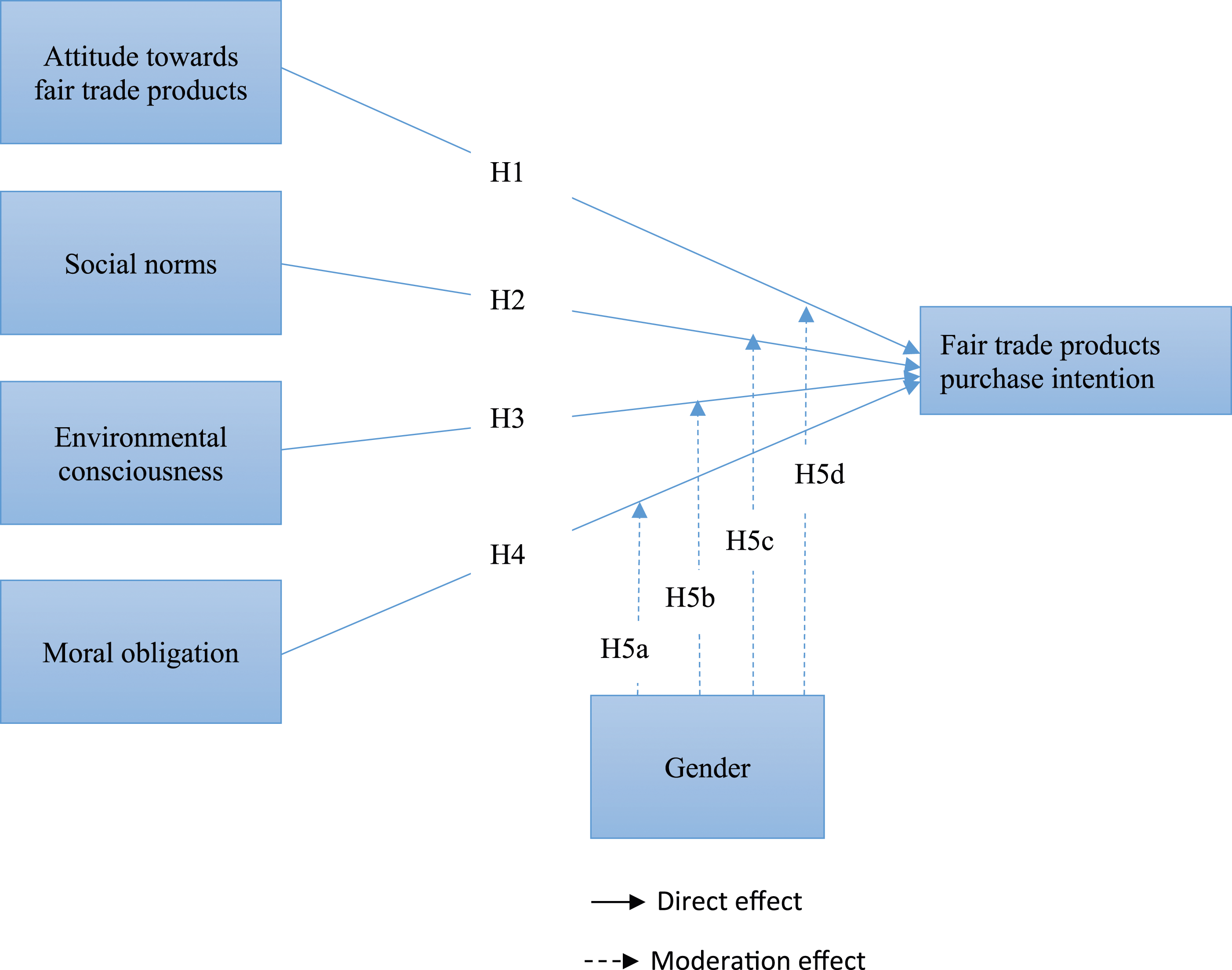
Methodology
Data Collection and Sample Profile
Cross-sectional data were collected from the general public in the United Arab Emirates using an online self-administered questionnaire created in Qualtrics. This research complies with the University of Sharjah’s research ethics committee (Approval Number REC-22-10-26-01-F). In the questionnaire introduction, the respondents were informed that their participation in the survey was voluntary and that they could withdraw from it at any time without providing a reason. Respondents were also informed that all their responses were confidential and anonymous and encouraged to answer as honestly as possible. Before completing the questionnaire, they were asked to provide written informed consent.
The link to the survey was distributed through social media and email messages. This approach, based on a convenience sample, helped ensure respondents’ anonymity and thus reduced social disability bias (Podsakoff et al., 2003). Even though fair trade products are witnessing growing interest among consumers in the Middle East as many retailers begin to offer them, they are still seen as a relatively new category of products in the region. Therefore, the respondents were given a brief definition of fair trade products before being asked to complete scales assessing the studied constructs and questions related to sociodemographic characteristics.
In total, 252 questionnaires were collected, from which 12 were excluded because they were completed in less than 3 minutes; thus, they were considered unreliable. The average response time was 9 minutes. Hair et al. (2019) suggested that there should be a minimum of 10 cases per item to conduct a structural equation model analysis, so a minimum of 150 samples was required as this study has 15 items. Therefore, the final sample of 240 responses satisfied this a priori condition.
Sample Sociodemographic Characteristics.
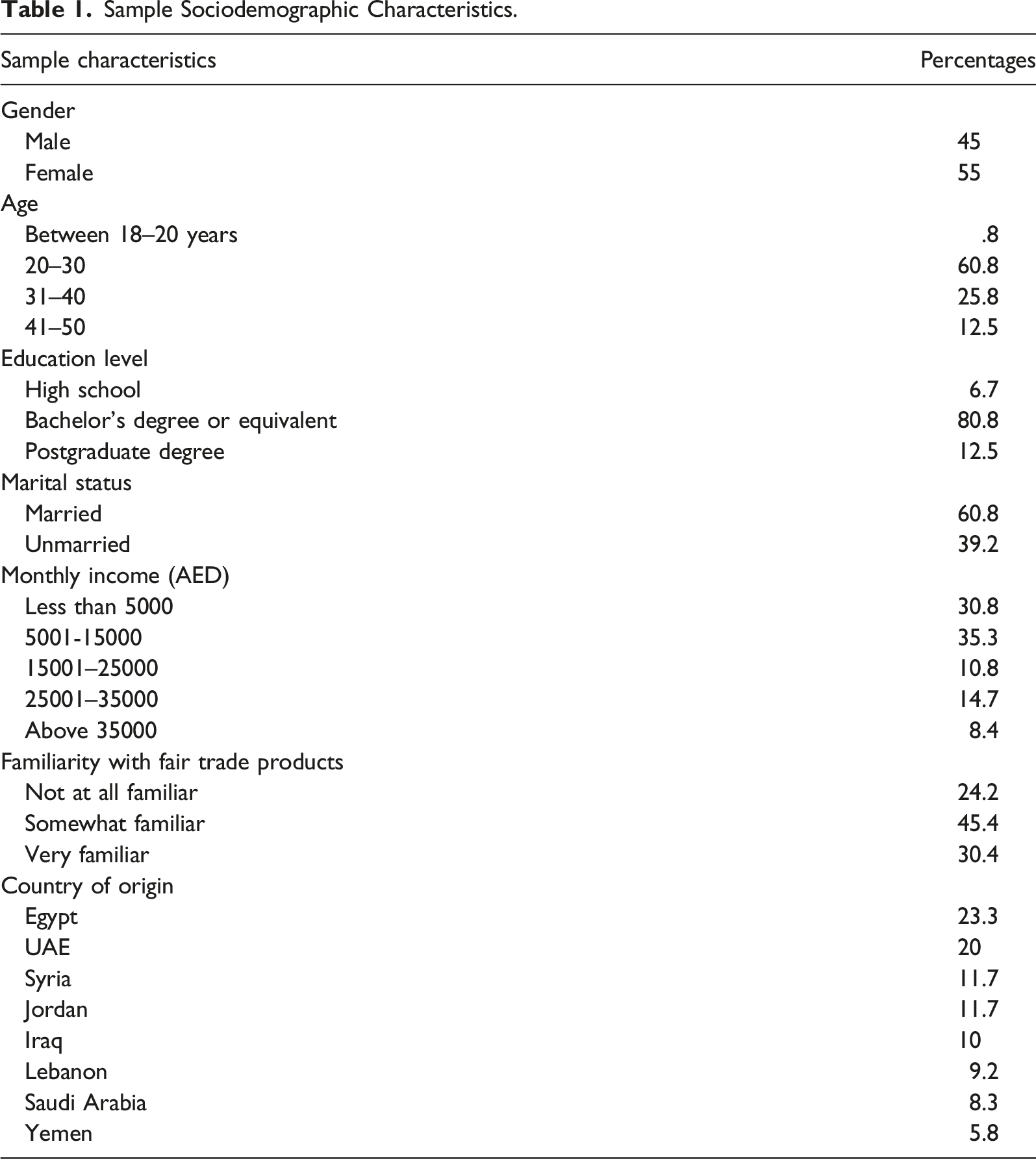
Non-response bias was assessed by comparing the means of the key variables for early and late respondents using a t test. No significant differences were found between the groups (all p values >.10), suggesting that non-response bias is not a major threat to the validity of the findings (Diaz de Rada 2005). Additionally, the demographic characteristics of the sample are very similar to the actual profile of the UAE population, as reported by the UAE Federal Competitiveness and Statistics Center, providing further support to the conclusion that non-response bias is unlikely to impact the results significantly.
Measures
Scales and Factor Loading Values.
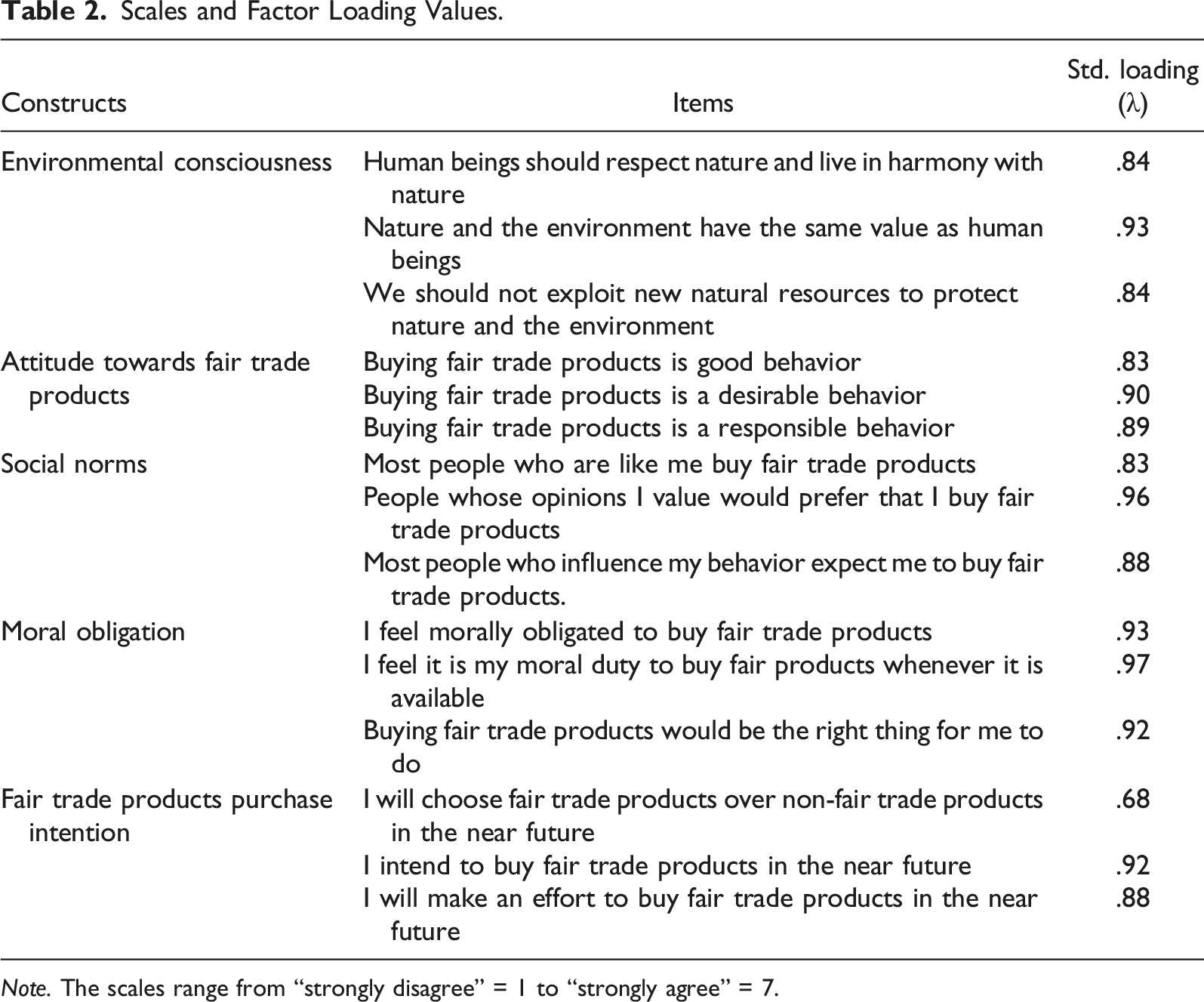
Note. The scales range from “strongly disagree” = 1 to “strongly agree” = 7.
Control variables
The following control variables were measured to assess the potential effect of respondents’ demographics on the theoretical model: age, level of education, marital status, income, country of origin, and degree of familiarity with fair trade products. None of these control variables significantly correlated with the dependent variable, possibly because the sample was relatively homogeneous. Consequently, they were excluded from the analysis for the sake of simplicity.
Data Analysis
Analytical Procedure
As Anderson and Gerbing (1988) suggested, a two-step data analysis approach was conducted, first assessing the psychometric properties of the scales and then exploring the path relationship between the latent variables using the structural equation model (SEM) with the maximum likelihood method. The moderating role of gender was tested via multi-group analysis as it allows for determining if parameters are invariant across the groups (Hair et al., 2019). The data analysis was performed using AMOS 28 and SPSS 28 software.
The fit of the model was interpreted based on absolute fit indices (χ2/df, GFI, RMSEA) and incremental fit indices (TLI, CFI). A model presents an acceptable level of fit if: (1) the χ2/df ration is smaller than 5; (2) the RMSEA is less than .09; (3) the GFI, CFI, and TLI are higher than .90 (Kline, 2015).
Measurement Model Validation and Common Method Bias
Reliability and Validity Analysis.
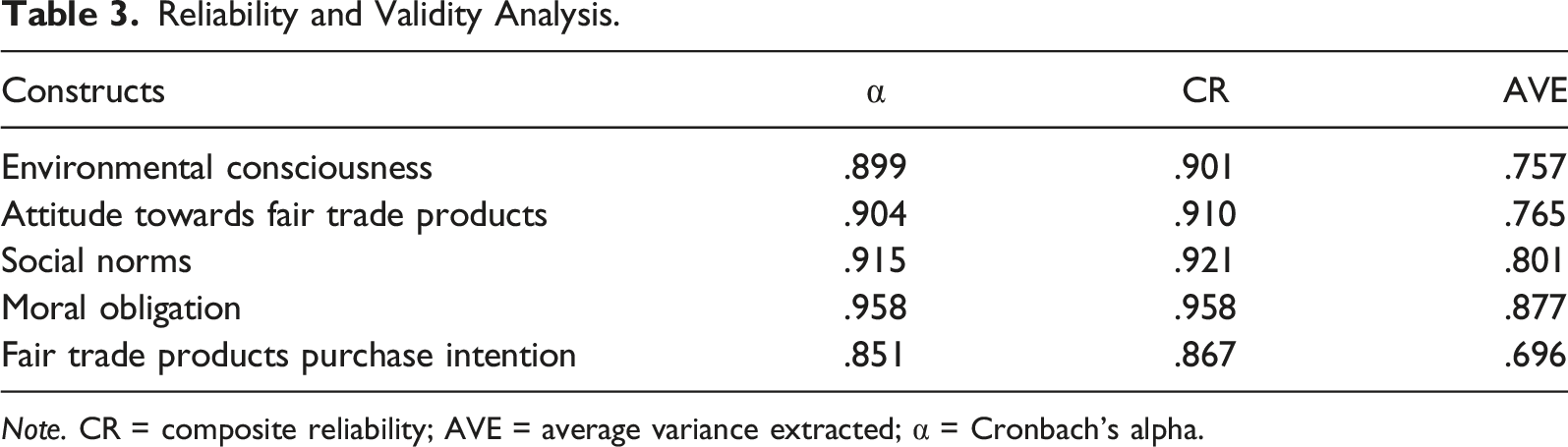
Note. CR = composite reliability; AVE = average variance extracted; α = Cronbach’s alpha.
Discriminant Validity Analysis.
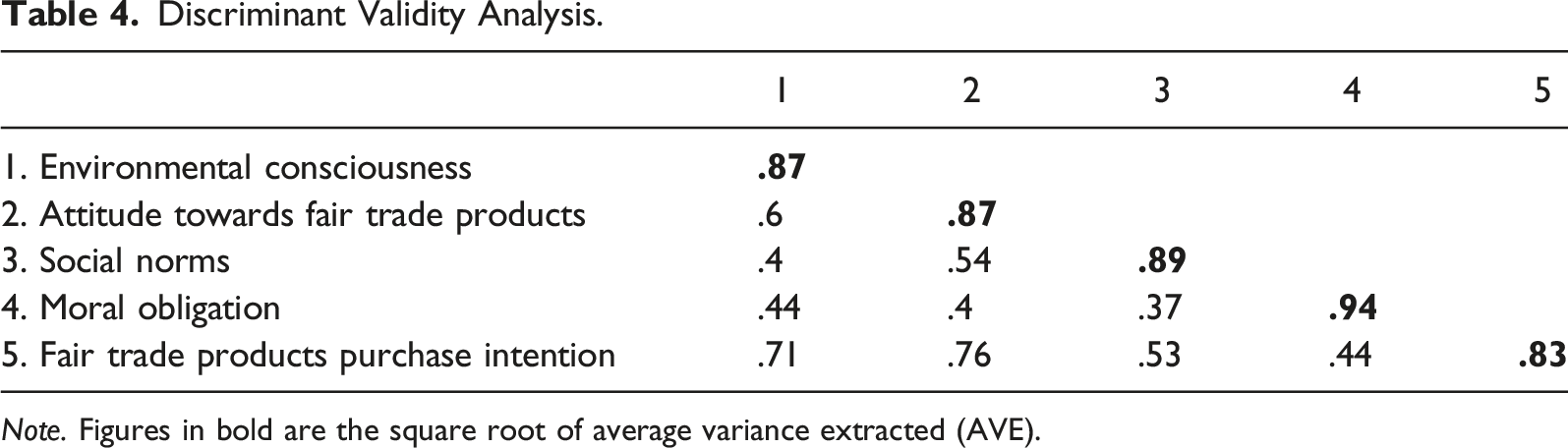
Note. Figures in bold are the square root of average variance extracted (AVE).
To ensure the results’ validity, it is also necessary to rule out the possibility of common method bias. This study followed the recommendation of Podsakoff et al. (2003) to use well-established scales, assure respondents' anonymity, use a counterbalancing question order, and pretest the questionnaire to eliminate item ambiguity. In addition, because all the constructs were measured from the same source, this study employed Harman’s single factor to assess the likelihood of bias in the collected data (Fuller et al., 2016; Podsakoff et al., 2003). An exploratory factor analysis was run using SPSS to analyze all the items. The results showed that five factors were extracted, accounting for 86% of the total explained variance, and that the first factor accounted for only 28%. Therefore, the common method bias is not a significant issue in this paper.
Hypothesis Testing
Direct effects
The structural model analysis results revealed a good fit for the proposed model, as the overall fit measures are in the recommended ranges (CFI = .960, GFI = 899, TLI = .947, RMSEA = .080, χ2/df = 2.548) (Kline, 2015). Further, the model has high explanatory power (R2 = .61), indicating good predictive accuracy. Figure 2 depicts the standardized path parameters. Structural model with standardized coefficients. Note: ***p ≤ .001; **p ≤ .05; *p < .1; ns: not significant (p > .1). β in bold are for the overall sample. For clarity purposes, the figure reports only the standardized path coefficients, not the item loadings and standardized error variances.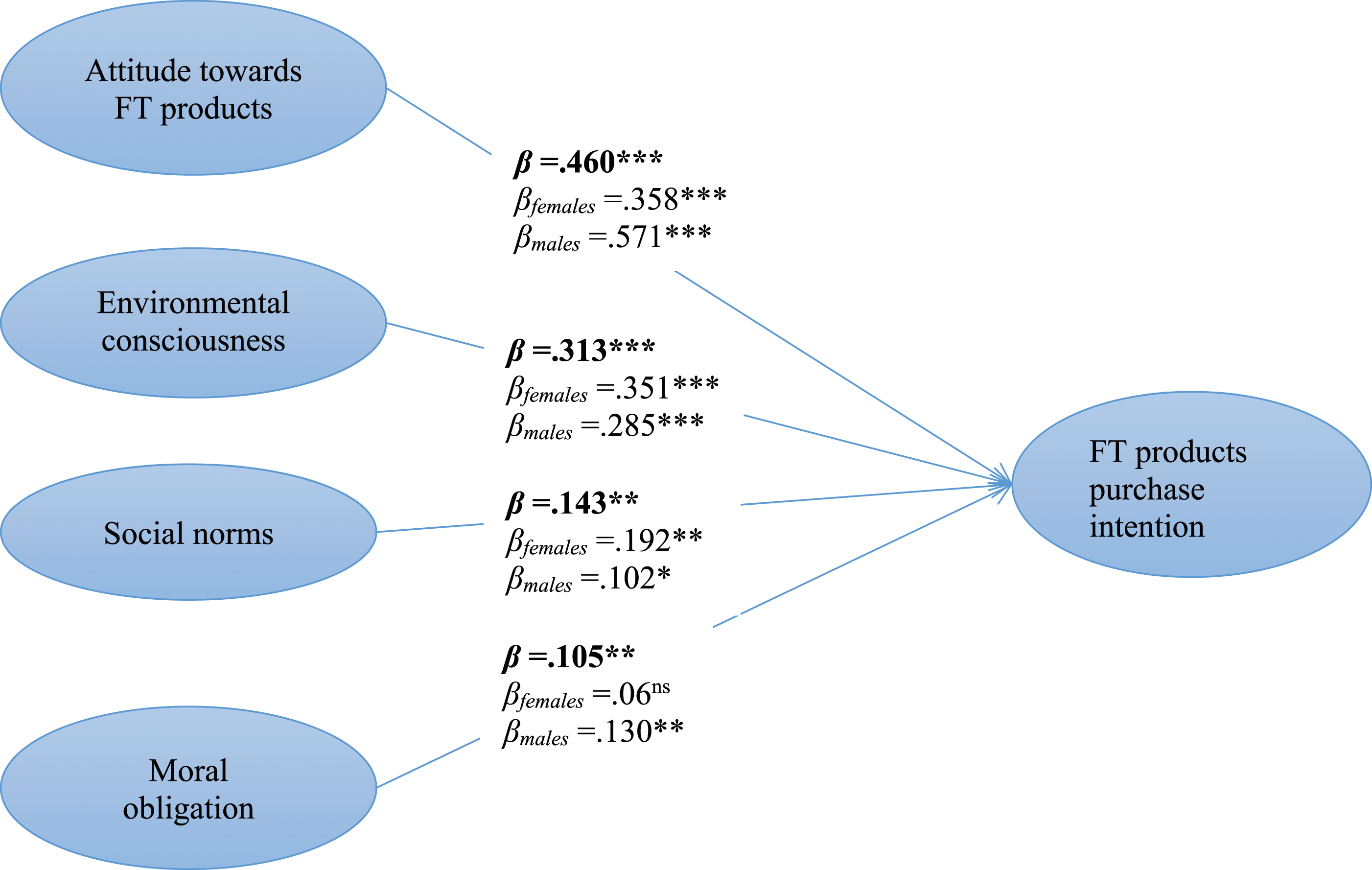
The examination of the path parameters and p-values indicated that all four studied constructs significantly influence the intention to purchase fair trade products. Particularly, the impact of attitude towards fair trade products on purchase intention is positive and the strongest (β = .460, p < .001), supporting H1. Environmental consciousness is also positively related to fair trade purchase intention (β = .313, p < .001), supporting H3: a high level of environmental consciousness enhances consumers’ intent to purchase fair trade products. Moreover, the results support H2 and H4, as both the direct effect of social norms on purchase intention (β = .143, p = .015) and the direct effect of moral obligation on purchase intention (β = .105, p = .034) are positive and significant, although smaller than the coefficients of attitude and environmental consciousness. This suggests that stronger perceived social norms and moral obligations tend to lead to higher intentions to purchase fair trade products.
Moderating effects
Standardized Path Coefficients.
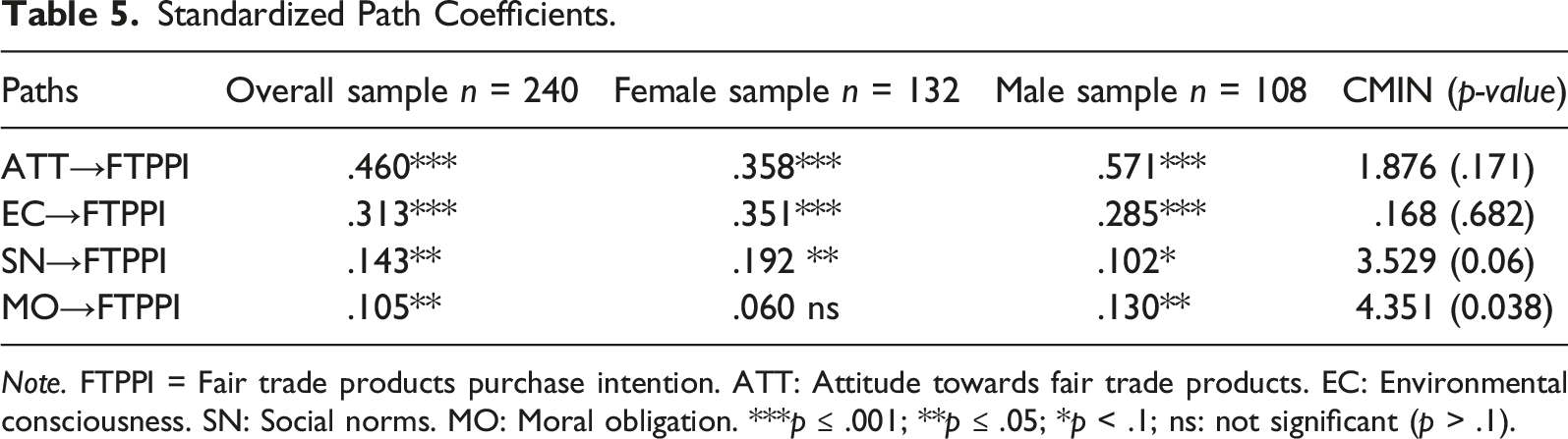
Note. FTPPI = Fair trade products purchase intention. ATT: Attitude towards fair trade products. EC: Environmental consciousness. SN: Social norms. MO: Moral obligation. ***p ≤ .001; **p ≤ .05; *p < .1; ns: not significant (p > .1).
Discussion and Implications
This study was driven by the need for a better understanding of the factors influencing fair trade consumption in the Middle East since it has become urgent for both marketers and policymakers to expand this product category’s market share in the region. It also addresses the calls for additional research on ethical consumption beyond Western cultures (Morren & Grinstein, 2016; Kossmann & Gomez-Suarez, 2019; Hassan et al., 2022) and recommendations to examine gender’s role in predicting fair trade consumption and ethical decision-making in general (Clark et al., 2019; Lotz et al., 2013).
The results support that attitude is a strong predictive factor of fair trade purchase intention regardless of consumers’ gender, aligning with most prior research on ethical and sustainable consumption (Pinna, 2020; Wang & Chou, 2020; Robichaud & Yu, 2021; Haj-Salem et al., 2022). Additionally, the findings indicate that environmental consciousness positively influences consumers' intention to purchase fair trade products and that this effect is not gender specific. Extant literature demonstrated that consumers’ environmental consciousness affects an array of sustainable and socially responsible behaviors (e.g., Haj-Salem et al., 2022; Johnstone & Tan, 2015; Koenig-Lewis et al., 2014; Kushwah et al., 2019). However, with the notable exception of Konuk (2019), prior studies have not empirically examined the influence of environmental consciousness on fair trade consumption. To the best of the researcher’s knowledge, this is the first study in the Middle East to investigate this relationship, highlighting the importance of considering environmental consciousness in predicting fair trade consumption. This finding corroborates self-consistency studies indicating that environmentally conscious consumers frequently choose sustainable and socially responsible behaviors to maintain congruence with their personal beliefs (Förster et al., 2007; Garvey & Bolton, 2017; White et al., 2019). The influence of environmental consciousness is also consistent with the cognitive dissonance theory (Festinger & Carlsmith, 1959; Harmon-Jones & Mills, 2019), which posits that individuals experience dissonance discomfort when they find themselves in a situation where their beliefs and behavior are inconsistent. One strategy for reducing this dissonance or psychological discomfort is to align the behavior with the beliefs. Fair trade products uphold both ethical standards and ecologically friendly production methods. Therefore, buying fair trade products instead of traditional ones could be seen as a coping mechanism that helps consumers reduce dissonance and maintain consistency with their belief in the importance of safeguarding the environment,
Interestingly, the results of the multi-group analysis revealed that gender moderates the links between social norms and moral obligation and purchase intention, respectively. The impact of social norms on the intention to purchase fair trade products is more pronounced among females than males. In contrast, the effect of moral obligation is only significant for males. Our result concerning the influence of social norms aligns with the findings of Sreen et al. (2018), who demonstrated that females in collectivistic cultures are more influenced by subjective norms than males when considering green products, whereas attitude, although a strong predictor of green purchase intention, did not significantly differ between genders. However, our finding contradicts Beldad and Hegner’s (2018) conclusion that social norms only predict fair trade purchase intention for male consumers. This likely reflects cultural differences in the influence of social norms, as Middle Eastern consumers hold more collectivistic values (Elsantil, 2021) compared to the Dutch consumers in Beldad and Hegner’s study, who are known to hold individualistic values. This reinforces the assumption that the influence of social norms differs between cultures and is behavior-specific (Cialdini et al., 1999; Smith, 2015).
The role theory (Biddle, 1986) offers one possible explanation for this gender difference. Females are often associated with nurturing qualities and exhibit greater community-oriented behaviors and ethical sensibility (Andersch et al., 2019; Wai & Bojei, 2015). They also prioritize social goals like building and maintaining relationships within groups and the community, whereas males may place less emphasis on social affiliations (Clark et al., 2019; Costa Pinto et al., 2014). In Middle Eastern culture, gender roles are strongly shaped by religious beliefs and cultural norms (Hussain & Haj-Salem, 2023). Females are expected to be selfless and community-oriented, as they take primary responsibility for raising kids and maintaining family and group units (Alserhan & Alserhan, 2012). Middle Eastern females often exhibit a strong social identity and place great importance on religion and traditions in their daily lives and decision-making (Jayashree & Lindsay, 2016; Semaan et al., 2019). Buying fair trade products can be interpreted as Middle Eastern females attempting to fulfill societal expectations and conform to their prescribed role of caring. Furthermore, previous research revealed that females, irrespective of their countries of origin, tend to place a higher value on social norms due to higher social desirability biases (Dalton & Ortegren, 2011; Shang & Peloza, 2016). They are more susceptible to social influences (Eagly & Wood, 2012; Chen‐Yu & Seock, 2002) and attend more to social cues than males (Roberts, 1991).
Lastly, the results revealed that moral obligation does not significantly influence females’ intention to purchase fair trade products. The impact of moral obligation appears to be significant only for males' formation of fair trade purchasing inclination. Concurring with our results, Andersch et al. (2019) reported that moral obligation does not impact females’ ethical purchase intention. However, this result contradicts those of Hwang et al. (2015) and De Leeuw et al. (2014), who reported that moral obligation has a high impact on female (vs. male) consumers’ intention to purchase fair trade labeled products. In contrast, Beldad and Hegner (2018) reported that gender does not moderate the link between moral obligation and fair trade product purchase intention.
The absence of a significant effect of moral obligation on females’ intention to purchase fair trade products in our study can be attributed to the intricate interplay of individual, cultural, and societal factors. While Islam, the predominant religion in the Middle East, emphasizes the importance of moral obligation and ethical behavior for all Muslims (Doran & Natale, 2011; Sharif, 2016), gender-related cultural norms and socialization may influence how individuals express and prioritize their moral values. One can assume that in some Middle Eastern societies, males may be encouraged to express and adhere to their moral obligation, while females may be expected to follow societal norms. Additionally, the impact of moral obligation on fair trade consumption can be mediated by various factors, including personal values and moral certainty (Alsaad, 2021). These conflicting findings underscore the need for further research to elucidate the role of gender, particularly since past research has shown that the role played by moral obligation can vary across cultures (Nelson et al., 2006).
Practical implications
This study entails important practical implications for marketers and governments seeking to promote fair trade consumption in Middle Eastern societies. First, as the Middle East fair trade market is still in its infancy, policymakers and marketers should collaborate to raise awareness about the benefits of fair trade products and their distinguishing labels. Initiatives should be deployed to emphasize the high value of fair trade products, which adhere to rigorous social and environmental criteria. Furthermore, these initiatives should emphasize the alignment of fair trade products with Islamic principles, underscoring equitable treatment of workers and upholding core values of honesty, fairness, and integrity in business practices. These efforts can foster a favorable attitude among Middle Eastern consumers and boost demand for this category of products in the region. Offering consumers the opportunity to sample fair trade products may also help to reinforce a positive attitude in this region.
Second, as environmental consciousness seems to drive fair trade consumption, an effective strategy would be to educate Middle Eastern consumers about the environmental damages caused by consuming traditional products and present fair trade products as an alternative solution. Furthermore, marketers could also benefit from emphasizing the significance of ecological concerns within the context of Middle Eastern values. Living in harmony with nature is rooted in Islamic values (Hasnah Hassan, 2014; Ghazali et al., 2018; Orellano et al., 2020). By aligning the promotion of fair trade products with these shared values, marketers can establish a stronger connection with Middle Eastern consumers and encourage the consumption of fair trade products.
Third, our results indicate that, in the Middle East context, the influence of social norms and moral obligation on the likelihood of buying fair trade products is contingent on consumer gender. Therefore, marketers must tailor their marketing efforts and develop campaigns that resonate with males and females differently. In female-oriented communication, marketers may use social proof by highlighting the growing popularity of fair trade consumption in the Middle East, generating social pressure and urging more female consumers to buy fair trade items. Moreover, marketers can leverage influencers and celebrity endorsements to promote fair trade consumption among females. However, it is important to choose influencers and celebrities who resonate with Middle Eastern females in terms of attractiveness and credibility. The use of such figures should be culturally sensitive and aligned with the target audience’s values. Creating and supporting communities of conscious consumers who understand the importance of ethical purchase choices is another viable approach in this region. The members of these communities might foster a sense of social norms around conscious consumerism and thus encourage the consumption of fair trade products among Middle Eastern consumers. In communication targeted towards male consumers in the Middle East, marketers should leverage social norms and moral obligation, as both impact males’ intent to buy fair trade products. By highlighting the impact of purchasing decisions on the lives and well-being of farmers and workers in developing countries, marketers may appeal to males’ moral obligation to act in a way that alleviates inequalities and social imbalances. Additionally, by positioning fair trade products as the “right choices” or the “choices that make a difference,” marketers may appeal to males’ desire to align with their moral obligation. This alignment can be strengthened by frequently reminding consumers that fair trade labels aim to improve farmers’ and workers’ welfare, secure fair wages, and support sustainable practices.
Limitations and Future Research
The current study has some limitations that should be considered when interpreting its findings. First, the data were collected through a cross-sectional survey of the general public in the UAE using a convenience sample based on voluntary participation. While this approach is commonly used in studying ethical consumption, the potential for selection bias may limit the generalizability of the results. Future research should address this limitation by using a random sample from multiple countries across the region to enhance the generalizability of the results. Second, the data collection was conducted in a single Middle Eastern country, the UAE. Although the respondents represented diverse nationalities within the Middle East, residing in the UAE likely meant that they earned more than their counterparts in their home countries, as the UAE displays one of the highest incomes per capita in the region. Further research is needed to explore whether the findings hold true in Middle Eastern countries with lower income per capita. Third, the study only considered the intention to buy fair trade products. Although consumers’ intentions are considered a reliable indicator of their purchasing behavior, a gap often exists between intention and actual behavior (Sheeran & Webb, 2016). Subsequent research that combines survey data with retail scanner data to directly measure actual buying behavior would provide valuable insights. Furthermore, more could be learned about fair trade consumption through the use of longitudinal approaches. Finally, our results related to the moderating role of gender were not consistent with past research. Subsequent research should explore the cognitive and emotional mechanisms underlying these gender differences.
Conclusion
This study expands the social marketing literature by investigating the key drivers of fair trade consumption in the Middle East, a previously understudied region. It provides two key contributions. First, it is the first study to examine the effect of environmental consciousness on Middle Eastern consumers’ intention to purchase fair trade products. Second, it assesses the moderating role of gender, revealing nuanced differences in how social norms and moral obligation impact fair trade purchase intentions.
Footnotes
Declaration of Conflicting Interests
The author(s) declared no potential conflicts of interest with respect to the research, authorship, and/or publication of this article.
Funding
The author(s) disclosed receipt of the following financial support for the research, authorship, and/or publication of this article: This research work was supported by NAMA Women Advancement as strategic partner of the 4th Forum for Women in Research (QUWA): Sustaining Women’s Empowerment in Research & Innovation at University of Sharjah.
