



Abstract
Background
The tobacco industry has been facing several transformations, considering that technology has evolved and health concerns have increased. One way for this industry to meet the growing social and health concerns is to provide alternative solutions. Heated tobacco products (HTPs) were the solution found, but they nevertheless pose several challenges to regulators, companies, and consumers, since HTPs are advertised as a less harmful alternative to conventional cigarettes.
Focus of the Article
This study aims to analyze smokers' perception of HTPs to provide insights for social marketing campaigns targeting behavioral change.
Research questions
The main objectives of this research are: (1) to assess whether smokers and ex-smokers view HTPs as less harmful to health than traditional cigarettes; and (2) to determine to what extent HTPs can help increase the intention to quit smoking.
Methods
This study explores smokers’ perception of HTPs consumption using a modified version of the Health Belief Model (HBM). A survey study involving 250 smokers and ex-smokers was conducted to test the conceptual model using PLS-Path modeling to validate the research hypotheses. The data were analyzed using the SPSS 27 and SmartPLS 3.3 programs.
Results
The results suggest that the perceived benefits of heated tobacco consumption negatively influence the likelihood of quitting smoking. Therefore, HTPs do not work as auxiliary products with regard to the intention to quit smoking. In some cases, the effect is quite the opposite, as HTPs use increases tobacco consumption and dependence. Perceived susceptibility and perceived severity are not significant predictors of the decision to quit smoking.
Research limitations
Future research could use a sample that includes only HTPs smokers and ex-smokers, analyze HTPs benefits and understand the primary motivation behind replacing conventional cigarettes with HTPs.
Practical implications
Entities attempting to promote the reduction of tobacco consumption should equate HTPs to conventional tobacco and focus on campaigns targeting only HTPs smokers. Whenever studying perceptions on HTPs, it is important to consider smokers’ dependence on nicotine and the particularities of the devices used to consume HTPs.
Importance to the Social Marketing Field
Considering the social relevance and growth of heated tobacco consumption, as well as the increase of the tobacco industry’s economic power, this research offers relevant insights into consumers’ perceptions toward HTPs.
Introduction
While tobacco consumption constitutes one of the most significant global public health problems, consumers are also beginning to perceive it as dangerous for their health. At the same time, it is recognized that there has been a reduction in the social acceptability of smoking (Zou et al., 2021). This growing health concern, coupled with a more educated population and technological evolution, led the big players in the tobacco industry to look for alternatives and try to get consumers to switch from regular tobacco to Reduced Risk Products (RRPs). Heated tobacco products (HTPs) are an example of these new products. Also referred to as “heat-not-burn” tobacco products (HNBs), the HTPs are tobacco-based products that do not combust like conventional cigarettes, but rather are heated to lower temperatures (350°C vs. 600°C for conventional cigarettes) to avoid combusting harmful components. The emergence of these new tobacco and nicotine-containing products on the market are actively promoted to consumers by manufacturers under the promise of health dangers reduction, and has brought new challenges to social marketing campaigns targeting smoking prevention (Nunes, 2019).
Some studies (e.g., Yang, 2014), predominantly sponsored by tobacco manufacturers, state that HTPs are sold as a less harmful alternative than conventional cigarettes. However, the actual impact of HTPs on user health and their overall impact on public health is still not entirely known (World Health Organization, 2018; Znyk et al., 2021). Heated tobacco products manufacturers conducted studies that demonstrate that switching entirely to these products, although not risk-free, is a better alternative than continuing to smoke cigarettes (iqos.com, 2021).
Evidence from the tobacco and alcohol industries consistently concludes that the programs achieving the highest reduction in smoking or harmful alcohol consumption are those that contain public or health policy components (Almestahiri et al., 2017; Hoek & Jones, 2010), such as multilevel interventions pointing to individual, environmental and policy levels. These interventions, simultaneously implemented in social media and at the individual level through smoking bans and restrictions in public areas, have shown positive outputs (Lv et al., 2014). Many studies have explored the use of behavioral change models to assess addictive behaviors that need to be reduced or entirely eliminated. Some examples include the Health Belief Model (HBM), the Extended Parallel Process Model (EPPM), the Theory of Reasoned Action (TRA), the Stages of Change Model (SCM). and the Ecological Model (EM) (Glanz et al., 2009).
The HBM (Becker, 1974) suggests two critical components when modifying health-related behaviors: the perceived benefits and the barriers associated with change (Hines, 1996; Montaño & Kasprzyk, 2009). This model has been used to transform one dependency/addiction into another (Hines, 1996). Hence, the use of the HBM seems appropriate in situations where trying to replace the addictive behavior (smoking conventional tobacco) with an (apparently) less severe alternative (smoking heated tobacco) is the primary goal.
Therefore, this study assesses smokers’ perception of HTPs consumption and their impact on the intention to quit smoking. Thus, the main objective of this research is to understand if traditional smokers or ex-smokers consider HTPs a less harmful smoking practice. Additionally, the study examines if replacing conventional tobacco with heated tobacco may help reduce smokers’ dependence and thus increase the intention to quit smoking.
To properly frame the study, a literature review was conducted to identify major behavior change models, and the most suitable model for the topic was assessed. Subsequently, studies on HTPs' harms are analyzed, and the research hypotheses are proposed. Next, the methodology is detailed, followed by the presentation of the results. Finally, we discuss the results and draw relevant conclusions.
Literature Review and Conceptual Model
Reduced-Risk Products
Before the second half of the 20th century, tobacco was highly popular, since its health harmfulness was still unknown. Although the adverse effects are currently well-known, over eight million people die each year from tobacco-related diseases, of which 1.2 million from exposure to environmental tobacco smoke (ETS), also labeled as second-hand smoke (SHS) (World Health Organization, 2019). Tobacco consumers are increasingly aware that “smoking kills”, which may explain the projected 8% decline in worldwide tobacco sales by 2022 (Juenger, 2019). In fact, significant reductions in the estimated prevalence of daily smoking have been globally observed since the 1980s. The smoking population older than 15 years decreased from around 41% in 1980% to 31% in 2012 for males and 11%–6% for females (Ng et al., 2014). This global decline in tobacco consumption, combined with the fact that younger people are less and less interested in conventional smoking, affects the profits of tobacco manufacturers.
For this reason, the industry has begun to direct its efforts toward creating more appealing alternatives for potential and current consumers: the Reduced Risk Products (RRPs). The RRPs consist of e-cigarettes, oral nicotine (or snus), and heat-not-burn devices that heat the tobacco instead of burning it. By not exceeding temperatures above 350° Celsius, the manufacturers claim that these products produce fewer toxic elements, and therefore are less harmful to user health. Examples of RRPs are e-cigarettes and HTPs, also known as heat-not-burn products. The most well-known brands are “IQOS” by Philip Morris International, “Glo” by British American Tobacco, and “Ploom TECH” by Japan Tobacco International (O’Leary & Polosa, 2020). By promoting smoking devices as distinct and desirable technological gadgets boasting modern designs and the benefits of less smoke, less smell, less and health damage, HTPs have attracted many conventional cigarette smokers.
Perception of the Dangerousness of HTPs
Although RRPs contain nicotine, smoking these devices does not involve inhaling any smoke, which makes it allegedly less dangerous (Znyk et al., 2021). Research from tobacco manufacturers shows that HTPs contain lower levels of toxic emissions than conventional cigarette smoke (Philip Morris International, 2018; Simonavicius et al., 2019). Its use is associated with reductions in exposure to several harmful constituents of tobacco smoke. In spite of this, some independent studies have raised concerns about the reduced risks of HTPs, making it essential that all harm reduction claims are supported by robust and independent evidence (Jenssen et al., 2018; Znyk et al., 2021).
Currently, there is not enough data to conclusively show HTPs lower health harmfulness. There are very little data on both the effects of HTPs on the population (Camacho et al., 2021) and their long-term effects and usefulness for people who want to quit smoking. However, some studies by Public Health England (Borland et al., 2011), the American Food and Drug Administration, and the German Institute for Risk Assessment disclose an average toxicity reduction of around 90%–95% in the case of new smokeless nicotine-delivery products compared to cigarette smoking (Garrido, 2019).
Tabaqueira, a Philip Morris Group company, conducted studies that showed that switching entirely to HTPs is a better alternative than continuing to smoke cigarettes. However, these studies are sponsored and published by the industry itself, which raises issues across medical and scientific associations and societies, thus requiring more independent studies (Garrido, 2017).
There are still some misperceptions of the risks of these products, mainly because of inaccurate information and sensational media headlines (O’Leary & Polosa, 2020). In addition, even some celebrities and influencers have been dynamically presenting IQOS in their posts and videos (Hejlová et al., 2019). The perceptions regarding IQOS were assessed through Twitter and included some positive feelings such as “IQOS is safer than cigarettes”, or “IQOS helps quit smoking”, with tweets expressing negative feelings. The most popular topic is “illegal marketing/selling to youth”, followed by “health risks/fire hazards” (Zou et al., 2021). Other researchers mention that some individuals tried IQOS because they believed it was better, less harmful, less hazardous, or less damaging to their health than traditional cigarettes (Tompkins et al., 2021). It is also interesting to note that tobacco harm-reduction products are subject to restrictions in several countries, and some of them even banned HTPs, such as Malta, Norway, and Thailand (Institute for Global Tobacco Control, 2020; O’Leary & Polosa, 2020).
Behavior Change Models
To change high-risk behavior, such as smoking, social marketers need to recognize and manage the environmental elements of risk behavior (Hoek & Jones, 2010). Social marketing programs have been based on theoretical models/tools for promoting behavior change. The most commonly used models are the HBM (Rosenstock et al., 1988), the EPPM (Popova, 2012; Witte, 1992), the TRA (Fishbein & Ajzen, 1975), the SCM (DiClemente et al., 1985), and the EM (Glanz et al., 2009; Ogbodoakum & Abiddin, 2017). The HBM has been applied to a broad range of health behaviors, including health promotion (e.g., contraceptive use, diet, and exercise), illness or risk avoidance (e.g., smoking, child vaccination), compliance with recommended medical regimens, and use of clinical and medical services. The HBM identifies six determinants that facilitate healthy behaviors: perceived susceptibility, perceived severity, perceived benefits, perceived barriers, self-efficacy, and cues to action. These components help health communicators to understand how susceptible their target audience is to a given health issue, whether or not they consider it to be a serious issue, and whether or not the suggested healthy action can overcome the risk, while bringing acceptable costs and benefits (Glanz et al., 2009).
Two essential components of the decision to modify health-related behaviors are the perceived benefits and the perceived barriers to change. In this regard, the HBM has been used to promote the replacement of harmful behaviors with apparently less harmful ones (Hines, 1996).
Since the HBM is one of the most researched models in the health behavior field and has produced trustable predictions regarding specific health behaviors (Montaño & Kasprzyk, 2009), our research will apply it to understand if HTPs consumption can be considered a suitable replacement for traditional tobacco. For that, we rely on the following ideas: (1) improving the perceived threats associated with tobacco consumption can contribute to reducing its consumption; and (2) the idea that smokers are more likely to quit smoking if they realize that there is a less harmful alternative available. For all these reasons, the HBM seems to be the most appropriate model to both deal with the tobacco dependence problem and study the perceived benefits of HTPs adoption.
The likelihood of preventive health behaviors is known to increase as a function of perceived threat (Bishop et al., 2014). However, failure to fully operationalize the HBM can be partly due to the suggestion that Susceptibility and Severity could be combined under a single construct: Perceived Threat (Becker & Maiman, 1975). Hence, separating these two constructs can be important to better understand how a behavior considered to represent a minor step in relation to the original behavior can produce better results. Therefore, we propose the following hypotheses:
Moreover, studies targeting heated tobacco smokers include smoking cessation, reduced toxicity compared to cigarette smoking, reduced smell, and improved taste as factors encouraging the use of HTPs. These studies (e.g., Carpenter et al., 2005; Tompkins et al., 2021; Zou et al., 2021) also identified that smokers of heated tobacco were less harmful to the throat than conventional cigarettes and reported improved physical health. On the consumer side, there is evidence that a clear intention to reduce or quit smoking cigarettes due to health risks remains when starting smoking HTPs (Gallus et al., 2022; Kim et al., 2021; Queloz & Etter, 2019; Tompkins et al., 2021).
It was also found that some consumers of heated tobacco can become dependent on the device. Conversely, there are also factors — such as the bulkiness of the device, its chargeable nature, the associated upkeep (cleaning), the cost and the strange smell — that discourage its use (Hair et al., 2018). As our aim is to understand the implications of HTPs on the likelihood of quitting smoking, and assuming that HTPs smokers retain the pleasure of smoking without the same perceived health dangers and environmental and social consequences, the following hypothesis is then proposed:
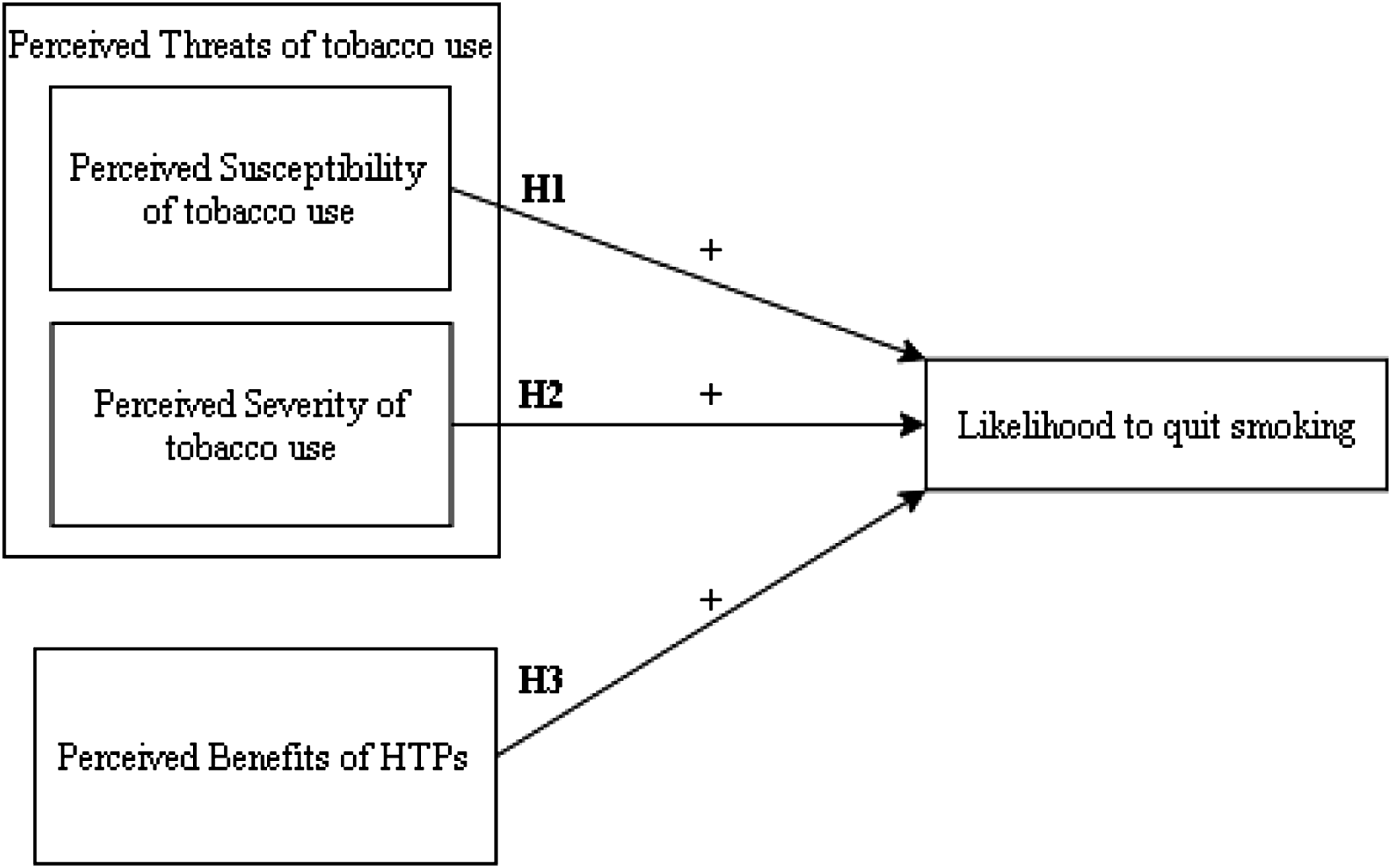
Conceptual model.
Methodology
According to the 2019 Portuguese National Program for Smoking Prevention and Control (Nunes, 2019), tobacco remains one of the leading preventable causes of disease and premature death. In fact, more than 11,800 Portuguese die of tobacco-induced diseases every year (Drope & Schluger, 2018). Furthermore, since HTPs hit the Portuguese marker in 2015, they have already attracted around 12% of the adult smoking population, ranking the country among the top-5 countries in that most consume heated tobacco, with a 6% share of the market regarding total tobacco sales (Garrido, 2017). Given this context, we believe that it makes sense to conduct this analysis on a Portuguese sample.
The data for this study were collected through a self-administered online survey developed with Google Forms. The invitation and weblink for the survey were shared with the researchers' contacts via email and social media platforms (e.g., Facebook, Instagram, and Twitter).
Written informed consent was obtained from the participants for their anonymized information to be published in this article. The Center for Innovation and Research in Business Sciences and Information Systems (CIICESI) committee requires ethical approval of studies that do not guarantee data privacy and confidentiality. Our research involves anonymous surveys that do not collect any sensitive or identifiable information and thus review was not required for this study.
The study sample included smokers or ex-smokers of any tobacco product. Two screening questions were included for qualifying respondents: the first assessed whether they currently smoke or had regularly smoked, and the second whether they were acquainted with the heated tobacco brand IQOS. The respondents that provided negative answers to both questions were not allowed to continue answering the questionnaire.
The data were collected in the first week of February 2021, and out of 344 responses, 250 completed and valid responses remained for analysis. The sample is quite diverse regarding age, education, and professional occupation, avoiding the homogeneity of responses. The items used to measure the constructs were previously validated in different studies (e.g., Gözüm & Aydin, 2004) that used the Champion’s Health Belief Model Scale (CHBMS). For the present study, the revised version of CHBMS-1993 was used. Champion's Health Belief Model Scale is a commonly used instrument to measure HBM variables, including perceived susceptibility, perceived seriousness, perceived benefits, perceived barriers, self-efficacy, and health motivation associated with breast cancer screening. The CHBMS-1993 instrument has been used in several research articles that rely on HBM (Abolfotouh et al., 2015; Noroozi et al., 2010). Each component of CHBMS was adapted to the present study topic. Hence, cancer disease associated with not performing breast self-examination was adapted to heart, lung, or cancer diseases associated with non-smoking cessation or its non-replacement by HTPs.
Scales for Measuring Constructs.
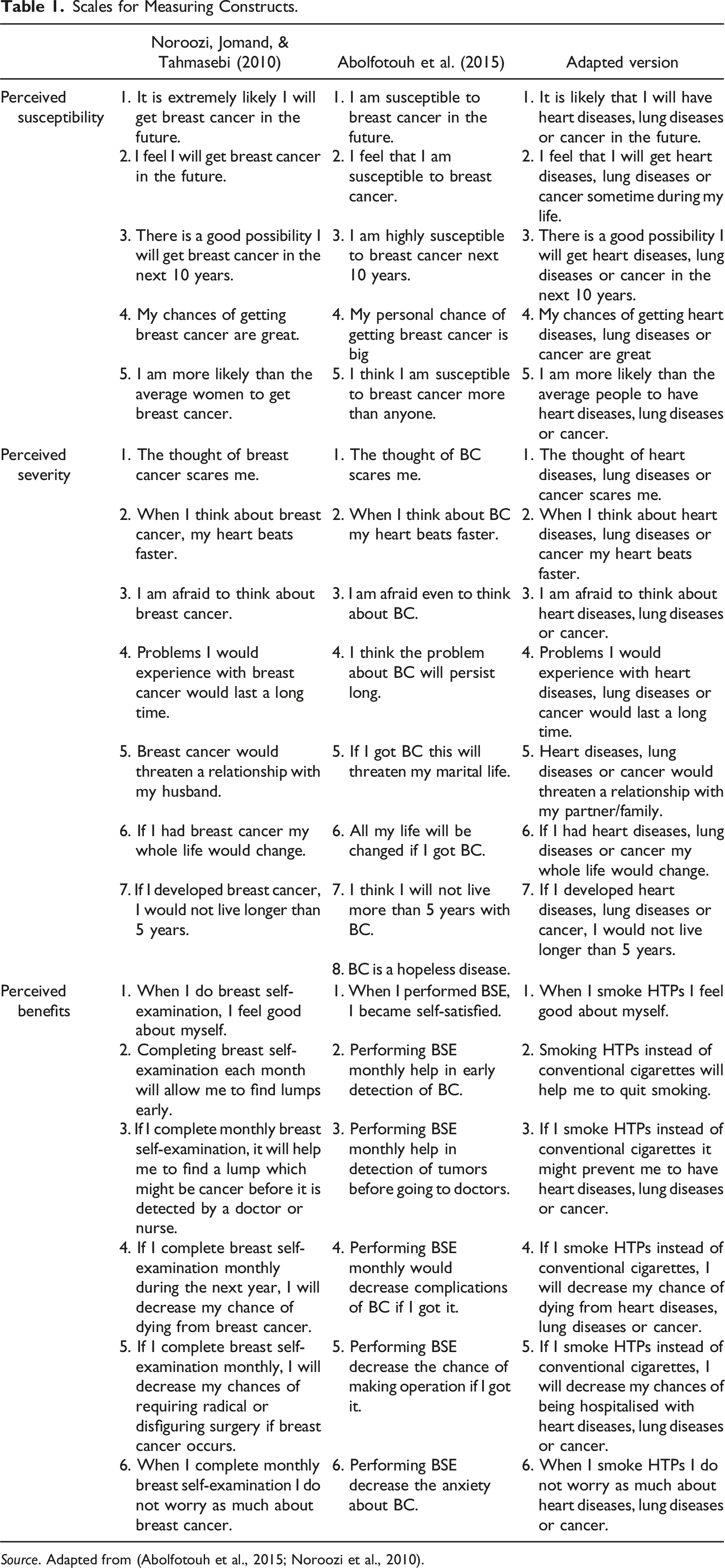
Source. Adapted from (Abolfotouh et al., 2015; Noroozi et al., 2010).
Data Analysis
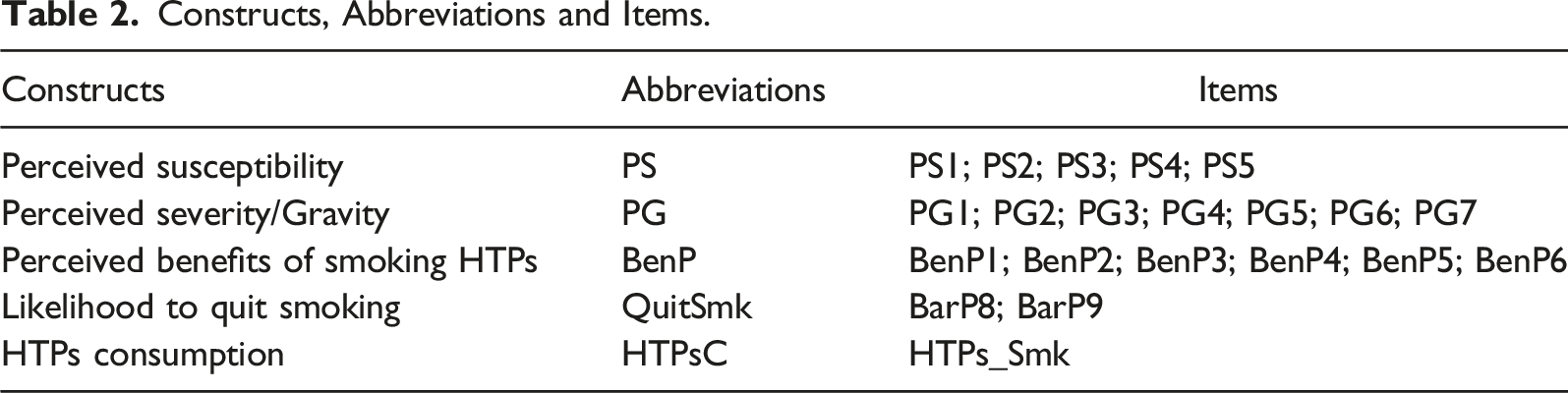
Constructs, Abbreviations and Items.
Sample Profile
The sample for this study consists of 250 smokers and ex-smokers, with 173 currently smoking and 77 having been regular smokers. Of the 173 participants who smoked regularly, 116 stated they smoked or had smoked heated tobacco, but only 95 smoked HTPs exclusively (without combining it with other tobacco products).
Regarding gender, 53.4% (n = 132) were female, and 46.6% (n = 115) were male. As for the age distribution, the 18–24 age group represents the highest proportion of the sample (n = 133; 53.8%). Most of the respondents had obtained a bachelor’s degree (n = 139; 56.3%), followed by those with a master’s degree (n = 58; 23.5%). Regarding the professional situation, workers stand out (n = 115; 46.5%), followed by students (n = 87; 35.2%), working students (n = 33; 13.4%), and those who are unemployed (n = 12; 4.9%). Overall, the vast majority of the study participants declared having already smoked cigarettes (n = 244; 97.6%), followed by HTPs, with 134 (53.6%) participants claiming to have already regularly smoked or tried these tobacco products. These preferences were followed by roll-your-own tobacco (n = 103; 41.2%), cigarillos/cigars (n = 61; 24.4%), and finally e-cigarettes (n = 35; 14%). Regarding the type of tobacco consumed in the participants' households, the results were similar: cigarettes were prevalent, followed by HTPs, roll-your-own tobacco, cigarillos/cigars, and lastly e-cigarettes.
Finally, as our study aims to check the relationship between consumption of HTPs and quitting smoking, it was considered appropriate to assess HTPs consumers' intent to quit smoking during the upcoming year. Thus, of the 95 participants who stated smoking HTPs regularly, 58.5% responded that they did not intend to stop smoking in the next year, and 59.3% even stated that they had increased that tobacco consumption since they started using HTPs.
Model Analysis
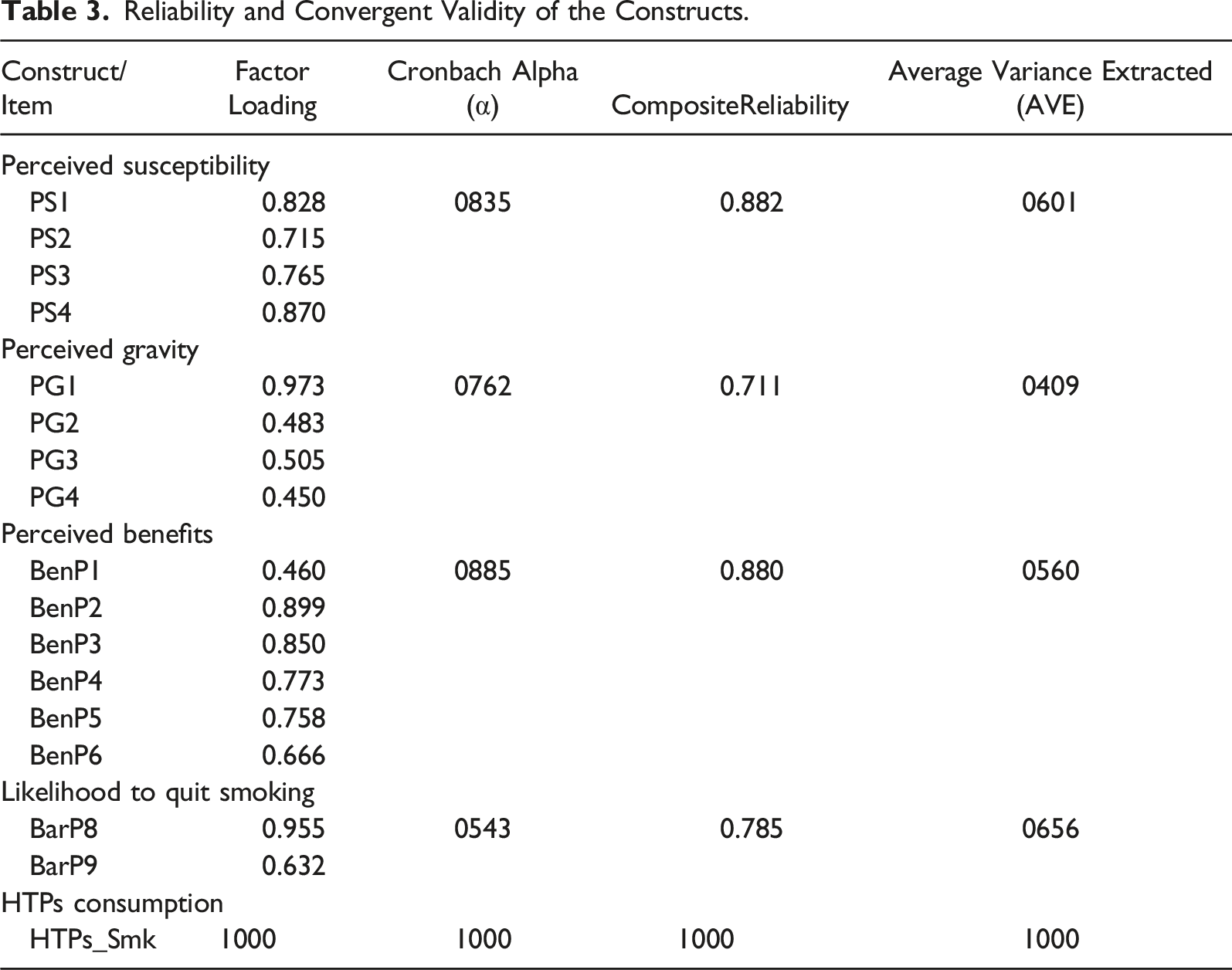
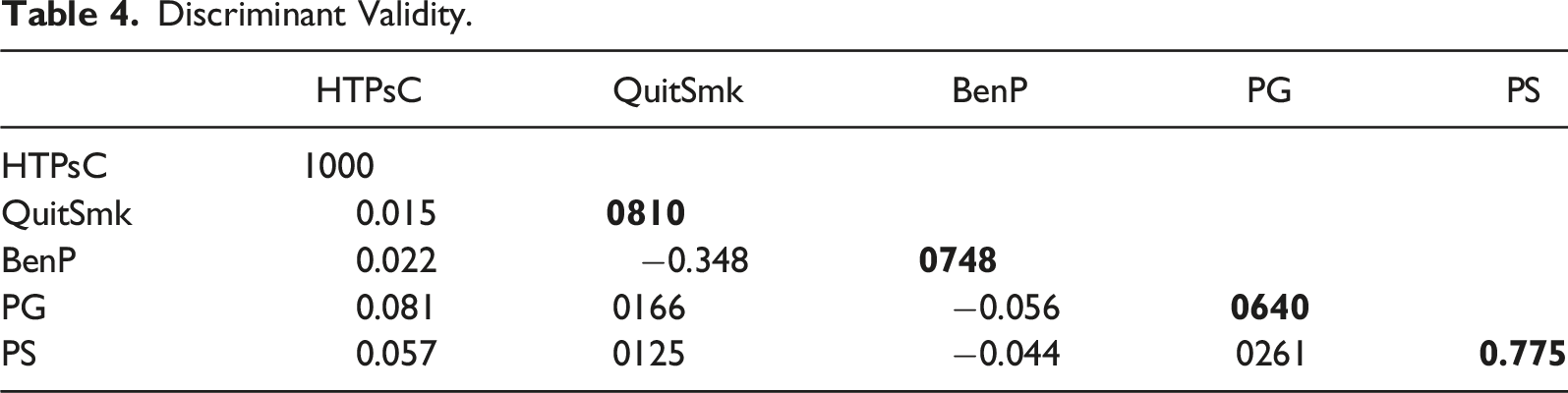
The collected data were analyzed using IBM’s SPSS 27 and SmartPLS 3.3 software. The structural equation technique was used with a partial least-squares estimation approach (PLS-SEM). The reliability of the individual items, convergent validity, and discriminant validity were assessed. Items with a factor loading value equal to or higher than .7 are significant, while items with loadings lower than .4 should be immediately discarded (Hulland, 1999). According to Table 4, most factor loadings are higher than .7, and that those with lower values are above .4. Nevertheless, items PG5, PG6, PG7 of the perceived gravity construct had to be deleted, as they were unreliable.
Convergent validity is a measure of internal consistency. It can be calculated through Cronbach’s alpha, composite reliability, and average variance extracted (AVE) of the latent variables (Hair et al., 1998). To be considered reliable, the item should have a Cronbach’s alpha higher than .7 or .6 (Marôco, 2018). Concerning composite reliability, .7 was considered as the reference value (Hair et al., 1998). Table 4 shows that all constructs have a Cronbach’s alpha and composite reliability higher than .7, except for the Likelihood to Quit Smoking construct, which has a Cronbach’s alpha lower than .7, but still close to .6.
Reliability and Convergent Validity of the Constructs.
Discriminant Validity.
Hypothesis Testing
Significance Analysis.

By analyzing the regression weights (Table 5), we can see that the perceived benefits show an inverse relationship with the likelihood of quitting smoking, meaning that when perceived benefits increase by 1 unit, the likelihood of quitting smoking decreases by .338 units. According to H3, we propose a positive relationship between these two variables, which resulted in an antagonistic relationship according to the study results. We will try to explain this exciting result in the next section. Hypotheses H1 and H2 are also rejected, as they have not proven to be statistically significant (p-value >.05). Figure 2 summarizes the results graphically. Model results. *p-value <0.5, **p-value <0.1, ***p-value <0.01.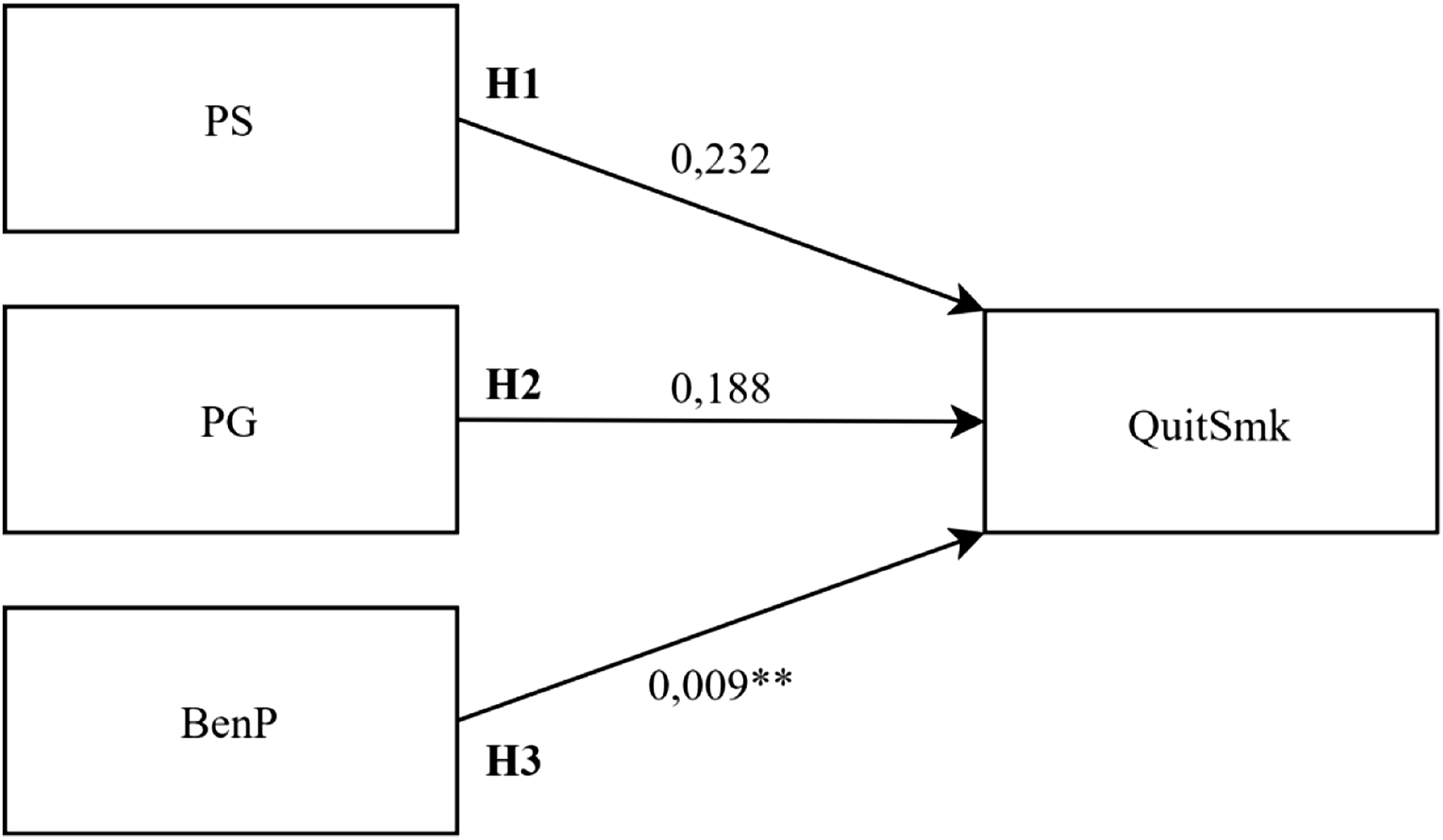
Discussion
Perceived susceptibility and perceived severity did not influence the intention to quit smoking. This finding suggests that even when individuals acknowledge the possibility of lung, heart, and other tobacco-related diseases, as well as the severity of these diseases, such acknowledgment will not influence their likelihood of quitting smoking. This may be explained by the respondents’ strong addiction to smoking, because realizing their exposure to the severity of the disease is not enough to make them stop smoking.
Regarding the impact of the perceived benefits of smoking HTPs in quitting smoking, the results suggest a reverse relationship, which is not in line with what was previously supported by Zou et al. (2021). The likelihood of quitting smoking does not seem to depend on possible benefits associated with the alternative consumption of HTPs instead of regular combustible tobacco, since individuals may not really see these products as a less harmful option for their health. Actually, the perception of Twitter users showed a more negative or neutral attitude toward IQOS rather than a positive attitude (Zou et al., 2021). Some users stated that they had successfully used IQOS to stop smoking regular cigarettes. However, only few quit smoking combustible tobacco or HTPs (Tompkins et al., 2021). Some authors point out that the lower perceived risk of both electronic nicotine-delivery systems and HTPs is reflected in the association of these products with smoking cessation aids (Kandra et al., 2014; Kitzen et al., 2019). However, the results rather point to the opposite: decreased intention to quit smoking is associated with increased perceived benefits of smoking HTPs. According to our results, more than half of the participants disagreed or totally disagreed that smoking HTPs instead of regular cigarettes represents a cessation aid.
Additionally, when questioned about their intention to quit smoking in the following year, more than half of heated tobacco smokers responded that they did not intend to do so. Furthermore, they even stated that they had been smoking more since they started to use HTPs, which may underline some extra addiction to this type of tobacco product. It should also be mentioned that only 21 participants said that they had quit smoking after changing to HTPs. It is unclear whether the motivation for this cessation is derived from using this type of tobacco or for other adverse reasons, as there was no question tackling this particular issue. In fact, some smokers stated that they combined HTPs use with other tobacco types, which reinforces the idea that tobacco addiction may increase when HTP is introduced as a habit.
If HTPs replace regular combustible tobacco, they may play an essential role in tobacco harm reduction by displacing smoking without increasing overall nicotine use (Camacho et al., 2021). Other benefits associated with this type of tobacco include the reduction of smell and smoke, the ability to customize the smoking device, its modern design, and growing social acceptance (Hair et al., 2018; Tompkins et al., 2021), which may explain the increase in smoking dependence. Nevertheless, these factors were not included in the present study, and therefore it may be interesting to address them in future research. In the same vein, our sample was composed of both smokers and ex-smokers, and not all of them had smoked HTPs (despite being familiar with them). Thus, it will be important to evaluate these issues in future investigations.
The belief in the lower harmfulness of HTPs, the smokers' curiosity to test reduced-risk products, and addiction to nicotine may explain the increase in tobacco consumption. Our study has not assessed any specific reasons, but addiction to nicotine has already been studied in past research. Smoking is known as an addictive disorder, which suggests why so many smokers are not capable of successfully quitting smoking, even while being aware of all the implicit harm (Russel, 1971). Many respondents stated that they had tried but failed to quit. Smoking relapse is often associated with nicotine dependence, exposure to smoking cues, tobacco craving, withdrawal side effects and symptoms, and the lack of efficacious smoking cessation aids (Zhou et al., 2009).
Moreover, the relapse risk is higher among ex-smokers who had more smokers among their circle of close friends (Zhao et al., 2022), which suggests the importance of social influence. Smokers who had recently experienced a failed attempt to quit smoking are more likely to retry, but also more likely to relapse than those who had not tried recently (Zhou et al., 2009). Furthermore, Russel’s (1971) findings suggest that it is not enough for people to believe that smoking is a serious health problem to decide to quit smoking. They must also consider themselves personally vulnerable to any of its adverse effects. The results from our sample reinforce these findings, since, despite the dangers, many respondents do not want to consider quitting smoking. Actually, HTPs are promoted as a reduced-risk product and displayed via subtle forms of persuasion that associate the IQOS product with an aspirational or a particular lifestyle, healthy living, and a stress-free atmosphere (Zou et al., 2021). This positioning of these products increases the chances of them being consumed by people who intend to quit smoking and by those who do not discard their tobacco addiction but still are aware of the associated health risks. However, although HTPs consumption seems to reduce the desire to smoke conventional cigarettes, our participants do not see it as less dangerous products, not even as an effective tool to quit smoking. This leads to the idea that social marketing campaigns should reinforce the harmfulness nature of this alternative and consider such products both as dangerous and equally important to aid in changing ingrained habits.
Since perceived susceptibility and perceived severity of tobacco do not seem to be able to predict the likelihood of quitting smoking, the interventions must address other factors, namely price and selling outlets. When examining price, it is noticeable that consuming HTPs is as expensive as conventional cigarettes, which does not represent a strong argument for switching from combustible tobacco to HTPs. Regarding the selling outlets, HTPs are available almost in all the same places, except in vending machines. However, HTPs benefit from extra selling points such as their own shops and sometimes special sales stands in bars and nightclubs. So, aside from the appealing message (Hair et al., 2018) by associating these products with an aspirational and exclusive lifestyle (Hejlová et al., 2019; Zou et al., 2021), price and place seem to be also subtle forms of persuasion, not only but also making the product easily available, more visible and accessible.
Regarding the target audience segmentation, HTPs as novel and technological devices specially target younger audiences by using not only sophisticated and relaxed messages, but also intensive digital marketing and social media influencers as endorsers and role models (Hejlová et al., 2019). Therefore, these products are dangerously presented as a gateway to an ambitious, healthy, appealing, and enviable celebrity lifestyle. These strategies differ from the conventional tobacco context, not only because there is strict legislation to rule it, but also due to cigarettes' unhealthy and dangerous public image. Therefore, the need to apply the same limitations to HTPs and other types of e-cigarettes may be questioned. There seems to be a great need for an integrated and holistic social marketing strategy to help overcome the less desirable behavior related to tobacco consumption, independently of the form of presentation.
Conclusion
This research provides noteworthy findings that deepen the knowledge on the perception of HTPs among smokers and ex-smokers regarding its seemingly less dangerous nature and the influence on the intention to quit smoking. This study shows that HTPs are already widely used among Portuguese smokers and that, even in some cases, they may replace the consumption of conventional cigarettes entirely. In others cases, they are combined with other traditional tobacco forms. At the same time, tobacco harm reduction in the form of cigarette substitution by low-risk products seems to be an encouraging path (O’Leary & Polosa, 2020), provided that the low risks associated with HTPs is confirmed.
It was also found that perceived benefits of HTPs consumption negatively influence the intention to quit smoking, which shows that endorsing HTPs as an aid to stop smoking is still a very controversial issue. We believe that there is no room to claim such switch as the first step to quit smoking. The benefits associated with the smoking device, nicotine dependence, and the perception of HTPs being less dangerous are some of the factors that might explain the reverse relationship between the perceived benefits and the intention to quit smoking. Extensive questioning regarding the benefits of the device and smoking behavior was considered, as the reverse relationship found was not anticipated in our investigation. However, other studies have identified motivator factors for replacing conventional cigarette smoking with heated tobacco (Tompkins et al., 2021). Those factors should be considered in future studies by exploring the novel findings on the relationship between perceived benefits and the intention to quit smoking.
Regarding nicotine, it is known that HTPs satisfy its need or dependence. In some cases, the dependence even increases, as this research has verified. Therefore, HTPs cannot be seen as an aid to smoking cessation, since it they are equivalent to cigarettes, and physical dependence on smoking remains unchanged or even increases. Previous studies have already stressed that some HTPs consumers report fear of getting addicted to the device, which could also help explain our surprising results (Hair et al., 2018).
Harmfulness of HTPs, duly highlighted in the official websites of HTPs, has clearly influenced the perception of tobacco consumers who considered them less risky when compared to traditional tobacco forms, as pointed out also by several previous studies (Kandra et al., 2014; Kitzen et al., 2019; Queloz & Etter, 2019; Tompkins et al., 2021). Regarding the perceived less dangerousness of HTPs, our study revealed that there is still insufficient data on the effects resulting from long-term exposure to this type of tobacco products, which can act as an incentive for some smokers to test these new products and consume them in the future. Furthermore, our study concludes that people familiar with this type of tobacco do not recognize it as less harmful. Despite previous evidence that mentions the intention to quit smoking as one of the reasons to switch to HTPs, our study concludes that this does not happen in reality. On the contrary, our findings lead us to conclude that it decreases the intention to quit in many cases and increases dependence and tobacco consumption (in the case of HTPs active smokers).
Theoretically, this research shows that HTPs smokers perceive these products as equally dangerous as conventional cigarettes, but still adopt them, thus creating a new dependence, which in many cases turns out to be more severe than before. By investigating the impact of HTPs on the intention to quit smoking, our study contributes to the body of knowledge. It also highlights that research should focus on the benefits of the smoking device itself, the perceived less dangerous nature of the smoking behavior, the smokers' curiosity to test reduced-risk products, and nicotine dependence as strong incentives to switch to HTPs, rather than to stop the smoking behavior altogether. In addition, research should also carefully examine the primary intentions that led to the use of HTPs, if the first goal was indeed to quit smoking, and whether or not this intention was fulfilled after trying HTPs.
The reasons that may justify the existence of an equally harmful perception regarding both HTPs and combustible tobacco can be explained by several factors, such as the higher level of education of people who consider smoking a harmful habit for health, regardless of the type of tobacco consumed. The increased number of updated news and independent studies on HTPs can also influence people: despite being aware that HTPs can be equally harmful for their health, they do not consider them an incentive to quit smoking; eventually, they just switch to even more popular, recent and innovative alternatives, such as HTPs, regardless of their intention to quit smoking. Despite all this, there is an identifiable need for clarification about IQOS harms from independent sources in user-friendly forms (East et al., 2021).
In terms of practical applications, it is crucial to add HTPs in anti-smoking social marketing campaigns by including smokers of HTPs in the target audience of such campaigns. It is critically vital to inform the wider community that HTPs do not work as an aid tool to quit smoking. In some cases, the tobacco companies have crossed the legislative and ethical lines applied to other tobacco products (Hejlová et al., 2019). There is an urgent need to decouple these products from the perception that they are less harmful. Efforts from the health community and authorities are needed to make people aware that more than half of the overall mortality is from tobacco-related diseases, and heated tobacco is not an exception. At the political and legal levels, heated tobacco should comply with the same rules as conventional cigarettes. When regulations are vague or loopholes exist in classifying HTPs as actual tobacco products, the marketing of these products makes them more noticeable and accessible to the public. Hence, governments must guarantee that HTPs are duly regulated as other tobacco products or drugs (Bialous & Glantz, 2018). Although the 2017 Tobacco Law equated conventional cigarettes with HTPs, Emanuel Esteves, the president of the Portuguese Tobacco Control Coalition (Confederação Portuguesa para a Prevenção do Tabagismo) considers that the current legislation is not ambitious in terms of tobacco products pricing, selling outlets and smoking areas, as it allows smoking near schools and hospitals (Garrido, 2019). However, the legislation defines the possibility of implementing areas to allow for the consumption of HTPs, but refuses the same implementation for the consumption of conventional cigarettes.
Limitations and Future Research
As with any scientific work, some point musts be duly stressed to ensure perfect interpretation of our findings. Firstly, it should be noted that the sample included both smokers and ex-smokers, since they are the public familiar with tobacco products. However, this extended sample can explain the high number of answers in the “neither agree nor disagree” position regarding the HBM application. We now believe that the results could have been more accurate if the sample had been restricted only to HTPs smokers and ex-smokers. Secondly, several scholars have drawn attention to problematic assumptions inherent to the HBM, namely the unidimensionality of HBM constructs and that the relationships between HBM constructs and behavior are fixed and linear. These facts may explain the low reliability of the perceived severity construct, where several items had to be eliminated, and the AVE did not fit within the recommended range. When respondents are asymptomatic, the health threat is not recognized or occurs only in the long term, so this may explain the results, since, possibly, is showing respondents' difficulty in comprehending the perceived severity construct (Janz & Becker, 1984).
For future studies, it is recommended to use a different sample that includes only smokers and ex-smokers of HTPs, and qualitatively explore additional issues. It is also suggested to analyze the perceived benefits of HTPs to understand whether these are critical factors regarding smoking addiction. Understanding the initial motivation for replacing conventional cigarettes with HTPs and its perceived impact on quitting smoking are also issues of interest that should be addressed.
Footnotes
Declaration of Conflicting Interests
The author(s) declared no potential conflicts of interest with respect to the research, authorship, and/or publication of this article.
Funding
The author(s) disclosed receipt of the following financial support for the research, authorship, and/or publication of this article: Financial support from Fundação para a Ciência e Tecnologia (through project UIDB/00731/2020) is gratefully acknowledged. This author would like to thank to NECE – Research Unit in Business Sciences funded by the Multiannual Funding Programme of R&D Centres of FCT – Fundação para a Ciência e a Tecnologia, under the project UIDB/04630/2020. This author gratefully acknowledges financial support from FCT- Fundação para a Ciência e Tecnologia (Portugal), national funding through project UIDB/04728/2020.
