




Abstract
Aims:
Epstein–Barr virus (EBV)-associated gastric cancer (GC) accounts for about 9% of GC patients, but its pathogenesis remains unclear. Glutathione peroxidase 4 (GPX4) is an important antioxidant enzyme that is highly expressed in various tumors and is associated with viral infections. This study aimed to clarify the relationship between EBV and GPX4 and the role of GPX4 in the occurrence and development of EBV-associated GC.
Results:
EBV infection leads to oxidative stress and excessive generation of reactive oxygen species (ROS) in GC cells. At the same time, EBV upregulates the expression of antioxidant enzyme GPX4 through the latent membrane protein 2A (LMP2A)/p62/Kelch-like ECH-associated protein 1(Keap1)/nuclear factor (erythroid-derived 2)-like 2 (NRF2) axis, eliminating excessive ROS to balance redox homeostasis and maintain its own survival. The high expression of GPX4 in GC inhibits EBV’s immediate early lytic gene BZLF1 expression, thereby inhibiting EBV reactivation, and promotes cell migration and proliferation by upregulating lipocalin-2 (LCN2).
Innovation:
This study is the first to demonstrate that EBV-induced GPX4 expression via the LMP2A/p62/Keap1/NRF2 axis contributes to both viral latency and tumor progression in GC.
Conclusion:
EBV activates the p62/Keap1/NRF2 signaling pathway through LMP2A to upregulate the expression of GPX4, thereby alleviating oxidative stress caused by viral infection and maintaining the redox homeostasis in GC cells. Such enhanced expression not only maintains the latent infection of EBV but also promotes the malignant transformation of GC cells through LCN2. Antioxid. Redox Signal. 44, 85–102.
This is a visual representation of the abstract.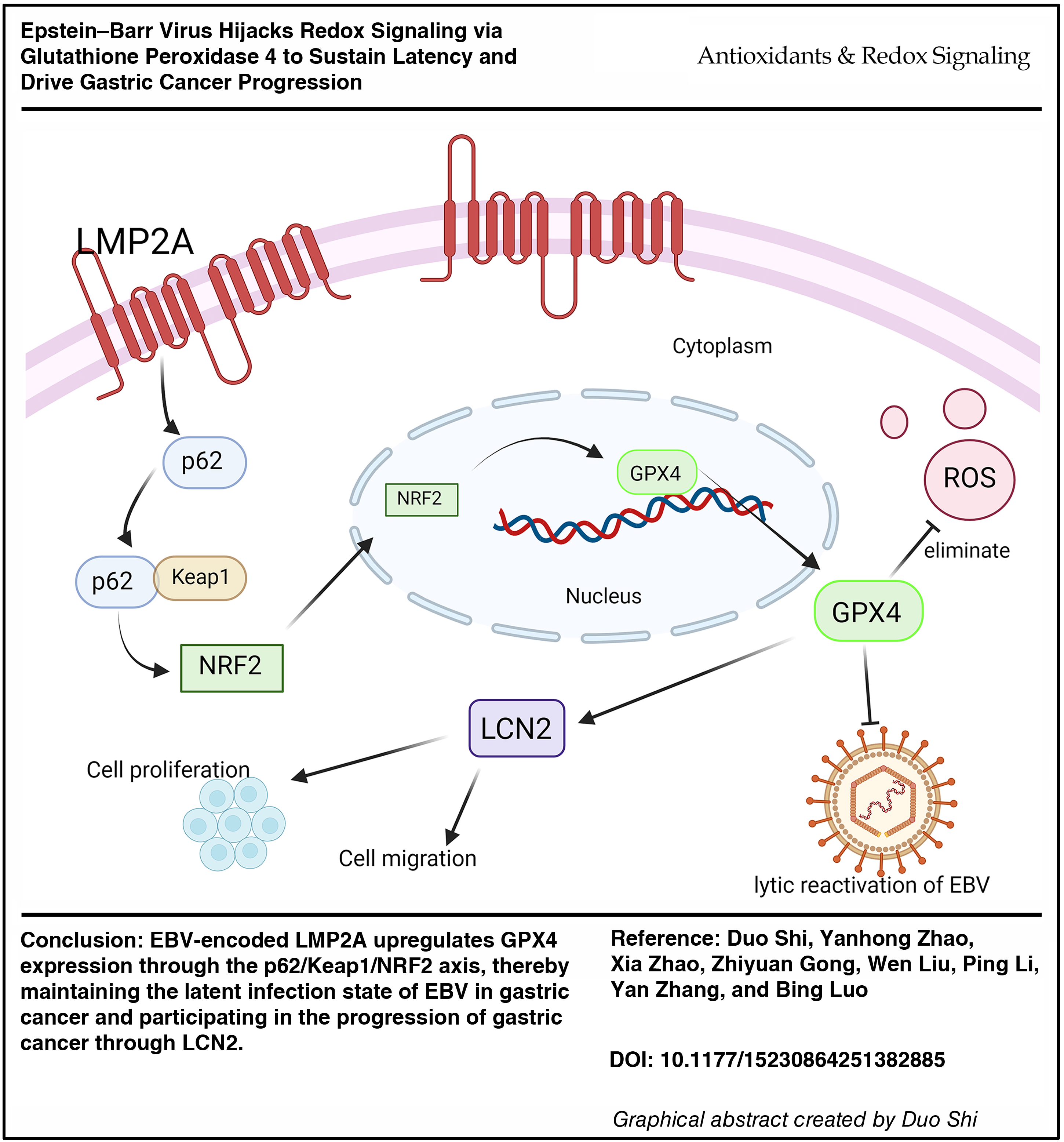
Keywords
Get full access to this article
View all access options for this article.
References
Supplementary Material
Please find the following supplemental material available below.
For Open Access articles published under a Creative Commons License, all supplemental material carries the same license as the article it is associated with.
For non-Open Access articles published, all supplemental material carries a non-exclusive license, and permission requests for re-use of supplemental material or any part of supplemental material shall be sent directly to the copyright owner as specified in the copyright notice associated with the article.
