



Abstract
Student attrition is now a global problem in Higher Education with most institutions experiencing high volumes of early exiting students. However, student resilience has yet to be adequately explored, particularly among the increasing online student population, as a possible mechanism to reduce attrition rates. In the present study, online, undergraduate students were asked two qualitative, open-ended questions to elicit their subjective understanding of resilience in the context of their university study. Thematic analysis identified that health-, work-, and relationship-related experiences were the top-three stressful experiences described by students. Academic management, self-care, and positive psychology techniques were the most common student coping strategies. The findings suggest a highly individualized conceptualization of what might predict retention or attrition. Findings are discussed in the context of assisting online, undergraduate students to utilize their resilience to persist in university.
New Resilience for the New Normal
Higher Education (HE) students who exit before completion can experience significant personal impact (Stone & O'Shea, 2019; Walker et al., 2006), reduced career prospects (Jackling & Natoli, 2011; O’Keeffe, 2013), and social inequity for minority groups and those from nontraditional backgrounds (O’Keeffe, 2013). Institutions face immediate loss of income (Burke, 2019) and investment returns in educational technologies such as student and learning management systems (Holt et al., 2013), long-term reputational damage (Aljohani, 2016; Burke, 2019), and reduction of funding (Cotton et al., 2017; Darlaston-Jones et al., 2003; Lobo, 2012).
Traditional Influences on Student Attrition
Individual Characteristics
Early research was primarily concerned with investigating individual student characteristics (Aljohani, 2016). These can be described as psychological aspects of the student; including ability, aptitude, personality, well-being, and cognitive or emotional processes. Individual characteristics may also pertain to student's status, for example demographic factors. Summerskill (1962) highlighted individual characteristics such as age, sex, socioeconomics, hometown, and motivation as being associated with retention and attrition, while Bayer (1968) found individual variables such as academic ability, interests, marital and/or parental plans and outcomes, student maturity, and institutional commitment to be associated with persistence. Similar results were reported by Mohr et al. (1998), in which students identified personal problems as one of the main reasons for leaving college.
Environmental Factors
The environmental perspective of student retention describes factors which lie outside the individual (Aljohani, 2016) and the most well-cited theories of attrition, cf. Spady's Undergraduate Dropout Process Model (1970, 1971) and Tinto's Institutional Departure Model (1975, 1993), both of which acknowledge the role of individual student characteristics, but emphasize the role of academic and social factors. Besides academic potential and expectations, Spady (1970, 1971) suggested that an interaction between grade performance, intellectual development, and friendship support determines a student's decision to drop out. Building upon Spady's model, Tinto (1975, 1993) claimed that factors such as institutional commitment, academic performance, and faculty interaction in various ways and to varying degrees with a student's social systems (extracurricular activity, peer interactions) to determine the decision to drop out.
Combined Individual and Environmental Factors
Since Spady and Tinto's work, academic and social variables have dominated theoretical understanding of student retention; however, other models combining individual and environmental perspectives offer alternative viewpoints. For example, according to the Student Attrition Model (Bean, 1980, 1982), HE attrition research should include student background, organizational interaction, and environmental and outcome variables. Bean's inclusion of organizational interaction suggests that educational indicators of grade point average (GPA), development, and institutional quality work in a similar way to workplace satisfaction to determine attrition. According to Pascarella's Comprehensive Student-Faculty Informal Contact Model (1980), institutional factors (e.g., culture, administration), other college experiences (e.g., classroom, leisure activities), educational outcomes (including career aspirations) and informal contact with faculty, interact over time to encourage retention. However, Pascarella (1980) also emphasized students’ personalities, aspirations, family background, home environments, and year of study as key contributors to persistence.
Whilst not stressed in early theories of attrition, year of study and study load have become extensively researched risk factors in attrition, with extensive evidence that HE rates are highest in the first year of an undergraduate degree (Baumgart & Johnstone, 1977; Burke, 2019; Jackling & Natoli, 2011), accounting for approximately half of all attrition (Willcoxon, 2010). Astin's (1999) suggestion that student institutional involvement is the most important enabling factor for learning and development finds support from Swenson Goguen et al. (2010) who applied Erikson's Stages of Psychosocial Development (Erikson, 1963) to a study investigating the influence of peer relationships on academic outcomes in early college years. They found that positive, supportive friendships were positively associated with both GPA and college persistence.
Finally, Rovai's Composite Persistence Model (2003) offers a comprehensive account of student persistence by synthesizing the models of Tinto and Bean and Metzner with factors that are particular to modern online learning, such as computer and information literacy and time management. External factors suggested by Bean and Metzner (1985) such as life crises influence internal factors, including stress, that can in turn affect persistence.
Nontraditional Influences on Student Attrition
Distance or Online Learning
The term online learning has often been used interchangeably with the term distance learning; however, the former term will be used in this paper to define the completion of studies either entirely or predominantly off campus, utilizing technology to access learning resources and faculty members (Holt et al., 2013). In addition to the noncompletion risk factors of traditional students (e.g., ethnicity and gender, academic integration and social integration, and goal commitment) and nontraditional students (e.g., finances, hours of employment, family responsibilities, and life crises), there are some factors that make online students particularly vulnerable to attrition (cf. Rovai, 2003). Garrison et al. (1999) in their well-cited Community of Inquiry Model argued that social presence, cognitive presence, and engagement are crucial variables which impact the learning experience for online students. Spatial or temporal isolation has also been identified as a significant contributor to student thoughts of withdrawal particularly from Australian universities (Gillett-Swan, 2017; Stone & O'Shea, 2019). Some feel they do not belong with the majority of the class or the institutional culture (Song et al., 2004; Stone & O'Shea, 2019) while others seek validation from faculty to avoid feeling as a mere side business to the institution (Stone, 2019). Isolation can also create delays in receiving feedback from educators (Gillett-Swan, 2017). From a protective stance, Song et al. (2004) found computer literacy, information literacy, time management, online interaction, reading, and writing to be positively associated with online student persistence and Stone (2019) highlighted a strong need for online students to engage in discourse and to develop effective social connections.
Student Mental Health and Resilience
Mental health has rarely been considered in the student retention literature (Eisenberg et al., 2016), yet psychological characteristics can help identify students at-risk and can predict early withdrawal (Davidson & Beck, 2006). For this reason, student well-being should be cultivated within higher education to allow students to flourish within their learning environment (Seligman et al., 2009). Resilience, defined by Smith et al. (2008) as the ability to “bounce back” from stress, is an important protective attribute that offers a mechanism by which retention might be increased (Eisenberg et al., 2016) and the benefits of resilience in higher education are well established. For example, there is an association between resilience and adolescent learning achievement (Walker et al., 2006), academic success and holistic development (Holdsworth et al., 2018), and successful transition to university (Dawson & Pooley, 2013; Turner et al., 2017). According to Kumar and Singh (2014), “Resilient students are better able to overcome the challenges of life by adjusting better to the transitions of university life, while maintaining their health and well-being” (p. 232) and developing higher resilience can empower students to deal with challenges (Brewer et al., 2019). This characteristic can enhance student employability (Brewer et al., 2019), assist in the transition to professional life (Turner et al., 2017), and increase focus and endurance in the workforce (McAllister & McKinnon, 2009). Further research into resilience and its beneficial effect on HE persistence is warranted, particularly for students at high risk of withdrawal (Hartley, 2011, 2013).
Within a population already vulnerable to mental health issues (Liu et al., 2021), increased stress due to COVID-19 creates a compelling need for research that can underpin the development of strategies to reduce adverse psychological impacts on university students (Liu et al., 2021; Odriozola-González et al., 2020). It is important to measure the role of COVID-19 as a new form of stress for students and to identify its role in mediating or moderating other stressors. It is also important to understand how students cope during a pandemic, in order to help them engage and maintain positive mental health (George & Rani Thomas, 2021).
The Current Study
The aim of this study was to qualitatively explore specific stressful experiences faced by online university students at university at the start of the COVID-19 pandemic, and the strategies they used to overcome these. Qualitative analysis can provide a greater potential benefit to the participants and the student populations they represent (Almalki, 2016), with particular emphasis on the underrepresented online student population (Savenye & Robinson, 2005). Due to the exploratory nature of this study, and in line with the principles of inductive research (Spector et al., 2014), no hypotheses regarding the stressful experiences and strategies described by students were tested. However, thematic analysis was used to elicit participants’ understanding of resilience and the ways in which it could support them.
Method
Participants
Undergraduate online university students were eligible to complete an anonymous survey advertised via social media (Facebook) and through the CQUniversity Learning Management System site. Undergraduate students are known to differ from postgraduate students in their perception of resilience (Holdsworth et al., 2018) and are more vulnerable to attrition than postgraduate students (Jackling & Natoli, 2011). First-year undergraduates have been identified as the most vulnerable to stress and attrition (Leveson et al., 2013).
In line with traditional student retention models and subsequent empirical study, demographic characteristics (gender, age) and academic factors (study load, year of study) were examined to describe the online, undergraduate sample. The majority of participants were female (88%) and approximately half were aged 22–39 years (52%). The other age brackets were 40–65 years (26.7%) and 18–21 years (21.3%). There was a fairly even split between full-time study (52%) and part-time study (48%), and participation was highest among first years (32% of students) with steady drop across second- (28%), third- (21.3%), and fourth-year participants (18.7%).
Materials
Participants were first asked a series of questions pertaining to demographics (age and gender) and academic details (study mode, study load, and year of study). Two qualitative, open-ended questions were then used to explore student's subjective understanding of resilience. Participants were asked to “please describe a stressful event you have experienced whilst being at university” and “please describe a strategy you used to cope with the stressful event you described in the previous question.”
Procedure
The study was approved by the CQUniversity Human Research Ethics Committee (approval number 2020-054). A pilot study was carried out with a single undergraduate online student to check comprehension and to measure completion time. Potential participants were provided a link via social media (Facebook) to an anonymous online survey hosted on the Qualtrics platform. Participants were presented with information regarding the study and after clicking “next” to confirm their consent, the survey began. On completion, participants were thanked and given the opportunity to enter into a draw for an AUS $50 shopping voucher.
Results
Qualitative Analyses
Resilience and Retention—Stressful Events and Coping Strategies
Resilience was defined as the “ability to bounce back from stressful events” (Smith et al., 2008, p. 194) and was determined using the two open-ended questions described above.
Stressful Events
Stressful Events Experienced by Students While Being at University.
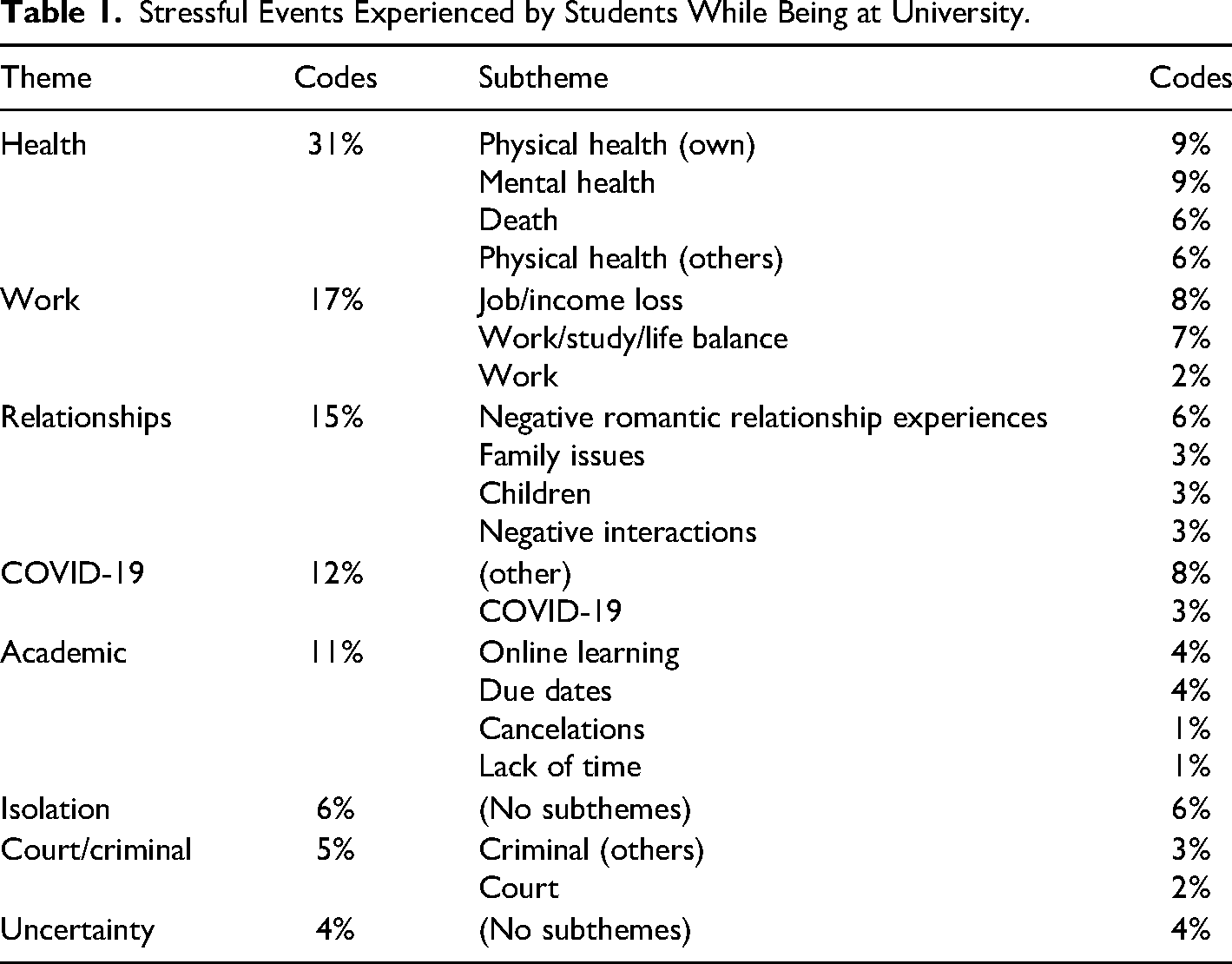
Stressful Events Theme 1: Health
Approximately one-third of the semantic codes identified Health as a stressful event faced by students (31%, n = 44). However, the type of health issues varied between four different subthemes of own physical health, others’ physical health, mental health, and death. Participants reported unique experiences they faced, as demonstrated by these representative responses, “Being diagnosed with an aneurysm last year. Had to have surgery to have a stent placed in my brain” (Participant 32); and “Have also had acute illnesses i.e., unplanned pregnancy and anaemia as a result of preg loss” (Participant 19). Participant 19 also expressed concern for the health of others in their life, as they reported “Aging parents having acute illnesses e.g., shingles.” Additionally, concern for others’ health was demonstrated in reports of “Serious health issue with wife” (Participant 14) and “My nana was diagnosed with cancer” (Participant 7). Mental health of themselves and others featured as a common health issue for students, for example “…battling with mental health issues and loneliness” (Participant 72) and “Husband suffering from mental health struggles. Suicidal thoughts and attempts” (Participant 73). Finally, the death of a loved one was significant for some participants, for example “Since starting my bachelor's degree in 2017 I have lost 4 family members” (Participant 41) and “Someone close to me dying horribly” (Participant 22).
Stressful Events Theme 2: Work
Theme two of Work represented about 17% of coded data (n = 24); divided into three multilayered subthemes of job/income loss, work/study/life balance, and work. Job income/loss pertained to some students’ struggles with actual or anticipated loss of employment, for example “Govt lockdown forced closure of business” (Participant 56) and “Potentially facing unemployment due to not passing required hurdles in my traineeship” (Participant 61).
In contrast, some students expressed difficulty in giving equal time or dedication to work/study life balance, as evident in comments such as “Working full time, having children and a home and studying a degree part time is hard work” (Participant 6). Furthermore, for some students work in itself was challenging; such as in the case of Participant 23 who explained “Covid and extra hours at work due to being an essential worker. I am a support worker there for others did not work due to risk of getting sick, I continued and accumulated a lot of hours at work. I studied but got behind a little.”
Stressful Events Theme 3: Relationships
Stress caused by negative romantic relationship experiences, family issues, children, or negative interactions comprised theme three, Relationships, and represented 15% of qualitative codes (n = 21). These findings demonstrated that a multitude of issues with external figures (e.g., partner, spouse, parents, children, peers, faculty) impacted some students’ studies either directly or indirectly, evidenced by responses such as “Relationship breakdown” (Participant 40); “Online bullying” (Participant 70); and “Discrimination” (Participant 37). More detailed descriptions included “Separation of parents, break up with partner after 5 years…” (Participant 44).
Stressful Events Theme 4: COVID-19
Whilst COVID-19 (also referred to as pandemic) represented 12% of coded responses (n = 17) within this theme, its impacts were quite varied. Some participants responded simply with “Covid-19” (Participant 69), whereas others elaborated on what the impact of COVID-19 meant to them; “I have family in Brazil. I worry about their safety during the pandemic” (Participant 5).
Stressful Events Theme 5: Academic
Online learning (4% of coded data, n = 6) and due dates (4% of coded data, n = 6) were the most common sources of academic stress for students. Stress from online learning was reflected in simple comments like “Adjusting to online study” (Participant 9); and more comprehensively in responses like “Understanding Moodle, and in attempting to work with a very online oriented classroom that is often spent listening and not really interacting” (Participant 68). Another student reported “Missing/forgetting an assignment was due that day and I hadn't even started and it was the first one for the unit, worth 20% I had 6 hours to complete the entire assignment…” (Participant 3). Students also alluded to Cancellations (n = 2) and Lack of Time (n = 2) as impacting their well-being. One student experienced “Anxiety from pressure and cancellation of course” (Participant 47). Another shared that “Working full time, having an additional stressful job meant having time for uni was really difficult and I was constantly getting sick and falling behind” (Participant 57).
Stressful Events Theme 6: Isolation
Isolation featured in approximately 6% of data codes (n = 8). However, each isolation-related response expressed a different meaning for students. For example, Participant 38 stated that “…self isolation left me cut off from my dream, my work, my friends and all sense of normalcy….” In contrast, Participant 8 reported “…relocating/moving away from support system…” in combination with a range of other factors.
Stressful Events Theme 7: Court/Criminal
Unexpectedly, approximately 5% of the qualitative data (n = 7) featured codes of a Criminal (others) or Court nature, which were grouped together to form theme seven, Court/Criminal. Participants reported encounters such as “Ongoing family court case to protect child from abuser” (Participant 65) and “Ongoing family court, domestic violence court, stalking” (Participant 50).
Stressful Events Theme 8: Uncertainty
Like the theme of isolation, students described feelings of Uncertainty (4%, n = 6) which could not be grouped into subthemes. However, contexts ranged from uncertainty about study, as evidenced by the statement “I began doubting my choice of degree and my path of being at uni, I was unsure about withdrawing from my course…” (Participant 20) to “The uncertainty of coordinators” (Participant 2).
Overall, the results to open-question one suggested a complex and multifaceted experience of the “stressful event” component of resilience. In some cases, students identified singular stressors which fell within one theme (e.g., “Covid”; Participant 27). In other cases, students identified a multitude of stressors which fell into more than one theme; as evidenced in the response “Separation of parents, break up with partner after 5 years, grand parents health deteriorates & loss of job due to COVID” (Participant 44). Some responses suggested a directional cause and effect relationship between experiences, such as “Working full time, having an additional stressful job meant having time for uni was really difficult and I was constantly getting sick and falling behind” (Participant 57).
Coping Strategies
Coping Strategies Used by Students While Being at University.
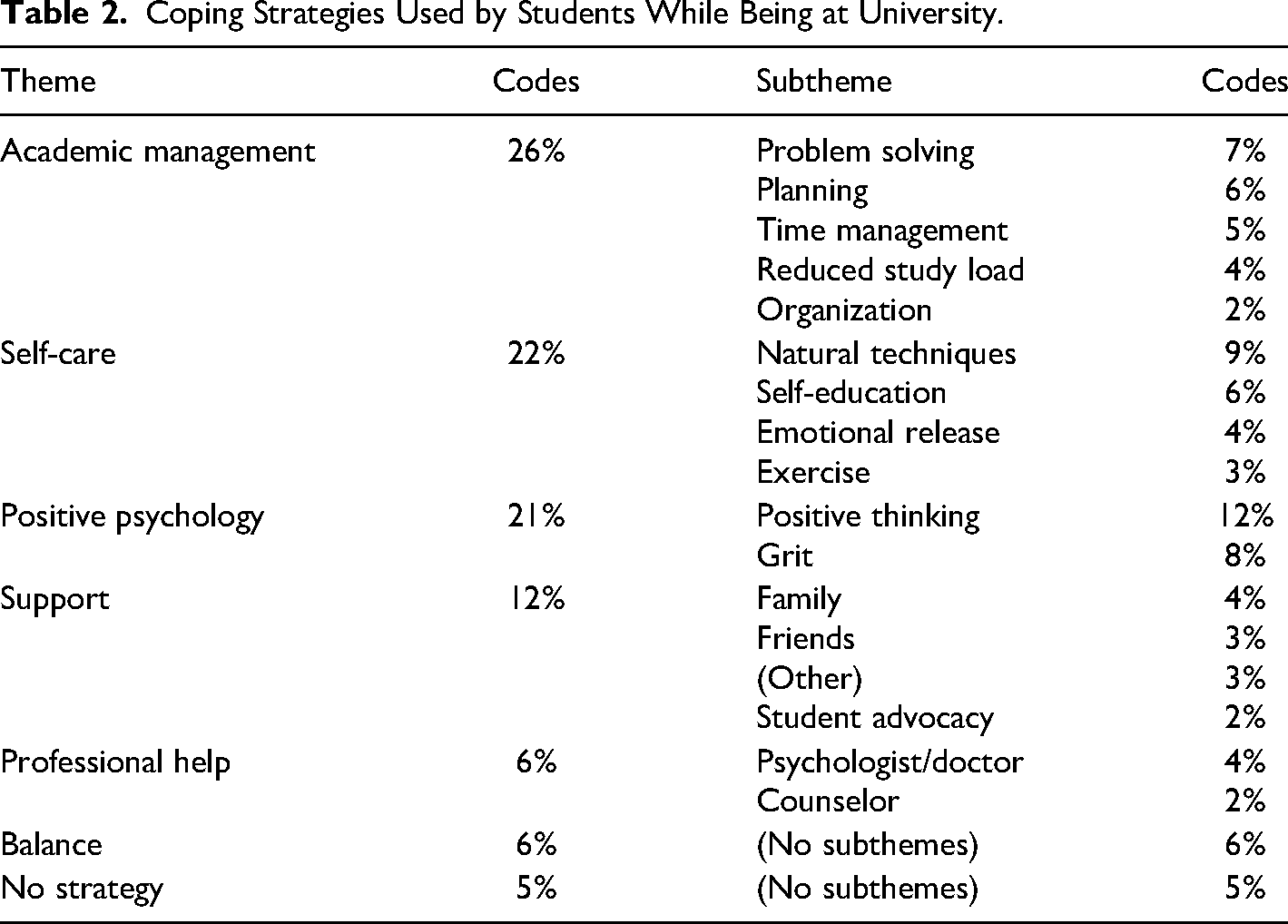
Coping Strategy Theme 1: Academic Management
Approximately one-quarter (26%, n = 34) of semantic codes suggested that academic management was a common coping strategy used by students to deal with stress. Subthemes within academic management included problem solving, planning, time management, reduced study load, and organization. Participants used modest phrases such as “Break down my assignments into chunks” (Participant 26), “Plan my study and get it done” (Participant 25), and “Time management and planning for a different future” (Participant 40). However, some students provided a greater detail to describe their experiences, as evident in “Reduced units due to unknown day care stability. No risk of failing with less workload” (Participant 29) and “Now I have a wall calendar and have all my due dates out in plain view” (Participant 3).
Coping Strategy Theme 2: Self-care
Self-care (22%, n = 29) encapsulated four very different subthemes (natural techniques, self-education, emotional release, exercise), representing many ways in which students looked after themselves in order to persist with their university studies. For example, combined “Breathing, meditation and counselling” assisted one student (Participant 12). Another multifaceted approach was demonstrated by another participant, who listed techniques from most self-care subthemes: “Mindfulness, exercise, putting things into perspective, talking to friend or family member, using CBT and ACT strategies, listening to audiobooks and podcasts” (Participant 49).
Coping Strategy Theme 3: Positive Psychology
The theme of positive psychology encompassed about one-fifth of the data codes (21%, n = 27). A subtheme of positive thinking was evident in responses such as “Focused on the positives in my life…” (Participant 34) and “Thinking positively” (Participant 13). Equally of note was a second subtheme of grit, referring to pushing through obstacles over a sustained period of time, toward a passion-related goal (Frydenberg, 2017). Grit was particularly demonstrated by Participant 53, expressing “I just say I won’t be stopped. I REFUSE to stop.”
Coping Strategy Theme 4: Support
Twelve percent of coping strategy data codes (n = 16) related to the theme of Support. Students reached out for support from a range of others, including family, friends, student advocates, and other support personnel. Examples of student coping through support include “…being around my family” (Participant 60) and “Listen to support people who give me confidence that I am able to do the work” (Participant 54).
Coping Strategy Theme 5: Professional Help
Theme five (professional help), represented approximately 6% (n = 8) of the data for this question and referred to students seeking help from one or more mental health professionals. Like Coping Strategy Theme 3: Positive Psychology, responses fitting this theme were grouped into only two subthemes. This was demonstrated when one participant “Talked to my doctor and psychologist” (Participant 66) and another made “Use of the university's counselling service” (Participant 21).
Coping Strategy Theme 6: Balance
Interestingly, no subthemes were grouped within the theme of Balance (6%, n = 8), as students reported seeking or maintaining “balance” in a number of areas (lifestyle, study, work, health). This was demonstrated by Participant 64, stating that they “…took time off work and organized work life balance.”
Coping Strategy Theme 7: No Strategy
Subthemes were also not identified within the last theme. Although only comprising 5% of the sample codes for this question (n = 7), some students reported not having a specific coping strategy: “I couldn’t specify what I did to cope” (Participant 2), not having a coping strategy in place: “Nil.” (Participant 37), or simply that a coping strategy was not applicable to them, as indicated by “n/a” (Participant 10).
Discussion
Stressful Experiences
Thematic analyses of the question “please describe a stressful event you experienced whilst at university” revealed eight themes (Health, Work, Relationships, COVID-19, Academic, Isolation, Court/Criminal, and Uncertainty) and 19 subthemes, characterizing various sources of stress for our online, undergraduate student sample. Due to the dearth of previous research about online students’ stress and the exploratory nature of the current study, these findings were compared to the body of conceptual and empirical literature pertaining to student attrition. For a conceptual comparison, Bean and Metzner's Nontraditional Student Attrition Model (1985) was selected because it relates to students who share similar characteristics to many of our participants. Bean and Metzner described Nontraditional learners as over 24 years old, often working full-time and studying part-time due to family and/or work responsibilities (Rovai, 2003). The Nontraditional Student Attrition Model (Bean & Metzner, 1985) suggests that stress is a psychological outcome influenced mainly by environmental and academic variables, which leads to a student's intent to withdraw early from their education program. According to this model, student attrition is particularly susceptible to environmental variables such as finance, working hours, outside encouragement, family responsibilities, and opportunity to transfer (Aljohani, 2016).
Environmental Variables
Interestingly, most of the stressful experience themes cited in the current study either appear in, or would be logical inclusions to, the environmental or academic variables listed in Bean and Metzner's Model (1985). Two of the top-three sources of stress for our participants (work and relationships) contained responses which would be classified within the working hours and family responsibilities variables in this model (Bean & Metzner, 1985), confirming the susceptibility of nontraditional students to such stressors. Interview data reported by Greenland and Moore (2014) highlighted similar reasons for online students withdrawing early from their studies, including (in order of frequency) work-related factors, personal reasons relating to health, family commitments, bereavement and relationship break up, learner technology problems relating to computer hardware and internet connectivity issues, student competence in the online environment and poor study and time management skills. Comparable withdrawal factors are identified by interview data reported by Moore and Greenland (2017), in which employment accounted for 35.8% of the reasons provided for online student attrition. A combination of family commitments, health, and personal reasons accounted for 29% of the reasons given for early withdrawal (Moore & Greenland, 2017).
Whilst COVID-19 represented 12% of our coded responses (n = 17), within this theme the impacts of the pandemic were varied. In addition to students reporting direct stress from COVID-19, the pandemic had a moderating effect on other environmental variables. For example, COVID-19 caused some students to worry more about the health of their families and increased pressures of work due to variations in hours of employment. Although pandemic was not considered in Bean and Metzner's model, it is an independent environmental factor over which institutions have no control, adding to the multifaceted nature of student stress. Participants in our study also referred to involvement in family and domestic violence court cases, something not specified in the model but which relates to family responsibilities and constitute another environmental variable outside the scope of the institutional management.
Academic Variables
Academic variables, including study habits, academic advising, absenteeism, major uncertainty, and course availability, appear in Bean and Metzner's model as significant contributors to student stress. Although major uncertainty was not explicitly mentioned in the current study, some participants described academic-related uncertainty, for example “I began doubting my choice of degree and my path of being at uni, I was unsure about withdrawing from my course…” (Participant 20).
Uncertainty stress, defined as expended energy exerted in order to avoid anticipated and unpleasant surprises (Peters et al., 2017), is associated with intolerance of uncertainty (Demirtas & Yildiz, 2019), and positively correlated with traditional undergraduate students’ mental disorders (Wu et al., 2020), suicidal ideation (Wu et al., 2021), and withdrawal from university study (Scharp et al., 2021). Levels of fear and uncertainty regarding the spread of COVID-19 are positively correlated (Elsharkawy & Abdelaziz, 2021) and the effects of uncertainty stress are more pronounced in students who are parents, which is concerning as nontraditional and online students often embody this dual role (Scharp et al., 2021).
Rovai's Composite Persistence Model
The health theme from the current study could arguably fall under the category of life crises introduced by Rovai (2003) since students reported a range of acute and chronic illnesses experienced by themselves or a loved one. The death of a loved one also featured as a major life event commonly experienced by participants (Rovai's Composite Persistence Model, 2003). Online learning (4% of coded data, n = 6) and due dates (4% of coded data, n = 6) were found to be the most common sources of academic stress for students in the current study, though these students also alluded to Cancellations and Lack of Time as impacting their well-being. Some online students find using technology challenging in new settings such as academia (O'Shea et al., 2015) and even those with access to, and familiarity with, technology have found learning new programs and platforms difficult (Stone & O'Shea, 2019).
A sequence of longitudinal surveys by Fetzner (2013) revealed that the top reasons for online students leaving their programs early were falling behind in work, personal problems such as health, work, family, difficulty in finding a study/life balance, not liking online learning or the instructor/s and experiencing technical difficulties. Finding and maintaining a satisfactory work/life/study balance can also be more difficult for working female online students due to perceived social and gender-related demands (Ayadurai, 2018).
Rovai (2003) also included identification with school and interpersonal relationships as internal student needs. This need is supported in the social presence component of the Community of Inquiry Model (Garrison et al., 1999) as central to creating an optimum online learning environment. Although in the current study, each isolation-related response expressed a different meaning for students, isolation has been described as the worst part of online learning in other studies (George et al., 2021). Online learners do not necessarily seek the social connection that on-campus learning can bring, but they have a strong need to feel included and valued by their institution (O'Shea et al., 2015; Stone & O'Shea, 2019) and to forge an identity with their school (Rovai, 2003). Canty et al. (2020) suggest institutions focus on addressing the need for “belonging” for online students, and arrange early, meaningful engagement and student access to “known” academics to decrease online student attrition.
Coping Strategies
Multiple Strategies
In our study, thematic analysis of the question “please describe a strategy you used to cope with the stressful event you described in the previous question” identified seven themes (academic management, self-care, positive psychology, support, professional help, balance, no strategy) and 17 subthemes characterizing varied coping strategies. The fact that there were 17 subthemes suggests that although several common strategies are employed, online university students utilize many strategies in highly individualized ways.
Academic Management
Academic Management represented approximately one-quarter (26%, n = 34) of semantic codes for coping strategy themes in this study. Of all, the Academic Management subthemes elicited (Problem solving, Planning, Time management, Reduced study load, Organization), problem solving and time management were reflected most in the literature. Problem-solving skills include cognitive-behavioral abilities for identifying problems, generating solutions, implementing plans, monitoring progress, and evaluating outcomes (Shewchuk et al., 2000), which can be taught to undergraduate students (Ebrahimi et al., 2013). Students trained in social problem solving can develop effective coping responses and increased psychological adjustment (Chinaveh, 2013), even when experiencing mental health problems such as depression (Ebrahimi et al., 2013). This is a coping strategy frequently used to positive effect by students of nursing (Labrague et al., 2018), teacher education, and nursing/midwifery (Deasy et al., 2014).
Effective time and study management were among the top-three coping strategies common to persistent online university students (Holder, 2007) and they can benefit from time management training; including organizing, prioritizing, and setting goals (Nasrullah & Khan, 2015). Demonstrating behaviors related to time management has been shown to increase academic motivation (Ghiasvand et al., 2017) and course achievement, and predict GPA (Pehlivan, 2013). Effective time management can reduce perceived anxiety (Ghiasvand et al., 2017) and stress (Hafner et al., 2015). The link between time management and GPA is even more crucial for part-time nontraditional students (MacCann et al., 2012).
Self-Care
The effectiveness of the Self-Care theme (22%, n = 29) and four subthemes (natural techniques, self-education, emotional release, exercise) is supported by the literature. Stallman et al. (2020) reported deep breathing, relaxation, mindful awareness, and meditation as among the most common stress relief strategies used by HE students for symptoms including nonclinical anxiety and depressive symptoms. Mindfulness, or the giving of full attention to the body, breathing, thoughts, emotions, and behaviors, in order to reduce stress, pain, anxiety, and depression has also been shown to be effective in HE students (Gallego et al., 2014). Moreover, a mindfulness framework that included social support (a theme found in this study) and emotional regulation (a subtheme from this study) assisted with perceived stress-relief among psychology graduate students (Myers et al., 2012).
Interestingly, the study of mindfulness effects on HE student samples has blossomed in recent years. A mobile-based mindfulness meditation application was effective in improving the mental well-being and coping abilities in a nonclinical sample of students who also worked at least 20 h per week and had not practiced mindfulness in the 6 months prior to the study (Schulte-Frankenfeld & Trautwein, 2022). This is promising as students often choose online study due to work commitments. As well as reducing stress, mindfulness programs have the capacity for enhancing other skills such as team building and study habits (Rothenberg & Emanuel, 2022). Another common form of self-care among students is listening to music (Deasy et al., 2014), which has been reported as particularly helpful during pandemic enforced quarantine (Krause et al., 2021). The well-supported positive effects of self-care activities such as mindfulness support their normalization and proactive utilization to assist in building resilience and associated student persistence.
Positive Psychology
The theme of positive psychology encompassed about one-fifth of the data codes (21%, n = 27). Subthemes included positive thinking and grit. Having positive thoughts can aid in psychological recovery from negative emotional experiences (Tugade & Fredrickson, 2004) and has been associated with college student's life satisfaction and happiness, and negatively associated with student stress, anxiety, depression, and anger (Wong, 2012). It is also a significant predictor for academic achievement in students (Humaida, 2017). Positive psychology-based interventions have been effective in increasing positive thinking, ego resilience, and stress coping (Kim & Kim, 2016) for undergraduate students. Walters and James (2020) report an Australian university teaching positive psychology concept as part of an HE preparation course, of which positive thinking (or making positive changes to their thinking processes) was the most preferred by students.
Grit, or the ability to push through obstacles over a sustained period, toward a passion-related goal (Frydenberg, 2017), is a crucial characteristic for student persistence and academic success, whether it be in university preparation (Braund et al., 2020), undergraduate (Hodge et al., 2018), or e-learning programs (Aparicio et al., 2017). University students scoring higher in Grit measures have significantly higher levels of self-control, mental well-being, resilience, and growth mindset (Kannangara et al., 2018). Grit can also have positive effects on engagement, productivity (Braund et al., 2020; Hodge et al., 2018), and academic grades (Mason, 2018).
Support
Twelve percent of thematic data codes (n = 16) suggested that Support was important for students to cope with individual and environmental sources of stress. Early theories of student retention deemed support as crucial in predicting a student's decision to drop out from university (Pascarella, 1980; Spady, 1970, 1971; Tinto, 1975, 1993) and this was reinforced by a later Australian study in which peer-mentoring programs had a positive effect on first-year undergraduate student retention (Glaser et al., 2006). Research has shown that students are more likely to seek help from informal support structures than professionals (Chang, 2008). That support was not a prominent theme in our research which may be explained by the fact that Glaser et al. (2006) studied a traditional student population, whereas we studied an online cohort for whom support may be less important than Academic Management, Self-Care, and Positive Thinking. However, high levels of emotional support and self-efficacy were among the top-three coping strategies for persistent online HE students in Holder's (2007) study. Factors such as the nature and quality of employer support (Lowe & Gayle, 2007) and encouragement from family, friends, and other students (Dickerson et al., 2014) can be highly beneficial coping strategies. When dealing with the shift from on-campus to online learning at the start of the pandemic, Emotional support from peers and university staff was described by students as beneficial (McKay et al., 2021).
Professional Help
Theme five (professional help) represented approximately 6% (n = 8) of the data for this question and referred to seeking help from mental health professionals. The infrequency of this theme supports Picton and Kahu (2022) who found that although students were aware of professional services from their institution, they were reluctant to utilize them and few students disclose meeting with professional support (Deasy et al., 2014). Self-concealment of personal information about distress, embarrassment, and negative experience is a substantial factor in preventing help-seeking behavior in HE students (Masuda & Boone, 2011) who tend to tend to seek professional help only when their stress reaches moderate or high levels (Stallman et al., 2021).
Chang (2008) found that students in their first year of study sought informal rather professional help for academic/career, interpersonal, and personal/emotional problems. Students do not proactively care for their mental health and only do so as a short-term fix (McCoy, 2022), which supports the strategy of normalizing help-seeking from the start to minimize the impact of stress, particularly important in the post pandemic “new normal” of where students have been shown to have higher stress and social isolation (Tran-Chi et al., 2021).
Balance
The theme of Balance (6%, n = 8), maintaining balance in several areas of life (lifestyle, study, work, health) is well-documented in student persistence literature. Application of a work-life balance has been negatively associated with students’ perceived stress, general anxiety, and depressive symptoms (Sprung & Rogers, 2021). Furthermore, balancing academic and nonacademic activities has been linked to higher student adaptation to university, academic self-efficacy, time management, and resourcefulness (Reed & Kennett, 2017). Effective skills to balance many life components may be more important for some student groups such as career-oriented females (Delina & Prabhakara Raya, 2013), mature-aged, married, parents, or first in family university students (Davies, 2013).
Conclusions
Findings from this study indicate that among undergraduate online HE students, health was the most commonly reported stressor, closely followed by work and relationship-related experiences. Academic management was the most common stress coping strategy, though self-care, positive psychology, and support were also frequently reported. Analysis of resilience (stressful events vs. coping strategies) indicated a range of strategies used to cope with a multitude of stressful experiences and this suggests a highly individualized conceptualization of what might predict retention or attrition. Future research into student retention should aim to further explore the effectiveness and value of this range of coping strategies to online, undergraduate students; as well as include a greater representation of resilience as a trait or protective factor. Due to the multifaceted nature of student persistence, factors that may be acting as mediator or moderator variables could also be explored. By doing this, positive implications may arise for students and the university staff supporting them throughout their journey.
Footnotes
Declaration of Conflicting Interests
The authors declared no potential conflicts of interest with respect to the research, authorship, and/or publication of this article.
Funding
The authors received no financial support for the research, authorship, and/or publication of this article.
