




Abstract
This quantitative research study sought to examine the differences in retention and degree attainment for college students depending on their home locale and the location of their institution of attendance. Students were divided into four groups: rural students who attended a rural institution, rural students who attended an urban institution, urban students who attended a rural institution, and urban students who attended an urban institution. The study utilized a chi-square test of homogeneity to determine if there was a statistically significant difference between the four groups. Analysis found statistically significant differences in retention and degree attainment based on the student's home locale and the location of their institution of attendance. Urban students who attended an urban institution were statistically significantly more likely to be retained. Rural students who attended a rural institution were statistically significantly more likely to attain their degree. Students who attended institutions that were in locations similar to their home locale had the highest retention and degree attainment.
Post-secondary education has been touted as the pathway to the middle class and job stability for Americans. The Obama Administration set a goal of being the nation with the highest proportion of college graduates in the world (The White House, 2009). In an address given at a community college in Michigan in 2009, former-President Barack Obama set the goal of raising the proportion of adults with a post-secondary degree to at least 60% of adults ages 24−35 (The White House, 2009). The United States has not achieved that goal as of this time. According to the 2022 Condition of Education Report, 42% of adults aged 24 to 65 years old held a post-secondary degree in 2010 (Irwin et al., 2022). That percentage increased to 50% of adults aged 24 to 65 years old holding a post-secondary degree in 2020. Marcus (2019) projected that it would take until at least 2056 to achieve the goal of 60% of all working age Americans holding a college degree. While there have been strides made in the number of adults holding a post-secondary degree, there are persistent inequities amongst specific populations in terms of retention and degree attainment (NCES, 2022).
One way to analyze the disparities is to compare rural and urban residents. In the 2017 Rural Education at a Glance, a report from the Economic Research Service of the USDA, the trend in differences in degree holders was reported. According to the report, 19% of rural adults aged 25 and older held a bachelor's degree while 33% of urban adults held a bachelor's degree (Economic Research Service, 2017). This statistic points to a disparity between rural and urban residents in terms of degree attainment. There may be a few reasons for the disparity in degree holders.
One reason for the differences in degree holders based on rurality and urbanicity may be due to the geographic infrastructure of higher education. There is an imbalance in terms of the numbers and types of institutions of higher education in rural and urban locations. As reported from IPEDS post-secondary school file in 2019 − 2020, there were 580 post-secondary institutions in rural locations, compared to 949 in town locations, 2,103 in suburban locations, and 3,433 in city locations (NCES, 2019). This means that nearly half (48.6%) of all institutions of higher education are in city locations (NCES, 2019). Koricich et al. (2018) reported types of institutions of higher education by location for 2015 − 2016. They reported that 49% of rural institutions were two-year institutions while 32.7% of rural institutions were 4-year institutions. The number of two-year and four-year institutions in suburban locations was quite different, with 26.1% of suburban institutions being two-year institutions and 32.7% being four-year. Based on prior research and data sources, there has been a disparity in the numbers and types of institutions of higher education in rural and urban locations. Combining this information about the locations of institutions with research that has found that student proximity to colleges increases their likelihood to apply (López Turley, 2009) and another study that found that the farther the distance between home and institution of attendance leads to decreased persistence (Williams & Luo, 2010), there are many populations that are negatively impacted by this unequal geographical distribution of institutions with rural students likely being more negatively impacted.
Understanding the types of institutions in rural and urban areas is important because the infrastructure of higher education across urban locales when compared to rural locales has been found to impact enrollment trends. In a study on rural youth in Indiana, Burke et al. (2015) found that rural students were more likely to enroll in two-year and non-selective institutions, which supports research from Byun et al. (2017) results that used a national sample. Koricich et al. (2018) analyzed IPEDS data and the Educational Longitudinal Survey of 12,020 students, 18% of which were rural students. They found that rural students were more likely to attend a 2-year institution (Koricich et al., 2018). They attributed the likelihood of attending a two-year institution to the fact that there are generally fewer institutions in rural locations, and when there is an institution in a rural location, it is more likely to be a two-year institution. Burke et al. (2015) also found that rural students had to travel further distances than non-rural peers to attend their selected institutions of higher education, a finding that was also supported by Nelson (2019). López Turley (2009) found that an increase in the number of institutions near a student's home caused an increase in their likelihood of enrolling in college. Hillman (2016) used data from the National Center for Education Statistics to find that for students who attend public institutions, the average distance between home and school was 52 miles. The IPEDS data and prior studies demonstrate that rural students do not have as many options in terms of numbers and types of institutions close to home. While researchers are beginning to categorize rural serving institutions (Hillman et al., 2021; Koricich et al., 2022), there is a need to better understand who rural and urban institutions are serving and how well those students are performing at the institutions they choose to attend.
This current study is unique because it is a fusion of a specific student characteristic (home locale) and one institutional characteristic (location), using the location of the student and the institution as rural or urban as a context. One past study used the urbanicity of the institution but did not consider student level data to categorize students based on their home locale (Sparks & Nuňez, 2014). Another conceptual study included institutional location as one of their dimensions of a model for organizational impact on student outcomes (Berger & Milem, 2000). Several studies have sought to explore student outcomes based on their home locale (Byun, Irvin et al., 2012; Byun, Meece et al., 2012) but did not include the location of the institution. There is a gap in our understanding of how student home locale interacts with the location of the institution of attendance to influence the outcomes of retention and degree attainment (Berger & Milem, 2000; Irvin et al., 2012; López Turley, 2009). This study provides critical information related to rural and urban student outcomes of higher education as correlated with institutional location.
Relevant Theories
The foundational student retention theories are of significance to the study design as these original theories considered student characteristics and the institutional environment. Astin's (1970, 1991) I-E-O theory considered three parts to form a theory related to student outcomes as a result of attending college. These three parts were student inputs (I), the college environment (E), and student outcomes (O). This theory can be applied to the current study in that students’ home locale as rural or urban requires considering what inputs would be uniquely true for rural college students versus urban college students and the influence of these inputs as they interact with the environment of the institution of attendance. Prior studies have found that rural students have unique characteristics and experiences, including being more likely to be categorized as having lower socioeconomic status (Meece et al., 2013), lower parental degree attainment (Provasnik et al., 2007; Roscigno et al., 2006), differences in preparation and experiences in K-12 education (Ardoin, 2018; Mann et al., 2017; Provasnik et al., 2007; Schafft & Biddle, 2014), and more. The college environment itself can either be considered accepting of certain identities and aligned with the student's cultural capital or the college environment might have more of a rural- or urban-centric identity and require students to attain new knowledge and cultural capital in order to successfully integrate with that new environment. Applying this theory to the unique inputs of rural and urban students and how that interacts with the college environment based on its rurality or urbanicity are the foundation of the researcher's goals in creating the current study.
Related to Astin's theory of student retention, Tinto's (1987, 1993) student departure model considers various factors that contribute to student departure from institutions of higher education and emphasizes the longitudinal perspective of student persistence. This theory posited that students must pass through stages over time to become integrated within two systems of a college – the social and intellectual systems (Tinto, 1993). Students enter college with a variety of pre-entry attributes as well as varying goals and intentions. These pre-entry attributes can be compared to the input portion of Astin's theory. The individual attributes, such as demographics, cognitive factors, and psychosocial factors, then are joined with institutional experiences in formal and informal interactions to lead to students’ social and academic integration. In other words, students must pass through a stage of adjustment to the new world of college and integrate into the social and intellectual communities of the institution in order to persist (Kuh et al., 2006). If the pre-entry attributes and the experiences at the institution are not congruent, students are likely to depart or not be retained.
Pre-Entry Attributes
There are some commonalities amongst the student development and retention theories included here. First, the theorists highlight that students have a variety of pre-entry factors that impact their performance and the outcomes of their experience in college. The pre-entry attributes are a critical component to include because they impact the student college experience, as found throughout the student retention literature (Barbera et al., 2020; Sass et al., 2018). Studies have explored general samples of students and possible attributes that influence retention and degree attainment, such as socioeconomic status (Attewell et al., 2011), personality traits (Laskey & Hetzel, 2011), and minority status (Astin & Oseguera, 2005; Dennis et al., 2005).
Narrowing the sample from general to rural students specifically, Byun et al. (2012) sought to determine factors that influenced rural student persistence at four-year institutions. They explored factors such as high school academic rigor and first-generation status. Additional exploration of college student outcomes has continued with researchers finding correlation with rural student family finances (Byun Meeceet al., 2012), parental degree attainment (Wells et al., 2019), and academic preparation through AP courses (Mann et al., 2017). While there are some studies that have used rural students as a specific population, students’ home location as being rural or urban is not typically used as an identifier for practitioners at institutions of higher education; however, the students' rurality or urbanicity should be taken into consideration so that the institutions can ensure that all students can achieve their goals no matter where a student may have grown up (Henning, 2012; Hunter, 2006). Rural and urban students have differences in terms of pre-entry attributes that deserve special attention from institutions of higher education, yet this critical student characteristic is largely unrecognized at most institutions.
Institutional Environment
The student pre-entry attributes are one part of the student retention theories. The institution is of importance in the theories as well. It can be more difficult to parse the concept of institutional environment in the literature because studies have looked at environment to mean campus culture, experiences, context, and more (Renn & Patton, 2011). In exploring factors related to institutional environment, researchers have espoused institutional practices that can best promote student retention and degree attainment. These practices include using active learning as an instructional strategy, using first-year programs to promote social connectedness, and connecting students to advisors and role models (Braxton & McClendon, 2001; Kuh, 2008; Lau, 2003). Lau (2003) emphasized the role of the institution in managing multiculturalism and diversity, to include individuals from differing academic, racial, ethnic, social, and other groups. Kuh et al. (1991) further underscored the importance of the institution's responsibility to “support the establishment and coexistence of subcommunities that permit students to identify with and receive support from people like themselves, so they can feel comfortable in becoming involved in the larger campus community” (p. 369). Depending on the composition of the student body of the campus, the institution's multiculturalism may include a majority of rural or urban students, leaving one group to be a subcommunity. If there isn't intentional practice on the part of the institution, then one of these groups may be marginalized. Institutional practices can influence the experiences of rural and urban students.
To further consider the role of the institution in student retention and degree attainment, some researchers have looked at the institutional environment as referring to geographic location or context. There are studies that have attempted to determine how the physical and built spaces of a campus can influence student outcomes (Hajrasouliha & Ewing, 2016; Oliveira et al., 2022; Leijon et al., 2022). One study considered the “well-designed” campus, to include seven dimensions like compactness, campus living, greenness, and context (Hajrasouliha & Ewing, 2016). In their attempt to quantify the dimensions of campus design that promote the best outcomes of student retention and degree attainment, Hajrasouliha and Ewing (2016) found that campus context was an important factor. They defined campus context as the degree of urbanization of the surrounding area. The campus environment, including its urbanization and context, has been shown to impact student retention. These studies can be applied to rural and urban college students in that these measures of institutional environment possibly influence not only their decision to attend a campus in environments most similar to their home environments but also influence their future success in college if the institutional environment is conducive to their prior living environment.
The two parts of the foundational student retention theories – pre-entry attributes and institutional environment – were integral to the current study's design. These theories acknowledge the importance of not only student characteristics but of institutional characteristics. It seems that the rurality and urbanicity of the students’ home locale and the institutions’ location have not been explicitly stated within the models but could be analyzed to determine a combination that produces the best outcomes. The specific input or pre-entry attribute of where a student has grown up (being from a rural or urban place) as combined with the environment of the institution (being located in a rural or urban place) has not been tested in the literature. Previous studies have used the rurality or urbanicity of students or the institution but not a combination of both (Berger & Milem, 2000; Sparks & Nuňez, 2014). The current study thus created four groupings of student/institution based on each being rural or urban to determine which combination creates the most and least successful outcomes for students, which may be a way to understand student retention and degree attainment.
the Study
This study sought to explore the outcomes for rural and urban students at institutions of higher education in one state in the northeastern United States. A retrospective analysis was conducted to compare rural and urban students’ retention and degree attainment based on the location of their institution of attendance. The study included fourteen public institutions within one state system of higher education located in Pennsylvania. The study was guided by the following research question: Does student home location and location of institution of attendance impact retention and degree attainment? To understand the different outcomes, this quantitative study used student level data across several years and from several institutions within one system.
the Data
The study used secondary data provided by the state system of higher education's office of the chancellor. The use of secondary data is widely used in social sciences as large data sets are often available (Salkind, 2010). The data and information presented here are part of this larger data set. The data included the cohorts of undergraduate students who were bachelor's degree seeking and entered the fourteen institutions in 2012 (n = 16,633 students), 2013 (n = 16,587), 2014 (n = 16,513), and 2015 (n = 15,901). This resulted in a total of 65,634 students in the data set. Students who were from out of state or international students were not included.
Description of the Data
The following table provides the descriptive statistics of the data set. The students’ age, race, sex, home locale, and Pell-eligibility are included in Table 1. These student characteristics have been found to be influential pre-entry attributes in previous student retention studies (Astin & Oseguera, 2005; Attewell et al., 2011; Barbera et al., 2020; Dennis et al., 2005; Sass et al., 2018). It is important to understand the general descriptive statistics of the data set as these pre-entry attributes can influence student retention and degree attainment. While the characteristics were not used in the statistical analysis of this study, it is still important information for other researchers to know as they potentially attempt to replicate the study's analysis of the four groups because other data sets may have different student characteristics that could cause differences in outcomes. The majority of students in the data set were traditional aged, white students.
Descriptive Statistics of the Data Set.
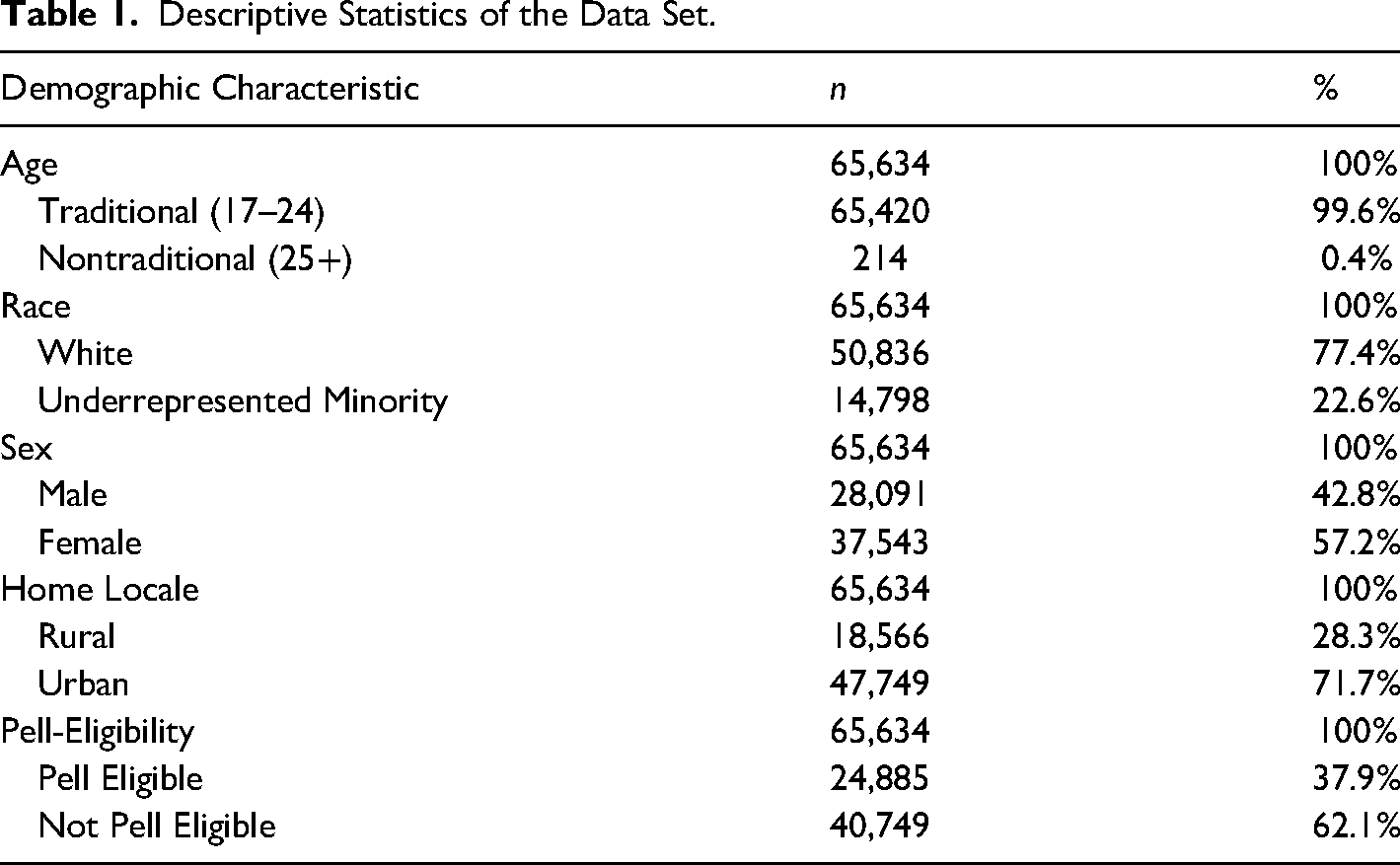
Home zip codes were collected for each student. These were transformed into rural versus urban designation based on the Center for Rural Pennsylvania's definition and zip code conversion file. The definition of rural versus urban in this study, as defined by the Center for Rural Pennsylvania, is a definition based on population density. Based on the population of Pennsylvania as of the 2010 Census, counties and municipalities with over 284 persons per square mile are considered urban, while those locations with under 284 persons per square mile are considered rural (The Center for Rural Pennsylvania, 2010). There are other definitions of rurality or urbanicity that could be used, but a dichotomous rural vs. urban definition as applied to zip codes was used in this study to ensure consistency. More students in the data set were from urban areas than rural areas, which is in alignment with the general population of the state. The larger representation of urban students in the data set meant that the statistical analysis used needed to be weighted between the two groups - rural vs. urban. Otherwise, if non-weighted percentages or proportions were given, the results would have been skewed by the larger group of urban students.
The fourteen institutions in the system were coded as rural or urban using the zip code of the institution and the same definition applied to student categorization, which is based on the definition of rural and urban from the Center for Rural Pennsylvania. This resulted in six institutions being coded rural and eight institutions being coded as urban. A limitation of the study is that none of the institutions included were in the urban centers within the state. The institutions are categorized as urban based on the population density of the zip code rather than relying on other methods of measuring urbanicity.
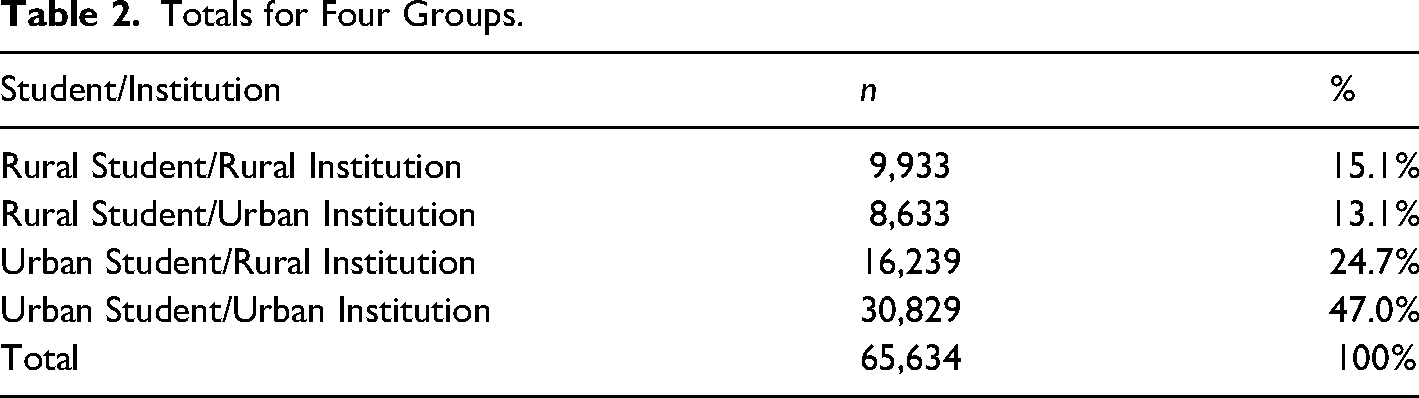
After designating students and the institutions as rural or urban, the students in the data set were split into four groups. These four groups were: rural students attending rural institutions, rural students attending urban institutions, urban students attending rural institutions, and urban students attending urban institutions. The unweighted totals for each of the four groups as well as a percent of the total within the data set is found in Table 2.
Totals for Four Groups.
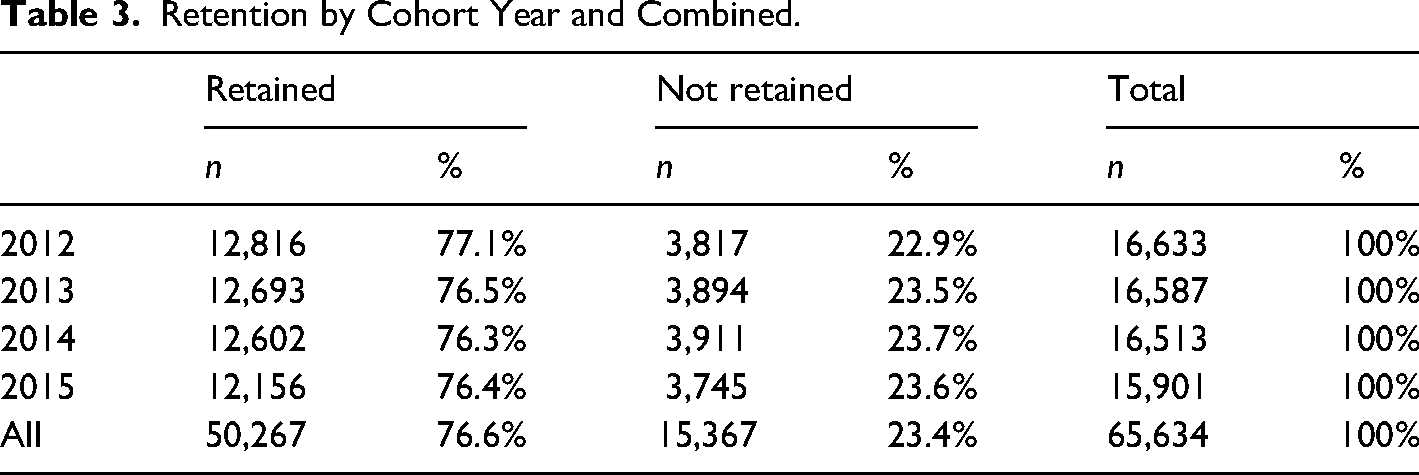
Using the admit term and the last term enrolled that was provided in the data, the researcher determined if students were retained or not retained. The number of retained versus not retained students for each entering cohort as well as the total during the four years is presented in Table 3. Retention in the study is defined by the National Student Clearinghouse Research Center as “continued enrollment within the same higher education institution in the fall semesters of a student's first and second year” (NSCRC, 2015). The study used this definition due to the data source not tracking students from institution to institution if they transferred. A student in the data set may have remained enrolled in higher education (typically referred to as persistence because persistence is a student level measure), but the data source for this study did not follow students beyond enrollment at the initial institution so retention at the initial institution of attendance from the first year to the second year is more accurate in this data set (NSCRC, 2015).
Retention by Cohort Year and Combined.
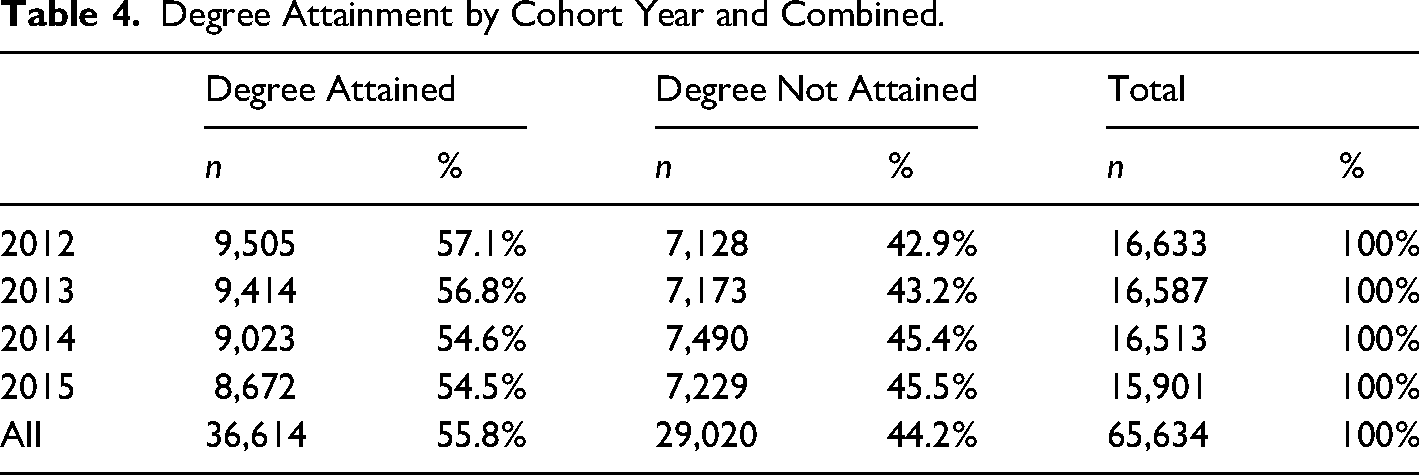
The number of students who attained their degree versus those students who did not attain their degree for each entering cohort as well as the total during the four years is presented in Table 4. The definition of degree attainment for this study included students who completed their degrees in four to six years, a benchmark often used in the study of higher education outcomes (Gómez Galán, 2016). If a student completed their degree in four, five, or six years, they were coded as having attained their degree.
Degree Attainment by Cohort Year and Combined.
Data Analysis
This research and analysis were guided by the following research question: Does student home location and location of institution of attendance impact retention and degree attainment? To answer the research question, the students in the data set were divided into four groups. A general comparison of rural and urban student attendance was made. Then a comparison of the retention rates for the four groups was conducted. A comparison of the degree completion rates for the four groups was conducted as well. The comparisons of retention and degree attainment were conducted using chi-square tests of homogeneity. This statistical test was chosen because it allowed the researcher to test if the four groups (four separate samples) have the same distributions for retention and degree attainment or if a statistically significant difference in distribution could be found.
Student Attendance Patterns Based on Home Locale
Before beginning formal statistical analysis, the researcher looked at the general trends in attendance patterns of the students in the data set. The descriptive statistics for the four groups were presented in the previous section. Looking beyond the total for each of the four groups led to a comparison of rural students and rural students then urban students and urban students. When the groups were compared within the student's home locale, meaning within rural students and within urban students, the following proportions in attendance were found for rural students: 54% of rural students attended a rural institution and 46% of rural students attended an urban institution (See Figure 1). The following proportions in attendance were found for urban students: 65% of urban students attended an urban institution and 35% percent of urban students attended a rural institution (See Figure 2).
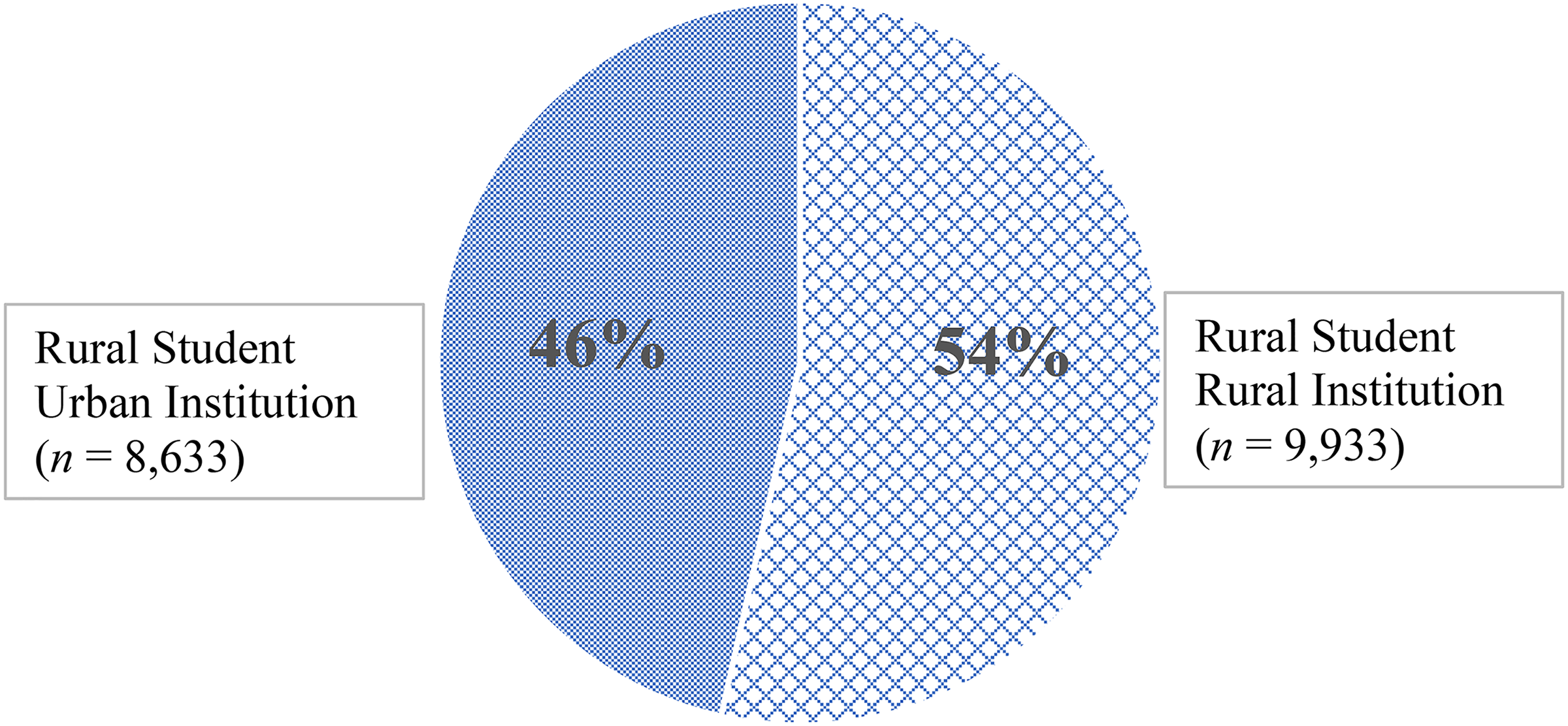
Rural/rural and rural/urban attendance comparison.
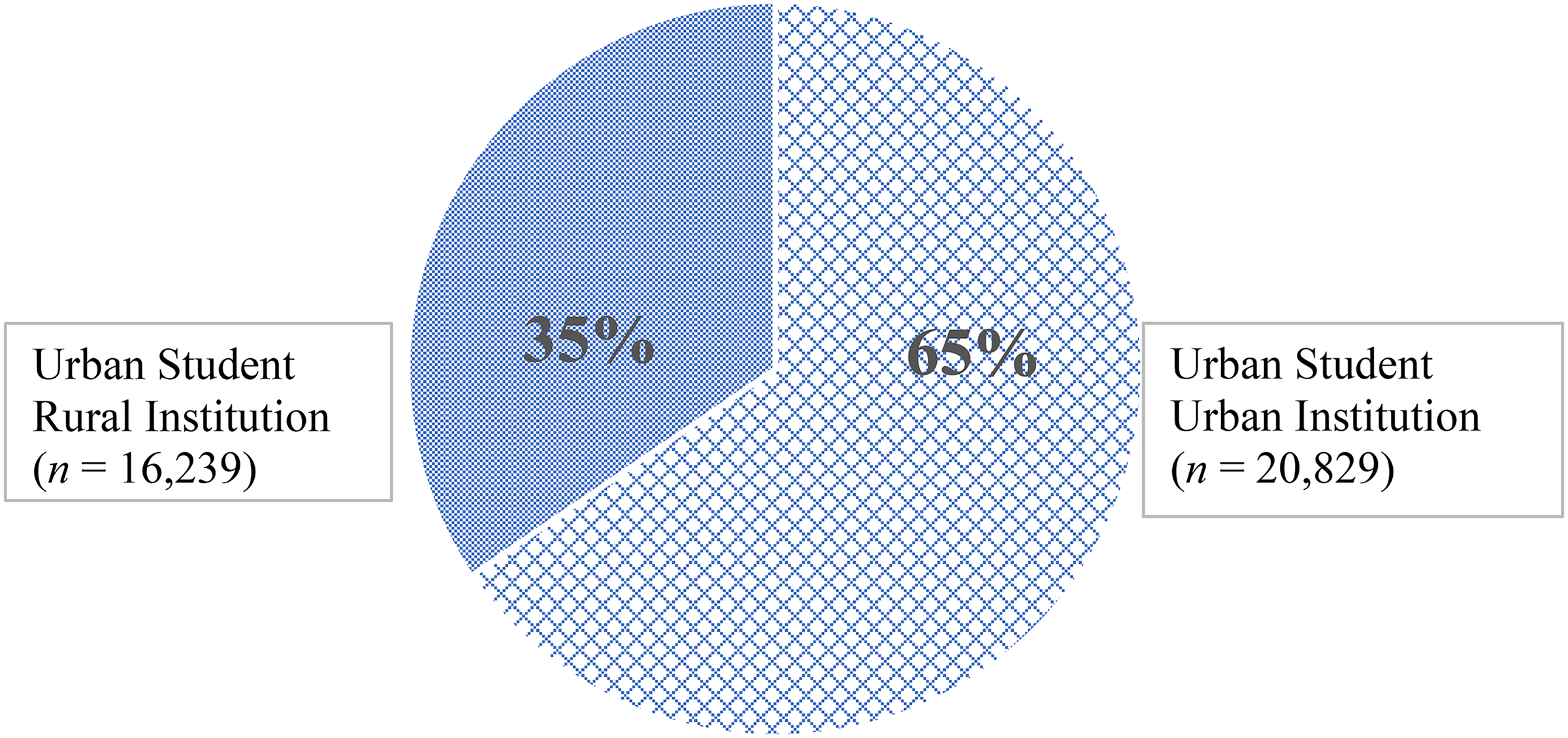
Urban/urban and urban/rural attendance comparison.
Retention in the Four Groups
In analyzing the data, retention was the first outcome that was measured. A chi-square test of homogeneity was conducted between the four student/institution groups and retention. In this test, the null hypothesis was that there would be no difference in distribution across the four groups. Cases were weighted. All expected cell counts were greater than five.
The retention rates for the four groups were compared. The results were the following: 76.3% of rural students attending rural institutions were retained; 76.0% of rural students attending urban institutions were retained; 76.0% of urban students attending rural institutions were retained; and 77.2% of urban students attending urban institutions were retained. There was a statistically significant difference between the four independent binomial proportions (p < .001). Therefore, we can reject the null hypothesis and accept the alternative hypothesis that differences exist in the retention of the four groups (See Figure 3).
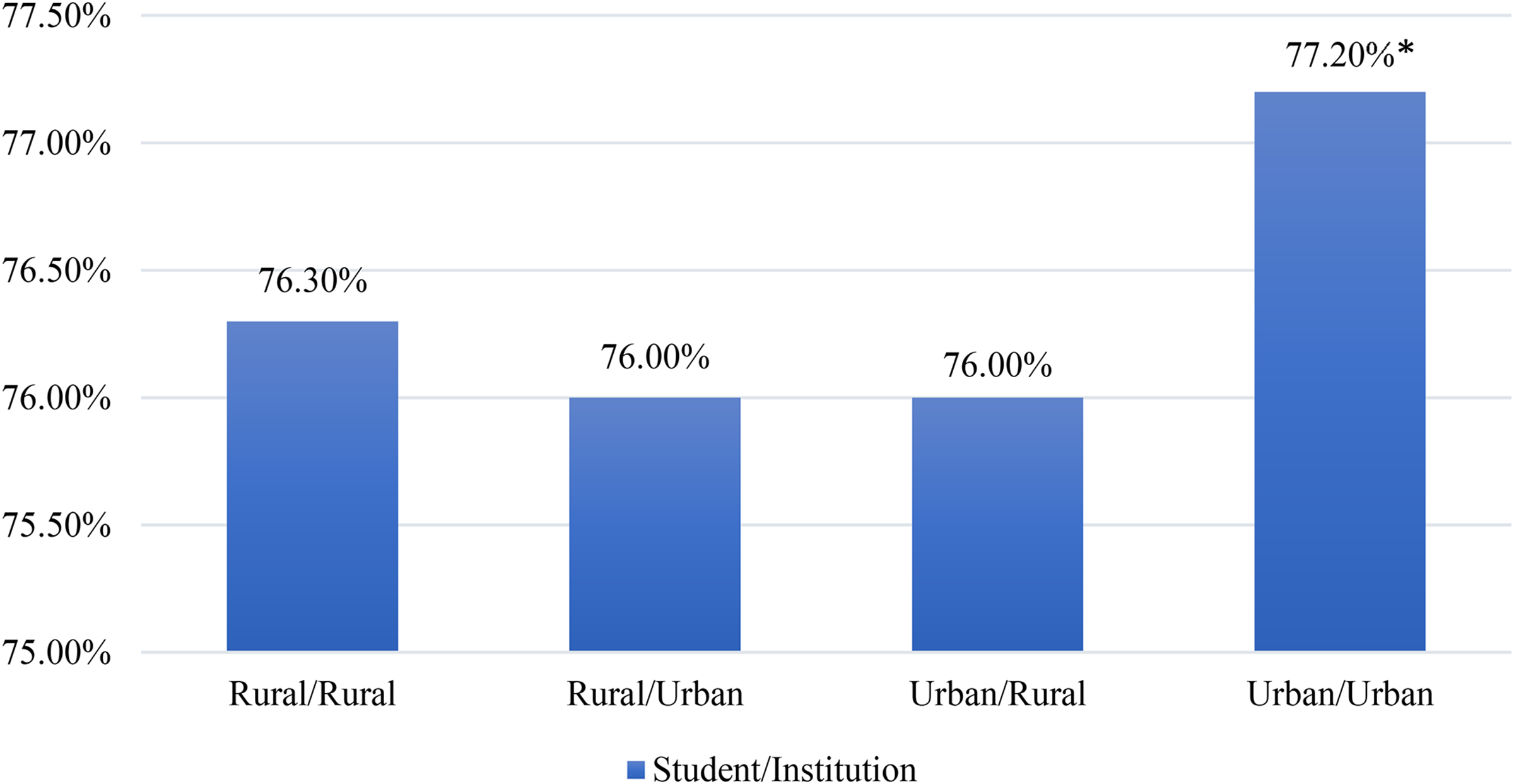
Comparison of retention.
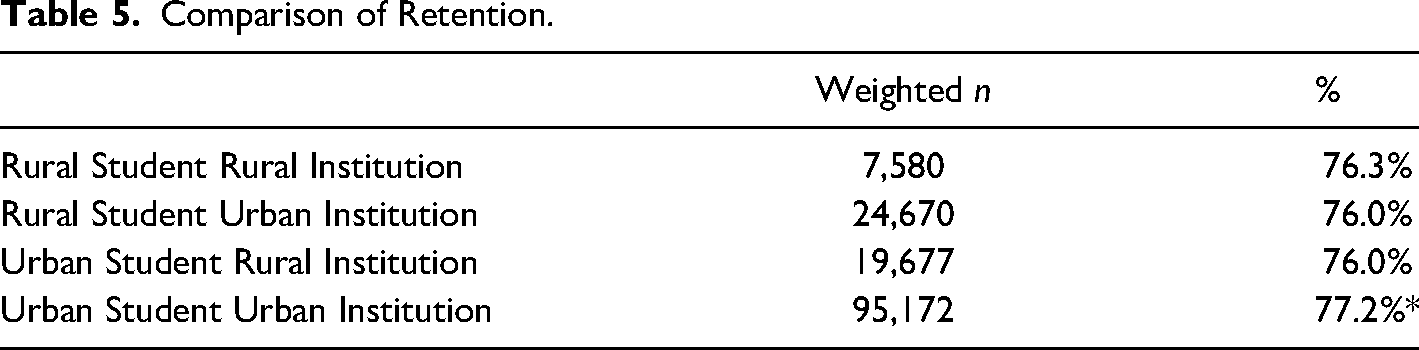
Post hoc analysis involved pairwise comparisons using the z-test of two proportions with a Bonferroni correction. The proportion of urban students who attended an urban institution and were retained was statistically significantly higher than the other three student/institution groups, p <.001. The proportion of students in the other student/institution groups were not statistically significantly different, p > .001 (See Table 5).
Comparison of Retention.
Degree Attainment in the Four Groups
Another outcome that was measured was degree attainment. A chi-square test of homogeneity was conducted between the four student/institution groups and degree attainment. In this test, the null hypothesis was that there would be no difference in distribution across the four groups. Cases were weighted. All expected cell counts were greater than five.
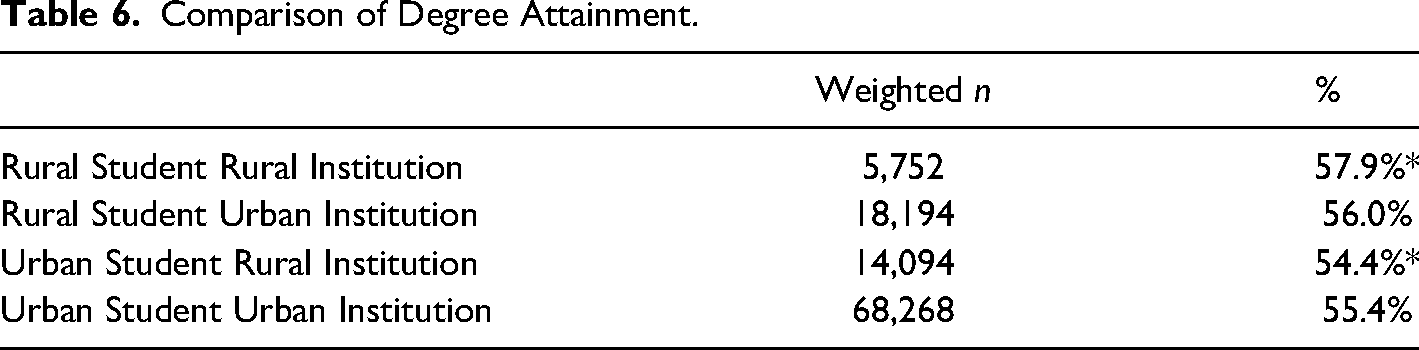
The graduation rates for the four groups were compared. The results were the following: 57.9% of rural students attending rural institutions attained their bachelor's degrees; 56.0% of rural students attending urban institutions attained their bachelor's degrees; 54.4% of urban students attending rural institutions attained their bachelor's degrees; and 55.4% of urban students attending urban institutions attained their bachelor's degrees. There was a statistically significant difference between the four independent binomial proportions (p <.001). Therefore, we can reject the null hypothesis and accept the alternative hypothesis that differences exist in the degree attainment of the four groups (See Figure 4).
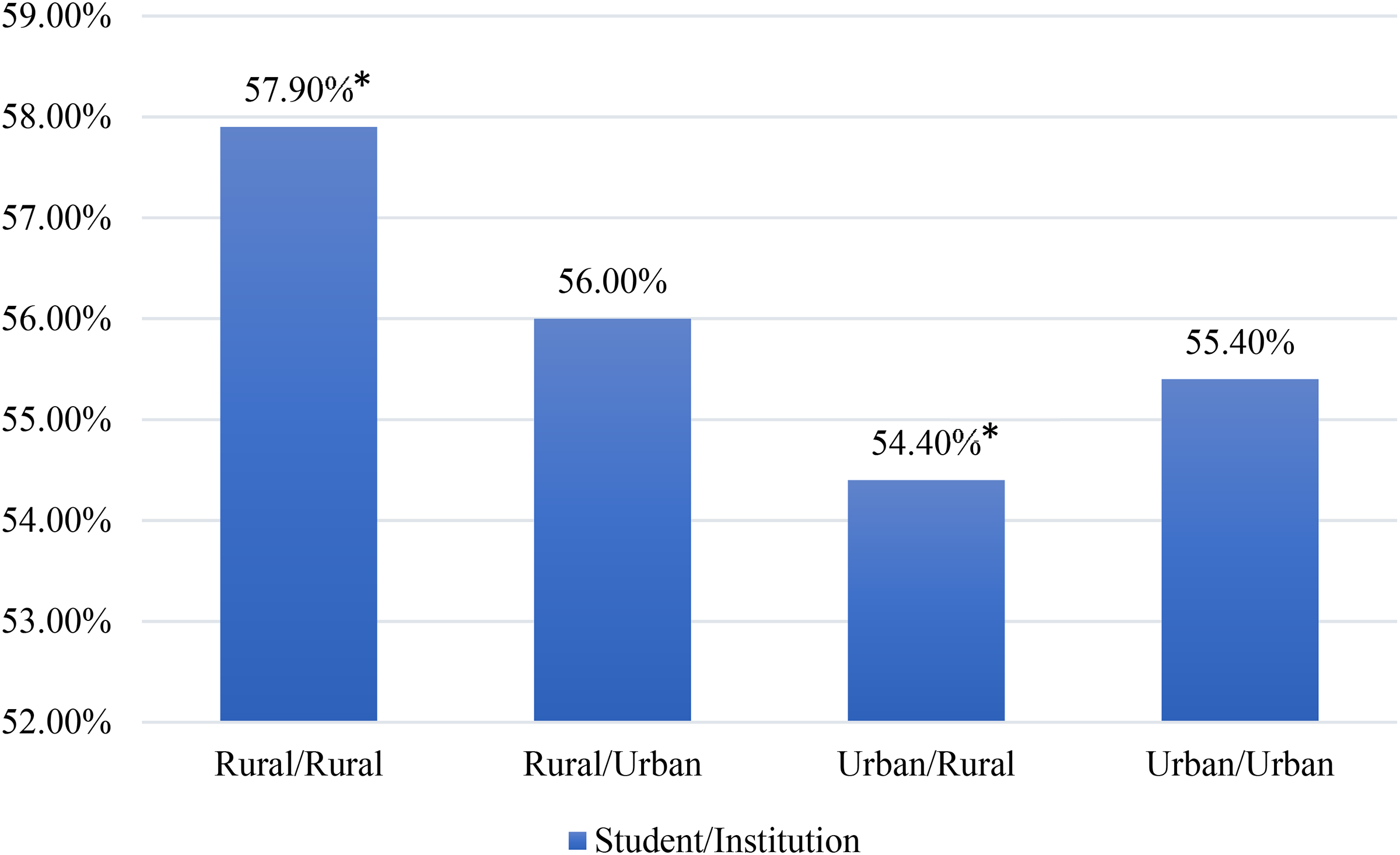
Comparison of degree attainment.
Post hoc analysis involved pairwise comparisons using the z-test of two proportions with a Bonferroni correction. The proportion of rural students who attended a rural institution and attained their degree was statistically significantly higher than urban students who attended a rural institution and attained their degree, p <.001. The proportion of rural or urban students who attended urban institutions and attained their degree were not statistically significantly different, p >.001 (See Table 6).
Comparison of Degree Attainment.
Discussion
Based on the analysis of the data, there are a few important points that can be made. These key findings include understanding the trends in the proportion of rural and urban student attendance based on their home locale. Also, there were statistically significant differences in outcomes that are helpful for various stakeholders to understand, including policymakers and practitioners at institutions of higher education.
There were differences in attendance proportions based on the location of the institution as seen in the within group comparisons. Fifty-three percent (53%) of rural students attended a rural institution, and 46% of rural students attended an urban institution. Based on this information, rural students were equally likely to attend an institution in rural or urban locations. On the other hand, this trend in proportion is not the same for urban students. Thirty-four percent (34%) of urban students attended a rural institution, and 65% of urban students attended an urban institution. Based on these figures, urban students were much more likely to attend urban institutions. The difference in proportion of rural and urban students choosing campuses in rural or urban locations may be due to the infrastructure of higher education. As discussed earlier, nearly half (48.6%) of all institutions of higher education are in city locations (NCES, 2019). Urban students have more options for where to attend college that may be located closer to their urban homes whereas rural students have fewer options near their homes. This lack of infrastructure of higher education in rural locales may be the reason rural students were found to be equally likely to attend an institution in a rural or urban location. Tying this finding to student retention trends found in the four groups indicates that rural students are adversely affected by the lack of infrastructure of higher education in rural locations. Almost half of rural students attend an urban institution but their successful degree attainment at urban institutions is statistically significantly lower than if they were to attend a rural institution.
When looking across the four groups, there were combinations that led to higher retention and graduation rates. The best combination for retention rates was for urban students attending urban institutions. This statistic seems to point to urban students finding success if their institution of choice was in an urban location. There seems to be a congruence in their pre-entry characteristics and the college environment that positively impacts their retention, an expected outcome based on student retention theories (Astin, 1991; Tinto, 1993).
In looking at the longer-term outcome of degree attainment, the best combination was for rural students attending a rural institution. There seems, again, to be a congruence of the rural student pre-entry attributes and the rural location of the institution of attendance that leads to their long-term success in attaining their degree. Contrastingly, the least successful combination was the degree attainment of urban students at rural institutions. This suggests that the campus environment may be too dissimilar to their home locale, and urban students are not able to overcome and adapt to the differences between their home location and the rurality of the institution. Through the lens of Tinto's student departure theory, it may be that urban students cannot integrate as easily into the social and academic systems of the rural institution (Tinto, 1987, 1993).
Considering the outcomes of retention and degree attainment across the four groups at a macro-level, students who attended an institution that was in a location similar to their home locale were the most successful. Rural students at rural institutions and urban students at urban institutions had the highest rates in both retention and degree attainment. These results indicate that one phenomenon that may be adversely impacting student retention and degree attainment is the attempt to crossover into new environments that are different than their home locales. The studies that have begun to consider the context of the campus environment can be related to this finding (Hajrasouliha & Ewing, 2016). It appears that if the context (rurality or urbanicity) of the campus is too disparate from the student's home context, then they are less likely to be retained or attain their degree.
As institutions continue to seek ways to increase student retention and degree attainment, understanding the important characteristic of student home locale in relation to the location of the institution is one way we can further our understanding of the college student experience.
Recommendations
The key findings of this study allow for recommendations to be made to policymakers as well as practitioners at institutions of higher education. One conclusion that can be made is that rural students are being disproportionately negatively impacted by the lack of infrastructure of higher education. Rural students seem to be as likely to attend a rural or urban institution; however, they are not as likely to attain their degree if they attend an institution in an urban location. This point leads to two recommendations. On the one hand, rural students need more opportunities for higher education that are in rural locations. Policymakers should work to create policies that will maintain if not increase the number of options for post-secondary attendance that is available in rural places so that rural students can attend an institution that is in a rural place, which this study showed to have a statistically significant effect on their degree attainment.
The other recommendation is to practitioners at both rural and urban campuses. Practitioners at rural institutions should seek out ways to better retain urban students, since this combination was shown to be the least successful in the long-term outcome of degree attainment. A place to start is to use student home locale as an identifying characteristic. Since it is a pre-entry attribute, much like socioeconomic or minority status, that impacts students’ retention and degree attainment as shown in previous studies (Byun Irvin et al., 2012; Irvin et al., 2012; Schafft & Biddle, 2014) and the current study, it is important that it becomes common practice as a way to identify students. In identifying students based on their home locale, particularly if there is a cross-combination of rural student at an urban institution or urban student at a rural institution, institutions can offer better support to these students by helping them to better acclimate to the institution and the uniqueness based on its rurality or urbanicity. It is critical to support the students who cross into new contexts so that campus multiculturalism can be maintained and increases the whole of the student body having interactions with diverse others (Kuh et al., 1991; Lau, 2003).
Limitations
There should be an acknowledgement of the limitations of this study. The data set itself has several limitations. The institutions in the data set are all located in one state in the United States. Additionally, the institutions included are within one state system. While the campuses are in locations across the state, the type of student who is attracted to the institutions may be limited. This potential lack of diversity in the demographics of the students can be seen in Table 1. The general student demographics were presented and had clear majorities in race, age, and Pell-eligibility. While these proportions in the data were consistent with the general population of the state, the demographics could be a factor that was not measured in the statistical analysis used for this study.
Recommendations for Future Research
Future research could address the limitations of this study. The researcher suggests a replication study using either other regionalized data or a national sample. Future researchers could seek to measure similar groupings with data sets that include more minority student representation. The researcher also suggests an extension of the study being a complementary qualitative study in which students are asked to share their experiences, particularly those students who cross from their rural or urban home locales onto a campus that is in the opposite type of locale.
Conclusion
Student retention and degree attainment will continue to be explored as practitioners and institutions seek to increase these important student outcomes. While many researchers have explored some student characteristics extensively, such as how socioeconomic or minority status impact outcomes, there are still additional characteristics to consider. The student home locale being located in a rural or urban place is one characteristic to continue to explore as a factor. Further applying the student retention theories to also include how student rurality and urbanicity interact with the institutional location is one way to extend our understanding of student retention and degree attainment so that the population of the United States can continue to work towards the goal of the majority of Americans holding post-secondary degrees.
Footnotes
Declaration of Interest Statement
The author certifies that they have no affiliations with or involvement in any organization or entity with any financial interest or non-financial interest in the subject matter or materials discussed in this manuscript.
Declaration of Conflicting Interests
The author(s) declared no potential conflicts of interest with respect to the research, authorship, and/or publication of this article.
Funding
The author(s) received no financial support for the research, authorship, and/or publication of this article.
