




Abstract
Non-parent mentoring relationships are important protective factors for first-generation college students. Previous research has focused on singular mentoring relationships measured at one time point, failing to capture the breadth and dynamic nature of social networks. The current study is a longitudinal investigation of first-generation students’ mentoring networks during their transition to college at a four-year, predominantly minority-serving commuter university. At the beginning and end of their first year, students (N = 176) responded to online surveys on their mentoring relationship(s), attitudes toward help-seeking, and college experiences. Cumulative support from pre-college mentoring relationships retained across the first year was positively associated with self-efficacy. Support from newly acquired mentoring relationships was positively associated with psychological sense of school membership. Network orientation was positively associated with self-efficacy and sense of school membership. These findings highlight the importance of diverse mentoring networks and demonstrate the utility of collecting longitudinal data on multiple mentoring relationships.
Keywords
Completing a four-year college degree has become increasingly important to achieving economic success and stability in the United States (Vandenboucke, 2015). Recent large-scale national research from the College Board highlights a range of long-term benefits of having a college degree, including a greater likelihood of employment, higher salaries, better health, and increased civic engagement (Ma et al., 2016). Although a college education can serve as a bridge to economic empowerment, extensive disparities in college completion rates remain. In particular, students with at least one parent holding a Bachelor’s degree (i.e., continuing-generation college students) are more likely to earn their own degrees compared to students without college-educated parents (i.e., first-generation college students; Engle et al., 2006; Kuh et al., 2006; Pike & Kuh, 2005). First-generation students are particularly vulnerable during their first year of college, when the risk of dropout is at its peak (Engle & Tinto, 2008). The current study examined the role of mentoring relationships in supporting first-generation college students’ transition into college.
Background
Although disparities in initial enrollment have narrowed, continuing-generation students are much more likely than first-generation students to complete degrees (Lee et al., 2011). Although academic preparedness is a widely-cited issue, fewer than a quarter of non-persisting students leave college for poor academic performance (Kuh et al., 2006). Affordability is among the most significant barriers, with over half of non-persisting students citing finances among their reasons for discontinuing (Johnson et al., 2009; Kuh et al., 2006). Partly related to financial challenges, underrepresented students are more likely to live and work off campus (Kuh et al., 2006), impairing their sense of academic and social integration in college (Baker, 2013; Tinto, 1993).
Beyond practical barriers, first-generation college students may have limited cultural capital (i.e., valued knowledge, language, and social assets) in higher educational settings (Lareau, 2015). The social norms, role expectations, language, and bureaucratic structures of mainstream educational institutions are largely built in accordance to the cultural values of the White middle class (Collier & Morgan, 2008; Yee, 2016), favoring assertive patterns of speech, behavior, problem-solving, and help-seeking (Calarco, 2011; Lareau, 2015). As a result, more privileged students are often more successful in acquiring accommodations and assistance, reproducing social inequity in educational settings (Jack, 2016; Lareau, 2015; Yee, 2016). Many first-generation students, who often hold intersecting, marginalized identities of race, nationality, disability/ability, and social class, struggle to adapt to unfamiliar cultural norms and experience discrimination on many campuses (Ancis et al., 2000; Yee, 2016).
Faculty–Student Relationships
Supportive relationships with caring adults, particularly university faculty and staff, are among the most powerful protective factors for first-generation and other underrepresented college students (Baker, 2013; Berardi et al., 2020; Hagler & Rhodes, 2018; Hurd et al., 2016; 2018; Kuh et al., 2006). Personalized student-faculty interactions beyond the classroom, like attending office hours, working on research projects, and meeting professors for informal conversation, promote students’ academic self-concept and integration (Kuh et al., 2006), perhaps because these opportunities facilitate the formation of mentoring relationships. Of note, mentoring relationships go beyond positive acquaintanceships and advising relationships in that they are personal, reciprocal, growth-focused, and multifaceted (Hagler, 2018).
Among a diverse sample of community college students, Crisp (2010) found that high levels of mentoring support were associated with greater social and academic integration. Barnett (2010) found that community college students with at least one instructor serving as a mentor were more likely to persist in their degrees. In the Gallup-Purdue Index (2014, 2015), a national sample of over 30,000 college graduates, those who felt their professors cared for them personally displayed higher work engagement, better subjective well-being, and stronger beliefs that their college education was worth the cost. Positive interactions with university faculty and staff can provide valuable information, instill a sense of belonging in college, and foster students’ career identities (Raposa & Hurd, 2021; Stephens et al., 2015).
Despite their importance, mentoring relationships are rare and unequally distributed. In the Gallup-Purdue Index (GPI) report (2014), only 27% of college graduates strongly agreed that their professors cared about them personally, and only 22% strongly agreed that they had a mentor during college. Recent secondary analyses of the GPI reveal that first-generation college students are significantly less likely than continuing-generation students to report having a mentor while in college or that their professors cared about them personally (Raposa et al., 2021). Overall, studies of underrepresented college students suggest that university faculty and staff comprise a small percentage (i.e., <10%) of college students’ mentors during their first two years (Raposa & Hurd, 2021; Rios-Aguilar & Deil-Amen, 2012).
A range of institutional and individual factors may help to explain these disparities. For example, faculty are under mounting pressure to publish, obtain research grants, and teach larger classes, leaving limited time and energy for additional or “voluntary” mentoring activities (Hagler, 2018). When faculty do take certain students “under their wings,” they often make decisions based on judgements of competency, which may be subject to explicit and implicit biases favoring White, male, upper- or middle-class college students (Milkman et al., 2012). At a practical level, underrepresented students’ more extensive off-campus obligations make it more difficult to attend professors’ office hours or to participate in co-curricular activities, such as clubs and additional research, making them less able to engage in informal interactions with faculty (Kuh et al., 2006; Raposa et al., 2021).
First-generation students’ difficulty forming mentoring relationships might be further compounded by a reluctance to seek help. Unsurprisingly, young people’s attitudes toward help-seeking strongly predict actual help-seeking behavior because they are more likely to seek help when the expected benefits outweigh costs and when help-seeking is consistent with internalized social norms (Rickwood et al., 2005; Ryan et al., 2001). Constellations of help-seeking attitudes, beliefs, and dispositions comprise a young person’s network orientation, which, in turn, influence decisions to recruit, maintain, and utilize networks of supportive relationships (Stanton-Salazar, 2011; Wallace & Vaux, 1993).
Starting in elementary school, middle-class parents train their children to actively seek help from teachers, and this behavior is reinforced by the subsequent benefits of requested assistance (Calarco, 2011, 2014). In response to societal marginalization, poor and working class parents often teach their children to rely on themselves or their immediate relationships for assistance (Lareau, 2015). As a result of these socialization processes, continuing- and first-generation students enter college with divergent help-seeking attitudes and patterns (Baker, 2013; Yee, 2016). For example, Larose et al. (2009) found that students from poorer, less educated families were less likely to enroll in a mentoring program on campus, compared to students from families with higher education and income.
Despite these barriers, some first-generation students enter college with more positive network orientations and help-seeking beliefs, which facilitate the formation of close, supportive mentoring relationships with college faculty and staff (Berardi et al., 2020; Hurd et al., 2016). Little is known about factors that account for differences in positive help-seeking beliefs among marginalized students, although one differentiating factor may be their history of mentoring relationships. Qualitative research has shown that mentoring relationships, especially with non-familial adults, can reshape youth’s attitudes towards help-seeking and appreciation for the importance of social capital (Center for Promise, 2015; Garraway & Pistrang, 2010; Stanton-Salazar & Spina, 2003). Further, existing mentors may provide networking support by advising youth on how to identify and reach out to new adults who may become mentors (Center for Promise, 2015). Thus, first-generation students with strong existing mentoring networks may be more willing and equipped to further accumulate mentoring support in college.
To date, most studies of mentoring have asked youth to report on one mentoring relationship at one time point, limiting researchers’ ability to examine the accumulation (or loss) of mentoring support over time. Yet, the few studies that have allowed participants to nominate multiple mentors and tracked these relationships over time found the majority of youth who report at least one mentor have more than one and that the majority of youth experience changes (i.e., loss, replacement, acquisition) of mentoring relationships over the course of a year (Hurd et al., 2016; Raposa & Hurd, 2021; Rios-Aguilar & Deil-Amen, 2012; Sánchez et al., 2011). Further, support from multiple mentors can have a cumulative effect. For example, Hurd and colleagues (2017) found that cumulative support from multiple mentoring relationships (measured at the end of their second year), predicted decreases in marginalized students’ psychological distress over their first three years of college. Similarly, Berardi and colleagues (2020) recently found that the number of mentoring relationships acquired during students’ first year of college was associated with increased social adjustment.
Support From Retained Mentoring Relationships
Appreciation for the importance of acquiring new mentors does not diminish the benefit of retaining existing mentoring support, especially because new relationships with college faculty and staff are difficult and slow to form. In a study of underrepresented college students (i.e., racial/ethnic minority and/or first-generation students) attending an elite predominantly white institution (PWI), almost three quarters of first-year students who reported having at least one mentor at the beginning of the school year retained at least one mentor at the end of their first year. Further, the number of mentors retained through the year predicted lower anxiety and depressive symptoms and a higher GPA at the end of the year (Hurd et al., 2016). Likewise, Raposa and Hurd (2021) found that underrepresented college students felt emotionally closer to familial mentors compared to university faculty/staff mentors. Other research has highlighted the importance of continued mentoring from previous high school teachers, who help marginalized college students navigate college administrative systems and serve as trusted sounding boards. Yet, only a fraction of students put forth the effort required to maintain contact and closeness with their former teachers (Ferguson, 2018). Just as positive network orientation facilitates the acquisition of new mentors, it may also promote the maintenance of existing relationships.
Research Gaps and the Current Study
The existing body of mentoring research suffers from several methodological and theoretical limitations. First, most mentoring studies only examine relationships at one time point (baseline or retrospectively over a certain timeframe), making them unable to examine predictors and processes through which mentoring relationships were formed, or to track the prevalence and impact of retaining mentoring support over time. Second, the majority of mentoring studies have asked youth to report on a single mentor, typically the one who has been “most important” or “most influential.” Yet, in the few studies that have examined mentoring networks over time, most young people who have mentors report having more than one, and most report changes in their mentoring network (i.e., loss or acquisition of mentors) over the course of a single year (Hurd et al., 2016; Rios-Aguilar & Deil-Amen, 2012; Sánchez et al., 2011). Thus, most existing research misses significant data on the availability and diversity of support, changes in mentoring support networks, and the mechanisms through which these relationships form and exert their effects. Although some of these methodological limitations have been addressed in some studies of marginalized college students attending elite, residential colleges, few have examined students at other types of institutions that serve large proportions of underrepresented college students (U.S. Department of Education, 2016). The current study was conducted at a predominately minority-serving, urban, four-year, public university at which the majority of students, including first-year students, do not live on campus.
Based on the existing studies showing that underrepresented college students’ mentoring networks tend to diminish over time (Hurd et al., 2016; Rios-Aguilar & Deil-Amen, 2012), we expected that first-generation college students would experience a decrease in the average number of mentoring relationships. We also expected that a smaller proportion of students would report relationships with pre-college school-based mentors (e.g., high school teachers) at follow-up compared to baseline as well as an increase in university-based mentors at follow-up.
Within this context, we explored associations among network orientation, pre-college mentoring support, mentoring support acquired in college, and academic and psychosocial functioning at the end of the first year. Given that positive network orientation may be cultivated within mentoring relationships and promote the formation of new mentoring relationships (Stanton-Salazar, 2011; Stanton-Salazar & Spina, 2003), baseline mentoring support and network orientation were expected to promote positive year-end outcomes via support from newly acquired mentors. Further, previous research suggests that network orientation may promote the maintenance of existing relationships and that mentoring retained through the first year of college promotes well-being and academic success (Hurd et al., 2016). Thus, network orientation was also expected to be positively associated with college functioning via support from retained mentors (see Figures 1 and 2).
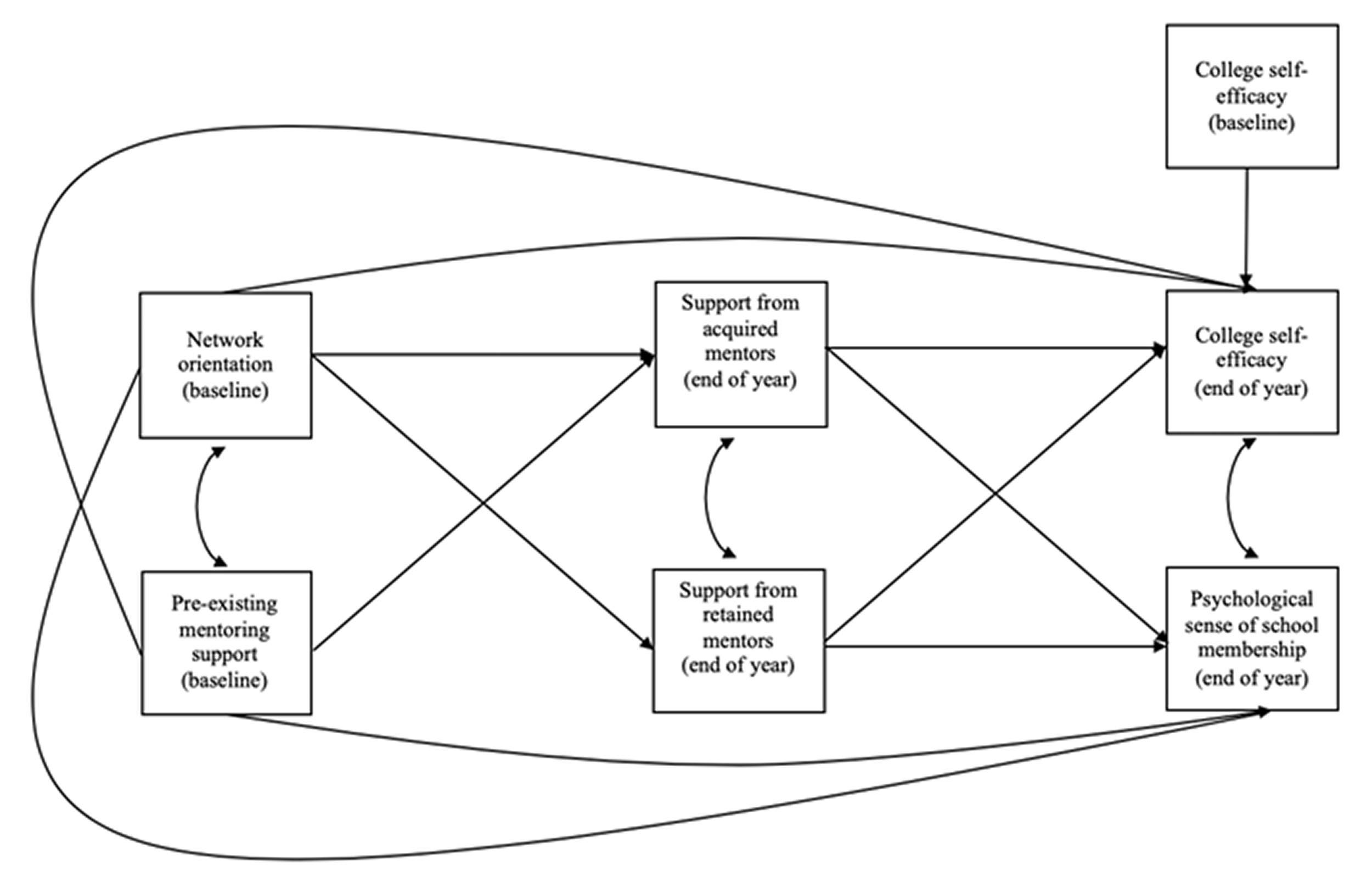
Hypothesized Path Model Predicting Subjective College Functioning.
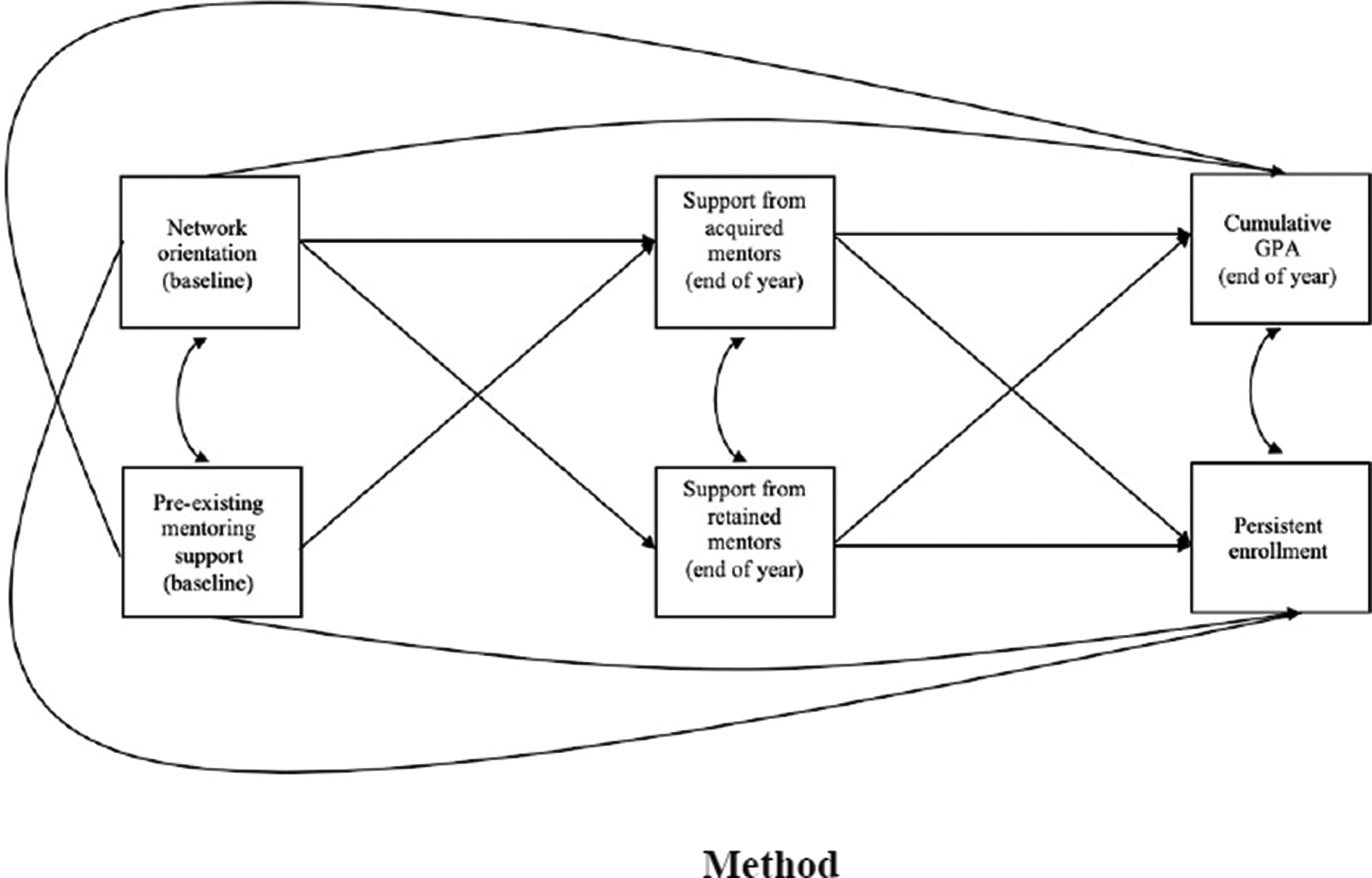
Hypothesized Path Model Predicting Objective Academic Functioning.
Method
Participants
Participants were eligible to participate if they were (1) between the ages of 18 and 25, (2) a degree-seeking first-year undergraduate at UMass Boston, and (3) a first-generation college student (i.e., neither of their parents had completed a Bachelor’s/4-year degree). A total of 271 participants completed the baseline survey, 208 of whom completed the follow-up survey and provided consent for the researcher to access information from their official academic records, resulting in a retention rate of 76.8%. T-tests and chi-squared analyses revealed that retained and non-retained participants did not significantly differ from one another (using alpha level of .10) on any main demographic or study variables at baseline. Eligibility screening using academic records resulted in the exclusion of 32 participants. The remaining participants comprised the final analytic sample (N = 176). Sample demographics are presented in Table 1.
Sample Demographics (N = 176).
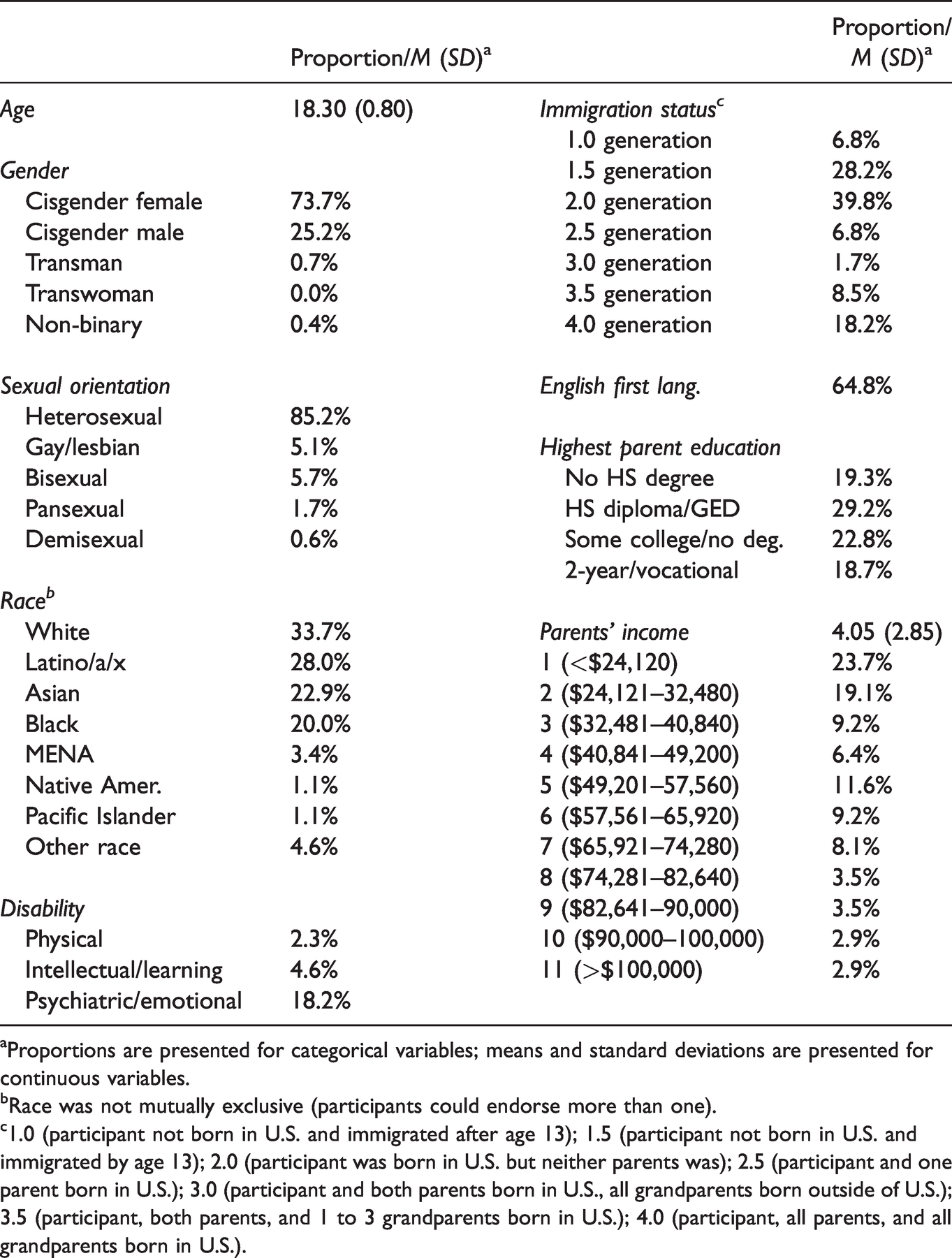
aProportions are presented for categorical variables; means and standard deviations are presented for continuous variables.bRace was not mutually exclusive (participants could endorse more than one).
c1.0 (participant not born in U.S. and immigrated after age 13); 1.5 (participant not born in U.S. and immigrated by age 13); 2.0 (participant was born in U.S. but neither parents was); 2.5 (participant and one parent born in U.S.); 3.0 (participant and both parents born in U.S., all grandparents born outside of U.S.); 3.5 (participant, both parents, and 1 to 3 grandparents born in U.S.); 4.0 (participant, all parents, and all grandparents born in U.S.).
Procedure
Initial recruitment for the baseline survey was conducted from July to October 2018, during the summer prior to participants’ first semester and during the first two months of the first semester. The study investigator spoke and distributed flyers at a pre-college summer bridge program for students with borderline admissions criteria, which tends to have a large proportion of first-generation college students. Study flyers were also distributed at new student orientation sessions and posted throughout campus. All surveys were administered online via Qualtrics. Participants received a $20 Amazon gift card for completing the survey. During the last two months of the Spring semester (April and May 2019), participants who completed the baseline survey were invited to participate in the follow-up survey. Participants received another $20 Amazon gift card for completing the follow-up survey. On the follow-up survey consent form, participants waived their Family Education Rights and Privacy Act (FERPA) rights so that the investigators could access data from their official academic records, including their age, class year, SAT and/or ACT scores from their application, enrollment status in the Spring 2019 and Fall 2019 semesters, and cumulative grade point average.
Measures
Predictor and Intermediate Variables
Network Orientation
This 9-item scale measures attitudes and beliefs about help-seeking and willingness to use social support resources. Items were selected and adapted from Fleming and Whalen’s (1990) original 20-item scale, which focused on help-seeking from “friends” or “others,” to examine attitudes toward help-seeking from “more experienced adults.” At baseline and follow-up, participants rated their agreement with statements such as “More experienced adults (e.g., teachers, extended family members, family friends, coaches, religious leaders) often have good advice to give,” on a 4-point Likert-type scale (1=“Strongly disagree,” to 4=“Strongly agree”). A higher mean scale score indicates a greater tendency to seek help and resources from more experienced adults. Only the baseline scale score was used for the current set of analyses. The scale showed acceptable internal consistency (α1=.80).
Mentoring Network
At baseline and follow-up, participants were asked: “Other than a parent or person who raised you, are there one or more adults in your life right now who are older and more experienced than you who you go to for support and guidance? Do not include friends or romantic partners (boyfriends/girlfriends).” They were allowed to nominate up to six different mentors at each time point. At follow-up, participants indicated whether or not each mentor had become important in their lives since beginning college and whether or not they had met each mentor in college. Mentors whom participants indicated had become important since starting college were coded as “acquired,” and mentors whom participants indicated were important to them prior to starting college were coded as “retained.” Participants were asked to provide details about each relationship, including frequency of contact, perceived closeness, relationship length, and the social role of each mentor relative to the participant (e.g., extended family, teacher, coach, guidance counselor, formal mentor).
College Student Mentoring Scale (CSMS)
Participants completed the CSMS, a widely used, validated measure of the general availability of mentoring support during college (Crisp, 2009; Crisp & Cruz, 2010). The CSMS is a 25-item survey containing 4 subscales: Psychological and Emotional Support, Degree and Career Support, Academic Subject Knowledge Support, and Role Modeling. For this study, the scale was adapted (with the author’s permission) such that participants were asked to indicate the extent to which each of their nominated mentors provides each type of support (i.e., “[Mentor] gives me emotional support.”). At baseline, participants were asked to rate their agreement with each statement in reference to the previous nine months. At follow-up, participants were asked to think of the academic year and rate their agreement with each statement on a 5-point scale (1 = “Strongly disagree to 5 = “Strongly agree”). Sample items for each subscale include “I can talk with [Mentor] openly about personal issues related to being in college” (Psychological and Emotional Support), “[Mentor] helps me realistically examine my degree, certificate, or major options” (Degree and Career Support), “[Mentor] helps me perform to the best of my abilities in classes” (Academic Subject Knowledge Support), and “[Mentor] serves as a model for how to be successful in college” (Role Modeling). At baseline, internal consistencies (alphas) ranged from .83 to .92. At follow-up, alphas ranged from .88 to .93.
Cumulative mentoring support scores were calculated by adding the scores on all items for each mentor. Cumulative baseline mentoring support was calculated by adding sum scores for all mentors at baseline. Cumulative support from retained mentors was calculated by adding sum scores for all mentors at follow-up whom participants indicated had become important in their lives prior to starting college. Cumulative support from acquired mentors was calculated by adding sum scores for all mentors at follow-up whom participants indicated had become important in their lives after starting college. This additive scoring method allows for the representation of cumulative support (i.e., extent of support from multiple relationships), consistent with methods of other network-based social support questionnaires that examine support from different sources (e.g., Dunst et al., 1984; Norbeck, 1984), as well as previous network-based mentoring studies (e.g., Hurd et al., 2018).
Outcome Variables
College Self-Efficacy
The course efficacy (e.g., writing papers) and social efficacy (e.g., talking with professors) subscales from the College Self-Efficacy Inventory (Solberg et al., 1993) are comprised of 15 items that ask college students to rate their confidence in their ability to complete college-related tasks on a 10-point scale (0=“Not at all confident,” 9 = “Extremely confident”). The scale has been validated in diverse college student samples (Barry & Finney, 2009; Gore et al., 2005). A scale score was calculated from the mean of the items (α1 = .92; α2 = .92).
Psychological Sense of School Membership
At follow-up, participants responded to the Psychological Sense of School Membership scale (PSSM; Goodenow, 1993), which measures perceived belonging and acceptance at school. It was originally developed for middle and high school students but has been adapted and validated in college student samples (Freeman et al., 2007; Pittman & Richmond, 2008). Respondents rated their agreement with 18 items, such as “I feel like a real part of [university],” on a 5-point scale (1 = “Not at all true,” to 5 = “Completely true”). Higher mean scores indicate a stronger sense of school membership (α2 = .91).
Academic Performance and Persistence
Students consented to releasing their actual end-of-year cumulative GPA from official records, which were used as an outcome for current analyses. Their enrollment in the Fall 2019 semester was obtained from their official academic records and used as a dichotomous indicator of second year enrollment (i.e., college persistence).
Covariates
Standardized Test Scores
Students’ college preparatory standardized test scores were obtained from their official records. Students’ SAT scores were converted to ACT score scale using the College Board and ACT, Inc.’s (2018) Guide to ACT/SAT Concordance. If records contained both an SAT and ACT score, their higher score was used in analyses.
Extraversion
Students completed the Ten-Item Personality Inventory (TIPI), a widely-used, well-validated brief measure of the Big 5 personality traits (Gosling et al., 2003). This scale includes a two-item measure of extraversion, in which participants rated their agreement that they are “Extraverted, enthusiastic” and “Reserved, quiet” on a 7-point scale (1 = “Disagree strongly,” 7 = “Agree strongly”; α2 =.62).
Demographics
At baseline, participants were asked to provide a range of demographic characteristics, including ethnic and racial identities, first language, family immigration history, parental education, and total family household income.
Analysis Plan
In addition to conducting descriptive analyses of relationship presence and type, Mplus 8 software (Muthén & Muthén, 2017) was used to construct and evaluate the hypothesized path models in predicting subjective and objective indicators of college student functioning (see Figures 1 and 2). The small amount of missing data in analytic variables was addressed using full information maximum likelihood (FIML) estimation with robust standard errors. Indirect effects were estimated using 5000 bootstrapped iterations (Barbeau et al., 2019). All analyses controlling for baseline variables found to be associated with outcome or intermediate variables at the bivariate level: age, gender (cisgender male dummy variable), academic competence (standardized test score), socioeconomic status (parents’/guardians’ total pre-tax income), linguistic status (English as first language dummy variable), race (White, Black, Asian, and Latinx dummy variables), and extraversion.
Results
Descriptive statistics for main study variables can be found in Table 2.
Descriptive Statistics for Main Study Variables and Covariates (N = 176).
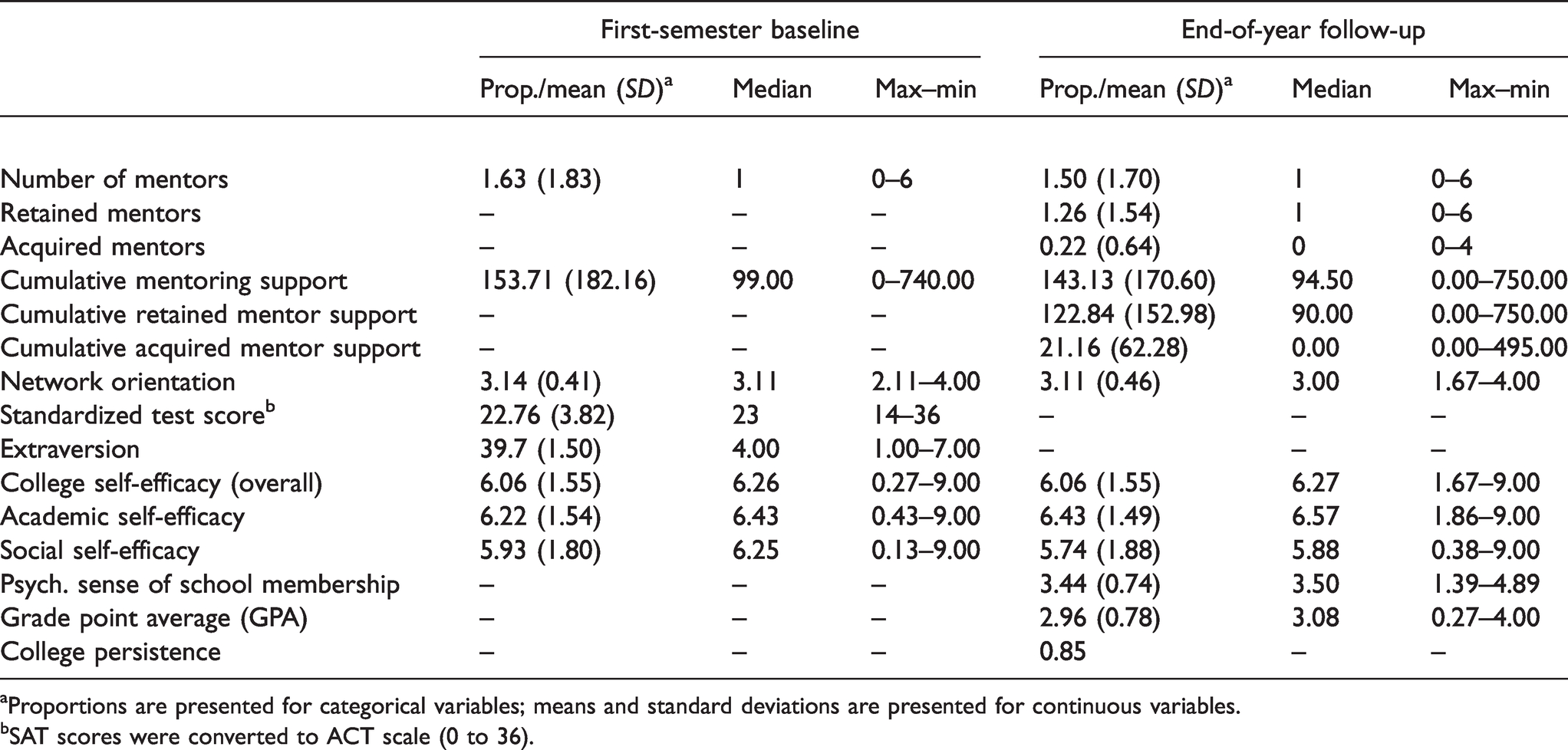
aProportions are presented for categorical variables; means and standard deviations are presented for continuous variables.
bSAT scores were converted to ACT scale (0 to 36).
Descriptive Analyses of Mentoring Networks at Baseline and Follow-Up
At baseline, 59.1% of participants reported having at least one significant relationship with a nonparent mentor. At follow-up, 59.6% of participants reported at least one such relationship. In comparing the simple presence and absence of any mentor at baseline and follow-up, 23.4% of all participants reported having no mentors at either time point, 17.0% reported at least one mentor at baseline but not at follow-up, 18.1% of participants reported at least one mentor at follow-up but not baseline, and 41.5% of participants reported at least one mentor at both baseline and follow-up.
Further examination of the size of participants’ mentoring networks revealed that, overall, they were similar at baseline (M = 1.63, SD = 1.83) and follow-up (M = 1.50, SD = 1.70). A t-test did not reveal a significant difference between the sizes of mentoring networks across the two time points. At both time points, approximately three quarters of participants who endorsed at least one mentoring relationship reported that they had more than one. Examining changes in the size of mentoring networks at baseline and follow-up at the participant level, 38.0% of participants had the same number of mentors at each time point, 28.1% of participants reported fewer mentors at follow-up compared to baseline, and 33.9% of participants reported more mentors at follow-up compared to baseline. At follow-up, 13.6% of participants reported at least one mentor who became important after they started college.
Turning to the composition of participants’ mentoring networks, at baseline, 36.4% of participants nominated at least one extended family member as a mentor, compared to 33.9% of participants at follow-up. The proportion of participants who nominated at least one community adult (8.5% at baseline; 8.2% at follow-up), neighbor/friend’s parent (12.5% at baseline; 10.5% at follow-up), and other/non-specified mentor (11.9% at baseline; 10.5% at follow-up) were also similar across time points. At both time points, very few participants nominated a mentor who was formally assigned in a program. More notable differences across time points were observed in the proportion of participants who nominated school- and university-based mentors. At baseline, 22.7% of participants nominated at least one pre-college school-based faculty or staff as a mentor, compared to 14.6% of participants at follow-up. At baseline, 2.3% of participants nominated at least one university faculty/staff as a mentor, compared to 8.8% at follow-up (see Figure 3). Chi-squared analysis comparing participants at baseline and follow-up reveal that a significantly higher proportion of participants nominated at least one university faculty/staff mentor at follow-up than at baseline, X2 (1, N = 352) = 7.08, p = .008. Chi-squared analysis also showed a marginally significant trend, such that a smaller proportion of participants nominated at least one high school-based mentor at follow-up X2 (1, N = 352) = 3.75, p = .053.
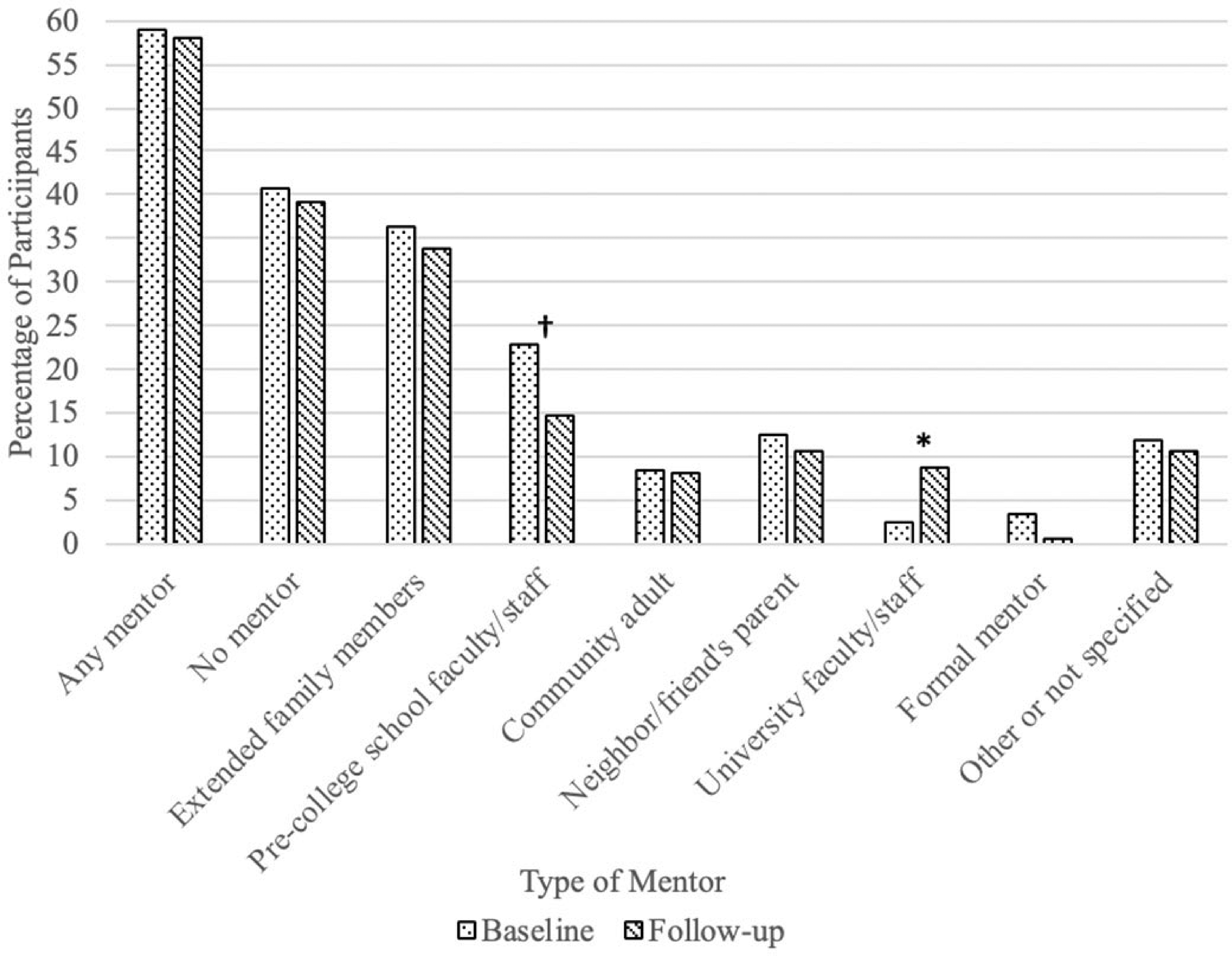
Proportion of Participants Who Identified Any Mentor, No Mentor, and Each Mentor Type at Baseline and End-of-Year Follow-Up. Note: *Indicates a statistically significant difference between baseline and follow-up at p < .05). †Indicates a marginally significant difference between baseline and follow-up at p < .10.
In terms of other relational and support variables, students’ ratings of mentoring relationships were similar across the two time points. Mean ratings of perceived closeness, remote contact frequency, relationship length, psychological/emotional support, degree/career support, academic subject knowledge support, and role modeling, were not statistically significant between baseline and follow-up according to ANOVA analyses. However, on average, students reported having significantly more frequent in-person contact with mentors at baseline compared to follow-up, F (1, 536) = 35.56, p < .001.
Predicting Subjective College Functioning Using Cumulative Support Variables
A path model was examined in which baseline mentoring support and network orientation, acquired mentoring support, and retained mentoring support predicted two subjective indicators of college functioning (i.e., psychological sense of school membership, college self-efficacy) at follow-up. In addition to the control variables described above, paths predicting college self-efficacy at follow-up also controlled for college self-efficacy at baseline. Overall, the full model did not fit the data well: χ2(4) = 30.17, p < .001, CFI = .88, TLI = −.80, SRMR =.03, RMSEA = .19, 90% CI = 0.13 to 0.26. The full model (including covariates) accounted for approximately 46% of the variance in college self-efficacy (R2 = .46, p < .001, SE = .06) and 34% of the variance in psychological sense of school membership (R2 = .34, p < .001, SE = .06). Without covariates, the model accounted for approximately 19% of the variance in college self-efficacy (R2 = .19, p = .001, SE = .06) and 24% of the variance in psychological sense of school membership (R2 = .24, p < .001, SE = .06).
In terms of direct effects, network orientation at baseline was positively and significantly associated with college self-efficacy (β = .27, p < .001, 95% CI = .14 to .39) and psychological sense of school membership (β = .41, p < .001, 95% CI = .24 to .55). Network orientation was not significantly associated with cumulative support from retained mentors (β = .11, p = .12, 95% CI = −.04 to .25) or cumulative support from acquired mentors (β = .13, p = .19, 95% CI = −.10 to .30). Cumulative mentoring support at baseline was not significantly associated with college self-efficacy (β = −.12, p = .10, 95% CI = −.26 to .02), psychological sense of school membership (β = −.07, p = .40, 95% CI = −.23 to .09), or cumulative support from acquired mentors (β = .06, p = .64, 95% CI = −.23 to .30). Cumulative support from retained mentors was significantly and positively associated with college self-efficacy (β = .13, p = .02, 95% CI = .03 to .24), but not psychological sense of school membership (β = .06, p = .45, 95% CI = −.10 to .22). In contrast, cumulative support from acquired mentors was significantly and positively associated with psychological sense of school membership (β = .15, p = .02, 95% CI = .03 to .27), but not college self-efficacy (β = .04, p = .53, 95% CI = −.10 to .16). None of the hypothesized indirect (i.e., mediational) pathways were statistically significant (see Figure 4).
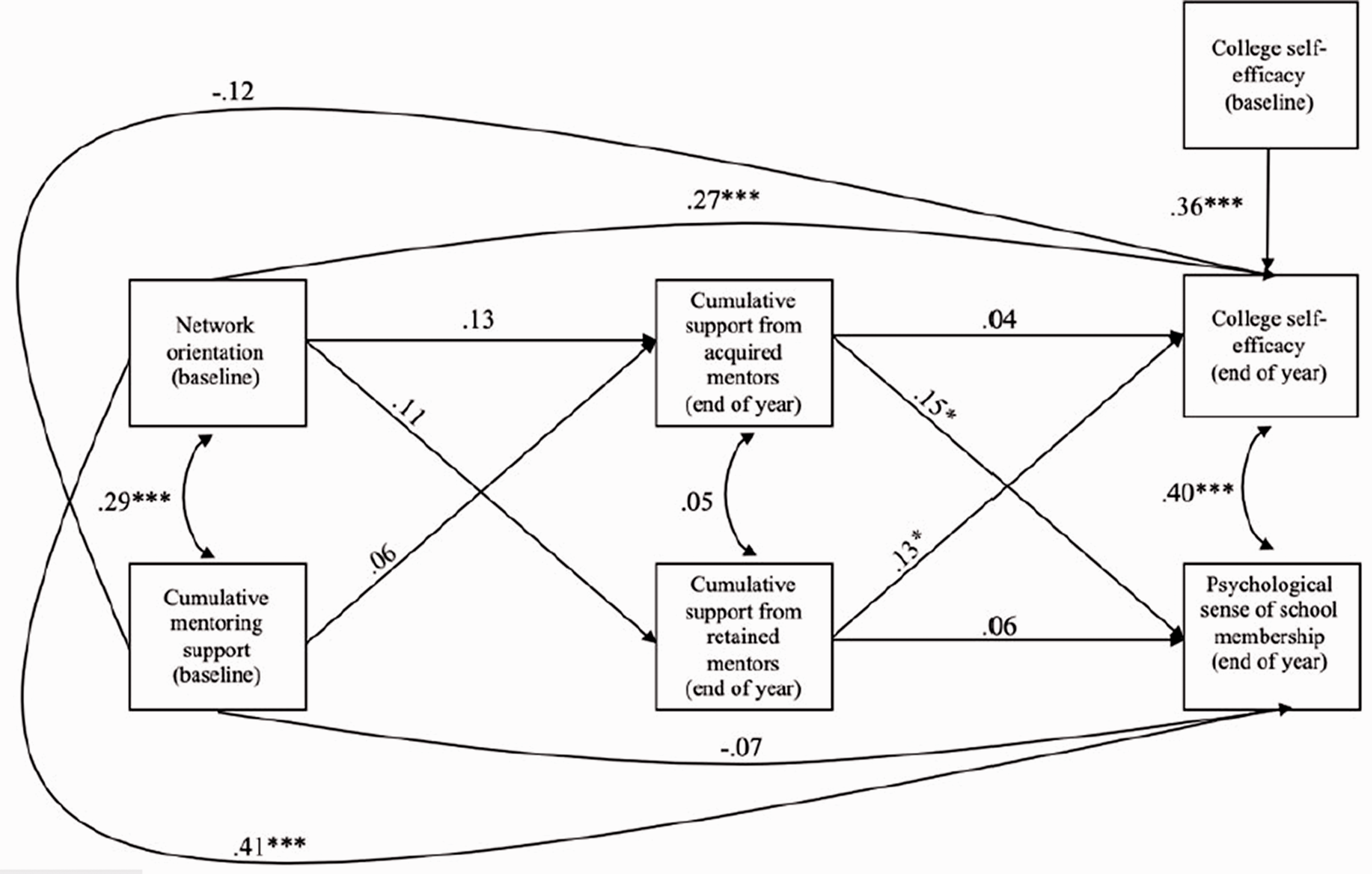
Results of Path Model Predicting Subjective College Functioning. Note: ***Indicates significance at p < .001. *Indicates significance at p < .05. All paths included age, gender, race, SES, linguistic status, academic competence, and extraversion as covariates.
Predicting Objective Academic Functioning Using Cumulative Support Variables
A path model was examined in which baseline mentoring support and network orientation, acquired mentoring support, and retained mentoring support predicted cumulative GPA and persistent enrollment from first to second year. Fit statistics were not available for this model due to the use of a dichotomous outcome variable. Overall, the model (including covariates) accounted for approximately 12% of the variance in cumulative GPA (R2 = .12, p = .02, SE = .05) and 17% of the variance in persistent enrollment (R2 = .25, p = .08, SE = .14). Without covariates, the model accounted for approximately 3% of the variance in cumulative GPA (R2 = .03, p = .34, SE = .03) and 4% of the variance in persistent enrollment (R2 = .04, p = .74, SE = .12). None of the hypothesized direct or indirect (mediational) effects were statistically significant (see Figure 5).
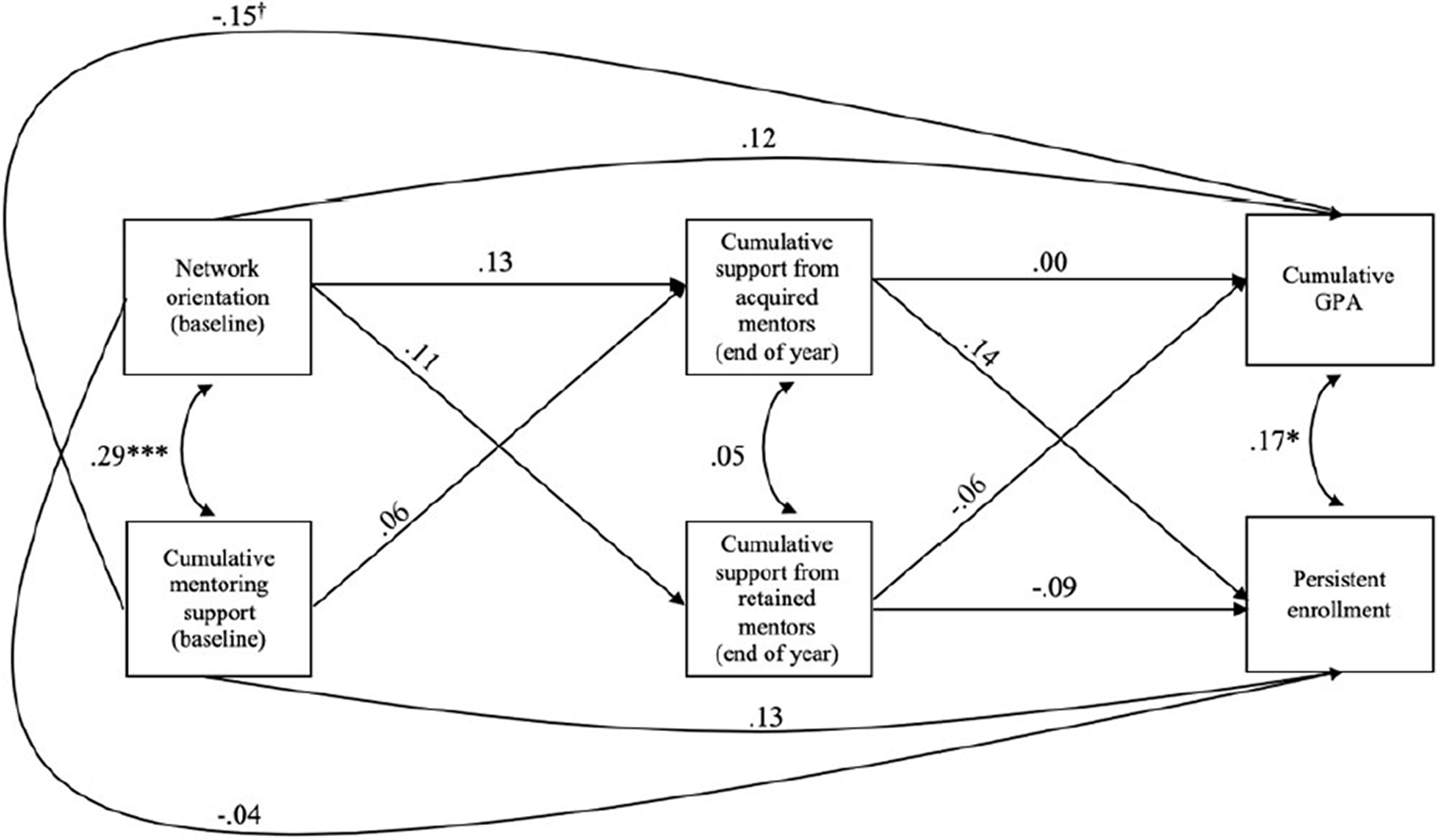
Results of Path Model Predicting Objective Academic Functioning. Note: ***Indicates significance at p < .001. * Indicates significance at p < .05. † Indicates a marginal significance at p < .10. All paths included age, gender, race, SES, linguistic status, academic competence, and extraversion as covariates.
Discussion
The goals of the current study were (1) to examine the naturalistic trajectory of first-generation students’ mentoring network across their first year of college, and (2) to examine associations and pathways among baseline, acquired, and retained mentoring support, network orientation, as well as subjective and objective functional outcomes. This study improves upon several methodological limitations of previous research by allowing students to nominate up to six different mentors and collecting detailed data on each relationship at multiple time points. Several notable findings have important implications on research, practice, and policy.
Trajectory of Students’ Mentoring Networks and Relationships
Overall, the proportion of students with at least one mentoring relationship (approximately two-thirds) was similar at baseline and follow-up, which is also consistent with rates found in previous studies of underrepresented college students (Hurd et al., 2016; Raposa & Hurd, 2021; Sánchez et al., 2011). Examining the presence of multiple mentoring relationships revealed that the majority of students (at baseline and follow-up) who reported having at least one mentor reported having more than one. After forming one mentoring relationship, students may be more likely to form others, perhaps due to changes in one’s network orientation, help-seeking behaviors, and increasing social capital. This finding is consistent with previous studies of mentoring networks (Berardi et al., 2020; Hurd et al., 2016; Raposa & Hurd, 2021; Rios-Aguilar & Deil-Amen, 2012; Sánchez et al., 2011), reiterating the importance of using measures that capture the breadth and diversity of mentoring support.
The few previous studies that have tracked underrepresented college students’ mentoring relationships over time have found that the size of students’ mentoring networks tend to shrink during their first year (Hurd et al., 2016; Sánchez et al., 2011). In contrast, results from the current study showed that the average size of students’ mentoring networks were similar at baseline (M = 1.63) and the end of year follow-up (M = 1.50). The relative stability of mentoring network size in this study, and the divergence of this finding from previous studies, may be attributable to differences in university settings, despite using similar survey questions and operational definitions to identify mentors. The university in which the current study was set is a predominantly commuter university, and the majority of students originate from the same metropolitan area. In contrast, previous studies (e.g., Hurd et al., 2016; Sánchez et al., 2011) have been conducted in residential universities that are located a considerable distance away from most students’ communities of origin. Thus, many students in the current study may have had easier access to mentors from their extended families, high schools, and communities of origin, promoting the retention of these relationships during their first year.
Despite the relative stability of network size, findings from the current study suggest that students experienced some changes in the composition of their mentoring networks. Students reported significantly less frequent in-person contact with mentors during their first year compared to the preceding nine months due to the demands of college on their time and energy. Further, at end-of-year follow-up compared to baseline, a smaller proportion of students reported mentoring relationships with pre-college school-based faculty or staff, and a larger proportion of students nominated at least one university faculty or staff member as a mentor. This is consistent with previous research and is unsurprising, given that students have had more time and opportunity to form relationships with university faculty and staff by the end of the year (Hurd et al., 2016). Still, it is notable that, even at the end of the year, a small proportion (less than 10%) of mentors were university faculty or staff. These proportions are somewhat lower than those found in previous studies at elite, residential universities (e.g., Hurd et al., 2016), suggesting that it may be particularly difficult for marginalized students to form on-campus mentoring relationships during their first year at a non-elite, commuter university.
Impact of Network Orientation and Mentoring on Subjective Functioning
Despite limited evidence for its association with the retention and acquisition of mentoring support, network orientation had a direct, positive association with students’ perceptions of self-efficacy to complete college-related tasks (college self-efficacy) and their psychological sense of school membership in college, even after controlling for demographics, extraversion, academic competence, and college self-efficacy at baseline. A positive network orientation may have promoted more frequent and effective help-seeking behavior throughout the first year, such as emailing professors, attending office hours or asking classmates for help on course and degree-related tasks (Parnes et al., 2020). Although these more routine instances of help-seeking may not reach a threshold of mentoring, these interactions may connect students to necessary resources, reduce distress, increase comfort with social interactions in the college context, and foster a sense of belonging (Coffman & Gilligan, 2002; DeFreitas & Bravo, 2012; Karp et al., 2010).
Path analyses showed that retained mentoring support and acquired mentoring support had significant, but divergent, associations with college functioning. Notably, support from retained mentors, but not support from acquired mentors, predicted higher perceived self-efficacy to complete college-related tasks at the end of students’ first year, even after controlling for self-efficacy at baseline. Hurd and colleagues have found that the number of retained mentoring relationships across students’ first year predicted reductions in psychological distress (Hurd et al., 2016), that appraisal support (i.e., feedback about one’s attributes and abilities) predicted improved self-worth (Hurd et al., 2018), and that family members and close family friends provided higher levels of appraisal support than university faculty and staff mentors (Raposa & Hurd, 2021). Together, these findings suggest that emotionally close, long-standing, mentoring relationships provide students with meaningful support that positively impacts their perceptions of themselves and their ability to be successful in college, even if these mentors do not necessarily possess specialized knowledge and power in the university setting.
In contrast, support from acquired mentors, but not retained mentors, was significantly and positively associated with students’ psychological sense of belonging in the university community at the end of their first year. As noted above, the large majority of mentors acquired over the course of the year were directly affiliated with the university, including professors, teaching assistants, administrators, and other support staff. Thus, this finding is consistent with several previous studies, which have shown that positive interactions and relationships with faculty and staff promote a sense of belonging, social integration, and institutional attachment among current college students, especially those from historically marginalized backgrounds (Freeman et al., 2007; Gallup-Purdue Index, 2014; Kuh et al., 2006; Pittman & Richmond, 2008). Although longer-standing mentoring relationships with extended family members, former teachers, and other adults from students’ communities of origin can provide important emotional, instrumental, and informational support, they may be less able to foster a sense of campus belonging due to being physically and socially located elsewhere.
Despite the significant associations with acquired and retained support, baseline mentoring support was not significantly associated with either indicator of subjective college functioning at follow-up. These findings suggest that entering college with existing mentoring relationships may not benefit students unless those relationships are maintained or supplemented by new, on-campus mentoring relationships. Moreover, measuring the longitudinal trajectory of mentoring support appears to be a more robust predictor of functioning than measurements of baseline support alone, at least during a period in which social networks would be expected to reconfigure (Berardi et al., 2020; Hurd et al., 2016).
Although network orientation, retained mentoring support, and acquired mentoring support each had significant impacts on students’ subjective experience and functioning during their transition to college, these effects did not result in measurable differences in GPA or persistence. This is surprising, given previous findings suggesting that academic and social integration in college are among the most important factors in determining underrepresented college students’ persistence (Engle et al., 2006; Engle & Tinto, 2008; Kuh et al., 2006), and that mentoring support can have a tangible impact on GPA (Hurd et al., 2016). Follow-up studies of the current and other datasets may focus on behavioral indicators of help-seeking, which may be more robust predictors of objective academic outcomes compared to attitudinal measures like the network orientation scale. Further, while the focus of the current analyses were on students’ relationships with adult mentors, peer relationships are highly salient during emerging adulthood (Roisman et al., 2004), and social integration with peers is an important and unique determinant of students’ decisions to persist (Kuh et al., 2006; Wolf-Wendel et al., 2009). Finally, first-generation college students are highly vulnerable to a range of external factors, such as financial hardship and other major life events, which can affect their ability to persist in college semester to semester (Engle & Tinto, 2008).
Study Strengths, Limitations, and Future Research Directions
This study makes important contributions to the existing body of knowledge on first-generation college students’ mentoring relationships, owing to several key methodological strengths. Among the study’s greatest strengths is the breadth and depth of data on students’ mentoring relationship networks. By collecting detailed data on relational characteristics across students’ entire mentoring networks, the current study captured the impact of cumulative support as well as the significant heterogeneity in the form and function of first-generation college students’ mentoring relationships. Another important strength is the longitudinal nature, allowing for the examination of changes in the composition of students’ mentoring networks during the transition to college. Overall, the current study demonstrates that students’ mentoring relationships can undergo significant changes, especially during a major developmental transition like the first year of college. Future mentoring research should seek to capture the dynamic nature of mentoring networks by collecting data on multiple mentoring relationships at multiple time points.
Although this is not the first study to examine the role of mentoring relationships in the lives of underrepresented college students, it is perhaps the first to do so in a four-year, commuter, predominantly minority-serving university. Institutional type, setting, and resources have a major impact on universities’ relational climate and student outcomes (Gallup-Purdue Index, 2014; Kuh et al., 2006; Raposa et al., 2021), and it cannot be assumed that findings from one type of institution will generalize to others. Indeed, this study documented both convergent and divergent findings relative to research set in elite, residential, predominantly white institutions. Future studies should attempt to replicate these findings in similar institutions or simultaneously capture data from a broader range of institutions.
Beyond these important strengths, several limitations of the current study, as well as their implications for future research, should also be discussed. First, the analytical sample size of 176 participants, although sufficient for regression-based analyses, was relatively modest. In part, this was due to attrition of approximately 24% of the baseline sample. This attrition rate is slightly below average for longitudinal research (Teague et al., 2018), and analyses did not reveal significant differences among retained and non-retained participants for demographic and main study variables. Still, attrition can bias data and findings in unmeasured or unexamined ways and reduce statistical power (Teague et al., 2018). The relatively small sample size can also be attributed to the somewhat narrow sampling frame. Future studies should consider strategies to accumulate larger samples by collecting data from several institutions or nationally, gathering data from multiple cohorts of first-year students, and partnering with organizations with access to comprehensive lists of college-bound students (e.g., the College Board).
Although the longitudinal nature of the study is a strength, data collection was limited to two time points, and students were only followed to the end of their first year. Collecting data from three or more time points allows for more sophisticated longitudinal analysis, which may answer important questions regarding the dynamic, reciprocal associations among the trajectories of students’ network orientation, access to mentoring support, and psychological and academic outcomes that unfold over time. Further, the relatively low prevalence of mentoring relationships with university faculty and staff that formed over the course of the current study suggests that these types of relationships may take longer to form; studies that track students throughout their undergraduate career, particularly across other key transition years (e.g., sophomore to junior year) may document a greater prevalence and range of these important relationships.
In addition to collecting data across a wider timeline, future research should also explore a broader range of mentoring relationships. In particular, the current study focused on hierarchical, intergenerational mentoring relationships between college students and older adults, and our operational definition of mentoring did not include peers (i.e., fellow college students). Some researchers have shown peer mentoring to be a promising, beneficial approach to promoting success and integration of marginalized college students due to greater accessibility, approachability, and relatability of peers relative to faculty and staff (Collier, 2017; Colvin & Ashman, 2010). Future research should examine both hierarchical and peer mentoring relationships, investigating divergent and convergent characteristics, processes, and outcomes.
Finally, the current paper primarily reports on quantitative analyses aiming to test a priori hypothesized models. However, research in this area is still nascent and may benefit from inductive, qualitative approaches to enrich understanding of how mentoring relationships form, change, and end over time, as well as how students’ help-seeking beliefs impact their decision-making and experiences during their transition to higher education. A subsample of participants (n = 25) in this study completed in-depth qualitative interviews, which were beyond the scope of this paper but will be analyzed and reported in future papers.
Practice and Policy Implications
Results from the current study suggest several recommendations and implications for practice and policy. First, ongoing support from first-generation students’ preexisting mentors during the transition to college was associated with an increased sense of self-efficacy to complete college-related tasks at the end of their first year, while support from students’ newly acquired mentors during the transition was associated with a greater sense of belonging in the university community. Taken together, support from retained and newly acquired mentors might serve distinct functions and are associated with different aspects of students’ subjective well-being. These distinct forms of mentoring support should not be treated as interchangeable, and interventions aiming to increase social support should promote the maintenance of students’ existing relationships and the cultivation of new relationships on campus.
For example, many universities have implemented first-year seminars (FYS), which several studies have found increase students’ academic performance and likelihood of persistence, although there are significant variations in methodological rigor and effects in the literature (Jenkins-Guarnieri et al., 2015). FYS typically focus on practical academic skills (i.e., time management, study strategies), but researchers have increasingly recognized the importance of attending to students’ holistic development, including the social and relational aspects of college (Padgett et al., 2013). Curriculum designers should consider developing and piloting modules within FYS focusing on the value of mentoring relationships and explicitly teach students networking and social skills to maintain existing mentoring relationships and build new ones. These curricula could draw upon or integrate youth-initiated mentoring (YIM) theories and interventions, which aim to empower young people to identify, build, and maintain relationships using their existing and burgeoning social connections, rather than formally matching them with a stranger as in traditional mentoring programs (Schwartz et al., 2013).
Beyond FYS curricula, universities might consider other institutional changes to promote the cultivation of mentoring relationships on campus during students’ first year, such as continuing education and professional development programming for faculty and staff that provide training in evidence-based mentoring practices. Additionally, university administration should explicitly highlight mentoring as an activity that is valued among faculty and staff, potentially as a criterion in faculty’s tenure review (e.g., Jaschik, 2015). Finally, university faculty and staff should participate in evidence-based cultural competency trainings to address bias in faculty’s selection of protégés (Milkman et al., 2012).
In addition to these recommendations for universities, it is also valuable to consider practice and policy that impacts underrepresented students in earlier developmental stages. Indeed, the current study found that students’ network orientation when they entered college and retained support from existing mentors impacted psychosocial outcomes at the end of their first year. Like colleges, high schools might consider integrating developmentally appropriate programming and curricula that provide tangible instruction on help-seeking, networking, and forming mentoring relationships. Further, secondary schools should consider ways to enable or incent teachers to mentor their students, such as including mentoring activities in considerations of job performance, promotion, and tenure (and proportionally adjusting evaluations and expectations in other domains). These efforts require higher-level policy changes that are sorely needed to reduce educational inequity, such as increasing teachers’ pay, eliminating race- and class-based education segregation, and promoting equitable access to extracurricular activities.
Conclusions
This study provided a multifaceted examination of the trajectory, nature, and impact of first-generation college students’ networks of mentoring relationships during the transition to college. Most students reported ongoing support from one or more long-standing mentoring relationships, which was associated with an increased sense of efficacy to complete college related tasks. Although less common, some students also acquired support from new mentoring relationships, particularly with university faculty and staff, which was associated with a greater sense of belonging in the university community. However, mentoring support was not associated with grade point average or first-to-second year persistence, suggesting that other resources are also needed to bridge the disparities in degree completion among first- and continuing-generation college students. As many advocates have suggested, mentoring is not a panacea, and it alone cannot surmount structural inequality entrenched in educational and social institutions (Hurd et al., 2018). Yet, by making historically marginalized students feel more efficacious and included in higher education, mentors can help empower the next generation of change agents.
Footnotes
Authors’ Note
All study procedures were reviewed and approved by the Institutional Review Board at the University of Massachusetts Boston.
Declaration of Conflicting Interests
The authors declared no potential conflicts of interest with respect to the research, authorship, and/or publication of this article.
Funding
The author(s) disclosed receipt of the following financial support for the research, authorship, and/or publication of this article: M. A. H. and K. M. C. would each like to acknowledge support from separate Graduate Research Fellowships from the National Science Foundation. J. E. R. would like to acknowledge support from MENTOR: The National Mentoring Partnership.
