




Abstract
Objectives:
A recent experimental study revealed that family with sequence similarity 19 [chemokine (C-C motif)-like] member A5 (FAM19A5), a novel secreted adipokine, has inhibitory effects on vascular smooth muscle cell proliferation and migration, and on neointima formation in injured arteries. We investigated the associations between serum FAM19A5 concentration and cardio-metabolic risk factors for the first time in human subjects.
Methods:
Circulating FAM19A5 concentrations and their associations with cardio-metabolic risk factors were explored in 223 individuals (45 without diabetes and 178 with type 2 diabetes).
Results:
Serum FAM19A5 concentrations (pg/mL) were greater in patients with type 2 diabetes [median (interquartile range), 172.70 (116.19, 286.42)] compared with non-diabetic subjects [92.09 (70.32, 147.24)] (p < 0.001). Increasing serum FAM19A5 tertile was associated with trends of increasing waist-to-hip ratio, fasting plasma glucose, glycated haemoglobin and mean brachial-ankle pulse wave velocity. Serum FAM19A5 was positively correlated with waist circumference, waist-to-hip ratio, alanine aminotransferase, fasting plasma glucose, glycated haemoglobin and mean brachial-ankle pulse wave velocity. Multiple stepwise regression analyses identified waist-to-hip ratio, low-density lipoprotein cholesterol and brachial-ankle pulse wave velocity as determining factors for log-transformed serum FAM19A5 concentration (R2 = 0.0689).
Conclusion:
A novel adipokine FAM19A5 was related to various metabolic and vascular risk factors in humans, suggesting its potential as a biomarker of cardio-metabolic disease.
Introduction
Central obesity is a well-established risk factor for type 2 diabetes and atherosclerotic cardiovascular diseases.1–3 Although the exact mechanisms by which abdominal fat accumulation leads to these obesity-related cardio-metabolic diseases are not fully understood, adipokines are now considered a possible link.3,4 An increasing body of evidence indicates adipose tissue functions as an endocrine organ by secreting multiple bioactive substances known as adipokines, and these adipokines play a key role in regulating metabolic and cardiovascular homeostasis.3–5 Upregulation of pro-inflammatory adipokines and dysfunction of protective anti-inflammatory adipokines have been postulated to promote obesity-associated metabolic and cardiovascular diseases.4,5
The family with sequence similarity 19 [chemokine (C-C motif)-like] member A5 (FAM19A5), also named TAFA5, has recently been described as a novel secreted adipokine with protective properties.5,6 Wang et al. 5 reported that adipocyte-derived FAM19A5 inhibited vascular smooth muscle cell proliferation and migration, and obesity and obesity-related inflammation was associated with repression of adipose-derived FAM19A5 in rodent models. The authors also demonstrated that adipose-derived FAM19A5 inhibited post-injury neointima formation in rat carotid arteries and mouse femoral arteries in vivo. 5 Given FAM19A5 is expressed in human adipocytes, 7 and its expression in human adipocytes has been reported to be significantly downregulated by tumour necrosis factor-alpha, 7 it is likely that FAM19A5 expression may be influenced by obesity-related cardio-metabolic disorders in humans, and FAM19A5 concentration may serve as a biomarker reflecting metabolic and cardiovascular status in humans. However, no previous study has measured serum FAM19A5 concentrations in human subjects.
Therefore, to examine the implication and usefulness of FAM19A5 as a novel biomarker or target of obesity-related cardio-metabolic disease in humans, we (1) compared the serum FAM19A5 concentration in a group of human subjects consisting of normal controls without diabetes or carotid atherosclerosis, and type 2 diabetes patients with or without carotid atherosclerosis; (2) evaluated the relationships between serum FAM19A5 concentration and various metabolic and vascular risk factors and (3) explored the factors predicting circulating FAM19A5 concentration in a Korean population with or without type 2 diabetes.
Materials and methods
Study design and participants
This study was performed using a cross-sectional design. We enrolled 45 participants with normal glucose tolerance and without carotid atherosclerosis who underwent a routine voluntary health check-up at the Health Promotion Center of Korea University Guro Hospital, and 178 subjects with type 2 diabetes from the Korea Guro Diabetes Programme (KGDP) study. Both men and women were included as participants. The KGDP is an ongoing prospective observational cohort launched to determine the risk factors for complications of type 2 diabetes. Drug-naïve or metformin-only-using patients with type 2 diabetes were enrolled in this KGDP cohort. More details on this KGDP cohort are described in our previous report. 8 From the KGDP cohort, 178 drug-naïve patients with type 2 diabetes were included in this study, and these patients were sub-categorized into two groups comprising 89 patients each according to the presence or absence of carotid atherosclerosis. From the Health Promotion Center of Korea University Guro Hospital cohort, 45 subjects with normal glucose tolerance and without carotid atherosclerosis were selected for analysis. Details of the inclusion and exclusion criteria have been described in our previous study: 9 the exclusion criteria included previous history of cardiovascular diseases (myocardial infarction, unstable angina, stroke or cardiovascular revascularization).
Written informed consent was provided by all participants. This study was approved by the Institutional Review Board (IRB) of Korea University (IRB file number: 2014GR0140) and was conducted in accordance with the World Medical Association Declaration of Helsinki.
Clinical measurements
Personal interviews with a detailed questionnaire were used to obtain information on lifestyle factors and medical history. Body mass index (BMI) was derived from body weight in kilogrammes divided by height in metres squared (kg/m2). Waist circumference (WC) was measured at the midpoint between the iliac crest and the lower border of the rib cage at the end of expiration in the erect position. Waist-to-hip ratio (WHR) was calculated by dividing WC by the hip circumference (HC). HC was defined as the circumferential measure at the level of the widest point over the buttocks.
Biochemical measurements
All venous samples were drawn after a 12-h overnight fast, and were stored at -80°C immediately for further assays. Serum triglyceride and high-density lipoprotein cholesterol (HDL-C) levels were measured enzymatically with a model 747 chemistry analyzer (Hitachi, Tokyo, Japan). Plasma glucose concentration was determined by the glucose oxidase method. Latex-enhanced turbidimetric immunoassay (HiSens hsCRP LTIA; HBI, Anyang, Korea) was applied to measure high-sensitivity c-reactive protein (hsCRP) with an inter-assay coefficient of variation (CV) of 7.2%. Serum FAM19A5 concentration was assessed using a commercially available enzyme-linked immunosorbent assay (ELISA) kit (MyBioSource, CA, USA) according to the user’s manual with intra- and inter-assay CVs of 4.14% ± 1.42% and 4.58% ± 0.62%, respectively.
Vascular measurements
High-resolution B-mode ultrasonography (EnVisor; Philips Healthcare, Andover, MA, USA) with a 5- to 12-MHz transducer was utilized to measure the intima-media thickness (IMT) of the common carotid artery. Software-based measurements (Intimascope; Media Cross Co., Tokyo, Japan) were made at three levels of the lateral and medial arterial walls 1–3 cm proximal to the carotid bifurcation to estimate carotid intima-media thickness (CIMT). The mean CIMT was calculated as the average of 99 computer-based points in the region. The intra-observer CV of the CIMT was 0.93%. Carotid atherosclerosis was defined as a mean CIMT value exceeding 0.9 mm or the presence of carotid plaque, in accordance with the 2013 European Society of Hypertension (ESH) and the European Society of Cardiology (ESC) guidelines for the management of arterial hypertension. 10
Brachial-ankle pulse wave velocity (baPWV) was measured after a 5-min rest in the supine position. A BP-203RPE II volume-plethysmographic apparatus (Colin, Komaki, Japan), which enables simultaneous recording of baPWV and brachial and ankle blood pressure (BP) on both sides, was used. The mean of the left and right baPWV values was defined as the mean baPWV. The methods of baPWV measurement, including validity and reproducibility, are detailed in previous reports.11,12
Statistical analyses
The characteristics of the study population were initially analysed according to the three groups categorized by the presence of type 2 diabetes and carotid atherosclerosis (subjects with normal glucose tolerance and without carotid atherosclerosis, type 2 diabetes patients without carotid atherosclerosis and type 2 diabetes patients with carotid atherosclerosis). In addition, these characteristics were compared among the three groups stratified by the tertiles of circulating FAM19A5 concentrations. Continuous variables with normal distributions were expressed as mean ± standard deviation, while continuous variables with non-normal distributions were presented as median and interquartile range. Categorical data were expressed as frequency and percentage. To test differences between the groups, a one-way analysis of variance (ANOVA) and Tukey’s multiple comparison test were applied for continuous variables with normal distributions, whereas the Kruskal–Wallis H test followed by the Dwass, Steel, Critchlow-Fligner multiple comparison were utilized for continuous variables with non-normal distributions. The Pearson’s chi-square test was used for categorical variables. For trend analyses, the Jonckheere–Terpstra test for non-normally distributed variables and Cochran–Armitage trend test for categorical variables were performed. After that, circulating FAM19A5 concentrations were parallelized according to the presence or absence of type 2 diabetes using the Mann–Whitney U test. Spearman’s rank correlation coefficients were used to explore the relationships between circulating FAM19A5 concentration and various metabolic and vascular parameters. Multiple linear regression analyses using log-transformed serum FAM19A5 concentration as a dependent variable were performed to determine the relative contribution of each variable to the outcome variable. These analyses were conducted after excluding six individuals with hsCRP concentrations of ⩾20 mg/L. Age, sex, BMI, WC, WHR, systolic and diastolic BP, total cholesterol, low-density lipoprotein–cholesterol (LDL-C), HDL-C, triglyceride, aspartate aminotransferase (AST), alanine aminotransferase (ALT), blood urea nitrogen (BUN), creatinine, fasting plasma glucose (FPG), glycated haemoglobin (HbA1c), hsCRP, mean CIMT and mean baPWV were used as potential independent variables. Significant independent variables were chosen by the stepwise selection method. SAS software (Version 9.4, SAS Institute, Cary, NC, USA) was used for the statistical analyses. Two-tailed p-values of <0.05 were considered to be statistically significant.
Results
Baseline characteristics and circulating FAM19A5 concentrations according to the presence of diabetes and carotid atherosclerosis
The study population consisted of a total of 223 subjects, comprised of individuals with normal glucose tolerance and no carotid atherosclerosis (Group 1, n = 45), patients with type 2 diabetes but no carotid atherosclerosis (Group 2, n = 89) and patients with type 2 diabetes and carotid atherosclerosis (Group 3, n = 89). Individuals with type 2 diabetes were restricted to drug-naïve patients (155 newly diagnosed patients, and 23 drug-naïve patients with prevalent type 2 diabetes with median diabetes duration of 3.0 years). The baseline characteristics of the study population were presented with respect to these three groups categorized by the presence of type 2 diabetes and carotid atherosclerosis (Table 1). The BMI, WC, WHR, systolic blood pressure (SBP), ALT, FPG, HbA1c level and proportion of participants who exercised regularly were significantly greater in patients with type 2 diabetes with or without carotid atherosclerosis than those without diabetes. Among patients with type 2 diabetes, HbA1c and mean CIMT values were greater for those with carotid atherosclerosis than those without. Increasing trends for WC, WHR, SBP, diastolic blood pressure (DBP), ALT, creatinine, FPG, HbA1c, hsCRP, mean CIMT and mean baPWV values were evident as the group progressed from Group 1 to Group 3. Circulating FAM19A5 concentrations also showed an increasing trend as the group advanced from Group 1 to Group 3. In addition, serum FAM19A5 concentrations were significantly greater in patients with type 2 diabetes compared with individuals with normal glucose tolerance and no carotid atherosclerosis (Figure 1). However, there were no significant differences in serum FAM19A5 concentrations between type 2 diabetes patients with and without carotid atherosclerosis (Group 2 vs Group 3).
Baseline characteristics of the study population.
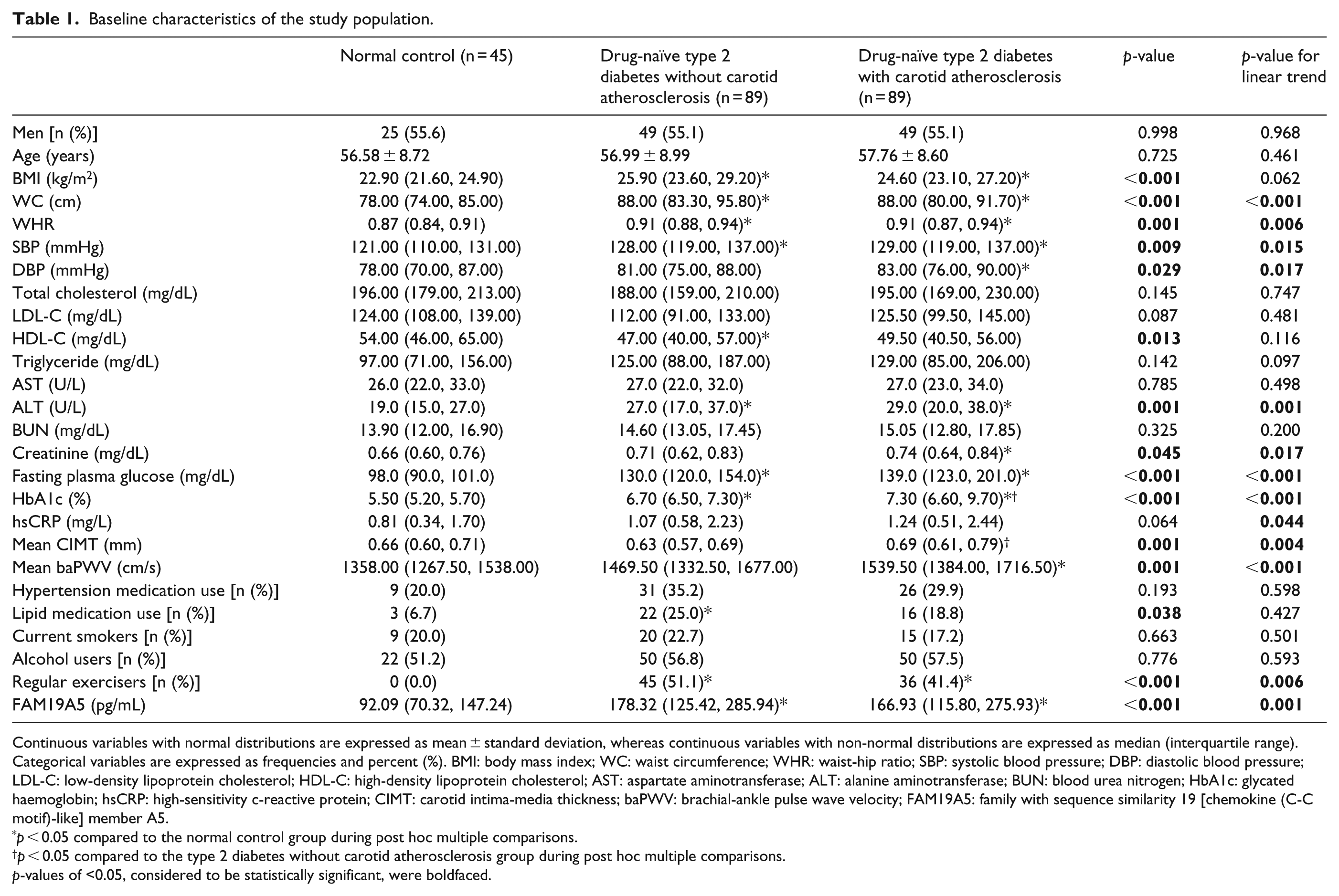
Continuous variables with normal distributions are expressed as mean ± standard deviation, whereas continuous variables with non-normal distributions are expressed as median (interquartile range). Categorical variables are expressed as frequencies and percent (%). BMI: body mass index; WC: waist circumference; WHR: waist-hip ratio; SBP: systolic blood pressure; DBP: diastolic blood pressure; LDL-C: low-density lipoprotein cholesterol; HDL-C: high-density lipoprotein cholesterol; AST: aspartate aminotransferase; ALT: alanine aminotransferase; BUN: blood urea nitrogen; HbA1c: glycated haemoglobin; hsCRP: high-sensitivity c-reactive protein; CIMT: carotid intima-media thickness; baPWV: brachial-ankle pulse wave velocity; FAM19A5: family with sequence similarity 19 [chemokine (C-C motif)-like] member A5.
p < 0.05 compared to the normal control group during post hoc multiple comparisons.
p < 0.05 compared to the type 2 diabetes without carotid atherosclerosis group during post hoc multiple comparisons.
p-values of <0.05, considered to be statistically significant, were boldfaced.
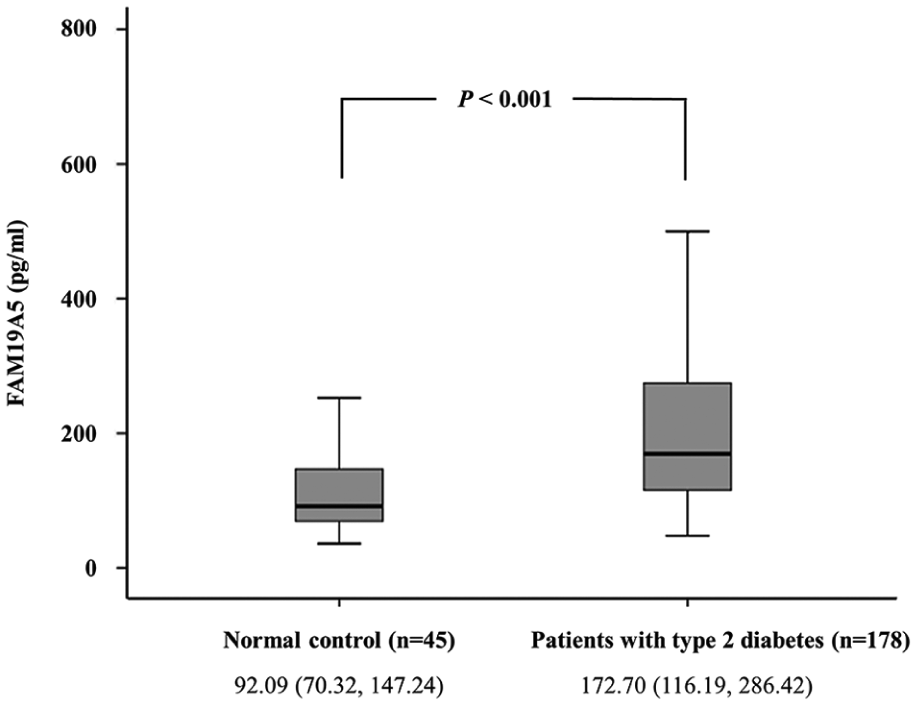
Comparison of circulating FAM19A5 concentrations according to the presence or absence of type 2 diabetes.
Correlation of circulating FAM19A5 concentration with various metabolic and vascular parameters
Correlations between circulating FAM19A5 concentrations and various metabolic and vascular parameters were calculated (Table 2 and Figure 2). Serum FAM19A5 concentrations were positively correlated with WC, WHR, ALT, FPG, HbA1c and mean baPWV values. Although hsCRP tended to be positively correlated with serum FAM19A5 concentration, this result was not statistically significant (r = 0.1270, p = 0.059).
Spearman correlation analysis of circulating FAM19A5 concentration and various parameters.
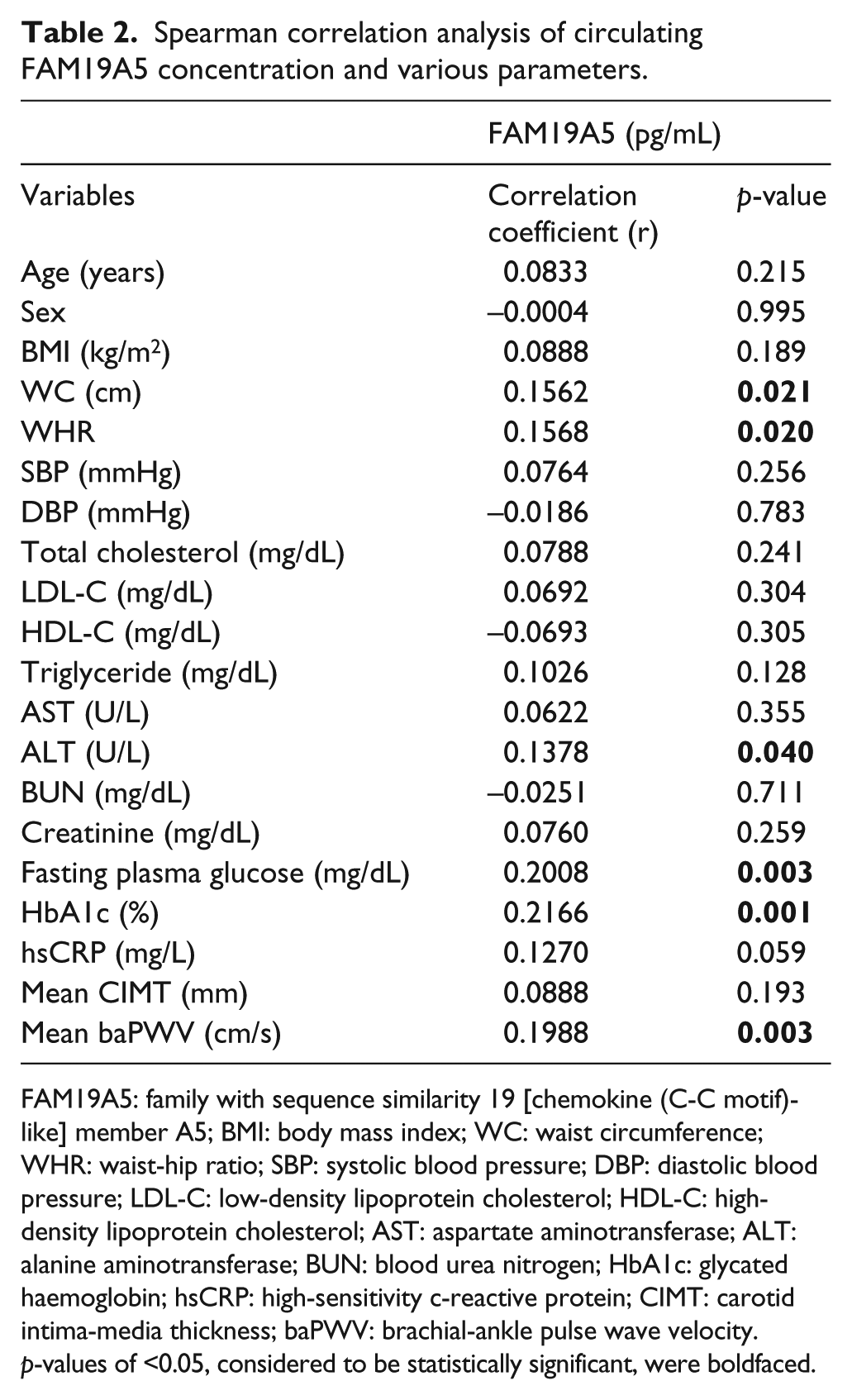
FAM19A5: family with sequence similarity 19 [chemokine (C-C motif)-like] member A5; BMI: body mass index; WC: waist circumference; WHR: waist-hip ratio; SBP: systolic blood pressure; DBP: diastolic blood pressure; LDL-C: low-density lipoprotein cholesterol; HDL-C: high-density lipoprotein cholesterol; AST: aspartate aminotransferase; ALT: alanine aminotransferase; BUN: blood urea nitrogen; HbA1c: glycated haemoglobin; hsCRP: high-sensitivity c-reactive protein; CIMT: carotid intima-media thickness; baPWV: brachial-ankle pulse wave velocity.
p-values of <0.05, considered to be statistically significant, were boldfaced.
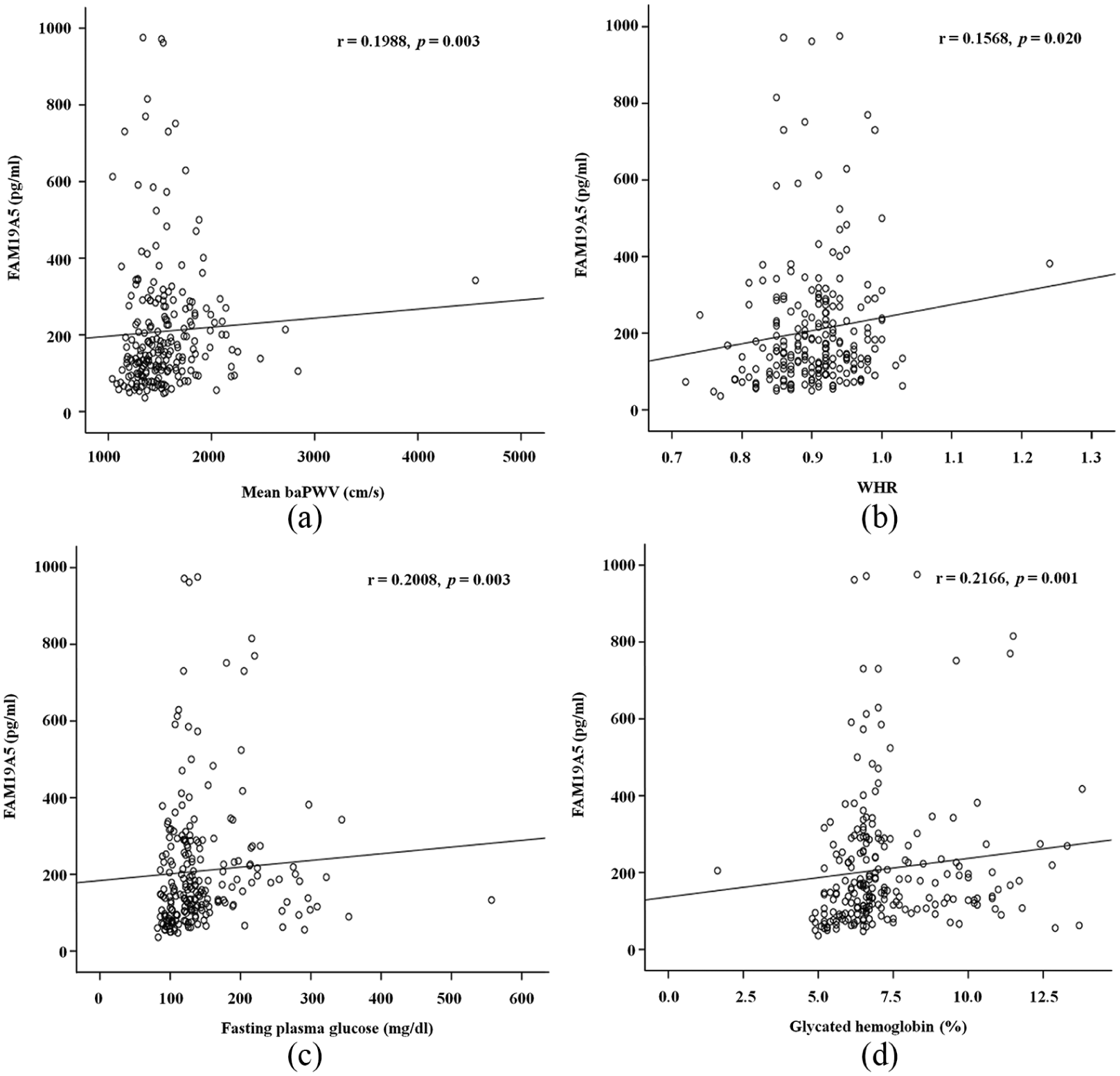
Scatter plot of FAM19A5 concentration with (a) mean brachial-ankle pulse wave velocity, (b) waist-hip ratio, (c) fasting plasma glucose and (d) glycated haemoglobin.
Metabolic characteristics according to tertiles of circulating FAM19A5 concentration
The baseline characteristics of the study population were summarized according to the tertiles of circulating FAM19A5 concentration (Table 3). As the serum FAM19A5 tertile advanced, a trend of increase was observed in WHR, FPG, HbA1c and mean baPWV values.
Metabolic characteristics according to tertiles of circulating FAM19A5 concentration.
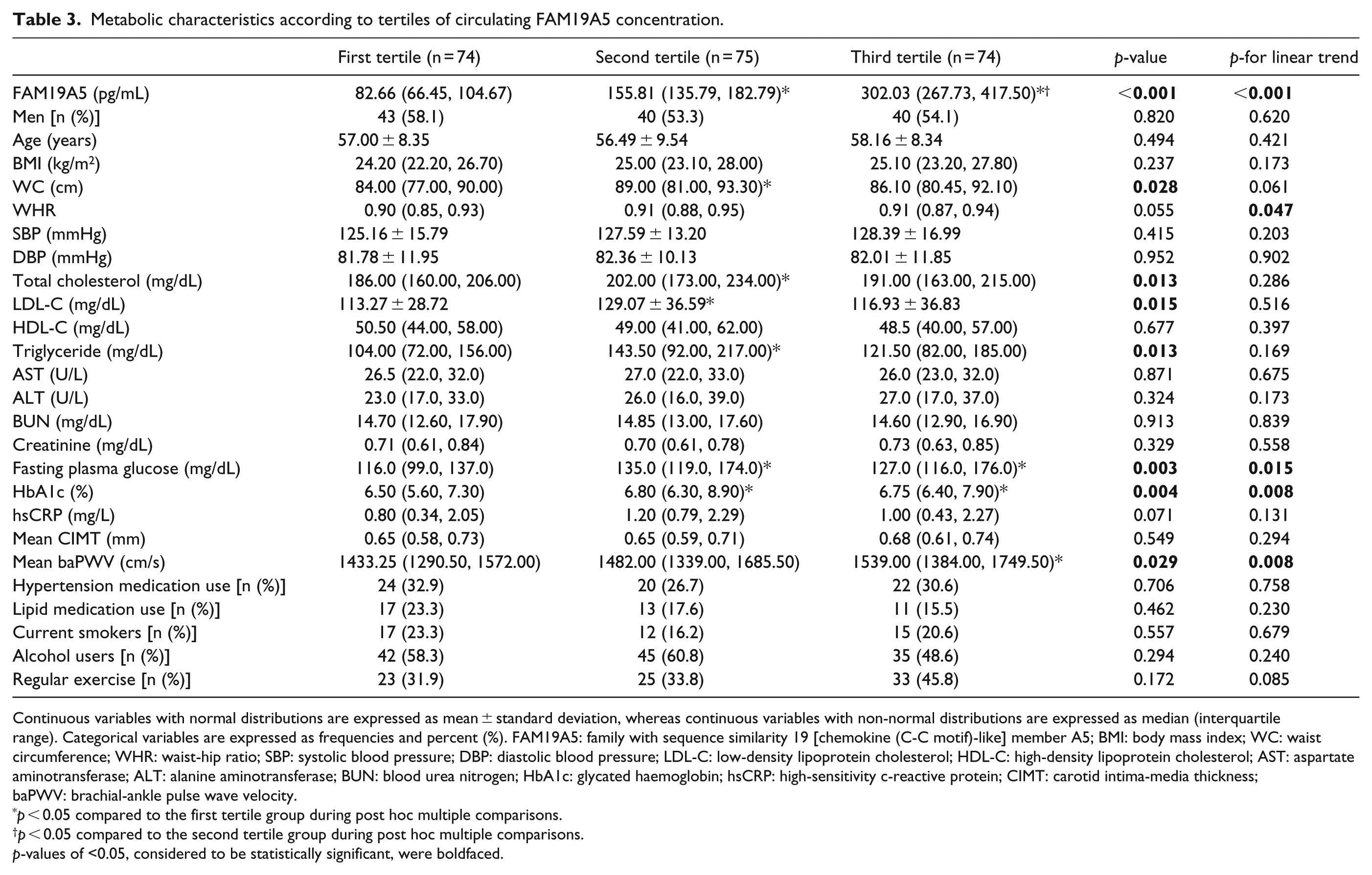
Continuous variables with normal distributions are expressed as mean ± standard deviation, whereas continuous variables with non-normal distributions are expressed as median (interquartile range). Categorical variables are expressed as frequencies and percent (%). FAM19A5: family with sequence similarity 19 [chemokine (C-C motif)-like] member A5; BMI: body mass index; WC: waist circumference; WHR: waist-hip ratio; SBP: systolic blood pressure; DBP: diastolic blood pressure; LDL-C: low-density lipoprotein cholesterol; HDL-C: high-density lipoprotein cholesterol; AST: aspartate aminotransferase; ALT: alanine aminotransferase; BUN: blood urea nitrogen; HbA1c: glycated haemoglobin; hsCRP: high-sensitivity c-reactive protein; CIMT: carotid intima-media thickness; baPWV: brachial-ankle pulse wave velocity.
p < 0.05 compared to the first tertile group during post hoc multiple comparisons.
p < 0.05 compared to the second tertile group during post hoc multiple comparisons.
p-values of <0.05, considered to be statistically significant, were boldfaced.
Factors independently associated with log-transformed circulating FAM19A5 concentration
Multiple stepwise regression analyses were conducted to identify independent predictors of log-transformed circulating FAM19A5 concentration (Table 4). Among the potential covariates of age, sex, BMI, WC, WHR, SBP, DBP, total cholesterol, LDL-C, HDL-C, triglyceride, AST, ALT, BUN, creatinine, FPG, HbA1c, hsCRP, mean CIMT and mean baPWV, log-transformed FAM19A5 concentration was independently associated with WHR, LDL-C and mean baPWV values (R2 = 0.0689).
Multiple linear regression analysis to identify factors associated with log-transformed circulating FAM19A5 concentration.
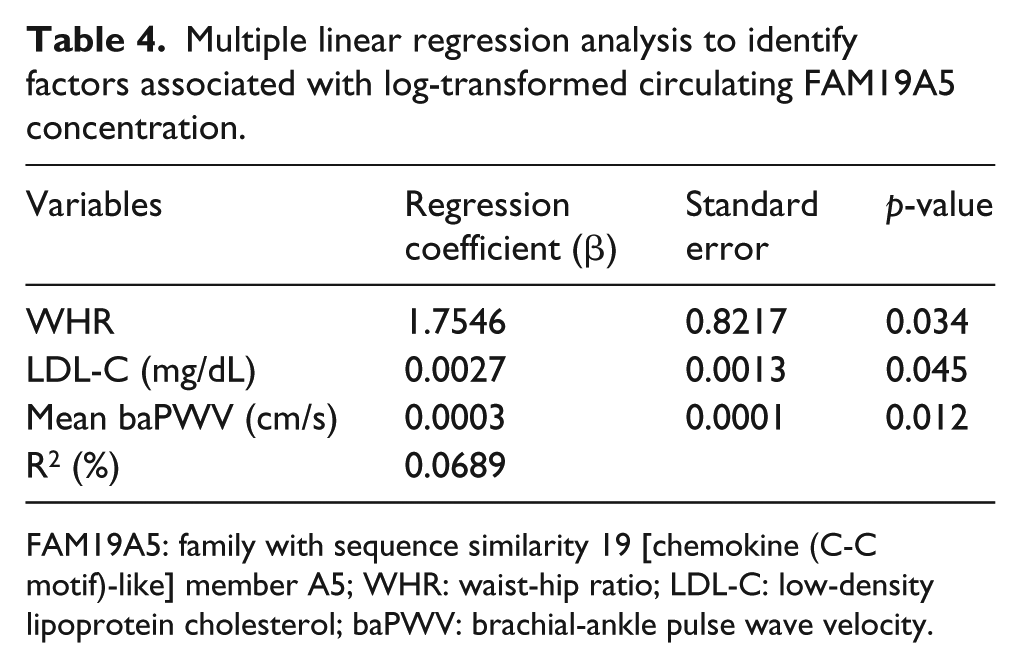
FAM19A5: family with sequence similarity 19 [chemokine (C-C motif)-like] member A5; WHR: waist-hip ratio; LDL-C: low-density lipoprotein cholesterol; baPWV: brachial-ankle pulse wave velocity.
Discussion
To the best of our knowledge, this is the first study to report differential concentrations of serum FAM19A5 according to the presence of type 2 diabetes in humans, and to assess their association with various metabolic and vascular parameters in human subjects. Although Wang et al. 5 presented the first experimental evidence that FAM19A5 acts as a novel protective adipokine, they did not address the potential implications of FAM19A5 in human subjects. Furthermore, they mainly focused on the relationship between FAM19A5 and vascular remodelling, and did not link FAM19A5 concentrations to obesity-related metabolic diseases such as type 2 diabetes. In our study, serum FAM19A5 concentrations were significantly greater in patients with type 2 diabetes compared with individuals without diabetes. Circulating FAM19A5 concentration exhibited a significantly positive correlation with anthropometric parameters indicating central obesity (WC and WHR), ALT, FPG, HbA1c and mean baPWV values. WHR, LDL-C and mean baPWV values were determining factors for log-transformed serum FAM19A5 concentration.
Tom Tang et al. 13 first discovered secretory FAM19A1-5 proteins encoded by TAFA genes (TAFA-1 to TAFA-5). Although several previous reports have shown that FAM family members are involved in several biological functions, including the regulation of leukocyte adhesion, migration, 14 vascular inflammation 15 and macrophage polarization, 16 there have been few studies of the functional roles of FAM19A5. Recently, Wang et al. 5 identified FAM19A5 as a novel secretory protein abundantly expressed in adipose tissue: using an in vitro and in vivo experimental study, adipocyte-derived FAM19A5 was shown to inhibit proliferation and migration of vascular smooth muscle cells and post-injury neointima formation in rodent arteries. Increased baPWV, which reflects arterial stiffness, has been established as a useful tool to predict occult coronary artery disease and the severity of coronary atherosclerosis in individuals with or without type 2 diabetes.17–19 A trend of increasing baPWV with increasing serum FAM19A5 tertile, and a significant positive correlation between circulating FAM19A5 concentration and baPWV in our study suggest that FAM19A5 may be involved in vascular remodelling and atherosclerosis also in humans. In the present study, circulating FAM19A5 concentration had significant positive correlations with WC and WHR, but not with BMI. Visceral (rather than general) obesity is closely associated with disordered secretion of adipokines, which results in the development of cardio-metabolic disorders. In our study, serum FAM19A5 concentration was closely related to not only anthropometric parameters indicative of central obesity, but also to glycaemic indicators, such as FPG and HbA1c, and the presence of type 2 diabetes.
Inflammation may be a possible mechanistic link between FAM19A5 and these parameters of atherosclerotic vascular remodelling and hyperglycemia. As a predicted chemokine-like protein, FAM19A5 is suspected to participate in the regulation of immune cell chemotaxis, 5 as suggested by in vitro attraction of peripheral blood mononuclear cells and CD14+ monocytes by rhFAM19A5, and reductions in leukocyte infiltration in wire-injured femoral arteries of FAM19A5-transgenic mice compared with wild-type mice in a previous report. 5 Based on our and the previous findings, FAM19 members might be involved in the regulation of peripheral immune cell activity, especially in macrophages. 20 Furthermore, although statistical significance was not met, hsCRP showed a tendency to positive correlation with circulating FAM19A5 concentration in the current study. Considering that atherosclerosis is a complex immune and inflammatory disorder and obesity-related chronic inflammation is responsible for insulin resistance,21,22 FAM19A5 might modulate these processes.
In the present study, circulating FAM19A5 concentration was positively correlated with various metabolic and vascular risk factors, including WHR, FPG, HbA1c, type 2 diabetes, ALT and baPWV in humans. These results may seem to contradict previous experimental studies reporting down-regulation of adipose-derived FAM19A5 in rodent models of obesity and obesity-associated inflammation, 5 and repression of FAM19A5 concentrations by tumour necrosis factor-alpha in human adipocytes. 7 However, increased serum FAM19A5 concentrations in type 2 diabetes patients and the positive correlation of this protective adipokine with cardio-metabolic risk factors in our study may originate from compensatory upregulation of FAM19A5 to overcome cardio-metabolic stress or resistance to FAM19A5, similar to hyperinsulinemia in insulin resistance states. In addition, circulating FAM19A5 concentration may vary according to the phases of disease processes and the presence of overt cardiovascular diseases. For example, adiponectin, which is a representative adipokine with anti-inflammatory and anti-atherosclerotic properties, 23 has been reported to exert protective actions in early atherosclerosis, but was positively correlated with serum markers of endothelial activation/injury in patients with vascular diseases.24–26 As another example, heme oxygenase-1, a redox-sensitive inducible isoform of the heme oxygenase superfamily with anti-oxidant, anti-inflammatory and anti-apoptotic effects, has been reported to be increased in early stages of diabetes, but decreased in later stages.27,28 Likewise, FAM19A5 may have variable expression in human subjects according to the stage of cardio-metabolic disease. Since patients with type 2 diabetes in the current study were limited to newly diagnosed and/or drug-naïve type 2 diabetes patients, those with advanced stages of diabetes were not included. Also, the control group in this study was restricted to those with normal glucose tolerance and no cardiovascular disease or carotid atherosclerosis. Therefore, additional studies including patients with advanced stages of diabetes or overt cardiovascular diseases will be needed to support this speculation.
Several limitations of this study should be acknowledged. First, because of the cross-sectional design of this study, clarification of causality was inherently limited. Second, control subjects with normal glucose tolerance and no carotid atherosclerosis were self-selected through voluntary health check-ups at a single centre, and they may not represent the general Korean population. Finally, because the subjects of this study were limited to Korean men and women, the results of this study should be cautiously extrapolated to populations with different ethnicities.
In summary, the current study revealed for the first time that a novel adipokine FAM19A5 is closely associated with various metabolic and vascular risk factors in human subjects. FAM19A5 may serve as a modulatory factor and a novel biomarker of obesity-related cardio-metabolic disease in humans. Additional studies should be conducted to confirm these findings and further clarify the underlying pathophysiological mechanisms.
Footnotes
Declaration of conflicting interests
The author(s) declared no potential conflicts of interest with respect to the research, authorship, and/or publication of this article.
Funding
The author(s) disclosed receipt of the following financial support for the research, authorship, and/or publication of this article: This work was supported by the Basic Science Research Program through the National Research Foundation of Korea (NRF) funded by the Ministry of Education to H.J.Y. (2018R1D1A1B07047587). The funding sources had no role in the design, collection, analysis and interpretation of data; writing of the report; and decision to submit the article for publication.
