




Abstract
This scoping review explores the scholarship of democratic innovations in relation to social sustainability to map the existing literature and identify key trends, gaps, and methodological approaches. Extant research shows that democratic innovations enhance social sustainability by fostering inclusive governance, mitigating systemic inequalities, and ensuring diverse citizen participation in policymaking. However, this literature remains fragmented across disciplines and contexts. This review examines how these innovations have been studied in relation to social sustainability, highlighting the growing interest in participatory and deliberative mechanisms. The findings reveal a strong empirical focus, particularly on qualitative case studies, with research concentrated in Europe and North America, while regions in the Global South remain underrepresented. We find significant gaps in the literature, including the need for greater methodological diversity, comparative studies, and a broader geographic focus. This article offers an overview of the field and identifies priorities for future research and policy.
Introduction
Social sustainability is a multifaceted concept that seeks to ensure the well-being and equity of individuals within society (Nilsson et al., 2024), focusing not just on economic and environmental factors but also on fostering social cohesion, inclusion, and justice (Purvis et al., 2019). It involves addressing disparities in access to resources and opportunities, while aiming to strengthen the social fabric for present and future generations. Achieving these goals, however, requires governance frameworks that are not only inclusive but also responsive to the needs and aspirations of affected communities (Willis et al., 2022). This is where democratic innovations (DIs) can play an important role. DIs refer to institutions and/or processes designed to deepen citizen engagement in the political processes (Elstub and Escobar, 2019; Smith, 2009). These innovations represent attempts to enhance the quality of democracy by creating more inclusive and participatory decision-making frameworks (Elstub and Escobar, 2019). The link between DIs and social sustainability becomes apparent when considering that, without meaningful involvement of those affected by the decisions, efforts to address social inequities may lack legitimacy and fail to achieve lasting impact (Dryzek, 2009). As such, DIs can be seen as a potential means to bridge gaps in representation (Warren, 2009) and ensure that the voices of diverse and often marginalized groups are integral to the processes that shape social policies (Schmidt, 2024).
Given the complexity and evolving nature of both fields, we contend that a scoping review is necessary for understanding how DIs have been studied in relation to social sustainability. While substantial literature exists, it remains fragmented, with varying definitions, typologies, and approaches across contexts. This review addresses the question: How have DIs been studied in relation to social sustainability? By exploring the research landscape, it aims to identify the breadth of scholarship and highlight significant gaps, offering a comprehensive overview to advance understanding in this field (Christou et al., 2024; Page et al., 2021). Given the interdisciplinary scope of this literature, a scoping review can help to synthesize findings across academic traditions, thus providing a detailed picture on how the literature has approached the links between DIs and social sustainability, across definitions, typologies, and contexts. It also aims to inform future studies by identifying underresearched areas and methodological blindspots, ensuring that both the theory and practice of DIs can evolve to support more sustainable and equitable social outcomes.
While our primary contribution is a descriptive cartography of the field, we note an emerging “critical turn” that argues DI research should complement concerns with legitimacy by centering capacity for change (Escobar and Bua, 2025), that is, what DIs enable communities and institutions to do, not only how they justify doing it. We align with this direction of travel and flag it as an agenda for subsequent syntheses.
The article is structured in the following manner. First, we will review the literature on DIs in relation to social sustainability with the purpose of characterizing in detail the main concepts of our analysis. Second, we will describe the methodology adopted to carry out our research. Third, we will report and discuss the empirical findings of the scoping review. Fourth and finally, we will provide some concluding remarks and reflect on the wider implications of our findings.
DIs in Relation to Social Sustainability
DIs have emerged in recent decades as institutional and procedural mechanisms to increase, enhance, and diversify citizen participation in governance and decision-making (Elstub and Escobar, 2019; Smith, 2009). Broadly defined, they encompass institutions or processes that employ deliberative and participatory methods (Warren, 2009) to expand citizen engagement (Elstub and Escobar, 2019) and improve democratic quality (Newton, 2012) by addressing specific contextual deficits (Warren, 2017), including the pursuit of sustainability goals. While the precise categorization of DIs remains contested (Elstub and Escobar, 2019), four key types stand out: participatory budgeting, deliberative mini-publics, participatory governance, collaborative governance, and one subtype, digital participation. Each of these forms represents a distinct approach to enhancing citizen involvement in policymaking and governance.
Participatory budgeting is one of the most widely implemented DIs (Ganuza and Baiocchi, 2019). This innovation allows citizens to directly influence budgetary decisions, typically at the municipal level. While its early iterations were explicitly redistributive and aimed at realizing social justice (De Sousa Santos, 1998), participatory budgeting has increasingly been integrated into public administration as a tool for fiscal transparency and civic engagement (Ganuza and Baiocchi, 2019). In turn, deliberative mini-publics are forums where a representative sample of randomly selected citizens engages in informed discussions on specific policy issues (Fishkin, 2018). These forums have been increasingly used to address complex policy dilemmas, including climate change and constitutional reforms (e.g. Farrell et al., 2018). Participatory governance and collaborative governance refer to sustained forms of citizen engagement in policymaking (Ansell and Gash, 2008; Heinelt, 2018). These approaches integrate public participation through advisory councils, co-governance structures, and multistakeholder decision-making bodies. While the former focuses more on citizen-centered engagement (Heinelt, 2018), the latter incorporates a broader range of institutional actors, including public institutions, private stakeholders, and civil society organizations (Ansell and Gash, 2008). Finally, digital participation is not considered a distinct type of DIs but rather a cross-cutting subtype that permeates various forms of participatory procedures (Gilman and Peixoto, 2019). These tools have expanded access to participatory processes, facilitating e-petitions, crowdsourced policymaking, and online deliberative platforms.
In turn, social sustainability refers to the capacity of a society to provide equitable opportunities, resources, and well-being for its members, both present and future, while fostering social cohesion and inclusivity (Nilsson et al., 2024). Nonetheless, scholars argue that mainstream interpretations often reduce social sustainability to a supporting role for economic and environmental agendas, sidelining systemic questions of redistribution and empowerment (e.g. Miraftab, 2009). Furthermore, critics highlight that international frameworks, while promoting inclusive ideals, often prioritize market-based solutions that reproduce existing inequalities rather than fundamentally restructuring systems of power and wealth (Miraftab, 2009; Sachs, 2015). Thus, social sustainability cannot be effectively achieved without considering the economic dimension, which provides the resources and infrastructure necessary for social welfare. Economic growth, when guided by sustainable principles, can generate wealth and employment opportunities that can address poverty, improve living standards, and reduce disparities (Sachs, 2015; Sen, 2013). Yet, economic systems reliant on extractive practices and unsustainable resource consumption undermine both the social and environmental pillars (Nilsson et al., 2024). These environmental dimensions, while often conceptualized as separate, form the biophysical foundation for human and economic activity. Healthy ecosystems provide essential natural resources such as clean water, fertile soil, and air quality that underpins both social and economic resilience (Barbier, 2010). As such, degraded environments amplify social inequalities by disproportionately affecting marginalized communities and eroding the economic opportunities available to them (Bruch et al., 2016).
In the relationship between DIs and social sustainability, there is the potential for achieving sustainable progress, as it shapes how societies engage citizens and tackle systemic inequalities (Willis et al., 2022). As contemporary democracies face significant challenges such as political disengagement, social fragmentation, and marginalization of certain disempowered groups (Hendriks et al., 2020), the need for inclusive and participatory governance mechanisms becomes more relevant (Heinelt, 2018). DIs provide the potential to reinvigorate democracy by creating spaces for diverse citizen voices, especially those from historically underrepresented or disadvantaged communities, to be heard in policymaking processes (Steel et al., 2020). We argue that without such innovations, the achievement of social sustainability may face significant challenges, as top-down policymaking can struggle to fully capture the diversity of lived realities and concerns of all segments of society, which can potentially limit the effectiveness of efforts to promote social cohesion and justice.
This argument resonates with the critical observations which highlighted the role of participatory mechanisms in fostering democratic inclusion, while cautioning against their co-optation as mere legitimizing tools for top-down decision-making (Smith, 2024). Critical perspectives caution that the design and implementation of participatory mechanisms must actively resist elite capture and tokenism to genuinely enhance equity and representation (Smith, 2009). Furthermore, as social sustainability entails long-term commitments and equity, it demands not only structural change but also a conceptual shift in how governance is conceived. One that embraces inclusivity, transparency, and deliberation, which DIs claim to promote (Roberts et al., 2022; Steel et al., 2020). In general terms, one can argue that the integration of DIs into democratic systems is not merely a technical solution but a political imperative to ensure that social sustainability is not an abstraction, but a change maker in policymaking (Heinelt, 2018).
Method
To systematically map the literature on DIs in relation to social sustainability, we adopt a scoping review methodology. Unlike other forms of systematic reviews, which synthesize evidence to answer narrow research questions, scoping reviews are broader in scope and particularly suited to complex, interdisciplinary fields that remain underexplored (Christou et al., 2024; Page et al., 2021). This approach enables us to identify key concepts, theoretical trends, and methodological patterns, offering a comprehensive overview of how DIs and social sustainability have been studied. It is especially valuable for capturing the diversity of perspectives and revealing critical gaps, thereby defining the contours of the existing research landscape. In doing so, it sets the stage for more focused inquiry and supports the development of targeted future studies that can refine theoretical frameworks and enhance empirical understanding.
This review follows a three-phase protocol 1 : identification and collection, selection, and analysis, adapted from the PRISMA guidelines to ensure transparency, replicability, and methodological rigor (Page et al., 2021). The first phase of the scoping review focused on the identification and collection of relevant literature. We developed a comprehensive strategy to capture the full range of studies within these fields. Keywords were carefully selected to reflect the key areas of interest. 2 The search was conducted using the Social Sciences Citation Index (SSCI), a database that ensures the inclusion of high-quality, peer-reviewed articles. The search returned 1441 bibliographical references published until the year 2022. Books, book chapters, and conference proceedings were excluded to focus exclusively on peer-reviewed journal articles.
The second phase of the protocol involved a rigorous selection process. Studies were included if they contained at least one term related to DIs and one term related to social sustainability in the title, abstract, or keywords. This criterion ensured that only the most relevant literature was considered for analysis. After applying the eligibility criteria, 1024 documents were excluded from the original pool due to their failure to meet the necessary terms. The full text of 417 remaining references was then evaluated to ensure their alignment with the conceptual understanding of DIs as citizen-focused participatory processes, leading to the exclusion of 144 documents that focused more on public–private collaborations than on citizen participation. This left a pool of 273 references for inclusion in the main analysis. In addition, an expert-driven 3 selection process added 19 references, making the number of references for the scoping review 292.
Given the growing significance of deliberative mechanisms in shaping sustainability policies (Smith, 2024), an additional protocol was developed to specifically focus on deliberative innovations. This protocol was prompted by the limited number of studies on deliberative mini-publics identified in the initial search. 4 To capture this literature, the search strategy was expanded to include terms related to various types of deliberative mini-publics, 5 such as citizens’ juries, citizens’ assemblies, and deliberative polls. The collection of literature related to deliberative DIs returned 550 documents, published until 2022. After applying the same selection criteria, 495 documents were excluded, leaving 55 references on deliberative mini-publics and social sustainability. These studies were then included in the final analysis, expanding the scope of the review to cover deliberative mechanisms in the context of social sustainability. The final analysis included a total of 347 peer-reviewed references, 6 carefully selected based on the established criteria and inclusion protocols. Figure 1 provides a summary of the collection and selection process.
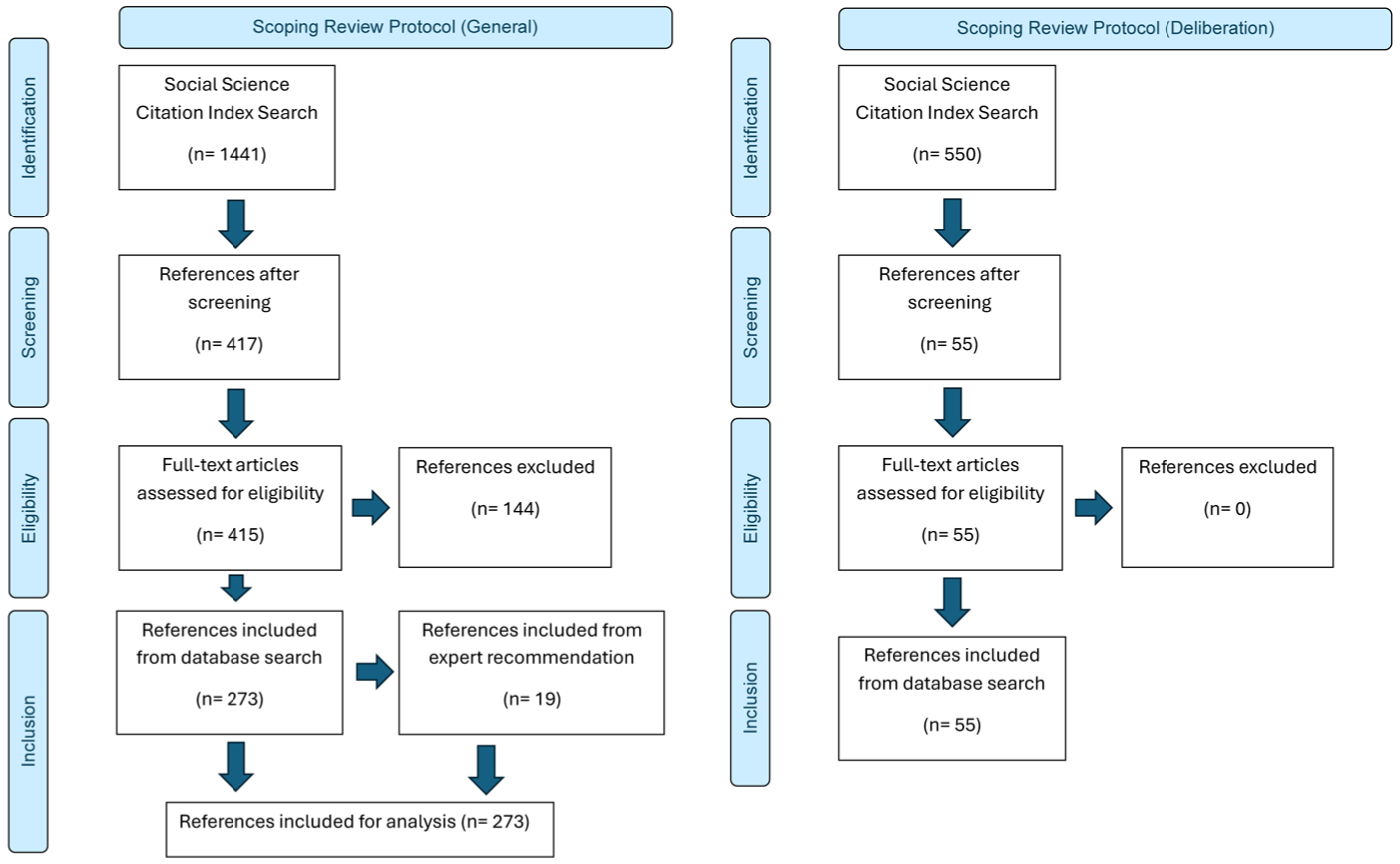
Article Identification, Collection, and Selection Flow Diagram.
To conduct the analysis, each of the bibliographical references was organized into three distinct categories, each with other subdimensions. The first relates to the overview of the field, which was achieved by examining the timeline of publications, their geographical distribution as well as the scientific outlets through which this scholarship has been disseminated. The second explores the thematic scope of the literature, by cataloging the different DI types covered by the research, their geographical dispersion and the literature’s thematic focus through an analysis of the reference keywords’ frequency and relationship with each other. Finally, the third dimension of analysis assesses the methodological approaches employed in the study of DIs and social sustainability.
Given the broadscope approach taken by the research team, the analysis of each of the bibliographical references was designed for evidence-mapping, not effect estimation. Therefore, we did not extract micro-level design features (e.g. participant selection, mode of participation and decision-making, or the influence that participants have over the process (Elstub and Escobar, 2019)) because such details are inconsistently reported and not standardized across studies. Consequently, our inferences are descriptive: we summarize how DIs and social sustainability are studied and where gaps persist. Readers should not interpret this synthesis as evaluating the effectiveness of particular DI features for the achievement of social sustainability goals. We therefore frame our findings as clarifying the research landscape and specifying gaps for future studies to pursue. In addition, since the protocol used English-language keywords and was restricted to the SSCI, coverage is likely biased. While non-English studies with English metadata could enter the protocol (López Mera and Quintero Rendón, 2020), we did not systematically query regional or multilingual databases, and we did not screen non-English full texts. Accordingly, research set in, or about, Global South countries are likely to be underrepresented. Future reviews should adopt multilingual search strings and include regional citation indexes to better characterize research conducted in Latin America, Africa, and Asia.
Results and Discussion
Overview of the Field
We start the analysis with a broad characterization of the field of DIs in relation to social sustainability. Figure 2 illustrates a clear and growing interest in the field. Beginning with De Sousa Santos’ (1998) landmark study on participatory budgeting in Porto Alegre and its socioeconomic outcomes, the literature has experienced significant expansion over the past two decades. Overall, this trajectory reflects the increasing prominence and interdisciplinary appeal of the topic, as researchers continue to explore its theoretical and practical implications.
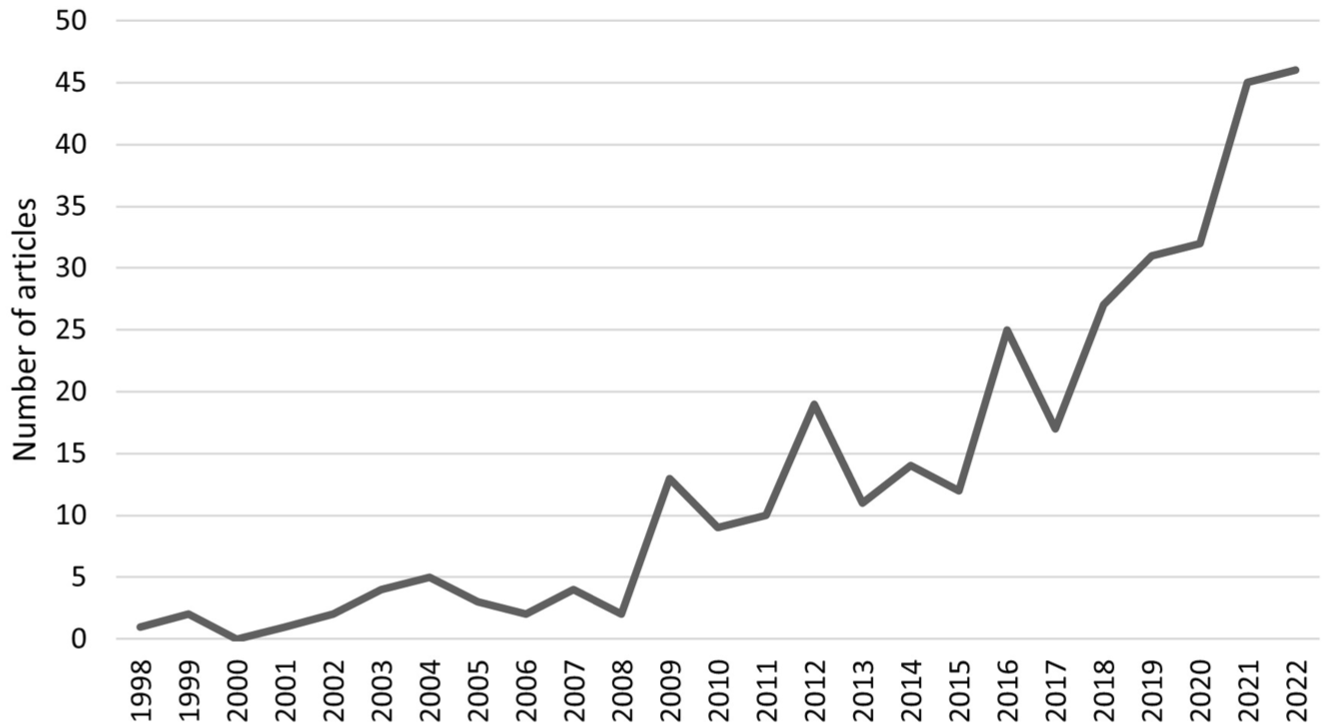
Peer-Reviewed Articles on DIs in Relation to Social Sustainability.
As depicted in Figure 3, research on DIs and social sustainability is heavily concentrated in a handful of countries, with the United States, Brazil, the United Kingdom, and Canada leading the field. Europe features prominently, particularly Western and Northern countries such as the Netherlands, Germany, Spain, Sweden, and Italy, while Brazil emerges as a notable outlier in the Global South. Asian and African countries are markedly underrepresented, with China, South Korea, India, and South Africa among the few to receive sustained scholarly attention. Although Latin American countries like Argentina, Peru, and Mexico are also represented, overall coverage outside North America and Europe remains limited. This uneven distribution reflects a persistent bias in the research toward Western and higher-income contexts, raising the question of whether these patterns stem from the actual prevalence of DIs or from structural inequalities in research funding and academic visibility.
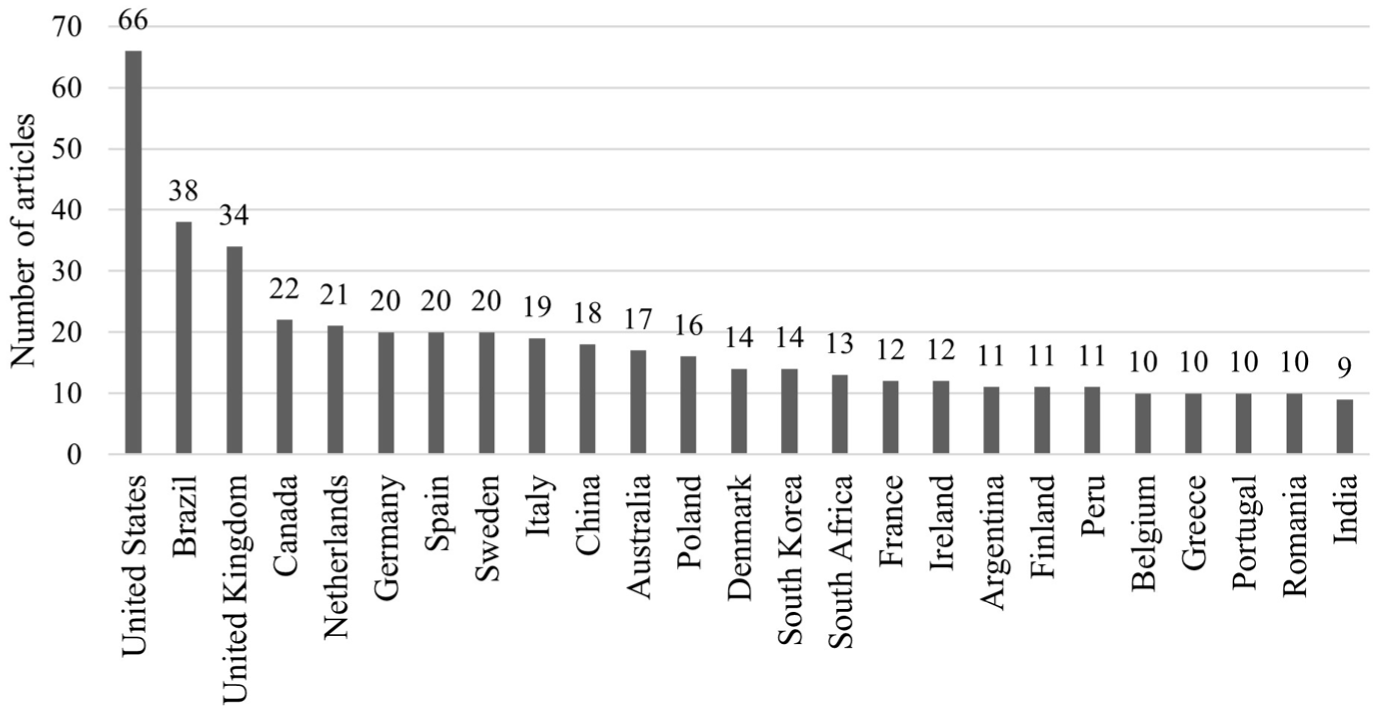
Geographic Focus of Research on DIs in Relation to Social Sustainability.
The United States, for instance, benefits from a well-established network of research institutions, funding bodies, and journal outlets that prioritize and amplify research originating from the Global North. Similarly, the prominence of European countries, most notably the Netherlands, Germany, and Sweden, coincides with a historical trajectory of well-supported participatory and deliberative democracy experiments and state-supported participatory governance initiatives (Falanga et al., 2024). In contrast, Africa, Asia, and Latin America (beyond Brazil) are significantly underrepresented, despite the fact that participatory and deliberative mechanisms have been actively pursued in many contexts across these regions (e.g. Pogrebinschi, 2023).
This disparity can be linked to the broader problem of epistemic injustice within participatory and deliberative democracy research (Mendonça and Asenbaum, 2025). The field remains dominated by Euro-American epistemic frameworks, with the Global South often treated as a site of case studies rather than a generator of theoretical insights. Practices deeply rooted in indigenous governance structures, local deliberative cultures, and community-led decision-making are often overlooked or misrepresented within the dominant academic discourse (Mendonça and Asenbaum, 2025). It must be noted that researchers have recently advocated for a decolonization of DI research (Asenbaum et al., 2024), which entails not only expanding the geographical scope of research but also rethinking the epistemological foundations of the field to include diverse, locally embedded participatory traditions (e.g. Chattopadhyay, 2015; Eufemia et al., 2021; Li et al., 2020; Thompson et al., 2017). This project calls for a shift in research funding priorities to support scholars from underrepresented regions and a more inclusive, polycentric approach to democratic theory (Mendonça et al., 2024). We agree that only by addressing these epistemic inequalities can the study of DIs truly reflect the multiplicity of democratic experiments occurring across the world (Mendonça and Asenbaum, 2025). Looking ahead, and without altering our scoping design, we see value in approaching subsequent reviews with an epistemic-justice sensibility that takes Global South knowledge production seriously; particularly Latin American experiences where innovations arise under resource constraints yet draw on dense traditions of grassroots organizing and aspirations congruent with social sustainability (although the term more frequently used in this contexts is of social justice).
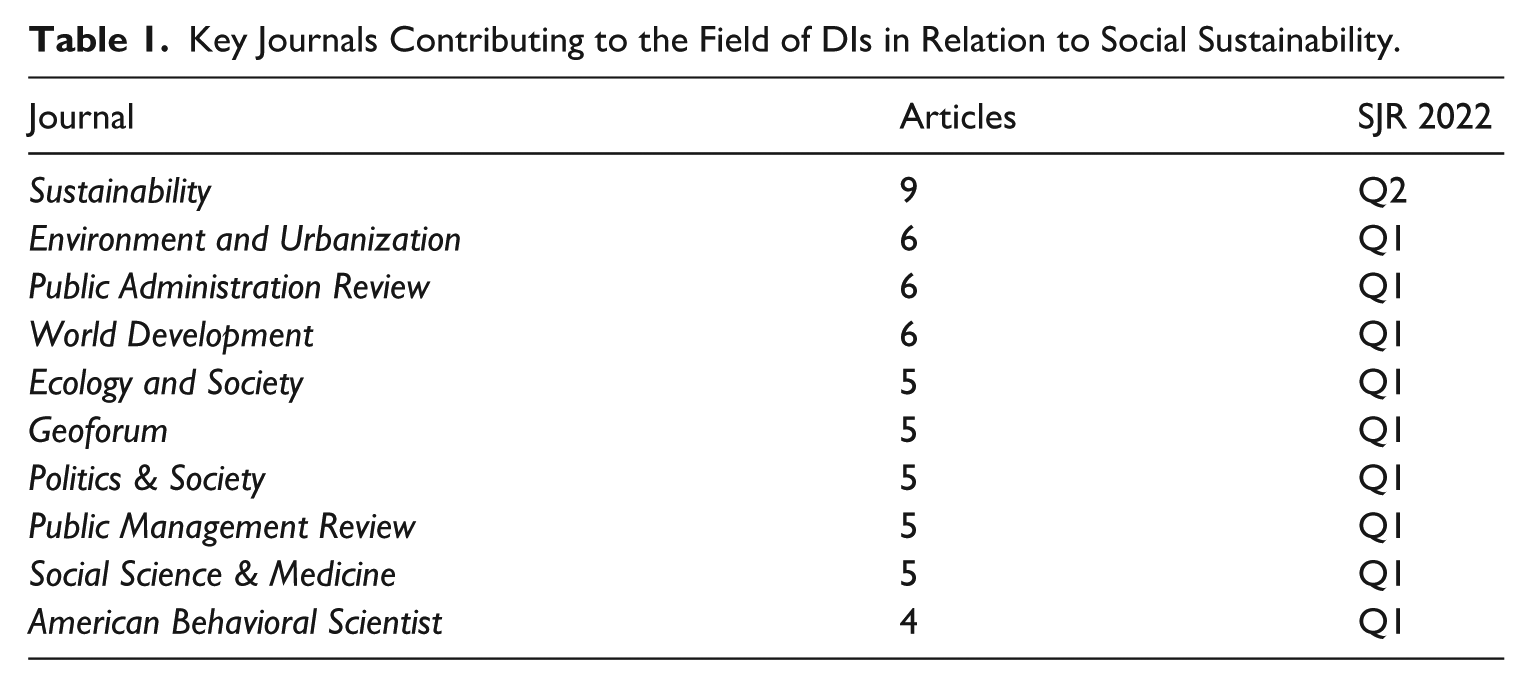
Furthermore, these regional biases are also present in terms of peer-reviewed outlets in which this research finds its audience. A total of 215 journals are present with most of them based in the United Kingdom (58.3%, 126), the United States (19.4%, 42) and to a lesser extent the Netherlands (7.9%, 17), which again evidences the Global North slant of the field. Moreover, most of this research has been published in either Q1 (62.2%, 138) or Q2 (13.1%, 29) journals. Of the journals reviewed, 48.4% (104) adopt a multidisciplinary approach, with prominent subject areas including social sciences, environmental science, medicine, business, management and accounting, arts and humanities, agricultural and biological sciences, and earth and planetary sciences.
Table 1 highlights the leading outlets. Sustainability (Q2) tops the list. Environment and Urbanization, Public Administration Review, and World Development (all Q1) publish six articles each. Ecology and Society, Geoforum, Politics & Society, Public Management Review, and Social Science & Medicine contribute five apiece, and American Behavioral Scientist adds four (Q1). Overall, the literature is concentrated in high-impact, cross-disciplinary journals, focusing on environmental science, political science, and social science perspectives, highlighting the field’s reliance on diverse disciplinary perspectives to address complex governance challenges.
Key Journals Contributing to the Field of DIs in Relation to Social Sustainability.
The literature published in these international peer-reviewed journals is strongly empirical in focus as depicted in Figure 4. Empirical studies account for the vast majority of publications, with 297 articles representing 85.6% of the total. This dominance underlines the field’s reliance on data-driven investigations to explore the practical applications and impacts of DIs. In contrast, theoretical contributions comprise 37 articles (10.7%), reflecting a smaller but significant effort to develop conceptual frameworks and advance the theoretical foundations of the field. Literature reviews, though the least represented category, account for 13 articles (3.7%), five of which are systematic literature reviews. This highlights a limited focus on synthesizing existing knowledge to map trends or identify gaps. In general terms, this data demonstrates the field’s emphasis on empirical inquiry while suggesting opportunities for more integrative and theoretical work to complement the data-driven studies and enrich the broader discourse on DIs and social sustainability.
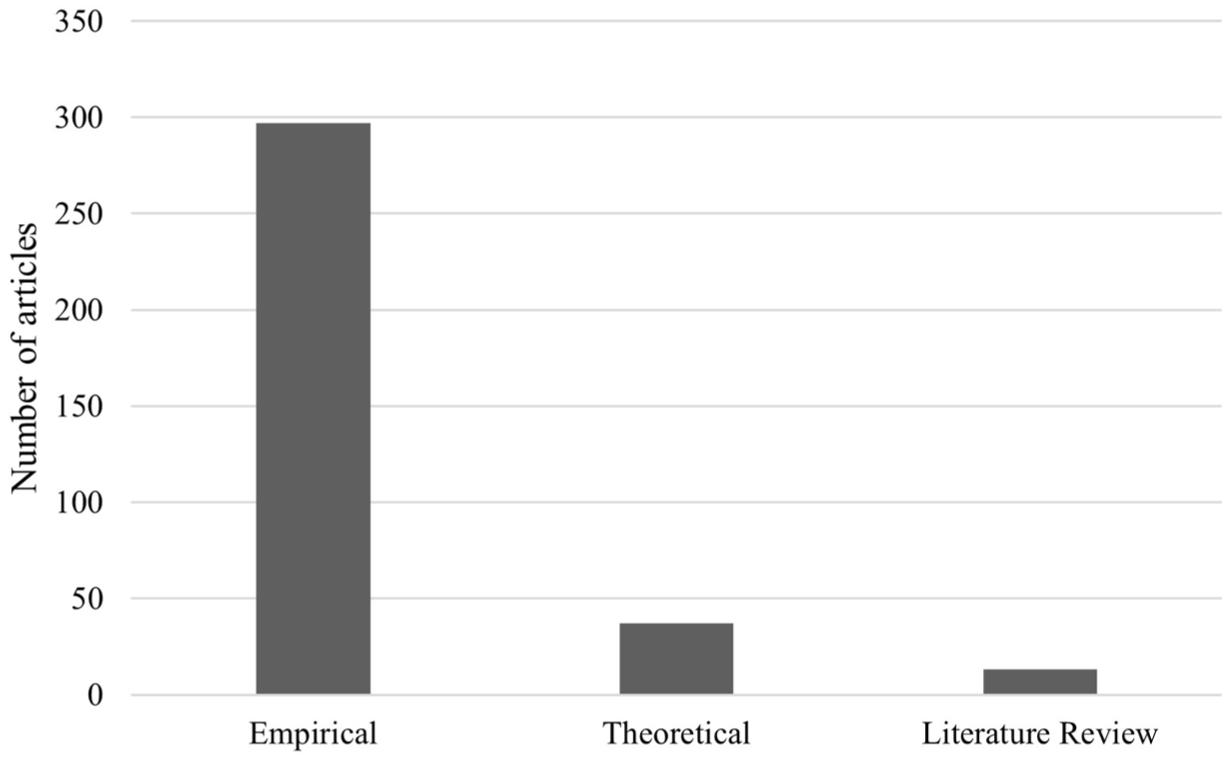
Type of Publications on DIs in Relation to Social Sustainability.
Scope
As discussed in a previous section, while contested, DIs can be classified into deliberative mini-publics, participatory budgeting, collaborative and participatory governance, and digital participation. To help us identify key trends in the scope of this literature, each reference was categorized according to the specific type of DI studied.
Figure 5 illustrates the evolution of the five DI types from 1998 to 2022. Prior to 2009, little research explored DIs in relation to social sustainability, but academic production surged following Smith’s (2009) seminal contribution. Research on participatory (31.7%, 110) and collaborative governance (28.5%, 99) took a leading role, followed by the research on deliberative mini-publics (22.5%, 78), participatory budgeting (20.2%, 70), and digital participation (4%, 14). It must be noted that these were not mutually exclusive categories in the coding process, but the overwhelming majority of studies focus on a single type (93.1%, 323) with a marginal portion focusing on two (6.9%, 24).
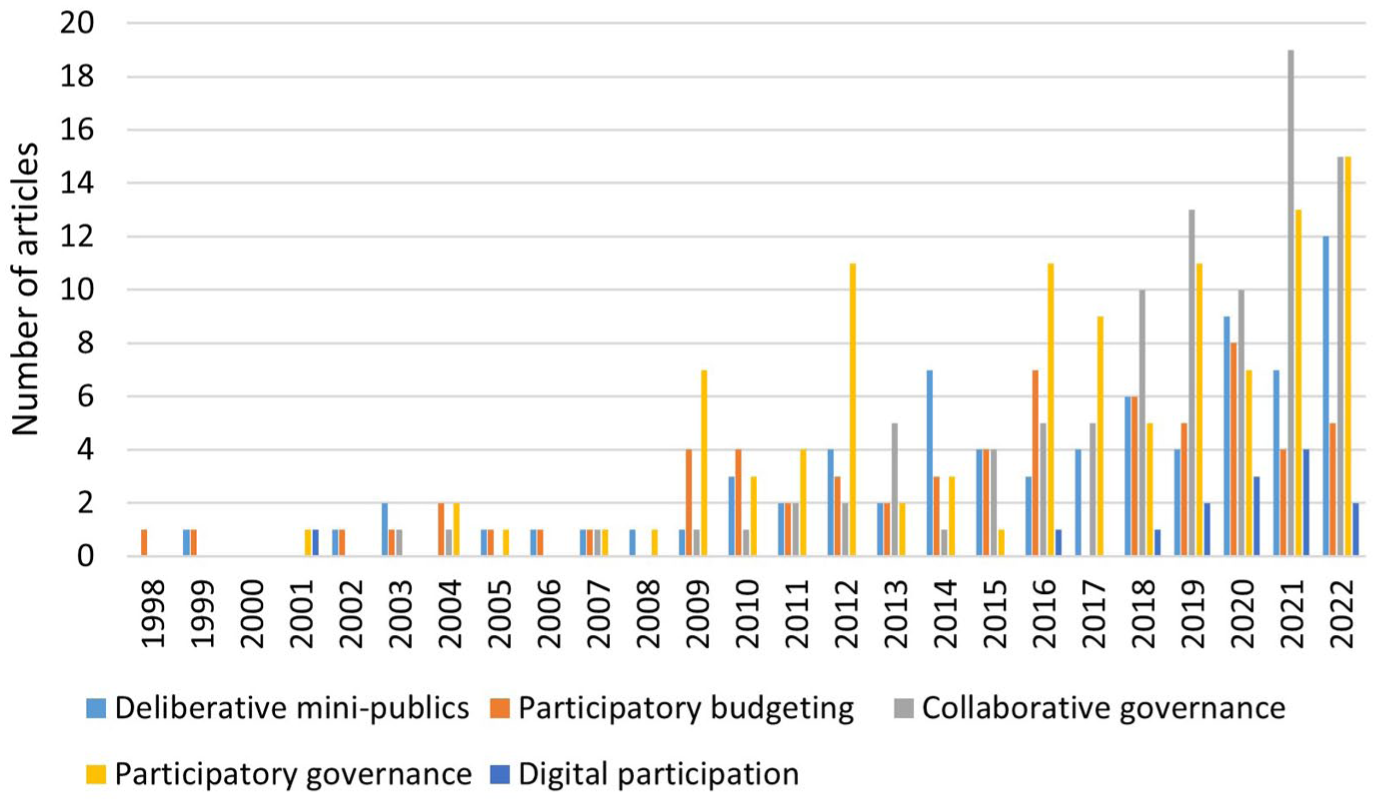
Evolution of Research on DIs and Social Sustainability.
As our data showcases, academic interest in deliberative initiatives grew significantly during the 2000s, supported by their widespread adoption in countries such as Australia (e.g. Molster et al., 2013), Canada (Einsiedel and Ross, 2002), and the United Kingdom (Luskin et al., 2014). Interest surged after 2004, coinciding with the British Columbia Citizens’ Assemblies, reaching a peak of 12 articles in 2022. From 2017 onward, research on these innovations stabilized, driven by global recognition from organizations like the OECD and the role of online platforms (Gilman and Peixoto, 2019). Participatory budgeting, one of the earliest DIs (see De Sousa Santos, 1998), gained prominence following its implementation in Porto Alegre in 1989. Despite being widely adopted globally, scholarly attention to participatory budgeting has been comparatively modest, with annual publications rarely exceeding eight articles. This relative underrepresentation 7 might highlight a disparity between its practical implementation and academic interest (Ganuza and Baiocchi, 2019). Participatory governance gained traction in the 1990s and saw a notable peak in 2012 with 11 articles, reflecting its endorsement by local governments and international organizations like the United Nations (e.g. Kübler et al., 2020). Interest has remained strong, with consistent publications between 2016 and 2022, peaking again at 15 articles in 2022. This sustained attention underscores ongoing debates on the diverse approaches to democratic reform. In turn, collaborative governance has consistently attracted scholarly attention since the late 1990s and early 2000s, reflecting its broad applicability across policy domains and disciplines. Research output increased significantly in the 2010s, with 19 articles published in 2021 and 15 in 2022. This growth is in tandem with the integration of technological advancements in governance, showcasing the adaptability of this DI to evolving governance challenges (e.g. Lee et al., 2019). Finally, digital participation, though relatively recent, has seen gradual growth, particularly after 2016. Research peaked in 2021 with four articles, reflecting the increasing relevance of online tools and platforms in democratic processes.
Overall, the steady growth of research across these DIs highlights their evolving role in addressing the complex demands of democratic governance and social sustainability, with nuanced differences in the patterns of academic focus across the DI types. Still, this literature is seemingly skewed toward some institutional forms of DI vis-a-vis others. The underrepresentation of research on digital DIs is a case in point. The pace of these technologies is often hard to keep up with, and thus, it is understandable that the research is lagging behind. Moreover, unlike other institutionalized forms of engagement, digital participation mechanisms often emerge in decentralized, transnational spaces that defy conventional research methodologies (Peixoto and Fox, 2016). The implications of digital participation for democratic governance are profound, shaping new forms of political agency, engagement, and contestation (Gilman and Peixoto, 2019). Therefore, to overlook digital DIs is to miss a crucial, and potentially disruptive, transformation in democratic governance.
Digital participation has facilitated unprecedented levels of political engagement, enabling affected communities to bypass traditional gatekeepers and articulate their demands on global platforms. However, a core concern is whether digital DIs genuinely enhance agency or merely reconfigure existing power asymmetries. Research suggests that digital participation mechanisms often reflect and exacerbate socioeconomic biases, privileging the voices of those with higher digital literacy and access to technology (Mikhaylovskaya, 2024). Moreover, there is an inherent tension between the promise of mass participation and the epistemic quality of deliberation. Studies on digital deliberative processes reveal that online discussions often lack the depth, reflexivity, and consensus-building characteristic of face-to-face deliberation (Spada and Allegretti, 2020).
The last dimension in the survey of this literature’s scope is its aim to provide a bird’s-eye view of the thematic focus by analyzing not only keyword frequency but also their associations. The word cloud depicted in Figure 6 provides insights into this thematic landscape. The most frequently occurring keywords highlight the centrality of collaborative governance (49 mentions) and participatory governance (44). Other widely used terms such as participation (34), participatory budgeting (31), and citizen participation (15) reaffirm the central role of public involvement in decision-making processes. Alongside these, key theoretical concepts, including deliberative democracy (14), equity (9), and social capital (9), illustrate the field’s concern with legitimacy, fairness, and collective agency in governance structures.
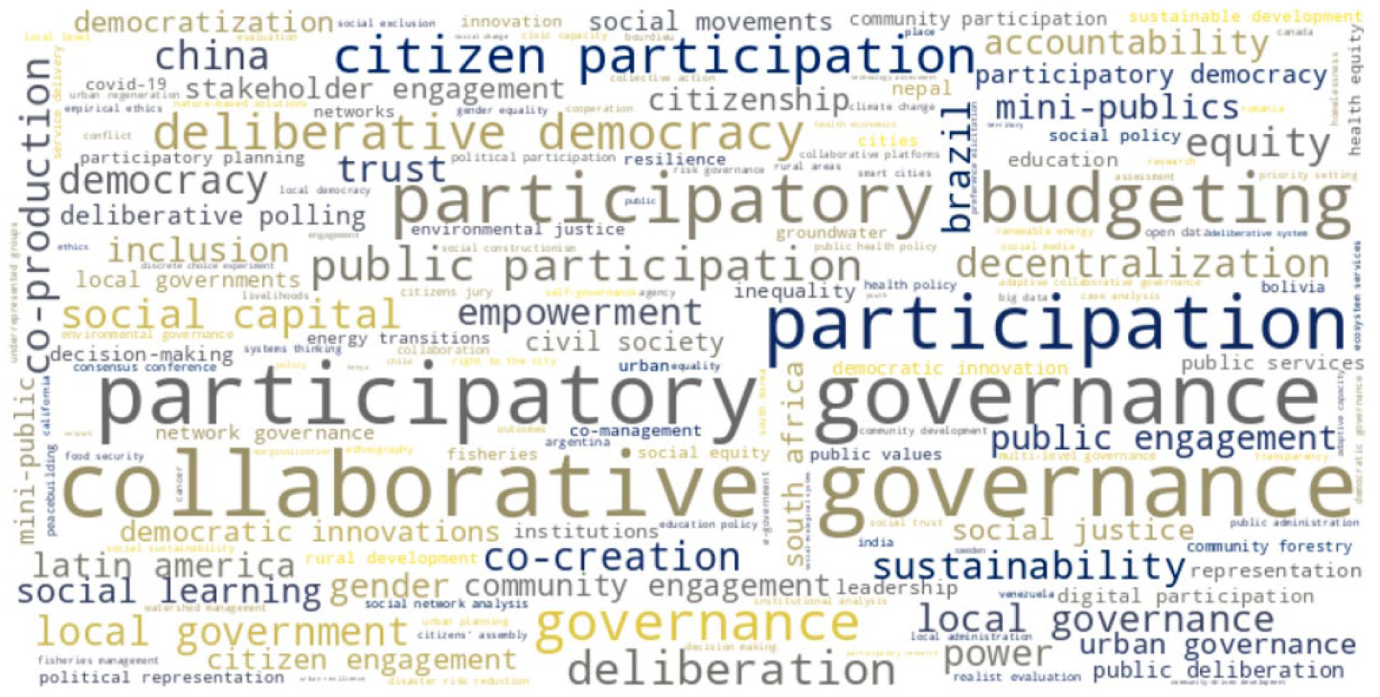
Keyword Frequency in DIs and Social Sustainability Studies.
In addition, we undertook an exploratory analysis of the relationship between keywords. The exercise reveals how different concepts are linked in research on DIs and social sustainability. Governance-related terms frequently co-occur, with “participation,” “sustainability,” “institutions,” “efficiency,” “effectiveness,” and “equity” forming a thematic cluster, reflecting scholarly interest in balancing participatory governance with institutional effectiveness. Likewise, the pairing of “adaptive management,” “collaborative governance regime,” “institutional flexibility,” and “leadership” highlights an emerging focus on how institutional arrangements evolve and adapt through participatory innovations.
This cursory analysis of the relationship between keywords in the references collected in the scoping review literature reveals the interconnections between key themes related to social issues and social policies.
For instance, the literature strongly associates DIs with concepts of social justice, inclusion, and equity. Keywords such as “social justice,” “equity,” “power,” and frequently co-occur, indicating that governance processes are often analyzed in terms of their capacity to redistribute resources and decision-making power (Holdo, 2020; No and Hsueh, 2022). This is particularly evident in studies on participatory budgeting, where issues of inclusion and inequality emerge as critical themes. In addition, deliberative processes, such as mini-publics and citizens’ assemblies, are linked to “gender participation,” “marginalization,” and “underrepresented groups,” reflecting the growing concern with the inclusivity of DIs (Harris et al., 2021; Trevisan, 2022).
The literature indicates a strong relationship between DIs and social policy domains such as healthcare and education. “Public health” and “health equity” appear prominently, often associated with participatory governance initiatives aimed at improving service delivery and policy responsiveness (Bittle, 2022; Ewert and Evers, 2014). In healthcare, participatory approaches are linked to concepts like “patient participation,” “citizens’ juries,” and “public engagement,” reflecting the positive role that deliberative processes can play in health provision and outcomes (Bejarano, 2019; Tremblay et al., 2021). Similarly, education policies are explored in this literature through participatory methodologies that engage communities in school planning, resource allocation, and curriculum development (Kennedy and Pek, 2023; Smith and Benavot, 2019).
Another major cluster of interconnected keywords and concepts present in this literature pertains to housing policies and urban governance. The literature associates “affordable housing” and “urban resilience” with participatory governance frameworks (Walker, 2016; Woo and Khoo, 2022). Studies explore the extent to which participatory mechanisms contribute to equitable urban planning, with themes such as “spatial justice,” “urban regeneration,” and “community development” appearing frequently in discussions on democratic urban governance (Chattopadhyay, 2015; Lemanski, 2017; Parés et al., 2012).
While environmental governance is often examined as a distinct research area, its intersection with social issues is evident in studies on water governance, food security, and energy justice. Keywords such as “equity,” “distributional outcomes,” and “well-being” suggest that participatory approaches to environmental decision-making frequently incorporate a social justice lens (Abunge et al., 2013; Ahn and Baldwin, 2022; Tsuyuguchi et al., 2020). Collaborative governance models in these domains highlight the role of participatory institutions in mitigating environmental inequalities and addressing livelihood concerns (Dobbin et al., 2022).
The role of civil society in DIs in relation to social sustainability is also emphasized in this literature through its connections with concepts like “civil society participation,” “community participation,” and “community-based governance.” This literature highlights the importance of co-creation and co-production in fostering collective action and empowering communities to influence decision-making processes (Eufemia et al., 2021; Martinez and Kohler, 2016). Studies also examine the intersection between civil society participation and DIs, exploring how deliberative and participatory institutions can create new avenues for representation and advocacy of disadvantaged groups (Arora-Jonsson and Larsson, 2021; Houtzager and Gurza Lavalle, 2010).
Moreover, decentralization emerges as a recurrent theme in this scholarship, with keywords such as “local government,” “municipal finance,” and “urban governance” frequently appearing in connection with DIs and social sustainability. The findings suggest that local-level participatory mechanisms, particularly in Latin America (Andersson and van Laerhoven, 2007; Kohl, 2003), are instrumental in fostering bottom-up governance approaches. The link between “local knowledge,” “empowerment,” and “dialogical participation” further underlines the role of community-driven governance in policy processes.
Methodological Approaches
The last dimension of interest concerns the methodological approaches and accompanying empirical strategies and data sources employed by scholars in this field. Given the focus of the section, the analysis will zoom in on the 297 empirical articles identified in Figure 4.
The first aspect of interest is to evaluate whether this scholarship relies on a singular or diverse set of methodological approaches. As outlined in Figure 7, this research displays a clear methodological preference for qualitative approaches which dominate the field. Out of the 297 empirical articles, 189 (63.6%) employ qualitative methods, highlighting a strong focus on exploring the nuanced, context-specific dimensions of DIs and social sustainability. Quantitative studies, though less common, account for 58 articles (19.5%), reflecting efforts to employ numerical data and statistical analyses in examining these topics. Mixed-methods research, which integrates both qualitative and quantitative approaches, represents 50 articles (16.8%), underscoring its role in providing a more comprehensive understanding of the phenomena under investigation. This distribution demonstrates a pronounced reliance on qualitative inquiry, while the significant presence of mixed-methods studies suggests an emerging interest in leveraging diverse methodological perspectives to address complex research questions.
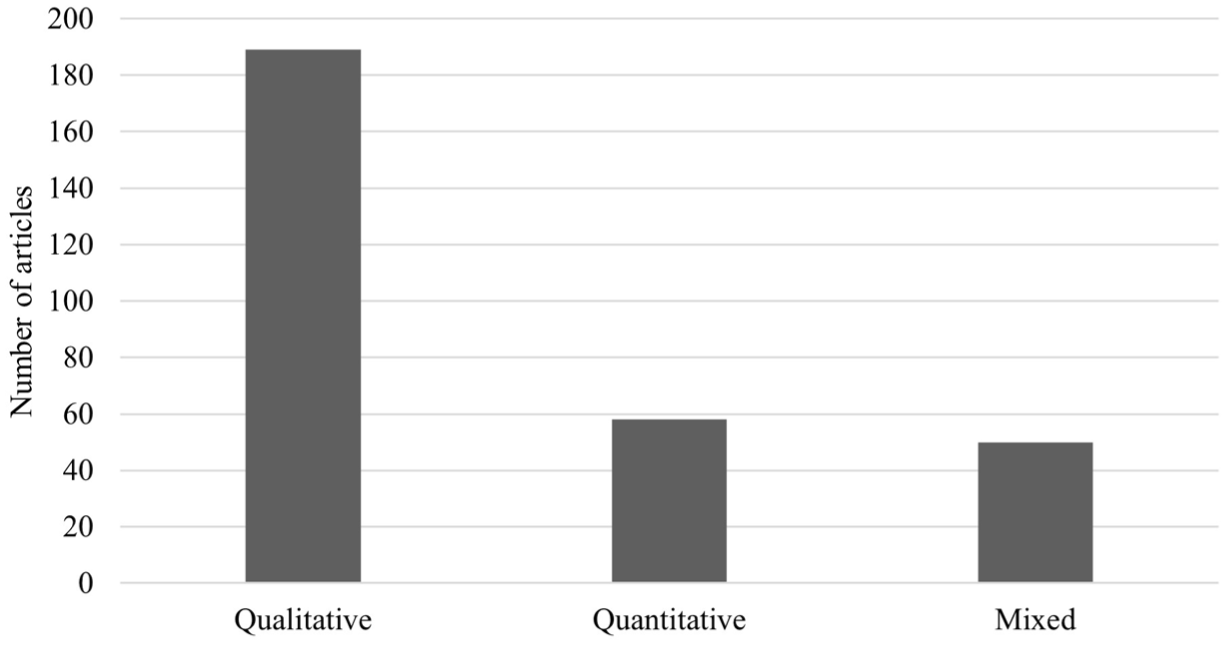
Methodological Approaches of the Research on DIs and Social Sustainability.
When we dig deeper into the data, we find that the distribution of research designs in the study of DIs and social sustainability is strongly skewed toward single-case studies. As depicted in Figure 8, of the total studies analyzed, 213 (71.7%) adopt a single-case study approach, underscoring the field’s emphasis on in-depth, context-specific investigations. Comparative studies, while significantly less frequent, still play a notable role, with qualitative comparative designs accounting for 46 studies (15.5%) and quantitative comparative designs representing 25 studies (8.4%). Experimental designs are rare, comprising only 8 studies (2.7%), reflecting the limited use of controlled interventions in this area of research. Finally, mixed designs, which integrate multiple methodological approaches, are the least represented category, appearing in just 5 studies (1.7%). These findings highlight the predominance of qualitative, case-based research in the field, while suggesting that comparative, experimental, and mixed-methods approaches remain underutilized, leaving room for broader methodological diversification in future studies.
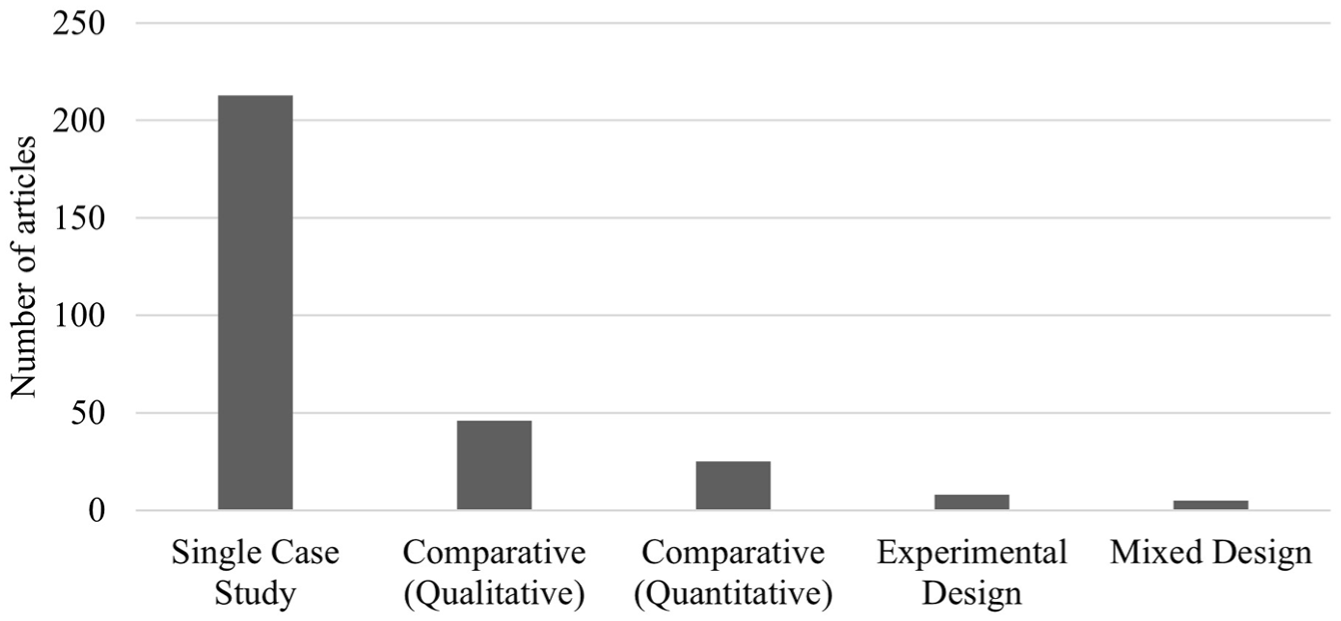
Research Designs of the Research on DIs and Social Sustainability.
The overwhelming reliance on qualitative, often single-case designs has shaped knowledge production in this field in important ways. On the one hand, it has generated in-depth, context-sensitive accounts of how DIs operate within specific sociopolitical environments. On the other hand, it has limited the potential for systematic comparison, cumulative theorization, and the integration of findings into broader understandings of DIs and social sustainability. This methodological pattern thus creates a trade-off: depth is gained, but generalizability and cross-contextual learning remain underdeveloped.
The predominance of case studies, while potentially limiting the development of broader analytical frameworks on DIs and social sustainability, also underscores a recognized strength of the field, which is its noted orientation toward bridging research and practice (Smith, 2019). This focus signals that academic inquiry remains closely connected to real-world DI. However, we warn that this emphasis on contextual depth and nuance may come at the expense of comparative approaches, potentially limiting the field’s capacity to develop more generalizable contributions. Our findings point toward the need for a more intentional integration of cross-case comparisons and mixed-methods approaches that could help balance these strengths and limitations. However, this will require a stronger investment in the construction of large datasets. While there has been a growing focus in the DI literature exemplified by Participedia, 8 LATINNO, 9 and the OECD’s Deliberative Democracy Database, 10 the field still lacks the large-n tools that one often finds in other fields of the study of policy and governance.
This is particularly important for, at least, two reasons. First, most of the datasets mentioned above, with some notable exceptions like LATINNO database, have focused on Europe, which only reinforces what has been said above about the prioritization of published research on DIs in higher-income countries of the Global North. Second, this also limits the potential for novel research from comparative studies across world regions, hindering a more refined understanding of how geographical and political contexts shape the inputs, throughputs, and outputs of DIs. Including their origins, motivations, procedural constraints, institutional barriers and enablers, and impacts. Future comparative datasets would profit from tracking capacity-building indicators (e.g. institutional uptake, resource shifts, durability of collective action), not only participation counts.
The final dimension of our analysis on methodological approaches examines the various data sources scholars use to advance understanding of DIs in relation to social sustainability.
As depicted in Figure 9, the survey of data sources reveals a strong reliance on qualitative data sources. Document analysis is the most frequently used data source, appearing in 56.2% (167) of studies, highlighting the field’s emphasis on textual and archival materials for understanding democratic governance processes. Interviews, similarly prominent, are employed in 51.9% (154) of studies, underscoring the role of firsthand accounts and expert insights in examining DIs. Observational data is also widely used, featuring in 39.7% (118) of studies, reflecting a strong tradition of direct engagement with participatory processes. Survey data, though less common, appears in 25.9% (77) of studies, indicating a moderate presence of structured quantitative inquiry. Focus groups and workshops are used in 13.5% (40) of studies, suggesting a more limited but meaningful engagement with participatory deliberation and collective discussions. The use of statistical data, present in 16.5% (49) of studies, points to a relatively small but notable engagement with quantitative analysis. Finally, deliberative procedures, including direct participation in deliberative settings as a data source, are the least frequent, appearing in 9.1% (27) of studies, indicating that while DIs are often studied, researchers themselves are less likely to integrate direct deliberative participation as part of their methodological toolkit.
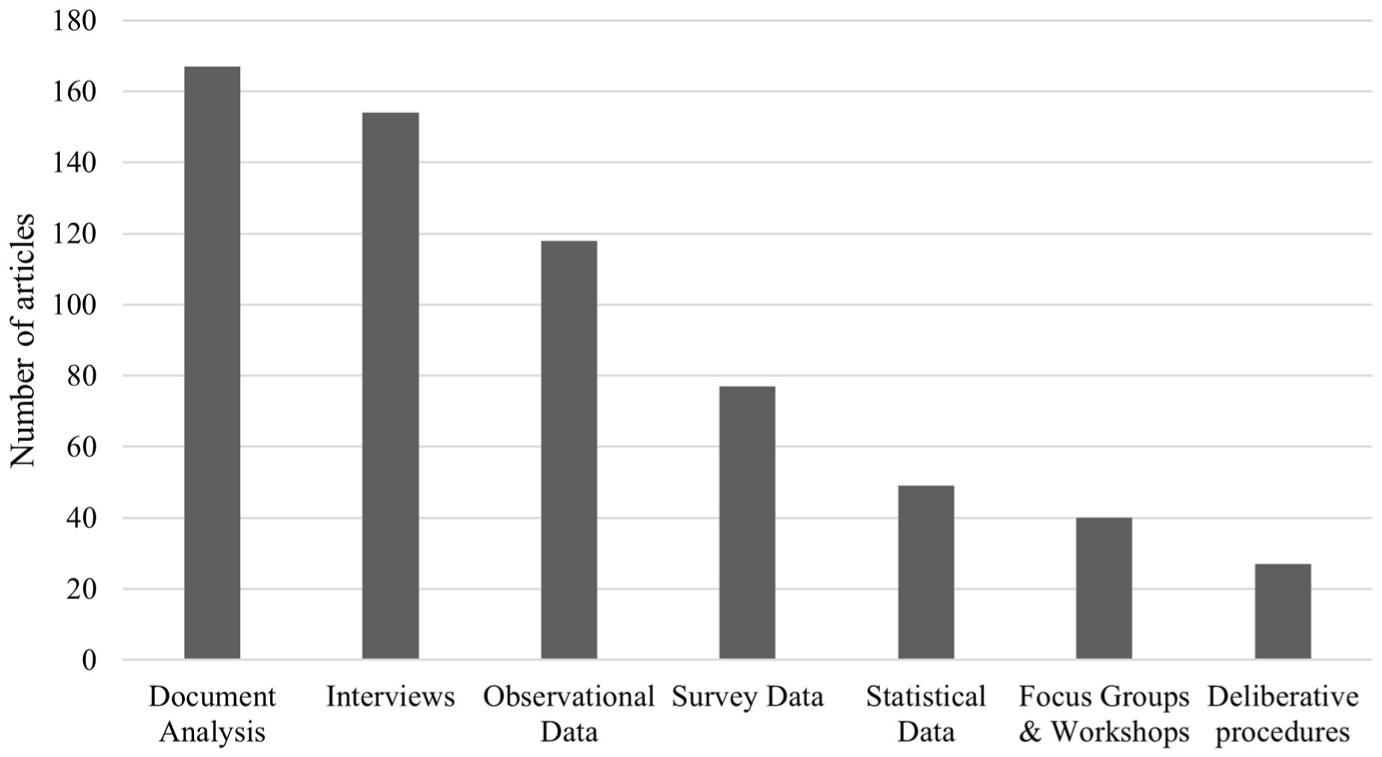
Data Sources in Research on DIs and Social Sustainability.
In short, the prevalence of document analysis, interviews, and observational data suggests a strong qualitative orientation in the field, while the comparatively lower presence of surveys and statistical data reflects the underutilization of large-scale, quantitative approaches in DI and social sustainability research.
Conclusions
This study sets out to systematically explore how DIs have been studied in relation to social sustainability, addressing the fragmentation of existing research and identifying key trends, gaps, and methodological approaches. By doing so, it sought to provide a comprehensive overview of how DIs have been examined in academic literature. Given the increasing relevance of participatory and deliberative institutions and processes in tackling contemporary governance challenges such as climate change and growing wealth inequalities, we believe that the study is significant in offering a structured synthesis of the field, enabling future research to probe into underexplored areas and methodological gaps.
In keeping with a scoping review design, our claims are macro-level. The included studies show where and how DIs and social sustainability are examined, but they seldom report micro-design variables in ways that enable comparative assessment of which specific features of DIs are driving social sustainability dimensions. While it is likely that more inclusive forms of citizen recruitment will lead to more equitable DIs (e.g. Chattopadhyay, 2015; Harris et al., 2021), we therefore refrain from making such assessments of the field.
Still, the findings reveal significant trends in the scholarship of DIs in relation to social sustainability. The growing volume of research in this area reflects an increasing recognition of the role of citizen participation in shaping democratic renewal and sustainable policy outcomes. In addition, the breadth of studies covering diverse policy areas such as urban planning, environmental governance, and public health signals that DIs are being integrated into broader efforts to enhance democratic legitimacy and responsiveness. The strong empirical foundation of the field, particularly through qualitative approaches, has provided valuable insights into the contextual factors that shape the effectiveness of DIs, helping to refine theoretical frameworks and inform practical applications. One must caution, however, that the geographic gaps reported here are likely a feature of the English-language bias of the literature collected by our empirical strategy and not of the global literature writ large.
Despite these advances, this review exposes persistent epistemic and methodological biases that constrain the field’s potential. The geographic imbalance in DI research, with an overwhelming concentration in the Global North, suggests that this research remains skewed toward Western institutional settings and historical experiences. This raises concerns regarding the extent to which DIs and social sustainability is being conceptualized as a predominantly Global North phenomenon, rather than as a genuinely global process incorporating diverse democratic traditions. As argued by Mendonça and Asenbaum (2025), the continued marginalization of non-Western perspectives limits theoretical innovation and overlooks potentially transformative governance experiments taking place outside the dominant Euro-American epistemic frameworks.
Another concern is evident in the thematic focus of DI research. The rapid evolution of digital participatory mechanisms presents a challenge for researchers, yet their growing role in shaping contemporary political engagement cannot be ignored. While digital participation has been heralded as a means of expanding access and inclusivity, research suggests that digital divides and algorithmic biases often reinforce existing socioeconomic inequalities, raising concerns about whether these technologies truly democratize participation or merely reconfigure elite control in new forms (Mikhaylovskaya, 2024).
The methodological landscape of DI research also reveals limitations that need to be addressed in the future. While the reliance on qualitative, single-case studies has produced rich, context-specific insights, it has also constrained broader theoretical generalization and comparative analysis. This methodological tunnel vision restricts the ability to draw systematic conclusions about the effectiveness of different DI models across contexts. Furthermore, while recent efforts to develop global databases have contributed to consolidating empirical knowledge, they remain largely Eurocentric. The lack of comprehensive, large-n comparative studies spanning different world regions hinders our ability to assess the geographical and contextual enablers and constraints of DIs.
Taken together, the predominance of qualitative approaches and the fragmentation of research streams (such as participatory budgeting and deliberative mini-publics, with limited cross-referencing or conceptual exchange) have both advanced and constrained the field. They have enabled finely grained understandings of local practices, yet they have also hindered cumulative theory-building, cross-case comparability, and systematic assessment of how DIs contribute to broader social sustainability goals. These forms of fragmentation produce a patchwork of insights that illuminate particular innovations but make it difficult to accumulate knowledge across contexts or to assess the collective contribution of DIs to social sustainability. Addressing these limitations will require greater dialogue across subfields, more diverse geographical coverage, and methodological pluralism.
In line with recent work, we also suggest a participatory corrective to deliberative hegemony (Escobar and Bua, 2025): alongside concerns with legitimacy, the field should examine the capacity for change that DIs mobilize, whether they build collective power, institutional uptake, and durable policy effects relevant to social sustainability. This shift would re-center community-embedded practices (including outside the Global North) and encourage designs and assessments that track capacity development across time and across arenas of power.
What are the implications of the research conducted here? First, there is an urgent need to support scholarship from underrepresented regions, ensuring that Global South experiences are not merely treated as empirical case studies but as active contributors to democratic theory-building. This requires both a shift in research priorities and a reconfiguration of academic funding structures that continue to privilege Global North institutions. Second, the study of DIs should engage more critically with emerging participatory mechanisms, particularly digital governance innovations, while addressing their potential risks of exclusion and elite capture. Third, methodological diversification is essential; greater engagement with mixed-methods, comparative frameworks, and large-scale data collection efforts can provide a more comprehensive understanding of how DIs function within and across different political, economic, and cultural contexts.
If DIs are to fulfill their transformative potential in promoting social sustainability, the field must engage in a more reflexive and inclusive scholarship that challenges existing biases and expands the epistemic and methodological horizons of democratic governance research. Only by doing so can we ensure that this promising field of study truly reflects the diversity of democratic experiments taking place across the world and contributes to more just, inclusive, and transformative forms of governance, aligned with the reimagination quality they advocate.
Supplemental Material
sj-docx-1-psw-10.1177_14789299251397758 – Supplemental material for Exploring the Interplay Between Democratic Innovations and Social Sustainability: A Scoping Review
Supplemental material, sj-docx-1-psw-10.1177_14789299251397758 for Exploring the Interplay Between Democratic Innovations and Social Sustainability: A Scoping Review by João Moniz, Roberto Falanga and José Duarte Ribeiro in Political Studies Review
Footnotes
Declaration of conflicting interests
The authors declared no potential conflicts of interest with respect to the research, authorship, and/or publication of this article.
Funding
The authors disclosed receipt of the following financial support for the research, authorship, and/or publication of this article: Funding for the research was primarily provided by the European Research Executive Agency (i.e. REA) through the Horizon European Programme (project INCITE-DEM, grant agreement 101094258).

Supplemental material
Additional supplementary information may be found with the online version of this article.
Notes
Author biographies
References
Supplementary Material
Please find the following supplemental material available below.
For Open Access articles published under a Creative Commons License, all supplemental material carries the same license as the article it is associated with.
For non-Open Access articles published, all supplemental material carries a non-exclusive license, and permission requests for re-use of supplemental material or any part of supplemental material shall be sent directly to the copyright owner as specified in the copyright notice associated with the article.
