




Abstract
This study examined the relationships between zero-sum thinking, system justification beliefs, and attitudes toward democracy, focusing on individuals from the Middle East and North Africa Region living under different regime types and within diverse social contexts. A cross-sectional survey of 2250 participants living in 50 countries was conducted between September and December 2020. Zero-sum thinking and system justification beliefs were found to be negatively correlated with attitudes toward democracy. The findings revealed that system justification beliefs are more prevalent in regions with more conservative individuals and better socioeconomic conditions, and under authoritarian regimes compared to other regime types. In addition, system justification beliefs are negatively correlated with attitudes toward democracy, regardless of the democratic status of the regime. More importantly, in a moderation model in which system justification beliefs served as the moderator between zero-sum thinking and attitudes toward democracy, a negative regression coefficient was found between zero-sum thinking and system justification beliefs, and a positive correlation was observed between zero-sum thinking and attitudes toward democracy. Our findings highlight the importance of considering system justification beliefs when analyzing how zero-sum thinking shapes political attitudes, particularly toward democracy, in diverse cultural and political contexts.
Introduction
A number of theories have addressed the motivations and factors that favor support for democracy 1 among individuals and groups (Golabi et al., 2017). One of the dimensions that determines people’s attitudes is the psychological dimension; therefore, it is important to examine the psychological processes underlying an individual’s attitudes, behaviors, and perceptions related to democratic principles and institutions. Various psychological factors that potentially influence attitudes toward democracy (ATD) and democratic attitudes, such as social identity, system justification, perceptions of fairness and justice, conflict perceptions, and cognitive biases, have been explored 2 (Jost and Banaji, 1994; Khatib, 2022; Lodge and Taber, 2013; Tajfel and Turner, 1986; Tyler, 2006). Democracy as a political regime implies an institutional setting in which all citizens are theoretically equal in terms of rights and obligations. However, legal equality does not necessarily signify equal access to resources or the absence of economic, social, and political inequalities. Therefore, the attitudes that individuals develop or express toward democracy appear to be largely influenced by individual-level calculations related to perceptions of personal self-benefits, gains, and losses, regardless of the regime under which they live (Dompnier and Berton, 2012). However, political science has primarily addressed the relationship between ATD and personal cost-benefit calculations through the rational choice framework. This study aims to bring new insights on this debate by examining the relationship between ATD and two psychological factors, namely zero-sum 3 thinking (ZST) and system justification beliefs (SJB) among individuals from the Middle East and North Africa (MENA) Region living under different regime types. Prior research suggests that the relationship between ZST and ATD is based on SJB, which are associated with authoritarianism and democracy (Langer et al., 2020) and reflect beliefs in a fair and just system (Rutto et al., 2014). Accordingly, this study also investigates how SJB moderate the effect of ZST on ATD, and how the direction of this effect may vary between democratic and non-democratic contexts. In addition, it explores the role of regime type in shaping the interaction among SJB, ZST, and democratic attitudes. Existing literature indicates that (1) undemocratic institutions may favor negative ATD if they can respond positively to psychological and individual expectations vis-à-vis the regime, and (2) an individual’s positive ATD in a democratic regime may be conditional to the regime’s capacity to respond positively to psychological and personal expectations (Dompnier and Berton, 2012; Langer et al., 2020).
ZST and ATD
ZST is a cognitive frame through which individuals interpret social relations, shaping whether they perceive democracy as a system of mutual benefit or as a competition that inevitably produces losers. It is a widely shared social axiom that assumes one group’s gain necessarily implies another’s loss (Różycka-Tran et al., 2015). For individuals with high levels of ZST, social life is understood as ongoing competition over “a finite number of resources [between social groups and individuals]. Thus, the success of one group [or a person] is viewed as detrimental to another” (Wellman et al., 2016: 3). While not tied to any specific ideology or socioeconomic conditions, ZST reflects a recurring pattern of thought found across contexts and the political spectrum (Davidai and Ongis, 2019). As such, ZST provides an important lens for understanding how individuals evaluate democratic institutions.
These characteristics make the concept potentially useful for understanding group and individual political attitudes and behaviors that may imply zero-sum, including ATD.
Political science has long examined how cost–benefit calculations shape political behavior, most prominently in Downs’ Economic Theory of Democracy (1957). In this tradition, politics is viewed as competition among rational actors who seek to maximize utility. Classic work on democratization has built on this assumption to explain elites’ incentives to oppose or support democratic transitions (Acemoglu and Robinson, 2006; Boix, 2003; O’Donnell and Schmitter, 1986). Yet, while this approach treats all actors as rational calculators, ZST highlights psychological predispositions: some individuals are more inclined than others to interpret politics in zero-sum terms.
This distinction allows us to explain behaviors that appear irrational under economic models, such as altruistic acts that sacrifice personal gain for perceived group advantage (Seglow, 2002). Research increasingly demonstrates the role of ZST in shaping political attitudes and behaviors rooted in perceptions of group competition. In the United States and Canada, ZST predicts hostility toward immigrants and refugees (Esses et al., 2001; Louis et al., 2013; Piotrowski et al., 2019), and evidence suggests that it mediates the relationship between national attitudes and views toward refugees (Piotrowski et al., 2019). In the United States, white Americans often interpret reductions in racism toward Black citizens as a zero-sum game in which they are now “losing” (Norton & Sommers, 2011). Furthermore, members of high-status groups are more likely than disadvantaged groups to endorse zero-sum beliefs about discrimination (Wilkins et al., 2015).
More broadly, ZST is associated with support for established hierarchies (Stefaniak et al., 2020), resistance to gender equality (Kosakowska-Berezecka et al., 2020), and opposition to redistributive policies such as affirmative action (Wellman et al., 2016). These findings indicate that ZST fosters skepticism toward pluralism and tolerance, which are central in ATD. Yet the relationship between ZST and support for democracy is not consistent. According to Hansen and Goenaga (2021: 24), in “[h]igh-quality democracies . . . citizens from different social groups are more likely to find institutions that politically empower them despite broader asymmetries present in society and, thus, develop higher levels of support for and satisfaction with democracy.” However, not all democracies are created equal, and not all provide favorable conditions or opportunities for all their populations. Democracy, like any other political regime, generates both winners and losers, and people’s ATD are potentially shaped by how well they are doing under the political regime in which they live, whether it is a democracy or an autocracy (Dompnier and Berton, 2012). Therefore, while evidence indicates that the relationship between ZST and ATD may be positive based on the benefits of such a regime, particularly in high-quality democracies, belief in zero-sum was also found to be a factor that negatively correlates with democracy and democratic values, including pluralism (Różycka-Tran et al., 2015). What may account for these conflicting results? In the following section, we will argue that the effect of ZST on ATD is potentially moderated by another psychological feature, SJB.
ZST and ATD: How SJB Matter?
Some evidence shows a positive connection between ZST and support for democracy, especially in strong democracies. However, ZST also shows a negative link to democracy and pluralism (Różycka-Tran et al., 2015). In this section, we examine the role of system justification in the relationship between ZST and ATD, as this relationship remains unclear.
System justification theory (SJT), which is grounded in social dominance orientation (SDO) 4 (Rutto et al., 2014; Sidanius and Pratto, 1999), posits that individuals inherently tend to maintain societal systems, even when it may harm their individual or collective interests. SJB entails rationalizing the current social hierarchy by depicting it as legitimate and open to change (Wellman et al., 2016: 1). Individuals with elevated levels of SJB will often, albeit unconsciously, support, reinforce, and justify the existing social, economic, and political frameworks (Hennes et al., 2012: 672), even if these frameworks are not advantageous to them. This indicates that SJB leads people to view current political institutions as fair and legitimate. Consequently, both members of disadvantaged and advantaged groups are likely to partake in system justification, even when it incurs significant personal costs (Jost and Hunyady, 2003: 260).
The disadvantaged group may adopt SJB because the existing social order fulfills epistemic needs by providing a sense of certainty and predictability (Jost et al., 2017) that may arise from questioning the existing regime. This raises important questions about the ZST and its role in shaping attitudes if SJB are present.
According to Jost et al. (2017: e2), “[i]t is often [mistakenly] taken for granted . . . that support for the societal status quo comes more or less exclusively from those who benefit in material terms from its maintenance, while those who are disadvantaged by current conditions are revolutionaries-in-waiting.” Studies have found that greater inequality among groups is associated with the justification of the status quo by members of a disadvantaged group (Owuamalam et al., 2023), making SJB a significant barrier to social change (Blasi and Jost, 2006). In fact, the more people justify the existing system, the more they support action that will maintain the status quo (Jost et al., 2017; Osborne et al., 2019), and any perceived threats to the existing system should further enhance this tendency (Stefaniak et al., 2020: 1259).
SJB question some of the main theories in political science and conflict studies, such as the realistic conflict theory, social identity theory, relative deprivation, and frustration-aggression models, that suggest that injustice and loss lead people to oppose the existing regime (Henry and Saul, 2006).
SJB involve seeing the governing system as fair, balanced, and just (Rutto et al., 2014). One of the underlying reasons is the desire to minimize uncertainties stemming from disruptions to familiar things (Owuamalam et al., 2018); this requires stable and predictable regimes, which can be authoritarian or stable democracies. SJB tend to be widespread in contexts in which social hierarchies are considered acceptable (Jost et al., 2012). However, legitimizing these hierarchies and their associated benefits, as well as accepting inequality among groups (Jost et al., 2003), is generally not well-viewed in democracies, at least from a normative perspective, as equality among citizens is a core democratic value.
Furthermore, individuals who favor conformity tend to be more authoritarian (Hennes et al., 2012). Nakagoshi and Inamasu (2023) recently claimed that SJB lead individuals to support conservative regimes. SJB have also been identified as a predictor of non-democratic attitudes such as prejudices against different social groups (Ho et al., 2012). 5 Although not conceptually concerned with ZST or SJB, Šerek and Mužík (2021: 111027) suggest a potential moderating effect of SJB on ZST, noting that “social dominance [orientation] was linked to a cynical view of democracy, according to which it is acceptable to trade democratic principles for personal gain.” Therefore, the relationship between ZST and support for democracy is complex, as it is influenced by broader psychological and social factors.
Based on the literature and the different relationships between ZST, SJB, and ATD, we can argue (though further examination is needed) that SJB serves as a moderator by either amplifying or mitigating the negative effects of ZST on democratic attitudes. On the one hand, limited literature suggests that individuals with high system justification motives may view the current democratic system as fair and legitimate, thereby reducing the impact of ZST on their support for democratic principles (Jost et al., 2017). On the other hand, if democracy is perceived as a system that threatens the status quo, high system justification may exacerbate the negative relationship between ZST and support for democracy.
Wakslak et al. (2007) observed that individuals with strong system justification tendencies were less likely to perceive systemic inequality, which moderated their support for redistributive policies, which can reflect support or opposition to democracy. Similarly, research by Kay and Friesen (2011) found that system justification could buffer against the destabilizing effects of perceived threats, including those arising from or based on ZST. This dynamic can influence ATD or support for authoritarianism, as can be understood from their findings. However, when democratic change challenges existing hierarchies within certain groups, system justification may align with ZST as psychological factors that, based on perceived benefits and threats, undermine support for democratic principles. Support for this interpretation can be found in research by Napier and Jost (2008a). Accordingly, the impact of ZST on democratic attitudes cannot be treated as uniform but must be understood in light of whether individuals view the current system as legitimate, justified and deserving of preservation.
Research on SJB has been primarily conducted in Western democracies (Kelemen et al., 2014; Szabó and Lönnqvist, 2021), while the MENA region and non-democratic countries have been largely overlooked. This paper explores the relationship between ZST, SJB, and ATD, examining SJB as an interaction variable. It also investigates how these relationships vary by country context and regime type, with a focus on the MENA region.
Political Context and the Impact of ZST and SJB on Democracy Support
A growing body of research in political psychology and comparative politics indicates that individual psychological dispositions, such as SJB and ZST, do not operate independently of the broader political context. Rather, their effects on ATD are shaped by regime type. Authoritarian and democratic systems elicit different ideological, cognitive, and emotional responses, conditioning how SJB and ZST influence democratic support.
SJT posits that individuals are psychologically motivated to view existing social and political arrangements as fair, legitimate, and desirable (Jost et al., 2004). However, the object of justification and its consequences vary by regime. In authoritarian contexts, system justification is often embedded within state ideology and closely linked to values such as hierarchy, conservatism, and resistance to change (Alonso and Brussino, 2024; Kelemen et al., 2014). Even among disadvantaged groups, SJB can serve as a coping mechanism, reducing cognitive dissonance and anxiety by rationalizing the status quo, thereby fostering compliance rather than dissent (Lönnqvist et al., 2021). In democratic settings, SJB is more conditional and politically polarized. Support for the system often depends on performance-based legitimacy, such as government responsiveness, economic outcomes, or institutional stability (Alonso and Brussino, 2024). System-justifying attitudes in democracies are frequently associated with conservative groups that prioritize order, tradition, and social cohesion (Azevedo and Jost, 2021). Accordingly, SJB can bolster support for democracy when it is seen as a guarantor of stability but may also diminish democratic commitment when the system is perceived as undermining traditional hierarchies (Azevedo et al., 2017; Rottenbacher and Schmitz, 2012).
Empirical findings show that SJB is often negatively associated with support for democracy, particularly when democratic values, such as equality, pluralism, and social change, are viewed as incompatible with the status quo (Rottenbacher and Schmitz, 2012). Authoritarian regimes, with their ideological coherence and structural reinforcement of hierarchy, are more conducive to the development of SJB. In contrast, democracies, characterized by competing values and institutional openness, may moderate or even challenge SJB’s psychological appeal.
ZST, the belief that social relations are inherently competitive and that one group’s gain entails another’s loss, exhibits a similarly context-dependent dynamic. ZST undermines key democratic norms by reducing tolerance for pluralism and increasing animosity toward political opponents (Zagórski, 2006). In democracies, which rely on institutionalized conflict resolution and compromise, ZST can erode legitimacy by framing politics as a zero-sum contest rather than a deliberative process. This framing can fuel populist or authoritarian sentiments, especially when political elites exploit ZST by portraying rivals as existential threats.
In authoritarian regimes, ZST often aligns with regime goals. Authoritarian leaders may institutionalize zero-sum narratives to legitimize repression, consolidate power, and portray dissent as dangerous. These regimes frequently promote ideological unity or cultural homogeneity, reinforcing ZST and justifying exclusionary or repressive policies. As such, ZST may strengthen support for authoritarian governance when political competition or democratization is framed as destabilizing (Jost et al., 2004).
Finally, we can explain the relationship between regime type, SJB, and ZST based on the elite’s role and how regime conditions shape the impact of psychological dispositions through specific mechanisms. In democratic regimes, institutionalization and legitimization of disputes are the norm. In contrast, in authoritarian regimes, elites strategically deploy zero-sum narratives that declare only one set of interests as legitimate and portray opposing groups as threats, thereby legitimizing repression and discouraging pluralism (Zagórski, 2006). Resource distribution also functions as a tool in rentier states: subsidies and state-provided benefits reduce demands for political rights while reinforcing system justification. These patterns are observed in different countries but are more prominent in the MENA region (Ross, 2001). In such regimes, this reality is used as a mechanism of ZST, framed either as promoting a good economy and stability or as preventing chaos. Finally, legitimacy is cultivated through ideological framing, including appeals to tradition, religion, and national security; these strategies are employed in authoritarian regimes to justify the regime and legitimize elite authority (Hadenius and Teorell, 2006).
Thus, both SJB and ZST should be understood as contextually embedded orientations whose political implications differ across regime types. In authoritarian settings, they tend to reinforce regime legitimacy and resistance to democratic change. In democracies, their effects are more contingent, potentially reinforcing democratic support among conservatives who view the system as protective while enabling anti-democratic attitudes among those who perceive pluralism and redistribution as threats. This framework underpins the expectation that regime type moderates the impact of psychological dispositions on democratic attitudes, justifying the use of interaction models across different political contexts.
Building on the literature that highlights the context-dependent effects of psychological dispositions, the following hypotheses are proposed to examine how ZST, SJB, and their interaction influence ATD across regime types:
H1: Individuals who endorse higher levels of ZST will exhibit lower support for democracy.
H2: Individuals with stronger SJB will show less support for democracy.
H3: SJB moderate the relationship between ZST and democratic support, such that the negative association between ZST and democracy support weakens as SJB increases.
H4: The effects of SJB and ZST on democratic support vary by regime type, with stronger negative associations expected in authoritarian regimes and more context-dependent or ambivalent effects in democratic regimes.
Methods
Population Sample
An online survey involving Arab populations in different countries was conducted. The survey, which was available in Arabic and took approximately 15 minutes to complete, was administered between September and December 2020 using the Qualtrics system. The link to the survey was shared online and sent to adults from various backgrounds residing in 50 Arab and non-Arab countries. The survey link was posted on social media and shared via email with specific restrictions to ensure age participation.
The convenience sample 6 comprised 2250 subjects (45% female and 54% male; mean age 37 years). The sample size was based on the calculation of the confidence interval, population size, and the ability to reach respondents from each region. A total of 476 participants were from North Africa, 232 from the Levant and Iraq, 1074 from the Arab Gulf States, and 468 from countries outside the Arab region. A further 366 participants lived in Western democratic states, 38 in Western non-democratic states, 348 in Arab democratic states, and 1435 in Arab non-democratic states. 7
Measures
System Justification
An 8-item scale developed by Kay and Jost (2003) was used. The scale was translated by a research team and back-translated by a certified translator to identify any ambiguity of meaning in the text. Participants were asked to report their answers on a 5-point scale ranging from 1 (strongly disagree) to 5 (strongly agree). The items included statements such as “In general, you find society to be fair” and “Society is set up so that people usually get what they deserve.” An average score was calculated for the eight items. The internal consistency of the scale was good (Cronbach’s α = 0.84).
ZST
An 8-item scale developed by Różycka-Tran et al. (2015) was used to assess ZST. The scale was translated by a research team and back-translated by a certified translator. The items were scored on a 5-point scale ranging from 1 (strongly disagree) to 5 (strongly agree) and included statements such as “If someone gets richer, it means that somebody else gets poorer” and “The wealth gained by a few comes at the expense of the many” and “Life is like tennis game—A person wins only when others lose.” The internal consistency of the scale was good (Cronbach’s α = 0.78). The ZST scale is particularly appropriate because its items capture the implied cost–benefit logic central to zero-sum beliefs: individual or group gains are perceived to come at others’ expense and the items here reflect ZST theory (Downs, 1957; Różycka-Tran et al., 2015).
ATD and Democracy Support
A 6-item scale was used to assess participants’ ATD. Four of the items were developed by the authors, while three items were used in the Arab Opinion Index published by the Arab Center for Research and Policy Studies (2021), which assesses the attitudes of the Arab Public toward democracy. The items included statements such as “Democracies are not effective in the maintenance of security and public order,” “My society is unprepared for democracy,” and “Democracies are characterized by indecisiveness and discord.” The internal consistency of the scale was excellent (Cronbach’s α = 0.87).
Women’s Rights and Equality 8
As different conceptualizations of democracy exist, people may understand democracy in various ways. Scholars agree that one can distinguish at least between two forms of democracy: electoral democracy and liberal democracy. While some people may have positive attitudes toward electoral democracy, they may not necessarily support the additional layer of rights that come with liberal democracy, such as women’s rights. By using attitudes toward women’s rights, we aim to capture the potential variation in the understanding of democracy among individuals in the MENA region.
Aversion to women’s rights, equality, and attitudes toward women, particularly those who work, were assessed using multidimensional measures as previously described (Valentine, 2001). Items were scored on a 6-point scale ranging from 1 (strongly disagree) to 5 (strongly agree). The internal consistency of the scale was very good (Cronbach’s α = 0.86). Therefore, women’s rights measure serves as a meaningful proxy for liberal democracy because they represent the extension of democratic principles beyond electoral procedures to include equality, pluralism, and protection of minority rights. As Kostenko et al. (2016) noted, gender equality attitudes in the Arab world are closely tied to broader orientations toward democracy. By incorporating this measure, we are able to distinguish between support for electoral democracy and support for liberal democracy.
Demographic and Socio-Political Variables
The analysis included four demographic and socio-political variables: age (a continuous variable ranging from 18 to 80), sex (a dichotomous variable coded as 0 for female and 1 for male), education (an ordinal variable with four categories: 1 = high school, 2 = BA degree, 3 = master’s degree, 4 = PhD), and region-regime type, which captures the political context in which participants reside. The region-regime variable consists of four categories: Western democracies (1), Western non-democracies (2), Arab democracies (3), and Arab non-democracies (4). Democratic versus non-democratic contexts are classified according to the 2021 Freedom House ratings, which reflect the conditions during the year of data collection. Countries rated as “Free” are classified as democratic, while those rated “Partially Free” or “Not Free” are classified as non-democratic.
Testing for Moderation and Context-Related Effects
To examine whether SJB moderate the effect of ZST on ATD, we included an interaction term (ZST × SJB) in linear regression models estimated using ordinary least squares. 9 For each of the three main dependent variables—ATD, attitudes toward women’s rights, and SJB—four models were estimated. The first and second models control for age, sex, and education, using default and robust standard errors, respectively. The third model adds region-regime type to account for contextual effects. The fourth model introduces the ZST × SJB interaction term to assess whether the effects of ZST and SJB vary by region-regime type. Both the third and fourth models use robust standard errors clustered by region-regime type.
Results
The findings of this study are presented in two parts, preceded by a descriptive statistical analysis. The first part investigates the relationships among SJB, ZST, democratic support, and women’s rights. The second part analyzes the changes in SJB, ZST, and democratic support variables across different contexts, such as various regions and regime types.
Descriptive Statistics
Descriptive statistics of the demographic and socio-political variables are presented in Supplementary Appendix Table A1. Differences between participants in age, sex, education, and nationality are set out. Figure A1 in the Supplementary Appendix indicates strong support for women’s rights (3.98/5) and democracy (3.69/5), with moderate support for SJB (2.42/5) and ZST (2.69/5). The results are analyzed by region and regime.
The Relationship Between SJB, ZST, ATD, and Women’s Rights
Previous research revealed an association between ZST and SJB and between ATD (democracy support) and women’s rights (as an indicator of support for liberal democratic values) (Šerek and Mužík, 2021). The linear regression results presented in Table 1 further support these relationships.
SJB, ZST, Attitudes Toward Democracy, and Women’s Rights Regression Coefficient.
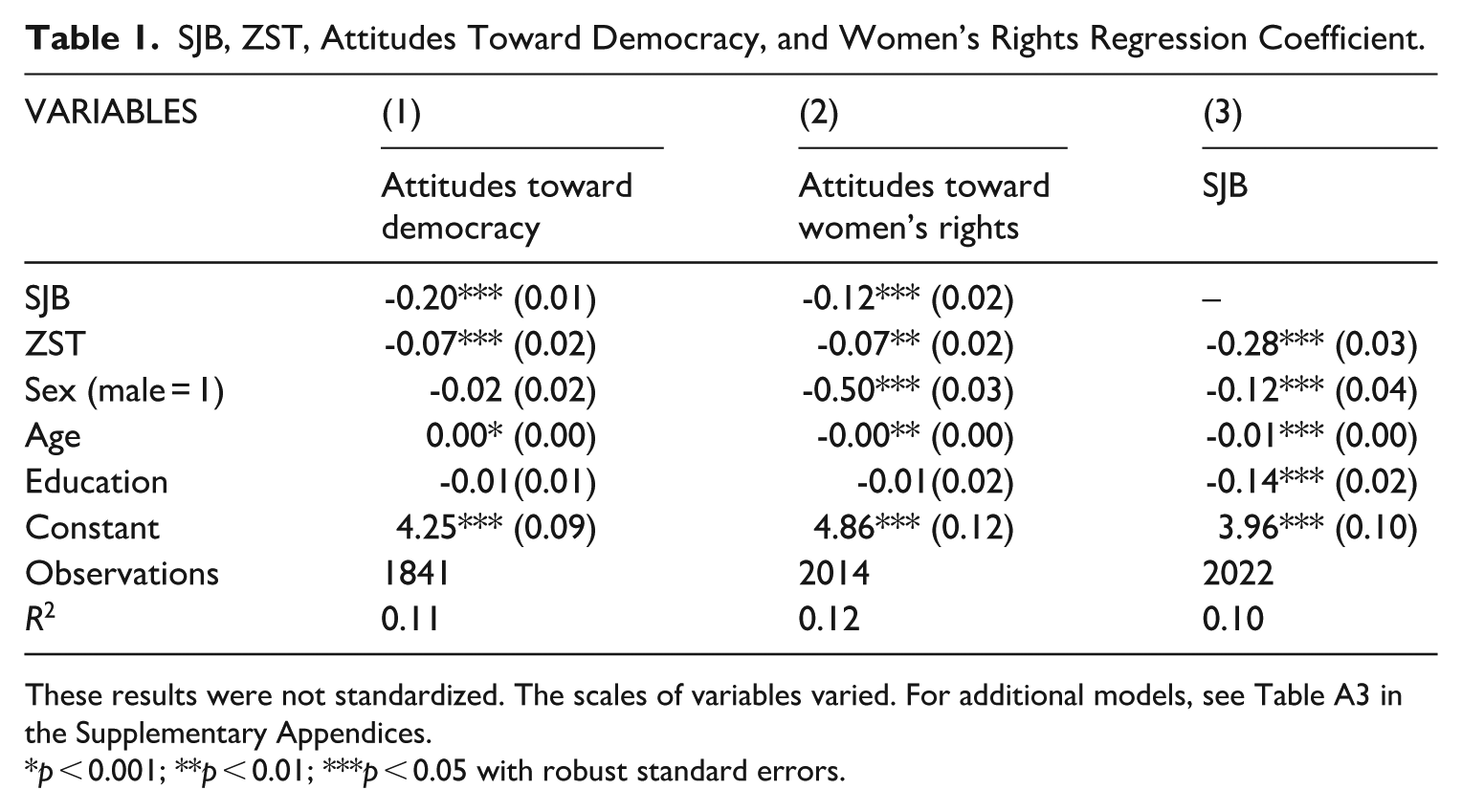
These results were not standardized. The scales of variables varied. For additional models, see Table A3 in the Supplementary Appendices.
p < 0.001; **p < 0.01; ***p < 0.05 with robust standard errors.
Table 1 shows that SJB had a statistically significant negative relationship with ATD and women’s rights. This finding is confirmed across models controlling for region-regime type using clustered robust standard errors (see Table A3 in the Supplementary Appendices). This means that high SJB correlate with low support for democracy and women’s rights, the latter being a proxy for liberal democratic values. This finding is consistent with the SJB conceptualization, as rooted in a SDO, which predisposes individuals for non-democratic attitudes, such as societal prejudice and hierarchical views (Ho et al., 2012). Because SJB are linked to the existing social system, individuals who endorse SJB may view women’s rights as a threat to the current social hierarchies, and SJB may contribute not only to rejecting women’s rights but also to legitimizing violence against women (Işık, 2008). Consequently, they may oppose women’s rights (Kosakowska-Berezecka et al., 2020), which could explain the negative correlation between systemic justification and support for women’s rights, thereby confirming H2.
A negative correlation was also found between ZST and ATD, a finding consistent across models controlling for region-regime type with clustered robust standard errors (see Table A3 in the Supplementary Appendices). This result supports earlier studies where ZST is often positively associated with values that align with non-democratic ideals, such as prejudice (Piotrowski et al., 2019). In addition, considering that individuals with extremist political ideologies (whether right or left) are likely to adopt ZST due to their tendency to view life in binary terms, some studies suggest that those with extreme attitudes are more likely to support authoritarianism compared to their moderate counterparts (Kelemen et al., 2014). These findings support H1.
The negative correlation between ZST and attitudes toward women’s rights can be explained by the fact that women’s rights are a component of liberal democracies. This negative correlation is consistent with the negative correlation between ZST and democracy. In addition, the nature of ZST may cause men to see women as competitors, leading to hostile attitudes toward them (Davidai and Ongis, 2019). Furthermore, SJB, based on conservative individuals and a low level of support for women’s equality, are likely influenced by conservative societal norms that shape attitudes toward women’s rights (Kostenko et al., 2016). Therefore, the relationship between these two variables is negative.
Interestingly, a negative regression coefficient was found between ZST and SJB, which revealed a negative moderated regression coefficient of −0.28*** after controlling for age, sex, and education (see model 3 in Table 1).
Previous studies suggested a connection between ZST, SJB, and ATD. This aligns with research findings that associate zero-sum beliefs with SDO (Esses et al., 2001). If zero-sum beliefs form part of a worldview that reinforces social hierarchy, negative attitudes toward marginalized groups (such as hostile sexism), and reluctance to support underprivileged groups may indeed reflect the perception that these groups are attempting to elevate their status (Kosakowska-Berezecka et al., 2020: 1287). However, the role of SJB can be more critical in the context of the relationship between ZST and democratic attitudes when SJB serves as a moderator in this relationship. Therefore, we conducted a moderation analysis examining SJB as a moderator of the relationship between ZST and ATD, as presented in Table 2.
Regression Coefficient for Zero-Sum Thinking and Democracy Support (System Justification as Moderator).
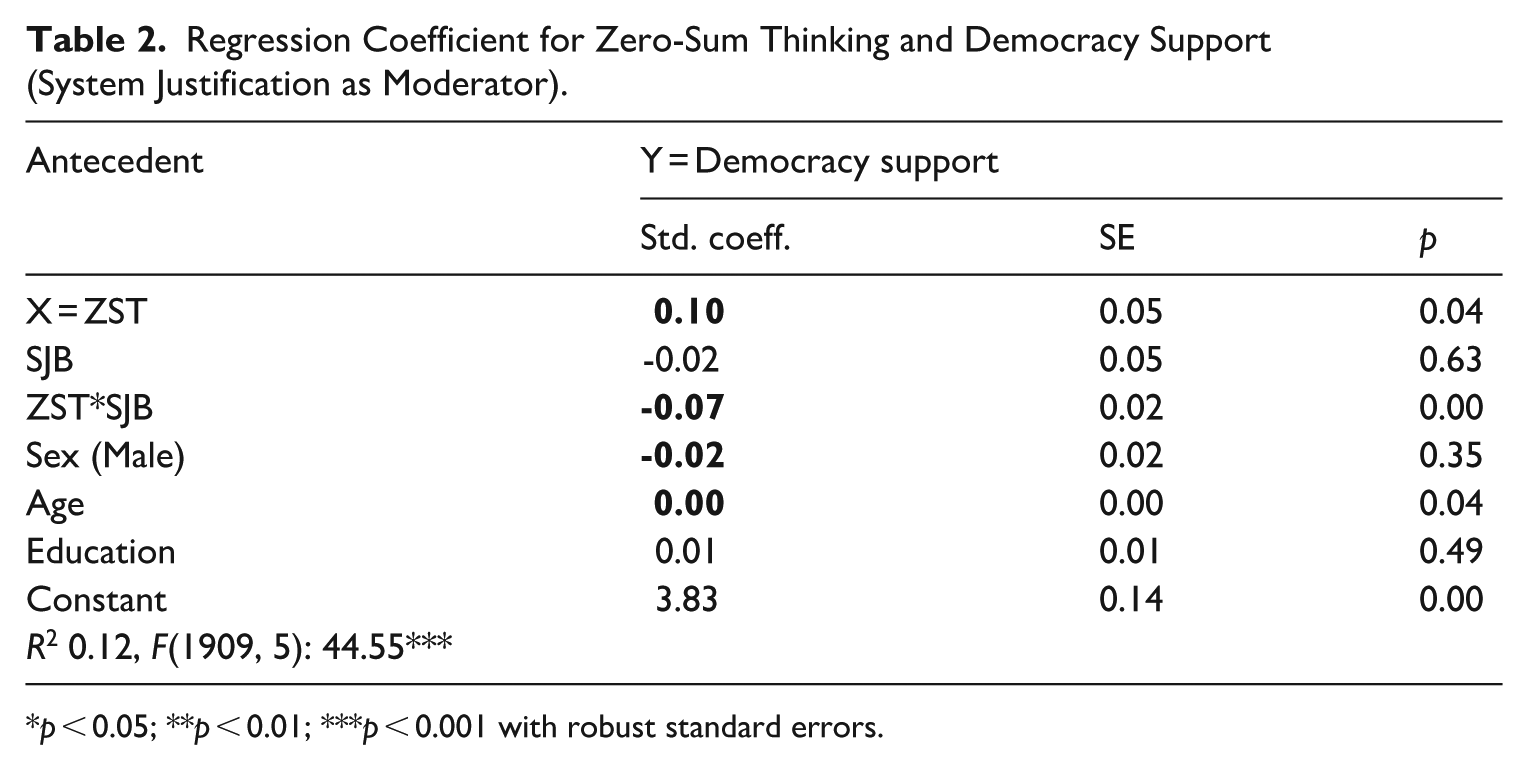
p < 0.05; **p < 0.01; ***p < 0.001 with robust standard errors.
Moderation analysis shown in Table 2 was conducted using SPSS macro (Hayes, 2012). The unstandardized regression coefficients are listed in Table 2. Notably, the interaction effect was significant, suggesting that SJB moderate the impact of ZST on support for democracy. This finding holds in models controlling for region-regime type and including a three-way interaction term of ZST by SJB by region-regime type, with clustered robust standard errors (see Table A4 in the Supplementary Appendices for details). Figures 1–3 illustrate these relationships. Figure 1 reveals that the association between ZST and democracy support is stronger among individuals with low ZST and weaker among those with high ZST. Moreover, SJB moderated low ZST to a lesser extent, although this finding was not significant (the y-axis, in Figure 1, shows the mean of democracy support, and the x-axis shows the mean ZST support).
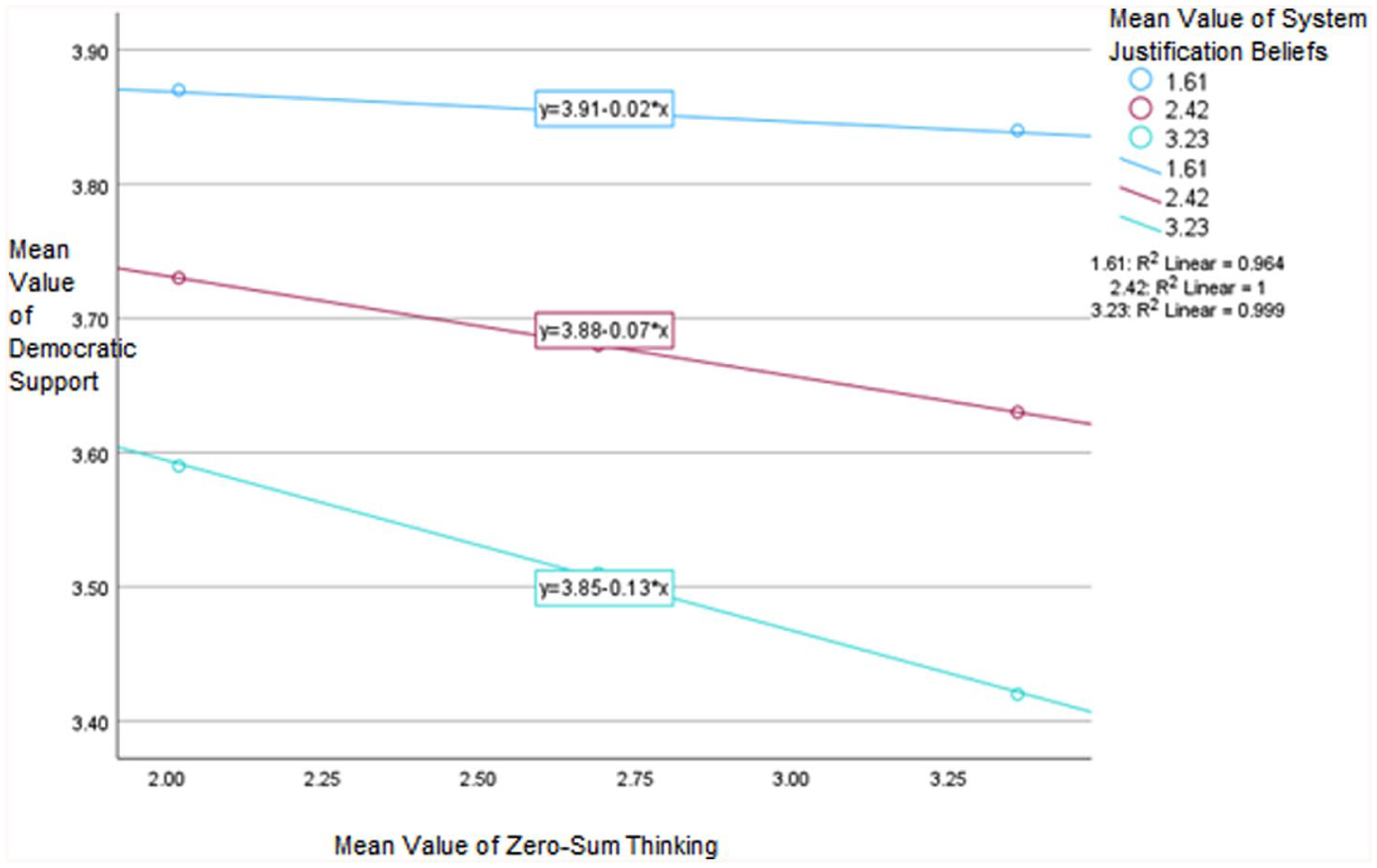
Moderation Model Including System Justification Beliefs as a Moderator.
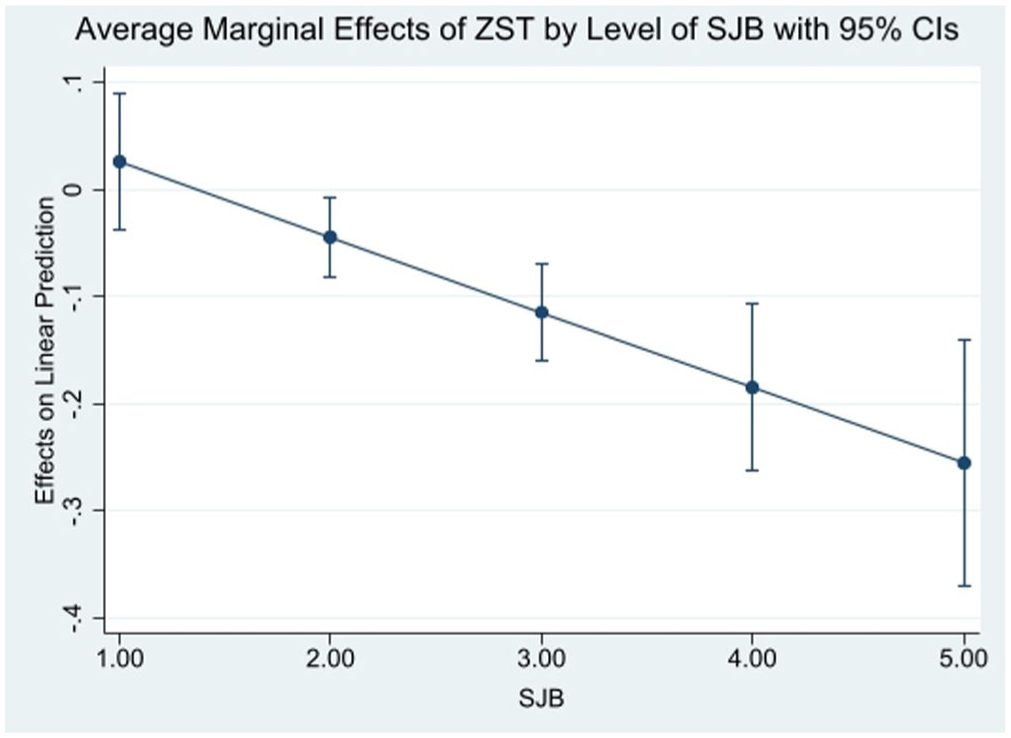
Average Marginal Effects of Zero-Sum Thinking by Levels of System Justification Beliefs (SJB).
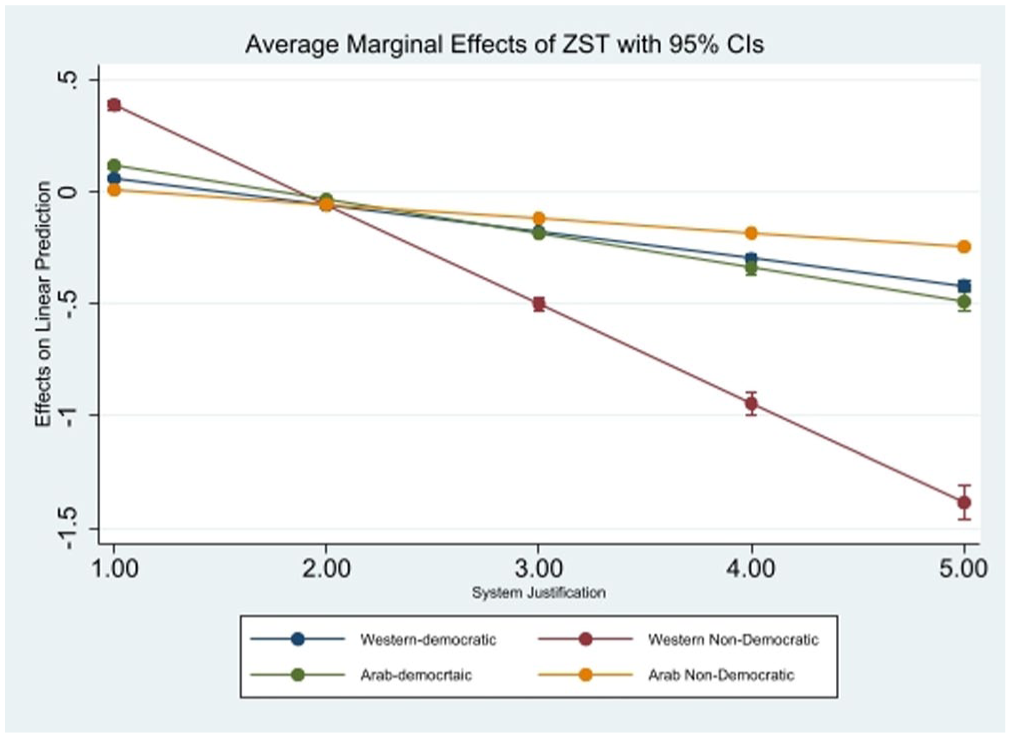
Average Marginal Effects of Zero-Sum Thinking (ZST) by Levels of System Justification Beliefs and Region-Regime Type.
Because marginal effects plots clarify interaction terms involving psychological moderators, we examined these as shown in Figure 2.
In addition, Figure 3 presents the marginal effects of ZST by levels of SJB and region-regime type.
Thus, the results indicate that SJB negatively influence support for democracy conditioned on ZST, a pattern consistent across all four region-regime types analyzed. However, the moderating effect of SJB on ZST is stronger in Western non-democratic contexts and weaker in Arab non-democratic countries, as shown in Figure 2. These findings suggest that individuals endorsing SJB are less likely to support democratic principles due to their preference for non-democratic norms associated with ZST. High SJB appears to function as a mechanism to uphold existing regimes. Given that ZST correlates positively with non-democratic norms (Piotrowski et al., 2019), SJB further diminish support for democracy.
These results are particularly important in the Middle East, especially in authoritarian regimes and during democratic transition periods, as individuals with high SJB are motivated to perceive the existing political system as fair and stable. Even if individuals hold SJB, they may not see democracy as necessary because they believe the existing system is already legitimate. This reduces the likelihood that ZST will translate into opposition to democracy. Since democracy often involves shifts in power dynamics, individuals high in SJB may resist these changes due to a preference for stability. Their inclination to justify the system weakens the impact of ZST, as they are more likely to see democracy as a threat rather than an opportunity. In rentier states with strong state legitimacy, high SJB contribute to regime stability. Even if some individuals hold ZST, their strong tendency to justify the current system limits the negative impact of ZST on democratic attitudes. This suggests that economic security and ideological legitimacy reinforce one another, making democratic transitions unlikely unless SJB declines. Conversely, where SJB are lower (e.g. post-Arab Spring states), ZST plays a stronger role in shaping anti-democratic attitudes. If democracy is perceived as a zero-sum game, where one group’s gain is another’s loss, it can fuel polarization and resistance to democratic consolidation. This helps explain why democratic transitions in the region often lead to instability rather than smooth transitions. SJB and ZST have not been extensively studied outside of Europe and North America, and existing research is limited to democratic states (Kelemen et al., 2014; Szabó and Lönnqvist, 2021). Our results are divided by region and regime type, focusing on the MENA region and comparing them with Western countries.
In sum, the findings support H3. Accordingly, the following section examines the roles of region and regime type in SJB and ZST separately, as well as in their combined relationship with ATD.
SJB and ZST 10 on Region and Regime Type
SJB is more prevalent among conservatives who may justify the existing social hierarchy (Nosek et al., 2009) and less prevalent among liberals (Napier and Jost, 2008a). Various surveys indicate a high number of conservatives in the MENA region (see World Values Survey (Haerpfer et al., 2022)), which accounts for the negative correlation between SJB and ATD. Furthermore, SJB is more prevalent in societies with more extreme social and economic inequalities than in those with less extreme inequality (Jost et al., 2004: 910). This is also consistent with the finding that SJB are more prevalent in developed nations (Vargas-Salfate et al., 2018). However, these explanations can be inaccurate as measuring attitudes toward regimes, including SJB, in non-democratic states can be challenging. Some scholars argue that “those who acquiesce are simply the passive recipients of ideology or are compelled by authorities to comply with the status quo, but they do not genuinely believe in it” (Jost et al., 2011: 6; Scott, 1990; Spears et al., 2001).
To examine the potential variations in attitudes toward SJB among respondents residing in different regions, we categorized these regions based on the geographic locations of the survey participants, indicating certain shared characteristics. 11 Descriptive findings are shown in Figure 4.
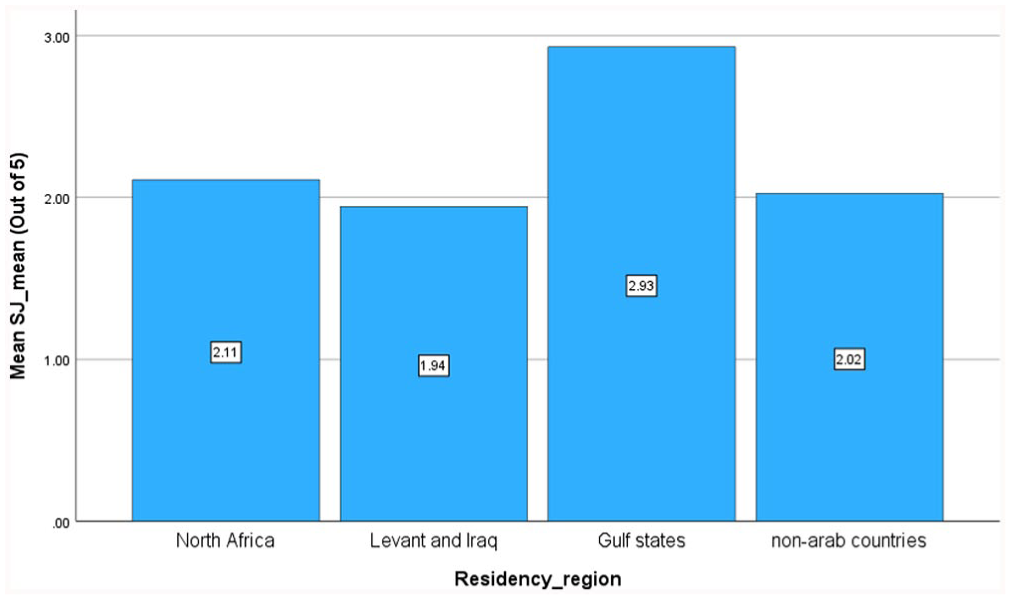
System Justification Based on Region of Residence.
A one-way analysis of variance (ANOVA) with Tukey’s test and least significant difference (LSD) was conducted to examine whether these differences were significant, and the results are shown in Table 3.
Mean Difference of System Justification Based on Region of Residence.
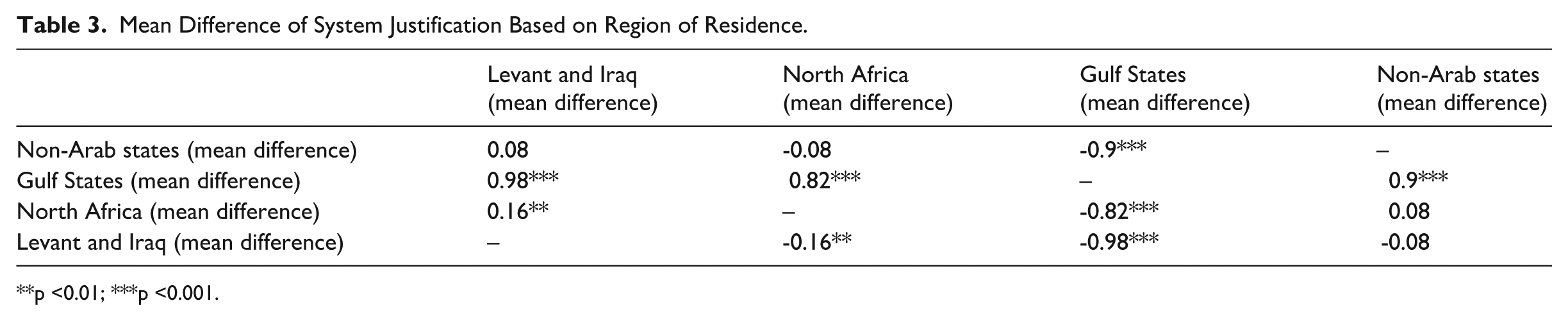
p <0.01; ***p <0.001.
Tukey’s test revealed differences in SJB among the three groups. The first group included Levant and Iraq, North Africa, and non-Arab countries; the second included non-Arab states and North Africa; and the third included the Gulf states.
The results indicate that SJB is higher in the Gulf States than in other countries. The high levels of SJB in the Gulf States can be attributed to the region’s stability, high socioeconomic status (World Bank, 2024), and the presence of rentier and legitimized regimes. Although not necessarily democratic, these regimes maintain a form of social contract based on religious or tribal arrangements, where legitimacy serves as a function of SJB (Blasi and Jost, 2006). Individuals from a high socioeconomic status are more likely to justify the system than those from a lower socioeconomic status (Jost and Banaji, 1994). Conservatism is also considered to contribute to regime justification (Jost et al., 1999). Furthermore, SJB can be linked to political socialization and the presence of a group with the power to reward or punish, with the result that people obey a regime that may sanction them for their attitudes (Sidanius and Pratto, 1999). These factors apply to the Gulf States.
The Gulf States have largely remained insulated from the political turmoil, economic crises, and civil wars that have destabilized much of the MENA region. Research suggests that individuals justify existing systems as a psychological mechanism to reduce uncertainty and existential anxiety (Kay and Zanna, 2009). In the aftermath of the Arab Spring, authoritarianism in the Gulf has increasingly been equated with stability and security, reinforcing SJB (Hadenius and Teorell, 2006). Moreover, the rentier state model further strengthens these attitudes. Given that Gulf governments redistribute oil wealth in the form of subsidies, public sector jobs, and social services, citizens often develop an implicit contract with the state, wherein economic benefits lead to higher acceptance of authoritarian governance (Ross, 2001). Studies have shown that economic dependence on the state can reduce demand for political rights, as people prioritize material security over democratic aspirations (Blasi and Jost, 2006). This aligns with broader SJT findings, which indicate that individuals from higher socioeconomic backgrounds are more likely to support the status quo (Jost et al., 2017).
Beyond economic and political stability, the Gulf States also rely on ideological framing and entrenched social hierarchies to reinforce system justification. Political socialization plays a key role, as state-controlled education, media, and religious institutions continuously frame the ruling order as just, natural, and even divinely sanctioned (Jost et al., 2011). These narratives cultivate perceptions of rulers as benevolent protectors, fostering a stronger sense of loyalty to the regime. In addition, highly stratified social structures in the Gulf reinforce deference to authority, as tribal, religious, and monarchical hierarchies are deeply embedded in the social fabric (Jost et al., 2004). The link between conservatism and system justification is particularly relevant in this context, as conservative individuals tend to favor order and tradition, making them more likely to accept and legitimize authoritarian rule (Napier and Jost, 2008b; Nosek et al., 2009). Gulf rulers often further bolster their legitimacy through some religious discourse, portraying the monarchy as aligned with Islamic principles, which reinforces the perception of the system as both moral and necessary (Sidanius and Pratto, 1999). Together, these factors create a powerful framework that sustains system justification across the region.
In other countries, SJB is low for distinct reasons. For example, in North Africa, the socioeconomic situation is poor, and regimes are generally expected to reflect the will of the people, as most are republics rather than monarchies (except for Morocco). Most of these countries also allow for greater levels of personal freedom compared to the Gulf monarchies (Freedom House, 2024). The lack of support for SJB can be observed through opposition to existing regimes, as seen during the Arab Spring and subsequent protests. The literature supports this, stating that if individuals lacked SJB motives, then anyone who was disadvantaged on either an individual or group basis would, given the slightest opportunity, challenge the system and reject it as unfair and exploitative (Blasi and Jost, 2006: 1130).
In conclusion, SJ aligns with the self-interest of those who benefit from the current system, but conflicts with the self-interest of the disadvantaged.
SJB, ZST, and Regime Type
This analysis examined how SJB and ZST vary across political regimes. Figure 5 presents the descriptive results supporting ZST and SJB in different regime contexts.
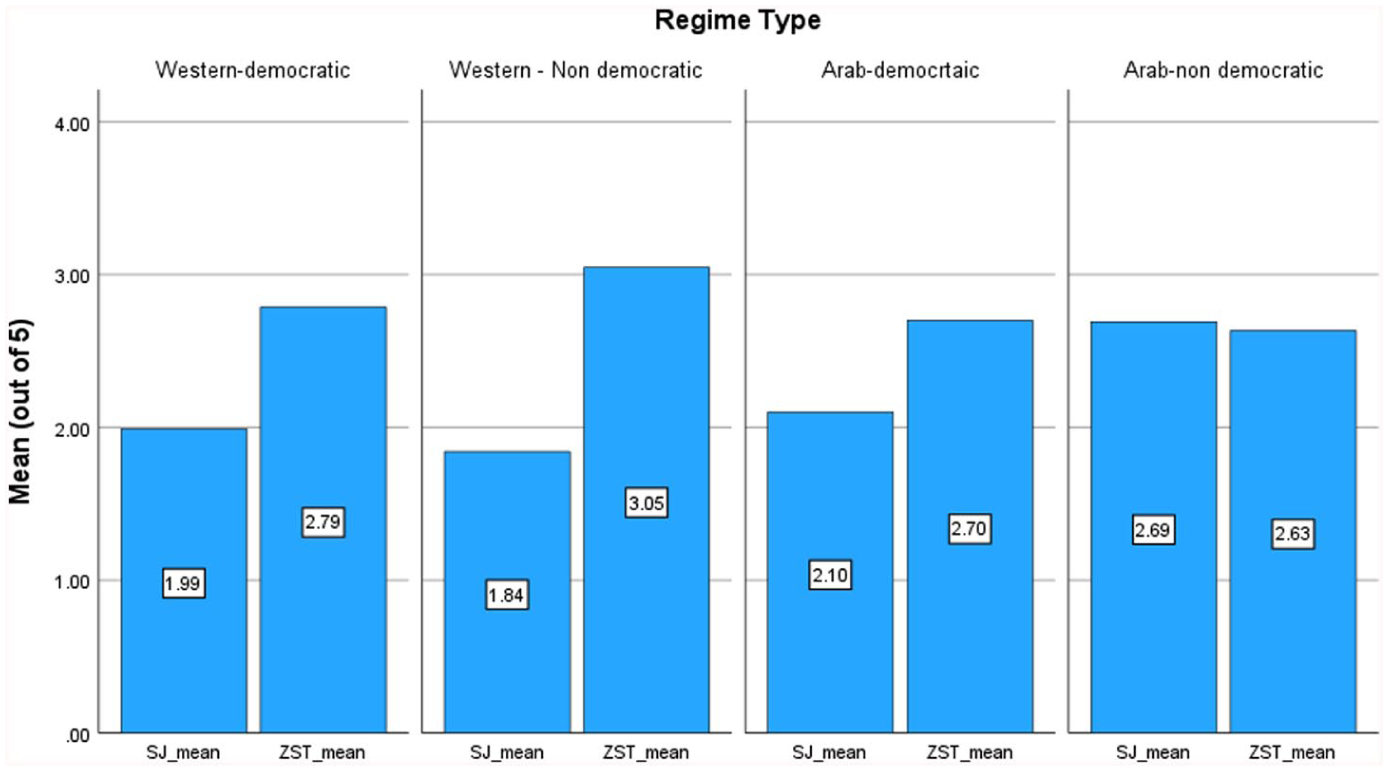
SJB and ZST Based on Regime Type. 12
The results show that the level of SJB is generally low among participants and lower among people living in democratic regimes than that in other countries. One-way ANOVA was conducted to determine whether the differences across the regimes were significant (see Table 4).
Mean Difference of System Justification Based on Regime Type.
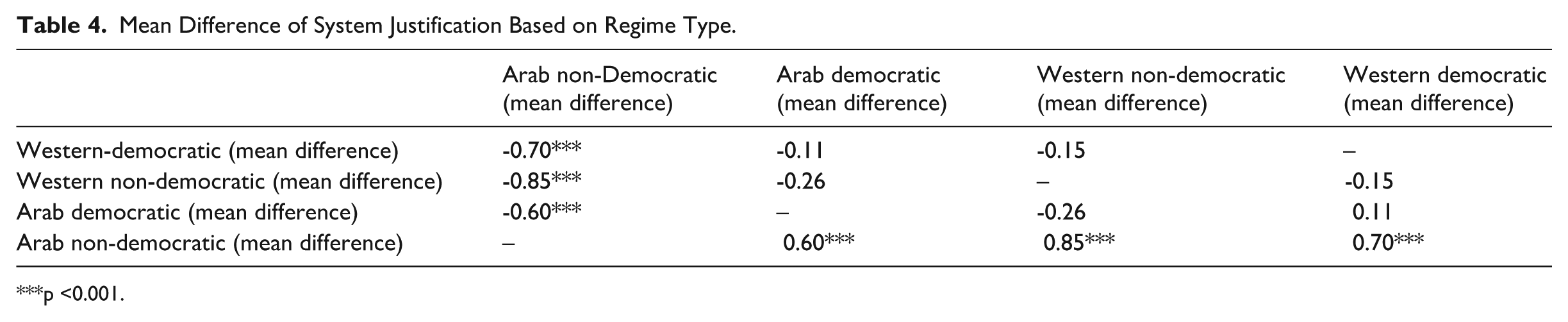
p <0.001.
The results suggest that residing in a democratic state significantly lowers SJB compared with living in a non-democratic state. Furthermore, there is no significant difference in the average prevalence of SJB between Western and Arabic democracies or between Western and Arabic democratic states and Western non-democratic states. Overall, these results indicate that SJB are low in democratic regimes. These findings align with those described by Kelemen et al. (2014), who observed that Hungarians did not justify the existing establishment. This suggests that living in a democratic regime does not necessarily lead to regime justification.
Notably, the results of this study contradict, to some extent, evidence showing that in certain circumstances, individuals living under a democratic regime and feeling responsible for their circumstances tend to justify the system (Jost et al., 2003). Conversely, in the context of authoritarian regimes, our results found high levels of SJB, consistent with the findings of Lönnqvist et al. (2021). The relationship between authoritarianism and SJB is strong, as noted by Lönnqvist et al. (2021), who state that Authoritarianism and SJB are closely associated constructs (Osborne and Sibley, 2014; Wilson and Sibley, 2013)—they share an attachment to “things as they are,” a resistance to social change, and an ideological commitment to the status quo, religion, and tradition. (See also Jost and Kende, 2020: 4)
SJB can also benefit individuals in poor conditions by “making people feel better about their situation regardless of what this situation may be” (Jost and Hunyady, 2003: 146). The low prevalence of SJB observed in democratic states reflects the nature of democratic regimes, in which people’s attitudes often include criticism, opposition, and dissatisfaction with the current reality and regime.
Before examining the relationship between SJB and ATD based on regime type, it is important to note that the descriptive results indicate strong support for democracy among individuals in various countries. Figure 6 shows that support was particularly high among those living in democratic states.
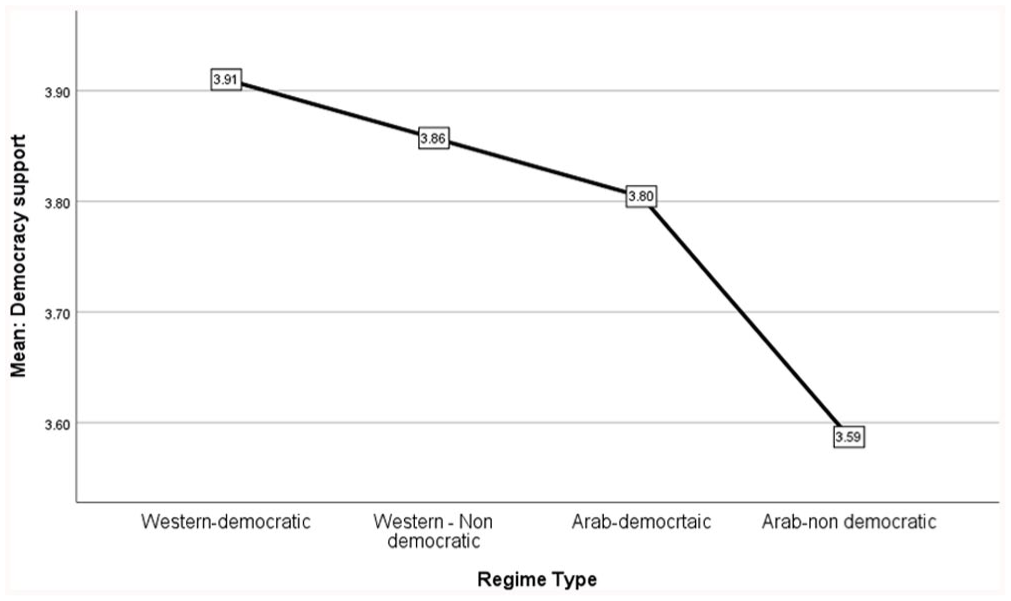
Attitudes Toward Democracy Based on Regime Type.
Finally, an additional examination of the relationship between SJB and ATD based on regime type was conducted (Table 5).
SJB, ZST, and Attitudes Toward Democracy (Based on Regime Type) Regression Coefficient.
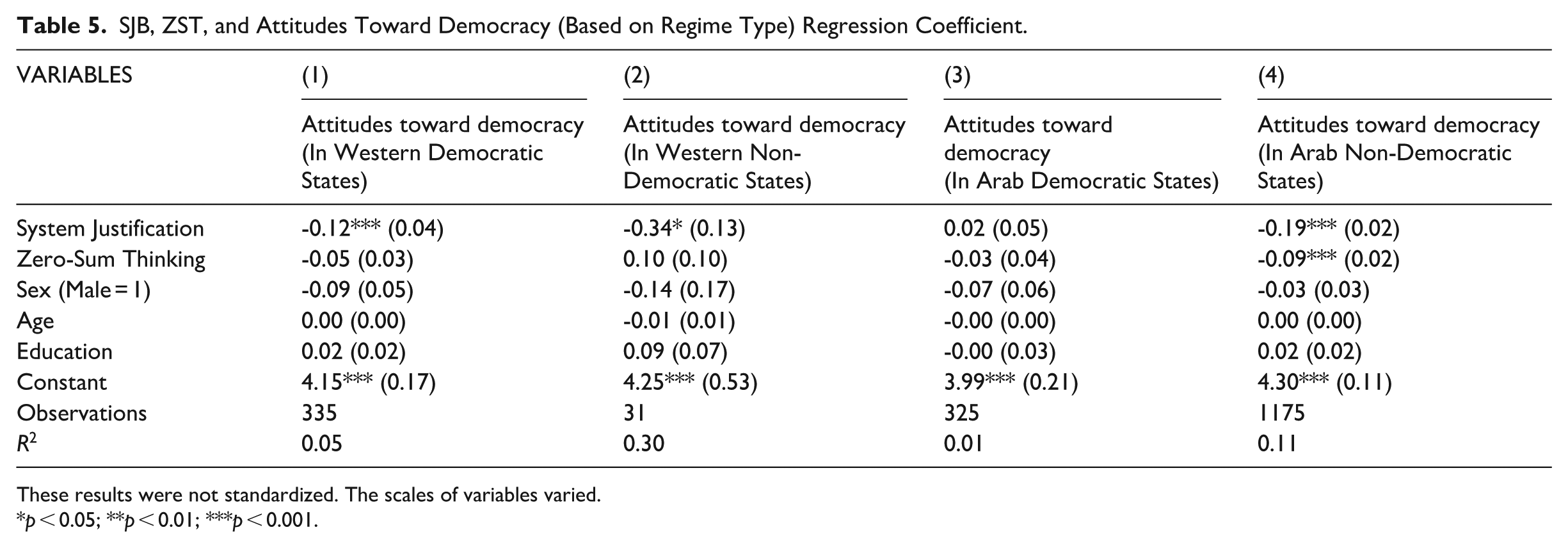
These results were not standardized. The scales of variables varied.
p < 0.05; **p < 0.01; ***p < 0.001.
SJB were negatively correlated with democratic support in all cases except in Arab democratic states, where it was insignificant. These results are consistent with the identification of SJB, conceptualized as grounded in SDO, as a predictor of non-democratic attitudes (Ho et al., 2012).
These results contradict the idea that SJB is linked to a low level of authoritarianism (Langer et al., 2020). Given that SJB entail perceiving the governing system as fair, balanced, and just (Rutto et al., 2014), it was expected that individuals’ justification of democracy would depend on their country’s current regime. However, our findings did not support this hypothesis. We found a negative correlation between SJB and its relationship with democracy support based on factors associated with the SJB itself and not the type of regime in force. However, a previous study found that SJB is linked to a system’s attributes, leading individuals to develop varying attitudes toward the regime based on its specific aspects (Jost et al., 2017). Consequently, in non-democratic nations, individuals who subscribe to SJB tend to hold negative views of democracy. Our results indicate that support for democracy in democratic states is negatively correlated with SJB. The underlying reason for this is not the legitimacy of the regime (which exists) but rather the perceived low benefits of the democratic system and the openness to criticism that prevails in such regimes.
The negative coefficient observed between SJB and ATD also suggests that individuals supporting the current system may expect it to be more beneficial than it actually is. In addition, this perspective is likely influenced by the expectation of stability within the existing system (which is mostly authoritarian) compared to the perceived instability often associated with democracy, which is particularly evident in the MENA region following the Arab Spring, the mixed outcomes of democratic transitions, and instability in the only democratic state in the region, Tunisia. Furthermore, the connection between SJB and the long- and short-term stability of regimes (Kay and Zanna, 2009) offers insights into low support for democracy. This stems from the belief that democracies, particularly those that are not fully established, are less stable than authoritarian regimes (Hadenius and Teorell, 2006). Moreover, hybrid or weak democracies are often viewed as more unstable and less effective (Haggard and Kaufman, 2012), a preference not held by the proponents of SJB.
Another question to consider is why individuals respond as though they expect a weak democracy rather than a fully established one, leading them not to support democracy despite the stability of fully established democracies. This can be attributed to the lack of successful transitions observed in the MENA region and to the large majority of people living under and justifying authoritarian regimes. The literature indicates that SJB are more closely associated with autocratic than democratic systems (Jost et al., 1999: 106). Finally, the negative correlation found between SJB and support for democracy across various regimes suggests that high expectations regarding democracies are not always realistic.
It is important to note that although ZST is lower in Arab non-democratic states, there were no significant differences between Arab non-democratic states and Arab and Western democracies (see Table A2 in the Supplementary Appendix). This indicates that these attitudes are not based on regime type. The results in the above table show that the ZST does not have a significant relationship with support for democracy based on regime type. A positive relationship between ZST and ATD due to the benefits of such a regime has been suggested. However, our findings are consistent with those of previous studies suggesting that belief in ZST is negatively related to democracy and democratic values, including pluralism (Różycka-Tran et al., 2015). Nevertheless, these attitudes are not related to regime type, but are likely influenced by the perceived benefits of a specific regime rather than the type of regime.
The results provide partial support for H4. As expected, both SJB and ZST show stronger negative associations with support for democracy in authoritarian regimes, highlighting their role in legitimizing hierarchical, non-democratic systems. In democratic contexts, these effects are weaker or non-significant, suggesting that the influence of these psychological dispositions is context-dependent and shaped by perceptions of democracy’s legitimacy, stability, and role in maintaining social order.
Conclusion
This study examined the correlation between ZST and SJB with ATD and women’s rights, the latter being a proxy for liberal democratic values. The primary finding was that both ZST and SJB were negatively correlated with ATD and women’s rights. Specifically, ZST was negatively correlated with SJB. In the moderation model in which SJB moderate the relationship between ZST and democracy, ZST showed a positive correlation with democracy, whereas SJB negatively impacted this relationship.
These findings contribute to the debate on the roles of ZST and democracy. It has been suggested that the relationship between ZST and ATD may be positive due to the benefits of such a regime, although some studies have concluded that belief in ZST is negatively related to democracy and democratic values, including pluralism (Różycka-Tran et al., 2015). Our results show that ZST correlated negatively with democracy, as people adopting high ZST perceived it as unbeneficial and as a rejection of the ruling system. For instance, people may compare democracies such as Tunisia, characterized by difficult economic conditions, to authoritarian regimes in the Gulf, which still provide benefits to the population. Moreover, the negative correlation may derive from the instability accompanying transitions to democratic rule or from unmet high expectations of such regimes. The results also indicate that high levels of SJB act as mechanisms to uphold the existing regime. This finding indicates that ZST is typically positively correlated with non-democratic norms (Piotrowski et al., 2019). Consequently, SJB reduce support for democracies. Our results also showed that SJB are higher in authoritarian regimes than in other types of regimes. In addition, a negative correlation was found between SJB and support for democracy, irrespective of whether the regime was democratic. Finally, SJB were more prevalent in conservative regions. These results can be partially explained by the SJT, which suggests that people maintain positive attitudes toward a regime because it satisfies their psychological needs, including epistemic, existential, and relational needs, even if it does not meet their basic and equal needs (Kesberg et al., 2024). However, the findings show a high SJB in wealthier Gulf States, where people experience better socioeconomic conditions. SJB are higher in regions with better socioeconomic conditions and conservative societies, like the Gulf region, than in regions with lower socioeconomic conditions, which tend to be less conservative than the Gulf States.
While the literature does not consistently show a definitive correlation between SJB and social status, the prevailing belief is that SJB are more common among marginalized groups. Nonetheless, there is evidence that marginalized groups are less likely to justify the system, with individuals of higher social status being more inclined to do so (Kesberg et al., 2024). These results suggest that living in countries with good socioeconomic conditions may increase SJB. Overall, these findings indicate that better socioeconomic conditions and conservatism within a state justify the existing systems. In addition, these attitudes and results may be influenced by factors such as fear of the regime, potential costs of opposition, particularly under repressive conditions, or personal benefits gained from the regime (Owuamalam et al., 2023). Finally, the results show that SJ correlates with negative ATD, regardless of whether the regime is democratic. This supports recent research by Nakagoshi and Inamasu (2023), in which it is argued that SJB lead people to support conservative regimes and that SJB themselves include non-democratic attitudes. In summary, the results strongly support the first three hypotheses: both SJB (H2) and ZST (H1) are negatively associated with democratic support, and SJB moderate the influence of ZST, weakening its negative effect (H3). H4 receives partial support: these effects are more pronounced in authoritarian regimes and weaker or ambiguous in democratic contexts. These findings underscore the importance of accounting for both psychological dispositions and political context when studying democratic attitudes.
This research makes general contributions to the literature, as well as specific empirical and theoretical contributions. Three main contributions can be identified: (1) the integration of psychological constructs such as ZST and SJ into the analysis of democratic attitudes; (2) the examination of these psychological factors in a non-Western context, particularly focusing on the Arab population, which offers valuable cross-cultural insights; and (3) the analyses with the interaction effect to explore how SJ moderates the effect of ZST on democratic attitudes, providing a deeper understanding of how these psychological factors interact across different political systems.
This study makes theoretical and empirical contributions to the literature in the field by demonstrating that SJB moderate the relationship between ZST and ATD. We also identified a negative regression coefficient between ZST and SJB. Furthermore, we clarified that the negative correlation between SJ and ATD was not dependent on regime type and is present across various regimes. The present research also contradicts the SJT by concluding that people justify regimes not based on satisfying their psychological needs but on reality, and even low socioeconomic conditions may reduce SJB.
Empirically, this study examines these attitudes in different contexts beyond Europe and the US, highlighting that the levels of SJB and ZST are context-dependent, as evidenced by the different regions in MENA. Overall, these findings suggest the need for a re-examination of current theories on the roles of SJB, ZST, SJ, and ATD. In addition, from an empirical perspective, these findings highlight the need to consider both SJB and ZST when assessing public receptivity to democratic reforms, emphasizing that efforts to promote democracy must address underlying ideological and psychological justifications for existing systems rather than focusing solely on institutional reforms. Furthermore, research shows that support for democracy, along with other factors such as a regime representing people’s ambitions, identity, foreign policy positions, military strength, and economic stability (Khatib and Ghanem, 2018), reflects the will of the people in the Arab region. To achieve high system justification, these factors should be considered; otherwise, people may express preferences and make compromises, although this may not align with their ideals. For policymakers who want to promote democracy, efforts should focus on reframing democracy as a system that benefits all, and policy strategies such as Civic education programs, inclusive economic policies, and power-sharing mechanisms can reduce zero-sum perceptions, making democracy more appealing.
Future research could build on these findings by investigating the impact of education and economic reform on SJB and ZST in authoritarian regimes. Given that political socialization plays a crucial role in reinforcing system justification (Jost et al., 2011), examining how educational curricula in the Gulf States and other authoritarian regimes shape political attitudes could yield valuable insights. Similarly, exploring whether economic diversification away from rentierism reduces SJB by altering citizens’ dependency on state-provided benefits would be a valuable direction for future research.
Although the results were based on a substantial sample of 2250 participants and reflected belief-based attitudes, the sample was convenient and not necessarily representative. Furthermore, few countries were included in this sample, which limits the exploration of country-specific dynamics that may influence attitudes. Therefore, it is important to mention that these findings should be interpreted primarily within the MENA context. Although they provide valuable insight into how psychological dispositions shape democratic attitudes, they are not intended as universal claims. Instead, they illustrate how system justification and ZST operate under specific conditions in the Arab world and MENA region. Nonetheless, the results carry comparative implications: they suggest that similar dynamics may emerge in other regions where authoritarian resilience, rentierism, or conservative social norms interact with psychological dispositions. Future research should explicitly test whether these mechanisms extend beyond the Arab and MENA context. In addition, the data collection timeframe, which coincided with the COVID crisis, posed considerable limitations. However, the timing of data collection was appropriate for the research objectives, as the situation in the Middle East was relatively less strained at that time.
Supplemental Material
sj-docx-1-psw-10.1177_14789299251387901 – Supplemental material for Exploring Zero-Sum Thinking and System Justification: Impacts on Attitudes Toward Democracy Among Arab Populations
Supplemental material, sj-docx-1-psw-10.1177_14789299251387901 for Exploring Zero-Sum Thinking and System Justification: Impacts on Attitudes Toward Democracy Among Arab Populations by Ibrahim Khatib, Abdelkarim Amengay, Mohamed Abdelrahman and Azzam Amin in Political Studies Review
Footnotes
Author’s Note
Ibrahim Khatib is now affiliated with University of Oxford, Oxford, UK.
Mohamed Abdelrahman is now affiliated to University of Oxford, Oxford, UK.
Declaration of conflicting interests
The authors declared no potential conflicts of interest with respect to the research, authorship, and/or publication of this article.
Funding
The author(s) disclosed receipt of the following financial support for the research, authorship, and/or publication of this article: Open Access funding provided by the Qatar National Library.

Supplemental material
Additional supplementary information may be found with the online version of this article.
Table A1: Descriptive Statistics.
Table A2: Mean Difference of ZST Based on Regime Type.
Figure A1: Mean of the Main Variables.
Table A3: SJB, ZST, Attitudes Toward Democracy, and Women’s Rights Regressions (Full Models).
Table A4: SJB Moderation Effect on ZST.
Notes
Author Biographies
References
Supplementary Material
Please find the following supplemental material available below.
For Open Access articles published under a Creative Commons License, all supplemental material carries the same license as the article it is associated with.
For non-Open Access articles published, all supplemental material carries a non-exclusive license, and permission requests for re-use of supplemental material or any part of supplemental material shall be sent directly to the copyright owner as specified in the copyright notice associated with the article.
