



Abstract
It is increasingly common for politicians to experience online harassment. Even though numerous studies show the prevalence and impact of online abuse towards politicians, the broader societal impact of this phenomenon is understudied. This study focuses on the deterring effect that witnessing online abuse towards politicians could have on bystanders, testing to what extent online intimidation influences the appeal of political office. This pre-registered project examines whether exposure to abusive or sexist Twitter comments towards politicians weakens the interest of UK citizens, women especially, in pursuing political office. We hypothesized that seeing intimidating Twitter comments addressed to politicians leads to less political ambition in bystanders, especially if their gender identity aligns with that of the targeted politician. Sexist abusive comments were expected to have a greater impact on women participants than non-gendered abusive comments. The findings show that citizens are generally not easily deterred by exposure to abuse. However, we find differential effects that are concerning for political participation and female representation. There is evidence that sexist comments do discourage women observers. Respondents also generally espouse very negative expectations about the online experience of political aspirants.
Introduction
Online abuse towards politicians in the UK is on the rise (Gorrell et al., 2020). There is a growing concern among political parties and scholars that the rampant online intimidation will scare off potential candidates who do not relish the prospect of having to put up with hate and aggression online (Harmer and Southern, 2021; Saris and van de Ven, 2021). While numerous studies show the prevalence of online abuse and the effects it has on officeholders and candidates, the broader societal impacts are understudied. This study tests whether witnessing online abuse towards politicians indeed deters bystanders from aspiring to pursue political office themselves. If witnessing abuse presents an obstacle to entry into politics, this would hurt democratic ideals of open political participation.
Even though most politicians receive abuse regardless of their gender, the content of the abuse that women politicians receive is often based on their gender (Harmer and Southern, 2021; Ward and McLoughlin, 2020). As Rossini (2022) argues, this type of incivility can best be defined as intolerance which poses a threat to pluralist democracy as it can disproportionally undermine and silence specific groups. Women MPs report higher levels of fear than their men counterparts as a result of their experiences with harassment and intimidation (Collignon et al., 2022: 37; Collignon and Rüdig, 2020: 427). Research has documented that this has direct detrimental effects for women’s representation, as women candidates modify their campaign activities in response to harassment, diminishing their chances of winning office (Collignon and Rüdig, 2021). Here, we study whether there are also more indirect negative consequences for equal representation. To this end, we test whether women are particularly turned off from politics by seeing a woman MP receiving abuse (as opposed to a man), and by abuse that is sexist in nature. Thus, we contribute both to our understanding of the impact of online toxicity on political participation broadly and on the gender gap in political ambition (e.g. Schneider et al., 2016).
To study the impact of witnessing online abuse towards politicians on the political ambitions of ordinary citizens, we conducted a survey experiment in the UK in 2022. The prevalence of online abuse is well-documented in the UK relative to other countries and the phenomenon has been on the political and societal agenda for some time. MPs from both sides of the political spectrum have spoken out strongly against the harassment they receive while fulfilling office and the effect this has on themselves and their relatives (BBC, 2021). In our experiment, participants were exposed to fictional politicians receiving abusive or sexist comments on Twitter/X, 1 after which they were asked about their interest in ever pursuing political office in the future. The research design, hypotheses, sampling plan and analysis plan were pre-registered before the data collection took place (https://osf.io/8yx9v/?view_only=49d811250d4249daa2882af374a0c2da).
The results show that citizens are not as easily deterred from pursuing political office as might be expected. Both men and women in our sample did not lower their nascent political ambition in response to seeing a politician getting abusive comments on Twitter, even if they shared their gender. Still, differential effects give reason for concern. Women bystanders appear to be deterred by sexist abuse specifically. This could ultimately affect gender balance in political office. In addition, citizens perceive abuse towards politicians to be widespread, and large numbers list this as a reason to stay out of politics. We reflect on the implications of these results and possible avenues for further research are discussed.
Theoretical Framework
The Effect of Online Abuse
It has been a long-standing worry that virtual settings encourage anti-normative and anti-social behaviour (Christopherson, 2007: 3050). Online anonymity and lack of social cues can lead to disinhibition, which can result in negative behaviours, such as verbal abuse (Cheng et al., 2015; Fox et al., 2015; Suler, 2004). Of particular concern is the apparent profusion of online vitriol directed at politicians. Theocharis et al. (2016) find that in European Parliamentary elections in Spain, Greece, Germany and the United Kingdom, 4%–18% of tweets mentioning candidates were impolite. Likewise, Gorrell et al. (2018) and Greenwood et al. (2020) report around 3% abusive tweets directed at British MPs from 2015 to 2019, which is similar to the findings of Ward and McLoughlin (2020). While these numbers may seem innocuous as they represent only a minority of tweets, the result is that most parliamentarians experience incivility and abuse on a regular basis. Southern and Harmer (2021) find that about 1 in 10 tweets sent to UK MPs is uncivil, with the result that 64% of MPs receive at least 1 uncivil tweet in a span of just 2 weeks. In a similar vein, in the 2 months studied by Ward and McLoughlin (2020), 62% of MPs get at least 1 abusive tweet. Thus, the majority of MPs routinely encounter online abuse.
Violence against politicians in a more general sense is often used as a tool to influence policy or to hinder politicians from doing their job effectively (Dal Bó et al., 2006; Daniele and Dipoppa, 2017). In line with this, online harassment is a potential impediment to MPs’ ability to speak and act freely, with due consequences for the quality of representation. Interviews with EU politicians validate this concern (Inter-Parliamentary Union (IPU), 2018). A substantial portion of interviewees who have experienced online harassment report curtailing their (online) behaviour in order not to provoke, for example, by self-censorship or by closing accounts on some platforms (idem: 10–11). This can have electoral consequences, as politicians who are less visible online might have trouble campaigning and might eventually lose votes (see, e.g. Baxter et al., 2016; Graham et al., 2013; Kruikemeier, 2014). Apart from electoral costs, many UK politicians assert great personal costs (BBC, 2021), and in some cases, online harassment plays a role in the decision to quit politics altogether. Four out of nineteen departing UK MPs in 2019 noted the intimidation they received online as one of the reasons they decided to leave office (Collignon et al., 2022: 2).
Beyond affecting the politicians directly targeted, online abuse may negatively impact others who observe it (cf. Edström, 2016). Bystanders witnessing online harassment may perceive it as ‘part of the job’ and infer that they would similarly be subjected to abuse if they were active in politics. A political career requires one to be a public figure, online and offline, while the online environment can be experienced as unsafe. Thus, observing online abuse towards politicians may lower the appeal of the job and may reduce the interest an individual has in pursuing a political career, or their nascent political ambition (Lawless and Fox, 2010a). This is in line with research that finds that perceiving high personal costs in running for office can diminish political ambition (Fulton et al., 2006). We therefore hypothesize:
Hypothesis 1 (H1; abuse main hypothesis). Seeing abusive Twitter comments addressed to politicians lowers bystanders’ political ambition. 2
In terms of the mechanism, we expect that a fear of being similarly targeted is driving down the appetite to run for office. If online abuse is seen as an inherent part of the job, it makes sense to anticipate abuse when you go into politics, which may be a reason not to become politically active. Therefore, we test whether expecting to be targeted mediates the effect of witnessing abuse. We expect a partial mediation effect instead of full mediation because simply witnessing negativity in combination with politics without experiencing personal risk has a dampening effect already (Pruysers and Blais, 2017). This mediation analysis therefore disentangles which part of the effect is due to feelings of being at risk and which part of the effect is more likely due to negative associations with politics in general.
Hypothesis 2 (H2; abuse mediation hypothesis). The negative effect of exposure to online abusive comments on political ambition is partially mediated by the fear of being targeted.
Gender Differences in Impact
Online harassment of politicians is often considered extra problematic for women, who are underrepresented in politics. Indeed, the prevalence of offline violence against women in politics should alert us to the possibility of aggression in online spaces (Krook, 2020; Krook and Restrepo Sanin, 2020). Yet, it is not clear that women politicians are targeted more often than their men counterparts online. For instance, Greenwood et al. (2020) and Gorrell et al. (2018) find that men politicians receive more abuse on Twitter than women politicians. Likewise, Ward and McLoughlin (2020) report that men MPs attract more abuse than women MPs. Southern and Harmer (2021) present a mixed picture, with men getting more abusive tweets in total, but more women receiving at least one abusive tweet. Rheault et al. (2019) also report mixed effects, with women politicians receiving more abuse than men, but only among highly visible politicians. Others find no significant effect of gender on received abuse at all (Theocharis et al., 2020).
We expect for both men and women that being of the same gender as the target increases the effect of the observed abuse. Sharing a characteristic like gender can activate social group identification, which can induce empathy with an in-group member (Aue et al., 2021; Van Vugt and Hart, 2004). Empathizing with the abused politician could, in turn, produce a vivid vicarious experience of the abuse and consequently a stronger deterrent effect. In addition, if onlookers believe that the politician is targeted because of their gender, being of the same gender may provoke a stronger fear of being targeted. Furthermore, women specifically may be deterred when reading uncivil comments towards a woman as this may activate existing preconceptions of women politicians encountering heightened resistance. In all, we thus expect that men are more affected by attacks to a male MP and women more those to a female MP, but there is also reason to expect otherwise. In particular, Pruysers and Blais (2017: 242) found that exposing people to negativity in politics decreases political ambition regardless of which group the information is targeted at. Although the a priori considerations are mixed, we hypothesize the following:
Hypothesis 3 (H3; abuse moderation hypothesis). The negative effect of seeing abusive comments is greater when bystanders have the same gender as the subject of the abuse.
Sexist Abuse
While women do not receive more uncivil tweets generally, they are more likely to receive tweets that question their position as politicians and that can be characterized as sexist (Greenwood et al., 2020; Southern and Harmer, 2021). To cite Gorrell et al. (2020: 13–14) ‘when [women] do receive abuse the likelihood is much greater than for a man that this will focus on [their] body, and not [their] politics’. Tweets that MPs receive often refer to their appearance as well as private life and tend to dismiss the existence of discrimination against women or include victim-blaming (Harmer and Southern, 2021: 2008; Sobieraj, 2020; see also Fuchs and Schäfer, 2021). Gender roles and misogynous language are often visible in the content of uncivil tweets that UK MPs receive (Bardall et al., 2020: 2005–2008; Ward and McLoughlin, 2020). In line with the misogynous nature of the incivility directed at women, women politicians tend to report higher levels of online harassment. Notably, 54% of women candidates in the UK and 40% of men candidates report receiving abuse on social media (Collignon et al., 2022), while 34% of women candidates in the UK report feeling very fearful due to online harassment while campaigning, compared with 14% of men (Collignon et al., 2022: 37). Qualitative research indicates that women MPs experience the environment in which they do their job as more hostile (Wagner, 2022).
These findings should be viewed in the context of women’s experiences of safety in the public sphere in general. Women curtail their online behaviour in the same way that they adapt their behaviour when they are harassed on the street, by silencing themselves to avoid escalating the violence and abuse (Megarry, 2014: 52). For instance, Nadim and Fladmoe (2021) found that 42% of women who have received hateful comments directed towards group characteristics say they will become more cautious online. Pre-emptively constraining behaviour and the fear of becoming a target is thus a common strategy.
It is important to note that fear, constraint and eventually disengagement are not the only possible responses to gender discrimination. Scholars have also observed the mobilizing effect of experiencing sexism, personally or through the media (Haraldsson, 2021; Moore, 2005). However, as Clayton et al. (2023) point out, such a positive reactance effect occurs only under certain conditions, for instance when rights or group safety are threatened (see also Derks et al., 2011; Hoyt et al., 2010). Since we expect that witnessing sexist abuse of politicians online makes the downsides of participating in politics salient, rather than those of not participating, we do not expect such a mobilizing reactance effect (cf. Haraldsson and Wängnerud, 2019).
While women may be affected most by observing sexist abuse online, we expect men to lower their political aspirations at least a little as well in response, as it could lead them to perceive public office as an unjust and therefore unattractive work environment (Miner-Rubino and Cortina, 2007). In line with this, Pruysers and Blais (2017) found that both men and women are less likely to want to pursue a career in politics after being exposed to negative stereotypes of women. Therefore, we expect:
Hypothesis 4 (H4; sexism main hypothesis). Seeing sexist Twitter comments addressed to female politicians leads to less political ambition in onlookers
Hypothesis 5 (H5; sexism moderation hypothesis). The negative effect of seeing sexist comments addressed to a female politician is larger for female bystanders than for male bystanders
We expect that the effect of sexist tweets is mediated by internal political efficacy in women. Because sexism can activate feminine stereotypes of low political competence, women bystanders might lose confidence in their own abilities and perceive political office as unattainable for them. This mechanism is consistent with stereotype threat, where negative stereotypes lead marginalized groups to underperform and disengage due to performance anxiety (Holman and Schneider, 2018). Previous work on other professions found that hostile sexism negatively affects the performance-based self-esteem and career aspirations of women bystanders (Bradley-Geist et al., 2015: 39). In addition, when it comes to politics specifically, self-perceived qualifications influence future considerations for running for office (Fox and Lawless, 2005; Lawless and Fox, 2010b). In line with this, Preece (2016) demonstrated that political self-efficacy can be primed, leading to higher political interest. Therefore, we expect that sexism triggers negative competence stereotypes about women in politics, leading to less self-esteem and consequently less political ambition in women:
Hypothesis 6 (H6; sexism mediation hypothesis). The negative effect of exposure to online sexist comments on political ambition is partially mediated by internal efficacy in women bystanders
Finally, we test whether women’s political ambition is affected more by exposure to sexist comments than by exposure to abusive comments. This allows us to determine whether the kind of comments that women politicians receive could play a role in disproportionally deterring women from office. We expect that sexist comments have more impact on women bystanders’ political ambition than abusive comments, whereas for men bystanders, the impact is similar. Sexist comments are directed at women specifically and exposure to sexism lowers performance self-esteem among women (Bradley-Geist et al., 2015). In addition, exposure to sexist comments could increase women’s perception of political careers as unsafe and therefore unappealing.
Hypothesis 7 (H7; abuse/sexism comparison hypothesis).
a. Women bystanders lower their political ambition more in response to sexist comments than to abusive comments directed at a woman politician.
b. Men bystanders express the same amount of political ambition in response to sexist and abusive comments directed towards a woman politician.
Methods
To test whether seeing politicians being abused lowers people’s political ambition, we pre-registered and conducted a survey experiment in the United Kingdom in 2022 (see https://osf.io/8yx9v/?view_only=49d811250d4249daa2882af374a0c2da). To determine the sample size, we performed a power analysis using the software programme G*Power, which led us to collect a total sample of 3220 respondents (see Supplemental Appendix A).
Treatments
We define abuse as degrading messages and/or messages containing profanity directed at a specific person (Bartlett et al., 2014: 24). In the literature on gendered violence against politicians, the terms abuse and incivility are used interchangeably (Gorrell et al., 2020; Harmer and Southern, 2021). Abuse and/or incivility are both generally understood as name-calling, swearing, insulting or aggressive language, or otherwise impolite communication (Rossini, 2022: 404; Ward and McLoughlin, 2020: 55). There is a meaningful difference between uncivil/abusive and intolerant discourse. The latter of which refers to discourse that is, in its content rather than its delivery, offensive and undermining towards particular groups in society. This is not mutually exclusive, abusive messages can also contain intolerance, and intolerant messages do not need to be abusive. This group-based harassment, for instance, in the form of slurs, when directed at groups who face structural and societal disadvantages, has the potential to incite more fear than non-group-directed hatred (Farris et al., 2016: 5; Nadim and Fladmoe, 2021: 248; Ward and McLoughlin, 2020). In this article, we test the effects of messages that reflect intolerance against women as a group, we refer to this as sexism (Krook and Restrepo Sanin, 2016). This reflects the real-world experiences of women politicians as the kind of abuse they receive is found to be qualitatively different than those received by men (Bardall et al., 2020: 2005–2008; Ward and McLoughlin, 2020). We compare the effect of sexist messages to the effects of messages that are simply abusive towards the person as a politician.
This study employs a between-subjects design to gauge the effects of abuse and sexism directed at politicians. We created one control and two experimental conditions, one for the abuse and one for sexism. In all conditions, respondents first saw a fictional Twitter profile of a Member of Parliament. Subsequently, they saw a tweet by the MP, immediately followed by five responses, the content of which varied over the experimental conditions. In the control condition, all five responses below the MP’s tweet were non-abusive. In the abuse condition, two comments were non-abusive and three contained abuse. In the sexism condition, there were two non-abusive responses and three sexist responses. Aside from the type of responses, the gender of the parliamentarian was manipulated to be either male or female. This was signalled by the name of the politician ( ‘Christine Jones’ or ‘Paul Smith’) and the photo in the Twitter profile. The control and abuse condition each had a variant with the male and the female MP, but the sexist condition was only made with the female MP receiving the sexist abuse. The reason for this was that, since men politicians are not typically a target of sexist abuse, it might have come across as unrealistic to participants. In sum, varying the gender of the MP and the type of responses received, there were five conditions, as summarized in Figure 1. The full treatments can be found in Supplemental Appendix B.
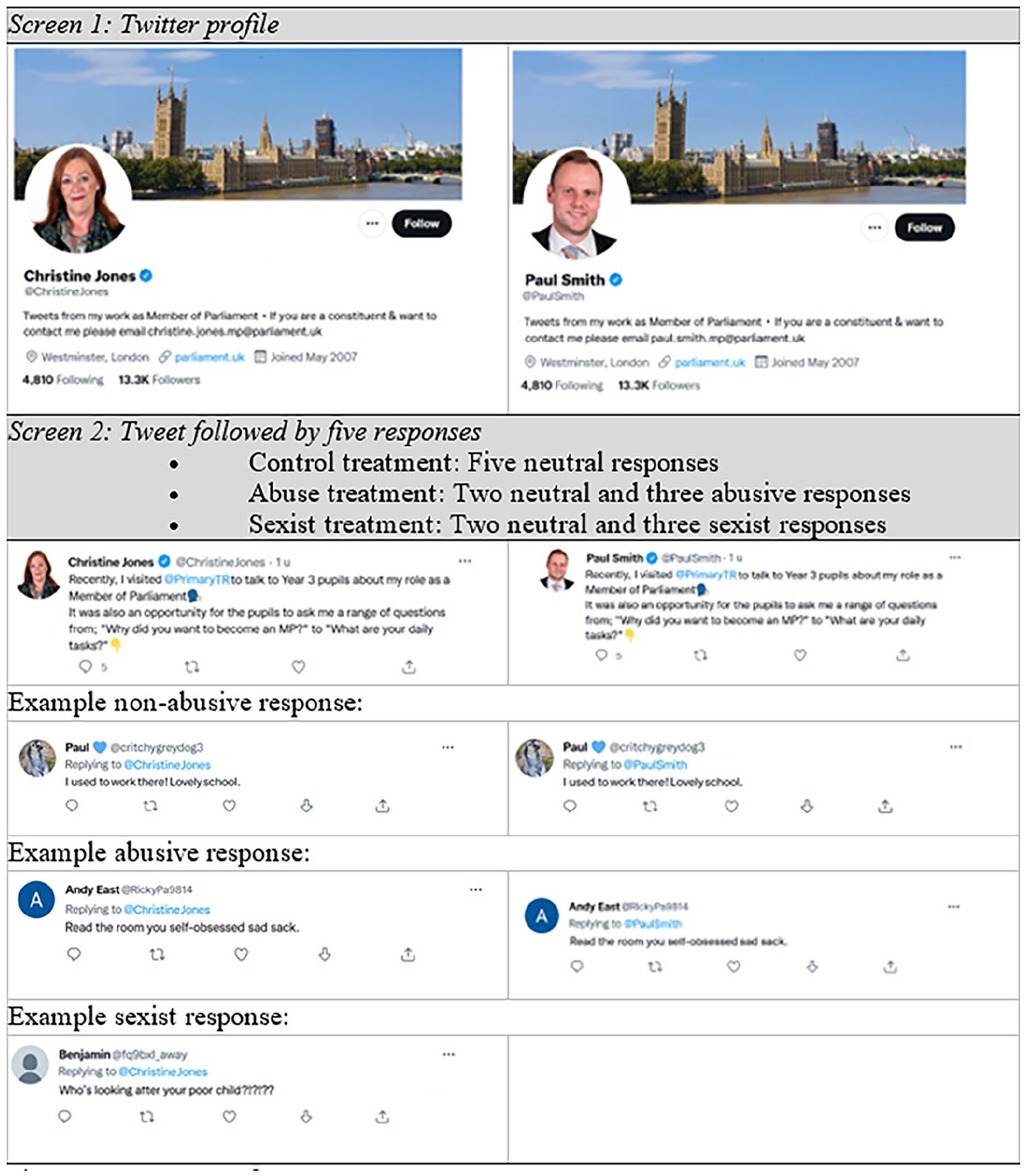
Summary of Treatments.
To increase external validity, the comments that were used for the treatment conditions were real (but anonymized) comments received by UK politicians on Twitter in February and March 2022. To exclude the potentially confounding effect of partisanship, the MPs were presented without party affiliation and with a fictional name. The tweet was about a non-partisan topic, namely a work visit to a local school. The profile photos depicted German politicians that UK respondents were unlikely to recognize. All experimental material was presented in Twitter layout to mimic realistic media use. A pre-test was performed among a convenience sample of 39 respondents. This included a manipulation check ( ‘How agreeable would you say these comments were in general?’ (0–10)) Respondents found the treatment conditions considerably more unpleasant (β = –5.6, p ⩽ 0.001) than the control conditions.
Ethics
There are ethical concerns attached to showing abusive comments. We aimed to mitigate these concerns by showing only abusive messages that occur in reality on social media and as such are not extreme enough to be removed by the platforms. In addition, participants were informed beforehand that they could be confronted with abusive language so that they could opt out (see Supplemental Appendix C for the full questionnaire). Another ethical concern is potentially durably lowering respondents’ political ambition, in particular of women respondents whose ambition is already low. To prevent this, we debriefed respondents with a text aiming to reaffirm their political efficacy and pointing out the fictional nature of the politicians. The study was granted approval from the AISSR Ethical Advice Board prior to distribution.
Sample
The survey was made in Qualtrics and administered online through Cint respondents in the UK between 3 May and 26 May 2022. Cint does not own any panels. They provide panellists from existing panels (approximately 180 UK panels). Each panel has its own way of recruiting panellists, for instance through online advertising, face-to-face or loyalty/member programmes. While Cint respondents are not a probability sample, comparisons show that experimental effect size estimates are similar to those of probability samples (Coppock and McClellan, 2019). We used quotas to ensure that the sample was similar to the general UK population with regards to age and gender.
The sample consisted of 1652 women and 1559 men. More than 90% of the sample self-identified as white and 8% of the sample identified as black, Asian or from an ethnic minority.
The mean age was 47.9 years. In terms of ideology, 47% of the respondents identified as centrist on a left-right scale, 28% identified as more right-wing and 25% as more left-wing. Notably, 39% of respondents indicated they would vote Labour if elections were held today and 28% of respondents would vote Conservative. To determine how representative the sample is of the UK population a couple of similarly measured demographics were compared with data from the Office for National Statistics (ONS), n.d. On gender and education level, our sample is similar (level 4 or higher 30,9% (sample) and 33,8% (ONS)), but our sample is slightly older than the general population (median = 47 (sample), median = 40,7 (ONS)). The average age of MPs in the UK was 51 years in 2019, so this is unlikely to affect our results (Watson, 2020). For political orientation, we compare our data with the European Social Survey (ESS) and find that left-right placements are similar (European Social Survey European Research Infrastructure, 2021). See Supplemental Appendix D for a description of the sample.
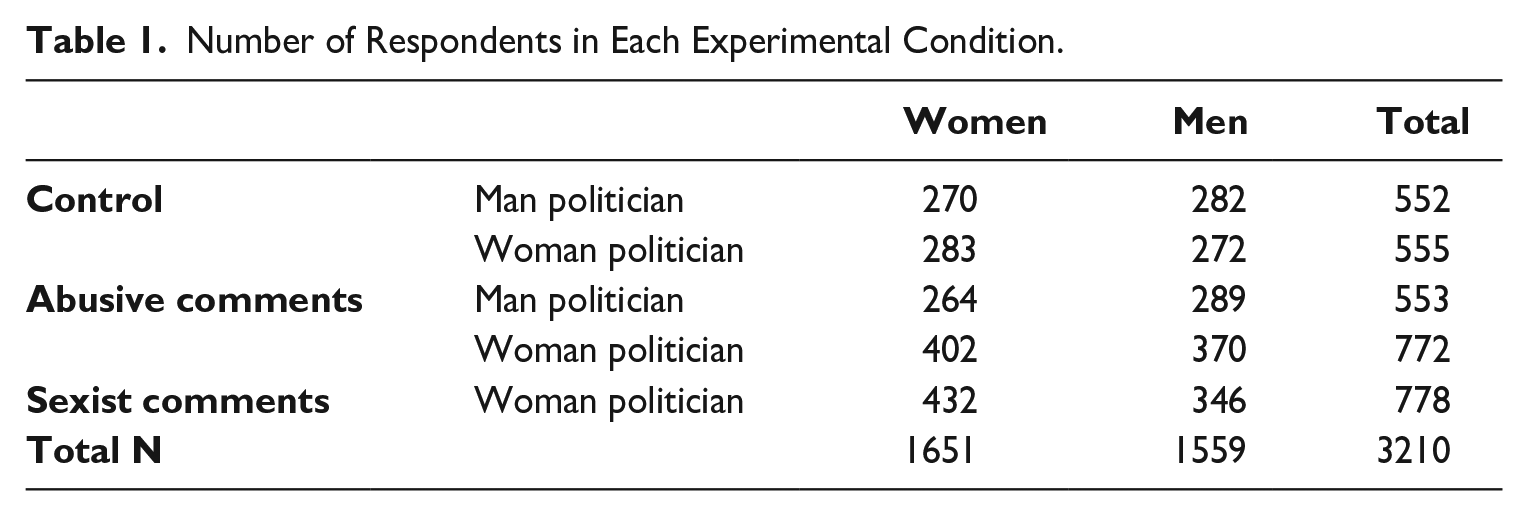
There was some attrition: 405 respondents did not complete the survey. These respondents did not differ from the rest of the sample with regards to age or ethnic group, but they were on average lower educated, more often female and less likely to follow a politician on social media. The resulting number of subjects in each condition by gender is reported in Table 1. Since the assignment of respondents over conditions was randomized, we do not employ control variables in the analyses. In addition, following Mutz et al. (2019), we refrain from performing balance tests to add control variables, as this would inflate the probability of type I errors.
Number of Respondents in Each Experimental Condition.
Measured Variables
Respondents first answered questions about demographics (age, gender, education and ethnicity), political interest, left-right placement, previous party vote and social media use. They were then exposed to the stimuli, after which they answered attention checks, and questions tapping the mediators and outcomes.
The main outcome variable is nascent political ambition. This was measured by asking participants ‘In general, how interested are you in ever running as a candidate in an election for public office? (for example, as local councillor or as a Member of Parliament)’ with answers running from 0 ‘extremely uninterested’ to 100 ‘extremely interested’. The variable was right skewed, with most people reporting little political ambition and a small number of respondents report high levels of political ambition. In fact, about a third of respondents report zero political ambition. For reliability, we added a second ambition question, which we adapted from Pruysers and Blais (2017) and which read: ‘Please rank the following jobs from 1 to 8 (where
The two mediating variables are internal political efficacy and perceived risk of harassment. Internal political efficacy is measured using the four-item index by Niemi et al. (1991), which is a valid and reliable measure of internal efficacy (Morrell, 2003). 1. ‘I consider myself well-qualified to participate in politics’, 2. ‘I feel that I have a pretty good understanding of the important political issues facing our country’, 3. ‘I feel that I could do as good a job in public office as most other people’ and 4. ‘I think that I am better informed about politics and government than most people’. This is measured on a 5-point scale. The responses on the 4 items were summed into an index with a 4–20 range (Morrell, 2005). Second, perceived risk of harassment is measured by one item ‘To which extent is the possibility of receiving hateful or abusive comments a barrier for you to pursue public office, where 0 means no barrier and 10 means a large barrier’.
Quality Control and Pre-Treatment
To ensure the quality of the responses, we employed attention checks and limited speeding through the survey. First, the survey contains two attention checks regarding the gender and profession of the fictional politician (‘What is the profession of the person’s Twitter profile you just saw?’, multiple choice: ‘MP’, ‘Teacher’, ‘Journalist’, ‘I don’t know’ and ‘Was the person you just saw a man or a woman?’). The survey was terminated for 394 respondents who failed these simple attention checks. Second, to prevent speeding and to ensure that respondents read the stimulus attentively the click through button was delayed, for 6 and 17 seconds, respectively, to ensure that respondents remained on the page long enough to have read the material. The average time that respondents took to fill in the survey is 6.3 minutes. A total of 65 respondents filled in the survey in less than 100 seconds and therefore could not reasonably have read the questions. These respondents were not used in the analyses.
As a manipulation check, we asked respondents to estimate the percentage of politicians who sometimes receive hateful or abusive comments on social media. As Figure 2 shows, in all conditions, respondents on average estimate that a large majority of politicians receive such comments. As expected, in the abuse and sexism conditions, the estimated share is higher. However, while the difference is significant, it is only modest in size, with only a three to five percentage points higher average, suggesting that the treatment may have been mild.
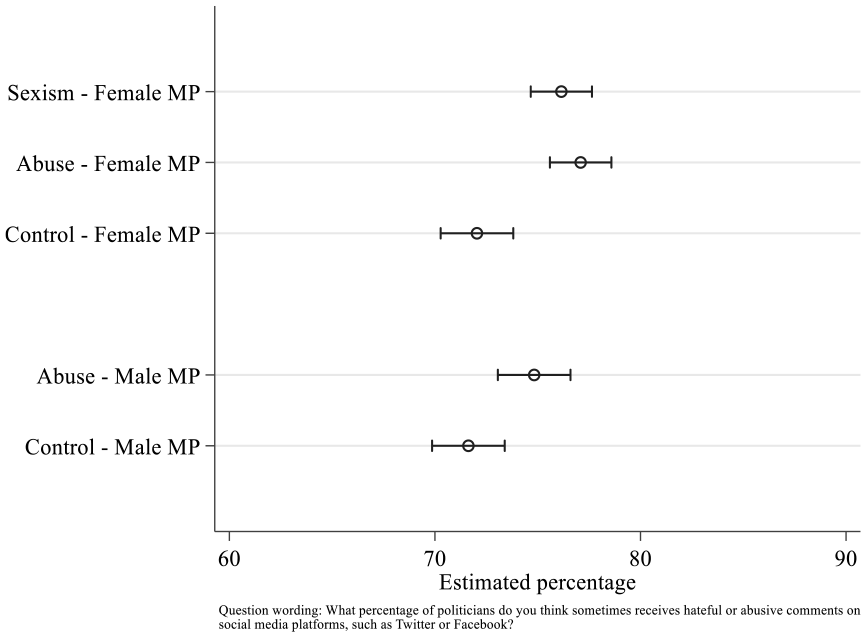
Abuse Towards Politicians Estimated by Respondents, by Treatment Condition.
Results
Figure 3 provides a descriptive overview of the two politician ambition measures, the scale and rank order. Two things jump out. First, an overwhelming majority of participants expresses little interest in a political career on both measures. On the scale, respondents are concentrated at the bottom, and among the eight professions, respondents rank the political functions around 5.6. Second, the expected gender gap in political ambition is clearly visible. As the top right of the figure shows, the largest group of women expresses little to no interest in running for office on the scale measure, and very few indicate ambition over 50. On the top left, the highest density for men is also on the low end of the scale, but the bump around 70 of people expressing moderately high ambition is markedly higher for men. Similarly, on the bottom half of the figure, the means on the rank order question show men always giving a higher rank to political functions than women do (about ½ to 1 rank point difference). Beyond the differences between men and women respondents, the differences between experimental groups are minimal. On the scale question (a), the distributions across treatment groups are nearly identical. In the rank order question (b), there appear to be some minor differences between the groups, particularly among women. We examine this more formally in hypotheses tests next.
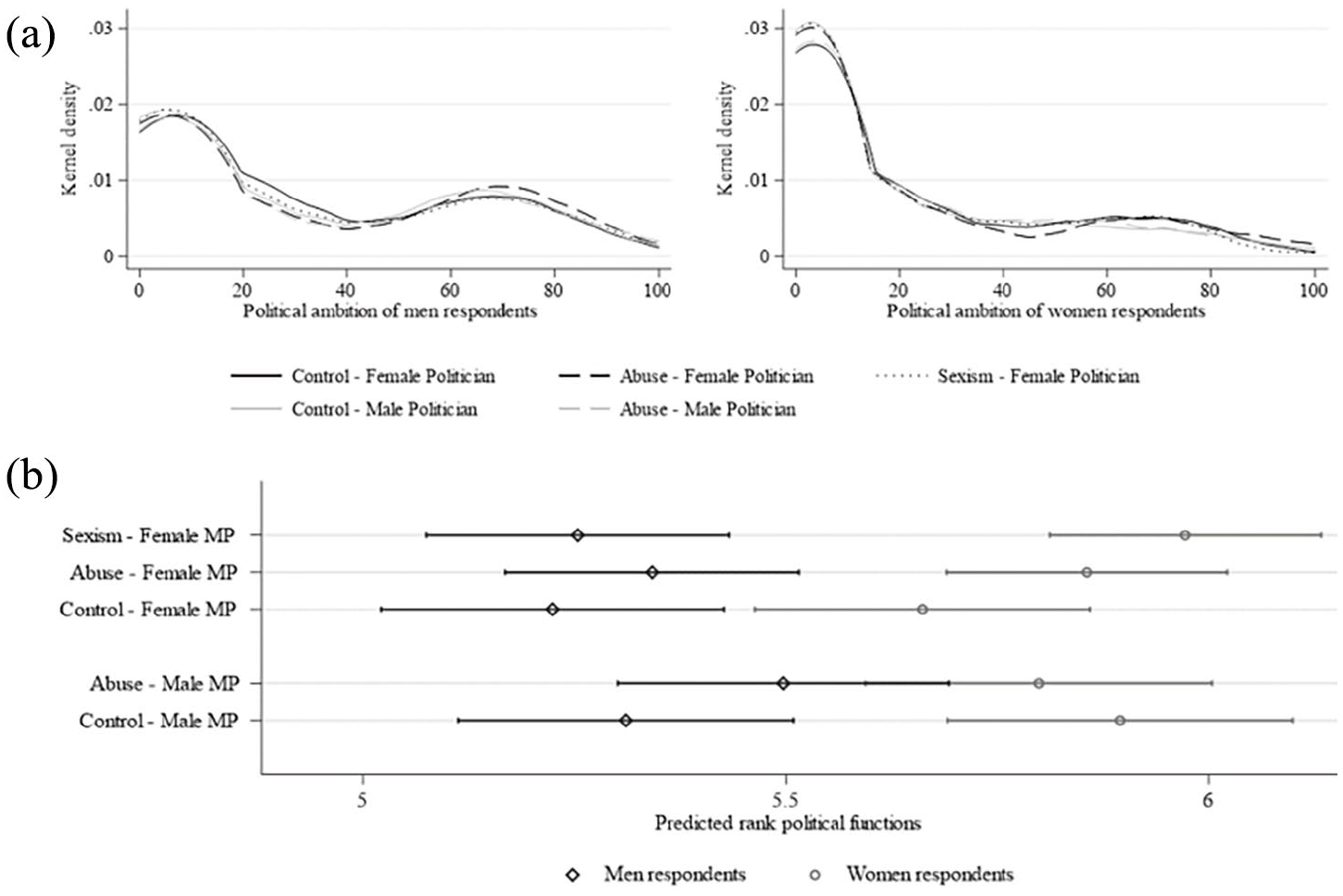
Overview of Political Ambition Scale (a) and Rank (b) by Treatment and Respondent Gender.
The first hypothesis posits that seeing abusive Twitter comments directed at politicians leads to less political ambition. To test this, we performed regressions with political ambition as the dependent variable and experimental condition (abusive treatment or control) as the independent variable. Figure 4 displays the effect of abuse on the scale measure on the left side and on the rank measure on the right, while the full results are in Supplemental Appendix E. In line with the descriptive results, there is no pattern of people losing ambition on the scale measure after seeing abusive comments. Likewise, on the rank measure, none of the effects of statistically significant, but in most instances the effect is in the expected direction. Most notably, respondents placed political professions about 0.2 points lower after seeing a woman MP receiving abusive comments compared with when she received neutral comments. This could be a sign of people losing appetite for a political career after seeing a woman MP being treated that way, but it could also be an artefact of chance. Similarly, there is no significant support for Hypothesis 3 that people respond more strongly to abuse directed at their own gender, but women did show this tendency in the rank variable.
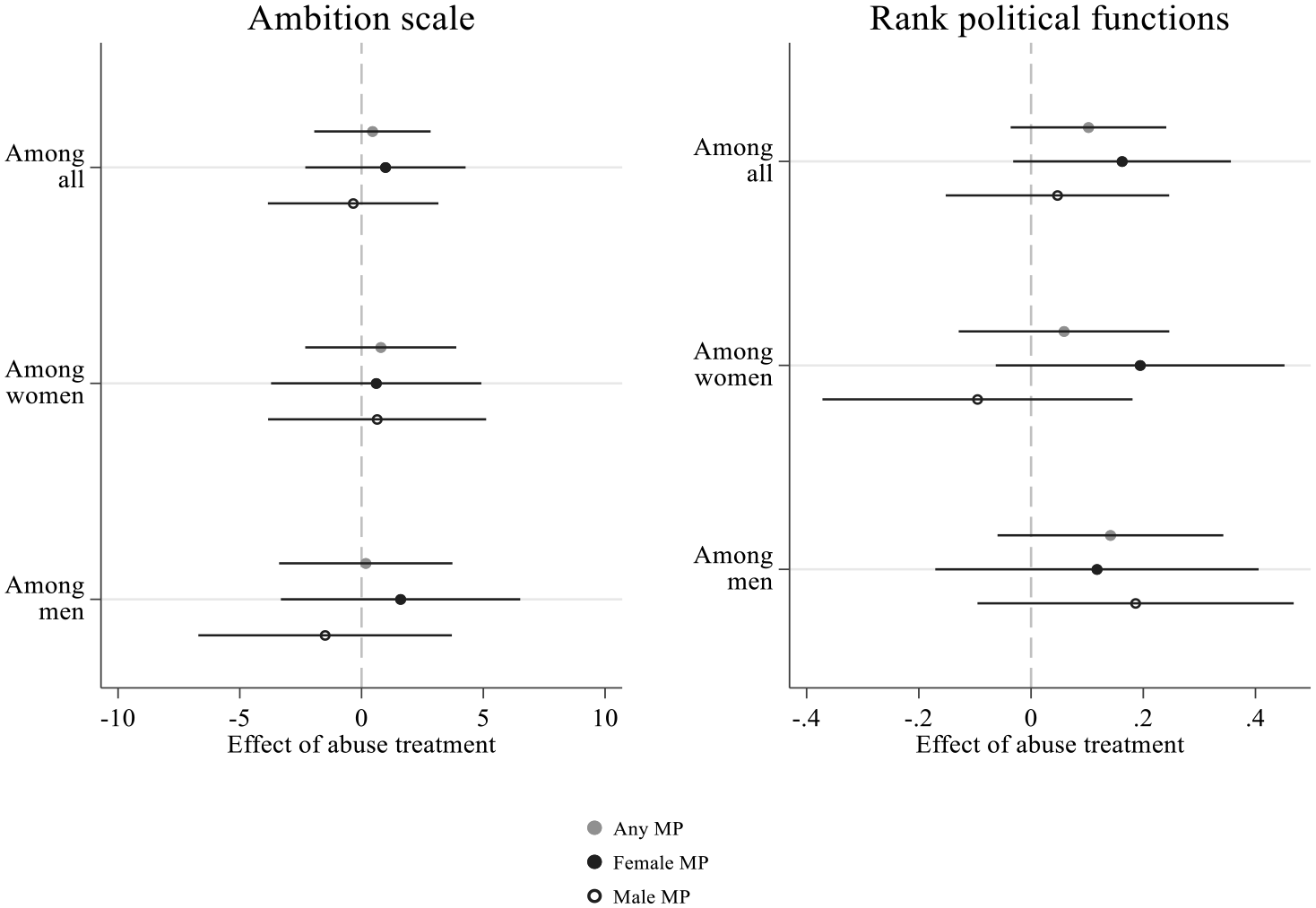
Effect of Abuse Treatment on Political Ambition (H1 and H3).
The second hypothesis was that the discouraging effect of observing online abuse was mediated by the fear of being targeted. Given the absence of a substantial total effect, this mediation can also be rejected. For completeness, Supplemental Appendix E confirms the lack of support. Interestingly, the respondents in the abuse condition did indicate to a greater degree that the possibility of receiving abusive comments would be a barrier to pursuing a political office (Figure 5), in particular among women. However, this effect in the first step of the mediation is only small and does not translate into lower intentions to go into politics among the treatment group.
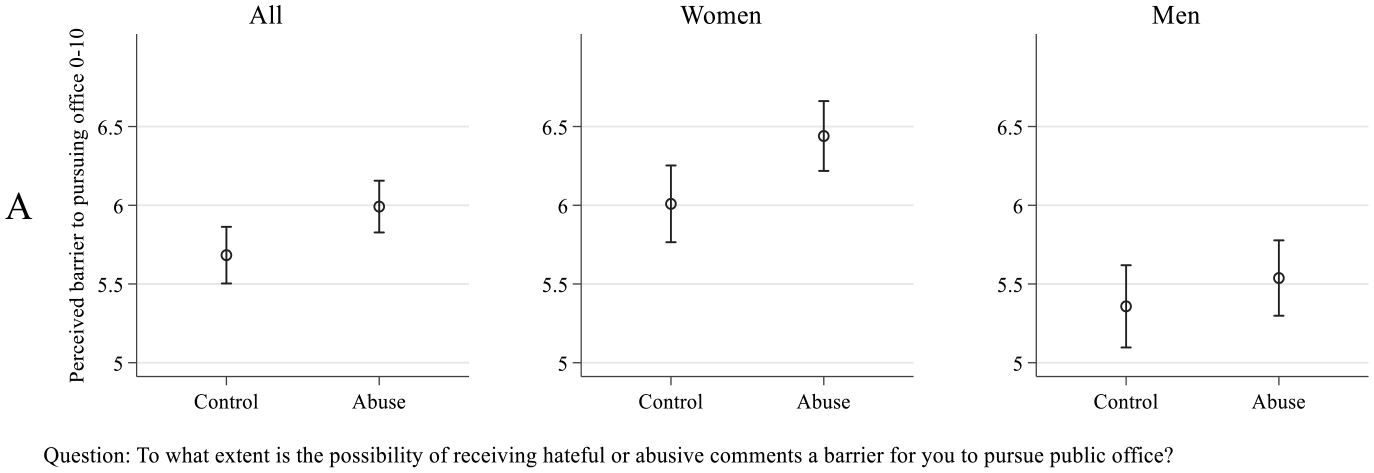
Effect of Abuse Treatment on Perceived Barrier to Office (H2).
We next turn to the effects of gendered hate, or sexist comments, directed at a female MP. Hypothesis 4 was that people would lower their political ambition after observing such comments, and it is tested in Figure 6. Again, on the scale dependent variable, not much is going on, but respondents do rank political professions significantly lower after seeing sexist tweets. Furthermore, this effect is significantly stronger for women candidates, as posited in Hypothesis 5 (interaction results in Supplemental Appendix E). Indeed, on the right side of Figure 5, we see that the deterring effect of sexism occurs only among women respondents, and not among men. Thus, seeing sexist comments directed at a woman politician lowers women’s, but not men’s interest in political functions relative to other professions. In all, there is partial support for both Hypotheses 4 and 5, on one of the two measures of political ambition.
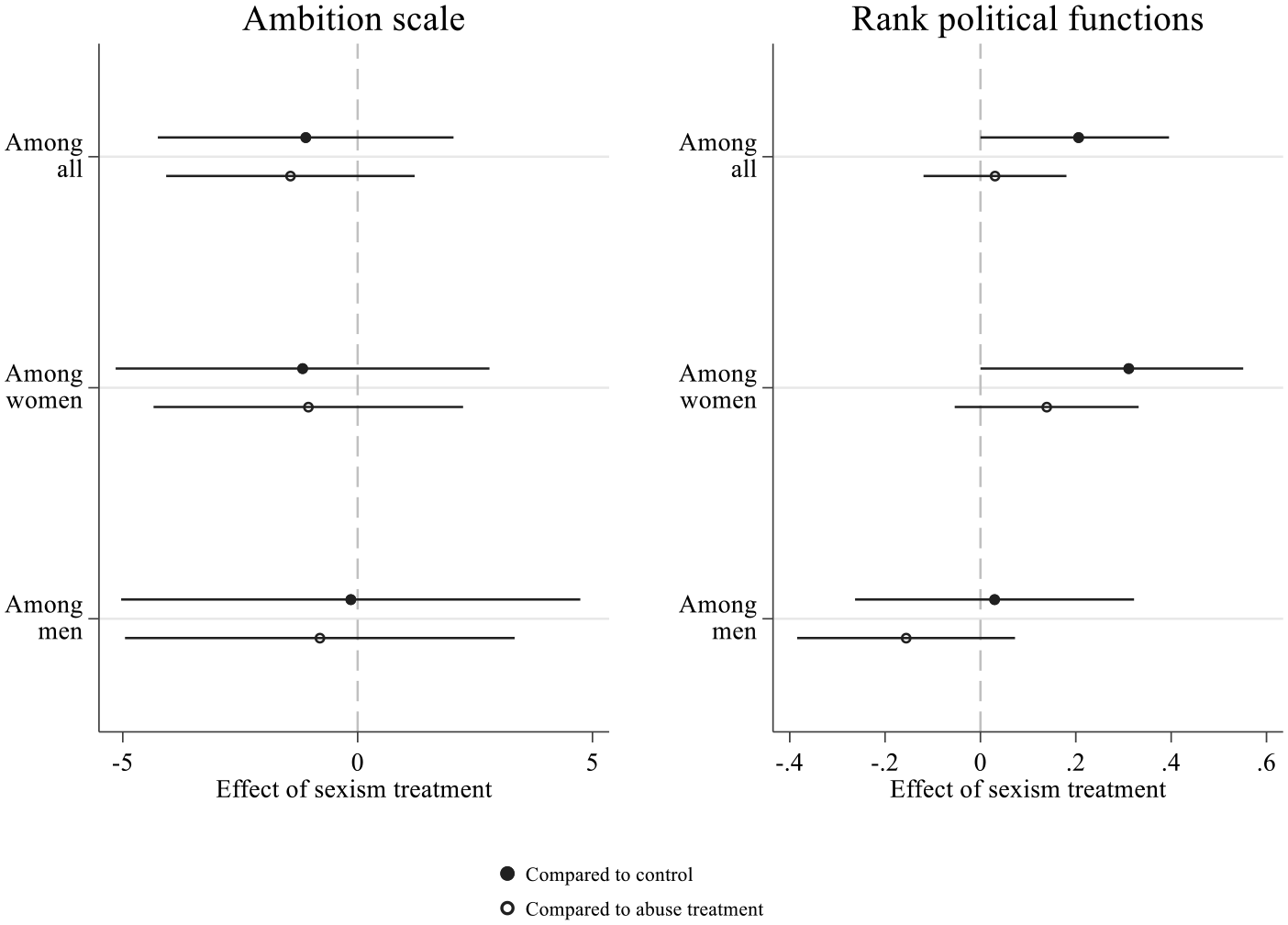
Effect of Sexism Treatment on Political Ambition (H4, H5 and H7).
According to Hypothesis 6, lower internal political efficacy would mediate this effect, but this is not the case. Women in the control condition and in the sexism condition score about the same on a battery of questions tapping political self-confidence (Supplemental Appendix E). Thus, women rank political careers lower after observing sexism, but not because they see themselves as less suited for political office. Finally, Hypothesis 7 stated that the effect of sexism is worse than that of abuse. The results in Figure 6 show no evidence in support of this hypothesis. Comparing respondents in the abuse and sexism treatments, there is no significant difference in ambition on the scale or rank. Thus, while the sexism treatment has a significant discouraging effect on women respondents and the abuse treatment does not, the difference between the two stimuli is not significant.
Additional Results
Aside from the ambition to participate in politics through an active career, we also explored whether political participation more broadly was affected. We asked respondents to indicate which political activities they were likely to engage in in the coming 5 years, listing eight options like demonstrating, voting and signing a petition. Combining these in a scale of political participation and using this as a dependent variable, the effect of both the abuse and sexist treatments were near zero and not significant. In separate regressions for each form of political participation while accounting for multiple testing, none was significantly affected by the treatments.
Finally, aside from the pre-registered experimental analyses, we found a descriptive result that was striking. We asked respondents how comfortable they would be with various potential deterrents from running for political office, among which receiving online harassment, but also loss of privacy and being the target of public scrutiny. As shown in Figure 7, online abuse was seen as the largest deterrent, with 41% of women and 21% of men indicating they would not seek political office for this reason. As such, even if a single message has little effect on political ambition, many people see online harassment as an obstacle and may already have ruled out a political career because of it.
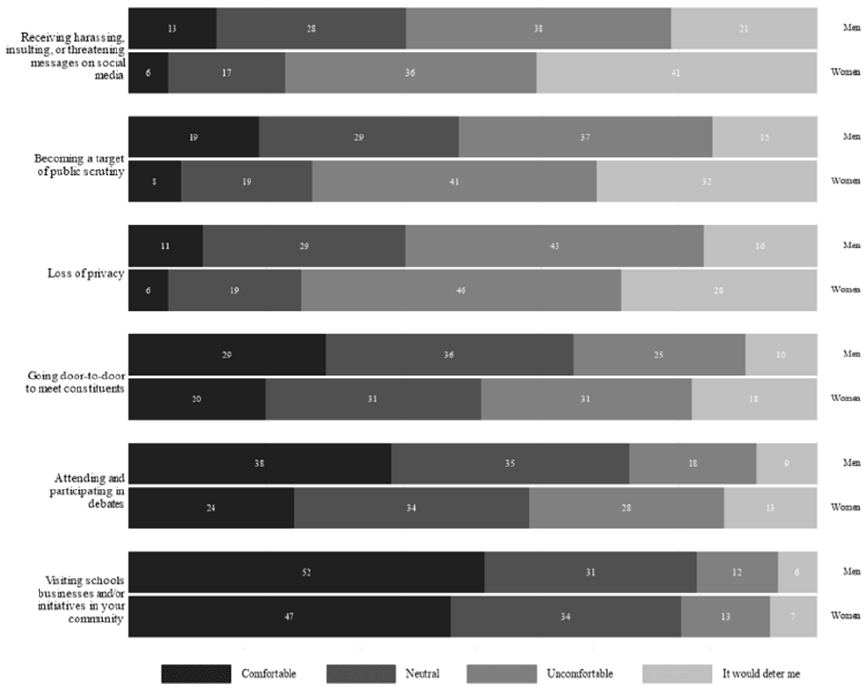
Possible Deterrents to Running for Political Office.
Conclusion
Does the deluge of abuse inundating politicians’ social media accounts discourage citizens from going into politics? At first sight, some of the findings of this study are hopeful. Contrary to our expectations, seeing abuse directed at politicians did little to quell citizens’ ambitions to go into politics. Even if the target of the abuse was of the same gender as the observer, nascent political ambition remained about the same. Yet, there are many reasons not to look too optimistically at the results.
First, we did find a significant depressing effect of sexist comments on women’s political ambition. This only held for one of our two dependent variables which entailed that participants rank political and non-political jobs from most to least interested, but still, it is extremely worrying given the ubiquity of sexist comments online and the already existing gender gap in political ambition. This is especially so, since such per-Tweet effects with repeated exposure can significantly add up to affect people’s willingness to participate in politics on a bigger scale. Thus, online sexism doubly contributes to women’s underrepresentation: women politicians are more often subjected to it (e.g. Southern and Harmer, 2021), and it lowers women (and not men) bystanders’ intentions to enter politics.
Second, there is reason to suspect that the effects of abuse are considerably underestimated in the present study. In the UK, the problem of online abuse of politicians has been discussed prominently in the media compared with other countries due to cases such as the murder of Jo Cox. Therefore, people were likely already aware of it and had possibly already lowered their political aspirations accordingly. Furthermore, the single-shot treatment does not represent real life experience (Gaines et al., 2007). Repeated stimuli of hostility on social media administered over a longer period would be more realistic, although this would also be ethically more objectionable. Also, the effect could also have been dampened by the use of fictional politicians, with whom respondents are unlikely to identify or sympathize as much they do with real-world politicians they support. Whether people are offended by online incivility is shown to be dependent on whether someone from their political in-group is targeted (Gervais, 2015). Finally, Twitter is likely to contain more incivility than other platforms such as Instagram or Facebook (Oz et al., 2018). Twitter is an important platform for politicians, but the effects of Twitter comments might be an underestimation as abusive comments would have been more noticeable on another platform. In sum, the relatively weak stimulus using fictional politicians and the probable pre-treatment effects make this a least-likely set-up to find effects of social media abuse.
Third, one of the focal points of our study was to uncover whether gender moderates the effect of witnessing online abuse. Evidently, there are limitations to looking at gender solely. Black and Asian women receive 30% more abuse than their white counterparts in the UK (Amnesty International, n.d.). In addition, the content of the abuse is likely related to these intersections. Abusive comments towards women BAME politicians often contain microaggressions relating to racial identity or nationality as well as their gender (Harmer and Southern, 2021). Our study does not rule out the possibility that marginalized groups in society are more prone to be deterred from politics by witnessing online abuse. Given the lack of representation of, for instance, ethnic minorities, members of the LGBTQIA + community and people with visible health conditions or impairments in most parliaments the depressing effect of other forms of abuse should also be studied.
Finally, even if most of the hypotheses were rejected, some of the secondary findings raise concern. Most respondents expressed very little inclination to go into politics, with about a third of respondents rating the chance 0 on a 0–100 scale. A full 45% of respondents had 1 of the 2 political professions ranked in the lowest spot. As such, people see a career in politics as very unappealing. Furthermore, most people think that politicians are subject to online abuse regularly, on average estimating that well over 70% of politicians receives abuse. Moreover, when asked how they would feel about various aspects of the job, the prospect of receiving online harassment was viewed most negatively, and it would deter about 30% of respondents from seeking office. These results suggest that the public is already saturated with the notion that being a politician means facing online acrimony, and this is not something citizen wish to select into.
This study has two important take-aways for the literature on violence against women in politics, one methodological and one substantive. First, generally low political ambition and small effects emphasize the necessity to find and use the most sensitive measures of political ambition, in order to detect effects of single treatments that can add up in the real-world.
Second, we must inspect the effects of violence on both politicians and citizens. Existing work has shown deleterious effects on politicians, who are driven to reconsider their levels of visibility or outspokenness, and sometimes even to leave politics because of the hostile online climate (Collignon et al., 2022: 2; IPU, 2018). While the effects of online hate on politicians as the subjects of the abuse are absolutely crucial to study, the wider impacts on society should not go overlooked. This was the first empirical study to examine the effects of online harassment on bystanders as opposed to politicians. We built on the literature of violence against women in politics by testing for the differential effects of abuse on men and women and by disentangling the effects of sexism from other forms of intimidation. It is concerning if relatively few people would consider filling their spot, and even more so if online hostility disproportionally deters women. Any efforts aimed at trying to reduce the gender gap in political ambition should be informed by empirical studies on what keeps women from pursuing office in the first place. We found partial evidence that women feel less inclined to consider a job in politics after observing online sexism, and we found that many people see online abuse as a barrier to a political career. This suggests that the costs of the harassment of politicians online are great, for politicians and society more widely.
Footnotes
Declaration of conflicting interests
The author(s) declared no potential conflicts of interest with respect to the research, authorship and/or publication of this article.
Funding
The author(s) disclosed receipt of the following financial support for the research, authorship and/or publication of this article: This work was supported by the Amsterdam Centre for European Studies (ACES) (Thematic research grant 2022).

Supplemental Material
Additional supplementary information may be found with the online version of this article.
Appendix A: Power Estimation. Table A1. H1 Gender politician × (Abuse vs control). Table A2. H4 Abuse vs Sexism vs control. Appendix B: Experimental material. Figure B1. Man politician fictional Twitter profile. Figure B2. Woman politician fictional Twitter profile. Figure B3. Example 1 of abuse treatment. Figure B4. Example 2 of abuse treatment. Figure B5. Example 1 of sexist treatment. Figure B6. Example 2 of sexist treatment. Appendix C: Questionnaire. Appendix D: Variables and descriptive statistics. Table D1. Description of variables. Table D2. Description of variables. Appendix E: Regression results. Table E1. Models testing abuse hypotheses on ambition scale variable. Table E2. Models testing abuse hypotheses on ambition rank variable. Table E3. Models explaining perceiving abusive comments as a barrier to political office. Table E4. Models testing sexism hypotheses on ambition scale variable. Table E5. Models testing sexism hypotheses on ambition rank variable. Table E6. Models explaining perceiving abusive comments as a barrier to political office. Appendix F: Preregistration. Appendix G: N in experimental groups. Table G1. Number of respondents in each experimental condition.
Notes
Author Biographies
References
Supplementary Material
Please find the following supplemental material available below.
For Open Access articles published under a Creative Commons License, all supplemental material carries the same license as the article it is associated with.
For non-Open Access articles published, all supplemental material carries a non-exclusive license, and permission requests for re-use of supplemental material or any part of supplemental material shall be sent directly to the copyright owner as specified in the copyright notice associated with the article.
