



Abstract
Presidential research commonly focuses on the most prominent cases of going public by presidents in semi-presidential regimes: such as expressing a lack of trust in the cabinet members. However, it is also important to understand the day-to-day functioning of semi-presidential republics and routine efforts by the presidents to insert themselves into government decisions. Moreover, presidents in parliamentary republics may also try to influence the government through the power of the public word. In this article, we conceptualize going public as an instance when a president weighs in on the performance of the cabinet and/or individual minister in the media. We analyze the focus and intensity of these instances in semi-presidential (Lithuania) and parliamentary (Latvia) regimes. Our main finding is that on average, presidents are more routinely active in public under semi-presidentialism. We also find that the intensity and focus of presidential attention on the cabinet are highly correlated to the media attention. Furthermore, presidents go public more often during the first year of their terms and pay more attention to foreign and defense policy than to other areas. Our results tend to support the presidency-centered arguments that emphasize the institutional prerogatives and political culture in the explanation of presidential activism.
Introduction
With the advance of popular presidential elections, semi-presidentialism is now the most popular regime in Europe (Neto and Strøm, 2006). Although direct elections grant presidents popular legitimacy, semi-presidential systems vary quite considerably according to the constitutional powers and role of presidents (Elgie, 2009; Siaroff, 2003). While the president-parliamentary type (Shugart and Carey, 1992) favors the president over the prime minister, it is considered less stable and could be even dangerous for democracy (Elgie, 2019). Under the premier-presidential system, the president cannot dismiss the government unilaterally and, accordingly, this type (mostly found in Europe) usually favors the prime minister over the president. However, these presidents may still have some substantial powers such as a central role in foreign and defense policy, legislative veto, or influence over some high-level appointments. Moreover, despite the limits in their powers to affect government composition and public policies, directly elected presidents usually enjoy higher popularity than prime ministers (Raunio and Sedelius, 2022). Because of these configurations, directly elected presidents face both institutional (limited power over the prime minister) and sociological incentives (popularity) to resort to informal presidential activism and use informal powers such as going-public tactics. Concrete aims of these tactics could be various: pressuring the government over the policy issues or posts in the cabinet, power play in order to establish the authority of the presidency in intra-executive relations, or enhancing the probability of presidents’ re-election.
The power of the public word is one of the major tools in the arsenal of presidents in semi-presidential republics and it may significantly affect the public policies and composition of government (Feijó, 2021). Although the ability of presidents to use public appeal in order to pressure Congress is well researched in the context of the US presidential system (Canes-Wrone, 2005; Kernell, 2006; Lowi, 1985; Rudalevige, 2005), it received less attention in the case of the European presidents. Available evidence shows that going-public tactics indeed favors the presidents under semi-presidential systems, as they often emerge victorious from intra-institutional conflicts (Protsyk, 2006; Pukelis and Jastramskis, 2021; Raunio and Sedelius, 2020). However, this research focused on the most prominent cases of going public, such as expressing lack of trust by presidents in some ministers or even prime ministers. Such an approach highlights the key points in the competition for power. However, it also ignores the day-to-day functioning of semi-presidential republics and the routine efforts by the presidents to insert themselves into the decisions by the government.
Recent debates on informal presidential activism and going-public tactics are mostly focused on the directly elected presidents (Feijó, 2021; Raunio and Sedelius, 2019, 2020). However, there is an argument in the literature that “presidents are presidents, regardless of how they come to power” (Tavits, 2008: 235): variation in presidential activism is determined by the structure of political opportunities. Inconsistent constitutional design such as indirect presidential elections combined with some substantial powers (Grimaldi, 2023) or inconsistency between high popularity and weak powers may drive presidents in parliamentary republics toward informal presidential activism. Moreover, trends of personalization in democracies create opportunities for informal leadership (Grimaldi, 2023; Passarelli, 2015). These arguments build a rather strong case to also include the parliamentary regimes into the analysis of informal presidential activism.
In this article, we analyze the routine going-public tactics by the presidents in both semi-presidential (Lithuania) and parliamentary (Latvia) regimes. We selected these cases because they are representative to their respective regime classes (in terms of presidential powers) and are politically similar. In our analysis, we focus on instances when a president weighs in on the performance of the cabinet and/or individual minister in the mainstream media. Cases of going public may vary according to their intensity (how often the president goes public), focus (policy areas and ministers that are targeted), and tone (the level of criticism expressed by the president). In the empirical part of our article, we focus primarily on the first two criteria; however, we also argue that intensity and tone should overlap, as various kinds of presidential activism in the literature (Köker, 2017; Protsyk, 2006; Raunio and Sedelius, 2020) are usually associated with at least some level of disagreement between the president and government (or parliament). Our method is a quantitative analysis of texts that mention cabinet members in the media since 1999. We analyze a corpus of web-scraped articles from Delfi.lt and Delfi.lv: these are the largest Internet portals in Lithuania and Latvia, respectively.
Our article is structured as follows. First, we present a theory about the incentives for presidents to go public and factors that may influence the intensity of presidential activism. Second, we discuss the Latvian and Lithuanian cases. Third, we present our data. Fourth, we present the results of the analysis. We finish with a discussion on the implications of our research for wider theoretical debate on presidential activism.
Incentives for Presidents to Go Public
Although a bulk of research on relationships between presidents and cabinets involves analysis of political instability (institutional conflicts) and survival (quality) of democracy (Elgie, 2008; Protsyk, 2006), we believe that more routine, almost day-to-day interactions between the institutions deserve more attention: they help to understand the logic of (semi-presidential) regimes, political processes, and their outcomes better. The core concept behind our theoretical framework is presidential activism. It includes both the formal and informal powers of presidents: we follow the definition by Raunio and Sedelius (2020: 35) that defines presidential activism as “the presidents’ use of their formal powers and their attempts to influence politics through informal channels.” To be more specific, we focus on the going-public strategies—informal power that was previously rather neglected by research on semi-presidentialism.
In the classification according to the publicity and status of presidential activism, going-public strategy is the main power that is both public and informal. It covers an array of public statements such as speeches, one-sided statements by the president, interviews and comments in the media, attending public events, posts on social media, and so on (Raunio and Sedelius, 2022). These tactics could have various aims that may overlap: to affect public policies, achieve a change in ministerial posts (sometimes even of prime minister), or to boost (sustain) the popularity of the president (especially if the president criticizes unpopular decisions by the government). Going public with opinion differences could be especially important for presidents when they need to claim either credit or avoid blame for particular policies (Lazardeux, 2015).
Going public by the presidents could be analyzed by comparing different countries and time periods. The latter aspect is especially under-researched, since the majority of studies on semi-presidential and parliamentary regimes until now focused on anecdotal evidence (Grimaldi, 2023) or historical accounts (Feijó, 2021). In our article, we strive to push the theory further by analyzing the fluctuations in the presidential activism in one country across time and by comparing different regimes. As the relationship between prime minister (cabinet) and president is central to any analysis of presidential activism, we focus on the instances when a president comments (weighs in) on the performance of the cabinet and/or individual minister in the mainstream media. Such comments are enabled by the constant reporting of news by mass media and are more frequent than press conferences or official speeches: they could be described as routine attempts by the presidents to affect the government and the public.
Theoretically, individual cases when a president goes public may vary according to their intensity (how often the president goes public), focus (policy areas and ministers that are targeted), and tone (the level of criticism expressed by the president). In our article, we focus primarily on the first two criteria and aim to explain differing levels of these variables across different regimes and time. One of the reasons behind this focus is limitations in measuring. Intensity is evaluated over a time period (how often the president goes public over a month) and focus is determined by the specific minister/policy area (that is “targeted” in public). However, the level of tone is a rather ambiguous concept to measure. In addition, it does not suggest straightforward cases of observation, such as a month (although we do agree that this would be an interesting avenue for a separate research article).
On the contrary, there are arguments suggesting that the intensity and criticism should overlap. If a president attempts to influence politics at the public level, at least some level of criticism is simply unavoidable (if he or she agrees with decisions by the government, there are fewer incentives to go public). The literature on presidential activism observes that when the president is more active, this activity is associated with various types of intra-institutional disagreements: differences over the legislation when vetoing (Köker, 2017), conflicts over the government and ministerial posts (Protsyk, 2006; Pukelis and Jastramskis, 2021; Raunio and Sedelius, 2020), or public attempts to influence the parliament over policy issues (Kernell, 2006). Therefore, the intensity element—how often does the president go public and “target” specific policy areas and ministers—partly covers the criticism (tone) element. In other words, the more often the president goes public, the greater likelihood that she is becoming more critical of a specific minister.
Furthermore, we discuss our theory in more detail and present hypotheses. We formulate our hypotheses referencing the overall literature on presidential activism (including presidential regimes) and, more specifically, the theory on the going-public strategies of presidents. However, as we strive to dig deeper into routine presidential activism under the semi-presidential and parliamentary regimes (previously under-researched topic), we also propose our own additions to the theory.
The going-public strategy is well researched in the case of the presidential regime in the US and is now regarded as the “dominant paradigm to explain presidential public leadership” (Cohen, 2010: 14). In the context of the US, going-public strategy is understood as attempts by the presidents to promote themselves and their policies before the public mostly through the press conferences, speeches, and television addresses. However, the main object of such attempts is usually not the electorate, but the Congress and other decision-makers in Washington (Kernell, 2006). Going public became more frequently used by US presidents in the last decades as a tool to pressure Congress into passing legislation favored by the head of state (Canes-Wrone, 2005; Kernell, 2006). There are two main reasons behind this (Kernell, 2006). First, US presidents now are more frequently political outsiders and thus excel less in the bargaining tactics (one could also add that a political outsider will command less authority in her party). Second, divided governments with a president from one party and a congressional majority from the other became more frequent in the last decades. In this context, going public becomes an important tool in the presidential arsenal of (informal) powers in dealing with Congress, especially when major issues are at stake (Eshbaugh-Soha, 2016).
Informal presidential activism (including the going-public tactics) is under-researched in the case of semi-presidential and parliamentary regimes, especially in Europe: however, they quite obviously exist and influence politics. We should not avoid this proverbial “elephant in the room” as the anecdotal evidence shows that Western European presidents use informal powers from time to time quite effectively, both in the semi-presidential and in the parliamentary regimes (Grimaldi, 2023). In his comparative historical analysis of Portugal and Timor-Leste semi-presidential regimes, Feijó (2021) states that the power of the public word is one of the major tools in the arsenal of presidents in semi-presidential republics, and one tool that is often underrated. Going public may significantly affect the setting of political agenda, public policies, and even the composition of government: in semi-presidential Lithuania (Pukelis and Jastramskis, 2021; Raunio and Sedelius, 2020), public statements from the presidents resulted in the resignation of ministers and even prime ministers.
Why are presidents motivated to go public in semi-presidential (and possibly parliamentary) republics? Feijó (2021: 95) emphasizes the discrepancy between the presidents’ (envisioned) profile in politics and constitutional powers, as the public word can “make their presence in the political landscape assume a higher profile than a straight reading of constitutions would imply.” Informal activism should increase with the lower formal competencies. In semi-presidential systems, presidents are constitutionally weaker than are their counterparts in the presidential regimes. Moreover, under a standard premier-presidential system (the dominant type in Europe), the president cannot dismiss the government unilaterally and, accordingly, the constitution usually favors the prime minister over the president. However, these presidents may still have some substantial powers: legislative veto or influence over some high-level appointments. Most importantly, more than 50% of presidents in semi-presidential republics enjoy a central role in foreign and defense policy (Siaroff, 2003). These discrepancies between the status in the political regime (directly elected head of state with some substantial powers) and institutional limitations to affect government composition and its decisions may drive presidents to go public. This incentive could be exacerbated by the same factors that drive the going-public strategies of US presidents, that is, presidents-political outsiders and divided governments: cohabitation is relatively frequent in the semi-presidential regimes, as is the election of non-partisans to the presidential posts. Moreover, directly elected presidents usually enjoy higher popularity than prime ministers (Raunio and Sedelius, 2022).
It is apparent that directly elected presidents in semi-presidential regimes face a whole array of incentives to resort to informal presidential activism and to go public: institutional (limited power over prime minister), contextual (divided majorities and non-partisan presidents), and sociological (popularity). Actually, it would be surprising if they would not resort to this tool. These incentives partially apply to parliamentary presidents, especially if they are compromise, non-partisan figures, and there is evidence that presidents in parliamentary regimes sometimes exploit the opportunity structures (Grimaldi, 2023; Tavits, 2008). However, the lack of direct elections removes a very important pillar for the legitimacy of presidents: in his analysis of (formal) presidential activism in Central and Eastern Europe, Köker (2017: 246) concludes that the “mode of presidential elections is the most important determinant of presidential activism.” Directly elected presidents are more independent, while presidents in parliamentary regimes act more like agents of parliament. In addition, presidents under semi-presidential regimes also feel pressure from the public to fulfill their electoral promises (enact policies) and thus are compelled to act: their re-election depends on public support (Köker, 2017).
Our first hypothesis follows directly from this discussion. Although there are grounds to find at least some level of presidential activism and public attention to the cabinet under all political systems, we expect that the intensity of presidential attention should differ by regime and thus should be greater in the semi-presidential model than in the parliamentary (H1). These regimes in our analysis correspond to cases of semi-presidential Lithuania and parliamentary Latvia: we discuss these cases in detail in the next section:
H1. The level of public attention by presidents given to a government should be higher under a semi-presidential regime than under a parliamentary system.
Mass media provides a convenient way for presidents to go public routinely. However, there is a question regarding the setting of the agenda: do the presidents influence the media attention, or do they simply follow the coverage of the most salient topics? Research on the United States finds that presidents may influence the public agenda in some policy areas such as health care, education, or crime (Edwards and Wood, 1999). However, they are most responsive to the major events and media coverage of the economy (Eshbaugh-Soha and Peake, 2005) and foreign policy (Peake, 2001; Wood and Peake, 1998). Following this logic, we may theorize that presidential attention to the cabinets under the semi-presidential and parliamentary regimes (where the presidents are weaker) will also mirror the general coverage of cabinets and individual policy spheres in the media. Moreover, if the presidential activism is partially dependent on political opportunities, they will exploit the topics and issues that are relevant at the time. Therefore, we believe that presidential attention to the cabinet will increase (and vice versa) with an increase of attention in the media (H2):
H2. Presidential attention to the cabinet in a particular policy sphere will be higher when media attention to the cabinet in that policy sphere increases.
On the contrary, directly elected presidents have some particular competencies that stand out in the constitutional framework, and informal power may complement the formal ones (Grimaldi, 2023). Even if presidents mostly follow the media coverage, they could be incentivized to go public more frequently in those policy spheres where they have the formal power. Most notably, it is very common for presidents to occupy a central role in foreign policy (Siaroff, 2003). Even the presidents under parliamentary regimes could regard themselves as being more relevant in the international arena, as they are still heads of state. Therefore, the presidential attention to the cabinet should be relatively larger in the policy areas where the president has most power: we believe that such spheres are foreign and defense policy (H3):
H3: Presidential attention to the cabinet will be higher for the foreign and defense policy spheres than for others.
Turning from institutional and media incentives to sociological reasons, presidential activism could be driven by presidents’ popularity (Raunio and Sedelius, 2022). However, presidential popularity is not static; moreover, if relative popularity (in comparison to the prime minister) is also important, there are two key variables (popularity of the president and of the prime minister) that may change over time and affect the presidential attention. We raise H4a (effect of presidential popularity) and H4b (effect of the presidential popularity relative to the government) to test these considerations:
H4a: Presidential attention to the cabinet will be higher when the popularity of the president increases.
H4b: Presidential attention to the cabinet will be higher when the relative popularity of the president to the popularity of government increases.
Finally, contextual factors such as cohabitation and non-partisan presidents also may affect the level of presidential activism. Previous research (Pukelis and Jastramskis, 2021) finds that although non-partisan presidents are in a permanent state of semi-cohabitation (non-partisan presidents face partisan majorities), Lithuanian presidents are usually more active and succeed more often in ministerial selection after the presidential election: when the president is in the first year of her term and the legitimacy advantage (Protsyk, 2006) is strongest. The elected president is usually the most popular and can leverage political and public support more successfully while attempting to influence the cabinet. This could also apply to the going-public tactics (H5a). Accordingly, an incumbent president during the year of a presidential election could become more active in public and comment more often on the executive, in order to boost the chances of re-election (H5b):
H5a: Presidential attention to the cabinet will be higher during the first year of the presidential term.
H5b: Presidential attention to the cabinet will be higher during the year before a presidential re-election.
Research on ministerial selection (Pukelis and Jastramskis, 2021) and veto use (Köker, 2017) suggests that presidents are more active (and successful) when facing weak governments. This could apply to the going-public tactics. There are two ways to evaluate the weakness (or strength) of the cabinet and prime minister (PM). First is related to political strength: when a president is facing a cabinet that does not have stable political support in parliament and cannot enact its policies effectively, this creates additional opportunities for presidential activism (H6a). Second, although the president is usually more popular than the PM, swings in the popularity of government may affect the decisions by the president to go public: the president could be more reluctant to comment on a popular government and may be more active when the popularity of government plummets (H6b):
H6a: Presidential attention to the cabinet will be higher when the cabinet is weak.
H6b: Presidential attention to the cabinet will be higher when the popularity of the government decreases.
Cases of Lithuania and Latvia
Our case selection is based on several criteria. First, we need at least two countries: one with a parliamentary regime and the second with a semi-presidential system. Second, these countries should be rather representative of their respective regime class in terms of presidential powers. Third, they preferably should be politically and culturally similar: in order to draw better comparisons between the activism of presidents (and regimes) while controlling for contextual factors. We believe that two neighboring Baltic countries—Latvia and Lithuania—fit these criteria rather well.
Although semi-presidential regimes vary according to their powers, some presidents are close to the average in various indexes. It is exactly the case of the Lithuanian presidency that is rather representative of both the European and, more specifically, Central and Eastern European presidencies (Elgie et al., 2014; Raunio and Sedelius, 2019; Sedelius, 2006). Mostly because of this (but also due to the other reasons delineated below), the Lithuanian case recently has been employed in a number of studies on semi-presidentialism: intra-executive coordination and informal powers (Raunio and Sedelius, 2019, 2020), success of non-partisan presidents (Jastramskis, 2021), and presidential activism in ministerial selection (Pukelis and Jastramskis, 2021).
Presidents in Lithuania are more popular than the government. Figure 1 presents yearly averages of trust (%) in the president, government, parliament, and parties between 1998 and 2022. The gap between trust in the president and three other institutions is consistently large and favors the president. Although trust in the presidential institution declined in recent years, it is still around 20% points higher than trust in the government (average 35.8% point difference between 1998 and 2022). It is very telling that more Lithuanians have put more confidence in the president than in the government even during the impeachment of president Rolandas Paksas in 2004. Therefore, Lithuania fits the sociological incentive very well: presidents could be driven to informal activism and especially to going-public tactics by the public support (relative to the prime minister and government).
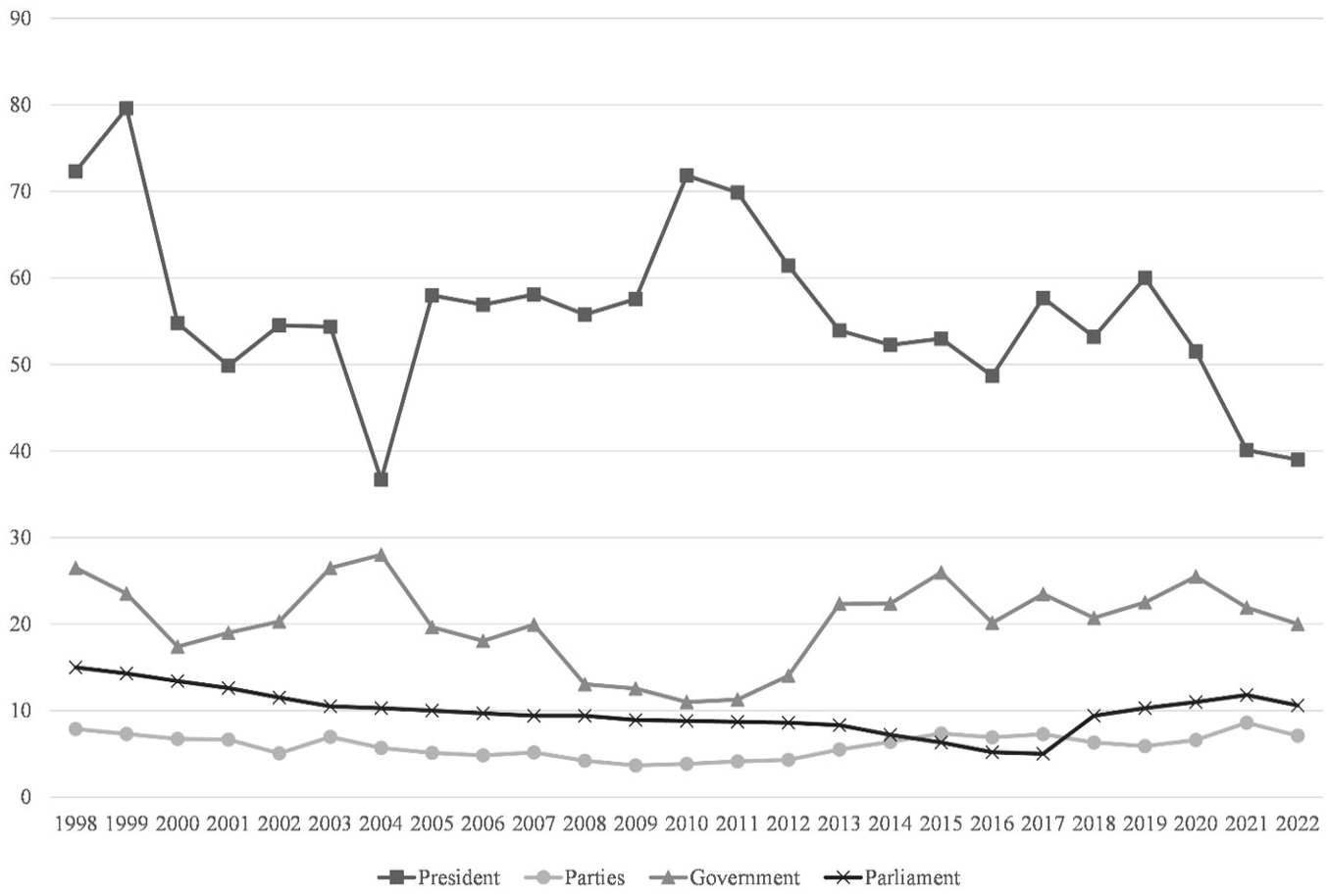
Trust in Political Institutions, 1998–2022 (% Trusting, Yearly Averages).
On the contrary, there are also strong institutional incentives as the ability to affect the governmental positions for president is rather limited. Lithuanian presidents enjoy some considerable constitutional powers: influential role in foreign policy (president conducts foreign policy together with government), legislative veto (overridden by 71 of 141 MPs), and some high-level appointments (judges of Constitutional and Supreme Courts, Attorney General, ambassadors, etc.). There have been some instances when the president played the political field well and emphasized the stipulation in the Constitution that the president confirms the personal composition of government: most notably, Dalia Grybauskaitė avoided several ministers from the populist Labor party after the 2012 parliamentary elections and cabinet initially was confirmed without two ministers. However, there is no formally defined constitutional requirement for the government to accept the changes offered by the president in the cabinet during its confirmation. Presidents in Lithuania do not have the power to chair meetings of the government and they cannot dismiss the prime minister unilaterally. Article 83 in the Constitution 1 further exacerbates their distance from the cabinet: it states that the elected president has to suspend her or his activities in the political parties. Moreover, Lithuanian voters favor non-partisan presidents over party candidates (Jastramskis, 2021). Some presidents in semi-presidential republics have their parties in the government and can act through them. This road is closed for Lithuanian presidents: however, non-partisan status almost guarantees higher support from the public, as Lithuanians do not trust the parties. Therefore, the incentives for presidents in Lithuania to go public are really strong.
It is not surprising that these incentives lead to real political behavior with far-reaching consequences for the political system. Although Lithuanian presidents make good use of the gray areas in intra-executive coordination (Raunio and Sedelius, 2020), going-public tactics are also an important tool in their arsenal: in some cases, the public stamping of presidential authority even resulted in the resignation of prime ministers. Presidents from time to time succeed in their attempts to pressure some ministerial changes. However, it is also important to note that their success fluctuates depending on the election cycle and the strength of prime ministers (Pukelis and Jastramskis, 2021).
We chose Latvia as a case of comparison because of several reasons. First, both countries have experienced occupation by the Soviet Union: they could be classified as post-communist democracies. Of course, we have to admit that the nature of these occupations was different; accordingly, the major difference between the two countries is a larger share of the Russian-speaking population in Latvia which makes the ethnic cleavage in this country more salient than in Lithuania. Second and arguably most important, Lithuania and Latvia share a relatively similar political culture that distinguishes them from the third Baltic country, parliamentary Estonia (and Finland, a geographically adjacent semi-presidential country of Western Europe). Previous research observed that during recent decades, the populations of Latvia and Lithuania have had consistently lower trust in political institutions than Estonia (Auers, 2015; Kuokštis, 2015), have been less satisfied with democracy than Estonia (Duvold et al., 2020), and have had similar (and lower than Estonia) indicators of government performance such as corruption perception (Kuokštis, 2015). The selection of these two cases allows controlling for the political culture. Third, Latvia and Lithuania are successful stories of post-communist transformation, establishing and maintaining institutions of liberal democracy in the context of many failed transitions (especially in the post-soviet area). Finally, they chose very similar constitutional regimes during the brief time of democracy in the interwar period: parliamentary systems with rather weak indirectly elected presidents. However, Lithuania went with a directly elected president after the restoration of independence in 1990 and Latvia chose to re-adopt a parliamentary regime similar to the interwar period: this difference allows us to compare the effects of different regimes regarding presidential activism.
Latvian presidents are quite weak. Their only substantial power is a legislative veto that the Latvian presidents use rarely (Köker, 2017). This is quite representative of unelected figureheads presidents that are selected by parliaments (Siaroff, 2003). Latvian presidents are usually secondary political figures or rather unknown public figures who are chosen as a compromise between the political parties (Auers, 2015). This paints a picture of a rather passive presidency. However, there are instances when Latvian presidents followed the logic of political opportunities (Tavits, 2008) and challenged parliament with a mixture of formal and informal powers. A case in point is Valdis Zatler’s successful initiative for a referendum to dismiss the Latvian parliament (Saeima) in 2011. In general, it is normal for Latvian presidents to criticize political parties and even win some political battles (Auers, 2013). Their informal power comes from the fact that compromise candidates are usually not affiliated with any party and they gradually gain influence over their terms (Auers, 2015).
The Latvian presidency is consistent constitutionally: a rather non-powerful president is elected by the parliament in this country. However, there may be some inconsistencies between the de facto political status and formal powers in Latvia, as presidents are quite independent and also rather popular (Auers, 2015). Moreover, the absolute majority of Latvians support the direct election of presidents (Kaktins, 2014) and the president is usually more popular than other political institutions (Duvold et al., 2020). This leads to the expectation that Latvian presidents will not be completely passive and occasionally will go public; it is interesting to test quantitatively the arguments about their independence and political maneuvering formerly presented by Auers (2015). On the contrary, their reliance on the parliament for re-election and also rather weak use of formal powers (Köker, 2017) lead to an expected lower average level of activism than in Lithuania.
Data and Data Collection
We have collected data from the “Delfi” portals in Lithuania and Latvia (delfi.lt, delfi.lv). These media outlets currently are the largest daily news portals (according to the daily users) 2 in their countries. In addition, they are considered as being rather professional and not politically biased. Research on Lithuanian media finds that foreign-owned private media such as “Delfi” (it is owned by the Estonian media company “Ekspress Group”) maintains a large degree of autonomy: its entrance to the Lithuanian market played an important role in diluting the informality, fragmenting the influence of local media moguls and also boosting the levels of professionalism (Lašas, 2019). In addition, there is a data-related advantage in choosing these portals: they have some of the longest spanning and freely available archives among the web portals in the Baltic states. For this article, we used a data set spanning from the earliest when archives became available (early 2000 in Lithuania and late 1999 in Latvia) to 2022. The existence of these archives and the relative ease of collecting data therefrom were another major reason why we selected “Delfi” news portals over the national news agencies (that do not offer such archives open to the public).
The data from these sources were collected using web-scraping. Since the two web portals largely follow the same template, we have developed a single scraper that was used on both portals. The scraper is written in Python programming language and can be found on the project GitHub repository. 3 The scraper works by traversing the National News section of the Delfi portal and collecting all the articles in the section. For each article, we collect its title, text, and date of publication. Once the data are collected, we analyze the texts of the news articles to identify those relevant to our analysis. We consider that the article pays media attention to a certain policy sphere if the article mentions a cabinet member by title (e.g. Minister of Defense), by name (e.g. Artis Pabriks), or mentions the name of the ministry (e.g. “Aizsardzības Ministrija”). We consider that article to be an instance of presidential attention if it satisfies the above criteria and mentions the president by name.
To detect these mentions, we use a list of cabinet members’ and presidents’ names. Since both Lithuanian and Latvian languages use declination (i.e. have cases), the lists include all possible variations of the relevant names. In addition, for each name we prepare several variants like full name, the initial of the first name and the last name, full first name, initial of the middle name and the last name, and so on. In addition, we have compiled a set of dates when each cabinet member was in office and which position they occupied. Using these data, we perform the matching using the following algorithm:
We take an article from our database and, using its date of publication, we select a subset of relevant entities (the names of the incumbent cabinet members at that time, the names of ministries at that time, etc.). We call this set “cabinet entities.”
We check if any of the entities from the “cabinet entities” list are in the text of the article.
If any entities are found, they are mapped to a policy sphere and the matching result is stored in the database.
The matching rules and lists of “cabinet entities” can be found in the project’s GitHub repository (see Note 3).
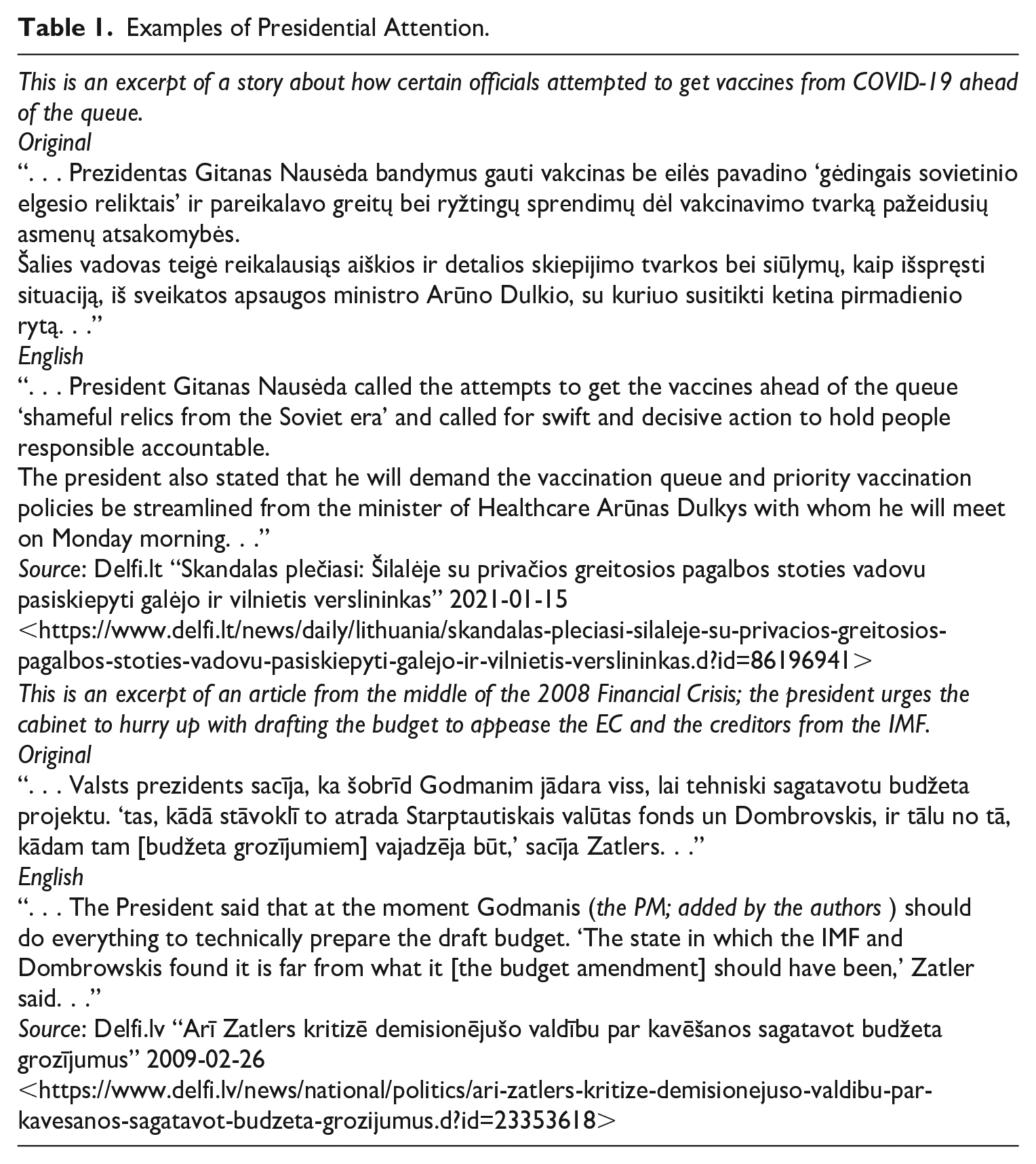
One potential criticism of our approach is that it can capture some noise—instances when a minister and the president are mentioned together (i.e. they attend an event together) without the president actually weighing in on the performance of the minister. This is a valid point as these things indeed happen. However, we argue that this shortcoming does not invalidate our approach. First, after analyzing a significant part of our corpus by hand and various validation exercises, we firmly believe that the noise is not strong enough to distort the signal in the data (see Table 1 for the selected examples of presidential attention in the collected data). Furthermore, we argue that the noise is equally distributed across the policy spheres, which means that it does not distort the results of our analysis.
Examples of Presidential Attention.
To enable a comparison between Lithuania and Latvia, this article uses a standardized set of ministry/policy sphere names:
Prime Minister
Agriculture
Culture
Defense
Economy
Environment
Finance
Foreign Affairs
Healthcare
Internal Affairs
Research and Education
Social Security
Other
The precise mapping between the ministries and the standardized policy spheres can be found in the project’s GitHub repository (see Note 3).
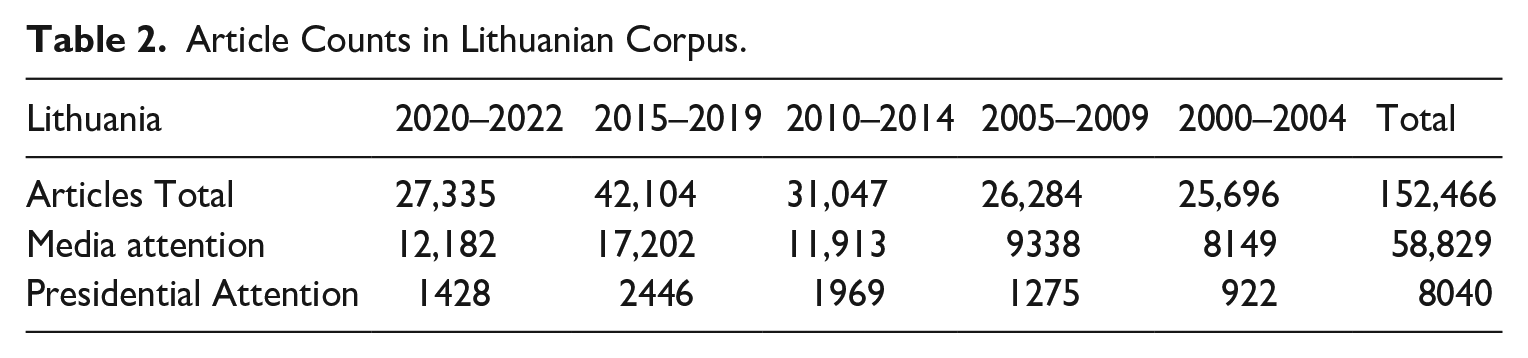
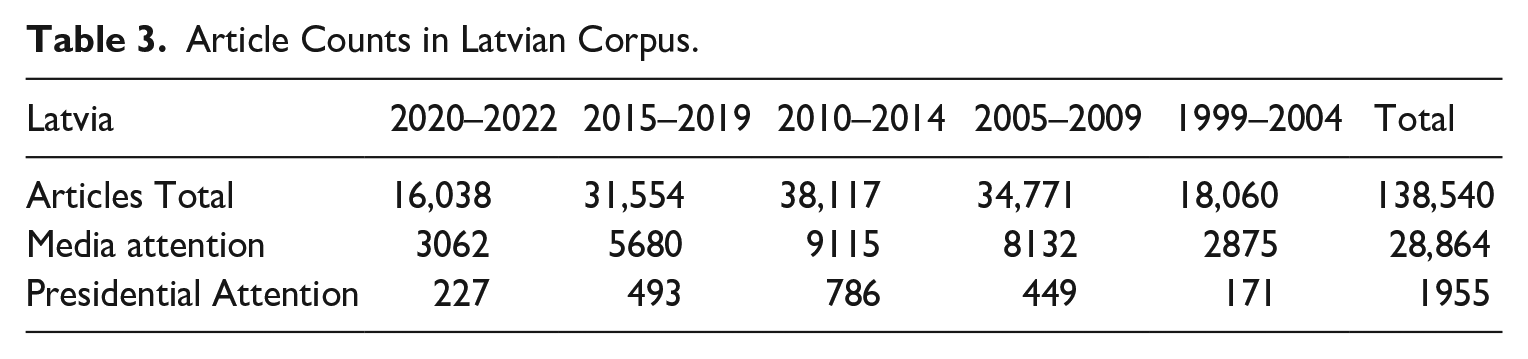
Overall, we have collected over 291,000 articles from the Lithuanian and Latvian “Delfi” portals. Naturally, only a minority of these articles mentioned cabinet entities—38% in Lithuania and 21% in Latvia. Out of those, only a fraction contained any instances of presidential attention. Overall, we have discovered 8040 articles (5.3% from the corpus size) in Lithuania and 1955 (1.4% from corpus size) in Latvia. More detailed breakdowns are presented in Tables 2 and 3.
Article Counts in Lithuanian Corpus.
Article Counts in Latvian Corpus.
Analysis
Starting with the most general trends, we observe that the levels of presidential attention in Lithuania are higher than in Latvia by about 2.5 times. This difference between the two countries is statistically significant (see Table 4).
Average Levels of Presidential Attention in Lithuania and Latvia with T-Test Results.

Figure 2 contains the breakdowns of presidential attention by policy sphere. We see that in both countries, the Prime Minister is in the top position, followed by Foreign Affairs and Defense. This is in line with our expectations, as the PM stands as a proxy for all cabinets in corpora and Foreign Affairs and Defense are traditionally considered as “presidential” policy spheres. However, in the Lithuanian corpus, the share of media attention articles which contain presidential attention to the PM is ~8%, while in Latvia it is lower, ~5%.
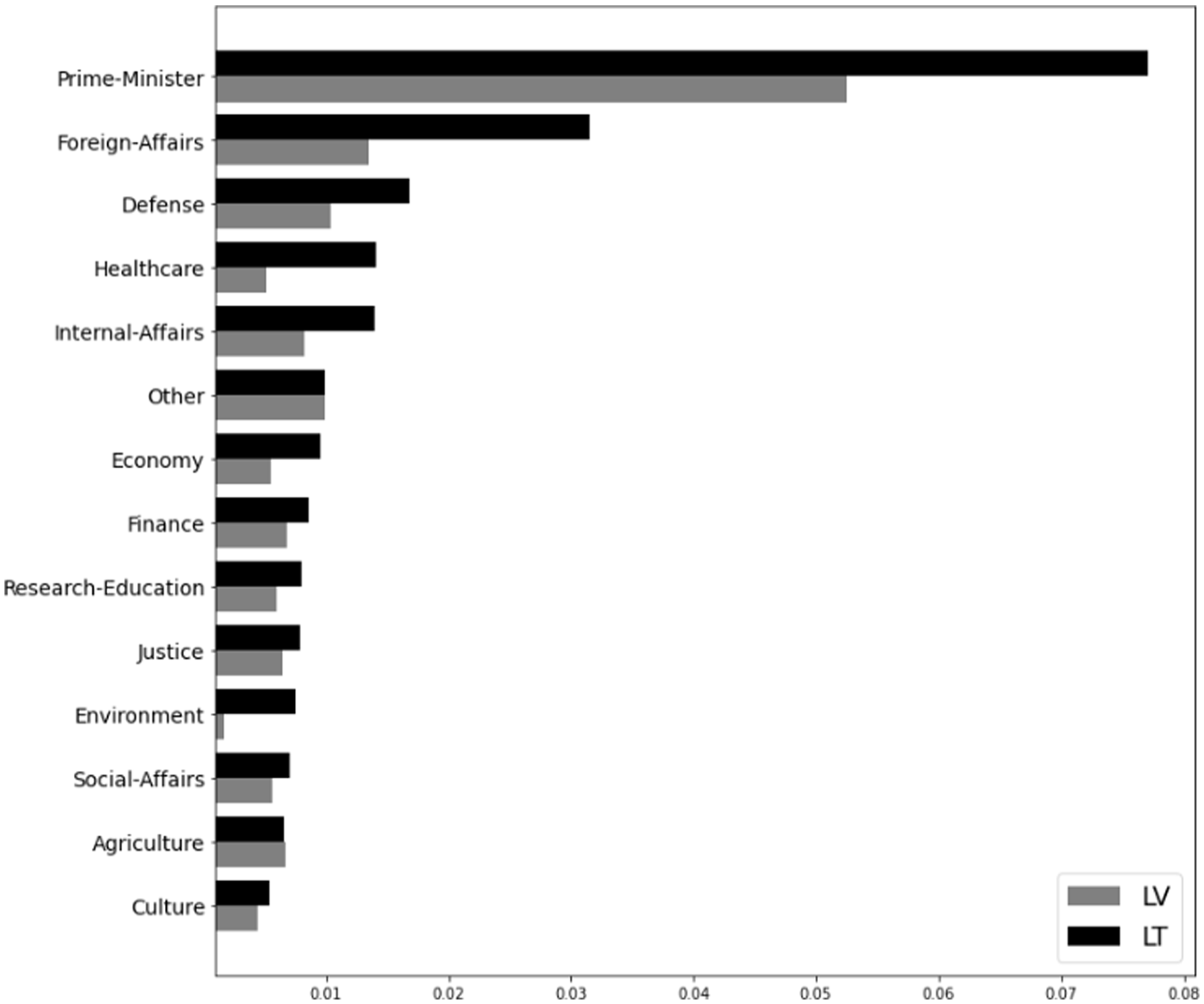
Presidential Attention by Policy Sphere Lithuania and Latvia.
Furthermore, we observe that for the most part, the levels of presidential attention are higher in Lithuania than in Latvia. This finding lends strong support to the H1 that the levels of presidential attention are expected to be higher in Lithuania than in Latvia because Lithuanian presidents have more potential to influence domestic policy and are more politically independent (due to direct election).
Figures 3 and 4 show the dynamics of presidential attention by policy sphere in Lithuania and Latvia over time. In both countries, the PM, Foreign and Defense policy receives the most attention over time. However, in Lithuania, we can observe regular breaks in this pattern when a new policy sphere starts receiving the most presidential attention. An example of that could be presidential attention to the healthcare sphere in 2020–2021, when the president actively inserted himself into the discussion as to how the response to COVID should be handled. Another example would be presidential attention to the Internal Affairs sphere, when a conflict between the president and the cabinet ensued in lieu of a scandal, when a street thug managed to escape from police custody with a stolen firearm.
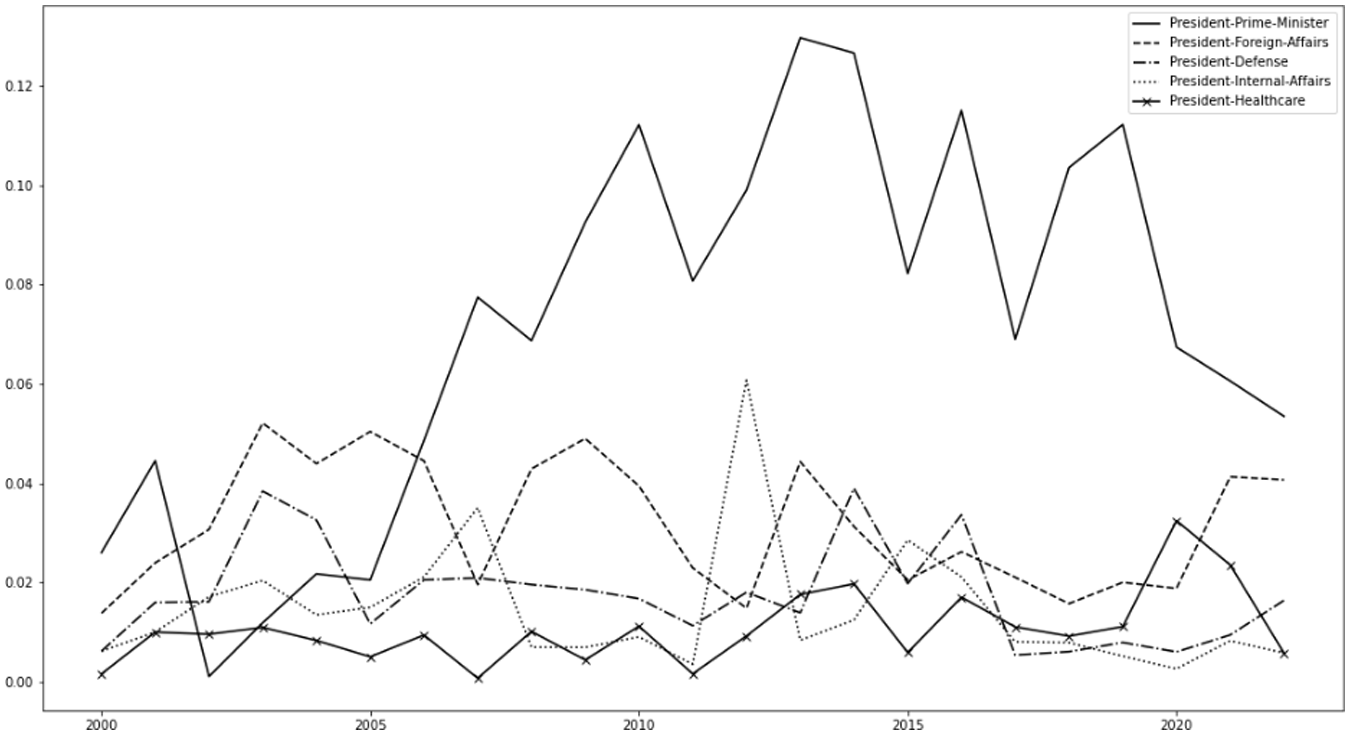
Presidential Attention by Policy Sphere over Time LT.
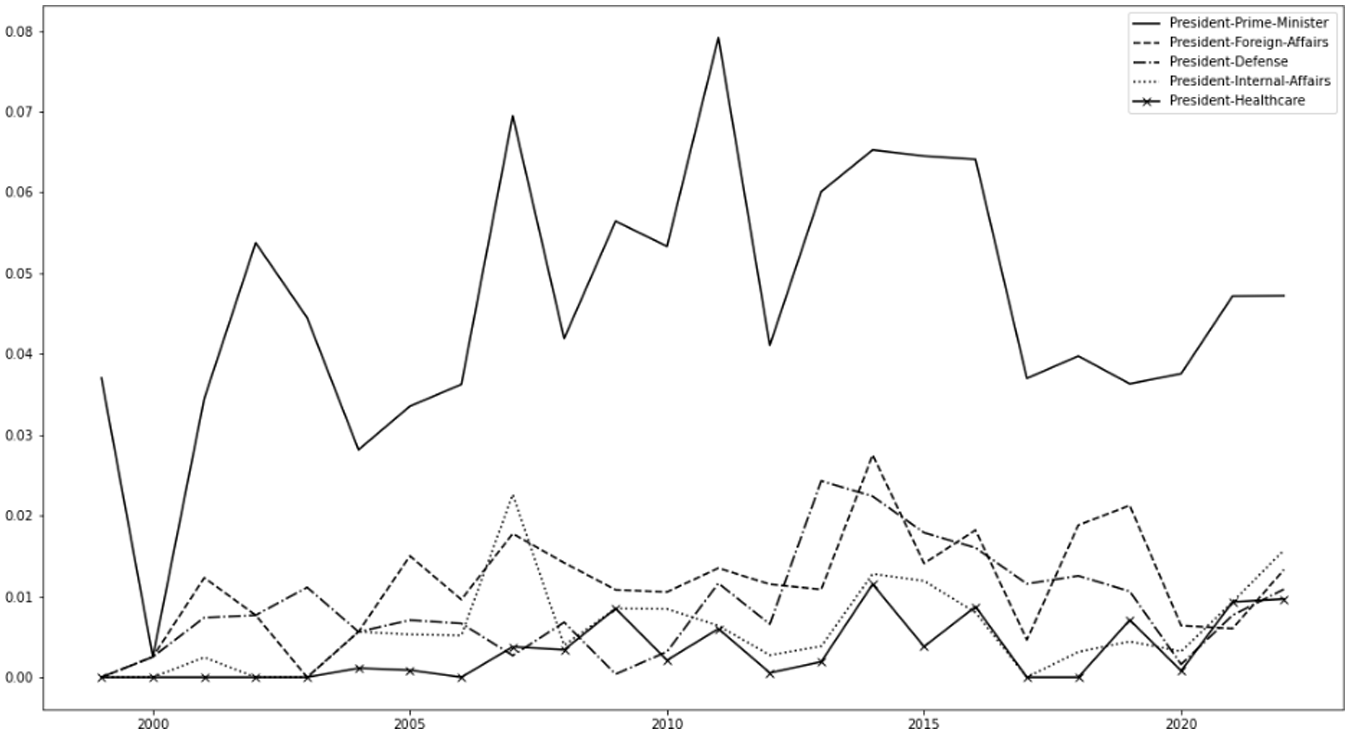
Presidential Attention by Policy Sphere over Time LV.
Meanwhile, in Latvia, the presidential attention patterns are more stable and there are fewer fluctuations. This suggests that the president in Latvia comments more rarely on the current “trending” topics. The PM (as a proxy for the whole cabinet) receives the most presidential attention and this trend is not interrupted by any sudden changes.
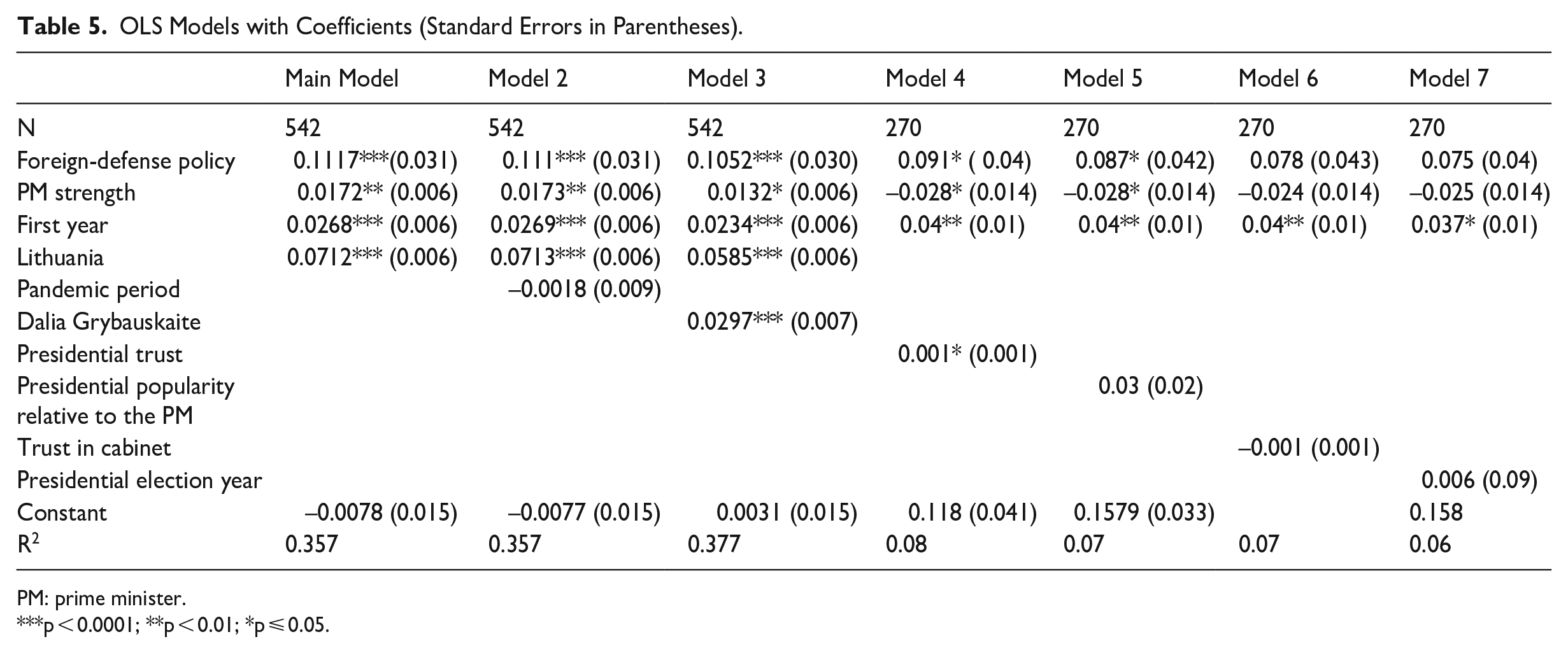
In Table 5, we present the results of our main ordinary least squares (OLS) regression models. Our main dependent variable was the level of presidential attention (share of articles containing presidential attention) in a given month. The main independent variables were a country dummy for Lithuania, the share of media articles on foreign and defense policy, PM strength, and a dummy variable for the first year of presidential strength.
OLS Models with Coefficients (Standard Errors in Parentheses).
PM: prime minister.
p < 0.0001; **p < 0.01; *p ⩽ 0.05.
To measure the strength of the cabinets, we use data from the expert survey conducted as part of the project Prime Ministers in CEE project (Grotz et al., 2021). More specifically, we use the variable “pmp_rating” which contains the assessment of PMs power, conceptualized as PMs control of the coalition and the parliamentary majority. The variable uses an ordinal scale with 1 being the least powerful and 4 being the most powerful. This indicator covers the main dimensions of cabinet strength that are very relevant for our analysis: it measures both how the PM is able to maintain the political support (of the political majority and own party) and how effectively he runs state affairs (settling cabinet conflicts, directing domestic affairs and securing national interests).
In addition to the main model, we also ran two models with additional controls: in one of the models (model 2), we included a dummy control variable for Dalia Grybauskaitė, a Lithuanian president famous for her strong personality. Since her two terms account for a large share of our Lithuanian data, we wanted to test whether the differences between Lithuania and Latvia remain significant even if we control for this. The second control (model 3) has a dummy for the COVID-19 pandemic period 2020–2022. Finally, in the last set of models, we use different popularity measures. In model 4, we add a measure for presidential popularity in absolute terms, while in model 5 we add a measure for the president’s popularity relative to that of the PM. In model 6, we add a measure for PM popularity. Finally, in model 7 we add a dummy for the presidential election year. Models 4–7 were run on the Lithuanian data only, as the data on Latvian presidential popularity were not available and Latvian presidents are not popularly elected (hence no election year).
We also ran OLS regression models by policy sphere. In these models, we used presidential attention to a given policy sphere as the dependent variable and media attention to that policy sphere, PM strength, and dummies for Lithuania and the first year of the presidential terms as the independent variables. The coefficient plots for these models can be found in Appendix 1 to this article.
The results from the analysis lend support to our first hypothesis: presidential attention is higher in Lithuania than in Latvia. The results are robust even when controlling for the pandemic period or the tenure of Dalia Grybauskaitė. This indicates that the differences between Lithuania and Latvia are structural and remain stable over time.
Second, our models for each policy sphere (see Appendix 1) suggest that the patterns of presidential attention closely mirror those of media attention. In all models, the media attention to a given policy sphere had a significant and strong effect on the amount of presidential attention. This is consistent with our second hypothesis.
Furthermore, our third hypothesis is also confirmed. The general patterns of presidential attention (Figures 1–3) indicate that the presidents consistently pay more attention to foreign and defense policy than to the other policy spheres. This notion is also confirmed in the regression models (models 1–5).
Meanwhile, we did not find any support for our fourth hypothesis (both subsections A and B). The popularity of the president does not seem to have a significant effect on the levels of presidential attention. Moreover, part A of our fifth hypothesis is confirmed. Newly elected presidents within the first year of their presidential term seem to weigh in on the ministerial performance more than during the later years of their tenure. This effect can also be observed in the majority (but not all) models by policy sphere. However, part B of our fifth hypothesis is not supported. We do not find evidence that presidential attention increases before the presidential election.
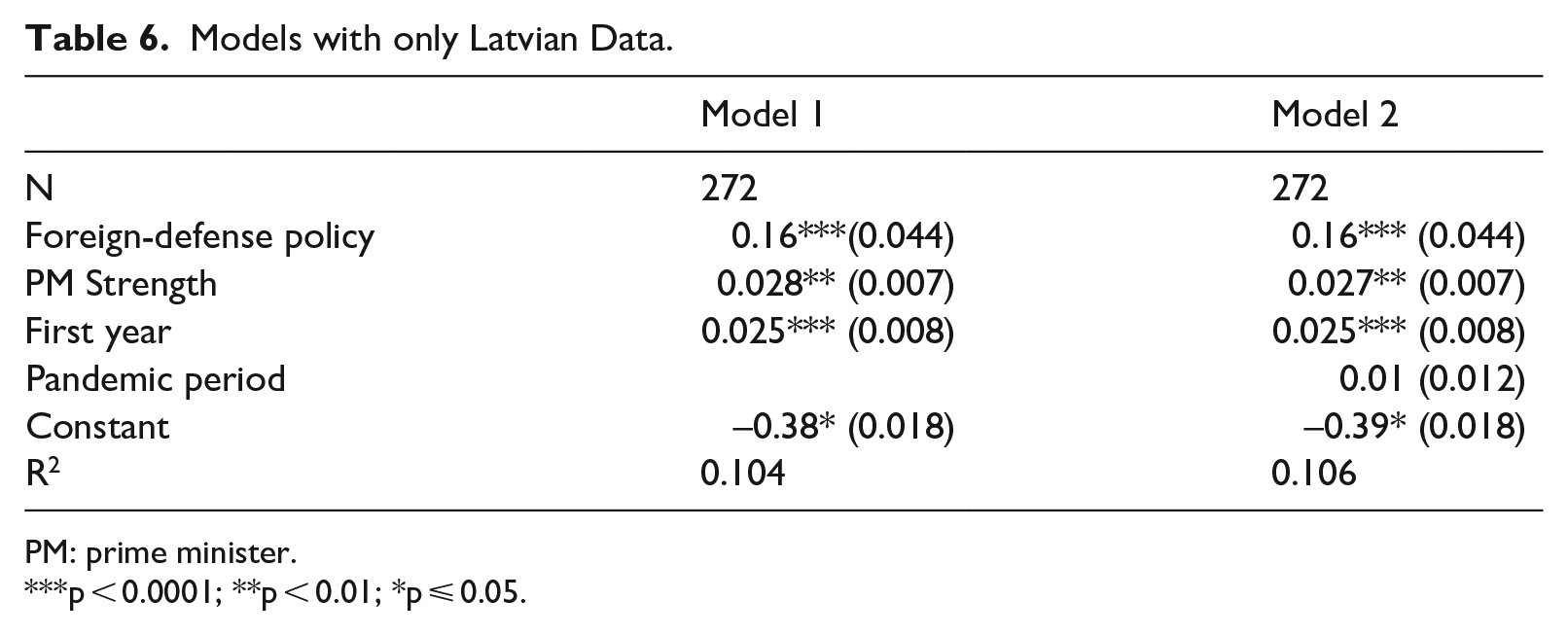
We also find that cabinet strength has a significant positive effect on the levels of presidential attention (models 1–3). This runs contrary to our H6a. However, we also observe that this effect is in the expected direction and is statistically significant in part of the models where only the Lithuanian data are analyzed (models 4–5). This suggests that the relationship between the strength of the PM and levels of presidential activism works differently in Lithuania and Latvia. This is supported by additionally running our models on the Latvian data only (see Appendix 1). It is an interesting finding that merits further research. One possible explanation is that in Latvia, during the periods when the cabinet is strong and the PM has stronger control over the parliamentary majority, the presidents have fewer avenues for informal activism and thus use the public channels more frequently. Finally, H6b is rejected as we find no significant relationship between the levels of trust in the cabinet and the levels of presidential activism.
Conclusion
This article seeks to contribute to studies on presidential activism by going beyond the analysis of high-profile clashes between presidents and cabinet members. We investigate more routine day-to-day attempts by the presidents to insert themselves into the government decisions and to weigh in on the performance of certain cabinet members. The article analyzes such presidential weigh-ins from two countries: Lithuania and Latvia, covering the period from the year 1999 to 2022. The original data set for the article was collected by web-scraping the largest web media portals from the two countries.
Our analysis supports most of the raised hypotheses. As expected, we found that presidents in Lithuania weigh in on the performance of the cabinet significantly more than in Latvia: regime type is important for the intensity of routine presidential activism by going public. This is consistent with our expectation that being institutionally more powerful and directly elected, Lithuanian presidents could feel more empowered to comment on the cabinet members’ activities than their Latvian counterparts. An alternative explanation also could be raised: due to the nature of the indirect election and established links with the parliament, Latvian presidents may have greater opportunities and willingness to use informal channels in their attempts to influence the government.
We expected that out of all the policy spheres, the presidents would be most active in commenting on the activities of the foreign and defense ministers. This hypothesis was also supported: presidential attention to these policy spheres was significantly higher in both countries and has consistently been so over the whole period of analysis. Our results suggest that areas of foreign and defense policy are regarded as “presidential” in both of the regime types. Future research could investigate this finding further, with a larger sample that would include semi-presidential and parliamentary countries of Western Europe.
Furthermore, based on the research from the US, we expected that the presidents will mostly react to stories and issues discussed in the media and, therefore, the relative attention presidents paid to the different policy spheres will closely mirror the pattern of media attention. In other words, we expected that presidents start weighing in on a certain policy sphere, as it starts receiving more coverage in the media. This hypothesis was also supported: amount of the media coverage for a particular policy sphere has a strong and significant effect on the presidential attention to that sphere. Finally, based on earlier research, we expected that the presidents would be more active during the first year of their term, while their mandate is still fresh. This hypothesis was also supported.
However, we did not find any relationship between the levels of this routine presidential activism and the presidential popularity (neither in absolute terms nor relative to the cabinet). We also found that although the power of a given PM has a significant effect on the levels of presidential activism, the effect appears to run differently in Lithuania and Latvia. The analysis shows that in Latvia, the presidents tend to weigh in more on the performance of stronger PMs and less on weaker cabinets, while in Lithuania it is the reverse. Although more research is needed on the topic, we stipulate that when a cabinet is weaker in a parliamentary regime, a president may resort to informal personal channels to exercise influence. Meanwhile, when a cabinet is strong, such opportunities are fewer and presidents may have to resort to expressing their opinions or preferences in the media. This is a curious finding, which could be explored in greater detail in future research, possibly combining the data on going public with the presidential use of formal instruments, such as veto.
Our results support theoretical arguments that emphasize regime-related and presidency-centered explanations in the research on presidential activism. Constitutional powers and direct modes of election motivate the presidents to go public more often in a semi-presidential regime, irrespective of a particular incumbent. Moreover, even under a parliamentary regime, presidents are more active in the spheres where a popular president could be expected to take the initiative as a head of state: foreign and defense policy. Further research may explore these arguments, including more countries and expanding the geographical scope beyond Central and Eastern Europe.
Footnotes
Appendix 1
Models with only Latvian Data.
| Model 1 | Model 2 | |
|---|---|---|
| N | 272 | 272 |
| Foreign-defense policy | 0.16***(0.044) | 0.16*** (0.044) |
| PM Strength | 0.028** (0.007) | 0.027** (0.007) |
| First year | 0.025*** (0.008) | 0.025*** (0.008) |
| Pandemic period | 0.01 (0.012) | |
| Constant | –0.38* (0.018) | –0.39* (0.018) |
| R2 | 0.104 | 0.106 |
PM: prime minister.
p < 0.0001; **p < 0.01; *p ⩽ 0.05.
Declaration of conflicting interests
The author(s) declared no potential conflicts of interest with respect to the research, authorship, and/or publication of this article.
Funding
The author(s) disclosed receipt of the following financial support for the research, authorship, and/or publication of this article: Authors are grateful for the support of the Lithuanian Research Council (Grant no. P-MIP-22-53).
