




Abstract
Defining ‘radical left’ political actors by their challenge to contemporary economic norms, this article draws the example of Die Linke in Germany and analyses explanations for this party’s support. Two theories are tested. First, the policy-proximity account, building off the Downsian spatial model and tested with three policy dimensions relating to economics, cultural policy, and migration policy. Second, the populism-based account, which defines this as a conflict between ‘the people’ versus ‘elites’. Using German Longitudinal Election Survey data, this article carries out a large-N analysis of support for Die Linke. It uses multiple linear regression to test how far support for this party is explained by proximity between voters and the party, or by levels of populism among voters. Results showed greater support for Die Linke from proximal voters on each dimension; however, highly populist voters were not found to be more supportive of Die Linke. The article concludes in favour of a policy-proximity explanation but suggests the party’s well-established nature may have altered voters’ policy preferences, potentially leaving a reverse causal relationship and leaving in doubt the role of policy-proximity on radical left support.
Introduction
Die Linke sits at a unique position among the radically left-wing parties in Western Europe, as the successor to a Communist governing party now situated outside of an ex-Communist state. As a party, it has voyaged from its succession to the East German ruling party – the SED, to deep ideological conflicts under its Partei des Demokratischen Sozialismus (PDS) brand, to its growth to greater nationwide political competition as Die Linke. The party has managed to coalesce more in recent years, into a party with stridently left-wing messages, often making populist appeals in particular opposing big businesses, and offering a consistent ideological challenge towards the centre-left SPD.
The core objective of this article is to explore support for Die Linke. The first element of this is to study the evolution of Die Linke in more detail, to draw out its populist messages and its more radical left-wing challenges towards mainstream parties. Following this, I discuss theory, looking first to existing explanations for Die Linke’s support in previous research, and then moving to offer two theoretical explanations which may plausibly explain support for this party. In brief, these two theories are that support for this party is a product of voter-party policy-proximity (which I test based on economic, cultural, and migration policy dimensions), and second that populist voters may be drawn to Die Linke by its anti-elite appeals which in particular target big businesses and a ‘neoliberal’ political consensus. I then turn to multivariate regression analysis to test both these theories, and how far they explain support for Die Linke, using survey data from the German Longitudinal Election Study. This leads me to conclusions, where I find support for the policy-proximity account from my regression analysis, but do not find convincing support for the populism-based theory.
The Journey of Die Linke
After the fall of the Berlin Wall in November 1989, members of the GDR’s ruling party – the Sozialistische Einheitspartei Deutschlands (SED) – met to dissolve itself (Priestland, 2010; Rosa Luxemburg Stiftung, 2011). From those ashes, they formed a new party – the Partei des Demokratischen Sozialismus (PDS) – in an effort to disassociate from the authoritarian East German regime. This decisively shifted the radical left in Germany, moving away from rigid Marxist–Leninist roots and towards a party which could appeal to voters in both East and West Germany.
For most of its existence under the PDS brand, the party was a divided force. Internally, the party was riven with splits between its old left ‘Restorative Ideologues’ and the more pragmatic ‘Modern Socialist’ elements, as well as others (Hough et al., 2007; Segert, 2002). By 2003, the more pragmatic elements had prevailed, and had begun to imprint themselves more consistently on the party’s platform. This included greater distance from Marxism and more closeness with market economics (Patton, 2006). Since the party’s existence as the PDS, they had gained the vast majority of their support from the former GDR. This moderating shift occurred, taking the party away from its Marxist roots and towards a more radically socialist challenge towards the centre-left SPD, as part of an effort to also become competitive in what had been West Germany.
However, in the overall landscape of German partisan competition, Die Linke remains very much on the left of this contest. Also on the left are the Green Party and the SPD. The former previously prioritised ecological issues, but more recently branched out as other parties also adopted environmental policy stances. The Green Party have outspokenly taken strongly liberal positions on more cultural issues, such as drugs, LGBT+ rights, and law-and-order policies (Blühdorn, 2009; Bündnis 90/Die Grünen, 2007). Meanwhile, the SPD began to converge with the political centre through the 2000s – in particular, with the ‘Agenda 2010’ neo-liberal reforms focused on cutting unemployment benefits and other welfare policies, proposed by Chancellor Gerhard Schroder in 2003 (March, 2012: 124). 1
The PDS challenged the SPD’s convergence on economic and welfare issues, and were joined by the SPD breakaway group – Arbeit und Soziale Gerechtigkeit – Die Wahlalternative (WASG) – in 2005, and subsequently rebranded as Die Linke. The party’s position then was moderately critical of capitalism, and outwardly opposed to low tax and reduced welfare spending ‘neo-liberal’ economic policies. Alongside this, Die Linke have made populist appeals alongside criticism of capitalism. At the fundamental level, populist appeals target ‘corrupt elites’ in favour of ‘ordinary people’ (Mudde, 2007). In the case of Die Linke, these populist appeals have appealed to the ‘good’ people battling against ‘bad’ big business, with a strong focus on wealth redistribution (March, 2012: 125).
In terms of manifesto proposals from Die Linke, these include policies such as ‘publicly organised and guaranteed’ provision of energy, water, housing, and health, removed from ‘capitalist profiteering’ (Die Linke, 2011: 31). In addition, the party has offered policies targeting the rich and private corporations, including an increase in capital gains tax, a ‘large increase’ in the top rate of income tax, and a requirement for company bosses to report financial assets held overseas (Die Linke, 2011: 41). The party is also highly critical of austerity policies (Die Linke, 2011: 22), commits to reversing cuts in government funding (Die Linke, 2011: 7), and promotes redistributionist policies in response to the notion that ‘Inequality is Unsocial’ (Die Linke, 2017: 37–39). The economically redistributionist nature of Die Linke offer clear evidence of the party’s position on the radical left of German politics. Alongside this, policies targeting wealthier people and corporations also point to the party’s anti-elite, populist appeals. This all stands in clear contrast to the convergence of the SPD, which includes favour for social equality over economic redistribution (SPD, 2017), and equivocation on austerity (SPD, 2007: 26). It also contrasts with the Green Party, with their focus on cultural issues rather than economics (Blühdorn, 2009). Put together, this positions Die Linke as the radically left-wing political party in the German context.
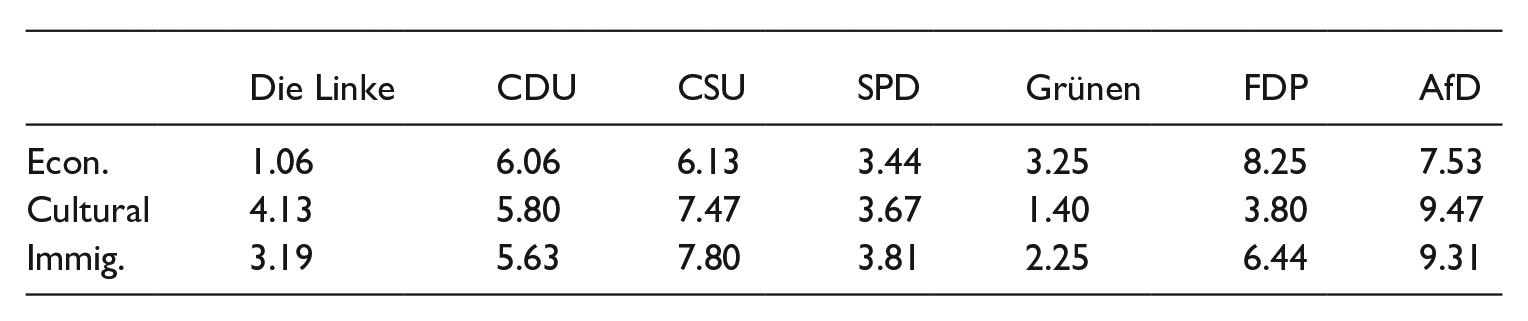
Away from economics, Die Linke takes broadly liberal stances on cultural issues, including support for LGBT+ rights, support for drug legalisation, and a pro-choice stance on abortion (Die Linke, 2011: 51, 44, 50). On another important issue as well – migration – Die Linke is generally migrant-inclusive, with expressions of support for ‘open borders for persons in need’ (Die Linke, 2011: 51). The Chapel Hill Expert Surveys (CHES) – a survey of political scientists asked to rate the positions of political parties on policy dimensions – also reflect Die Linke’s positions on these three policy dimensions. I summarise these placements in Figures 1, 2 and 3, and place them alongside other competing parties for context, with tabled precise positions of these parties included under Appendix 1.
The CHES shows Die Linke to be radically left-wing on economics, moderately-liberal on cultural policy, and inclusive on migration. Critically, the CHES reflects the radically left-wing policy challenge of Die Linke – especially on economic policy – as well as in the party’s manifesto commitments. Die Linke has become an electorally persistent party in Germany, winning seats in the Bundestag ever since its foundation as the PDS and has achieved this despite being the direct successor to the controversial government of the GDR. The question arising from this is as follows: what explains the support this party has received?
Previous Observations
Relative to many instances of the radical left in Europe, including SYRIZA in Greece, Podemos in Spain, La France Insoumise in France, and the Labour Party under Jeremy Corbyn in the United Kingdom, Die Linke is quite an old example of a radical left political actor. As a result, there is quite a depth of previous research which raises some potential explanations for the party’s support.
Research conducted from the 2005 election results, just prior to the PDS/WASG merging, explained German radical left support though an older, socialist identifying generation, which formed the backbone of their support (Doerschler and Banaszak, 2007). Therefore, voter ideology is potentially an important factor in explaining Die Linke’s support. Although, the extent this is still the case may be worth reviewing.
Alternately, previous research has pointed instead to a wider political culture as an explanation of support for Die Linke (Campbell, 2018). This political culture includes factors such as nostalgia for the GDR, feelings of political disaffection, and left/right ideological beliefs. Furthermore, the research noted this political culture operating differently in East Germany compared to the West. More specifically, political disaffection is found to be more potent in the East, whereas in the West Die Linke’s support is connected to support for the welfare state instead.
Another theory for the success of the German radical left connects some of the party’s strongest performances with the policy convergence of their main left-wing rivals – the SPD. Patton (2006) suggested that Die Linke’s long-running efforts to position itself as the left-wing, democratic-socialist alternative to the SPD paid off when the SPD seemed to converge with the political centre – a shift exemplified with Chancellor Schroder’s 2003 ‘Agenda 2010’ policies curtailing unemployment and welfare benefits.
A common undercurrent with all of this previous research is the role of ideology. This features prominently in the well-established Downsian theory, that support for political actors is a product of proximity in policy spaces. In relation to this specific point, Downs notes the potential for more radical parties to profit from mainstream convergence:
‘When one of the parties in a two-party system has drifted away from the extreme nearest it turns towards the moderate centre, its extremist supporters may form a new party to pull the policies of the old one back towards them’ (Downs, 1957: 131).
For my own research here, the Downsian account is one of the theories which I explore.
The Policy-Proximity Account
Previous research has applied the Downsian account to explain partisan preferences in contexts including the United Kingdom (Cho and Endersby, 2003), and the United States (Jessee, 2012). The theory suggests that voters are self-interested and strive to maximise their ‘utility’. They do so by supporting parties which propose policies that are in-line with voter’s own preferences. Applied to this case study, this ‘Policy-Proximity Account’ predicts that support for Die Linke will come from voters who hold policy preferences which conform most closely with this party’s proposals.
In my application of this account here, I analyse the role of voter-party policy-proximity on three separate dimensions: Economics (taxation/spending), Cultural (e.g. LGBT+ rights), and Migration (attitudes towards immigration/immigrants). These dimensions have featured prominently in previous research into political behaviour with left-wing and right-wing parties (Akkerman et al., 2017; Kitschelt and McGann, 1995; Loew and Faas, 2019).
The Chapel Hill Expert Surveys (CHES), which I summarised in Figures 1–3, are helpful for detailing expectations under this account. Die Linke is well to the left of other parties on the economic dimension, slightly to the liberal side of the cultural dimension, and moderately migrant-inclusive on the migration policy dimension.
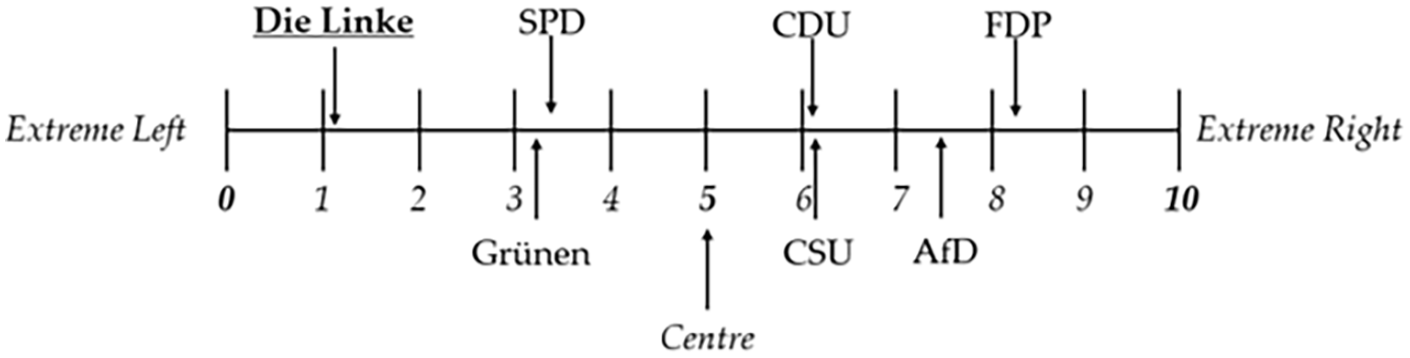
Economic Policy Positions of Die Linke According to the 2017 Chapel Hill Expert Surveys.
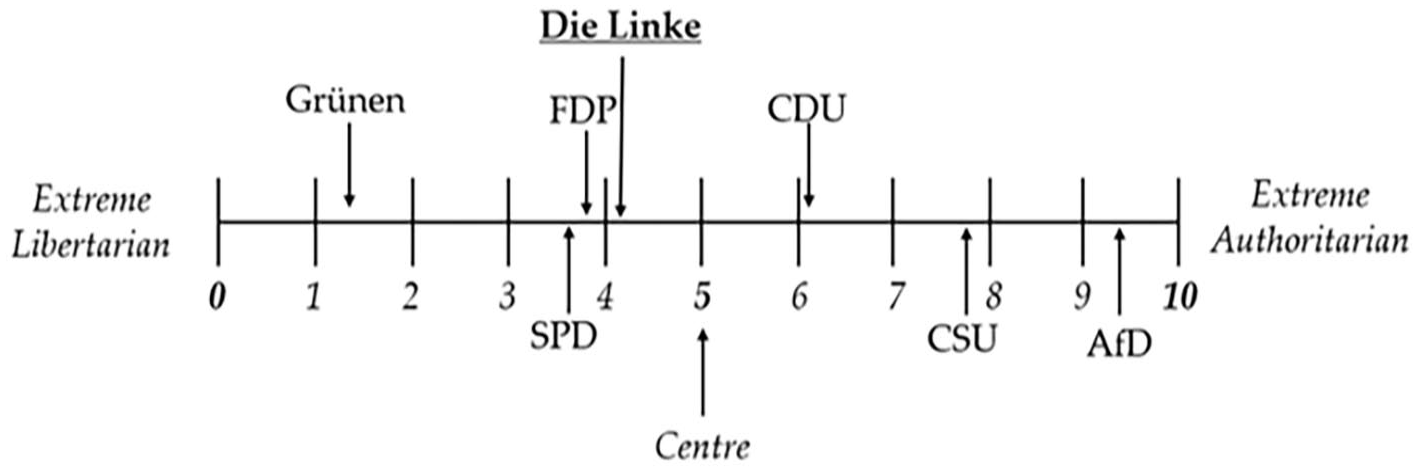
Cultural Policy Positions of Die Linke According to the 2017 Chapel Hill Expert Surveys.
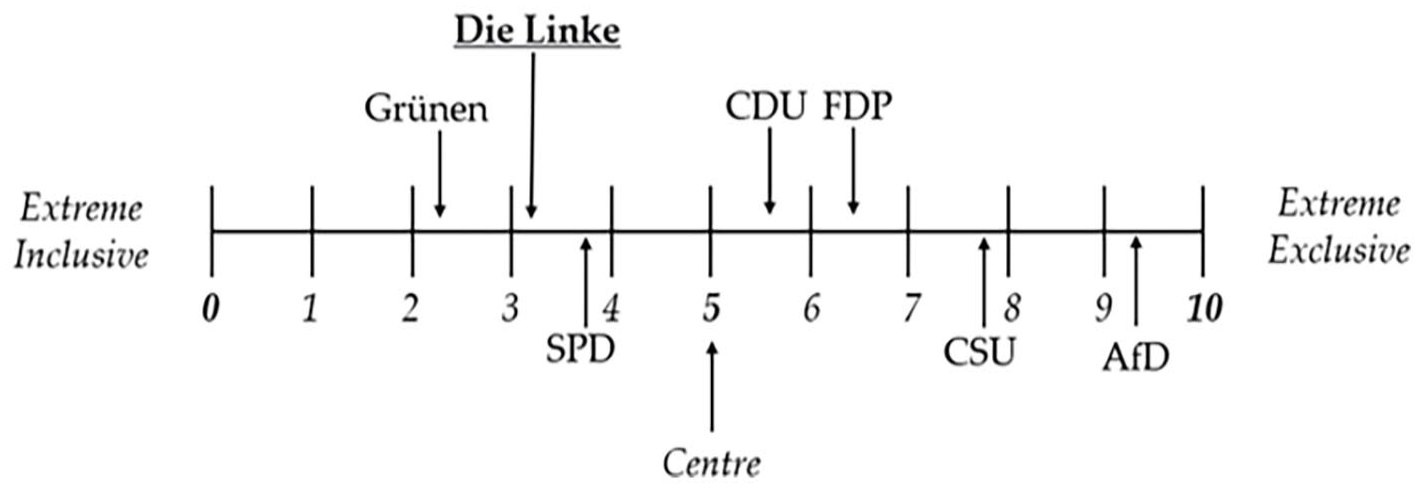
Migration Policy Positions of Die Linke According to the 2017 Chapel Hill Expert Surveys.
Based on these positions, the policy-proximity account would assume that voters with radically left-wing economic views would have significantly higher support for Die Linke. Voters with centrist and moderately-liberal cultural policy views would be significantly more supportive of Die Linke. Finally, moderately migrant-inclusive voters would be significantly more supportive of Die Linke.
The Populism-Based Account
In addition to my test of the Downsian policy-proximity model, I also test how far levels of populist sentiment among voters explains variation in support for Die Linke. Populism is a ‘thin-centred ideology’ presenting a division between two homogeneous, conflicting groups: the ‘ordinary people’ versus ‘elites’ (Akkerman, et al., 2014; Mudde, 2010). Questions prompting attitudes towards ‘elites’, holding an ‘ordinary people’ versus ‘elites’ worldview, and support for popular sovereignty would plausibly detect voter-level populism. Populist voters would believe there is a ‘people’ versus ‘elite’ conflict, and express support for popular sovereignty.
Conceivably this theory may explain support for Die Linke, as they propose anti-elite economic policies, including their policies targeting big businesses and the wealthy, and use language of ‘a few enrich[ing] themselves at the cost of the many’ and of ‘global ruling elites’ not serving the interests of the majority (Die Linke, 2011: 15, 23).
In terms of a basic expectation under the populism-based theory, I would expect voters who hold populist views – adhering to this ‘people’ versus ‘elite’ conflict – would be significantly more supportive of Die Linke. The account is a plausible one, given the anti-elite appeals made by the party and their policies targeting economic elites with higher taxation.
Research Design and Expectations
So far, I have provided some basic expectations from each of the two accounts I test in this article. To build these into some more specific and testable expectations, I need to gauge opinions of German voters; more specifically, their views towards Die Linke, their policy preferences, and their levels of adherence with populism. For this, I use the German Longitudinal Election Study’s (GLES) ‘Pre- and Post-election Cross Section’ data from 2021 (GLES, 2022).
First, my analysis requires a test of support for Die Linke. To accomplish this, I take advantage of a question asking respondents to rate German political parties on a + 5 to −5 scale. 2 This provides a dependent variable for my analysis, from which I can see how support for Die Linke varies based on policy preferences and levels of populism. I have included the wording for this and all questions used under Appendix 2.
I draw economic policy preferences from four questions. Three of these questions are from the GLES ‘Issue Battery’, which are answered with a ‘Strongly Agree’ to ‘Strongly Disagree’ 5-party Likert-type scale of responses. The Issue Battery questions relate to the state’s role in the economy, the government reducing differences in income levels, and government imposition of a cap on rent. The fourth question is a self-placement 1 to 11 scale, with respondents asked to indicate where their own views fall on a scale between ‘Lower taxes and fewer social services’ and ‘More social services and higher taxes’. 3
For cultural policy preferences, I draw upon two ‘Issue Battery’ questions. 4 These relate to quotas on women serving on the boards of large companies and whether respondents believe government measures for gender equality go too far.
For migration policy preferences, I use another 1 to 11 self-placement scale, where respondents identify their own position on a scale between ‘Facilitate immigration of foreigners’ and ‘Restrict immigration of foreigners’. Alongside this, I use a question from the ‘Issue Battery’ asking how far respondents agree/disagree that immigrants should be obliged to assimilate into German culture. 5
I calculate averages of respondent’s answers to these questions and then divide respondents into one of the five groups on each dimension. I create these groups in a way which makes them comparably-sized, 6 avoiding disproportionately small groups with less-reliable inferences. These groups are summarised in Table 1.
Summary of Policy Groups on each dimension.
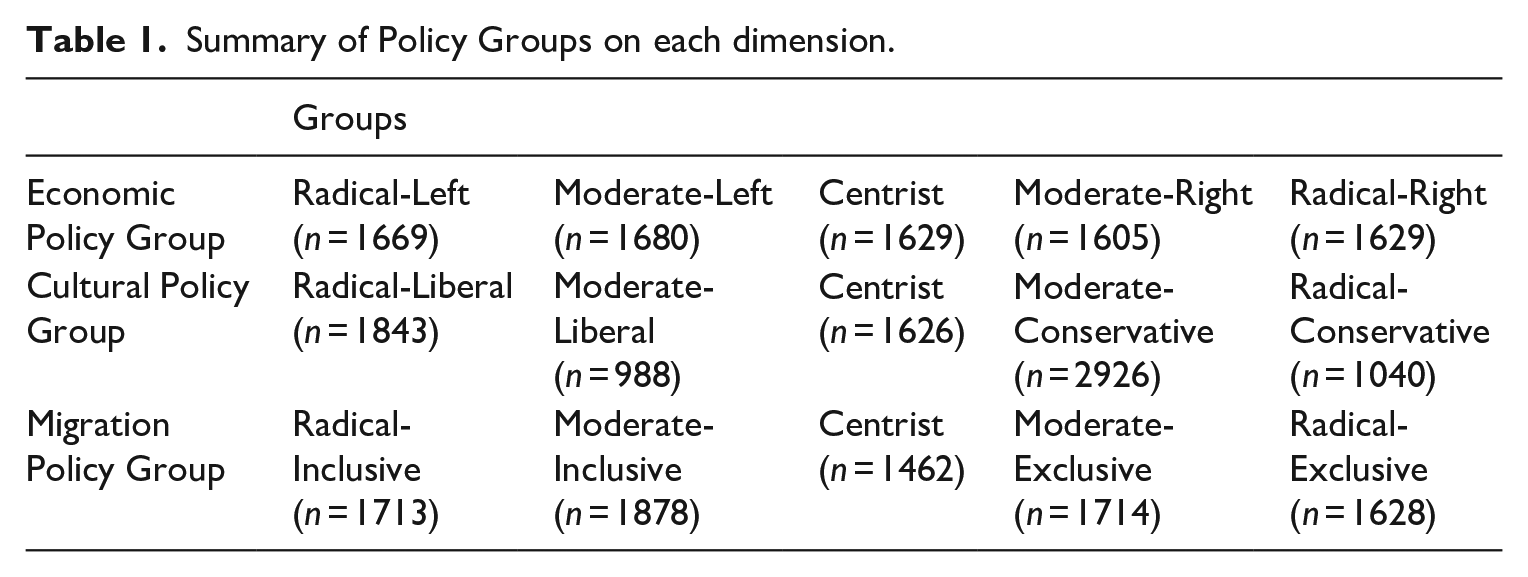
The detailing of these respondent groups now allows for me to make some more specific policy-proximity expectations. These are as follows:
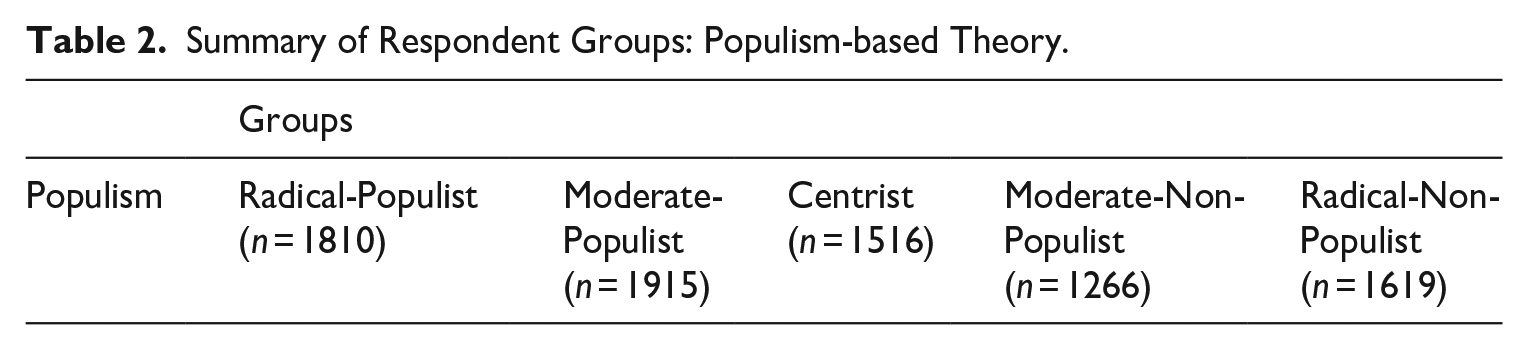
Moving now to explain how I have tested populism as a theory of support for Die Linke, the GLES cross-sectional data from 2021 allows me to measure levels of populist sentiment at the voter-level. This is crucial if I am to measure how levels of populism may explain support for this radical left party. To measure voter-level populist sentiment, I utilise six GLES questions from their ‘Attitudes: Populism’ battery. 7 These questions ask respondents about belief in political compromise, whether the Bundestag should follow popular will, and about differences between ‘ordinary people’ and ‘elites’, among other populism-related themes. From the five-point Likert-type-scale, I calculate the average response across these questions, giving me an overall impression of each respondent’s populist sentiments. I then assign respondents to a populism group, summarised in Table 2.
Summary of Respondent Groups: Populism-based Theory.
Under this account, I make the following expectation:
Observing this pattern of Die Linke evaluations is plausible on the basis of the populism-based account – that these respondents who strongly adhere with populism would be more likely to support this radically left-wing party on the basis of its anti-elite appeals.
In terms of control variables included in my analysis, I have included consideration for the roles of gender, whether a respondent identifies themselves as religious or not, the respondent’s level of education, and their self-identified social class. 8 All of these controls have also featured in previous research in this context (Schoen and Schumann, 2007). Furthermore, I included control for respondent partisan identity – a long-observed factor in political behaviour (Campbell et al., 1960). 9 Finally, and like other Germany political behaviour research (Gschwend, 2007), I included a regional control variable on the basis of the previous division of Germany and ongoing substantial socioeconomic, cultural, and political differences between former East German and West German states. 10
Analysis
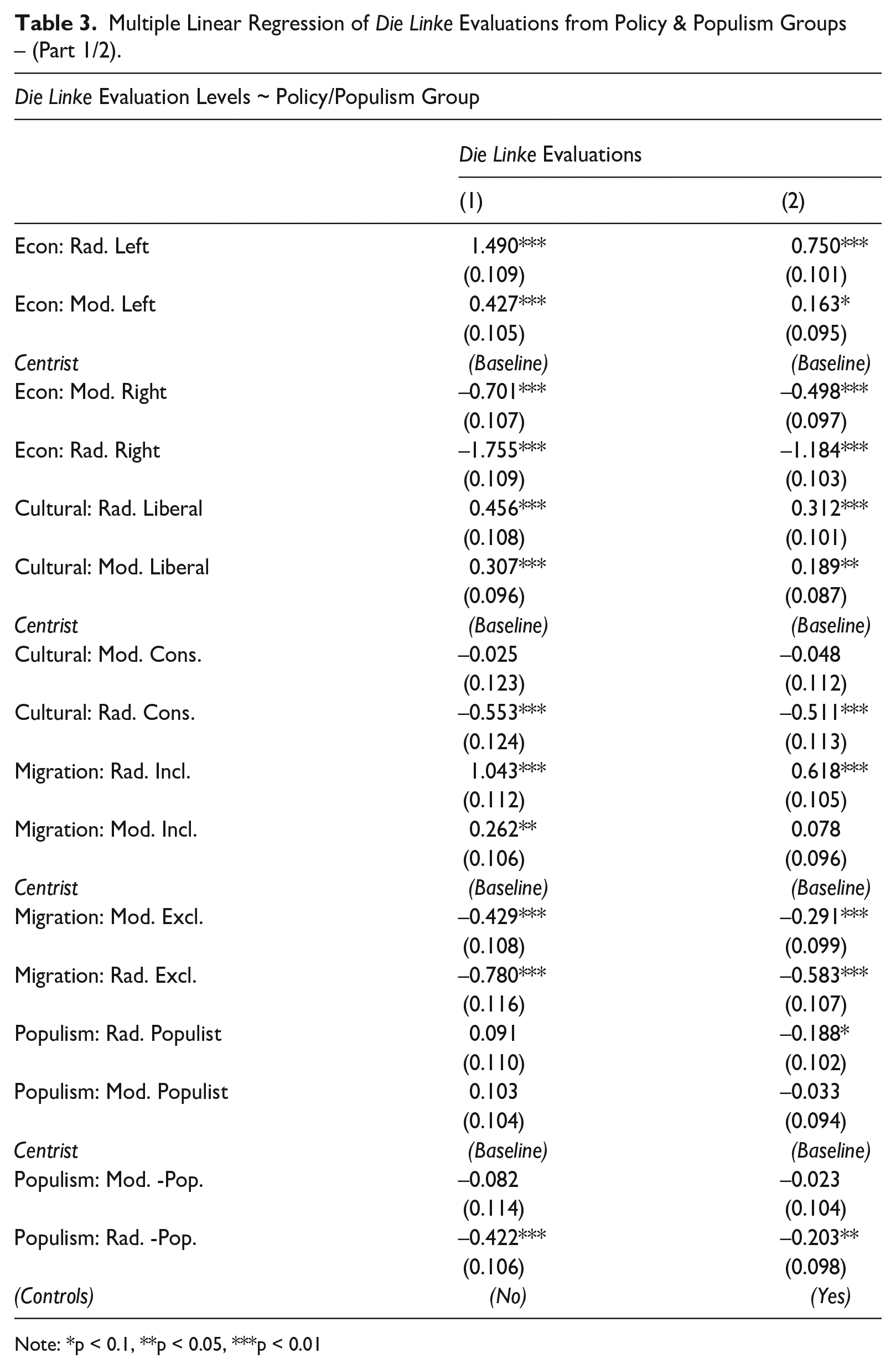
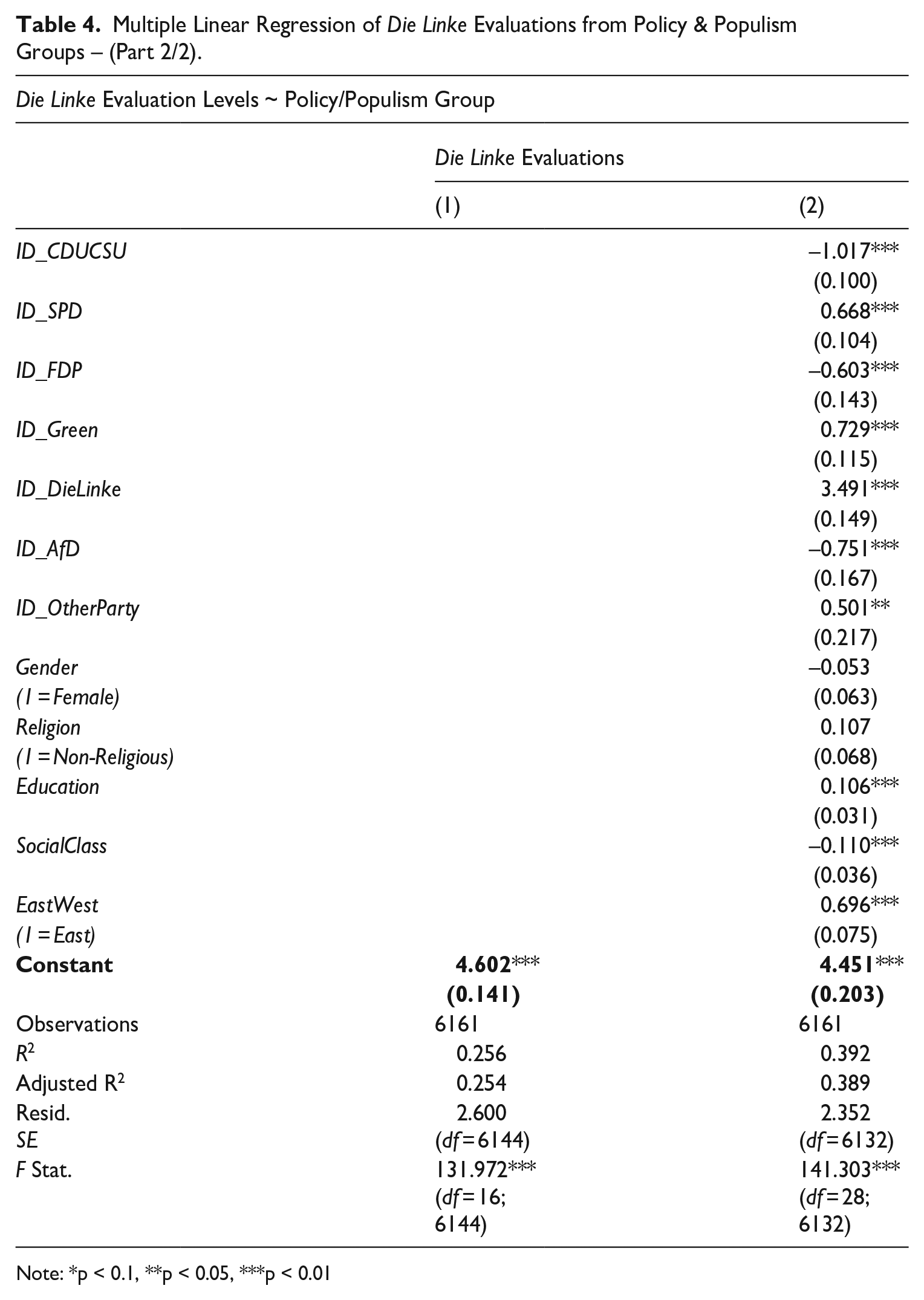
Under Tables 3 and 4, I include a multiple linear regression of Die Linke support from 2021 GLES cross-sectional data. For inclusion in this analysis, respondents needed to answer all policy questions, populist questions, evaluations of Die Linke, and control variable questions. This brings the number of respondents to 6161. My regression analysis presents Die Linke evaluations relative to a baseline group of respondents. I have used policy centrists and respondents with neither strong populism nor non-populism as this baseline category. Given the size of this regression model, I have split it over two pages, with control variable results included in Table 4.
Multiple Linear Regression of Die Linke Evaluations from Policy & Populism Groups – (Part 1/2).
Note: p < 0.1, **p < 0.05, ***p < 0.01
Multiple Linear Regression of Die Linke Evaluations from Policy & Populism Groups – (Part 2/2).
Note: *p < 0.1, **p < 0.05, ***p < 0.01
Column 1 of Tables 3 and 4 shows Die Linke evaluations without control variables, whereas column 2 includes controls. As the purpose of controls is to show the relationships more accurately between policy preferences and populist sentiments on Die Linke evaluations, I primarily draw my interpretations and conclusions from column 2.
Looking at Die Linke evaluations from the economic policy groups, the ‘Radical Left’ group has significantly higher evaluations for this party compared to the baseline. Specifically, on average, this group’s evaluations for Die Linke were .750 higher on this + 5/−5 scale – statistically significant at the .01 level. Furthermore, the ‘Radical Right’ policy group at the other end of this dimension has significantly lower evaluations for this party, compared to the baseline – specifically, 1.184 lower on this + 5/−5 scale. Both of these findings conform with
From the cultural policy groups, I see Die Linke evaluations were significantly higher from both the ‘Radical Liberal’ and ‘Moderate Liberal’ groups, and significantly lower from the ‘Radical Conservative’ group – all relative to the baseline.
From migration policy groups, the ‘Radical Inclusive’ respondents had the highest evaluations for Die Linke, with the lowest from the ‘Radical Exclusive’ group. This also follows expectations for this dimension, under
Moving to the populism groups, I find some limited evidence to support
I have summarised these Die Linke evaluations graphically, under Figure 4. These reflect the monotonic increases in Die Linke evaluations from policy groups, with this support growing as proximity increases with this party. Furthermore, looking across these diagrams, the impact of economic policy-proximity seems to be the strongest, as revealed by a steeper pattern in evaluations.
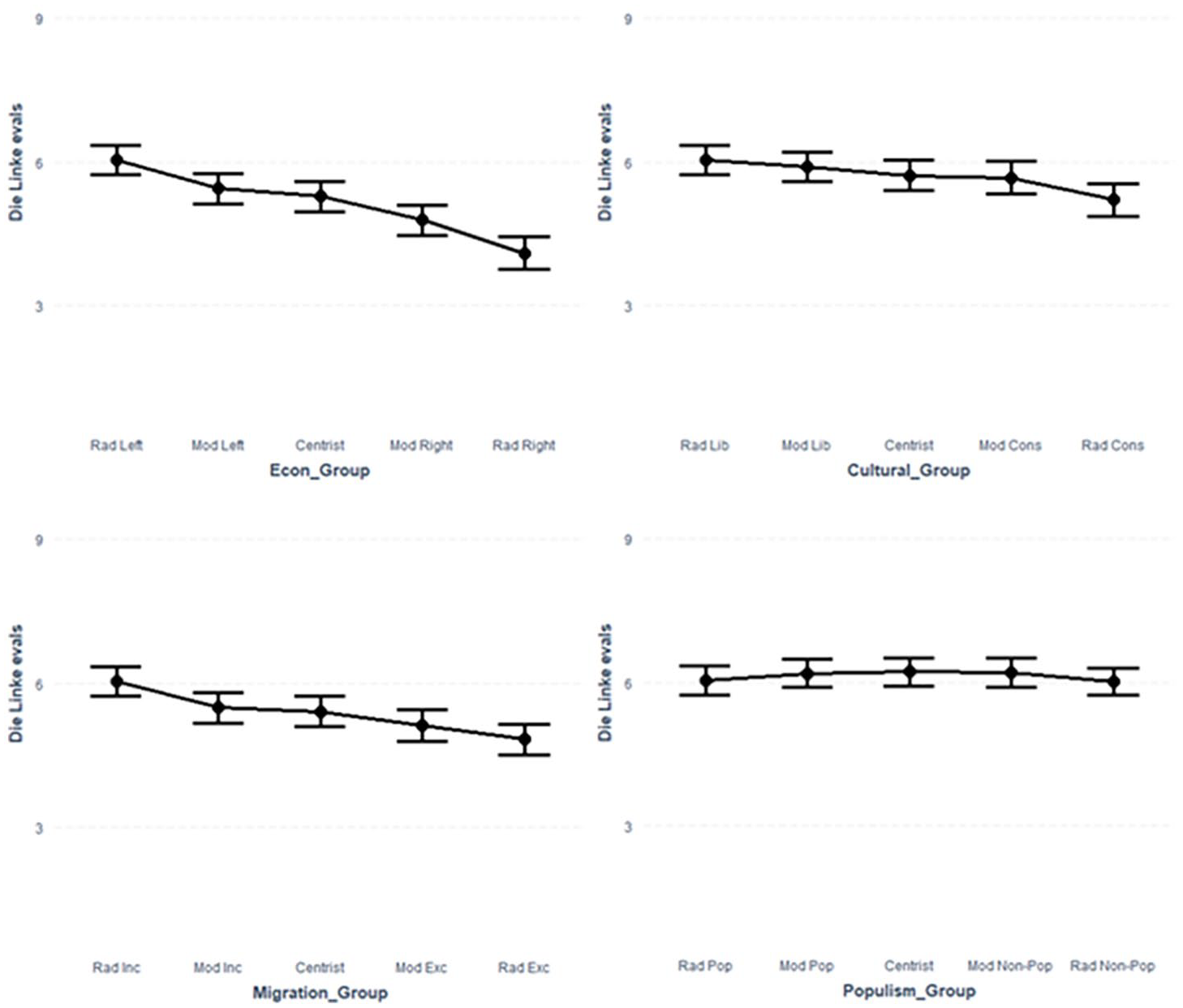
Graphical Summaries of Die Linke Evaluations from Policy and Populism Groups.
To briefly address the controls, these show significant evaluation effects from respondents who identify with all nine party options. These also show that more educated voters had significantly increased evaluations for Die Linke, and respondents from higher social classes had significantly lower evaluations for this party. Finally, respondents from regions which were part of the GDR had significantly higher evaluations for Die Linke – a plausible observation considering the party draws a lot of its supporters from this part of the country.
Conclusion
Overall, I found support for my policy-proximity hypotheses (
Breaking this down, I found a monotonic pattern of Die Linke evaluations from economic policy groups: lowest from the spatially distant ‘Radical-Right’ group, and rising to the spatially proximal ‘Radical-Left’ group. Evaluations from both cultural and migration policy groups also matched expectations, although the difference in coefficients between opposing ends of this dimension was less than that on economics. Therefore, I conclude support for Die Linke based on proximity on all three policy dimensions, and most strongly based on economic policy-proximity. This matches the conclusion of previous research which found economic, cultural, and migration policy preferences to be important to understanding support for Die Linke (Loew and Faas, 2019), although unlike that research I have found more mixed conclusions in relation to populism.
A factor which complicates my examination of support for Die Linke is the party’s age. Among the radical left political actors in Europe which have broken through into national parliaments, such as Podemos in Spain and SYRIZA in Greece, Die Linke is one of the oldest. With this age has also come the opportunity for Die Linke to have persuaded voters to alter their policy and/or populist views into line with this party. To more accurately determine the extent Die Linke’s support is explained by policy-proximity and populism, I would need to be able to determine the policy and populism views of voters from before Die Linke has had a chance to persuade them and alter these views. From there, I could see how these views led them to evaluate Die Linke without this party having persuaded these voters to have adopted views more in line with their policy proposals or populist appeals. The suggested course to diminish the presence of these ‘Persuasion Effects’ is to use panel data to draw the views of voters from before this radical left actor was present (Brody and Page, 1972). However, Die Linke’s age would mean having to rely on data which is decades-old in order to address these persuasion effects more comprehensively. Although this is not something I could easily control for in the particular case study of Die Linke, I do feel is it something which future research should work to address – especially as many instances of the radical left are not as old as Die Linke, and therefore greater potential to control for a possible persuasion effect more thoroughly.
An additional avenue for future research could also be a further exploration of the role of populism in radical left support. Previously connected more with their radical right counterparts (Mayer, 2005; Zaslove, 2004), I have found some evidence of this theory in support for the radical left. Further research may be able to offer a more definitive answer to the question of populism and radical left support.
Research Data
sj-RData-1-psw-10.1177_14789299231177285 – Supplemental material for Policy and Populism: Analysing Support for Die Linke
sj-RData-1-psw-10.1177_14789299231177285 for Policy and Populism: Analysing Support for Die Linke by Edward Goodger in Political Studies Review
Footnotes
Appendix 1
| Die Linke | CDU | CSU | SPD | Grünen | FDP | AfD | |
|---|---|---|---|---|---|---|---|
| Econ. | 1.06 | 6.06 | 6.13 | 3.44 | 3.25 | 8.25 | 7.53 |
| Cultural | 4.13 | 5.80 | 7.47 | 3.67 | 1.40 | 3.80 | 9.47 |
| Immig. | 3.19 | 5.63 | 7.80 | 3.81 | 2.25 | 6.44 | 9.31 |
Appendix 2
Declaration of conflicting interests
The author(s) declared no potential conflicts of interest with respect to the research, authorship, and/or publication of this article.
Funding
The author(s) received no financial support for the research, authorship, and/or publication of this article.

Notes
Author Biography
References
Supplementary Material
Please find the following supplemental material available below.
For Open Access articles published under a Creative Commons License, all supplemental material carries the same license as the article it is associated with.
For non-Open Access articles published, all supplemental material carries a non-exclusive license, and permission requests for re-use of supplemental material or any part of supplemental material shall be sent directly to the copyright owner as specified in the copyright notice associated with the article.
