



Abstract
STEM (Science, Technology, Engineering and Mathematics) expertise is essential for any modern workforce and economy. Teacher shortages, particularly in STEM fields, have become particularly acute in recent times, in Australia as elsewhere. Professionals with qualifications and experience in STEM can play a key role in addressing these issues. This Australian project, funded by the New South Wales Department of Education, sought the views of pre-service, practising and prospective teachers through interviews and survey to identify strategies for policymakers to streamline the progression of these professionals into and in teaching. We conducted five interviews and received 70 complete survey responses from participants with a prior or current STEM background. Deci and Ryan’s principles of Self-Determination Theory (SDT) were utilised to examine participants’ job satisfaction and career engagement as they transitioned into teaching. Through context-sensitive analysis of our findings, we developed an acronym ‘SWIFT’ for increasing teacher recruitment and retention; a process that is, in nature: Society-wide; Whole-of-school; Income-driven; Flexible, and; Targeted. In this paper, we focus on flexibility, one of the highest priorities for our respondents.
Introduction and literature review
A well-prepared STEM (science, technology, engineering and mathematics) workforce is essential to any economy. STEM capabilities increasingly suffuse all forms of work. Beyond work, STEM literacy assumes increasing importance in everyday interactions, including finances and protection from cyber-fraud. For these reasons, among others, all students need to become highly STEM-literate.
Addressing teacher shortages, particularly in STEM subjects, has become an urgent priority for many education systems and policy makers. Concurrently, there is a pressing need to support all teachers with STEM-related skills, amidst rapid technological advancements, including AI. Among other jurisdictions, the state of New South Wales (NSW) in Australia is facing an acute teacher shortage. Students in more than 9800 lessons are teacherless state-wide daily (NSW Government, 2023). In NSW as elsewhere, recruitment of quality STEM teachers is a longstanding problem (Fraser et al., 2019; Hutchison, 2012; OECD, 2024a). Recent state and national initiatives for pay increases and paid professional experience have begun to address the issue in NSW, but here and elsewhere, shortages in STEM subjects, especially in rural and under-resourced communities, persist (Mitchell et al., 2022).
People with STEM backgrounds, qualifications and experience can significantly mitigate such teacher shortages (Grier and Johnston, 2009; Varadharajan and De Putter, 2021), while also bringing attributes including organisational skills, entrepreneurism and workplace credibility to their teaching. Transitioning from being a STEM professional to schoolteacher is unsurprising, as not all STEM professionals choose a linear career path (Leigh et al., 2020). Australia’s STEM Workforce 2020 report notes that for 10% of university STEM-qualified workers, the top employment industries were education and training (Leigh et al., 2020).
Governments worldwide have devised policies and initiatives to address STEM teacher shortages. Examples include the YOU Belong in STEM initiative (US Department of Education, 2025) and the ‘Teacher recruitment and retention Strategy’ in the UK (Department for Education, 2019). In Australia, one of the five key areas for national action under the ‘National STEM Education Strategy 2016-2026’ is ‘increasing teacher capacity and STEM teaching quality’ (Department of Education, 2015). Recognising the critical need for qualified teachers in science, mathematics and Technological and Applied Studies (TAS), especially in public sector schools, the NSW government provides career enhancement opportunities such as paid study scholarships and permanent teaching positions to teach in one of these high-demand subjects (NSW Department of Education, nd). Another model, teachHOUSTON model involved recruiting STEM majors to become certified teachers, to meet diverse community needs (Evans et al., 2021).
Governments and the education sector have prioritised recruitment over retention. An understanding of the nuanced elements that underpin teacher satisfaction, their well-being and long-term retention in the profession is conspicuously lacking. One of these elements which is critical to today’s teacher workforce, particularly post-pandemic, concerns flexibility.
This paper discusses a key finding from a larger project conducted in Australia 1 that sought to identify ways STEM professionals might be recruited into and retained to teach in public sector schools. The project aimed to deliver clear policy recommendations consistent with the government’s strategic priorities around STEM education.
The project defined STEM professionals as those with qualifications and/or career experience in STEM or STEM-related fields and who changed careers to become teachers.
Results from the larger project, conducted from 2021 to 2024, identified:
Flexibility, the focus of this paper, emerged as a key priority for STEM professionals.
Utilising the Self-determination Theory (SDT) framework (Deci and Ryan, 2012) in the context of career satisfaction as people change jobs, the paper argues why flexibility in pre-service and in-service teaching is important for STEM professionals to succeed in their new teacher-careers. While studies have examined STEM professionals’ contributions and the challenges they sometimes face in career transition, none has explored in-depth the theme of flexibility for this cohort. This paper aims to address this gap.
We begin by examining the literature around STEM professionals in teaching, exploring what a flexible approach might mean and the role that an associated environment can play in teacher education, to attract and retain STEM teachers. The next section describes the paper’s methodological approach, followed by the research questions guiding the broader project. Informed by the larger study’s research findings, the paper discusses flexibility and its significance for the project participants.
The project recruited three participant groups: current teachers in public schools; pre-service teachers; and STEM professionals considering moving to teaching. All participants had STEM backgrounds.
Flexible approaches in teacher education
The concept of flexibility in teacher education and in teaching is both vague and complex. While flexibility as an overarching theme cannot be found in the literature, the concept pervades studies in various forms. For instance, a flexible mode of teacher education program is attractive to policymakers for its potential to alleviate critical teacher shortages. Flexible approaches to teacher education programs have also typically been discussed or established with a view to developing a more diverse, inclusive workforce (Morrison and Pitfield, 2006; Salend, 2010) or to cater to diverse cohorts entering the program (Meijer, 2021). But since the ‘widening participation’ moves earlier this century, to diversify university student intakes, such approaches appear to have attracted little attention in the literature, apart from studies of virtual delivery during COVID (e.g. Lorenza and Carter, 2021). As well as the socially just intent of opening doors to a wider variety of teacher education applicants, however, more flexible approaches stand to benefit the profession by increasing recruitment numbers, incorporating diverse ways of perceiving and explaining the world, and serving as models for a diverse student body.
Alternative and flexible modes of teacher education delivery have long been important for tackling teacher shortages and have gained considerable momentum and widespread appeal internationally and in Australia (Lefebvre and Thomas, 2022). Typically, career changers (including STEM professionals) who have work and family responsibilities prefer alternative modes because traditional teacher training programs rarely meet their needs (Varadharajan and De Putter, 2021). Government-supported alternatively certified programs in Australia include NSW’s Transition to Teaching Scholarship’ program (NSW Government, nd), ‘Turn to Teaching Internship’ (Queensland Department of Education, 2023), ‘Teach Today and Teach Tomorrow’ (Victorian Government, 2025) and ‘Teach for Australia’ (nd). Pathways often feature flexible study options, are employment-based and shorter than traditional programs, hence their appeal to career changers. In Australia, more than 25% of teacher education students undertake their program either in hybrid mode or entirely online, which is another key characteristic of alternative pathways (AITSL, 2020). Though not all these programs explicitly promote flexibility as a key feature to attract students, a flexible approach is embedded in their structure as indicated above. Despite their popularity, alternative programs have attracted some questioning of their effectiveness in teacher preparation (White et al., 2025).
Flexibility transcends student convenience. For instance, some programs have prioritised supporting the transition to schools, using mentors (La Trobe University, nd; Pitfield and Morrison, 2009) or ‘tailor-made pedagogies’ (Tigchelaar et al., 2010) which again exhibit flexible features. However, studies have typically been modest in scope, examining one cohort or program only.
STEM professionals in teaching
The literature on STEM professionals transitioning to teaching is sparse and limited. Studies have examined the reasons why candidates choose or reject teaching (for instance, Siostrom, 2024; Vaidya and Thompson, 2020), changes to pre-service teachers’ identity in the career transition process and the challenges associated with transferring professionals’ knowledge into classroom practice (Grier and Johnston, 2009; Navy et al., 2021; Smetana and Kushki, 2021).
The transition from being mathematicians, scientists or ICT specialists, to becoming students and then teachers can be challenging (Li and Lai, 2022; Navy et al., 2021). Apart from adjustments to self-identity during career change, STEM professionals can also experience tensions between their professional identity as ‘STEM professional’ and ‘STEM educator’ (Grier and Johnston, 2009). Korhonen and Portaankorva-Koivisto (2021) describe the transition from STEM careers as a ‘process of individuals’ own career re-building and a process caused by structural changes that adult learners were going through when constructing their biographies’ (p. 151). While some STEM career changers may experience few challenges to their professional (content-related) competencies, (Antink-Meyer and Brown, 2017; Brindley and Parker, 2010), others might struggle with the pedagogical application of industry knowledge in teaching (e.g. Diezmann and Watters, 2015; Varadharajan et al., 2018; Yip, 2025).
The literature recommends supporting STEM professionals with skill transferability. Support mechanisms prioritise a tailored, flexible approach, acknowledging these individuals’ strengths and expertise. Yip (2025) highlights the significance of ‘developing teacher knowledge during school teaching placement’ through identifying ‘suitable mentors and providing tailored forms of social-professional support’ (p. 537). Similar conclusions regarding provision of tailored support were drawn by Smetana and Kushki (2021) in the form of ‘time, space and structures’ for career changers to explore and examine their professional beliefs, learning processes and development (p.182). Rowston et al. (2022) recommended additional IT support for STEM professionals, in the pedagogical application of their technological skills and expertise. Enabling career-change colleagues within or between schools to share ideas and collaborate on STEM pedagogy has also been proposed (Zhou et al., 2022).
STEM professionals experience frustration when their prior qualifications and experiences remain unrecognised by education bodies. Accordingly, Marder (2018) and Rowston et al. (2022) reiterate the need for STEM qualifications, and prior expertise, including industry experience, to be suitably recognised and appropriately credentialed by education employing bodies. This may necessitate flexibility in teacher education practices, and remunerative recognition. Similarly, Dawes and Wheeldon (2020) noted the significance of explicitly acknowledging industry skills or other para-teaching experiences that were gained in non-school STEM settings (e.g. mentoring, coaching).
School culture and leadership can contribute significantly to valuing STEM professionals’ skills and knowledge. Again, this may require an open, flexible approach allowing professionals to experiment with ideas that benefit student learning. Shah et al. (2020) suggested matching professionals’ experience and expertise to a school’s curricular needs, particularly for senior science courses, while Chalmers (2017) recommended providing opportunities to boost career-changers’ confidence in STEM hands-on activities through ongoing professional development. Varadharajan and De Putter, 2021 advocate a welcoming, supportive, and flexible school culture that acknowledges and values STEM experience and expertise, alongside entrepreneurship and creativity. Principal leadership is vital here in improving school cultures and environments (Falloon et al., 2021). Du Plessis (2020) advocates leadership ‘at all levels’ to help teachers to ‘instil and awake a passion for STEM subjects’ (p. 1493).
Long-term retention of STEM professionals in teaching can be challenging. As UNESCO (2024: p. 73–74) points out, ‘high levels of training and qualification can paradoxically lead to greater attrition if highly qualified teachers take advantage of their qualification level to move outside the education sector. This especially holds true for STEM teachers, who may decide to return to STEM roles which are likely more lucrative than teaching. Han and Hur (2022) noted that improving in-school promotional pathways and opportunities for leadership development will assist in retaining STEM career change professionals. Such teaching-focused professional pathways create opportunities for STEM teachers to become ‘STEM leaders’ nurturing and sustaining their (and colleagues’) career development journey (Hite and Milbourne, 2021). Cuddapah et al. (2011) recognise the importance of a targeted professional development plan, noting that the professional development needs of a research scientist may differ from those of a first career teacher.
Some of the above literature might be examined through an ‘adjustment ecology’ lens and could shape our understanding of a flexible approach. Career-change professionals need help in adjusting their skills, knowledge and their understanding of what teaching is, including assistance in challenging assumptions that might impede this process. Teacher education providers, and schools, in turn may need to adjust to these needs. The literature points to a flexible, tailored approach being valuable in attracting, engaging and retaining teachers. This is especially important for STEM professionals who enter teaching with discipline-specific expertise and field knowledge.
Methodology and conduct of broader study
Theoretical underpinnings
The project engaged the conceptual framework of self-determination theory (SDT) (Deci and Ryan, 2012; Gagné and Deci, 2005), to understand the extent to which STEM professionals achieve job satisfaction and fulfil their career potential in their new teacher roles. SDT presupposes that humans are ‘inherently active, intrinsically motivated, and oriented toward developing naturally through integrative processes’ (Deci and Ryan, 2012: p. 417) under favourable conditions. Given incentives and opportunity, individuals tend to leverage these elements to further themselves, their goals and ambitions. SDT posits competence, autonomy and relatedness as significant factors that influence job satisfaction, career engagement and wellbeing (Gagné and Deci, 2005); workers with skills and expertise in a positive external environment characterised by autonomy and productive relationships are more likely to achieve job satisfaction and fulfil their career potential. These principles and conditions can be understood in the context of career-changing decisions. Competence, autonomy and relatedness are significant for career changers as they transition to teaching and apply attributes including high self-efficacy, intrinsic motivation, prior knowledge and strong relationships to teaching (Troesch and Bauer, 2017). These factors also serve as a platform for examining how conditions for career changers might be improved.
Career changers entering teaching or teacher education possess and expect greater autonomy than their school-leaver counterparts (Varadharajan, 2014). This underscores the importance of developing optimal conditions in designing initial teacher education, support in the early years of teaching and the development of pathways, including promotion opportunities and other incentives, to leverage such autonomy. The SDT framework permitted investigation into how the self-regulating factors of competence, autonomy and relatedness influence career changers’ decisions to enter, engage with and remain in teaching.
Research questions
The following research questions guided this paper
2
: (1) What barriers and affordances exist for professionals to change careers from STEM fields to classroom teaching? (2) What strategies and mechanisms can be employed to create a pipeline of career-change professionals from STEM fields to teaching to attract and retain them?
Data collection steps involved in the broader project
Four project activities were undertaken as part of the larger project: • A literature review; • Interviews with teachers and pre-service teachers, based in NSW Australia; • A survey with all participant groups from across Australia using a snowball distribution method and; • A workshop with key education stakeholders. The workshop did not constitute data collection but served to engage with stakeholders and share initial project findings.
Five participants were interviewed as part of the data collection activity, while the online survey garnered 70 complete responses (teachers = 38; pre-service teachers = 25; prospective career changers = 7). Post-COVID-19 restrictions during the initial project phase combined with teacher stresses resulted in low interview uptake. The survey responses were primarily furnished by teachers and pre-service teachers since it was difficult to locate prospective STEM professionals potentially considering a career switch.
The initial project stages informed subsequent stage(s). The literature review guided the interview questions. Interview responses, in turn, informed the survey to test the generalisability of the interview responses. Finally, preliminary findings were shared in the workshop facilitated by the researchers.
Literature review search terms, and interview and survey questions, were guided by the overarching research aim. Interviews were semi-structured, allowing for follow-up questions and participant elaborations. Surveys comprised demographic information, ranking and rating questions from lists offered, and open-ended questions, to allow for elaboration. The literature review was both national and international in its scope, focussing mainly on the previous 10 years.
Findings from qualitative and quantitative data, alongside workshop notes, were thematically analysed according to the questions posed, namely: • Attributes brought to teaching, • Motivations for choosing to teach, • Barriers experienced, • Role of incentives, and • Strategies and support mechanisms.
Both researchers conducted the analyses independently using both qualitative datasets from open-ended survey responses and interviews. Independent analysis ensured reliable coding of analytic processes (Lincoln and Guba, 1985). An inductive thematic analytic approach was adopted (Miles and Huberman, 1994), with both researchers collaborating to reach consensus on final themes. Under the guidance from the project researchers, a senior researcher with quantitative expertise undertook coding and analysis of quantitative data. Figure 1 summarises the design process. Study design process.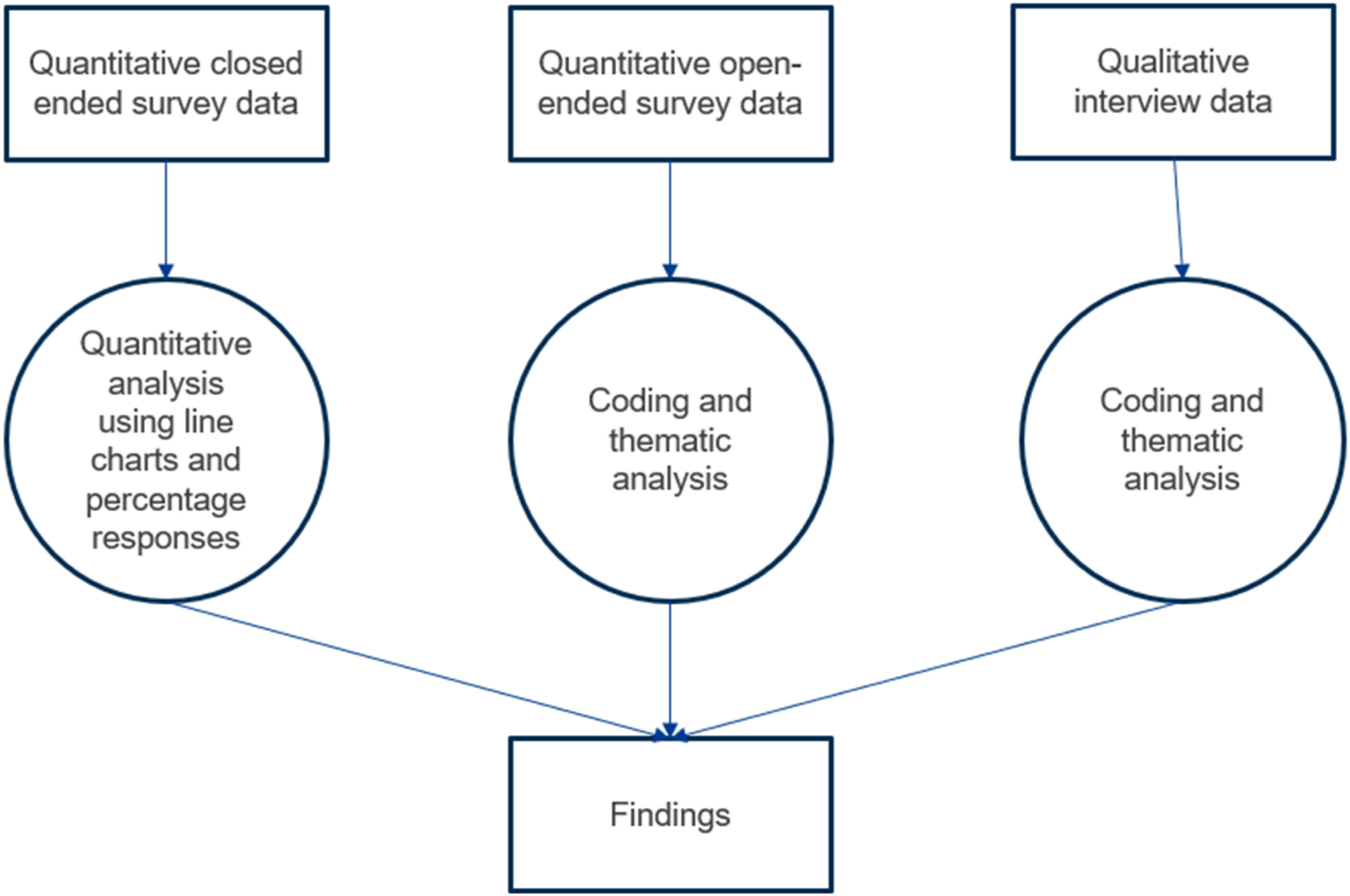
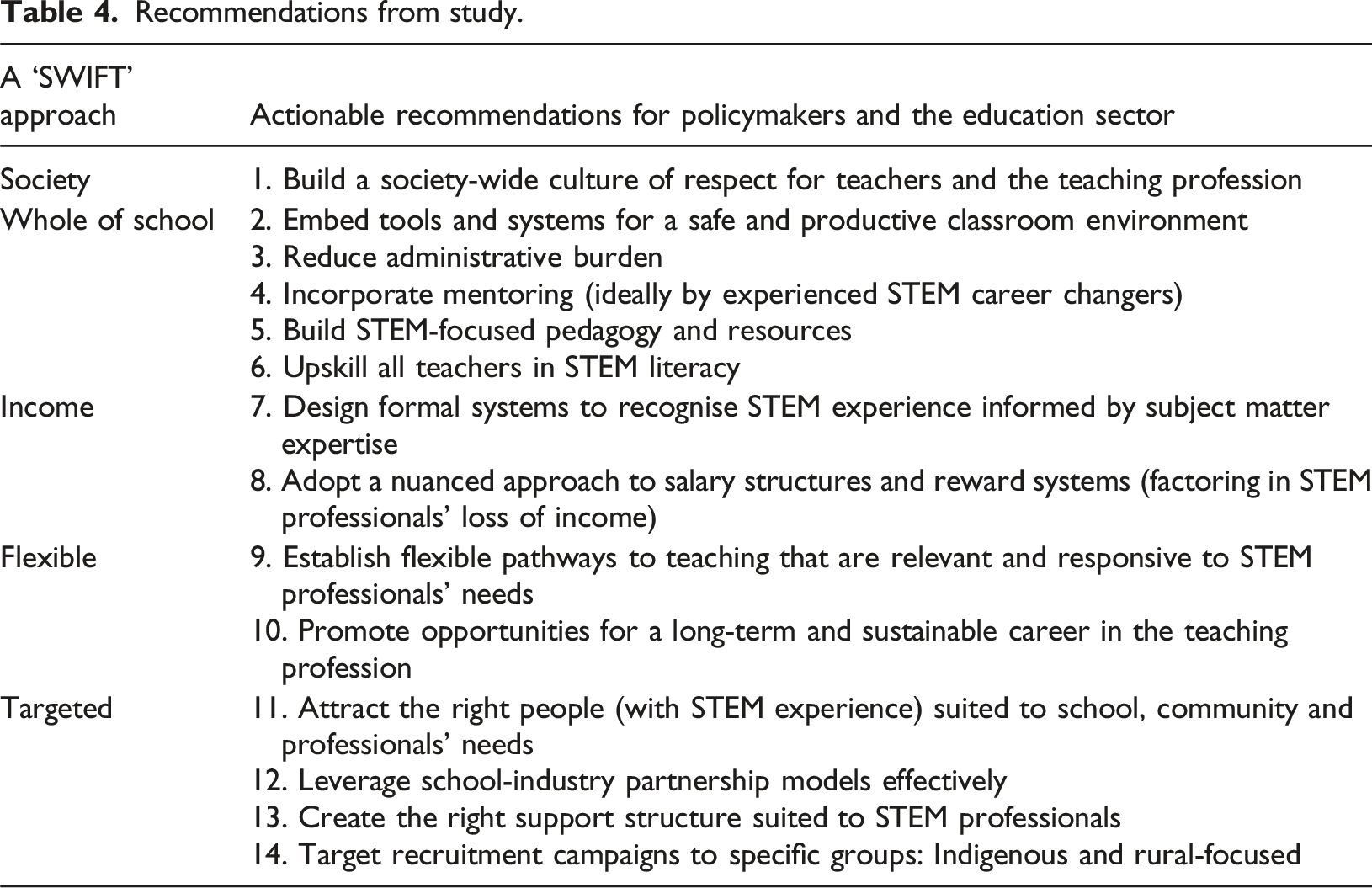
This paper focuses on ‘Flexibility’, derived primarily from analysis of the last three questions: barriers experienced, role of incentives, and suggestions for recruitment and retention. Informed by the findings, fourteen recommendations were proposed and summarised under the acronym SWIFT (Table 4). Details of participant demographic data can be found in Appendix 1. Despite the small sample of interviews and data primarily collected from teachers and pre-service teachers, the quantitative results from the survey data combined with the substantial number of open-ended responses received in both surveys and interviews has ensured the analysis and discussion are rich and responsive to the research questions.
Findings
Barriers experienced
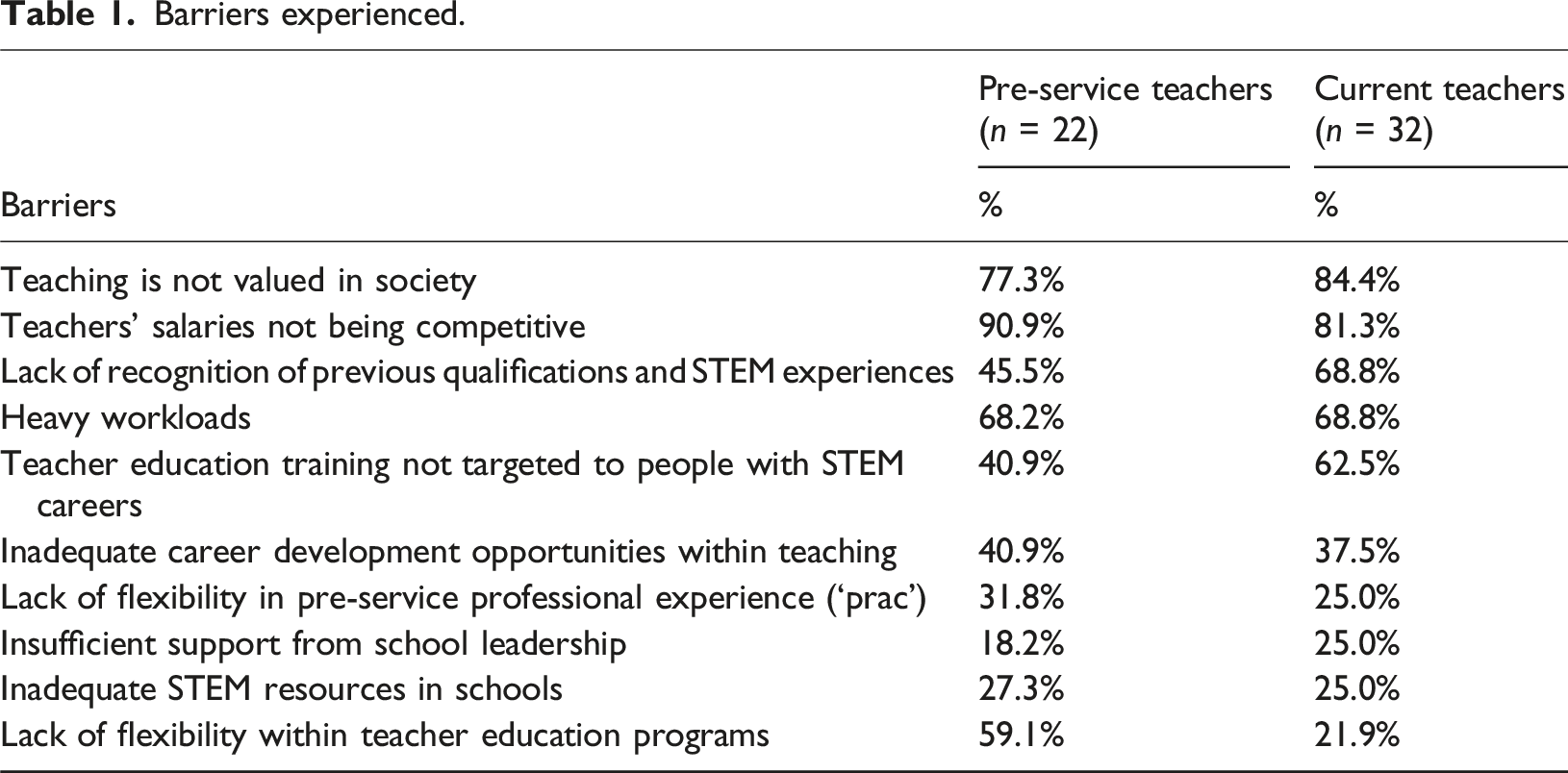
Barriers experienced.
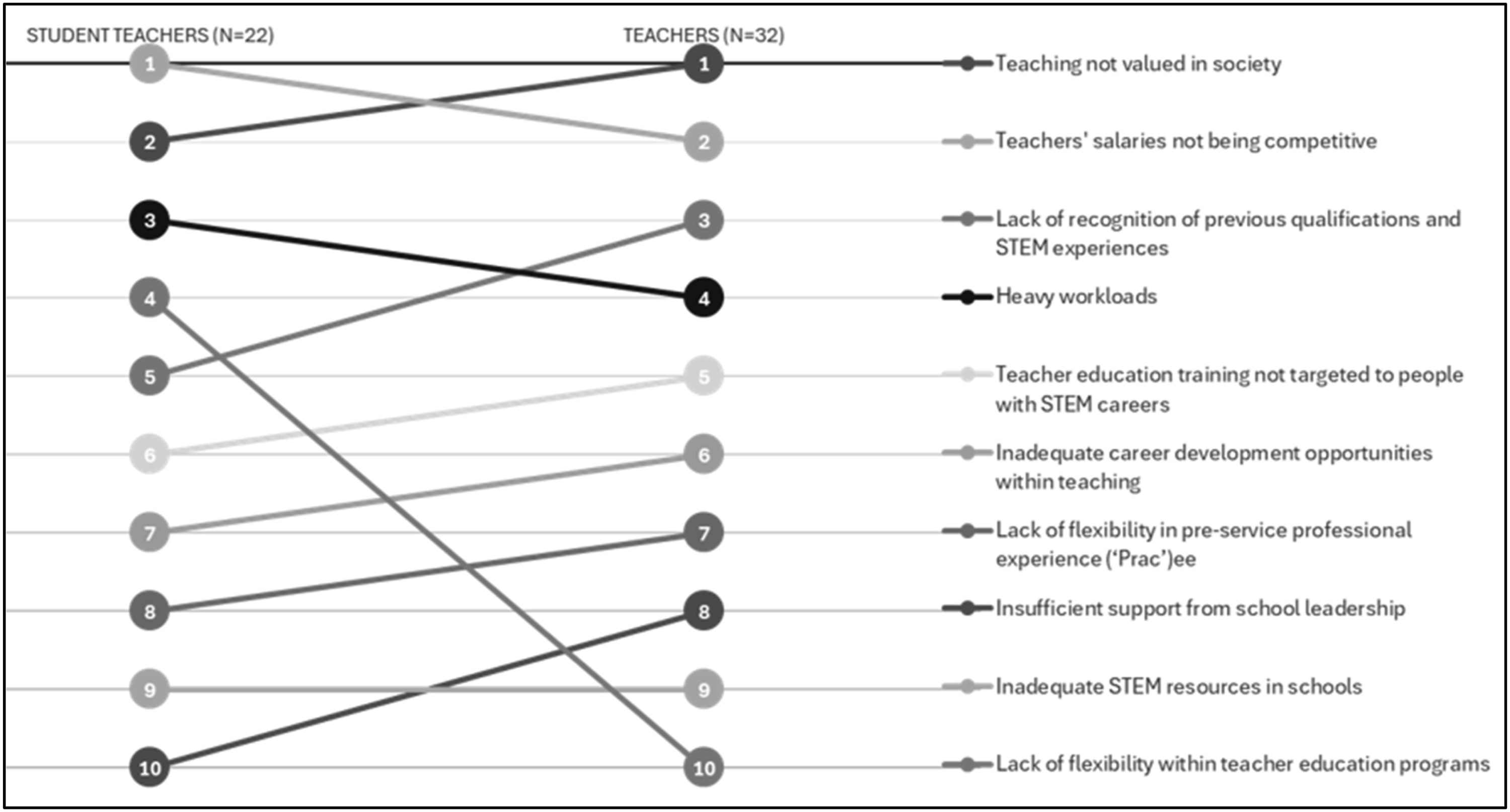
Comparisons between groups: Barriers experienced.
Table 1 reveals a thread common to most barriers – inflexibility, whether in recruitment, during pre-service or while teaching. Financial impediments were ranked highly, which can further exacerbate inflexibility. In terms of disparities between the two groups, the most striking finding is that pre-service teachers ranked ‘lack of flexibility in teacher education programs’ significantly higher (fourth) than teachers (tenth). Clearly, STEM professionals who were undertaking a teacher education program found inflexible study regimes and approaches to be significant impediments. Flexibility, while studying and managing other life demands, is important for career changers. Inflexibility during in-school professional experience (PE) attracted particular criticism among our pre-service teachers, for dismissing their work and family commitments and the loss of income during the period. This can be particularly onerous for those who must pay for accommodation and living expenses because of undertaking PE far from home, typical of rural placements.
Survey open-ended responses reflecting this barrier included: No flexibility at all on doing pracs [professional experience]—how universities expect mature students with work commitments and families to take 8 weeks’ block to do prac is utterly ridiculous. (Pre-service participant). Schools desperately need science teachers, yet universities do not make any allowances for mature students with work experience, work and family commitments. (Pre-service participant).
In interviews, barriers were dominated by a combination of financial, systemic and societal factors that apply to all career change professionals. One of the pre-service teacher interviewees referred to career changers as the: Group that have mortgages and kids in school and things like that, so anywhere in New South Wales might not be such a big pull for them.
These circumstances beg for consideration in both professional experience and teaching appointments.
Role of incentives
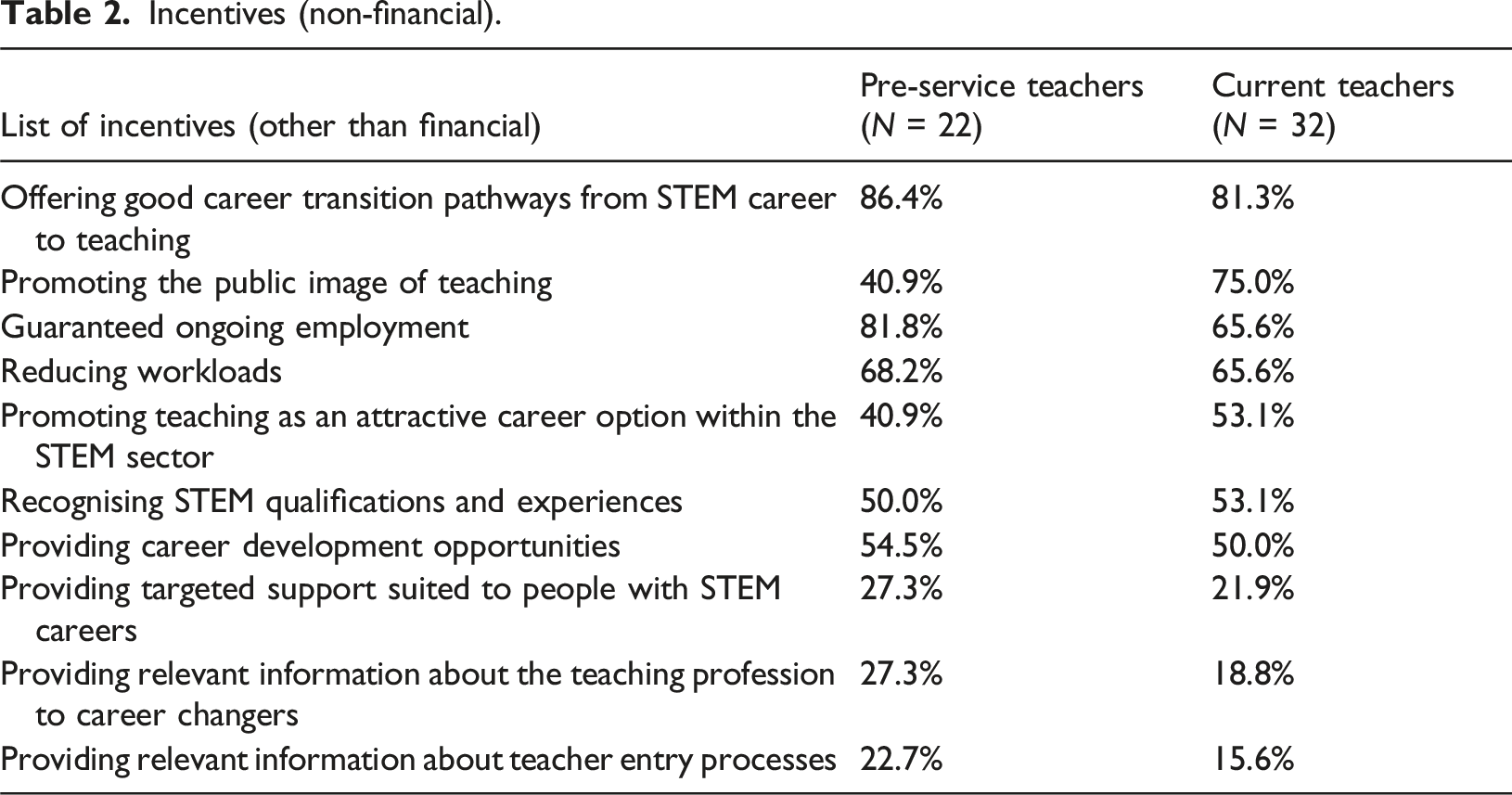
Incentives (non-financial).
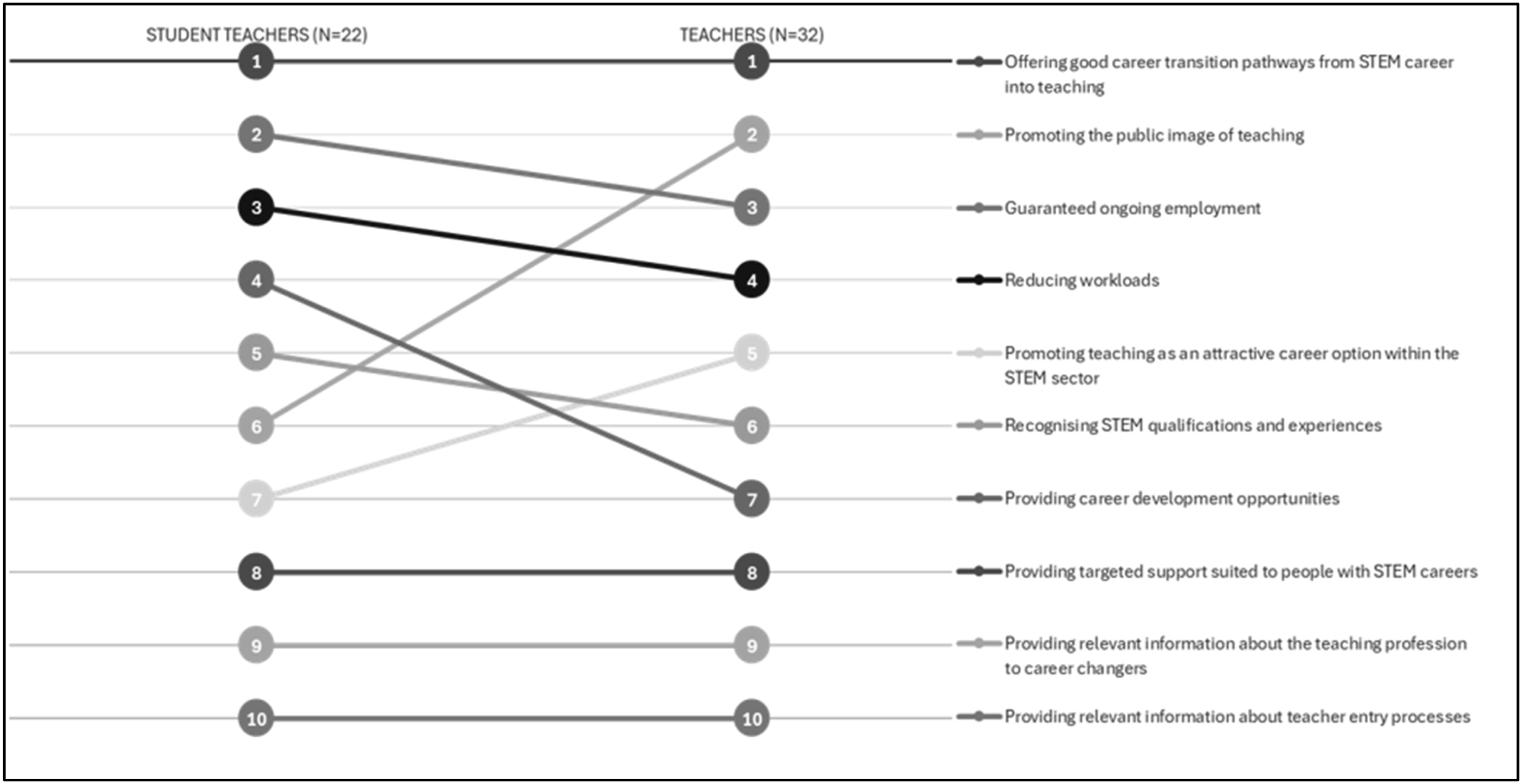
Comparison between groups: Other incentives.
In Table 2, participants clearly expressed the need for incentives based on experience, expertise and needs. Both teachers and pre-service teachers prioritised ‘good career transition pathways from STEM career into teaching’ as a highly significant incentive to attract STEM professionals. The cohort also recommended promoting the image and perception of teaching to make the profession attractive (Figure 3), which may also require flexibility on the part of administrators. Similarly, a teacher interviewee recommended promoting teaching, ‘emphasis[ing] how it’s actually really fun’, and ‘getting personal testaments from teachers’.
Career changers appear inclined to join teaching only when the pathways are straightforward and stress-free. This is complemented by ensuring ‘guaranteed employment’ as an incentive to remain in teaching. Among interviewees, suggestions reflected professionals’ other life commitments and recommended fewer teaching hours and more time allocated to planning, further emphasising the need for greater employer flexibility.
Strategies and support mechanisms
Themes on strategies and support mechanisms to recruit and retain STEM professionals.
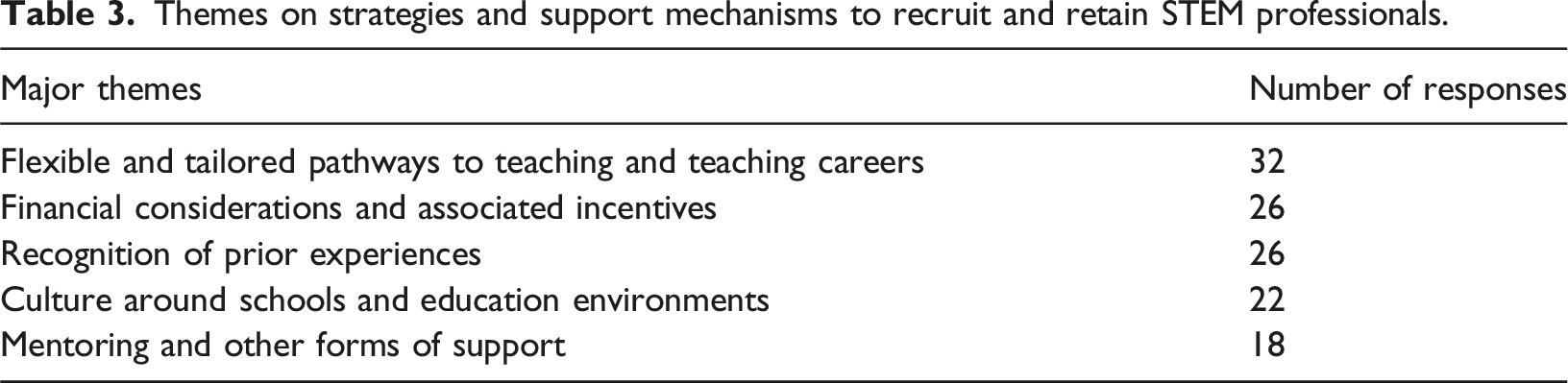
Flexible pathways to teaching careers emerged as the highest priority for consideration by governments and education sectors. Participants focused on a smoother job transition and a more targeted approach to recruitment strategies (e.g. scholarships to assist in employing more regional and remote teachers). Seamless job transition could embed flexible approaches such as an apprenticeship model with more time spent in classrooms during pre-service, training on the job, shared work model arrangements (being employed both in the STEM sector and in schools). Comments included: Degrees should be easier to get into and quicker to complete. Those who have completed a 4+ year apprenticeship or certificate course should not have to complete 3–4 years of further study. 1 year of university and learning on the job. (Pre-service survey participant) Schemes to include training on the job to help transition from a STEM career to a Teaching Career. (Teacher survey participant) I'd love a world where I was teaching three or even four days a week and then going into uni one day a week or something like that, across the whole school year and, maybe getting paid a little bit during that time. (Pre-service interview participant)
Responses did not explicitly distinguish between recruitment and retention, but participants advocated workplace flexibility, suggesting schools can offer opportunities for teaching at different levels, and working from home. They targeted STEM-focused teacher education programs, as well as streamlining processes to reduce administrative burdens. Their comments included: Flexible teaching models with work-from-home options. (Teacher survey participant) Part-time school teaching and research roles with universities. (Prospective teacher survey participant) Course-specific subjects related to teaching science. (Pre-service survey participant)
In addition, flexibility also arose in other themes such as ‘recognition’, ‘mentoring’ and ‘school culture’, wherein participants called for an approach relevant to STEM professionals. Participants were keen for policymakers and the education sector to recognise their expertise and knowledge, and tailor strategies, professional learning and support mechanisms accordingly. Suggestions included: Coaching and mentoring from teachers who themselves have made the transition from industry to education. (Teacher survey participant) Targeted professional learning for STEM professionals moving into teaching. (Pre-service survey participant) STEM-specific degrees that largely recognise previous qualifications. (Pre-service survey participant)
The findings demonstrate the importance of flexible offerings to address the specific needs, both personal and professional, of STEM professionals as they adjust to teaching, to increase teaching quality and quantity in these subjects.
Study recommendations from broader study
Recommendations from study.
Discussion
The scrutiny of barriers, incentives and strategies of STEM professionals in this study provided an understanding of the participants’ priorities and goals, and associated conditions and circumstances to address these. Respondents noted an unwholesome working environment, with personal, professional and external factors presenting impediments. The conditions encountered were not conducive to autonomous practices or professional flourishing (Deci and Ryan, 2012).
The transition to teaching must be smooth and seamless, with flexibility as a core component. Our respondents felt quite affronted that, in the context of a teacher shortage, they were not accorded greater flexibility (e.g. course structure, recognition of prior learning/advanced standing) as a token of the extent to which they were valued, welcomed and indeed needed, to assist them through their initial teacher education. Numerous respondents criticised a failure to recognise their previous qualifications and work experience to satisfy Graduate Standards guidelines imposed by Australian education authorities (AITSL, 2017). In any educational context, it makes sense to assess prior knowledge. Failure to recognise expertise implies a failure to acknowledge competence. If we posit this argument based on the SDT framework, a failure to recognise competence can impact how STEM professionals engage in their new career and perhaps question their commitment to the teaching profession, and its commitment to them. Similarly, a lack of suitable monetary and non-monetary incentives commensurate with their expertise and needs, undermines career engagement and job satisfaction levels. While minimum levels of teacher quality need to be safeguarded, if inflexibility leads to further teacher shortages and, potentially, more out-of-field teaching, the quest for standards is ultimately self-defeating. We welcome the Australian Government’s (2024) recent proposal for paid professional experience.
The apprenticeship-type model suggested in the literature and by some participants must be examined with some caution. Lortie (1975) described ‘the apprenticeship of observation’, wherein neophyte teachers observe experienced teachers and ape surface behaviours without understanding the research and rationale underlying such approaches. Teaching is a craft underpinned by broad, complex understandings of human behaviour. Having a shared and clear understanding – ‘collective intentionality, collective responsibility, and collective action’ (Buchanan et al., 2022 p. 1179) – of quality in teaching and teacher education is important to not only attract excellent candidates (who value their and their students’ development) but also to improve the societal perception of the profession (Meijer, 2021). Flexible pathways and teacher education pathways merit further evidence-based evaluation. Understanding why certain approaches (for instance, tailored pedagogies) may work is necessary for the profession’s improvement, orientation and renewal. While theoretical foundations should not be compromised, exposure to the work of teaching in the earlier stages of pre-service, and towards the end of a pre-service course, may be both fruitful and innovative – in the early stages as a means of helping candidates ascertain their fitness for teaching, perhaps with external advice, and in the latter stages, to assist with the transition to full-time, full-responsibility demands. Flexibility can also include hybrid forms of learning to accommodate professionals’ work and family obligations. While online learning affords greater flexibility to pre-service teachers (as occurred during the pandemic), face-to-face pre-service classes offer an effective means to replicate the dynamics and demands of a school classroom. Online school teaching is probably unfeasible for younger students.
STEM professionals who reside beyond metropolitan areas face particular challenges, especially when completing in-school professional experience. It is these areas that experience the greatest difficulty in attracting staff. Accordingly, specific incentives and innovative flexibilities might be called for, such as tuition and housing subsidies and financial rewards for managing or leading STEM outreach activities.
We believe all recommendations as outlined in Table 4 embody some aspect or element of flexibility, such as a nuanced, multi-partied approach to STEM professionals’ salary structures and other reward systems during and beyond the transition to teaching. Key factors for such consideration include STEM and teacher salary differential, income forfeiture during study and in-school professional experience, family and other care-giving responsibilities, and capacity to relocate to rural and regional locations. We note that higher salaries for STEM professionals may lead to inequitable outcomes. Hence, these policies should be treated cautiously so as not to disadvantage other deserving educators.
Flexible pre-service delivery can address the specific skillsets and needs of STEM professionals. A shared understanding among stakeholders, including schools, teacher education providers and accreditation bodies and governments at all levels can assist with skill and expertise recognition of STEM professionals depending on their discipline, area of specialisation and workforce experience. Formal accreditation systems that recognise the expertise and attributes of professionals in specific STEM discipline areas will assist in this regard.
A responsive teacher education and career trajectory for STEM professionals will improve retention (Meijer, 2021). Specifically, a whole-of-school (and system) approach incorporating mentoring (ideally by experienced STEM career-changers) can value-add to career-change STEM teachers, alongside the development of STEM-focused pedagogies and resources. We recognise that many of these recommendations will be expensive to implement. However, a lack of serious consideration of these will prove to be far costlier for the teaching profession and society, because of teacher attrition, administrative workload, burn-out and mental health.
Leveraging existing school-industry partnership models more effectively and embedding strategies to include a ‘scientist-in-residence’, online collaborations, and a ‘taster’ of teaching for prospective and early pre-service teachers also forms part of a targeted approach.
Conclusion
Increasingly, teacher education jurisdictions are calling for a flexible, tailored, approach to school teaching, one that is responsive to students’ needs and capacities. Indeed, the OECD (2024b) is calling for flexibility and autonomy in curricular approaches. It might be reasonable for such jurisdictions to allow more fluidity in their own offerings to current and future teachers. Making transition pathways into teaching seamless, not unseemly, might pave a more holistic pathway to attract and retain STEM career change teachers. Such a process might even extend to senior secondary students as they make their own career decisions.
This project has demonstrated the contribution that STEM professionals can make to quality school-teaching. They can play a pivotal role in equipping our young people with the skills needed to address many of society’s current and future challenges. Teacher education programs and pathways for transitioning from other careers should be tailored to meet professionals’ needs. Programs and pathways should prioritise quality combined with flexibility and innovation throughout pre-service. Schools must provide productive environments and relevant opportunities for STEM professionals to transfer their skills and knowledge to benefit students and student learning. In the process, the teaching profession should recognise the personal and professional growth aspirations and ambitions of career changers from STEM backgrounds, including their desire to exercise autonomy and leadership – worthy goals of any education. This will require support and confidence in their abilities and aspirations.
The measures outlined here for improving STEM career changer attraction and retention are likely to prove expedient more broadly for the teach-force. The stakes are high. Education systems have a crucial responsibility to help raise a thought-full, care-full generation equipped with the necessary (STEM) expertise and skills to enhance their own and others’ lives, wherever possible, peaceably. Intelligence, artificial or other, requires leavening with ethics and empathy.
Footnotes

Ethical consideration
University and State Department ethics approval were obtained for this project.
Funding
The author(s) disclosed receipt of the following financial support for the research, authorship, and/or publication of this article: The work presented here was supported by funding from the NSW Department of Education, Australia. Name of Grant: NSW Department of Education Strategic Research Fund.
Declaration of conflicting interests
The authors declared no potential conflicts of interest with respect to the research, authorship, and/or publication of this article.