



Abstract
This study uses a case study approach to examine the World Bank’s policy prescriptions and funding of ICT in education from 2011 to 2022. Through document analysis of the Bank’s research, formal policy documents, and its portfolio of projects in K-12 education in Sub-Saharan Africa (SSA), the findings reveal a shift in the Bank’s educational technology (EdTech) strategies. Prior to the pandemic, the Bank’s EdTech policies and projects centered on system-level solutions: focusing on infrastructure, management, and monitoring, particularly in low-income countries. However, during the COVID-19 pandemic, the Bank shifted its focus to instructional solutions, emphasizing curriculum development, pedagogy, and equity, promoting “multimodality,” defined as the use of diverse ICT tools to support remote learning. While the pandemic has led to greater alignment between policy advice and investments in SSA, the long-term sustainability and equitable distribution of these investments remain uncertain. Further studies should assess the enduring impacts of the Bank’s EdTech approach on borrowing countries and further explore how the Bank’s EdTech strategies compare to other international organizations, as well as the role of civil society and private technology firms in shaping a more inclusive educational landscape. Moreover, emerging technologies, such as Artificial Intelligence (AI) and blockchain, present new opportunities. Investigating how these technologies could enhance educational equity, efficiency, and innovation within the World Bank’s evolving EdTech framework will be vital for shaping sustainable, future-oriented policy recommendations.
Keywords
Introduction
In recent decades, the integration of information and communication technologies (ICT) into daily life has fundamentally reshaped numerous sectors, including business, healthcare, and education. This transformation accelerated during the global COVID-19 pandemic, which necessitated an abrupt shift toward digital solutions, particularly in education. Educators, institutions, and governments worldwide turned to technology to maintain continuity, advancing the long-term trend of integrating digital tools into educational systems. Simultaneously, the rise of artificial intelligence (AI) has heightened the urgency to develop effective and equitable technological solutions in education.
The accelerated shift toward digital education reflects the broader evolution of educational technology (EdTech), a field marked by successive waves of innovation. Each new technological advancement has been met with optimism, often driven by the “novelty effect” (a burst of enthusiasm that arises with the introduction of new tools). However, despite these waves of excitement, the impact of EdTech on learning outcomes and educational inequalities remains difficult to assess. The lack of comprehensive risk assessments has resulted in mixed outcomes, with questions about how EdTech can genuinely enhance learning or reduce inequalities.
In this changing landscape, international organizations (IOs) like the World Bank have become key players in shaping global education policies. The World Bank, recognized as an “educational knowledge clearinghouse” (Zapp, 2017), positions itself as a “knowledge bank,” producing and sharing information to guide global policy (World Bank, 2011). This influence, backed by the Bank’s financial and technical resources, enables it to shape national education strategies and regional priorities while also guiding civil society actors (Barnett and Finnemore, 1999; Park, 2006).
However, the World Bank’s growing influence in education has raised concerns over time. Critics argue that the Bank’s policies reflect a neoliberal and technocratic agenda (Broad, 2007; Clegg, 2013; Klees, 2008; Sondarjee, 2021), advancing reforms such as budget cuts, privatization, and user fees in public services like education, which can exacerbate inequalities (Klees, 2008). The Bank’s social assistance programs have been critiqued for using education not just as a means to improve well-being but also to achieve broader political goals (Van Gils and Yörük, 2017). The Bank’s emphasis on efficiency and “value for money” often relies on quantifiable metrics, which may not fully capture the complexities of educational systems (Clegg, 2013).
Specifically, in the context of the developing world, the Bank appears “to review the education sector throughout [the region], identify reform packages, lend money for implementing the reform package, and evaluate effectiveness” (Steiner-Khamsi, 2012, cited in Klees et al., 2012: 227). While this model offers essential financial support and policy guidance, it also risks turning the developing world into a testing ground for unproven policies and private sector-driven solutions. Such an approach can lead to data exploitation, digital colonialism, and the privatization of education, ultimately magnifying educational inequalities, weakening public education systems and unions, and placing corporate interests ahead of locally driven, evidence-based reforms (Ball and Youdell, 2008; Couldry and Mejias, 2019; Kwet, 2019).
There is also evidence of organizational discrepancy, where the Bank’s rhetoric on equity and poverty reduction does not always align with the types of projects it finances (Mundy and Menashy, 2014). This “organized hypocrisy” (Brunsson, 1993, cited in Mundy and Menashy, 2014) may stem from competing demands within the organization, where different departments and staff may have divergent views on issues such as private provision in education. While such inconsistencies are typical in large-scale bureaucracies like the World Bank, they can undermine the Bank’s overall effectiveness and coherence. Over time, this misalignment between policy norms and practice can lead to “institutional decoupling” (Barnett and Finnemore, 1999; Bromley and Powell, 2012), where the policies promoted by the Bank diverge from the actual projects it supports, particularly in the realm of educational technology. The “neoliberal technocratic rationality” concoction at the Bank (Sondarjee, 2021), risks reducing EdTech initiatives to simplistic solutions that deepen the digital divide and undermine users’ agency in designing their own learning experiences.
Despite the World Bank’s significant role in global education, its efforts in EdTech remain underexplored. While the Bank has long promoted ICT in education, especially in response to COVID-19, questions remain about how it leverages its resources to support EdTech initiatives, particularly in regions like Sub-Saharan Africa, where educational systems have historically faced significant challenges. Beyond assessing the Bank’s mobilization of resources, this study also considers the broader implications of global EdTech governance and the critical need for localized solutions.
By examining the Bank’s educational technology policies and projects, this research aims to shed light on how international organizations are adapting their strategies to address the unique challenges of the digital age. Drawing on emerging critical perspectives (Bayne and Jandric, 2017; Koole et al., 2024; Meighan, 2021), this study underscores the importance of decolonizing and localizing EdTech solutions to ensure new technologies meet the needs of diverse learners, rather than imposing one-size-fits-all models. It also responds to the growing concerns of digital policy scholars such as Williamson (2021a) about the unchecked influence of new “technical actors,” including transnational organizations and tech startups, in shaping education policy and governance.
The evolution and integration of EdTech: a conceptual overview
Understanding the integration of educational technology (EdTech) within organizations requires a reflection on how the field has evolved, shaped by shifts in learning theories and the contexts in which technology is deployed. Examining the changing definitions and interpretations of EdTech offers valuable insights into why certain technologies are adopted across various educational settings, highlighting the complex factors influencing this integration. Additionally, concerns about the EdTech field (from ethical to cultural and political dimensions) can impact both the success of integration efforts and the learning outcomes and well-being of students, particularly those in vulnerable settings.
EdTech’s evolution can be categorized into four generations, each shaped by dominant learning theories. The first generation, rooted in behaviorism, focused on using technology to deliver standardized instructional content cost-effectively to large groups of students (Garrison and Anderson, 2003, cited in Koh and Lim, 2008). The second generation, influenced by cognitivism, emphasized self-paced learning through tools like broadcast media and tutorials. The third generation, grounded in constructivism, introduced interactive learning, enabling students to collaborate and engage with content through Computer-Mediated Communication (CMC). The fourth generation represents a convergence of the Internet’s vast information retrieval, interactivity, and computer-assisted learning programs. Systems like Blackboard and Lotus Notes integrated multiple learning theories (behaviorism, cognitivism, and constructivism) to achieve diverse educational goals (Koh and Lim, 2008). Each learning paradigm views knowledge, learners, and instruction from a distinct perspective, influencing how learning environments are designed and how sensitive they are to ethical, cultural, and political implications of EdTech.
Another useful conceptual framework for understanding EdTech is by distinguishing between “technology in education” and “technology of education” (Koh and Lim, 2008). “Technology in education” refers to using tools like hardware and software to present educational material, with the assumption that technology alone will enhance learning outcomes. In contrast, “technology of education” takes a more holistic approach, integrating learning theories, cultural considerations, and social systems to improve the overall effectiveness of the teaching process. This latter perspective focuses not just on the tools but also on how technology interacts with educational systems and practices (Koh and Lim, 2008).
Critical aspects of EdTech
As the EdTech field evolves in definition, scope, and effectiveness, research on critical aspects (such as equity, technology risks and ethics, and ownership) has gained importance. Particularly after the pandemic, research has found revived interest in how technology integration can interact with the needs of vulnerable and/or marginalized groups. Reich (2020), citing Paul Attewell, believes there are two strands of the digital divide: The first digital divide is the divide of access: students from low-income or marginalized backgrounds typically have less access to new technologies than more affluent students. But even more important is the second digital divide of usage: students from low-income or marginalized backgrounds are more likely to use technology for routine drill and practice with limited adult support, while more affluent students use technology for more creative activities with greater mentorship from teachers, parents, and adults. (Attewell, 2001, cited in Reich, 2020: 151–152)
The prevalence of educational technologies as simplistic solutions and “digital divide boosters” will impact learning outcomes, and in the long term, the loss of learning may diminish human capital development and economic opportunities (D’Orville, 2020; World Bank, 2020). This loss can be more pronounced for girls as research has pinpointed a gender digital divide. Girls, especially minority girls, have shown some level of discomfort with digital skills and STEM fields (Farmer, 2008; Snyder, 2014, cited in Liao et al., 2016; Wong and Kemp, 2018). Interviews with digitally skilled teenagers (aged 13–19) unearthed traditional gendered discourses around perceptions of technical abilities and digital career aspirations of girls (Wong and Kemp, 2018). As Wong and Kemp (2018) claim, girls tend to be consumers rather than creators of technology. To close these gaps, EdTech initiatives must purposefully address these divides.
Building on the critical aspects of EdTech, Williamson (2021b) believes that the newly found markets for technology companies and products could scale up the datafication of education and the algorithmic worldviews across entire education systems. This issue became more pronounced after the COVID-19 pandemic and school closures where technology became a “frontline emergency service” (Williamson et al., 2020). Since most governments were not prepared to offer technological solutions, intergovernmental organizations, charitable education companies, and technology businesses were fast to offer EdTech solutions with public-private partnerships focused on educational technology, and online learning expanded to a worldwide scale during the pandemic (Williamson, 2021b). Established tech giants like Google, Pearson Education, and the Gates Foundation broadened their services, investments, and reach, while new EdTech industries emerged beyond Europe and North America, particularly in regions like India, China, Africa, and Latin America (Williamson, 2021b). Teräs et al. (2020) suggest that the COVID-19 pandemic created “a sellers’ market” in EdTech with designs that were not always driven by best pedagogical practices but by EdTech companies’ business models that leveraged user data for profit making (Teräs et al., 2020).
This “stark choice between people and profit” (Devine et al., 2020) can create other political, economic, and social emergencies where “global commercial platforms incorporated into public education risk challenging education as a public good” (Hillman et al., 2020, cited in Williamson et al., 2020). With AI now reshaping education and knowledge creation, the ongoing decentralization, commercialization, and “platformisation” of schooling could have enduring consequences for global educational policy and practice. Such expansions of EdTech can also raise deeper questions about decolonizing educational knowledge frameworks, emphasizing local context and Indigenous “ecologies of knowledges” (De Sousa Santos, 2018; De Sousa Santos et al., 2007; Warschauer, 2003).
These challenges highlight the need for a more nuanced, inclusive approach to EdTech that considers diverse learner needs and contexts. Addressing these concerns requires examining the norms and behaviors of key international organizations, as they play a central role in setting standards and guiding policies for equitable technology use in education globally.
Policy-practice decoupling
One way to closely examine norm development within international organizations (IOs) is by investigating their internal bureaucracies and how they translate knowledge and experience into concrete projects (a concept that Weaver (2007) refers to as “operational behavior”). Rooted in organizational sociology and neo-institutional theory (Bromley and Powell, 2012; Meyer and Rowan, 1977), recent research has revived interest in examining the gaps between formal policies or structures that are ceremonially adopted and actual organizational practices, a phenomenon referred to as “policy-practice decoupling” (Bromley and Powell, 2012).
The roots of decoupling theory can be traced back to Max Weber’s concept of the “ideal type,” a theoretical model of how organizations, particularly bureaucracies, are structured to function in a rule-bound, efficient, and goal-oriented manner. Weber suggested that bureaucracies strive to adhere to structured and rationalized processes to achieve specific goals, yet real-world organizations often fall short of this ideal due to practical limitations. He observed that the rationalization within bureaucratic systems can lead to what he called an “iron cage”: rigid structures that emphasize conformity to formal rules and procedures (Weber, 1930/1904–1905). This “iron cage” pressures organizations to adopt formal structures and policies to project legitimacy in a rule-bound, efficiency-driven society, even when these structures do not fully align with actual practices (Weber, 1930/1904–1905, 1947).
Building on these ideas, Bromley and Powell (2012) expanded the concept of decoupling to explore how organizations often implement formal policies symbolically to project legitimacy or comply with external expectations. They identified three main consequences of policy-practice decoupling: increased organizational complexity, perpetual reform efforts, and a diversion of resources away from core objectives (Bromley and Powell, 2012). These issues are particularly relevant to international organizations like the World Bank, which operates in complex global environments, balancing multiple agendas and competing demands.
The World Bank has been a frequent subject of decoupling studies due to its significant influence in shaping global development policies, including in education. Weaver (2007) examined the Bank’s “intellectual culture,” characterized by its technocratic, apolitical approach, and its “operational culture,” driven by bureaucratic imperatives like project approval and disbursement. Weaver’s analysis reveals that these internal dynamics often lead to a disconnect between the Bank’s stated policy goals and its actual implementation efforts.
Mundy and Menashy (2012) provided further evidence of this phenomenon in their analysis of the World Bank’s Education Sector Strategy 2020. They found that while the Bank promoted private sector participation in public education, its actual investment in private education projects, particularly in K-12, was minimal. This misalignment between policy rhetoric and operational practices reflects the broader challenge of translating high-level policy objectives into actionable projects on the ground.
In the context of EdTech, the World Bank’s policies and practices can also be seen through the lens of policy-practice decoupling. It is plausible that some degree of dissonance exists between the Bank’s stated EdTech policies and the education projects it finances that incorporate ICT. While decoupling has organizational roots, it also has tangible implications for equity in education: when rhetorical commitments to inclusion and poverty reduction do not translate into properly financed projects and monitoring systems, marginalized communities in regions like SSA are disproportionately impacted. Particularly, with the already existing digital divide, technology solutions may inadvertently reproduce the very forms of marginalization they aim to mitigate.
This study explores how the World Bank’s EdTech policies have evolved, especially before and during the COVID-19 pandemic, and whether its financial programs align with its policy recommendations. By examining the Bank’s policies and projects, this research aims to assess the extent of policy-practice decoupling in its EdTech initiatives and provide insights into how IOs translate their policies into practice.
Research design
This study used an organizational case study to examine the World Bank’s organizational behavior in the EdTech domain. Sociological approaches to theorizing the study of organizations and how they are structured and function as bureaucracies informed the design of this case study. Max Weber, as the major theorist of efficient organizations, has laid the groundwork for “intraorganizational case studies by sociologists that attempt to show how the functioning of bureaucracies deviated from the ideal type” (Clegg and Bailey, 2008: 1197).
Given that the COVID-19 era was an atypical time for EdTech, it was necessary to analyze the evolution of the Bank’s policies and practices over time to identify potential patterns of engagement. This study also adopts a historical institutionalist approach to describe the evolution of these policies and practices over time. As such, a longitudinal study was designed to examine the World Bank’s approach to EdTech over an extended period (2011–2022). Documents were categorized into three timeframes: 2011–2015, 2016–2019, and 2020–2022. The 2011–2015 period represents the time following the publication of the Bank’s last education sector strategy in 2011. The 2016–2019 period marks the publication of one of the Bank’s major EdTech policy papers, SABER-ICT (Systems Approach for Better Education Results) in 2016. The 2020–2022 period represents the pandemic years.
Why Sub-Saharan Africa?
This study focuses on Sub-Saharan Africa (SSA) to explore the World Bank’s EdTech policies and their implementation in a region marked by complex challenges. SSA has experienced a history of colonialism, ethnic conflicts, and health crises, including HIV/AIDS, Ebola, and COVID-19 (Whiteside and Zebryk, 2015). These compounded crises have made SSA’s education system particularly vulnerable, with significant disparities in access to education, particularly among marginalized populations (Temitope Obasuyi and Rasiah, 2019).
One of the major challenges facing SSA is the high rate of “learning poverty,” a term coined by the World Bank to describe the percentage of children unable to read by age 10. In SSA, this rate is alarmingly high: 87% of children are not able to read proficiently by the end of primary school (World Bank and Independent Evaluation Group, 2022). The region also faces substantial barriers to ICT adoption in education, ranging from inadequate infrastructure and high costs to a lack of basic necessities such as clean water and sanitation (Ezumah, 2020).
The COVID-19 pandemic further exacerbated these challenges, highlighting the region’s limited access to digital learning platforms and technology. Many African countries struggled to respond to the crisis due to insufficient technological infrastructure and a lack of resources in local languages (Makalela and White, 2021). The dominance of English and French in digital content limited the accessibility of educational technology for many African students (Brock-Utne, 2015; Prah, 2009, cited in Makalela and White, 2021).
Given these challenges, ICT policies in SSA need to be aligned with broader education strategies to ensure that technology is effectively integrated into education systems. While the evidence on the impact of ICT in SSA’s K-12 1 education remains limited, the World Bank has made efforts to innovate in the region, particularly during the pandemic. Analyzing the Bank’s EdTech initiatives in SSA provides valuable insights into how international organizations can adapt their policies to local contexts.
Data collection
The primary data sources for this study were documents related to education and technology from the World Bank’s databases. The Bank maintains a comprehensive and mostly up-to-date archive of its loans and operations, which is accessible online and open to the public2.
The first set of data consisted of policy documents related to EdTech retrieved primarily from the Bank’s EdTech publications database. 3 The policy search focused first on education sector papers and then on EdTech policy papers. The selection criteria were limited to papers that addressed either global education sector policy or policies specific to the Africa region. Blog posts, working papers, and documents produced in collaboration with other organizations, such as the OECD or UNESCO, were excluded. The Education Sector Strategy and COVID-19 response papers were retrieved from the Bank’s “Documents and Reports” database 4 using keywords such as “strategy paper” and “COVID-19 education response.” Any recent strategy papers or reports on the education sector post-pandemic were also retrieved from World Bank’s “Education Home” 5 to determine how technology had been integrated into the Bank’s education policies. The complete list of included policy papers is provided in Supplemental Appendix 1. Additionally, a series of 16 knowledge packs on key delivery technologies published by the World Bank Group 6 in 2022 were included.
The second data set focused on project documents related to Sub-Saharan Africa (SSA). These included Project Appraisal Documents (PADs) and evaluation reports from the Independent Evaluation Group (IEG). A keyword-based search was conducted within the World Bank’s projects database 7 to identify K-12 education projects with ICT components, covering the period from 2011 to early 2023. The search used terms like “computer,” “digital,” “e-learning,” “mobile,” and “remote” to locate relevant projects. From an initial list of 334 global K-12 projects, the search was narrowed down to 160 projects specific to SSA, with a final count of 73 projects selected for detailed analysis after excluding duplicates and projects without PADs. The complete list of included projects is provided in Supplemental Appendix 2, followed by a list of SSA projects with Independent Group Evaluation (IEG) in Supplemental Appendix 3.
Data analysis
To analyze the World Bank’s EdTech policies and their implementation in projects, a mixed-methods approach was adopted, combining qualitative coding with quantitative keyword frequency analysis. After conducting initial exploratory coding on a sample of policy and project documents, a comprehensive set of keywords and coding categories was developed. Keywords searched in each document included: “technology, technologies, technological,” “ICT,” “online,” “digital, digitization, digitized,” “virtual,” “computer, computerization, computerized,” “tablet,” “laptop,” “internet,” “broadband,” “mobile,” “cellphone,” “radio,” “TV/Television,” “smart,” “interactive,” “distance,” “remote,” and “e-learning.” It is important to note that the terms “distance” and “remote” were used in the context of distance or remote education/learning, excluding references to geographic areas. Additionally, keywords related to tech-related risks such as “privacy,” “cyber,” “online security,” and “online safety” were searched in each document.
The finalized coding categories for both policy papers and projects were stated education problem, focus of EdTech solution (curriculum, materials, infrastructure, teacher training, monitoring, understanding learner populations, etc.), type of technology solution (radio, TV, e-learning, mobile, etc.), and any risks or challenges associated with technology integration. For project documents, summaries of project objectives were also coded to capture overall goals, such as improving access, enhancing quality, or promoting equity in education.
Exploratory coding revealed four primary uses of technology in education projects:
If a project provided ICT equipment for managers or school directors only, then the focus of ICT was labeled as “System Management” instead of “School Equipment.” If some aspect of “learning” or “learners” was targeted by ICT equipment, then it was categorized as “School Equipment.”
The next data set included reports from the Independent Evaluation Group (IEG) to understand the outcomes of the World Bank’s education projects. After finalizing the IEG reports for closed projects, the technological components and keywords found in the PADs were reviewed to determine if those were evaluated in the IEG reports. Each report was coded as “Yes” (ICT was addressed/evaluated) or “No” (ICT was not addressed). For example, if a project utilized computers and tablets, those keywords were searched in the evaluation reports to confirm whether they were assessed.
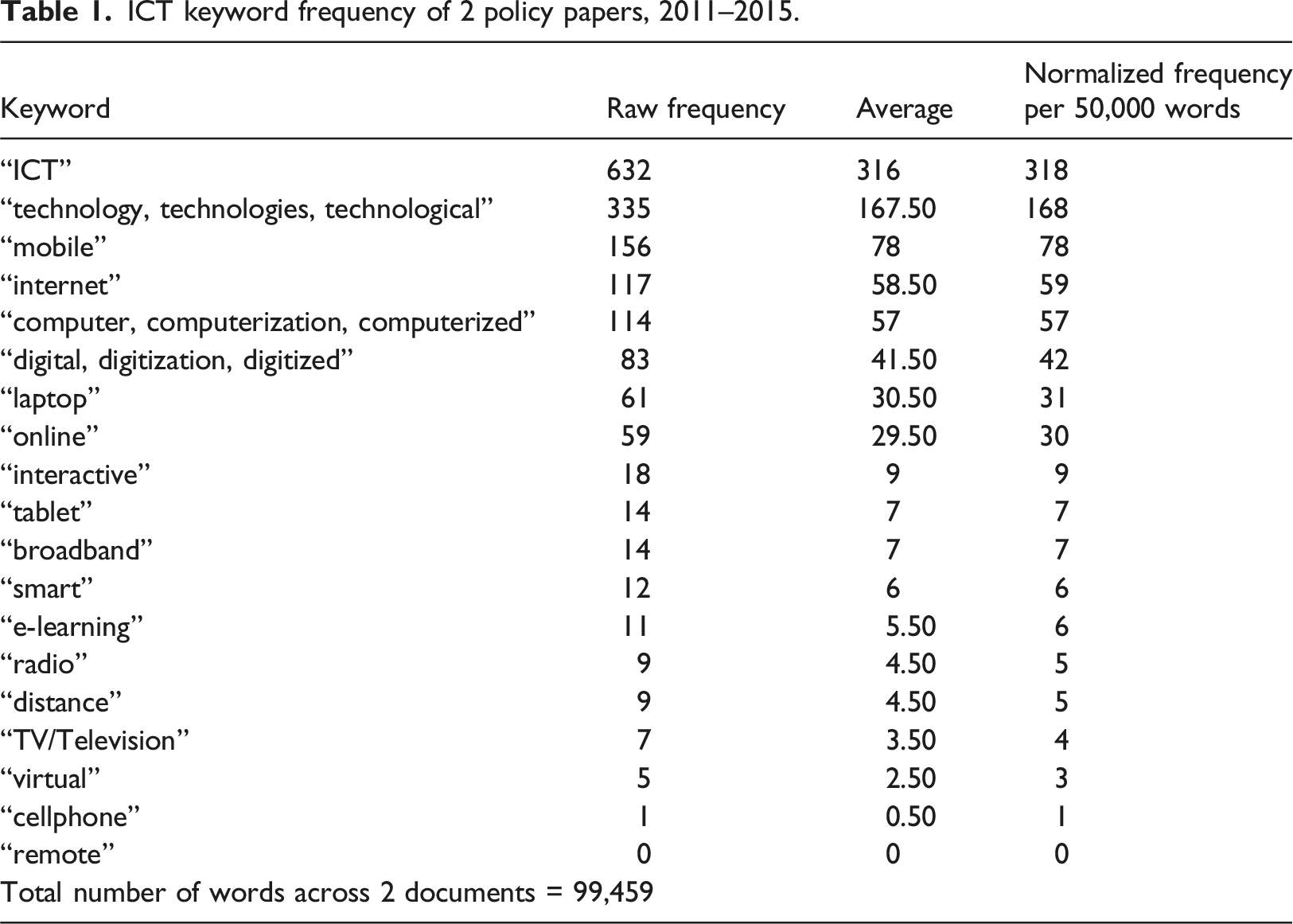
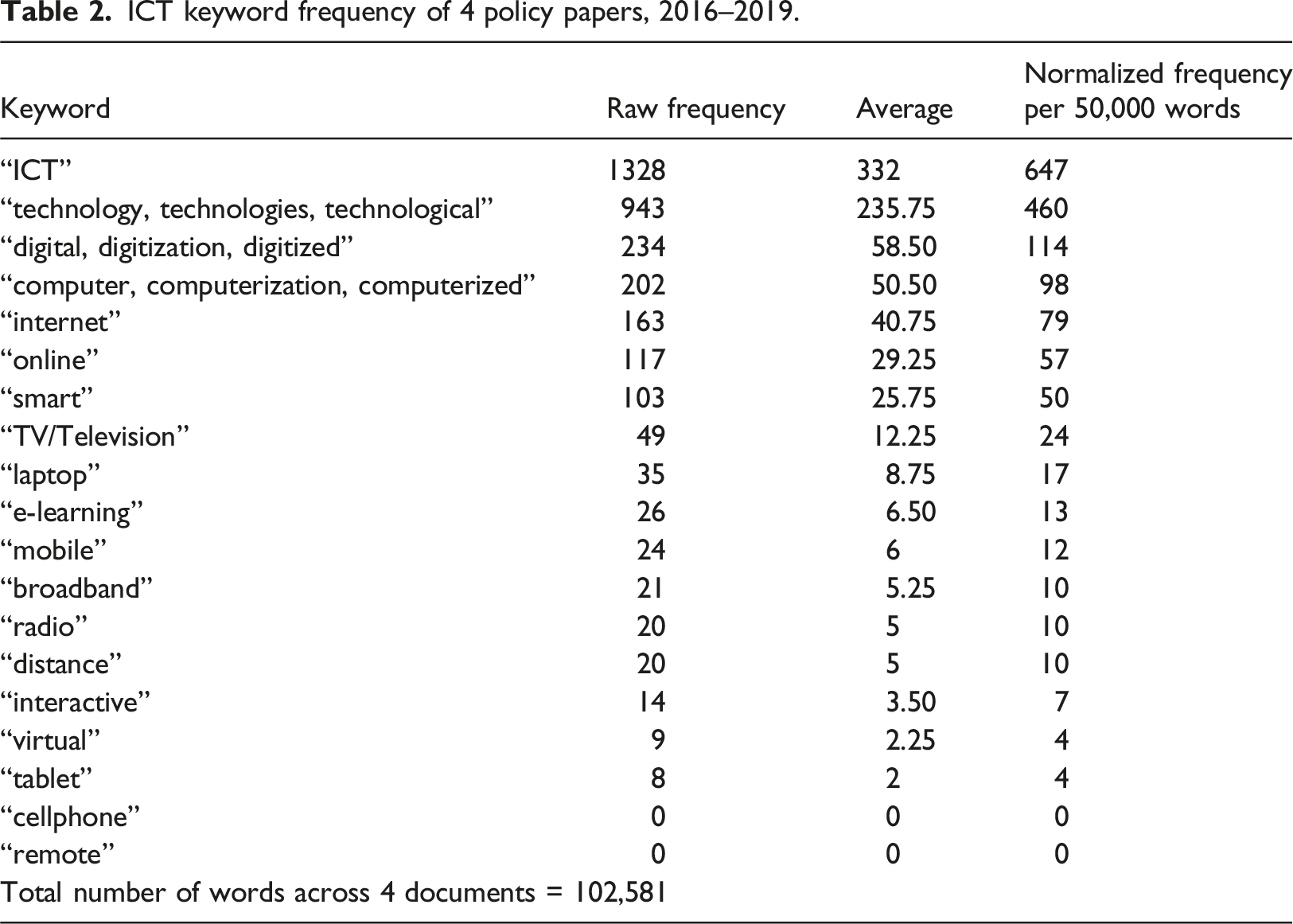
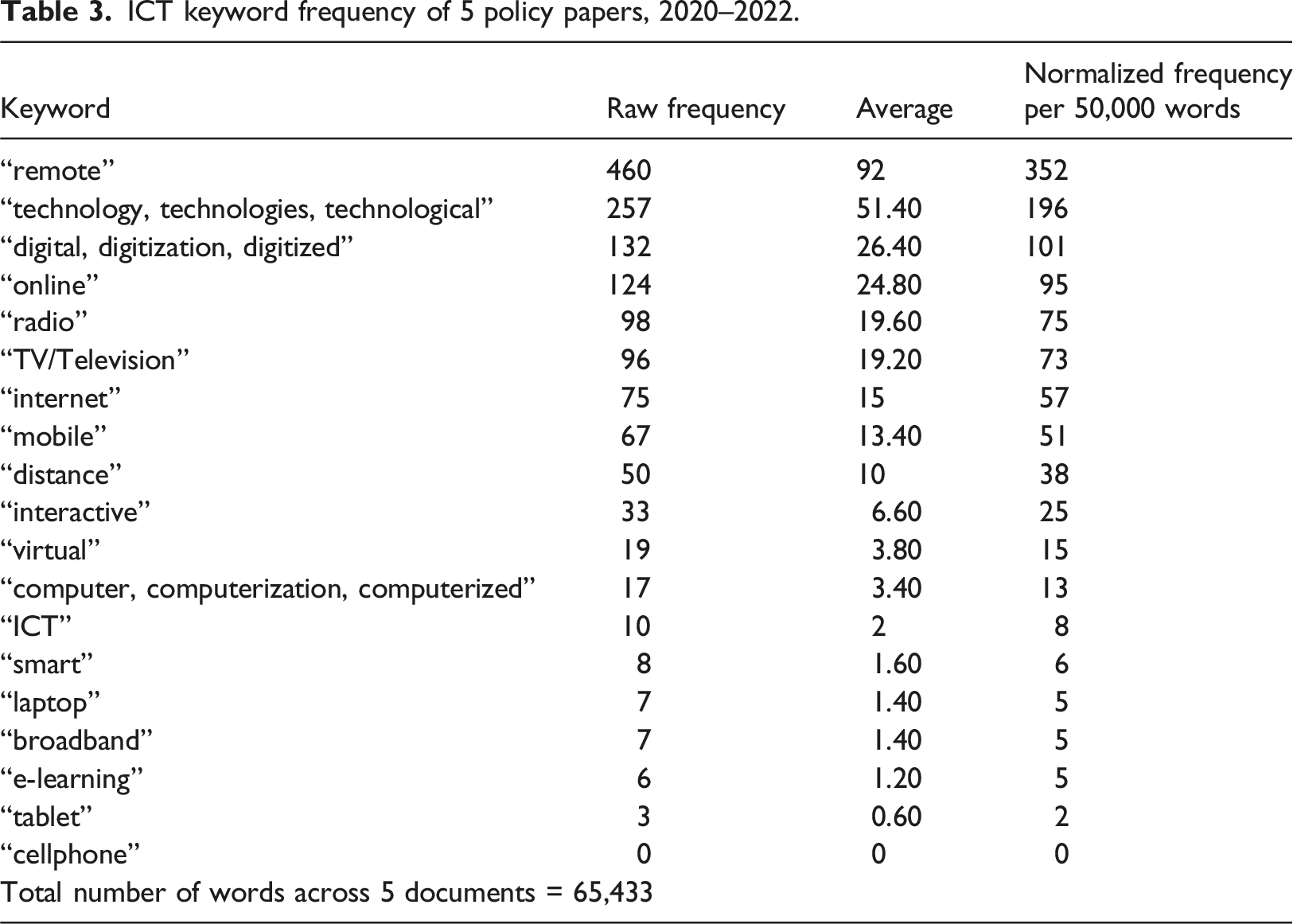
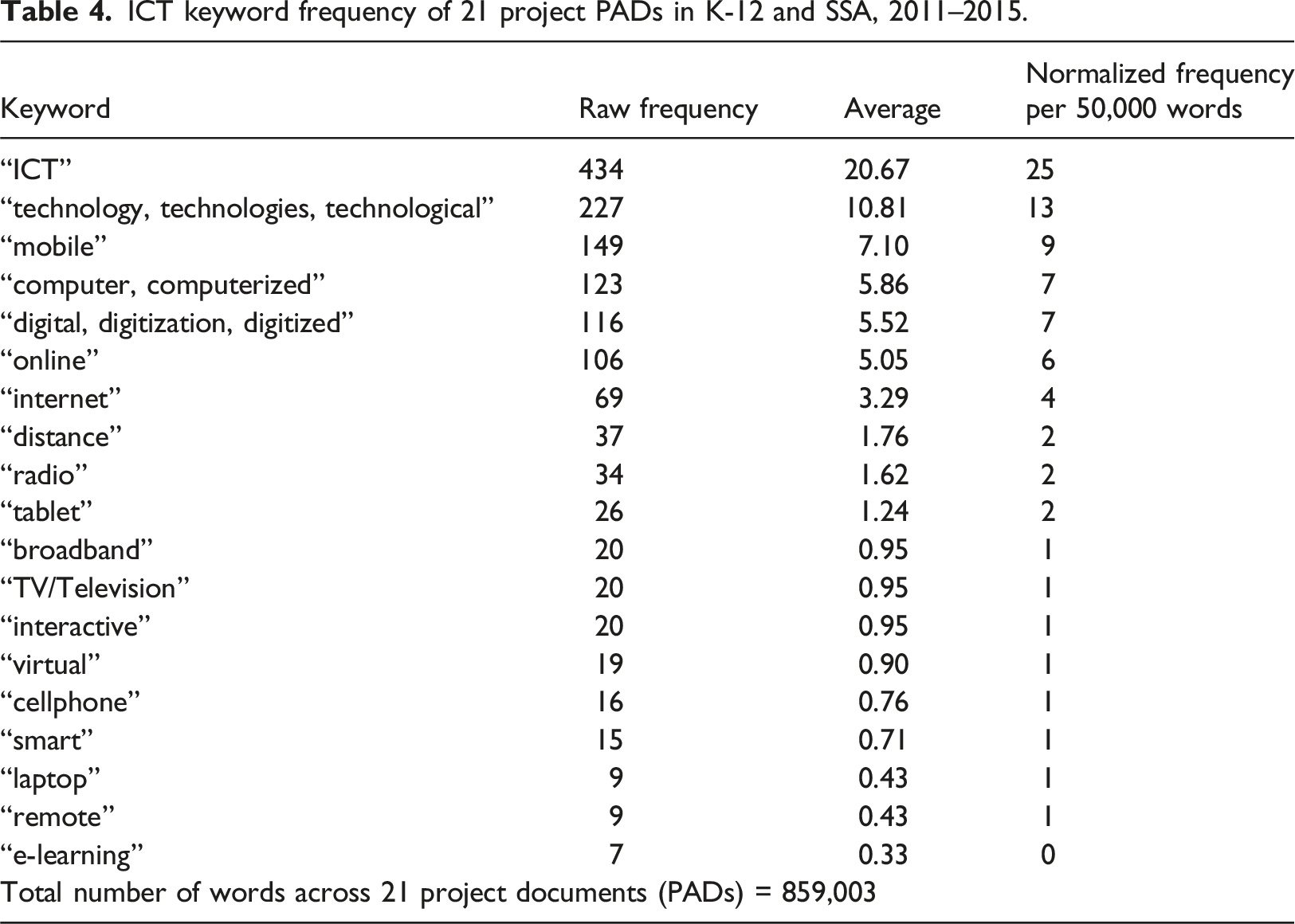
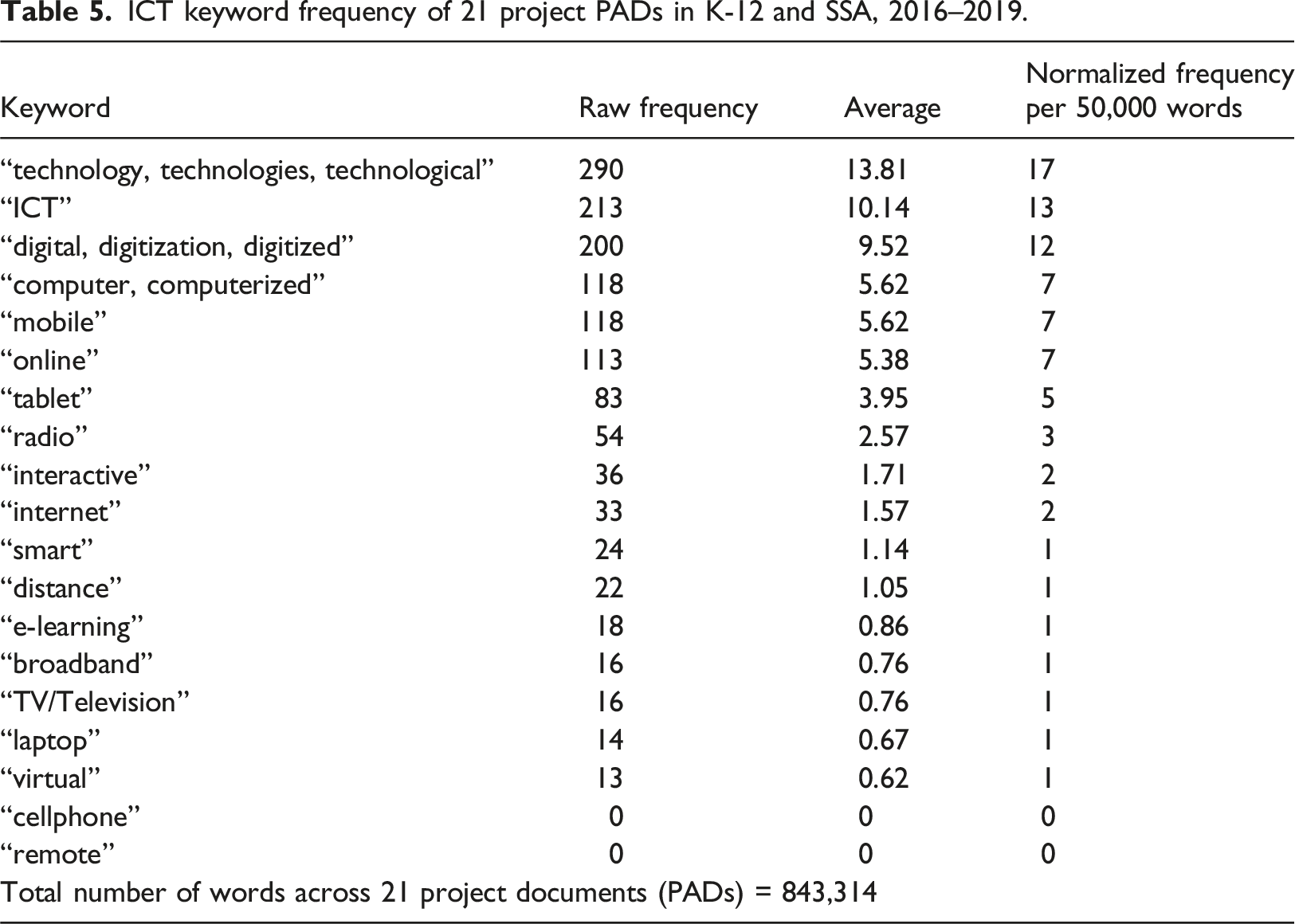
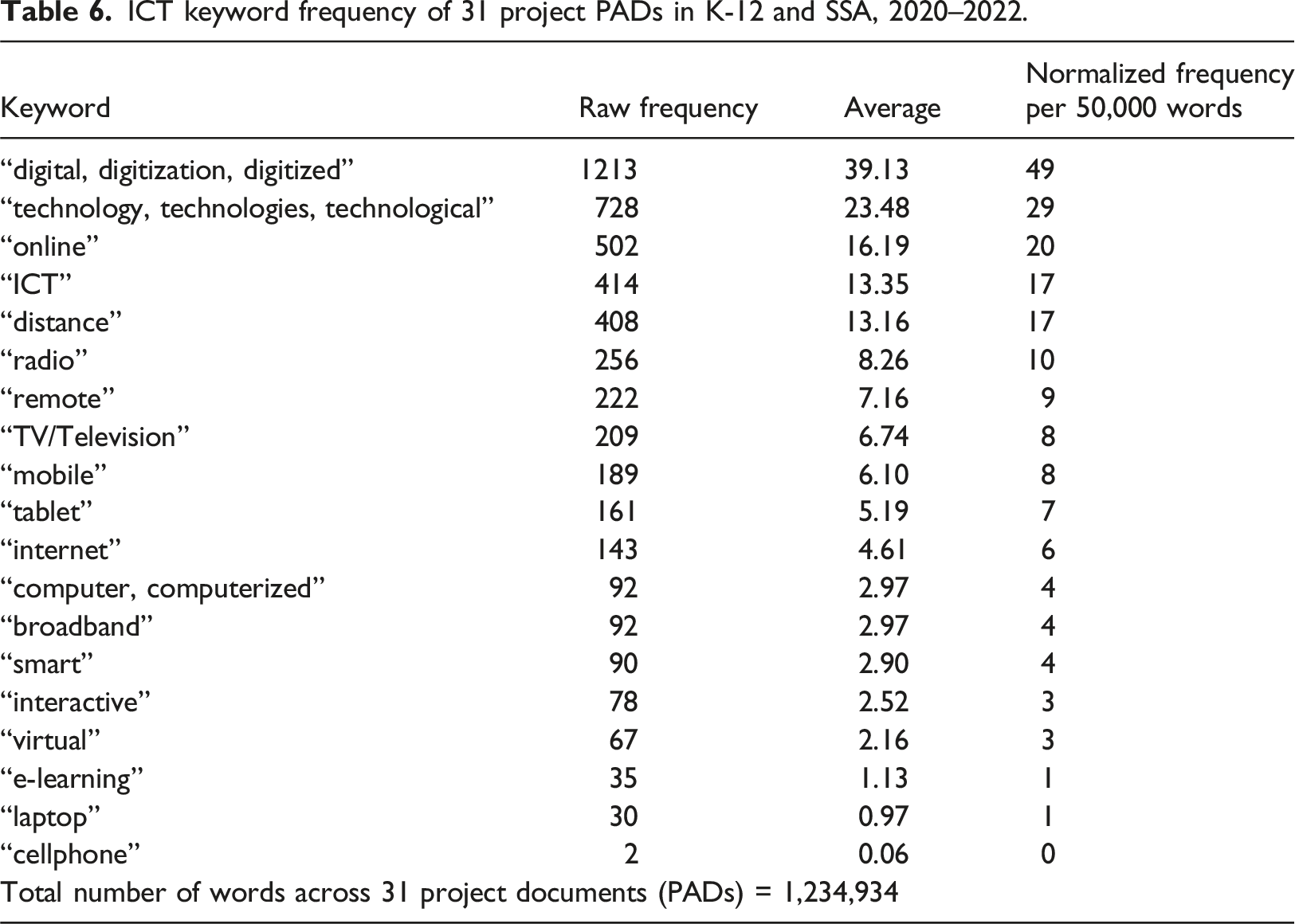
For quantitative frequency counts, each keyword (“techno*”, “ICT,” etc.) was searched in each document (policies and PADs) and the raw frequency and average for each keyword were calculated for each period. Documents for each period were bundled and treated as a single corpus. For example, two policy papers or 21 project documents (PADs) for the 2011–2015 period were treated as a single corpus. Since some documents focused solely on specific technologies or were short, raw frequency counts alone could not provide a comprehensive view of keyword usage. Therefore, the frequencies across periods were normalized (Biber et al., 1998).
To add another layer of analysis, the study examined whether ICT project financing differed based on the income levels of Sub-Saharan African countries. A second round of thematic and keyword frequency analyses was conducted, using the current World Bank classification of income levels: Low Income, Lower-Middle Income, and Upper-Middle Income countries.
Findings
Educational technology at the World Bank: an overview
The World Bank’s involvement in educational technology (EdTech) spans decades, beginning in 1966 when it supported university infrastructure and teacher training in South Asia (World Bank, 1966). Since then, the Bank has continually integrated information and communication technology (ICT) into its education projects to enhance service delivery, management, teaching, and learning. According to the World Bank, EdTech encompasses any of hardware, software, digital content, data, and information systems in education that supports and enriches teaching and learning and improves education management and delivery (World Bank, 2020: 6).
Today, the World Bank’s educational strategy places a strong emphasis on technology as a critical enabler of educational reforms. Its mandate highlights several key priorities: systemic reform through political commitment, equity and inclusion, evidence-based policy improvements, financial alignment to meet basic needs, and wise investments in technology to achieve learning outcomes (World Bank, 2025).
To date, the Bank has closed 1085 operations with technological components and has 180 active projects. 8 Many of these are large-scale operations aimed at reforming education systems in developing countries. Beyond project funding, the Bank engages in EdTech-related research and dissemination. A search of the Bank’s research and development database 9 yielded 42,712 publications making the Bank a prolific disseminator of EdTech knowledge and expertise. Some of the examples of the World Bank’s efforts to support EdTech policy and practice were selected from these databases as well as the Bank’s official EdTech Web site. 10
Evolution of the World Bank’s educational technology policies in K-12: 2011–2022
World Bank’s views and policies on EdTech: 2011–2015
ICT keyword frequency of 2 policy papers, 2011–2015.
World Bank’s views and policies on EdTech: 2016–2019
ICT keyword frequency of 4 policy papers, 2016–2019.
World Bank’s views and policies on EdTech: 2020–2022
ICT keyword frequency of 5 policy papers, 2020–2022.
Discussion of EdTech policy evolution: from systems to solutions
The evolution of the World Bank’s EdTech policies from 2011 to 2022 reflects a gradual but significant shift. Initially, the focus was on system-level reforms, with EdTech largely viewed as a tool for improving administrative efficiency. The 2011–2015 period prioritized system management, technical infrastructure, and data collection, with little emphasis on classroom instruction or addressing social inequalities through technology. The post-2015 era saw more attention given to pedagogical approaches and equity issues in EdTech integration, although the World Bank continued to prioritize system reforms. The SABER-ICT paper (2016) encouraged developing countries to follow best practices from advanced economies, but this approach was met with criticism, as it often did not align with the unique challenges faced by the Global South, particularly in Africa (Adam et al., 2011; Mahon, 2010). Other gaps found in the literature, such as the social, cultural, and political dimensions of EdTech (Selwyn, 2012), were not underscored in the decade before the pandemic. Instead, the need for specialized ICT agencies and the expansion of public–private partnerships to implement educational technology were mentioned in both periods.
With the onset of the pandemic in 2020, the Bank’s EdTech policy saw a marked transformation. The need for remote learning accelerated the shift toward using technology to enhance instruction. This period also exposed deeper issues, such as disparities in access to technology, teacher readiness, and the availability of quality educational materials. While the Bank addressed some of these challenges, including support for vulnerable students, gender disparities in digital skills and STEM noted in the literature (e.g., Farmer, 2008; Snyder, 2014, cited in Liao et al., 2016; Wong and Kemp, 2018) remained under-addressed. Moving forward, the Bank’s post-pandemic policies increasingly emphasize blended learning and the need for better integration of privacy, data ownership, and digital security into its frameworks.
One notable trend since the COVID-19 pandemic is the Bank’s increased collaboration with organizations like EdTech Hub and UNESCO. Whereas earlier EdTech policy papers were primarily produced in-house, recent years have seen a shift toward greater partnership with other stakeholders. This shift may signal a move away from relying solely on internal expertise, expanding the Bank’s engagement with the broader EdTech ecosystem to foster more innovative and inclusive solutions for educational reform worldwide.
Evolution of the World Bank’s educational technology projects in K-12: 2011–2022
World Bank’s education projects with ICT in Sub-Saharan Africa: 2011–2015
ICT keyword frequency of 21 project PADs in K-12 and SSA, 2011–2015.
World Bank’s education projects with ICT in Sub-Saharan Africa: 2016–2019
ICT keyword frequency of 21 project PADs in K-12 and SSA, 2016–2019.
World Bank’s education projects with ICT in Sub-Saharan Africa: 2020–2022
ICT keyword frequency of 31 project PADs in K-12 and SSA, 2020–2022.
In contrast to earlier periods, some projects (n = 5) during this time began addressing technology-related risks such as privacy, cyberbullying, and data protection, albeit on a limited scale. However, many projects were still in progress, and only two had been closed and evaluated by the IEG for their ICT components.
Country income level and type of technological investments
Types of ICT solutions based on income level.

Low-income countries primarily focused on system management solutions, using ICT to streamline administrative tasks such as school monitoring and data collection. In contrast, lower-middle-income countries adopted a more balanced approach, incorporating ICT not only for management purposes but also for teacher training, providing school equipment, and creating learning content. The pandemic prompted a shift in low-income countries toward digitizing learning content, while lower-middle-income countries continued to focus on broader ICT solutions to mitigate the pandemic’s educational impacts.
Discussion of EdTech projects evolution: from systems to solutions
A review of the World Bank’s ICT projects in SSA from 2011 to 2022 shows a clear emphasis on system management before the pandemic, with relatively few projects incorporating ICT for instructional purposes. The peak year for ICT integration in education projects was 2020, spurred by the pandemic. However, by 2022, the number of ICT-based projects had decreased significantly, despite evidence that the digital divide had worsened due to the pandemic (Lee, 2021). Throughout the earlier periods, ICT was primarily used to improve access to education and manage educational systems, with minimal focus on remote learning or interactive technologies. During the pandemic, this shifted, with a new focus on using ICT to facilitate remote learning and create digital content, especially during school closures.
One major concern is the lack of a comprehensive strategy to address privacy and cybersecurity issues in the World Bank’s education projects. Only five projects during the pandemic mentioned data protection, privacy, or cybersecurity laws, highlighting a significant gap in addressing these growing risks. While girls’ education received particular attention and funding for ICT integration, other marginalized groups, such as children with disabilities, ethnic minorities, refugees, and displaced populations, were often overlooked. With the widespread diffusion of ICT in education projects due to the global pandemic, broader social and cultural implications of ICT adoption remain underexplored, necessitating more comprehensive strategies to ensure equitable and effective use of technology in education.
Aligning EdTech policies and practices at the World Bank
The period from 2011 to 2022, marked by the 2008 financial crisis and the COVID-19 pandemic, brought significant shifts in the Bank’s approach to EdTech. From 2011 to 2015, the Bank’s policies were driven by a market-oriented, technical approach focused on system management tools like data collection and school monitoring, with little emphasis on how these tools could enhance learning. This infrastructure-focused approach limited EdTech’s potential to address deeper educational needs.
Between 2016 and 2019, a gradual shift occurred toward a more balanced focus on equity and access, though the emphasis on system management persisted. Despite policy recommendations for localized digital content, especially in African languages, these goals were not effectively translated into practice. The disconnect between policy and implementation reflected the Bank’s slow evolution toward more user-centered approaches (Vally and Spreen, 2012).
The COVID-19 pandemic marked a significant turning point. With schools worldwide suddenly closed, the Bank shifted its focus from system management to instructional uses of technology. During this time, it expanded its EdTech team and partnered with international organizations and private entities, adopting a more responsive, multimodal approach to EdTech. This shift toward blended learning, teacher training, and digital curricula represented a marked departure from the pre-pandemic focus on infrastructure. Additionally, there was a heightened focus on at-risk students, particularly in projects related to girls’ education, which had been disproportionately affected by the pandemic. The Bank responded to these challenges with a sense of urgency, adjusting its approaches to ensure that its EdTech initiatives aligned with both global research and the immediate educational needs exacerbated by the crisis. This marked a significant departure from the pre-pandemic period, where the focus was primarily on infrastructure and system management rather than instructional uses of technology. The alignment between policy and practice during the pandemic signaled a more integrated approach to using technology as a tool for education, underscoring the Bank’s shift toward addressing instructional needs in a time of global crisis.
Issues surrounding the political economy of technology, ethics, and digital safety became more prominent in the Bank’s discussions during the pandemic, but these concerns have yet to be fully integrated into the Bank’s standard procedures.
Implications of the World Bank’s EdTech approach
The global pandemic marked a significant shift in the World Bank’s approach to educational technology (EdTech), but it remains to be seen if these changes will endure or if the Bank will revert to its pre-pandemic priorities. Prior to COVID-19, the Bank’s focus on EdTech was primarily centered on system management: using information and communication technologies (ICTs) for data collection, monitoring, and infrastructure development, rather than instructional enhancement. However, during the pandemic, the Bank made substantial efforts to integrate technology into pedagogy, expanding its collaborations and aligning its policies more closely with the needs of educators and students.
One key question is whether these changes are temporary adaptations or indicative of a longer-term shift. Given that the World Bank’s educational projects in Sub-Saharan Africa (SSA) during the 2011–2022 period consistently prioritized “system management” as the primary reason for integrating ICT, it is possible that the Bank may return to this focus as schools reopen and the urgency of remote learning fades. Despite the widespread disruption to education during the pandemic, which led to a significant increase in the use of technology for instruction, the foundational emphasis on management and monitoring tools, especially in low-income countries, suggests a system-centric approach to EdTech will continue to dominate.
This approach is reflective of the World Bank’s overall structure and internal character as a bank (Jones, 2007) and its broader institutional mandate, which emphasizes neoliberal tendencies that prioritize cost-effective, short-term results. The Bank’s focus on measurable outcomes and return on investment can often limit its ability to address deeper, long-term educational needs. Such a market-driven approach risks marginalizing the instructional potential of EdTech, with technological investments skewing toward quick, tangible results rather than transformative educational outcomes. Critics argue that by focusing on easily measurable outcomes, such as data collection and system efficiency, the Bank could overlook more complex needs, including those of marginalized or at-risk students, which are harder to quantify (Hossain, 2004, cited in Hossain, 2023).
Sukarieh and Tannock (2008) have cautioned that programs from the Global North promoting a one-size-fits-all model, without considering the unique social, cultural, and political contexts of each country, can inadvertently propagate neoliberal ideologies and set the stage for global youth to become the Bank’s latest standard bearers for its brave new market society. As cautioned in the literature, policy making solely based on quantitative data, such as EMIS (Education Management Information Systems), can further overlook minorities and marginalized populations that are small in percentage but tend to be more at risk of dropping out or achieving less (Hossain, 2004, cited in Hossain, 2023).
However, the pandemic may have catalyzed a longer-lasting transformation within the World Bank’s approach to EdTech. During the COVID-19 crisis, the Bank demonstrated greater openness to collaboration, working with a range of organizations to support instructional uses of technology, including content creation, teacher training, and curriculum development. This shift toward a more pedagogically centered approach was facilitated by the expansion of the Bank’s EdTech team and new partnerships with other international organizations, which suggests that the Bank may continue to prioritize instructional technology alongside system management in the future. The pandemic’s influence on the Bank’s education policies, particularly the promotion of blended learning and multimodal instruction, could become a lasting component of its EdTech agenda.
Despite this promising shift, it is crucial to consider the broader implications of the Bank’s increasing engagement with the private sector in EdTech. As some scholars have pointed out, the privatization of education through technology can exacerbate inequalities, particularly in contexts where access to digital tools and resources is unevenly distributed (Williamson et al., 2020). The rise of “pandemic pedagogy” has created opportunities for private actors to expand their influence within public education systems, raising concerns about the centralization of control over education in the hands of unaccountable entities (Williamson et al., 2020).
Although private partnerships can help address funding gaps, accelerate innovation, and expand access to quality educational tools (Patrinos et al., 2009; Verger, 2011), their for-profit interests must be balanced with the public good. The goal is not for the private sector to take over technology integration but to deliver innovative, cost-effective and resilient options (Unwin et al., 2020). Throughout this process, it is very important for governments to be “technology agnostic,” meaning that “they should not place all of their investments into one particular kind or model of technology, but instead set educational objectives and then explore ways of providing the optimal technological solutions in different contexts, preferably in partnerships with private sector companies and civil society organisations” (Unwin et al., 2020: 57). Ultimately, it is the responsibility of governments to make sure marginalization cycles are not re-created.
Ensuring long-term sustainability of the Bank’s renewed instructional focus requires robust national ownership, continued capacity-building for teachers, and stronger accountability frameworks. Without such measures, there is a risk that the emphasis on EdTech could be diluted as global emergency funding subsides. Furthermore, for these models to scale effectively in SSA’s diverse contexts, local stakeholders must be actively involved in co-designing interventions, and the Bank must invest in reliable infrastructure that extends beyond urban centers. Multi-sector partnerships with the private sector and civil society can be valuable in ensuring appropriateness and sustainability of EdTech solutions (Unwin et al., 2020). Such efforts will help ensure that EdTech benefits are distributed equitably and do not revert to pre-pandemic system management priorities alone.
Future directions and research
Looking ahead, further research is necessary to explore how the World Bank’s EdTech approach continues to evolve. Detailed case studies of specific country-level implementations, as well as interviews with the Bank’s EdTech team and its partners, could offer valuable insights into how technology is being leveraged to address educational challenges on the ground. Additionally, examining the role of public–private partnerships in the Bank’s EdTech initiatives will be critical for understanding the power dynamics and potential risks associated with increasing privatization in education.
Given the World Bank’s collaborations with other international agencies, such as UNICEF (United Nations Children’s Fund and World Bank, 2022), it is imperative to compare its EdTech strategies with those of organizations like the OECD and UNESCO. A comprehensive political economy analysis that encompasses additional international bodies, private technology firms, philanthropic foundations, and local education authorities will be essential to ensure technological solutions serve public interests and promote equitable outcomes.
There is also a need to explore how EdTech can be tailored to meet the specific needs of diverse learner populations, particularly in low-income countries where one-size-fits-all models are likely to fail. Research should focus on the development of localized digital content, the role of mobile technologies, and the use of EdTech in fragile and conflict-affected regions. Moreover, as EMIS and other data-driven systems evolve, attention must be paid to how they are used to inform policymaking in low- and middle-income countries and whether they are truly serving the needs of all learners.
Although this study adopted a descriptive approach to analyzing EdTech at the World Bank, the rising body of literature on decolonizing the digital landscape (Koole et al., 2024; Meighan, 2021) underscores the need for future research that examines EdTech initiatives (whether by international organizations or technology firms) through a decolonial or postcolonial lens.
An additional avenue for future exploration involves emerging technologies, such as AI-powered tutoring systems and blockchain-based credentialing, that, if deployed ethically and adapted to local contexts, could mitigate enduring challenges like learning poverty and teacher shortages. By harnessing AI, the World Bank can simulate local scenarios, generate explainable predictive analytics, offer immediate feedback, and supply resources tailored to diverse educational environments. Meanwhile, blockchain could facilitate transparent and secure credentialing, decentralized learning records, and micro-transactions or incentives. However, realizing this potential in Sub-Saharan Africa, and in similarly resource-constrained settings, depends on significantly strengthening digital infrastructure and ensuring reliable connectivity.
It is equally plausible that these emerging technologies, combined with the tech-driven dynamics of the pandemic, have reshaped or introduced new pedagogies and learning theories. Consequently, a more visionary approach is needed: one that investigates how emerging tools, evolving learning paradigms, community-driven initiatives, and locally developed content can converge to build more equitable and sustainable education systems.
Conclusion
While the pandemic has highlighted the potential of EdTech to transform education systems, the World Bank’s ability to leverage this opportunity will depend on its willingness to move beyond infrastructure-centric approaches and focus on long-term, equitable solutions. Ensuring that the current shifts toward instructional technology prevail will require not only the scaling of successful interventions but also the integration of emerging technologies and a stronger emphasis on community and localized strategies. If used wisely, educational technology can bridge the digital divide and create meaningful, transformative learning experiences for all learners worldwide.
Supplemental Material
Supplemental Material - Aligning policy and practice: The world bank’s approach to EdTech in Sub-Saharan Africa
Supplemental Material for Aligning policy and practice: The world bank’s approach to EdTech in Sub-Saharan Africa by Farimah Salimi in Policy Futures in Education
Footnotes
Acknowledgments
I sincerely thank Professor Karen Mundy for her invaluable guidance, insightful feedback, and unwavering support throughout this doctoral research. Her mentorship was instrumental in shaping this work. I am also grateful to the anonymous reviewers for their thoughtful feedback and constructive suggestions.
Declaration of conflicting interests
The author(s) declared no potential conflicts of interest with respect to the research, authorship, and/or publication of this article.
Funding
The author(s) disclosed receipt of the following financial support for the research, authorship, and/or publication of this article: This work was supported partially by scholarship provided by the Province of Ontario and the University of Toronto through the Ontario Graduate Scholarship (OGS) program during the 2021–2022 academic year.

Supplemental Material
Supplemental material for this article is available online.
Notes
References
Supplementary Material
Please find the following supplemental material available below.
For Open Access articles published under a Creative Commons License, all supplemental material carries the same license as the article it is associated with.
For non-Open Access articles published, all supplemental material carries a non-exclusive license, and permission requests for re-use of supplemental material or any part of supplemental material shall be sent directly to the copyright owner as specified in the copyright notice associated with the article.
