




Abstract
‘School of the future’ scenarios remain a popular means of animating policy, industry and public debates around issues relating to technological, economic, societal and environmental change. To date, these scenarios rarely involve the perspectives of school students.
Keywords
Introduction
The past few decades have seen ‘school of the future’ scenarios grow in popularity as a means of animating policy, industry and public debates around issues relating to technological, economic, societal and environmental change. The late 1990s and early 2000s saw a spate of detailed futures programs, such as the UK government’s ‘Beyond Current Horizons’ (Facer, 2009), using scenario building as a means of anticipating the implications of new technological developments such as online learning, virtual reality and simulations.
More recently, there has been rising interest in ‘future school’ and ‘school futures’ initiatives, led by international organisations such as UNESCO and OECD and picked up by education academics and those looking to work in the education reform and education innovation industries. For example, UNESCO’s (2021) ‘Futures of Education’ program generated a wave of enthusiasm for policymaking, professional reform and research around possible future school scenarios in light of technological developments in artificial intelligence (AI) alongside issues such as climate change.
The benefits of sophisticated approaches to scenario-building are beginning to be acknowledged by education commentators, especially in terms of assessing and evaluating possible policy directions and foci, identifying desired futures and strategies and aiding in informed decision-making (Carey, 2022; Finch and Sandford, 2023). That said, future education scenarios have tended to be dominated by commercial and consultancy imperatives, and focused on narrow sets of reactive questions such as how schools will respond to ‘jobs of the future’ or technological developments (Facer, 2021), rather than proactively rethinking and redesigning roadmaps for collective futures (Tesar, 2021).
In this sense, an iterative and multi-stakeholder approach to developing scenario narratives is also seen as a way of encouraging critical engagement with unknown and unanticipated aspects of the possible future – moving ideas around the future of education beyond dominant frames of understanding, and merely reiterating common expectations (Finch and Sandford, 2023). In this regard, a key stakeholder group that has been almost entirely absent from the creation of formal future school scenarios is students themselves.
Scenarios have traditionally been constructed by government, industry and consultancies keen to animate policymaking and investment. At the same time, scenario building is also seen as a valuable means of developing young people’s futures thinking, including the idea of ‘futures literacy’ (Pouru-Mikkola and Wilenius, 2021) and calls to develop a ‘futures consciousness’ amongst young people, and reorient schools as a place where students can develop a capacity to ‘use the future’ (Miller, 2018). Key here is the idea of actively involving young people in the development of futures scenarios as an educational resource. As Keri Facer (2023, p. 214) puts it, while there is limited value in making students engage with fully formed scenarios of the future school, there is value in supporting young people in their own scenario-building: ‘the process of making scenarios can be a useful activity, [but] I’m less sure how helpful it always is to work with scenarios that other people have developed other than as a starting-point for a new conversation’.
In addition to their educational value, we also propose that scenarios can be more productive and meaningful when they engage with people’s own experiences and expectations of the future, rather than relying only on ‘experts’ (F. Kaviani et al., 2023a). This is particularly important in the case of scenarios involving emerging technologies such as AI, and anticipated changes to energy and environmental systems. While traditionally viewed as technical domains of expertise, energy and technology imaginaries can transform societal systems and are shaped by people’s expectations and use of them (F. Kaviani et al., 2023b; Strengers et al., 2019).
As an interdisciplinary group of energy futures researchers, computer scientists, anthropologists and sociologists of education and digital technology, we were interested in how scenarios could be used to engage young people in the ongoing convergence of changes in AI, energy and environment. Our interests cover both an educational perspective (how scenario building can support futures education) as well as seeing intrinsic value in the expectations and voices of young people to imagine and propose alternative futures that are not yet being considered in dominant policy discourses.
AI has had a major impact on education (Chen et al., 2020). For instance, Peters et al. (2024) outline both the challenges and opportunities presented by the integration of artificial intelligence into education. As a learning enhancement tool, AI can automate routine tasks like providing feedback and assisting with research, while potentially democratising access to knowledge through personalised learning experiences. However, significant concerns exist regarding academic integrity and critical thinking. AI-generated content may enable plagiarism, while its lack of source transparency hinders students’ research skill development. Moreover, AI responses, though grammatically correct, often lack the depth necessary for meaningful academic discourse.
Despite this, the adoption of AI-assisted tools in education is widely considered inevitable (Elbanna and Armstrong, 2023). As such we are beginning to see calls to approach the increased coming-together of AI and schools in more critical terms. Whereas dominant narratives around AI and education have predominantly focused on issues of technology-driven change (e.g. how schools might change to accommodate robot teachers, personalised learning or automated assessments), there exist concerns around how the increased use of AI impacts on both energy consumption and environmental impacts (such as resource depletion, toxic waste and other environmental and ecological burdens).
For example, alongside ongoing claims that recent developments in AI herald a fundamental societal and economic transformation, the energy implications of ubiquitous AI are also expected to be considerable, making it a key area of concern for the future energy grid. To run efficiently, machine learning and deep learning – both key elements of AI – require ever-increasing computing power (Ahmad et al., 2022). The data centres hosting these computing systems were estimated to consume 240–340 terawatt hours (TWh) globally in 2022 (‘Data Centres and Networks’, 2023). Moreover, emerging AI technologies such as OpenAI’s ChatGPT, Google Bard and augmented and virtual reality are increasing this demand. The high energy demand raises questions about AI’s sustainability, particularly in the context of global efforts to reduce carbon emissions, leading some experts to advocate for the development of more energy-efficient models and the transition to renewable energy sources for data centres.
Companies have responded by transitioning their facilities and data centres to renewables. For instance, in 2017, Google announced that solar and wind initiatives were ‘the heart’ of their company culture, helping the organisation reach 100% renewable energy across their worldwide operations (Hölzle, 2016). However, despite AI’s potential to reduce energy usage in data centres, the growing size of models and computing requirements (‘AI and Compute’, 2018) are expected to surpass improvements in energy efficiency, leading to a net increase in overall energy consumption (‘Data Centres and Networks’, 2023).
Much research on energy performance in schools has been afforded to examining how the design, construction and operation of school buildings contribute to their energy footprint (Ramli et al., 2012). Indeed, in Australia, energy use in schools is typically dominated by Heating Ventilation and Air Conditioning (HVAC) loads, leading to many schools retrofitting reverse-cycle heat pumps to increase efficiency (Daly et al., 2022). However, while commercial and public buildings have shown decreased energy use over the past decade, Australian schools have experienced an upward trend, and projections indicating further increases have been attributed to the proliferation of classroom digital technology (Odell et al., 2021).
Schools have a significant role to play in sustainable futures and represent a significant opportunity for renewable energy infrastructure, with capacity to accommodate battery storage systems (BSS), wind turbines (WT) and solar photovoltaics (PV) (Odell et al., 2021). Indeed, Australia’s educational infrastructure, comprising 9,629 school buildings with 6,712 government-owned facilities as of 2023 (ACARA, 2023), offers substantial potential for sustainable energy generation. The alignment between a school’s ability to generate renewable energy and their daytime energy consumption patterns positions them as crucial assets in the transition toward net-zero emissions (AlFaris et al., 2016; Khezri et al., 2020).
There is limited information currently available regarding energy consumption in Australian schools (Daly et al., 2022), and the gap in knowledge is becoming more pronounced given the relationship between the proliferation of AI digital technologies and everyday energy practices in educational settings remain largely absent from discourse. As such, AI’s rapid advancement throughout schools may be proceeding without adequate consideration of the impacts on a school’s energy profile and the role that schools can play in offsetting or mitigating their increasing ecological footprint.
Moreover, there is limited understanding of how energy consumption in educational settings differs between low-income countries and wealthy nations with highly digitised school systems. This is important given that research indicates energy poverty – defined as a lack of access to modern energy services – negatively impacts a nation’s education system (Katoch et al., 2023). As such, the benefits of emerging education technologies – lauded for their potential in improving student experiences and education – are inextricably linked to energy access and may widen existing disparities. This underscores the need for more detailed research that contextualises the widespread adoption of educational AI within broader geopolitical and socioeconomic considerations of energy and the transition towards renewables.
These emerging issues, while only recently gaining attention, significantly impact projections of future schooling models. Indeed, amidst calls for discussions around educational technology to fully engage with the environmental implications of increased digitisation of schools (Selwyn, 2021, 2023; Werse, 2023) are specific calls for increased policy attention to the entanglement of schools’ digital and energy infrastructures with issues of climate change (McKenzie, 2024; Olson et al., 2024). As such, it seems timely to work to bring these issues to bear on the ongoing efforts to construct schools of the future. Indeed, seen in this light, the future of schooling looks increasingly uncertain.
The variability of renewable energy, advancements in digital technologies and AI and increased frequency of extreme weather events bring to attention several key unknowns: How will people learn during periods of intense heat? To what extent will students and schools embrace AI, and how will their energy demands be managed? How might school students participate in forging their own desirable ‘AI energy futures’? Against this background, the present paper explores how scenario planning can be used to engage schoolchildren in futures thinking – in particular around the emerging uncertainties around artificial intelligence and its environmental and energy implications. We do this by reviewing current school scenarios and using the findings to: 1. develop an understanding of current school scenario-building approaches, 2. determine the extent to which climate change, energy and AI are considered and 3. design a method to engage young people in futures thinking and imaginative design process to innovate future school scenarios.
Part one: The current state of ‘future schools’ scenarios
Qualitative content analysis of school scenarios
Seventy scenarios from 18 sources produced by consultants, businesses, government agencies, advocacy organisations and researchers were analysed to understand how scenario planning was approached (Appendix A), the level of participation from schoolchildren and the extent to which scenarios considered how climate change and the energy implications of AI affected how schooling occurred.
We conducted an online search to locate national and international reports, documents and research projects that used scenario planning to investigate the future of schools. Our selection criteria focused on publicly available sources that contained future school scenarios. Several visioning documents were also included. Sources that were accessible only through a paywall or were focused on education curriculums were excluded.
The results were organised in a spreadsheet based on various aspects of scenario building identified in previous research by Kaviani et al. (2023a). These aspects included aim, purpose, audience, type, method for building, participation, key assumptions, key forces, key drivers, key uncertainties, data selection, scenario outcome and scenario presentation.
Key themes from scenario analysis
The review identified that the majority of scenarios were informed by research or stakeholder engagement conducted with industry experts, researchers, government workers and representatives, policy makers and designers, with minimal participation from school-aged children in the scenario-building process, with a few exceptions.
For instance, scenarios were developed with students participating in scenario workshops run during foresighting conferences (Nima, 2017), by having informal discussions with researchers visiting the school campuses (Heppell et al., 2004), or through a participatory design method that prioritised meaningful involvement with young people (Haugas and Kendrali, 2022). The Schooling, Education and Learning 2030 and Beyond (Scotland’s Futures Forum, 2020) vision included data from ongoing engagement and participation of young people across various futures and climate-themed workshops and programmes.
Climate change and issues related to energy and artificial intelligence were examined to varying extents, yet outcomes associated with their interconnectedness were not considered in terms of how schooling may unfold. In Schooling, Education and Learning 2030 and Beyond, the education system was defined as needing to engage with challenges from climate change, ‘the most urgent threat we face’, to biodiversity and the ‘future wellbeing of society’, changing Scotland’s demographic landscape (Scotland’s Futures Forum, 2020: p. 7). While the vision was the only one that mentioned extreme weather, no further consideration was given to how this may impact how schooling will occur. Other scenarios defined climate change as a megatrend impacting the future economic opportunities and mental wellbeing of young people, global conflict and social cohesion (Haugas and Kendrali, 2022). In the Future Scenarios for Education in the GCC Countries (RCEP, 2022), climate change was a megatrend that required imaginative and innovative solutions to mitigate the impact on humanity.
Artificial intelligence, when considered, was expected to proliferate in all aspects of life. However, challenges associated with a digitalised school system and the everyday use of AI, such as privacy, surveillance, security and energy concerns, were not accounted for, although student privacy was briefly considered (Heys et al., 2023).
Multiple reports emphasised the importance of redesigning learning environments to promote and embody sustainable practices. However, as illustrated below (GEMS, 2016: p. 29), technologies were foregrounded in terms of how everyday schooling might shift. The School of Future will understand the importance of being sustainable and in turn encourage sustainability as a way of life. In this context, the power usage in the building of the School of the Future must rely entirely on sustainable sources of energy such as solar panels. It must also incorporate energy efficient lighting and mechanical systems, environment-friendly building materials, water and energy conservation mechanisms, and the use of sunlight and natural ventilation throughout the school building… Technology can be leveraged in order to make the school a paperless environment to reduce waste and enhance sustainability.
Scenarios depicting net-zero futures acknowledged the increasing severity of climate change impacts. For example, Heys et al. (2023, p. 8) note that ‘The harmful consequences of climate change are at our doorstep, with forest fires and droughts that grow in frequency and intensity each year’. However, these scenarios often overlook two critical aspects: The need to adapt daily routines to align with renewable energy availability, and the potential for extreme weather events, such as bushfires and the resulting smoke, to disrupt both traditional schooling and renewable energy production. This oversight suggests a gap in current future planning for education systems. While acknowledging climate change, many scenarios fail to fully consider its practical implications for school operations and energy management in a renewable-dependent future.
The scenarios that did consider significant climate impacts on schooling often painted dystopian futures. For example, Finch (2020) envisioned a world where ‘catastrophic climate change has led to a new world order’ and ‘children and young people raise themselves in a climate-ravaged world’. Among the reviewed reports, the ‘Educational, Social and Technological Futures’ (Facer, 2009) stood out for its holistic approach, addressing the interconnectedness of climate change, energy and technology. The report (2009, p. 242) highlighted several emerging sociotechnical challenges: The socio-technical developments described above are heavily reliant upon continued energy supply, upon continued access to the mineral resources and raw materials needed to make digital technologies, and upon the continued social acceptance of the demands such technologies make upon environmental resources. Significant energy disruptions, a failure of the technology industry to recognise the need for more environmentally sustainable practices and a reduction in the supply of raw materials all pose threats to the intensification of the digital landscape.
These uncertainties were presented to prompt discussions on how educational stakeholders might respond to these complex sociotechnical shifts. However, a significant gap remained in the scenarios: they lacked exploration of how schooling practices might adapt to climate change and other major disruptions to establish a desirable or acceptable ‘new normal’.
Our second objective was to use these existing school scenarios as a means of engaging school students in futures thinking around the coming-together of AI, energy and environmental futures. In particular, we use the findings to develop a method for engaging schoolchildren in imagining their own school scenarios in a way that also challenged and diversified dominant industry expectations – for instance, by focussing on shifts in everyday practice (rather than only on buildings and learning spaces), thinking about the interconnectedness of technological, energy and environmental changes and anticipating non-dystopian radical changes to current forms of schooling.
Part two: Designing a method to engage young people in futures thinking
Following Facer (2023), our aim was to use the review findings to develop a method for engaging young people in a new conversation about the future of schooling. Drawing on design anthropology techniques (Pink et al., 2022) we sought to develop scenario cards that would allow students to engage with, but also depart from, the dominant visions and ideas contained within these scenarios.
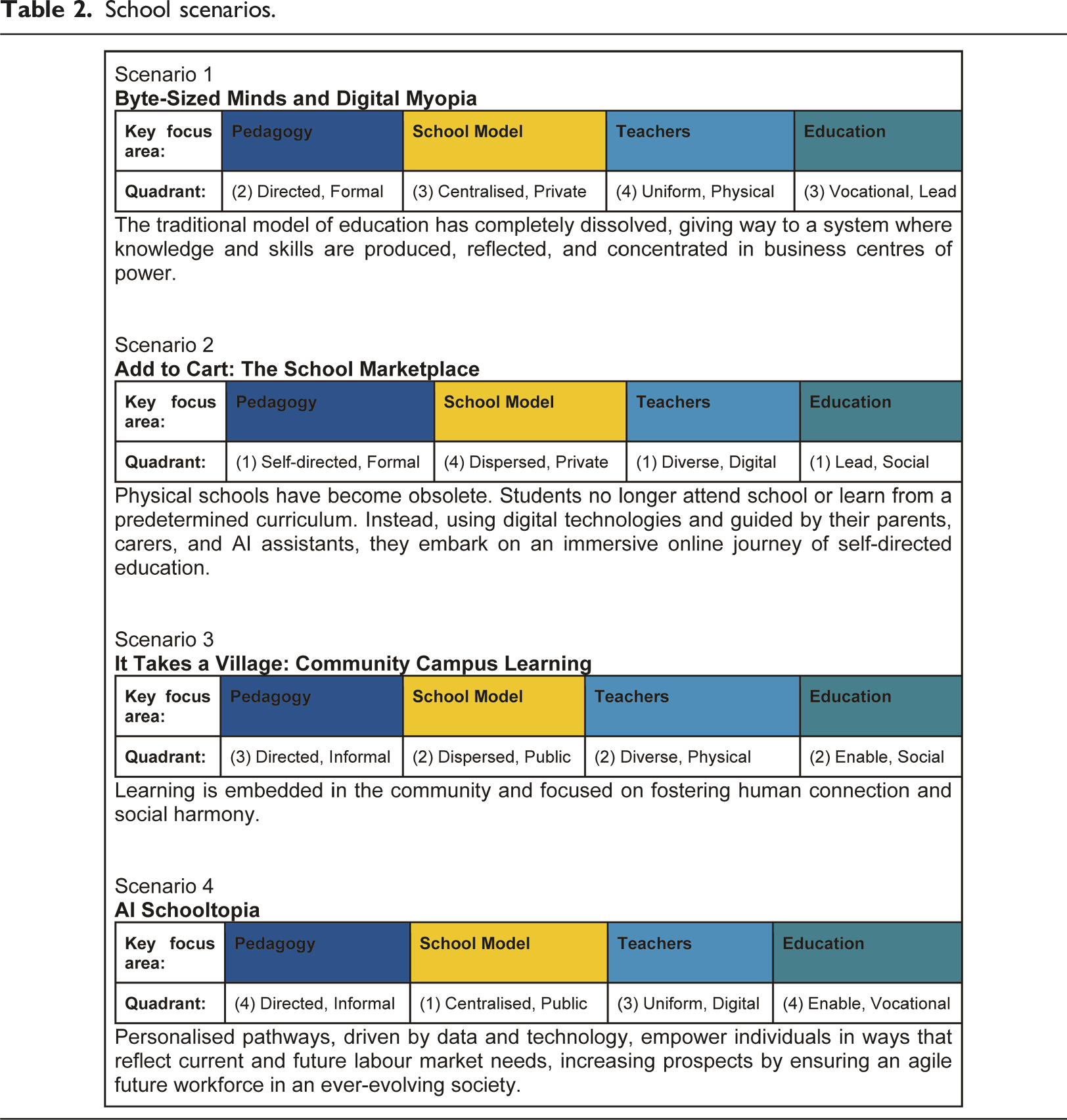
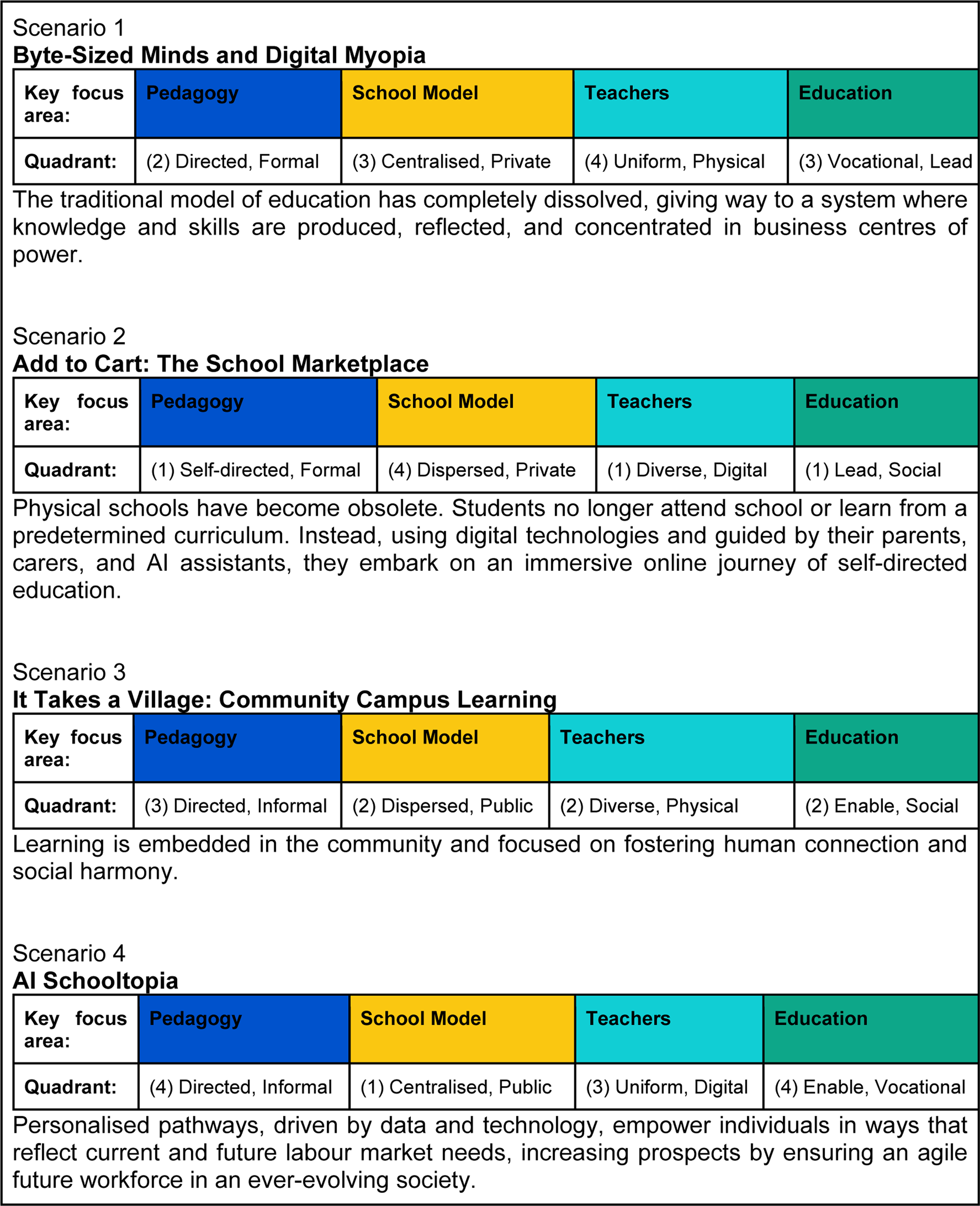
As a first step in this process, we synthesised the 70 analysed scenarios into four dominant visions. Second, we designed a series of scenario cards (16 in total) corresponding with each of the scenario outcomes. Finally, we developed a further set of ‘wild cards’ developed from our previous research on AI and energy scenarios, to expand the scope of thinking and possible futures present in the dominant scenarios. The cards formed part of a speculative scenario planning activity that students were invited to engage with as part of a 2 day program on the future of schooling delivered by our educational partner, Monash Tech School. While the program and its outcomes are not discussed in this article, we continue by outlining the development of the scenario cards below.
Key focus areas of reviewed scenarios
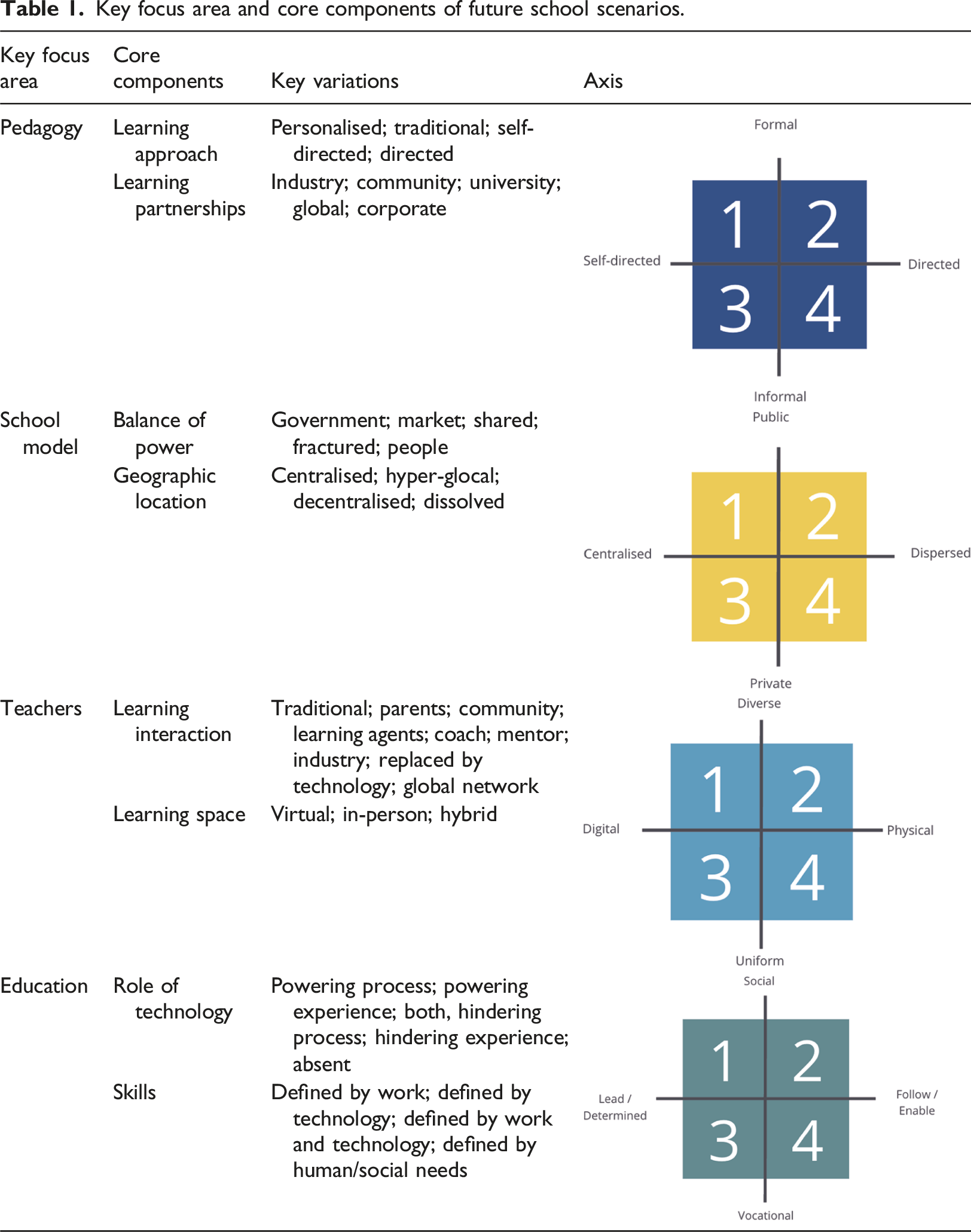
We drew on a previously established method to synthesise and build four dominant scenarios from the full analysis of 70 scenarios discussed above. The ‘multi-study’ method has been employed in past research to identify and challenge the types of knowledge and assumptions that permeate scenario building within organisations (F. Kaviani et al., 2023b; Kurniawan and Schweizer, 2020; Scheele et al., 2018). Briefly, the method involves identifying the key focus areas that scenario-builders consider significant and distilling these into core components that can be used for building scenarios.
To identify key focus areas and their variations, the reports were imported into the qualitative software package, NVivo, and coded using a deductive process. Key focus areas were those identified as having the highest uncertainty and greatest potential impact for the future. The analysis found scenarios shared expectations regarding focus areas and the direction of variation that were deemed relevant for examining change. Each of these key focus areas contained core components with variations that reflected either/or polarised extremes. We used a 2 × 2 matrix method to organise the core components.
Key focus area and core components of future school scenarios.
School scenarios.
Scenario card design
Scenario cards were developed that provide a statement capturing each focus area’s axis point. The cards were designed to be used by young people to allow them to tangibly investigate the future impacts of AI, emerging technologies and other anticipated global megatrends on future learning and everyday life, and participate in design activities to either develop their own future school imaginaries or broaden the scope of possibilities for present-day planning. We continue by introducing each of the four focus areas and their components in turn.
‘Pedagogy’ as a key focus area
The pedagogy focus area components include the learning approach and the learning process. The learning approach was the student’s learning experience and could be self-directed or directed by someone other than the learner. The learning process was the school’s approach to learning and could be formal or informal. Advancements in technology were expected to impact both learning approaches and processes, affecting ‘what learners study, how they learn, how they are assessed, and what tools learners and educators use to do so’ (RCEP, 2022: p. 88) (Figure 1). ‘Pedagogy’ scenario cards.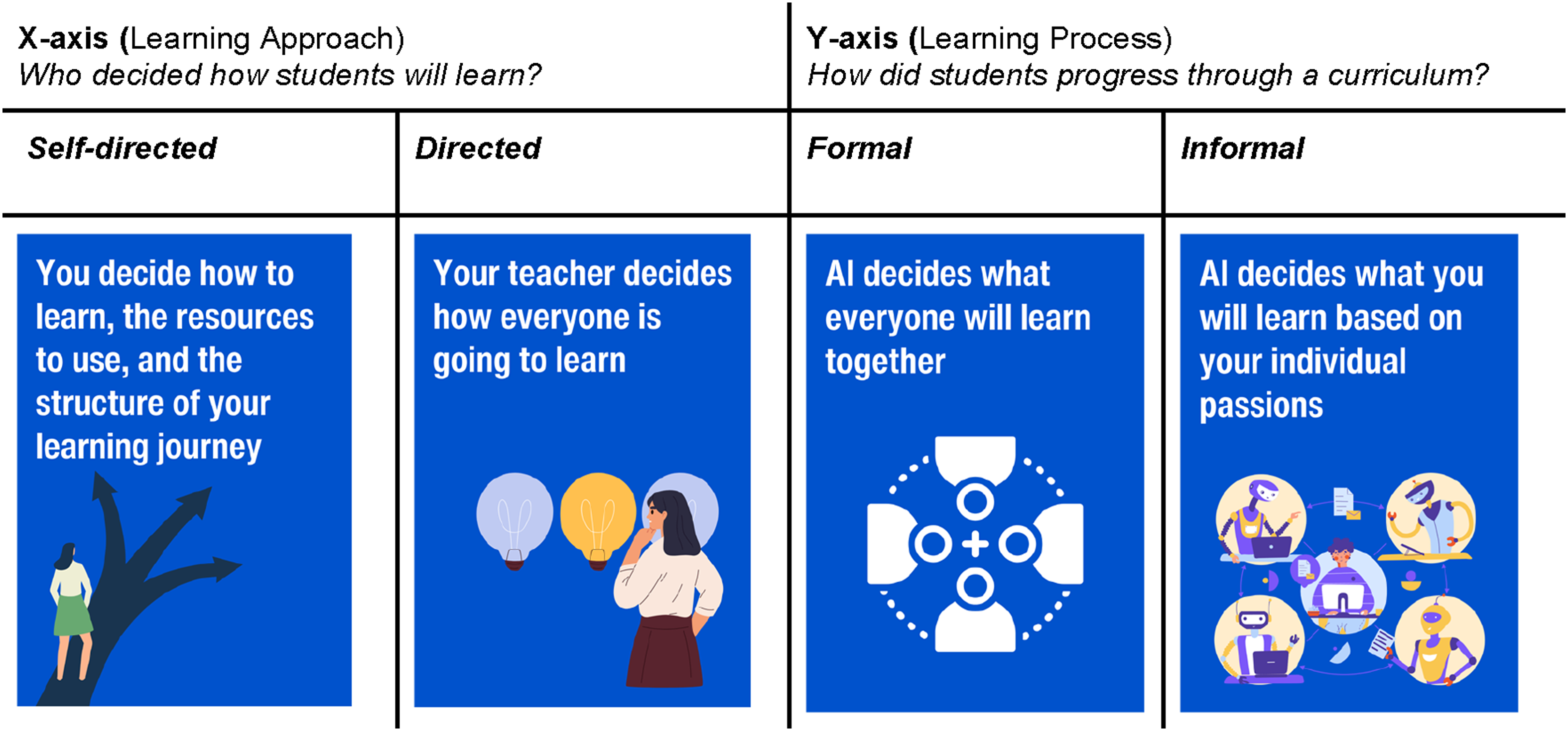
Self-directed learning, characterised by high levels of autonomy and choice, emphasised students’ primary responsibility for planning, initiating and managing their learning activities. In ‘Technology-Empowered Education’ (RCEP, 2022), the approach was supported by the evolving role of educators, who no longer treated learning as a guided and rigid process but rather facilitated the self-directed education of their learners. In contrast, directed learning involved someone other than the student taking on the central role in planning, organising and controlling the learning journey. For instance, in ‘Loyalty Points’ (Facer, 2009), the student’s likely skills or competencies were diagnosed at the beginning of their schooling for teachers to develop or match to external in-demand roles. If the specific skills being fostered became less relevant, some learners were offered the chance to change track, meaning not all learners reached adulthood as well-suited for their initially designated niche.
The formal learning process is usually rigid, with structured assessments that are less agile in adapting to rapid societal changes. This rigidity was illustrated in ‘The Fortress School’ (Heppell et al., 2004), a ‘monastic’ environment where dislocation from the community led to a productivity-based regime of targets and performance indicators focused solely on academic work. Conversely, an informal learning process offered more flexibility, allowing students to progress at their own pace. For instance, in ‘Quality Education’ (RCEP, 2022), a shift towards personalised learning encouraged and built upon students’ strengths rather than solely addressing their weaknesses. Learners were freed from the pressures of traditional exams and engaged in evaluations that enabled them to showcase their own strengths.
These approaches to learning underscored the dominant scope of future expectations for a school’s approach to learning. Self-directed and informal learning championed student autonomy and personalisation, while directed learning and formal structures often emphasised predefined roles and rigid assessments.
‘School model’ as a key focus area
The school model components include the distribution of decision-making processes and the roles and authority in the administration and governance of education. According to the OECD report on future schools, ‘the governance of education is another important dimension, with diverse actors operating on multiple layers of influence and decision-making’ (OECD, 2020: p. 61). Location was where power and legitimacy were based and could be centralised or dispersed. Participation was the voice that was valued in the education system and could be private or public (Figure 2). School model scenario cards.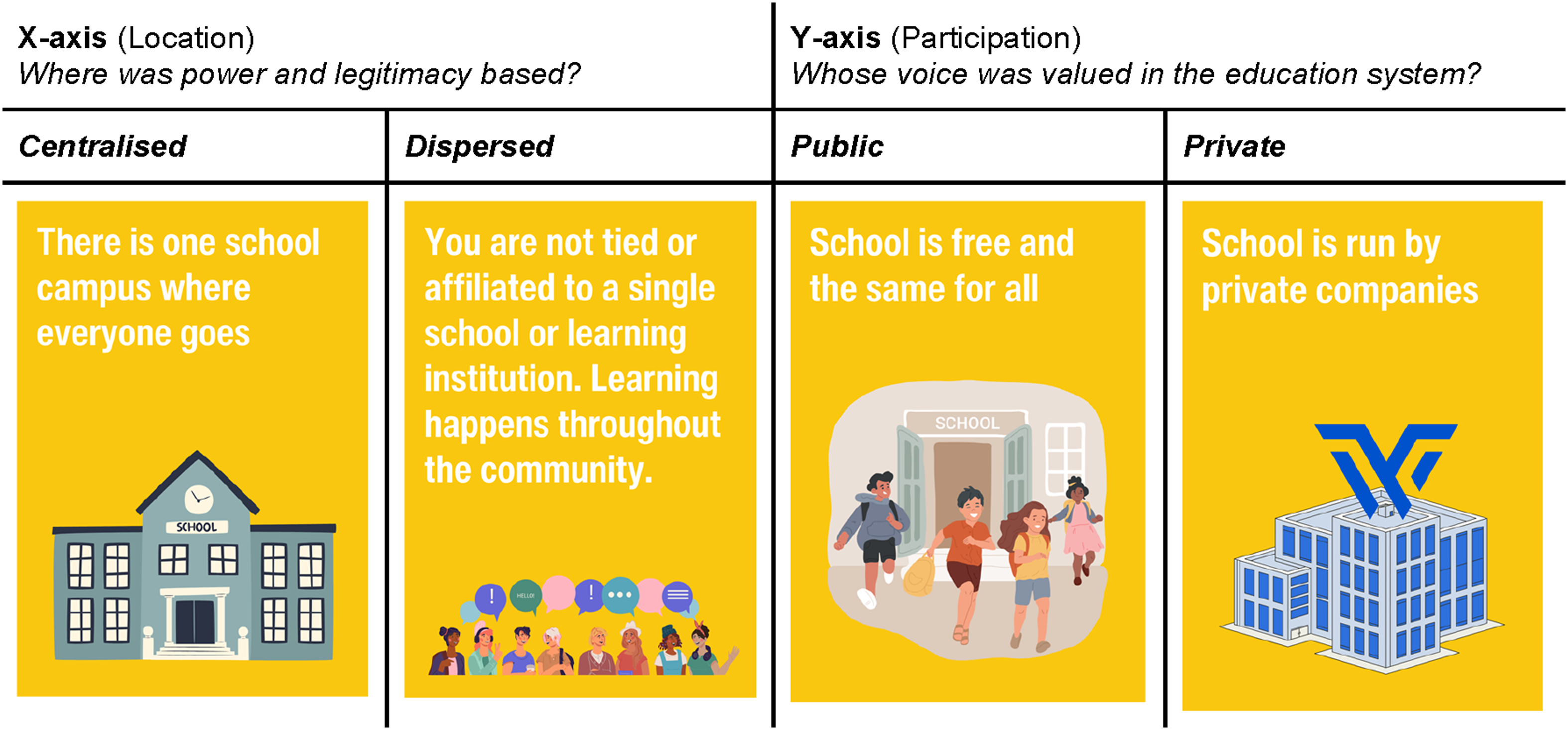
Centralised locations were characterised by singular decision-making authorities and control, with legitimacy concentrated in a central body. In ‘The Fortress School’ (Heppell et al., 2004), the reification of a singular ‘legitimate’ learning authority led to mechanistic, individualised learning ‘cells’ and ‘delivery’-based systems. The model restricted debate or choice regarding the curriculum and resulted in the decline of learning in domains deemed less ‘legitimate’. In contrast, dispersed locations distributed authority and control. Schools in these settings could be hyper-glocal, deeply embedded in community infrastructure, or, at the extreme, completely dissolved. ‘The Extended School’ illustrated a version of hyper-glocal by integrating most major community functions into its campus, thereby becoming a hub for community activities and services (Heppell et al., 2004). In less optimistic futures, society became more directly involved in educating its citizens because traditional schooling systems broke down.
Public participation valued education as a public good. For instance, in ‘Education as Usual’ (HolonIQ, n.d), traditional education institutions remained trusted sources of learning and effective vehicles for future employment and prosperity. Conversely, in private participation, private-for-profit or nonprofit providers replaced the public education system. Here, education management could be diverse, flexible or occur completely outside traditional school settings in market-based and corporate infrastructures. For instance, in ‘Public-Private Partnerships’ (Heys et al., 2023), new technologies enabled the contracting out of education to third-party vendors on a large scale, significantly reducing public costs. Whereas when education was perceived as a private good, it was viewed as a commodity to be consumed for social efficiency and social mobility, as illustrated in ‘Dissolve the System’ (Heys et al., 2023). The balance between centralised and dispersed control, and public versus private participation highlighted existential challenges underlying the future of learning environments.
‘Teachers’ as a key focus area
The teachers components include the format and the expertise of teaching in the future, with both defining the role of teaching and teachers in the future. The format was where teaching took place and could be digital or physical, while expertise captured the types of people regarded as teachers (Figure 3). Teachers’ scenario cards.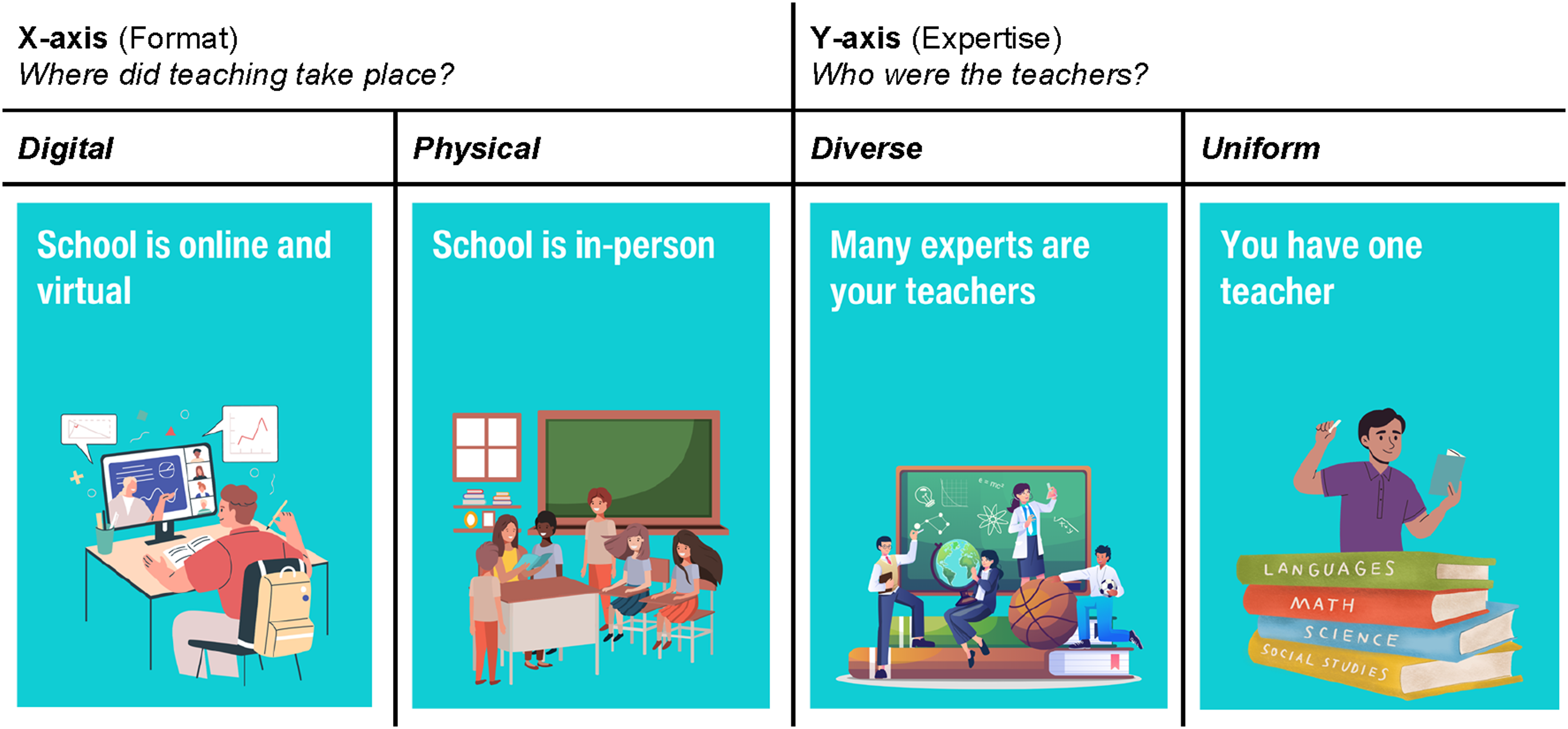
Digital teachers, defined as online, virtual or artificial, contrasted with physical teachers who operated in person. The shift to digital was illustrated in ‘Dissolve the System’ by the emergence of privatised early childhood and grade schools, where industry devised methods to digitally deliver socio-emotional learning experiences via virtual reality (Heys et al., 2023). In other futures, technological advancements would facilitate access to global networks of teaching and learning resources. While the integration of digital tools was widespread, they were not exclusively for remote learning as demonstrated in ‘Estonia’s Castle in the Sky’ (Haugas and Kendrali, 2022), where digital tools were utilised within a shared classroom environment under the supervision of qualified education professionals. This approach ensured that the benefits of digital resources were harnessed while the essential human element was maintained in education.
The roles of teachers were also diversified. Diverse teachers encompassed industry experts, parents, community leaders, coaches, mentors and corporate entities such as ‘teacherpreneurs’ or agents. This contrasted with uniform teachers, who embodied a more traditional view of teaching as the domain of a singular expert. In ‘Diverse Learning Agent Roles’ (Prince, 2014), diversifying teachers was viewed as vital to support rich, relevant and authentic learning across various settings, ensuring all students had access to high-quality, personalised learning experiences. In ‘Schooling Extended’ (OECD, 2020), the rise of digitalisation enabled students to work more autonomously, allowing school staff to dedicate more time to supporting learners’ emotional needs and motivation for learning. As such, new professional roles emerged in the education sector such as learning data analysts prominent within school networks and ‘learning industries’.
All of these teacher futures illustrated the need for a careful balance between leveraging technological advancements and preserving human elements deemed critical for teaching and learning.
‘Education’ as a key focus area
The education components include the direction of influence and the scope of reach that technology will have in the future on education. The direction of influence was how technology shaped change in the education system and could either follow or lead change, while the scope of reach determined the extent to which technology influenced learning outcomes as either social or vocational (Figure 4). Education scenario cards.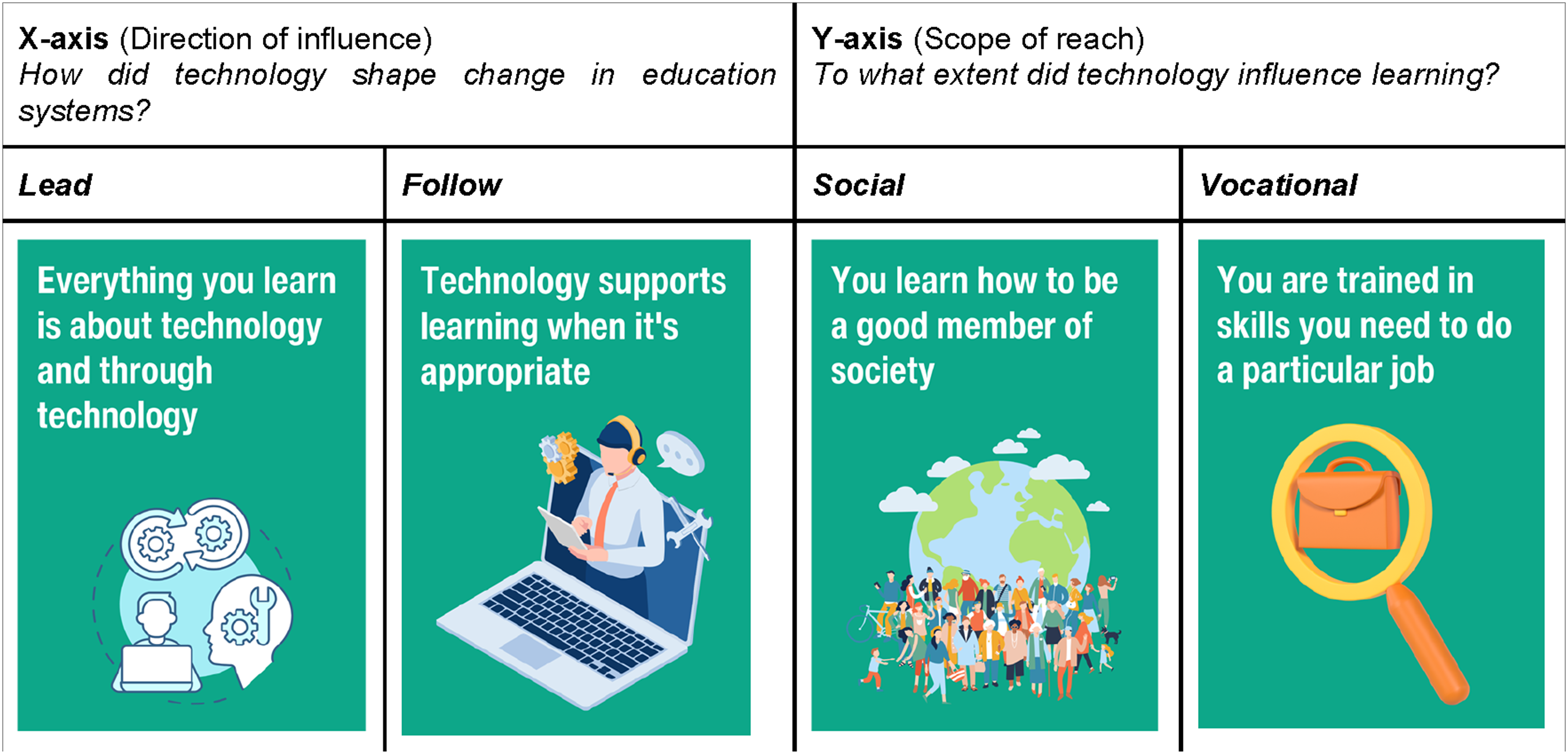
When technology led change, the education system depended on a robust and dynamic digital infrastructure. Decision-making processes centred on the opportunities and barriers associated with technology. In ‘Learn As You Go’ (OECD, 2020), society embracing the power of technology was imagined as education occurring everywhere and anytime, blurring the lines between formal and informal learning. In ‘Reinventing Education’ (Nima, 2017), skills that were crucial were those distinguishing humans from machines. In contrast, when technology followed the education system, it served to empower education. As illustrated in ‘2030 Beyond Project’ (Scotland’s Futures Forum, 2020), technology was harnessed to further the common good and enhance learning rather than drive it. Digitalisation offered additional support for education and youth workers, enabling them to deliver high-quality services structured in a student-centred manner, as anticipated in ‘Estonia’s Castle in the Sky’ (Haugas and Kendrali, 2022). For educational technologies to be directed toward greater social good, a more democratic, self-determined, personalised, flexible and learner-centric approach was required, as argued in ‘Rethinking Learning’ (Hall et al., 2014).
When the scope of reach was social, learning reflected the social needs of future societies. In ‘Only Connect’ (Facer, 2009), the primary goal of education was to strengthen the public sphere by supporting individuals’ capacity to understand perspectives beyond their own, recognise the impact of actions beyond their immediate context and enhance their ability to work in an interdependent manner. Conversely, when the scope was vocational, learning was defined by or reflected in future work demands. For instance, in ‘Labour Market Driven’ (RCEP, 2022), learners actively monitored the skills and expertise required in the labour market by utilising big data insights to inform personal learning choices and market development. In ‘Evolution of Education = Skillacation’ (Nima, 2017), the future of education was articulated as dependent on its ability to adapt to disruptions in the labour market, whether driven by technological innovation or geopolitical factors. The contrasts outlined above further highlight the diverse roles technology can play in shaping education futures, whether as a driver of change or as an empowering tool.
Wild card design
The resulting 16 scenario cards reflect the dominant visions of industry. However, while the visions often express optimism about future technologies in education, they largely neglect to consider the energy demands of widespread AI implementation or the impacts of climate change on educational systems.
In previous research, we have investigated how everyday life might change because of more extreme weather events and new digital and energy technologies. Crucial to our process was engaging with current industry scenarios not only to ensure relevance for stakeholders but also to highlight oversights by diversifying the outcomes of dominant industry scenarios. To achieve this, we developed a new method for building energy scenarios that drew on well-established social science understandings of people and their practices, priorities and foresights for the future (Kaviani et al., 2023).
The method and the scenarios it produced were part of an ongoing revision of future visions to support the energy transition. Our “Scenarios for Future Living” identified new datasets and evidence-based resources and both challenged and supported key outcomes of industry scenarios, revealing implications relevant to forecasters and the energy system. Indeed, energy futures research has argued for a revision of energy scenarios to better foreground lived experience rather than energy system needs and desires. To get a better sense of how demand might change, the focus needed to be on ‘what threads energy together beyond the generalised claims of abstract systems’ (Kaviani et al., 2023, p9). Uncovering new considerations for representing a system in transition meant shifting the focus of energy scenarios from ‘exogenous factors and drivers of consumer behaviour to the realm of everyday practices’ (Kaviani et al., 2023, p9).
We drew on this research to design a set of wild cards (Appendix B) to supplement the dominant industry scenario cards outlined above. The cards are a set of prompts capturing scenarios associated with energy, AI and other climate-related outcomes. The cards help deliberate changes and their potential implications by eliciting uncertainties that dominant school scenarios overlooked, broadening the scope of what might be considered relevant and impactful in any given future.
Both sets of cards were used as part of a scenario-building workshop component of research run in two Australian secondary schools over 2023 and 2024. The research – ‘Beyond Futures’ – focused on a voluntary general education course that exposed middle school students (ages 12–14) to various futures education methods, incorporating both futures literacy and critical futures approaches. The curriculum included foresight techniques, scenario development and anticipatory thinking exercises. Working with a scenario planning guide, students worked in groups to develop their scenarios. They explored various perspectives including optimistic and pessimistic futures, evaluated different probabilities (what was possible, plausible or preferable) and examined diverse motivations and potential outcomes. The cards were used to expand students’ perspectives by contrasting policy and industry projections with unexpected ‘wild card’ scenarios related to AI, climate and energy. This approach helped students identify alternative viewpoints, key issues, uncertainties and conflicts, while fostering rich group discussions. The outcomes and findings of the program are reported in Selwyn et al. (2024, 2025).
Conclusion
This paper presented findings from our review of school scenarios and outlined our process for designing scenario cards aimed at engaging young people in futures thinking. We found scenarios approached climate change, energy and the environmental implications of AI technology in limited ways, highlighting the need for more critical engagement with these concepts throughout the scenario-building process. We synthesised the reviewed scenarios into four dominant visions and designed 16 scenario cards that correspond with each of the scenario outcomes. We also designed a set of wild cards capturing climate change, energy and AI uncertainties. The contributions of this study are twofold: 1. Our review exposes a significant gap in current school scenarios. These scenarios often fail to adequately address the impacts of climate change, AI and energy on future schools. Moreover, they typically neglect to incorporate students’ own voices and visions, underscoring the need for more inclusive and comprehensive scenario-building approaches. 2. We present 16 scenario cards and a set of wild cards designed to stimulate critical and creative thinking among students about the role of AI and energy in shaping the future of schooling. These tools aim to foster more nuanced and participatory discussions about potential educational futures.
Future schools should be contextualised within broader sociotechnical shifts, including the transition to sustainable energy systems and growing climate concerns. The increasing expectation of ubiquitous AI in education further emphasises this need. To better align current policies with future realities, we argue for methodologies that account for all stakeholders in the education system, particularly those that leverage children’s creativity and insights (Tesar, 2021). This approach contributes to building more diverse, inclusive and realistic futures that account for the variety of expectations about how everyday life may change – aspects often overlooked or oversimplified in traditional scenario-building processes (Strengers et al., 2019). By developing ways to involve young people directly in envisioning their educational futures, we not only diversify the narratives around future schools but may also foster ‘futures literacy’ among students. By addressing these oversights and providing practical tools for engagement, our work aims to enrich the discourse on future education scenarios and empower young people to actively consider and shape their educational futures in the context of these global challenges.
Supplemental Material
Supplemental Material - Future schools and the energy implications of AI in education: A review of scenarios and method for engaging young people in futures thinking
Supplemental Material for Future schools and the energy implications of AI in education: A review of scenarios and method for engaging young people in futures thinking by Fareed Kaviani, Neil Selwyn, Yolande Strengers, Kari Dahlgren, Bronwyn Cumbo and Markus Wagner in Journal of Policy Futures in Education.
Supplemental Material
Supplemental Material - Future schools and the energy implications of AI in education: A review of scenarios and method for engaging young people in futures thinking
Supplemental Material for Future schools and the energy implications of AI in education: A review of scenarios and method for engaging young people in futures thinking by Fareed Kaviani, Neil Selwyn, Yolande Strengers, Kari Dahlgren, Bronwyn Cumbo and Markus Wagner in Journal of Policy Futures in Education.
Footnotes
Declaration of conflicting interests
The author(s) declared no potential conflicts of interest with respect to the research, authorship, and/or publication of this article.
Funding
The author(s) disclosed receipt of the following financial support for the research, authorship, and/or publication of this article: The work was supported by the Faculty of Information Technology, Monash University, Monash Data Futures Institute small grant.

Supplemental Material
Supplemental material for this article is available online.
References
Supplementary Material
Please find the following supplemental material available below.
For Open Access articles published under a Creative Commons License, all supplemental material carries the same license as the article it is associated with.
For non-Open Access articles published, all supplemental material carries a non-exclusive license, and permission requests for re-use of supplemental material or any part of supplemental material shall be sent directly to the copyright owner as specified in the copyright notice associated with the article.
