




Abstract
It is well known that disabled students face a myriad of barriers to inclusion while navigating higher education. Institutional policies and practices serve as fundamental drivers to the operation of a university and, as such, play a significant role in the support, experiences, protections, and inclusion of disabled students. This study critically analyzes the current state of disability-related institutional policies and practices across five large U.S. higher education institutions through a content analysis of their student support-related websites. As much of the analysis criteria for assessing disability inclusion are based on adherence to legal requirements, our findings showcase the extent to which universities meet or fail to meet the mere minimum accessibility legal requirements. Further, this paper extends beyond the evaluation of legal adherence to present a more comprehensive assessment of the current state of structural institutional support, marking a necessary first step for enhancing disability inclusion within higher education. We offer implications for improved disability support and enforcement of disability-related policies and practices within U.S. institutions of higher education.
Introduction
At the moment, other than ADA compliance, questions of bias typically only surface when systems obviously fail some subset of raced and/or gendered users – for example, soap dispensers with higher error rates for darker skin, or cameras that don’t recognize eyes without epicanthic folds as open. Rather than understand these types of cases as marginalia, we might consider how they point to fundamental underlying problems of unexplained validation failure that are currently ‘baked-in’ most design processes (Costanza-Chock, 2020: 59).
The disabled community is currently the largest minority population in the world, comprising nearly one billion people (World Health Organization WHO, 2022). Approximately 27% of the U.S. population have a disability (Center for Disease Control and Prevention [CDC], 2023). Despite these numbers, disabled people 1 only account for three percent of the Science, Technology, Engineering, and Math (STEM) workforce (National Center for Science and Engineering Statistics [NCSES], 2023; Widener, 2023).
Data shows that the representation of disabled students decreases through STEM degree progression (Moon et al., 2012). Beginning undergraduate education, 18% of the engineering student population identifies as disabled (NCSES, 2021). Once in STEM doctoral programs, disabled students’ representation drops to a mere one to six percent, depending on discipline (NCSES, 2021). Despite the gross underrepresentation and marginalization of disabled students, disability is frequently ignored in campus discussions surrounding diversity and equity initiatives, even more than three decades after the passage of the Americans with Disabilities Act (ADA) (Kimball et al., 2016; Spingola, 2020). As Kimball et al. (2016: 92) state, “Essentially, students with disabilities remain on the periphery of higher education: disability is all-too-often treated as distinct from other college student identities and issues that are more frequent subjects of research and theory.”
Unfortunately, this pattern of marginalization holds true in engineering and higher education scholarship too (Madaus et al., 2018; Newman et al., 2021; Slaton, 2013). Minimal research has been undertaken to address disabled equity in the higher education setting, much less in the engineering setting. The goal of this study is to analyze and interrogate how cases of marginalia are “baked into” the fundamental underlying problems of ableism in engineering and higher education broadly. Building on past research regarding disabled student experiences in engineering higher education (e.g., Cech, 2023; Figard, 2024; Figard et al., 2024; McCall et al., 2020), and acknowledging that these experiences are affected by more than just interpersonally or pedagogically driven inequities, this study focuses on the disability-related policies and practices that drive institutional-level inequities at a set of engineering-intensive universities selected to represent a range of engineering program sizes, geographic regions, reputations of inclusion, and institutional types. The paper proceeds by first outlining the background of disability-related policies in higher education, then detailing the methods used for content analysis, presenting the results, and concluding with a discussion on the implications for policy and future research.
Through this study, we address the following research questions: 1. How do current institutional policies and practices perpetuate the marginalization of disabled students in higher education? 2. In what ways can institutional policies and practices change to better support disabled students in higher education?
Background
Disability-related policies and practices in U.S. higher education
Three major disability laws have been passed in the United States to expand the rights and opportunities for disabled people: (1) The Individuals with Disabilities Act (IDEA), (2) Section 504 of the Rehabilitation Act of 1973, and (3) the Americans with Disabilities Act (ADA) (Spingola, 2020). In 1975, IDEA was enacted to enhance the educational rights of pre-college disabled students. The passing of IDEA brought individualized education programs (IEPs) into place, which provide tailored educational resources and services to disabled students ages 3 through 21 (Individuals with Disabilities Act [IDEA], n.d). Section 504 of the Rehabilitation Act of 1973 is another significant legislation which prohibits discrimination based on disability in programs and activities that receive federal funding. Section 504 covers a broad spectrum of settings beyond education, extending to federally funded agencies, institutions, and employers (United States Office for Civil Rights [OCR], 2023). Section 504 paved the way for subsequent disability rights laws by establishing a foundation for inclusivity and accessibility standards across various sectors (e.g., postsecondary education, federally funded programs and organizations). The ADA was enacted in 1990 and is coined as a landmark legislation that helped to comprehensively address discrimination against disabled people. The ADA prohibits discrimination against disabled people in all public-facing sectors (i.e., employment, public services, public accommodations, and telecommunications) by mandating accessible facilities and reasonable accommodations (United States Department of Justice Civil Rights Division [US DOJ Civil Rights Division], 2020). The ADA defines reasonable accommodations in the workplace as: any change to the application or hiring process, to the job, to the way the job is done, or the work environment that allows a person with a disability who is qualified for the job to perform the essential functions of that job and enjoy equal employment opportunities. Accommodations are considered “reasonable” if they do not create an undue hardship or a direct threat. (ADA National Network, 2018: 1)
Examples of reasonable accommodations could include physical facility enhancements to make them more accessible (e.g., ramps, accessible restrooms, and ergonomic workstations), job restructuring (e.g., part-time or modified work schedules), providing accessible and assistive technologies (e.g., screen reader software), providing accessible modes for communication (e.g., sign language interpreters, closed-captioning at meetings and events, providing available materials in Braille or large print), or policy enhancements (e.g., modifying office policies to allow service animals in the building, altering training materials, and remote or hybrid work options) (Office of Disability Employment Policy, n.d).
All three disability laws were integral in catalyzing the advancement of disability rights and the inclusion of disabled persons in civil rights and diversity conversations. However, minimal progress has been made toward disabled rights in the three decades since the passing of the ADA in 1990 (Spingola, 2020). Since then, there have been major shifts in our global landscape—from technological innovations (e.g., home Internet, virtual reality, and Google) to scientific advancements (e.g., the Human Genome Project and Mars Exploration Rover) and entertainment phenomena (e.g., TikTok and streaming services) (Anthes et al., 2016; Crisp et al., 2003; Hall and Hosch, 2020; Talukdar and Gauri, 2011; The 1000 Genomes Project Consortium, 2010; Volle, 2024; Wang et al., 2019). As such, U.S. disability policy remains grossly behind in the simultaneously evolving landscape of higher education, specifically as it relates to digital and technological accessibility (Figard and Carberry, 2022, 2024; Straumsheim, 2017). As online courses, learning course management systems, and generative artificial intelligence are now commonplace in higher education, the scope of U.S. disability policies must continue to develop to address such changes (Figard and Carberry, 2024).
While some research has explored the experiences of disabled students in Australian, Canadian, and U.K. higher education (e.g., Brooks, 2020; Bruce and Aylward, 2021; Cox, 2017; Hartley, 2015; Pitman et al., 2023; Yerbury et al., 2024), there is limited research about the roles of institutional policies and practices related to accessibility and disability inclusion in the U.S. context. This oversight is notable because institutional policies and practices are key drivers in shaping the dynamics of a university and, as such, play an integral role in the protections, inclusion, available services, and support provided to disabled students. Unfortunately, disability is often excluded in broader diversity discussions, initiatives, and research (Cech, 2022; Darling, 2013; Davis, 2011; Groen-McCall et al., 2018; Kim and Aquino, 2017). Where it is included, the quality, transparency, and accessibility of institutional policies, practices, and student support services for disabled students remain highly variable. No uniformity within student support services exists across institutions for disabled student support (De la Torre et al., 2023). The degree to which an institution clearly outlines these protections, services, and supports directly impacts the lived experiences of its students (Hossler et al., 2001; Kuh et al., 2006; Mowreader, 2023). A comprehensive understanding of the landscape of these policies and practices is an essential first step to ensuring that accommodations, supports, and protections for disabled students are uniform and effective across universities. Our study showcases the extent to which universities meet or fail to meet federally mandated accessibility requirements. We extend beyond evaluating purely legal compliance to present a more thorough assessment of the current state of institutional support for disabled students across universities.
Transitioning from secondary education to higher education in the U.S
The transition from high school (secondary) to higher education poses a series of challenges for disabled students, partially influenced by the discrepancies in the documentation required to receive disability accommodations in pre-college versus in higher education (National Joint Committee on Learning Disabilities [NJCLD], 2007). K-12 education does not require the labeling and specifications of the disability or repeat medical evaluations once the eligibility for accommodations has been established. In contrast, most postsecondary institutions require a “specific diagnosis with a clearly established functional limitation on a major life activity” to obtain accommodations (NJCLD, 2007: 267). To receive disability accommodations in higher education, students must have readily available and recent (within the past 3 years for most colleges and universities) documentation of their disability(s) (Hamblet, 2014; Lyman et al., 2016; Toutain, 2019). The disconnect in requirements often necessitates students to undergo additional and potentially costly and/or time-intensive medical testing in order to reestablish “proof” of their disability(s) (Couzens et al., 2015; Gould et al., 2019). This requirement creates barriers for students who were diagnosed earlier in life and do not have recent medical documentation confirming their diagnosis and/or students who do not have the necessary resources to receive comprehensive healthcare (Sitlington and Payne, 2004). As a result, students may have difficulties accessing needed services or support, such as classroom accommodations (Lindstrom and Lindstrom, 2017; Lovett et al., 2015).
Another notable difference between pre-college and higher education disability support services lies in the shift of responsibility for requesting and receiving accommodations (Stinnett et al., 2023). In pre-college learning settings, schools are responsible for the identification and facilitation of students’ disability accommodations (IDEA, 1997). Upon entering higher education, the responsibility of requesting accommodations shifts to the student, who becomes solely responsible for self-identifying, registering with their disability resource office, requesting disability accommodations, and utilizing them (Toutain, 2019). Requesting disability accommodations requires ample knowledge about its procedural intricacies, the documentation required, and the student’s disability (Fleming et al., 2017a). However, many students do not have the requisite knowledge or training to explain and/or understand the implications of their disability(s) in a university setting (Toutain, 2019).
There exists an urgent need for more robust and intentional transition programming for disabled students between high school and postsecondary institutions (Hamblet, 2014). Some transition programs exist but focus primarily on preparing disabled students for employment (Gould et al., 2019) rather than focusing on transitions into higher education. Recommendations to improve transition planning for disabled students include providing resources or opportunities for peer-to-peer mentorship programs, academic coaching, enhanced understanding of accommodations, disability-specific faculty training, and cross-program collaboration between postsecondary institutions (Aguirre et al., 2021; Fleming et al., 2017b, 2017c; Getzel, 2014; Moriña and Carballo, 2017; Peterson, 2021; Prema and Dhand, 2019). Our review can aid in the facilitation of intentionally designed student support programs by elucidating needed areas of improved support.
Disability services and accommodations in the U.S. higher education system
To date, disability services in the U.S. largely focus on providing accommodations to students and helping higher education institutions comply with legal requirements for access (Kendrick, 2017). The level of support of these disability services largely reflects the mission, scope, and available support and resources within postsecondary disability resource centers (DRCs). Although the robustness of DRCs remains variable across postsecondary institutions, many limit their services to those required for minimal compliance with the law (Gould et al., 2019; Mole, 2013). As a result, many students express dissatisfaction with the available services and accommodations at their DRCs, citing concerns such as the services being “unhelpful” and lacking individualized support (Fleming et al., 2017a).
Along each step of the disability accommodations process, students encounter both systemic and personal barriers that must be circumnavigated to receive accommodations (Crabtree et al., 2023; Figard et al., 2023; Haegele and Hodge, 2016; Moriña, 2024; Wilke et al., 2023; Zongrone et al., 2021). Several studies have examined the barriers associated with registering for disability services and requesting accommodations in higher education (e.g., Grimes et al., 2020; Hong, 2015; Kutscher and Tuckwiller, 2018; Lyman et al., 2016; Mkabile and Swartz, 2020). A prevalent theme throughout these studies was the lack of awareness among students regarding even the availability of disability accommodations or the existence of a disability resource office at the university level. Often, disabled students are only made aware of these services after repeated academic challenges, such as failing multiple tests (Abreu et al., 2016).
The barriers inherent to requesting disability accommodations in higher education help explain why almost two-thirds of disabled students who received accommodations in pre-college do not disclose their disability upon entering college (Newman et al., 2011). Thus, higher education professionals are often unaware of the magnitude of the number of disabled students attending their institutions and may tailor their disability-related policies, programs, and services exclusively to those registered with disability services. Consequences of this include the policies, programs, and services often going unused by the majority of disabled students at the institution (Beddoes and Denowitz, 2022; Newman et al., 2021) and potentially not reflecting the full spectrum of needs. Since many disabled students are not registered with disability services, the role of publicly accessible messaging around disability becomes even more critical. Reviewing currently available messaging around disability at universities will help to highlight best practices and improvements that must be made to increase access to such information.
Positionality
As a research team, we come to this work with a shared sense of passion and purpose to further grow a scholarly community focused on critical examination and disruption of higher education policy and practice. The first author identifies as a disabled white cis-gender woman and at the time of data collection, analysis, and drafting of this document, was pursuing a doctoral degree in Engineering Education. Her research is, in large part, informed by her own experiences with ableism throughout her educational journey. These experiences have given her a nuanced understanding of disability and what it means to be disabled in academia. She uses her work as an avenue for advocacy, community building, and change within higher education.
The second author identifies as a disabled white cis-gender woman, a tenured engineering professor, and an engineering education researcher. She approaches this work informed by her own experiences of ableism in higher education, as well as (to a lesser extent) those of the disabled students whom she has taught and advised. She recognizes the relative privileges afforded to her by some of her statuses in navigating barriers to accessibility and inclusiveness throughout her education and career, and she is committed to using those privileges to improve higher education for the disabled community.
The third author identifies as a white cis-gender woman, a tenured engineering faculty member, and an administrator. She does not identify as having a disability, and so, as such, is an outsider in relation to the disabled community in higher education (and beyond). Her interest in this project stems from a research and practice commitment to making higher education more inclusive and accessible for students, faculty, and staff therein. Working in collaboration with disabled co-authors on this paper, she has learned from and honored the importance of their lived experiences in how we collectively make meaning from the presented findings.
Theoretical framing
Disability Critical Race Studies (DisCrit) (Annamma et al., 2013) provided a lens for which to interpret the results and guide the discussion and implications. DisCrit emerged from Critical Race Theory (CRT) and Disability Studies to explore the intersections of race and disability, particularly in educational contexts. DisCrit is grounded in the understanding that race and disability are not merely individual, isolated aspects of identity but are deeply interconnected and socially constructed in ways that perpetuate systems of oppression. DisCrit puts forth the following seven tenets to “operationalize what kinds of specific questions and issues can be illuminated from a DisCrit approach” (Annamma et al., 2016: 18–19): 1. Focuses on the interdependent circulation of racism and ableism, which is often neutralized and invisibilized to uphold hegemonic norms; 2. Values intersectional identities and problematizes the notion of singularity; 3. Highlights the ways in which race and ability are socially constructed, while recognizing the material and psychological effects of being racialized or labeled as disabled; 4. Privileges the voices of marginalized populations, which have been traditionally not acknowledged in research; 5. Examines the legal and historical dimensions of race and disability, exposing how both have been used independently and collectively to deny rights for certain citizens; 6. Acknowledges Whiteness and Ability as capital and notes that advancements for the disabled community have often resulted from interest convergence with white, middle-class citizens; 7. Demands activism and endorses all forms of resistance.
Previous research in higher education has leveraged DisCrit to frame how institutional practices and norms perpetuate systemic harm on disabled students, especially for those also holding racially marginalized identities (e.g., Beardmore, 2023; Johnsen, 2024; Mireles, 2022; Yeh, 2023). Although some prior work has used a DisCrit approach to examine U.S. disability laws, policies, and practices (e.g., Collins, 2016; Fenton, 2016; Morgan, 2022), there is a lack of research contextualizing this framework within higher education settings. Yet, DisCrit “offers a theoretical framework for understanding how laws function to construct not just racial categories but also construct the definition and boundaries of disability… [And,] offers opportunities for future critical projects that engage with race and disability across American legal history and across various sites of American law” (Morgan, 2022: 17). There exists a critical need to expand its usage to explore how these dynamics unfold within higher education institutions.
In this paper, DisCrit was employed to interpret the results around how institutional policies and practices are communicated through public-facing platforms. These websites serve as primary data sources, offering a window into how universities represent their mission, values, and culture to both potential and current students. This framing adds a unique perspective to existing research by revealing how ableism is reflected in institutional representations and by identifying areas where these representations may fall short in addressing the needs of disabled students.
Methods
Overview of research design
To better understand the broader context of disabled student experiences in higher education, we conducted a content analysis of five universities’ student support-related websites (e.g., the Disability Services Office (DSO) websites, diversity, equity, and inclusion (DEI) office websites). University websites are public-facing and, as such, provide insights as primary data sources through which ideas about the institution’s mission, values, and culture are transmitted. The student support-related websites provide a view into how universities choose to represent themselves to their audience, including potential and current students. DSO websites, in particular, serve as a centralized source for information gathering on available resources, support, and accommodations.
The university disability inclusion score as a measurement tool
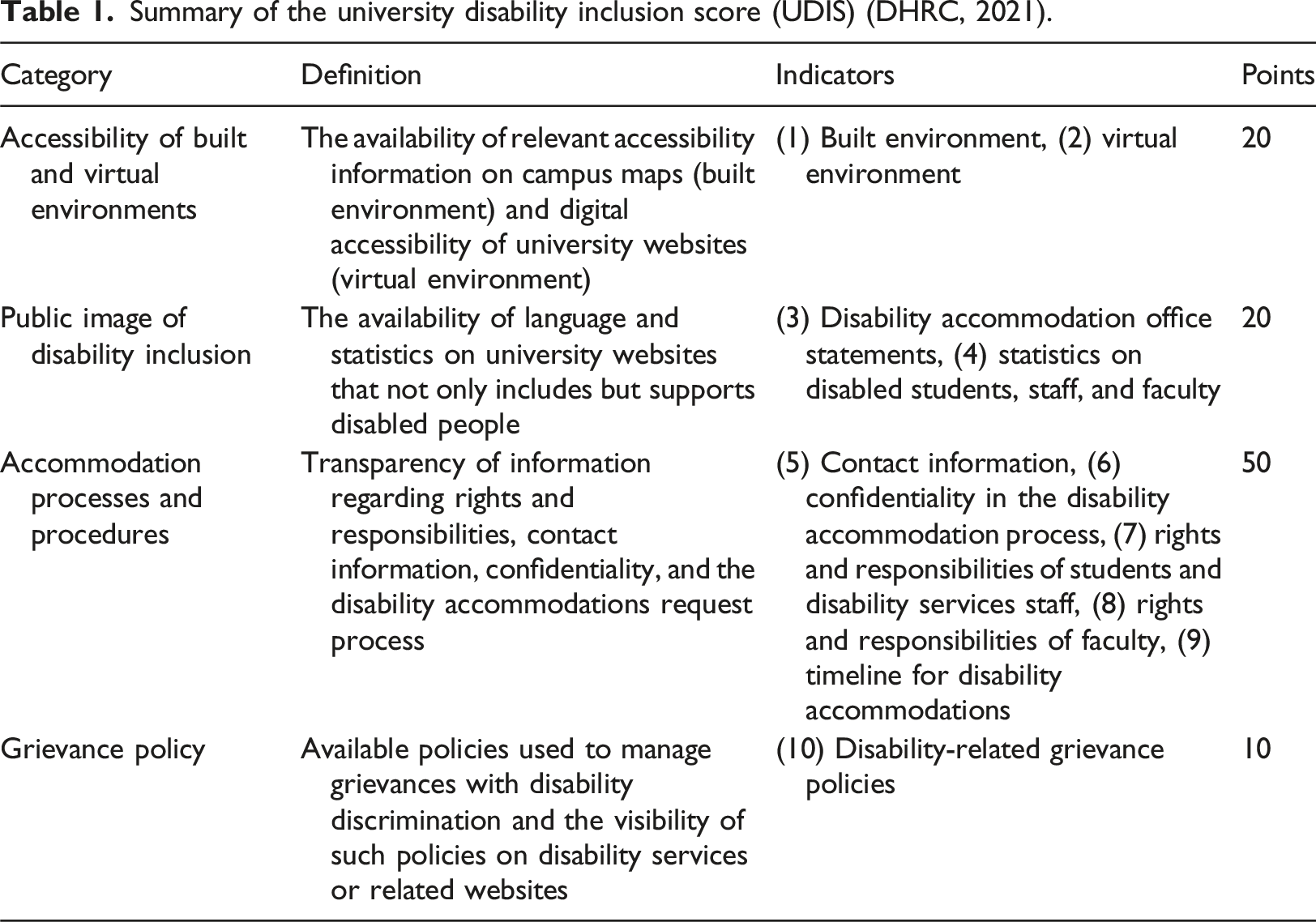
The Disability Health Research Center (DHRC) at Johns Hopkins University created the University Disability Inclusion Score (UDIS) to compare universities based on accessibility and disability inclusion metrics for publicly accessible data (Campanile et al., 2022). The DHRC previously used the UDIS to assess disability inclusion and accessibility at top-funded National Institutes of Health (NIH) undergraduate programs in the United States, the intent being to investigate if there is an association between the UDIS and NIH funding (DHRC, 2021). In our study, we used this scoring system as the measurement tool to investigate disability-related accessibility and inclusiveness at universities with high undergraduate engineering student enrollments and graduation rates (American Society for Engineering Education [ASEE], 2023). Selecting institutions with high engineering enrollment and graduation rates provides us a mechanism to understand what a current or prospective engineering student may encounter in regard to a university’s public messaging about available accessibility, disability, and inclusion-related support. Engineering as a discipline continues to be the least diverse academic discipline in terms of gender, race, and disability status (National Center for Science and Engineering Statistics [NCSES], 2023), and so the analysis of this data can be used to guide conversations about how different university and engineering program facets can be improved and made more accessible.
Summary of the university disability inclusion score (UDIS) (DHRC, 2021).
Data collection
University classifications and demographics.
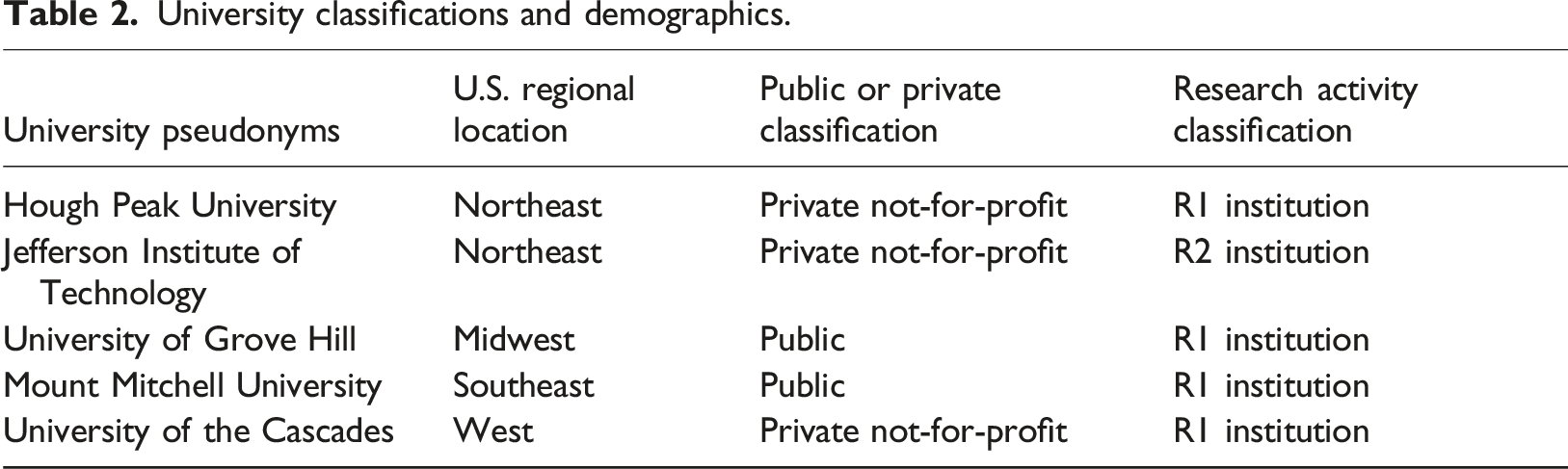
Data were collected from each university’s disability services office (or similar) Web site, diversity, equity, and inclusion (DEI) office Web site, college of engineering Web site, and other student support-related websites. Data collected includes only publicly available data from the university websites.
Data analysis
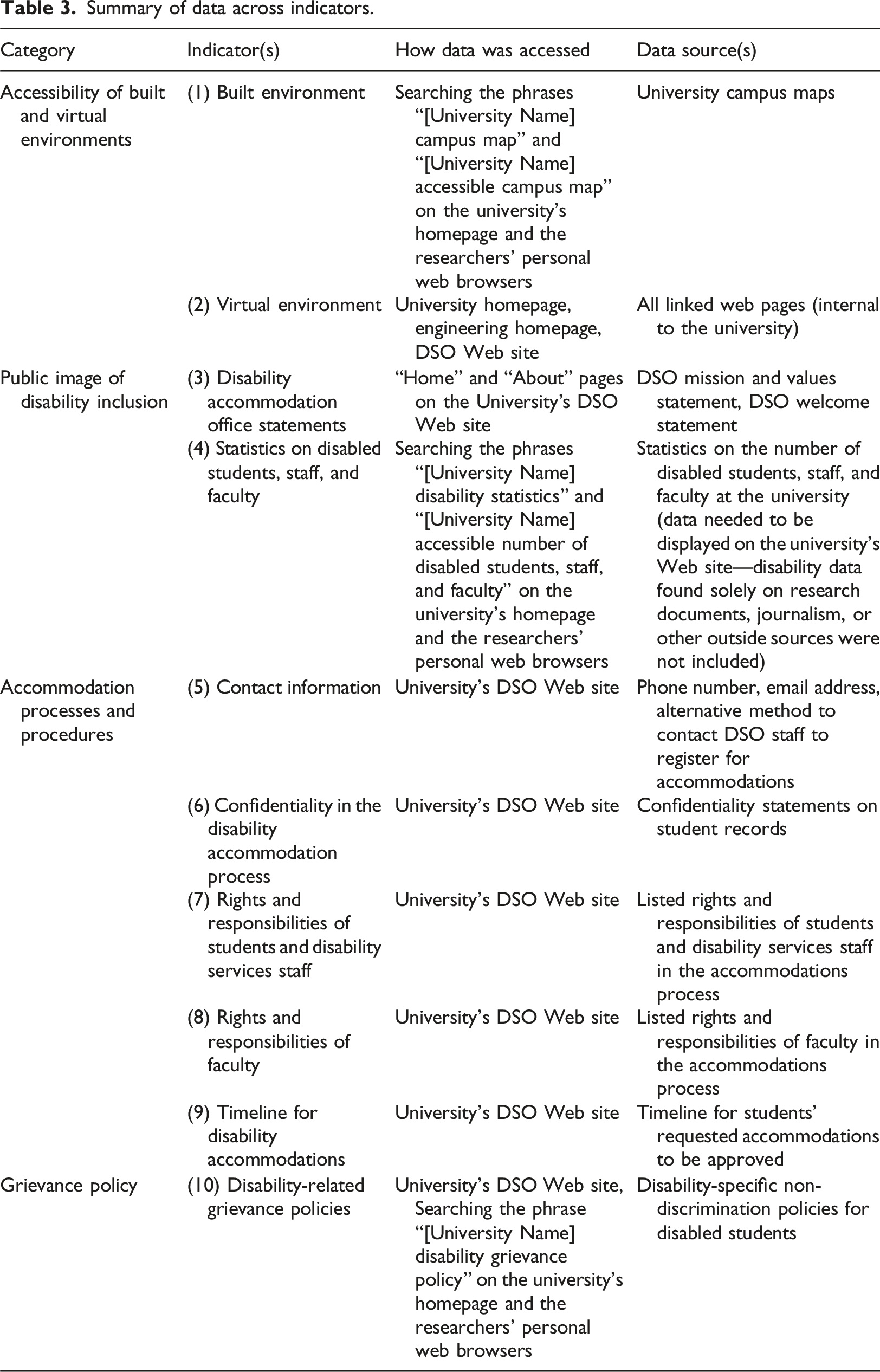
Summary of data across indicators.
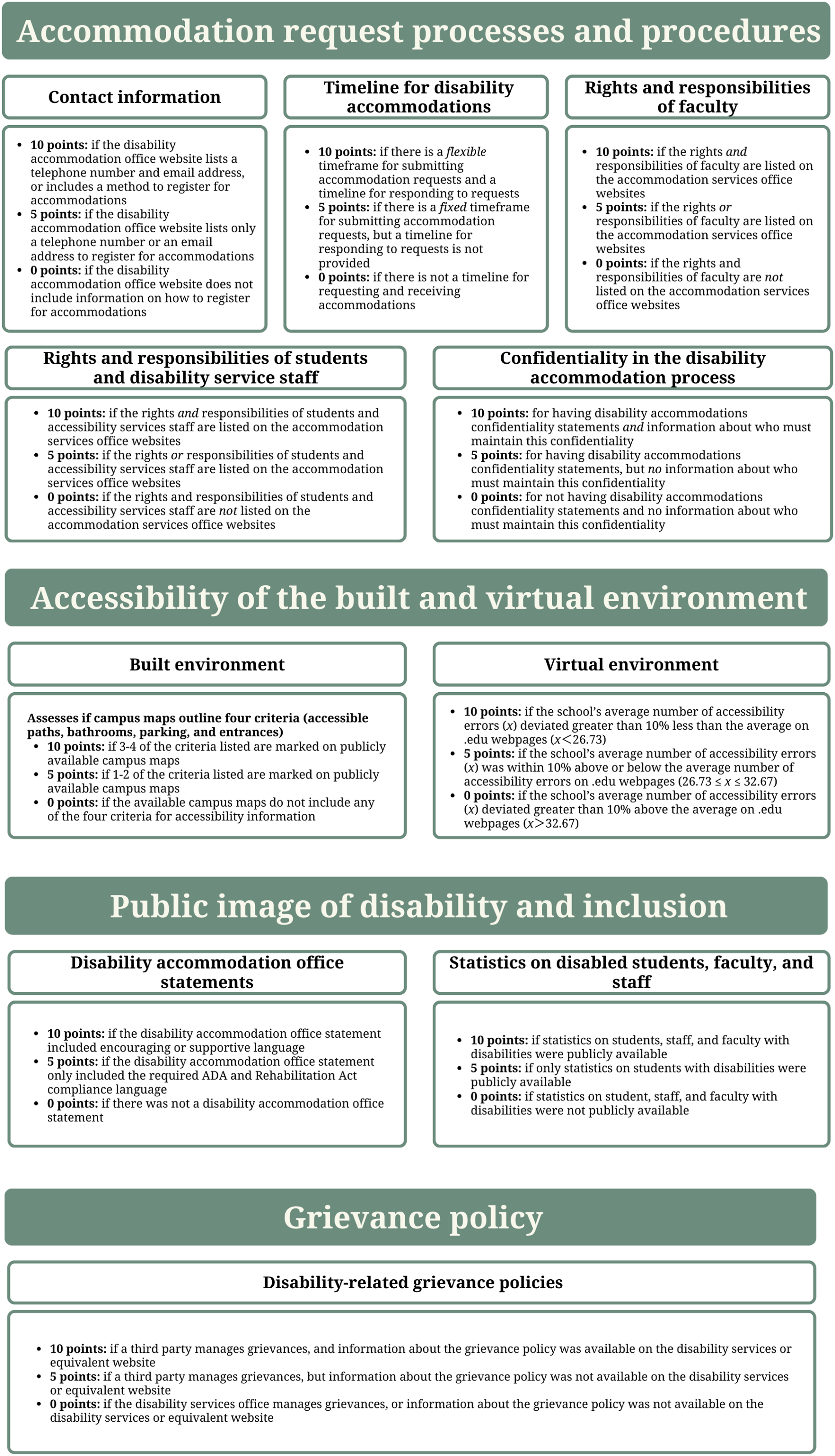
Scoring methodology for indicators (Campanile et al., 2022).
The accessibility of a university’s built and virtual environments was assessed using the university’s campus maps and web pages. Campus maps were used to assess the university’s built environment based on the availability of four features: accessible (1) paths, (2) restrooms, (3) parking, and (4) entrances. Accessible campus maps were ascertained by searching the following phrases on the university’s Website and the researchers’ personal web browsers: “[University Name] campus map” and “[University Name] accessible campus map.”
A university’s virtual environment was assessed using the WAVE Web Accessibility Evaluation Tool (WAVE, n.d.), an automated scoring system. Data related to the accessibility of the university’s virtual environments were collected and analyzed in four steps. First, we used the code in Figure 2
2
to gather all linked web pages on the university’s homepage, engineering homepage, and disability resource office Web site. We included the engineering homepage in order to oversample engineering-related sites, as we are interested specifically in the engineering context of disability inclusion and accessibility. Code for compiling linked sites on university pages using a web browser’s developer mode.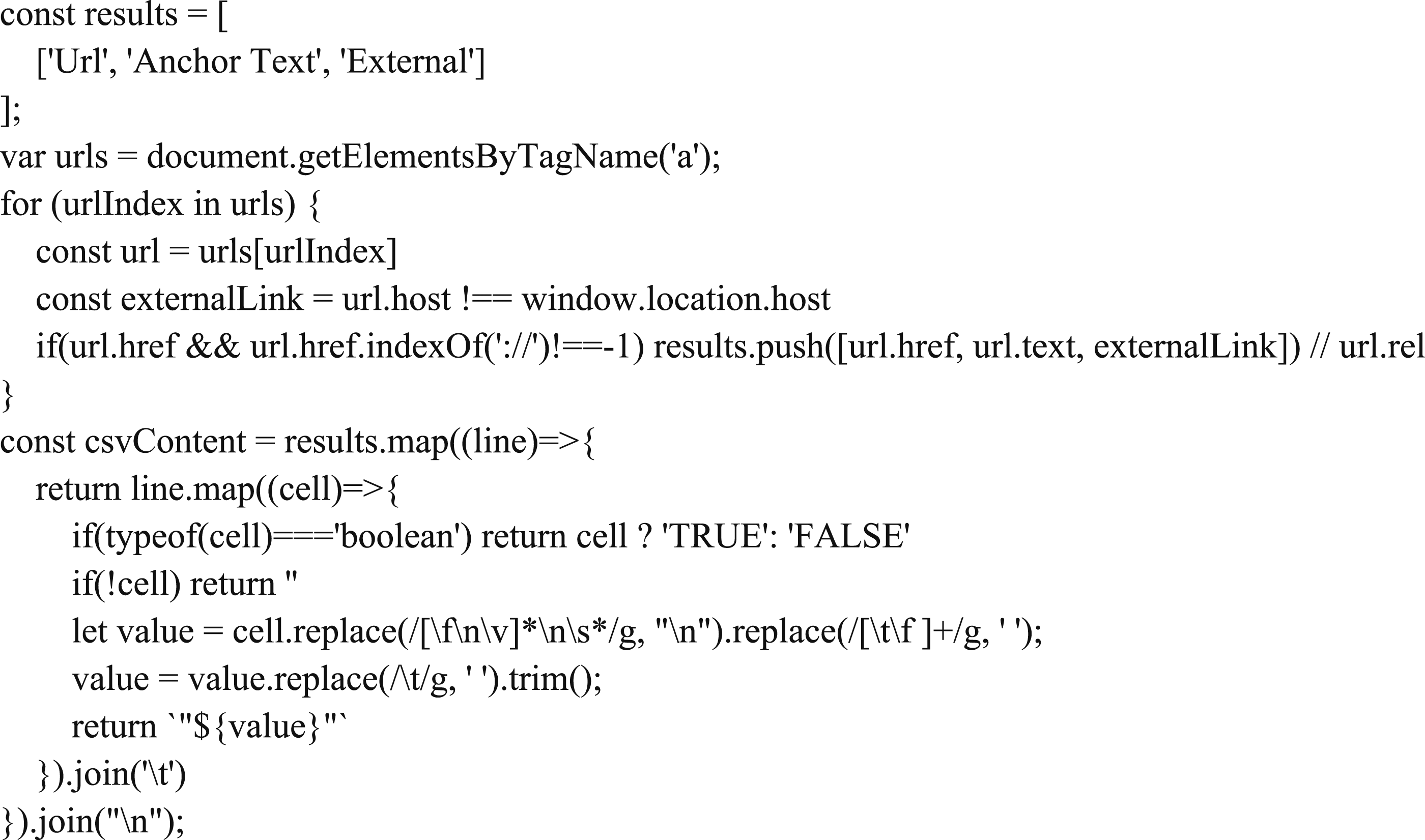
The sites were compiled into a Google Sheets document, and all duplicate Web sites and external links were removed. Next, 500 of the web pages were randomly selected to analyze from the cleaned list of internal links. A Power Automate (Microsoft, 2023) bot was used to automate the data analysis (Matthews, 2024). The bot ran each webpage through the WAVE Web Accessibility Evaluation Tool (WAVE, n.d.) and reported the number of accessibility errors for that webpage. The number of errors per webpage was then averaged, and the school’s virtual environment score was assigned based on its deviation from the average number of accessibility errors on .edu webpages (x), which is 29.7 (WebAIM, 2023). A school received a score of 0 for virtual accessibility if its average number of accessibility errors per webpage was greater than 10% above the average number of accessibility errors on .edu webpages (x > 32.67), a score of 5 if it was between 10% above or below the average number of accessibility errors on .edu webpages (26.73 ≤ x ≤ 32.67), and a score of 10 if it was more than 10% below the average number of errors on .edu webpages (x < 26.73). So, for example, a university receiving a score of 5 indicates that its average number of accessibility-related errors across sites was around the same as other .edu web domains.
Each university’s public image of disability was assessed through a review of their disability accommodation office’s statements and statistics on disabled students, staff, and faculty. DSO mission and values statements were searched for on the DSO’s “Home” or “About” pages. Statements were scored based on their presence of supportive language (10 points), listing primarily legal requirements (5 points), or absence of a statement (0 points). Following Campanile et al. (2022), “A commitment to ‘full access’ to education for disabled students was not considered sufficiently encouraging or supportive, as this is required by law.” Examples of using supportive or encouraging language beyond what is legally required includes welcoming disabled students to the university, recognizing disability as a form of diversity, or encouraging disabled students to apply for accommodations. Statistics on disabled students, staff, and faculty were ascertained by searching the following phrases on the university’s Web site and the researchers’ personal web browsers: “[University Name] disability statistics,” “[University Name] number of disabled students, staff, and faculty,” and “[University Name] DEI statistics.” Data needed to be included on the university’s main Web site, such as on the admissions, public relations, diversity and inclusion, and/or disability services pages or websites to meet the criteria. Disability data found solely through research documents, journalism, or other outside sources were not included.
A university’s accommodation request processes and procedures were assessed through the availability of contact information, timeline for disability accommodations, rights and responsibilities of faculty, students, and DSO staff, and confidentiality in the disability accommodation process. Contact information was scored based on whether the DSO’s Web site included a telephone number, email address, or other method to contact DSO staff to register for accommodations. To receive full points for the contact information indicator, the university’s DSO Web site must have listed both an email address and phone number for DSO staff or an alternative contact method to register for accommodations. If the DSO Web site listed only one contact option (e.g., phone number), the university received five points for this indicator. If the Web site provided no methods of contact, the university received zero points for this indicator. The timeline for disability accommodations was scored based on the clarity on the DSO Web site regarding the turnaround time between when a student requests accommodations and when this request would be approved. A university received full points if the DSO Web site detailed a flexible timeline for requesting and responding to accommodation requests, five points if a fixed timeline for requesting accommodations was provided but did not include the timeline for responding to accommodation requests, and zero points if the DSO Web site did not provide any timeline for accommodations. Rights and responsibilities for students with disabilities, faculty, and DSO staff were assessed based on the presence of clearly listed rights and responsibilities information for each group. Lastly, we searched for statements on DSO websites regarding student confidentiality in the accommodations process. “Ideal statements” included information about who maintains confidential student records, how the information would appear on the student’s academic records, how information is shared about the student’s disability and/or accommodations, and how students may grant others access to their records.
A university’s grievance policies were assessed through the availability of information regarding the policies that describe how students can file complaints about disability-related discrimination on the disability services Web site. If we were unable to locate the grievance policy via the disability resource Web site, we searched the following phrase on the university’s Web site and our personal web browsers, “[University Name] disability grievance policy.” Grievance policies were then rated based on whether the disability services office handled the complaints or if the complaint could be raised to a third party (i.e., any individual outside of the disability services office, such as an office for institutional equity and diversity). Universities needed to list a disability-specific non-discrimination policy for students and state disabled students’ and employees’ protections under different legal structures (i.e., local, state, and federal laws). Their appeals process also needed to extend beyond accommodation requests and approval processes only. Policies that mentioned non-discrimination policies for students but did not include disability-specific language/policies were also considered to not be a full grievance policy. So, for example, the University of the Cascades received a 10 because a third party (e.g., an office of student affairs and Student Ombuds) manages disability-related grievances, and its disability services Web site lists information about its grievance policies and how they are handled.
Results
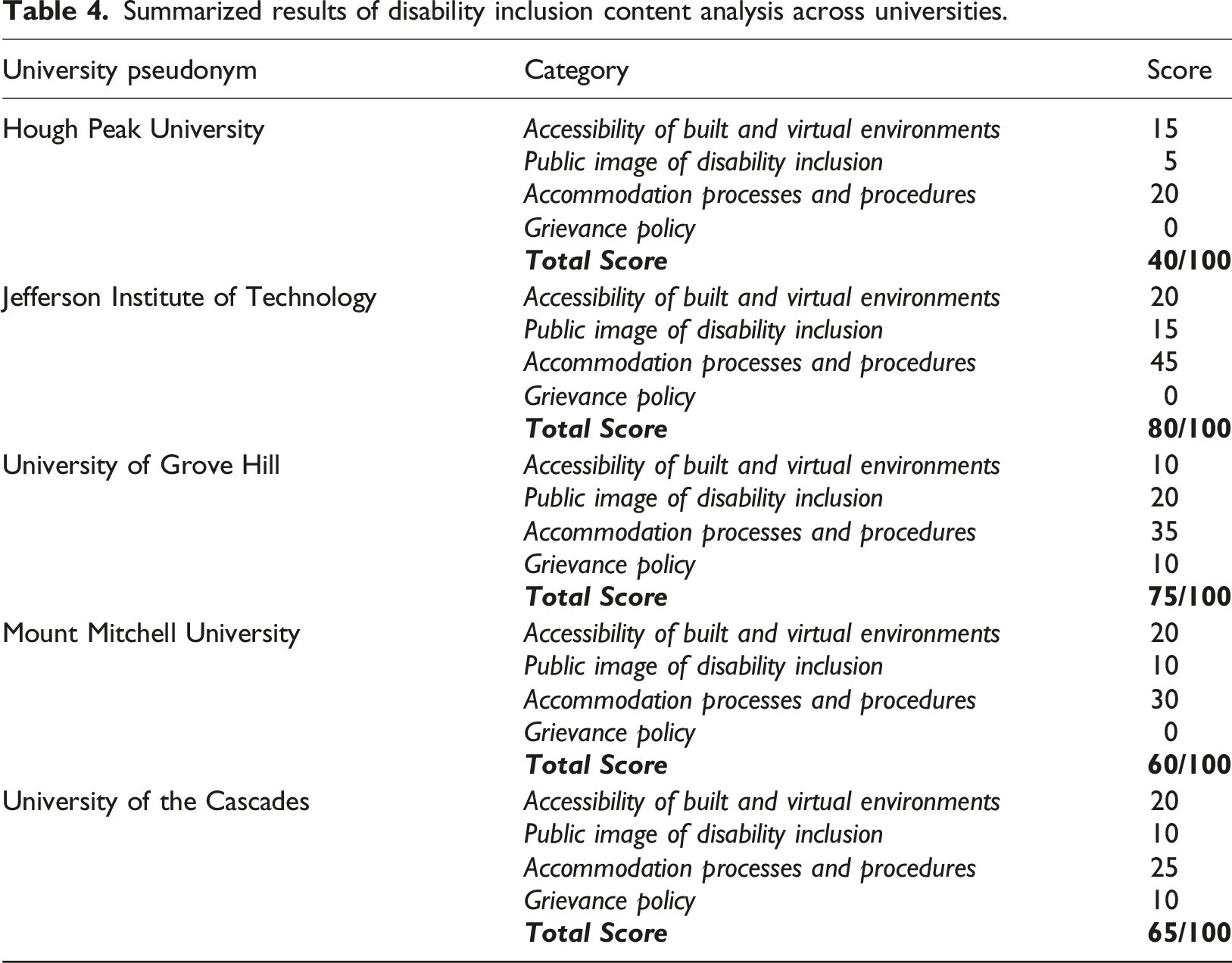
Summarized results of disability inclusion content analysis across universities.
Accessibility of built and virtual environments
Overall, most universities received all or nearly all possible points for the accessibility of the built and virtual environments category. Those who did not receive full points each lost points in the built environment indicator. The built environment indicator measures whether universities outline accessible paths, bathrooms, parking, and entrances on campus maps. ADA guidelines specify that directional signs for accessible route entrances must be provided–unless every entrance and pathway is accessible (United States Access Board, 2015). Thus, the exclusion of accessibility information on campus maps raises the question of whether all on campus pathways, doors, and parking are fully accessible, and if not, why this information may not be noted on university maps (per ADA guidelines).
All universities that were included in this study received full points for the virtual environment indicator. This indicator reviewed university web pages to find accessibility errors. Interestingly, the Web Content Accessibility Guidelines (WCAG) 2.2 defines success criteria and offers a range of recommendations for making Web content accessible for disabled people (Web Content Accessibility Guidelines [WCAG] 2.2, 2023). As a result, software tools such as the WAVE Web Accessibility Evaluation Tool (WAVE, n.d.) have been created to provide automated Web accessibility reviews based on the WCAG. Thus, the existence and extensiveness of the WCAG indicate that accessibility resources with clear, outlined guidelines and recommendations aid in compliance with accessibility standards. Once these resources are created, process automation software could be leveraged to test and improve accessibility adherence.
Public image of disability inclusion
Universities varied in their public image of disability inclusion. Of the five schools, only one received full points for this category. Overall, most universities’ disability accommodation offices included encouraging or supportive welcome statements on their websites. To receive full points, statements needed to state the Office’s commitment to accessibility beyond what was legally required of them (Campanile et al., 2022). Those that did not receive full points for their statements included a commitment to “full access” for disabled students, which is legally required and therefore did not count as encouraging or supportive language. For shorter statements, it became difficult to differentiate between ones that could be regarded as engaging or supportive and those only meeting legal requirements. In future work, we plan to operationally define “supportive or encouraging language” and provide sample statements for each scoring category to increase inter-rater reliability.
Only one university provided publicly available statistics on disabled students, faculty, and staff, as opposed to only including statistics on disabled students or no disability-related statistics at all. Universities providing publicly available demographic information mostly did so on their diversity, equity, and inclusion (DEI) web pages. Previous literature has emphasized the exclusion of disabled people and ableism in DEI measures, research, and action (Edwards, 2022; Singleton et al., 2021; Wolbring and Lillywhite, 2021). The exclusion of disabled people from web pages specifically focused on increasing DEI measures within that university emphasizes this disregard. Until disability is acknowledged in DEI conversations, higher education will not progress towards even the
The absence of substantial statistical data on disabled students, faculty, and staff across the majority of universities underscores a surface-level approach to support for disability inclusion. While most universities offer encouraging or supportive language in their statements, the lack of accompanying statistics diminishes the depth of their commitment to accessibility and inclusivity. Funding and support initiatives typically rely on empirical evidence to justify their allocation (Peña, 2014; Swenor, 2022). Simultaneously, funding opportunities around disability are limited and DEI funding sources often exclude disability from their target research populations (Madaus et al., 2018; Newman et al., 2021; Slaton, 2013). Yet, demonstrating the need for such funding becomes increasingly challenging when we lack basic information about the disabled population, such as the number of disabled students, faculty, or staff at an institution (Blaser and Ladner, 2020). Such scarcity of data on disability could help to explain the inadequacy of funding and support initiatives for disabled students in higher education. Enhancing data collection and reporting on disabled populations at the postsecondary level will be pivotal in advocating for increased funding opportunities, as it will provide prerequisite empirical evidence to potential funders (Maul and Figard, 2024; Swenor, 2022).
As explicated by Peña (2014), “without doubt, the presence or absence of this scholarly work shapes the knowledge and perspectives of researchers and educators” (38). Without tangible data on the representation and experiences of disabled individuals within the academic community, these statements risk being perceived as mere rhetoric rather than genuine efforts to address systemic barriers. In essence, supportive language without important statistical information signals a superficial understanding of and commitment to disability inclusion across university campuses.
Accommodations processes and procedures
The transparency of information supplied about the disability accommodations process varied greatly across universities. Most universities provided some form of contact information for relevant DSO staff and detailed the rights and responsibilities of students and staff. However, fewer universities provided information about the rights and responsibilities of faculty in the disability accommodations process. This finding suggests the need for improvement in communicating the roles and responsibilities of relevant parties in disability accommodation requests and provisions. Additionally, few universities provided timelines for disability accommodation requests or information regarding confidentiality measures. The absence of this information indicates the need for increased transparency in the disability accommodations process, such as including clear guidelines for accommodation applications and receipt timelines. By not providing detailed information about the request process (e.g., timeline and documentation required), students may be less likely to not only request but actually receive their accommodations.
Across universities, there was a lack of information regarding their request timeline, confidentiality measures, and the roles and responsibilities of faculty. The lack of transparency in requesting accommodations at the university level may help to explain why nearly two-thirds of disabled students who requested accommodations in high school chose not to disclose their disability in college (Newman et al., 2011). As a result, higher education professionals may be unaware of the magnitude of disabled students attending their institution and their subsequent needs. When disability-related policies, services, and programs are only made available to those registered with disability services, the majority of disabled students are left unable to access those supports (Newman et al., 2021). This dichotomy only perpetuates the marginalization of disabled students, as they are rendered without necessary support and with their universities blissfully unaware of their mere existence.
Grievance policy
Interestingly, the evaluation of grievance policies revealed that only two universities scored above zero in this category. This finding contrasts with previous research utilizing this scoring system (Campanile et al., 2022), where universities tended to score higher in the grievance policy category. In the previous study, researchers theorized that the higher scores in this category could be attributed to the clear guidance outlined in Section 504 of the Rehabilitation Act (OCR, 2023) regarding grievance policies for disability accommodations (Campanile et al., 2022). Notably, our study specifically targeted universities with high engineering student populations, aiming to assess disability inclusion within this field, whereas Campanile et al. (2022) included top NIH-funded undergraduate institutions. Reflecting on these findings prompts critical questions about institutional compliance and inclusion, particularly within institutions focused more heavily on healthcare than engineering, despite both falling under the umbrella of science, technology, engineering, mathematics, and medicine (STEM) disciplines. The discrepancy observed in adherence to grievance policy provision, even when clear compliance guidelines exist, raises concerns about the overall commitment to disability inclusion and support within high engineering enrollment academic institutions.
The absence of information on grievance policies across university disability services websites poses significant implications for disabled students, as it may restrict their ability to access essential resources for the addressing and reporting of disability-related discrimination and/or unmet accommodations. Additionally, the lack of readily available information on grievance policies may impact disabled students’ perceived support from their institutions and/or overall well-being. The inclusion or exclusion of information may not always be intentional but does reflect an overall awareness around disability (Gabel et al., 2017). In this instance, the exclusion of grievance policy information reflects a university’s stance on recognizing and addressing instances of ableism within its structure and practices. It may, in turn, emphasize the institution’s commitment to the care and inclusion of disabled students, faculty, staff, and visitors while also highlighting broader issues of systemic ableism within academia.
Discussion
Value signaling and the guise of inclusivity
Our findings reveal the magnitude of disparities in disability-related policies and practices across large, high engineering enrollment U.S. universities. While most universities excelled in their accessibility of built and virtual environments, there were inconsistencies in the public image of disability inclusion and transparency in accommodations processes. Additionally, the evaluation of grievance policies exposed a lack of clarity and consistency, particularly within institutions with high engineering enrollments, raising concerns about the discipline’s commitment to disability inclusion and support.
To project an image of a commitment to DEI across campus, universities often engage in symbolic gestures, such as issuing statements and forming committees. Ballard et al. (2020) aptly describe these efforts as “good cocktail conversations,” captivating in the moment but lacking lasting impact. Although institutions may recruit individuals from marginalized groups and highlight their DEI initiatives through leadership statements or university websites, the substance of these actions frequently falls short of effecting meaningful change (McKenzie, 2020). This critique extends to the realm of disability inclusion, where universities’ DEI efforts often omit any mention or consideration of disability (Cech, 2023; Maul and Figard, 2024). As institutions pour resources into image preservation, they inadvertently reinforce systemic barriers that marginalize disabled students, faculty, and staff (Ahonen et al., 2014). This absence of genuine engagement with disability issues not only perpetuates exclusion but also undermines the integrity of broader DEI initiatives.
The application of DisCrit in this context helps to further illuminate how these practices perpetuate systems of oppression for the disabled community. DisCrit emphasizes the ways in which ableism reinforces hegemonic norms, often invisibly, within institutional structures (Annamma et al., 2013). When universities neglect to include disability in even their superficial DEI discourse, they signal a fundamental disregard for the experiences and needs of disabled individuals within their institutions. By sidelining disability from DEI conversations, institutions perpetuate a culture of exclusion that prioritizes tokenism over genuine inclusivity and belonging (Bennett, 2023; Zurn et al., 2022). The failure to acknowledge and address disability further underscores the systemic biases embedded within higher education, hindering progress toward equitable and accessible academic environments (Creaven, 2024).
Public-facing content’s trickle-down effect
As universities strive to foster inclusive environments, the inclusion of disability in public-facing content emerges as a critical component in bridging the gap between institutional messaging and the lived experiences of disabled students. This study explicates the desolate presence of disability across universities’ public-facing content. Most universities only acknowledged disability and the disabled community as contributing members to the institution’s diversity through welcome statements on their disability resource office Web site. However, disability was largely ignored across universities’ DEI-related sites and metrics, indicating a superficial approach to disability inclusion.
Prior research has highlighted the conspicuous disregard for disabled people and the omission of disability from DEI-related research, measures, and actions (Edwards, 2022; Maul and Figard, 2024; Singleton et al., 2021; Slaton, 2013; Weatherton et al., 2017; Wolbring and Lillywhite, 2021). The deliberate omission of disabled people from university sites specifically dedicated to enhancing DEI efforts within their university underscores this disregard. A connection exists between the lived experiences of those at the university (i.e., students, faculty, and staff) and institutional messaging across the university’s public-facing platforms (Lemus et al., 2022; Russell et al., 2012; Squire 2017). The oversight of disability from institutional messaging is particularly concerning as DEI-related communication has been found to impact not only students’ perceptions of the university’s commitment to DEI (Cardona, 2021) but also faculty’s attitudes toward diversity-related issues within the university context (Marchiondo et al., 2023). Institutional messaging by university leaders remains influential in shaping faculty attitudes and behaviors toward DEI initiatives, particularly among those holding privileged identities (Marchiondo et al., 2023).
Integrating DisCrit into this discussion highlights the critical importance of disability inclusion in public-facing content as a means to bridge the gap between institutional messaging and the lived experiences of disabled students. DisCrit underscores how institutional narratives and faculty attitudes are shaped by systemic forces like ableism and racism, which are often left unchallenged by those in privileged positions (Annamma et al., 2016). This trickle-down effect can reinforce existing power dynamics within academia, where faculty members holding privileged identities may be less inclined to challenge unjust norms (e.g., ableist, racist, and sexist) and advocate for marginalized groups (Buchanan et al., 2022; Marchiondo et al., 2023). The findings from this study emphasize the importance of addressing DEI at the institutional level, as the trickle-down effect can either perpetuate or mitigate the systems of ableism experienced by disabled students.
To break the cycle of exclusion, universities must prioritize DEI efforts across all levels of the institution, not merely as performative gestures but as active and intentional practices that address the systems of ableism in which they were created (Biesta et al., 2022; Velez and Jessup-Anger, 2022). By recognizing how institutional messaging influences faculty attitudes and behaviors, universities can take proactive steps toward creating more equitable, accessible, and anti-ableist educational environments. However, we want to emphasize that such inclusion need not stop at the inclusion of disability in messaging; universities must move beyond lip service to the active and intentional prioritization of the experiences and needs of disabled students.
Implications for policy and practice
Although DSOs vary across universities in their breadth of services and support offered, there are essential services that most disability services unilaterally provide (Shaw and Dukes III, 2013). The primary objective of DSOs is to ensure compliance with the ADA and related legislation that mandate equitable access and non-discrimination (Trayle, 2023). So, DSOs most often function for the approval, coordination, and implementation of disability accommodations (e.g., extra time on testing, accessibility technologies, and early registration) (Trayle, 2023). However, despite these legal obligations, nearly two-thirds of disabled students who previously received academic accommodations do not utilize formal accommodations upon entering university (Newman et al., 2011). This significant underutilization highlights a critical gap in how universities are supporting their disabled students.
For DSOs to fulfill their intended function, they must start by providing greater transparency in their accommodations process, particularly on their public-facing Web sites, which are often the first and primary source used by students to gather information on available resources and support. Importantly, transparency is not just about compliance; it is about fostering trust and ensuring that students feel supported and understood by their institutions. In addition to the transparency indicators noted in the University Disability Inclusion rating system (i.e., providing a clear timeline for requesting and receiving accommodations and contact information for relevant DSO staff), we offer the following suggestions for transparent communication in the accommodations process across DSO sites.
First, providing a comprehensive list of available accommodations, along with descriptions of each and their potential use, can help broaden students’ understanding of what is available and how these accommodations can meet their specific needs. Categorizing these accommodations by use (e.g., housing accommodations, accommodations specific to lab-based courses, and dietary/dining accommodation) can help improve the accessibility and relevance of this information (Hartson and Pyla, 2019; Krug, 2013; Weinschenk, 2011).
Next, DSOs may consider leveraging the Job Accommodation Network (JAN: n.d.) Web site as a resource to share on their sites. Although JAN focuses on job-related disability accommodations, it offers valuable information that can be adapted for higher education and/or provided to students to assist in their post-graduate transition. For example, the JAN Web site provides a listing of different disabilities, along with their common symptoms, potential accommodations, case examples of how the disability may manifest in the work setting, and other external resources (JAN, n.d). This resource could be particularly beneficial for newly diagnosed students or those seeking accommodations for the first time.
Additionally, DSOs should clearly describe the documentation required to receive disability accommodations at their university and specify from whom this documentation can be obtained from (e.g., psychiatrists, primary care physicians, and occupational therapists). It is particularly important to specify documentation requirements by student context, as documentation requirements often vary. For example, students who were diagnosed earlier in life may not have readily available recent documentation regarding their disability, which is required for receiving disability accommodations in higher education (Toutain, 2019). Other circumstances where documentation requirements may vary include: for students with established accommodations at their university needing additional or altered accommodations, newly diagnosed students needing disability accommodations for the first time, students needing temporary disability accommodations, and students whose pre-college accommodations were based on an IEP and not a specific disability diagnosis.
Simultaneously, there is an urgent need to enforce existing disability policies more effectively. Campanile et al. (2022: 9) refer to the specifications outlined under the Rehabilitation Act of 1973, explaining that “any institution receiving federal funding is prohibited from excluding or discriminating against disabled people.” Yet, our findings, along with those of Campanile et al. (2022), reveal that many universities are not following federally mandated disability policies under Section 504 of the Rehabilitation Act of 1973 and the ADA (1990). Federal funding agencies are uniquely positioned to drive accountability by prioritizing university disability inclusion metrics in their funding decisions. By tying compliance with these mandates to funding, agencies can ensure that institutions are not only meeting legal requirements but are also actively working to advance disability inclusion in these settings.
This paper also highlights the ongoing erasure of disabled people’s experiences within the higher education ecosystem. The scholarly indifference towards exploring the needs of disabled students has effectively communicated research and the experiences of disabled people in higher education as marginally important (Peña, 2014). As noted by Peña (2014: 38), “When scholars, researchers, and editors of top-tier journals do not engage in or include scholarship on students with disabilities, even if unintentionally, they communicate that understanding these needs and interests is less important than other issues in higher education.” We urge researchers to more thoughtfully and intentionally integrate disability as a demographic population into their future scholarship. Moreover, institutional leadership plays a crucial role in advancing these changes. University leaders must prioritize disability inclusion as a part of their broader DEI efforts and be held accountable for making tangible progress. This includes investing in staff training, engaging with disability-related organizations (e.g., DSOs and student-led organizations), and regularly reviewing policies and practices to ensure they align with the institution’s commitment to equity.
Limitations and future work
Several limitations exist in this study. First, our study was conducted with a strategically selected sample who shared various institutional attributes (e.g., high engineering enrollment, “large” student population, and R1 university). We recognize that resources for, support for, and the experiences of disabled students can and will vary amongst institutions due to a plethora of factors such as political climate, size, and available funding. Second, although our interest in this topic is motivated by an interest in the experiences of disabled students in engineering, the analysis is mostly centered around institutional accessibility. Thus, limiting our ability to draw conclusions specific to engineering. Third, the vagueness in the current rating methodology made it challenging to discern between scores for some indicators. For example, consider the indicator concerning the timeline for disability accommodations, which awards 10 points if the DSO provides a flexible timeframe for submitting disability accommodation requests, 5 points for providing a rigid timeframe, and 0 points if no timeframe is provided. While some universities offer either flexible or rigid deadlines for disability housing accommodations or meal plan requests, they fail to specify timeframes for other disability-related accommodations. The binary nature of these scoring criteria could lead to ambiguity or equivocation of disability inclusivity across universities and/or misrepresenting the level of disability inclusivity within universities.
Although there are needed improvements for the University Disability Inclusion scoring system (Campanile et al., 2022), the analysis still elucidated multiple areas of needed improvement in accessibility measures amongst universities with high engineering enrollments. In future work, we plan to leverage these findings to provide an improved scoring system that better accounts for more nuanced aspects of disability inclusion. Modifying the existing rating criteria to incorporate operational definitions of terms, criteria for inclusion and exclusion, and illustrative examples for each score under an indicator could enhance rating fidelity. Adding engineering-specific indicators within the four categories may help to broaden and deepen our current knowledge of disability inclusion within engineering environments at these institutions. Examples of engineering-specific additions may include an indicator under the public image of disability inclusion category regarding the mentioning of disability in the college’s DEI action plan or under the accommodations category regarding the mentioning and describing of accommodations for lab-based courses. Future work will seek to include a larger, more diverse sample of universities offering engineering degrees (e.g., historically black colleges and universities, Hispanic-serving institutions, and teaching-focused institutions).
The goal of this research is to center and magnify the institutional policies and practices that shape disabled student experiences. Future work may also explore disabled students’ lived experiences at these universities to identify potential connections to existing policies. Leveraging these findings will help in shaping and promoting the development of more effective disability-related institutional policies and practices. In doing so, our hope is that other university stakeholders can utilize our recommended scoring system to move beyond simple adherence to ADA and Section 504 requirements to the active promotion of anti-ableism within their institution. This work will also aid in policy recommendations by providing other considerations for analyzing disability inclusion that could be integrated as standards into a disability inclusion-related educational policy.
Conclusion
Overall, this study emphasizes the imperative for universities to adopt more comprehensive and consistent efforts to guarantee disability accessibility and inclusivity measures across their campuses. The findings highlight the crucial role of DSOs and universities in facilitating digital access for disabled students. An urgent need exists for structural and institutional reforms to better support disabled students, particularly at universities with high engineering student populations. This research serves as an important initial inquiry for assessing the existing levels of support, or lack thereof, for disabled students across universities and within the unique context of engineering education.
Footnotes
Declaration of conflicting interests
The author(s) declared no potential conflicts of interest with respect to the research, authorship, and/or publication of this article.
Funding
The author(s) disclosed receipt of the following financial support for the research, authorship, and/or publication of this article: This material is based upon work supported by the National Science Foundation Graduate Research Fellowship Program under Grant No. DGE-2233001. Any opinions, findings, and conclusions or recommendations expressed in this material are those of the author(s) and do not necessarily reflect the views of the National Science Foundation.

Notes
Appendix
Full Results of Disability Inclusion Content Analysis Across Universities
University pseudonym
Category
Indicator
Score
Hough Peak University
Accessibility of built and virtual environments
(1) Built environment
5
(2) Virtual environment
10
Public image of disability inclusion
(3) Disability accommodation office statements
5
(4) Statistics on disabled students, staff, and faculty
0
Accommodation processes and procedures
(5) Contact information
10
(6) Confidentiality in the disability accommodation process
0
(7) Rights and responsibilities of students and disability services staff
10
(8) Rights and responsibilities of faculty
0
(9) Timeline for disability accommodations
0
Grievance policy
(10) Disability-related grievance policies
0
Jefferson Institute of Technology
Accessibility of built and virtual environments
(1) Built environment
10
(2) Virtual environment
10
Public image of disability inclusion
(3) Disability accommodation office statements
10
(4) Statistics on disabled students, staff, and faculty
5
Accommodation processes and procedures
(5) Contact information
5
(6) Confidentiality in the disability accommodation process
10
(7) Rights and responsibilities of students and disability services staff
10
(8) Rights and responsibilities of faculty
10
(9) Timeline for disability accommodations
10
Grievance policy
(10) Disability-related grievance policies
0
Mount Mitchell University
Accessibility of built and virtual environments
(1) Built environment
10
(2) Virtual environment
10
Public image of disability inclusion
(3) Disability accommodation office statements
10
(4) Statistics on disabled students, staff, and faculty
0
Accommodation processes and procedures
(5) Contact information
10
(6) Confidentiality in the disability accommodation process
5
(7) Rights and responsibilities of students and disability services staff
5
(8) Rights and responsibilities of faculty
5
(9) Timeline for disability accommodations
5
Grievance policy
(10) Disability-related grievance policies
0
University of Grove Hill
Accessibility of built and virtual environments
(1) Built environment
0
(2) Virtual environment
10
Public image of disability inclusion
(3) Disability accommodation office statements
10
(4) Statistics on disabled students, staff, and faculty
10
Accommodation processes and procedures
(5) Contact information
5
(6) Confidentiality in the disability accommodation process
10
(7) Rights and responsibilities of students and disability services staff
10
(8) Rights and responsibilities of faculty
10
(9) Timeline for disability accommodations
0
Grievance policy
(10) Disability-related grievance policies
10
University of the Cascades
Accessibility of built and virtual environments
(1) Built environment
10
(2) Virtual environment
10
Public image of disability inclusion
(3) Disability accommodation office statements
10
(4) Statistics on disabled students, staff, and faculty
0
Accommodation processes and procedures
(5) Contact information
0
(6) Confidentiality in the disability accommodation process
10
(7) Rights and responsibilities of students and disability services staff
5
(8) Rights and responsibilities of faculty
10
(9) Timeline for disability accommodations
0
Grievance policy
(10) Disability-related grievance policies
10