




Abstract
This article examines the trajectory of global human rights expansion, with a specific focus on the advancement of girls’ and women’s education. By adopting a generational lens and using a reflective standpoint, I unpack the role of gender-specific social capital in fostering agency and empowerment among girls, particularly within the Global South. Building upon Porter’s Girls’ education, development and social change: ‘Seeding, Strengthening and Linking’ (Global Fund for Women) (2016), I propose a civic pedagogical PCCS (Place-based education initiatives, Cost-efficient and ecologically sound innovations, Collective intelligence building, Shared knowledge inquiry) model as a response to humanitarian crises, ideological disparities, and armed conflicts. Additionally, I draw upon the Indian concept of jugaad to comprehend the social, spatial, and economic negotiations in the Global South, enabling strategic resourcefulness. Furthermore, I introduce a Dalitbahujan feminist lens to emphasise the significance of girls’ education in the current decade and beyond. By reexamining Porter’s narratives and considering global circumstances, I focus on the dynamics of gender-oriented social capital. This article enriches the discussion on girls’ education within the frameworks of 21st-century ideologies of neoliberalism, philanthrocapitalism, and neo-capitalism, highlighting the crucial role of collaborative efforts.
Keywords
Introduction
In this response article, I adopt a generational and introspective standpoint to expand upon the utopian vision presented by Porter (2016) in the introductory discourse. Rather than solely focussing on the singular aspect of educating girls and women, I intend to encompass a broader spectrum of factors. Specifically explored is the notion of gender-specific social capital, recognising its significance in the pursuit of gender equality, inclusive and equitable quality education, and the promotion of social cohesion and empowerment within societies. By aligning with the comprehensive objectives of the Sustainable Development Goals (SDGs), a set of 17 global goals devised to tackle diverse social, economic, and environmental challenges by 2030, the concept of gender-specific social capital contributes to the larger mission of fostering societal progress. Porter alluded to the presence of neo-liberal, philanthrocapitalist, and neo-capitalist elements within the educational landscape of the 2010s. Building upon these observations, my intention is to delve deeper into the continuing discourse and examine the transformations that have transpired over the course of nearly a decade, extending into the current decade of the 2020s and beyond. By doing so, I seek to shed light on the evolving dynamics and analyse the emerging trends and developments within education.
Over the past two decades, scholars across various social science disciplines have demonstrated a growing interest in the concept of social capital. Within the broader framework of social capital theory, the idea advances that increased levels of associational activity within a community have the potential to cultivate a sense of civic engagement (Andriani and Christoforou, 2016). This, in turn, can facilitate cooperation, reciprocity, and mutual trust as a means of addressing collective action and asymmetric information problems. Social capital initiatives encompass elements of neo-liberalism, philanthrocapitalism, and neo-capitalism. Neo-liberalism emphasises market forces and individual responsibility, while philanthrocapitalism applies business principles to philanthropy. Neo-capitalism involves the concentration of wealth and power. In social capital initiatives, these ideologies influence approaches to generating social capital through voluntary associations, entrepreneurial strategies, and the utilisation of social networks. The synthesis and prioritisation of these ideologies within social capital initiatives exhibit variability contingent upon the objectives and contextual factors surrounding such endeavours, which is further expounded upon in the ensuing deliberation.
Building bridges or burning bridges? Social capital and education
An area of analysis that has garnered significant attention pertains to the gender equity implications of social capital initiatives. There exists a schism among commentators in this domain regarding whether social capital engenders gender equity or instead accentuates the exploitation of women’s labour (Healy et al., 2007). One school of thought suggests that the prevalent social capital discourse perpetuates conventional gender roles. Opponents contend that social capital can be employed within the neo-liberal discourse (Law and Mooney, 2006; Miraftab, 2004; Skidmore, 2001) to underscore the traditional roles of women and rationalise the unrecognised, unpaid labour that women perform in the private sphere. In light of Porter’s exploration regarding the temporal dynamics of social intervention and its impact on the socioemotional maturation of children, the examination of the interplay between social capital and education is predicated on the quest to ascertain the significance of community in educational processes.
A mechanism for problem-solving and improving efficiency is suggested to be the creation of a community that spans multiple levels of human functioning. The community is construed as comprising the family unit, the broader community to which the family belongs, the school-family nexus, and the school as an entity in its own right (Mikiewicz, 2021). Such an approach is underpinned by the notion that social networks and shared norms and values can serve as valuable resources for educational success. Therefore, understanding the dynamics of social capital in these various contexts is imperative for devising effective strategies to bolster educational outcomes. The theoretical paradigm that underpins this paper, following the trajectory of earlier theories and empirical studies (Halpern, 2005; Putnam et al., 1994), is emphasising the use of social capital in addressing social needs through institutions and education. Specifically, the effectiveness of education in meeting these needs is contingent upon the level of citizenship demonstrated by individuals. As such, it is proposed that active participation in civic activity networks by citizens can lead to a more effective institution that is better equipped to meet their social needs.
The deficient utilisation of social capital in education during the decade of 2020 is a multifaceted issue that can be attributed to a diverse range of factors. The COVID-19 pandemic, which had a profound impact on educational systems across the globe (Bartscher et al., 2021; Pitas and Ehmer, 2020; Wu, 2021), has contributed to this issue, exacerbating existing inequities in access to education and highlighting the need for robust social support systems (Barker et al., 2022; Nævestad et al., 2022) to facilitate remote learning and other forms of educational engagement. Moreover, the disparately distributed social capital (Zoorob and Salemi, 2017) across distinct demographic groups – a long-standing concern – coupled with inadequate policy measures to address this concern have further compounded the problem.
Oftentimes, marginalised communities, such as low-income families (Chetty et al., 2022), racial and ethnic minorities (Murray et al., 2020), individuals with disabilities (Fujihara et al., 2019; Williams, 2019), and rural populations (Pisani and Micheletti, 2020), encounter barriers to accessing the social networks and resources that are critical for achieving educational success. Finally, the absence of comprehensive policy responses to these challenges (Carmen et al., 2022; Ding et al., 2020; Fraser, 2022) has hindered the formulation of efficacious approaches towards cultivating social capital in education and mitigating the fundamental disparities that sustain educational inequalities. Research has demonstrated the efficacy of education in ameliorating the dearth of all-encompassing policy measures and cultivating a communal ethos and a sense of inclusion (Cels et al., 2023; Seddighi et al., 2023) within the scholastic milieu through proactive measures aimed at augmenting social capital.
When considering the realm of social capital in the context of out-of-school children, across the span of 2000 to 2011, a significant reduction of 50% was observed in the population of children who were deprived of educational opportunities. However, it is disconcerting to note that a staggering 57 million children continue to face barriers in accessing education, with a particular emphasis on girls hailing from socioeconomically disadvantaged backgrounds (Nations Unies, 2013). Porter acknowledged the limited usefulness of certain broad statistics; however, in the 2020s, there has been a discernible shift in statistical reporting towards a more sustainable approach that takes into account international relations and prioritises the provision of quality education.
According to data from most UNESCO Member States, the percentage of students achieving basic reading skills at the end of primary school is projected to increase from 51% in 2015 to 67% by 2030 (UNESCO UIS & GEM Report Team, 2022). Nonetheless, despite this progress, approximately 300 million children and young people are expected to still lack the necessary numeracy and literacy skills for success in life. Furthermore, although universal secondary school completion is a target, only one in six countries are on track to achieve it by 2030, and only four in ten youth in sub-Saharan Africa are expected to complete secondary education. Even if national targets are met, an estimated 84 million children and youth will be out of school by the end of the decade.
The report highlights the indispensable necessity of enhancing regional and international cooperation to expedite the exchange of knowledge and cultivate collaborative initiatives among nations, thereby addressing a key aspect of Porter’s discourse on acknowledging the distinct national contexts and obligations of each country. By assimilating wisdom derived from diverse contexts and employing effective methodologies, each sovereign entity can reinforce its social capital and make substantial strides towards accomplishing the prescribed objectives articulated in SDG 4. Leveraging the potency of social capital empowers countries to augment their capacity to surmount educational challenges and steadily progress towards the envisaged milestones set for the year 2030.
In the contemporary epoch shaped by 21st-century ideologies of neoliberalism, philanthrocapitalism, and neo-capitalism, the discourse surrounding social capital takes on multifaceted dimensions, echoing the divergent lenses through which societal structures and interactions are perceived. Within the framework of neoliberal ideology, social capital emerges as a vital currency, embodying the norms and networks of cooperation, reciprocity, and trust essential for the efficient functioning of market mechanisms. From this perspective, the cultivation of social capital becomes not merely a social endeavour but a strategic imperative for fostering economic growth and prosperity, aligning with the neoliberal emphasis on deregulation, privatisation, and individual agency.
In philanthrocapitalism, social capital assumes a philanthropic guise, wherein networks of cooperation and reciprocity are leveraged to advance charitable initiatives and humanitarian causes. Underpinning this perspective is the belief that the accumulation and deployment of social capital can catalyse transformative social change, often driven by the philanthropic endeavours of wealthy individuals and corporations. In this context, social capital becomes a tool for addressing pressing social issues, with philanthropists wielding their networks and resources to effectuate positive outcomes, albeit within a framework that may perpetuate existing power differentials and inequalities. Conversely, within the neo-capitalist paradigm, social capital intersects with the dynamics of wealth accumulation and market dynamics, serving as both a facilitator and a byproduct of capitalist endeavours. Here, the emphasis is on leveraging social networks and relationships to access economic opportunities and secure competitive advantages in the marketplace. In this interpretation, social capital becomes intertwined with the pursuit of profit and the accumulation of capital, reflecting the neoliberal ethos of maximising individual utility within a market-driven framework (Biesta et al., 2022).
In navigating the terrain of social capital within the Global South, these ideological perspectives converge with socio-economic realities, shaping the ways in which networks of cooperation and reciprocity are formed and used. Within neoliberal contexts, social capital may be instrumentalised to drive economic development and attract foreign investment, often at the expense of marginalised communities and social cohesion. In philanthrocapitalist frameworks, social capital may be harnessed to address systemic inequalities and promote social justice, albeit within a framework that may perpetuate dependency on external aid and reinforce existing power structures. Meanwhile, within neo-capitalist systems, social capital may serve as a means of consolidating economic power and influence, reinforcing disparities in wealth and opportunity.
Described by its operational features, social capital is not easily defined, encompassing various social frameworks that enable individual actions within specific contexts. The effectiveness of voluntary groups in advancing common interests and societal well-being depends on broader institutional structures and governing mechanisms, as well as shared values and identities embedded within them. For example, the prevalence of clientelistic networks often corresponds to governmental favouritism, lack of transparency, and accountability issues. In discussions about social capital, questions arise regarding the suitability of traditional measurements in understanding its complexities. Indicators like trust, typically gathered from public opinion or social surveys, fall short in offering comprehensive insights, particularly when making comparisons across different countries (Andriani and Christoforou, 2016). Moreover, distinguishing between trust and participation presents a challenge, with some arguing against merging the two concepts under the social capital umbrella. Trust can be seen as both a cause and a consequence of engagement and involvement, adding further intricacy to assessing its dynamics.
The discourse surrounding social capital within the Global South reflects the interaction between ideological perspectives and socio-economic dynamics, highlighting the need for nuanced approaches that consider the diverse interests and aspirations of communities across the region. By interrogating the underlying assumptions and implications of neoliberal, philanthrocapitalist, and neo-capitalist ideologies, stakeholders can work towards harnessing social capital as a force for inclusive development and sustainable progress.
Here I narrow the focus of this comeback article to the examination of social capital within the development of interconnectedness culture and non-discriminatory surroundings. As postulated by Porter in the final segment, there exists a resounding clamour from the South grassroots and governmental spheres, urging for their voices to be recognised and accorded due prominence. My narrative centres on the intersectional analysis of social capital and gender, situated specifically within the Global South – territories that ‘have been overlooked’ (Marin, 2021: 3).
South-side connections: Deciphering varieties of gender-oriented social capital
To explicate the gendered dimensions of social capital in the context of the Global South, a thorough understanding of the broader regional and socio-cultural frameworks needs to be established. Under the neoliberal ideology of education, the Global South is often viewed as a region facing a range of educational challenges including inadequate resources (Mitlin and Satterthwaite, 2012), poor infrastructure (Hildyard, 2023), and low levels of economic development (Koskinen et al., 2019). These perspectives often emphasise market-oriented solutions (Guma, 2021; Roth and Dressler, 2012) and prioritise the role of private investment (Amekawa, 2009; Elshahed, 2015; Vallejo and Wehn, 2016) and competition in driving educational development (Campbell and Neff, 2020) in the Global South. In this view, education is seen as a means to promote economic growth and development, and policies often focus on improving educational outcomes as a way to enhance workforce productivity and attract foreign investment.
However, sceptics claim that this tactic can amplify already-existing disparities and disregard the root causes of educational inequalities in the Global South. Gendered social capital in the Global South can be understood as a complex matrix of gender-specific resources (Chant and McIlwaine, 2015; Ricardo et al., 2022), relationships (Medie and Kang, 2018), and networks that shape access to education (Pei and Chib, 2021), social mobility (Lizama-Loyola et al., 2022), and overall well-being. This form of social capital is based on the social identities and roles of individuals and groups, which are intricately linked to larger structures of power and cultural norms (Draude, 2020).
In the Global South, where gender-based inequalities are particularly pronounced, gender-oriented social capital can serve as a vital resource for those seeking to navigate and challenge these barriers. Examples of gender-oriented social capital in the Global South include but are not limited to women’s self-help groups (Mahato et al., 2022; Raghunathan et al., 2022), female mentorship programmes (Deanna et al., 2022; Street et al., 2022), women’s collectives (Accornero and Gravante, 2022; Desai et al., 2022), and access to female networks and alliances (Kerr et al., 2022; Medie, 2022).
Moser’s work (1989) represents an early contribution to the literature on intersectionality and women’s empowerment in the Global South. In her analysis, Moser distinguishes between practical and strategic needs of women. She proposes that women from varying social classes may share a common strategic agenda, but poor living conditions and associated practical needs may compel economically disadvantaged women to prioritise immediate concerns such as access to basic necessities, water, sanitation, and housing. Consequently, poor women may allocate fewer resources towards the improvement of long-term power relations between genders. With the passage of time, the emphasis on intersectionality has culminated in significantly more intricate contentions that discern the circumstances in which women in the Global South experience empowerment and disempowerment, boxing themselves into ‘defending patriarchal oppression in order to resist other forms of oppression based on class, race, ethnicity, and religion’ (Desai et al., 2022: 519).
Inquiries into the impact of social capital on educational processes entail a focus on assessing the civic culture’s quality within a specific community. Such investigations seek to ascertain whether residents possess a substantial degree of civic knowledge, including familiarity with the mechanisms underlying democratic governance (Anderson and Fridy, 2022; Owen and Irion-Groth, 2022), local authority (Hibbs, 2022), and opportunities for effecting change. In addressing designer-led co-making and civic pedagogy, Antaki and Petrescu (2022) argue: Through civic pedagogies of co-making designers can take new roles: they can be agents, social makers, correspondents and caretakers. As agents, designers identify and create the network, helping drive the processes of co-making by curating and supporting activities. … The structure of a civic pedagogy needs to allow for forms of jugaad, so that it can constantly reflect its current situation/context, enabling imaginative contestations and negotiations that are environmentally and socially resilient. (p. 20)
Agency is recognised as a crucial factor in fostering resilience by enabling civic learning. Resilience, however, is not a purely external process; rather, it is also an internal process of developing greater adaptability, strength, and proficiency (Hopkins, 2009). The transmission of knowledge and learning among individuals and objects is mediated by the practices of making. This knowledge is situated within specific contexts, and learning communities are formed in relation to particular places. The human relationships embedded in civic pedagogies can be understood as communities of practice in which learning is an informal and dynamic social structure among the participants (Wenger, 2010).
With respect to the socio-economic and political conditions prevailing in the South, the intersection of female agency and civic pedagogies has been observed in numerous countries. In a manner reminiscent of Porter’s approach, which integrates empirical illustrations and conceptual frameworks, my intention is to underscore specific manifestations of such intersectionality during the periods spanning the 2010s and 2020s: In recent years, India has focused on promoting girls’ education and expanding access to employment opportunities for women through initiatives such as the National Rural Livelihoods Mission and the Beti Bachao, Beti Padhao (Save the Girl Child, Educate the Girl Child) programme (2015).
Additionally, India has implemented civic education initiatives aimed at promoting democratic values and active citizenship, with a focus on empowering marginalised communities, including women. One such country is Tunisia, which has taken steps to promote women’s rights and gender equality through legislative reforms and education initiatives. In 2017, Tunisia passed a law aimed at eliminating violence against women, and the country has also implemented a quota system for political representation, requiring women to hold at least 50% of elected positions in local government. Moreover, Tunisia has made strides in promoting gender equality and women’s empowerment by incorporating human rights education into its national curriculum.
Also, one example is Bolivia, which has made efforts to promote women’s rights and gender equality through legislative reforms and education initiatives. Bolivia passed a law in 2010 that guarantees gender parity in all elected and appointed public positions. In the 2020 general election, women won 51% of the seats in the lower house of parliament, and 47% of the seats in the senate. This increase in women’s representation is seen as a positive development in Bolivia’s efforts to promote gender equality and women’s empowerment. The final instance to be mentioned is Samoa, which has implemented policies in 2013 aimed at promoting women’s rights and gender equality, including the passage of a law that requires a minimum of 10% of parliamentary seats to be held by women. In the 2021 general election, a record number of 12 women were elected to parliament, representing 26% of the total number of seats. The initiatives mentioned above can be construed as a critical milestone towards the promotion of gender equality and the upliftment of women in the Global South.
In the context of the Global South during the neoliberal era, the observations made by Koro-Ljungberg et al. (2019) regarding the pervasive influence of ‘neoliberal forces, privatisation discourses, and market-driven decision-making’ (p. 725) processes hold significant relevance. These dynamics profoundly shape the ontological positioning of individuals within society, influencing their perception of the world and their role within it. Under the hegemony of neoliberal ideologies, individuals in the Global South are often compelled to adopt epistemological frameworks that prioritise market values and economic rationality, constraining alternative ways of knowing and understanding their environments. Moreover, the neoliberal paradigm dictates the ethical relations that individuals in the Global South form, emphasising individualism, competition, and self-interest over collective well-being and solidarity. This shift in ethical orientation has far-reaching implications for social cohesion and community resilience, particularly in contexts where traditional forms of communal support are supplanted by market-driven logics. Within the realm of higher education, scholarly endeavours, and educational curricula, neoliberal imperatives manifest in the prioritisation of market-oriented skills and knowledge production, often at the expense of critical inquiry and social consciousness.
In response to these neoliberal pressures, civic pedagogies of co-making offer a promising avenue for resistance and transformation in the Global South. By reconceptualising the roles of designers as agents, social makers, correspondents, and caretakers, civic pedagogies empower individuals to challenge dominant narratives and reclaim agency in shaping their socio-cultural environments. As agents, designers play a crucial role in identifying and creating networks that facilitate collective action and community empowerment. They curate and support activities that promote co-making, fostering collaboration and solidarity among diverse stakeholders. Furthermore, the structure of a civic pedagogy must embrace forms of jugaad, or frugal innovation, to remain responsive to the unique contexts and challenges faced by communities in the Global South. This adaptive approach enables imaginative contestations and negotiations that are environmentally and socially resilient, allowing for the emergence of alternative modes of knowledge production and social organisation. By embracing civic pedagogies of co-making, individuals in the Global South can reclaim their agency, challenge neoliberal hegemony, and foster more equitable and sustainable forms of socio-economic development.
Borrowing the Indian word jugaad – a resourceful approach to problem-solving in innovative ways – and its applicable literature (Birtchnell, 2011; Kumar and Bhaduri, 2014), the process of civic pedagogies and knowledge creation serves as a valuable tool in comprehending social, spatial, and economic negotiations in the South, enabling individuals to respond spontaneously and strategically plan resourcefulness. In response to Porter’s examination of the influence of a local community or cultural perspective on factors that affect educational quality, the habitual practice incorporates a translocal technique, thereby facilitating cross-border knowledge sharing and collaboration. It functions as a practical and effective coping mechanism, allowing individuals to navigate challenging circumstances through the application of entrepreneurial, self-sufficient, and collective strategies (Antaki and Petrescu, 2022). This approach is particularly relevant in the context of shaping the Global South.
The synergy of jugaad and civic pedagogies: Implications for education
Similar to Porter’s utilisation of the six-element framework to discuss female education provision, I employ the paradigm of jugaad and formulate four discrete protocols delineated herein to tackle humanitarian crises, ideological disparities, and armed conflicts: the PCCS – Place-based education initiatives, Cost-efficient and ecologically sound innovations, Collective intelligence building, Shared knowledge inquiry. By way of bolstering the analytical cogency of my argumentative position, through the lens of civic pedagogies, the concept of jugaad can inform approaches to knowledge creation and dissemination that prioritise local and community-based knowledge, rather than relying solely on formal education or outside experts. This approach facilitates the construction of communal knowledge and proficiency, while also ensuring the incorporation of local perspectives and priorities in decision-making procedures. In this comeback article, I employ four vignettes to exemplify and substantiate the theoretical underpinnings of the PCCS model.
The PC – place-based education initiatives and cost-efficient and ecologically sound innovations – exemplify a concerted commitment to cultivate engagement and empowerment at the grassroots level, as posited by Porter. Within the ambit of civic education and pedagogical practices in the Global South, a potent methodology involves conceptualising community-based learning projects that harness the expertise and resources inherent in local communities. For instance, participants from every rung of education can participate in cooperative ventures with community members to ascertain relevant concerns and co-develop inexpensive and sustainable remedies employing extant resources. This didactic technique not only fosters their problem-solving proficiency but also promotes community self-determination, interpersonal harmony, and the accumulation of social assets. In the aftermath of a devastating earthquake that struck Nepal in 2015, the country’s education system was left in shambles. Many schools were damaged, and students and teachers alike were traumatised by the humanitarian crisis. In response, local NGOs and community organisations implemented community-driven educational projects to address civic pedagogies in education. These projects involved bringing students, teachers, and community members together to rebuild damaged schools and create safe learning environments. They also focused on promoting civic engagement and social responsibility among students, teaching them the importance of community service and active citizenship. Through these place-based education initiatives, participants were able to overcome the trauma of the earthquake and develop the skills and knowledge necessary to become informed and engaged members of their communities.
This vignette draws inspiration from Porter’s proposition that natural calamities can plunge a nation into a state of crisis, disproportionately affecting girls and women as primary victims. The vignette encapsulates an exploration of strategies aimed at empowering women and their respective communities to confront and overcome these challenges. The literature on gender and disaster highlights that women are not mere subordinates or passive beneficiaries of aid, but rather assertive agents of their own agency. Moreover, women’s capabilities are often overlooked in disaster risk reduction policies and practices, contributing to their continued marginalisation (Bradshaw et al., 2017; Moreno and Shaw, 2018). In Nepal, the confluence of intersecting and multifaceted factors such as caste, gender, age, marital status, educational attainment, and other factors give rise to entrenched social norms that constrain women’s autonomy to assert their own interests and constrain their access to external agencies that provide assistance. Such constraints stem from a lack of literacy, restricted access to, and control over financial resources. Despite this, the duties of Nepali women have exhibited a tendency to augment given their obligation to cater to the welfare of their offspring, aged dependents, domestic chattels, and livestock amidst the exigencies of distressing circumstances (Ruszczyk et al., 2020).
Also, the observed reduction in child and maternal mortality rates in Nepal can be attributed to the success of healthcare programmes such as immunisation, integrated management of childhood illnesses, family planning, and antenatal care, facilitated by the unwavering efforts of female volunteers. These dedicated volunteers, who have established a reputation of trustworthiness by selflessly serving their communities, have become an essential component of governmental healthcare initiatives, relied upon to achieve community-based targets. Drawing upon Porter’s notion regarding the pivotal role of governmental support and legislative mechanisms in facilitating women’s access to education and enabling them to unlock their full potential, the persistence and commitment of these volunteers have resulted in improved health outcomes in Nepal, surpassing those of abutting nations, even during periods of ideological differences (Kandel and Lamichhane, 2019). The commendable response of female community health volunteers and healthcare workers during the 2015 earthquake is a testament to their resilience and unwavering commitment to maternal and child health programmes and other essential services, even in the face of personal adversity.
Analogously, the C in PC – cost-efficient and ecologically sound innovations can be employed in civic pedagogies in education in the Global South through various means. These may include utilising open-source educational resources and technology, providing training to local educators, promoting the use of local languages in teaching, incorporating traditional and indigenous knowledge in the curriculum, and engaging in partnerships with civil society organisations and local communities. Peruse the ensuing vignette, adapted from Shackle’s scholarship (2019), which details the empowerment of women refugees through affordable business skills education in Jordan. Ramtha, Jordan, is a small town on the border shared with Syria, where many citizens have crossed back and forth over the border daily. After the armed struggles began in 2011, many who crossed the border into Jordan stayed there, and the town’s population has doubled. Aida Abadi, a Syrian refugee, attended a 3-month business skills class run by the International Rescue Committee to learn knitting and sewing. She applied for a grant to buy a sewing machine and now has a small income to support her family. Abadi is one of many Syrian refugee women who are entering the workforce, disrupting traditional gender dynamics. This low-cost and sustainable solution not only provides a source of income for refugees but also empowers them to take control of their lives.
The onset of the armed struggle has compelled most women to undertake more prominent roles in their homes and communities (UN Women, 2018). Displacement and the ensuing hardships have upended traditional patriarchal perceptions regarding women’s roles and responsibilities. In alignment with Porter’s plea to move beyond the portrayal of women merely as victims or survivors, and to acknowledge their agency as transformative forces within their communities, female refugees have been presented with a pressing need to provide for their families, which has emerged as a primary concern and challenge across all countries. As a result, women have had to work and provide for their families, further reshaping the prevailing notions of gender roles in their respective societies.
In the urban regions of Jordan, Syria, and Yemen, the percentage of women who are engaged in entrepreneurial activities is reported as 91%, 74%, and 66%, respectively. In Yemen, all women-owned enterprises possess less than 10% of their customer base outside the country, whereas in Egypt, Syria, and Algeria, 2, 17, and 9% of women-owned enterprises correspondingly maintain a customer base exceeding 90% outside their national boundaries (Hattab, 2012). Propitiously, the advent of global digital connectivity provides a novel opportunity for small-scale female entrepreneurs in conflict-ridden nations to leverage transnational migration as a means of enhancing their well-being and promoting grassroots development. Notwithstanding the local orientation and partial digitisation of these online entrepreneurial ventures, they have emerged as significant disruptive forces in a milieu where female entrepreneurs, hemmed in by conventional gender norms, economic restrictions, and sanctions, are often marginalised from the global economy. The online entrepreneurs’ adoption of the ‘multiple and multifaceted digital connections with the diaspora and global markets’ (Steel, 2021: 23) has engendered a transformation in the entrepreneurial milieu of countries affected by armed struggles.
The forced displacement of refugees in Syria has had a deleterious effect on all aspects of life in Jordan and has had a particularly pronounced impact on the country’s infrastructure and services, which were already stretched thin due to resource shortages and high levels of unemployment. The integration of Syrian refugees into the informal labour market has posed significant challenges for micro and small enterprises, particularly those owned by women, who have resorted to various measures to maintain the viability of their businesses (Thaher and Nor, 2022). Despite the impediments, women in regions besieged by conflict have demonstrated triumph in their entrepreneurial pursuits owing to cost-effective and environmentally sustainable advancements in civic pedagogies, thereby giving rise to a metamorphosis in the entrepreneurial climate of conflict-ridden nations.
Symmetrically, a common thread between the CS – collective intelligence building and shared knowledge inquiry – is a commitment to advancing co-making and knowledge-sharing among stakeholders. By working together, individuals can share their diverse experiences, skills, and knowledge, and collaboratively develop innovative and context-specific solutions to the complex challenges faced by communities affected by humanitarian crises or ideological differences. In this context, I respectfully dissent from Porter’s contention that ascribing to young women the role of prime movers in effecting social transformation engenders an onerous burden upon them. In the 2020s, collective intelligence building in civic pedagogies has the potential to bestow empowerment upon individuals, particularly adolescent girls who are frequently subjected to marginalisation in circumstances characterised by troubles and tragedies, by furnishing them with a platform to articulate their concerns and ideas, and actively engage in decision-making processes that significantly impact their existence. In South Sudan, girls face significant challenges to accessing education due to cultural and economic barriers. Additionally, the ongoing humanitarian crisis has led to displacement and limited access to schools. To address these challenges, the International Rescue Committee implemented a programme called Adolescent Girls’ Education in Crisis Initiative (2011), which uses collaborative learning to empower girls through education. The programme trains peer educators who work with local girls to improve their literacy, numeracy, and life skills. Through the programme, girls also learn about their rights, how to negotiate for their needs, and how to manage ideological differences. This approach has led to increased enrollment and retention of girls in school and has empowered them to become leaders in their communities.
The described scenario and difficulties afflicting South Sudan can be characterised as vast and prolonged, with a conflation of exacerbating factors, encompassing environmental decay, competition for resources, socio-economic inequities, and the aggression of rebel factions. In these regions, the non-state actors target non-combatants, and the incidence of sexual and gender-based violence, violence against minors, and fatality rates – due to malnourishment and epidemics – are alarmingly high (Gordon and Lee-Koo, 2021; UNHCR, 2019). Within the context of ideological differences, gender disparity, and economic upheaval, Figure 1 depicts a conceptual framework that illustrates the various dimensions of violence perpetrated against females (VPAF). A conceptual framework for comprehending violence perpetrated against females (VPAF) amid the milieu of ideological differences, gender disparity, and economic upheaval was used in the research conducted by Ellsberg and colleagues (2021) (Figure 1, p. 3035).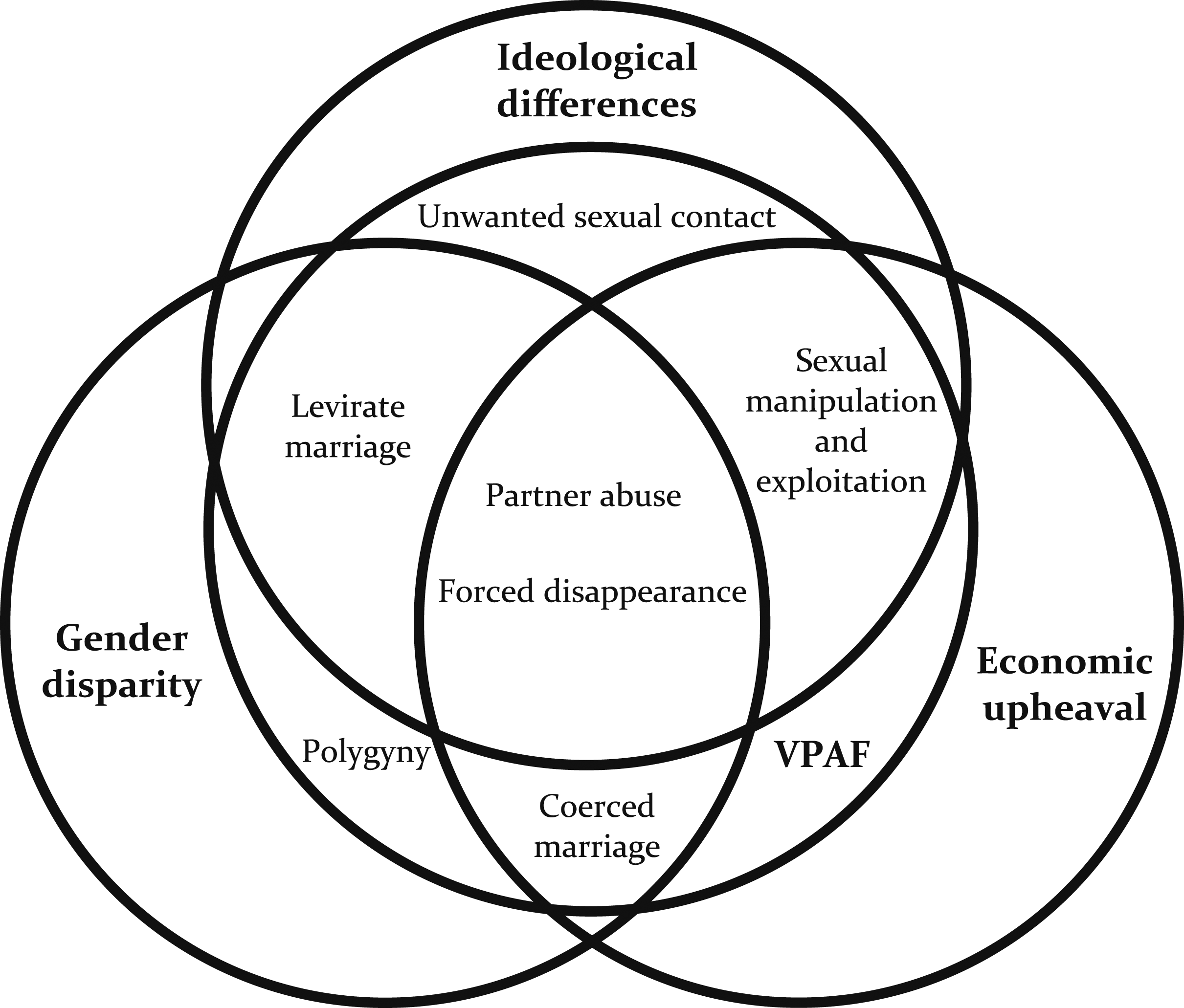
The discussion here is an extensive deliberation on Porter’s assertion that the predominant factor hindering girls’ access to education lies in gender-based violence. The implementation of collective intelligence building strategies constitutes a viable approach to fostering gender equity (Golańska et al., 2022; Sims and Rodriguez-Corcho, 2022) and bolstering the agency of women and girls (Fenwick, 2008; Forchtner and Schneickert, 2016) amidst locations impacted by insecurity or instability. As feminist approaches argue that ‘sustainable peace cannot be attained whilst violence against women remains unaddressed and that a fulsome peace for women should be understood as women’s achievement of control over their own lives’ (Swaine et al., 2019: p. 4), collective intelligence building serves to prioritise their experiences and perspectives in peace promotion initiatives and the mitigation of gender-based violence by involving a heterogeneous array of stakeholders, including women and girls as active agents of knowledge production and solution development.
A pragmatic approach would entail implementing mentoring and coaching interventions (Banwell et al., 2019, 2021). This strategy entails matching women and girls with mentors or coaches who can furnish guidance and reinforcement to augment their aptitude and expertise in civic engagement. This can help to foster self-assurance and enable them to assume leadership positions in the solution development process. A successful mentorship programme can not only ‘maximise south-to-south and south–north collaborations’ (Mwananyanda et al., 2018: 16) but also facilitate mentees’ actualisation of their full potential, catalyse the production and distribution of novel knowledge, stimulate constructive modifications in institutional practices (Almeida et al., 2019; Ouma, 2020), and cultivate indigenous capacity (Galappaththi et al., 2021; Son et al., 2021).
In a comparable way, an instance of civic pedagogies employed in education is that of shared knowledge inquiry, where participating individuals are invited to partner with local communities to jointly identify pertinent research inquiries and investigate them. This pedagogical methodology not barely facilitates learning but also forges affiliations between community members, reinforcing the shared experience of collective inquiry. A diverse array of participatory approaches was implemented across the scholarship, including participatory appraisals (Chilvers et al., 2021; López-García et al., 2021), participatory scenario planning (Chen et al., 2020; Witt et al., 2020), and photo elicitation surveys (Richards and McLaughlan, 2023) alongside deliberative focus groups (Keikelame and Swartz, 2019).
The efficacy and veracity of participatory processes hinged upon the way participation was framed, primarily defined by the roles adopted by participants, the degree of participation disparity, and the degree of democratic participation in the decision-making process (Zafra-Calvo et al., 2020). Examine the ensuing vignette to comprehend the application of shared knowledge inquiry as a mechanism for civic engagement, with the objective of endowing disempowered females in an African country regarding the issue of female genital mutilation. In a small rural village in Burkina Faso, an NGO called Tostan is working to end the practice of female genital mutilation (FGM) through participatory research. Women and girls in the community are invited to take part in discussions and workshops to explore the health and social consequences of FGM. The programme is designed to empower women and girls to speak out against the practice and educate their peers and family members. As a result of the programme, the community has seen a significant reduction in the prevalence of FGM and an increase in girls’ education and women’s participation in decision-making processes.
In this discourse, I aim to illustrate the implementation of shared knowledge inquiry by expounding upon the educational programmes of Tostan, a non-governmental organisation operating in Africa. Tostan differentiated itself from formal education by implementing an innovative approach to literacy education in the indigenous languages of its learners. Tostan’s curriculum development was a collaborative effort with rural women who had less access to education than men. A pivotal point in Tostan’s educational philosophy occurred in 1995, when the organisation’s education team, in collaboration with participants, recognised the importance of democracy and human rights in learning, specifically concerning women’s health. Within this context, democracy and human rights emerged as generative themes through exercises as the organisation and its community participants engaged in interactive learning (Gillespie and Melching, 2010).
Tostan assumed the position of co-investigator with them to scrutinise problematic situations within their communities as the participants posed inquiries regarding democracy, human rights, and healthcare. Consequently, the participants responded to the acquired information, which ultimately propelled the organisation to establish innovative learning materials and opportunities. As a result of the participants’ and community’s profound enthusiasm, involvement, and collaborative activism, Tostan’s pedagogical team overhauled its primary curriculum, granting priority to the freshly conceived interactive modules on democracy and human rights, positioning them at the vanguard of its curricular sequence. Currently, Tostan delineates its pioneering educational methodology as a holistic, human rights-oriented, and non-formal education programme.
Porter’s argument posits that providing education to mothers can yield direct health benefits for their families, despite such knowledge typically not being imparted through formal schooling. Tostan serves as an illustrative instance aligning with Porter’s notion, as it acknowledges the profound potential of women’s education, and specifically mothers’ education. Due to wealth differentials, low-income mothers are more inclined to ‘rely more on low-quality non-parental childcare for their children than their more economically advantaged peers’ (Schochet et al., 2020: 11). In response to this issue, Tostan employs the transformative potential of shared knowledge inquiry to tackle awareness education regarding practices like FGM. Moreover, Tostan recognises the significance of maternal education and child development in navigating the complex socio-emotional hurdles that arise with the aim of enhancing female educational attainment.
Planning for the way forward from 2020s
The social constructionist paradigm in the 2020s, within its theoretical framework, conceives gender as a repertoire of social enactments that perpetuate and validate specific configurations of belief systems. By adopting this perspective and revisiting the literature on gender and social capital, it becomes plausible to unveil profound insights regarding the underlying ontological reality of the gendered disparity discovered, transcending the realm of mere methodological or analytical artifacts (Simandan, 2021). Feminist epistemological frameworks compel us to relinquish reliance on statistical data and assertions of impartiality. Rather, they urge us to engage in introspection regarding how our individual socio-cultural identities influence our interpretation of empirical data. This resonates with the principles of PCCS. I concur with Porter’s proposition that the provision of education for girls and women alone would not serve as a panacea for the multitude of global challenges, particularly in the context of countries’ delegates and institutions. My proposition concerning the implementation of PCCS aligns harmoniously with Porter’s contention, emphasising its pivotal role in fostering female empowerment to catalyse positive societal transformations within their respective communities. Moreover, PCCS engenders a sense of agency among women, enabling them to assume a prominent position in holding their governments answerable for the realisation of equitable progress, transcending the boundaries of national, regional, and local spheres.
In this comeback article, I intentionally use vignettes adapted from the South narratives and incorporate the Indian notion of jugaad. This approach enables me to adopt a decolonial perspective when addressing the multifaceted goals of gender equality and inclusive quality education, and the fostering of social harmony and empowerment within societies. Additionally, I build upon Porter’s contentions by interrogating the prevailing narrative entrenched in Western academic hegemony and the neoliberal educational structure, which have been subject to inadequate scrutiny and critical analysis. The implicit decolonial lens employed in this article strives to ‘delink common assumptions in our knowledge production and to make connections across knowledges and perspectives as it is not limited to borders of a particular place (the colony), time (post-colonialism and building of a new nation) or identity (Dalits)’ (Arur and DeJaeghere, 2019: 496). In this concluding paragraph, I intend to specifically home in on the significance of the decolonial and Dalitbahujan lenses within the realm of girls’ education, encapsulating their pivotal relevance in ongoing dialogues surrounding this issue throughout the 2020s and subsequent years.
Despite the initial perception of Dalitbahujan perspectives as disconnected from girls’ education, there exists a shared emphasis on contesting and reshaping dominant hegemonic structures and entrenched patterns of injustice. The Dalitbahujan perspective astutely discerns the interconnectivity of caste, class, and gender dynamics in shaping the experiences of marginalised communities. It advocates for the attainment of social justice, equal rights, and inclusive opportunities, while concurrently challenging the deeply entrenched structures of caste-based discrimination and oppressive frameworks. This aligns with the concept of girls’ human capital within the neoliberal framework, which acknowledges the significance of social capital. Social capital encompasses the network of connections, relationships, and valuable resources accessible to individuals and communities, facilitating their entry into educational spheres and enhancing their advancement and development.
It is intriguing to note that when discussing the empowerment of marginalised communities, two crucial aspects come to the forefront. Firstly, there is a need to deeply contemplate the epistemological and ontological underpinnings that shape their circumstances, while also critically evaluating our own strategies, such as the PCCS in this article, aimed at addressing their obstacles. Secondly, it is essential to prioritise Dalitbahujan epistemologies that shed light on the inequalities related to gender and caste, and the nuanced interrelation between education and these inequities driven by modernist goals. When it pertains to the discourse surrounding female educational empowerment in the 2020s, the application of a Dalitbahujan feminist lens fortifies an intersectional examination of gender in the sphere of girls’ education, whilst affording avenues for scrutinising the dual capacity of education to both empower and restrict agency within these multifaceted identities. Furthermore, it stimulates a more profound investigation into the intriguing interdependence of overlapping identities and the ever-changing dynamics of coloniser-colonised associations, considering the impact of social capital within the domain of worldwide educational endeavours.
In this article, the term ‘comeback’ signifies my response to Porter’s 2016 literature review; however, it also serves as a metaphorical language that espouses both asset-based and strength-based approaches, effectively amplifying Porter’s exhortation to rejuvenate conversations on girls’ education and the globalisation of human rights, garnering increased attention throughout the 2020s and beyond. In a conceptual reconfiguration intended to recalibrate future methodological frameworks, it is vital to ‘put adequate, responsible and responsive resources towards the future’ (Tesar, 2021: 4) while harnessing gender-centric social capital in the cultivation of an interwoven cultural milieu and egalitarian settings devoid of discriminatory practices.
Footnotes
Declaration of conflicting interests
The author(s) declared no potential conflicts of interest with respect to the research, authorship, and/or publication of this article.
Funding
The author(s) received no financial support for the research, authorship, and/or publication of this article.
