



Abstract
With the global increase in forcibly displaced populations, understanding and improving educational opportunities and outcomes for refugee youth is of paramount importance. This scoping review focuses on understanding the extent and nature of evidence related to school engagement among refugee parents and students. The review’s scope was limited to peer-reviewed articles published in English between 2015 and 2023. The review reveals insights into research contexts, methodological and theoretical approaches, empirical interests, and key findings on enablers of and barriers to school engagement. Additionally, the paper identifies three significant themes requiring attention in future research: inconsistent framing of central themes, the prevalence of deficit accounts regarding refugee parents and students, and omissions concerning critical aspects of school engagement.
Introduction
School engagement refers to the level of involvement, attention, interest, and enthusiasm that students and parents show towards education and learning. It marks emotional, cognitive, and behavioural investment in schooling. School engagement is expressed in how students feel, think, and act concerning schoolwork and has academic and social dimensions. School engagement is a multidimensional construct that involves personal characteristics as well as social contexts and policy factors (Fredricks et al., 2004, 2019; Molla, 2023; Reschly and Christenson, 2012; Reschly et al., 2020; Wang et al., 2015). Even so, much of the existing school engagement literature focuses on students, emphasising individuals’ behavioural, emotional, and cognitive attributes (Kahu, 2013; Kahu and Nelson, 2018; Redmond et al., 2018; Reeve, 2012). School engagement cannot be fully explained in terms of personal attributes of students, such as personality, motivation and attitudes. School engagement is equally mediated by contextual factors such as teacher–student relationships, school climate, curricular design, home environment and other external factors. School engagement is a complex and multidimensional construct influenced by individual and contextual factors. Parental engagement, school practices, and systemic policies received little attention in the existing literature.
School engagement encompasses cognitive and affective aspects of learning and is considered a key factor in student success and well-being. Academic aspects of students’ school engagement include positive feelings about schooling, self-regulated learning, regular attendance, and active participation in learning activities. In comparison, social dimensions of school engagement entail meaningful relationships with others and a sense of relatedness (King 2015). The literature on youth belonging (e.g. Halse 2018) suggests when students feel they fit in, they are more likely to be invested in schoolwork and achieve academic success.
Refugee school engagement is beyond how students behave or why they invest their time and effort in their studies. The role of parents is equally important. Parental engagement in schooling plays a critical role in enhancing the educational outcomes of refugee students (Baak, 2019; Centre for Multicultural Youth, 2015; Wong et al., 2018; Naidoo, 2015; Wilkinson et al., 2017). Parents’ idea of the good life and their view about their children’s chances of success in society informs how much they engage with schools and support learning at home. For refugee students, parental engagement can bridge the gap between school expectations and home values (Centre for Multicultural Youth, 2015). Ongoing positive interaction between parents and children at home is also crucial for ‘the “osmotic” transmission of aspirations, values, and tastes’ (Van Zanten, 2015: p.32). Research suggests that when parents are involved in their children’s schooling, children tend to be motivated learners, have high educational aspirations, get good grades, and experience a sense of school belonging. Benefits associated with school engagement include higher academic achievement, better attendance, fewer disciplinary problems, and strong relationships between parents and teachers.
While refugee parents and students form diverse groups, they encounter similar and intersecting challenges. This review aimed to document how school engagement is framed in relation to refugees and explore the available evidence on supporting school engagement among students and parents with refugee backgrounds and identify any gaps in knowledge on this topic. For instance, since refugee parents often have high expectations for their children’s education (Cureton, 2020; Molla, 2021a, 2022), it is essential to understand how they communicate their aspirations at home and how schools acknowledge and utilise parental resources to support student engagement. I also sought to identify the theoretical frameworks and methodologies researchers have employed to study this subject. Through this scoping review, we gain insights into the conception and support of school engagement for refugees. The following research question guided the review: What is known from the existing literature about refugees' school engagement?
This review lays the groundwork for future research on student engagement by providing a comprehensive overview of existing literature. It informs the development of effective strategies to promote engagement in schools. The paper sheds light on opportunities and challenges linked to refugee school engagement in countries of resettlement. The remaining part of the paper is organised into three main sections. The first section outlines methods and procedures applied in the review. The second section presents the key findings of the review. The third section problematises the results, with particular attention to inconsistencies and issue framings.
Method
A scoping review is appropriate for mapping existing research activity on a particular topic and identifying research gaps (Arksey and O'Malley, 2005). As a form of knowledge synthesis, scoping review maps the existing literature, assesses the content and scope of the available evidence, and identifies limitations of the current body of knowledge. In this respect, a scoping review is helpful in analysing the existing scholarly work on refugee school engagement. This review followed the five-stage approach to scoping reviews outlined by Arksey and O'Malley (2005): developing the research question; identifying the relevant studies; selecting the articles; data charting and data extraction; and collating, summarising, and reporting the results.
Developing the research question
A well-developed research question is the foundation of a meaningful and well-executed scoping review. It provides direction, relevance, and clarity to the review, making it a valuable resource for both researcher and the reader. The scoping review sought to answer the following research question: What is known from the existing literature about refugees’ school engagement?
Identifying the relevant studies
A systematic literature search was conducted using a variety of databases, including EBSCOhost, Education Source, ERIC (Education Resources Information Center), Gale Academic OneFile, and APA PsycInfo. The ‘Title’ and ‘Abstract’ search fields were used within these databases. In addition, I scanned references of the reviewed papers to locate relevant sources. I prioritised identifying literature that focused exclusively on refugees’ school engagement. The search terms were ‘school’ AND ‘engagement’ AND ‘refugee*’.
Inclusion criteria.
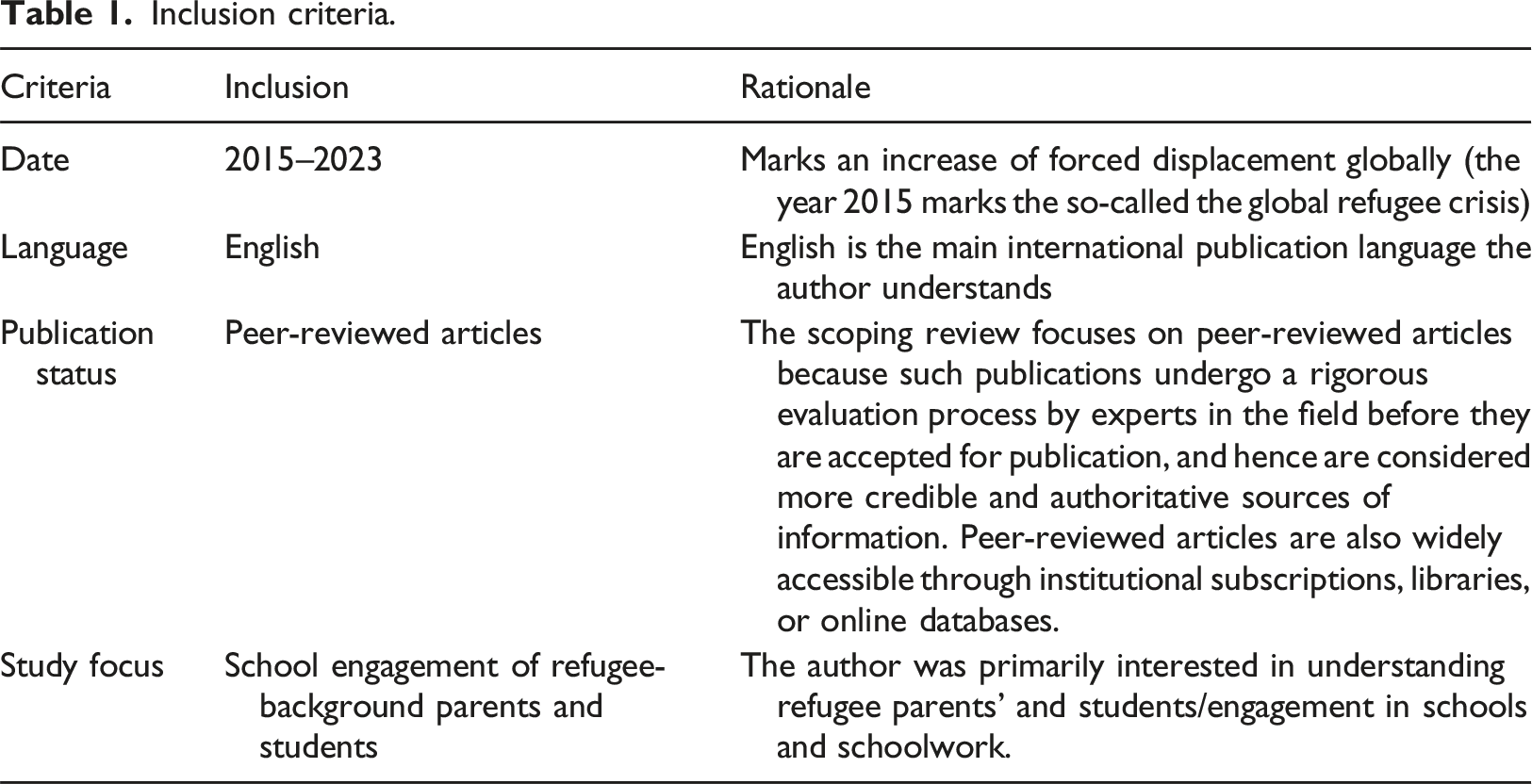
Papers were included if published between 2015 and 2023, written in English, peer-reviewed, and focused on refugee school engagement. The search was conducted in February 2023 and January 2024.
Selecting the relevant studies
The database search generated 207 potentially eligible documents. After removing duplications (23), I screened the remaining sources (184) in two stages. In Stage 1 of the screening process, I reviewed the titles and abstracts of the papers, removing 154 documents as illegible. In Stage 2, I reviewed the remaining full-text papers (30), excluding eight articles. Finally, 22 articles met all the inclusion criteria and were included for a critical appraisal (see Figure 1). Flowchart of the screening process.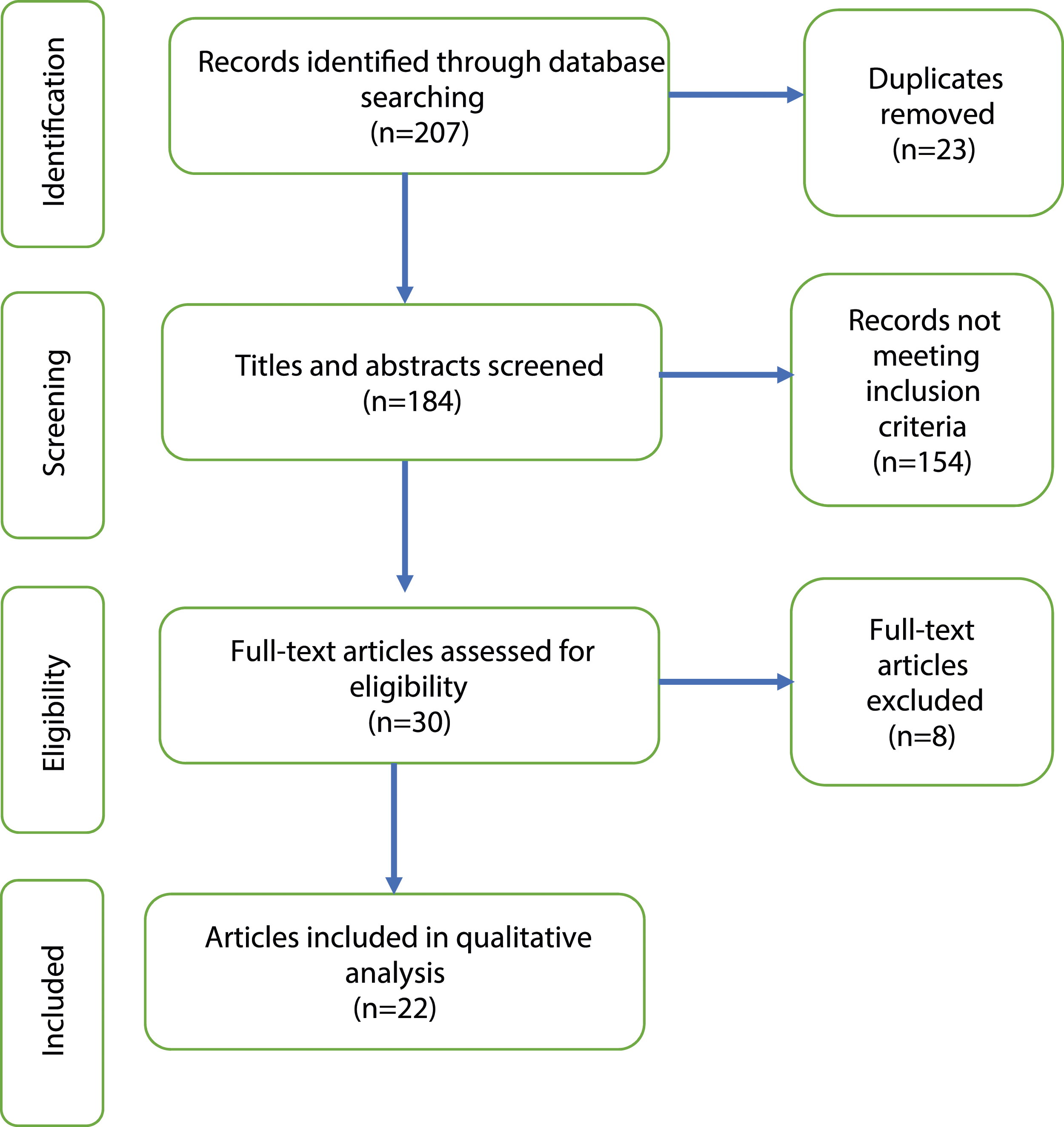
Data charting and data extraction
Charting the sources of evidence.

Collating, summarising, and reporting the results
Following data charting, critical appraisal of individual sources of evidence was employed. The 21 articles were imported into NVIVO (a computer-based qualitative data analysis tool) after the initial review. Using the NVIVO software, the extracted information was analysed and synthesised to identify key themes, patterns, and trends related to the research question. In light of the Charting Table, the results were categorised under four themes: contexts and targets of research, methodological and theoretical approaches, empirical interests, and key insights. Under the last themes, the paper highlights enablers and barriers to school engagement.
Results: Key themes
The scoping review results show that the emerging scholarship tended to focus on small-scale qualitative inquiries, with particular attention to enablers and barriers to school engagement. The results present four themes: (1) contexts and targets of research, (2) methodological and theoretical approaches, (3) empirical interests, and (4) key insights. The theme of contexts and targets of research focuses on the various settings and specific groups of interest in the literature related to refugee school engagement. The theme of methodological and theoretical approaches highlights the diverse range of research methodologies and theoretical frameworks employed in studying refugee school engagement. Additionally, the review explores the theoretical underpinnings guiding these studies, offering valuable insights into the conceptual foundations that shape research in this area. The scoping review also revealed empirical interests concerning both student and parent engagement. Researchers extensively explored students’ behavioural, emotional, and cognitive attributes as well as parents’ views, expectations and involvement in their children’s education within the context of refugee backgrounds. Finally, the scoping review shed light on key insights into the enablers and barriers to school engagement among refugees. These themes collectively capture trends and focal areas in the emerging refugee school engagement literature.
Contexts and targets of research
The review revealed that a significant number of studies were conducted in major refugee recipient countries, with the United States having the highest representation (5 studies), followed by Australia (4 studies), Canada (3 studies), and Turkey (2 studies). Notably, one relevant study from the remaining four countries: Egypt, Ethiopia, Greece, Israel, Norway, and Germany, was also included in the analysis, providing a broader geographical perspective. Moreover, a substantial proportion of the studies (16) specifically focused on refugee populations from Africa and the Middle East, indicating a particular emphasis on these regions in the existing literature. However, it is essential to acknowledge that five studies did not specify the countries of origin for the refugee groups included in their research, which may indicate a gap in reporting and understanding the diverse backgrounds of the refugee participants.
This emphasis on research within specific recipient countries and the prevalence of studies focussing on refugees from Africa and the Middle East offer valuable insights into the global distribution of research on refugee school engagement. Nevertheless, the review also highlights the need for more studies from a broader range of countries and regions to understand this complex and multifaceted phenomenon comprehensively. Future research should strive for a more inclusive and representative approach to explore the experiences of refugees from diverse backgrounds and in various educational contexts.
Methodological and theoretical approaches
Most of the studies included in the review drew on qualitative research design (15). Within the qualitative approaches, the authors employed a range of specific instruments for data generation and analysis. Ethnographic fieldwork emerged as a frequently used method (4), while interviews were employed in six studies. Notably, two articles did not explicitly specify their research design. In addition to qualitative methods, a few studies utilised mixed methods (2 studies), participatory/cooperative action research (2), and a quantitative survey (1) to provide a more comprehensive understanding of refugee school engagement.
A few studies applied theoretical tools to make sense of refugee engagement. Notable theoretical frameworks applied in the research included Epstein’s parental involvement model, as seen in studies by Baker et al. (2021) and Zaidi et al. (2021). Additionally, researchers utilised Bronfenbrenner’s ecological systems framework to examine refugee school engagement in studies by Birman and Tran (2017), Karsli-Calamak et al. (2022), and Miller et al. (2022). Urie Bronfenbrenner’s (1979) Ecological Systems Theory explains how factors at the microsystem (individual), mesosystem (family and peers), exosystem (school environment), and macrosystem (cultural influences) that mediate students’ engagement with school. The ecological theory suggests that school engagement is mediated by personal readiness, peer interactions, educational environments, cultural expectations, policies, and societal attitudes. It can be used to explain the role of context in influencing how parents and students engage with schools (Roundfield et al., 2018). A supportive and culturally sensitive learning environment fosters positive social interactions and a sense of belonging in school, nurturing self-esteem and language competence (Martin et al., 2023). The theory provides a productive framework for understanding the multiple layers of influence on school engagement among refugee parents and students.
Bourdieu’s sociological tools were applied in studies conducted by Harwood et al. (2021), Karsli-Calamak et al. (2022), and Li (2018). Moreover, a study by Snell (2018) employed the concept of funds of knowledge to investigate parental engagement. These theoretical lenses offer valuable insights into the factors shaping refugee school engagement, contributing to a deeper understanding of this complex phenomenon. However, the lack of a cross-disciplinary and unified framework for analysing refugees’ school engagement highlights the potential for future research to develop a comprehensive and cohesive approach to investigate the issue more systematically.
Refugee education researchers might find other theoretical frameworks equally valuable. For example, from the Self-Determination Theory perspective (Ryan and Deci, 2017), individuals are inherently motivated to satisfy three basic psychological needs: autonomy, competence, and relatedness. Engagement is heightened when individuals find meaning in their activities, are confident about their abilities, and feel a sense of belonging within their social settings. In the context of school engagement, students are more likely to be engaged when they feel a sense of autonomy in their learning, perceive themselves as competent, and experience positive relationships with teachers and peers (Reeve, 2012). For refugee parents and students, opportunities for autonomous decision-making regarding educational choices, language acquisition and academic progress, and Positive relationships with peers and teachers can enhance school engagement. Likewise, scholars working with the Expectancy-Value Theory (Wentzel and Wigfield, 2009; Wigfield and Eccles, 2000) emphasise the role of perceived expectations and values in influencing individuals’ motivation. For instance, people’s engagement in educational activities partly depends on whether they believe in their ability to succeed (expectancy) and find the tasks valuable or meaningful (task value). In the school context, engagement is intricately tied to students’ perceptions of success and the value they ascribe to educational activities. Students are more likely to engage when they perceive tasks as meaningful, relevant, and attainable and when they value the outcomes associated with successful engagement (Rosenzweig et al., 2019). For refugee parents and students, perceived expectations regarding educational success in a new environment, understanding the value of education in their new context, and their perceived competence in overcoming challenges can significantly influence engagement. Cultural and familial expectations regarding learning and careers influence the perceived value of educational tasks and engagement.
Empirical interests
As is evident in this scoping review, the main empirical interests of researchers investigating school engagement are to understand specific social groups’ experiences and gain insights into the factors mediating student and parent engagement. The empirical interests of the papers reviewed here can be summarised into three categories: student engagement, parental engagement, and school practices.
Firstly, student engagement emerged as a primary area of interest, with researchers delving into refugee students’ behavioural and academic adjustment within the school environment. Studies such as those conducted by Bendixsen and Danielsen (2020), Bergset (2017), Bonet (2022), and Ogilvie and Fuller (2017) focused on examining students’ active participation in school activities, their interactions with peers and teachers, and their overall adaptation to the educational setting. These investigations provided valuable insights into the challenges and opportunities faced by refugee students in their educational journey, shedding light on the factors that influence their engagement and academic success.
Secondly, the scoping review observed a significant emphasis on parental engagement, recognising the vital role of parents in their children’s education. Researchers explored the extent and nature of parental involvement in refugee students’ schooling and how parents communicate and support their children’s educational aspirations. The reviewed studies on parental engagement explored various aspects, including home-school communications, parents' involvement in school activities such as parent–teacher meetings and volunteering, and their role in supporting their children’s learning at home. Notably, strong parental engagement was observed in education systems that prioritise inclusion as a core goal, especially within welfare states that view education as a tool for promoting social equality (Bendixsen and Danielsen, 2020; Koukopoulou and Arvanitis, 2022). The studies showed that parental engagement facilitates a smooth transition for refugee students by bridging the cultural gaps between students’ home and school lives. Schools play a vital role in engaging refugee parents through timely and effective communication of expectations, involving them in decision-making, and encouraging their participation as volunteers at the school (Baker et al., 2021; Bergset, 2017). Examining parental perspectives and practices provided valuable insights into how parents can be instrumental in promoting their children’s engagement and academic achievement, especially within the unique context of being refugees. As the reviewed articles elaborate, parental engagement manifests in various forms, encompassing formal and informal interactions with teachers, monitoring children’s homework, and active participation in school activities.
Finally, the scoping review identified a substantial body of literature highlighting the crucial role of school practices in facilitating or impeding refugee students’ engagement. Catch-up programs and services offered within schools were identified as positively impacting the academic participation of refugee students. These targeted interventions provide essential support to help students bridge educational gaps resulting from disrupted schooling due to forced migration (Bajaj and Bartlett, 2017). By offering tailored assistance and resources, such as language support and individualised learning plans, catch-up programs empower refugee students to integrate successfully into the educational system and thrive academically. Schools also play a crucial role in nurturing community connections by involving refugee parents as volunteers and engaging community liaison officers (Zaidi et al., 2021). These practices strengthen the bonds between the school and the broader refugee community, fostering a sense of belonging and trust. By creating avenues for meaningful participation, schools can tap into the knowledge and resources of the refugee community, thus enriching the educational experience for all stakeholders involved. Notably, Karsli-Calamak et al. (2022) emphasised the urgency of transforming teachers' perceptions and attitudes towards refugee families. The study underlined that low expectations or negative assumptions could harm the educational and social engagement of refugee parents and students. Thus, fostering a supportive and inclusive environment within schools, where teachers are equipped with a deeper understanding of the unique challenges faced by refugee families, becomes pivotal in promoting positive engagement outcomes.
Key insights
The synthesis of studies reviewed for this paper reveals two overarching themes encapsulating the main findings: enablers of school engagement and barriers to school engagement. Within the theme of enablers, a diverse array of factors emerged as instrumental in promoting school engagement among students and parents. The enabling factors documented in the papers range from the availability of cultural brokers and inclusive school cultures to parents’ high aspirations for their children. In contrast, the theme of barriers to school engagement sheds light on the challenges and obstacles that hinder students and parents from fully engaging with the educational system. These barriers encompassed many factors, including challenges associated with resettlement, limited language competence, and low teacher expectations. These topics are discussed in turn here.
Enablers of engagement
Several studies have highlighted vital enablers that promote school engagement among refugee students and their families. Baker et al. (2021) and Miller et al. (2022) emphasised the significance of cultural brokers, such as community liaison officers, in attracting and supporting newly arrived refugees in schools. These liaison officers are crucial in helping refugee families navigate education systems and alternative pathways, facilitating educational and social engagements for refugee students (Zaidi et al., 2021).
Moreover, the role of inclusive institutional cultures in fostering or hindering engagement was underscored by studies conducted by Bajaj et al. (2017), Bennouna et al. (2021), and Harwood et al. (2021). A sense of belonging and bonding is a powerful force underpinning active engagement at school. Schools that have established culturally and racially safe learning environments are ideal for nurturing refugee students’ academic and social engagement (Molla, 2022; Warsame et al., 2014). In schools prioritising inclusion, teachers recognise and value immigrant and refugee youth’s transnational experiences and trajectories, incorporating their realities into learning experiences through relevant curricular materials and pedagogical processes (Bajaj et al., 2017). These inclusive schools actively create opportunities for engagement (Ogilvie and Fuller, 2017) and employ creative strategies, such as community outreach workshops and programs, to ensure culturally safe and welcoming learning environments for refugee students and parents. Drawing on Bourdieu’s sociological tools, Harwood et al. (2021) explained how refugee-background young women engage in school social activities, namely, sports. Inclusive schools use creative strategies, including community outreach workshops and programs. Culturally safe learning environments make refugee students and parents feel safe and welcome. Play is equally critical. Research shows that play opportunities in school enable active academic and social engagement (Martin et al., 2023). Put differently, refugee students who have opportunities for socialisation with peers are likely to actively engage in schoolwork.
Finally, aspirations matter. The high aspirations of parents for their children’s education and students’ ambitions and expectations serve as a significant driving force behind school engagement. Baker et al. (2021), Karsli-Calamak et al. (2022), and Karsli-Calamak et al. (2020) demonstrated the crucial role of parental ‘cultural wealth’ in motivating refugee students' engagement in academic activities. Karsli-Calamak et al. (2022) highlighted how parental ‘cultural wealth’ plays a critical role in refugee students’ engagement in mathematics activities. The expectancy-value theory holds that school engagement is closely linked with motivational beliefs and institutional arrangements (Eccles, 2011; Wigfield and Eccles, 2000). Observable behaviours such as students' choice, engagement, persistence, and achievement are mediated by their expectations for success and subjective task value, including the importance of doing well, personal enjoyment, and perceived usefulness of the task for future goals (Eccles, 2011). In educational settings, expectations for success and task value are shaped by student characteristics (abilities, aspirations, previous experiences, goals, self-concepts, and beliefs) and environmental influences (sociocultural milieu, external expectations, and opportunities).
Barriers to engagement
The reviewed studies shed light on various barriers to school engagement faced by refugee students and their families, encompassing challenges related to resettlement, language barriers, and low teacher expectations.
Resettlement stressors were found to hinder the active engagement of refugee parents in their children’s schools. Limited time and resources often make it challenging for refugee families to navigate the educational landscape in the host country. Studies conducted by Bennouna et al. (2021), Cranston et al. (2021), Li (2018), Bonet (2022), and Miller et al. (2022) highlighted how resettlement challenges, such as housing, health, and employment concerns, leave many refugee families with little or no time to devote to their children’s education. Competing basic needs and limited intercultural understanding further hinder parents’ ability to engage effectively in their children’s schoolwork. Facing intersectional constraints, some refugee parents may not prioritise school engagement. Psychological distress parents experienced during forced displacement was also associated with reduced engagement with their child’s school (Baker et al., 2021). Bajaj and Bartlett’s (2017) study revealed how adverse life-course trajectories of refugee-background students could act as barriers to school engagement. Furthermore, refugee students and parents encountered acculturative stressors and structural obstacles that hindered meaningful engagement (Bennouna et al., 2021; Birman and Tran, 2017; Cureton, 2020; Snell, 2018). Instances of racism and cultural discrimination faced by refugee youth were also highlighted (Bonet, 2022).
For many refugee parents from the Middle East and sub-Saharan Africa, limited competence in the host societies’ languages posed a significant challenge to school engagement. Empirical studies by Li (2018), Jäger et al. (2021), Bergset (2017), Demissie and Boru (2022), Koukopoulou and Arvanitis (2022), and Zaidi et al. (2021) underscored the extent to which language barriers impeded refugee parents' engagement in their children’s learning. In various national contexts covered by the reviewed studies, limited language proficiency and unfamiliarity with the host country’s education system hindered parents’ availability for volunteering and their ability to follow-up on their children’s homework. That is, the unfamiliarity of refugee parents with expectations of the resettlement country’s education system often leads them to believe their responsibility is limited to the home environment, leaving educational matters solely to teachers. However, educational norms in refugee recipient countries emphasise active parental involvement – encouraging regular communication with teachers, participation in governance and volunteer initiatives, and support for their children’s homework (Antony-Newman and Niyozov, 2023). Schools often misinterpret the discrepancy in expectations as ‘a deficit in the parents’ value system’ (Georgis et al., 2014: p. 23), which further undermines educational experiences and attainment of refugee students.
Equally important was that low teacher expectations emerged as potential barriers to refugee school engagement. Some teachers resisted actively engaging with refugee students and parents, failing to recognise the ‘community cultural wealth’ that refugee parents could bring to the school environment. When negative assumptions and stereotypes mark peer interactions and student–teacher relationships, academic engagement will likely diminish (Kahu and Nelson, 2018; Martin et al., 2023; Suarez-Ocozco et al., 2009). Drawing on a systematic synthesis of over 30 qualitative studies, Antony-Newman and Niyozov (2023) pinpointed significant impediments to the academic success and social integration of refugees in Canadian and US K–12 schools. These obstacles encompass teachers’ deficit perspectives, communication breakdowns between families and schools, language barriers, and absence of counselling tailored to trauma. Birman and Tran’s (2017) study in the U.S. revealed that certain teachers held assimilationist views and believed schools should not make special adjustments to engage refugee-background students. Hostile attitudes, low expectations and negative stereotypes make learning environments unsafe and unsupportive. Such learning environments, in turn, can trigger feelings of anxiety and a sense of isolation among refugee students.
These insights have concrete implications for further research, policy, and practice. Understanding the enablers of school engagement among refugees is essential for promoting educational success, fostering social integration, and empowering students and parents. By recognising and supporting the factors facilitating engagement, educators and school leaders can create more inclusive and supportive learning environments for refugee students, ultimately benefiting the broader society. Likewise, identifying the barriers to school engagement among refugees is vital for developing targeted interventions and support systems that address these challenges effectively. By addressing these barriers, educators and school leaders can create more inclusive and supportive learning environments that empower refugee students and their families to thrive academically and socially.
Discussion
The review shows that refugees’ school engagement has emerged as a critical research area. Most of the papers reviewed here came from the main refugee recipient countries of the world. Almost all papers report on small-scale empirical studies that predominantly applied qualitative methods. Theoretically, the articles drew on various conceptual resources, including Epstein’s parental involvement model, Bronfenbrenner’s ecological systems as a framework, and Bourdieu’s thinking tools. Empirically, most of the studies focused on parental engagement, student engagement, and school practices. The findings of the reviewed studies documented enablers of school engagement (e.g. the availability of cultural brokers, inclusive school cultures and high parental aspirations) and barriers to school engagement (e.g. resettlement stressors, limited language competence and low teacher expectations). As insightful as these findings are, the reviewed studies are also marred by some critical limitations, including inconsistent framing, deficit accounts, and issue omissions.
What is school engagement framed to be? Like the boundaries of a painting, frames supply the context for selection and highlight what is considered relevant and deserves attention (Author and Nolan, 2019). Through purposefully directing public attention to specific concerns, frames represent what is seen as important in the given policy debate, and they reflect the lenses through which policymakers view the ‘reality’ they seek to transform. In essence, frames do not just describe the world for a policy intervention, they also deeply shape our view of the world itself (Wagenaar, 2015). In this respect, the scoping review revealed inconsistencies in how scholars conceptualise school engagement. To begin with, with the exception of a few studies (e.g. Baker et al., 2021; Birman and Tran, 2017; Karsli-Calamak et al., 2020), no full definition of school engagement was offered. Many authors use ‘parental engagement’ and ‘parental involvement’ interchangeably. The two terms are related, but they have slightly different connotations. Commonly parental school involvement is about parents’ participation in school-based activities. In contrast, parental engagement refers to parents' involvement in their children’s learning at school and home (this includes activities such as reading to their children, helping them with homework, and talking to them about their school day). Parental engagement is a more active and ongoing partnership between parents and educators. It is based on the belief that parents are their children’s first and most important teachers and that they play a critical role in their children’s education at home and beyond (Bendixsen and Danielsen, 2020; Snell, 2018). Parental engagement emphasises the active role of parents in their children’s educational journey and highlights the significance of their contributions beyond the classroom. It recognises the importance of parent–school communication and cooperation to enhance educational outcomes.
Relatedly, deficit accounts of school engagement dominate the literature. The prevailing educational discourse on supporting refugee students focuses on their deficits, including limited English language skills, experiences of trauma, disrupted schooling, or cultural isolation, and the challenges these issues pose for educators. These are critical issues that need to be addressed. But the experiences and aspirations of refugees are not defined by challenges. Refugees are resourceful. For example, Karsli-Calamak et al.'s (2020, 2022) research suggest that community cultural wealth and multilingual family spaces are instrumental in refugee parents’ school engagement. A counter-narrative to this deficit discourse is Yosso’s (2005) heuristic of community cultural wealth that moves beyond cultural capital to offer a more holistic characterisation of the strengths students bring with them (including aspirational capital). Explicit use of a strengths-based assessment of school engagement would have shed light on some interesting aspects of refugees’ symbolic resources. The literature also tends to frame parental engagement in terms of families' adherence to school rules and expectations. Parents’ expectations, values, and varied ways of engagement in their children’s education remain underexplored. As Wenlock (2022) rightly noted, ‘When schools look at parental involvement solely through their understanding, some parents may be regarded as uninterested or disengaged from their child’s learning’ (p.viii). In probing parental engagement, one needs to consider the subjective views of families. Due to a lack of familiarity with the school system and perceptions of opportunity in the host society, refugee parents might refrain from ‘intervening’ in their children’s education (Langenkamp, 2017).
Issue omissions also characterise the existing literature on refugee school engagement. To begin with, the studies reviewed in this paper do not engage with policy contexts of school engagement and received very little attention. In addition to psychosocial constructs that mediate school engagement (e.g. self-efficacy, emotions, and belonging) and institutional practices, it is critically important to problematise the policy provisions (Arar et al., 2022). Many refugee recipient countries have policies in place to support resettlement and integration (Molla, 2021a, 2021b, 2023), but what are problematised are policy provisions on refugees’ school engagement. Without active institutional arrangements and policy guidelines, refugee parents and students are likely to face sociocultural incongruity, which might further undermine their ability to engage at school. For example, in the absence of policies on racial discrimination and cultural Othering, visibly different refugee-background students are likely to feel unsafe and isolated. A pervasive sense of alienation, in turn, creates anxiety, which then inhibits meaningful academic and social engagement at school.
Mandated policies are not simply translated into practices either. They are mediated by the socio-economic status of the school and the values and dispositions of school leaders. In a study that explored the social justice dispositions of school leaders, we (Author and Gale, 2019) showed that personal values and institutional ethos of schools mediate the translation of nationally defined equity provisions. Policy analysis needs to include the enactment of policy as well as the values, assumptions, and views of policy enactors in schools and school districts (McKeon et al., 2022). In this regard, none of the studies included in this review pay critical attention to systemic policies and the role school leaders play in translating such policies. Further, equity policy provisions are insufficient to ensure refugees receive substantive educational opportunities. The context in which policies are implemented plays a crucial role (Baak et al., 2023). As one of several aspects, contexts of policy enactment are critically important (Molla and Gale, 2019) various school sectors (such as Government, Catholic and Independent) interpret and implement equity policies differently.
There are also other omissions in the literature. For example, none of the studies reviewed in this paper engages with questions such as: what assets do refugee parents bring to schools? What is the type of parental engagement that is valued by schools? With the exception of a few studies (e.g. Demissie and Boru, 2022; Miller et al., 2022), no attention has been given to the relationship between parental efficacy and educational attainment and their engagement in their children’s school and learning. Finally, the impact of the stress of racial Othering is rarely problematised. The racialisation of refugees (Kyriakideset al., 2019) has been overlooked as a factor of school disengagement With the exception of Bennouna et al. (2021) (who noted the role of ‘acculturative stress' as a barrier to school engagement), most studies reviewed in this paper did not recognise racial and cultural Othering as a barrier to meaningful engagement in academic and social activities of the school. Racial microaggressions, stereotypes, and discrimination will likely affect divisible refugee groups such as those from sub-Saharan African countries.
Limitations
The 21 articles reviewed here were selected based on whether they met the objective inclusion criteria listed in the methods section. Even so, the selection was not without limitations. To begin with, its timeframe is narrow. Taking a wider timeframe would have produced a much richer account of refugees’ school engagement. The omission of grey literature and books is another limitation of this review. Institutional, national, and international reports could illuminate important aspects of refugee school engagement. Further, articles utilised in this scoping review were only accessed via Deakin University’s online library. As such, other relevant journal articles that could have met the inclusion criteria might have been omitted. Finally, the scoping review focuses on peer-reviewed articles published in English. It does not engage with non-English language publications.
Conclusion
This scoping review paper has provided valuable insights into the research landscape of school engagement with refugee parents and students. Through a comprehensive examination of existing literature, four key results were highlighted, namely: (1) the diverse contexts and research targets, (2) methodological and theoretical approaches employed, (3) the empirical interests explored, and (4) key insights on enablers and barriers to school engagement. These findings have provided a comprehensive overview of the current state of research in this domain, revealing both the progress made and the gaps that must be addressed. Moreover, the paper has brought to the forefront three overarching themes that warrant attention and consideration in future research endeavours. Firstly, inconsistent framings of key themes were observed, indicating the need for greater conceptual clarity and alignment within the literature. Secondly, the prevalence of deficit accounts concerning refugee parents and students points to the urgency of adopting more strengths-based and empowering perspectives when examining school engagement dynamics. Lastly, the issue omissions noted, particularly concerning policy contexts, the values and dispositions of school leaders, the assets that refugee parents bring to schools, and the stress of cultural and racial Othering faced by refugees in schools and society, underscore the importance of exploring these aspects further to gain a comprehensive understanding of school engagement.
By addressing the identified gaps and adopting more empowering frameworks, future studies can contribute significantly to developing effective arrangements that foster a supportive and inclusive educational environment for refugee communities. Large-scale and interdisciplinary studies are ideal for documenting how individual, institutional, and systemic factors influence student engagement. Importantly, research endeavours must shift towards strengths-based approaches that acknowledge and build upon the assets and resilience of refugee parents and students. By doing so, a more empowering narrative can emerge, promoting a positive and supportive school environment. An in-depth understanding of school engagement necessitates exploring the availability of assets across various domains, including sectoral policies, school practices, biographical contexts of students, parental engagement, and community-based educational services (e.g. after-school homework tutoring and youth group activities). Schools can benefit from recognising and harnessing the diverse assets that refugee parents bring to the institutions, fostering stronger home-school partnerships, and encouraging active engagement in their children’s educational journey.
Footnotes
Declaration of conflicting interests
The author(s) declared no potential conflicts of interest with respect to the research, authorship, and/or publication of this article.
Funding
The author(s) disclosed receipt of the following financial support for the research, authorship, and/or publication of this article: This work was supported by the Australian Research Council (FT220100062).
Correction (February 2024):
Article updated to correct “Department of Education” with “School of Education” in the author affiliation.
