




Abstract
This study used the historical research method to explore the Chinese government’s role in building world-class universities. We traced the government’s role in pushing policies for (i) accelerating academic improvement and (ii) enhancing the involvement of provincial governments in achieving universities’ world-class status. The findings revealed the effectiveness of using both direct and indirect interventions on establishing universities of world-class status. Talented Chinese academics working in flagship universities overseas returned and signed tenure contracts with key Chinese universities following national strategies. However, publication requirements tended to deter academics’ quality publications. Moreover, the national priority on achieving world-class status resulted in the concentration of the best Chinese students in major cities for studying and working, consequently leading to regional stratification. Graduates from elite Chinese universities also have more opportunities to earn higher incomes and better career prospects than other graduates. Future studies may adopt a similar strategy to investigate conditions in other countries.
Introduction
In the 1990s, higher education development in China was characterised by low levels of teaching and research quality (Wang and Vallance, 2015; Zha, 2011). To narrow the gap in higher education quality between Chinese universities and first-rate universities in Western countries, the Communist Party and the Chinese government released official texts that outlined the restructuring of the development of China’s higher education system. The Chinese government adopted decentralisation measures, allowing the private sector to provide higher education services and independent colleges to be established, approving public investments in key disciplines and universities, and giving autonomous rights to public universities (Bie and Yi, 2014; Ngok and Gou, 2008). Consequently, world-class universities were built, in parallel with the massification of higher education, which reached the tail-end phase by 2020. Although the success of China’s higher education sector has been widely discussed, extensive analyses of the Chinese government’s role in establishing world-class universities remain valuable, particularly those with a historical review approach. Indeed, the models for establishing world-class status for universities are dissimilar worldwide. Even in the West, models differ owing to cultural, historical, and political factors (Wang, 2001). Likewise, the emerging Chinese models differ from previous ones, as the planned economy was replaced by the market economy with Chinese characteristics (Song, 2017). The present study aimed to provide insight into the Chinese government’s role in the establishment of world-class universities in the context of using macro administration instead of the direct intervention implemented in the past. The unexpected outcomes observed in emerging Chinese models for world-class universities are also discussed. Specifically, this study addressed the following research questions: (i) What is the Chinese government’s role in building world-class Chinese universities? (ii) What are the consequences of the development of China’s higher education sector and China’s society?
Literature review and research approach
Although higher education (HE) plays a crucial role in the development of society (Jerome and Richard, 1970), its delivery differs among institutions. College education is designed to impart practical skills or know-how for applying knowledge to a situation (United Nations Educational, Scientific and Cultural Organization [UNESCO], 1997), but education in universities is associated with theoretical or academic issues (Moodie, 2002). Universities are institutions that encourage learners to ‘walk out of the ivory tower’ and ‘serve … society’; however, they are distinguished by their ‘intellectual atmosphere and the tutorial system’ (Wang 2001: 4). Universities can be categorised as teaching institutions and research universities. Teaching institutions pay attention to economic and regional development (Yusuf and Nabeshima, 2007), whereas research universities focus on ‘their research and commercialization activities’ (Wang and Vallance, 2015: 1660). The knowledge generated from research universities is essential and supports ‘the national innovation system’ (Salmi, 2009: 70). Top research universities are found only in a few countries, as these institutions create and disseminate knowledge ‘across a range of disciplines and fields’; therefore, the infrastructure for teaching and research at research universities must be equipped ‘at the highest possible level’ (Altbach, 2009: 69).
In the early 21st century, the terms global university, global research university, world-class university, flagship university, first-class university, and research-oriented institution have been used interchangeably to refer to research universities (Kim et al., 2017; Li, 2012). The trend of building world-class universities is associated with the emergence of a ‘knowledge-based economy’ (Byun et al., 2012: 645). Strategies for establishing world-class universities were discussed in the HE systems of both advanced economies, such as the United States, the United Kingdom, Australia, Germany, France, and Japan, and developing economies, such as Malaysia, Singapore, Hong Kong, South Korea and China (Shin and Kehm, 2013). It was difficult for universities leaders to push their universities to reach the world-class status as there was no accurate and commonly acknowledged description of a world-class university (Altbach 2004; Li, 2012).
Scholars and global rankings have gradually clarified the definition of a world-class university and thus ‘the concept of [a] world-class university has evolved’ (Lee, 2013: 234). They now define it as a status that is key to attracting global scholars and talented students (Salmi and Liu, 2011) who, in turn, contribute to the output of innovative networks and systems. World-class universities have a tangible impact on commerce and trade at both the regional and global levels (Byun et al., 2012), as innovative networks and systems generated from these universities attract external investments (Salmi, 2009). World-class universities contribute knowledge and education to the development of humankind (Shin, 2013). They are ranked highly in international university rankings, including the renowned Academic Ranking of World Universities (ARWU), Quacquarelli Symonds World University Rankings (QSWUR), and Times Higher Education World University Rankings (THEWUR). World-class universities are ranked by the indicators and weights of each system, and they differ across systems (Hou et al., 2012). Academic qualification appears to be an important factor contributing to global ranking indicators, including research, citation, teaching, industry income, international outlook, and employer reputation (Mai, 2022). The better the indicators for a university, the higher its ranking.
History shows that world-class universities do not attain their status through their isolated efforts but because of many factors, including policies and strategies of national governments and the universities themselves. The world-class status of a university depends on, among others, excellence in research, having outstanding lecturers and prestigious scholars, and the provision of adequate facilities (Altbach, 2009). National strategies for building world-class universities vary across countries, including research support, attracting prestigious scholars, or both (Altbach, 2009; Shin and Kehm, 2013; Shattock, 2016). Although autonomous rights have been given to public universities, they differ across nations. However, academic, financial, personnel and organisational autonomy, are essential for universities to achieve a world-class status (Li, 2012).
China’s HE system was mostly destroyed during the Cultural Revolution (Wang and Vallance 2015) and by the implementation of narrow specialisations. Moreover, the shortage of technical intellectuals who can serve the Chinese socialist industry led to China’s economic stagnation. The Chinese national government initiated the decentralisation process of its university governance to replace the centrally prescribed HE system (Mok, 1999) and thus provide an adequately qualified workforce for regional, national, and international competitiveness. The Chinese government’s role in governing Chinese universities shifted from direct intervention to a regulatory function.
Considering the Western HE models, the Chinese government intervened in the development of higher education by supporting political and financial policies (Brown and Neku, 2005). To overcome the fragmentation in the HE system, the Chinese government granted the Ministry of Education (MOE) power to decide on the overall planning and administration of HE institutions (Gu et al., 2018). Provincial governments became responsible for the administration of HE institutions within their jurisdictions and were in charge of accelerating the linkage between HE institutions and regional economic development (Bie and Yi, 2014). At the micro level, universities require autonomy to survive in a competitive global market economy. Autonomous rights, including organisational, financial, staffing, and academic autonomy, had been given gradually to China’s universities (Mai et al., 2020).
Although China gained some success in the science and technology fields in the late 1970s (Luo, 2013), the innovation systems still lagged compared with Western countries. The Chinese leadership acknowledged that unless cutting-edge technologies are to be developed, industrial reform in China will never succeed. Without knowledge-based technologies, the national competitive advantage can never match that of Western nations in a globally competitive environment. Several government-driven policies or programmes were launched to develop high-tech industries. University-affiliated state key laboratories were established; these laboratories served as a platform for launching projects to develop key disciplines at elite universities in China in the 1990s (Su et al., 2015).
Despite the Chinese government’s efforts to reconstruct the HE system, universities in China were recognised only as teaching institutions, because research functions were granted to ‘a separate national research system’ (Wang and Vallance, 2015: 1662). Until the end of the 20th century, China’s HE system remained a ‘highly fragmented and segmented system’ as most HEIs were specialised institutions and under line-management control by various central federal agencies and sectoral ministries (Cai and Yang, 2016: 72). The country’s human resource development index in the 1990s was ‘equal to that of the world average in 1970’ (Zha, 2011: 752). A shortage of talent was a key characteristic of China’s workforce, as only one-tenth of graduates were ‘qualified to work in multinational companies’ in the late 20th century (Wang et al., 2011: 34).
In a knowledge economy, cutting-edge knowledge production is considered the core competitiveness of countries, and research universities are considered major players in delivering it (Byun et al., 2012; Kim et al., 2017). Therefore, establishing world-class universities has become a core factor for national development worldwide, including China. Today, several Chinese universities have been ranked in global league tables. Therefore, the role of the Chinese government in the establishment of these world-class universities should be studied.
The role of government in higher education can be understood by examining two aspects: the functions of government in a higher education system, and the development of the higher education sector. The role of government in higher education can also be expressed by direct and indirect intervention, respectively. Direct intervention happens when government subsidies or direct aid are granted; otherwise, it occurs when governments provide the policies and regulatory functions (Liou, 1998). In the Anglo-Saxon model the government is less directive than other systems. Still, the growth of higher education has been partially supported by the role of research funding, and these loans shaped the student market. The role of other governments in European nations is more evident than in English-speaking countries. These governments have played a crucial role in investments, designed to create WCU, such as Germany and France (Mai, 2022; Pusser and Marginson, 2013). This study used historical research, combining inductive and deductive approaches, to clarify the Chinese government’s role in Chinese universities’ success in obtaining a world-class status, and examining documents related to their role, concerning the extensive use of both direct and indirect interventions on (i) accelerating academic improvement and (ii) enhancing the involvement of provincial governments in building universities with a world-class status. (i) Academic qualification is known as a core value of higher education institutions (HEIs) and a crucial factor influencing indicators of international university rankings. China’s HEIs still lag compared with those in Western countries, but it is impossible to upgrade all HEIs to key universities because of financial constraints. Therefore, a group of key universities and disciplines were handpicked for substantial investments to reach a level similar to that in Western countries (Li, 2012). Without autonomous rights, the target of establishing key fields, key universities, particularly academic improvement, cannot be achieved. The success of key universities and disciplines is a robust platform for building world-class universities. Academic progress depends on qualified academics and talented researchers. Consequently, attracting them has become among a university’s strategies to reach a world-class status under the Chinese government’s political and financial support. The government also uses qualification accreditation as an administrative tool to prevent having poor quality education and accelerate academic improvement. Without a certificate of accreditation issued by stage agencies, universities cannot receive a line-item budget and additional grants from state allocation, even though they are participating in projects for qualification improvement sponsored by the government. (ii) Key universities attract academic merit students because of their future career opportunities. Consequently, this strategy creates a brain drain problem in provinces as the best students attend schooling in major cities, where key universities are located (Smolentseva, 2016). Universities contribute to regional development (Shin, 2013), and provincial governments must be responsible for administering HEIs within their jurisdiction and contribute to the latter’s development (Mai, 2022). Therefore, the central government is responsible for enhancing provincial governments’ involvement in financing key institutions under their jurisdiction.
Using a historical review combined with inductive and deductive logic, this paper shows China’s strategies on establishing its world-class universities and the Chinese government’s role in this process, particularly since the promulgation of the 211 Project with the ambition of establishing key universities and key disciplines. The paper then concentrates on the launch of the 985 Project for assisting targeted higher education institutions to reach a status of a world-class institution, up to implementing the Double First-Class project to strengthen and broaden the number of Chinese universities at world-class status. The following section concentrates on the Chinese government’s role in building Chinese universities of world-class status and its outcomes. Finally, by exerting inductive and deductive approaches to analyse the secondary data, the paper discusses both positive and negative aspects of the results of the Chinese government’s role in building Chinese universities at a world-class status. An extensive range of published documents, including policy papers, government reports, scholarly publications, and website documents, were collected. The extensive search focused on several keywords, including ‘world-class university, role of the government, and ‘China’s higher education’. However, only related papers from journals indexed by the Web of Science and renowned institutions were chosen for this study.
Results
The Chinese government’s role in accelerating academic improvement
The Chinese government promoted a transition to a market economy with Chinese characteristics when China’s higher education was not a perfect machine in educating future specialists to develop a socialist society. Developing key universities and disciplines has become a national priority for improving HE qualification and narrowing the gap with the advanced standards of Western countries (Li, 2012). The State Council promulgated the Outline of Reform and Development of Chinese Education in 1993 with the ambition of establishing ‘100 key universities and some key disciplines' (Ying, 2011: 356). The 211 Project officially started in 1995 and aimed to improve the quality of teaching, research, and administration in 211 universities, so that the latter reach the HE qualification of Western countries (Tang, 2020). The 211 Project targeted to improve conditions for school-running and develop 100 key disciplines from 1996 to 2000 (Ying, 2011). Launched in 1999, the 985 Project aimed to establish several world-class universities, as key Chinese universities were required to promote national core competitiveness in science and technology through education (Wang et al., 2011). 34 universities were chosen for the first phase from 1999 to 2002 (five other universities were added later), only two elite universities were handpicked by the government with the aim of attaining a world-class status; other universities were set up depending on the commitments in terms of political support and financial contributions from provincial governments and central ministries. The other 37 universities were oriented toward lower targets, that is, to be either comprehensive universities, world-renowned universities, or first-class universities mainly focused on several fields (Ngok and Gou, 2008). In its first phase, some disciplines were targeted to catch up with advanced international standards (Ngok and Gou, 2008). In its second phase, some disciplines were targeted ‘to reach the international first-rate level’ (Ying, 2011: 361). Platforms for scientific and technological innovation were also established to improve supportive conditions for cooperation and international exchanges and attract and create distinctive global scholars to promote the establishment of a set of world-class disciplines (Ying, 2011). Some universities would be nationally well-known and already have the foundation for achieving a world-class status (Ying, 2011).
Recognising university autonomy is essential for the improvement of research and teaching in an institution for it to be ranked as a world-class university. As soon as the State Commission of Education promulgated the Opinions about Deepening Reform and Expanding Autonomous Rights for Universities Affiliated with the Commission of Education in 1992, autonomy had been extended gradually to public universities in China, except that ‘the executive head runs a public university under the leadership of the Committee of the Communist Party which acts as a governing body’ (Mai, 2022: 82). (i) Regarding personnel autonomy, the tenure track has been allowed to be used by China’s universities (Mai et al., 2020). In addition, public universities were granted authority over deciding on ‘salaries and professional promotion of academics’ based on the number of annually published papers in high-ranking journals worldwide (Liu, 2016: 64); with the autonomous rights, China’s key universities have used money to attract outstanding scholars to improve research capacities. (ii) Regarding academic autonomy, after the promulgation of the Framework for the Chinese Basic Education Curriculum Reform in 2001, a trend for using Western textbooks became popular among China’s HEIs, as a part of the policy on implementing higher education that follow international standards (Bie and Yi, 2014). Key universities were promoted to use textbooks ‘as those used in Western countries’ (Rhoads and Hu, 2012: 359). China’s HEIs have been granted not only decision-making powers to design their curriculum, excluding the general education curriculum, but also the authority to introduce new academic programmes within the standard fields of study promulgated by the Chinese government (Mai et al., 2020). New programmes belonging to key disciplines can, therefore, be introduced by universities without interference from external authorities. (iii) Regarding financial autonomy, public universities have been allowed to diversify their research funding based on the performance and needs of the country. Accordingly, funding resources for research include expenses from central or provincial governments, both for regular activities or special research, loans from banks, joint research with other public organisations, and support from the private sector (Wang and Vallance, 2015). The Chinese government promulgated policies to enhance the application and dissemination of research outcomes. Accordingly, although research efforts are funded by the government, research achievements belong to the beneficiary universities and researchers. The university and the researchers have shared income from transferring the achievement (Gu et al., 2018).
The Chinese government was aware of the significant contribution of outstanding scholars to increase the quality of teaching and research in China’s HEIs, particularly for developing key universities and disciplines. As such, it issued several policies to attract distinguished Chinese scholars overseas and promote joint research with world-renowned scholars. In line with the Medium and Long-Term Talent Development Plan (2010–2020) released in 2006, the central government launched the Thousand Talents Programme and the Thousand Youth Talents Programme to attract leading talented individuals and outstanding young overseas academics back to China. The provincial governments established various talent schemes, such as the 3315 Programme of the Zhejiang provincial government, or the talent residence permit of the Fujian Provincial Civil Service Bureau (Wang and Bao, 2015). Elite universities have benefited immensely from these policies because of the various types of support they obtain from local and central governments (Su et al., 2015). They have recruited China-bred researchers working in globally flagship universities to enhance their high-quality research capacities and publications to catch up with the top Western standards (Marini and Yang, 2021).
The number of regular HEIs administered by different authorities.
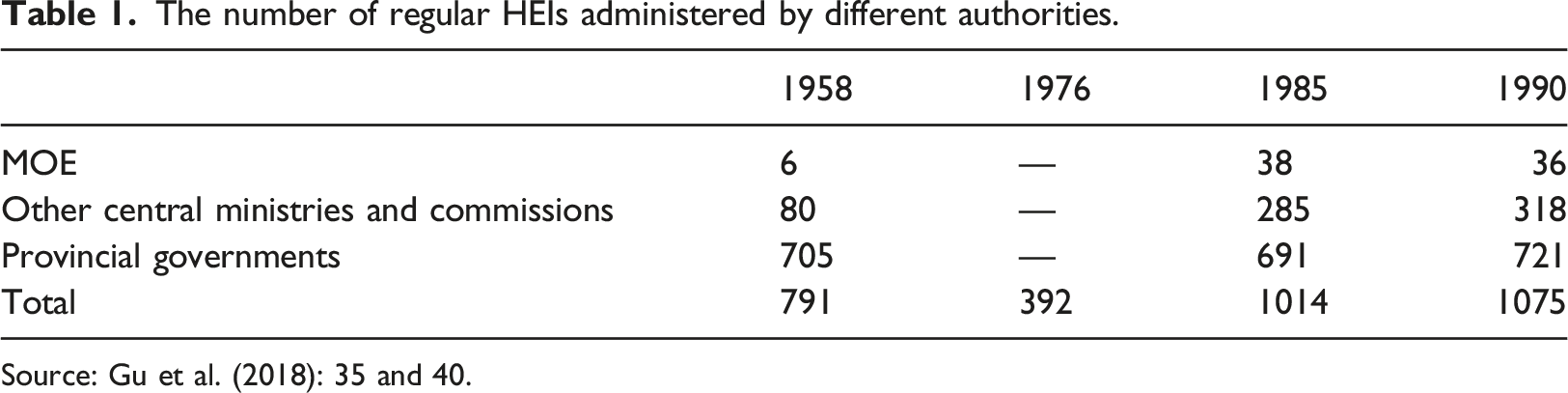
Source: Gu et al. (2018): 35 and 40.
The Chinese government’s role in enhancing the involvement of provincial governments
As universities are administered by either line ministries or provincial governments, they have roles and responsibilities in developing key disciplines and universities toward the larger goal of establishing world-renowned, world-class universities located in their regions. Accordingly, the selective principle of ‘one ministry, one university’ and ‘one province, one university’, except for key universities under MOE jurisdiction, was promulgated under the 211 Project. Because establishing disciplines and national, research-oriented or world-class universities to meet the national strategy requires considerable financial investment, the central government cannot do it alone. Therefore, the central government decided to initiate the involvement of provincial governments (Tang, 2020). Both levels of government were assigned roles and responsibilities for the development of China’s HE system and world-class universities. Central commissions and other ministries and provincial governments were granted all decision-making powers for the selected 211 universities under their jurisdiction. Moreover, they were allowed to develop key institutions located in their territories to attain world-class status depending on the capacities of their financial resources (Ngok and Gou, 2008). More than RMB36 billion and RMB31 billion were invested in the 211 Project and 985 Project, respectively (Ying, 2011); the financial resources were shared by both central and provincial governments.
To cultivate talented people with a sense of social responsibility, awareness of the rule of law, innovative spirit, and moral integrity as socialist builders and successors to promote China’s economic and social development by creating scientific and technological innovation. Accordingly, the State Council issued the Overall plan to encourage the construction of Double First class in November 2015, as soon as the 985 Project expired. The Double First-class refers to the construction of First-class universities and First-class disciplines, officially published in 2017. The Double First-class emphasises the importance of talent training. Unless being trained talents, a Chinese university cannot be selected in this Project. While Chinese universities at First-class status have Chinese characteristics, adhering to the correct political orientation, Chinese Disciplines at First-class status have to link to local economic and social development needs. The Double First-class was officially promulgated in 2017. The State Council decided the list of First-class universities and First-class Disciplines based on the proposal submitted by the expert committee coming from the Ministry of Education, Ministry of Finance, National Development and Reform Commission (Lim and Xue, 2022). Although both central and provincial governments have been involved in The Double World-class Project, the local governments had little impact on the selection of participating universities. The involvement of the provincial governments in The Double World-class Project has been restricted in terms of financial support, as decision-making powers of the provincial governments on choosing universities for The Double World-class Project have been withdrawn (Zhao, 2018). First-class universities and First-class Disciplines would have a high overlap with the 985 project universities and the 211 Project universities; the restricted influence of provincial governments happens whether they seek changes or maintain the status quo. The intervention of local governments would be more potent at the implementation stage.
Discussion and conclusion
In the knowledge economy, professional human resources are a key factor in national competitiveness and economic growth. However, as the quality of higher education in China lagged far behind other developed countries, the shortage of talent was a significant barrier to China’s development in the late 20th century. Establishing world-class universities, therefore, became China’s national strategy, because they were acknowledged as key players in training the talented workforce ‘needed by the economy’ (Salmi, 2009: 24). Key disciplines and universities were handpicked for substantial investments to narrow the quality gap in higher education with Western countries. The strategies for building world-class universities have been quite clear since 1998. Among several prestigious HEIs, the Chinese government decided to invest a considerable amount of the central government budget to turn the two targeted universities into world-class institutions, while 37 other universities were targeted to be world-renowned universities with financial support shared by both central and provincial governments. Decentralisation in higher education enhanced the participation of provincial governments in the HE sector in China. Autonomous rights were granted to public universities, with the exception of the following: (i) political courses, such as Marxism and Maoism, are required to meet the national objective of promoting socialist modernisation by developing socially responsible, innovative and pragmatic specialists (HEEC - Higher education evaluation center of the Ministry of Education, China, 2017); (ii) a unitary governing system is compulsory, and the executive body runs the university under the leadership of the Committee of the Communist Party in Chinese public universities, known as a governing body in Western countries (Mai et al., 2020). To achieve a ‘leap forward in development’, a working environment conducive to attracting the best talent from home and abroad was created (Ngok and Gou, 2008). With extra money and other supporting policies enacted by central and local governments, elite universities attracted talented people globally. Therefore, the objectives of the second phase of the 985 Project were met. Generally, without receiving political and financial support from the Chinese government, it is impossible for Chinese universities to reach a world-class status.
36 of out 39 universities in 985 Project ranked by The Times Higher Education World University Rankings.
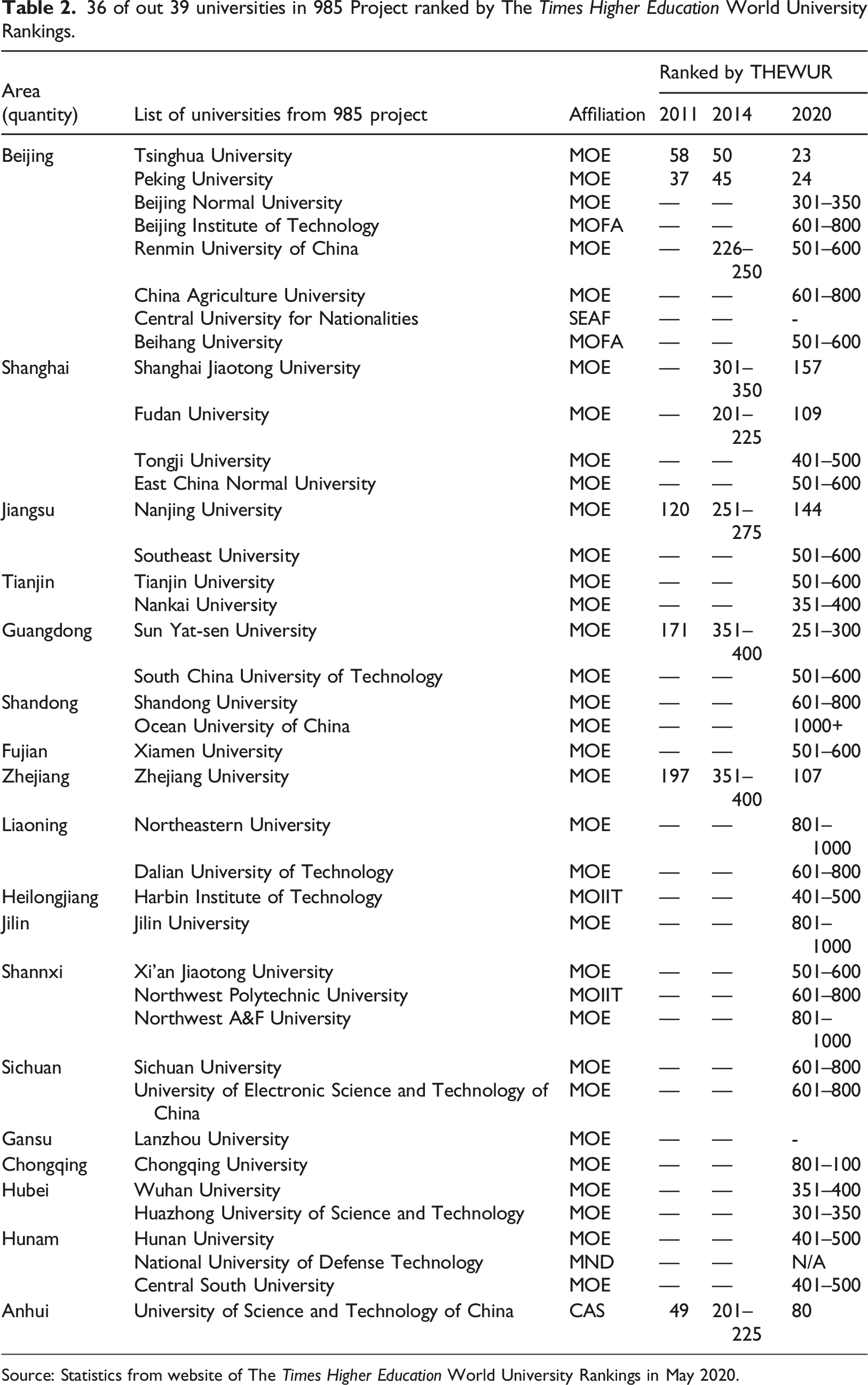
Source: Statistics from website of The Times Higher Education World University Rankings in May 2020.
China was ranked immediately after the United States in terms of global research publication output (Zhong et al., 2019). Nine universities of the 985 Project were included in the global ranking in 2014, compared with the six in 2011, according to THEWUR (see Table 2). In 2017, the Chinese government decided to launch the Double World-Class Project, Key Discipline Innovation Platform, and Key Discipline Project, known as the Double World-Class Strategy. The project aims to turn China into a global higher education power with 42 universities and 456 academic disciplines ranked globally (Mai, 2022). A three-step process for achieving these aims has been outlined: to have more world-class universities and world-class disciplines ranked by prestigious global rankings by 2020; to significantly improve the HE quality with more world-class universities and world-class disciplines ranked among the best all over the world by 2030,; to be a global higher education power with a number of institutions ranked among the best by 2050 (Mai, 2022).
By exerting direct and indirect interventions, the Chinese government has successfully accelerated some of its elite universities to reach a world-class university status. By 2020, seven universities of the 985 Project were ranked in top 150, and 28 other universities of this project were ranked from 250 to 1000 of global universities, according to THEWUR (see Table 2). Although the top world-class status has been attained by two prestigious universities and 34 key universities have been ranked in global rankings, several problems in China’s HE system persist and must be resolved before China can attain the position of a global higher education power. Although the Chinese government has succeeded in playing a regulatory role to build world-class Chinese universities, the implementation of these policies has created unwanted outcomes for the development of China’s HE sector and its society.
First, the geographic distribution of elite Chinese universities among regions is unequal, as 25 out of 39 universities of the 985 Project are in the east while eight of 12 provinces in the west are not supported (Wang and Vallance, 2015). In addition, students in developed regions enjoy more opportunities and a lower cut-off to be admitted to top universities than those from poor regions (Jia and Ericson, 2016: 103). Consequently, the stratification in China’s HE system is characterised by a widening gap between elite universities and the rest, regardless of the institution’s operating conditions or students’ learning experiences (Tang, 2020; Zha, 2011). Graduates from elite Chinese universities have more opportunities to earn higher incomes and better career prospects than other graduates. The concentration of talented Chinese students in key universities also leads to clustered gifted students in some developed regions, promoting stratification between areas nationwide.
Second, despite the encouragement given to the diversification of funds for university research, hardly any private companies have entered a joint venture with public universities, including elite universities in China, except for state-owned enterprises. Private investment in university-industry collaboration remains rare (Wang and Vallance, 2015). Floor funding for university research is inadequate in China. Therefore, given the state’s all-encompassing authority, elite universities have been assimilated into the dominant political and administrative system (Serger et al., 2015). In other words, China’s elite universities often function in a constrained environment, with a primary goal of meeting political requirements (Han, 2020).
Third, Chinese returnees have played an important role in the development of Chinese society and higher education, and questions have been raised about successfully attracting the best and brightest returnees. Obviously, several talented overseas Chinese have not returned because of the disparities between their current cultural and working environments and those of China. Returnees working in top Chinese universities start their careers with a tenure-track contract. The requirement of publication volumes and publication impact factors, instead of the actual quality of the research, are crucial indicators for evaluating returnees’ performance. In addition, soft research environments including academic culture and international networks of collaboration are not adequately nurtured. Therefore, some returnees tend to pursue research that is easier to publish to attain good assessment from their institutions, of which the evaluation measurements are largely followed by the country’s national strategy (Marini and Yang 2021).
Published documents and H-index among 20 leading publication countries.
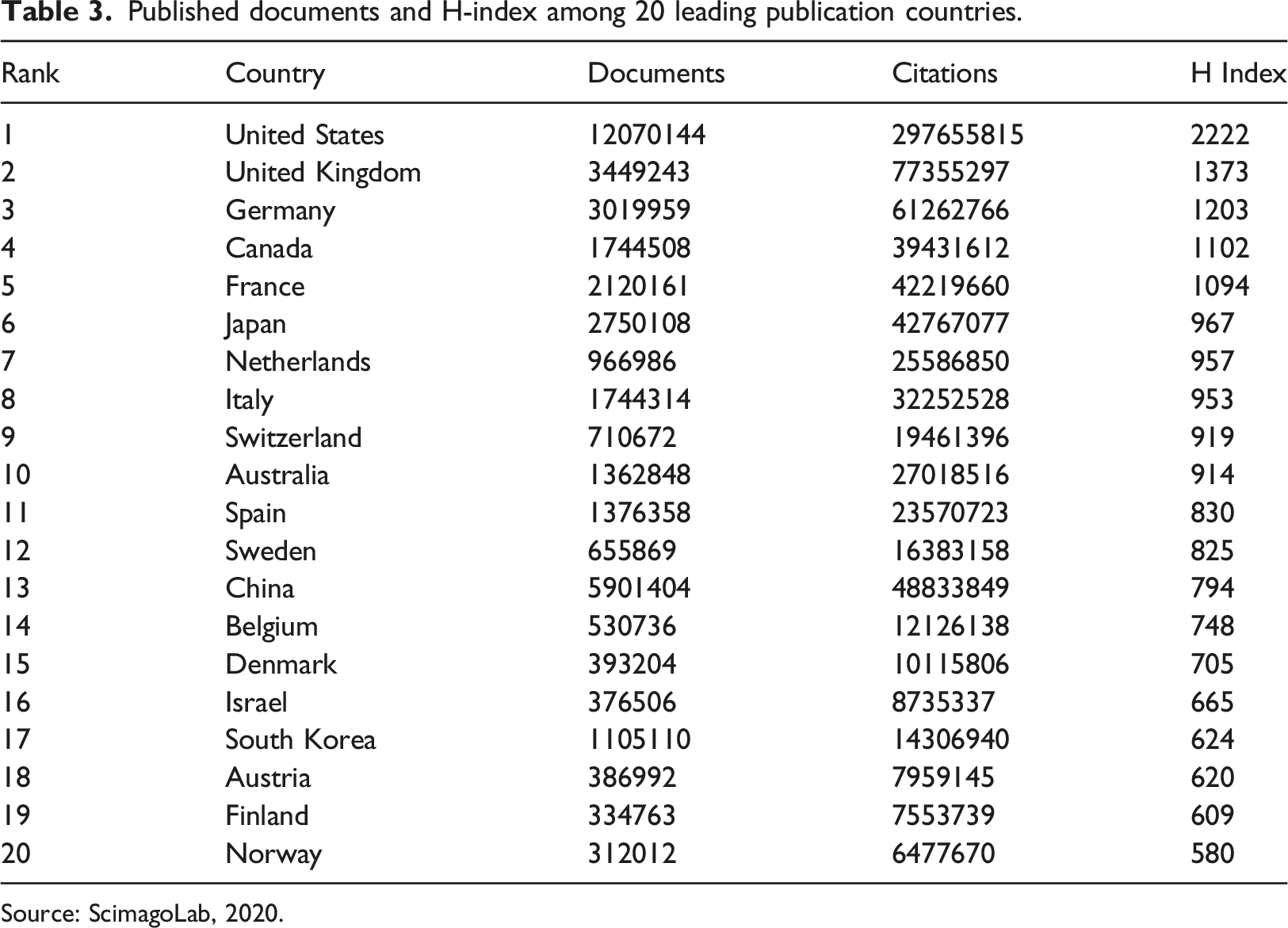
Source: ScimagoLab, 2020.
Finally, although the number of foreign-student enrolment in China’s institutions dramatically increased, placing China’s ranking after the United States and the United Kingdom, most international students in China come from developing nations and participate in undergraduate courses, event short-term language programs; foreign undergraduate and graduate students from developed countries account for a small portion. The search for truths is nurtured by world-class universities in the American talent-driven model and the British and Australian commerce-driven models. By contrast, although universities have been given autonomous rights, political capital is the primary pursuit in Chinese universities, driven by the Chinese government, including the flagship ones. Most of them reflect that ‘ideological discourse in classroom teaching’ differs from ideological roots (Gao and Liu 2020). As a result, talented Chinese students planning to go abroad to study and foreign students from bilateral agreements between Chinese governments and other developing countries appear as recruited targets of Chinese flagship universities.
The government’s role in establishing world-class universities continues to serve as a proxy for political debates. Drawing comparative studies related to the role of the government in the establishment of world-class universities across non-Anglo-Saxon systems or discussing China’s university governance model in the context of the industrial revolution 4.0 in China due to unwanted outcomes from building world-class Chinese universities is an interesting topic for future research.
Footnotes
Declaration of conflicting interests
The author(s) declared no potential conflicts of interest with respect to the research, authorship, and/or publication of this article.
Funding
The author(s) received no financial support for the research, authorship, and/or publication of this article.
