



Abstract
The implementation of preventive measures against the spread of COVID-19 in Kosovo resulted in the closure of educational institutions for all levels of education. The transitioning process from face-to-face to virtual or online classes’ format was also coordinated for pre-school children, enabling their development at home. The research aims to shed light on the problems, needs, and difficulties the children of preparatory classes, their parents, and teachers face since the implementation of distance learning measures. For completing this survey, a qualitative research design was used. The empirical research was carried out through discussion in focus groups and semi-structured interviews. Our sample included 22 teachers and 22 parents of children and six leaders, from two municipalities of Kosovo, in Pristina and Gjilan, with a total of 50 respondents. The results of the research show that the new circumstances created as a result of the COVID-19 spread, including changes in education, have caused a range of difficulties for children, parents and teachers in Kosovo. Findings from the study confirm the common concerns of the reporting groups concerns, and assessments about the education achieved by the end of the school year 2019/2020. These concerns have been influenced by the lack of experienced teachers and parents have in supporting their pupils or children in online learning, the inadequate level of skills and knowledge in the use of technology, the absence of children in school environments, the inability to socialize and cooperate with peers, low attention and concentration in learning, and loss of creative skills, which can cause issues in the period of first-grade learning.
Introduction
The implementation of preventive measures against the spread of COVID-19 worldwide resulted in the closure of educational institutions for all levels of education. More than one billion 575 million pupils and students in approximately 188 countries have been affected by the shutdown of schools and universities due to measures taken by governments against the spread of Covid-19 (UNESCO, 2020). To reduce the impact of the pandemic on education and control its spread, online learning became a crucial strategy to reestablish the usual order of teaching in this particular period (Chen et al., 2020).
The process of moving from in-class learning to the remote or virtual format was considered the most convenient and the only alternative, in this case, to keep educational systems functional in different parts of the world. Educational institutions are facing challenges in adapting to these changes by making efforts in choosing the right technologies to create access to learning and student engagement (Rashid, Jadav, 2020). According to the report published by THE WORLD BANK (2020), which relies on the initial response of the education systems of more than 70 countries around the world after the shutdown of schools due to the Covid-19 pandemic, whereas an opportunity to keep pupils engaged to learning they see distance learning, offering lessons through television, radio, and various platforms.
A range of concerns of teachers engaged in learning processes has been intertwined with opportunities to implement virtual or online learning due to their level of knowledge and skills for the use of technology, access to technology, and isolation at home. Such concerns have been in particular by countries in which, before the circumstances created by preventive measures against the spread of COVID-19, the level of use of technology in the classroom by teachers has been declared extremely low (UNESCO, 2020). Parents’ concerns, in addition to the circumstances created due to social isolation and other personal factors, are supposed to have been influenced by parents’ unpreparedness to support their children with virtual learning or at-home learning, lack of access to technology and Internet or the inadequacy of technological software and hardware equipment used for children in education and another concern was financial difficulties (UNESCO, 2020).
The transition of learning from school to the online format embodies the concept of “flexible learning.” According to this concept, although teaching moves to the virtual version, it should stimulate learning in pupils, and that courses should be designed to support their individual needs (Huang et al., 2020). Parents are also facing various difficulties due to the change in teaching methodology (Tarkar, 2020).
Various studies conducted around the world highlight the importance of preschool education, as well as the importance of preparing children for school. In all these researches, it is recommended that children should be educated in preschool institutions, which have proven with their programs that they can help with qualitative preparation for first-grade children (Zhitija-Gjelaj, 2014).
The shutdown of schools and the transition to online learning can harm absorbing knowledge, especially on younger children who require building soft skills (e.g., communication skills and group work) and may have trouble concentrating if they sit too long in front of a screen (Di Petro et al., 2020). Moreover, activities implemented in the classroom play an important role in the development of children’s social skills and have a major impact on their future personal and professional development (Goodman et al., 2015), along with good social skills, these have been linked to pupils’ learning progress (Suswandri et al., 2020). However, it is important to see that online learning platforms also offer opportunities for socializing (Goodman et al., 2015).
According to a study conducted by Chen et all (2020) on the experience of users of online educational platforms, the results show that before the outbreak of the pandemic, users were concerned about the speed of access, reliability, and timing of the video transmission of the platform information so the Zoom Cloud user experience was the best. After the outbreak of the pandemic, users focused mainly on course management, communication, and interaction, learning the platform technical support services that are when the experience of platform users was most important.
The need to move learning to the online format has been assessed as a good opportunity for teachers and pupils to empower themselves, become more creative and innovative (Yokozeki, 2020), an opportunity to developments in the field of digital education, which would otherwise take years (Lurvnik, 2020). Overall, the lockdown period was an opportunity for considerable professional learning and growth for teachers, prompting the development of new skills and knowledge, as well as new opportunities for teacher collaboration and cooperation (Hood, 2020: p.15).
Coordinating virtual learning for children of preparatory classes (5–6 years old) in Kosovo
Computer technology for educational uses within a few years has gained an extraordinary spread. There is a whole range of computer programs with quite sophisticated functions related to computer-managed instruction (CMI), as well as computer-assisted instruction (CAI) where different programs with different services are offered (Marsh, 2009).
The phrase “distance learning” today refers to e-learning, which is increasingly taking different forms of expression, such as “online learning” or “virtual learning.” Distance learning is the transmission of the knowledge of the curriculum through technological equipment, via the Internet. This platform offers completely equal conditions to all its followers, regardless of where they are located (Beqiri, 2016).
Preventive measures announced by the Government of Kosovo against the spread of COVID-19 on the 11th of March 2020 have impacted the life and education of 450,146 pupils and students, also about 30,528 teachers and professors were affected in Kosovo (MEST, 2020a, 2020b).
In the following days, the Ministry of Education, Science, Technology, and Innovation in cooperation with other stakeholders, started planning distance teaching for children of certain age groups, and special subjects (language and mathematics).
In Gjilan, the Municipal Directorate of Education (MDE) took the initiative to design a platform that would enable teachers to communicate with their pupils through the loading of teaching units pre-programmed, as well as tasks for their pupils. The “learn from home” 1 platform was launched on 16 March 2020, where pupils and their parents had access beyond teachers and school leaders. A few weeks later, for public pre-university education a new method of distance learning was published, the one where lessons were presented through video recordings that were broadcast on national television of Kosovo. The lessons were presented by selected teachers for pupils of grades 1–5 and later on also for pupils of grades 6–9 2 .
The transmission of face-to-face learning to the remote or online format was also organized for preschool children, enabling their development at home. For the preparatory classes, on 14 MEST (14 april, 2020 the Ministry of Education, Science, Technology, and Innovation launched the distance learning platform—Care, Development and Early Childhood Education for ages 0–6 years 3 . This platform supported parents/legal guardians and teachers in the realization of daily/weekly activities with children at home, while the content of activities presented on this platform, stimulates children in their development in all areas of development depending on their age (MEST, 2020a, 2020b). Meanwhile, also the Municipal Directorate of Education in Pristina launched an e-school 4 platform similar to the one the municipality of Gjilan launched previously.
To evaluate the pupils during distance learning, a manual was developed, which would help not only teachers but also the parents of pupils. Following the guidelines given in this manual, early childhood assessment is done to collect information about the child’s development and learning, from the available environment and from all educational activities conducted by teachers and parents, to support and assist the child in the process of his/her development and schooling (MEST, 2020a, 2020b).
Purpose and importance of the study
The preschool institution occupies a special place in the development of good personality traits in children. In the preparatory grade (aged 5–6 years), children will also be exposed to learning experiences, which include the basic elements of reading, writing, and numerical calculation, thereby increasing their willingness for school and life (Nuredini, 2012).
The purpose of this study was twofold. First, data were presented on what happened during the lockdown period in Kosovo, how the teaching process was organized and supported in schools, how teaching and distance learning was carried out and how it was supported by students’ parents. Second, we focused to shed light on the challenges, needs, and obstacles of the utilization of distance learning to children of preparatory classes (5–6 years old), to explore and describe the concerns of parents and teachers about the appropriate preparation of children to continue the lessons in first grade.
Methodology
For this study, the qualitative research design was used. Data collection has been done through focus groups as a convenient method for collecting qualitative data on experiences, ideas, and awareness of people, and also semi-structured interviews were used (Matthews and Ross, 2012). In line with the purpose of the study, through focus groups and semi-structured interviews, participants explored three research questions: How was learning conducted during the pandemic period? What are the advantages and difficulties of distance learning? What is the evaluation of the participants regarding the arrangement of the preparatory class children for the first grade?
The structure of participants involved in the research (educators and parents).
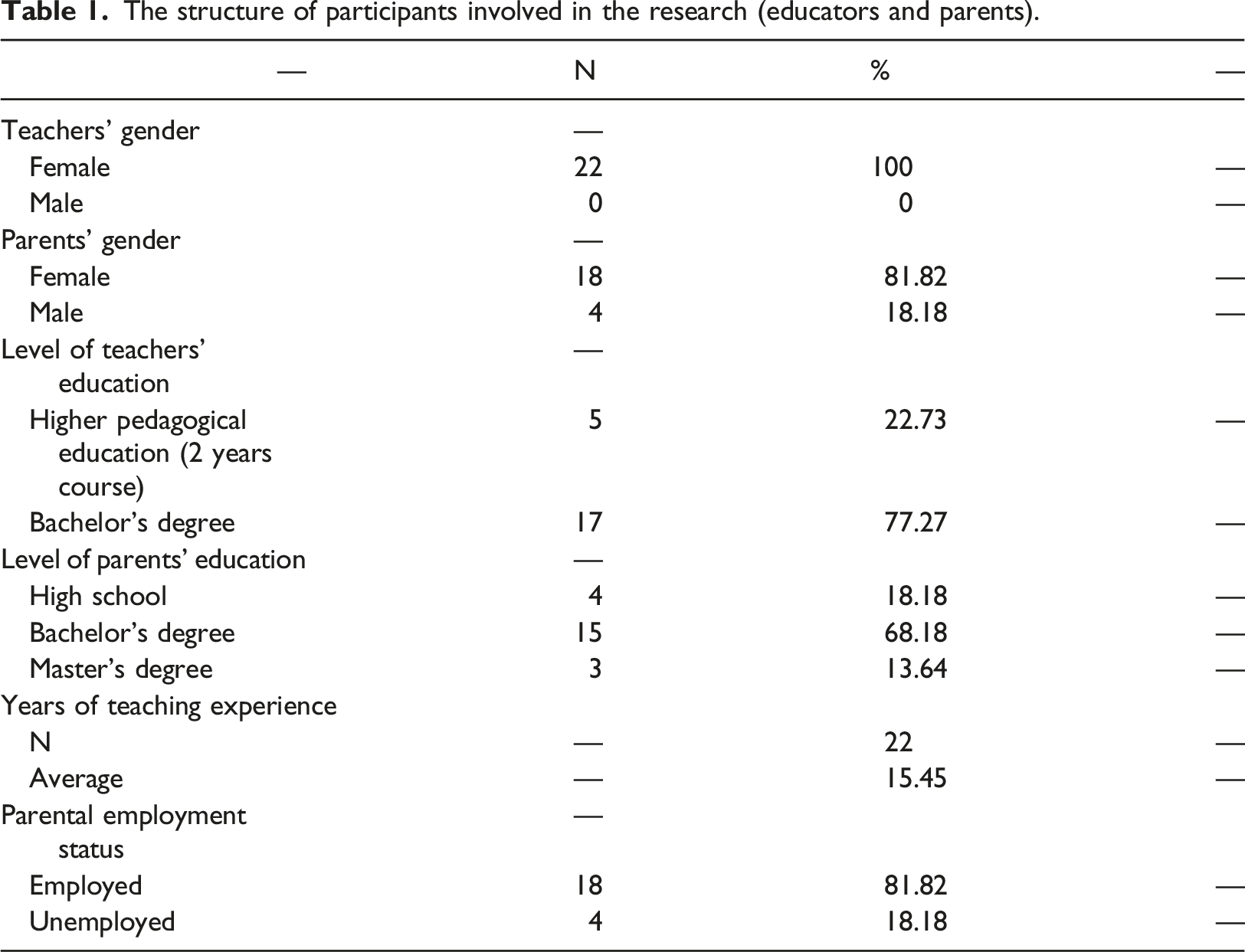
Participants of the focus group in the municipality of Gjilan were gathered physically (live), while in the Prishtina municipality it was conducted through a virtual meeting platform (Zoom). Interviews with school principals and the head of the municipal directorate of education were conducted directly. Principals of primary and lower secondary schools “Selami Hallaci” and “Hello” in Gjilan, “Elena Gjika,” “Qamil Batalli,” and “Mileniumi” in Pristina, as well as the director of the Municipal Directorate of Education in Gjilan, were interviewed. Data derived from focus groups and semi-structured interviews were analyzed through classical content analysis, content analysis, and coding of certain parts of the material, continuing with aggregating similar codes into groups.
Outcomes
Data gathered in this study show the thoughts and experiences of the participants that were present in the study. The following results reflect the findings from the perspectives of teachers, parents, and school principals based on three research questions: How did education take place during the pandemic? What difficulties and advantages have been identified during distance learning? What is the assessment of the participants for the preparation of the children/pupils for the first grade? In addition to the narrative description, the results are accompanied by quotes detached from focus group discussions and semi-structured interviews.
Outcomes from the focus group conducted with teachers
Teachers, participants in the study, stated that communication with children of the preparatory classes was conducted through applications: Viber (creating group chats with children’s parents) Facebook, email, Zoom, and Google Meet. Platforms that are used: learning from home (Municipal Directorate of Education, Gjilan), distance learning (Ministry of Education, Science, Technology and Information), e-school (Municipal Directorate of Education, Pristina), and other platforms. Educators in particular used the lockdown period to encourage children to engage in a wide range of activities, often beyond what they would do at school, emphasizing the important learning-related lesson, physical activity, and home-based activities. The children were given relevant information, tasks and instructions, as well as the activities were recorded by the educators themselves and sent to the children. The recorded activities were songs, stories read, and creative activities. Parents, after carrying out the activities with their children, have returned to the educator’s evidence of the completed tasks of the children within the day or even during the weekend. “At first the contacts were reached through Viber, and then the “learn from home” platform was created, where we posted the teaching units and activities that had to be done. Later the “early education” platform was developed within the Ministry of Education, which we used and instructed parents to follow it.” (Teacher 2)
Due to the delegation of responsibilities of the teacher to the parents, the maximum commitment of the parents to their children was required, which as a consequence resulted in indefinite schedules of completion of tasks and their submission to the teacher. There have been cases of lack of electronic equipment or problems with the Internet. Also, teachers who have held virtual lessons through Zoom emphasize that the attention and concentration of children have not been at the right level, due to the presence of family members. “Parents were not ready to work with children through the Zoom platform because they were forced to stay next to their children during the virtual lessons because the children did not possess sufficient knowledge of technology or platform handling.” (Teacher 8)
Advantages of distance learning as per the teachers is the fact that lessons can also be conducted at home, without the necessity of presence in the school environment, but the outcomes are higher when the activities are carried out by the children cooperating among themselves, with the teacher’s guidance and supervision. “This form of work is now considered a novelty, that is, distance learning, it can also be practiced in the future.” (Teacher 3)
Since there was the quick reaction in establishing contacts and communicating with children of the groups and their engagement throughout the pandemic was efficient, that is why teachers believe that children are prepared enough to continue the lessons of the first grade.
Outcomes from the focus group conducted with parents
Parents involved in the study affirmed that communication with teachers was immediate. Initially, parents were contacted and communication group chats were created via Viber, where teachers provided details and guidance on the activities that will be carried out with children. Parents are instructed to enroll in the platforms learning from home, (Municipality Directorate of Education, Gjilan), e-school (Municipality Directorate of Education, Prishtina) and early education (Ministry of Education, Science, Technology, and Information) by following the units and activities planned for children aged 5–6 years. Children’s completed assignments are forwarded to the teachers via Viber and email. “Communication with the teacher was conducted through Viber, where children after completion of tasks posted them in the group and simultaneously watched each other’s work. This way has influenced the encouragement and motivation of children.” (Parent 7)
As distance learning difficulties due to the pandemic situation parents consider the use of technology and its infrastructure, as well as the lack of teaching materials to work at home. In certain circumstances when one family has two or more children, who have scheduled classes at the same time, had to use a single electronic device! Furthermore, distance learning has affected the need for socializing in children, loss of creative skills, which can cause issues in the early phase of first-grade education. It is worth noting that some parents valued the lockdown period as a good opportunity to create a clear picture of their children’s development, what they were capable of and what the learning gaps were. “Distance learning is not so well acknowledged by children given the fact that they learn from one another since the activities take place in groups. I think children also lack communication and socialization with peers.” (Parent 14) “It is not that we have encountered many issues during the implementation of the activities because the topics have been very precise. But we struggled with the need for teaching materials so we had to try improvising the required materials, facing the conditions and circumstances that we were in.” (Parent 16) “I have two other children in school. The class schedules were on the same time for all my children, the Internet signal was weak every once in a while, as well as the lack of equipment to access online learning.” (Parent 15)
Parents believe that thanks to arranged distance learning, through different platforms, their children have been sufficiently engaged in the implementation of the activities foreseen in the 5–6-year-old program and positively evaluate the preparation of their children into moving in the first grade. “Relying on the outcomes achieved by children before the pandemic and their commitment in the remaining period of the school year, I consider that children are ready to start lessons for the first grade.” (Parent 8)
Outcomes from interviews held with principals of primary and lower secondary schools
Five principals of primary and lower secondary schools and the head of the Municipal Directorate of Education were interviewed directly at their workplaces. According to principals’ statements that participated in this study, distance learning for children of the preparatory grade was conducted through applications: Viber, Facebook, Email, Zoom, and Google Meet after reaching the contacts with teachers. The use of several platforms has enabled and facilitated the proper involvement of children. Teachers were in touch with the children daily, whereas in most schools, virtual meetings were held once a week. Teachers were asked to convey to principals’ evidence of their work with children, this request was delegated by the Ministry of Education, Science, Technology, and Innovation through the Municipal Directorate of Education and thus the implementation of the teaching process was monitored. Evaluation of pupils for all levels of pre-university education in Kosovo is made according to guidelines drawn up by the Ministry of Education, Science, Technology, and Innovation. “For groups aged 5–6 years old, was used the platform and implementation of the activities were enabled through networks of communication mostly on Viber and via Zoom so the teachers conducted the according to agreed with parents.” (Principal 3)
In Gjilan schools, teaching through the Zoom application is not approved by parents, due to insufficient knowledge of the use of technology by children and some parents, lack of adequate equipment, possible internet connectivity issues. However, platforms have been used to obtain information on educational activities with appropriate guidance. “The most difficulties were with the elderly educational staff, then, the insufficient knowledge in usage of technological equipment and the access in platforms.” (Principal 4)
On the bright side, the principals see the opportunity of distance learning, because it was not applied before, also the cooperation between teachers and parents has increased and the increased interest and effort for the use of technology for educational purposes both by teachers and pupils. “Positive sides, the staff, parents, and children have gained new experience in completion of educational/learning contents. Mobilization of all actors within the institution has been noticed. Acquisition of skills for the usage of application programs - a good opportunity to expand knowledge.” (Principal 5)
School principals do not consider the interruption of teaching for children of preparatory classes to be a concern, because 70% of the time planned for a school year was accomplished in school facilities and the rest (about 30%) of the time was conducted through distance learning, the commitment of teachers and parents has not been lacking to meet the requirements outlined in the annual program. “Considering the work disruption by the third period, we consider that the essential contents have been accomplished before the interruption of the work and based on this fact we believe that children are satisfactorily prepared for the start of the first grade!” (Principal 3)
Conclusion
The findings from this study confirm that the new circumstances created due to the spread of Covid-19, including changes in education, have caused a range of concerns among children, parents, and teachers in Kosovo. These concerns, as underlined by other countries around the world, have also been influenced by other changes, including the impact of COVID-19 on education and the inexperience or unpreparedness of teachers and parents to support pupils or their children in distance or online learning, also affected by the inadequacy of methods used for online learning to meet individual needs of pupils (UNESCO, 2020).
To enable the successful implementation of online learning, from the perspective of online education organizations, the main factors are emphasized to be: reliable communication infrastructure, the suitability of digital devices, appropriate tools or teaching materials, efficient learning methods, clear instructions from institutions that dealt with arranging online learning, effective support of teachers and pupils, and close cooperation between the various actors involved in the implementation of online learning (Huang et al., 2020).
Integration of technology into educational institutions involves training the teachers, but also requires a wider vision of competence development and support services. Fundamental factors that hinder the practical implementation of teaching techniques are the financial struggles that affect its implementation in practice, inadequate training of the teaching staff for its implementation in teaching practice (Vojka-Ismajli, 2012), as well as the absence of teacher guidance on integrating technology into teaching (Mexhuani, 2015). Even internet connectivity is a concern for all teachers, pupils, and their parents (Tarkar, 2020).
Despite the circumstances created, interrelated Covid-19 concerns and commitments about their children’s lessons can be overwhelming for parents, the situation created can be considered a priority in increasing cooperation with parents, supporting them to overcome current challenges easily and at the same time advancing their level of knowledge and skills for adequate support practices for their children (Hyseni-Duraku and Hoxha, 2020).
Spending a relatively short time at school develops skills. On the other hand, not going to school will have negative effects on skills development (Tarkar, 2020). Distance learning at home is the primary alternative that is recommended for all pupils. Educational institutions, whether public or private, are fully aware that this will be a challenge that will not be easily overcome. Teachers within the school have used pedagogical approaches through which they have encouraged the active participation of pupils in distance learning. The Ministry of Education, Science, Technology, and Innovation and the Municipal Directorates of Education helped both teachers and parents through designing the platforms, which have enabled the uploading of teaching modules and relevant information, to which parents and pupils have had access to reading and performing tasks. Feedback to teachers is sent via Viber and email. In some schools, teaching is also carried out through platforms that offer virtual communication opportunities such as Zoom, Google Meet, etc.
The difficulties that have been identified in our study are insufficient knowledge in the use of technology (equipment and platforms), lack of equipment, and internet network (two or more children in the family); maximum engagement of parents with their children was required despite their engagement with work; lack of presence of children in school facilities and inability to socialize and cooperate with peers; difficulties in providing materials for creative activities, etc. Also, educators who have held virtual lessons emphasize that the attention and concentration of children has not been at the proper level, due to the presence of family members.
Benefits of distance learning are considered: implementation of the curriculum in unprecedented situations, increased interest in the use of technology, online research on the needs of intellectual development (children) and professional (teachers), as well as parents in providing creative ideas for children engagement. The advantage of distance learning educators consider that the learning process can be achieved even at home, without the need for presence in school, but the results are higher when the activities are implemented by cooperating children with each other, with instructions and supervision of the educator. Parents valued the lockdown period as a good opportunity to create a clear picture of their children’s development, to assess skills, and to identify gaps in their learning. Distance learning is considered by school principals as a new form of learning, which has influenced the increase of cooperation between teachers, between teachers and parents has increased interest and effort to use technology for educational purposes.
Teachers’ contribution is highly honored and appreciated by parents, while teachers value the commitment of parents to their children. Also, it is estimated that distance learning allows pupils to learn in a more suitable environment and to learn when they are free.
Based on statements of parents, teachers, and school principals, we conclude that preparation of children for preparatory classes despite the identified difficulties, is relatively safe to continue lessons in first grade. Although, online learning does not seem to be very effective for elementary school pupils unless attention is paid to their needs and characteristics. Many elementary level pupils may find online learning challenging, especially at the beginning of the new school year, when they face new teachers, new classmates, and new subjects (Di Petro et al., 2020).
In private schools, the technology is used at a higher level than in public schools, both in the Prishtina and Gjilan municipality. Private schools also use appropriate communication programs with parents, where they report on the results of their children’s work. In private schools are organized more frequent trainings for professional development of the staff and especially for the innovations in the use of the current technology and platforms.
To achieve the best possible work results during the pandemic period, the cooperation between teachers and parents had to be increased and strengthened. Empowered parents are the best partner for an effective school. Among parents, there is unlimited potential for cooperation to improve school performance (Rexhaj, 2019). Parents are also an important element, especially for young children who cannot be left alone to face online learning challenges. Pupils who possess technological equipment should also be guided. Instructions from parents require knowledge about the use of technological devices (Chandasiri, 2020). Parents should be taught how to emotionally support their children in their daily school tasks. Continuous communication among parents, teachers, and schools is an essential element for the successful implementation of online learning (Di Petro et al., 2020).
This is the time when politicians need to take a look at the world with a new perspective. Emphasis should be placed on teaching methodology and technology. A blended learning system in the classroom and virtual learning may be more appropriate (Chandasiri, 2020). Although mixed (classroom and virtual) learning is a good option, according to Di Petro et al., 2020, it is important to emphasize that: it requires a change in both quantity and quality of teaching capacity; requires curriculum review; young children may have difficulty adapting to this model of learning, especially with the online learning part; the structure of some schools may not be suitable for respecting the physical distance.
Recommendations
It is recommended to invest in technological equipment in schools for the best accomplishment of the learning process, providing adequate equipment, strengthening the Internet network so that access to information is easier and faster; to enable schools to provide different platforms, which provide knowledge for different curricular areas, which will be used by pupils of different ages, but also by teachers; arrangements should be made for training and workshops for the development of computer skills and pedagogical needs of teachers; schools should plan scenarios of conducting distance learning; cooperation between school and families should be increased and strengthened (parents, teachers, leaders); collaboration between school principals, Municipal Directorates of Education and the Ministry of Education, Science, Technology, and Innovation should be intensified; Municipal Directorates of Education should monitor the work of private schools and provide appropriate support to them; To provide beneficial teaching conditions in schools, protecting the health of pupils, teachers, and the rest of the school staff.
Our study may have limits, considering that our sample is represented by only two municipalities, Gjilan and Pristina, and does not extend to the entire territory of Kosovo. Furthermore, the following studies can be built on data collection through observation and documentation, or combined with quantitative data collection through questionnaires.
Footnotes
Declaration of conflicting interests
The author(s) declared no potential conflicts of interest with respect to the research, authorship, and/or publication of this article.
Funding
The author(s) received no financial support for the research, authorship, and/or publication of this article.
