



Abstract
The ongoing global COVID-19 pandemic has caused unprecedented shifts in higher education worldwide, with some nations more adversely affected than others. Since the onset of the crisis, almost all education abruptly moved to ‘emergency remote teaching and learning’. While the United Arab Emirates has been praised for its swift and effective responses, unique cultural and linguistic dynamics in this region present additional challenges for teaching and learning. This article presents empirical data from a qualitative phenomenological case study investigating female Emirati university students’ (n = 69) perspectives on the use of video cameras and microphones in online classes. Students’ reflective writing and researcher observations in autumn 2020 revealed discomfort using video cameras and microphones due to a range of cultural and linguistic factors. Such factors include Islamic beliefs relating to modesty, home as a gendered space, noise considerations, concerns about privacy, struggles with language in their English-medium instruction university and fear of judgement from peers. Data are interpreted thematically using intersectionality together with Goffman’s theories of everyday interaction, stigma and relative deprivation, through which complexities of learner identities are explored. Practical suggestions are made on ways to adapt online learning to better suit the cultural and sociolinguistic realities of periphery and Global South contexts. It is argued that greater efforts need to be made toward inclusion of marginalized learners during the COVID-19 period.
Introduction: COVID-19 disruption
The ongoing global COVID-19 pandemic has impacted the world in previously inconceivable ways. A new common vocabulary has developed to describe recent everyday disruptions, such as ‘lockdowns’, ‘mandatory mask wearing’, ‘grounded flights and closed borders’, ‘furloughs’, ‘PCR tests’ and ‘positive’, which means the opposite of its literal definition. The field of higher education is no exception to this dramatic period of disruption, with some nations more adversely affected than others. Since the first identified case of COVID-19 in the United Arab Emirates (UAE) on 29 January 2020 (Ryan, 2021), numbers of positive cases continued to rise throughout spring 2020. Acting quickly, the UAE announced that the school and university spring break would commence two weeks earlier (March 8 2020) than originally planned (Jarallah and Reynolds, 2020). By March 29 2020, over 100 countries had confirmed a total of over 100,000 COVID-19 cases (Ryan, 2021), and it became clear that travel and face-to-face schooling would not return for some time. Feelings of anxiety and disbelief gave way to deep disappointment and then reluctant acceptance as UAE citizens and residents prepared for the nation’s first lockdown. Instead of family vacation time in cooler climates, teachers spent the spring break digitalizing their classroom materials for the dawn of emergency remote teaching and learning (ERT&L). The goal of ERT&L was ‘to provide temporary access to instruction and instructional supports in a manner that is quick to set up and is reliably available during an emergency or crisis’. For university professors, this involved taking intensive training courses on how to adapt materials and better familiarize themselves with video conferencing tools such as Adobe Connect and Zoom as well as other educational platforms such as Padlet and Nearpod. Students and teachers found themselves having to adapt to a new way of teaching and learning which was accompanied by the COVID-19 pandemic’s ongoing grey zone effects on health, family relationships, finances and well-being (Bidwell et al., 2021).
While there has been a flood of publications on online teaching tips, apps and ‘best practices’ aimed at mainstream teaching contexts (Smith et al., 2021), there has been little attention given to the context-specific sociolinguistic and cultural challenges of ERT&L. As Smith et al. (2021: 124) point out, what is largely missing from the literature is ‘ways in which inequalities affect our students’ during the COVID-19 crisis. As individuals experience ERT&L differently, there is a need to go beyond general ‘best practices’ and look toward recognizing context-specific challenges and how ERT&L can be tailored to benefit learners within periphery contexts. This study addresses a previously unexplored area in the literature by focusing on sociolinguistic and cultural aspects of teaching and learning in UAE English medium instruction (EMI) higher education during the COVID-19 pandemic period of ERT&L. Characterized by multiple factors such as the Islamic faith, educational gender segregation, and the dominance of EMI in higher education, findings from this study are relevant not only to the UAE but to other periphery contexts sharing similar characteristics.
UAE higher education during the COVID-19 pandemic
In Smakman and Heinrich’s (2018) edited volume Urban Sociolinguistics: The City as a Linguistic Process and Experience, the first seven chapters relate to Global South contexts (Asia, Africa, and South America) and the latter seven cover the Global North (mainly Europe, North America and Australia, with the exception of Japan). Piller’s (2018) chapter on the UAE’s largest city, Dubai, has been placed in the Global South section of the book. Although, such neat divisions are appealing to scholars, it should be recognized that the term ‘Global South’ is not as straightforward as one might wish (Clarke, 2018). As Pennycook and Makoni (2020: 2) point out, ‘the Global South refers not so much to a geographical region, and to more than merely a set of geopolitical inequities’. Rather, the term also takes into consideration factors such as indigeneity, race, class, sexuality, poverty, religious beliefs, gender, and colonialism. Increasingly, it is being acknowledged that countries may not neatly fit into binary categories. As Mahler (2018: 32) states, ‘there are Souths in the geographic North and Norths in the geographic South’. The UAE straddles the categories in this respect. On the one hand, it is located in the geographical South, it is still developing as a young nation formed only in 1971, and it hosts a large number of low-income migrants. On the other hand, many local Emiratis tend to have high incomes, social welfare privileges and generally comfortable material lives. In addition, diversity within Emirati society means that some individuals are significantly more privileged than others. Such inequalities globally and internally have been particularly apparent in the COVID-19 period of ERT&L.
Breslin (2021: 112–113) identifies three broad groups of learners during the COVID-19 lockdown period: lockdown thrivers; lockdown survivors; and lockdown strugglers. To be a lockdown thriver, the learner tends to have good Wi-Fi access, resources and support from others with cultural capital as well as a certain mentality for more independent work. In the middle category of lockdown survivor, learners tend to get by but usually pine for a return to face-to-face learning. For the latter category of lockdown struggler, many intersecting factors conspire to make the experience of ERT&L particularly challenging. Such factors could include inadequate study space, noisy environment, lack of access, linguistic struggles, learning difficulties, socio-economic struggles, family disharmony, loneliness and anxiety. While the UAE has been praised for its swift and effective responses to the COVID-19 pandemic, especially in the field of education, unique linguistic and cultural dynamics are present in the region (Hurley, 2020). Such dynamics may place a higher number of students into the lockdown struggler category and present additional challenges for teaching and learning.
In terms of linguistic challenges, the UAE has followed the global neoliberal trend of internationalizing higher education. As a result, its universities use English as a medium of instruction (EMI) with the exception of a few courses such as Islamic Studies and Sharia Law (Hopkyns, 2020a, 2020b). EMI can be defined as ‘the use of the English language to teach academic subjects (other than English itself) in countries or jurisdictions where the first language of the majority of the population is not English’ (Macaro, 2018: 1). Despite Arabic being the official language of the UAE, its EMI universities hire mainly non-Arabic-speaking ‘mobile academics’ (van den Hoven and Litz, 2016) who teach in English. Many students experience linguistic difficulties at EMI universities, especially if they attended mainly Arabic medium instruction (AMI) schools previously. ERT&L can amplify linguistic struggles due to lack of cultural capital of parents or family members at home and reduced support from educators. As Abdulla (2007) points out, due to the UAE being a newly developed country, today’s youth are often first-generation university students without academic and linguistic (English) support at home. Such difficulties have also been found in other contexts such as Hong Kong (Choi, 2020) and Canada (Li et al., 2020) where linguistic minority students often struggle with ERT&L as families are not always able to offer adequate support in the medium of instruction. In the UAE, cultural dynamics and religious beliefs also affect teaching and learning in terms of gender segregated classes, dress code and Islamic values relating to female modesty. Traditionally, female Emiratis are discouraged from showing their faces on camera, especially in front of men, as this is seen as culturally and religiously unacceptable among many families, and such immodesty can reflect negatively on both the individual and her family (Bristol-Rhys, 2010). In Hopkyns and Trejo’s (2020) study with 60 Emirati university students, a cultural barrier to communicating online was students’ reluctance to show their faces and expectations to adapt to Western norms on networking sites. Although many positive developments have taken place regarding women’s and men’s education being viewed as equally important (Abdulla, 2007; Bristol-Rhys, 2010), it has been argued that ‘neopatriarchy’ exists in homes due to gender and generational hierarchies within families and wider society (De Bel-Air et al., 2018). For example, daughters rather than sons are often expected to help with caring for younger siblings and housework as the home is traditionally seen as a gendered space (Hurley, 2020). Further barriers found in ERT&L contexts include financial constraints and unsuitable home environments. For example, Smith et al. (2021) found that in United States universities, lower-income students were marginalized in ERT&L settings due to lack of devices and adequate Internet access.
Since the onset of ERT&L, one consistent context-specific challenge observed in the Arabian Gulf region is female students’ discomfort with using video cameras, and often microphones too, during online lessons. Teachers in online forums have described the challenges of ‘teaching to a blank space’ or ‘teaching in a void’ where it is difficult to monitor students’ learning and build a positive rapport. Lack of camera use has dramatically altered the teaching and learning experience in the Islamic context of the UAE compared to other contexts globally. The following section will provide the theoretical and analytical background to the current study.
Goffman’s theories and the analytical tool of intersectionality
When exploring complexities within learner identities in Global South contexts, post-structuralist approaches are useful. Post-structural approaches emphasize the complex, multiple, shifting, dynamic, discursive and socially constructed nature of identities (Brah et al., 1999; Darvin, 2016; Norton, 2013). Goffman’s (1959) seminal theory of everyday interaction is particularly helpful to explore in relation to the abrupt switch from campus-based learning to home-based ERT&L. The theory looks at how individuals engage in impression management whereby they are conscious of presenting themselves in the best light possible according to the situation or social context. Goffman uses dramaturgical metaphors to divide social contexts into ‘front stage’ and ‘back stage’, with the former being public interaction and the latter being private spaces reserved for family and friends. Ways of presenting oneself and the roles one plays vary according to these front stage/back stage domains. Self-presentation is often affected by stigma, which Goffman (1963) identifies as identity aspects which marginalize individuals in society such as race, class, financial difficulties, mental illness, and cultural and religious beliefs. While in front stage contexts, individuals may take measures to hide or downplay stigmas which may discredit their self-presentation in some way, in back stage contexts less control over self-presentation is possible or desirable. In the UAE context, while a student from a large lower-income family may be able to avoid showing this stigmatized aspect of her identity on campus through using the university’s high-tech facilities, such a stigma-less self-presentation is much more difficult to control in private spheres such as ERT&L contexts. Those with comparatively less may experience relative deprivation (Goffman, 1963), which refers to awareness of others having more than you do such as more financial resources, a more expensive computer, a quieter study space, etc. As Runciman (1966: 10) explains, even if basic needs are met, individuals can experience feelings of being entitled to or deprived of what a perceived ‘normative group’ have. In the COVID-19 pandemic-induced abrupt transition to ERT&L, many students are grappling with feelings of inequity and relative deprivation which were more easily hidden and overcome when they were learning on campus.
Together with Goffman’s theories of everyday interaction, stigma and relative deprivation, the analytical tool of intersectionality is also relevant to the current study. Introduced by Crenshaw (1989, 1991) and expanded upon by Collins and Bilge (2020), intersectionality involves understanding that identity categories can be ‘both independent and overlapping’ (Mink, 2019). Gender, culture, religion, class and language are some of the intersecting factors which influence identities in complex rather than dichotomous ways (Block and Corona, 2016). Intersectionality, which is often used by researchers in Global South contexts (without always naming it as such), is ‘a way of understanding and explaining complexity in the world, in people, and in human experiences’ (Collins and Bilge, 2020: 2) which in turn provides ‘a more expansive lens for addressing the complexities of educational equity’ (Collins and Bilge, 2020: 216). Especially in the field of education, an often-overlooked factor is the way different forms of disadvantage can interrelate in varying configurations within individuals and localized contexts (Zotzmann and Rivers, 2017). Intersectionality as an analytical tool in the context of UAE-based ERT&L can help explain complexities within Emirati female students’ online experiences and attitudes toward using video cameras and microphones as part of the ERT&L experience.
The study
The study aimed to explore female Emirati university students’ (n = 69) perspectives on the use of video cameras and microphones for ERT&L during the COVID-19 pandemic. Students voiced their perspectives through reflective writing in the form of position essays, in which they were asked to state their positions and provide reasons for their perspectives. In addition to students’ reflective writing, I kept a research journal where I made field notes on my ERT&L experience. Autumn 2020 was the first semester I had taught fully online as the previous semester had moved to ERT&L half-way through the semester. In the research journal, I commented on the use of cameras and microphones and how students used the chat box. I also reflected on class rapport and other points of interest. For the purpose of this article, only data from the students’ writing will be analysed in depth. However, the research journal will also be drawn upon when directly relevant to their perspectives.
Phenomenological case study approach and research questions
As the study explores opinions, perspectives and beliefs on the use of video cameras and microphones for online learning using more than one data collection tool, a phenomenological case study approach was suitable. Phenomenology, a philosophical method with Edmund Husserl (1859–1938) as its ‘fountainhead’ (Vandenberg, 1997: 11), has the aim of ‘understanding phenomena in their own terms – to provide a description of human experience as it is experienced by the person herself’ (Bentz and Shapiro, 1998: 96). At the core of phenomenology is an understanding of how people make meaning of themselves and the world as they are experiencing phenomena (Vagle, 2014), thus revealing ‘worldhoods’ of residence (Moran and Mooney, 2002: 248) or ‘essences of experience’ (Moustakas, 1994: 13). Phenomenology was combined with the case study approach as participants were bound by time and place (the online Zoom classroom), and the phenomenon of ERT&L was explored from multiple angles (students and researcher perspectives) in one context (Cresswell, 2007; Yin, 2014). Through the phenomenological case study approach, the study aimed to collect rich qualitative data which would reveal insights into intersecting influences on experiences, perspectives and beliefs voiced in students’ writing. The study’s main research questions included: RQ1: To what extent do Emirati female students support the use of video cameras and microphones for participation in online classes? RQ2: How do cultural beliefs and practices affect perspectives on the use of video cameras and microphones for participation in online classes? RQ3: How does linguistic ability and confidence affect perspectives on the use of video cameras and microphones for participation in online classes?
Social context, participants, sampling, and procedure
The study took place at a large government-funded EMI university in Abu Dhabi, UAE. Participants were 69 female Emirati students in four classes (Table 1). They shared a first language of Arabic, and they all had at least Band 5.5 level English in the International English Language Testing System. A minority of the students had attended private or international EMI schools, with the majority of students having attended public schools which employed both EMI and AMI. Although all students were Muslim and Emirati, some were ‘hyphenated Emiratis’ due to having one parent or family member from another country such as the United States, United Kingdom, Oman or Saudi Arabia. The term ‘hyphenated identity’ is seldom mentioned in local literature but diversity among Emiratis is increasingly common. Although personal, and potentially sensitive, questions relating to religion, ethnicity, size of home, family size and household income were avoided in the study, such intersecting identity aspects often came to light through the students’ writing or during online lessons.
Sampling.
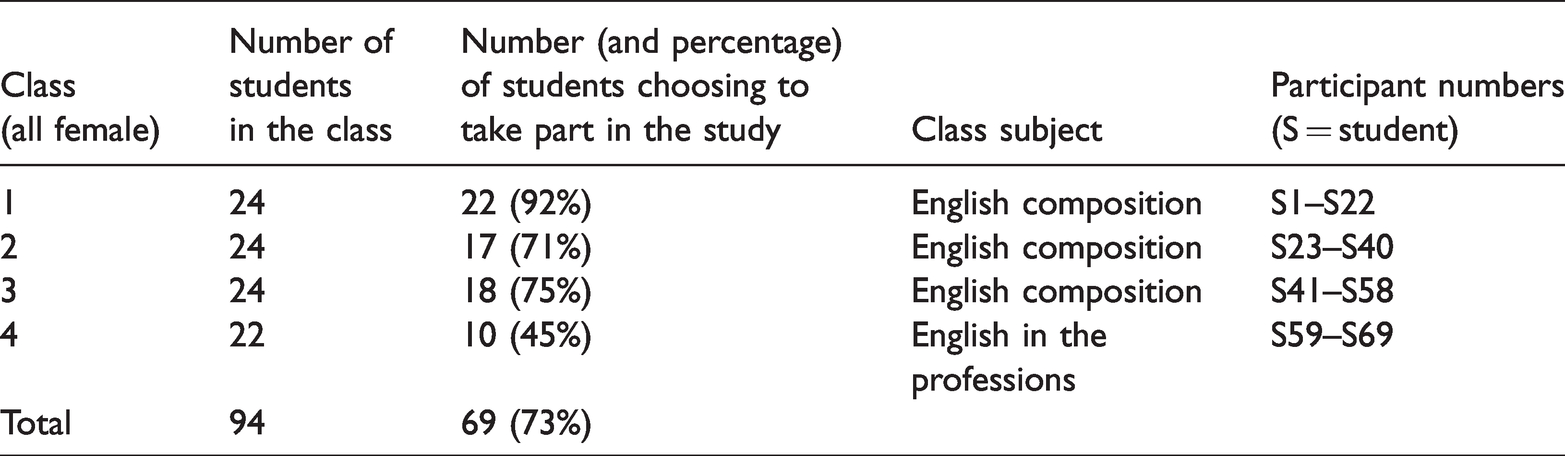
Cluster sampling was used as the participants were in pre-existing groups (Cohen et al., 2007: 112). The classes contained a cross-section of university students due the nature of the courses being mandatory for all regardless of chosen major. To provide participants with anonymity, pseudonyms were used in the form of ‘S’ (for student) and a number (see Table 1).
The research project was introduced to the classes by a colleague (for ethical reasons) who visited the Zoom classrooms. Students were asked to write a position essay on the following prompt: ‘The use of cameras and microphones should be compulsory during online classes’. Do you agree or disagree with this statement? Please give your position on the topic and reasons.
Data explication
Groenewald (2004) argues that for phenomenological research, data are explicated rather than analysed. As Hycner (1985: 300) explains, data analysis implies ‘breaking into parts’, whereas data explication implies ‘investigation of the constituents of a phenomenon while keeping the context of the whole’. I drew on Hycner’s (1985) explication process to interpret the data. Firstly, when interpreting students’ perspectives in their reflective writing, I bracketed out my own presuppositions as the researcher in order to enter the unique world of the participants (Cresswell, 2007). Secondly, units of meaning were delineated and statements which illuminated the research phenomenon were extracted. Thirdly, clusters of meanings were established by grouping similar sentiments together (Cresswell, 2007; Moustakas, 1994). Central themes were determined which represented the ‘essence of these clusters’ (Hycner, 1985: 290). The explication process resulted in a thematic representation of the data. In the current study, nine key themes were identified, as seen in the findings section of this article. Goffman’s theories of everyday interaction, stigma and relative deprivation and the analytical tool of intersectionality (Crenshaw, 1989) were used to interpret the data with the aim of uncovering complexities in female Emirati university students’ identities in relation to inclusivity of ERT&L. Researcher field notes and memos kept in the weekly research journal were analysed as a supporting data source which brought an unobtrusive observational angle to the study.
Findings
Findings revealed that over half the participants (57%) disagreed with the mandatory use of video cameras and microphones for ERT&L during the COVID-19 pandemic (Figure 1). Approximately one-fifth (18%) felt that mandatory use of video cameras and microphones should depend on the context, circumstance and identity of the learner. One-quarter of students (25%) wished that video camera and microphone usage were enforced for ERT&L.
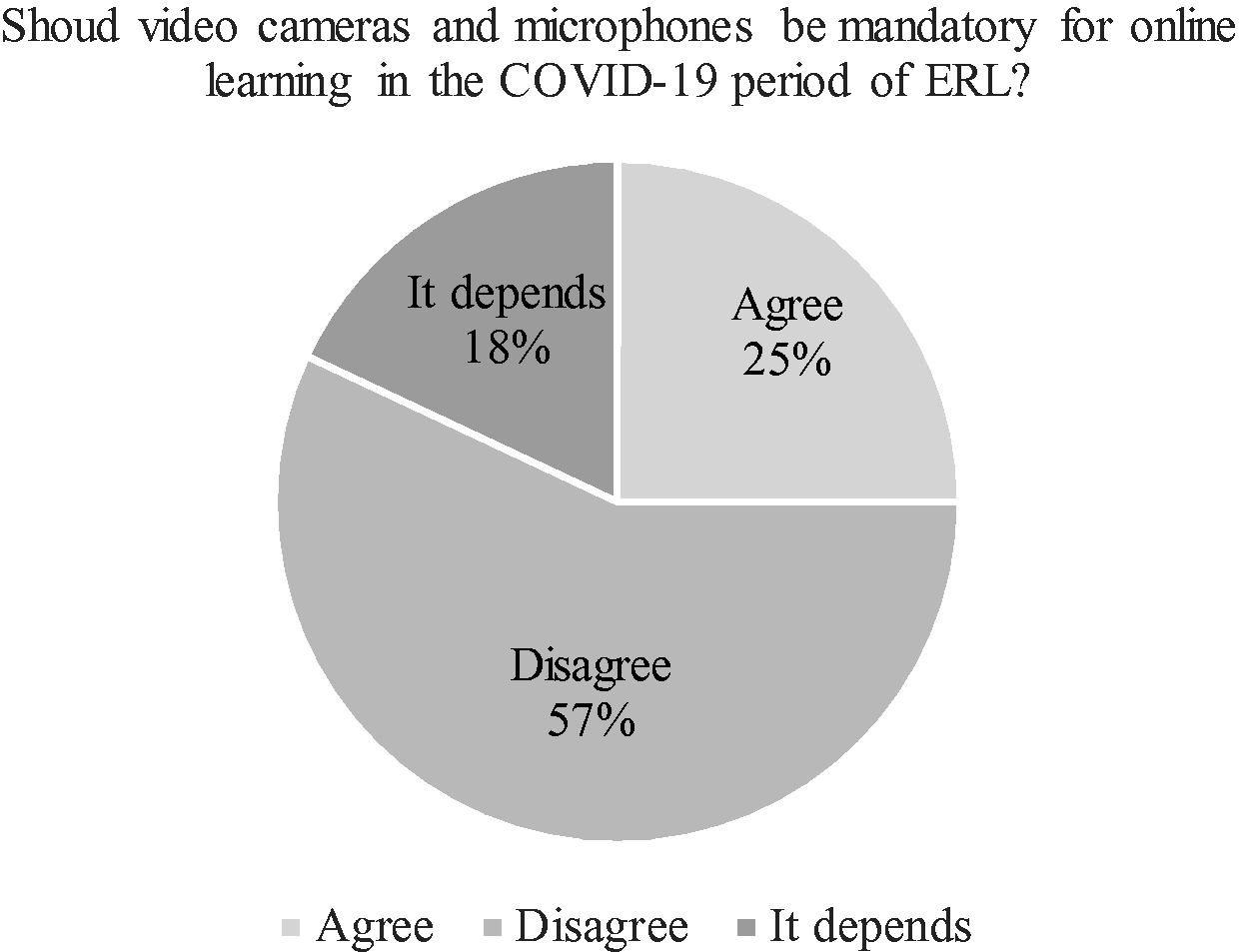
Emirati university students’ perspectives on the mandatory use of video cameras and microphones for emergency remote teaching and learning.
Students provided a range of reasons for their reluctance to use cameras and microphones including Islamic and cultural beliefs relating to the modesty, privacy, gendered spaces at home, noise, financial inequities, technical difficulties, linguistic struggles and fear of judgement. A minority of students who wanted mandatory use of cameras and microphones argued that a more authentic learning environment would be achieved, as well as improved student–teacher rapport, saving time and increasing academic integrity. These key themes are explored in more depth in the following subsections.
Islamic and cultural beliefs relating to modesty and privacy
Many students pointed out the conflict between the use of video cameras for online learning and Islamic values of modesty. In some cases, female students showing their faces online could result in the end of their education. Using cameras was seen as crossing a cultural and religious ‘red line’ and many students stated that parents would be uncomfortable with their daughters’ faces appearing on the screen, especially if the teacher was male or a ‘sir’ as seen in the extracts in Theme 1.
Theme 1: Islamic modesty
Based on our culture, religion and habits, we are not advised to show our faces in anything communication related. Some parents don’t allow their daughters to show their faces. If we had to, we should put our shaila (headscarf) on. In my opinion, women who study online shouldn’t have access to cameras, and no one should force them regarding our culture. I don’t deny the importance of online teaching but without crossing the red line which may cause some obstacles for some students which at the end may result in stopping their education. (S41)
I don’t agree with cameras, especially for girls because there are so many girls who don’t feel comfortable, and some parents are strict about cameras. If it was a sir, parents absolutely would never agree about it, even if she was wearing hijabs. (S38)
In the Gulf countries, specifically the UAE, some parents tend to be a bit strict about the idea of their daughters showing their faces on a screen for other people to see. Those beliefs mostly stem from our religion as well as our traditions and how we are raised since we were young. (S7)
Others voiced cultural concerns about privacy. The home was seen as a private space or ‘back stage’ (Goffman, 1959), not to be shared in public spaces. The idea of female students having their reputation tarnished by other students taking pictures and videos of their faces and sharing them online, was a fear frequently expressed. Showing homes, especially if students lived in small apartments with large families, was seen as uncomfortable and stigmatizing. The blending of front stage and back stage spaces was problematic for many students, as seen in Theme 2.
Theme 2: Home privacy
In some cultures, specifically in some Arab families, the female’s privacy is important for her reputation in their society. Not to mention, the safety of the individual. (S62)
Female students in the UAE fear that when they use the camera during class, other students take pictures without their consent and send them to other people. There have been incidents where videos of students and teachers went viral globally. Once a post is spread online it then becomes very difficult or sometimes impossible to be removed. (S11)
Many students and families do not feel comfortable showing their homes, considering that some live in the same room as their siblings or live in a small apartment. (S61)
In Themes 1 and 2, religious and cultural beliefs around privacy of (female) self and of home overlap and intersect to influence levels of access, inclusion and comfort around camera usage for Emirati students.
Suitability of home environment and gendered spaces
Many students commented on not having a quiet or private place to work due to noisy younger siblings or other family members sharing their learning space, especially if quarantining together. In addition, some students were young mothers themselves and had their own children in the same room with them while studying. The home was also seen as a gendered space where females had gender-specific responsibilities such as caring for younger siblings, children and elderly relatives. Theme 3 shows common perspectives on online study environments.
Theme 3: Inadequacy of home learning spaces
Students need privacy in their own homes, as some have to care for their children or elderly and have to be around them at all times, so they are unable to switch on the camera. Some students might be parents and so it will be hard for them to keep their children quiet while the camera and the microphone are on. (S1)
There are many students who do not live in the best environment. Some have a busy place where they do not get a moment of silence, a lot of siblings share rooms and have classes at the same time which can get distracting for others and embarrassing for the student. Especially due to the fact that a lot of families are quarantining together and can never leave their homes anymore. (S17)
If you are living with a big family in a small apartment, you can’t control your family moves so it’s hard for many students and I’m one of them. I had this problem last semester. (S23)
While mention of ‘neopatriarchy’ (De Bel-Air et al., 2018) or societal expectations on women’s domestic roles are not explicitly present in the students’ writing, many alluded to extra expectations placed on them as women with regard to childcare responsibilities which they had to manage alongside academic work, as seen in S1’s reflection. Such expectations on Emirati women are frequently discussed in the local literature on gendered spaces (Abdulla, 2007; Bristol-Rhys, 2010; De Bel-Air et al., 2018; Hurley, 2020).
Financial considerations and Internet access
Lifestyles are generally comfortable and privileged in Emirati homes compared to most Global South contexts. However, from many ‘ice-breaking’ activities in which information about families, interests and hobbies are shared, it is common to hear about students coming from large families with around six to 10 siblings as well as many generations living together in the same home. Such large family sizes alter the dynamics of home learning. Purchasing multiple laptops for each school-age or university-age child in large families can be extremely expensive and it can be a challenge to provide each sibling with a quiet study space, as voiced in Theme 4.
Theme 4: Lack of access
Some students can’t provide laptops with good specifications, or their family might need time to provide the needs of their children since some families have many children studying online at the same time and each one of them needs a device to use. Digital devices can be quite expensive, and it is bold to assume that everyone can afford it. (S43)
Universities should have in mind that not a lot of students can access the best equipment and devices that are required. Investing in a webcam, a headset, and an external microphone can be quite expensive as a university student. Not to mention that not all students have the best Wi-Fi connection and making cameras and microphones mandatory would make matters worse for them in terms of lagging and having a weak connection. (S17)
The extracts in Theme 4 call for greater compassion and understanding around issues of access. While there is often a stereotype of Emiratis as being privileged as well as entitled, especially through the eyes of expatriates living in the UAE (Bristol-Rhys, 2010), inequalities and relative deprivation (Goffman, 1963) are shown to exist with regard to financial constraints and access to the Internet. Intersecting identity aspects such as family size and financial situation here result in lack of access for certain students.
English language struggles and fear of judgement
As well as cultural and environmental barriers, students voiced linguistic struggles and fear of judgement (from others and selves) as reasons for being uncomfortable with camera and microphone usage. Especially for students who attended government AMI-dominant schools, relative deprivation (Goffman, 1963) was experienced where stigma was attached to having lower English proficiency. Unfavourable comparisons were made with high-English proficiency classmates who may have attended private EMI schools before joining the university or classmates who were English ‘native-speakers’ due to having an Anglophone parent. Linguistic struggles related to EMI can be seen in Theme 5.
Theme 5: Linguistic struggles and judgement
The use of cameras and microphones should not be compulsory because there are people who are not confident enough talking in English while they are facing the camera. Some are facing anxiety or anthropophobia. It will probably make them feel uncomfortable and judged. (S56)
If microphones would be mandatory, some will start thinking about not attending class anymore which can lead to a higher percentage of absences and will have to drop the course and repeat the course later. Students might also stop participating during class because they might make mistakes with English, which might lead to low grades. (S38)
For A-grade students, they will not be shy opening the microphone during the class. Others might worry about English language or making mistakes. (S36)
As S36 points out, ‘A-grade students’ who thrive in the EMI setting tend to be more comfortable using microphones. From the researcher journal, it was observed that microphones were indeed used more often by students whose English level was high and these students’ fluency and high English proficiency may have been intimidating for students with lower English proficiency who tended to rely on the chat box function.
Relating to the issue of self-consciousness and judgement in online spaces, participants also voiced concerns about cameras distracting them from learning due to a preoccupation with physical appearance and view of self through the eyes of others, as seen in Theme 6.
Theme 6: Interactive and reflexive judgement
Students might be too focused on how they look on camera instead of listening. When a student is able to see their face on the screen, it is involuntary like looking at a mirror. (S62)
Some students whenever they open their camera they keep staring at their own faces and stops paying attention to the lecture. In the online classes, you don’t know when someone is looking at you because students can see other students. (S27)
The Theme 6 extracts indicate that judgement not only comes from others (interactive positioning) but from oneself (reflexive positioning), which can be intensified by Zoom’s ‘mirror view’ feature. A previous study at Stanford University found that the self-view feature of Zoom also contributes toward ‘Zoom fatigue’ especially with women due to ‘undue societal pressure on how women look and act’ (Smith, 2021: para. 4). In Themes 5 and 6, overlapping identity aspects of English proficiency level and gender influence ERT&L experiences.
Positive aspects of mandating the use of cameras and microphones
Although the majority of students felt cameras and microphones should not be mandated during the COVID-19 period of ERT&L for the reasons discussed in Themes 1–6, a minority of 25% (Figure 1), who tended to have higher English proficiency, felt that a more authentic learning environment and improved teacher–student rapport could be achieved with these tools as well as increased academic integrity and efficiency (Theme 7).
Theme 7: Positive views on camera and microphone use
Cameras and microphones give students a sense of normality during these strange times. Many individuals have seen a decline in structure to their everyday routine. This, in turn, has led to depression and anxiety. Having to get up and make yourself presentable for a class stops individuals from doing classes from bed or in a way they would not normally conduct themselves in a classroom environment which leads to a sense of normalcy. (S42)
Comparing us to American schools, most of their courses require them to have their cameras on so the teacher could deliver the continue with their life, the same thing should be applied here so students can work out some type of connection with their teacher to have a better resolution in the end. (S48)
It will force students to follow the academic integrity that is set by their institution. Also, there is only so much that can be typed and often times it is easier to explain things by talking so making microphones mandatory it may lead to a more meaningful class discussion. (S42)
Some students when arguing for the mandatory use of video cameras and microphones showed compassion for their teachers, perhaps placing their instructor’s comfort above their own, as seen in Theme 8.
Theme 8: Considering teachers
For me, it is the right of the teacher to check whether the student is the same person attending this semester or someone else. The teacher has the right to see whether this person’s effort is a personal effort or the effort of someone else. (S52)
Opening the microphones is a good idea for who wants to talk because typing takes time and with open microphones, the instructor will feel more comfortable because there’s someone talking to them. (S24)
Student concerns for their teachers’ well-being are well founded as when analysing my research journal, much was noted on feelings of isolation and detachment caused by not seeing my students and/or hearing their voices. Such feelings are also voiced on local teaching forums relating to teacher well-being.
The importance of choice, agency, flexibility, and compassion
A final theme which arose from the students’ writing was the need for universities to value choice and agency as well as the importance of flexibility and compassion during the COVID-19 pandemic. As seen in Theme 9, it was felt that the COVID-19 pandemic was hard enough to cope with without extra pressure to use communication tools which clashed with intersecting values, circumstances and identity aspects in the region.
Theme 9: Compassion in a crisis
Colleges and universities should try and make this learning experience for students as smooth as possible and go easy on them especially during these times as we are going through a dangerous pandemic and many students are going through hard times. (S17)
Attending online classes instead of going to campus physically isn’t the best option therefore schools shouldn’t make this pandemic any harder on students. (S20)
In summary, despite a minority of 25% of students arguing for mandatory use of cameras and microphones for ERT&L, in the case of camera use, such views were not acted upon. Even if students wished to use cameras, in reality cameras were not used, apart from during the final examination week. The views of the majority (75%) emphasized the importance of choice and agency surrounding camera and microphone usage due to various intersecting cultural and linguistic identity factors, as identified in Themes 1–6 as well as Theme 9.
Discussion and Conclusion
The COVID-19 pandemic and the accompanying move to ERT&L has shone a spotlight on cultural and linguistic inequities in education. Through the lens of intersectionality, we can see how complexities and multiple social identities shape educational experiences and equity (Collins and Bilge, 2020; Museus and Griffin, 2011) in the context of the UAE. The findings revealed that while some individual students may be privileged in many ways, there are other identity factors which are marginalizing such as lack of choice regarding EMI, large families resulting in a noisy home environment, Islamic and cultural beliefs on female modesty and privacy, gendered responsibilities at home, financial constraints, stress, and mental health issues. Bidwell et al. (2021) point out that students’ experiences of higher education vary according to differing degrees of power, status and agency. This is especially the case during the COVID-19 pandemic due to a recognized global lack of control over many aspects of life, including self-representation in educational spaces.
Some ‘stigmatized identity aspects’ (Goffman, 1959) such as financial constraints, lack of a suitable study environment, technical difficulties, and mental health concerns, which are common among university-age students globally (Thomas et al., 2021), are more easily hidden on campus. As Smith et al. (2021: 127) point out, ‘the brick-and-mortar campus allows students with financial needs to mitigate those needs through campus resources, but access to many of these resources disappeared when campuses closed’. In this sense, stigmatized aspects of identities are more apparent in ERT&L contexts where the boundaries between private and public spaces are blurred. As Goffman (1963) argues, the social response to revealed stigmas creates an enormous cognitive and emotional load for the stigmatized which can lead to avoidance of social situations, depression, anger and confusion. For example, a yelling parent or noisy sibling running in front of the screen, visible technical issues, English language errors being recorded, or glimpses of a cramped and inadequate home learning space may cause stigmas to be revealed with harmful psychological effects as well as consequences for learning.
To address inequities in ERT&L, Davidson (2020) states that access in all its dimensions need to be considered whether it be technological, intellectual, personal, financial, medical, or educational. Rather than romanticizing the stay-at-home experience (Butler, 2021), greater awareness needs to be raised with regard to intersecting inequities which are exacerbated by the move to ERT&L. Instead of the promotion of a one-size-fits-all approach, professional development sessions should aim to raise awareness of students’ complex and intersecting identities as learners. While there has been an abundance of workshops on the innovative use of various apps and websites, what is notably missing are sessions on compassionate and flexible teaching tailored toward specific learning contexts.
To support students with lower proficiency in the medium of instruction, Choi (2020) suggests that teacher professional development should recognize the ‘double burden’ and increased cognitive load (Belhiah and Elhami, 2015; Hopkyns, 2020c, 2020d) that many students face in EMI contexts. Such linguistic struggles can affect confidence, self-esteem and motivation especially during the COVID-19 period of ERT&L as teachers cannot easily check progress through the live monitoring of students’ facial looks and engagement. Choi (2020: 10) recommends that teachers be encouraged to use ‘language-sensitive pedagogy’ whereby extra attention is given to clarity of instruction and providing clear models of assignments.
The involuntary blending of front stage and back stage learning spaces, as well as students’ experiences of relative deprivation (Goffman, 1963) also need to be recognized, with greater compassion needed in this difficult period (Cohan, 2021). Hurley (2020) points out that recognition of homes as gendered spaces for Gulf female students would encourage teachers to be more flexible in making learning content accessible beyond the fixed class time. In addition, to support a more interactive online environment without crossing cultural and religious taboos in relation to female modesty and privacy, Hurley (2020) suggests the use of classroom-appropriate Zoom backgrounds and avatars. These functions, although perhaps not available for all due to financial or digital constraints, would provide more acceptable options for visual self-representation in Gulf digital contexts (Hopkyns and Nicoll, 2014).
Support and solidarity during the COVID-19 pandemic can come from positive student–teacher rapport. Research has shown that positive class rapport leads to enhanced well-being and more effective learning (Mercer and Gregersen, 2020). Although Gulf female students’ discomfort with using cameras and microphones can make establishing positive student–teacher rapport more challenging, alternative ways to show support and care can be found. For example, using WhatsApp can be an effective and personal way to connect with students. Rather than giving feedback on written work via email, a voice memo on WhatsApp can be more time-efficient and personalized. Students have the benefit of being able to play the feedback many times on their phones. They can also leave voice memos which are private rather than being in front of the whole class. A further way to develop learner–teacher rapport in ERT&L is through greater use of ‘breakout rooms’ as well as private Facebook groups for class discussions, debates and conversations (Fikry et al., 2021). To conclude, a focus on intersecting context-specific sociolinguistic factors in Global South and periphery ERT&L contexts can help raise awareness and help close the digital divide as well as the English divide in EMI universities.
Footnotes
Declaration of conflicting interests
The author(s) declared no potential conflicts of interest with respect to the research, authorship, and/or publication of this article.
Funding
The author(s) disclosed receipt of the following financial support for the research, authorship, and/or publication of this article: This research was conducted with financial assistance from a Research Cluster Grant (R18033) received from Zayed University, United Arab Emirates.
