




Abstract
Due to the COVID-19 pandemic, several educational institutions were thrust into a forced culture change as learning, teaching, and assessment moved from traditional face-to-face (F2F) instruction to remote delivery with a profound effect on pedagogy. This paper uses transformative learning theory to explore various aspects of academics’ transition from face-to-face to remote teaching. Findings from an online cross-sectional survey of academics in higher education institutions (n = 95) indicate that academics were confronted with a disorienting dilemma that challenged previously unquestioned teaching experiences, beliefs, and values upon transition to remote teaching. This was followed by reflection, adoption, and implementation of different modes of instructional delivery. The results indicate statistically significant differences in critical reflection, openness, and teaching differently based on race. As higher education institutions transition to a “new” phase of instructional delivery, re-thinking professional development and support for the transformed academic in a new operating environment that remains prone to disruptive events becomes imperative.
Keywords
Introduction
Due to the COVID-19 (SARS-CoV-2) outbreak, higher education institutions (HEIs) worldwide experienced a forced e-learning experiment of unprecedented scale and scope, with consequences not yet fully assessed. While the COVID-19 outbreak was considered a single-season pandemic, the virus has lingered longer than expected (Kissler et al., 2020). Online education has become a significant teaching and learning mode for several institutions far earlier than anticipated. The previously held assumption that online teaching was only a realistic option for tech-savvy teachers (Lau et al., 2020) changed as academics adapted to the new normal of teaching entirely online, some for the first time (Sjølie et al., 2020). The impact of the sudden replacement of the traditional face-to-face (F2F) lecture with online teaching via Microsoft Teams, Zoom, or the Big Blue Button conferencing site and other platforms needs to be assessed in preparation for similar global disasters in the future.
Based on Transformative Learning Theory (TLT), HEIs were rapidly forced to confront a disorienting dilemma (King, 2021). As Watermeyer et al. (2021) explained, teaching online has been an unusual, disorienting, and even unwelcome experience for many in higher education. Many existing practice architectures that were enabling and constraining academics’ practices were disrupted when the pandemic started (Sjølie et al., 2020). For academics, this meant pre-pandemic delivery modes mindsets were dysfunctional, and adaptation necessitated questioning, reflecting on, and conversing about the emergency remote teaching (ERT) transitional experiences.
The possibility and outcomes of ERT extend far beyond initial expectations and require investigation of how the new situation (remote teaching) does/or does not fit into the traditional worldview (face-to-face teaching). The rapid transition to emergency remote teaching meant that academics shifted into new roles as they adapted to new ways of practicing differently under the abrupt changes caused by the pandemic. Has a perspective shift in modes of instructional delivery occurred to accommodate the new reality leading to a revised worldview?
The TLT is a model of andragogy that attempts to reveal and clarify a learner’s prior assumptions and then transform these assumptions into new understandings (Mezirow, 1991b). The theory holds that learners have different assumptions, expectations, and beliefs that help them make sense of their world. The central premise of TLT is that the transformation of the frame of reference occurs through learners’ critical reflection on assumptions to understand the meaning of their experience by participating in rational discourse to validate expressed ideas (Mezirow, 1991a). Critical reflection and discourse often take place within the context of problem-solving, and it is only after learners become critically reflective of past assumptions, experiences, values, and beliefs that they are more open to new information and thoughts (Mezirow, 1994, 2012). As Sokol and Cranton (1998, p. 14) indicated, “transformative learners question their perspectives, open new ways of looking at their practice, revise their views, and act based on new perspectives.” Thus, critical reflection is the central process in transformative learning that leads to a shift in thinking towards a more inclusive, differentiated, permeable, and integrated perspective'' (Mezirow, 1991b, p 155).
The current study is based on Mezirow’s (2000) psycho-critical approach to transformative learning. However, from the early 1980s, other transformative learning theory approaches have appeared in adult education research, including psychoanalytic, psycho-developmental, social emancipatory, neurobiological, cultural-spiritual, race-centric, and planetary perspectives (Bridwell, 2013; Taylor, 2008). Adopting alternative transformative learning perspectives has led to a significant increase in research offering diverse interpretations of transformative learning, particularly in areas often overlooked in the dominant theory. Race, class, and gender influence life experiences, social practices, and behaviors across groups of people and are increasingly becoming an essential variable in investigating the context and the capacity for reflection as preconditions for transformative learning. Researchers (Bridwell, 2013; Gambrell, 2015) used the race-centric approach to investigate the impact of sociocultural variables on transformative learning. According to Bridwell (2013), when transformative learning goals are actively promoted, groups often considered marginalized by race, class, and gender may experience growth in epistemological complexity.
Further, individuals with racial and social privilege have been proven to have highly engaging personal transformations. In contrast, those from less privileged socio-cultural origins have higher levels of critical societal reflection and transformative outcomes (Gambrell, 2015). Highlighting the complexities of transformative learning, Roegman et al. (2021) indicate that race is understood in three main ways: in terms of “difference,” “power,” and “racism.” Race-as-difference focuses on differences between individuals related to race or culture and underpins this study.
The onset of the COVID-19 pandemic was abrupt, making most HEIs resort to various stopgap measures to continue to provide education during the crisis. Due to the short time frame for adjustments, most academics moved their F2F teaching material to remote delivery with little or no changes as a temporary measure at the onset of the pandemic (Govindarajan & Srivastava, 2020; Ng, 2021). This transition may seem effortless; however, academics were experiencing disorientation, questioning previously held assumptions, beliefs, and values and seeking ways to meet the new teaching and learning needs (Eschenbacher & Fleming, 2020). According to Gravett and Petersen (2009), the transformation process often requires the ‘unlearning’ of outdated information and ways of doing, meanings, old views, knowledge, perceptions, and examination of experience based on the present situation or new demands. To plan for similar scenarios, there is a need to investigate and understand the constraints, adaptation, transitional, and transformational processes academics underwent during the ERT period.
This study investigated the extent to which the COVID-19 pandemic-induced rapid transition to emergency remote teaching produced a generative change in HEI academics’ perceptions of modes of instructional delivery. The study addressed the following questions: 1) Did the rapid transition to emergency remote teaching change academics’ perceptions of F2F and remote delivery modes and influence them to teach differently? 2) To what extent did academics engage in transformative learning due to the transition to remote delivery?
Methods
This research encompassed a distinctive perspective of transformative learning to investigate the relationship between transformative learning processes and transformative outcomes in the workplace with “non-traditional learners” as participants through a questionnaire. This study adopted Mongiello’s (2015) traditional and historical conceptualization of a non-traditional learner as a mature adult outside of formal education for several years, different from other learners. The COVID-19-induced rapid shift to remote teaching was considered a disorienting dilemma that led to critical reflection on previously held views, experiences, beliefs, values, and actions regarding instructional delivery modes.
The transformative learning process may vary according to context, those involved, and resource availability (Stuckey et al., 2013; Taylor, 2007). The income level of any country may influence the response during a crisis as resources may be channeled towards more pressing issues. Educators in many low- and middle-income countries received little professional development support as they transitioned to remote teaching and learning, leaving them unprepared to interact with students (World Bank, UNESCO, and UNICEF, 2021). Participants of this study were individuals who teach in colleges and universities across the globe. The survey link was shared with contact persons at HEIs, and a snowball-sampling approach was used to recruit additional participants.
Instrument
Using an anonymous online cross-sectional survey, a modified transformative learning survey (TLS) developed and validated by Stuckey et al. (2013) was used as the primary measure of transformative learning outcomes. An additional tool, the transformative learning environments survey (TLES), developed and validated by (Walker, 2018), was used as a source for transformative learning processes. The modified questionnaire had two parts: 1) transformative processes and 2) transformative outcomes, all based on a five-point Likert scale ranging from 1=strongly disagree to 5=strongly agree. The process scores indicated the probable processes a participant underwent during a revision of perspectives, while outcome scores indicated the degree to which a participant had engaged in transformative learning.
All 18 items used to evaluate transformative learning outcomes were adapted from Stuckey et al. (2013). On the other hand, of the 27 items on transformative learning processes, the majority (23) were adapted from Walker (2018), and an additional four transformative learning process items were adapted from Stuckey et al. (2013). Some of the statements in the instrument were modified to reflect the transformative learning in the context of this study; for example, “Acting differently” was changed to “Teach differently” and “I have experienced a deep shift in worldview” was changed to “I have experienced a deep shift in the way I view modes of delivery.”
Statistical Analysis
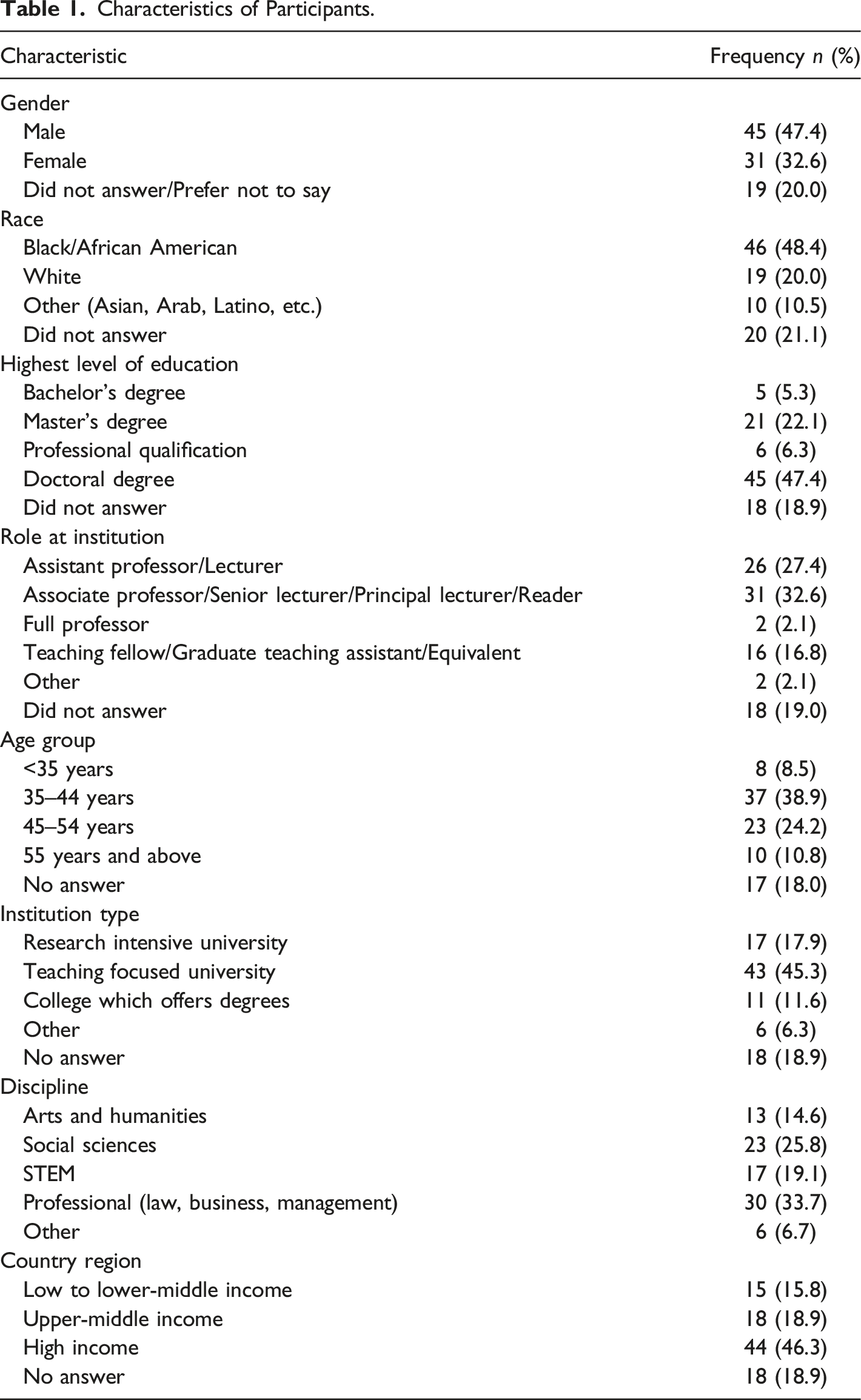
Countries were grouped into three distinct groups. Low-income and lower-middle-income economies were combined into one low to lower-middle-income category, and the other categories, upper-middle-income and high-income categories, were maintained. Forty-three responses with greater than 10% missing information were removed, resulting in a study sample size of n = 95. Quantitative data were analyzed using IBM SPSS Statistics (Version 26). Descriptive statistics were used to analyze quantitative data, including means, frequencies, percentages, and standard deviations. Analysis of variance (ANOVA) was used to assess the differences in group means where applicable.
Results
Characteristics of Participants.
Transformative Learning Processes
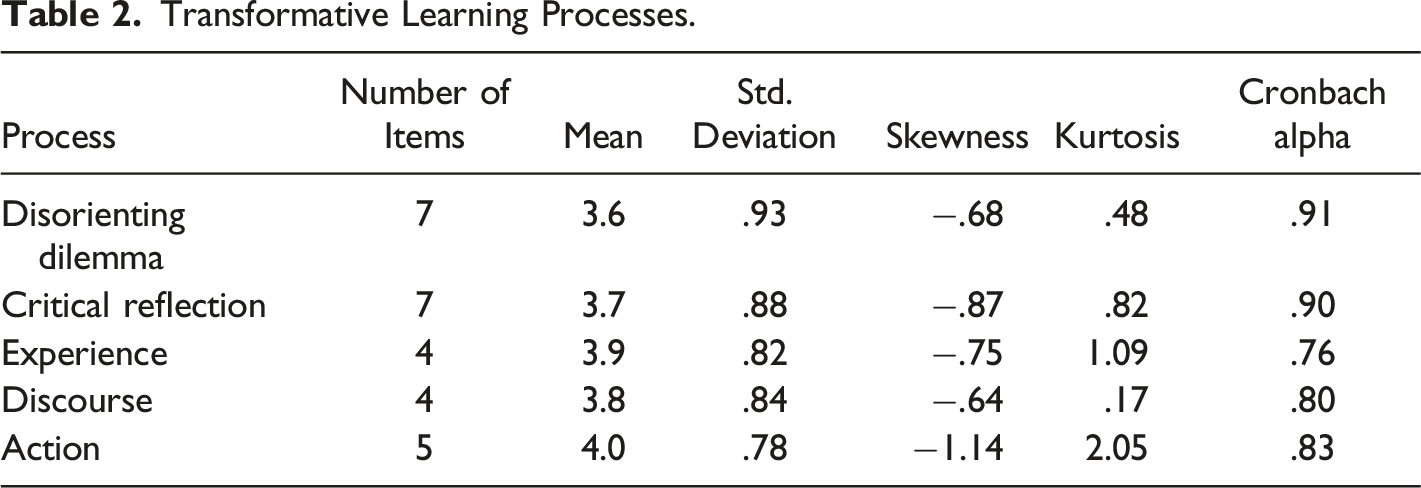
Transformative Learning Processes.
Transformative Learning Outcomes
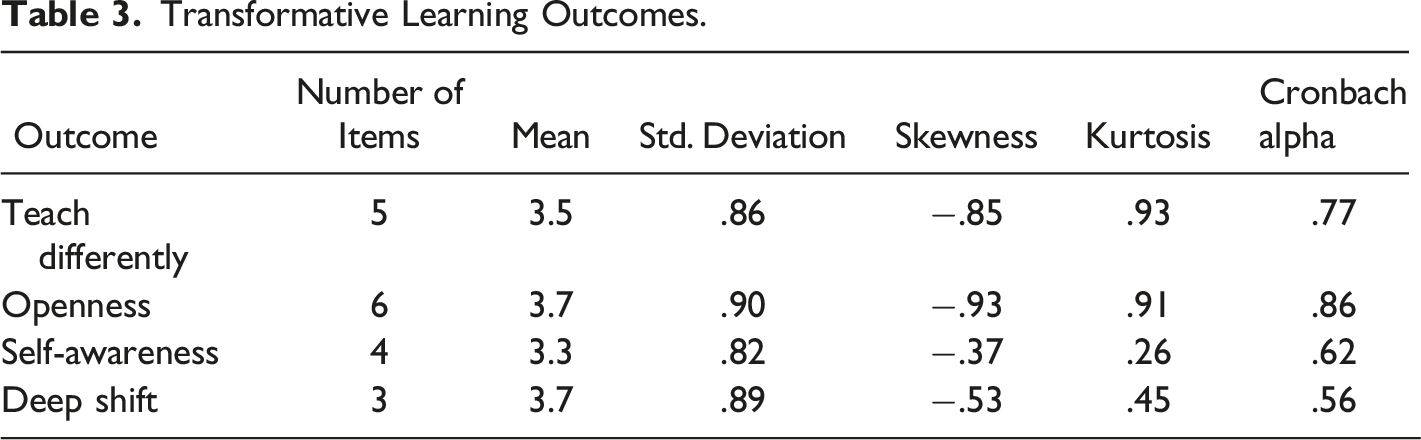
Transformative Learning Outcomes.
Intercorrelations
Correlations (Pearson’s r) Across All Scales of Transformative Learning Processes and Outcomes.
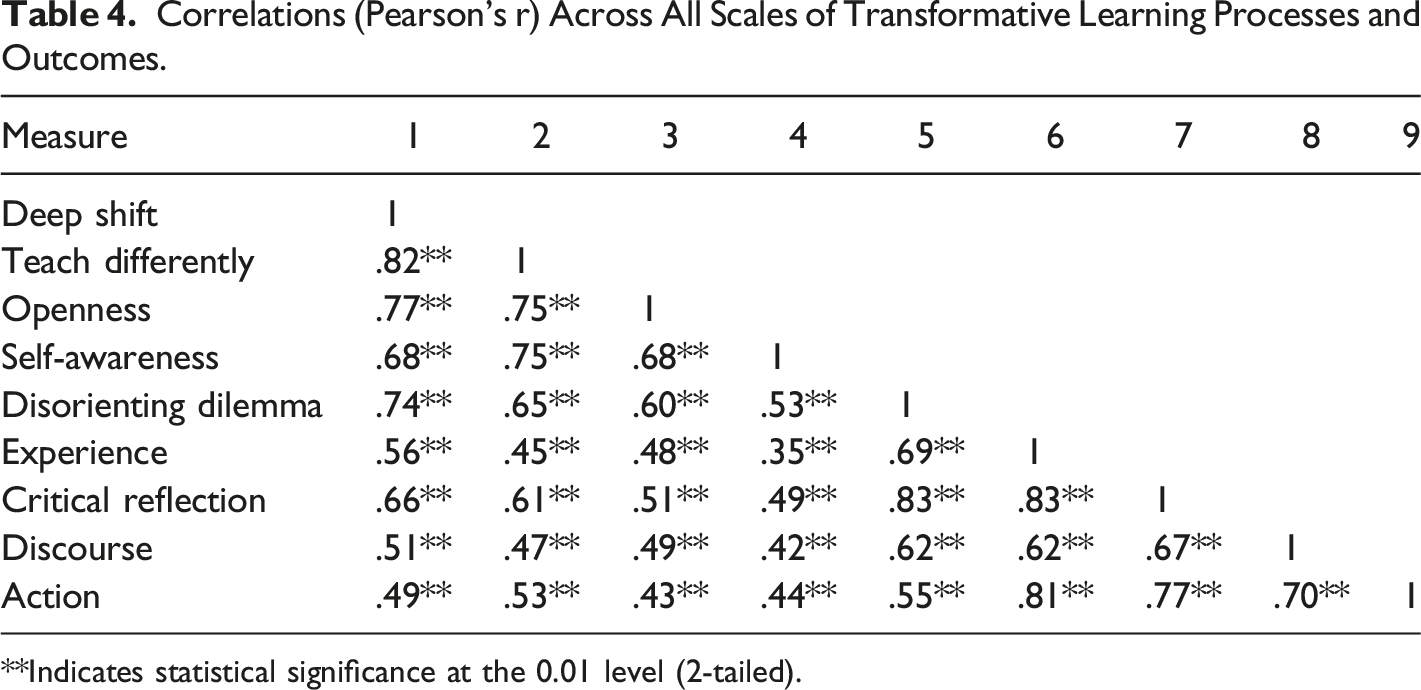
**Indicates statistical significance at the 0.01 level (2-tailed).
Transformative Learning Processes and Outcomes by Race
Analysis of Variance for Transformative Outcomes and Processes versus Race.
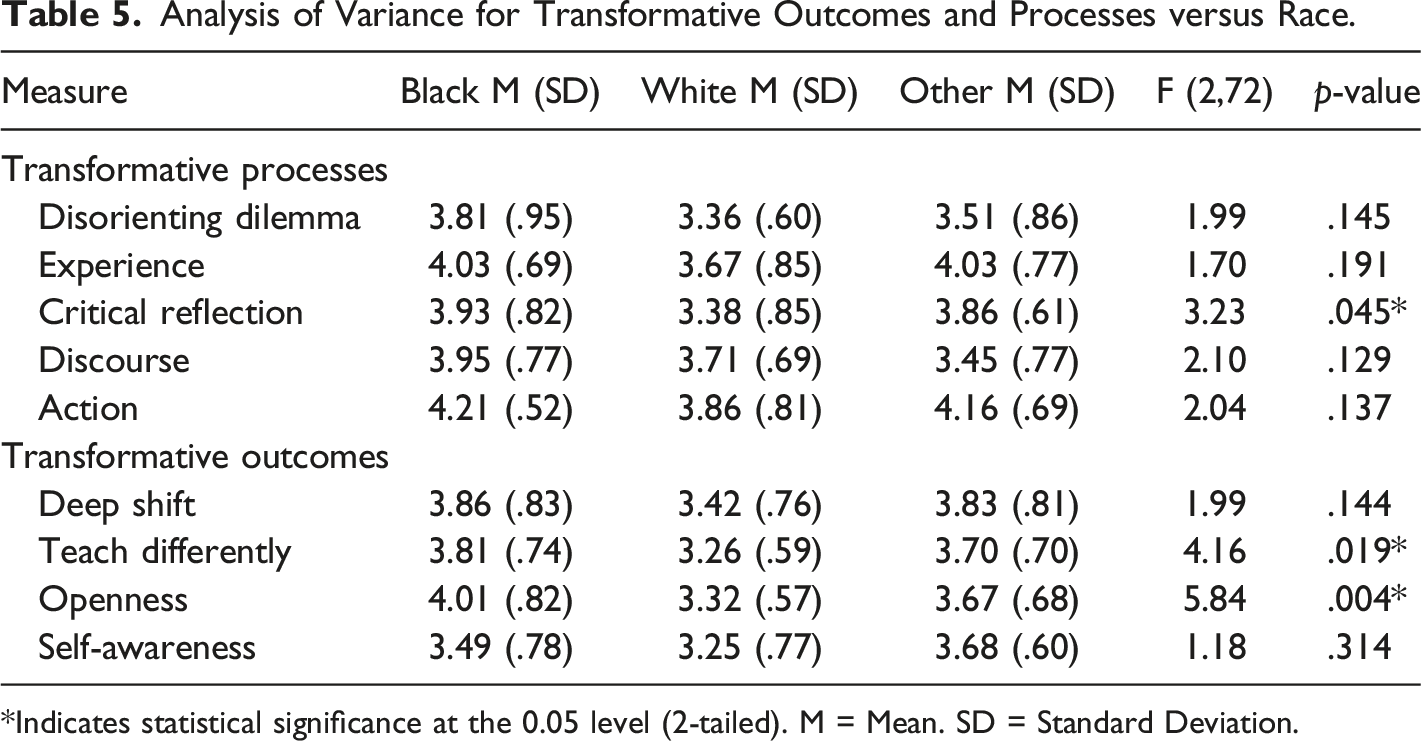
*Indicates statistical significance at the 0.05 level (2-tailed). M = Mean. SD = Standard Deviation.
Transformative Process and Outcomes by Age
The one-way ANOVA comparing the effect of age groups on each of the four outcomes showed no statistically significant difference across age groups. The mean scores for the four outcomes: deep shift, teach differently, openness, and self-awareness, show a general decline with increasing age (see Figure 1). Apart from deep shift, which shows a decrease in the 35–44 year age group and then an increase in the 45–54 years age group, the other three outcomes show a downward trend marked by a significant decline for the individuals 54 years and older. The only exception is self-awareness, which remained comparatively lower than the other outcomes, as shown in Figure 1. Comparison of transformative outcomes by age group.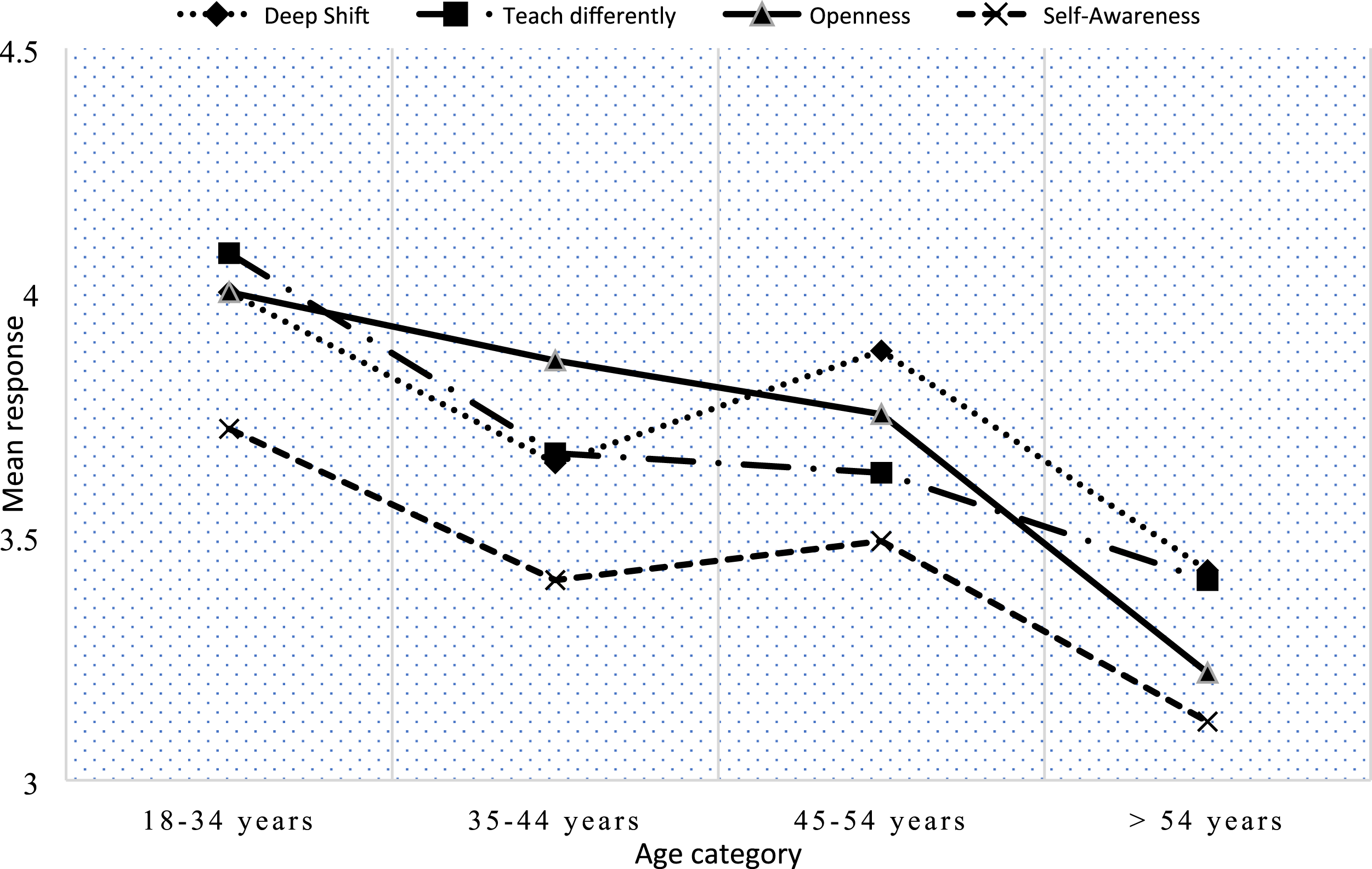
Discussion
This study examined perspective transformation regarding modes of instructional delivery using transformative learning theory. The focus was on assessing if the COVID-19-induced transition to emergency remote teaching had fostered generative change and transformation in modes of instructional delivery. The findings showed that the rapid change from F2F to emergency remote teaching due to COVID-19 profoundly impacted the education delivery in higher education institutions (HEIs). Compelled to make sense and meaning of what could be called an absurd situation, our findings show that participants went through transformative learning as all the means for transformative processes and outcomes were above three, on a five-point Likert scale.
At the onset of the transition to emergency remote teaching, the misalignment of expectations and experience opened a critical inquiry into academics’ modes of instructional delivery. This triggered a feeling of disorientation and induced critical awareness and reflection, making them susceptible to online teaching, as reflected by the high mean values for both disorienting dilemma and critical reflection. The disorienting dilemma scale included statements such as “forced transition to online teaching led me to question my assumptions about teaching.” The mean for disorienting dilemma was 3.5, indicating that the COVID-19-induced transition from face-to-face to emergency remote teaching pushed participants to the edge of their comfort zones. It provided an opportunity for them to re-evaluate their experience and existing views leading to a new or revised interpretation of the meaning of their F2F experience as a guide to future action (remote teaching). Disorienting dilemma was highly correlated with deep shift (r = .74) and teach differently (r = .65), indicating that the rapid change to remote teaching induced a profound re-assessment of assumptions, values, and beliefs that led to a more inclusive, open perspective towards delivery modes.
Further, the strong positive association between critical reflection and experience (r = .83) showed that when participants were faced with remote teaching and attempted to make meaning out of their experience, they went through a process of questioning their unquestioned acceptance of beliefs, values, and assumptions about their teaching practices. This would have made them realize they faced adaptive challenges, which require not merely knowing more but knowing differently (Kegan, 2000). The transformative learning process experience, which relates to the lens through which participants filtered and interpreted their teaching world, had a mean of 3.9 and had a strong positive association with critical reflection and action, respectively. This indicates that previous experiences guided academics as they self-tested their beliefs, assumptions, and perspectives of instructional delivery in their transitional journey, acted on their changed beliefs, and adapted their teaching philosophies and practices with implications for teaching and learning.
Whitelaw et al. (2004) indicated that one of the essentials of transformative learning theory is that learners rethink their understanding and act based on their new perspectives. Further, as indicated by Mezirow (1997) an individual who completes a transformative learning process experiences a profound shift in their structure of expectations and re-frame their assumptions and understanding of themselves, which influence future decisions and actions. In this context, the findings of this study indicate that because of changed behavior, beliefs, and values, participants explored and implemented alternative modes of instructional delivery (remote teaching) and were teaching differently from what they did pre-pandemic (F2F teaching). This indicates that as the rapid transition to remote teaching was a catalyst for academics’ examination of their unconscious previously held assumptions through critical reflection; their views were transformed to become “more inclusive, discriminating, open, reflective, and emotionally able to change” (Mezirow, 1991b, p 155). This would not be a mere accommodation of new ideas fitting into old meaning structures (Kolb, 1984) but indicates significant changes in how academics conceptualized, interacted with, and changed delivery modes.
Overall, the results of this study indicate a high level of participants’ unpreparedness to hold classes remotely and a change in perception regarding modes of instructional delivery. The mean for the self-awareness construct, which includes statements such as “I am okay with uncertainty” and “I have stopped going with everyone else and have my own sense of who I am” was low across all categories when results were analyzed for the effect of age on transformative outcomes. Self-awareness was also least correlated with openness (r = .49) and discourse (r = .42). This may mean that while transitioning to emergency remote teaching, it may have been difficult for academics to affirm that they had a problem and could see the different solutions, weigh the evidence, and examine a variety of perspectives from an informed point of view, particularly when working from home in a crisis, away from colleagues. Further, as discussed earlier, all other outcomes show a sudden decrease in mean scores for the above 54-year age group. The decrease in this age group shows that older participants did not feel as open to and empowered to transition to remote teaching rapidly.
Taylor (2007) indicates that the sociocultural contexts of participants are significant factors in transformative learning. As data were collected from participants of different racial backgrounds, the analysis also covered transformative learning outcomes based on race. The findings of this study indicate that race significantly influenced critical reflection, openness, and teach differently. For the critical reflection construct, which included survey statements such as “I became aware of what I know and what I don’t know,” the means for black participants was higher than that of white participants. Similarly, the means for black participants for openness included statements such as “My beliefs are now more flexible and open to change” and teach differently with statements such as “It would be impossible for me to go back to being the way I once was” were higher than those of white participants (see Table 5). These variations may be explained by differences in context and capacity for reflection, epistemological perspectives, and knowledge construction complexities across racial groups. Such variations may provide fertile ground for transformations to occur and magnify transformations (Martin, 2007).
While this study did not find significant differences based on gender, the results on race confirm Bridwell’s (2013) findings that groups often regarded as marginalized may experience epistemological complexity, which influences transformative learning. The findings of this study are also comparable to Gambrell (2015), who investigated the impact of socio-cultural identities (race, class, gender, sexuality, language, and heritage) on transformative learning from a critical race theory perspective and found race and class privilege to have an impact on participants’ worldviews and transformative learning. Gambrell (2015) observed that participants from backgrounds of lesser socio-cultural privilege demonstrated increased critical social reflection and transformative outcomes. However, due to a small sample size, Grimbell did not isolate gender, class, and race in their analysis. The findings of this study are also consistent with Roegman et al. (2021) who indicate that for candidates of color, transformative learning was in terms of increased knowledge, self-reflection, and critical consciousness. Thus, this study’s findings on race extend the literature on the context and the capacity for reflection as preconditions for transformative learning (Mezirow, 2000), often ignored in marginalized groups (Bridwell, 2013).
The results discussed above offer several implications for theory and practice. From a theoretical perspective, the study has extended the methodological boundaries of transformative learning research by enhancing the external validity of the Transformative Learning Survey (TLS) and the Transformative Learning Environments Survey (TLES) by using them in a workplace context and using a quantitative approach to measure transformative learning. While most educators and HEIs have adopted remote learning or online education, from a practical perspective, ERT transformative learning experiences provided an opportunity for lifelong, continuous learning for both academics and institutions. With hybrid modes of instructional delivery becoming the norm, there is a need for HEIs to rethink the way instructional support units provide technological and instructional continuity to help academics develop their skill set, adaptation, and resilience towards uncertainty and to teach in an increasingly technology-dependent education system that remains susceptible to disruptive events. More so considering the race and age transformational differences mentioned above.
Findings from this study also support discussions in the educational literature that transformative learning is related to the maturation process. In the aftermath of the pandemic, as they re-assess and develop modes of instructional delivery to suit the new environment, academics will require continuous personal and professional development opportunities that allow them to engage with challenges and opportunities created by their transformed attitudes and beliefs regarding modes of instructional delivery.
Limitations
The transformative learning theory is primarily used in teaching, and participants are usually adult higher education learners enrolled in the same programs in schools or higher education. The participants in this study were from different institutions, not enrolled in the same program, and were of different races. Considering that each educational setting differs from another, the transferability of the instrument is not well ensured by just adopting it (Romano, 2018). Data in this study represent academics’ self-report of transformations in their teaching values, beliefs, and practices, and results may be only generalized to similar contexts.
Conclusion
This paper outlines transformative learning theory and its application to academics in HEIs. Overall, COVID-19 has brought about an extraordinary shift in modes of instructional delivery in HEIs, with technology significantly affecting teaching and learning. With their unquestioned experiences, attitudes, beliefs, values, and assumptions about instructional delivery modes challenged and no longer suited to face-to-face teaching, academics engaged in transformative learning to find the online teacher-self fit for the new technology-dependent remote operating environment. The rapid change from traditional F2F to emergency remote teaching brought “learning” and cognitive transformation with far-reaching consequences regarding modes of instructional delivery.
The change from predominant F2F to online delivery involved shifting teaching practices to adapt to new and changing situations by constructing and appropriating new or revised interpretations of the meaning of teaching as academics and institutions responded to complex situations. Transformative experiences, critical reflection, acquisition, and implementation of new skills and knowledge provided an opportunity for continuous learning and evaluation of pedagogical practices as academics redefined and adopted modes of instructional delivery that diverged considerably from their pre-COVID-19 practices. HEIs have experimented with emergency remote teaching. It has spanned over an academic year and proven fruitful; perhaps this will stay, and resituated practices will be preserved in a constantly changing world. At institutional level, there is a need to enhance teaching and learning management platforms, continuous professional development plans, and increase proactive support to improve the preparedness of educators for future disrupting dilemmas that may confront educators.
Footnotes
Acknowledgments
The authors would also like to thank Dr. Hiba Massoud for their input, in the initial stages of the study.
Declaration of Conflicting Interests
The author(s) declared no potential conflicts of interest with respect to the research, authorship, and/or publication of this article.
Funding
The author(s) received no financial support for the research, authorship, and/or publication of this article.
Author’s Note
The study protocol was approved by the Institutional Review Board of Missouri Western State University under IRB number 3453.
