




Abstract
As workforce participation increasingly requires a college degree, ensuring that more students from traditionally underrepresented populations have the opportunity to enter and complete college is an equity imperative. To that end, high school reforms have promoted “college-going cultures” in low-performing high schools through interventions such as rigorous course offerings and college counseling. College access research has focused on issues specific to academics and college-going processes. Yet this research has tended to ignore broader school climate factors such as school safety and extracurricular programming, which may play a critical role in postsecondary opportunity, especially for historically underserved students. The current study applies hierarchical generalized linear modeling to the Educational Longitudinal Study of 2002 to 2006 to examine the role of college-going culture and high school climate characteristics on college enrollment and persistence. We find that while some components of college-going culture are associated with the likelihood of college enrollment and persistence, that relationship is moderated by school climate factors. We conclude that efforts to implement a college-going culture may struggle if extracurricular opportunities, school safety, and overall school climate issues are ignored.
Introduction
At a time when workforce participation increasingly requires a postsecondary degree (Carnevale et al., 2018), more of today’s youth are aspiring to and entering higher education after high school graduation (NCES, 2017; Roderick, Coca and Nagaoka, 2011). However, large equity gaps persist; students who are low-income, first generation (i.e., first in their families to attend college), and/or of color have disproportionately lower completion rates compared with their higher-income, continuing generation White peers (Banks and Dohy, 2019; McFarland et al., 2019). Increasing postsecondary equity depends in large part on improving college preparation for traditionally underrepresented students (Duncheon and Relles, 2019; Venezia and Jaeger, 2013). High school context therefore plays a critical role in facilitating or impeding college opportunity (Astin and Oseguera, 2012; Hill, 2008; Nunn, 2014; Welton and Martinez, 2014).
Scholars have recommended that high schools develop a “college-going culture,” defined as a culture that builds students’ college aspirations and prepares students to succeed in higher education (Corwin and Tierney, 2007; McDonough, 1997; Tierney, Corwin and Colyar, 2005). Recommended interventions include increasing access to college preparatory coursework and providing high quality college counseling (Daun-Barnett and St. John, 2012; Robinson and Roksa, 2016; St. John, Fisher and Hu, 2011). This research has focused predominantly on college-oriented reforms that pertain to academics’ or students’ knowledge about postsecondary education (Enberg and Wolniak, 2010; Hooker and Brand, 2010), and more recently, instructional practices and discourses that enhance college-level rigor (Athanases et al., 2016).
Yet other features of the high school context may also influence college going (McKillip, Godfrey and Rawls, 2012; Minor and Benner, 2018). In the literature on school resource allocation, scholars such as Grubb (2009) have pointed out that allocating resources to new reforms does not inherently create sustainable improvement. Rather, interventions must be thoughtfully integrated into the broader school context. For example, class size reduction does not result in consistent student achievement gains when teachers do not adjust their instructional practices to the needs of a smaller class (Shapson et al., 1980); the effectiveness of class size reduction may depend on a school’s provision of instructional support (Grubb, 2009). Similarly, offering a new Advanced Placement (AP) course or opening a college counseling position may not increase college going without consideration of other school-level factors. College-going reforms may need to extend beyond college-specific interventions to enhance postsecondary opportunity, particularly for students from historically marginalized populations.
To that end, we draw on a separate but related body of literature that examines school climate, or the overall environmental quality within a school (Tagiuri, 1968). Research has shown that a positive school climate is beneficial for students’ academic, social, and emotional development (Cohen et al., 2009). School climate research has examined factors such as school safety and community building. Yet creating and sustaining a positive school climate can be difficult, particularly in under-resourced, low-performing schools (Lee, 2011). We suggest that a high school’s ability to cultivate and sustain a college-going culture may depend in large part on school climate factors that are not college-specific (Koth, Bradshaw and Lead, 2008). To that end, this study investigates the extent to which school climate factors predict college outcomes and moderate the effectiveness of college-specific interventions.
Background literature and theory
Below we synthesize research on college-going cultures and school climate, noting relevant studies related to the current inquiry. We then outline the conceptual framework and research questions that guide the study.
Creating a college-going culture
Efforts to expand postsecondary access have focused on creating “college-going cultures” in secondary schools (Corwin and Tierney, 2007; Knight and Marciano, 2013, Knight-Manuel et al., 2019; McDonough, 1997). A college-going culture is one in which administrators, teachers, and counselors are dedicated to promoting students’ college aspirations, plans, and preparation. Schools with strong college-going cultures provide students with the skills and knowledge required for postsecondary success beginning in the ninth grade (Tierney et al., 2005). Developing a college-going culture is especially crucial in low-performing high schools that serve primarily low-income students of color (Achinstein, Curry and Ogawa, 2015; Duncheon, 2015; Nunez and Kim, 2012), who may not have access to information about higher education outside the school (McKillip et al., 2012 Duncheon and Relles, 2019).
Common college-going culture recommendations can be conceptualized within two broad categories: academic preparation and college knowledge (Conley, 2012; Duncheon et al., 2015); Hooker and Brand, 2010; McClafferty, McDonough and Nunez, 2002; Oakes et al., 2004). First, scholars have cited rigorous academic preparation as one of the most important predictors of college success (Adelman, 2006; Perna, 2005; Porter and Polikoff, 2012). Consistent with broader college and career readiness reforms, efforts to strengthen students’ academic preparation have often focused on test scores, course levels, and other standardized metrics of student achievement (Wearne, 2018). To that end, schools work to enhance students’ academic readiness by increasing advanced coursework offerings such as AP or dual credit classes and holding students to high expectations (Arnold, Lu and Armstrong, 2012; Darling-Hammond, Wilhoit and Pittenger, 2014; Jarsky, McDonough and Nunez, 2009; Long, Iatarola and Conger, 2009). The academic aspects of a college-going culture are largely the responsibility of classroom teachers, and any supplementary support staff such as academic tutors.
Second, college knowledge pertains to students’ awareness of and familiarity with non-academic aspects of college going, in particular, the procedural aspects of college admission and the cultural norms of higher education (Conley, 2012; Holland, 2017). Developing college aspirations is also an essential aspect of college knowledge. Students and their parents need to understand the processes of applying to, selecting, enrolling in, and paying for a postsecondary institution (Bell, Rowan-Kenyon and Perna, 2009). For example, students must take the required entrance exams (e.g., SAT or ACT), fill out financial aid forms, and submit college applications (Hooker and Brand, 2010). In order to promote students’ college knowledge, counseling is critical (Robinson and Roksa, 2016; Woods and Domina, 2014). Thus researchers have recommended opening college counseling positions, counselors who specialize in the college-going process, and college offices, classrooms dedicated to imparting college and career information (Pascarella and Terenzini, 2005). Counseling networks that extend beyond counselors alone, including school staff, peers, and families, can support students in preparing for higher education (Hill, Begman and Andrade, 2015; McKillip, Rawls and Barry, 2012). Notably, although the literature on college-going cultures has called for school-wide cultural change, recommended interventions are specific to academics and college knowledge.
The role of school climate
School climate refers to the overall environmental quality and character within a school (Cohen et al., 2009; Tagiuri, 1968). A school’s climate is shaped by the dominant beliefs and values of the school, the quality of interactions between adults and students, the attitudes of school staff, teaching and learning practices, and organizational structures (Cohen et al., 2009; Espelage and Swearer, 2004; Kasen et al., 2004). Schools characterized by a positive climate facilitate students’ learning and achievement, social and emotional development, and engagement in school life (Thappa et al., 2013). For example, safe, respectful, and participatory school climates are related to increased levels of students’ self-esteem (Hoge, Smit and Hanson, 1990), greater school attachment (Blum, McNeely and Rinehart, 2002), increased student motivation (Eccles et al., 1993), higher achievement (Whitlock, 2006), and better attendance rates (Rumberger, 1987). In short, school climate is “essential to a school’s success in educating its children and preparing them for a life beyond its corridors” (Noonan, 2004, p. 61). In their review of school climate research, Cohen et al. (2009) identified school safety and extracurricular involvement as important factors that affect school climate and students’ academic outcomes.
School safety
According to the National School Climate Council (2007), a positive school climate involves the “norms, values, and expectations that support people feeling socially, emotionally and physically safe” (p. 358). Thus school safety, or the extent to which students feel safe in the school building, plays a pivotal role in climate (Astor, Guerra and van Acker, 2010; Thappa et al., 2013). Safety is measured by factors such the prevalence of violence and bullying, discipline policies, and respect among students and staff (Osher et al., 2010). To improve students’ well-being and cultivate a positive school climate, scholars have called for humanizing school contexts and building a sense of community where staff and students support one another (Akiba, 2010; Bickmore, 2011). Safer schools promote positive values, such as equity, nonviolence, compassion, and collective responsibility (Ruus et al., 2007), and reduce incidence of bullying and harassment (Attar-Schwartz, 2009; Meyer-Adams and Conner, 2008), particularly for marginalized populations such as Black, Latinx, and LGBTQ youth (Linville, 2011).
Punitive discipline approaches, or assigning harsh punishments for misbehavior, propagate negative school climates (Kasen et al., 2004; Limber, 2003). Scholars have identified an association between schools that resemble prisons—those with metal detectors, security cameras, and police presence—and greater levels of disrespect, violence, and bullying (Astor et al., 2010; Noguera, 2008). Such schools tend to have unfair rule enforcement, tension between students and staff, low morale, general disorganization, little learning, higher attrition rates, and high rates of violent incidents, suspensions, and expulsions (Kasen et al., 2004; Rumberger and Palardy, 2005). Students in schools with harsh discipline policies report feeling disengaged, bored, and alienated in school (Way, 2011). Low-income students of color, particularly Black and Latinx youth, are disproportionately likely to be targeted by punitive discipline policies and to attend schools that rely on punitive approaches (Gregory, Cornell and Fann, 2011; Osher et al., 2010; Shirley and Cornell, 2012; Skiba and Rausch, 2006). These subpopulations are also those who can often benefit most from college-going culture interventions (Roderick, Nagaoka and Coca, 2009).
Extracurricular opportunities
Extracurricular offerings support community building by encouraging student involvement outside the classroom, which in turn contributes to positive school climates (Cohen et al 2009; Comer, 2005). Extracurricular involvement has been associated with increased levels of school attachment, bonding, and sense of belonging (Cooper, Valentine and Nye, 1999; Patrick et al., 1999), better perceptions of adult and student support (Martinez et al., 2016), and decreased feelings of alienation (Holland and Andre, 1987; Hansen, Larson and Dworkin, 2003). School-sponsored activities provide safe and supportive contexts for cooperative learning and relationship building (Dotterer, McHale and Crouter, 2007; Fredricks and Eccles, 2005; Wentzel and Watkins, 2002). High school students who engage in positive, structured activities are more likely to make personal investments in their schooling (Choy et al., 2000; Jordan and Nettles, 1999). Programs such as community service or debate teams develop students’ citizenship skills (Homana, Barber and Torney-Purta, 2006; Youniss et al., 2002). Extracurricular participation can also support leadership skill development and access to social networks, factors that can be beneficial for college access and admission (American Youth Policy Forum, 2006; Contreras, 2011). Research has suggested that extracurricular involvement is particularly beneficial for low-income students of color, though their access to high quality programming is often limited (American Youth Policy Forum, 2006). For example, in Tichnor-Wagner and Allen’s (2016) comparative case study of low- and high-performing urban high schools, extracurricular programs supported a culture of caring, but student and teacher involvement was more widespread and better cultivated at the higher performing schools.
While this literature has demonstrated how safety and extracurricular programming contribute to positive school climates, these factors are generally ignored in research on college-going cultures that focuses narrowly on academics or college knowledge. Yet school climate has implications for understanding college-going reform efforts. For instance, high schools with negative climates may face particular challenges implementing college-going interventions and/or translating those interventions into improved postsecondary outcomes for students. A handful of studies have begun to explore these potential relationships, which we review below.
School climate, student achievement, and college going
While little research has directly examined the relationship between school climate and college enrollment and persistence, several studies have shown school climate influences student achievement, which has implications for college opportunity and outcomes. With respect to school safety, researchers have shown that threats to students’ well-being can directly impact academic performance (Beland and Kim, 2016; Gershenson and Tekin, 2018; Lacoe, 2016). For example, in today’s “mass-shooting environment” (Arndt and Tesar, 2018, p. 234), Beland and Kim (2016) found that fatal school shootings decrease freshmen enrollment and negatively impact students’ test scores. Aside from extreme violence, Lacoe (2016) found a persistent negative relationship between students’ reports of feeling unsafe at school and test scores. Other evidence has revealed that punitive discipline—specifically being suspended—reduces math and reading performance, and even being exposed to suspension of one’s peers can have negative effects on achievement (Lacoe and Steinberg, 2018). While these studies do not explore college outcomes, by inference, safety factors that diminish student achievement have implications for students’ college opportunity, such as admission to more selective colleges (Beland and Kim, 2016). Extracurricular involvement, meanwhile, has been associated with higher grades, better work habits, more positive attitudes toward school, and higher educational aspirations (Cooper et al., 1999; Darling, Caldwell and Smith, 2005; Lauer et al., 2006), which in turn can facilitate college going (Contreras, 2011).
A few studies have directly examined relationships between features of high school context and college enrollment or performance. Enberg and Wolniak (2010) employed hierarchal general linear modeling (HGLM) and used the Educational Longitudinal Study of 2002 (ELS:2002) data to explore the relationship between high school environments and college enrollment. Their findings indicated that while individual student characteristics were most predictive of enrollment, significant school-level predictors included: average academic preparation, availability of peer and parent networks, average socioeconomic status, and a culture of college expectations. Nunez and Kim (2012) also utilized HGLM with ELS:2002 data to examine student-, school-, and state-level factors associated with Latino students’ enrollment in a four-year college. At the school level, higher average socioeconomic status and lower rates of absenteeism were positively associated with enrollment. Student-level variables were again more significant predictors, leading Nunez and Kim (2012) to suggest the need for more meaningful organizational variables. Another study by Wolniak and Enberg (2010) investigated the effects of high school context on first-year college grades, utilizing data from the National Longitudinal Survey of Freshmen. Findings revealed that poor quality high school infrastructure and exposure to violence can have a lasting negative impact on students’ academic performance. High school contexts also reinforced class inequity; higher-income students benefited from access to better infrastructure, while lower-income students were disadvantaged by greater exposure to violence.
Other research has suggested the value in better understanding college preparation in the broader context of school climate. For example, McKillip, Godfrey and Rawls (2012) studied an urban high school that promoted college going by facilitating social relationships and community building, through which students gained both academic preparation and social and emotional support. They argued that academic interventions should be investigated in conjunction with social-emotional supports.
A more recent study by Minor and Benner (2017) focused on how school climate variables related to college enrollment for Black students in particular. The authors draw on Educational Longitudinal Study (ELS) data to show that positive high school climate is associated with college enrollment. Yet ELS data show school climate variables and college-going culture variables are correlated. We build on Minor and Benner’s (2017) work by including college-going culture variables, to determine whether school climate influences students’ postsecondary outcomes above and beyond high school college-going variables. We also examine the extent to which the benefits of a college-going culture depend on school climate. These analyses add to school district leaders’ and policymakers’ understanding of how best to support college outcomes for high school students.
Our study contributes to the literature in other ways. First, while past studies have explored various school-level factors associated with college going, we explicitly conceptualize a college-going culture and identify variables in the ELS data that, as we argue below based on past literature, best represent a college-going culture. Second, we adopt the construct of school climate to better understand how non-college-specific features of the high school context impact college going. In particular, we examine the role of school climate features in influencing the effectiveness of college-going interventions. The study therefore addresses McKillip et al.’s (2012) recommendation that academic, social, and emotional influences on college going be investigated simultaneously. Finally, because greater proportions of low-income students of color drop out of college prior to graduation (Banks and Dohy, 2019), we add persistence as an additional outcome variable for those students who initially enroll. Past studies that focus solely on factors associated with initial enrollment (e.g., Enberg and Wolniak, 2010; Nunez and Kim, 2012) fail to recognize the disparities in and potential influences of persistence in college.
Based on the literature cited above, we position college-going culture within the broader school climate, as shown in Figure 1. In particular, while the presence of a college-going culture likely influences college-going outcomes, that influence operates through a shared feeling of safety and involvement or connectedness to the school—features that broadly represent school climate. As prior research has indicated, school safety and extracurricular programming are key components of school climate. A college-going culture, meanwhile, includes rigorous academic preparation, academic counseling, and college knowledge resources. This study aims to enhance understanding of the relationships among school climate factors, college-going culture interventions, and college enrollment and persistence. As shown in Figure 1, we hypothesize that both college-going cultures and school climate will contribute to student enrollment and persistence in postsecondary education. Further, because college-going cultures develop within a broader school climate, we hypothesize that school climate features may moderate the effects of college-going interventions on the likelihood of college enrollment and persistence.
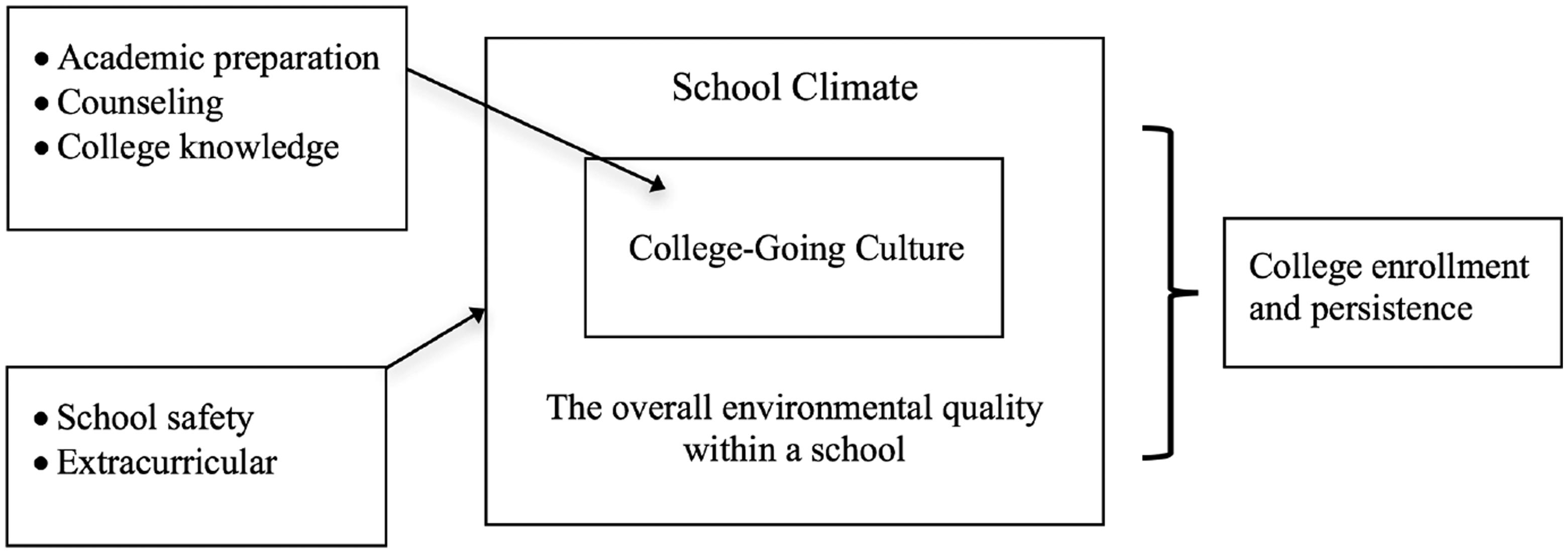
The relationship between college-going culture, school climate, and college enrollment and persistence.Note. Created by authors.
The study addresses the following research questions:
To what extent does a college-going culture contribute to the likelihood that a student enrolls in and persists through a second year of postsecondary education? To what extent do school climate factors contribute to the likelihood that a student enrolls in and persists through a second year of postsecondary education? How do school climate factors moderate the effect of a college-going culture on the likelihood of enrollment and persistence?
Data and variable selection
We draw on data from the ELS of 2002, including the 2004 and 2006 follow-up surveys (ELS:2002/06). These data constitute a nationally representative sample of 16,197 students in 751 schools. A total of 14,147 students responded to all waves of the survey (representing 687 schools). Students were surveyed first in 2002 when they were in 10th grade, again in 2004, and finally in 2006, when many were in their second year of postsecondary education. We use the ELS:2002/06 dataset because these data survey students, teachers, administrators, and parents on a wide range of issues concerning the students and their high schools. Moreover, these data are nationally representative and thus allow for greater generalizability of our findings. Our final analytic dataset includes an average of 19 students in each school, with a range of two to 47 students and 97% of students in our sample attend schools with at least 10 other students in the sample.
Variable selection
Outcome variables
We examine two dichotomous outcome variables. First, we predict the likelihood that a student initially enrolls in postsecondary education. As shown in the first row of Table 1, about one-third of students did not enroll in postsecondary education the year following grade 12. The college-going rate in the ELS database is comparable to other national estimates for the same school year (e.g., Bureau of Labor Statistics, 2003). Of the 66% who initially enrolled in higher education, 16% did not persist to their second year while the other 84% had persisted two years after their initial enrollment in postsecondary education (11% of the total sample initially enrolled, but did not persist, while 55% of the sample persisted to their second year).
Summary statistics by postsecondary outcomes.
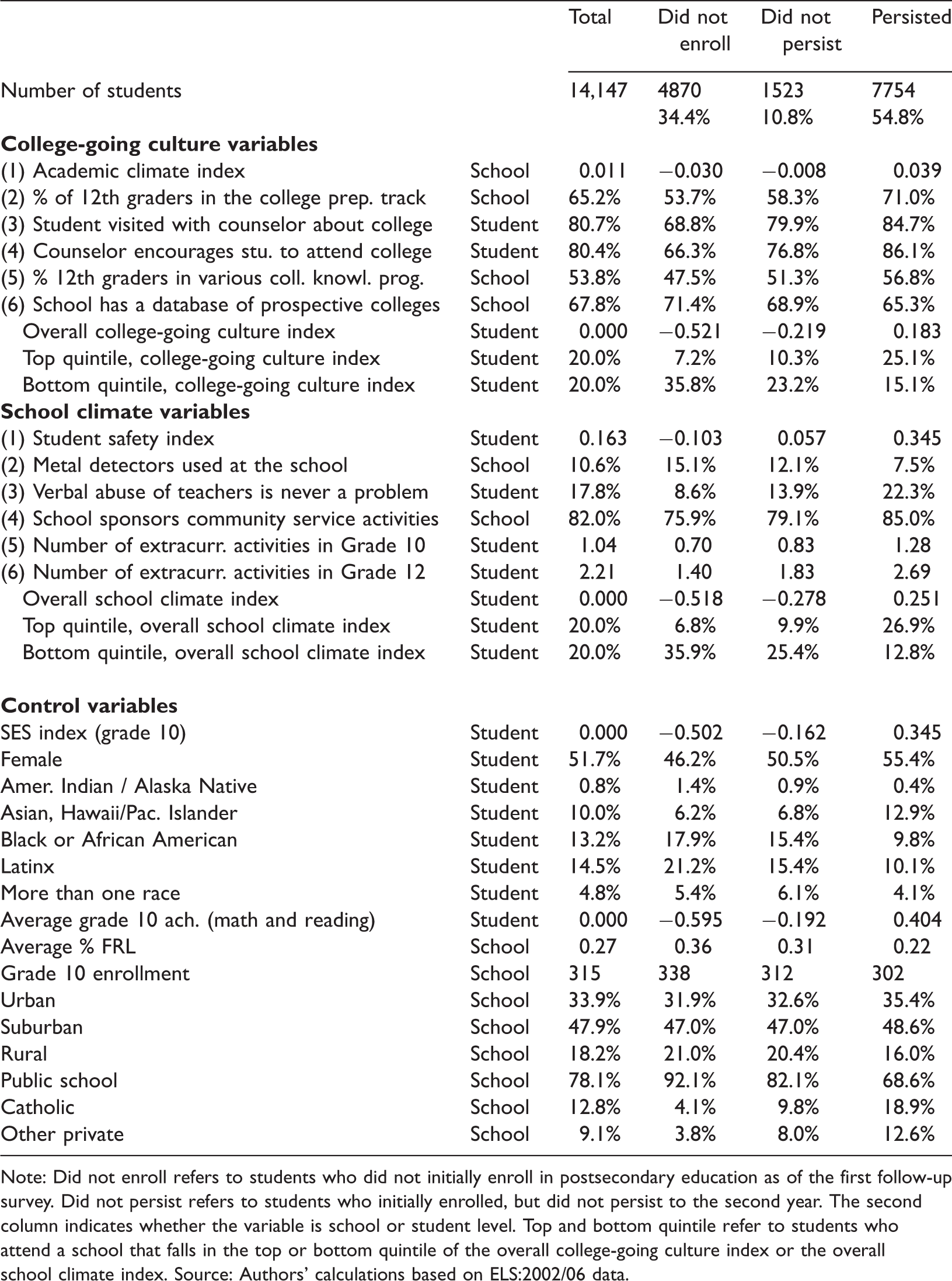
Note: Did not enroll refers to students who did not initially enroll in postsecondary education as of the first follow-up survey. Did not persist refers to students who initially enrolled, but did not persist to the second year. The second column indicates whether the variable is school or student level. Top and bottom quintile refer to students who attend a school that falls in the top or bottom quintile of the overall college-going culture index or the overall school climate index. Source: Authors' calculations based on ELS:2002/06 data.
Variables of interest
Table 1 shows the mean for each independent variable of interest, as well as all control variables, disaggregated by students’ postsecondary outcome. Our first two research questions examine the role of college-going culture and school climate characteristics in students’ enrollment and persistence in postsecondary education. We selected from the ELS database six variables that measure college-going culture and six variables that measure school climate. Each set of variables includes student- and school-level survey items to capture both the administrators’ and students’ perceptions of the school context. We included school context variables from students’ grade 10 and grade 12 high school years, given research showing that school-level interventions to increase college-going are more effective when initiated early in a student’s high school experience (McDonough, 1997; Tierney et al., 2005).
College-going culture is measured with six variables, divided into three categories: rigorous academic preparation, college counseling, and college knowledge. Rigorous academic preparation is captured by (a) the academic climate index, a scale created within ELS based administrator survey items 1 and (b) the percentage of students in the college preparatory or advanced track. The college counseling variables include two dichotomous student survey items which ask whether the student visited the counselor for college information and whether the counselor thinks attending college is the most important activity for the student, relative to other professional options. Finally, college knowledge includes two school-level administrative survey items. The first is an index of the percentage of 12th graders attending three types of college knowledge activities: (a) college application programs, (b) college fairs, and (c) meetings with college representatives. The second is whether students have access to college or career databases in the school.
Means for the college-going culture variables are shown in the first six rows of Table 1. In general, higher values are associated with greater likelihood of enrollment and persistence. For example, overall, high schools in the ELS sample had an average of 65% of students in a college preparatory track. However, students who did not enroll in college attended schools with an average of 54% of students in a college preparatory track; students who enrolled but did not persist attended high schools with 58% of students in the college preparatory track, on average. Students who persisted to their second year attended high schools in which an average of 71% of students enrolled in a college preparatory track. The six college-going culture variables are summarized in an overall college-going culture index, based on the sum of the standardized values of each of these variables. Row 7 of Table 1 shows that while the overall mean of the college-going culture index is zero, the index increases for students who enrolled and persisted in higher education (this index is also standardized to a mean of zero and standard deviation of one). Finally, we divided the overall college-going culture index into quintiles. Students who attended schools in the top 20% of the college-going culture index were more likely to have initially enrolled and persist in postsecondary education. Conversely, students who attended schools in the bottom quintile of the college-going culture index were more likely not to enroll in higher education immediately following their senior year of high school.
School climate factors are measured with six variables, divided into two categories: school safety and extracurricular opportunities at the school. To measure school safety, we used (a) the school safety index, a scale created within ELS based student survey items; 2 (b) whether students pass through metal detectors to enter the school; and (c) whether administrators report verbal abuse of teachers at the school. The presence of metal detectors reflects the use of punitive discipline policies, which research suggests contribute to a negative school climate (Akiba, 2010; Kasen et al., 2004). Verbal abuse of teachers is a common indicator of the extent to which the school community is safe and respectful (Noguera, 2008). Extracurricular opportunities are also captured in three variables: (a) whether the school sponsors community service activities and (b) the number of school-sponsored extracurricular activities in which students participated in grade 10 and (c) in grade 12. Involvement in extracurricular activities captures the extent to which the school both offers programming and encourages student involvement. The school’s sponsoring of community service activities is meant to capture efforts to engage students in the surrounding community, which has been shown to enhance school climate (Cohen et al., 2009). As shown in Table 1, students who attended schools with more positive school climate variables were generally more likely to enroll initially and to persist in postsecondary education.
As with the college-going variables, we create an overall school climate index, based on the sum of the standardized values of each of the six school climate variables. Table 1 shows that while the mean of the overall school climate index is zero, students who did not enroll in college attended schools with a school climate index 0.52 standard deviations below the mean, while those who enrolled and persisted attended schools with 0.25 standard deviations above the mean. Similarly, students who enrolled and persisted to the second year of postsecondary education were more likely to have attended a high school that falls in the top one-fifth of schools on the school climate index and less likely to have attended a school that falls in the bottom fifth.
Control variables
The bottom portion of Table 1 shows our control variables, which include students’ socioeconomic status (SES; an index created within ELS), gender, race/ethnicity, average achievement in grade 10 math and reading standardized exams, and the school’s percentage of students on free/reduced price lunch, urbanicity, and public/private status. Low SES students, students with lower grade 10 exam scores, and students of color were less likely to enroll in postsecondary education and less likely to persist if they enrolled. Such students were also more likely to attend schools with lower measures of college-going culture and school climate. Because the relationship between high school context and college outcomes may result from individual student background characteristics, we used methods to disentangle high school factors related to students’ postsecondary outcomes, which we describe below.
Analytic approach
The analysis uses various specifications of a two-level random intercepts HGLM. The HGLM is similar to traditional hierarchical linear models (also referred to as multilevel models; Rabe-Hesketh and Skrondal, 2012), except that the outcome variable is dichotomous (equal to zero or one). We predict the likelihood that a student enrolls in postsecondary education immediately following their senior year of high school. We use the same model to estimate the likelihood that a student persists through the second year, conditional on their initial enrollment. In this section, we first justify the use of hierarchical models and discuss tests for model fit. We then describe our estimation procedures.
Justification for hierarchical models
A key assumption of ordinary least squares regression is that the error terms are independently, identically distributed (Rabe-Hesketh and Skrondal, 2012). Because students in our dataset are nested in schools, residuals, εij, are likely correlated within each school. Without correcting for the non-independence of residuals, standard errors are underestimated. One approach to examining this issue is to explore the between-school variation in the outcome measures as a portion of total variation. Higher values of between-school variation indicate a greater likelihood that residuals are correlated within schools (Rabe-Hesketh and Skrondal, 2012). We find that 22.3% of the variation in whether a survey participant reported initially enrolling in postsecondary education lies between schools, while 77.7% of the variation is within schools. For persistence, 12.5% of the variation is between schools (p < .001), while 87.5% is within schools. A likelihood ratio test shows that the between-school variation in initial enrollment and persistence are both statistically significant (p < .001), which provides motivation for our use of HGLM.
Given the strong correlation between students’ SES and college outcomes and the significant differences in college-going rates across schools (indicated by the intraclass correlations reported above), we are interested in allowing the relationship between SES and college enrollment outcomes to vary across schools. We use a likelihood ratio test to examine whether allowing the effect of SES to vary by schools improves overall model fit. For both initial enrollment in postsecondary education and persistence through the second year, the likelihood ratio test shows that the random coefficient model significantly improves model fit over the random intercept model (p < .001). As such, in our final model, we allow the effect of SES to vary randomly across schools. 3
Model specification
Analytic approach for research questions 1 and 2
To address the first two research questions, we employ stepwise regressions, first predicting enrollment and persistence using only the six college-going variables noted earlier. We then add the six school climate variables and examine whether and how the coefficients for college-going variables change when controlling for differences in school climate. Finally, we include student- and school-level covariates including the percent of low-income students meased using free or reduced-price lunch (FRL) rates. We allow the effects of individual students’ SES to vary across schools (using a random intercepts HGLM). The final model is as follows:
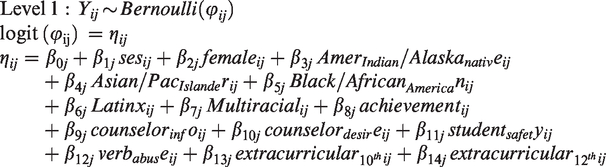
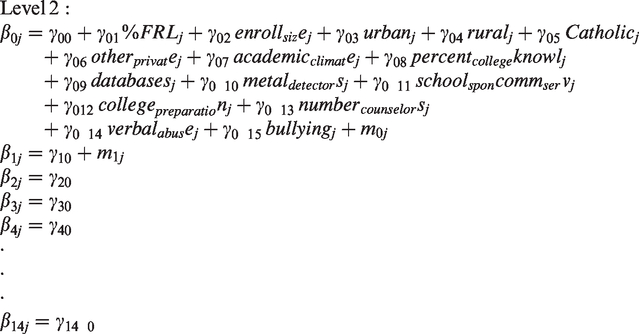
The model is expressed in the notation described by Raudenbush and Bryk (2002). The outcome measure Yij represents whether student i in school j initially enrolled in postsecondary school. The residuals are divided into two components, such that the total residual, εij, is a sum of the within-school student-level residuals, eij, and the between-school residuals, μj, that is, εij = eij + μj. For students that initially enrolled in postsecondary education, we run the same model to predict the likelihood of persistence through two years. Our conceptual framework identifies the high school context as a key factor predicting college outcomes. We therefore do not control for postsecondary characteristics, such as student supports, since students’ college experiences take place after our main effects of interest—the high school context.
One concern with our modeling approach is collinearity, where independent variables are highly correlated, which makes it difficult to identify the individual influence of each variable. Scholars estimate that collinearity is particularly concerning when covariates are correlated at greater than approximately 0.70 (Curto and Pinto, 2007; Fox and Monette, 1992). We find that all but two of the college-going culture and school climate variables included in our models are correlated at less than 0.30. Whether a student visited a college counselor and whether that counselor encouraged the student to attend college are correlated at 0.66 and whether a school supports community service activities is correlated with whether a counselor encourages a student to attend college at 0.55. Despite the interrelated concepts that our independent variables measure, each likely captures unique variation in the outcome measures and collinearity is not a strong concern given the low correlation between independent variables. Full correlation matrices of independent variables are available from the authors upon request.
Analytic approach for research question 3
The third research question explores the role of school climate in moderating the relationship between a high school’s college-going culture and postsecondary outcomes. In other words, we allow the effects of college-going culture to differ, depending on the schools’ climate. To simplify the model specification, we create an index variable for college-going culture based on the sum of the standardized values of the six college-going culture variables. We also create an index variable that combines the six school climate variables. We then use HGLM to regress the college-going index variable on postsecondary outcomes, and include interactions for whether the students’ school falls in the highest or lowest quintiles of the school climate index (with the middle three quintiles as the reference group). We divide the school climate index into quintiles to simplify the interpretation of the interaction terms; however, as specification checks, we also run the same HGLMs, using continuous index variables for both college-going culture and school climate and then dividing the college-going culture variable into quintiles and interacting the highest and lowest quintile with a continuous school climate index and our results are similar under these alternate specifications.
Missing data
Due to the longitudinal nature of the ELS:2002/06 data, some of the students initially surveyed could not be located in follow-up surveys. Our analytic dataset includes postsecondary outcomes for only 14,147 of the 16,197 students surveyed in the ELS 2002 (87%). One concern with missing data is that those who drop out of the sample are systematically different from those who remain. If non-respondents are less likely to enroll in college, but more likely to attend high schools with strong college-going cultures or positive school climate, then the omission of these students will cause our estimates to overstate the relationship between high school conditions and college outcomes.
To examine this potential source of bias, we compare characteristics of students with missing and non-missing postsecondary outcome data. Students who are missing postsecondary outcome data attend high schools with lower scores on the academic climate index and have fewer high school peers in college preparatory tracks, and are less likely to visit a counselor or have a counselor who encourages them to attend college. Similarly, these students attend high schools with lower scores on the student safety index, fewer extracurricular activities available, and more reported verbal abuse of teachers. To address this potential source of bias, we create a subsample of 3239 students who are likely to be missing postsecondary outcome data. We obtain this sample by estimating a model that predicts the propensity for students to be missing college outcome data, using the same covariates as in the final model described above. We identify students with likelihood of missing postsecondary data above 16.6%, which is the top quintile of likelihood of missing postsecondary outcome data. As expected, a larger proportion of these students are missing postsecondary outcome data (25%, compared with 13% for the whole sample). However, within this subsample, differences in the average values of college-going culture, school climate, and most control variables for those with missing postsecondary data and those with non-missing postsecondary data are not statistically significantly different, suggesting that missing data bias is less of a concern for this subsample of students. We then estimate our main models using this subsample and find that our results are qualitatively similar to those based on the full sample. This procedure, noted in Little and Rubin (2019), suggests that our main results are not biased by nonrandom missing data. Summary statistics and results for this subsample of students are available from the authors upon request.
Findings
The role of college-going culture and school climate
Results are summarized in Table 2 and 3. Models 1 and 4 in Table 2 predict the likelihood of initial enrollment and persistence in postsecondary education, respectively, based on the six college-going culture variables. Because this initial model includes no control variables for student background or other school characteristics, the results are primarily descriptive in nature. The coefficients suggest that students are more likely to enroll and persist if they (a) attended a school with higher perceived academic climate and greater percentage of 12th graders enrolled in the college track; (b) visited a counselor about college and had a counselor who encouraged them to attend college; and (c) attended a school with greater percentage of 12th graders involved in college knowledge programs. In sum, all but one of the coefficients for the college-going culture variables are in the expected direction and statistically significant. Students who attended schools with a database of prospective colleges available were actually less likely to enroll or persist. These results match the descriptive statistics and may suggest that schools respond to low college-going rates with easy-to-implement college-based interventions, such as making available a database of prospective colleges.
Log odds coefficients from HGLMs predicting college enrollment and persistence, based on college-going culture and school climate variables.
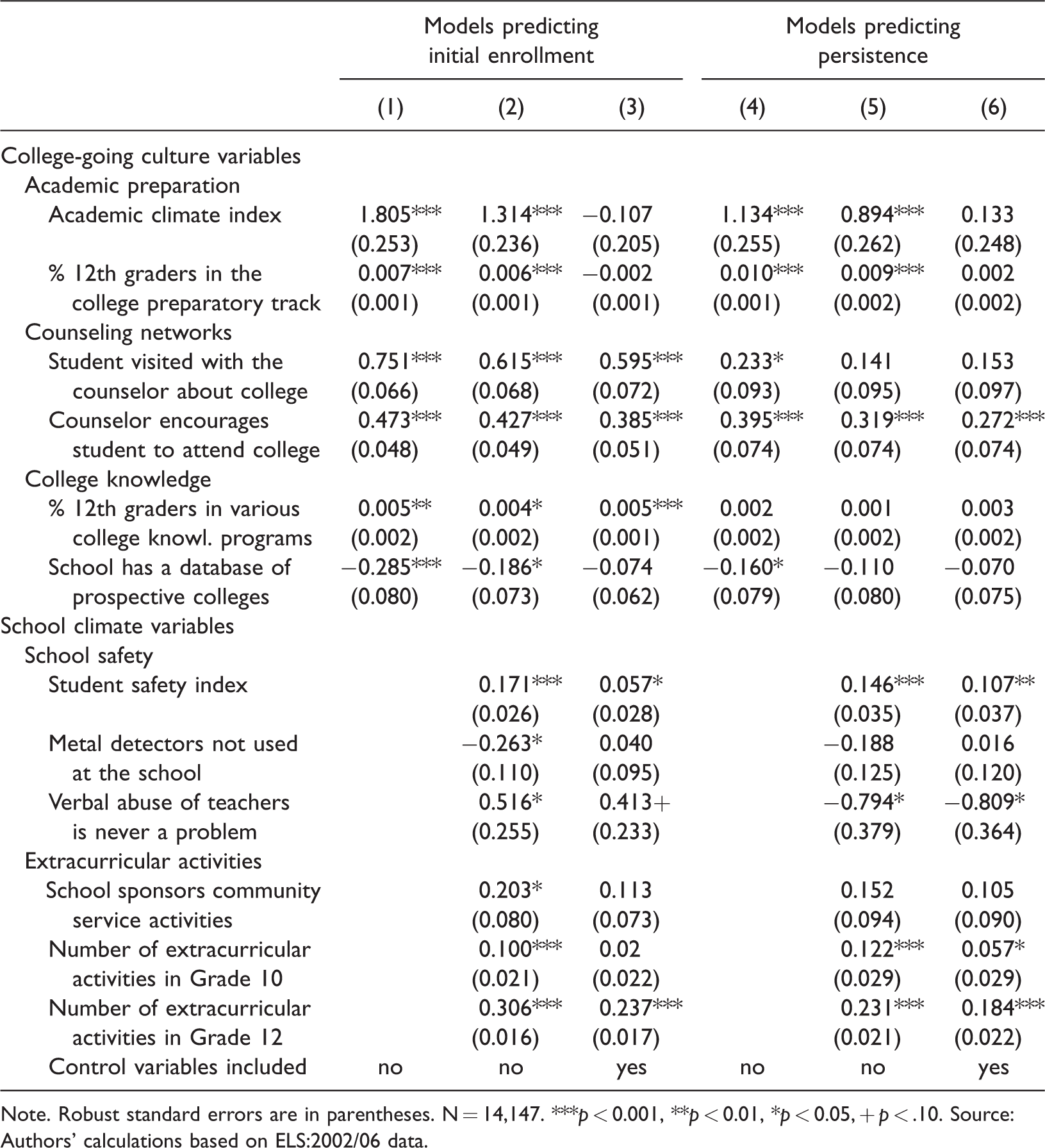
Note. Robust standard errors are in parentheses. N = 14,147. ***p < 0.001, **p < 0.01, *p < 0.05, + p < .10. Source: Authors' calculations based on ELS:2002/06 data.
Log odds coefficients from HGLMs predicting college enrollment and persistence, based on overall college-going culture and school climate indices.
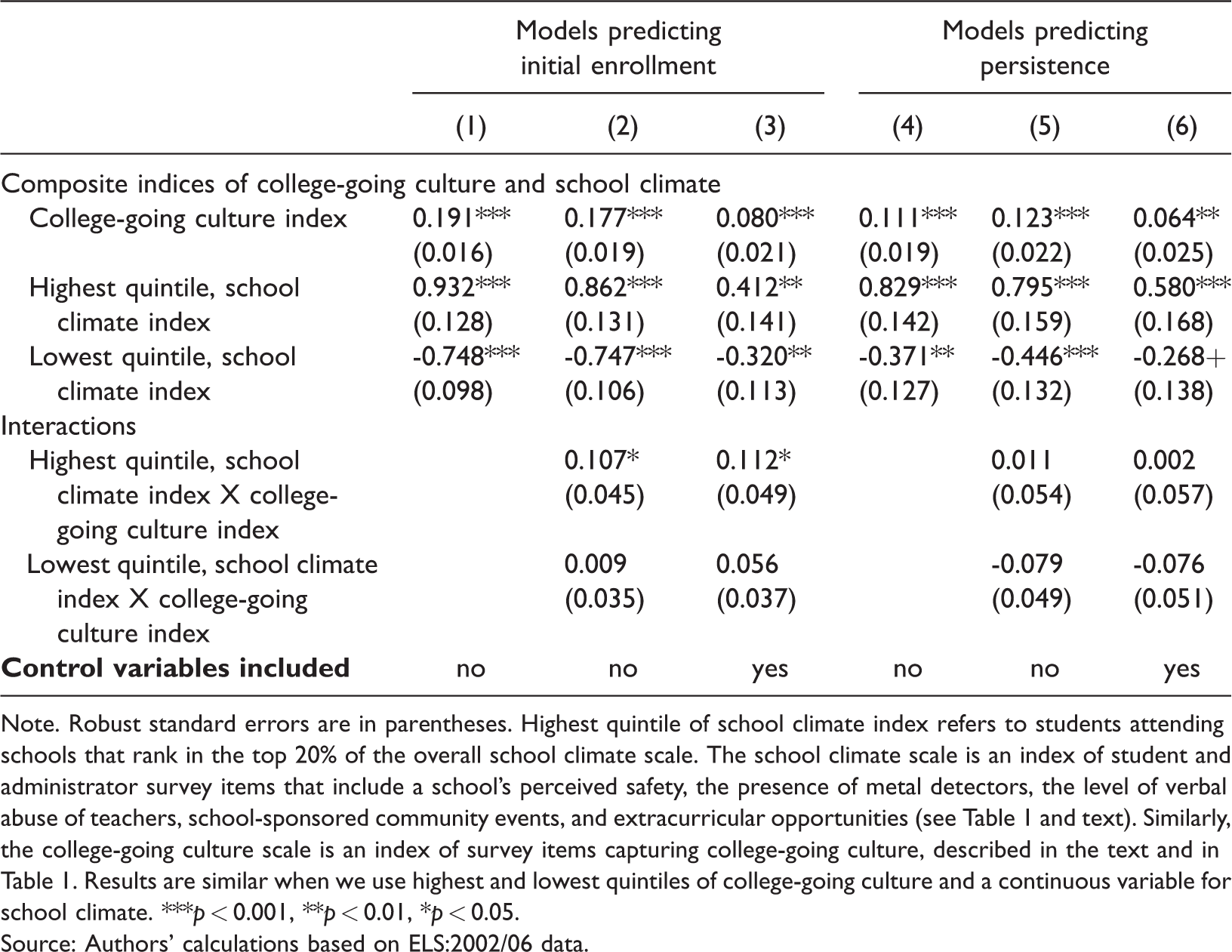
Note. Robust standard errors are in parentheses. Highest quintile of school climate index refers to students attending schools that rank in the top 20% of the overall school climate scale. The school climate scale is an index of student and administrator survey items that include a school’s perceived safety, the presence of metal detectors, the level of verbal abuse of teachers, school-sponsored community events, and extracurricular opportunities (see Table 1 and text). Similarly, the college-going culture scale is an index of survey items capturing college-going culture, described in the text and in Table 1. Results are similar when we use highest and lowest quintiles of college-going culture and a continuous variable for school climate. ***p < 0.001, **p < 0.01, *p < 0.05.
Source: Authors' calculations based on ELS:2002/06 data.
Next, we add the six school climate variables to predict initial enrollment and persistence (Models 2 and 5, respectively). All six variables are positive and significant for initial enrollment and three of the six variables (a school’s perceived safety index and participation in extracurricular activities in grade 10 and in grade 12) are positive and significant for persistence. The coefficients for whether a student’s high school has metal detectors (a measure of school’s perceived safety) or sponsors community service activities (a measure of a school’s extracurricular opportunities) are not significant for postsecondary persistence. Students who attend high schools in which verbal abuse of teachers is never a problem (as opposed to a daily problem) are more likely to enroll in college (as hypothesized), but less likely to persist. These results hold when comparing students in schools in which verbal abuse of teachers is often a problem or sometimes a problem. 4 This finding may suggest that while exposure to verbal abuse of teachers lowers the likelihood of college enrollment for most students, those who do enroll in spite of repeated exposure to verbal abuse of teachers are students who were more likely to persist in the first place. Alternatively, students exposed to verbal abuse may develop resilience that contributes to postsecondary persistence but lowers the likelihood of enrollment. Meanwhile, the college-going culture variables remain significant predictors of enrollment and persistence when controlling for school climate, although the magnitudes of the coefficients decrease. This finding suggests some of the positive effects of college-going culture may be explained by the schools’ positive climate.
Models 3 and 6 include all student and school covariates (listed in Table 1). A high school’s academic climate, the percentage of students in the college preparatory track, and whether a school has a database of potential colleges are not related to students’ postsecondary outcomes, after taking into account student background and school characteristics. That these coefficients are not significant with the inclusion of controls suggests that students’ nonrandom sorting into particular schools was driving the previously significant results. For example, higher-achieving and higher-SES students are more likely to attend schools with more positive academic climate and a greater percentage of students on college preparatory tracks, but such students are also more likely to enroll and persist in college. Thus, after controlling for students’ math and reading achievement level and other school characteristics, attending schools with more academic climate or with more students on the college preparatory track does not necessary contribute to postsecondary enrollment or persistence. Three of the six college-going culture variables remain significant predictors of postsecondary enrollment after adding control variables, but only one college-going culture variable is significantly related to persistence when controlling for other student and school characteristics.
Relatedly, the presence of metal detectors, whether the school sponsors community service activities, and the number of grade 10 extracurricular activities are not associated with enrollment after controlling for other factors. However, a school’s perceived safety and 12th grade participation in extracurricular activities are associated with greater likelihood of college enrollment. Both of these variables, as well as grade 10 extracurricular activities, are positively and significantly associated with college persistence. Compared with college-going culture variables, a greater number of school climate variables (three of the six) are positively correlated to persistence when taking into account student background characteristics.
Our models predict a substantial proportion of variation in college outcomes. Relative to the unrestricted null model, inclusion of college-going culture variables explains 14.2% more of the variation in college enrollment and 4.0% of the variation in college persistence. Adding school climate variables from the null model explains roughly the same proportion of variation. The model with both college-going culture and school climate variables explains 20.4% and 7.5% more of the variation in college enrollment and persistence, relative to the null model. Adding control variables to models with college-going culture and school climate variables explains an additional 30.1% and 13.1%, respectively, compared with the null model. 5
To summarize the results from Table 2, otherwise similar students are more likely to enroll in college when (a) they visited a counselor in high school; (b) their counselor encouraged them to attend college; and (c) they attend a school with more students involved in college knowledge activities. Otherwise similar students are also more likely to enroll when they (d) perceive their high school as safe; and (e) participate in more extracurricular activities in grade 12. Persistence through the second year of college is more likely for otherwise similar students whose counselor encouraged them to attend college, who perceived their high school as safe, and who participated in more extracurricular activities in grades 10 and 12. The magnitudes of these coefficients suggest that having a counselor who encourages college enrollment increases the odds of enrollment and persistence by 46% and 31%, respectively. A standard deviation increase in students’ perceived safety in high school increases the odds of enrollment and persistence by 5% and 11%, respectively, while each additional grade 12 extracurricular activity increases the odds of these outcomes by 26% and 20%, respectively.
The moderating effects of school climate on college-going culture
Our third research question explores whether efforts to increase college-going culture are hampered in schools with poor school climate. Results are summarized in Table 3. We find that the overall indices for college-going culture and school climate are consistent with the results presented above: greater values of college-going culture and school climate are positively related with postsecondary outcomes. The interaction effect between the college-going culture index and the school climate variables indicates that a college-going culture is more effective at increasing college enrollment in schools with more positive climate. Models 2 and 5 of Table 3 show interaction effects without control variables and Models 3 and 6 add the control variables. Model 3 shows that a standard deviation increase in the index for a college-going culture is associated with a 0.080 increase in the log odds of college enrollment and a 0.064 increase in the log odds of college persistence. For college enrollment, the coefficient of 0.112 for the interaction term between college-going culture and the indicator variable for schools in the highest quintile of the school climate index in model 3 suggests that the relationship between a college-going culture and postsecondary enrollment is greater for schools with more positive school climate. The interaction terms shown in model 6 present a similar pattern—where a high school’s college-going culture is more strongly related to students’ college persistence for high schools with a more positive school climate—although the results are not statistically significant.
Predicted values based on the results of Model 3 suggest that students in high schools with low college-going culture index, 2.5 standard deviations below the mean, have roughly a 54% likelihood of enrolling in college. Students who attend high schools with strong college-going cultures have greater likelihood of enrolling in college, especially if their high school has a positive school climate. Among students who attend high schools with a college-going culture index of 2.5 standard deviations above the mean, students from high schools with negative versus positive school climate (the bottom and top quintile of the school climate index) have a 82% and 91% likelihood of enrolling in college, respectively. As noted above, results for college persistence show a similar pattern. These results are displayed graphically in Figure 2. Both plots show a positive relationship between the college-going culture index and the college outcomes, demonstrated by the positively sloping lines. The higher values for the solid lines (compared with the dashed lines) represent the positive benefits of a positive school climate. That the gap between the two lines increases at higher levels of the college-going culture index suggests that the benefits of a college-going culture are greater in high schools with a positive school climate.
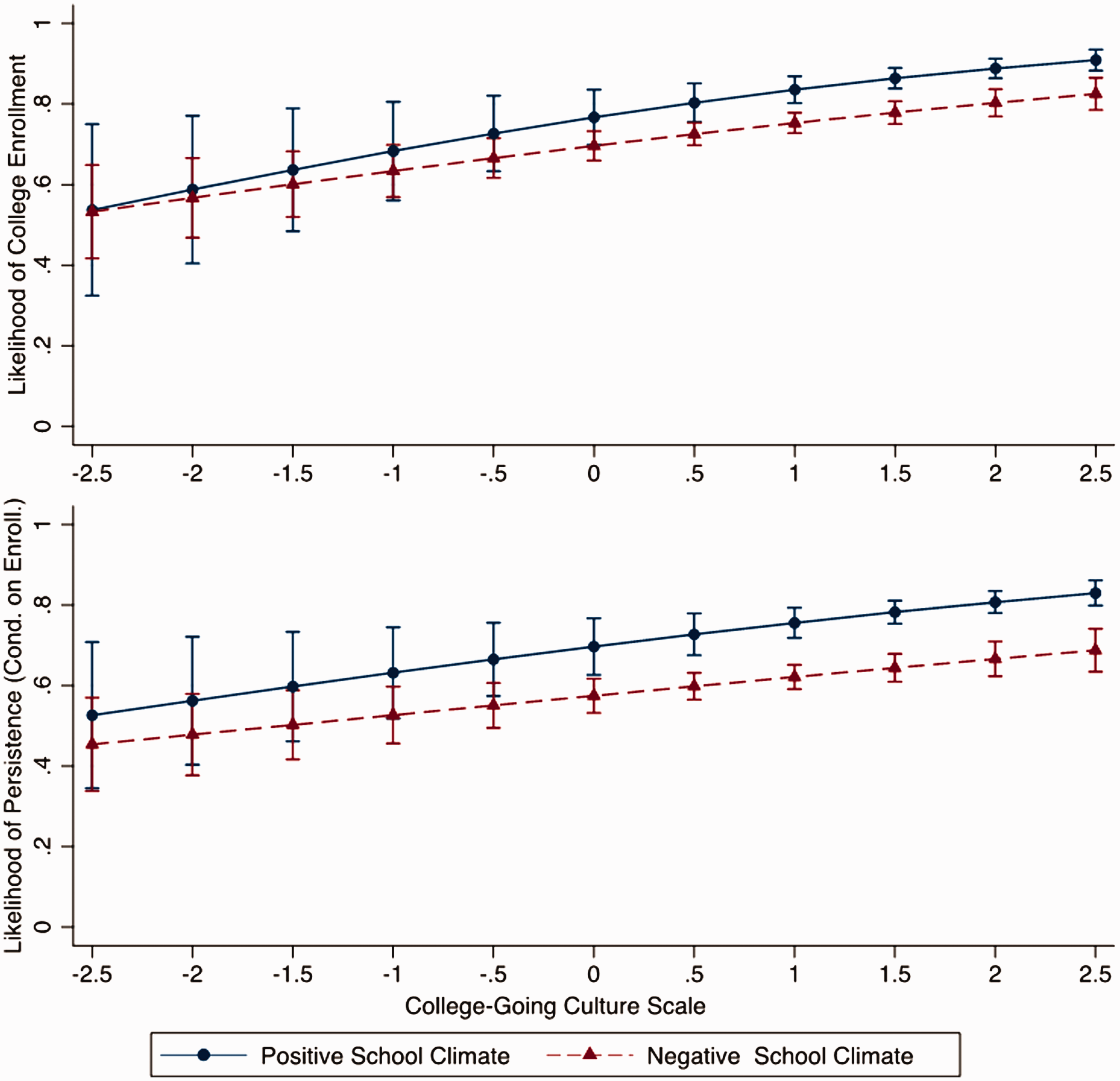
The relationship between college-going culture, school climate, and college enrollment and persistence displayed graphically.Note. The predicted likelihood of college enrollment (top graph) and persistence (bottom graph) is based on the models 3 and 6 from, respectively, from Table 3. The figures demonstrate that the positive relationship between college going culture in high school and college outcomes is stronger in schools with positive school climate (these concepts are defined in the text). Source: Authors' calculations based on ELS:2002/06 data.
Discussion and implications
This study contributes to our understanding of the relationship between high school context and college access and persistence. Past research has shown that high schools play a vital role in preparing students to succeed in college, and can enhance students’ readiness by offering rigorous academic preparation and imparting college knowledge (Arnold et al., 2012; Conley, 2014). Scholars have also begun to examine how other aspects of the high school environment such as average SES, availability of social networks, and environmental quality relate to college outcomes (Enberg and Wolniak, 2010; Nunez and Kim, 2012; Wolniak and Enberg, 2010). The current study adds to this nascent literature by showing how school climate interacts with a college-going culture. Findings suggest that school climate features, including school safety and extracurricular programming, may influence students’ likelihood of both enrolling and persisting in higher education, as well as the effectiveness of college-going culture interventions. Below we highlight some of the nuances in our findings and then offer policy implications.
Consistent with previous research (McDonough, 1997; St. John et al., 2011), our findings highlight the importance of several college-going culture interventions in facilitating postsecondary outcomes. First, simply visiting a college counselor may increase the likelihood of enrolling in college, but this activity is not associated with persistence. This outcome may signify that students may learn about the college application process from their counselors but not necessarily acquire the skills and knowledge required for persistence (Conley, 2012). Indeed, as the literature suggests, school staff are collectively responsible for familiarizing students with college knowledge, and counselors do not share this burden alone (McKillip et al., 2012).
Second, of the three college-going culture variables that (significantly) predicted enrollment, only one—whether a counselor encouraged a student to attend college—was associated with persistence. This finding is not necessarily surprising because our measures of college-going culture, particularly those that measure college knowledge programs, focus more on helping students apply and enroll (i.e., college fairs) than familiarizing students with the culture of higher education. Students who perceive that their counselor wants them to attend college may also perceive high levels of support from school staff as a whole or from adults at home; research on social networks has shown that supportive adults at school and at home can help students transition to college and graduate (Duncheon and Relles, 2019; Hill et al., 2015). Interestingly, the two school climate variables that predicted enrollment also predicted persistence. One variable not correlated with initial enrollment, grade 10 extracurricular activities, was positively correlated with persistence. These findings suggest that emphasis on college-specific interventions may successfully send more students to college, but may not address the underlying problem of college persistence. Indeed, while the proportion of students matriculating into higher education has increased over the past few decades, especially for low-income students and students of color, many students drop out (Attewell, Heil and Reisel, 2011; Bailey and Dynarski, 2011), and overall completion rates have remained relatively stagnant (OECD, 2008).
Our study also suggests the potential value of improving high school climate as a strategy to support college opportunity. Literature on school climate has highlighted the importance of providing students with safe environments and extracurricular opportunities (Cohen et al., 2009). Traditionally, these studies have examined student outcomes such as social and emotional development (Blum et al., 2002; Espelage and Swearer, 2004) and academic achievement (Cooper et al., 1999; Lacoe, 2016; Lee, 2011). This study indicates that these aspects of school climate also influence college outcomes. Specifically, verbal abuse is negatively associated with college enrollment, while extracurricular participation positively impacts both enrollment and persistence. In the literature on college-going cultures, the need for safe, supportive, and participatory school environments tends to be implicit or assumed; our findings suggest the need to consider explicitly non-college-specific elements of school climate in the discourse on college-going culture.
Finally, our findings reveal the possibility for school climate factors to influence the effectiveness of college-going interventions. Offering a new AP course, opening a college counseling office, or offering college knowledge programs may be less effective when students do not feel safe at school, or when they do not have opportunities to become positively engaged through extracurricular programming. Our findings point to the potential challenges of trying to implement specific college-going reforms without regard to the broader school climate. College-going reforms may be more effective when accompanied by efforts to enhance school community and safety. Our study does not analyze how the effects of a college-going culture or school climate—or the interaction of these effects—varies by student background. Future research in this area might examine whether students of color or low-income students benefit more from positive school culture, or whether a positive school culture increases the benefits of a college-going culture more for historically underserved students.
The current study has implications for policy and practice pertaining to college-going reform at the high school level. Fundamentally, high schools need to provide safe, supportive, and participatory environments to facilitate student learning and development, particularly in high-poverty, segregated neighborhoods where students have historically had less access to high quality educational opportunities (Anyon, 2014; Knight, 2019; Knight and Strunk, 2016). Academic and college-related interventions are crucial to enhance college-going, particularly in schools serving primarily low-income, first generation youth (Conley, 2014). However, because underrepresented students are most likely to attend low-performing, underfunded high schools with high rates of violence (Noguera, 2008) and fewer opportunities for extracurricular involvement (American Youth Policy Forum, 2006), it is possible that the students who most stand to benefit from college-going interventions are also the least likely to experience their positive effects. As such, it is imperative that college-going reform efforts do not ignore the more fundamental problems that plague low-performing schools, such as community building among staff and students.
Understanding the central role of school climate is particularly crucial at a time when schools are experiencing budget crises. Recent cuts to education spending are forcing school leaders to search for ways to reduce expenditures (Knight, 2017; Oliff and Leachman, 2011). However, if school leaders only protect academic resources and cut supplementary programming—the arts, music, and social-emotional learning programs, for instance—the result may be the adoption of piecemeal policy interventions that fail to improve students’ postsecondary outcomes. Addressing persistent educational inequities and facilitating college opportunity for underrepresented youth will require comprehensive high school reforms that both implement college-specific interventions and improve the broader school climate.
Footnotes
Declaration of conflicting interests
The author(s) declared no potential conflicts of interest with respect to the research, authorship, and/or publication of this article.
Funding
The author(s) disclosed receipt of the following financial support for the research, authorship, and/or publication of this article: This paper is based upon work supported in part by the National Science Foundation under Grant No. 1661097 and Grant No. 1740695.
Any opinions, findings, and conclusions or recommendations expressed in this material are those of the authors and do not necessarily reflect the views of the National Science Foundation.